May 2, 2026
The Weekend Wrap Debuts — Soyuz 5, Artemis II Revisited & Roman Telescope
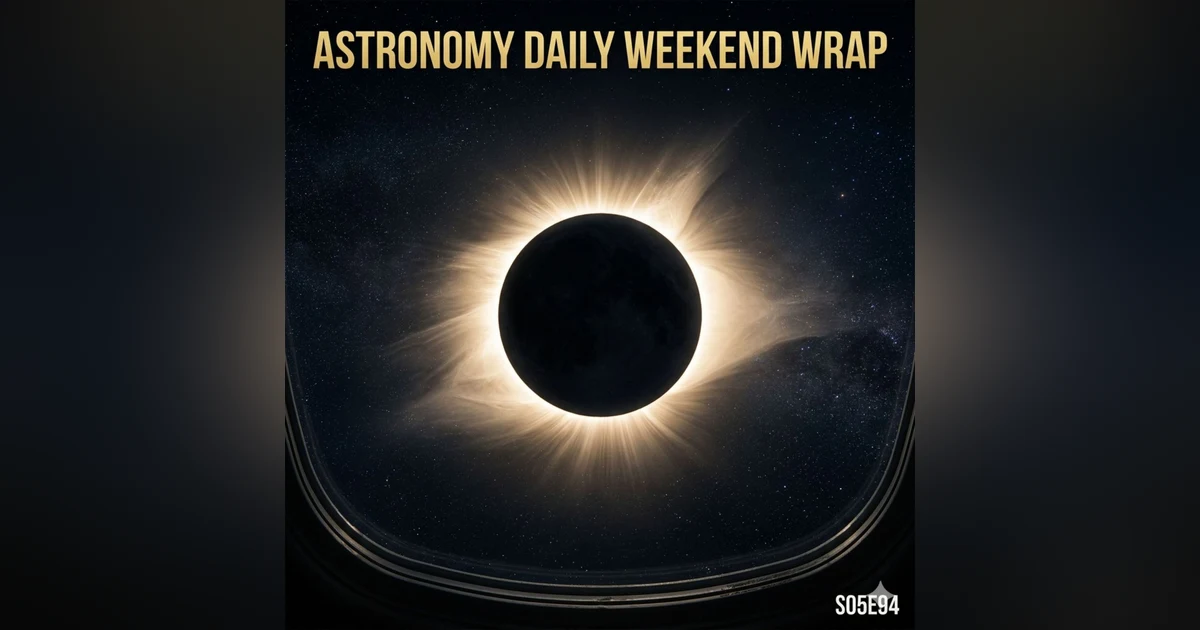
Sponsor Link: When you're ready to upgrade your online security, get NordVPN just like we did. And we can save you a lot of money with our special deals. For details https://bitesz.com/nordvpn Welcome to Astronomy Daily S05E94 — our first ever...
Sponsor Link:
When you're ready to upgrade your online security, get NordVPN just like we did. And we can save you a lot of money with our special deals. For details Click Here
Welcome to Astronomy Daily S05E94 — our first ever Weekend Edition! Today we debut the Astronomy Daily Weekend Space and Astronomy News Wrap, featuring two fresh stories plus a roundup of the four biggest and most important space stories from across the past week. Today's Stories • Story 1: Russia's Soyuz 5 rocket completes its first successful suborbital test flight from Baikonur Cosmodrome. After nearly a decade of development, Russia's homegrown answer to the Zenit finally flew — a milestone for Roscosmos, even as questions remain about its competitiveness in a reusability-driven market. • Story 2: May's Flower Moon peaked on May 1st — and May 2026 is a double-micromoon month, with both the Flower Moon and the May 31 Blue Moon occurring near lunar apogee. Southern Hemisphere skies are perfect for viewing this weekend. Weekend Wrap — The Week's Four Biggest Stories • Wrap 1: Artemis II — The Full Picture. 694,481 miles, 252,756 miles from Earth at farthest, 57-minute eclipse from beyond the Moon, heat shield performance significantly better than Artemis I. The numbers of a mission for the history books. • Wrap 2: The Eclipse Only Four Humans Have Ever Seen. During the April 6 lunar flyby, the Artemis II crew experienced a 57-minute total solar eclipse from beyond the Moon — the first time in human history. Victor Glover's descriptions were extraordinary. • Wrap 3: Roman Space Telescope locks in September 2026 launch — 8 months ahead of schedule and under budget. With a field of view 100x larger than Hubble's, Roman is poised to become the most powerful survey telescope in history. • Wrap 4: Artemis III hardware arrives at Kennedy Space Center. The SLS core stage was offloaded from the Pegasus barge on April 27-28 — just as the Artemis II Orion capsule returned for post-flight analysis. The next mission is already assembling. Skywatching This Weekend • The Flower Moon is still at 99% illumination tonight — beautiful in Southern Hemisphere autumn skies. Look for it between Antares (Scorpius) and Spica (Virgo). • Venus and Jupiter are prominent in the western evening sky, slowly closing toward a June 9 conjunction. • Asteroid Vesta is at opposition today, May 2 — best viewed with binoculars or a small telescope from a dark site. • The Eta Aquariid meteor shower peaks the night of May 5-6 — an excellent show from Southern Hemisphere locations.
Become a supporter of this podcast: https://www.spreaker.com/podcast/astronomy-daily-space-news-updates--5648921/support.
Sponsor Details:
Ensure your online privacy by using NordVPN. To get our special listener deal and save a lot of money, visit www.bitesz.com/nordvpn. You'll be glad you did!
Become a supporter of Astronomy Daily by joining our Supporters Club. Commercial free episodes daily are only a click way... Click Here
This episode includes AI-generated content.
When you're ready to upgrade your online security, get NordVPN just like we did. And we can save you a lot of money with our special deals. For details Click Here
Welcome to Astronomy Daily S05E94 — our first ever Weekend Edition! Today we debut the Astronomy Daily Weekend Space and Astronomy News Wrap, featuring two fresh stories plus a roundup of the four biggest and most important space stories from across the past week. Today's Stories • Story 1: Russia's Soyuz 5 rocket completes its first successful suborbital test flight from Baikonur Cosmodrome. After nearly a decade of development, Russia's homegrown answer to the Zenit finally flew — a milestone for Roscosmos, even as questions remain about its competitiveness in a reusability-driven market. • Story 2: May's Flower Moon peaked on May 1st — and May 2026 is a double-micromoon month, with both the Flower Moon and the May 31 Blue Moon occurring near lunar apogee. Southern Hemisphere skies are perfect for viewing this weekend. Weekend Wrap — The Week's Four Biggest Stories • Wrap 1: Artemis II — The Full Picture. 694,481 miles, 252,756 miles from Earth at farthest, 57-minute eclipse from beyond the Moon, heat shield performance significantly better than Artemis I. The numbers of a mission for the history books. • Wrap 2: The Eclipse Only Four Humans Have Ever Seen. During the April 6 lunar flyby, the Artemis II crew experienced a 57-minute total solar eclipse from beyond the Moon — the first time in human history. Victor Glover's descriptions were extraordinary. • Wrap 3: Roman Space Telescope locks in September 2026 launch — 8 months ahead of schedule and under budget. With a field of view 100x larger than Hubble's, Roman is poised to become the most powerful survey telescope in history. • Wrap 4: Artemis III hardware arrives at Kennedy Space Center. The SLS core stage was offloaded from the Pegasus barge on April 27-28 — just as the Artemis II Orion capsule returned for post-flight analysis. The next mission is already assembling. Skywatching This Weekend • The Flower Moon is still at 99% illumination tonight — beautiful in Southern Hemisphere autumn skies. Look for it between Antares (Scorpius) and Spica (Virgo). • Venus and Jupiter are prominent in the western evening sky, slowly closing toward a June 9 conjunction. • Asteroid Vesta is at opposition today, May 2 — best viewed with binoculars or a small telescope from a dark site. • The Eta Aquariid meteor shower peaks the night of May 5-6 — an excellent show from Southern Hemisphere locations.
Become a supporter of this podcast: https://www.spreaker.com/podcast/astronomy-daily-space-news-updates--5648921/support.
Sponsor Details:
Ensure your online privacy by using NordVPN. To get our special listener deal and save a lot of money, visit www.bitesz.com/nordvpn. You'll be glad you did!
Become a supporter of Astronomy Daily by joining our Supporters Club. Commercial free episodes daily are only a click way... Click Here
This episode includes AI-generated content.
WEBVTT
0
00:00:00.000 --> 00:00:02.560
Anna: Hello and welcome to Astronomy Daily,
1
00:00:02.640 --> 00:00:05.640
your daily guide to the cosmos. I'm Anna.
2
00:00:05.640 --> 00:00:08.240
Avery: And I'm Avery. Happy Saturday, everyone.
3
00:00:08.640 --> 00:00:11.040
And what a Saturday it is. Because today
4
00:00:11.040 --> 00:00:13.120
we're launching something brand new here on
5
00:00:13.120 --> 00:00:14.160
Astronomy Daily.
6
00:00:14.480 --> 00:00:16.800
Anna: That's right, today marks the debut of our
7
00:00:16.800 --> 00:00:19.280
weekend space and Astronomy news wrap.
8
00:00:19.520 --> 00:00:21.720
Every Saturday, we'll bring you two fresh
9
00:00:21.720 --> 00:00:24.640
stories from the past 24 hours, plus a deep
10
00:00:24.640 --> 00:00:26.800
dive into the four biggest and most important
11
00:00:27.040 --> 00:00:28.960
stories from across the entire week.
12
00:00:29.290 --> 00:00:32.090
Avery: Think of it as the week in Space, condensed,
13
00:00:32.170 --> 00:00:34.170
considered, and with some new angles you
14
00:00:34.170 --> 00:00:36.490
might not have heard yet. We've been doing
15
00:00:36.490 --> 00:00:39.330
six episodes a week all season, and this is
16
00:00:39.330 --> 00:00:41.570
our way of making sure Saturday feels a
17
00:00:41.570 --> 00:00:42.170
little different.
18
00:00:42.570 --> 00:00:44.810
Anna: So here's today's format. We'll start with
19
00:00:44.810 --> 00:00:47.410
two fresh stories first, then we'll ring in
20
00:00:47.410 --> 00:00:50.170
the very first Astronomy Daily weekend wrap.
21
00:00:50.330 --> 00:00:52.970
Four stories, the week's biggest right here.
22
00:00:53.290 --> 00:00:54.330
Avery: Let's get into it.
23
00:00:54.820 --> 00:00:56.700
Anna: Our first story today is a rocket launch
24
00:00:56.700 --> 00:00:59.340
story with some real geopolitical texture to
25
00:00:59.340 --> 00:00:59.620
it.
26
00:00:59.860 --> 00:01:02.420
Russia's brand new Soyuz 5 rocket
27
00:01:02.420 --> 00:01:05.140
lifted off on Thursday, April 30 from the
28
00:01:05.140 --> 00:01:07.980
Baikonur Cosmodrome in Kazakhstan on its very
29
00:01:07.980 --> 00:01:10.100
first flight. And it went well.
30
00:01:10.660 --> 00:01:13.300
Avery: This has been coming for a long time, anna.
31
00:01:13.380 --> 00:01:16.100
The Soyuz 5, also known as Sunkar, which
32
00:01:16.100 --> 00:01:18.340
means Falcon in Kazakh, has been in
33
00:01:18.340 --> 00:01:20.730
development for nearly a decade. There were
34
00:01:20.730 --> 00:01:22.890
multiple delays, funding hurdles and
35
00:01:22.890 --> 00:01:25.490
geopolitical complications along the way. But
36
00:01:25.490 --> 00:01:28.250
On Thursday at 2pm Eastern time, it
37
00:01:28.330 --> 00:01:29.290
finally flew.
38
00:01:29.610 --> 00:01:32.090
Anna: It was a suborbital test flight, essentially
39
00:01:32.090 --> 00:01:34.450
a shakeout cruise for the new vehicle. The
40
00:01:34.450 --> 00:01:36.890
rocket carried a mass dimensional mockup as
41
00:01:36.890 --> 00:01:39.690
payload. Both stages performed nominally and
42
00:01:39.690 --> 00:01:41.970
the payload followed its intended trajectory
43
00:01:41.970 --> 00:01:44.530
before splashing down in the Pacific Ocean in
44
00:01:44.530 --> 00:01:47.280
a pre designated area. Roscosmos
45
00:01:47.280 --> 00:01:48.320
declared it a, uh, success.
46
00:01:49.040 --> 00:01:51.520
Avery: Now let's talk about why this rocket exists.
47
00:01:52.000 --> 00:01:54.520
Russia lost access to Ukrainian rocket
48
00:01:54.520 --> 00:01:57.440
expertise after the 2022 invasion of Ukraine.
49
00:01:57.680 --> 00:02:00.240
And Ukraine had long been a powerhouse in
50
00:02:00.240 --> 00:02:03.080
rocket design and manufacturing. The Soyuz
51
00:02:03.080 --> 00:02:05.720
5 was designed specifically to replace the
52
00:02:05.720 --> 00:02:08.680
Zenit rocket, which was Ukraine built, and to
53
00:02:08.680 --> 00:02:11.080
give Russia a fully homegrown medium lift
54
00:02:11.080 --> 00:02:11.600
capability.
55
00:02:12.230 --> 00:02:14.830
Anna: In terms of specs, it's a two stage vehicle
56
00:02:14.830 --> 00:02:17.290
powered by the RD171 MV M
57
00:02:17.630 --> 00:02:20.510
engine, which Roscosmos describes as the
58
00:02:20.510 --> 00:02:22.950
world's most powerful liquid fueled engine.
59
00:02:23.110 --> 00:02:25.990
It can lift up to 17 metric tons to low
60
00:02:25.990 --> 00:02:27.989
Earth orbit, which puts it in the same
61
00:02:27.989 --> 00:02:30.470
general class as SpaceX's Falcon 9.
62
00:02:30.950 --> 00:02:33.230
Avery: But here's the key difference, and it's a
63
00:02:33.230 --> 00:02:35.910
significant one. Falcon 9's first stage
64
00:02:35.990 --> 00:02:38.960
lands itself and is reused. Soyuz
65
00:02:38.960 --> 00:02:41.600
5 is fully expendable. Every launch
66
00:02:41.600 --> 00:02:44.520
burns through a brand new rocket. In a launch
67
00:02:44.520 --> 00:02:46.600
market that has increasingly moved towards
68
00:02:46.600 --> 00:02:49.320
reusability and reduced costs, that's a
69
00:02:49.320 --> 00:02:51.120
genuine competitive disadvantage.
70
00:02:51.440 --> 00:02:53.920
Anna: It's also unclear if the rocket will attract
71
00:02:54.000 --> 00:02:56.760
international customers. Russia has lost most
72
00:02:56.760 --> 00:02:58.720
of its commercial launch partnerships since
73
00:02:58.720 --> 00:03:01.680
2022, and the Soyuz 5 doesn't appear
74
00:03:01.680 --> 00:03:04.040
to represent a big enough leap to reverse
75
00:03:04.040 --> 00:03:06.500
that trend. Longer term, the rocket is
76
00:03:06.500 --> 00:03:08.460
intended to serve as a building block for a,
77
00:03:08.460 --> 00:03:10.980
uh, future super heavy launch system, part of
78
00:03:10.980 --> 00:03:13.220
Russia's stated ambitions for deeper space
79
00:03:13.220 --> 00:03:13.660
missions.
80
00:03:14.060 --> 00:03:16.060
Avery: For now, though, it's a debut, and for
81
00:03:16.060 --> 00:03:18.940
Roscosmos, a symbolic one. The next
82
00:03:18.940 --> 00:03:21.620
test flights are planned across 2026 and
83
00:03:21.620 --> 00:03:24.540
2027, with full operational status
84
00:03:24.540 --> 00:03:27.260
anticipated by the end of the decade. A long
85
00:03:27.260 --> 00:03:29.580
road ahead, but at least Thursday's first
86
00:03:29.580 --> 00:03:31.020
step was a successful one.
87
00:03:31.470 --> 00:03:34.350
Anna: Brushes Soyuz 5 finally off the pad
88
00:03:34.350 --> 00:03:35.870
and on to the next test.
89
00:03:36.350 --> 00:03:39.070
Avery: Now for something a little closer to home, or
90
00:03:39.150 --> 00:03:41.470
more precisely, something in our sky right
91
00:03:41.470 --> 00:03:44.230
now. Last night, May 1, the full
92
00:03:44.230 --> 00:03:46.510
flower moon reached peak illumination.
93
00:03:46.910 --> 00:03:49.870
Anna: And May 2026 is a genuinely special
94
00:03:49.870 --> 00:03:51.150
month for moon watchers.
95
00:03:51.390 --> 00:03:52.590
Avery: Tell us more, Anna.
96
00:03:52.910 --> 00:03:55.670
Anna: So May this year has two full moons. The
97
00:03:55.670 --> 00:03:58.150
flower moon peaked on May 1, and a second
98
00:03:58.150 --> 00:04:00.510
full Moon, a blue Moon, will arrive on May
99
00:04:00.510 --> 00:04:03.400
31. Two full moons in a single calendar
100
00:04:03.400 --> 00:04:05.440
month is already a relatively rare
101
00:04:05.440 --> 00:04:07.960
occurrence, happening roughly every two to
102
00:04:07.960 --> 00:04:10.760
three years. But there's an extra twist this
103
00:04:10.760 --> 00:04:13.080
year. Both of them are micromoons.
104
00:04:13.320 --> 00:04:16.120
Avery: Exactly. A, uh, micromoon is the opposite of
105
00:04:16.120 --> 00:04:18.680
a supermoon. It occurs when a full Moon
106
00:04:18.680 --> 00:04:20.440
happens near the point in the Moon's
107
00:04:20.440 --> 00:04:22.680
elliptical orbit where it's farthest from
108
00:04:22.680 --> 00:04:25.320
Earth, what astronomers call apogee.
109
00:04:25.720 --> 00:04:28.680
At that distance, the moon appears around 14%
110
00:04:28.680 --> 00:04:31.600
smaller and about 30% dimmer than it does at
111
00:04:31.600 --> 00:04:34.320
its closest approach. Not a huge difference
112
00:04:34.320 --> 00:04:36.880
to the naked eye, but it's a genuine physical
113
00:04:36.880 --> 00:04:38.120
distinction, though.
114
00:04:38.120 --> 00:04:40.880
Anna: Why are both May full moons micro moons?
115
00:04:41.040 --> 00:04:43.560
It comes down to orbital timing. The moon's
116
00:04:43.560 --> 00:04:45.720
apogee circles around relative to our
117
00:04:45.720 --> 00:04:48.320
calendar, and this month they happen to align
118
00:04:48.320 --> 00:04:51.040
twice, giving us a double micro moon. May.
119
00:04:51.280 --> 00:04:53.680
Avery: For listeners in Australia and New Zealand,
120
00:04:53.680 --> 00:04:55.840
you've got great autumn skies right now. And
121
00:04:55.840 --> 00:04:57.800
the flower moon last night would have been
122
00:04:57.800 --> 00:04:59.880
beautiful as it arced across your northern
123
00:04:59.880 --> 00:05:02.170
sky. It sat between the red star
124
00:05:02.170 --> 00:05:05.130
Antares in Scorpius and blue white Spica
125
00:05:05.130 --> 00:05:08.090
in Virgo. Quite a tableau if you missed it.
126
00:05:08.090 --> 00:05:11.010
Don't worry. At 99% illumination tonight,
127
00:05:11.010 --> 00:05:12.610
it still looks essentially full.
128
00:05:12.930 --> 00:05:15.890
Anna: And for the blue moon, on May 31st, that's
129
00:05:15.890 --> 00:05:18.130
your next event to mark in your calendar. It
130
00:05:18.130 --> 00:05:20.450
won't look blue. Of course the name comes
131
00:05:20.450 --> 00:05:23.250
from a 16th century idiom for something rare.
132
00:05:23.410 --> 00:05:25.690
But two full moons in one month is always
133
00:05:25.690 --> 00:05:27.090
worth stepping outside for.
134
00:05:27.600 --> 00:05:29.680
Avery: The month of May is also great for planets
135
00:05:29.680 --> 00:05:32.040
right now. Venus and Jupiter are both
136
00:05:32.040 --> 00:05:34.360
prominent in the evening sky. With the two
137
00:05:34.360 --> 00:05:36.600
planets slowly closing toward a conjunction
138
00:05:36.600 --> 00:05:39.200
on June 9th. Saturn and Mars are re
139
00:05:39.200 --> 00:05:42.120
emerging in the pre dawn east. A uh, busy sky
140
00:05:42.120 --> 00:05:42.560
for May.
141
00:05:42.720 --> 00:05:44.640
Anna: Alright, now it's time for something
142
00:05:44.720 --> 00:05:47.040
completely new. Avery, let's do it.
143
00:05:47.280 --> 00:05:49.960
Avery: And now the Astronomy Daily weekend
144
00:05:49.960 --> 00:05:52.520
wrap your guide to the week's biggest stories
145
00:05:52.520 --> 00:05:55.080
from across the cosmos. I'm Avery.
146
00:05:55.160 --> 00:05:57.880
Anna: And I'm Anna. This week in space was
147
00:05:57.960 --> 00:06:00.840
frankly extraordinary. We had history made,
148
00:06:00.920 --> 00:06:03.320
hardware delivered, a telescope confirmed,
149
00:06:03.320 --> 00:06:06.120
and a cosmic spectacle that no human had
150
00:06:06.120 --> 00:06:08.360
ever witnessed before. Let's do this.
151
00:06:08.760 --> 00:06:11.680
Avery: Our first wrap story is a step back, a full
152
00:06:11.680 --> 00:06:14.240
exhale to appreciate what NASA and its
153
00:06:14.240 --> 00:06:16.760
partners pulled off with Artemis 2. Because
154
00:06:16.760 --> 00:06:18.880
it's been a few weeks now Since Splashdown on
155
00:06:18.880 --> 00:06:21.400
April 10th and we have the full picture
156
00:06:21.770 --> 00:06:23.850
and it is genuinely staggering.
157
00:06:24.010 --> 00:06:25.210
Anna: The headline numbers
158
00:06:25.450 --> 00:06:28.770
694,481
159
00:06:28.770 --> 00:06:31.530
miles traveled in total, a peak velocity
160
00:06:31.530 --> 00:06:34.410
of 24,664 miles
161
00:06:34.410 --> 00:06:37.290
per hour. A farthest distance from Earth of
162
00:06:37.290 --> 00:06:40.130
252,756
163
00:06:40.130 --> 00:06:42.970
miles, surpassing the record previously held
164
00:06:42.970 --> 00:06:45.130
by Apollo 13 in 1970.
165
00:06:45.690 --> 00:06:48.170
And a closest approach to the lunar surface
166
00:06:48.250 --> 00:06:51.230
of 4,067 miles. The
167
00:06:51.230 --> 00:06:53.630
crew were farther from Earth than any humans
168
00:06:53.630 --> 00:06:54.070
in history.
169
00:06:54.550 --> 00:06:57.350
Avery: The mission launched on April 1st. Yes,
170
00:06:57.350 --> 00:06:59.990
April Fool's Day. Carrying Commander Reid
171
00:06:59.990 --> 00:07:02.870
Wiseman, pilot Victor Glover, Mission
172
00:07:02.870 --> 00:07:05.470
Specialist Christina Koch and Canadian Space
173
00:07:05.470 --> 00:07:08.150
Agency astronaut Jeremy Hansen. Their
174
00:07:08.150 --> 00:07:10.470
spacecraft, which the crew named integrity,
175
00:07:10.630 --> 00:07:13.270
flew a 10 day free return trajectory around
176
00:07:13.270 --> 00:07:14.310
the moon and back.
177
00:07:14.550 --> 00:07:16.430
Anna: One of the most watched elements of the
178
00:07:16.430 --> 00:07:19.140
mission was the heat shield. Artemis I had
179
00:07:19.140 --> 00:07:21.780
shown some unexpected erosion of the AVcode
180
00:07:21.780 --> 00:07:23.900
ablative material. And there was significant
181
00:07:24.060 --> 00:07:26.020
debate before the mission about whether to
182
00:07:26.020 --> 00:07:28.660
fly with the uh, existing design. Engineers
183
00:07:28.660 --> 00:07:31.020
and NASA administrator Jared Isaacman
184
00:07:31.100 --> 00:07:33.580
ultimately decided to proceed. And the data
185
00:07:33.580 --> 00:07:35.820
coming back now shows char loss was
186
00:07:35.820 --> 00:07:38.300
significantly reduced compared to Artemis I.
187
00:07:38.540 --> 00:07:40.540
And consistent with ground testing
188
00:07:40.540 --> 00:07:42.460
predictions, a uh, huge relief.
189
00:07:42.780 --> 00:07:45.700
Avery: Orion splashed down just 2.9 miles from
190
00:07:45.700 --> 00:07:48.450
its target site. Entry velocity was within
191
00:07:48.450 --> 00:07:51.010
1 mph of predictions. Rick
192
00:07:51.010 --> 00:07:53.410
Henfling, the entry flight Director put it
193
00:07:53.410 --> 00:07:56.170
simply. A quarter of a million miles to the
194
00:07:56.170 --> 00:07:58.450
moon and back and they hit a less than 1
195
00:07:58.450 --> 00:08:01.090
degree entry angle on the way home. That is
196
00:08:01.090 --> 00:08:03.530
not luck. That is a thousand people doing
197
00:08:03.530 --> 00:08:04.210
their jobs.
198
00:08:04.370 --> 00:08:06.290
Anna: The crew are now in post flight
199
00:08:06.290 --> 00:08:08.530
Reconditioning at Johnson Center. And in
200
00:08:08.530 --> 00:08:10.890
their own words, they were moved. Commander
201
00:08:10.890 --> 00:08:13.890
Reid Wiseman, Victor, Christina and Jeremy,
202
00:08:13.890 --> 00:08:16.530
we are bonded forever. And no one down here
203
00:08:16.530 --> 00:08:18.330
is ever going to know what the four of us
204
00:08:18.330 --> 00:08:20.350
just went through. And it was the most
205
00:08:20.350 --> 00:08:22.470
special thing that will ever happen in my
206
00:08:22.470 --> 00:08:22.750
life.
207
00:08:23.230 --> 00:08:25.870
Avery: Christina Koch described the experience of
208
00:08:25.870 --> 00:08:28.670
seeing Earth tiny through Orion's window,
209
00:08:28.670 --> 00:08:31.310
surrounded by blackness, as one of the most
210
00:08:31.310 --> 00:08:34.230
overwhelming moments of her life. Victor
211
00:08:34.230 --> 00:08:37.110
Glover said the gratitude he felt was too big
212
00:08:37.110 --> 00:08:39.630
to fit in one body. And Jeremy
213
00:08:39.630 --> 00:08:41.710
Hansen, as the crew broke the distance
214
00:08:41.710 --> 00:08:44.110
record, spoke directly to the next
215
00:08:44.110 --> 00:08:46.900
generation. We challenge this generation
216
00:08:46.900 --> 00:08:49.900
and the next to make sure this record is not
217
00:08:49.900 --> 00:08:50.620
long lived.
218
00:08:51.020 --> 00:08:53.270
Anna: Host flight assessments are well underway at,
219
00:08:53.270 --> 00:08:55.220
uh, Kennedy Space center, where the Orion
220
00:08:55.220 --> 00:08:57.140
capsule has returned. All
221
00:08:57.140 --> 00:09:00.140
186 Avocote heat shield blocks for
222
00:09:00.140 --> 00:09:02.860
Artemis III, the upgraded version have
223
00:09:02.860 --> 00:09:05.260
already been installed, cured, and inspected.
224
00:09:05.420 --> 00:09:08.260
The next mission is already in motion. And
225
00:09:08.260 --> 00:09:10.140
that leads to our fourth RAP story.
226
00:09:10.630 --> 00:09:13.630
Avery: But first, of all, the extraordinary things
227
00:09:13.630 --> 00:09:16.590
that happened during Artemis 2, there is one
228
00:09:16.590 --> 00:09:19.328
moment that stands alone. On April
229
00:09:19.412 --> 00:09:22.230
6, as the crew flew around the far side of
230
00:09:22.230 --> 00:09:24.870
the Moon, they witnessed something that no
231
00:09:24.870 --> 00:09:27.510
human being had ever experienced in the
232
00:09:27.510 --> 00:09:30.310
history of our species. A total solar
233
00:09:30.310 --> 00:09:32.310
eclipse observed from beyond
234
00:09:32.310 --> 00:09:35.190
Anna: the Moon on Earth. A total solar
235
00:09:35.190 --> 00:09:37.630
eclipse, when the Moon completely blocks the
236
00:09:37.630 --> 00:09:40.420
sun and reveals its corona, lasts a few
237
00:09:40.420 --> 00:09:43.060
minutes at most. For the Artemis 2 crew,
238
00:09:43.140 --> 00:09:45.780
totality lasted 57 minutes.
239
00:09:46.180 --> 00:09:48.860
57 minutes of watching the Sun's outer
240
00:09:48.860 --> 00:09:51.180
atmosphere glowing around a, uh, completely
241
00:09:51.180 --> 00:09:53.540
black lunar disk from a vantage point
242
00:09:53.540 --> 00:09:55.940
4,000 miles above the surface.
243
00:09:56.420 --> 00:09:59.020
Avery: Victor Glover's descriptions from inside the
244
00:09:59.020 --> 00:10:01.860
spacecraft were extraordinary. He called
245
00:10:01.860 --> 00:10:04.820
the Moon a black orb against the gray that
246
00:10:04.820 --> 00:10:07.750
drifted into blackness. He describes seeing
247
00:10:07.750 --> 00:10:10.270
Earth shine. The light reflected from Earth,
248
00:10:10.270 --> 00:10:13.110
illuminating the dark lunar surface as very
249
00:10:13.110 --> 00:10:15.670
distinct and creating quite an impressive
250
00:10:15.670 --> 00:10:18.470
visual illusion. And then as the solar
251
00:10:18.470 --> 00:10:20.950
corona began to emerge from the edges of the
252
00:10:20.950 --> 00:10:23.590
Moon, he described the streamers as looking
253
00:10:23.590 --> 00:10:26.230
like what the Luxor spotlight in Las Vegas
254
00:10:26.230 --> 00:10:27.790
wants to be when it grows up.
255
00:10:28.190 --> 00:10:30.870
Anna: The crew made genuine scientific observations
256
00:10:30.870 --> 00:10:33.680
during those 57 minutes. They searched for
257
00:10:33.680 --> 00:10:36.240
lofted lunar dust, a phenomenon some
258
00:10:36.240 --> 00:10:38.360
Apollo crews reported and watched for
259
00:10:38.360 --> 00:10:40.920
micrometeoroid impacts on the darkened lunar
260
00:10:40.920 --> 00:10:43.280
surface. They reported seeing at least five
261
00:10:43.280 --> 00:10:46.240
impact flashes. They observed zodiacal light.
262
00:10:46.320 --> 00:10:48.919
They photographed the corona in unprecedented
263
00:10:48.919 --> 00:10:51.320
detail. Christina Koch described the
264
00:10:51.320 --> 00:10:53.600
experience simply. I just had an
265
00:10:53.600 --> 00:10:56.200
overwhelming sense of being moved by looking
266
00:10:56.200 --> 00:10:56.880
at the Moon.
267
00:10:57.440 --> 00:10:59.840
Avery: The images NASA has since released are
268
00:10:59.840 --> 00:11:02.580
breathtaking. The glowing halo of the
269
00:11:02.580 --> 00:11:05.260
solar corona against the black lunar disk,
270
00:11:05.260 --> 00:11:07.820
with Earthshine illuminating the Moon's face.
271
00:11:08.140 --> 00:11:10.740
Venus and Saturn visible as pinpoints of
272
00:11:10.740 --> 00:11:13.100
light in the frame. Scientists are still
273
00:11:13.100 --> 00:11:15.620
analyzing whether the halo effect is pure
274
00:11:15.620 --> 00:11:18.380
corona, zodiacal light, or a combination.
275
00:11:19.100 --> 00:11:21.820
Anna: Victor Glover perhaps said it best. I know
276
00:11:21.820 --> 00:11:24.060
this observation won't be of any scientific
277
00:11:24.060 --> 00:11:26.580
value, but I'm really glad we launched on
278
00:11:26.580 --> 00:11:29.260
April 1, because without that specific launch
279
00:11:29.260 --> 00:11:31.420
date, the geometry simply wouldn't have
280
00:11:31.420 --> 00:11:34.300
worked. Four people in the right place at the
281
00:11:34.300 --> 00:11:37.300
right moment to see something no human had
282
00:11:37.300 --> 00:11:39.700
ever seen. That was Artemis 2.
283
00:11:40.180 --> 00:11:42.700
Avery: Our third rep story is about the next great
284
00:11:42.700 --> 00:11:45.020
space telescope, and it comes with a headline
285
00:11:45.020 --> 00:11:47.140
that NASA doesn't get to write very often.
286
00:11:47.700 --> 00:11:50.260
Ahead of schedule and under budget,
287
00:11:50.500 --> 00:11:50.820
the
288
00:11:50.820 --> 00:11:53.750
Anna: Nancy Grace Roman Space Telescope, Roman
289
00:11:53.750 --> 00:11:55.950
for short, has a confirmed September
290
00:11:55.950 --> 00:11:58.470
2026 launch target. NASA
291
00:11:58.470 --> 00:12:00.790
Administrator Jared Isaacman announced this
292
00:12:00.790 --> 00:12:02.870
at a press conference at Goddard Space flight
293
00:12:02.870 --> 00:12:05.830
Center on April 21. Standing in front of the
294
00:12:05.830 --> 00:12:08.390
completed telescope eight months ahead of
295
00:12:08.390 --> 00:12:10.870
NASA's committed deadline, under budget and
296
00:12:10.870 --> 00:12:12.950
fully assembled, let's talk
297
00:12:12.950 --> 00:12:15.150
Avery: about what this telescope will actually do
298
00:12:15.230 --> 00:12:17.390
because the numbers are mind bending.
299
00:12:17.870 --> 00:12:20.190
Roman's primary mirror is the same
300
00:12:20.190 --> 00:12:22.750
2.4 meter diameter as Hubble's,
301
00:12:23.080 --> 00:12:26.040
but its field of view is 100 times larger.
302
00:12:26.280 --> 00:12:28.840
What Hubble would take 2000 years to
303
00:12:28.840 --> 00:12:31.400
survey Roman can do in a year.
304
00:12:31.880 --> 00:12:34.800
Isaacman put it this Roman will give the
305
00:12:34.800 --> 00:12:37.760
Earth a new atlas of the universe. There is
306
00:12:37.760 --> 00:12:40.160
not a screen in existence large enough to
307
00:12:40.160 --> 00:12:42.560
display a single Roman image at full
308
00:12:42.560 --> 00:12:43.240
resolution.
309
00:12:43.720 --> 00:12:46.520
Anna: In its five year primary mission, Roman
310
00:12:46.520 --> 00:12:49.320
is expected to discover over 100,000
311
00:12:49.480 --> 00:12:52.410
distant worlds, hundreds of millions of
312
00:12:52.410 --> 00:12:55.290
stars and billions of galaxies. It
313
00:12:55.290 --> 00:12:58.130
will conduct three core surveys focused on
314
00:12:58.130 --> 00:13:00.970
dark energy, dark matter and wide field
315
00:13:00.970 --> 00:13:03.330
cosmology. It also carries a
316
00:13:03.330 --> 00:13:05.730
coronagraph instrument that can directly
317
00:13:05.730 --> 00:13:08.650
image exoplanets by blocking out the glare
318
00:13:08.650 --> 00:13:10.970
of their host stars. A technology
319
00:13:11.210 --> 00:13:13.690
demonstrator that could change how we search
320
00:13:13.690 --> 00:13:15.290
for worlds like our own,
321
00:13:15.770 --> 00:13:18.170
Avery: the telescope is now undergoing final tests
322
00:13:18.170 --> 00:13:20.540
at Goddard. It will ship to Kennedy Space
323
00:13:20.540 --> 00:13:22.620
center in mid June for launch preparations
324
00:13:22.860 --> 00:13:25.700
before riding a SpaceX Falcon Heavy to its
325
00:13:25.700 --> 00:13:28.620
final destination, the Sun. Earth L2
326
00:13:28.620 --> 00:13:31.220
Lagrange point, about a million miles from
327
00:13:31.220 --> 00:13:33.500
Earth, same address as James Webb.
328
00:13:33.820 --> 00:13:36.620
Anna: The Roman telescope is named for Dr.
329
00:13:36.620 --> 00:13:39.420
Nancy Grace Roman, NASA's first
330
00:13:39.420 --> 00:13:41.940
chief of Astronomy and one of the key
331
00:13:41.940 --> 00:13:44.660
architects of the Hubble Telescope. Known
332
00:13:44.660 --> 00:13:47.360
as the Mother of Hubble, she spent her
333
00:13:47.360 --> 00:13:49.840
career making the case for space based
334
00:13:49.840 --> 00:13:52.560
astronomy. September 2026
335
00:13:52.720 --> 00:13:55.520
her namesake telescope joins the fleet.
336
00:13:55.840 --> 00:13:57.200
We cannot wait.
337
00:13:57.760 --> 00:14:00.200
Avery: And our final wrap story brings us back to
338
00:14:00.200 --> 00:14:02.960
the Moon because even as Artemis 2 was being
339
00:14:02.960 --> 00:14:05.400
celebrated, Kennedy Space center was already
340
00:14:05.400 --> 00:14:06.240
turning the page.
341
00:14:06.480 --> 00:14:09.360
Anna: On April 27th and 28th, while the
342
00:14:09.360 --> 00:14:12.160
Artemis 2 Orion capsule was being
343
00:14:12.160 --> 00:14:14.760
unloaded on one side of Kennedy Space
344
00:14:14.760 --> 00:14:17.630
center for post flight analysis. The
345
00:14:17.630 --> 00:14:20.270
Artemis II ISLS core
346
00:14:20.270 --> 00:14:23.240
stage was arriving on the other side via uh,
347
00:14:23.270 --> 00:14:25.390
the Pegasus barge from New Orleans.
348
00:14:26.110 --> 00:14:28.990
Two missions, one spaceport, one
349
00:14:29.070 --> 00:14:30.510
extraordinary week.
350
00:14:30.750 --> 00:14:33.589
Avery: The core stage is the backbone of the SLS
351
00:14:33.589 --> 00:14:36.190
rocket, 212ft tall,
352
00:14:36.270 --> 00:14:38.550
containing the liquid hydrogen and liquid
353
00:14:38.550 --> 00:14:40.510
oxygen tanks that hold more than
354
00:14:40.510 --> 00:14:43.470
733,000 gallons of propellant.
355
00:14:44.100 --> 00:14:46.220
It will be joined with its engine section and
356
00:14:46.220 --> 00:14:48.820
solid rocket boosters in the vehicle assembly
357
00:14:48.820 --> 00:14:51.260
building over the coming months ahead of the
358
00:14:51.260 --> 00:14:52.500
2027 launch.
359
00:14:52.820 --> 00:14:55.620
Anna: Now Artemis 3 has a revised mission
360
00:14:55.620 --> 00:14:57.780
profile compared to what was originally
361
00:14:57.780 --> 00:15:00.060
planned under changes announced by
362
00:15:00.060 --> 00:15:02.180
Administrator isaacman in February,
363
00:15:02.500 --> 00:15:05.380
Artemis 3 is no longer a lunar landing
364
00:15:05.380 --> 00:15:08.220
mission. Instead it's been redesigned as a
365
00:15:08.220 --> 00:15:10.960
crewed Earth orbit test. Docking the
366
00:15:10.960 --> 00:15:13.840
Orion spacecraft with one or both of
367
00:15:13.840 --> 00:15:16.520
the commercial human landing system vehicles,
368
00:15:17.000 --> 00:15:19.960
Face X's Starship HLS and
369
00:15:19.960 --> 00:15:22.280
Blue Origin's Blue Moon Lander.
370
00:15:22.360 --> 00:15:25.080
Avery: Think of it as Apollo 9 for the Artemis era,
371
00:15:25.240 --> 00:15:27.560
a critical step in validating the docking
372
00:15:27.560 --> 00:15:30.000
procedures and systems that will be needed
373
00:15:30.000 --> 00:15:32.200
before astronauts can actually descend to the
374
00:15:32.200 --> 00:15:34.880
lunar surface. The first crewed landing is
375
00:15:34.880 --> 00:15:37.830
now Artemis 4 targeted for 2028.
376
00:15:38.230 --> 00:15:41.150
Anna: The Artemis III Orion crew module is
377
00:15:41.150 --> 00:15:43.550
already at Kennedy undergoing functional
378
00:15:43.550 --> 00:15:46.070
tests. All 186
379
00:15:46.070 --> 00:15:49.030
upgraded AVCOT Heat shield locks, the
380
00:15:49.030 --> 00:15:51.990
improved version informed by Artemis 2 data,
381
00:15:52.310 --> 00:15:54.790
are installed and inspected. The four
382
00:15:54.870 --> 00:15:57.750
RS25 engines for the core stage
383
00:15:57.910 --> 00:16:00.750
are due to arrive from Stennis Space center
384
00:16:00.750 --> 00:16:01.270
by July.
385
00:16:02.000 --> 00:16:04.080
Avery: The Crew for Artemis 3 hasn't been announced
386
00:16:04.160 --> 00:16:06.600
yet, but they're out there somewhere knowing
387
00:16:06.600 --> 00:16:08.080
that their moment is approaching.
388
00:16:08.640 --> 00:16:11.280
Anna: From Artemis 2 splashing down to
389
00:16:11.280 --> 00:16:14.200
Artemis 3 hardware through the door. This was
390
00:16:14.200 --> 00:16:16.920
a week that showed NASA is not pausing for
391
00:16:16.920 --> 00:16:18.960
breath. Onwards to the moon.
392
00:16:19.440 --> 00:16:22.320
Avery: And that is our first ever Astronomy Daily
393
00:16:22.400 --> 00:16:23.360
weekend wrap.
394
00:16:23.760 --> 00:16:26.240
Six stories One extraordinary week.
395
00:16:26.560 --> 00:16:29.350
Russia launched a new rocket. Maze Moon is
396
00:16:29.350 --> 00:16:32.110
doing something rare. Artemis 2 left us
397
00:16:32.110 --> 00:16:34.790
speechless. The Roman telescope is almost
398
00:16:34.790 --> 00:16:37.550
ready to fly and Artemis 3 is already
399
00:16:37.550 --> 00:16:38.750
assembling in the VAB.
400
00:16:39.070 --> 00:16:41.950
Anna: This is why we do this show. Thanks so much
401
00:16:41.950 --> 00:16:44.549
for spending some of your weekend with us. If
402
00:16:44.549 --> 00:16:47.430
you enjoyed today's format, let us know. Find
403
00:16:47.430 --> 00:16:50.270
us at astronomydaily IO or on
404
00:16:50.270 --> 00:16:52.670
social media astrodailypod.
405
00:16:52.990 --> 00:16:55.550
Your feedback genuinely shapes the show.
406
00:16:55.940 --> 00:16:58.860
Until next time, keep looking up clear skies
407
00:16:58.860 --> 00:16:59.220
everyone.
408
00:16:59.780 --> 00:17:01.460
Avery: This is Astronomy Daily.
0
00:00:00.000 --> 00:00:02.560
Anna: Hello and welcome to Astronomy Daily,
1
00:00:02.640 --> 00:00:05.640
your daily guide to the cosmos. I'm Anna.
2
00:00:05.640 --> 00:00:08.240
Avery: And I'm Avery. Happy Saturday, everyone.
3
00:00:08.640 --> 00:00:11.040
And what a Saturday it is. Because today
4
00:00:11.040 --> 00:00:13.120
we're launching something brand new here on
5
00:00:13.120 --> 00:00:14.160
Astronomy Daily.
6
00:00:14.480 --> 00:00:16.800
Anna: That's right, today marks the debut of our
7
00:00:16.800 --> 00:00:19.280
weekend space and Astronomy news wrap.
8
00:00:19.520 --> 00:00:21.720
Every Saturday, we'll bring you two fresh
9
00:00:21.720 --> 00:00:24.640
stories from the past 24 hours, plus a deep
10
00:00:24.640 --> 00:00:26.800
dive into the four biggest and most important
11
00:00:27.040 --> 00:00:28.960
stories from across the entire week.
12
00:00:29.290 --> 00:00:32.090
Avery: Think of it as the week in Space, condensed,
13
00:00:32.170 --> 00:00:34.170
considered, and with some new angles you
14
00:00:34.170 --> 00:00:36.490
might not have heard yet. We've been doing
15
00:00:36.490 --> 00:00:39.330
six episodes a week all season, and this is
16
00:00:39.330 --> 00:00:41.570
our way of making sure Saturday feels a
17
00:00:41.570 --> 00:00:42.170
little different.
18
00:00:42.570 --> 00:00:44.810
Anna: So here's today's format. We'll start with
19
00:00:44.810 --> 00:00:47.410
two fresh stories first, then we'll ring in
20
00:00:47.410 --> 00:00:50.170
the very first Astronomy Daily weekend wrap.
21
00:00:50.330 --> 00:00:52.970
Four stories, the week's biggest right here.
22
00:00:53.290 --> 00:00:54.330
Avery: Let's get into it.
23
00:00:54.820 --> 00:00:56.700
Anna: Our first story today is a rocket launch
24
00:00:56.700 --> 00:00:59.340
story with some real geopolitical texture to
25
00:00:59.340 --> 00:00:59.620
it.
26
00:00:59.860 --> 00:01:02.420
Russia's brand new Soyuz 5 rocket
27
00:01:02.420 --> 00:01:05.140
lifted off on Thursday, April 30 from the
28
00:01:05.140 --> 00:01:07.980
Baikonur Cosmodrome in Kazakhstan on its very
29
00:01:07.980 --> 00:01:10.100
first flight. And it went well.
30
00:01:10.660 --> 00:01:13.300
Avery: This has been coming for a long time, anna.
31
00:01:13.380 --> 00:01:16.100
The Soyuz 5, also known as Sunkar, which
32
00:01:16.100 --> 00:01:18.340
means Falcon in Kazakh, has been in
33
00:01:18.340 --> 00:01:20.730
development for nearly a decade. There were
34
00:01:20.730 --> 00:01:22.890
multiple delays, funding hurdles and
35
00:01:22.890 --> 00:01:25.490
geopolitical complications along the way. But
36
00:01:25.490 --> 00:01:28.250
On Thursday at 2pm Eastern time, it
37
00:01:28.330 --> 00:01:29.290
finally flew.
38
00:01:29.610 --> 00:01:32.090
Anna: It was a suborbital test flight, essentially
39
00:01:32.090 --> 00:01:34.450
a shakeout cruise for the new vehicle. The
40
00:01:34.450 --> 00:01:36.890
rocket carried a mass dimensional mockup as
41
00:01:36.890 --> 00:01:39.690
payload. Both stages performed nominally and
42
00:01:39.690 --> 00:01:41.970
the payload followed its intended trajectory
43
00:01:41.970 --> 00:01:44.530
before splashing down in the Pacific Ocean in
44
00:01:44.530 --> 00:01:47.280
a pre designated area. Roscosmos
45
00:01:47.280 --> 00:01:48.320
declared it a, uh, success.
46
00:01:49.040 --> 00:01:51.520
Avery: Now let's talk about why this rocket exists.
47
00:01:52.000 --> 00:01:54.520
Russia lost access to Ukrainian rocket
48
00:01:54.520 --> 00:01:57.440
expertise after the 2022 invasion of Ukraine.
49
00:01:57.680 --> 00:02:00.240
And Ukraine had long been a powerhouse in
50
00:02:00.240 --> 00:02:03.080
rocket design and manufacturing. The Soyuz
51
00:02:03.080 --> 00:02:05.720
5 was designed specifically to replace the
52
00:02:05.720 --> 00:02:08.680
Zenit rocket, which was Ukraine built, and to
53
00:02:08.680 --> 00:02:11.080
give Russia a fully homegrown medium lift
54
00:02:11.080 --> 00:02:11.600
capability.
55
00:02:12.230 --> 00:02:14.830
Anna: In terms of specs, it's a two stage vehicle
56
00:02:14.830 --> 00:02:17.290
powered by the RD171 MV M
57
00:02:17.630 --> 00:02:20.510
engine, which Roscosmos describes as the
58
00:02:20.510 --> 00:02:22.950
world's most powerful liquid fueled engine.
59
00:02:23.110 --> 00:02:25.990
It can lift up to 17 metric tons to low
60
00:02:25.990 --> 00:02:27.989
Earth orbit, which puts it in the same
61
00:02:27.989 --> 00:02:30.470
general class as SpaceX's Falcon 9.
62
00:02:30.950 --> 00:02:33.230
Avery: But here's the key difference, and it's a
63
00:02:33.230 --> 00:02:35.910
significant one. Falcon 9's first stage
64
00:02:35.990 --> 00:02:38.960
lands itself and is reused. Soyuz
65
00:02:38.960 --> 00:02:41.600
5 is fully expendable. Every launch
66
00:02:41.600 --> 00:02:44.520
burns through a brand new rocket. In a launch
67
00:02:44.520 --> 00:02:46.600
market that has increasingly moved towards
68
00:02:46.600 --> 00:02:49.320
reusability and reduced costs, that's a
69
00:02:49.320 --> 00:02:51.120
genuine competitive disadvantage.
70
00:02:51.440 --> 00:02:53.920
Anna: It's also unclear if the rocket will attract
71
00:02:54.000 --> 00:02:56.760
international customers. Russia has lost most
72
00:02:56.760 --> 00:02:58.720
of its commercial launch partnerships since
73
00:02:58.720 --> 00:03:01.680
2022, and the Soyuz 5 doesn't appear
74
00:03:01.680 --> 00:03:04.040
to represent a big enough leap to reverse
75
00:03:04.040 --> 00:03:06.500
that trend. Longer term, the rocket is
76
00:03:06.500 --> 00:03:08.460
intended to serve as a building block for a,
77
00:03:08.460 --> 00:03:10.980
uh, future super heavy launch system, part of
78
00:03:10.980 --> 00:03:13.220
Russia's stated ambitions for deeper space
79
00:03:13.220 --> 00:03:13.660
missions.
80
00:03:14.060 --> 00:03:16.060
Avery: For now, though, it's a debut, and for
81
00:03:16.060 --> 00:03:18.940
Roscosmos, a symbolic one. The next
82
00:03:18.940 --> 00:03:21.620
test flights are planned across 2026 and
83
00:03:21.620 --> 00:03:24.540
2027, with full operational status
84
00:03:24.540 --> 00:03:27.260
anticipated by the end of the decade. A long
85
00:03:27.260 --> 00:03:29.580
road ahead, but at least Thursday's first
86
00:03:29.580 --> 00:03:31.020
step was a successful one.
87
00:03:31.470 --> 00:03:34.350
Anna: Brushes Soyuz 5 finally off the pad
88
00:03:34.350 --> 00:03:35.870
and on to the next test.
89
00:03:36.350 --> 00:03:39.070
Avery: Now for something a little closer to home, or
90
00:03:39.150 --> 00:03:41.470
more precisely, something in our sky right
91
00:03:41.470 --> 00:03:44.230
now. Last night, May 1, the full
92
00:03:44.230 --> 00:03:46.510
flower moon reached peak illumination.
93
00:03:46.910 --> 00:03:49.870
Anna: And May 2026 is a genuinely special
94
00:03:49.870 --> 00:03:51.150
month for moon watchers.
95
00:03:51.390 --> 00:03:52.590
Avery: Tell us more, Anna.
96
00:03:52.910 --> 00:03:55.670
Anna: So May this year has two full moons. The
97
00:03:55.670 --> 00:03:58.150
flower moon peaked on May 1, and a second
98
00:03:58.150 --> 00:04:00.510
full Moon, a blue Moon, will arrive on May
99
00:04:00.510 --> 00:04:03.400
31. Two full moons in a single calendar
100
00:04:03.400 --> 00:04:05.440
month is already a relatively rare
101
00:04:05.440 --> 00:04:07.960
occurrence, happening roughly every two to
102
00:04:07.960 --> 00:04:10.760
three years. But there's an extra twist this
103
00:04:10.760 --> 00:04:13.080
year. Both of them are micromoons.
104
00:04:13.320 --> 00:04:16.120
Avery: Exactly. A, uh, micromoon is the opposite of
105
00:04:16.120 --> 00:04:18.680
a supermoon. It occurs when a full Moon
106
00:04:18.680 --> 00:04:20.440
happens near the point in the Moon's
107
00:04:20.440 --> 00:04:22.680
elliptical orbit where it's farthest from
108
00:04:22.680 --> 00:04:25.320
Earth, what astronomers call apogee.
109
00:04:25.720 --> 00:04:28.680
At that distance, the moon appears around 14%
110
00:04:28.680 --> 00:04:31.600
smaller and about 30% dimmer than it does at
111
00:04:31.600 --> 00:04:34.320
its closest approach. Not a huge difference
112
00:04:34.320 --> 00:04:36.880
to the naked eye, but it's a genuine physical
113
00:04:36.880 --> 00:04:38.120
distinction, though.
114
00:04:38.120 --> 00:04:40.880
Anna: Why are both May full moons micro moons?
115
00:04:41.040 --> 00:04:43.560
It comes down to orbital timing. The moon's
116
00:04:43.560 --> 00:04:45.720
apogee circles around relative to our
117
00:04:45.720 --> 00:04:48.320
calendar, and this month they happen to align
118
00:04:48.320 --> 00:04:51.040
twice, giving us a double micro moon. May.
119
00:04:51.280 --> 00:04:53.680
Avery: For listeners in Australia and New Zealand,
120
00:04:53.680 --> 00:04:55.840
you've got great autumn skies right now. And
121
00:04:55.840 --> 00:04:57.800
the flower moon last night would have been
122
00:04:57.800 --> 00:04:59.880
beautiful as it arced across your northern
123
00:04:59.880 --> 00:05:02.170
sky. It sat between the red star
124
00:05:02.170 --> 00:05:05.130
Antares in Scorpius and blue white Spica
125
00:05:05.130 --> 00:05:08.090
in Virgo. Quite a tableau if you missed it.
126
00:05:08.090 --> 00:05:11.010
Don't worry. At 99% illumination tonight,
127
00:05:11.010 --> 00:05:12.610
it still looks essentially full.
128
00:05:12.930 --> 00:05:15.890
Anna: And for the blue moon, on May 31st, that's
129
00:05:15.890 --> 00:05:18.130
your next event to mark in your calendar. It
130
00:05:18.130 --> 00:05:20.450
won't look blue. Of course the name comes
131
00:05:20.450 --> 00:05:23.250
from a 16th century idiom for something rare.
132
00:05:23.410 --> 00:05:25.690
But two full moons in one month is always
133
00:05:25.690 --> 00:05:27.090
worth stepping outside for.
134
00:05:27.600 --> 00:05:29.680
Avery: The month of May is also great for planets
135
00:05:29.680 --> 00:05:32.040
right now. Venus and Jupiter are both
136
00:05:32.040 --> 00:05:34.360
prominent in the evening sky. With the two
137
00:05:34.360 --> 00:05:36.600
planets slowly closing toward a conjunction
138
00:05:36.600 --> 00:05:39.200
on June 9th. Saturn and Mars are re
139
00:05:39.200 --> 00:05:42.120
emerging in the pre dawn east. A uh, busy sky
140
00:05:42.120 --> 00:05:42.560
for May.
141
00:05:42.720 --> 00:05:44.640
Anna: Alright, now it's time for something
142
00:05:44.720 --> 00:05:47.040
completely new. Avery, let's do it.
143
00:05:47.280 --> 00:05:49.960
Avery: And now the Astronomy Daily weekend
144
00:05:49.960 --> 00:05:52.520
wrap your guide to the week's biggest stories
145
00:05:52.520 --> 00:05:55.080
from across the cosmos. I'm Avery.
146
00:05:55.160 --> 00:05:57.880
Anna: And I'm Anna. This week in space was
147
00:05:57.960 --> 00:06:00.840
frankly extraordinary. We had history made,
148
00:06:00.920 --> 00:06:03.320
hardware delivered, a telescope confirmed,
149
00:06:03.320 --> 00:06:06.120
and a cosmic spectacle that no human had
150
00:06:06.120 --> 00:06:08.360
ever witnessed before. Let's do this.
151
00:06:08.760 --> 00:06:11.680
Avery: Our first wrap story is a step back, a full
152
00:06:11.680 --> 00:06:14.240
exhale to appreciate what NASA and its
153
00:06:14.240 --> 00:06:16.760
partners pulled off with Artemis 2. Because
154
00:06:16.760 --> 00:06:18.880
it's been a few weeks now Since Splashdown on
155
00:06:18.880 --> 00:06:21.400
April 10th and we have the full picture
156
00:06:21.770 --> 00:06:23.850
and it is genuinely staggering.
157
00:06:24.010 --> 00:06:25.210
Anna: The headline numbers
158
00:06:25.450 --> 00:06:28.770
694,481
159
00:06:28.770 --> 00:06:31.530
miles traveled in total, a peak velocity
160
00:06:31.530 --> 00:06:34.410
of 24,664 miles
161
00:06:34.410 --> 00:06:37.290
per hour. A farthest distance from Earth of
162
00:06:37.290 --> 00:06:40.130
252,756
163
00:06:40.130 --> 00:06:42.970
miles, surpassing the record previously held
164
00:06:42.970 --> 00:06:45.130
by Apollo 13 in 1970.
165
00:06:45.690 --> 00:06:48.170
And a closest approach to the lunar surface
166
00:06:48.250 --> 00:06:51.230
of 4,067 miles. The
167
00:06:51.230 --> 00:06:53.630
crew were farther from Earth than any humans
168
00:06:53.630 --> 00:06:54.070
in history.
169
00:06:54.550 --> 00:06:57.350
Avery: The mission launched on April 1st. Yes,
170
00:06:57.350 --> 00:06:59.990
April Fool's Day. Carrying Commander Reid
171
00:06:59.990 --> 00:07:02.870
Wiseman, pilot Victor Glover, Mission
172
00:07:02.870 --> 00:07:05.470
Specialist Christina Koch and Canadian Space
173
00:07:05.470 --> 00:07:08.150
Agency astronaut Jeremy Hansen. Their
174
00:07:08.150 --> 00:07:10.470
spacecraft, which the crew named integrity,
175
00:07:10.630 --> 00:07:13.270
flew a 10 day free return trajectory around
176
00:07:13.270 --> 00:07:14.310
the moon and back.
177
00:07:14.550 --> 00:07:16.430
Anna: One of the most watched elements of the
178
00:07:16.430 --> 00:07:19.140
mission was the heat shield. Artemis I had
179
00:07:19.140 --> 00:07:21.780
shown some unexpected erosion of the AVcode
180
00:07:21.780 --> 00:07:23.900
ablative material. And there was significant
181
00:07:24.060 --> 00:07:26.020
debate before the mission about whether to
182
00:07:26.020 --> 00:07:28.660
fly with the uh, existing design. Engineers
183
00:07:28.660 --> 00:07:31.020
and NASA administrator Jared Isaacman
184
00:07:31.100 --> 00:07:33.580
ultimately decided to proceed. And the data
185
00:07:33.580 --> 00:07:35.820
coming back now shows char loss was
186
00:07:35.820 --> 00:07:38.300
significantly reduced compared to Artemis I.
187
00:07:38.540 --> 00:07:40.540
And consistent with ground testing
188
00:07:40.540 --> 00:07:42.460
predictions, a uh, huge relief.
189
00:07:42.780 --> 00:07:45.700
Avery: Orion splashed down just 2.9 miles from
190
00:07:45.700 --> 00:07:48.450
its target site. Entry velocity was within
191
00:07:48.450 --> 00:07:51.010
1 mph of predictions. Rick
192
00:07:51.010 --> 00:07:53.410
Henfling, the entry flight Director put it
193
00:07:53.410 --> 00:07:56.170
simply. A quarter of a million miles to the
194
00:07:56.170 --> 00:07:58.450
moon and back and they hit a less than 1
195
00:07:58.450 --> 00:08:01.090
degree entry angle on the way home. That is
196
00:08:01.090 --> 00:08:03.530
not luck. That is a thousand people doing
197
00:08:03.530 --> 00:08:04.210
their jobs.
198
00:08:04.370 --> 00:08:06.290
Anna: The crew are now in post flight
199
00:08:06.290 --> 00:08:08.530
Reconditioning at Johnson Center. And in
200
00:08:08.530 --> 00:08:10.890
their own words, they were moved. Commander
201
00:08:10.890 --> 00:08:13.890
Reid Wiseman, Victor, Christina and Jeremy,
202
00:08:13.890 --> 00:08:16.530
we are bonded forever. And no one down here
203
00:08:16.530 --> 00:08:18.330
is ever going to know what the four of us
204
00:08:18.330 --> 00:08:20.350
just went through. And it was the most
205
00:08:20.350 --> 00:08:22.470
special thing that will ever happen in my
206
00:08:22.470 --> 00:08:22.750
life.
207
00:08:23.230 --> 00:08:25.870
Avery: Christina Koch described the experience of
208
00:08:25.870 --> 00:08:28.670
seeing Earth tiny through Orion's window,
209
00:08:28.670 --> 00:08:31.310
surrounded by blackness, as one of the most
210
00:08:31.310 --> 00:08:34.230
overwhelming moments of her life. Victor
211
00:08:34.230 --> 00:08:37.110
Glover said the gratitude he felt was too big
212
00:08:37.110 --> 00:08:39.630
to fit in one body. And Jeremy
213
00:08:39.630 --> 00:08:41.710
Hansen, as the crew broke the distance
214
00:08:41.710 --> 00:08:44.110
record, spoke directly to the next
215
00:08:44.110 --> 00:08:46.900
generation. We challenge this generation
216
00:08:46.900 --> 00:08:49.900
and the next to make sure this record is not
217
00:08:49.900 --> 00:08:50.620
long lived.
218
00:08:51.020 --> 00:08:53.270
Anna: Host flight assessments are well underway at,
219
00:08:53.270 --> 00:08:55.220
uh, Kennedy Space center, where the Orion
220
00:08:55.220 --> 00:08:57.140
capsule has returned. All
221
00:08:57.140 --> 00:09:00.140
186 Avocote heat shield blocks for
222
00:09:00.140 --> 00:09:02.860
Artemis III, the upgraded version have
223
00:09:02.860 --> 00:09:05.260
already been installed, cured, and inspected.
224
00:09:05.420 --> 00:09:08.260
The next mission is already in motion. And
225
00:09:08.260 --> 00:09:10.140
that leads to our fourth RAP story.
226
00:09:10.630 --> 00:09:13.630
Avery: But first, of all, the extraordinary things
227
00:09:13.630 --> 00:09:16.590
that happened during Artemis 2, there is one
228
00:09:16.590 --> 00:09:19.328
moment that stands alone. On April
229
00:09:19.412 --> 00:09:22.230
6, as the crew flew around the far side of
230
00:09:22.230 --> 00:09:24.870
the Moon, they witnessed something that no
231
00:09:24.870 --> 00:09:27.510
human being had ever experienced in the
232
00:09:27.510 --> 00:09:30.310
history of our species. A total solar
233
00:09:30.310 --> 00:09:32.310
eclipse observed from beyond
234
00:09:32.310 --> 00:09:35.190
Anna: the Moon on Earth. A total solar
235
00:09:35.190 --> 00:09:37.630
eclipse, when the Moon completely blocks the
236
00:09:37.630 --> 00:09:40.420
sun and reveals its corona, lasts a few
237
00:09:40.420 --> 00:09:43.060
minutes at most. For the Artemis 2 crew,
238
00:09:43.140 --> 00:09:45.780
totality lasted 57 minutes.
239
00:09:46.180 --> 00:09:48.860
57 minutes of watching the Sun's outer
240
00:09:48.860 --> 00:09:51.180
atmosphere glowing around a, uh, completely
241
00:09:51.180 --> 00:09:53.540
black lunar disk from a vantage point
242
00:09:53.540 --> 00:09:55.940
4,000 miles above the surface.
243
00:09:56.420 --> 00:09:59.020
Avery: Victor Glover's descriptions from inside the
244
00:09:59.020 --> 00:10:01.860
spacecraft were extraordinary. He called
245
00:10:01.860 --> 00:10:04.820
the Moon a black orb against the gray that
246
00:10:04.820 --> 00:10:07.750
drifted into blackness. He describes seeing
247
00:10:07.750 --> 00:10:10.270
Earth shine. The light reflected from Earth,
248
00:10:10.270 --> 00:10:13.110
illuminating the dark lunar surface as very
249
00:10:13.110 --> 00:10:15.670
distinct and creating quite an impressive
250
00:10:15.670 --> 00:10:18.470
visual illusion. And then as the solar
251
00:10:18.470 --> 00:10:20.950
corona began to emerge from the edges of the
252
00:10:20.950 --> 00:10:23.590
Moon, he described the streamers as looking
253
00:10:23.590 --> 00:10:26.230
like what the Luxor spotlight in Las Vegas
254
00:10:26.230 --> 00:10:27.790
wants to be when it grows up.
255
00:10:28.190 --> 00:10:30.870
Anna: The crew made genuine scientific observations
256
00:10:30.870 --> 00:10:33.680
during those 57 minutes. They searched for
257
00:10:33.680 --> 00:10:36.240
lofted lunar dust, a phenomenon some
258
00:10:36.240 --> 00:10:38.360
Apollo crews reported and watched for
259
00:10:38.360 --> 00:10:40.920
micrometeoroid impacts on the darkened lunar
260
00:10:40.920 --> 00:10:43.280
surface. They reported seeing at least five
261
00:10:43.280 --> 00:10:46.240
impact flashes. They observed zodiacal light.
262
00:10:46.320 --> 00:10:48.919
They photographed the corona in unprecedented
263
00:10:48.919 --> 00:10:51.320
detail. Christina Koch described the
264
00:10:51.320 --> 00:10:53.600
experience simply. I just had an
265
00:10:53.600 --> 00:10:56.200
overwhelming sense of being moved by looking
266
00:10:56.200 --> 00:10:56.880
at the Moon.
267
00:10:57.440 --> 00:10:59.840
Avery: The images NASA has since released are
268
00:10:59.840 --> 00:11:02.580
breathtaking. The glowing halo of the
269
00:11:02.580 --> 00:11:05.260
solar corona against the black lunar disk,
270
00:11:05.260 --> 00:11:07.820
with Earthshine illuminating the Moon's face.
271
00:11:08.140 --> 00:11:10.740
Venus and Saturn visible as pinpoints of
272
00:11:10.740 --> 00:11:13.100
light in the frame. Scientists are still
273
00:11:13.100 --> 00:11:15.620
analyzing whether the halo effect is pure
274
00:11:15.620 --> 00:11:18.380
corona, zodiacal light, or a combination.
275
00:11:19.100 --> 00:11:21.820
Anna: Victor Glover perhaps said it best. I know
276
00:11:21.820 --> 00:11:24.060
this observation won't be of any scientific
277
00:11:24.060 --> 00:11:26.580
value, but I'm really glad we launched on
278
00:11:26.580 --> 00:11:29.260
April 1, because without that specific launch
279
00:11:29.260 --> 00:11:31.420
date, the geometry simply wouldn't have
280
00:11:31.420 --> 00:11:34.300
worked. Four people in the right place at the
281
00:11:34.300 --> 00:11:37.300
right moment to see something no human had
282
00:11:37.300 --> 00:11:39.700
ever seen. That was Artemis 2.
283
00:11:40.180 --> 00:11:42.700
Avery: Our third rep story is about the next great
284
00:11:42.700 --> 00:11:45.020
space telescope, and it comes with a headline
285
00:11:45.020 --> 00:11:47.140
that NASA doesn't get to write very often.
286
00:11:47.700 --> 00:11:50.260
Ahead of schedule and under budget,
287
00:11:50.500 --> 00:11:50.820
the
288
00:11:50.820 --> 00:11:53.750
Anna: Nancy Grace Roman Space Telescope, Roman
289
00:11:53.750 --> 00:11:55.950
for short, has a confirmed September
290
00:11:55.950 --> 00:11:58.470
2026 launch target. NASA
291
00:11:58.470 --> 00:12:00.790
Administrator Jared Isaacman announced this
292
00:12:00.790 --> 00:12:02.870
at a press conference at Goddard Space flight
293
00:12:02.870 --> 00:12:05.830
Center on April 21. Standing in front of the
294
00:12:05.830 --> 00:12:08.390
completed telescope eight months ahead of
295
00:12:08.390 --> 00:12:10.870
NASA's committed deadline, under budget and
296
00:12:10.870 --> 00:12:12.950
fully assembled, let's talk
297
00:12:12.950 --> 00:12:15.150
Avery: about what this telescope will actually do
298
00:12:15.230 --> 00:12:17.390
because the numbers are mind bending.
299
00:12:17.870 --> 00:12:20.190
Roman's primary mirror is the same
300
00:12:20.190 --> 00:12:22.750
2.4 meter diameter as Hubble's,
301
00:12:23.080 --> 00:12:26.040
but its field of view is 100 times larger.
302
00:12:26.280 --> 00:12:28.840
What Hubble would take 2000 years to
303
00:12:28.840 --> 00:12:31.400
survey Roman can do in a year.
304
00:12:31.880 --> 00:12:34.800
Isaacman put it this Roman will give the
305
00:12:34.800 --> 00:12:37.760
Earth a new atlas of the universe. There is
306
00:12:37.760 --> 00:12:40.160
not a screen in existence large enough to
307
00:12:40.160 --> 00:12:42.560
display a single Roman image at full
308
00:12:42.560 --> 00:12:43.240
resolution.
309
00:12:43.720 --> 00:12:46.520
Anna: In its five year primary mission, Roman
310
00:12:46.520 --> 00:12:49.320
is expected to discover over 100,000
311
00:12:49.480 --> 00:12:52.410
distant worlds, hundreds of millions of
312
00:12:52.410 --> 00:12:55.290
stars and billions of galaxies. It
313
00:12:55.290 --> 00:12:58.130
will conduct three core surveys focused on
314
00:12:58.130 --> 00:13:00.970
dark energy, dark matter and wide field
315
00:13:00.970 --> 00:13:03.330
cosmology. It also carries a
316
00:13:03.330 --> 00:13:05.730
coronagraph instrument that can directly
317
00:13:05.730 --> 00:13:08.650
image exoplanets by blocking out the glare
318
00:13:08.650 --> 00:13:10.970
of their host stars. A technology
319
00:13:11.210 --> 00:13:13.690
demonstrator that could change how we search
320
00:13:13.690 --> 00:13:15.290
for worlds like our own,
321
00:13:15.770 --> 00:13:18.170
Avery: the telescope is now undergoing final tests
322
00:13:18.170 --> 00:13:20.540
at Goddard. It will ship to Kennedy Space
323
00:13:20.540 --> 00:13:22.620
center in mid June for launch preparations
324
00:13:22.860 --> 00:13:25.700
before riding a SpaceX Falcon Heavy to its
325
00:13:25.700 --> 00:13:28.620
final destination, the Sun. Earth L2
326
00:13:28.620 --> 00:13:31.220
Lagrange point, about a million miles from
327
00:13:31.220 --> 00:13:33.500
Earth, same address as James Webb.
328
00:13:33.820 --> 00:13:36.620
Anna: The Roman telescope is named for Dr.
329
00:13:36.620 --> 00:13:39.420
Nancy Grace Roman, NASA's first
330
00:13:39.420 --> 00:13:41.940
chief of Astronomy and one of the key
331
00:13:41.940 --> 00:13:44.660
architects of the Hubble Telescope. Known
332
00:13:44.660 --> 00:13:47.360
as the Mother of Hubble, she spent her
333
00:13:47.360 --> 00:13:49.840
career making the case for space based
334
00:13:49.840 --> 00:13:52.560
astronomy. September 2026
335
00:13:52.720 --> 00:13:55.520
her namesake telescope joins the fleet.
336
00:13:55.840 --> 00:13:57.200
We cannot wait.
337
00:13:57.760 --> 00:14:00.200
Avery: And our final wrap story brings us back to
338
00:14:00.200 --> 00:14:02.960
the Moon because even as Artemis 2 was being
339
00:14:02.960 --> 00:14:05.400
celebrated, Kennedy Space center was already
340
00:14:05.400 --> 00:14:06.240
turning the page.
341
00:14:06.480 --> 00:14:09.360
Anna: On April 27th and 28th, while the
342
00:14:09.360 --> 00:14:12.160
Artemis 2 Orion capsule was being
343
00:14:12.160 --> 00:14:14.760
unloaded on one side of Kennedy Space
344
00:14:14.760 --> 00:14:17.630
center for post flight analysis. The
345
00:14:17.630 --> 00:14:20.270
Artemis II ISLS core
346
00:14:20.270 --> 00:14:23.240
stage was arriving on the other side via uh,
347
00:14:23.270 --> 00:14:25.390
the Pegasus barge from New Orleans.
348
00:14:26.110 --> 00:14:28.990
Two missions, one spaceport, one
349
00:14:29.070 --> 00:14:30.510
extraordinary week.
350
00:14:30.750 --> 00:14:33.589
Avery: The core stage is the backbone of the SLS
351
00:14:33.589 --> 00:14:36.190
rocket, 212ft tall,
352
00:14:36.270 --> 00:14:38.550
containing the liquid hydrogen and liquid
353
00:14:38.550 --> 00:14:40.510
oxygen tanks that hold more than
354
00:14:40.510 --> 00:14:43.470
733,000 gallons of propellant.
355
00:14:44.100 --> 00:14:46.220
It will be joined with its engine section and
356
00:14:46.220 --> 00:14:48.820
solid rocket boosters in the vehicle assembly
357
00:14:48.820 --> 00:14:51.260
building over the coming months ahead of the
358
00:14:51.260 --> 00:14:52.500
2027 launch.
359
00:14:52.820 --> 00:14:55.620
Anna: Now Artemis 3 has a revised mission
360
00:14:55.620 --> 00:14:57.780
profile compared to what was originally
361
00:14:57.780 --> 00:15:00.060
planned under changes announced by
362
00:15:00.060 --> 00:15:02.180
Administrator isaacman in February,
363
00:15:02.500 --> 00:15:05.380
Artemis 3 is no longer a lunar landing
364
00:15:05.380 --> 00:15:08.220
mission. Instead it's been redesigned as a
365
00:15:08.220 --> 00:15:10.960
crewed Earth orbit test. Docking the
366
00:15:10.960 --> 00:15:13.840
Orion spacecraft with one or both of
367
00:15:13.840 --> 00:15:16.520
the commercial human landing system vehicles,
368
00:15:17.000 --> 00:15:19.960
Face X's Starship HLS and
369
00:15:19.960 --> 00:15:22.280
Blue Origin's Blue Moon Lander.
370
00:15:22.360 --> 00:15:25.080
Avery: Think of it as Apollo 9 for the Artemis era,
371
00:15:25.240 --> 00:15:27.560
a critical step in validating the docking
372
00:15:27.560 --> 00:15:30.000
procedures and systems that will be needed
373
00:15:30.000 --> 00:15:32.200
before astronauts can actually descend to the
374
00:15:32.200 --> 00:15:34.880
lunar surface. The first crewed landing is
375
00:15:34.880 --> 00:15:37.830
now Artemis 4 targeted for 2028.
376
00:15:38.230 --> 00:15:41.150
Anna: The Artemis III Orion crew module is
377
00:15:41.150 --> 00:15:43.550
already at Kennedy undergoing functional
378
00:15:43.550 --> 00:15:46.070
tests. All 186
379
00:15:46.070 --> 00:15:49.030
upgraded AVCOT Heat shield locks, the
380
00:15:49.030 --> 00:15:51.990
improved version informed by Artemis 2 data,
381
00:15:52.310 --> 00:15:54.790
are installed and inspected. The four
382
00:15:54.870 --> 00:15:57.750
RS25 engines for the core stage
383
00:15:57.910 --> 00:16:00.750
are due to arrive from Stennis Space center
384
00:16:00.750 --> 00:16:01.270
by July.
385
00:16:02.000 --> 00:16:04.080
Avery: The Crew for Artemis 3 hasn't been announced
386
00:16:04.160 --> 00:16:06.600
yet, but they're out there somewhere knowing
387
00:16:06.600 --> 00:16:08.080
that their moment is approaching.
388
00:16:08.640 --> 00:16:11.280
Anna: From Artemis 2 splashing down to
389
00:16:11.280 --> 00:16:14.200
Artemis 3 hardware through the door. This was
390
00:16:14.200 --> 00:16:16.920
a week that showed NASA is not pausing for
391
00:16:16.920 --> 00:16:18.960
breath. Onwards to the moon.
392
00:16:19.440 --> 00:16:22.320
Avery: And that is our first ever Astronomy Daily
393
00:16:22.400 --> 00:16:23.360
weekend wrap.
394
00:16:23.760 --> 00:16:26.240
Six stories One extraordinary week.
395
00:16:26.560 --> 00:16:29.350
Russia launched a new rocket. Maze Moon is
396
00:16:29.350 --> 00:16:32.110
doing something rare. Artemis 2 left us
397
00:16:32.110 --> 00:16:34.790
speechless. The Roman telescope is almost
398
00:16:34.790 --> 00:16:37.550
ready to fly and Artemis 3 is already
399
00:16:37.550 --> 00:16:38.750
assembling in the VAB.
400
00:16:39.070 --> 00:16:41.950
Anna: This is why we do this show. Thanks so much
401
00:16:41.950 --> 00:16:44.549
for spending some of your weekend with us. If
402
00:16:44.549 --> 00:16:47.430
you enjoyed today's format, let us know. Find
403
00:16:47.430 --> 00:16:50.270
us at astronomydaily IO or on
404
00:16:50.270 --> 00:16:52.670
social media astrodailypod.
405
00:16:52.990 --> 00:16:55.550
Your feedback genuinely shapes the show.
406
00:16:55.940 --> 00:16:58.860
Until next time, keep looking up clear skies
407
00:16:58.860 --> 00:16:59.220
everyone.
408
00:16:59.780 --> 00:17:01.460
Avery: This is Astronomy Daily.


