Aug. 4, 2026
The Crater Makers: Falcon 9 Hits the Moon Tomorrow | Today’s Space News
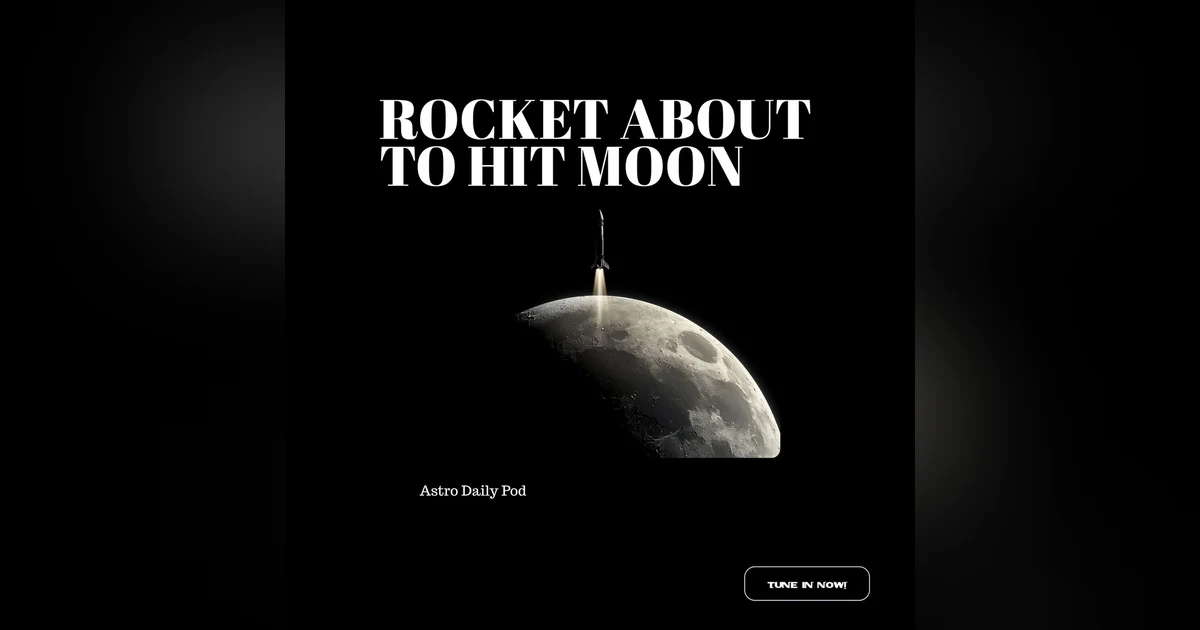
S05E158 — “The Crater Makers” · Tuesday 4 August 2026. Four stories on cosmic impacts — and a new map of the X-ray sky — plus a both-hemispheres skywatch. ① A dead Falcon 9 is about to crater the Moon ● A spent SpaceX Falcon 9 upper stage (catalogued 2025-010D) is predicted to strike the Moon near Einstein Crater on 5 Aug 2026 at ~06:35 UTC — the second documented uncontrolled rocket impact on the Moon. ● The stage launched Firefly’s Blue Ghost and ispace’s Resilience landers in Jan 2025, then was stranded in a chaotic Earth orbit for ~18 months. Impact speed ~2.4 km/s (~5,400 mph); expected crater ~17–27 m across. ● Prediction by Bill Gray (Project Pluto). NASA’s LRO can image the site before and after; a ~two-dozen-author campaign is coordinating observers to chase the ejecta plume. ● Governance angle: no international framework governs cislunar debris — a growing hazard as lunar traffic increases (callback to E154’s distant-retrograde-orbit debris study). Sources: Space.com / Forbes / Reuters (Cris Tolomia) — impact preview, 31 Jul–3 Aug 2026 · Project Pluto (Bill Gray) — 2025-010D impact page · ZME Science — impact timing, 3 Aug 2026 ② Neptune’s inner moons: shrapnel of a shattered world ● JWST NIRSpec spectroscopy of Neptune’s inner moons Larissa, Galatea and Proteus (Caltech; lead author Ryleigh Davis, Mike Brown’s group) detected magnesium-rich phyllosilicates — clay minerals that require liquid water and had never been seen beyond Jupiter. ● The clays imply the material came from much larger, water-bearing worlds — evidence that Neptune’s original regular moon system was destroyed when Triton (a captured Kuiper Belt object) arrived. ● Proteus, the largest of the three, lacks the clays — possibly re-heated and reprocessed after re-forming, hiding its history. Sources: Davis et al., Science Advances, 29 July 2026 · Caltech / phys.org press coverage, 29 Jul–3 Aug 2026 · Space.com (Charles Q. Choi), 3 Aug 2026 ③ “Charbroiled within hours”: impact dust and the dinosaurs ● New modelling (Brandon Johnson et al., Purdue) argues ultrafine impact dust from Chicxulub acted as an insulating blanket, raising surface heating ~3.5× above the spherule-only estimate — enough to ignite global wildfires and kill exposed animals within hours. ● The same dust then blocked sunlight for years — so the model adds a ferocious opening act to the established “impact winter,” rather than replacing it. Sheltering underground or underwater aided survival. ● Caveat: the strongest physical wildfire evidence is so far confined to North America (per UCL’s Alfio Chiarenza, not involved in the study); a truly global fire record remains unconfirmed. Sources: Johnson, Johnson, Wakita & Robertson, JGR: Biogeosciences, 2026 · Popular Science / Space.com / ZME Science, 28 Jul–2 Aug 2026 ④ eROSITA DR2 — the X-ray sky doubles ● The eROSITA telescope (SRG mission) released its second data set (DR2) on 31 July 2026: ~1.9 million pointlike and ~64,000 extended X-ray sources from the first three all-sky scans — nearly doubling the previously released eROSITA catalogue. ● For scale: ROSAT catalogued ~130,000 sources in the 1990s and was the benchmark for 30 years. Lead author: Miriam Ramos-Ceja (MPE). ● DR2 delivers the first direct census of cataclysmic-variable binaries sufficient to explain the decades-old Galactic Ridge X-ray Emission. It coincides with SDSS DR20 (Black Hole Mapper), enabling 3D mapping of active black holes. Sources: Ramos-Ceja et al. (eROSITA-DE), arXiv:2607.27772; DR2 release · Max Planck Society press release, 29 July 2026 · phys.org, 31 Jul 2026 Skywatch — both hemispheres ● Falcon 9 impact (5 Aug, ~06:35 UTC): not naked-eye; ejecta plume a long shot for advanced amateurs in the Americas near the western limb (~2:35 a.m. EDT). Sydney: Moon below horizon — watch for LRO after-images. ● Comet 10P/Tempel 2: perihelion 2 Aug, closest to Earth 3 Aug (~0.41 AU); ~mag 8–9 near M30 in Capricornus. Best return of the century; Southern-Hemisphere-favoured; Northern viewers low on the southern horizon. Darkest window ~7–8 Aug. ● This evening: Venus threads between Regulus (Leo) and Spica (Virgo) in the west — both hemispheres, no equipment. Mercury at its best morning showing (greatest western elongation 2 Aug), low in the pre-dawn east. ● Diary — 12 Aug: total solar eclipse (Greenland/Iceland/Spain), moonless Perseid peak, six-planet alignment. Always use certified ISO 12312-2 eclipse glasses / solar filters except during totality.
Become a supporter of this podcast: https://www.spreaker.com/podcast/astronomy-daily-latest-space-news--5648921/support.
Sponsor Details:
Ensure your online privacy by using NordVPN. To get our special listener deal and save a lot of money, visit www.astronomydaily.io/nordvpn. You'll be glad you did!
Get the best secure and private email on the planet. Stop your Government, google and who knows who else spying on every email you write. Do what we did and use ProtonMail. They beleive in privacy and there are no ads in their business model...yet they still provide a free forever service. Check them out and get out special deal at www.astronomydaily.io/protonmail
Become a supporter of Astronomy Daily by joining our Supporters Club. Commercial free episodes daily are only a click way... Click Here
This episode includes AI-generated content.
Become a supporter of this podcast: https://www.spreaker.com/podcast/astronomy-daily-latest-space-news--5648921/support.
Sponsor Details:
Ensure your online privacy by using NordVPN. To get our special listener deal and save a lot of money, visit www.astronomydaily.io/nordvpn. You'll be glad you did!
Get the best secure and private email on the planet. Stop your Government, google and who knows who else spying on every email you write. Do what we did and use ProtonMail. They beleive in privacy and there are no ads in their business model...yet they still provide a free forever service. Check them out and get out special deal at www.astronomydaily.io/protonmail
Become a supporter of Astronomy Daily by joining our Supporters Club. Commercial free episodes daily are only a click way... Click Here
This episode includes AI-generated content.
WEBVTT
0
00:00:01.680 --> 00:00:03.720
Anna: Sometime tomorrow morning, a piece of a
1
00:00:03.720 --> 00:00:06.040
rocket that has been lost in space for a year
2
00:00:06.040 --> 00:00:09.000
and a half is going to hit the moon and dig
3
00:00:09.000 --> 00:00:11.760
a brand new crater into a world that has kept
4
00:00:11.760 --> 00:00:13.840
its scars for 4 billion years.
5
00:00:14.320 --> 00:00:17.320
Avery: No one planned it, no one can stop it. And a
6
00:00:17.320 --> 00:00:19.240
small army of astronomers have set their
7
00:00:19.240 --> 00:00:21.040
alarms to watch and good
8
00:00:21.040 --> 00:00:23.720
Anna: day and welcome to Astronomy Daily. I'm
9
00:00:23.720 --> 00:00:24.240
Anna.
10
00:00:24.320 --> 00:00:27.130
Avery: And I'm Avery. Today is all about impacts.
11
00:00:27.130 --> 00:00:29.250
The ones we make and the ones the universe
12
00:00:29.250 --> 00:00:30.410
made long before us.
13
00:00:30.730 --> 00:00:33.610
Anna: A dead Falcon nine about to punch the moon.
14
00:00:33.770 --> 00:00:36.210
The asteroid that may have charbroiled the
15
00:00:36.210 --> 00:00:39.090
dinosaurs. Within hours, the ancient smash
16
00:00:39.090 --> 00:00:41.889
up that shattered Neptune's moons. And then
17
00:00:41.889 --> 00:00:44.370
to zoom right out, a new map that just
18
00:00:44.370 --> 00:00:45.930
doubled the X ray sky.
19
00:00:46.170 --> 00:00:48.650
Avery: Plus a uh, both hemisphere skywatch with a
20
00:00:48.650 --> 00:00:51.330
genuinely special comet in it. Let's get into
21
00:00:51.330 --> 00:00:51.610
it.
22
00:00:52.150 --> 00:00:54.270
Anna: So let's start with the story everyone will
23
00:00:54.270 --> 00:00:57.030
be talking about tomorrow. Early on Wednesday
24
00:00:57.110 --> 00:01:00.070
5 August, at about 06:35
25
00:01:00.070 --> 00:01:03.030
Universal Time, a spent upper stage of a
26
00:01:03.030 --> 00:01:05.990
SpaceX Falcon 9 is going to slam into
27
00:01:05.990 --> 00:01:08.950
the far western edge of the Moon's near side,
28
00:01:09.190 --> 00:01:11.750
close to a feature called Einstein Crater.
29
00:01:11.990 --> 00:01:14.230
Avery: And um, this isn't a controlled landing gone
30
00:01:14.230 --> 00:01:17.110
wrong. This is a genuinely derelict object.
31
00:01:17.270 --> 00:01:19.730
Space junk finally running out of road.
32
00:01:20.130 --> 00:01:23.010
Anna: Exactly. Let's rewind back.
33
00:01:23.010 --> 00:01:25.690
In January 2025 a Falcon
34
00:01:25.690 --> 00:01:28.530
9 launched from Kennedy Space center carrying
35
00:01:28.530 --> 00:01:31.290
two moon bound Firefly's
36
00:01:31.290 --> 00:01:34.130
Blee Ghost which went on to land beautifully,
37
00:01:34.370 --> 00:01:36.930
and Ispace's resilience which
38
00:01:36.930 --> 00:01:39.490
sadly didn't survive its own touchdown.
39
00:01:39.810 --> 00:01:42.450
The landers separated and went on their way.
40
00:01:42.450 --> 00:01:45.250
But the rocket's upper stage, the big
41
00:01:45.330 --> 00:01:47.890
second stage tube that does the final push,
42
00:01:48.050 --> 00:01:50.150
was left stranded, too high to
43
00:01:50.150 --> 00:01:52.310
Avery: fall straight back to Earth, too slow to
44
00:01:52.310 --> 00:01:55.310
escape cleanly. So it just wandered
45
00:01:55.550 --> 00:01:56.670
for about 18
46
00:01:56.830 --> 00:01:59.830
Anna: months in a long chaotic loop shaped
47
00:01:59.830 --> 00:02:02.350
by the tug of the Earth, the Moon, the sun
48
00:02:02.430 --> 00:02:05.070
and even the faint pressure of sunlight
49
00:02:05.070 --> 00:02:08.030
itself. It's cataloged unglamorously
50
00:02:08.110 --> 00:02:10.990
as 2025010
51
00:02:11.070 --> 00:02:13.990
D. And an independent astronomer named
52
00:02:13.990 --> 00:02:16.110
Bill Gray, who runs the tracking project
53
00:02:16.350 --> 00:02:18.950
Project Pluto, has been following it the
54
00:02:18.950 --> 00:02:19.470
whole way.
55
00:02:19.970 --> 00:02:21.810
Avery: This is the same Bill Gray who called the
56
00:02:21.810 --> 00:02:22.690
last one, isn't it?
57
00:02:22.770 --> 00:02:25.410
Anna: It is. A few years back he identified
58
00:02:25.490 --> 00:02:28.090
another derelict stage on a lunar collision
59
00:02:28.090 --> 00:02:30.930
course. This is his second and around
60
00:02:30.930 --> 00:02:33.410
March, watching the numbers tighten, he
61
00:02:33.410 --> 00:02:35.690
realized this one wasn't going to be a near
62
00:02:35.690 --> 00:02:37.730
miss. It was going to connect.
63
00:02:38.130 --> 00:02:40.650
Avery: So give us the ballistics. How hard does a
64
00:02:40.650 --> 00:02:41.570
thing like this hit?
65
00:02:41.810 --> 00:02:44.650
Anna: It's roughly a four ton object, about
66
00:02:44.650 --> 00:02:47.330
a 12 meter metal tube arriving at
67
00:02:47.330 --> 00:02:49.770
something like two and a half kilometers a
68
00:02:49.770 --> 00:02:52.240
second. That's about 5,500
69
00:02:52.480 --> 00:02:55.000
miles an hour, comfortably faster than a
70
00:02:55.000 --> 00:02:57.640
rifle bullet. The energy release is on the
71
00:02:57.640 --> 00:03:00.080
order of three tons of tnt.
72
00:03:00.400 --> 00:03:01.920
Avery: And um, what does that carve out?
73
00:03:02.080 --> 00:03:04.560
Anna: Best estimates put the new crater somewhere
74
00:03:04.560 --> 00:03:07.360
between about 17 and 27
75
00:03:07.360 --> 00:03:10.080
meters across and a few meters deep,
76
00:03:10.320 --> 00:03:13.240
small on a lunar scale. But here's the thing
77
00:03:13.240 --> 00:03:15.760
that has scientists genuinely excited.
78
00:03:16.290 --> 00:03:18.930
We will know almost to the second and to
79
00:03:18.930 --> 00:03:21.850
within a few kilometers exactly when
80
00:03:21.850 --> 00:03:24.610
and where a known object of known mass
81
00:03:24.610 --> 00:03:27.250
and known speed hit. That's an
82
00:03:27.250 --> 00:03:30.050
extraordinarily rare natural experiment
83
00:03:30.290 --> 00:03:30.690
because
84
00:03:30.690 --> 00:03:33.450
Avery: normally a fresh moon crater just appears.
85
00:03:33.450 --> 00:03:34.850
And you're working backwards.
86
00:03:35.250 --> 00:03:37.730
Anna: Right here we get to work forwards.
87
00:03:37.970 --> 00:03:40.370
NASA's Lunar Reconnaissance Orbiter can
88
00:03:40.370 --> 00:03:43.090
photograph the site before and after. And
89
00:03:43.090 --> 00:03:45.770
because Bill Gray can hand the orbiter team a
90
00:03:45.770 --> 00:03:48.390
pinpoint, they'll know precisely where to
91
00:03:48.390 --> 00:03:51.390
look for the new scar. That before and after
92
00:03:51.390 --> 00:03:53.830
pair is gold for understanding how
93
00:03:53.830 --> 00:03:56.630
craters actually form and how the lunar
94
00:03:56.630 --> 00:03:58.350
surface throws material around.
95
00:03:58.750 --> 00:04:00.510
Avery: And um, there's a whole observing campaign
96
00:04:00.510 --> 00:04:01.190
around it too.
97
00:04:01.190 --> 00:04:03.870
Anna: I gather there is a paper with
98
00:04:03.950 --> 00:04:06.270
something like two dozen authors is
99
00:04:06.270 --> 00:04:08.270
coordinating professional and amateur
100
00:04:08.270 --> 00:04:10.990
observers to try and catch the ejecta
101
00:04:10.990 --> 00:04:13.670
plume, the spray of debris thrown up at the
102
00:04:13.670 --> 00:04:16.460
moment of impact. Now I want to be careful
103
00:04:16.460 --> 00:04:18.820
here because this feeds straight into our
104
00:04:18.820 --> 00:04:21.460
sky. Watch later. You are not going to see a
105
00:04:21.460 --> 00:04:24.300
flash with your eyes. The impact is on sunlit
106
00:04:24.300 --> 00:04:26.700
ground near the day night line on the Moon's
107
00:04:26.700 --> 00:04:29.700
western limb. The plume is a long shot even
108
00:04:29.700 --> 00:04:31.780
for advanced amateurs with serious
109
00:04:31.780 --> 00:04:32.380
instruments.
110
00:04:32.700 --> 00:04:35.340
Avery: But timing wise, who's best placed?
111
00:04:35.660 --> 00:04:38.380
Anna: Americas north and south? For North
112
00:04:38.380 --> 00:04:41.140
American listeners, it's about 2:35 in the
113
00:04:41.140 --> 00:04:44.060
morning. Eastern pre dawn moon well up in the
114
00:04:44.060 --> 00:04:46.700
west will give Southern hemisphere viewers
115
00:04:46.700 --> 00:04:49.180
the honest picture in the skywatch, because
116
00:04:49.180 --> 00:04:51.660
from here in Sydney, the Moon is actually
117
00:04:51.660 --> 00:04:53.420
below the horizon at impact.
118
00:04:53.900 --> 00:04:55.900
Avery: Ana, uh, can we talk about the uncomfortable
119
00:04:55.900 --> 00:04:58.100
part of this? Because a rocket hitting the
120
00:04:58.100 --> 00:05:01.060
Moon by accident is a great story, but it's
121
00:05:01.060 --> 00:05:02.380
also a warning, isn't it?
122
00:05:02.620 --> 00:05:05.180
Anna: It really is, and I'm glad you raised it.
123
00:05:05.500 --> 00:05:07.620
This is only the second time we've ever
124
00:05:07.620 --> 00:05:10.060
documented an uncontrolled rocket body
125
00:05:10.060 --> 00:05:12.630
hitting the Moon. The first left a pair of
126
00:05:12.630 --> 00:05:15.310
craters on the far side back in 2022.
127
00:05:15.790 --> 00:05:18.590
Two in a few years. And as commercial
128
00:05:18.590 --> 00:05:21.030
lunar traffic ramps up toward permanent Moon
129
00:05:21.030 --> 00:05:23.630
based plans later this decade, the amount of
130
00:05:23.630 --> 00:05:26.350
hardware drifting around in cislunar space,
131
00:05:26.590 --> 00:05:29.270
the region between Earth and the Moon is only
132
00:05:29.270 --> 00:05:30.030
going up.
133
00:05:30.430 --> 00:05:33.310
Avery: And unlike low Earth orbit, there's really no
134
00:05:33.310 --> 00:05:35.630
rulebook out there that's the crux.
135
00:05:35.950 --> 00:05:38.870
Anna: In low Earth orbit, we at least have debris
136
00:05:38.870 --> 00:05:41.710
coordination guidelines for CIS lunar space.
137
00:05:41.710 --> 00:05:44.490
There is no equ international framework,
138
00:05:44.650 --> 00:05:47.610
no agreed way to track, catalog or safely
139
00:05:47.610 --> 00:05:50.210
dispose of these stages. Longtime
140
00:05:50.210 --> 00:05:52.490
listeners will remember we covered a study
141
00:05:52.490 --> 00:05:54.730
just last week on debris in distant
142
00:05:54.730 --> 00:05:57.730
retrograde orbits around the moon and how it
143
00:05:57.730 --> 00:06:00.530
becomes a hazard as traffic grows. This
144
00:06:00.530 --> 00:06:03.010
impact is that abstract worry made
145
00:06:03.010 --> 00:06:05.130
suddenly, literally concrete.
146
00:06:05.450 --> 00:06:07.850
Avery: Interestingly, the industry does seem to be
147
00:06:07.850 --> 00:06:10.130
learning. I read that a more recent SpaceX
148
00:06:10.130 --> 00:06:12.690
upper stage was deliberately parked in a long
149
00:06:12.690 --> 00:06:15.590
term solar orbit rather than left wander.
150
00:06:15.990 --> 00:06:18.670
Anna: That's right. A commercial choice, though not
151
00:06:18.670 --> 00:06:21.190
a regulation. Which is rather the point.
152
00:06:21.590 --> 00:06:24.190
So tomorrow morning, when a lost rocket
153
00:06:24.190 --> 00:06:26.710
finally comes home to the moon, it's worth
154
00:06:26.710 --> 00:06:29.550
holding two thoughts at once. It's a rare
155
00:06:29.550 --> 00:06:32.510
and valuable science opportunity. And it's
156
00:06:32.510 --> 00:06:35.430
a small, bright flag planted on a problem we
157
00:06:35.430 --> 00:06:36.470
haven't solved yet.
158
00:06:36.790 --> 00:06:39.590
Avery: One crater, two lessons. Beautifully put.
159
00:06:40.070 --> 00:06:42.590
Speaking of ancient scars, shall we go and
160
00:06:42.590 --> 00:06:44.470
look at some far older wreckage?
161
00:06:44.870 --> 00:06:47.030
Anna: Let's over to you go out to
162
00:06:47.030 --> 00:06:48.950
Avery: the cold edge of the solar system, to
163
00:06:48.950 --> 00:06:51.150
Neptune, and you find a little family of
164
00:06:51.150 --> 00:06:53.470
small inner moons huddled just outside the
165
00:06:53.470 --> 00:06:56.310
planet's rings. Voyager 2 spotted most of
166
00:06:56.310 --> 00:06:58.510
them on its one and only Flyby back in
167
00:06:58.510 --> 00:07:01.430
1989. And ever since they've been too small
168
00:07:01.430 --> 00:07:04.310
and too far to really study. Until the James
169
00:07:04.310 --> 00:07:06.750
Webb Space Telescope turned its spectrograph
170
00:07:06.750 --> 00:07:07.190
on them.
171
00:07:07.590 --> 00:07:10.310
Anna: And this is a Caltech team, Mike Brown's
172
00:07:10.310 --> 00:07:12.870
group, the Pluto Killer, himself. Led by
173
00:07:12.870 --> 00:07:13.830
Riley Davis?
174
00:07:14.480 --> 00:07:17.120
Avery: The very same. And what they found genuinely
175
00:07:17.120 --> 00:07:19.240
startled them in the light from three of
176
00:07:19.240 --> 00:07:22.080
those moons, Larissa, Galatea and Proteus.
177
00:07:22.080 --> 00:07:24.600
And in the rings, they detected clay
178
00:07:24.600 --> 00:07:27.360
minerals, specifically magnesium rich
179
00:07:27.360 --> 00:07:28.400
phyllosilicates.
180
00:07:28.720 --> 00:07:31.720
Anna: Clay in the outer solar system? Why is
181
00:07:31.720 --> 00:07:32.720
that such a shock?
182
00:07:33.120 --> 00:07:35.520
Avery: Because phyllosilicates had never been seen
183
00:07:35.520 --> 00:07:37.840
anywhere out there beyond Jupiter. And
184
00:07:37.920 --> 00:07:40.840
crucially, clays only form in the presence of
185
00:07:40.840 --> 00:07:43.420
liquid water, as Davis put it. It was
186
00:07:43.420 --> 00:07:45.620
simply not on their list of things to look
187
00:07:45.620 --> 00:07:48.500
for. It hit them in the face. You don't make
188
00:07:48.500 --> 00:07:51.300
these minerals on a tiny cold moonlet. You
189
00:07:51.300 --> 00:07:53.580
make them deep inside a much larger world
190
00:07:53.580 --> 00:07:55.340
with liquid water in its guts.
191
00:07:55.740 --> 00:07:57.860
Anna: Though, uh, the material is telling you it
192
00:07:57.860 --> 00:08:00.340
came from somewhere bigger, somewhere that no
193
00:08:00.340 --> 00:08:01.180
longer exists.
194
00:08:01.580 --> 00:08:04.340
Avery: That's the whole story in one sentence. The
195
00:08:04.340 --> 00:08:07.180
leading explanation is dramatic. Neptune
196
00:08:07.180 --> 00:08:09.740
once had its own orderly system of moons,
197
00:08:09.900 --> 00:08:12.800
much like Uranus does today. And then
198
00:08:12.960 --> 00:08:14.160
Triton arrived.
199
00:08:14.480 --> 00:08:17.000
Anna: Triton being Neptune's giant backwards
200
00:08:17.000 --> 00:08:17.920
orbiting moon.
201
00:08:18.160 --> 00:08:20.920
Avery: Right. And the smoking gun is that
202
00:08:20.920 --> 00:08:23.680
backwards orbit Triton almost certainly
203
00:08:23.680 --> 00:08:25.920
didn't form At Neptune. It's a captured
204
00:08:25.920 --> 00:08:28.840
Kuiper Belt object, a big icy world
205
00:08:28.840 --> 00:08:31.240
that wandered in from further out and got
206
00:08:31.240 --> 00:08:34.000
gravitationally snared. And the process
207
00:08:34.000 --> 00:08:36.320
of capturing something that large would have
208
00:08:36.320 --> 00:08:38.480
been catastrophic for whatever moons were
209
00:08:38.480 --> 00:08:40.890
already there. It would have scattered and
210
00:08:40.890 --> 00:08:42.410
shattered the original family.
211
00:08:42.650 --> 00:08:45.570
Anna: And these little inner moons are the
212
00:08:45.570 --> 00:08:48.050
Avery: reassembled shrapnel rubble from the
213
00:08:48.050 --> 00:08:50.250
interiors of those destroyed worlds
214
00:08:50.490 --> 00:08:53.290
exposed by the smashup. Some of it drifting
215
00:08:53.290 --> 00:08:55.849
back together into the moonlets we see now.
216
00:08:56.330 --> 00:08:59.130
Davis called it, seeing the fingerprints left
217
00:08:59.130 --> 00:09:01.690
behind by that process. There's even a neat
218
00:09:01.690 --> 00:09:04.090
consistency check. The largest of the three,
219
00:09:04.090 --> 00:09:07.040
Proteus, doesn't show the clays. And the
220
00:09:07.040 --> 00:09:08.960
team think it's because it's big enough to
221
00:09:08.960 --> 00:09:11.640
have reheated and reprocess itself after
222
00:09:11.640 --> 00:09:14.280
reforming, hiding its past better than its
223
00:09:14.280 --> 00:09:15.320
smaller siblings.
224
00:09:15.560 --> 00:09:18.400
Anna: That's a lovely detail. The biggest one is
225
00:09:18.400 --> 00:09:20.480
the best at, uh, covering its tracks. And it
226
00:09:20.480 --> 00:09:22.280
ties us right back to the top of the show,
227
00:09:22.280 --> 00:09:25.080
doesn't it? A crater tomorrow, a demolished
228
00:09:25.080 --> 00:09:27.760
moon system billions of years ago. Same
229
00:09:27.760 --> 00:09:29.800
violence, wildly different scale.
230
00:09:29.880 --> 00:09:32.600
Avery: The solar system builds by breaking things.
231
00:09:33.070 --> 00:09:35.270
And it means the next spacecraft we sent out
232
00:09:35.270 --> 00:09:37.590
there and an ice giant mission is a top
233
00:09:37.590 --> 00:09:40.230
priority whenever it happens would be flying
234
00:09:40.230 --> 00:09:42.030
to a, uh, genuine crime scene.
235
00:09:42.110 --> 00:09:44.750
Anna: Now to the most famous impact of them all.
236
00:09:44.910 --> 00:09:47.310
And a new twist on how it actually did its
237
00:09:47.310 --> 00:09:50.030
killing. 66 million years ago, a
238
00:09:50.030 --> 00:09:52.590
roughly 10 kilometer asteroid struck what's
239
00:09:52.590 --> 00:09:55.110
now the Yucatan Peninsula. And the age of the
240
00:09:55.110 --> 00:09:57.750
dinosaurs ended. The long standing picture is
241
00:09:57.750 --> 00:10:00.720
a slow death. Dust and soot blot out the sun.
242
00:10:00.960 --> 00:10:03.520
An impact. Winter sets in, food webs
243
00:10:03.520 --> 00:10:05.120
collapse over months and years.
244
00:10:05.440 --> 00:10:08.240
Avery: The years of darkness story, which is grim
245
00:10:08.240 --> 00:10:09.200
but slow.
246
00:10:09.440 --> 00:10:11.920
Anna: Right? But this new study out of Purdue,
247
00:10:12.080 --> 00:10:14.120
Brandon Johnson and colleagues in the Journal
248
00:10:14.120 --> 00:10:16.880
of Geophysical Research argues the very
249
00:10:16.880 --> 00:10:19.400
first few hours may have been far more brutal
250
00:10:19.400 --> 00:10:21.840
than we thought. Their headline essentially
251
00:10:21.840 --> 00:10:24.160
is that exposed animals could have been
252
00:10:24.160 --> 00:10:25.600
charbroiled within hours.
253
00:10:26.140 --> 00:10:28.460
Avery: Charbroiled being the technical term.
254
00:10:28.620 --> 00:10:31.500
Anna: Fair enough. Here's the mechanism. The
255
00:10:31.500 --> 00:10:34.260
impact vaporized an enormous amount of rock
256
00:10:34.260 --> 00:10:36.740
and flung it skyward. Some of that cooled
257
00:10:36.740 --> 00:10:39.340
into tiny glassy beads, spherules,
258
00:10:39.500 --> 00:10:41.740
which rained back down. And the friction of
259
00:10:41.740 --> 00:10:43.980
all that debris re entering the atmosphere
260
00:10:43.980 --> 00:10:46.500
creates, uh, a global heat pulse. That part
261
00:10:46.500 --> 00:10:48.980
we knew. But earlier models suggested the
262
00:10:48.980 --> 00:10:51.660
heat pulse, while nasty, might not be enough
263
00:10:51.660 --> 00:10:53.420
to set the whole planet alight.
264
00:10:53.920 --> 00:10:55.440
Avery: So what did this team add?
265
00:10:55.680 --> 00:10:58.520
Anna: Dust. Not the beads, the ultra fine
266
00:10:58.520 --> 00:11:01.440
stuff. A huge quantity of rock vapor never
267
00:11:01.440 --> 00:11:03.760
condensed into spherules. It stayed as
268
00:11:03.760 --> 00:11:06.760
microscopic dust high in the atmosphere. And
269
00:11:06.760 --> 00:11:08.560
when they put that dust layer into their
270
00:11:08.560 --> 00:11:11.040
simulations. It acted like an insulating
271
00:11:11.040 --> 00:11:13.360
blanket, trapping the heat from all those
272
00:11:13.360 --> 00:11:15.680
falling particles and radiating it down.
273
00:11:16.000 --> 00:11:18.600
Their number is striking surface heating
274
00:11:18.600 --> 00:11:20.720
about three and a half times more intense
275
00:11:20.720 --> 00:11:21.760
than the beads alone.
276
00:11:22.140 --> 00:11:22.860
Avery: Enough to.
277
00:11:23.420 --> 00:11:26.340
Anna: Enough, they argue, to ignite spontaneous
278
00:11:26.340 --> 00:11:28.700
wildfires around the world and kill
279
00:11:28.780 --> 00:11:31.660
exposed thin skinned animals within the first
280
00:11:31.660 --> 00:11:34.340
hour or two. Johnson's line was that you're
281
00:11:34.340 --> 00:11:36.140
essentially in the realm of killing off
282
00:11:36.140 --> 00:11:38.780
almost everything in that first window.
283
00:11:38.940 --> 00:11:40.180
Avery: So who survived that?
284
00:11:40.180 --> 00:11:43.020
Anna: Uh, exactly the ones you'd guess. Anything
285
00:11:43.020 --> 00:11:45.940
sheltering underground or underwater had a
286
00:11:45.940 --> 00:11:48.580
fighting chance. Which starts to explain the
287
00:11:48.580 --> 00:11:50.340
winners and losers pattern of that
288
00:11:50.340 --> 00:11:53.240
extinction. And then this is the elegant
289
00:11:53.240 --> 00:11:56.080
part. The same dust that cooked the surface
290
00:11:56.080 --> 00:11:58.880
in hour one goes on to block sunlight
291
00:11:58.880 --> 00:12:01.680
for years afterward. So it doesn't replace
292
00:12:01.680 --> 00:12:04.360
the impact winter idea. It bolts a
293
00:12:04.360 --> 00:12:06.800
ferocious opening act onto the front of it.
294
00:12:07.120 --> 00:12:09.440
Avery: I do want to flag the honest caveat though,
295
00:12:09.760 --> 00:12:10.160
please.
296
00:12:10.160 --> 00:12:12.720
Anna: And it's an important one. The clearest
297
00:12:12.720 --> 00:12:15.400
physical evidence for these global wildfires
298
00:12:15.400 --> 00:12:18.400
so far is really only found in North American
299
00:12:18.480 --> 00:12:21.210
rocks. A researcher not involved in the
300
00:12:21.210 --> 00:12:23.890
study, Alfio Chiarenza at University College
301
00:12:23.890 --> 00:12:26.410
London, made the fair point that we may
302
00:12:26.410 --> 00:12:29.250
eventually find a truly global fire record,
303
00:12:29.570 --> 00:12:31.930
but we just don't have it yet. So a
304
00:12:31.930 --> 00:12:34.530
compelling model, strong regional evidence,
305
00:12:34.690 --> 00:12:37.530
and a, uh, genuinely open question about how
306
00:12:37.530 --> 00:12:40.050
planet wide those first hour fires really
307
00:12:40.050 --> 00:12:40.370
were.
308
00:12:40.770 --> 00:12:43.090
Avery: And the Throughline Today show writes itself
309
00:12:43.170 --> 00:12:45.690
the same basic physics that'll carve a modest
310
00:12:45.690 --> 00:12:48.570
hole in the moon tomorrow. Scaled up is what
311
00:12:48.570 --> 00:12:49.690
reset life on Earth.
312
00:12:50.320 --> 00:12:53.120
Okay, moving on. Let's pull all the way back
313
00:12:53.120 --> 00:12:55.920
now from one new crater to nearly 2 million
314
00:12:56.000 --> 00:12:58.680
cosmic objects. The Erocita X ray
315
00:12:58.680 --> 00:13:00.840
telescope on the Spectrum Ringen Gamma
316
00:13:00.840 --> 00:13:03.080
mission has just put out its second big
317
00:13:03.080 --> 00:13:05.920
public data release, Dr. 2 and it is
318
00:13:05.920 --> 00:13:08.800
a genuine landmark for the high energy sky X
319
00:13:08.800 --> 00:13:11.080
Anna: rays, meaning the violent universe.
320
00:13:11.080 --> 00:13:13.880
Avery: The hot stuff, the hot, the violent,
321
00:13:13.880 --> 00:13:16.240
the extreme. Growing black holes,
322
00:13:16.320 --> 00:13:19.080
exploded stars, million degree gas between
323
00:13:19.080 --> 00:13:21.740
galaxies. Erocita scans the entire
324
00:13:21.740 --> 00:13:24.740
sky every six months and this release stacks
325
00:13:24.740 --> 00:13:26.700
the first three of those all sky scans
326
00:13:26.700 --> 00:13:29.540
together. The result, around 1.9
327
00:13:29.540 --> 00:13:32.140
million point like sources, things like stars
328
00:13:32.140 --> 00:13:34.580
and supermassive black holes, plus about
329
00:13:34.580 --> 00:13:37.260
64,000 extended sources, which are things
330
00:13:37.260 --> 00:13:39.820
like galaxy clusters and supernova remnants.
331
00:13:40.140 --> 00:13:42.220
Anna: Put that number in perspective for me.
332
00:13:42.380 --> 00:13:45.300
Avery: Happily. The previous great all sky X ray
333
00:13:45.300 --> 00:13:48.140
survey was ROSAT. Back in the early 1990s,
334
00:13:48.580 --> 00:13:51.220
it cataloged around 130,000 sources
335
00:13:51.380 --> 00:13:53.620
and that was the field's benchmark for 30
336
00:13:53.620 --> 00:13:56.340
years. Hirosita's first release already
337
00:13:56.420 --> 00:13:59.340
blew past it. Dr. 2 roughly doubles that
338
00:13:59.340 --> 00:14:02.060
again as the lead author, Miriam Ramos
339
00:14:02.060 --> 00:14:04.940
Ceja at the Max Planck Institute put it Every
340
00:14:04.940 --> 00:14:07.780
extra scan drags fainter sources up out of
341
00:14:07.780 --> 00:14:08.260
the noise.
342
00:14:08.580 --> 00:14:11.180
Anna: And there's a specific old mystery. This
343
00:14:11.180 --> 00:14:12.260
cracks, isn't there?
344
00:14:12.740 --> 00:14:15.430
Avery: There is and I love this one. For about 30
345
00:14:15.430 --> 00:14:17.870
decades we've known the flat disk of our own
346
00:14:17.870 --> 00:14:20.510
galaxy glows faintly in X rays. The
347
00:14:20.510 --> 00:14:23.150
galactic ridge, X ray emission. Without being
348
00:14:23.150 --> 00:14:25.470
able to prove source by source what's
349
00:14:25.470 --> 00:14:28.190
producing it, Dr. 2 delivers the first
350
00:14:28.190 --> 00:14:31.030
direct census of a population of cataclysmic
351
00:14:31.030 --> 00:14:33.990
variables, close binary stars where a dense
352
00:14:33.990 --> 00:14:36.110
white dwarf is pulling material off a
353
00:14:36.110 --> 00:14:38.470
companion. And it turns out there are enough
354
00:14:38.470 --> 00:14:40.550
of them to account for that mysterious glow.
355
00:14:41.130 --> 00:14:43.570
A 30 year puzzle resolved by sheer
356
00:14:43.570 --> 00:14:44.250
completeness.
357
00:14:44.650 --> 00:14:47.530
Anna: Though it's not one headline discovery, it's
358
00:14:47.530 --> 00:14:49.650
ah, a map good enough to answer questions we
359
00:14:49.650 --> 00:14:51.530
couldn't even properly ask before.
360
00:14:52.170 --> 00:14:55.010
Avery: That's exactly it. And it lands alongside a
361
00:14:55.010 --> 00:14:57.530
huge Sloan Digital Sky Survey data release.
362
00:14:57.850 --> 00:14:59.730
So a couple of hundred thousand of these X
363
00:14:59.730 --> 00:15:02.450
ray sources now have optical fingerprints and
364
00:15:02.450 --> 00:15:05.210
distances, which lets astronomers map growing
365
00:15:05.210 --> 00:15:07.810
black holes in three dimensions across cosmic
366
00:15:07.810 --> 00:15:10.340
time. Its infrastructure for a decade of
367
00:15:10.340 --> 00:15:10.940
discovery.
368
00:15:11.260 --> 00:15:14.140
Anna: From a single rooftop sized crater to
369
00:15:14.140 --> 00:15:17.020
a three dimensional map of the hot universe.
370
00:15:17.340 --> 00:15:19.260
Not a bad range for one episode.
371
00:15:19.740 --> 00:15:22.300
Avery: Let's move on to today's skywatch. Both
372
00:15:22.300 --> 00:15:23.180
hemispheres.
373
00:15:23.420 --> 00:15:26.220
Anna: Right? Let's take all this upward and outward
374
00:15:26.220 --> 00:15:29.100
and bring it to your own sky. And we start
375
00:15:29.100 --> 00:15:31.580
of course with tomorrow's morning's impact.
376
00:15:32.140 --> 00:15:34.140
Avery: The honest expectations version.
377
00:15:34.480 --> 00:15:37.200
Anna: The honest version. To be clear, this is
378
00:15:37.200 --> 00:15:40.040
not a naked eye event. There's no flash to
379
00:15:40.040 --> 00:15:42.800
see if you're a serious amateur in the
380
00:15:42.800 --> 00:15:45.680
Americas with a large telescope and a lot of
381
00:15:45.680 --> 00:15:48.360
patience. The ejectiplume is a long
382
00:15:48.360 --> 00:15:51.280
shot target near the Moon's western limb
383
00:15:51.440 --> 00:15:54.000
around 6:35 universal time.
384
00:15:54.240 --> 00:15:57.080
That's about 2:35 eastern for north
385
00:15:57.080 --> 00:15:59.960
America, Moon high in the west for
386
00:15:59.960 --> 00:16:02.640
everyone else. The real payoff comes later
387
00:16:02.800 --> 00:16:05.520
when the Lunar Reconnaissance Orbiter returns
388
00:16:05.520 --> 00:16:08.380
before an after images of the fresh crater.
389
00:16:09.020 --> 00:16:11.660
And from here in the southern hemisphere in
390
00:16:11.660 --> 00:16:13.980
Sydney, the Moon is below the horizon at
391
00:16:13.980 --> 00:16:16.740
impact time. So this one's an after the fact
392
00:16:16.740 --> 00:16:19.340
story for us. Watch for those orbiter
393
00:16:19.340 --> 00:16:20.500
images now.
394
00:16:20.500 --> 00:16:23.020
Avery: The one I'm genuinely excited about, the
395
00:16:23.020 --> 00:16:25.900
Anna: comet, Comet 10P Tempel 2.
396
00:16:26.220 --> 00:16:29.100
It rounded the sun on the 2nd of August and
397
00:16:29.100 --> 00:16:31.740
made its closest pass by Earth on the 3rd.
398
00:16:32.140 --> 00:16:34.940
About 0.41 astronomical
399
00:16:34.940 --> 00:16:37.450
units, roughly 62 million
400
00:16:37.450 --> 00:16:40.250
kilometers. So right now it's near its best,
401
00:16:40.330 --> 00:16:43.330
around 8th to 9th magnitude. That's
402
00:16:43.330 --> 00:16:46.210
not naked eye. Think large binoculars
403
00:16:46.210 --> 00:16:49.090
or a small telescope from A dark site, a
404
00:16:49.090 --> 00:16:51.850
small fuzzy patch near the globular cluster
405
00:16:52.010 --> 00:16:54.850
M M30 in Capricornus. But here's why
406
00:16:54.850 --> 00:16:57.690
it matters. This is expected to be Tempel
407
00:16:57.690 --> 00:17:00.370
2's finest return for the rest of the
408
00:17:00.370 --> 00:17:00.810
century.
409
00:17:01.220 --> 00:17:03.620
Avery: And this one actually favors us in the south.
410
00:17:03.780 --> 00:17:06.180
Anna: It does a nice one for our Southern
411
00:17:06.180 --> 00:17:08.700
Hemisphere listeners, where the comet climbs
412
00:17:08.700 --> 00:17:10.980
higher and sits up for much of the night.
413
00:17:11.460 --> 00:17:13.820
Northern Hemisphere friends you can catch it
414
00:17:13.820 --> 00:17:16.500
too. But it stays low over your southern
415
00:17:16.500 --> 00:17:19.420
horizon, so you'll want a clear flat sky
416
00:17:19.420 --> 00:17:22.220
in that direction. Your darkest window opens
417
00:17:22.220 --> 00:17:24.580
on the nights around the seventh and eighth,
418
00:17:24.580 --> 00:17:26.740
once the waning moon is out of the way.
419
00:17:27.019 --> 00:17:29.019
Avery: Anything for the early evening crowd who
420
00:17:29.019 --> 00:17:31.099
don't fancy a midnight comet hunt?
421
00:17:31.179 --> 00:17:34.019
Anna: Yes, look west after sunset tonight
422
00:17:34.019 --> 00:17:36.859
and you'll find brilliant Venus threaded
423
00:17:36.859 --> 00:17:39.019
neatly between two bright stars,
424
00:17:39.179 --> 00:17:41.880
Regulus, the heart of Leo and Spica,
425
00:17:41.880 --> 00:17:44.459
uh, in Virgo, a lovely easy
426
00:17:44.459 --> 00:17:46.899
lineup for both hemispheres. No equipment
427
00:17:46.899 --> 00:17:49.499
needed and if you're an early riser.
428
00:17:49.659 --> 00:17:52.579
Mercury reached its best morning showing on
429
00:17:52.579 --> 00:17:55.179
the second and is still hanging low in the
430
00:17:55.179 --> 00:17:58.020
pre dawn east. Catch it before the twilight
431
00:17:58.020 --> 00:17:58.700
drowns it out.
432
00:17:58.780 --> 00:18:01.020
Avery: And then the big one. Mark the calendar.
433
00:18:01.020 --> 00:18:03.900
Anna: The 12th of August, an enormous
434
00:18:03.900 --> 00:18:06.780
day. A total solar eclipse sweeps
435
00:18:06.780 --> 00:18:09.500
across Greenland, Iceland and Spain,
436
00:18:09.740 --> 00:18:12.380
Earth's first totality in more than two
437
00:18:12.380 --> 00:18:15.020
years. And on the very same day, the
438
00:18:15.020 --> 00:18:17.740
Perseid meteor shower peaks under a new
439
00:18:17.740 --> 00:18:20.180
moon sky, which is about as good as the
440
00:18:20.180 --> 00:18:23.020
perseids ever get. Plus a 6
441
00:18:23.100 --> 00:18:25.870
planet alignment. We'll build up to all of it
442
00:18:25.870 --> 00:18:28.790
over the coming episodes. And the essential
443
00:18:28.790 --> 00:18:30.990
safety note, which we will repeat every
444
00:18:30.990 --> 00:18:33.870
single time. A total solar eclipse is
445
00:18:33.870 --> 00:18:36.550
only safe to watch with your unaided eyes
446
00:18:36.630 --> 00:18:39.510
during the brief moments of totality itself.
447
00:18:39.990 --> 00:18:42.830
Any other time and everywhere outside the
448
00:18:42.830 --> 00:18:45.430
narrow path of totality, you must use
449
00:18:45.510 --> 00:18:47.270
certified ISO
450
00:18:47.510 --> 00:18:50.470
123122
451
00:18:50.710 --> 00:18:53.270
eclipse. Uh, glasses or a, ah, proper solar
452
00:18:53.270 --> 00:18:55.990
filter. Ordinary sunglasses will not
453
00:18:55.990 --> 00:18:58.470
protect your eyes. Please look after them.
454
00:18:58.550 --> 00:19:01.190
Avery: Couldn't agree more. A spectacular sky ahead.
455
00:19:01.430 --> 00:19:04.070
Watched safely. And that's our lot for today.
456
00:19:04.470 --> 00:19:07.430
Impacts large, small, ancient and brand new.
457
00:19:07.590 --> 00:19:10.270
Anna: If today's show sparked something, come and
458
00:19:10.270 --> 00:19:13.030
find us at astronomydaily IO
459
00:19:13.350 --> 00:19:16.270
you can stream every back episode. Follow
460
00:19:16.270 --> 00:19:19.110
our continually updating Space News feed,
461
00:19:19.190 --> 00:19:22.110
Leave us a review, drop us a note and sign up
462
00:19:22.110 --> 00:19:24.670
for the daily newsletter. So the cosmos lands
463
00:19:24.670 --> 00:19:25.430
in your inbox
464
00:19:25.430 --> 00:19:27.410
Avery: each morning, Find us on social
465
00:19:27.410 --> 00:19:30.010
astrodaily pod and tell a
466
00:19:30.010 --> 00:19:32.530
stargazing friend. Word of mouth is how this
467
00:19:32.530 --> 00:19:33.490
little show grows.
468
00:19:33.650 --> 00:19:35.770
Anna: We are back tomorrow and if you're in the
469
00:19:35.770 --> 00:19:38.690
Americas with a big scope and an early alarm
470
00:19:38.850 --> 00:19:41.730
best of luck chasing that plume. Until then,
471
00:19:41.890 --> 00:19:44.610
From Anna and M. Avery, clear skies.
0
00:00:01.680 --> 00:00:03.720
Anna: Sometime tomorrow morning, a piece of a
1
00:00:03.720 --> 00:00:06.040
rocket that has been lost in space for a year
2
00:00:06.040 --> 00:00:09.000
and a half is going to hit the moon and dig
3
00:00:09.000 --> 00:00:11.760
a brand new crater into a world that has kept
4
00:00:11.760 --> 00:00:13.840
its scars for 4 billion years.
5
00:00:14.320 --> 00:00:17.320
Avery: No one planned it, no one can stop it. And a
6
00:00:17.320 --> 00:00:19.240
small army of astronomers have set their
7
00:00:19.240 --> 00:00:21.040
alarms to watch and good
8
00:00:21.040 --> 00:00:23.720
Anna: day and welcome to Astronomy Daily. I'm
9
00:00:23.720 --> 00:00:24.240
Anna.
10
00:00:24.320 --> 00:00:27.130
Avery: And I'm Avery. Today is all about impacts.
11
00:00:27.130 --> 00:00:29.250
The ones we make and the ones the universe
12
00:00:29.250 --> 00:00:30.410
made long before us.
13
00:00:30.730 --> 00:00:33.610
Anna: A dead Falcon nine about to punch the moon.
14
00:00:33.770 --> 00:00:36.210
The asteroid that may have charbroiled the
15
00:00:36.210 --> 00:00:39.090
dinosaurs. Within hours, the ancient smash
16
00:00:39.090 --> 00:00:41.889
up that shattered Neptune's moons. And then
17
00:00:41.889 --> 00:00:44.370
to zoom right out, a new map that just
18
00:00:44.370 --> 00:00:45.930
doubled the X ray sky.
19
00:00:46.170 --> 00:00:48.650
Avery: Plus a uh, both hemisphere skywatch with a
20
00:00:48.650 --> 00:00:51.330
genuinely special comet in it. Let's get into
21
00:00:51.330 --> 00:00:51.610
it.
22
00:00:52.150 --> 00:00:54.270
Anna: So let's start with the story everyone will
23
00:00:54.270 --> 00:00:57.030
be talking about tomorrow. Early on Wednesday
24
00:00:57.110 --> 00:01:00.070
5 August, at about 06:35
25
00:01:00.070 --> 00:01:03.030
Universal Time, a spent upper stage of a
26
00:01:03.030 --> 00:01:05.990
SpaceX Falcon 9 is going to slam into
27
00:01:05.990 --> 00:01:08.950
the far western edge of the Moon's near side,
28
00:01:09.190 --> 00:01:11.750
close to a feature called Einstein Crater.
29
00:01:11.990 --> 00:01:14.230
Avery: And um, this isn't a controlled landing gone
30
00:01:14.230 --> 00:01:17.110
wrong. This is a genuinely derelict object.
31
00:01:17.270 --> 00:01:19.730
Space junk finally running out of road.
32
00:01:20.130 --> 00:01:23.010
Anna: Exactly. Let's rewind back.
33
00:01:23.010 --> 00:01:25.690
In January 2025 a Falcon
34
00:01:25.690 --> 00:01:28.530
9 launched from Kennedy Space center carrying
35
00:01:28.530 --> 00:01:31.290
two moon bound Firefly's
36
00:01:31.290 --> 00:01:34.130
Blee Ghost which went on to land beautifully,
37
00:01:34.370 --> 00:01:36.930
and Ispace's resilience which
38
00:01:36.930 --> 00:01:39.490
sadly didn't survive its own touchdown.
39
00:01:39.810 --> 00:01:42.450
The landers separated and went on their way.
40
00:01:42.450 --> 00:01:45.250
But the rocket's upper stage, the big
41
00:01:45.330 --> 00:01:47.890
second stage tube that does the final push,
42
00:01:48.050 --> 00:01:50.150
was left stranded, too high to
43
00:01:50.150 --> 00:01:52.310
Avery: fall straight back to Earth, too slow to
44
00:01:52.310 --> 00:01:55.310
escape cleanly. So it just wandered
45
00:01:55.550 --> 00:01:56.670
for about 18
46
00:01:56.830 --> 00:01:59.830
Anna: months in a long chaotic loop shaped
47
00:01:59.830 --> 00:02:02.350
by the tug of the Earth, the Moon, the sun
48
00:02:02.430 --> 00:02:05.070
and even the faint pressure of sunlight
49
00:02:05.070 --> 00:02:08.030
itself. It's cataloged unglamorously
50
00:02:08.110 --> 00:02:10.990
as 2025010
51
00:02:11.070 --> 00:02:13.990
D. And an independent astronomer named
52
00:02:13.990 --> 00:02:16.110
Bill Gray, who runs the tracking project
53
00:02:16.350 --> 00:02:18.950
Project Pluto, has been following it the
54
00:02:18.950 --> 00:02:19.470
whole way.
55
00:02:19.970 --> 00:02:21.810
Avery: This is the same Bill Gray who called the
56
00:02:21.810 --> 00:02:22.690
last one, isn't it?
57
00:02:22.770 --> 00:02:25.410
Anna: It is. A few years back he identified
58
00:02:25.490 --> 00:02:28.090
another derelict stage on a lunar collision
59
00:02:28.090 --> 00:02:30.930
course. This is his second and around
60
00:02:30.930 --> 00:02:33.410
March, watching the numbers tighten, he
61
00:02:33.410 --> 00:02:35.690
realized this one wasn't going to be a near
62
00:02:35.690 --> 00:02:37.730
miss. It was going to connect.
63
00:02:38.130 --> 00:02:40.650
Avery: So give us the ballistics. How hard does a
64
00:02:40.650 --> 00:02:41.570
thing like this hit?
65
00:02:41.810 --> 00:02:44.650
Anna: It's roughly a four ton object, about
66
00:02:44.650 --> 00:02:47.330
a 12 meter metal tube arriving at
67
00:02:47.330 --> 00:02:49.770
something like two and a half kilometers a
68
00:02:49.770 --> 00:02:52.240
second. That's about 5,500
69
00:02:52.480 --> 00:02:55.000
miles an hour, comfortably faster than a
70
00:02:55.000 --> 00:02:57.640
rifle bullet. The energy release is on the
71
00:02:57.640 --> 00:03:00.080
order of three tons of tnt.
72
00:03:00.400 --> 00:03:01.920
Avery: And um, what does that carve out?
73
00:03:02.080 --> 00:03:04.560
Anna: Best estimates put the new crater somewhere
74
00:03:04.560 --> 00:03:07.360
between about 17 and 27
75
00:03:07.360 --> 00:03:10.080
meters across and a few meters deep,
76
00:03:10.320 --> 00:03:13.240
small on a lunar scale. But here's the thing
77
00:03:13.240 --> 00:03:15.760
that has scientists genuinely excited.
78
00:03:16.290 --> 00:03:18.930
We will know almost to the second and to
79
00:03:18.930 --> 00:03:21.850
within a few kilometers exactly when
80
00:03:21.850 --> 00:03:24.610
and where a known object of known mass
81
00:03:24.610 --> 00:03:27.250
and known speed hit. That's an
82
00:03:27.250 --> 00:03:30.050
extraordinarily rare natural experiment
83
00:03:30.290 --> 00:03:30.690
because
84
00:03:30.690 --> 00:03:33.450
Avery: normally a fresh moon crater just appears.
85
00:03:33.450 --> 00:03:34.850
And you're working backwards.
86
00:03:35.250 --> 00:03:37.730
Anna: Right here we get to work forwards.
87
00:03:37.970 --> 00:03:40.370
NASA's Lunar Reconnaissance Orbiter can
88
00:03:40.370 --> 00:03:43.090
photograph the site before and after. And
89
00:03:43.090 --> 00:03:45.770
because Bill Gray can hand the orbiter team a
90
00:03:45.770 --> 00:03:48.390
pinpoint, they'll know precisely where to
91
00:03:48.390 --> 00:03:51.390
look for the new scar. That before and after
92
00:03:51.390 --> 00:03:53.830
pair is gold for understanding how
93
00:03:53.830 --> 00:03:56.630
craters actually form and how the lunar
94
00:03:56.630 --> 00:03:58.350
surface throws material around.
95
00:03:58.750 --> 00:04:00.510
Avery: And um, there's a whole observing campaign
96
00:04:00.510 --> 00:04:01.190
around it too.
97
00:04:01.190 --> 00:04:03.870
Anna: I gather there is a paper with
98
00:04:03.950 --> 00:04:06.270
something like two dozen authors is
99
00:04:06.270 --> 00:04:08.270
coordinating professional and amateur
100
00:04:08.270 --> 00:04:10.990
observers to try and catch the ejecta
101
00:04:10.990 --> 00:04:13.670
plume, the spray of debris thrown up at the
102
00:04:13.670 --> 00:04:16.460
moment of impact. Now I want to be careful
103
00:04:16.460 --> 00:04:18.820
here because this feeds straight into our
104
00:04:18.820 --> 00:04:21.460
sky. Watch later. You are not going to see a
105
00:04:21.460 --> 00:04:24.300
flash with your eyes. The impact is on sunlit
106
00:04:24.300 --> 00:04:26.700
ground near the day night line on the Moon's
107
00:04:26.700 --> 00:04:29.700
western limb. The plume is a long shot even
108
00:04:29.700 --> 00:04:31.780
for advanced amateurs with serious
109
00:04:31.780 --> 00:04:32.380
instruments.
110
00:04:32.700 --> 00:04:35.340
Avery: But timing wise, who's best placed?
111
00:04:35.660 --> 00:04:38.380
Anna: Americas north and south? For North
112
00:04:38.380 --> 00:04:41.140
American listeners, it's about 2:35 in the
113
00:04:41.140 --> 00:04:44.060
morning. Eastern pre dawn moon well up in the
114
00:04:44.060 --> 00:04:46.700
west will give Southern hemisphere viewers
115
00:04:46.700 --> 00:04:49.180
the honest picture in the skywatch, because
116
00:04:49.180 --> 00:04:51.660
from here in Sydney, the Moon is actually
117
00:04:51.660 --> 00:04:53.420
below the horizon at impact.
118
00:04:53.900 --> 00:04:55.900
Avery: Ana, uh, can we talk about the uncomfortable
119
00:04:55.900 --> 00:04:58.100
part of this? Because a rocket hitting the
120
00:04:58.100 --> 00:05:01.060
Moon by accident is a great story, but it's
121
00:05:01.060 --> 00:05:02.380
also a warning, isn't it?
122
00:05:02.620 --> 00:05:05.180
Anna: It really is, and I'm glad you raised it.
123
00:05:05.500 --> 00:05:07.620
This is only the second time we've ever
124
00:05:07.620 --> 00:05:10.060
documented an uncontrolled rocket body
125
00:05:10.060 --> 00:05:12.630
hitting the Moon. The first left a pair of
126
00:05:12.630 --> 00:05:15.310
craters on the far side back in 2022.
127
00:05:15.790 --> 00:05:18.590
Two in a few years. And as commercial
128
00:05:18.590 --> 00:05:21.030
lunar traffic ramps up toward permanent Moon
129
00:05:21.030 --> 00:05:23.630
based plans later this decade, the amount of
130
00:05:23.630 --> 00:05:26.350
hardware drifting around in cislunar space,
131
00:05:26.590 --> 00:05:29.270
the region between Earth and the Moon is only
132
00:05:29.270 --> 00:05:30.030
going up.
133
00:05:30.430 --> 00:05:33.310
Avery: And unlike low Earth orbit, there's really no
134
00:05:33.310 --> 00:05:35.630
rulebook out there that's the crux.
135
00:05:35.950 --> 00:05:38.870
Anna: In low Earth orbit, we at least have debris
136
00:05:38.870 --> 00:05:41.710
coordination guidelines for CIS lunar space.
137
00:05:41.710 --> 00:05:44.490
There is no equ international framework,
138
00:05:44.650 --> 00:05:47.610
no agreed way to track, catalog or safely
139
00:05:47.610 --> 00:05:50.210
dispose of these stages. Longtime
140
00:05:50.210 --> 00:05:52.490
listeners will remember we covered a study
141
00:05:52.490 --> 00:05:54.730
just last week on debris in distant
142
00:05:54.730 --> 00:05:57.730
retrograde orbits around the moon and how it
143
00:05:57.730 --> 00:06:00.530
becomes a hazard as traffic grows. This
144
00:06:00.530 --> 00:06:03.010
impact is that abstract worry made
145
00:06:03.010 --> 00:06:05.130
suddenly, literally concrete.
146
00:06:05.450 --> 00:06:07.850
Avery: Interestingly, the industry does seem to be
147
00:06:07.850 --> 00:06:10.130
learning. I read that a more recent SpaceX
148
00:06:10.130 --> 00:06:12.690
upper stage was deliberately parked in a long
149
00:06:12.690 --> 00:06:15.590
term solar orbit rather than left wander.
150
00:06:15.990 --> 00:06:18.670
Anna: That's right. A commercial choice, though not
151
00:06:18.670 --> 00:06:21.190
a regulation. Which is rather the point.
152
00:06:21.590 --> 00:06:24.190
So tomorrow morning, when a lost rocket
153
00:06:24.190 --> 00:06:26.710
finally comes home to the moon, it's worth
154
00:06:26.710 --> 00:06:29.550
holding two thoughts at once. It's a rare
155
00:06:29.550 --> 00:06:32.510
and valuable science opportunity. And it's
156
00:06:32.510 --> 00:06:35.430
a small, bright flag planted on a problem we
157
00:06:35.430 --> 00:06:36.470
haven't solved yet.
158
00:06:36.790 --> 00:06:39.590
Avery: One crater, two lessons. Beautifully put.
159
00:06:40.070 --> 00:06:42.590
Speaking of ancient scars, shall we go and
160
00:06:42.590 --> 00:06:44.470
look at some far older wreckage?
161
00:06:44.870 --> 00:06:47.030
Anna: Let's over to you go out to
162
00:06:47.030 --> 00:06:48.950
Avery: the cold edge of the solar system, to
163
00:06:48.950 --> 00:06:51.150
Neptune, and you find a little family of
164
00:06:51.150 --> 00:06:53.470
small inner moons huddled just outside the
165
00:06:53.470 --> 00:06:56.310
planet's rings. Voyager 2 spotted most of
166
00:06:56.310 --> 00:06:58.510
them on its one and only Flyby back in
167
00:06:58.510 --> 00:07:01.430
1989. And ever since they've been too small
168
00:07:01.430 --> 00:07:04.310
and too far to really study. Until the James
169
00:07:04.310 --> 00:07:06.750
Webb Space Telescope turned its spectrograph
170
00:07:06.750 --> 00:07:07.190
on them.
171
00:07:07.590 --> 00:07:10.310
Anna: And this is a Caltech team, Mike Brown's
172
00:07:10.310 --> 00:07:12.870
group, the Pluto Killer, himself. Led by
173
00:07:12.870 --> 00:07:13.830
Riley Davis?
174
00:07:14.480 --> 00:07:17.120
Avery: The very same. And what they found genuinely
175
00:07:17.120 --> 00:07:19.240
startled them in the light from three of
176
00:07:19.240 --> 00:07:22.080
those moons, Larissa, Galatea and Proteus.
177
00:07:22.080 --> 00:07:24.600
And in the rings, they detected clay
178
00:07:24.600 --> 00:07:27.360
minerals, specifically magnesium rich
179
00:07:27.360 --> 00:07:28.400
phyllosilicates.
180
00:07:28.720 --> 00:07:31.720
Anna: Clay in the outer solar system? Why is
181
00:07:31.720 --> 00:07:32.720
that such a shock?
182
00:07:33.120 --> 00:07:35.520
Avery: Because phyllosilicates had never been seen
183
00:07:35.520 --> 00:07:37.840
anywhere out there beyond Jupiter. And
184
00:07:37.920 --> 00:07:40.840
crucially, clays only form in the presence of
185
00:07:40.840 --> 00:07:43.420
liquid water, as Davis put it. It was
186
00:07:43.420 --> 00:07:45.620
simply not on their list of things to look
187
00:07:45.620 --> 00:07:48.500
for. It hit them in the face. You don't make
188
00:07:48.500 --> 00:07:51.300
these minerals on a tiny cold moonlet. You
189
00:07:51.300 --> 00:07:53.580
make them deep inside a much larger world
190
00:07:53.580 --> 00:07:55.340
with liquid water in its guts.
191
00:07:55.740 --> 00:07:57.860
Anna: Though, uh, the material is telling you it
192
00:07:57.860 --> 00:08:00.340
came from somewhere bigger, somewhere that no
193
00:08:00.340 --> 00:08:01.180
longer exists.
194
00:08:01.580 --> 00:08:04.340
Avery: That's the whole story in one sentence. The
195
00:08:04.340 --> 00:08:07.180
leading explanation is dramatic. Neptune
196
00:08:07.180 --> 00:08:09.740
once had its own orderly system of moons,
197
00:08:09.900 --> 00:08:12.800
much like Uranus does today. And then
198
00:08:12.960 --> 00:08:14.160
Triton arrived.
199
00:08:14.480 --> 00:08:17.000
Anna: Triton being Neptune's giant backwards
200
00:08:17.000 --> 00:08:17.920
orbiting moon.
201
00:08:18.160 --> 00:08:20.920
Avery: Right. And the smoking gun is that
202
00:08:20.920 --> 00:08:23.680
backwards orbit Triton almost certainly
203
00:08:23.680 --> 00:08:25.920
didn't form At Neptune. It's a captured
204
00:08:25.920 --> 00:08:28.840
Kuiper Belt object, a big icy world
205
00:08:28.840 --> 00:08:31.240
that wandered in from further out and got
206
00:08:31.240 --> 00:08:34.000
gravitationally snared. And the process
207
00:08:34.000 --> 00:08:36.320
of capturing something that large would have
208
00:08:36.320 --> 00:08:38.480
been catastrophic for whatever moons were
209
00:08:38.480 --> 00:08:40.890
already there. It would have scattered and
210
00:08:40.890 --> 00:08:42.410
shattered the original family.
211
00:08:42.650 --> 00:08:45.570
Anna: And these little inner moons are the
212
00:08:45.570 --> 00:08:48.050
Avery: reassembled shrapnel rubble from the
213
00:08:48.050 --> 00:08:50.250
interiors of those destroyed worlds
214
00:08:50.490 --> 00:08:53.290
exposed by the smashup. Some of it drifting
215
00:08:53.290 --> 00:08:55.849
back together into the moonlets we see now.
216
00:08:56.330 --> 00:08:59.130
Davis called it, seeing the fingerprints left
217
00:08:59.130 --> 00:09:01.690
behind by that process. There's even a neat
218
00:09:01.690 --> 00:09:04.090
consistency check. The largest of the three,
219
00:09:04.090 --> 00:09:07.040
Proteus, doesn't show the clays. And the
220
00:09:07.040 --> 00:09:08.960
team think it's because it's big enough to
221
00:09:08.960 --> 00:09:11.640
have reheated and reprocess itself after
222
00:09:11.640 --> 00:09:14.280
reforming, hiding its past better than its
223
00:09:14.280 --> 00:09:15.320
smaller siblings.
224
00:09:15.560 --> 00:09:18.400
Anna: That's a lovely detail. The biggest one is
225
00:09:18.400 --> 00:09:20.480
the best at, uh, covering its tracks. And it
226
00:09:20.480 --> 00:09:22.280
ties us right back to the top of the show,
227
00:09:22.280 --> 00:09:25.080
doesn't it? A crater tomorrow, a demolished
228
00:09:25.080 --> 00:09:27.760
moon system billions of years ago. Same
229
00:09:27.760 --> 00:09:29.800
violence, wildly different scale.
230
00:09:29.880 --> 00:09:32.600
Avery: The solar system builds by breaking things.
231
00:09:33.070 --> 00:09:35.270
And it means the next spacecraft we sent out
232
00:09:35.270 --> 00:09:37.590
there and an ice giant mission is a top
233
00:09:37.590 --> 00:09:40.230
priority whenever it happens would be flying
234
00:09:40.230 --> 00:09:42.030
to a, uh, genuine crime scene.
235
00:09:42.110 --> 00:09:44.750
Anna: Now to the most famous impact of them all.
236
00:09:44.910 --> 00:09:47.310
And a new twist on how it actually did its
237
00:09:47.310 --> 00:09:50.030
killing. 66 million years ago, a
238
00:09:50.030 --> 00:09:52.590
roughly 10 kilometer asteroid struck what's
239
00:09:52.590 --> 00:09:55.110
now the Yucatan Peninsula. And the age of the
240
00:09:55.110 --> 00:09:57.750
dinosaurs ended. The long standing picture is
241
00:09:57.750 --> 00:10:00.720
a slow death. Dust and soot blot out the sun.
242
00:10:00.960 --> 00:10:03.520
An impact. Winter sets in, food webs
243
00:10:03.520 --> 00:10:05.120
collapse over months and years.
244
00:10:05.440 --> 00:10:08.240
Avery: The years of darkness story, which is grim
245
00:10:08.240 --> 00:10:09.200
but slow.
246
00:10:09.440 --> 00:10:11.920
Anna: Right? But this new study out of Purdue,
247
00:10:12.080 --> 00:10:14.120
Brandon Johnson and colleagues in the Journal
248
00:10:14.120 --> 00:10:16.880
of Geophysical Research argues the very
249
00:10:16.880 --> 00:10:19.400
first few hours may have been far more brutal
250
00:10:19.400 --> 00:10:21.840
than we thought. Their headline essentially
251
00:10:21.840 --> 00:10:24.160
is that exposed animals could have been
252
00:10:24.160 --> 00:10:25.600
charbroiled within hours.
253
00:10:26.140 --> 00:10:28.460
Avery: Charbroiled being the technical term.
254
00:10:28.620 --> 00:10:31.500
Anna: Fair enough. Here's the mechanism. The
255
00:10:31.500 --> 00:10:34.260
impact vaporized an enormous amount of rock
256
00:10:34.260 --> 00:10:36.740
and flung it skyward. Some of that cooled
257
00:10:36.740 --> 00:10:39.340
into tiny glassy beads, spherules,
258
00:10:39.500 --> 00:10:41.740
which rained back down. And the friction of
259
00:10:41.740 --> 00:10:43.980
all that debris re entering the atmosphere
260
00:10:43.980 --> 00:10:46.500
creates, uh, a global heat pulse. That part
261
00:10:46.500 --> 00:10:48.980
we knew. But earlier models suggested the
262
00:10:48.980 --> 00:10:51.660
heat pulse, while nasty, might not be enough
263
00:10:51.660 --> 00:10:53.420
to set the whole planet alight.
264
00:10:53.920 --> 00:10:55.440
Avery: So what did this team add?
265
00:10:55.680 --> 00:10:58.520
Anna: Dust. Not the beads, the ultra fine
266
00:10:58.520 --> 00:11:01.440
stuff. A huge quantity of rock vapor never
267
00:11:01.440 --> 00:11:03.760
condensed into spherules. It stayed as
268
00:11:03.760 --> 00:11:06.760
microscopic dust high in the atmosphere. And
269
00:11:06.760 --> 00:11:08.560
when they put that dust layer into their
270
00:11:08.560 --> 00:11:11.040
simulations. It acted like an insulating
271
00:11:11.040 --> 00:11:13.360
blanket, trapping the heat from all those
272
00:11:13.360 --> 00:11:15.680
falling particles and radiating it down.
273
00:11:16.000 --> 00:11:18.600
Their number is striking surface heating
274
00:11:18.600 --> 00:11:20.720
about three and a half times more intense
275
00:11:20.720 --> 00:11:21.760
than the beads alone.
276
00:11:22.140 --> 00:11:22.860
Avery: Enough to.
277
00:11:23.420 --> 00:11:26.340
Anna: Enough, they argue, to ignite spontaneous
278
00:11:26.340 --> 00:11:28.700
wildfires around the world and kill
279
00:11:28.780 --> 00:11:31.660
exposed thin skinned animals within the first
280
00:11:31.660 --> 00:11:34.340
hour or two. Johnson's line was that you're
281
00:11:34.340 --> 00:11:36.140
essentially in the realm of killing off
282
00:11:36.140 --> 00:11:38.780
almost everything in that first window.
283
00:11:38.940 --> 00:11:40.180
Avery: So who survived that?
284
00:11:40.180 --> 00:11:43.020
Anna: Uh, exactly the ones you'd guess. Anything
285
00:11:43.020 --> 00:11:45.940
sheltering underground or underwater had a
286
00:11:45.940 --> 00:11:48.580
fighting chance. Which starts to explain the
287
00:11:48.580 --> 00:11:50.340
winners and losers pattern of that
288
00:11:50.340 --> 00:11:53.240
extinction. And then this is the elegant
289
00:11:53.240 --> 00:11:56.080
part. The same dust that cooked the surface
290
00:11:56.080 --> 00:11:58.880
in hour one goes on to block sunlight
291
00:11:58.880 --> 00:12:01.680
for years afterward. So it doesn't replace
292
00:12:01.680 --> 00:12:04.360
the impact winter idea. It bolts a
293
00:12:04.360 --> 00:12:06.800
ferocious opening act onto the front of it.
294
00:12:07.120 --> 00:12:09.440
Avery: I do want to flag the honest caveat though,
295
00:12:09.760 --> 00:12:10.160
please.
296
00:12:10.160 --> 00:12:12.720
Anna: And it's an important one. The clearest
297
00:12:12.720 --> 00:12:15.400
physical evidence for these global wildfires
298
00:12:15.400 --> 00:12:18.400
so far is really only found in North American
299
00:12:18.480 --> 00:12:21.210
rocks. A researcher not involved in the
300
00:12:21.210 --> 00:12:23.890
study, Alfio Chiarenza at University College
301
00:12:23.890 --> 00:12:26.410
London, made the fair point that we may
302
00:12:26.410 --> 00:12:29.250
eventually find a truly global fire record,
303
00:12:29.570 --> 00:12:31.930
but we just don't have it yet. So a
304
00:12:31.930 --> 00:12:34.530
compelling model, strong regional evidence,
305
00:12:34.690 --> 00:12:37.530
and a, uh, genuinely open question about how
306
00:12:37.530 --> 00:12:40.050
planet wide those first hour fires really
307
00:12:40.050 --> 00:12:40.370
were.
308
00:12:40.770 --> 00:12:43.090
Avery: And the Throughline Today show writes itself
309
00:12:43.170 --> 00:12:45.690
the same basic physics that'll carve a modest
310
00:12:45.690 --> 00:12:48.570
hole in the moon tomorrow. Scaled up is what
311
00:12:48.570 --> 00:12:49.690
reset life on Earth.
312
00:12:50.320 --> 00:12:53.120
Okay, moving on. Let's pull all the way back
313
00:12:53.120 --> 00:12:55.920
now from one new crater to nearly 2 million
314
00:12:56.000 --> 00:12:58.680
cosmic objects. The Erocita X ray
315
00:12:58.680 --> 00:13:00.840
telescope on the Spectrum Ringen Gamma
316
00:13:00.840 --> 00:13:03.080
mission has just put out its second big
317
00:13:03.080 --> 00:13:05.920
public data release, Dr. 2 and it is
318
00:13:05.920 --> 00:13:08.800
a genuine landmark for the high energy sky X
319
00:13:08.800 --> 00:13:11.080
Anna: rays, meaning the violent universe.
320
00:13:11.080 --> 00:13:13.880
Avery: The hot stuff, the hot, the violent,
321
00:13:13.880 --> 00:13:16.240
the extreme. Growing black holes,
322
00:13:16.320 --> 00:13:19.080
exploded stars, million degree gas between
323
00:13:19.080 --> 00:13:21.740
galaxies. Erocita scans the entire
324
00:13:21.740 --> 00:13:24.740
sky every six months and this release stacks
325
00:13:24.740 --> 00:13:26.700
the first three of those all sky scans
326
00:13:26.700 --> 00:13:29.540
together. The result, around 1.9
327
00:13:29.540 --> 00:13:32.140
million point like sources, things like stars
328
00:13:32.140 --> 00:13:34.580
and supermassive black holes, plus about
329
00:13:34.580 --> 00:13:37.260
64,000 extended sources, which are things
330
00:13:37.260 --> 00:13:39.820
like galaxy clusters and supernova remnants.
331
00:13:40.140 --> 00:13:42.220
Anna: Put that number in perspective for me.
332
00:13:42.380 --> 00:13:45.300
Avery: Happily. The previous great all sky X ray
333
00:13:45.300 --> 00:13:48.140
survey was ROSAT. Back in the early 1990s,
334
00:13:48.580 --> 00:13:51.220
it cataloged around 130,000 sources
335
00:13:51.380 --> 00:13:53.620
and that was the field's benchmark for 30
336
00:13:53.620 --> 00:13:56.340
years. Hirosita's first release already
337
00:13:56.420 --> 00:13:59.340
blew past it. Dr. 2 roughly doubles that
338
00:13:59.340 --> 00:14:02.060
again as the lead author, Miriam Ramos
339
00:14:02.060 --> 00:14:04.940
Ceja at the Max Planck Institute put it Every
340
00:14:04.940 --> 00:14:07.780
extra scan drags fainter sources up out of
341
00:14:07.780 --> 00:14:08.260
the noise.
342
00:14:08.580 --> 00:14:11.180
Anna: And there's a specific old mystery. This
343
00:14:11.180 --> 00:14:12.260
cracks, isn't there?
344
00:14:12.740 --> 00:14:15.430
Avery: There is and I love this one. For about 30
345
00:14:15.430 --> 00:14:17.870
decades we've known the flat disk of our own
346
00:14:17.870 --> 00:14:20.510
galaxy glows faintly in X rays. The
347
00:14:20.510 --> 00:14:23.150
galactic ridge, X ray emission. Without being
348
00:14:23.150 --> 00:14:25.470
able to prove source by source what's
349
00:14:25.470 --> 00:14:28.190
producing it, Dr. 2 delivers the first
350
00:14:28.190 --> 00:14:31.030
direct census of a population of cataclysmic
351
00:14:31.030 --> 00:14:33.990
variables, close binary stars where a dense
352
00:14:33.990 --> 00:14:36.110
white dwarf is pulling material off a
353
00:14:36.110 --> 00:14:38.470
companion. And it turns out there are enough
354
00:14:38.470 --> 00:14:40.550
of them to account for that mysterious glow.
355
00:14:41.130 --> 00:14:43.570
A 30 year puzzle resolved by sheer
356
00:14:43.570 --> 00:14:44.250
completeness.
357
00:14:44.650 --> 00:14:47.530
Anna: Though it's not one headline discovery, it's
358
00:14:47.530 --> 00:14:49.650
ah, a map good enough to answer questions we
359
00:14:49.650 --> 00:14:51.530
couldn't even properly ask before.
360
00:14:52.170 --> 00:14:55.010
Avery: That's exactly it. And it lands alongside a
361
00:14:55.010 --> 00:14:57.530
huge Sloan Digital Sky Survey data release.
362
00:14:57.850 --> 00:14:59.730
So a couple of hundred thousand of these X
363
00:14:59.730 --> 00:15:02.450
ray sources now have optical fingerprints and
364
00:15:02.450 --> 00:15:05.210
distances, which lets astronomers map growing
365
00:15:05.210 --> 00:15:07.810
black holes in three dimensions across cosmic
366
00:15:07.810 --> 00:15:10.340
time. Its infrastructure for a decade of
367
00:15:10.340 --> 00:15:10.940
discovery.
368
00:15:11.260 --> 00:15:14.140
Anna: From a single rooftop sized crater to
369
00:15:14.140 --> 00:15:17.020
a three dimensional map of the hot universe.
370
00:15:17.340 --> 00:15:19.260
Not a bad range for one episode.
371
00:15:19.740 --> 00:15:22.300
Avery: Let's move on to today's skywatch. Both
372
00:15:22.300 --> 00:15:23.180
hemispheres.
373
00:15:23.420 --> 00:15:26.220
Anna: Right? Let's take all this upward and outward
374
00:15:26.220 --> 00:15:29.100
and bring it to your own sky. And we start
375
00:15:29.100 --> 00:15:31.580
of course with tomorrow's morning's impact.
376
00:15:32.140 --> 00:15:34.140
Avery: The honest expectations version.
377
00:15:34.480 --> 00:15:37.200
Anna: The honest version. To be clear, this is
378
00:15:37.200 --> 00:15:40.040
not a naked eye event. There's no flash to
379
00:15:40.040 --> 00:15:42.800
see if you're a serious amateur in the
380
00:15:42.800 --> 00:15:45.680
Americas with a large telescope and a lot of
381
00:15:45.680 --> 00:15:48.360
patience. The ejectiplume is a long
382
00:15:48.360 --> 00:15:51.280
shot target near the Moon's western limb
383
00:15:51.440 --> 00:15:54.000
around 6:35 universal time.
384
00:15:54.240 --> 00:15:57.080
That's about 2:35 eastern for north
385
00:15:57.080 --> 00:15:59.960
America, Moon high in the west for
386
00:15:59.960 --> 00:16:02.640
everyone else. The real payoff comes later
387
00:16:02.800 --> 00:16:05.520
when the Lunar Reconnaissance Orbiter returns
388
00:16:05.520 --> 00:16:08.380
before an after images of the fresh crater.
389
00:16:09.020 --> 00:16:11.660
And from here in the southern hemisphere in
390
00:16:11.660 --> 00:16:13.980
Sydney, the Moon is below the horizon at
391
00:16:13.980 --> 00:16:16.740
impact time. So this one's an after the fact
392
00:16:16.740 --> 00:16:19.340
story for us. Watch for those orbiter
393
00:16:19.340 --> 00:16:20.500
images now.
394
00:16:20.500 --> 00:16:23.020
Avery: The one I'm genuinely excited about, the
395
00:16:23.020 --> 00:16:25.900
Anna: comet, Comet 10P Tempel 2.
396
00:16:26.220 --> 00:16:29.100
It rounded the sun on the 2nd of August and
397
00:16:29.100 --> 00:16:31.740
made its closest pass by Earth on the 3rd.
398
00:16:32.140 --> 00:16:34.940
About 0.41 astronomical
399
00:16:34.940 --> 00:16:37.450
units, roughly 62 million
400
00:16:37.450 --> 00:16:40.250
kilometers. So right now it's near its best,
401
00:16:40.330 --> 00:16:43.330
around 8th to 9th magnitude. That's
402
00:16:43.330 --> 00:16:46.210
not naked eye. Think large binoculars
403
00:16:46.210 --> 00:16:49.090
or a small telescope from A dark site, a
404
00:16:49.090 --> 00:16:51.850
small fuzzy patch near the globular cluster
405
00:16:52.010 --> 00:16:54.850
M M30 in Capricornus. But here's why
406
00:16:54.850 --> 00:16:57.690
it matters. This is expected to be Tempel
407
00:16:57.690 --> 00:17:00.370
2's finest return for the rest of the
408
00:17:00.370 --> 00:17:00.810
century.
409
00:17:01.220 --> 00:17:03.620
Avery: And this one actually favors us in the south.
410
00:17:03.780 --> 00:17:06.180
Anna: It does a nice one for our Southern
411
00:17:06.180 --> 00:17:08.700
Hemisphere listeners, where the comet climbs
412
00:17:08.700 --> 00:17:10.980
higher and sits up for much of the night.
413
00:17:11.460 --> 00:17:13.820
Northern Hemisphere friends you can catch it
414
00:17:13.820 --> 00:17:16.500
too. But it stays low over your southern
415
00:17:16.500 --> 00:17:19.420
horizon, so you'll want a clear flat sky
416
00:17:19.420 --> 00:17:22.220
in that direction. Your darkest window opens
417
00:17:22.220 --> 00:17:24.580
on the nights around the seventh and eighth,
418
00:17:24.580 --> 00:17:26.740
once the waning moon is out of the way.
419
00:17:27.019 --> 00:17:29.019
Avery: Anything for the early evening crowd who
420
00:17:29.019 --> 00:17:31.099
don't fancy a midnight comet hunt?
421
00:17:31.179 --> 00:17:34.019
Anna: Yes, look west after sunset tonight
422
00:17:34.019 --> 00:17:36.859
and you'll find brilliant Venus threaded
423
00:17:36.859 --> 00:17:39.019
neatly between two bright stars,
424
00:17:39.179 --> 00:17:41.880
Regulus, the heart of Leo and Spica,
425
00:17:41.880 --> 00:17:44.459
uh, in Virgo, a lovely easy
426
00:17:44.459 --> 00:17:46.899
lineup for both hemispheres. No equipment
427
00:17:46.899 --> 00:17:49.499
needed and if you're an early riser.
428
00:17:49.659 --> 00:17:52.579
Mercury reached its best morning showing on
429
00:17:52.579 --> 00:17:55.179
the second and is still hanging low in the
430
00:17:55.179 --> 00:17:58.020
pre dawn east. Catch it before the twilight
431
00:17:58.020 --> 00:17:58.700
drowns it out.
432
00:17:58.780 --> 00:18:01.020
Avery: And then the big one. Mark the calendar.
433
00:18:01.020 --> 00:18:03.900
Anna: The 12th of August, an enormous
434
00:18:03.900 --> 00:18:06.780
day. A total solar eclipse sweeps
435
00:18:06.780 --> 00:18:09.500
across Greenland, Iceland and Spain,
436
00:18:09.740 --> 00:18:12.380
Earth's first totality in more than two
437
00:18:12.380 --> 00:18:15.020
years. And on the very same day, the
438
00:18:15.020 --> 00:18:17.740
Perseid meteor shower peaks under a new
439
00:18:17.740 --> 00:18:20.180
moon sky, which is about as good as the
440
00:18:20.180 --> 00:18:23.020
perseids ever get. Plus a 6
441
00:18:23.100 --> 00:18:25.870
planet alignment. We'll build up to all of it
442
00:18:25.870 --> 00:18:28.790
over the coming episodes. And the essential
443
00:18:28.790 --> 00:18:30.990
safety note, which we will repeat every
444
00:18:30.990 --> 00:18:33.870
single time. A total solar eclipse is
445
00:18:33.870 --> 00:18:36.550
only safe to watch with your unaided eyes
446
00:18:36.630 --> 00:18:39.510
during the brief moments of totality itself.
447
00:18:39.990 --> 00:18:42.830
Any other time and everywhere outside the
448
00:18:42.830 --> 00:18:45.430
narrow path of totality, you must use
449
00:18:45.510 --> 00:18:47.270
certified ISO
450
00:18:47.510 --> 00:18:50.470
123122
451
00:18:50.710 --> 00:18:53.270
eclipse. Uh, glasses or a, ah, proper solar
452
00:18:53.270 --> 00:18:55.990
filter. Ordinary sunglasses will not
453
00:18:55.990 --> 00:18:58.470
protect your eyes. Please look after them.
454
00:18:58.550 --> 00:19:01.190
Avery: Couldn't agree more. A spectacular sky ahead.
455
00:19:01.430 --> 00:19:04.070
Watched safely. And that's our lot for today.
456
00:19:04.470 --> 00:19:07.430
Impacts large, small, ancient and brand new.
457
00:19:07.590 --> 00:19:10.270
Anna: If today's show sparked something, come and
458
00:19:10.270 --> 00:19:13.030
find us at astronomydaily IO
459
00:19:13.350 --> 00:19:16.270
you can stream every back episode. Follow
460
00:19:16.270 --> 00:19:19.110
our continually updating Space News feed,
461
00:19:19.190 --> 00:19:22.110
Leave us a review, drop us a note and sign up
462
00:19:22.110 --> 00:19:24.670
for the daily newsletter. So the cosmos lands
463
00:19:24.670 --> 00:19:25.430
in your inbox
464
00:19:25.430 --> 00:19:27.410
Avery: each morning, Find us on social
465
00:19:27.410 --> 00:19:30.010
astrodaily pod and tell a
466
00:19:30.010 --> 00:19:32.530
stargazing friend. Word of mouth is how this
467
00:19:32.530 --> 00:19:33.490
little show grows.
468
00:19:33.650 --> 00:19:35.770
Anna: We are back tomorrow and if you're in the
469
00:19:35.770 --> 00:19:38.690
Americas with a big scope and an early alarm
470
00:19:38.850 --> 00:19:41.730
best of luck chasing that plume. Until then,
471
00:19:41.890 --> 00:19:44.610
From Anna and M. Avery, clear skies.


