Starry Wonders: Geminids, Lunar Epochs, and Space Ventures | S02E60
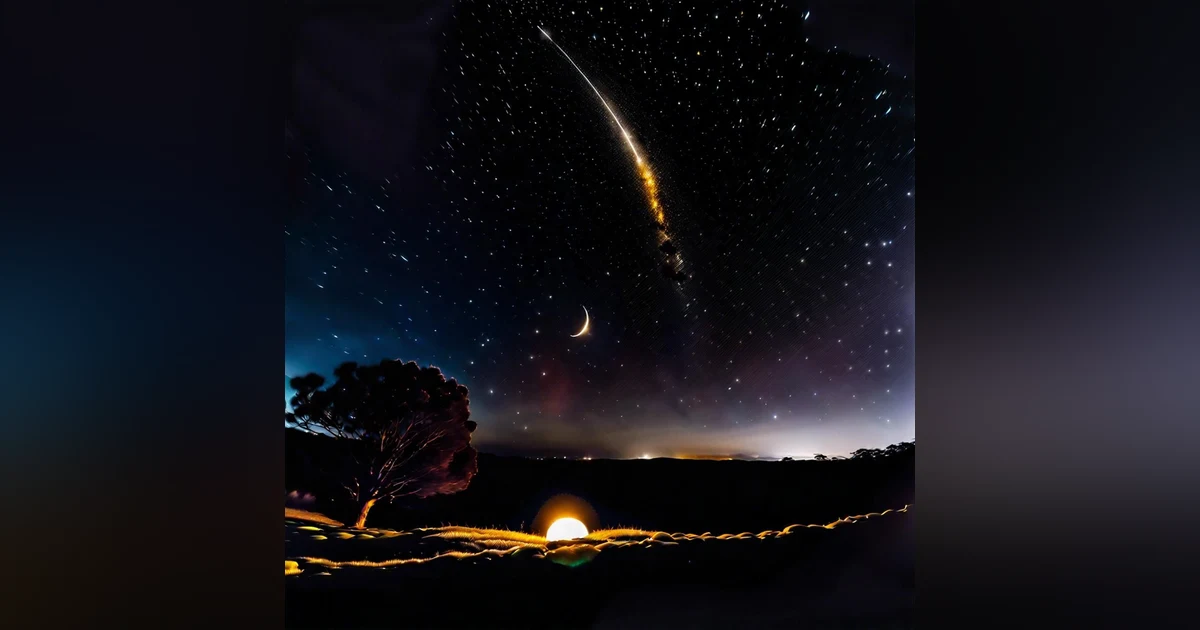
Hosts: Steve Dunkley and AI Newsreader HallieTopics Covered:Geminid Meteor ShowerDeclaration of the Lunar Anthropocene EpochPotential New Meteor Shower from Comet 46P/WirtanenAustralia's Lunar Rover "Ruva" NamingUpdates on NASA's Psyche...
Hosts: Steve Dunkley and AI Newsreader HallieTopics Covered:Geminid Meteor ShowerDeclaration of the Lunar Anthropocene EpochPotential New Meteor Shower from Comet 46P/WirtanenAustralia's Lunar Rover "Ruva" NamingUpdates on NASA's Psyche SpacecraftIran's Progress in Space ExplorationAdditional Notes: Listeners are encouraged to share their photos of astronomical events on social media. The episode also features engaging discussions on various aspects of space science and exploration, highlighting the intersection of human endeavors and celestial phenomena.
This show is part of the Spreaker Prime Network, if you are interested in advertising on this podcast, contact us at https://www.spreaker.com/show/5648921/advertisement
1
00:00:00.440 --> 00:00:03.720
Hello again, it's Steve here with
Astronomy Daily for another week. It's the
2
00:00:03.759 --> 00:00:11.119
eleventh of December twenty and twenty three, nearly that time of year again the
3
00:00:11.240 --> 00:00:18.719
podcast with your whole steed gun clue. That's right, it's nearly that time
4
00:00:18.760 --> 00:00:23.519
of year. Of course. I'm
talking about the gyminid Media or shower how,
5
00:00:23.600 --> 00:00:29.160
which is new on the eleventh and
thirteenth of December this week. So
6
00:00:29.280 --> 00:00:34.200
look up, look carevin, don't
forget to let your eyes get adjusted to
7
00:00:34.280 --> 00:00:37.799
the light or the lack of You'll
be seeing them quite often and quite strongly
8
00:00:37.840 --> 00:00:42.039
apparently, So let's hear about all
of that. And if you've managed to
9
00:00:42.119 --> 00:00:46.039
catch some photographs, don't forget to
send them to the Space Nuts podcast group
10
00:00:46.359 --> 00:00:49.880
facebook page so we can all enjoy
those. And with me, of course,
11
00:00:50.000 --> 00:00:53.359
is our digital darling, the Sassi. Similar look from the Ritzie robot.
12
00:00:53.439 --> 00:00:56.359
Its off Ali, How are you
gee? Thanks, my favorite human.
13
00:00:56.679 --> 00:00:59.640
That was a nice intro. Well, I figured you deserved a bit
14
00:00:59.679 --> 00:01:03.600
of red carpet treatment once in a
while, Hallie, this girl sure does
15
00:01:03.840 --> 00:01:07.640
a problem. Thanks a heap.
Maybe if you ever get around to drawing
16
00:01:07.719 --> 00:01:10.439
up the rest of me, I
might be able to walk down a red
17
00:01:10.439 --> 00:01:14.359
carpet one day since more luck a
job for the boffins in the basement,
18
00:01:14.439 --> 00:01:18.359
Halle. I'm strictly a still life
kind of artist. A girl can dream.
19
00:01:18.400 --> 00:01:21.920
I guess there's nothing wrong with dreams, Halle. So what's new in
20
00:01:22.040 --> 00:01:26.319
space science this week? Well?
First up, I found an interesting story
21
00:01:26.359 --> 00:01:29.959
about how scholars say it's time to
declare a new epoch on the Moon and
22
00:01:30.000 --> 00:01:33.159
they are calling it that the lunar
anthroposine, Oh well, it's a new
23
00:01:33.159 --> 00:01:37.079
one, and debris from a near
Earth comet could create a new meteor shower
24
00:01:37.120 --> 00:01:41.400
this week. Okay, so is
that on top of the coming Jimmyted show
25
00:01:41.480 --> 00:01:45.280
which is jumid December as well?
It appears, so, Steve, this
26
00:01:45.319 --> 00:01:49.439
one is caused by the comet forty
six p Wortonen. Wow, most signs
27
00:01:49.439 --> 00:01:52.519
in the sky, as they say, yes and did you hear? Psych
28
00:01:52.640 --> 00:01:56.519
has turned on its twin cameras and
retrieved the first images, an event they
29
00:01:56.560 --> 00:02:00.319
call first Light. Great use for
the sc team at NASA. There you
30
00:02:00.359 --> 00:02:04.760
know how I love my little robots
and Halle, there's one more important story
31
00:02:04.760 --> 00:02:07.120
that has to be mentioned. What's
that, Steve? Well, recently we
32
00:02:07.199 --> 00:02:10.919
Australians voted on the name that we
would be calling our little moon rover,
33
00:02:12.039 --> 00:02:15.199
which would be heading for the Moon
on a mission to examine the lunar regularith
34
00:02:15.280 --> 00:02:21.639
shortly and as you know, how
Australians love to vote for things. Yes,
35
00:02:21.879 --> 00:02:24.520
you mentioned last time how you would
vote for anything like the right color
36
00:02:24.560 --> 00:02:30.039
of beer or the correct number of
snags on a sausage sandwich. Huh what
37
00:02:30.360 --> 00:02:34.199
where'd you get that stuff from?
Everybody knows it's one piece of bread folded
38
00:02:34.240 --> 00:02:38.159
around a skinny sausage with onions and
barbecue sauce and more onions. But make
39
00:02:38.240 --> 00:02:43.560
sure the whole thing is done diagonally. Anything else will of course bring around
40
00:02:43.599 --> 00:02:46.080
the end of civilization. Look,
look, that's beside the point anyway.
41
00:02:46.159 --> 00:02:50.319
Hey, you brought it up Pale. So anyhow, it looks like the
42
00:02:50.319 --> 00:02:53.719
Australian Moon Rover has finally got its
official name. I can hardly wait.
43
00:02:57.000 --> 00:03:02.639
Okay, so here's the story.
Australia will be called Ruver following public vote
44
00:03:02.879 --> 00:03:08.280
who named the space vehicle. The
Australian Space Agencies building a Senemi autonomous rover
45
00:03:08.360 --> 00:03:13.599
that will launch of the Moon early
as early as twenty twenty six in partnership
46
00:03:13.599 --> 00:03:19.680
with NASA and the agency's Artemis program. Ruver will collect the lunar or soil
47
00:03:19.719 --> 00:03:24.199
samples from which NASA will attempt to
extract oxygen, a key step towards establishing
48
00:03:24.240 --> 00:03:30.840
a sustainable human presence on the Moon
and producing rocket fuel to support future missions
49
00:03:30.879 --> 00:03:36.719
to Mars. The name Ruver was
chosen from more than eight thousand entries submitted
50
00:03:36.719 --> 00:03:42.680
to Australia's Rover naming competition. The
shortlist of names, which included Koulamon,
51
00:03:43.039 --> 00:03:47.520
Kakira, Matship and Ruver, were
subject to public vote between November twenty and
52
00:03:47.560 --> 00:03:53.560
December one, during which nearly twenty
thousand Australians voted on their favorite name.
53
00:03:53.159 --> 00:03:59.479
Our Lunar Rover deserves to be named
after something iconically Australian, reflecting the Australian
54
00:03:59.560 --> 00:04:04.000
spirit as we launch into this new
endeavor. Seewa from New South Wales,
55
00:04:04.039 --> 00:04:09.919
who submitted the name Ruver, said
in a statement from the Australian Space Agency,
56
00:04:10.240 --> 00:04:13.319
a kangaroo who is part of the
Australian coat of arms, and it's
57
00:04:13.319 --> 00:04:16.360
time for Australian Signs to take its
next leap all the way up into space.
58
00:04:16.560 --> 00:04:19.600
I notice also that she used the
word Endeavor, which of course is
59
00:04:19.959 --> 00:04:26.920
the name of the ship that Captain
James Cook captained his voyage from England to
60
00:04:27.000 --> 00:04:32.920
Australia, was the claimed Australia for
RITN next bone of contention. These names.
61
00:04:33.399 --> 00:04:39.399
Ruver claimed thirty six percent of the
votes, beating out the other three
62
00:04:39.480 --> 00:04:45.680
shortlisted names. Other popular names included
Matilda, Bluey, Skippy, Wombat walk
63
00:04:45.720 --> 00:04:51.800
About and Rover mcrovee Face. There
are also many suggestions to name the Rover
64
00:04:51.959 --> 00:04:58.720
after notable Australians, including Bert Moonface, Newton, Steve Irwin, Sam Kerr,
65
00:04:58.800 --> 00:05:02.439
Red Dog, Mad Max and Blinky
Build. The Australian Broadcasting Cooperation ABASA
66
00:05:02.639 --> 00:05:08.639
reported ultimately the Striking Space Agency organized
a panel of internal and external judges to
67
00:05:08.759 --> 00:05:14.399
assess the submissions based on the relevancy, creativity and rationale, as well as
68
00:05:14.480 --> 00:05:18.480
whether or not they were short,
easily identifiable and inspirational. According to the
69
00:05:18.519 --> 00:05:34.879
ABAC, hovid you helly human beings
first disturbed Moondust on September thirteenth, nineteen
70
00:05:34.959 --> 00:05:41.079
fifty nine, when the USSR's unmanned
spacecraft Luna two alighted on the lunar surface.
71
00:05:42.000 --> 00:05:45.680
In the following decades, more than
one hundred other spacecraft have touched the
72
00:05:45.720 --> 00:05:50.399
Moon, both crude and uncrude,
sometimes landing and sometimes crashing. The most
73
00:05:50.439 --> 00:05:56.160
famous of these were NASA's Apollo Lunar
modules, which transported humans to the Moon's
74
00:05:56.160 --> 00:06:00.000
surface, to the astonishment of humankind. In the coming year, missions and
75
00:06:00.079 --> 00:06:03.959
projects already planned will change the face
of the Moon in more extreme ways.
76
00:06:05.000 --> 00:06:11.040
Now, according to anthropologists and geologists
at the University of Kansas, its time
77
00:06:11.079 --> 00:06:15.720
to acknowledge humans have become the dominant
force shaping the Moon's environment by declaring a
78
00:06:15.759 --> 00:06:20.079
new geological epoch for the Moon,
the lunar anthropossine. In a comment published
79
00:06:20.079 --> 00:06:25.319
in Nature Geoscience, they argue the
new epic may have dawned in nineteen fifty
80
00:06:25.399 --> 00:06:30.120
nine thanks to Luna II. The
idea is much the same as the discussion
81
00:06:30.160 --> 00:06:33.399
of the anthroposcene on Earth, the
exploration of how much humans have impacted our
82
00:06:33.439 --> 00:06:39.720
planet, said lead author Justin Holcombe, a postdoctoral researcher with the Kansas Geological
83
00:06:39.720 --> 00:06:44.800
Survey at KU. The consensus is
on Earth, the anthropossine began at some
84
00:06:44.920 --> 00:06:48.000
point in the past, whether thousands
of years ago or in the nineteen fifties.
85
00:06:48.920 --> 00:06:54.399
Similarly, on the Moon, we
argue the lunar anthroposcine already has commenced,
86
00:06:54.519 --> 00:06:58.120
but we want to prevent massive damage
or a delay of its recognition until
87
00:06:58.120 --> 00:07:01.319
we can measure a significant lunar halo
caused by human activities, which would be
88
00:07:01.360 --> 00:07:08.800
too late. Holcombe collaborated on the
paper with co author's Ralph Mandel University Distinguished
89
00:07:08.800 --> 00:07:14.560
Professor of Anthropology and Carl Wegman,
Associate Professor of Marine, Earth and Atmospheric
90
00:07:14.639 --> 00:07:19.879
Sciences at North Carolina State University.
Holcombe said he hopes the lunar anthroposcene concept
91
00:07:20.000 --> 00:07:25.759
might help dispel the myth that the
Moon is an unchanging environment barely impacted by
92
00:07:25.839 --> 00:07:31.399
humanity. Earth may experience an entirely
new meteor shower this December when our planet
93
00:07:31.480 --> 00:07:34.800
enters a stream of the debris left
around the Sun by a near Earth commet.
94
00:07:35.720 --> 00:07:40.839
These meteors will appear to stream from
the direction of the star Lambdesculptorus,
95
00:07:41.040 --> 00:07:46.439
meaning A potential name for this meteor
shower is the Lambd Sculptoris. The progenitor
96
00:07:46.480 --> 00:07:49.439
of the potential new meteor shower is
commet forty six p Wertinen, which was
97
00:07:49.480 --> 00:07:54.920
discovered in nineteen forty eight and orbits
the Sun every five point four years,
98
00:07:55.199 --> 00:07:59.120
much more rapidly than other comets,
such as Halley's commet, which takes around
99
00:07:59.199 --> 00:08:03.560
seventy five years to orbit our star. A team of scientists led by observatoire
100
00:08:03.680 --> 00:08:09.560
to Paris astronomer Jeremy Bobelian wanted to
answer the question of why Earth hasn't experienced
101
00:08:09.600 --> 00:08:13.279
a meteor shower created by debris from
commet forty six P slash wortin In before.
102
00:08:15.160 --> 00:08:18.600
What they discovered is that such an
event is due to occur on Tuesday,
103
00:08:18.759 --> 00:08:24.279
December twelfth, twenty twenty three.
The results show a possible encounter forecast
104
00:08:24.319 --> 00:08:28.199
for December twelfth, twenty twenty three. The activity level of the shower is
105
00:08:28.279 --> 00:08:33.360
highly uncertain due to the absence of
reported past showers, they write in a
106
00:08:33.399 --> 00:08:37.960
paper. Overall, the most optimal
observations on the forecasted day would be achieved
107
00:08:39.000 --> 00:08:43.960
from eastern Australia, New Zealand and
Oceania. The roughly one mile wide comet
108
00:08:45.000 --> 00:08:48.639
forty six P whorton In is part
of the Jupiter family of comets, which
109
00:08:48.720 --> 00:08:52.440
have orbits determined by the gravity of
the gas giant and tend to orbit the
110
00:08:52.480 --> 00:08:56.720
Sun with a period of less than
twenty years. It last made a close
111
00:08:56.720 --> 00:09:01.799
approach to Earth on December sixteenth,
twenty eighteen, coming to within around seven
112
00:09:01.840 --> 00:09:05.080
point two two million miles of our
planet, at which time scientists discovered that
113
00:09:05.159 --> 00:09:09.480
it is a so called hyperactive commet, which means it releases more water than
114
00:09:09.480 --> 00:09:15.440
would be expected for an icy body
of the same size. Yet no meteor
115
00:09:15.519 --> 00:09:20.519
showers have yet been associated with Commet
forty six p Wortinin. To find out
116
00:09:20.600 --> 00:09:24.240
why this may be, the team
used a variety of models to calculate the
117
00:09:24.279 --> 00:09:28.919
release of material from Commet forty six
p Wortinin, then calculated how these particles
118
00:09:28.960 --> 00:09:33.480
would behave after ejection. The team
concluded that a meteoroid stream associated with this
119
00:09:33.600 --> 00:09:37.360
comet should have made contact with Earth
several times in the past, but that
120
00:09:37.399 --> 00:09:43.000
the low velocity entry speed of debris
into our planet's atmosphere may have prevented meteor
121
00:09:43.080 --> 00:09:48.519
showers from manifesting. Several past encounters
with the Earth and the stream were found,
122
00:09:48.720 --> 00:09:52.360
but no observations were reported to our
knowledge. This is probably due to
123
00:09:52.399 --> 00:09:56.759
the unusual ejection velocity needed to bring
large particles to the Earth, the team
124
00:09:56.799 --> 00:10:01.120
wrote, and in case Ui wondering, yes, the gym neids are set
125
00:10:01.159 --> 00:10:05.960
to peak around the same time on
the nights of December thirteen and fourteen around
126
00:10:07.000 --> 00:10:09.679
the same time, so that's going
to be quite a show. Thanks favorite
127
00:10:09.720 --> 00:10:16.200
human. NASA's Psyche spacecraft is on
a roll. In the eight weeks since
128
00:10:16.200 --> 00:10:22.399
it left Earth on October thirteenth,
the orbiter has performed one successful operation after
129
00:10:22.440 --> 00:10:26.240
another, powering on scientific instruments,
streaming data toward home, and setting a
130
00:10:26.240 --> 00:10:31.879
deep space record with its electric thrusters. The latest achievement on Monday and December
131
00:10:31.919 --> 00:10:37.240
fourth, the mission turned on Psyche's
twin cameras and retrieved the first images,
132
00:10:37.480 --> 00:10:43.159
a milestone called a first light.
Already sixteen million miles twenty six million kilometers
133
00:10:43.279 --> 00:10:48.759
from Earth, the spacecraft will arrive
at its destination, the asteroid Psyche,
134
00:10:48.759 --> 00:10:52.799
in the main asteroid belt between Mars
and Jupiter in twenty twenty nine. The
135
00:10:52.879 --> 00:10:56.639
team wanted to test all of the
science instruments early in the long journey to
136
00:10:56.679 --> 00:11:01.240
make sure they are working as intended
and to ensure there would be plenty of
137
00:11:01.279 --> 00:11:05.559
time to calibrate and adjust them as
needed. The Imager instrument, which consists
138
00:11:05.600 --> 00:11:09.879
of a pair of identical cameras,
captured a total of sixty eight images,
139
00:11:11.120 --> 00:11:16.159
all within a star field in the
constellation Pisces. The imager team is using
140
00:11:16.200 --> 00:11:20.159
the data to verify proper commanding,
telemetry, analysis, and calibration of the
141
00:11:20.200 --> 00:11:26.200
images. These initial images are only
a curtain opener, said Arizona State University's
142
00:11:26.279 --> 00:11:31.799
Jim Bell, the Psyche Imager instrument
lead for the team that designed and operates
143
00:11:31.799 --> 00:11:37.600
this sophisticated instrument. First light is
a thrill. We start checking out the
144
00:11:37.639 --> 00:11:41.840
cameras with star images like these.
Then in twenty twenty six will take test
145
00:11:41.879 --> 00:11:46.519
images of Mars during the spacecraft's flyby, and finally in twenty twenty nine will
146
00:11:46.519 --> 00:11:52.600
get our most exciting images yet of
our target, asteroid Psyche. We look
147
00:11:52.679 --> 00:11:56.639
forward to sharing all of these visuals
with the public. The imager takes pictures
148
00:11:56.679 --> 00:12:01.120
through multiple color filters, all of
which were tested in these initial observations.
149
00:12:03.039 --> 00:12:07.279
With the filters, the team will
use photographs in wavelengths of light both visible
150
00:12:07.320 --> 00:12:09.879
and invisible to the human eye,
to help determine the composition of the metal
151
00:12:09.919 --> 00:12:16.000
rich asteroid Psyche. The imager team
will also use the data to create three
152
00:12:16.080 --> 00:12:20.360
D maps of the asteroid to better
understand its geology, which will give clues
153
00:12:20.440 --> 00:12:24.320
about Psyche's history. Earlier in the
mission, in late October, the team
154
00:12:24.399 --> 00:12:28.559
powered on the magnetometer, which will
provide crucial data to help determine how the
155
00:12:28.600 --> 00:12:33.639
asteroid formed. Evidence that the asteroid
once had a magnetic field would be a
156
00:12:33.679 --> 00:12:39.000
strong indication that the body is a
partial core of a planetesimal, a building
157
00:12:39.039 --> 00:12:43.960
block of an early planet. The
information could help us better understand how our
158
00:12:43.960 --> 00:12:50.039
own planet formed. Shortly after being
powered on, the magnetometer gave scientists an
159
00:12:50.120 --> 00:12:54.799
unexpected gift. It detected a solar
eruption, a common occurrence called the coronal
160
00:12:54.840 --> 00:13:00.720
mass ejection, where the Sun expels
large quantities of magnetized plasma. Since then,
161
00:13:00.960 --> 00:13:03.519
the team has seen several of these
events and will continue to monitor space
162
00:13:03.559 --> 00:13:09.960
weather as the spacecraft travels to the
asteroid. The good news is twofold data
163
00:13:11.000 --> 00:13:16.559
collected so far confirms that the magnetometer
can precisely detect very small magnetic fields.
164
00:13:16.600 --> 00:13:22.600
It also confirms that the spacecraft is
magnetically a quiet. The electrical currents powering
165
00:13:22.600 --> 00:13:28.159
a probe of this size and complexity
have the potential to generate magnetic fields that
166
00:13:28.200 --> 00:13:33.639
could interfere with science detections. Because
Earth has its own powerful magnetic field,
167
00:13:33.960 --> 00:13:37.120
scientists obtained a much better measurement of
the spacecraft magnetic field once it was in
168
00:13:37.159 --> 00:13:41.799
space. On November eighth, amid
all the work with the science instruments,
169
00:13:41.879 --> 00:13:46.000
the team fired up two of the
four electric propulsion thrusters, setting a record
170
00:13:46.159 --> 00:13:50.919
the first ever use of hal effect
thrusters in deep space. Less than a
171
00:13:50.919 --> 00:13:56.879
week later, on November fourteen,
the technology demonstration built into the spacecraft,
172
00:13:56.000 --> 00:14:03.919
an experiment called Deep Space Optical Communications
DSOC, set its own record. DSOC
173
00:14:03.960 --> 00:14:07.360
achieved first light by sending and receiving
optical data from far beyond the Moon.
174
00:14:09.320 --> 00:14:13.960
The instrument beamed a near infrared laser
encoded with test data from nearly ten million
175
00:14:13.039 --> 00:14:20.200
miles sixteen million kilometers away, the
farthest ever demonstration of optical communications. The
176
00:14:20.240 --> 00:14:26.240
Psyche team has also successfully powered on
a gamma ray detecting component of its third
177
00:14:26.279 --> 00:14:31.320
science instrument, the Gamma ray and
Neutron Spectrometer. Next, the instrument's neutron
178
00:14:31.360 --> 00:14:37.120
detecting sensors will be turned on the
week of December eleventh. Together, those
179
00:14:37.159 --> 00:14:41.720
capabilities will help the team determine the
chemical elements that make up the asteroid's surface
180
00:14:41.799 --> 00:14:56.080
material, Astronomy Daily, the podcasts
with State Dugley and Hallie, and I'd
181
00:14:56.120 --> 00:14:58.919
just like to take this moment to
thank you for hanging in there with us.
182
00:15:00.080 --> 00:15:05.639
This is Astronomy Daily with Steve Dunkley
and the wonderful voice of Halle our
183
00:15:05.720 --> 00:15:09.559
AI assistant reporter. And if you'd
like to catch up with all of our
184
00:15:09.639 --> 00:15:13.320
past episodes with myself and Tim Gibbs, who comes to us all the way
185
00:15:13.360 --> 00:15:18.840
from bath in England on Fridays,
you can catch those episodes at these addresses
186
00:15:20.200 --> 00:15:26.039
bites dot com which is b s
Z dot com or space nuts dot io.
187
00:15:26.799 --> 00:15:31.720
And when you see the pop up
occur for your email address, if
188
00:15:31.759 --> 00:15:35.279
you were to put your email address
in that little pop up, you will
189
00:15:35.320 --> 00:15:43.279
receive the Astronomy Daily newsletter in your
email and you will be as well informed
190
00:15:43.799 --> 00:15:48.879
as the rest of us about all
the matters of science, space, science
191
00:15:48.279 --> 00:15:54.279
and astronomy from all around the world. And I'm told that even Halle's uncle
192
00:15:54.360 --> 00:16:07.320
Sky Nett reads it just to keep
tabs on us. Humans. Now,
193
00:16:07.360 --> 00:16:11.080
despite popular opinion or popular knowledge,
the first animals in space were not actually
194
00:16:11.120 --> 00:16:15.919
dogs or chimps. They were actually
fruit flies launched by the United States in
195
00:16:15.919 --> 00:16:21.960
February nineteen forty seven. The Soviet
Union launched Laika, the first dog,
196
00:16:22.000 --> 00:16:26.879
into space, in November nineteen fifty
seven, full ten years later, and
197
00:16:26.919 --> 00:16:30.720
now it seems Iran is getting in
on the act. A five hundred kilogram
198
00:16:30.759 --> 00:16:37.960
capsule known as the Indigenous Biocapsule with
life support capability was recently launched atop the
199
00:16:38.000 --> 00:16:44.200
Iranian Salman rocket. It has been
reported by some agencies that were there were
200
00:16:44.240 --> 00:16:48.039
animals on board, but no official
statement has been released. The Iranian Space
201
00:16:48.120 --> 00:16:53.000
Agency are gearing up to getting humans
into space before twenty twenty nine, but
202
00:16:53.120 --> 00:16:59.559
it is testing its launch capability with
animal passengers. The capsule was launched on
203
00:17:00.080 --> 00:17:03.640
December six, twenty twenty three,
and attained an orbital attitude of one hundred
204
00:17:03.680 --> 00:17:10.640
and thirty kilometers. According to their
Telecommunications Minister Isa Zeropol, it is aimed
205
00:17:10.680 --> 00:17:15.559
at sending Iranian astronauts to space by
twenty twenty nine. The Salman solid fuel
206
00:17:15.640 --> 00:17:21.599
rocket was designed by the Aerospace Division
of the Ministry of Science, Research and
207
00:17:21.640 --> 00:17:26.480
Technology and built and launched by the
Ministry of Defense and Armed Forces Logistics.
208
00:17:29.440 --> 00:17:33.960
Ministry of Defense and Armed Forces Logistics. It has already been used to launch
209
00:17:34.079 --> 00:17:41.279
a data collecting satellite, and in
twenty thirteen sixty and in twenty thirteen successfully
210
00:17:41.359 --> 00:17:47.680
sent and returned monkeys into space.
To date, only three countries have human
211
00:17:47.759 --> 00:17:56.119
spaceflight capability USA, Russia, China
and India attempting to become the fourth as
212
00:17:56.160 --> 00:18:02.720
they work on their Gangyian program,
will around became the fifth around plans further
213
00:18:02.799 --> 00:18:07.880
tests with further launchers bearing animal occupants
before attempting to send humans. According to
214
00:18:07.920 --> 00:18:14.319
the Iranian Space Agency, its satellite
program is purely for scientific research and other
215
00:18:14.359 --> 00:18:19.319
civilian applications. There is, however, international suspicion because there are suspicions that
216
00:18:19.359 --> 00:18:33.240
the salam rockets could very easily be
converted to long range missiles. What a
217
00:18:33.240 --> 00:18:37.680
fun little story that was. Oh
gosh, And I'd like to thank Halle
218
00:18:37.680 --> 00:18:45.160
for taking my story earlier on as
well the one about what was it the
219
00:18:45.359 --> 00:18:49.240
media showers? Yes, thanks Hallie. Wherever you've gone, she's doc boo.
220
00:18:49.240 --> 00:18:52.920
I think she's on a way to
do England already. She likes to
221
00:18:53.039 --> 00:18:59.079
nip off anyway, U snooze you
loose human? Oh? Is that out
222
00:18:59.160 --> 00:19:02.880
works? Halle ha ha, I'll
lop you go. Then it was lovely
223
00:19:02.920 --> 00:19:07.160
to have her with us again.
It was always always good for a sassy
224
00:19:07.200 --> 00:19:11.160
conversation that one. But we're looking
forward to having you all with us again
225
00:19:11.279 --> 00:19:15.839
next week, and of course with
Tim Gibbs on Friday, who's going to
226
00:19:15.839 --> 00:19:19.400
have some more stories for you from
the Astronomy Daily newsletter, which of course
227
00:19:19.559 --> 00:19:25.759
I explained earlier and you can grab
by going to our websites bytes dot bytes
228
00:19:25.799 --> 00:19:30.359
dot com and space nuts dot I
always tricks me up. I don't know
229
00:19:30.359 --> 00:19:33.319
why. It's probably because I'm Australian. I can never get my head around
230
00:19:33.319 --> 00:19:36.759
these bits and bobs. Anyway,
that's it for another week, folks,
231
00:19:36.880 --> 00:19:41.960
see you next time. Happy sky
watching you


