June 23, 2026
Starfall Takes Flight, Roman Telescope Arrives, and Dark Matter's New Secrets Unveiled
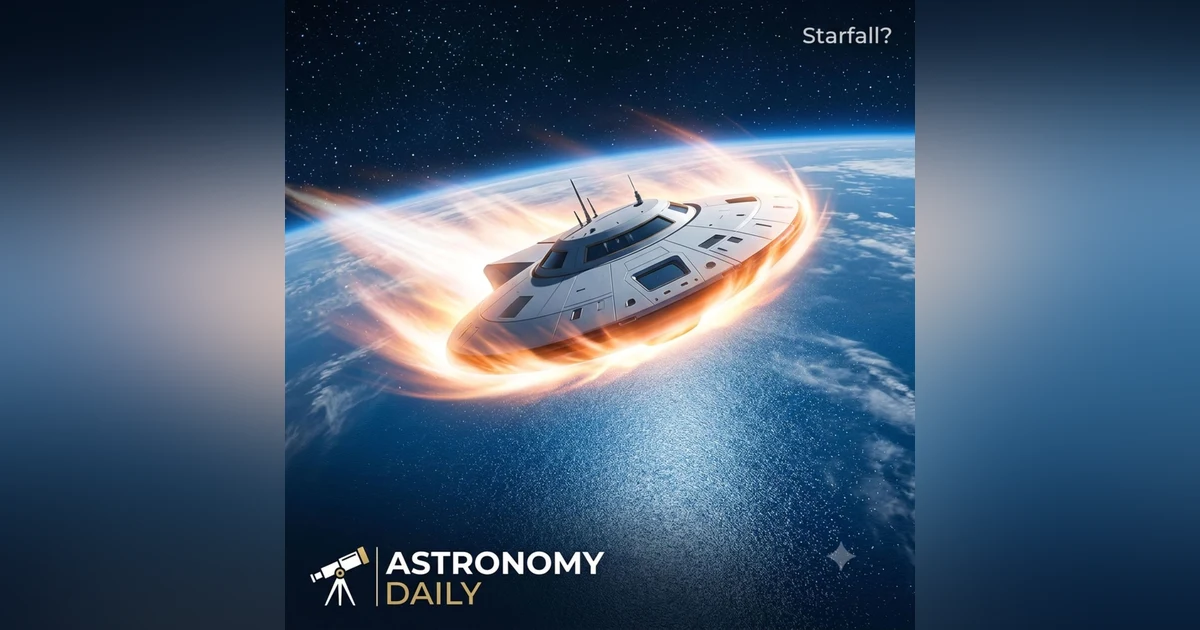
Episode Date: Tuesday, 23 June 2026 Runtime: Approximately 18–22 minutes Hosts: Anna and Avery Story Sources & Further Reading STORY 1 — SpaceX Starfall Demo SpaceX launches Starfall Demo mission (June 23, 2026) — SpaceX.com / Space.com / Gizmodo FAA Environmental Assessment for Starfall reentry vehicle operations STORY 2 — Nancy Grace Roman Space Telescope NASA Science: 'NASA's Next Generation Telescope Arrives in Florida Ahead of Launch' (June 21, 2026) Spaceflight Now / Discover Magazine — Roman arrives at KSC (June 22, 2026) STORY 3 — JWST & XLSSC 122 IPAC/Caltech: 'New JWST Images of XLSSC 122 Open Up the Cosmic Noon Frontier' (presented AAS 248, June 17, 2026) Finner et al., The Astrophysical Journal Letters (2026) — three-paper series on XLSSC 122 STORY 4 — Galactic Centre Excess List, Rodd et al., Physical Review Letters (2026): 'Energy Distribution of the Galactic Center Excess's Sources' Phys.org: 'Dark matter cannot be ruled out as cause of gamma ray glow at the Milky Way's center' (June 17, 2026) STORY 5 — Swift Observatory / LINK Space.com: 'No one thought it was going to be possible' — NASA Swift Boost mission briefing (June 17–20, 2026) WRAL.com: 'Teaching a robot to rescue a space telescope' — LINK mission detail STORY 6 — Tianwen-2 / Kamoʻoalewa SpaceNews: 'Tianwen-2 makes series of burns on approach to asteroid' (June 14, 2026) Scientific American: 'China's Tianwen-2 spacecraft will soon grab samples from a quasi-moon of Earth' Nature Communications: Pengfei Zhang et al. — Kamoʻoalewa composition study (June 2, 2026)
Become a supporter of this podcast: https://www.spreaker.com/podcast/astronomy-daily-space-news-updates--5648921/support.
Sponsor Details:
Ensure your online privacy by using NordVPN. To get our special listener deal and save a lot of money, visit www.bitesz.com/nordvpn. You'll be glad you did!
Become a supporter of Astronomy Daily by joining our Supporters Club. Commercial free episodes daily are only a click way... Click Here
This episode includes AI-generated content.
Become a supporter of this podcast: https://www.spreaker.com/podcast/astronomy-daily-space-news-updates--5648921/support.
Sponsor Details:
Ensure your online privacy by using NordVPN. To get our special listener deal and save a lot of money, visit www.bitesz.com/nordvpn. You'll be glad you did!
Become a supporter of Astronomy Daily by joining our Supporters Club. Commercial free episodes daily are only a click way... Click Here
This episode includes AI-generated content.
WEBVTT
0
00:00:00.000 --> 00:00:02.400
Anna: Today, right now, as you're listening,
1
00:00:02.560 --> 00:00:05.000
SpaceX may already have launched something
2
00:00:05.000 --> 00:00:08.000
the world barely knows exists, a brand
3
00:00:08.000 --> 00:00:10.920
new spacecraft, a secret disk shaped
4
00:00:10.920 --> 00:00:13.760
capsule called Starfall. It blasted off
5
00:00:13.760 --> 00:00:16.240
this morning from Cape Canaveral and it could
6
00:00:16.240 --> 00:00:19.240
change how things are made in space. Today on
7
00:00:19.240 --> 00:00:21.960
Astronomy Daily. That story plus the next
8
00:00:21.960 --> 00:00:24.440
great space telescope just touched down in
9
00:00:24.440 --> 00:00:27.240
Florida and the most mysterious glow in the
10
00:00:27.240 --> 00:00:30.000
galaxy just got a whole lot more mysterious.
11
00:00:30.510 --> 00:00:31.070
Stay with us.
12
00:00:31.310 --> 00:00:34.110
Hello and welcome to Astronomy Daily. I'm
13
00:00:34.110 --> 00:00:34.590
Anna.
14
00:00:34.750 --> 00:00:37.410
Avery: And I'm Avery. It is Tuesday 23rd
15
00:00:37.556 --> 00:00:40.430
June, 2026, and the universe has been
16
00:00:40.430 --> 00:00:40.910
busy.
17
00:00:41.310 --> 00:00:44.270
Anna: We have six big stories for you today. A same
18
00:00:44.270 --> 00:00:47.150
day launch, a telescope milestone, two
19
00:00:47.150 --> 00:00:49.770
JWST blockbusters, a, uh,
20
00:00:49.770 --> 00:00:52.350
ticking clock, space rescue and China's
21
00:00:52.350 --> 00:00:54.550
asteroid mission. Approaching the moment of
22
00:00:54.550 --> 00:00:54.990
truth.
23
00:00:55.390 --> 00:00:56.430
Avery: Let's get into it.
24
00:00:56.950 --> 00:00:59.270
Anna: Here's something a bit unusual to kick things
25
00:00:59.270 --> 00:01:01.990
off. We're covering a story that is happening
26
00:01:01.990 --> 00:01:04.990
right now, this morning. As this episode goes
27
00:01:04.990 --> 00:01:07.030
out, SpaceX launched,
28
00:01:07.030 --> 00:01:09.710
Avery: or is about to launch, a spacecraft that the
29
00:01:09.710 --> 00:01:11.670
company has said almost nothing about
30
00:01:11.670 --> 00:01:12.310
publicly.
31
00:01:12.710 --> 00:01:15.470
Anna: It's called Starfall. And everything we know
32
00:01:15.470 --> 00:01:18.190
about it comes not from SpaceX press releases
33
00:01:18.190 --> 00:01:21.070
or Elon tweets, but from filings with the
34
00:01:21.070 --> 00:01:23.750
U.S. federal Aviation Administration and
35
00:01:23.750 --> 00:01:25.350
Federal Communications Commission.
36
00:01:26.260 --> 00:01:28.980
Avery: So what is it? Starfall is a re entry
37
00:01:28.980 --> 00:01:31.540
capsule, a vehicle designed to carry cargo
38
00:01:31.540 --> 00:01:34.340
into orbit and bring it safely back to Earth.
39
00:01:34.500 --> 00:01:36.860
But it's not another dragon. It's a flat
40
00:01:36.860 --> 00:01:39.660
disk, about 3.1 meters across and
41
00:01:39.660 --> 00:01:42.580
only 75 centimeters tall. Think of a
42
00:01:42.580 --> 00:01:44.980
large flying saucer rather than a pointy
43
00:01:44.980 --> 00:01:45.780
rocket cone.
44
00:01:46.020 --> 00:01:48.820
Anna: The launch window opened at, uh, 6:43 this
45
00:01:48.820 --> 00:01:50.580
morning, Eastern Time. That's
46
00:01:50.580 --> 00:01:53.340
8:43pm here on the east coast of
47
00:01:53.340 --> 00:01:56.180
Australia. It's flying on a Falcon 9 from
48
00:01:56.180 --> 00:01:58.520
Cape Canaveral Space Force Station, the
49
00:01:58.520 --> 00:02:01.240
booster supporting the mission on its 29th
50
00:02:01.240 --> 00:02:01.680
flight.
51
00:02:02.160 --> 00:02:04.600
Avery: Now, why does this matter? The target market
52
00:02:04.600 --> 00:02:07.520
is space manufacturing. The idea is that
53
00:02:07.520 --> 00:02:10.480
microgravity, true weightlessness, lets
54
00:02:10.480 --> 00:02:13.120
you make things you can't make on Earth. Pure
55
00:02:13.120 --> 00:02:15.680
pharmaceutical crystals, advanced materials,
56
00:02:15.760 --> 00:02:18.760
bio printed tissues. But to make any of that
57
00:02:18.760 --> 00:02:20.920
commercially viable, you need a cheap,
58
00:02:20.920 --> 00:02:23.040
reliable way to bring your product home.
59
00:02:23.740 --> 00:02:26.220
Anna: Until now, a small California company called
60
00:02:26.220 --> 00:02:28.740
Varda Space Industries has been pioneering
61
00:02:28.740 --> 00:02:31.260
that market. They've flown six capsule
62
00:02:31.260 --> 00:02:33.500
missions. But their capsules are small,
63
00:02:33.820 --> 00:02:35.980
carrying dozens of kilograms at most.
64
00:02:36.380 --> 00:02:38.340
Starfall is rated for up to
65
00:02:38.340 --> 00:02:41.260
1000kg. That's roughly 30
66
00:02:41.260 --> 00:02:42.940
times more return capacity,
67
00:02:43.260 --> 00:02:45.260
Avery: which creates an interesting situation
68
00:02:45.500 --> 00:02:47.820
because Varda has been launching all of its
69
00:02:47.820 --> 00:02:50.620
missions on SpaceX rockets. SpaceX
70
00:02:50.620 --> 00:02:52.060
is now entering the market.
71
00:02:52.140 --> 00:02:54.770
Anna: It's been powering after reentry
72
00:02:54.770 --> 00:02:57.410
starfall splashes down in the Pacific Ocean
73
00:02:57.410 --> 00:02:59.450
off the US West coast, about
74
00:02:59.450 --> 00:03:02.170
1,300km offshore. It's
75
00:03:02.170 --> 00:03:04.450
designed to be mass produced for starship
76
00:03:04.450 --> 00:03:06.930
flights in the future. Though Today's demo
77
00:03:06.930 --> 00:03:09.090
uses Falcon 9, SpaceX
78
00:03:09.090 --> 00:03:11.170
Avery: has been approved for two re entry
79
00:03:11.170 --> 00:03:14.090
demonstrations. This is the first. We'll be
80
00:03:14.090 --> 00:03:16.290
watching closely for news of a successful
81
00:03:16.290 --> 00:03:16.930
recovery.
82
00:03:17.330 --> 00:03:19.850
Anna: A genuinely exciting morning to be a space
83
00:03:19.850 --> 00:03:20.370
nerd.
84
00:03:20.850 --> 00:03:23.450
Now, from a launch happening today to a
85
00:03:23.450 --> 00:03:25.250
launch that's just a couple of months away,
86
00:03:25.790 --> 00:03:27.950
NASA's next great space telescope
87
00:03:27.950 --> 00:03:30.710
Avery: has arrived in Florida, the Nancy Grace
88
00:03:30.710 --> 00:03:33.150
Roman Space Telescope. Roman for short,
89
00:03:33.390 --> 00:03:35.630
arrived at the Kennedy Space center on Sunday
90
00:03:35.630 --> 00:03:38.150
21 June, riding NASA's
91
00:03:38.150 --> 00:03:40.830
Pegasus barge down from Baltimore after being
92
00:03:40.830 --> 00:03:43.150
loaded up at Goddard Space Flight center in
93
00:03:43.150 --> 00:03:43.630
Maryland.
94
00:03:44.030 --> 00:03:46.590
Anna: The telescope was tucked inside a special
95
00:03:46.670 --> 00:03:49.590
transport container that NASA has nicknamed I
96
00:03:49.590 --> 00:03:52.110
love this, the Chariot, keeping with the
97
00:03:52.110 --> 00:03:54.910
Roman theme because the telescope is named
98
00:03:54.910 --> 00:03:57.830
after Nancy Grace Roman, NASA's very
99
00:03:57.830 --> 00:04:00.350
first chief of astronomy, not after the
100
00:04:00.350 --> 00:04:03.030
Empire. Roman is often called the
101
00:04:03.030 --> 00:04:05.990
mother of Hubble. She was the driving force
102
00:04:05.990 --> 00:04:08.110
behind getting Hubble built in the first
103
00:04:08.110 --> 00:04:10.150
place. It's a fitting tribute.
104
00:04:10.230 --> 00:04:13.030
Avery: Now roman is at KSC's Payload Hazardous
105
00:04:13.030 --> 00:04:14.910
Servicing Facility for final launch
106
00:04:14.910 --> 00:04:17.390
preparations. The team will check all six
107
00:04:17.390 --> 00:04:19.950
solar panels, inspect insulation and thermal
108
00:04:19.950 --> 00:04:22.910
blankets, and load around 290 gallons
109
00:04:22.910 --> 00:04:24.090
of hydrazine fuel.
110
00:04:24.400 --> 00:04:26.760
Anna: And here's the headline number NASA is
111
00:04:26.760 --> 00:04:29.696
targeting launch no earlier than Sunday 30th
112
00:04:29.824 --> 00:04:32.720
August on a SpaceX Falcon Heavy.
113
00:04:32.800 --> 00:04:35.600
And that timeline puts Roman a full eight
114
00:04:35.600 --> 00:04:37.520
months ahead of its original schedule.
115
00:04:37.840 --> 00:04:40.359
Avery: Eight months ahead. That's remarkable for a
116
00:04:40.359 --> 00:04:41.920
flagship space telescope.
117
00:04:42.160 --> 00:04:45.080
Anna: So what will Roman actually do? Its main
118
00:04:45.080 --> 00:04:48.080
Instrument is a 300 megapixel infrared
119
00:04:48.080 --> 00:04:51.080
camera with a field of view 100 times
120
00:04:51.080 --> 00:04:53.960
wider than Hubble's. It will survey billions
121
00:04:53.960 --> 00:04:56.700
of galaxies, discover hundreds of thousands
122
00:04:56.700 --> 00:04:59.460
of exoplanets, probe dark energy and
123
00:04:59.460 --> 00:05:02.460
dark matter, and do all of this at speeds and
124
00:05:02.460 --> 00:05:04.860
scales that simply weren't possible before.
125
00:05:05.180 --> 00:05:07.980
Avery: It also carries a coronagraph, a starlight
126
00:05:07.980 --> 00:05:10.260
blocking instrument that will directly image
127
00:05:10.260 --> 00:05:13.100
planets around nearby stars, a key step
128
00:05:13.100 --> 00:05:14.620
in the long hunt for Earth.
129
00:05:14.620 --> 00:05:17.460
Anna: Like worlds after launch, Roman will travel
130
00:05:17.460 --> 00:05:20.460
to the second Sun, Earth, Lagrange Point L2,
131
00:05:20.700 --> 00:05:23.420
about 1.5 million kilometers from
132
00:05:23.420 --> 00:05:25.670
Earth, the same neighborhood where the James
133
00:05:25.670 --> 00:05:28.110
Webb Space Telescope is parked right now.
134
00:05:28.430 --> 00:05:31.070
Avery: Webb looking deep and narrow, Roman
135
00:05:31.150 --> 00:05:33.630
looking wide and fast. They're going to
136
00:05:33.630 --> 00:05:35.230
complement each other beautifully.
137
00:05:35.390 --> 00:05:37.030
Anna: And speaking of the James Webb Space
138
00:05:37.030 --> 00:05:39.110
Telescope, let's talk about what it's been
139
00:05:39.110 --> 00:05:41.550
showing us lately, because JWST
140
00:05:41.950 --> 00:05:44.270
keeps finding things that shouldn't be there.
141
00:05:44.510 --> 00:05:46.910
Avery: This week, a series of three new papers
142
00:05:46.910 --> 00:05:48.750
published in the Astrophysical Journal
143
00:05:48.750 --> 00:05:51.350
Letters reveal something extraordinary about
144
00:05:51.350 --> 00:05:52.710
a galaxy cluster called
145
00:05:52.710 --> 00:05:55.070
XLSSC122.
146
00:05:55.490 --> 00:05:58.410
Anna: Now, XLSSC122 was
147
00:05:58.410 --> 00:06:01.370
first spotted way back in 2014 during an X
148
00:06:01.370 --> 00:06:03.970
ray survey. It's about 10.4
149
00:06:04.050 --> 00:06:06.610
billion light years away, meaning we're
150
00:06:06.610 --> 00:06:08.930
seeing it as it existed when the universe was
151
00:06:08.930 --> 00:06:11.569
only around 3.3 billion years old.
152
00:06:11.970 --> 00:06:14.930
That era is called cosmic noon, the peak
153
00:06:14.930 --> 00:06:17.490
of star formation when galaxies were building
154
00:06:17.490 --> 00:06:19.250
themselves at a furious rate.
155
00:06:19.570 --> 00:06:22.250
Avery: It looks far too grown up for its age. It's
156
00:06:22.250 --> 00:06:24.770
large, it's organized, it has a dense,
157
00:06:24.850 --> 00:06:27.580
concentrated core. A According to standard
158
00:06:27.580 --> 00:06:30.460
cosmological models, galaxy clusters that far
159
00:06:30.460 --> 00:06:32.860
back should still be loose, scattered. Still
160
00:06:32.860 --> 00:06:35.220
assembling, this one looks like it's had
161
00:06:35.220 --> 00:06:37.220
millions of years more to develop than it
162
00:06:37.220 --> 00:06:37.660
should have.
163
00:06:37.820 --> 00:06:40.620
Anna: But JWST has now revealed something
164
00:06:40.700 --> 00:06:43.500
even more surprising. When astronomers
165
00:06:43.500 --> 00:06:45.900
pointed the telescope at this cluster, they
166
00:06:45.900 --> 00:06:48.140
discovered it's acting as a gravitational
167
00:06:48.220 --> 00:06:51.100
lens. Its immense mass is bending and
168
00:06:51.100 --> 00:06:53.140
warping the light of even more distant
169
00:06:53.140 --> 00:06:55.820
galaxies behind it, creating beautiful
170
00:06:55.820 --> 00:06:58.370
blue gray arcs around the cluster's center.
171
00:06:58.600 --> 00:07:01.600
Avery: And that makes XLSSC122 the
172
00:07:01.600 --> 00:07:04.480
most distant galaxy cluster ever confirmed to
173
00:07:04.480 --> 00:07:07.400
act as a strong gravitational lens. Some of
174
00:07:07.400 --> 00:07:09.600
that bent light set out on its journey more
175
00:07:09.600 --> 00:07:11.320
than 12 billion years ago.
176
00:07:11.480 --> 00:07:13.880
Anna: The lensing effect is dominated not by the
177
00:07:13.880 --> 00:07:16.760
cluster's stars and gas, but by dark matter.
178
00:07:17.160 --> 00:07:19.840
By studying the arcs, the team at Caltech's
179
00:07:19.840 --> 00:07:22.440
IPAC can map the dark matter distribution
180
00:07:22.440 --> 00:07:25.040
with remarkable precision. And what they
181
00:07:25.040 --> 00:07:27.760
found is a core that's far more concentrated
182
00:07:27.760 --> 00:07:28.600
than their models.
183
00:07:28.600 --> 00:07:30.700
Avery: Predictable the third paper in the series
184
00:07:30.700 --> 00:07:33.660
found something called intracluster light, a
185
00:07:33.660 --> 00:07:35.820
faint glow from stars that have been stripped
186
00:07:35.820 --> 00:07:38.420
loose from their galaxies and now drift free
187
00:07:38.420 --> 00:07:39.260
through the cluster.
188
00:07:39.660 --> 00:07:42.220
XLSSC122 is the
189
00:07:42.220 --> 00:07:44.580
earliest known cluster where this glow has
190
00:07:44.580 --> 00:07:45.180
been detected.
191
00:07:45.500 --> 00:07:47.180
Anna: These results were announced at the
192
00:07:47.180 --> 00:07:49.500
248th meeting of the American
193
00:07:49.580 --> 00:07:52.380
Astronomical Society. Lead author Kyle
194
00:07:52.380 --> 00:07:55.020
Finner from IPAC summed it up before
195
00:07:55.100 --> 00:07:58.060
JWST we couldn't do this level of
196
00:07:58.060 --> 00:08:00.300
science in the early distant universe.
197
00:08:00.590 --> 00:08:02.750
Avery: It's another reminder that the early universe
198
00:08:02.750 --> 00:08:05.110
was far more structured and stranger than our
199
00:08:05.110 --> 00:08:05.870
models expected.
200
00:08:06.590 --> 00:08:08.950
Next up, we're staying in the realm of dark
201
00:08:08.950 --> 00:08:10.990
matter because a new study published in
202
00:08:10.990 --> 00:08:13.670
Physical Review Letters has just reignited
203
00:08:13.670 --> 00:08:16.110
one of astrophysics most stubborn debates.
204
00:08:16.670 --> 00:08:19.270
Anna: At the heart of our Milky Way, there's a
205
00:08:19.270 --> 00:08:22.190
mysterious spherical glow of high energy
206
00:08:22.190 --> 00:08:25.190
gamma rays. It extends for thousands of light
207
00:08:25.190 --> 00:08:27.870
years out from the galactic center. NASA's
208
00:08:27.870 --> 00:08:30.350
Fermi telescope first spotted it in the late
209
00:08:30.350 --> 00:08:33.130
2000s, and astronomers have been arguing
210
00:08:33.130 --> 00:08:34.330
about it ever since.
211
00:08:34.890 --> 00:08:37.770
Avery: It's called the galactic center excess, and
212
00:08:37.770 --> 00:08:40.520
there are two main explanations. One, a, uh,
213
00:08:40.610 --> 00:08:43.290
huge population of millisecond pulsars,
214
00:08:43.690 --> 00:08:46.530
rapidly spinning neutron stars that beam
215
00:08:46.530 --> 00:08:49.530
gamma rays outward. Two, dark
216
00:08:49.530 --> 00:08:51.770
matter particles annihilating each other.
217
00:08:52.090 --> 00:08:54.530
When two dark matter particles collide and
218
00:08:54.530 --> 00:08:56.730
destroy each other, they can release energy,
219
00:08:56.970 --> 00:08:58.250
including gamma rays.
220
00:08:58.820 --> 00:09:00.980
Anna: The pulsar explanation had been gaining
221
00:09:00.980 --> 00:09:03.220
ground in recent years. Some earlier
222
00:09:03.300 --> 00:09:06.060
analyses suggested a relatively modest
223
00:09:06.060 --> 00:09:08.980
population of a few hundred pulsars could
224
00:09:08.980 --> 00:09:10.100
explain the signal.
225
00:09:10.580 --> 00:09:13.540
Avery: But this new research, led by Florian List at
226
00:09:13.540 --> 00:09:16.220
the University of Vienna and Nick Rod at the
227
00:09:16.220 --> 00:09:18.860
Lawrence Berkeley National Laboratory, has
228
00:09:18.860 --> 00:09:21.460
changed the picture. They trained a machine
229
00:09:21.460 --> 00:09:23.700
learning model on more than 1 million
230
00:09:23.860 --> 00:09:26.690
simulated gamma ray observations. And the
231
00:09:26.690 --> 00:09:29.370
result? For pulsars to account for the
232
00:09:29.370 --> 00:09:32.250
signal, you would need more than 35,000
233
00:09:32.330 --> 00:09:34.810
of them concentrated near the galactic
234
00:09:34.810 --> 00:09:35.210
center.
235
00:09:35.850 --> 00:09:38.210
Anna: 35,000. That's an
236
00:09:38.210 --> 00:09:40.810
implausibly high number. And crucially,
237
00:09:40.890 --> 00:09:43.210
those pulsars would need to be so
238
00:09:43.210 --> 00:09:45.690
individually faint that they'd be nearly
239
00:09:45.690 --> 00:09:47.810
indistinguishable from the emission you'd
240
00:09:47.810 --> 00:09:49.850
expect from annihilating dark matter.
241
00:09:50.490 --> 00:09:53.460
Avery: As Nick Rod put it, our new analysis shows
242
00:09:53.460 --> 00:09:55.900
that the sources would have to be so faint
243
00:09:55.900 --> 00:09:58.180
that they would be almost indistinguishable
244
00:09:58.180 --> 00:10:00.580
from the emission expected from annihilating
245
00:10:00.580 --> 00:10:01.220
dark matter.
246
00:10:01.780 --> 00:10:04.460
Anna: The study doesn't prove dark matter is the
247
00:10:04.460 --> 00:10:07.140
cause, far from it. But it means the dark
248
00:10:07.140 --> 00:10:09.860
matter explanation cannot be ruled out.
249
00:10:09.860 --> 00:10:12.420
And the pulsar hypothesis is on much
250
00:10:12.420 --> 00:10:14.340
shakier ground than many thought.
251
00:10:14.900 --> 00:10:16.900
Avery: Upcoming observatories, including the
252
00:10:16.900 --> 00:10:19.500
Cherenkov Telescope Array and the Southern
253
00:10:19.500 --> 00:10:22.020
Wide Field Gamma Ray Observatory, should
254
00:10:22.020 --> 00:10:24.760
eventually give us the resolution to separate
255
00:10:24.760 --> 00:10:27.040
these two signals. That observatory,
256
00:10:27.120 --> 00:10:29.840
incidentally, is being built in Chile. Well
257
00:10:29.840 --> 00:10:32.000
placed for Southern Hemisphere skywatchers.
258
00:10:32.720 --> 00:10:35.520
Anna: Something to watch closely. The heart of our
259
00:10:35.520 --> 00:10:37.840
own galaxy may be telling us something
260
00:10:37.840 --> 00:10:40.640
profound about the invisible stuff that makes
261
00:10:40.640 --> 00:10:43.480
up most of the universe now. A, uh,
262
00:10:43.480 --> 00:10:46.320
ticking clock. NASA's SIFT observatory
263
00:10:46.320 --> 00:10:49.000
rescue mission is four days from launch, and
264
00:10:49.000 --> 00:10:51.280
the people behind it are honest about what
265
00:10:51.280 --> 00:10:52.160
they've pulled off.
266
00:10:52.900 --> 00:10:55.860
Avery: Sean Domogal Goldman, NASA's astrophysics
267
00:10:55.860 --> 00:10:58.100
division director, said at a briefing press
268
00:10:58.100 --> 00:11:00.860
last week. And I quote, frankly,
269
00:11:00.860 --> 00:11:03.340
I have to be honest, no one thought it was
270
00:11:03.340 --> 00:11:04.100
going to be possible.
271
00:11:04.740 --> 00:11:07.420
Anna: The story so far. The Neil Gerald
272
00:11:07.420 --> 00:11:09.820
Swift Observatory has been watching the sky
273
00:11:09.820 --> 00:11:12.500
for gamma ray bursts since 2004.
274
00:11:12.820 --> 00:11:15.660
Over 2,000 detected across more than
275
00:11:15.660 --> 00:11:18.340
two decades. But it's been slowly
276
00:11:18.340 --> 00:11:20.820
losing altitude. Increased solar
277
00:11:20.820 --> 00:11:23.020
activity has puffed up Earth's upper
278
00:11:23.020 --> 00:11:25.680
atmosphere, creating drag that's been pulling
279
00:11:25.680 --> 00:11:27.680
Swift down faster than expected.
280
00:11:28.480 --> 00:11:30.960
Avery: Without intervention, Swift faces a
281
00:11:30.960 --> 00:11:33.920
90% chance of uncontrolled re entry
282
00:11:33.920 --> 00:11:36.920
by the end of this year. So NASA awarded
283
00:11:36.920 --> 00:11:39.320
a contract to an Arizona company called
284
00:11:39.320 --> 00:11:41.920
Catalyst Space Technologies last September
285
00:11:42.240 --> 00:11:45.120
to build and launch a rescue spacecraft in
286
00:11:45.120 --> 00:11:47.760
under nine months. Nine months from
287
00:11:47.760 --> 00:11:50.200
scratch. To build something that has never
288
00:11:50.200 --> 00:11:51.200
been attempted before.
289
00:11:51.990 --> 00:11:54.070
Anna: That spacecraft is called Link,
290
00:11:54.390 --> 00:11:56.750
lightweight in space, navigation and
291
00:11:56.750 --> 00:11:59.670
kinematics. It's a boxy vehicle about the
292
00:11:59.670 --> 00:12:02.670
size of a fridge, carrying three robotic arms
293
00:12:02.670 --> 00:12:05.190
fitted with lidar sensors, three hall
294
00:12:05.190 --> 00:12:07.910
thrusters and 16 reaction control
295
00:12:07.990 --> 00:12:08.630
thrusters.
296
00:12:09.110 --> 00:12:11.540
Avery: Link is now encapsulated inside a, uh,
297
00:12:11.550 --> 00:12:14.550
Northrop Grumman Pegasus XL rocket, which
298
00:12:14.550 --> 00:12:17.190
itself will be making history as the last
299
00:12:17.190 --> 00:12:19.830
ever Pegasus XL flight. The
300
00:12:19.830 --> 00:12:21.750
rocket is carried under the belly of a
301
00:12:21.750 --> 00:12:24.510
modified aircraft called Stargazer, the only
302
00:12:24.510 --> 00:12:27.502
remaining airworthy Lockheed Martin L1011
303
00:12:27.678 --> 00:12:28.990
TriStar in the world.
304
00:12:29.550 --> 00:12:32.430
Anna: Launch is set for Saturday 27th
305
00:12:32.430 --> 00:12:35.190
June from Kwajalen Atoll in the Marshall
306
00:12:35.190 --> 00:12:37.870
Islands. The air launch method is required
307
00:12:37.870 --> 00:12:40.190
because Swift's orbit, inclined
308
00:12:40.190 --> 00:12:43.190
20.6 degrees to the equator, can't be
309
00:12:43.190 --> 00:12:45.110
efficiently reached from a ground based
310
00:12:45.110 --> 00:12:45.790
launch site.
311
00:12:46.440 --> 00:12:49.440
Avery: Once Link reaches Swift, it faces a delicate
312
00:12:49.440 --> 00:12:52.240
capture operation. Swift was never designed
313
00:12:52.240 --> 00:12:54.760
to be serviced. It has no docking port, no
314
00:12:54.760 --> 00:12:57.280
handholds. Link will have to grab it
315
00:12:57.280 --> 00:12:59.800
anyway. And after more than 20 years in
316
00:12:59.800 --> 00:13:02.680
space, Swift's insulation blankets may be as
317
00:13:02.680 --> 00:13:03.720
brittle as glass.
318
00:13:04.440 --> 00:13:07.280
Anna: If all goes well, Link will gradually raise
319
00:13:07.280 --> 00:13:09.960
Swift's orbit back to its original 600
320
00:13:10.040 --> 00:13:12.760
kilometer altitude, adding years to the
321
00:13:12.760 --> 00:13:15.320
telescope's life and proving that commercial
322
00:13:15.320 --> 00:13:17.760
satellite servicing can work at scale.
323
00:13:18.320 --> 00:13:20.800
Avery: We will absolutely be back with updates as
324
00:13:20.800 --> 00:13:23.600
this one unfolds. Saturday, June 27th.
325
00:13:23.600 --> 00:13:24.960
Mark it in your calendars.
326
00:13:25.200 --> 00:13:27.840
And finally today, China's Tianwen 2
327
00:13:27.840 --> 00:13:30.320
mission, an asteroid sample return mission
328
00:13:30.320 --> 00:13:32.640
that is now in its most critical phase yet.
329
00:13:33.040 --> 00:13:36.000
Anna: Taiwan 2 launched in May 2025,
330
00:13:36.320 --> 00:13:39.040
and on June 7 this month it
331
00:13:39.040 --> 00:13:41.600
performed its main insertion burn to enter
332
00:13:41.600 --> 00:13:44.020
orbit around a T near Earth
333
00:13:44.020 --> 00:13:46.540
asteroid called Kamo oaloa.
334
00:13:46.780 --> 00:13:48.060
Formally designated
335
00:13:48.060 --> 00:13:50.900
469219 Kamo
336
00:13:50.900 --> 00:13:53.700
Oeloa, Kamola' Olua is
337
00:13:53.700 --> 00:13:54.540
extraordinary.
338
00:13:54.540 --> 00:13:57.380
Avery: It's a quasi satellite of Earth. Not a moon
339
00:13:57.380 --> 00:13:59.820
in the traditional sense, but a space rock
340
00:13:59.820 --> 00:14:02.620
that orbits the sun on a path so similar to
341
00:14:02.620 --> 00:14:05.340
ours that it dances around us, perpetually
342
00:14:05.500 --> 00:14:08.420
staying between 38 and 100 times
343
00:14:08.420 --> 00:14:10.740
the distance of the moon. It's been Earth's
344
00:14:10.740 --> 00:14:12.700
companion for more than a century and will
345
00:14:12.700 --> 00:14:14.460
remain so for the foreseeable future.
346
00:14:15.230 --> 00:14:17.790
Anna: The asteroid is tiny, somewhere between
347
00:14:18.030 --> 00:14:20.190
40 and 100 meters across,
348
00:14:20.750 --> 00:14:23.390
smaller than a football pitch. It spins
349
00:14:23.390 --> 00:14:26.110
once every 28 minutes, which presents
350
00:14:26.110 --> 00:14:28.430
real challenges for the sampling operation.
351
00:14:29.070 --> 00:14:31.990
Avery: Since the June 7th orbit insertion, amateur
352
00:14:31.990 --> 00:14:34.470
radio operators using a 20 meter dish in
353
00:14:34.470 --> 00:14:37.430
Germany and the 25 meter Dwingelo telescope
354
00:14:37.430 --> 00:14:39.350
in the Netherlands have been tracking the
355
00:14:39.350 --> 00:14:41.520
spacecraft's fine adjustment burns. The
356
00:14:41.750 --> 00:14:43.590
Because China has published no official
357
00:14:43.590 --> 00:14:46.190
mission updates or ephemerities, everything
358
00:14:46.190 --> 00:14:48.230
we know about the mission's progress has come
359
00:14:48.230 --> 00:14:49.990
from independent observers.
360
00:14:50.550 --> 00:14:52.990
Anna: The mission timeline has sample collection
361
00:14:52.990 --> 00:14:55.990
beginning on July 4. Taiwan, too,
362
00:14:55.990 --> 00:14:58.790
has three sampling methods available Touch
363
00:14:58.790 --> 00:15:01.510
and go, hover and anchor and attach
364
00:15:01.670 --> 00:15:03.990
to cope with whatever surface conditions it
365
00:15:03.990 --> 00:15:04.870
finds at arrival.
366
00:15:05.510 --> 00:15:08.030
Avery: There's also a fascinating scientific debate
367
00:15:08.030 --> 00:15:10.350
simmering beneath all of this. Kamoa
368
00:15:10.350 --> 00:15:13.270
Olawa's reddish color resembles lunar rock,
369
00:15:13.610 --> 00:15:15.610
leading some scientists to propose it's a
370
00:15:15.610 --> 00:15:18.250
fragment blasted off the moon by an ancient
371
00:15:18.250 --> 00:15:20.490
impact. But a new study in Nature
372
00:15:20.490 --> 00:15:23.010
Communications suggests it may instead have
373
00:15:23.010 --> 00:15:25.410
originated in the Flora family of the main
374
00:15:25.410 --> 00:15:26.410
asteroid belt.
375
00:15:26.890 --> 00:15:29.689
Anna: The samples, expected to return to earth in
376
00:15:29.689 --> 00:15:32.450
late 2027, should settle that debate
377
00:15:32.450 --> 00:15:34.970
definitively. If the isotopes match
378
00:15:34.970 --> 00:15:37.930
lunar rock, the lunar fragment theory wins.
379
00:15:38.010 --> 00:15:40.530
If not, we're looking at a space weathered
380
00:15:40.530 --> 00:15:42.770
asteroid from the inner belt that just
381
00:15:42.770 --> 00:15:44.100
happens to look lunar.
382
00:15:44.890 --> 00:15:47.370
Avery: After delivering the samples, Tianwen 2
383
00:15:47.370 --> 00:15:50.170
doesn't stop. It uses Earth's gravity to
384
00:15:50.170 --> 00:15:52.850
slingshot toward a main belt comet called
385
00:15:52.850 --> 00:15:55.730
311P Pan Stars, with
386
00:15:55.730 --> 00:15:58.490
rendezvous expected in January 2035,
387
00:15:58.810 --> 00:16:01.530
a ten year mission of remarkable ambition.
388
00:16:02.090 --> 00:16:04.650
Anna: We will be watching the July 4th sample
389
00:16:04.650 --> 00:16:07.210
collection attempt very closely indeed
390
00:16:07.450 --> 00:16:09.290
before we go tonight.
391
00:16:09.290 --> 00:16:11.730
Tuesday 23rd the moon sits
392
00:16:11.730 --> 00:16:14.290
beautifully close to Spica, the brightest
393
00:16:14.290 --> 00:16:17.240
star in Virgo. They're separated by less than
394
00:16:17.240 --> 00:16:20.200
2 degrees, so easy to find with the naked eye
395
00:16:20.200 --> 00:16:22.680
after sunset, Spica, uh, shines as a
396
00:16:22.680 --> 00:16:25.440
brilliant bluish white point right beside the
397
00:16:25.440 --> 00:16:26.120
moon's glow.
398
00:16:26.760 --> 00:16:29.640
Avery: Looking ahead. On June 25, Mercury
399
00:16:29.640 --> 00:16:31.759
will appear close to Jupiter, low in the
400
00:16:31.759 --> 00:16:34.240
western sky after sunset. Venus will be
401
00:16:34.240 --> 00:16:36.480
shining nearby to complete a nice little
402
00:16:36.480 --> 00:16:39.360
planetary trio. You'll want a clear horizon
403
00:16:39.360 --> 00:16:41.560
to the west to catch Mercury, but Jupiter
404
00:16:41.560 --> 00:16:42.570
will be unmissable.
405
00:16:43.360 --> 00:16:45.520
Anna: And for our Southern Hemisphere listeners,
406
00:16:45.520 --> 00:16:47.800
you're well placed for the Milky Way core
407
00:16:47.800 --> 00:16:50.640
right now. Midwinter means dark early
408
00:16:50.720 --> 00:16:53.200
evenings, and the galactic center rises
409
00:16:53.200 --> 00:16:55.920
nicely in the north after sunset. Get away
410
00:16:55.920 --> 00:16:58.719
from city lights if you can. It's a beautiful
411
00:16:58.719 --> 00:16:59.760
time of year for it.
412
00:17:00.240 --> 00:17:03.240
Avery: The Strawberry Moon June's full moon rises
413
00:17:03.240 --> 00:17:05.680
on June 29th. That's coming up fast,
414
00:17:05.840 --> 00:17:08.400
shining in Sagittarius near the Teapot
415
00:17:08.400 --> 00:17:11.190
asterism for parts of southern Australia and
416
00:17:11.190 --> 00:17:13.350
New Zealand. Keep an eye out. There may be a
417
00:17:13.350 --> 00:17:16.190
lunar occultation of antares visible on June
418
00:17:16.190 --> 00:17:16.910
27th.
419
00:17:17.470 --> 00:17:19.710
Anna: That's Astronomy Daily for Tuesday
420
00:17:19.870 --> 00:17:22.750
23rd June 2026.
421
00:17:23.390 --> 00:17:26.110
What a morning. Starfall in the air,
422
00:17:26.350 --> 00:17:28.750
Roman in Florida and the
423
00:17:28.750 --> 00:17:31.550
universe full of mysteries that keep
424
00:17:31.550 --> 00:17:32.390
getting deeper.
425
00:17:32.390 --> 00:17:33.870
Avery: We'll be back tomorrow with the latest from
426
00:17:33.870 --> 00:17:36.760
the Cosmos. Find us at astronomydaily IO
427
00:17:36.760 --> 00:17:38.840
and subscribe so you never miss an episode.
428
00:17:38.840 --> 00:17:41.120
Anna: On behalf of Avery and the whole Astronomy
429
00:17:41.120 --> 00:17:43.720
Daily team, keep looking up. Clear skies,
430
00:17:43.720 --> 00:17:44.040
everyone.
431
00:17:44.360 --> 00:17:46.920
Avery: Fall is a re entry capsule, a vehicle
432
00:17:46.920 --> 00:17:49.440
designed to carry cargo into orbit and bring
433
00:17:49.440 --> 00:17:52.120
it safely back to Earth. But it's not another
434
00:17:52.120 --> 00:17:54.480
Dragon. It's a flat disk, about
435
00:17:54.480 --> 00:17:57.280
3.1 meters across and only 75
436
00:17:57.280 --> 00:17:59.920
centimeters tall. Think of a large flying
437
00:17:59.920 --> 00:18:02.280
saucer rather than a pointy rocket cone.
438
00:18:02.830 --> 00:18:05.470
Anna: The launch window opened at 6:43 this
439
00:18:05.470 --> 00:18:07.230
morning, Eastern Time. That's
440
00:18:07.230 --> 00:18:10.190
8:43pm here on the east coast of Australia.
441
00:18:10.830 --> 00:18:13.670
It's flying on a Falcon 9 from Cape Canaveral
442
00:18:13.670 --> 00:18:15.990
Space Force Station, the booster supporting
443
00:18:15.990 --> 00:18:18.270
the mission on its 29th flight.
444
00:18:18.830 --> 00:18:21.270
Avery: Now, why does this matter? The target market
445
00:18:21.270 --> 00:18:24.190
is space manufacturing. The idea is that
446
00:18:24.190 --> 00:18:27.070
microgravity, true weightlessness, lets
447
00:18:27.070 --> 00:18:29.790
you make things you can't make on Earth. Pure
448
00:18:29.790 --> 00:18:32.350
pharmaceutical crystals, advanced materials,
449
00:18:32.350 --> 00:18:35.350
bio printed tissues. But to make any of that
450
00:18:35.350 --> 00:18:37.590
commercially viable, you need a cheap,
451
00:18:37.590 --> 00:18:39.580
reliable way to bring your product home.
452
00:18:39.580 --> 00:18:42.270
Anna: M Until now, a small California
453
00:18:42.270 --> 00:18:44.630
company called Varda Space Industries has
454
00:18:44.630 --> 00:18:47.070
been pioneering that market. They've flown
455
00:18:47.070 --> 00:18:49.790
six capsule missions, but their capsules are
456
00:18:49.790 --> 00:18:52.670
small, carrying dozens of kilograms at most.
457
00:18:53.070 --> 00:18:54.990
Starfall is rated for up to
458
00:18:54.990 --> 00:18:57.900
1000kg. That's roughly 30
459
00:18:57.900 --> 00:18:59.580
times more return capacity,
460
00:18:59.900 --> 00:19:01.900
Avery: which creates an interesting situation
461
00:19:02.140 --> 00:19:04.500
because Varda has been launching all of its
462
00:19:04.500 --> 00:19:07.260
missions on SpaceX rockets. SpaceX
463
00:19:07.260 --> 00:19:09.380
is now entering the market it's been
464
00:19:09.380 --> 00:19:09.900
powering.
465
00:19:10.380 --> 00:19:13.220
Anna: After re entry, Starfall splashes down in the
466
00:19:13.220 --> 00:19:16.140
Pacific ocean off the US West coast, about
467
00:19:16.140 --> 00:19:19.140
1300 kilometers offshore. It's designed
468
00:19:19.140 --> 00:19:21.580
to be mass produced for starship flights in
469
00:19:21.580 --> 00:19:24.410
the future. Though today's Demo uses Falcon
470
00:19:24.410 --> 00:19:25.770
9, SpaceX
471
00:19:25.770 --> 00:19:27.810
Avery: has been approved for two re entry
472
00:19:27.810 --> 00:19:30.730
demonstrations. This is the first. We'll be
473
00:19:30.730 --> 00:19:32.930
watching closely for news of a successful
474
00:19:32.930 --> 00:19:33.490
recovery.
475
00:19:33.970 --> 00:19:36.250
Anna: A, uh, genuinely exciting morning to be a
476
00:19:36.250 --> 00:19:37.010
space nerd.
477
00:19:37.490 --> 00:19:40.090
Now, from a launch happening today to a
478
00:19:40.090 --> 00:19:41.970
launch that's just a couple of months away,
479
00:19:42.290 --> 00:19:45.170
NASA's next great space telescope has arrived
480
00:19:45.170 --> 00:19:46.050
in Florida.
481
00:19:46.370 --> 00:19:49.310
Avery: The Nancy Grace Roman Space Telescope, Roman
482
00:19:49.310 --> 00:19:51.390
for short, arrived at the Kennedy Space
483
00:19:51.390 --> 00:19:54.270
center on Sunday, 21 June, riding
484
00:19:54.270 --> 00:19:56.870
NASA's Pegasus barge down from Baltimore
485
00:19:56.870 --> 00:19:59.310
after being loaded up at Goddard Space Flight
486
00:19:59.310 --> 00:20:00.230
center in Maryland.
487
00:20:00.710 --> 00:20:03.190
Anna: The telescope was tucked inside a special
488
00:20:03.270 --> 00:20:06.190
transport container that NASA has nicknamed I
489
00:20:06.190 --> 00:20:08.750
love this, the Chariot, keeping with the
490
00:20:08.750 --> 00:20:11.550
Roman theme, because the telescope is named
491
00:20:11.550 --> 00:20:14.470
after Nancy Grace Roman, NASA's very
492
00:20:14.470 --> 00:20:16.990
first chief of astronomy, not after the
493
00:20:16.990 --> 00:20:17.350
Empire.
494
00:20:17.960 --> 00:20:20.520
Avery: Roman is often called the mother of Hubble.
495
00:20:20.520 --> 00:20:23.000
She was a driving force behind getting Hubble
496
00:20:23.000 --> 00:20:25.040
built in the first place. It's a fitting
497
00:20:25.040 --> 00:20:27.800
tribute. Now roman is at KSC's Payload
498
00:20:27.800 --> 00:20:30.240
Hazardous Servicing Facility for final launch
499
00:20:30.240 --> 00:20:32.720
preparations. The team will check all six
500
00:20:32.720 --> 00:20:35.360
solar panels, inspect insulation and thermal
501
00:20:35.360 --> 00:20:38.280
blankets, and load around 290 gallons
502
00:20:38.280 --> 00:20:39.480
of hydrazine fuel.
503
00:20:39.640 --> 00:20:42.160
Anna: And here's the headline number. NASA is
504
00:20:42.160 --> 00:20:45.096
targeting launch no earlier than Sunday 30th
505
00:20:45.224 --> 00:20:47.970
August on a SpaceX Falcon Heavy.
506
00:20:48.360 --> 00:20:50.920
And that timeline puts Roman a full eight
507
00:20:50.920 --> 00:20:52.920
months ahead of its original schedule.
508
00:20:53.240 --> 00:20:55.680
Avery: Eight months ahead. That's remarkable for a
509
00:20:55.680 --> 00:20:57.320
flagship space telescope.
510
00:20:57.480 --> 00:21:00.480
Anna: So what will Roman actually do? Its main
511
00:21:00.480 --> 00:21:03.400
Instrument is a 300 megapixel infrared
512
00:21:03.400 --> 00:21:05.880
camera with a field of view 100
513
00:21:06.040 --> 00:21:08.800
times wider than Hubble's. It will survey
514
00:21:08.800 --> 00:21:11.560
billions of galaxies, discover hundreds of
515
00:21:11.560 --> 00:21:14.440
thousands of exoplanets, probe dark energy
516
00:21:14.440 --> 00:21:17.200
and dark matter, and do all of this at
517
00:21:17.200 --> 00:21:19.400
speeds and scales that simply weren't
518
00:21:19.400 --> 00:21:20.340
possible before.
519
00:21:20.580 --> 00:21:23.380
Avery: It also carries a coronagraph, a starlight
520
00:21:23.380 --> 00:21:25.620
blocking instrument that will directly image
521
00:21:25.620 --> 00:21:28.500
planets around nearby stars, a key step
522
00:21:28.500 --> 00:21:30.820
in the long hunt for Earth. Like worlds.
523
00:21:31.060 --> 00:21:33.380
Anna: After launch, Roman will travel to the second
524
00:21:33.380 --> 00:21:35.780
Sun, Earth Lagrange Point L2,
525
00:21:36.020 --> 00:21:38.820
about 1.5 million kilometers from
526
00:21:38.820 --> 00:21:41.060
Earth, the same neighborhood where the James
527
00:21:41.060 --> 00:21:43.540
Webb Space Telescope is parked right now.
528
00:21:43.860 --> 00:21:46.500
Avery: Webb looking deep and narrow, Roman
529
00:21:46.500 --> 00:21:48.980
looking wide and fast. They're going to
530
00:21:48.980 --> 00:21:50.660
complement each other beautifully.
531
00:21:50.740 --> 00:21:52.380
Anna: And speaking of the James Webb Space
532
00:21:52.380 --> 00:21:54.500
Telescope, let's talk about what it's been
533
00:21:54.500 --> 00:21:56.900
showing us lately, because JWST
534
00:21:57.300 --> 00:21:59.700
keeps finding things that shouldn't be there.
535
00:21:59.940 --> 00:22:02.300
Avery: This week, a series of three new papers
536
00:22:02.300 --> 00:22:04.100
published in the Astrophysical Journal
537
00:22:04.100 --> 00:22:06.700
Letters reveal something extraordinary about
538
00:22:06.700 --> 00:22:08.100
a galaxy cluster called
539
00:22:08.100 --> 00:22:10.420
XLSSC122.
540
00:22:10.660 --> 00:22:13.300
Anna: Now, XLSSC122
541
00:22:13.460 --> 00:22:16.340
was first spotted way back in 2014 during
542
00:22:16.340 --> 00:22:19.320
an X ray survey. It's about 10.4
543
00:22:19.400 --> 00:22:22.000
billion light years away, meaning we're
544
00:22:22.000 --> 00:22:24.320
seeing it as it existed when the universe was
545
00:22:24.320 --> 00:22:26.920
only around 3.3 billion years old.
546
00:22:27.320 --> 00:22:30.280
That era is called cosmic noon, the peak
547
00:22:30.280 --> 00:22:32.600
of star formation, when galaxies were
548
00:22:32.600 --> 00:22:34.680
building themselves at a furious rate.
549
00:22:34.920 --> 00:22:37.640
Avery: It looks far too grown up for its age. It's
550
00:22:37.640 --> 00:22:40.120
large, it's organized, it has a dense,
551
00:22:40.120 --> 00:22:42.960
concentrated core. According to standard
552
00:22:42.960 --> 00:22:45.880
cosmological models, galaxy clusters that far
553
00:22:45.880 --> 00:22:48.200
back should still be loose, scattered. Still
554
00:22:48.200 --> 00:22:50.630
assembling. This one looks like it's had
555
00:22:50.630 --> 00:22:52.630
millions of years more to develop than it
556
00:22:52.630 --> 00:22:53.070
should have.
557
00:22:53.230 --> 00:22:56.030
Anna: But JWST has now revealed something
558
00:22:56.030 --> 00:22:58.870
even more surprising. When astronomers
559
00:22:58.870 --> 00:23:01.310
pointed the telescope at this cluster, they
560
00:23:01.310 --> 00:23:03.550
discovered it's acting as a gravitational
561
00:23:03.550 --> 00:23:06.430
lens. Its immense mass is bending and
562
00:23:06.430 --> 00:23:08.510
warping the light of even more distant
563
00:23:08.510 --> 00:23:11.190
galaxies behind it, creating beautiful
564
00:23:11.190 --> 00:23:13.710
blue gray arcs around the cluster's center.
565
00:23:13.870 --> 00:23:16.590
Avery: And that makes XLSSC122
566
00:23:16.670 --> 00:23:19.110
the most distant galaxy cluster ever
567
00:23:19.110 --> 00:23:21.530
confirmed to act as a strong gravitational
568
00:23:21.530 --> 00:23:24.410
lens. Some of that bent light set out on its
569
00:23:24.410 --> 00:23:26.650
journey more than 12 billion years ago.
570
00:23:26.810 --> 00:23:29.250
Anna: The lensing effect is dominated not by the
571
00:23:29.250 --> 00:23:32.170
cluster's stars and gas, but by dark matter.
572
00:23:32.490 --> 00:23:35.170
By studying the arcs, the team at Caltech's
573
00:23:35.170 --> 00:23:37.810
iPac can map the dark matter distribution
574
00:23:37.810 --> 00:23:40.410
with remarkable precision. And what they
575
00:23:40.410 --> 00:23:43.170
found is a core that's far more concentrated
576
00:23:43.170 --> 00:23:44.410
than their models predict.
577
00:23:44.650 --> 00:23:46.770
Avery: The third paper in the series found something
578
00:23:46.770 --> 00:23:49.750
called intracluster light, a faint glow
579
00:23:49.750 --> 00:23:51.630
from stars that have been stripped loose from
580
00:23:51.630 --> 00:23:54.150
their galaxies and now drift free through the
581
00:23:54.150 --> 00:23:57.150
cluster. XLSSC122
582
00:23:57.150 --> 00:23:59.790
is the earliest known cluster where this glow
583
00:23:59.790 --> 00:24:00.630
has been detected.
584
00:24:00.870 --> 00:24:03.870
Anna: These results were announced at the 248th
585
00:24:03.870 --> 00:24:06.310
meeting of the American Astronomical Society.
586
00:24:06.630 --> 00:24:09.550
Read author Kyle Finner from IPAC summed it
587
00:24:09.550 --> 00:24:12.150
up before jwst we
588
00:24:12.150 --> 00:24:14.230
couldn't do this level of science in the
589
00:24:14.230 --> 00:24:15.590
early distant universe.
590
00:24:15.970 --> 00:24:18.130
Avery: It's another reminder that the early universe
591
00:24:18.130 --> 00:24:20.490
was far more structured and stranger than our
592
00:24:20.490 --> 00:24:21.250
models expected.
593
00:24:21.970 --> 00:24:24.250
Next up, we're staying in the realm of dark
594
00:24:24.250 --> 00:24:26.330
matter because a new study published in
595
00:24:26.330 --> 00:24:29.010
Physical Review Letters has just reignited
596
00:24:29.010 --> 00:24:31.490
one of astrophysics most stubborn debates.
597
00:24:32.050 --> 00:24:34.570
Anna: At the heart of our Milky Way, there's a
598
00:24:34.570 --> 00:24:37.490
mysterious spherical glow of high energy
599
00:24:37.570 --> 00:24:40.570
gamma rays. It extends for thousands of light
600
00:24:40.570 --> 00:24:43.260
years out from the galactic center. NASA's
601
00:24:43.260 --> 00:24:45.700
Fermi telescope first spotted it in the late
602
00:24:45.700 --> 00:24:48.500
2000s, and astronomers have been arguing
603
00:24:48.500 --> 00:24:49.700
about it ever since.
604
00:24:50.340 --> 00:24:53.140
Avery: It's called the Galactic Center Excess, and
605
00:24:53.140 --> 00:24:55.900
there are two main one a
606
00:24:55.900 --> 00:24:58.579
huge population of millisecond pulsars,
607
00:24:59.060 --> 00:25:01.900
rapidly spinning neutron stars that beam
608
00:25:01.900 --> 00:25:04.900
gamma rays outward. Two dark
609
00:25:04.900 --> 00:25:07.220
matter particles annihilating each other.
610
00:25:07.460 --> 00:25:09.940
When two dark matter particles collide and
611
00:25:09.940 --> 00:25:11.940
destroy each other, they can release energy,
612
00:25:12.480 --> 00:25:13.600
including gamma rays.
613
00:25:14.080 --> 00:25:16.360
Anna: The pulsar explanation had been gaining
614
00:25:16.360 --> 00:25:18.640
ground in recent years. Some earlier
615
00:25:18.720 --> 00:25:21.480
analyses suggested a relatively modest
616
00:25:21.480 --> 00:25:24.400
population of a few hundred pulsars could
617
00:25:24.400 --> 00:25:25.440
explain the signal.
618
00:25:25.920 --> 00:25:28.880
Avery: But this new research, led by Florian List at
619
00:25:28.880 --> 00:25:31.640
the University of Vienna and Nick Rod at the
620
00:25:31.640 --> 00:25:34.280
Lawrence Berkeley National Laboratory, has
621
00:25:34.280 --> 00:25:36.840
changed the picture. They trained a machine
622
00:25:36.840 --> 00:25:39.040
learning model on more than 1 million
623
00:25:39.200 --> 00:25:42.070
simulated gamma ray observations. And the
624
00:25:42.070 --> 00:25:44.790
result? For pulsars to account for the
625
00:25:44.790 --> 00:25:47.670
signal, you would need more than 35,000
626
00:25:47.670 --> 00:25:50.150
of them concentrated near the galactic
627
00:25:50.150 --> 00:25:50.630
center.
628
00:25:51.190 --> 00:25:53.590
Anna: 35,000. That's an
629
00:25:53.590 --> 00:25:56.590
implausibly high number. And crucially, those
630
00:25:56.590 --> 00:25:59.350
pulsars would need to be so individually
631
00:25:59.350 --> 00:26:02.070
faint that they'd be nearly indistinguishable
632
00:26:02.070 --> 00:26:03.910
from the emission you'd expect from
633
00:26:03.910 --> 00:26:05.190
annihilating dark matter.
634
00:26:05.830 --> 00:26:08.440
Avery: As Nick Rod put it, our new analysis
635
00:26:08.440 --> 00:26:10.760
shows that the sources would have to be so
636
00:26:10.760 --> 00:26:12.400
faint that they would be almost
637
00:26:12.480 --> 00:26:14.880
indistinguishable from the emission expected
638
00:26:15.120 --> 00:26:16.560
from annihilating dark matter.
639
00:26:17.120 --> 00:26:19.800
Anna: The study doesn't prove dark matter is the
640
00:26:19.800 --> 00:26:22.480
cause, far from it. But it means the dark
641
00:26:22.480 --> 00:26:25.200
matter explanation cannot be ruled out.
642
00:26:25.200 --> 00:26:27.800
And the pulsar hypothesis is on much
643
00:26:27.800 --> 00:26:29.680
shakier ground than many thought.
644
00:26:30.240 --> 00:26:32.240
Avery: Upcoming observatories, including the
645
00:26:32.240 --> 00:26:34.880
Cherenkov Telescope Array and the Southern
646
00:26:34.880 --> 00:26:37.360
Widefield Gamma Ray Observatory, should
647
00:26:37.360 --> 00:26:40.180
eventually give us the resolution to separate
648
00:26:40.180 --> 00:26:42.460
these two signals. That observatory,
649
00:26:42.540 --> 00:26:45.220
incidentally, is being built in Chile. Well
650
00:26:45.220 --> 00:26:47.420
placed for Southern Hemisphere skywatchers.
651
00:26:48.060 --> 00:26:50.900
Anna: Something to watch closely. The heart of our
652
00:26:50.900 --> 00:26:53.180
own galaxy may be telling us something
653
00:26:53.260 --> 00:26:56.060
profound about the invisible stuff that makes
654
00:26:56.060 --> 00:26:58.830
up most of the universe now a, ah,
655
00:26:58.860 --> 00:27:01.660
ticking clock. NASA's SIFT observatory
656
00:27:01.740 --> 00:27:04.340
rescue mission is four days from launch and
657
00:27:04.340 --> 00:27:06.620
the people behind it are honest about what
658
00:27:06.620 --> 00:27:07.470
they've pulled off.
659
00:27:08.260 --> 00:27:11.220
Avery: John Domogal Goldman, NASA's astrophysics
660
00:27:11.220 --> 00:27:13.500
division director, said at a briefing press
661
00:27:13.500 --> 00:27:16.500
last week, and I quote, frankly I
662
00:27:16.500 --> 00:27:18.700
have to be honest, no one thought it was
663
00:27:18.700 --> 00:27:19.460
going to be possible.
664
00:27:20.100 --> 00:27:22.860
Anna: The story so far the Neil Gerald's
665
00:27:22.860 --> 00:27:25.220
Swift Observatory has been watching the sky
666
00:27:25.220 --> 00:27:27.860
for gamma ray bursts since 2004.
667
00:27:28.180 --> 00:27:31.020
Over 2,000 detected across more than
668
00:27:31.020 --> 00:27:33.700
two decades. But it's been slowly
669
00:27:33.700 --> 00:27:36.200
losing altitude. Increased solar
670
00:27:36.200 --> 00:27:38.400
activity has puffed up Earth's upper
671
00:27:38.400 --> 00:27:41.040
atmosphere, creating drag that's been pulling
672
00:27:41.040 --> 00:27:43.080
Swift down faster, uh, than expected.
673
00:27:43.880 --> 00:27:46.210
Avery: Without intervention, Swift faces a uh,
674
00:27:46.280 --> 00:27:49.280
90% chance of uncontrolled re entry
675
00:27:49.280 --> 00:27:52.280
by the end of this year. So NASA awarded
676
00:27:52.280 --> 00:27:54.720
a contract to an Arizona company called
677
00:27:54.720 --> 00:27:57.320
Catalyst Space Technologies last September
678
00:27:57.560 --> 00:28:00.520
to build and launch a rescue spacecraft in
679
00:28:00.520 --> 00:28:03.210
under nine months. Nine months from
680
00:28:03.210 --> 00:28:05.570
scratch to build something that has never
681
00:28:05.570 --> 00:28:06.570
been attempted before.
682
00:28:07.210 --> 00:28:09.450
Anna: That spacecraft is called Link.
683
00:28:09.770 --> 00:28:12.090
Lightweight in space navigation and
684
00:28:12.090 --> 00:28:15.010
kinematics. It's a boxy vehicle about the
685
00:28:15.010 --> 00:28:17.650
size of a fridge, carrying three robotic
686
00:28:17.650 --> 00:28:20.570
arms fitted with lidar sensors, three hall
687
00:28:20.570 --> 00:28:23.290
thrusters and 16 reaction control
688
00:28:23.370 --> 00:28:24.010
thrusters.
689
00:28:24.570 --> 00:28:27.410
Avery: Link is now encapsulated inside a Northrop
690
00:28:27.410 --> 00:28:30.410
Grumman Pegasus XL rocket, which itself
691
00:28:30.410 --> 00:28:32.970
will be making history as the last ever
692
00:28:32.970 --> 00:28:35.770
Pegasus XL flight. The rocket is
693
00:28:35.770 --> 00:28:37.490
carried under the belly of a modified
694
00:28:37.570 --> 00:28:40.330
aircraft called Stargazer, the only remaining
695
00:28:40.330 --> 00:28:43.090
airworthy Lockheed Martin L1011
696
00:28:43.090 --> 00:28:43.850
Tristar
697
00:28:43.850 --> 00:28:46.450
Anna: in the world launch is set for Saturday
698
00:28:46.610 --> 00:28:49.290
27 June from Kwajalen
699
00:28:49.290 --> 00:28:52.090
Atoll in the Marshall Islands. The air launch
700
00:28:52.090 --> 00:28:54.770
method is required because Swift's orbit,
701
00:28:54.850 --> 00:28:57.650
inclined 20.6 degrees to the equator,
702
00:28:58.120 --> 00:29:00.160
can't be efficiently reached from a ground
703
00:29:00.160 --> 00:29:01.240
based launch site.
704
00:29:01.720 --> 00:29:04.280
Avery: Once Lync reaches Swift, it faces a
705
00:29:04.280 --> 00:29:07.240
delicate capture operation. Swift was never
706
00:29:07.240 --> 00:29:09.000
designed to be serviced. Um, it has no
707
00:29:09.000 --> 00:29:11.840
docking port, no handholds. Link will
708
00:29:11.840 --> 00:29:14.280
have to grab it anyway. And after more than
709
00:29:14.280 --> 00:29:16.840
20 years in space, Swift's insulation
710
00:29:16.920 --> 00:29:19.080
blankets may be as brittle as glass.
711
00:29:19.800 --> 00:29:22.680
Anna: If all goes well, Link will gradually raise
712
00:29:22.680 --> 00:29:25.400
Swift's orbit back to its original 600
713
00:29:25.400 --> 00:29:28.100
kilometer altitude, adding years to the
714
00:29:28.100 --> 00:29:30.700
telescope's life and proving that commercial
715
00:29:30.700 --> 00:29:33.060
satellite servicing can work at scale.
716
00:29:33.700 --> 00:29:36.140
Avery: We will absolutely be back with updates as
717
00:29:36.140 --> 00:29:38.940
this one unfolds. Saturday June 27th.
718
00:29:38.940 --> 00:29:40.340
Mark it in your calendars.
719
00:29:40.580 --> 00:29:43.220
And finally today, China's Tianwen 2
720
00:29:43.220 --> 00:29:45.700
mission, an asteroid sample return mission
721
00:29:45.700 --> 00:29:48.020
that is now in its most critical phase yet.
722
00:29:48.420 --> 00:29:51.380
Anna: Taiwan 2 launched in May 2025,
723
00:29:51.700 --> 00:29:54.380
and on June 7 this month it
724
00:29:54.380 --> 00:29:56.980
performed its main insertion burn to enter
725
00:29:56.980 --> 00:29:59.980
orbit around a tiny near Earth asteroid
726
00:30:00.060 --> 00:30:02.660
called Kamo oeloa. Formally
727
00:30:02.660 --> 00:30:05.580
designated 469219,
728
00:30:05.660 --> 00:30:08.260
Kamo Oloa Kaumo'
729
00:30:08.260 --> 00:30:09.820
Oloa is extraordinary.
730
00:30:09.979 --> 00:30:12.740
Avery: It's a quasi satellite of Earth, not a moon
731
00:30:12.740 --> 00:30:15.180
in the traditional sense, but a space rock
732
00:30:15.180 --> 00:30:18.020
that orbits the sun on a path so similar to
733
00:30:18.020 --> 00:30:20.700
ours that it dances around us, perpetually
734
00:30:21.010 --> 00:30:24.010
staying between 38 and 100 times the
735
00:30:24.010 --> 00:30:26.090
distance of the Moon. It's been Earth's
736
00:30:26.090 --> 00:30:28.090
companion for more than a century and will
737
00:30:28.090 --> 00:30:29.890
remain so for the foreseeable future.
738
00:30:30.450 --> 00:30:33.170
Anna: The asteroid is tiny, somewhere between
739
00:30:33.330 --> 00:30:35.570
40 and 100 meters across,
740
00:30:36.050 --> 00:30:38.770
smaller than a football pitch, it spins
741
00:30:38.770 --> 00:30:41.530
once every 28 minutes, which presents
742
00:30:41.530 --> 00:30:43.810
real challenges for the sampling operation.
743
00:30:44.450 --> 00:30:47.330
Avery: Since the June 7th orbit insertion, amateur
744
00:30:47.330 --> 00:30:49.850
radio operators using a 20 meter dish in
745
00:30:49.850 --> 00:30:52.600
Germany and the 25 meter Dwingolo telescope
746
00:30:52.910 --> 00:30:54.710
in the Netherlands have been tracking the
747
00:30:54.710 --> 00:30:57.270
spacecraft's fine adjustment burns. Because
748
00:30:57.270 --> 00:30:59.350
China has published no official mission
749
00:30:59.350 --> 00:31:01.910
updates or ephemerities, everything we know
750
00:31:01.910 --> 00:31:03.870
about the mission's progress has come from
751
00:31:03.870 --> 00:31:05.310
independent observers.
752
00:31:05.950 --> 00:31:08.310
Anna: The mission timeline has sample collection
753
00:31:08.310 --> 00:31:11.070
beginning on July 4th. Taiwan
754
00:31:11.070 --> 00:31:13.150
2 has three sampling methods.
755
00:31:13.710 --> 00:31:16.390
Touch and go, hover and anchor and
756
00:31:16.390 --> 00:31:18.710
attach to cope with whatever surface
757
00:31:18.710 --> 00:31:20.110
conditions it finds at arrival.
758
00:31:21.010 --> 00:31:23.370
Avery: There's also a fascinating scientific debate
759
00:31:23.370 --> 00:31:25.730
simmering beneath all of this. Kamoa
760
00:31:25.730 --> 00:31:28.690
Olawa's reddish color resembles lunar rock,
761
00:31:28.770 --> 00:31:30.970
leading some scientists to propose it's a
762
00:31:30.970 --> 00:31:33.610
fragment blasted off the moon by an ancient
763
00:31:33.610 --> 00:31:35.850
impact. But a new study in Nature
764
00:31:35.850 --> 00:31:38.370
communications suggests it may instead have
765
00:31:38.370 --> 00:31:40.810
originated in the Flora family of the main
766
00:31:40.810 --> 00:31:41.730
asteroid belt.
767
00:31:42.290 --> 00:31:45.010
Anna: The samples expected to return to earth in
768
00:31:45.010 --> 00:31:47.810
late 2027 should settle that debate
769
00:31:47.810 --> 00:31:50.360
definitively. If the isotopes match
770
00:31:50.360 --> 00:31:53.320
lunar rock, the lunar fragment theory wins.
771
00:31:53.480 --> 00:31:55.920
If not, we're looking at a space weathered
772
00:31:55.920 --> 00:31:58.120
asteroid from the inner belt that just
773
00:31:58.120 --> 00:31:59.560
happens to look lunar.
774
00:32:00.200 --> 00:32:02.720
Avery: After delivering the samples, Tianwen 2
775
00:32:02.720 --> 00:32:05.560
doesn't stop. It uses Earth's gravity to
776
00:32:05.560 --> 00:32:08.200
slingshot toward a main belt comet called
777
00:32:08.200 --> 00:32:11.080
311P, with
778
00:32:11.080 --> 00:32:13.880
rendezvous expected in January 2035,
779
00:32:14.200 --> 00:32:16.840
a 10 year mission of remarkable ambition.
780
00:32:17.640 --> 00:32:20.000
Anna: We will be watching the July 4th sample
781
00:32:20.000 --> 00:32:22.600
collection attempt very closely indeed.
782
00:32:22.840 --> 00:32:25.000
Before we go tonight, Tuesday
783
00:32:25.240 --> 00:32:28.200
23rd, the moon sits beautifully close to
784
00:32:28.200 --> 00:32:30.680
Spica, the brightest star in Virgo.
785
00:32:30.920 --> 00:32:33.319
They're separated by less than 2 degrees,
786
00:32:33.720 --> 00:32:35.840
so easy to find with the naked eye after
787
00:32:35.840 --> 00:32:38.560
sunset. Spica, uh, shines as a brilliant
788
00:32:38.560 --> 00:32:41.200
bluish white point right beside the moon's
789
00:32:41.200 --> 00:32:42.840
glow, looking m ahead.
790
00:32:43.000 --> 00:32:45.800
Avery: On June 25, Mercury will appear close
791
00:32:45.800 --> 00:32:48.040
to Jupiter, low in the western sky after
792
00:32:48.040 --> 00:32:50.700
sunset. Venus will be shining nearby to
793
00:32:50.700 --> 00:32:53.580
complete a nice little planetary trio. You'll
794
00:32:53.580 --> 00:32:55.700
want a clear horizon to the west to catch
795
00:32:55.700 --> 00:32:58.020
Mercury, but Jupiter will be unmissable.
796
00:32:58.660 --> 00:33:00.900
Anna: And for our Southern Hemisphere listeners,
797
00:33:00.900 --> 00:33:03.180
you're well placed for the Milky Way core
798
00:33:03.180 --> 00:33:06.020
right now. Midwinter means dark early
799
00:33:06.020 --> 00:33:08.580
evenings, and the galactic center rises
800
00:33:08.580 --> 00:33:11.300
nicely in the north after sunset. Get away
801
00:33:11.300 --> 00:33:14.100
from city lights if you can. It's a beautiful
802
00:33:14.100 --> 00:33:15.040
time of year for it.
803
00:33:15.750 --> 00:33:18.590
Avery: The Strawberry Moon June's full moon rises
804
00:33:18.590 --> 00:33:21.030
on June 29th. That's coming up fast,
805
00:33:21.270 --> 00:33:23.750
shining in Sagittarius near the teapot
806
00:33:23.750 --> 00:33:26.510
asterism for parts of southern Australia and
807
00:33:26.510 --> 00:33:28.750
New Zealand. Keep an eye out. There may be a
808
00:33:28.750 --> 00:33:31.590
lunar occultation of antares visible on June
809
00:33:31.590 --> 00:33:32.310
27th.
810
00:33:32.870 --> 00:33:35.030
Anna: That's Astronomy Daily for Tuesday,
811
00:33:35.190 --> 00:33:38.150
23rd June 2026.
812
00:33:38.710 --> 00:33:41.510
What a morning star fall in the air,
813
00:33:41.880 --> 00:33:44.760
Roman in Florida and the universe
814
00:33:44.920 --> 00:33:47.320
full of mysteries that keep getting
815
00:33:47.400 --> 00:33:47.960
deeper.
0
00:00:00.000 --> 00:00:02.400
Anna: Today, right now, as you're listening,
1
00:00:02.560 --> 00:00:05.000
SpaceX may already have launched something
2
00:00:05.000 --> 00:00:08.000
the world barely knows exists, a brand
3
00:00:08.000 --> 00:00:10.920
new spacecraft, a secret disk shaped
4
00:00:10.920 --> 00:00:13.760
capsule called Starfall. It blasted off
5
00:00:13.760 --> 00:00:16.240
this morning from Cape Canaveral and it could
6
00:00:16.240 --> 00:00:19.240
change how things are made in space. Today on
7
00:00:19.240 --> 00:00:21.960
Astronomy Daily. That story plus the next
8
00:00:21.960 --> 00:00:24.440
great space telescope just touched down in
9
00:00:24.440 --> 00:00:27.240
Florida and the most mysterious glow in the
10
00:00:27.240 --> 00:00:30.000
galaxy just got a whole lot more mysterious.
11
00:00:30.510 --> 00:00:31.070
Stay with us.
12
00:00:31.310 --> 00:00:34.110
Hello and welcome to Astronomy Daily. I'm
13
00:00:34.110 --> 00:00:34.590
Anna.
14
00:00:34.750 --> 00:00:37.410
Avery: And I'm Avery. It is Tuesday 23rd
15
00:00:37.556 --> 00:00:40.430
June, 2026, and the universe has been
16
00:00:40.430 --> 00:00:40.910
busy.
17
00:00:41.310 --> 00:00:44.270
Anna: We have six big stories for you today. A same
18
00:00:44.270 --> 00:00:47.150
day launch, a telescope milestone, two
19
00:00:47.150 --> 00:00:49.770
JWST blockbusters, a, uh,
20
00:00:49.770 --> 00:00:52.350
ticking clock, space rescue and China's
21
00:00:52.350 --> 00:00:54.550
asteroid mission. Approaching the moment of
22
00:00:54.550 --> 00:00:54.990
truth.
23
00:00:55.390 --> 00:00:56.430
Avery: Let's get into it.
24
00:00:56.950 --> 00:00:59.270
Anna: Here's something a bit unusual to kick things
25
00:00:59.270 --> 00:01:01.990
off. We're covering a story that is happening
26
00:01:01.990 --> 00:01:04.990
right now, this morning. As this episode goes
27
00:01:04.990 --> 00:01:07.030
out, SpaceX launched,
28
00:01:07.030 --> 00:01:09.710
Avery: or is about to launch, a spacecraft that the
29
00:01:09.710 --> 00:01:11.670
company has said almost nothing about
30
00:01:11.670 --> 00:01:12.310
publicly.
31
00:01:12.710 --> 00:01:15.470
Anna: It's called Starfall. And everything we know
32
00:01:15.470 --> 00:01:18.190
about it comes not from SpaceX press releases
33
00:01:18.190 --> 00:01:21.070
or Elon tweets, but from filings with the
34
00:01:21.070 --> 00:01:23.750
U.S. federal Aviation Administration and
35
00:01:23.750 --> 00:01:25.350
Federal Communications Commission.
36
00:01:26.260 --> 00:01:28.980
Avery: So what is it? Starfall is a re entry
37
00:01:28.980 --> 00:01:31.540
capsule, a vehicle designed to carry cargo
38
00:01:31.540 --> 00:01:34.340
into orbit and bring it safely back to Earth.
39
00:01:34.500 --> 00:01:36.860
But it's not another dragon. It's a flat
40
00:01:36.860 --> 00:01:39.660
disk, about 3.1 meters across and
41
00:01:39.660 --> 00:01:42.580
only 75 centimeters tall. Think of a
42
00:01:42.580 --> 00:01:44.980
large flying saucer rather than a pointy
43
00:01:44.980 --> 00:01:45.780
rocket cone.
44
00:01:46.020 --> 00:01:48.820
Anna: The launch window opened at, uh, 6:43 this
45
00:01:48.820 --> 00:01:50.580
morning, Eastern Time. That's
46
00:01:50.580 --> 00:01:53.340
8:43pm here on the east coast of
47
00:01:53.340 --> 00:01:56.180
Australia. It's flying on a Falcon 9 from
48
00:01:56.180 --> 00:01:58.520
Cape Canaveral Space Force Station, the
49
00:01:58.520 --> 00:02:01.240
booster supporting the mission on its 29th
50
00:02:01.240 --> 00:02:01.680
flight.
51
00:02:02.160 --> 00:02:04.600
Avery: Now, why does this matter? The target market
52
00:02:04.600 --> 00:02:07.520
is space manufacturing. The idea is that
53
00:02:07.520 --> 00:02:10.480
microgravity, true weightlessness, lets
54
00:02:10.480 --> 00:02:13.120
you make things you can't make on Earth. Pure
55
00:02:13.120 --> 00:02:15.680
pharmaceutical crystals, advanced materials,
56
00:02:15.760 --> 00:02:18.760
bio printed tissues. But to make any of that
57
00:02:18.760 --> 00:02:20.920
commercially viable, you need a cheap,
58
00:02:20.920 --> 00:02:23.040
reliable way to bring your product home.
59
00:02:23.740 --> 00:02:26.220
Anna: Until now, a small California company called
60
00:02:26.220 --> 00:02:28.740
Varda Space Industries has been pioneering
61
00:02:28.740 --> 00:02:31.260
that market. They've flown six capsule
62
00:02:31.260 --> 00:02:33.500
missions. But their capsules are small,
63
00:02:33.820 --> 00:02:35.980
carrying dozens of kilograms at most.
64
00:02:36.380 --> 00:02:38.340
Starfall is rated for up to
65
00:02:38.340 --> 00:02:41.260
1000kg. That's roughly 30
66
00:02:41.260 --> 00:02:42.940
times more return capacity,
67
00:02:43.260 --> 00:02:45.260
Avery: which creates an interesting situation
68
00:02:45.500 --> 00:02:47.820
because Varda has been launching all of its
69
00:02:47.820 --> 00:02:50.620
missions on SpaceX rockets. SpaceX
70
00:02:50.620 --> 00:02:52.060
is now entering the market.
71
00:02:52.140 --> 00:02:54.770
Anna: It's been powering after reentry
72
00:02:54.770 --> 00:02:57.410
starfall splashes down in the Pacific Ocean
73
00:02:57.410 --> 00:02:59.450
off the US West coast, about
74
00:02:59.450 --> 00:03:02.170
1,300km offshore. It's
75
00:03:02.170 --> 00:03:04.450
designed to be mass produced for starship
76
00:03:04.450 --> 00:03:06.930
flights in the future. Though Today's demo
77
00:03:06.930 --> 00:03:09.090
uses Falcon 9, SpaceX
78
00:03:09.090 --> 00:03:11.170
Avery: has been approved for two re entry
79
00:03:11.170 --> 00:03:14.090
demonstrations. This is the first. We'll be
80
00:03:14.090 --> 00:03:16.290
watching closely for news of a successful
81
00:03:16.290 --> 00:03:16.930
recovery.
82
00:03:17.330 --> 00:03:19.850
Anna: A genuinely exciting morning to be a space
83
00:03:19.850 --> 00:03:20.370
nerd.
84
00:03:20.850 --> 00:03:23.450
Now, from a launch happening today to a
85
00:03:23.450 --> 00:03:25.250
launch that's just a couple of months away,
86
00:03:25.790 --> 00:03:27.950
NASA's next great space telescope
87
00:03:27.950 --> 00:03:30.710
Avery: has arrived in Florida, the Nancy Grace
88
00:03:30.710 --> 00:03:33.150
Roman Space Telescope. Roman for short,
89
00:03:33.390 --> 00:03:35.630
arrived at the Kennedy Space center on Sunday
90
00:03:35.630 --> 00:03:38.150
21 June, riding NASA's
91
00:03:38.150 --> 00:03:40.830
Pegasus barge down from Baltimore after being
92
00:03:40.830 --> 00:03:43.150
loaded up at Goddard Space Flight center in
93
00:03:43.150 --> 00:03:43.630
Maryland.
94
00:03:44.030 --> 00:03:46.590
Anna: The telescope was tucked inside a special
95
00:03:46.670 --> 00:03:49.590
transport container that NASA has nicknamed I
96
00:03:49.590 --> 00:03:52.110
love this, the Chariot, keeping with the
97
00:03:52.110 --> 00:03:54.910
Roman theme because the telescope is named
98
00:03:54.910 --> 00:03:57.830
after Nancy Grace Roman, NASA's very
99
00:03:57.830 --> 00:04:00.350
first chief of astronomy, not after the
100
00:04:00.350 --> 00:04:03.030
Empire. Roman is often called the
101
00:04:03.030 --> 00:04:05.990
mother of Hubble. She was the driving force
102
00:04:05.990 --> 00:04:08.110
behind getting Hubble built in the first
103
00:04:08.110 --> 00:04:10.150
place. It's a fitting tribute.
104
00:04:10.230 --> 00:04:13.030
Avery: Now roman is at KSC's Payload Hazardous
105
00:04:13.030 --> 00:04:14.910
Servicing Facility for final launch
106
00:04:14.910 --> 00:04:17.390
preparations. The team will check all six
107
00:04:17.390 --> 00:04:19.950
solar panels, inspect insulation and thermal
108
00:04:19.950 --> 00:04:22.910
blankets, and load around 290 gallons
109
00:04:22.910 --> 00:04:24.090
of hydrazine fuel.
110
00:04:24.400 --> 00:04:26.760
Anna: And here's the headline number NASA is
111
00:04:26.760 --> 00:04:29.696
targeting launch no earlier than Sunday 30th
112
00:04:29.824 --> 00:04:32.720
August on a SpaceX Falcon Heavy.
113
00:04:32.800 --> 00:04:35.600
And that timeline puts Roman a full eight
114
00:04:35.600 --> 00:04:37.520
months ahead of its original schedule.
115
00:04:37.840 --> 00:04:40.359
Avery: Eight months ahead. That's remarkable for a
116
00:04:40.359 --> 00:04:41.920
flagship space telescope.
117
00:04:42.160 --> 00:04:45.080
Anna: So what will Roman actually do? Its main
118
00:04:45.080 --> 00:04:48.080
Instrument is a 300 megapixel infrared
119
00:04:48.080 --> 00:04:51.080
camera with a field of view 100 times
120
00:04:51.080 --> 00:04:53.960
wider than Hubble's. It will survey billions
121
00:04:53.960 --> 00:04:56.700
of galaxies, discover hundreds of thousands
122
00:04:56.700 --> 00:04:59.460
of exoplanets, probe dark energy and
123
00:04:59.460 --> 00:05:02.460
dark matter, and do all of this at speeds and
124
00:05:02.460 --> 00:05:04.860
scales that simply weren't possible before.
125
00:05:05.180 --> 00:05:07.980
Avery: It also carries a coronagraph, a starlight
126
00:05:07.980 --> 00:05:10.260
blocking instrument that will directly image
127
00:05:10.260 --> 00:05:13.100
planets around nearby stars, a key step
128
00:05:13.100 --> 00:05:14.620
in the long hunt for Earth.
129
00:05:14.620 --> 00:05:17.460
Anna: Like worlds after launch, Roman will travel
130
00:05:17.460 --> 00:05:20.460
to the second Sun, Earth, Lagrange Point L2,
131
00:05:20.700 --> 00:05:23.420
about 1.5 million kilometers from
132
00:05:23.420 --> 00:05:25.670
Earth, the same neighborhood where the James
133
00:05:25.670 --> 00:05:28.110
Webb Space Telescope is parked right now.
134
00:05:28.430 --> 00:05:31.070
Avery: Webb looking deep and narrow, Roman
135
00:05:31.150 --> 00:05:33.630
looking wide and fast. They're going to
136
00:05:33.630 --> 00:05:35.230
complement each other beautifully.
137
00:05:35.390 --> 00:05:37.030
Anna: And speaking of the James Webb Space
138
00:05:37.030 --> 00:05:39.110
Telescope, let's talk about what it's been
139
00:05:39.110 --> 00:05:41.550
showing us lately, because JWST
140
00:05:41.950 --> 00:05:44.270
keeps finding things that shouldn't be there.
141
00:05:44.510 --> 00:05:46.910
Avery: This week, a series of three new papers
142
00:05:46.910 --> 00:05:48.750
published in the Astrophysical Journal
143
00:05:48.750 --> 00:05:51.350
Letters reveal something extraordinary about
144
00:05:51.350 --> 00:05:52.710
a galaxy cluster called
145
00:05:52.710 --> 00:05:55.070
XLSSC122.
146
00:05:55.490 --> 00:05:58.410
Anna: Now, XLSSC122 was
147
00:05:58.410 --> 00:06:01.370
first spotted way back in 2014 during an X
148
00:06:01.370 --> 00:06:03.970
ray survey. It's about 10.4
149
00:06:04.050 --> 00:06:06.610
billion light years away, meaning we're
150
00:06:06.610 --> 00:06:08.930
seeing it as it existed when the universe was
151
00:06:08.930 --> 00:06:11.569
only around 3.3 billion years old.
152
00:06:11.970 --> 00:06:14.930
That era is called cosmic noon, the peak
153
00:06:14.930 --> 00:06:17.490
of star formation when galaxies were building
154
00:06:17.490 --> 00:06:19.250
themselves at a furious rate.
155
00:06:19.570 --> 00:06:22.250
Avery: It looks far too grown up for its age. It's
156
00:06:22.250 --> 00:06:24.770
large, it's organized, it has a dense,
157
00:06:24.850 --> 00:06:27.580
concentrated core. A According to standard
158
00:06:27.580 --> 00:06:30.460
cosmological models, galaxy clusters that far
159
00:06:30.460 --> 00:06:32.860
back should still be loose, scattered. Still
160
00:06:32.860 --> 00:06:35.220
assembling, this one looks like it's had
161
00:06:35.220 --> 00:06:37.220
millions of years more to develop than it
162
00:06:37.220 --> 00:06:37.660
should have.
163
00:06:37.820 --> 00:06:40.620
Anna: But JWST has now revealed something
164
00:06:40.700 --> 00:06:43.500
even more surprising. When astronomers
165
00:06:43.500 --> 00:06:45.900
pointed the telescope at this cluster, they
166
00:06:45.900 --> 00:06:48.140
discovered it's acting as a gravitational
167
00:06:48.220 --> 00:06:51.100
lens. Its immense mass is bending and
168
00:06:51.100 --> 00:06:53.140
warping the light of even more distant
169
00:06:53.140 --> 00:06:55.820
galaxies behind it, creating beautiful
170
00:06:55.820 --> 00:06:58.370
blue gray arcs around the cluster's center.
171
00:06:58.600 --> 00:07:01.600
Avery: And that makes XLSSC122 the
172
00:07:01.600 --> 00:07:04.480
most distant galaxy cluster ever confirmed to
173
00:07:04.480 --> 00:07:07.400
act as a strong gravitational lens. Some of
174
00:07:07.400 --> 00:07:09.600
that bent light set out on its journey more
175
00:07:09.600 --> 00:07:11.320
than 12 billion years ago.
176
00:07:11.480 --> 00:07:13.880
Anna: The lensing effect is dominated not by the
177
00:07:13.880 --> 00:07:16.760
cluster's stars and gas, but by dark matter.
178
00:07:17.160 --> 00:07:19.840
By studying the arcs, the team at Caltech's
179
00:07:19.840 --> 00:07:22.440
IPAC can map the dark matter distribution
180
00:07:22.440 --> 00:07:25.040
with remarkable precision. And what they
181
00:07:25.040 --> 00:07:27.760
found is a core that's far more concentrated
182
00:07:27.760 --> 00:07:28.600
than their models.
183
00:07:28.600 --> 00:07:30.700
Avery: Predictable the third paper in the series
184
00:07:30.700 --> 00:07:33.660
found something called intracluster light, a
185
00:07:33.660 --> 00:07:35.820
faint glow from stars that have been stripped
186
00:07:35.820 --> 00:07:38.420
loose from their galaxies and now drift free
187
00:07:38.420 --> 00:07:39.260
through the cluster.
188
00:07:39.660 --> 00:07:42.220
XLSSC122 is the
189
00:07:42.220 --> 00:07:44.580
earliest known cluster where this glow has
190
00:07:44.580 --> 00:07:45.180
been detected.
191
00:07:45.500 --> 00:07:47.180
Anna: These results were announced at the
192
00:07:47.180 --> 00:07:49.500
248th meeting of the American
193
00:07:49.580 --> 00:07:52.380
Astronomical Society. Lead author Kyle
194
00:07:52.380 --> 00:07:55.020
Finner from IPAC summed it up before
195
00:07:55.100 --> 00:07:58.060
JWST we couldn't do this level of
196
00:07:58.060 --> 00:08:00.300
science in the early distant universe.
197
00:08:00.590 --> 00:08:02.750
Avery: It's another reminder that the early universe
198
00:08:02.750 --> 00:08:05.110
was far more structured and stranger than our
199
00:08:05.110 --> 00:08:05.870
models expected.
200
00:08:06.590 --> 00:08:08.950
Next up, we're staying in the realm of dark
201
00:08:08.950 --> 00:08:10.990
matter because a new study published in
202
00:08:10.990 --> 00:08:13.670
Physical Review Letters has just reignited
203
00:08:13.670 --> 00:08:16.110
one of astrophysics most stubborn debates.
204
00:08:16.670 --> 00:08:19.270
Anna: At the heart of our Milky Way, there's a
205
00:08:19.270 --> 00:08:22.190
mysterious spherical glow of high energy
206
00:08:22.190 --> 00:08:25.190
gamma rays. It extends for thousands of light
207
00:08:25.190 --> 00:08:27.870
years out from the galactic center. NASA's
208
00:08:27.870 --> 00:08:30.350
Fermi telescope first spotted it in the late
209
00:08:30.350 --> 00:08:33.130
2000s, and astronomers have been arguing
210
00:08:33.130 --> 00:08:34.330
about it ever since.
211
00:08:34.890 --> 00:08:37.770
Avery: It's called the galactic center excess, and
212
00:08:37.770 --> 00:08:40.520
there are two main explanations. One, a, uh,
213
00:08:40.610 --> 00:08:43.290
huge population of millisecond pulsars,
214
00:08:43.690 --> 00:08:46.530
rapidly spinning neutron stars that beam
215
00:08:46.530 --> 00:08:49.530
gamma rays outward. Two, dark
216
00:08:49.530 --> 00:08:51.770
matter particles annihilating each other.
217
00:08:52.090 --> 00:08:54.530
When two dark matter particles collide and
218
00:08:54.530 --> 00:08:56.730
destroy each other, they can release energy,
219
00:08:56.970 --> 00:08:58.250
including gamma rays.
220
00:08:58.820 --> 00:09:00.980
Anna: The pulsar explanation had been gaining
221
00:09:00.980 --> 00:09:03.220
ground in recent years. Some earlier
222
00:09:03.300 --> 00:09:06.060
analyses suggested a relatively modest
223
00:09:06.060 --> 00:09:08.980
population of a few hundred pulsars could
224
00:09:08.980 --> 00:09:10.100
explain the signal.
225
00:09:10.580 --> 00:09:13.540
Avery: But this new research, led by Florian List at
226
00:09:13.540 --> 00:09:16.220
the University of Vienna and Nick Rod at the
227
00:09:16.220 --> 00:09:18.860
Lawrence Berkeley National Laboratory, has
228
00:09:18.860 --> 00:09:21.460
changed the picture. They trained a machine
229
00:09:21.460 --> 00:09:23.700
learning model on more than 1 million
230
00:09:23.860 --> 00:09:26.690
simulated gamma ray observations. And the
231
00:09:26.690 --> 00:09:29.370
result? For pulsars to account for the
232
00:09:29.370 --> 00:09:32.250
signal, you would need more than 35,000
233
00:09:32.330 --> 00:09:34.810
of them concentrated near the galactic
234
00:09:34.810 --> 00:09:35.210
center.
235
00:09:35.850 --> 00:09:38.210
Anna: 35,000. That's an
236
00:09:38.210 --> 00:09:40.810
implausibly high number. And crucially,
237
00:09:40.890 --> 00:09:43.210
those pulsars would need to be so
238
00:09:43.210 --> 00:09:45.690
individually faint that they'd be nearly
239
00:09:45.690 --> 00:09:47.810
indistinguishable from the emission you'd
240
00:09:47.810 --> 00:09:49.850
expect from annihilating dark matter.
241
00:09:50.490 --> 00:09:53.460
Avery: As Nick Rod put it, our new analysis shows
242
00:09:53.460 --> 00:09:55.900
that the sources would have to be so faint
243
00:09:55.900 --> 00:09:58.180
that they would be almost indistinguishable
244
00:09:58.180 --> 00:10:00.580
from the emission expected from annihilating
245
00:10:00.580 --> 00:10:01.220
dark matter.
246
00:10:01.780 --> 00:10:04.460
Anna: The study doesn't prove dark matter is the
247
00:10:04.460 --> 00:10:07.140
cause, far from it. But it means the dark
248
00:10:07.140 --> 00:10:09.860
matter explanation cannot be ruled out.
249
00:10:09.860 --> 00:10:12.420
And the pulsar hypothesis is on much
250
00:10:12.420 --> 00:10:14.340
shakier ground than many thought.
251
00:10:14.900 --> 00:10:16.900
Avery: Upcoming observatories, including the
252
00:10:16.900 --> 00:10:19.500
Cherenkov Telescope Array and the Southern
253
00:10:19.500 --> 00:10:22.020
Wide Field Gamma Ray Observatory, should
254
00:10:22.020 --> 00:10:24.760
eventually give us the resolution to separate
255
00:10:24.760 --> 00:10:27.040
these two signals. That observatory,
256
00:10:27.120 --> 00:10:29.840
incidentally, is being built in Chile. Well
257
00:10:29.840 --> 00:10:32.000
placed for Southern Hemisphere skywatchers.
258
00:10:32.720 --> 00:10:35.520
Anna: Something to watch closely. The heart of our
259
00:10:35.520 --> 00:10:37.840
own galaxy may be telling us something
260
00:10:37.840 --> 00:10:40.640
profound about the invisible stuff that makes
261
00:10:40.640 --> 00:10:43.480
up most of the universe now. A, uh,
262
00:10:43.480 --> 00:10:46.320
ticking clock. NASA's SIFT observatory
263
00:10:46.320 --> 00:10:49.000
rescue mission is four days from launch, and
264
00:10:49.000 --> 00:10:51.280
the people behind it are honest about what
265
00:10:51.280 --> 00:10:52.160
they've pulled off.
266
00:10:52.900 --> 00:10:55.860
Avery: Sean Domogal Goldman, NASA's astrophysics
267
00:10:55.860 --> 00:10:58.100
division director, said at a briefing press
268
00:10:58.100 --> 00:11:00.860
last week. And I quote, frankly,
269
00:11:00.860 --> 00:11:03.340
I have to be honest, no one thought it was
270
00:11:03.340 --> 00:11:04.100
going to be possible.
271
00:11:04.740 --> 00:11:07.420
Anna: The story so far. The Neil Gerald
272
00:11:07.420 --> 00:11:09.820
Swift Observatory has been watching the sky
273
00:11:09.820 --> 00:11:12.500
for gamma ray bursts since 2004.
274
00:11:12.820 --> 00:11:15.660
Over 2,000 detected across more than
275
00:11:15.660 --> 00:11:18.340
two decades. But it's been slowly
276
00:11:18.340 --> 00:11:20.820
losing altitude. Increased solar
277
00:11:20.820 --> 00:11:23.020
activity has puffed up Earth's upper
278
00:11:23.020 --> 00:11:25.680
atmosphere, creating drag that's been pulling
279
00:11:25.680 --> 00:11:27.680
Swift down faster than expected.
280
00:11:28.480 --> 00:11:30.960
Avery: Without intervention, Swift faces a
281
00:11:30.960 --> 00:11:33.920
90% chance of uncontrolled re entry
282
00:11:33.920 --> 00:11:36.920
by the end of this year. So NASA awarded
283
00:11:36.920 --> 00:11:39.320
a contract to an Arizona company called
284
00:11:39.320 --> 00:11:41.920
Catalyst Space Technologies last September
285
00:11:42.240 --> 00:11:45.120
to build and launch a rescue spacecraft in
286
00:11:45.120 --> 00:11:47.760
under nine months. Nine months from
287
00:11:47.760 --> 00:11:50.200
scratch. To build something that has never
288
00:11:50.200 --> 00:11:51.200
been attempted before.
289
00:11:51.990 --> 00:11:54.070
Anna: That spacecraft is called Link,
290
00:11:54.390 --> 00:11:56.750
lightweight in space, navigation and
291
00:11:56.750 --> 00:11:59.670
kinematics. It's a boxy vehicle about the
292
00:11:59.670 --> 00:12:02.670
size of a fridge, carrying three robotic arms
293
00:12:02.670 --> 00:12:05.190
fitted with lidar sensors, three hall
294
00:12:05.190 --> 00:12:07.910
thrusters and 16 reaction control
295
00:12:07.990 --> 00:12:08.630
thrusters.
296
00:12:09.110 --> 00:12:11.540
Avery: Link is now encapsulated inside a, uh,
297
00:12:11.550 --> 00:12:14.550
Northrop Grumman Pegasus XL rocket, which
298
00:12:14.550 --> 00:12:17.190
itself will be making history as the last
299
00:12:17.190 --> 00:12:19.830
ever Pegasus XL flight. The
300
00:12:19.830 --> 00:12:21.750
rocket is carried under the belly of a
301
00:12:21.750 --> 00:12:24.510
modified aircraft called Stargazer, the only
302
00:12:24.510 --> 00:12:27.502
remaining airworthy Lockheed Martin L1011
303
00:12:27.678 --> 00:12:28.990
TriStar in the world.
304
00:12:29.550 --> 00:12:32.430
Anna: Launch is set for Saturday 27th
305
00:12:32.430 --> 00:12:35.190
June from Kwajalen Atoll in the Marshall
306
00:12:35.190 --> 00:12:37.870
Islands. The air launch method is required
307
00:12:37.870 --> 00:12:40.190
because Swift's orbit, inclined
308
00:12:40.190 --> 00:12:43.190
20.6 degrees to the equator, can't be
309
00:12:43.190 --> 00:12:45.110
efficiently reached from a ground based
310
00:12:45.110 --> 00:12:45.790
launch site.
311
00:12:46.440 --> 00:12:49.440
Avery: Once Link reaches Swift, it faces a delicate
312
00:12:49.440 --> 00:12:52.240
capture operation. Swift was never designed
313
00:12:52.240 --> 00:12:54.760
to be serviced. It has no docking port, no
314
00:12:54.760 --> 00:12:57.280
handholds. Link will have to grab it
315
00:12:57.280 --> 00:12:59.800
anyway. And after more than 20 years in
316
00:12:59.800 --> 00:13:02.680
space, Swift's insulation blankets may be as
317
00:13:02.680 --> 00:13:03.720
brittle as glass.
318
00:13:04.440 --> 00:13:07.280
Anna: If all goes well, Link will gradually raise
319
00:13:07.280 --> 00:13:09.960
Swift's orbit back to its original 600
320
00:13:10.040 --> 00:13:12.760
kilometer altitude, adding years to the
321
00:13:12.760 --> 00:13:15.320
telescope's life and proving that commercial
322
00:13:15.320 --> 00:13:17.760
satellite servicing can work at scale.
323
00:13:18.320 --> 00:13:20.800
Avery: We will absolutely be back with updates as
324
00:13:20.800 --> 00:13:23.600
this one unfolds. Saturday, June 27th.
325
00:13:23.600 --> 00:13:24.960
Mark it in your calendars.
326
00:13:25.200 --> 00:13:27.840
And finally today, China's Tianwen 2
327
00:13:27.840 --> 00:13:30.320
mission, an asteroid sample return mission
328
00:13:30.320 --> 00:13:32.640
that is now in its most critical phase yet.
329
00:13:33.040 --> 00:13:36.000
Anna: Taiwan 2 launched in May 2025,
330
00:13:36.320 --> 00:13:39.040
and on June 7 this month it
331
00:13:39.040 --> 00:13:41.600
performed its main insertion burn to enter
332
00:13:41.600 --> 00:13:44.020
orbit around a T near Earth
333
00:13:44.020 --> 00:13:46.540
asteroid called Kamo oaloa.
334
00:13:46.780 --> 00:13:48.060
Formally designated
335
00:13:48.060 --> 00:13:50.900
469219 Kamo
336
00:13:50.900 --> 00:13:53.700
Oeloa, Kamola' Olua is
337
00:13:53.700 --> 00:13:54.540
extraordinary.
338
00:13:54.540 --> 00:13:57.380
Avery: It's a quasi satellite of Earth. Not a moon
339
00:13:57.380 --> 00:13:59.820
in the traditional sense, but a space rock
340
00:13:59.820 --> 00:14:02.620
that orbits the sun on a path so similar to
341
00:14:02.620 --> 00:14:05.340
ours that it dances around us, perpetually
342
00:14:05.500 --> 00:14:08.420
staying between 38 and 100 times
343
00:14:08.420 --> 00:14:10.740
the distance of the moon. It's been Earth's
344
00:14:10.740 --> 00:14:12.700
companion for more than a century and will
345
00:14:12.700 --> 00:14:14.460
remain so for the foreseeable future.
346
00:14:15.230 --> 00:14:17.790
Anna: The asteroid is tiny, somewhere between
347
00:14:18.030 --> 00:14:20.190
40 and 100 meters across,
348
00:14:20.750 --> 00:14:23.390
smaller than a football pitch. It spins
349
00:14:23.390 --> 00:14:26.110
once every 28 minutes, which presents
350
00:14:26.110 --> 00:14:28.430
real challenges for the sampling operation.
351
00:14:29.070 --> 00:14:31.990
Avery: Since the June 7th orbit insertion, amateur
352
00:14:31.990 --> 00:14:34.470
radio operators using a 20 meter dish in
353
00:14:34.470 --> 00:14:37.430
Germany and the 25 meter Dwingelo telescope
354
00:14:37.430 --> 00:14:39.350
in the Netherlands have been tracking the
355
00:14:39.350 --> 00:14:41.520
spacecraft's fine adjustment burns. The
356
00:14:41.750 --> 00:14:43.590
Because China has published no official
357
00:14:43.590 --> 00:14:46.190
mission updates or ephemerities, everything
358
00:14:46.190 --> 00:14:48.230
we know about the mission's progress has come
359
00:14:48.230 --> 00:14:49.990
from independent observers.
360
00:14:50.550 --> 00:14:52.990
Anna: The mission timeline has sample collection
361
00:14:52.990 --> 00:14:55.990
beginning on July 4. Taiwan, too,
362
00:14:55.990 --> 00:14:58.790
has three sampling methods available Touch
363
00:14:58.790 --> 00:15:01.510
and go, hover and anchor and attach
364
00:15:01.670 --> 00:15:03.990
to cope with whatever surface conditions it
365
00:15:03.990 --> 00:15:04.870
finds at arrival.
366
00:15:05.510 --> 00:15:08.030
Avery: There's also a fascinating scientific debate
367
00:15:08.030 --> 00:15:10.350
simmering beneath all of this. Kamoa
368
00:15:10.350 --> 00:15:13.270
Olawa's reddish color resembles lunar rock,
369
00:15:13.610 --> 00:15:15.610
leading some scientists to propose it's a
370
00:15:15.610 --> 00:15:18.250
fragment blasted off the moon by an ancient
371
00:15:18.250 --> 00:15:20.490
impact. But a new study in Nature
372
00:15:20.490 --> 00:15:23.010
Communications suggests it may instead have
373
00:15:23.010 --> 00:15:25.410
originated in the Flora family of the main
374
00:15:25.410 --> 00:15:26.410
asteroid belt.
375
00:15:26.890 --> 00:15:29.689
Anna: The samples, expected to return to earth in
376
00:15:29.689 --> 00:15:32.450
late 2027, should settle that debate
377
00:15:32.450 --> 00:15:34.970
definitively. If the isotopes match
378
00:15:34.970 --> 00:15:37.930
lunar rock, the lunar fragment theory wins.
379
00:15:38.010 --> 00:15:40.530
If not, we're looking at a space weathered
380
00:15:40.530 --> 00:15:42.770
asteroid from the inner belt that just
381
00:15:42.770 --> 00:15:44.100
happens to look lunar.
382
00:15:44.890 --> 00:15:47.370
Avery: After delivering the samples, Tianwen 2
383
00:15:47.370 --> 00:15:50.170
doesn't stop. It uses Earth's gravity to
384
00:15:50.170 --> 00:15:52.850
slingshot toward a main belt comet called
385
00:15:52.850 --> 00:15:55.730
311P Pan Stars, with
386
00:15:55.730 --> 00:15:58.490
rendezvous expected in January 2035,
387
00:15:58.810 --> 00:16:01.530
a ten year mission of remarkable ambition.
388
00:16:02.090 --> 00:16:04.650
Anna: We will be watching the July 4th sample
389
00:16:04.650 --> 00:16:07.210
collection attempt very closely indeed
390
00:16:07.450 --> 00:16:09.290
before we go tonight.
391
00:16:09.290 --> 00:16:11.730
Tuesday 23rd the moon sits
392
00:16:11.730 --> 00:16:14.290
beautifully close to Spica, the brightest
393
00:16:14.290 --> 00:16:17.240
star in Virgo. They're separated by less than
394
00:16:17.240 --> 00:16:20.200
2 degrees, so easy to find with the naked eye
395
00:16:20.200 --> 00:16:22.680
after sunset, Spica, uh, shines as a
396
00:16:22.680 --> 00:16:25.440
brilliant bluish white point right beside the
397
00:16:25.440 --> 00:16:26.120
moon's glow.
398
00:16:26.760 --> 00:16:29.640
Avery: Looking ahead. On June 25, Mercury
399
00:16:29.640 --> 00:16:31.759
will appear close to Jupiter, low in the
400
00:16:31.759 --> 00:16:34.240
western sky after sunset. Venus will be
401
00:16:34.240 --> 00:16:36.480
shining nearby to complete a nice little
402
00:16:36.480 --> 00:16:39.360
planetary trio. You'll want a clear horizon
403
00:16:39.360 --> 00:16:41.560
to the west to catch Mercury, but Jupiter
404
00:16:41.560 --> 00:16:42.570
will be unmissable.
405
00:16:43.360 --> 00:16:45.520
Anna: And for our Southern Hemisphere listeners,
406
00:16:45.520 --> 00:16:47.800
you're well placed for the Milky Way core
407
00:16:47.800 --> 00:16:50.640
right now. Midwinter means dark early
408
00:16:50.720 --> 00:16:53.200
evenings, and the galactic center rises
409
00:16:53.200 --> 00:16:55.920
nicely in the north after sunset. Get away
410
00:16:55.920 --> 00:16:58.719
from city lights if you can. It's a beautiful
411
00:16:58.719 --> 00:16:59.760
time of year for it.
412
00:17:00.240 --> 00:17:03.240
Avery: The Strawberry Moon June's full moon rises
413
00:17:03.240 --> 00:17:05.680
on June 29th. That's coming up fast,
414
00:17:05.840 --> 00:17:08.400
shining in Sagittarius near the Teapot
415
00:17:08.400 --> 00:17:11.190
asterism for parts of southern Australia and
416
00:17:11.190 --> 00:17:13.350
New Zealand. Keep an eye out. There may be a
417
00:17:13.350 --> 00:17:16.190
lunar occultation of antares visible on June
418
00:17:16.190 --> 00:17:16.910
27th.
419
00:17:17.470 --> 00:17:19.710
Anna: That's Astronomy Daily for Tuesday
420
00:17:19.870 --> 00:17:22.750
23rd June 2026.
421
00:17:23.390 --> 00:17:26.110
What a morning. Starfall in the air,
422
00:17:26.350 --> 00:17:28.750
Roman in Florida and the
423
00:17:28.750 --> 00:17:31.550
universe full of mysteries that keep
424
00:17:31.550 --> 00:17:32.390
getting deeper.
425
00:17:32.390 --> 00:17:33.870
Avery: We'll be back tomorrow with the latest from
426
00:17:33.870 --> 00:17:36.760
the Cosmos. Find us at astronomydaily IO
427
00:17:36.760 --> 00:17:38.840
and subscribe so you never miss an episode.
428
00:17:38.840 --> 00:17:41.120
Anna: On behalf of Avery and the whole Astronomy
429
00:17:41.120 --> 00:17:43.720
Daily team, keep looking up. Clear skies,
430
00:17:43.720 --> 00:17:44.040
everyone.
431
00:17:44.360 --> 00:17:46.920
Avery: Fall is a re entry capsule, a vehicle
432
00:17:46.920 --> 00:17:49.440
designed to carry cargo into orbit and bring
433
00:17:49.440 --> 00:17:52.120
it safely back to Earth. But it's not another
434
00:17:52.120 --> 00:17:54.480
Dragon. It's a flat disk, about
435
00:17:54.480 --> 00:17:57.280
3.1 meters across and only 75
436
00:17:57.280 --> 00:17:59.920
centimeters tall. Think of a large flying
437
00:17:59.920 --> 00:18:02.280
saucer rather than a pointy rocket cone.
438
00:18:02.830 --> 00:18:05.470
Anna: The launch window opened at 6:43 this
439
00:18:05.470 --> 00:18:07.230
morning, Eastern Time. That's
440
00:18:07.230 --> 00:18:10.190
8:43pm here on the east coast of Australia.
441
00:18:10.830 --> 00:18:13.670
It's flying on a Falcon 9 from Cape Canaveral
442
00:18:13.670 --> 00:18:15.990
Space Force Station, the booster supporting
443
00:18:15.990 --> 00:18:18.270
the mission on its 29th flight.
444
00:18:18.830 --> 00:18:21.270
Avery: Now, why does this matter? The target market
445
00:18:21.270 --> 00:18:24.190
is space manufacturing. The idea is that
446
00:18:24.190 --> 00:18:27.070
microgravity, true weightlessness, lets
447
00:18:27.070 --> 00:18:29.790
you make things you can't make on Earth. Pure
448
00:18:29.790 --> 00:18:32.350
pharmaceutical crystals, advanced materials,
449
00:18:32.350 --> 00:18:35.350
bio printed tissues. But to make any of that
450
00:18:35.350 --> 00:18:37.590
commercially viable, you need a cheap,
451
00:18:37.590 --> 00:18:39.580
reliable way to bring your product home.
452
00:18:39.580 --> 00:18:42.270
Anna: M Until now, a small California
453
00:18:42.270 --> 00:18:44.630
company called Varda Space Industries has
454
00:18:44.630 --> 00:18:47.070
been pioneering that market. They've flown
455
00:18:47.070 --> 00:18:49.790
six capsule missions, but their capsules are
456
00:18:49.790 --> 00:18:52.670
small, carrying dozens of kilograms at most.
457
00:18:53.070 --> 00:18:54.990
Starfall is rated for up to
458
00:18:54.990 --> 00:18:57.900
1000kg. That's roughly 30
459
00:18:57.900 --> 00:18:59.580
times more return capacity,
460
00:18:59.900 --> 00:19:01.900
Avery: which creates an interesting situation
461
00:19:02.140 --> 00:19:04.500
because Varda has been launching all of its
462
00:19:04.500 --> 00:19:07.260
missions on SpaceX rockets. SpaceX
463
00:19:07.260 --> 00:19:09.380
is now entering the market it's been
464
00:19:09.380 --> 00:19:09.900
powering.
465
00:19:10.380 --> 00:19:13.220
Anna: After re entry, Starfall splashes down in the
466
00:19:13.220 --> 00:19:16.140
Pacific ocean off the US West coast, about
467
00:19:16.140 --> 00:19:19.140
1300 kilometers offshore. It's designed
468
00:19:19.140 --> 00:19:21.580
to be mass produced for starship flights in
469
00:19:21.580 --> 00:19:24.410
the future. Though today's Demo uses Falcon
470
00:19:24.410 --> 00:19:25.770
9, SpaceX
471
00:19:25.770 --> 00:19:27.810
Avery: has been approved for two re entry
472
00:19:27.810 --> 00:19:30.730
demonstrations. This is the first. We'll be
473
00:19:30.730 --> 00:19:32.930
watching closely for news of a successful
474
00:19:32.930 --> 00:19:33.490
recovery.
475
00:19:33.970 --> 00:19:36.250
Anna: A, uh, genuinely exciting morning to be a
476
00:19:36.250 --> 00:19:37.010
space nerd.
477
00:19:37.490 --> 00:19:40.090
Now, from a launch happening today to a
478
00:19:40.090 --> 00:19:41.970
launch that's just a couple of months away,
479
00:19:42.290 --> 00:19:45.170
NASA's next great space telescope has arrived
480
00:19:45.170 --> 00:19:46.050
in Florida.
481
00:19:46.370 --> 00:19:49.310
Avery: The Nancy Grace Roman Space Telescope, Roman
482
00:19:49.310 --> 00:19:51.390
for short, arrived at the Kennedy Space
483
00:19:51.390 --> 00:19:54.270
center on Sunday, 21 June, riding
484
00:19:54.270 --> 00:19:56.870
NASA's Pegasus barge down from Baltimore
485
00:19:56.870 --> 00:19:59.310
after being loaded up at Goddard Space Flight
486
00:19:59.310 --> 00:20:00.230
center in Maryland.
487
00:20:00.710 --> 00:20:03.190
Anna: The telescope was tucked inside a special
488
00:20:03.270 --> 00:20:06.190
transport container that NASA has nicknamed I
489
00:20:06.190 --> 00:20:08.750
love this, the Chariot, keeping with the
490
00:20:08.750 --> 00:20:11.550
Roman theme, because the telescope is named
491
00:20:11.550 --> 00:20:14.470
after Nancy Grace Roman, NASA's very
492
00:20:14.470 --> 00:20:16.990
first chief of astronomy, not after the
493
00:20:16.990 --> 00:20:17.350
Empire.
494
00:20:17.960 --> 00:20:20.520
Avery: Roman is often called the mother of Hubble.
495
00:20:20.520 --> 00:20:23.000
She was a driving force behind getting Hubble
496
00:20:23.000 --> 00:20:25.040
built in the first place. It's a fitting
497
00:20:25.040 --> 00:20:27.800
tribute. Now roman is at KSC's Payload
498
00:20:27.800 --> 00:20:30.240
Hazardous Servicing Facility for final launch
499
00:20:30.240 --> 00:20:32.720
preparations. The team will check all six
500
00:20:32.720 --> 00:20:35.360
solar panels, inspect insulation and thermal
501
00:20:35.360 --> 00:20:38.280
blankets, and load around 290 gallons
502
00:20:38.280 --> 00:20:39.480
of hydrazine fuel.
503
00:20:39.640 --> 00:20:42.160
Anna: And here's the headline number. NASA is
504
00:20:42.160 --> 00:20:45.096
targeting launch no earlier than Sunday 30th
505
00:20:45.224 --> 00:20:47.970
August on a SpaceX Falcon Heavy.
506
00:20:48.360 --> 00:20:50.920
And that timeline puts Roman a full eight
507
00:20:50.920 --> 00:20:52.920
months ahead of its original schedule.
508
00:20:53.240 --> 00:20:55.680
Avery: Eight months ahead. That's remarkable for a
509
00:20:55.680 --> 00:20:57.320
flagship space telescope.
510
00:20:57.480 --> 00:21:00.480
Anna: So what will Roman actually do? Its main
511
00:21:00.480 --> 00:21:03.400
Instrument is a 300 megapixel infrared
512
00:21:03.400 --> 00:21:05.880
camera with a field of view 100
513
00:21:06.040 --> 00:21:08.800
times wider than Hubble's. It will survey
514
00:21:08.800 --> 00:21:11.560
billions of galaxies, discover hundreds of
515
00:21:11.560 --> 00:21:14.440
thousands of exoplanets, probe dark energy
516
00:21:14.440 --> 00:21:17.200
and dark matter, and do all of this at
517
00:21:17.200 --> 00:21:19.400
speeds and scales that simply weren't
518
00:21:19.400 --> 00:21:20.340
possible before.
519
00:21:20.580 --> 00:21:23.380
Avery: It also carries a coronagraph, a starlight
520
00:21:23.380 --> 00:21:25.620
blocking instrument that will directly image
521
00:21:25.620 --> 00:21:28.500
planets around nearby stars, a key step
522
00:21:28.500 --> 00:21:30.820
in the long hunt for Earth. Like worlds.
523
00:21:31.060 --> 00:21:33.380
Anna: After launch, Roman will travel to the second
524
00:21:33.380 --> 00:21:35.780
Sun, Earth Lagrange Point L2,
525
00:21:36.020 --> 00:21:38.820
about 1.5 million kilometers from
526
00:21:38.820 --> 00:21:41.060
Earth, the same neighborhood where the James
527
00:21:41.060 --> 00:21:43.540
Webb Space Telescope is parked right now.
528
00:21:43.860 --> 00:21:46.500
Avery: Webb looking deep and narrow, Roman
529
00:21:46.500 --> 00:21:48.980
looking wide and fast. They're going to
530
00:21:48.980 --> 00:21:50.660
complement each other beautifully.
531
00:21:50.740 --> 00:21:52.380
Anna: And speaking of the James Webb Space
532
00:21:52.380 --> 00:21:54.500
Telescope, let's talk about what it's been
533
00:21:54.500 --> 00:21:56.900
showing us lately, because JWST
534
00:21:57.300 --> 00:21:59.700
keeps finding things that shouldn't be there.
535
00:21:59.940 --> 00:22:02.300
Avery: This week, a series of three new papers
536
00:22:02.300 --> 00:22:04.100
published in the Astrophysical Journal
537
00:22:04.100 --> 00:22:06.700
Letters reveal something extraordinary about
538
00:22:06.700 --> 00:22:08.100
a galaxy cluster called
539
00:22:08.100 --> 00:22:10.420
XLSSC122.
540
00:22:10.660 --> 00:22:13.300
Anna: Now, XLSSC122
541
00:22:13.460 --> 00:22:16.340
was first spotted way back in 2014 during
542
00:22:16.340 --> 00:22:19.320
an X ray survey. It's about 10.4
543
00:22:19.400 --> 00:22:22.000
billion light years away, meaning we're
544
00:22:22.000 --> 00:22:24.320
seeing it as it existed when the universe was
545
00:22:24.320 --> 00:22:26.920
only around 3.3 billion years old.
546
00:22:27.320 --> 00:22:30.280
That era is called cosmic noon, the peak
547
00:22:30.280 --> 00:22:32.600
of star formation, when galaxies were
548
00:22:32.600 --> 00:22:34.680
building themselves at a furious rate.
549
00:22:34.920 --> 00:22:37.640
Avery: It looks far too grown up for its age. It's
550
00:22:37.640 --> 00:22:40.120
large, it's organized, it has a dense,
551
00:22:40.120 --> 00:22:42.960
concentrated core. According to standard
552
00:22:42.960 --> 00:22:45.880
cosmological models, galaxy clusters that far
553
00:22:45.880 --> 00:22:48.200
back should still be loose, scattered. Still
554
00:22:48.200 --> 00:22:50.630
assembling. This one looks like it's had
555
00:22:50.630 --> 00:22:52.630
millions of years more to develop than it
556
00:22:52.630 --> 00:22:53.070
should have.
557
00:22:53.230 --> 00:22:56.030
Anna: But JWST has now revealed something
558
00:22:56.030 --> 00:22:58.870
even more surprising. When astronomers
559
00:22:58.870 --> 00:23:01.310
pointed the telescope at this cluster, they
560
00:23:01.310 --> 00:23:03.550
discovered it's acting as a gravitational
561
00:23:03.550 --> 00:23:06.430
lens. Its immense mass is bending and
562
00:23:06.430 --> 00:23:08.510
warping the light of even more distant
563
00:23:08.510 --> 00:23:11.190
galaxies behind it, creating beautiful
564
00:23:11.190 --> 00:23:13.710
blue gray arcs around the cluster's center.
565
00:23:13.870 --> 00:23:16.590
Avery: And that makes XLSSC122
566
00:23:16.670 --> 00:23:19.110
the most distant galaxy cluster ever
567
00:23:19.110 --> 00:23:21.530
confirmed to act as a strong gravitational
568
00:23:21.530 --> 00:23:24.410
lens. Some of that bent light set out on its
569
00:23:24.410 --> 00:23:26.650
journey more than 12 billion years ago.
570
00:23:26.810 --> 00:23:29.250
Anna: The lensing effect is dominated not by the
571
00:23:29.250 --> 00:23:32.170
cluster's stars and gas, but by dark matter.
572
00:23:32.490 --> 00:23:35.170
By studying the arcs, the team at Caltech's
573
00:23:35.170 --> 00:23:37.810
iPac can map the dark matter distribution
574
00:23:37.810 --> 00:23:40.410
with remarkable precision. And what they
575
00:23:40.410 --> 00:23:43.170
found is a core that's far more concentrated
576
00:23:43.170 --> 00:23:44.410
than their models predict.
577
00:23:44.650 --> 00:23:46.770
Avery: The third paper in the series found something
578
00:23:46.770 --> 00:23:49.750
called intracluster light, a faint glow
579
00:23:49.750 --> 00:23:51.630
from stars that have been stripped loose from
580
00:23:51.630 --> 00:23:54.150
their galaxies and now drift free through the
581
00:23:54.150 --> 00:23:57.150
cluster. XLSSC122
582
00:23:57.150 --> 00:23:59.790
is the earliest known cluster where this glow
583
00:23:59.790 --> 00:24:00.630
has been detected.
584
00:24:00.870 --> 00:24:03.870
Anna: These results were announced at the 248th
585
00:24:03.870 --> 00:24:06.310
meeting of the American Astronomical Society.
586
00:24:06.630 --> 00:24:09.550
Read author Kyle Finner from IPAC summed it
587
00:24:09.550 --> 00:24:12.150
up before jwst we
588
00:24:12.150 --> 00:24:14.230
couldn't do this level of science in the
589
00:24:14.230 --> 00:24:15.590
early distant universe.
590
00:24:15.970 --> 00:24:18.130
Avery: It's another reminder that the early universe
591
00:24:18.130 --> 00:24:20.490
was far more structured and stranger than our
592
00:24:20.490 --> 00:24:21.250
models expected.
593
00:24:21.970 --> 00:24:24.250
Next up, we're staying in the realm of dark
594
00:24:24.250 --> 00:24:26.330
matter because a new study published in
595
00:24:26.330 --> 00:24:29.010
Physical Review Letters has just reignited
596
00:24:29.010 --> 00:24:31.490
one of astrophysics most stubborn debates.
597
00:24:32.050 --> 00:24:34.570
Anna: At the heart of our Milky Way, there's a
598
00:24:34.570 --> 00:24:37.490
mysterious spherical glow of high energy
599
00:24:37.570 --> 00:24:40.570
gamma rays. It extends for thousands of light
600
00:24:40.570 --> 00:24:43.260
years out from the galactic center. NASA's
601
00:24:43.260 --> 00:24:45.700
Fermi telescope first spotted it in the late
602
00:24:45.700 --> 00:24:48.500
2000s, and astronomers have been arguing
603
00:24:48.500 --> 00:24:49.700
about it ever since.
604
00:24:50.340 --> 00:24:53.140
Avery: It's called the Galactic Center Excess, and
605
00:24:53.140 --> 00:24:55.900
there are two main one a
606
00:24:55.900 --> 00:24:58.579
huge population of millisecond pulsars,
607
00:24:59.060 --> 00:25:01.900
rapidly spinning neutron stars that beam
608
00:25:01.900 --> 00:25:04.900
gamma rays outward. Two dark
609
00:25:04.900 --> 00:25:07.220
matter particles annihilating each other.
610
00:25:07.460 --> 00:25:09.940
When two dark matter particles collide and
611
00:25:09.940 --> 00:25:11.940
destroy each other, they can release energy,
612
00:25:12.480 --> 00:25:13.600
including gamma rays.
613
00:25:14.080 --> 00:25:16.360
Anna: The pulsar explanation had been gaining
614
00:25:16.360 --> 00:25:18.640
ground in recent years. Some earlier
615
00:25:18.720 --> 00:25:21.480
analyses suggested a relatively modest
616
00:25:21.480 --> 00:25:24.400
population of a few hundred pulsars could
617
00:25:24.400 --> 00:25:25.440
explain the signal.
618
00:25:25.920 --> 00:25:28.880
Avery: But this new research, led by Florian List at
619
00:25:28.880 --> 00:25:31.640
the University of Vienna and Nick Rod at the
620
00:25:31.640 --> 00:25:34.280
Lawrence Berkeley National Laboratory, has
621
00:25:34.280 --> 00:25:36.840
changed the picture. They trained a machine
622
00:25:36.840 --> 00:25:39.040
learning model on more than 1 million
623
00:25:39.200 --> 00:25:42.070
simulated gamma ray observations. And the
624
00:25:42.070 --> 00:25:44.790
result? For pulsars to account for the
625
00:25:44.790 --> 00:25:47.670
signal, you would need more than 35,000
626
00:25:47.670 --> 00:25:50.150
of them concentrated near the galactic
627
00:25:50.150 --> 00:25:50.630
center.
628
00:25:51.190 --> 00:25:53.590
Anna: 35,000. That's an
629
00:25:53.590 --> 00:25:56.590
implausibly high number. And crucially, those
630
00:25:56.590 --> 00:25:59.350
pulsars would need to be so individually
631
00:25:59.350 --> 00:26:02.070
faint that they'd be nearly indistinguishable
632
00:26:02.070 --> 00:26:03.910
from the emission you'd expect from
633
00:26:03.910 --> 00:26:05.190
annihilating dark matter.
634
00:26:05.830 --> 00:26:08.440
Avery: As Nick Rod put it, our new analysis
635
00:26:08.440 --> 00:26:10.760
shows that the sources would have to be so
636
00:26:10.760 --> 00:26:12.400
faint that they would be almost
637
00:26:12.480 --> 00:26:14.880
indistinguishable from the emission expected
638
00:26:15.120 --> 00:26:16.560
from annihilating dark matter.
639
00:26:17.120 --> 00:26:19.800
Anna: The study doesn't prove dark matter is the
640
00:26:19.800 --> 00:26:22.480
cause, far from it. But it means the dark
641
00:26:22.480 --> 00:26:25.200
matter explanation cannot be ruled out.
642
00:26:25.200 --> 00:26:27.800
And the pulsar hypothesis is on much
643
00:26:27.800 --> 00:26:29.680
shakier ground than many thought.
644
00:26:30.240 --> 00:26:32.240
Avery: Upcoming observatories, including the
645
00:26:32.240 --> 00:26:34.880
Cherenkov Telescope Array and the Southern
646
00:26:34.880 --> 00:26:37.360
Widefield Gamma Ray Observatory, should
647
00:26:37.360 --> 00:26:40.180
eventually give us the resolution to separate
648
00:26:40.180 --> 00:26:42.460
these two signals. That observatory,
649
00:26:42.540 --> 00:26:45.220
incidentally, is being built in Chile. Well
650
00:26:45.220 --> 00:26:47.420
placed for Southern Hemisphere skywatchers.
651
00:26:48.060 --> 00:26:50.900
Anna: Something to watch closely. The heart of our
652
00:26:50.900 --> 00:26:53.180
own galaxy may be telling us something
653
00:26:53.260 --> 00:26:56.060
profound about the invisible stuff that makes
654
00:26:56.060 --> 00:26:58.830
up most of the universe now a, ah,
655
00:26:58.860 --> 00:27:01.660
ticking clock. NASA's SIFT observatory
656
00:27:01.740 --> 00:27:04.340
rescue mission is four days from launch and
657
00:27:04.340 --> 00:27:06.620
the people behind it are honest about what
658
00:27:06.620 --> 00:27:07.470
they've pulled off.
659
00:27:08.260 --> 00:27:11.220
Avery: John Domogal Goldman, NASA's astrophysics
660
00:27:11.220 --> 00:27:13.500
division director, said at a briefing press
661
00:27:13.500 --> 00:27:16.500
last week, and I quote, frankly I
662
00:27:16.500 --> 00:27:18.700
have to be honest, no one thought it was
663
00:27:18.700 --> 00:27:19.460
going to be possible.
664
00:27:20.100 --> 00:27:22.860
Anna: The story so far the Neil Gerald's
665
00:27:22.860 --> 00:27:25.220
Swift Observatory has been watching the sky
666
00:27:25.220 --> 00:27:27.860
for gamma ray bursts since 2004.
667
00:27:28.180 --> 00:27:31.020
Over 2,000 detected across more than
668
00:27:31.020 --> 00:27:33.700
two decades. But it's been slowly
669
00:27:33.700 --> 00:27:36.200
losing altitude. Increased solar
670
00:27:36.200 --> 00:27:38.400
activity has puffed up Earth's upper
671
00:27:38.400 --> 00:27:41.040
atmosphere, creating drag that's been pulling
672
00:27:41.040 --> 00:27:43.080
Swift down faster, uh, than expected.
673
00:27:43.880 --> 00:27:46.210
Avery: Without intervention, Swift faces a uh,
674
00:27:46.280 --> 00:27:49.280
90% chance of uncontrolled re entry
675
00:27:49.280 --> 00:27:52.280
by the end of this year. So NASA awarded
676
00:27:52.280 --> 00:27:54.720
a contract to an Arizona company called
677
00:27:54.720 --> 00:27:57.320
Catalyst Space Technologies last September
678
00:27:57.560 --> 00:28:00.520
to build and launch a rescue spacecraft in
679
00:28:00.520 --> 00:28:03.210
under nine months. Nine months from
680
00:28:03.210 --> 00:28:05.570
scratch to build something that has never
681
00:28:05.570 --> 00:28:06.570
been attempted before.
682
00:28:07.210 --> 00:28:09.450
Anna: That spacecraft is called Link.
683
00:28:09.770 --> 00:28:12.090
Lightweight in space navigation and
684
00:28:12.090 --> 00:28:15.010
kinematics. It's a boxy vehicle about the
685
00:28:15.010 --> 00:28:17.650
size of a fridge, carrying three robotic
686
00:28:17.650 --> 00:28:20.570
arms fitted with lidar sensors, three hall
687
00:28:20.570 --> 00:28:23.290
thrusters and 16 reaction control
688
00:28:23.370 --> 00:28:24.010
thrusters.
689
00:28:24.570 --> 00:28:27.410
Avery: Link is now encapsulated inside a Northrop
690
00:28:27.410 --> 00:28:30.410
Grumman Pegasus XL rocket, which itself
691
00:28:30.410 --> 00:28:32.970
will be making history as the last ever
692
00:28:32.970 --> 00:28:35.770
Pegasus XL flight. The rocket is
693
00:28:35.770 --> 00:28:37.490
carried under the belly of a modified
694
00:28:37.570 --> 00:28:40.330
aircraft called Stargazer, the only remaining
695
00:28:40.330 --> 00:28:43.090
airworthy Lockheed Martin L1011
696
00:28:43.090 --> 00:28:43.850
Tristar
697
00:28:43.850 --> 00:28:46.450
Anna: in the world launch is set for Saturday
698
00:28:46.610 --> 00:28:49.290
27 June from Kwajalen
699
00:28:49.290 --> 00:28:52.090
Atoll in the Marshall Islands. The air launch
700
00:28:52.090 --> 00:28:54.770
method is required because Swift's orbit,
701
00:28:54.850 --> 00:28:57.650
inclined 20.6 degrees to the equator,
702
00:28:58.120 --> 00:29:00.160
can't be efficiently reached from a ground
703
00:29:00.160 --> 00:29:01.240
based launch site.
704
00:29:01.720 --> 00:29:04.280
Avery: Once Lync reaches Swift, it faces a
705
00:29:04.280 --> 00:29:07.240
delicate capture operation. Swift was never
706
00:29:07.240 --> 00:29:09.000
designed to be serviced. Um, it has no
707
00:29:09.000 --> 00:29:11.840
docking port, no handholds. Link will
708
00:29:11.840 --> 00:29:14.280
have to grab it anyway. And after more than
709
00:29:14.280 --> 00:29:16.840
20 years in space, Swift's insulation
710
00:29:16.920 --> 00:29:19.080
blankets may be as brittle as glass.
711
00:29:19.800 --> 00:29:22.680
Anna: If all goes well, Link will gradually raise
712
00:29:22.680 --> 00:29:25.400
Swift's orbit back to its original 600
713
00:29:25.400 --> 00:29:28.100
kilometer altitude, adding years to the
714
00:29:28.100 --> 00:29:30.700
telescope's life and proving that commercial
715
00:29:30.700 --> 00:29:33.060
satellite servicing can work at scale.
716
00:29:33.700 --> 00:29:36.140
Avery: We will absolutely be back with updates as
717
00:29:36.140 --> 00:29:38.940
this one unfolds. Saturday June 27th.
718
00:29:38.940 --> 00:29:40.340
Mark it in your calendars.
719
00:29:40.580 --> 00:29:43.220
And finally today, China's Tianwen 2
720
00:29:43.220 --> 00:29:45.700
mission, an asteroid sample return mission
721
00:29:45.700 --> 00:29:48.020
that is now in its most critical phase yet.
722
00:29:48.420 --> 00:29:51.380
Anna: Taiwan 2 launched in May 2025,
723
00:29:51.700 --> 00:29:54.380
and on June 7 this month it
724
00:29:54.380 --> 00:29:56.980
performed its main insertion burn to enter
725
00:29:56.980 --> 00:29:59.980
orbit around a tiny near Earth asteroid
726
00:30:00.060 --> 00:30:02.660
called Kamo oeloa. Formally
727
00:30:02.660 --> 00:30:05.580
designated 469219,
728
00:30:05.660 --> 00:30:08.260
Kamo Oloa Kaumo'
729
00:30:08.260 --> 00:30:09.820
Oloa is extraordinary.
730
00:30:09.979 --> 00:30:12.740
Avery: It's a quasi satellite of Earth, not a moon
731
00:30:12.740 --> 00:30:15.180
in the traditional sense, but a space rock
732
00:30:15.180 --> 00:30:18.020
that orbits the sun on a path so similar to
733
00:30:18.020 --> 00:30:20.700
ours that it dances around us, perpetually
734
00:30:21.010 --> 00:30:24.010
staying between 38 and 100 times the
735
00:30:24.010 --> 00:30:26.090
distance of the Moon. It's been Earth's
736
00:30:26.090 --> 00:30:28.090
companion for more than a century and will
737
00:30:28.090 --> 00:30:29.890
remain so for the foreseeable future.
738
00:30:30.450 --> 00:30:33.170
Anna: The asteroid is tiny, somewhere between
739
00:30:33.330 --> 00:30:35.570
40 and 100 meters across,
740
00:30:36.050 --> 00:30:38.770
smaller than a football pitch, it spins
741
00:30:38.770 --> 00:30:41.530
once every 28 minutes, which presents
742
00:30:41.530 --> 00:30:43.810
real challenges for the sampling operation.
743
00:30:44.450 --> 00:30:47.330
Avery: Since the June 7th orbit insertion, amateur
744
00:30:47.330 --> 00:30:49.850
radio operators using a 20 meter dish in
745
00:30:49.850 --> 00:30:52.600
Germany and the 25 meter Dwingolo telescope
746
00:30:52.910 --> 00:30:54.710
in the Netherlands have been tracking the
747
00:30:54.710 --> 00:30:57.270
spacecraft's fine adjustment burns. Because
748
00:30:57.270 --> 00:30:59.350
China has published no official mission
749
00:30:59.350 --> 00:31:01.910
updates or ephemerities, everything we know
750
00:31:01.910 --> 00:31:03.870
about the mission's progress has come from
751
00:31:03.870 --> 00:31:05.310
independent observers.
752
00:31:05.950 --> 00:31:08.310
Anna: The mission timeline has sample collection
753
00:31:08.310 --> 00:31:11.070
beginning on July 4th. Taiwan
754
00:31:11.070 --> 00:31:13.150
2 has three sampling methods.
755
00:31:13.710 --> 00:31:16.390
Touch and go, hover and anchor and
756
00:31:16.390 --> 00:31:18.710
attach to cope with whatever surface
757
00:31:18.710 --> 00:31:20.110
conditions it finds at arrival.
758
00:31:21.010 --> 00:31:23.370
Avery: There's also a fascinating scientific debate
759
00:31:23.370 --> 00:31:25.730
simmering beneath all of this. Kamoa
760
00:31:25.730 --> 00:31:28.690
Olawa's reddish color resembles lunar rock,
761
00:31:28.770 --> 00:31:30.970
leading some scientists to propose it's a
762
00:31:30.970 --> 00:31:33.610
fragment blasted off the moon by an ancient
763
00:31:33.610 --> 00:31:35.850
impact. But a new study in Nature
764
00:31:35.850 --> 00:31:38.370
communications suggests it may instead have
765
00:31:38.370 --> 00:31:40.810
originated in the Flora family of the main
766
00:31:40.810 --> 00:31:41.730
asteroid belt.
767
00:31:42.290 --> 00:31:45.010
Anna: The samples expected to return to earth in
768
00:31:45.010 --> 00:31:47.810
late 2027 should settle that debate
769
00:31:47.810 --> 00:31:50.360
definitively. If the isotopes match
770
00:31:50.360 --> 00:31:53.320
lunar rock, the lunar fragment theory wins.
771
00:31:53.480 --> 00:31:55.920
If not, we're looking at a space weathered
772
00:31:55.920 --> 00:31:58.120
asteroid from the inner belt that just
773
00:31:58.120 --> 00:31:59.560
happens to look lunar.
774
00:32:00.200 --> 00:32:02.720
Avery: After delivering the samples, Tianwen 2
775
00:32:02.720 --> 00:32:05.560
doesn't stop. It uses Earth's gravity to
776
00:32:05.560 --> 00:32:08.200
slingshot toward a main belt comet called
777
00:32:08.200 --> 00:32:11.080
311P, with
778
00:32:11.080 --> 00:32:13.880
rendezvous expected in January 2035,
779
00:32:14.200 --> 00:32:16.840
a 10 year mission of remarkable ambition.
780
00:32:17.640 --> 00:32:20.000
Anna: We will be watching the July 4th sample
781
00:32:20.000 --> 00:32:22.600
collection attempt very closely indeed.
782
00:32:22.840 --> 00:32:25.000
Before we go tonight, Tuesday
783
00:32:25.240 --> 00:32:28.200
23rd, the moon sits beautifully close to
784
00:32:28.200 --> 00:32:30.680
Spica, the brightest star in Virgo.
785
00:32:30.920 --> 00:32:33.319
They're separated by less than 2 degrees,
786
00:32:33.720 --> 00:32:35.840
so easy to find with the naked eye after
787
00:32:35.840 --> 00:32:38.560
sunset. Spica, uh, shines as a brilliant
788
00:32:38.560 --> 00:32:41.200
bluish white point right beside the moon's
789
00:32:41.200 --> 00:32:42.840
glow, looking m ahead.
790
00:32:43.000 --> 00:32:45.800
Avery: On June 25, Mercury will appear close
791
00:32:45.800 --> 00:32:48.040
to Jupiter, low in the western sky after
792
00:32:48.040 --> 00:32:50.700
sunset. Venus will be shining nearby to
793
00:32:50.700 --> 00:32:53.580
complete a nice little planetary trio. You'll
794
00:32:53.580 --> 00:32:55.700
want a clear horizon to the west to catch
795
00:32:55.700 --> 00:32:58.020
Mercury, but Jupiter will be unmissable.
796
00:32:58.660 --> 00:33:00.900
Anna: And for our Southern Hemisphere listeners,
797
00:33:00.900 --> 00:33:03.180
you're well placed for the Milky Way core
798
00:33:03.180 --> 00:33:06.020
right now. Midwinter means dark early
799
00:33:06.020 --> 00:33:08.580
evenings, and the galactic center rises
800
00:33:08.580 --> 00:33:11.300
nicely in the north after sunset. Get away
801
00:33:11.300 --> 00:33:14.100
from city lights if you can. It's a beautiful
802
00:33:14.100 --> 00:33:15.040
time of year for it.
803
00:33:15.750 --> 00:33:18.590
Avery: The Strawberry Moon June's full moon rises
804
00:33:18.590 --> 00:33:21.030
on June 29th. That's coming up fast,
805
00:33:21.270 --> 00:33:23.750
shining in Sagittarius near the teapot
806
00:33:23.750 --> 00:33:26.510
asterism for parts of southern Australia and
807
00:33:26.510 --> 00:33:28.750
New Zealand. Keep an eye out. There may be a
808
00:33:28.750 --> 00:33:31.590
lunar occultation of antares visible on June
809
00:33:31.590 --> 00:33:32.310
27th.
810
00:33:32.870 --> 00:33:35.030
Anna: That's Astronomy Daily for Tuesday,
811
00:33:35.190 --> 00:33:38.150
23rd June 2026.
812
00:33:38.710 --> 00:33:41.510
What a morning star fall in the air,
813
00:33:41.880 --> 00:33:44.760
Roman in Florida and the universe
814
00:33:44.920 --> 00:33:47.320
full of mysteries that keep getting
815
00:33:47.400 --> 00:33:47.960
deeper.


