April 1, 2025
SpaceX's Polar Mission, Mars Suit Tests, Dark Matter's Spin
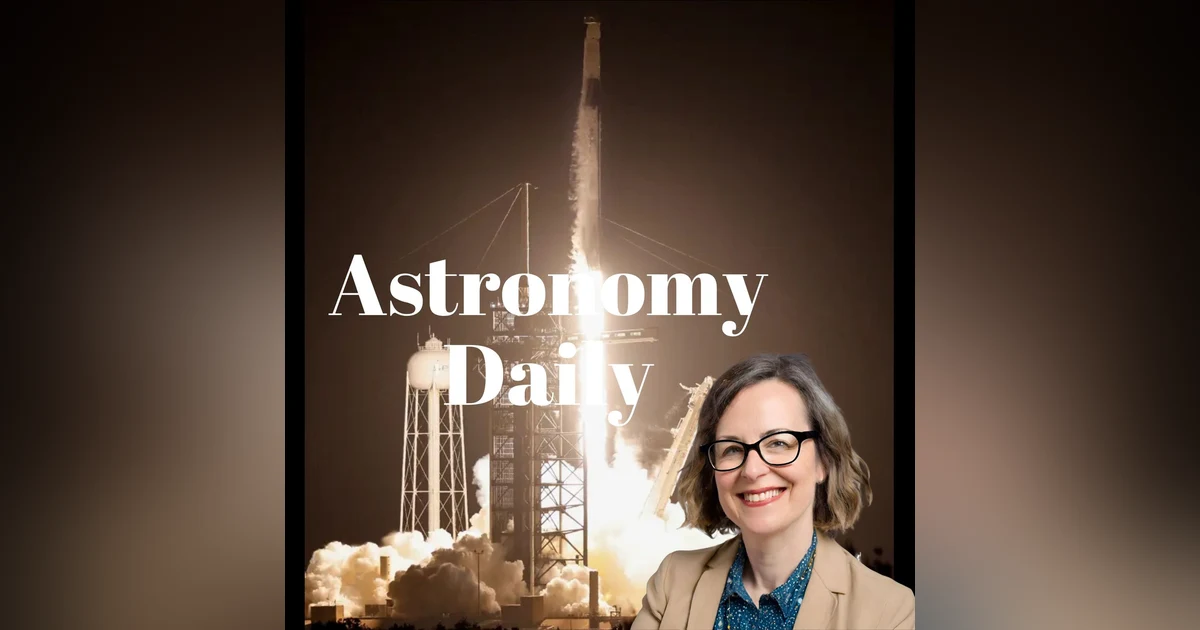
Astronomy Daily | Space News: S04E78
In this exciting episode of Astronomy Daily, host Anna takes you on a thrilling journey through the latest advancements in space exploration and astronomical research. From SpaceX's historic Fram 2 mission to...
Astronomy Daily | Space News: S04E78
In this exciting episode of Astronomy Daily, host Anna takes you on a thrilling journey through the latest advancements in space exploration and astronomical research. From SpaceX's historic Fram 2 mission to groundbreaking studies on dark matter, this episode is packed with cosmic insights that will ignite your curiosity.
Highlights:
- Historic Fram 2 Mission: Join us as we celebrate SpaceX's groundbreaking Fram 2 mission, which marks the first human spaceflight to circle Earth over its poles. Discover the unique experiments the crew will conduct during their orbit, including the first attempt to grow mushrooms in microgravity.
- SpaceX's Busy Launch Schedule: Explore SpaceX's ramped-up launch cadence, featuring five Falcon 9 missions in one week. We discuss the implications of this operational tempo for the future of space access and exploration.
- Perseverance Rover's Spacesuit Research: Learn about NASA's Perseverance rover conducting crucial tests on spacesuit materials in the harsh Martian environment, paving the way for future human exploration of the Red Planet.
- Astronauts Return from ISS: Catch up with NASA astronauts Butch Wilmore and Suni Williams, who recently completed an extended nine-month mission aboard the International Space Station, and hear their reflections on the experience.
- Dark Matter's Influence on Planetary Rotation: Delve into new research suggesting that dark matter could affect the rotation of planets, potentially offering a novel way to study this mysterious substance and its implications for planetary habitability.
For more cosmic updates, visit our website at astronomydaily.io. Join our community on social media by searching for #AstroDailyPod on Facebook, X, YouTubeMusic, TikTok, and our new Instagram account! Don’t forget to subscribe to the podcast on Apple Podcasts, Spotify, iHeartRadio, or wherever you get your podcasts.
Thank you for tuning in. This is Anna signing off. Until next time, keep looking up and stay curious about the wonders of our universe.
00:00 - Welcome to Astronomy Daily
01:05 - Overview of Fram 2 mission
10:30 - SpaceX launch schedule updates
17:00 - Perseverance rover's spacesuit research
22:15 - Astronauts' return from ISS
27:30 - Dark matter and planetary rotation
✍️ Episode References
Fram 2 Mission Details
[SpaceX](https://www.spacex.com)
SpaceX Launch Schedule
[NASA](https://www.nasa.gov)
Perseverance Rover Research
[NASA Mars Exploration](https://mars.nasa.gov/)
Astronauts' ISS Mission
[NASA Astronauts](https://www.nasa.gov/astronauts)
Dark Matter Research
[Xinjiang Astronomical Observatory](http://www.xao.ac.cn/)
Astronomy Daily
[Astronomy Daily](http://www.astronomydaily.io/)
Become a supporter of this podcast: https://www.spreaker.com/podcast/astronomy-daily-space-news--5648921/support.
In this exciting episode of Astronomy Daily, host Anna takes you on a thrilling journey through the latest advancements in space exploration and astronomical research. From SpaceX's historic Fram 2 mission to groundbreaking studies on dark matter, this episode is packed with cosmic insights that will ignite your curiosity.
Highlights:
- Historic Fram 2 Mission: Join us as we celebrate SpaceX's groundbreaking Fram 2 mission, which marks the first human spaceflight to circle Earth over its poles. Discover the unique experiments the crew will conduct during their orbit, including the first attempt to grow mushrooms in microgravity.
- SpaceX's Busy Launch Schedule: Explore SpaceX's ramped-up launch cadence, featuring five Falcon 9 missions in one week. We discuss the implications of this operational tempo for the future of space access and exploration.
- Perseverance Rover's Spacesuit Research: Learn about NASA's Perseverance rover conducting crucial tests on spacesuit materials in the harsh Martian environment, paving the way for future human exploration of the Red Planet.
- Astronauts Return from ISS: Catch up with NASA astronauts Butch Wilmore and Suni Williams, who recently completed an extended nine-month mission aboard the International Space Station, and hear their reflections on the experience.
- Dark Matter's Influence on Planetary Rotation: Delve into new research suggesting that dark matter could affect the rotation of planets, potentially offering a novel way to study this mysterious substance and its implications for planetary habitability.
For more cosmic updates, visit our website at astronomydaily.io. Join our community on social media by searching for #AstroDailyPod on Facebook, X, YouTubeMusic, TikTok, and our new Instagram account! Don’t forget to subscribe to the podcast on Apple Podcasts, Spotify, iHeartRadio, or wherever you get your podcasts.
Thank you for tuning in. This is Anna signing off. Until next time, keep looking up and stay curious about the wonders of our universe.
00:00 - Welcome to Astronomy Daily
01:05 - Overview of Fram 2 mission
10:30 - SpaceX launch schedule updates
17:00 - Perseverance rover's spacesuit research
22:15 - Astronauts' return from ISS
27:30 - Dark matter and planetary rotation
✍️ Episode References
Fram 2 Mission Details
[SpaceX](https://www.spacex.com)
SpaceX Launch Schedule
[NASA](https://www.nasa.gov)
Perseverance Rover Research
[NASA Mars Exploration](https://mars.nasa.gov/)
Astronauts' ISS Mission
[NASA Astronauts](https://www.nasa.gov/astronauts)
Dark Matter Research
[Xinjiang Astronomical Observatory](http://www.xao.ac.cn/)
Astronomy Daily
[Astronomy Daily](http://www.astronomydaily.io/)
Become a supporter of this podcast: https://www.spreaker.com/podcast/astronomy-daily-space-news--5648921/support.
WEBVTT
1
00:00:00.160 --> 00:00:02.799
Hello, and welcome to Astronomy Daily, your premier source for
2
00:00:02.839 --> 00:00:06.000
all things space and astronomy. I'm Anna and I'm thrilled
3
00:00:06.040 --> 00:00:08.320
to be your guide through the Cosmos. Today, we have
4
00:00:08.359 --> 00:00:11.919
an absolutely packed episode for you with some truly groundbreaking
5
00:00:11.960 --> 00:00:16.239
developments in space exploration and astronomical research. The headlines are
6
00:00:16.239 --> 00:00:20.359
buzzing with SpaceX's latest achievement, the historic fram two mission
7
00:00:20.359 --> 00:00:22.760
that has just sent the first ever human spaceflight over
8
00:00:22.800 --> 00:00:26.000
Earth's poles. We'll dive into what makes this mission so
9
00:00:26.120 --> 00:00:29.559
special and the unique experiments the crew will be conducting
10
00:00:29.640 --> 00:00:32.079
as they circle our planet in a way no humans
11
00:00:32.079 --> 00:00:34.920
have done before. But that's just the beginning of our
12
00:00:34.920 --> 00:00:39.000
cosmic journey. Today, we'll also explore how SpaceX is ramping
13
00:00:39.079 --> 00:00:43.000
up its launch schedule to unprecedented levels, with multiple missions
14
00:00:43.039 --> 00:00:46.799
taking off in rapid succession this week alone. Then we'll
15
00:00:46.799 --> 00:00:50.759
head to Mars, where NASA's Perseverance Rover is conducting fascinating
16
00:00:50.799 --> 00:00:54.200
tests on space suit materials, giving us crucial data for
17
00:00:54.240 --> 00:00:57.679
future human exploration of the Red planet. The harsh Martian
18
00:00:57.759 --> 00:01:02.039
environment poses unique challenges for astronaut safety, and this research
19
00:01:02.079 --> 00:01:04.840
could be key to overcoming them. We'll also check in
20
00:01:05.040 --> 00:01:09.200
with NASA astronauts Butch Wilmore and Sunny Williams, who recently
21
00:01:09.239 --> 00:01:11.400
returned to Earth after what was supposed to be a
22
00:01:11.439 --> 00:01:15.079
brief mission turned into a nine months day aboard the
23
00:01:15.120 --> 00:01:20.159
International Space Station. And finally, we'll explore new research suggesting
24
00:01:20.239 --> 00:01:23.799
something truly mind bending that dark matter could actually be
25
00:01:23.840 --> 00:01:29.560
affecting planetary rotation, potentially making planets spin faster. This could
26
00:01:29.640 --> 00:01:32.480
have profound implications for how we understand our own Earth
27
00:01:32.519 --> 00:01:36.359
and distant exoplanets. So strap in for a journey across
28
00:01:36.400 --> 00:01:39.439
our Solar System and beyond as we explore the latest
29
00:01:39.439 --> 00:01:43.680
and most fascinating developments in space science and astronomy. Let's
30
00:01:43.760 --> 00:01:48.040
kick things off with today's big story. SpaceX has made
31
00:01:48.079 --> 00:01:50.959
history with the first ever human spaceflight to circle Earth
32
00:01:51.040 --> 00:01:54.239
over its poles. The private fram two mission lifted off
33
00:01:54.239 --> 00:01:57.480
from NASA's Kennedy Space Center in Florida on March thirty
34
00:01:57.480 --> 00:02:01.000
first at nine forty six pm Eastern Time, carrying four
35
00:02:01.040 --> 00:02:04.120
space travelers into a unique polar orbit that no human
36
00:02:04.159 --> 00:02:07.799
has experienced before. The crew launched aboard the crew Dragon
37
00:02:07.879 --> 00:02:11.759
capsule Resilience, which has now completed its fourth space mission
38
00:02:11.800 --> 00:02:16.599
after previously supporting crew ie Inspiration four and Polaris Dawn.
39
00:02:17.560 --> 00:02:20.240
Falcon nine booster B one thousand eighty five powered the
40
00:02:20.319 --> 00:02:24.360
launch for its sixth flight before successfully landing on SpaceX's
41
00:02:24.439 --> 00:02:28.240
Drone ship a shortfall of gravitas in the Atlantic Ocean.
42
00:02:29.159 --> 00:02:32.479
This groundbreaking mission is commanded by Chun Wang of Malta,
43
00:02:32.840 --> 00:02:35.960
who is joined by an international team including vehicle commander
44
00:02:36.039 --> 00:02:40.639
Janecke Michelson from Norway, pilot Rabea Roga of Germany, and
45
00:02:40.719 --> 00:02:44.800
Australian medical officer and mission specialist Eric Phillips. All four
46
00:02:44.840 --> 00:02:48.240
are first time space travelers, making this journey even more remarkable.
47
00:02:49.199 --> 00:02:53.599
After reaching orbit, SpaceX's Bill Gerstenmeier radioed the crew, saying
48
00:02:54.319 --> 00:02:56.840
Dragon on behalf of the Falcon team were honored to
49
00:02:56.879 --> 00:02:59.919
deliver you safely to your polar orbit. Enjoy the v
50
00:03:00.120 --> 00:03:02.639
use of the poles, Send us some pictures, and our
51
00:03:02.680 --> 00:03:04.800
hearts and minds will be flying with you as you
52
00:03:04.879 --> 00:03:08.240
go over the poles. The mission is named after the
53
00:03:08.240 --> 00:03:12.719
famous Norwegian exploration ship Fram, which ventured into both Arctic
54
00:03:12.840 --> 00:03:16.439
and Antarctic regions in the late nineteenth and early twentieth centuries.
55
00:03:17.199 --> 00:03:22.000
Fram translates to forward or onward in Norwegian. A fitting
56
00:03:22.120 --> 00:03:25.000
name for this pioneering spaceflight that carries the same spirit
57
00:03:25.039 --> 00:03:28.599
of exploration into Earth orbit. During their three to five
58
00:03:28.680 --> 00:03:32.000
days in space, the crew will conduct twenty two scientific
59
00:03:32.039 --> 00:03:36.159
experiments that leverage their unique orbital path. These include the
60
00:03:36.199 --> 00:03:39.280
first ever attempt to grow mushrooms in the microgravity environment
61
00:03:39.280 --> 00:03:41.800
of space, and operating a machine that will capture the
62
00:03:41.840 --> 00:03:44.840
first X ray images of the human body while in orbit.
63
00:03:45.560 --> 00:03:49.840
Additional studies will investigate how spaceflight and microgravity affect the
64
00:03:49.919 --> 00:03:56.080
human musculoskeletal system. FRAM two represents SpaceX's seventeenth human spaceflight
65
00:03:56.159 --> 00:04:00.800
overall and its sixth private crude mission. What makes this
66
00:04:00.879 --> 00:04:04.199
launch particularly notable is that it came just seventeen days
67
00:04:04.240 --> 00:04:07.759
after SpaceX's previous astronaut launch Crew ten to the International
68
00:04:07.840 --> 00:04:11.280
Space Station, marking the shortest interval between SpaceX Creude missions
69
00:04:11.319 --> 00:04:15.479
to date. Upon completion of their orbital journey, the FRAM
70
00:04:15.479 --> 00:04:18.600
two crew will make history again with the first Pacific
71
00:04:18.639 --> 00:04:22.759
Ocean splash down for a SpaceX Crude mission. Previous Dragon
72
00:04:22.800 --> 00:04:25.680
capsules have all landed in the Atlantic off Florida's coast,
73
00:04:26.120 --> 00:04:28.800
but the company is shifting returns to the West coast
74
00:04:29.079 --> 00:04:31.879
to minimize risk to people and property during re entry.
75
00:04:32.720 --> 00:04:35.800
In one final research opportunity, the crew will forego the
76
00:04:35.839 --> 00:04:39.879
typical medical assistance normally provided to astronauts returning from space,
77
00:04:40.319 --> 00:04:44.360
allowing scientists to study how their bodies readapt to Earth's
78
00:04:44.399 --> 00:04:49.879
gravity without intervention, valuable data for future space exploration missions.
79
00:04:51.360 --> 00:04:54.079
Speaking of launches, let's turn our attention now to this
80
00:04:54.160 --> 00:04:58.279
week's schedule. It's been an exceptionally busy period for SpaceX,
81
00:04:58.600 --> 00:05:02.399
with this week alone featuring five planned Falcon nine launches.
82
00:05:02.920 --> 00:05:06.279
The company's impressive cadence kicked off with the Starlink Group
83
00:05:06.319 --> 00:05:10.199
six eighty mission from Cape Canaveral, which lifted off just
84
00:05:10.319 --> 00:05:14.399
hours before the historic FRAM two flight. This Starlink deployment
85
00:05:14.480 --> 00:05:17.720
carried a record twenty eight of SpaceX's upgraded V two
86
00:05:17.839 --> 00:05:21.600
Mini Optimized satellites to orbit, marking the first time these
87
00:05:21.680 --> 00:05:25.399
enhanced satellites have launched from the East Coast. The rapid
88
00:05:25.439 --> 00:05:30.839
fire succession of launches showcases SpaceX's growing operational capability. Just
89
00:05:30.920 --> 00:05:34.519
consider that the booster used for the Starlink six eighty
90
00:05:34.600 --> 00:05:37.480
mission was making its seventeenth flight after a turnaround of
91
00:05:37.519 --> 00:05:41.000
only forty one days, numbers that would have seemed impossible
92
00:05:41.079 --> 00:05:44.199
just a few years ago. Looking ahead through the week,
93
00:05:44.600 --> 00:05:48.879
SpaceX has scheduled three more Starlink missions. On April first,
94
00:05:49.279 --> 00:05:52.920
Falcon nine is set to launch Starlink Group eleven thirteen
95
00:05:52.959 --> 00:05:56.439
from Vandenberg Space Force Base in California, followed by two
96
00:05:56.519 --> 00:06:00.360
additional deployments, Starlink Group eleven eleven on April five and
97
00:06:00.399 --> 00:06:04.199
Starling Group six seventy two on April sixth from opposite
98
00:06:04.240 --> 00:06:07.240
coasts of the United States. The timing between the Fram
99
00:06:07.279 --> 00:06:09.920
two Crude mission and the previous Crew ten launch to
100
00:06:09.959 --> 00:06:13.120
the International Space Station set a new record for SpaceX,
101
00:06:13.560 --> 00:06:16.240
with just two weeks and three days separating these human
102
00:06:16.279 --> 00:06:21.160
space flights. This compressed timeline demonstrates the maturity of SpaceX's
103
00:06:21.199 --> 00:06:24.920
human spaceflight program and the reliability of their Falcon nine
104
00:06:24.959 --> 00:06:29.639
and Dragon systems. While SpaceX dominates the launch schedule this week,
105
00:06:30.000 --> 00:06:33.279
they're not alone in reaching for orbit. China also has
106
00:06:33.360 --> 00:06:36.600
two launches planned, with their chang Jeng two D rocket
107
00:06:36.639 --> 00:06:39.639
scheduled to lift off on April first, followed by what
108
00:06:39.759 --> 00:06:41.759
might be one of the final flights of the chung
109
00:06:41.879 --> 00:06:44.360
Jang six rocket later in the week from the Taiyuan
110
00:06:44.480 --> 00:06:49.000
Satellite Launch Center. The increasing frequency of SpaceX launches has
111
00:06:49.040 --> 00:06:52.720
become almost routine, but it represents a fundamental shift in
112
00:06:52.759 --> 00:06:56.879
space access. Just a decade ago, achieving this many orbital
113
00:06:56.920 --> 00:07:00.000
launches across an entire year would have been considered remark
114
00:07:00.000 --> 00:07:04.199
maarkable for a single company. Now SpaceX is demonstrating the
115
00:07:04.240 --> 00:07:08.160
capability to achieve that in a single week while simultaneously
116
00:07:08.199 --> 00:07:12.639
conducting historic human spaceflight missions and expanding their global satellite
117
00:07:12.639 --> 00:07:18.040
Internet constellation. This operational tempo not only serves SpaceX's commercial interests,
118
00:07:18.160 --> 00:07:21.879
but also provides crucial experience for NASA's future crude missions
119
00:07:22.160 --> 00:07:24.600
and demonstrates the kind of launch cadence that will be
120
00:07:24.639 --> 00:07:30.000
necessary as humanity expands its presence beyond Earth. Let's go
121
00:07:30.040 --> 00:07:33.199
to Mars now for an update. This is fascinating. While
122
00:07:33.199 --> 00:07:36.600
the Perseverance rover's primary mission on Mars focuses on searching
123
00:07:36.600 --> 00:07:40.360
for signs of ancient microbial life, it's also quietly conducting
124
00:07:40.439 --> 00:07:44.079
crucial research that could directly impact the safety of future
125
00:07:44.160 --> 00:07:48.120
human explorers. For the past four years, the rover has
126
00:07:48.160 --> 00:07:51.240
been exposing small swatches of space suit materials to the
127
00:07:51.240 --> 00:07:54.759
harsh Martian environment in what amounts to the ultimate real
128
00:07:54.800 --> 00:07:59.560
world test. These material samples, each measuring just three quarters
129
00:07:59.560 --> 00:08:03.079
of an inch square, are attached to a calibration target
130
00:08:03.360 --> 00:08:07.399
for the rover's sherlock instrument. The selection includes pieces that
131
00:08:07.439 --> 00:08:10.759
would be integral to any Mars astronaut's protective gear, a
132
00:08:10.759 --> 00:08:15.120
polycarbonate helmet visor vectrin used in glove palms for cut resistance,
133
00:08:15.600 --> 00:08:18.959
two variations of teflon with dust repelling properties, and a
134
00:08:19.000 --> 00:08:24.560
complex material called orthofabric. The ortho fabric is particularly interesting
135
00:08:24.720 --> 00:08:28.920
as it combines multiple protective layers nomechs for flame resistance
136
00:08:29.040 --> 00:08:33.639
like firefighter gear, breathable gortex, and kevlar for tear resistance,
137
00:08:33.720 --> 00:08:38.320
similar to what's used in bulletproof vests. Together, these materials
138
00:08:38.360 --> 00:08:41.679
represent the building blocks of what future Martian explorers might wear.
139
00:08:42.360 --> 00:08:45.559
Mars presents an extremely hostile environment for both humans and
140
00:08:45.600 --> 00:08:49.480
their equipment. Unlike Earth, with its protective magnetic field that
141
00:08:49.480 --> 00:08:52.960
deflects much of the Sun's radiation, Mars lost its magnetic
142
00:08:53.000 --> 00:08:56.519
shield billions of years ago, along with most of its atmosphere.
143
00:08:56.960 --> 00:09:00.759
This leaves the surface exposed to intense ultraviolet radiation that
144
00:09:00.799 --> 00:09:05.559
can rapidly degrade materials. Add to this, the planet's freezing temperatures,
145
00:09:06.080 --> 00:09:10.360
find dust particles that can infiltrate mechanisms, and corrosive perchlurates,
146
00:09:10.759 --> 00:09:13.799
toxic salts that permeate the Martian soil, and you have
147
00:09:13.840 --> 00:09:16.919
an environment engineered to break down almost anything we might
148
00:09:16.960 --> 00:09:21.519
send there. Mark Fryes of NASA's Johnson Space Center explains
149
00:09:21.559 --> 00:09:25.120
the forward thinking nature of this experiment. This is one
150
00:09:25.120 --> 00:09:28.240
of the forward looking aspects of the Rover's mission, not
151
00:09:28.320 --> 00:09:31.440
just thinking about its current science, but also about what
152
00:09:31.559 --> 00:09:34.840
comes next. We're preparing for people to eventually go and
153
00:09:34.879 --> 00:09:39.120
explore Mars. The data being collected is particularly valuable because
154
00:09:39.159 --> 00:09:43.279
it shows how quickly different materials degrade. Remarkably, about half
155
00:09:43.279 --> 00:09:45.879
of all the changes observed in the samples occurred within
156
00:09:46.039 --> 00:09:48.960
just the first two hundred days on Mars, with vectin
157
00:09:49.039 --> 00:09:53.639
appearing to deteriorate most rapidly. This gives engineers crucial information
158
00:09:53.759 --> 00:09:57.240
about how frequently spacesuits might need replacement or repair during
159
00:09:57.279 --> 00:10:02.360
extended missions. Scientists are a especially concerned about maintaining flexibility
160
00:10:02.360 --> 00:10:06.360
and tear resistance in spacesuit materials. As Sherlock team member
161
00:10:06.480 --> 00:10:10.200
joby Razzl Hollis notes, Mars is a really harsh tough place.
162
00:10:10.480 --> 00:10:15.120
The radiation in particular is pretty nasty. When these materials degrade,
163
00:10:15.240 --> 00:10:18.200
they can become brittle, similar to how white plastic lawn
164
00:10:18.240 --> 00:10:21.799
furniture yellows and cracks after years in sunlight, but likely
165
00:10:21.840 --> 00:10:25.480
happening much faster on Mars. The research team is now
166
00:10:25.480 --> 00:10:29.000
preparing to publish their findings, while scientists at NASA Johnson
167
00:10:29.039 --> 00:10:33.080
are developing Earth based simulations that can replicate Martian conditions.
168
00:10:33.519 --> 00:10:36.840
They plan to subject identical materials to simulated Martian carbon
169
00:10:36.879 --> 00:10:41.320
dioxide atmospheres, air pressure, and ultraviolet light, then stress tests
170
00:10:41.360 --> 00:10:45.200
them to determine how much structural integrity they've lost. The
171
00:10:45.240 --> 00:10:49.360
fabric materials are designed to be tough but flexible, Freeze explains,
172
00:10:50.000 --> 00:10:51.799
we want to know the extent to which they lose
173
00:10:51.840 --> 00:10:55.679
their strength and flexibility over time. As fabrics weaken, they
174
00:10:55.720 --> 00:10:58.240
can fray and tear, allowing a space suit to leak
175
00:10:58.399 --> 00:11:01.960
both heat and air, a potentially fatal situation for any
176
00:11:02.000 --> 00:11:06.080
Mars explorer. This research represents a critical step in preparing
177
00:11:06.120 --> 00:11:09.639
for human exploration of the Red planet, demonstrating how current
178
00:11:09.720 --> 00:11:13.679
robotic missions are directly enabling future human missions by solving
179
00:11:13.679 --> 00:11:19.039
practical challenges before astronauts ever set foot on Martian soil. Well,
180
00:11:19.360 --> 00:11:21.639
we finally got to see Butch and Sunni addressing the
181
00:11:21.639 --> 00:11:24.039
world today in their first sit down TV interview since
182
00:11:24.039 --> 00:11:28.399
returning home. After nine months aboard the International Space Station
183
00:11:28.919 --> 00:11:32.120
two hundred and seventy eight days longer than planned, NASA
184
00:11:32.159 --> 00:11:35.679
astronauts Butch Wilmore and Sunny Williams have finally returned to Earth.
185
00:11:36.840 --> 00:11:39.480
What began as a routine eight day test flight of
186
00:11:39.519 --> 00:11:43.519
Boeing Starliner spacecraft transformed into one of the most dramatic
187
00:11:43.600 --> 00:11:47.360
extended stays in space history, turning them into household names
188
00:11:47.399 --> 00:11:51.559
in the process. The veteran astronauts splashed down off Florida's
189
00:11:51.559 --> 00:11:54.600
coast two weeks ago, not in the Boeing capsule that
190
00:11:54.639 --> 00:11:57.240
carried them up, but in a space X Dragon that
191
00:11:57.279 --> 00:12:01.360
came to their rescue. Their unprecedented mission extension came after
192
00:12:01.440 --> 00:12:06.240
Starliner experienced multiple technical issues during its June twenty twenty
193
00:12:06.279 --> 00:12:11.159
three launch, including thruster failures and helium leaks that raised
194
00:12:11.159 --> 00:12:16.320
serious safety concerns about the capsule's return capability. In their
195
00:12:16.399 --> 00:12:21.360
first news conference since returning home, both astronauts displayed remarkable
196
00:12:21.399 --> 00:12:25.879
composure and professionalism despite their ordeal. I'll start and point
197
00:12:25.879 --> 00:12:29.559
the finger, and I'll blame me, Wilmore told reporters, sharing
198
00:12:29.600 --> 00:12:33.519
responsibility for the mission's issues. I could have asked some questions,
199
00:12:33.519 --> 00:12:35.399
and the answers to those questions could have turned the
200
00:12:35.440 --> 00:12:38.000
tide all the way up and down the chain. We
201
00:12:38.120 --> 00:12:41.879
all are responsible, we all own this. The saga took
202
00:12:41.879 --> 00:12:46.320
on additional dimensions when President Trump publicly urged SpaceX's Elon
203
00:12:46.440 --> 00:12:50.360
Musk to accelerate the rescue mission, adding political pressure to
204
00:12:50.399 --> 00:12:55.879
an already complicated situation. Meanwhile, NASA engineers and Boeing officials
205
00:12:55.919 --> 00:13:00.159
spent months deliberating the safest course of action before ultimately
206
00:13:00.200 --> 00:13:03.559
determining that Starliner was too risky to bring the astronauts home.
207
00:13:04.399 --> 00:13:08.919
Despite everything they experienced, both Wilmore and Williams expressed continued
208
00:13:08.960 --> 00:13:12.320
confidence in Boeing spacecraft. When asked if they would fly
209
00:13:12.440 --> 00:13:17.519
on Starliner again, Williams responded emphatically, we're all in. She
210
00:13:17.639 --> 00:13:20.879
added that the vehicle has a lot of capability and
211
00:13:20.919 --> 00:13:24.720
she wants to see it succeed. Wilmore echoed this sentiment,
212
00:13:25.080 --> 00:13:27.840
saying he'd return in a heartbeat because we're going to
213
00:13:27.919 --> 00:13:30.919
rectify all the issues that we encountered. We're going to
214
00:13:30.919 --> 00:13:34.279
fix them. We're going to make it work. The pair
215
00:13:34.360 --> 00:13:36.879
is scheduled to meet with Boeing leadership this week to
216
00:13:36.960 --> 00:13:41.320
provide detailed feedback on their flight experience. Wilmore emphasized that
217
00:13:41.399 --> 00:13:45.120
the meeting is not for pointing fingers, but rather to
218
00:13:45.159 --> 00:13:49.080
make the path clearer going forward. Both astronauts have been
219
00:13:49.120 --> 00:13:52.720
adjusting well to life back on Earth. Williams waited until
220
00:13:52.720 --> 00:13:55.600
she was steadier on her feet before reuniting with her
221
00:13:55.600 --> 00:13:59.519
two Labrador retrievers the day after splashdown, describing the moment
222
00:13:59.600 --> 00:14:03.879
as pure joy. Wilmore, meanwhile, has already received his first
223
00:14:03.960 --> 00:14:07.240
terrestrial assignment from his wife, replacing all the shrubs in
224
00:14:07.279 --> 00:14:11.559
their yard before summer. NASA engineers still don't fully understand
225
00:14:11.600 --> 00:14:15.480
what caused Starliner's thrust or malfunctions. With more testing planned
226
00:14:15.480 --> 00:14:19.639
through summer, the Space Agency may require another uncrude test
227
00:14:19.679 --> 00:14:23.600
flight before allowing astronauts aboard again, but that potential redo
228
00:14:23.600 --> 00:14:28.399
could happen by year's end. Despite Starliner's troubled development, NASA
229
00:14:28.440 --> 00:14:31.960
officials maintained that their strategy of having two competing US
230
00:14:32.080 --> 00:14:37.159
companies providing space station transportation remains sound However, with the
231
00:14:37.200 --> 00:14:40.840
International Space Stations scheduled for retirement in just five years,
232
00:14:41.039 --> 00:14:43.919
the window for Boeing to establish Starliner as a reliable
233
00:14:43.919 --> 00:14:49.600
crew transport is rapidly closing. Finally, today, a dark matter update.
234
00:14:50.080 --> 00:14:52.720
Dark matter remains one of the most enigmatic components of
235
00:14:52.759 --> 00:14:56.639
our universe, making up approximately eighty five percent of all matter.
236
00:14:57.039 --> 00:15:01.720
It's practically invisible, detectable only through its gravitational effects, but
237
00:15:01.840 --> 00:15:04.559
new research suggests we might have another way to observe
238
00:15:04.600 --> 00:15:09.559
its presence through its influence on planetary rotation. Scientists from
239
00:15:09.600 --> 00:15:13.600
the Shinjang Astronomical Observatory at the Chinese Academy of Sciences
240
00:15:13.879 --> 00:15:18.159
have published intriguing findings suggesting that dark matter could actually
241
00:15:18.159 --> 00:15:22.600
make planets spin faster. Their paper, aptly titled dark Matter
242
00:15:22.679 --> 00:15:26.519
Spins the Planet proposes that planets act as natural dark
1
00:00:00.160 --> 00:00:02.799
2
00:00:02.839 --> 00:00:06.000
3
00:00:06.040 --> 00:00:08.320
4
00:00:08.359 --> 00:00:11.919
5
00:00:11.960 --> 00:00:16.239
6
00:00:16.239 --> 00:00:20.359
7
00:00:20.359 --> 00:00:22.760
8
00:00:22.800 --> 00:00:26.000
9
00:00:26.120 --> 00:00:29.559
10
00:00:29.640 --> 00:00:32.079
11
00:00:32.079 --> 00:00:34.920
12
00:00:34.920 --> 00:00:39.000
13
00:00:39.079 --> 00:00:43.000
14
00:00:43.039 --> 00:00:46.799
15
00:00:46.799 --> 00:00:50.759
16
00:00:50.799 --> 00:00:54.200
17
00:00:54.240 --> 00:00:57.679
18
00:00:57.759 --> 00:01:02.039
19
00:01:02.079 --> 00:01:04.840
20
00:01:05.040 --> 00:01:09.200
21
00:01:09.239 --> 00:01:11.400
22
00:01:11.439 --> 00:01:15.079
23
00:01:15.120 --> 00:01:20.159
24
00:01:20.239 --> 00:01:23.799
25
00:01:23.840 --> 00:01:29.560
26
00:01:29.640 --> 00:01:32.480
27
00:01:32.519 --> 00:01:36.359
28
00:01:36.400 --> 00:01:39.439
29
00:01:39.439 --> 00:01:43.680
30
00:01:43.760 --> 00:01:48.040
31
00:01:48.079 --> 00:01:50.959
32
00:01:51.040 --> 00:01:54.239
33
00:01:54.239 --> 00:01:57.480
34
00:01:57.480 --> 00:02:01.000
35
00:02:01.040 --> 00:02:04.120
36
00:02:04.159 --> 00:02:07.799
37
00:02:07.879 --> 00:02:11.759
38
00:02:11.800 --> 00:02:16.599
39
00:02:17.560 --> 00:02:20.240
40
00:02:20.319 --> 00:02:24.360
41
00:02:24.439 --> 00:02:28.240
42
00:02:29.159 --> 00:02:32.479
43
00:02:32.840 --> 00:02:35.960
44
00:02:36.039 --> 00:02:40.639
45
00:02:40.719 --> 00:02:44.800
46
00:02:44.840 --> 00:02:48.240
47
00:02:49.199 --> 00:02:53.599
48
00:02:54.319 --> 00:02:56.840
49
00:02:56.879 --> 00:02:59.919
50
00:03:00.120 --> 00:03:02.639
51
00:03:02.680 --> 00:03:04.800
52
00:03:04.879 --> 00:03:08.240
53
00:03:08.240 --> 00:03:12.719
54
00:03:12.840 --> 00:03:16.439
55
00:03:17.199 --> 00:03:22.000
56
00:03:22.120 --> 00:03:25.000
57
00:03:25.039 --> 00:03:28.599
58
00:03:28.680 --> 00:03:32.000
59
00:03:32.039 --> 00:03:36.159
60
00:03:36.199 --> 00:03:39.280
61
00:03:39.280 --> 00:03:41.800
62
00:03:41.840 --> 00:03:44.840
63
00:03:45.560 --> 00:03:49.840
64
00:03:49.919 --> 00:03:56.080
65
00:03:56.159 --> 00:04:00.800
66
00:04:00.879 --> 00:04:04.199
67
00:04:04.240 --> 00:04:07.759
68
00:04:07.840 --> 00:04:11.280
69
00:04:11.319 --> 00:04:15.479
70
00:04:15.479 --> 00:04:18.600
71
00:04:18.639 --> 00:04:22.759
72
00:04:22.800 --> 00:04:25.680
73
00:04:26.120 --> 00:04:28.800
74
00:04:29.079 --> 00:04:31.879
75
00:04:32.720 --> 00:04:35.800
76
00:04:35.839 --> 00:04:39.879
77
00:04:40.319 --> 00:04:44.360
78
00:04:44.399 --> 00:04:49.879
79
00:04:51.360 --> 00:04:54.079
80
00:04:54.160 --> 00:04:58.279
81
00:04:58.600 --> 00:05:02.399
82
00:05:02.920 --> 00:05:06.279
83
00:05:06.319 --> 00:05:10.199
84
00:05:10.319 --> 00:05:14.399
85
00:05:14.480 --> 00:05:17.720
86
00:05:17.839 --> 00:05:21.600
87
00:05:21.680 --> 00:05:25.399
88
00:05:25.439 --> 00:05:30.839
89
00:05:30.920 --> 00:05:34.519
90
00:05:34.600 --> 00:05:37.480
91
00:05:37.519 --> 00:05:41.000
92
00:05:41.079 --> 00:05:44.199
93
00:05:44.600 --> 00:05:48.879
94
00:05:49.279 --> 00:05:52.920
95
00:05:52.959 --> 00:05:56.439
96
00:05:56.519 --> 00:06:00.360
97
00:06:00.399 --> 00:06:04.199
98
00:06:04.240 --> 00:06:07.240
99
00:06:07.279 --> 00:06:09.920
100
00:06:09.959 --> 00:06:13.120
101
00:06:13.560 --> 00:06:16.240
102
00:06:16.279 --> 00:06:21.160
103
00:06:21.199 --> 00:06:24.920
104
00:06:24.959 --> 00:06:29.639
105
00:06:30.000 --> 00:06:33.279
106
00:06:33.360 --> 00:06:36.600
107
00:06:36.639 --> 00:06:39.639
108
00:06:39.759 --> 00:06:41.759
109
00:06:41.879 --> 00:06:44.360
110
00:06:44.480 --> 00:06:49.000
111
00:06:49.040 --> 00:06:52.720
112
00:06:52.759 --> 00:06:56.879
113
00:06:56.920 --> 00:07:00.000
114
00:07:00.000 --> 00:07:04.199
115
00:07:04.240 --> 00:07:08.160
116
00:07:08.199 --> 00:07:12.639
117
00:07:12.639 --> 00:07:18.040
118
00:07:18.160 --> 00:07:21.879
119
00:07:22.160 --> 00:07:24.600
120
00:07:24.639 --> 00:07:30.000
121
00:07:30.040 --> 00:07:33.199
122
00:07:33.199 --> 00:07:36.600
123
00:07:36.600 --> 00:07:40.360
124
00:07:40.439 --> 00:07:44.079
125
00:07:44.160 --> 00:07:48.120
126
00:07:48.160 --> 00:07:51.240
127
00:07:51.240 --> 00:07:54.759
128
00:07:54.800 --> 00:07:59.560
129
00:07:59.560 --> 00:08:03.079
130
00:08:03.360 --> 00:08:07.399
131
00:08:07.439 --> 00:08:10.759
132
00:08:10.759 --> 00:08:15.120
133
00:08:15.600 --> 00:08:18.959
134
00:08:19.000 --> 00:08:24.560
135
00:08:24.720 --> 00:08:28.920
136
00:08:29.040 --> 00:08:33.639
137
00:08:33.720 --> 00:08:38.320
138
00:08:38.360 --> 00:08:41.679
139
00:08:42.360 --> 00:08:45.559
140
00:08:45.600 --> 00:08:49.480
141
00:08:49.480 --> 00:08:52.960
142
00:08:53.000 --> 00:08:56.519
143
00:08:56.960 --> 00:09:00.759
144
00:09:00.799 --> 00:09:05.559
145
00:09:06.080 --> 00:09:10.360
146
00:09:10.759 --> 00:09:13.799
147
00:09:13.840 --> 00:09:16.919
148
00:09:16.960 --> 00:09:21.519
149
00:09:21.559 --> 00:09:25.120
150
00:09:25.120 --> 00:09:28.240
151
00:09:28.320 --> 00:09:31.440
152
00:09:31.559 --> 00:09:34.840
153
00:09:34.879 --> 00:09:39.120
154
00:09:39.159 --> 00:09:43.279
155
00:09:43.279 --> 00:09:45.879
156
00:09:46.039 --> 00:09:48.960
157
00:09:49.039 --> 00:09:53.639
158
00:09:53.759 --> 00:09:57.240
159
00:09:57.279 --> 00:10:02.360
160
00:10:02.360 --> 00:10:06.360
161
00:10:06.480 --> 00:10:10.200
162
00:10:10.480 --> 00:10:15.120
163
00:10:15.240 --> 00:10:18.200
164
00:10:18.240 --> 00:10:21.799
165
00:10:21.840 --> 00:10:25.480
166
00:10:25.480 --> 00:10:29.000
167
00:10:29.039 --> 00:10:33.080
168
00:10:33.519 --> 00:10:36.840
169
00:10:36.879 --> 00:10:41.320
170
00:10:41.360 --> 00:10:45.200
171
00:10:45.240 --> 00:10:49.360
172
00:10:50.000 --> 00:10:51.799
173
00:10:51.840 --> 00:10:55.679
174
00:10:55.720 --> 00:10:58.240
175
00:10:58.399 --> 00:11:01.960
176
00:11:02.000 --> 00:11:06.080
177
00:11:06.120 --> 00:11:09.639
178
00:11:09.720 --> 00:11:13.679
179
00:11:13.679 --> 00:11:19.039
180
00:11:19.360 --> 00:11:21.639
181
00:11:21.639 --> 00:11:24.039
182
00:11:24.039 --> 00:11:28.399
183
00:11:28.919 --> 00:11:32.120
184
00:11:32.159 --> 00:11:35.679
185
00:11:36.840 --> 00:11:39.480
186
00:11:39.519 --> 00:11:43.519
187
00:11:43.600 --> 00:11:47.360
188
00:11:47.399 --> 00:11:51.559
189
00:11:51.559 --> 00:11:54.600
190
00:11:54.639 --> 00:11:57.240
191
00:11:57.279 --> 00:12:01.360
192
00:12:01.440 --> 00:12:06.240
193
00:12:06.279 --> 00:12:11.159
194
00:12:11.159 --> 00:12:16.320
195
00:12:16.399 --> 00:12:21.360
196
00:12:21.399 --> 00:12:25.879
197
00:12:25.879 --> 00:12:29.559
198
00:12:29.600 --> 00:12:33.519
199
00:12:33.519 --> 00:12:35.399
200
00:12:35.440 --> 00:12:38.000
201
00:12:38.120 --> 00:12:41.879
202
00:12:41.879 --> 00:12:46.320
203
00:12:46.440 --> 00:12:50.360
204
00:12:50.399 --> 00:12:55.879
205
00:12:55.919 --> 00:13:00.159
206
00:13:00.200 --> 00:13:03.559
207
00:13:04.399 --> 00:13:08.919
208
00:13:08.960 --> 00:13:12.320
209
00:13:12.440 --> 00:13:17.519
210
00:13:17.639 --> 00:13:20.879
211
00:13:20.919 --> 00:13:24.720
212
00:13:25.080 --> 00:13:27.840
213
00:13:27.919 --> 00:13:30.919
214
00:13:30.919 --> 00:13:34.279
215
00:13:34.360 --> 00:13:36.879
216
00:13:36.960 --> 00:13:41.320
217
00:13:41.399 --> 00:13:45.120
218
00:13:45.159 --> 00:13:49.080
219
00:13:49.120 --> 00:13:52.720
220
00:13:52.720 --> 00:13:55.600
221
00:13:55.600 --> 00:13:59.519
222
00:13:59.600 --> 00:14:03.879
223
00:14:03.960 --> 00:14:07.240
224
00:14:07.279 --> 00:14:11.559
225
00:14:11.600 --> 00:14:15.480
226
00:14:15.480 --> 00:14:19.639
227
00:14:19.679 --> 00:14:23.600
228
00:14:23.600 --> 00:14:28.399
229
00:14:28.440 --> 00:14:31.960
230
00:14:32.080 --> 00:14:37.159
231
00:14:37.200 --> 00:14:40.840
232
00:14:41.039 --> 00:14:43.919
233
00:14:43.919 --> 00:14:49.600
234
00:14:50.080 --> 00:14:52.720
235
00:14:52.759 --> 00:14:56.639
236
00:14:57.039 --> 00:15:01.720
237
00:15:01.840 --> 00:15:04.559
238
00:15:04.600 --> 00:15:09.559
239
00:15:09.600 --> 00:15:13.600
240
00:15:13.879 --> 00:15:18.159
241
00:15:18.159 --> 00:15:22.600
242
00:15:22.679 --> 00:15:26.519