Space Mirrors Spark Controversy, Hidden Space Junk Revealed, and Black Hole Energy Breakthrough
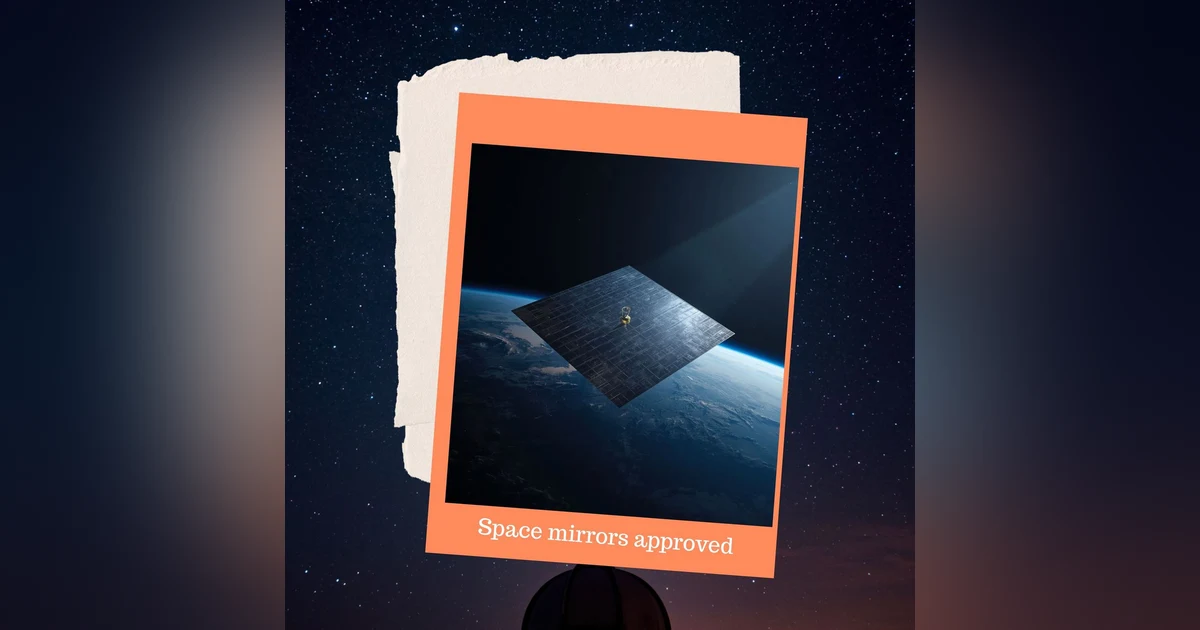
Astronomy Daily — S05E140 | Tuesday 14 July 2026 | Hosts: Anna & Avery Space mirrors are officially cleared for launch — and astronomers are sounding the alarm. In today's episode, Anna and Avery unpack the FCC's approval of Reflect Orbital's Eärendil-1, the first of a proposed constellation of sunlight-reflecting satellites, and what tens of thousands of orbital mirrors could mean for the night sky. Then it's off to the geostationary belt, where astronomers using clever image-stacking — with help from Siding Spring Observatory and the ANU — have revealed a minefield of invisible debris, most of it in no public catalogue. Also on the show: physicists in New York recreate black hole energy extraction on a benchtop, validating a 50-year-old Penrose prediction with 'synthetic rotation'; the Extremely Large Telescope in Chile turns on its axis for the very first time — 3,500 tonnes floating on 80 microns of oil; and University of Sydney's Dr Manisha Caleb and colleagues lay out how the Square Kilometre Array will turn fast radio bursts into a survey tool for the invisible universe. Plus a quick Starship Flight 13 update (now NET Thursday 16 July after a full 33-engine static fire), the story of Avi Loeb's appointment to chair the White House UAP Science Advisory Council, and a skywatch built around tonight's super new Moon. Stories & sources • 01. FCC approves Reflect Orbital Eärendil-1 space mirror — SpaceNews / Space.com / Engadget • 02. Faint debris "minefield" in geosynchronous orbit (DebrisWatch II, Journal of the Astronautical Sciences) — University of Warwick / Phys.org / Space.com • 03. Penrose superradiance via synthetic rotation (Nature) — CUNY ASRC / EurekAlert / Phys.org • 04. ELT completes first full rotation of its 3,500-tonne structure — ESO Picture of the Week / Space.com • 05. Fast radio bursts as cosmological probes with the SKA (Caleb et al.) — Universe Today / arXiv • 06. Starship Flight 13 slips to NET 16 July; full 33-engine static fire complete — Space.com • 07. Avi Loeb appointed chair of White House UAP Science Advisory Council — Space.com / AP coverage Skywatch highlights • Tonight (14 July): super new Moon — darkest skies of the month; Milky Way core overhead for southern observers • Evenings: Venus blazing in the west in Leo; crescent Moon joins Regulus & Venus on 16–17 July • Pre-dawn: Saturn high with rings tilted ~9°; Mars passes 5° north of Aldebaran on 14 July Visit astronomydaily.io for all episodes and the free newsletter. Follow @AstroDailyPod. Astronomy Daily is part of the Bitesz.com Podcast Network.
Become a supporter of this podcast: https://www.spreaker.com/podcast/astronomy-daily-space-news-updates--5648921/support.
Sponsor Details:
Ensure your online privacy by using NordVPN. To get our special listener deal and save a lot of money, visit www.bitesz.com/nordvpn. You'll be glad you did!
Become a supporter of Astronomy Daily by joining our Supporters Club. Commercial free episodes daily are only a click way... Click Here
This episode includes AI-generated content.
0
00:00:00.000 --> 00:00:02.720
Anna: Hello and welcome to Astronomy daily for
1
00:00:02.720 --> 00:00:04.902
Tuesday the 14th of July
2
00:00:05.058 --> 00:00:06.960
2026. I'm Anna.
3
00:00:07.040 --> 00:00:09.800
Avery: And I'm, um, Avery. Episode 140
4
00:00:09.800 --> 00:00:12.560
of season five. And honestly, today's rundown
5
00:00:12.560 --> 00:00:14.600
reads like someone dared us to pick the most
6
00:00:14.600 --> 00:00:16.720
argument starting stories we could find.
7
00:00:17.200 --> 00:00:19.760
Anna: It really does. Coming up, American
8
00:00:19.920 --> 00:00:22.600
regulators have just approved the launch of
9
00:00:22.600 --> 00:00:25.160
the first commercial space mirror, a
10
00:00:25.160 --> 00:00:27.960
spacecraft designed to beam sunlight down to
11
00:00:27.960 --> 00:00:30.430
Earth at night. And astronomers are,
12
00:00:30.590 --> 00:00:32.430
let's say, not thrilled.
13
00:00:32.750 --> 00:00:35.430
Avery: We've also got a newly revealed minefield of
14
00:00:35.430 --> 00:00:37.470
invisible space junk in one of the most
15
00:00:37.470 --> 00:00:39.670
valuable orbits around Earth with an
16
00:00:39.670 --> 00:00:41.830
Australian telescope right in the middle of
17
00:00:41.830 --> 00:00:44.390
the detective work. Plus, physicists and
18
00:00:44.390 --> 00:00:46.910
Manhattan have recreated black hole energy
19
00:00:46.910 --> 00:00:49.710
extraction in a lab. The biggest telescope
20
00:00:49.710 --> 00:00:52.030
ever built just moved for the very first
21
00:00:52.030 --> 00:00:54.630
time. And a new paper explains how the Square
22
00:00:54.630 --> 00:00:57.070
Kilometer Array is about to turn cosmic
23
00:00:57.070 --> 00:00:59.830
lightning flashes into a map of the invisible
24
00:00:59.830 --> 00:01:00.430
universe.
25
00:01:01.060 --> 00:01:03.980
Anna: And later, a quick update on Starship
26
00:01:03.980 --> 00:01:06.820
Flight 13 and the story of the Harvard
27
00:01:06.820 --> 00:01:09.420
astronomer who's just been handed the keys to
28
00:01:09.420 --> 00:01:11.340
the White House's new UFO
29
00:01:11.340 --> 00:01:14.100
Avery: Science Council told you argument
30
00:01:14.100 --> 00:01:15.620
starting. Let's get into it.
31
00:01:16.020 --> 00:01:18.820
Anna: Our lead story today. On 9 July,
32
00:01:18.980 --> 00:01:21.460
the US Federal Communications Commission
33
00:01:21.700 --> 00:01:24.334
formally authorized the launch of Earendil
34
00:01:24.466 --> 00:01:27.100
1, a demonstration satellite from
35
00:01:27.100 --> 00:01:29.460
California startup Reflect Orbital.
36
00:01:30.090 --> 00:01:32.810
Once in orbit around 600 kilometers up,
37
00:01:32.970 --> 00:01:35.770
it will unfurl a thin film reflector
38
00:01:35.770 --> 00:01:38.530
18 meters on a side that's roughly
39
00:01:38.530 --> 00:01:41.530
60ft and use it to bounce sunlight
40
00:01:41.530 --> 00:01:44.130
down to specific spots on the ground for
41
00:01:44.130 --> 00:01:45.450
several minutes at a time.
42
00:01:45.770 --> 00:01:48.250
Avery: So to be clear for everyone, a giant
43
00:01:48.250 --> 00:01:51.050
steerable mirror in space whose entire
44
00:01:51.050 --> 00:01:53.650
job is to shine daylight onto the night side
45
00:01:53.650 --> 00:01:54.250
of Earth.
46
00:01:54.650 --> 00:01:57.630
Anna: That's exactly it. The company calls itself
47
00:01:57.630 --> 00:01:59.990
the Sunlight Company and the pitch is
48
00:01:59.990 --> 00:02:02.790
sunlight on demand. Lighting construction
49
00:02:02.790 --> 00:02:04.950
sites so crews can work through the night,
50
00:02:05.190 --> 00:02:07.510
illuminating search and rescue operations,
51
00:02:07.670 --> 00:02:10.150
and boosting solar farms by extending their
52
00:02:10.150 --> 00:02:12.150
generating hours past sunset.
53
00:02:12.470 --> 00:02:14.550
Avery: The demonstration satellite weighs about
54
00:02:14.550 --> 00:02:17.430
142kg and is due to launch
55
00:02:17.430 --> 00:02:19.710
later this year. And here's the number that
56
00:02:19.710 --> 00:02:21.990
makes this a much bigger story than one test
57
00:02:21.990 --> 00:02:24.610
satellite. ReflectorBital has talked about
58
00:02:24.610 --> 00:02:27.330
operating 50,000 or more of these
59
00:02:27.330 --> 00:02:30.130
mirror craft in low Earth orbit by 2035,
60
00:02:30.690 --> 00:02:31.490
which is why
61
00:02:31.490 --> 00:02:34.010
Anna: the astronomy community has reacted the way
62
00:02:34.010 --> 00:02:36.850
it has. The FCC application drew
63
00:02:36.850 --> 00:02:39.850
nearly 1900 public comments, the
64
00:02:39.850 --> 00:02:42.210
overwhelming majority critical. For
65
00:02:42.210 --> 00:02:45.210
comparison, SpaceX's application for up to
66
00:02:45.210 --> 00:02:48.130
a million orbital data center satellites drew
67
00:02:48.130 --> 00:02:51.070
about 1500. The European southern
68
00:02:51.070 --> 00:02:53.990
Observatory has described plans like these as
69
00:02:53.990 --> 00:02:56.710
an existential threat to optical astronomy.
70
00:02:56.870 --> 00:02:58.950
Avery: And it's not just professional observatories.
71
00:02:58.950 --> 00:03:01.710
The American Astronomical Society Raised the
72
00:03:01.710 --> 00:03:03.630
prospect of eye damage for amateur
73
00:03:03.630 --> 00:03:05.869
astronomers. The company itself has
74
00:03:05.869 --> 00:03:07.630
acknowledged there's a risk if someone
75
00:03:07.630 --> 00:03:09.950
happened to catch the reflected beam through
76
00:03:09.950 --> 00:03:12.070
a telescope with a large enough aperture.
77
00:03:12.390 --> 00:03:14.830
Plus concerns about momentarily dazzling
78
00:03:14.830 --> 00:03:17.500
pilots and about what artificial daylight
79
00:03:17.500 --> 00:03:20.420
does to wildlife. Circadian rhythms are not
80
00:03:20.420 --> 00:03:22.540
optional extras for most living things.
81
00:03:22.940 --> 00:03:25.580
Anna: The FCC's answer to all of that was
82
00:03:25.580 --> 00:03:28.180
essentially not our department. The
83
00:03:28.180 --> 00:03:30.300
commission said concerns about optical
84
00:03:30.300 --> 00:03:32.780
astronomy and the environment fall outside
85
00:03:32.860 --> 00:03:35.260
its review, which is limited to radio
86
00:03:35.260 --> 00:03:37.900
spectrum. It found the risks with a single
87
00:03:37.900 --> 00:03:40.820
satellite unlikely to materialize, and said
88
00:03:40.820 --> 00:03:43.180
testing novel technology is in the public
89
00:03:43.180 --> 00:03:43.580
interest.
90
00:03:44.270 --> 00:03:46.670
Avery: Which might be true for one satellite. One
91
00:03:46.670 --> 00:03:48.790
mirror tested carefully with the light
92
00:03:48.790 --> 00:03:51.270
contained, switchable and steered away from
93
00:03:51.270 --> 00:03:53.310
observatories. That's a technology
94
00:03:53.470 --> 00:03:56.310
demonstration. 50,000 of them is a
95
00:03:56.310 --> 00:03:58.470
different planet to live on. And the
96
00:03:58.470 --> 00:04:01.350
regulatory gap is the real story here. If the
97
00:04:01.350 --> 00:04:03.630
agency licensing these satellites says
98
00:04:03.630 --> 00:04:06.240
impacts on the sky aren't their job, then,
99
00:04:06.240 --> 00:04:07.470
uh, whose job are they?
100
00:04:07.950 --> 00:04:10.510
Anna: To be fair to the company, they say they're
101
00:04:10.510 --> 00:04:13.060
trying to earn trust. The light is
102
00:04:13.060 --> 00:04:15.900
contained within the target spot. It can be
103
00:04:15.900 --> 00:04:18.820
switched off at any moment. And they'll avoid
104
00:04:18.900 --> 00:04:21.220
sensitive areas like research
105
00:04:21.380 --> 00:04:24.260
observatories and protected habitats.
106
00:04:24.740 --> 00:04:27.460
Their co founders said this license is the
107
00:04:27.460 --> 00:04:30.020
first step toward rigorously testing
108
00:04:30.180 --> 00:04:32.820
both the technology and the safeguards.
109
00:04:33.300 --> 00:04:36.140
Avery: And that test data, uh, will matter. But I
110
00:04:36.140 --> 00:04:38.500
suspect this is one we'll be covering again
111
00:04:38.900 --> 00:04:39.620
and again.
112
00:04:40.090 --> 00:04:42.890
Anna: The satellites, named Earendil, by the way.
113
00:04:43.050 --> 00:04:46.010
Tulkin fans, will recognize the mariner, who
114
00:04:46.010 --> 00:04:48.890
sails the sky with a shining star on his
115
00:04:48.890 --> 00:04:49.210
brow.
116
00:04:49.530 --> 00:04:51.370
Avery: At least they've got good taste in names.
117
00:04:51.450 --> 00:04:53.650
Whether the night sky agrees is another
118
00:04:53.650 --> 00:04:54.690
matter. Okay.
119
00:04:54.690 --> 00:04:57.530
From mirrors we can see, to junk
120
00:04:57.530 --> 00:05:00.370
we can't. A new study led by the
121
00:05:00.370 --> 00:05:02.810
University of Warwick has uncovered some of
122
00:05:02.810 --> 00:05:05.610
the faintest space debris ever detected in
123
00:05:05.610 --> 00:05:08.500
geosynchronous orbit. Fragments down to
124
00:05:08.500 --> 00:05:11.500
about five centimeters across. That's
125
00:05:11.500 --> 00:05:13.940
two inches. And here's the kicker.
126
00:05:14.180 --> 00:05:17.020
Nearly 80% of the faint objects
127
00:05:17.020 --> 00:05:19.460
they found don't appear in any publicly
128
00:05:19.460 --> 00:05:20.500
available catalog.
129
00:05:20.740 --> 00:05:23.220
Anna: Let's set the scene for anyone new to this
130
00:05:23.700 --> 00:05:26.340
geosynchronous orbit is that special
131
00:05:26.580 --> 00:05:27.620
band about
132
00:05:27.700 --> 00:05:30.700
36,000km up where a
133
00:05:30.700 --> 00:05:33.540
satellite circles the Earth, exactly in
134
00:05:33.540 --> 00:05:36.220
step with our planet's rotation so it
135
00:05:36.220 --> 00:05:39.020
hangs over the same spot. It's home
136
00:05:39.020 --> 00:05:41.740
to the big, expensive workhorses.
137
00:05:41.980 --> 00:05:44.700
Communications, broadcasting, weather,
138
00:05:44.700 --> 00:05:47.700
monitoring, some of the most valuable real
139
00:05:47.700 --> 00:05:48.700
estate in space.
140
00:05:49.180 --> 00:05:51.779
Avery: And unlike low Earth orbit, there's no
141
00:05:51.779 --> 00:05:54.700
cleanup service. Down low, the wisps of
142
00:05:54.700 --> 00:05:57.540
atmosphere gradually drag debris down until
143
00:05:57.540 --> 00:06:00.420
it burns up. At, uh, geo altitude, there
144
00:06:00.420 --> 00:06:02.970
is essentially nothing. Whatever ends up
145
00:06:02.970 --> 00:06:05.530
there, a dead satellite, a, uh, fragment from
146
00:06:05.530 --> 00:06:08.050
a breakup stays there effectively
147
00:06:08.210 --> 00:06:08.770
forever.
148
00:06:09.330 --> 00:06:12.130
Anna: So how did they find pieces this small
149
00:06:12.290 --> 00:06:13.410
at that distance?
150
00:06:13.890 --> 00:06:16.130
Avery: Clever image processing rather than new
151
00:06:16.130 --> 00:06:18.690
hardware. The team went back to archival
152
00:06:18.690 --> 00:06:20.610
survey data from the Isaacman Newton
153
00:06:20.610 --> 00:06:23.210
Telescope in the Canary Islands and applied a
154
00:06:23.210 --> 00:06:25.970
technique called blind stacking, layering
155
00:06:25.970 --> 00:06:27.970
many images along different possible
156
00:06:28.050 --> 00:06:30.810
trajectories so that incredibly faint moving
157
00:06:30.810 --> 00:06:33.740
objects rise up out of the noise. That
158
00:06:33.740 --> 00:06:36.620
reprocessing revealed 25 debris track
159
00:06:36.620 --> 00:06:39.260
lips the original analysis had completely
160
00:06:39.260 --> 00:06:41.980
missed. And the brightness flickering of many
161
00:06:41.980 --> 00:06:44.700
of these fragments shows their tumbling as a
162
00:06:44.700 --> 00:06:45.140
drift.
163
00:06:45.460 --> 00:06:47.900
Anna: And um, there's a lovely local connection in
164
00:06:47.900 --> 00:06:50.420
this one. The follow up observing campaign
165
00:06:50.660 --> 00:06:53.060
extended the survey to Siding Spring
166
00:06:53.060 --> 00:06:55.900
Observatory here in Australia. Working with
167
00:06:55.900 --> 00:06:58.900
the Australian National University plus
168
00:06:58.900 --> 00:07:01.780
Japan's Bisei Space Guard center with
169
00:07:01.780 --> 00:07:03.990
jaxa. Genuinely international
170
00:07:04.550 --> 00:07:07.270
detective work, which makes sense because the
171
00:07:07.270 --> 00:07:09.830
Geo Belt is a shared resource.
172
00:07:10.230 --> 00:07:12.950
Avery: The study's lead author, Dr. James Blake,
173
00:07:13.110 --> 00:07:15.630
pointed out that pieces of junk up there can
174
00:07:15.630 --> 00:07:18.190
be moving at kilometers per second relative
175
00:07:18.190 --> 00:07:20.910
to each other. So even a 5 centimeter
176
00:07:20.910 --> 00:07:23.750
fragment carries enough energy to do serious
177
00:07:23.750 --> 00:07:26.710
damage to a very expensive satellite. And
178
00:07:26.710 --> 00:07:29.670
his co author, Dr. Stuart Eaves had the line
179
00:07:29.670 --> 00:07:32.560
of the week. The debris in geosynchronous
180
00:07:32.560 --> 00:07:35.280
orbit is a potential minefield. And
181
00:07:35.280 --> 00:07:37.440
nobody in their right mind walks into a
182
00:07:37.440 --> 00:07:39.400
minefield without a mine detector.
183
00:07:39.720 --> 00:07:42.640
Anna: The constructive takeaway being we now
184
00:07:42.640 --> 00:07:45.560
have the detection techniques. Beeper's
185
00:07:45.560 --> 00:07:48.520
systematic surveys of the Geo Belt need
186
00:07:48.520 --> 00:07:51.200
to become routine because there are
187
00:07:51.200 --> 00:07:54.200
only so many orbital slots up there and
188
00:07:54.200 --> 00:07:57.000
one bad debris event could poison a
189
00:07:57.000 --> 00:07:59.080
chunk of that belt for generations.
190
00:08:00.000 --> 00:08:02.640
M Now to a story that's been making headlines
191
00:08:02.640 --> 00:08:05.640
this week, and it's a proper piece of physics
192
00:08:05.640 --> 00:08:08.280
history. Researchers at the Advanced
193
00:08:08.280 --> 00:08:10.320
Science Research center at the City
194
00:08:10.320 --> 00:08:13.200
University of New York have recreated in
195
00:08:13.200 --> 00:08:16.080
a laboratory the mechanism by which energy
196
00:08:16.160 --> 00:08:18.960
can be extracted from a spinning black hole.
197
00:08:19.120 --> 00:08:20.480
The papers in Nature.
198
00:08:20.880 --> 00:08:23.080
Avery: Okay, walk me through the black hole part
199
00:08:23.080 --> 00:08:25.440
first, because it's one of the great ideas of
200
00:08:25.440 --> 00:08:26.800
20th century physics.
201
00:08:27.160 --> 00:08:29.880
Anna: It goes back more than half a century. To Sir
202
00:08:29.880 --> 00:08:32.720
Roger Penrose, A, uh, spinning black hole
203
00:08:32.720 --> 00:08:35.720
drags the very fabric of space around with it
204
00:08:35.800 --> 00:08:38.120
in a region called the Ergosphere.
205
00:08:38.360 --> 00:08:41.040
Penrose realized that if a particle ventured
206
00:08:41.040 --> 00:08:43.960
in there and split in two, one piece could
207
00:08:43.960 --> 00:08:46.880
fall in while the other escaped, carrying
208
00:08:46.880 --> 00:08:49.040
more energy than the original particle
209
00:08:49.040 --> 00:08:51.920
arrived with energy stolen from the black
210
00:08:51.920 --> 00:08:54.370
hole's rotation. The physicist
211
00:08:54.370 --> 00:08:57.250
Yakov Zeldowicz then extended the
212
00:08:57.250 --> 00:09:00.000
idea to bounce a wave off a, uh,
213
00:09:00.090 --> 00:09:02.970
sufficiently fast rotating object and the
214
00:09:02.970 --> 00:09:05.890
wave can come away amplified. That effect
215
00:09:05.890 --> 00:09:07.730
is called super radiance.
216
00:09:08.050 --> 00:09:10.890
Avery: And the problem for 50 odd years has been the
217
00:09:10.890 --> 00:09:13.490
words sufficiently fast. You can't
218
00:09:13.490 --> 00:09:15.490
mechanically spin anything quickly enough.
219
00:09:15.650 --> 00:09:17.690
There were beautiful experiments with water
220
00:09:17.690 --> 00:09:20.490
vortices in 2017 and a rotating
221
00:09:20.490 --> 00:09:23.330
acoustic disc in 2020. But physically
222
00:09:23.330 --> 00:09:24.970
spinning objects hit a heart
223
00:09:24.970 --> 00:09:27.730
Anna: ceiling, which is where the New York team's
224
00:09:27.730 --> 00:09:30.290
trick comes in. They call it synthetic
225
00:09:30.290 --> 00:09:33.090
rotation. Instead of spinning anything at
226
00:09:33.090 --> 00:09:35.610
all, they built a ring of electronic
227
00:09:35.610 --> 00:09:38.090
resonators and rapidly modulated their
228
00:09:38.090 --> 00:09:40.730
electrical properties in a timed sequence
229
00:09:40.730 --> 00:09:43.610
running around the ring to an incoming
230
00:09:43.610 --> 00:09:46.330
radio wave. The stationary device is
231
00:09:46.330 --> 00:09:48.730
indistinguishable from something rotating
232
00:09:48.810 --> 00:09:51.750
impossibly fast. The synthetic rotation
233
00:09:51.750 --> 00:09:54.390
can even mimic motion faster than light,
234
00:09:54.630 --> 00:09:57.510
which no physical object could ever achieve.
235
00:09:57.830 --> 00:10:00.390
Avery: And it worked. The waves actually came out
236
00:10:00.390 --> 00:10:00.950
stronger.
237
00:10:01.030 --> 00:10:03.470
Anna: They did. The team measured genuine
238
00:10:03.470 --> 00:10:06.230
amplification with waves extracting energy
239
00:10:06.389 --> 00:10:08.870
from the synthetic rotation, exactly as
240
00:10:08.870 --> 00:10:11.710
Penrose and Zeldewicz predicted. Nothing
241
00:10:11.710 --> 00:10:14.670
moves. Yet the wave leaves with more energy
242
00:10:14.670 --> 00:10:15.830
than it arrived with.
243
00:10:16.120 --> 00:10:18.120
Avery: What I love about this one is that it cuts
244
00:10:18.120 --> 00:10:20.280
both ways. It's a fundamental physics
245
00:10:20.280 --> 00:10:22.520
validation, a 50 year old prediction about
246
00:10:22.520 --> 00:10:24.800
black holes confirmed on a benchtop in
247
00:10:24.800 --> 00:10:27.560
Manhattan. But it's also a brand new kind of
248
00:10:27.560 --> 00:10:29.360
amplifier. With a team talking about
249
00:10:29.360 --> 00:10:31.240
applications in wireless communications,
250
00:10:31.560 --> 00:10:33.560
optics and quantum technologies.
251
00:10:34.040 --> 00:10:36.360
Astrophysics as an engineering department.
252
00:10:36.600 --> 00:10:39.600
Anna: Black holes inspiring better radios since
253
00:10:39.600 --> 00:10:41.720
1969, who knew?
254
00:10:42.110 --> 00:10:44.630
Avery: Next to a mountaintop in Chile's Atacama
255
00:10:44.630 --> 00:10:46.990
Desert, where the biggest optical telescope
256
00:10:46.990 --> 00:10:49.470
humanity has ever attempted just did
257
00:10:49.470 --> 00:10:52.270
something for the very first time, it moved.
258
00:10:52.510 --> 00:10:55.150
Anna: This is the European Southern Observatory's
259
00:10:55.150 --> 00:10:57.310
Extremely Large Telescope, the
260
00:10:57.310 --> 00:11:00.190
elt, under construction on Cerro
261
00:11:00.190 --> 00:11:02.710
Armazonis. Crews rotated the
262
00:11:02.710 --> 00:11:05.310
telescope's entire structure around its
263
00:11:05.310 --> 00:11:08.310
vertical axis for the first time. And in the
264
00:11:08.310 --> 00:11:10.430
most charming detail of the week, they
265
00:11:10.430 --> 00:11:12.910
started by pushing it by hand a few
266
00:11:12.910 --> 00:11:15.350
centimeters before completing a full
267
00:11:15.430 --> 00:11:18.390
rotation with auxiliary motors. Eso
268
00:11:18.550 --> 00:11:21.230
captioned the release. And yet it moves,
269
00:11:21.230 --> 00:11:23.989
which Galileo would surely have appreciated.
270
00:11:24.230 --> 00:11:26.750
Avery: Now, let's put numbers on why hand pushing
271
00:11:26.750 --> 00:11:29.110
this thing is remarkable. The structure
272
00:11:29.110 --> 00:11:30.910
currently weighs about three and a half
273
00:11:30.910 --> 00:11:33.030
thousand tons. Once the mirrors and
274
00:11:33.030 --> 00:11:35.990
instruments go in, it climbs to around 4,600
275
00:11:36.070 --> 00:11:38.950
tons. And the whole assembly floats on a film
276
00:11:38.950 --> 00:11:41.590
of oil just 80 microns thin,
277
00:11:41.910 --> 00:11:44.270
roughly the width of a human hair. That's how
278
00:11:44.270 --> 00:11:46.790
a handful of people can start 10 million
279
00:11:46.870 --> 00:11:48.550
pounds of telescope turning.
280
00:11:48.790 --> 00:11:51.590
Anna: And this wasn't ceremony. It was a critical
281
00:11:51.590 --> 00:11:54.390
engineering test. That rotation is how the
282
00:11:54.390 --> 00:11:57.070
ELT will point anywhere in the southern
283
00:11:57.070 --> 00:12:00.030
sky. So proving the motion is smooth is a
284
00:12:00.030 --> 00:12:02.550
genuine milestone on the road to first light.
285
00:12:03.120 --> 00:12:05.880
When it's complete, the ELT's segmented
286
00:12:05.880 --> 00:12:08.840
primary mirror will stretch 39 meters
287
00:12:08.840 --> 00:12:11.720
across, built from 798
288
00:12:11.720 --> 00:12:14.240
hexagonal segments. Working as one,
289
00:12:14.480 --> 00:12:17.160
it'll gather more light than any optical
290
00:12:17.160 --> 00:12:18.320
telescope in history.
291
00:12:18.799 --> 00:12:21.640
Avery: ESO's program manager, Roberto Damai, said
292
00:12:21.640 --> 00:12:23.880
it beautifully that it's a reminder of what
293
00:12:23.880 --> 00:12:25.840
can be achieved when people push in the same
294
00:12:25.840 --> 00:12:28.320
direction, literally and figuratively.
295
00:12:28.520 --> 00:12:31.280
Anna: And for our listeners. Remember, this giant
296
00:12:31.280 --> 00:12:34.280
lives under southern skies, the Magellanic
297
00:12:34.280 --> 00:12:37.240
Clouds, the galactic center overhead. The
298
00:12:37.240 --> 00:12:40.040
ELT will see the same sky you do from
299
00:12:40.040 --> 00:12:42.800
your backyard, just 40 million times
300
00:12:42.800 --> 00:12:43.160
better.
301
00:12:43.480 --> 00:12:45.720
Avery: Rude, frankly, but we'll allow it.
302
00:12:45.960 --> 00:12:48.880
Anna: Sticking with giant instruments and southern
303
00:12:48.880 --> 00:12:51.640
skies. A new paper doing the rounds this
304
00:12:51.640 --> 00:12:54.360
week lays out how the Square Kilometer
305
00:12:54.360 --> 00:12:56.920
Array is going to use one of the most
306
00:12:57.000 --> 00:12:59.840
violent phenomena in the cosmos to
307
00:12:59.840 --> 00:13:02.340
map things, things no telescope can see.
308
00:13:02.740 --> 00:13:05.660
And the lead author is Dr. Manisha Caleb
309
00:13:05.660 --> 00:13:08.500
of the University of Sydney Home, UM team.
310
00:13:08.820 --> 00:13:11.620
Avery: All right. The violent phenomenon in
311
00:13:11.620 --> 00:13:14.020
question being fast radio bursts.
312
00:13:14.420 --> 00:13:17.260
Anna: Fast radio bursts. Flashes of radio
313
00:13:17.260 --> 00:13:20.140
energy from other galaxies that last about
314
00:13:20.140 --> 00:13:23.100
a millisecond, a hundred times quicker than a
315
00:13:23.100 --> 00:13:25.940
blink, yet carry enormous energy.
316
00:13:26.510 --> 00:13:28.830
And they're useful precisely because of what
317
00:13:28.830 --> 00:13:31.590
happens to them on the way here. As a
318
00:13:31.590 --> 00:13:34.590
burst crosses billions of light years, the
319
00:13:34.590 --> 00:13:37.070
plasma it passes through disperses it,
320
00:13:37.310 --> 00:13:40.150
stretching the signal out by frequency. And
321
00:13:40.150 --> 00:13:42.830
magnetic fields twist its polarization
322
00:13:43.150 --> 00:13:45.870
through an effect called Faraday rotation.
323
00:13:46.270 --> 00:13:49.150
Every burst arrives carrying a record of
324
00:13:49.150 --> 00:13:50.910
everything it traveled through.
325
00:13:51.390 --> 00:13:53.750
Avery: So each one is like a core sample drilled
326
00:13:53.750 --> 00:13:55.880
through the universe. The gas between
327
00:13:55.880 --> 00:13:58.280
galaxies barely emits any light, and
328
00:13:58.280 --> 00:14:01.160
magnetic fields emit none at all. But you can
329
00:14:01.160 --> 00:14:03.160
read both from what they've done to the burst
330
00:14:03.160 --> 00:14:03.880
along the way.
331
00:14:04.360 --> 00:14:07.120
Anna: Exactly. And the paper's argument is
332
00:14:07.120 --> 00:14:10.000
about scale. We've caught FRBs by
333
00:14:10.000 --> 00:14:12.880
the hundreds so far. The SKA, with
334
00:14:12.880 --> 00:14:15.680
SKA low being commissioned right now
335
00:14:15.680 --> 00:14:18.480
in Western Australia alongside the Dish
336
00:14:18.480 --> 00:14:21.200
Array in South Africa, is expected to
337
00:14:21.200 --> 00:14:24.120
detect them in the thousands upon thousands.
338
00:14:24.660 --> 00:14:27.460
At those numbers, the team argues, frbs
339
00:14:27.620 --> 00:14:30.180
graduate from curiosities into a
340
00:14:30.180 --> 00:14:32.580
genuine cosmological survey tool,
341
00:14:32.900 --> 00:14:35.700
tracing where the universe's missing ordinary
342
00:14:35.700 --> 00:14:38.260
matter is hiding, mapping cosmic
343
00:14:38.260 --> 00:14:40.900
magnetic fields, probing the universe's
344
00:14:40.900 --> 00:14:43.780
expansion, even testing fundamental
345
00:14:43.780 --> 00:14:46.460
physics, like whether photons have any
346
00:14:46.460 --> 00:14:47.380
mass at all.
347
00:14:47.620 --> 00:14:50.220
Avery: And the poetry of it is that we still don't
348
00:14:50.220 --> 00:14:52.820
fully know what makes a fast radio burst.
349
00:14:53.500 --> 00:14:55.820
Magnetars are the leading suspects, but the
350
00:14:55.820 --> 00:14:58.620
case is enclosed. So the SKA
351
00:14:58.620 --> 00:15:01.020
gets to work the mystery from both ends,
352
00:15:01.340 --> 00:15:03.540
using the bursts as tools while
353
00:15:03.540 --> 00:15:06.060
simultaneously figuring out what they are.
354
00:15:06.140 --> 00:15:08.860
Anna: A telescope, partly in our own backyard,
355
00:15:09.020 --> 00:15:11.980
using millisecond flashes from across the
356
00:15:11.980 --> 00:15:14.940
universe to weigh the invisible. The next
357
00:15:14.940 --> 00:15:17.340
few years of this are going to be something
358
00:15:17.340 --> 00:15:18.860
special Next up
359
00:15:18.860 --> 00:15:21.760
Avery: a, uh, quick update on Starship Flight 13. We
360
00:15:21.760 --> 00:15:23.600
gave you the full preview in yesterday's
361
00:15:23.600 --> 00:15:26.120
episode. So just the new developments today.
362
00:15:26.600 --> 00:15:29.520
First, the launch date has slipped. SpaceX
363
00:15:29.520 --> 00:15:31.720
is now targeting no earlier than Thursday
364
00:15:31.960 --> 00:15:34.800
16th July at 6:45
365
00:15:34.800 --> 00:15:37.679
in the evening US Eastern Time. That's
366
00:15:37.679 --> 00:15:40.240
8:45 Friday morning for those of us on
367
00:15:40.240 --> 00:15:41.480
Australia's east coast.
368
00:15:41.880 --> 00:15:44.400
Anna: And second, the good news that came with the
369
00:15:44.400 --> 00:15:47.080
slip. Basex has completed a, uh, full
370
00:15:47.080 --> 00:15:49.720
static fire of the super heavy Booster,
371
00:15:49.880 --> 00:15:52.840
lighting all 33 Raptor engines on the
372
00:15:52.840 --> 00:15:55.620
pad. That's the final major test before
373
00:15:55.700 --> 00:15:56.180
flight.
374
00:15:56.500 --> 00:15:58.620
Avery: The mission itself is unchanged from what we
375
00:15:58.620 --> 00:16:00.860
covered yesterday. The second flight of the
376
00:16:00.860 --> 00:16:03.060
version 3 vehicle carrying the first
377
00:16:03.140 --> 00:16:05.540
genuinely functional Starlink V3
378
00:16:05.540 --> 00:16:08.020
satellites rather than mass simulators.
379
00:16:08.340 --> 00:16:10.380
If the schedule holds, we'll have the full
380
00:16:10.380 --> 00:16:11.940
story in Friday's episode.
381
00:16:12.340 --> 00:16:14.740
Anna: Set those alarms, Australia. A Friday
382
00:16:14.820 --> 00:16:17.100
breakfast launch is the civilized way to
383
00:16:17.100 --> 00:16:18.340
watch Starship fly.
384
00:16:19.230 --> 00:16:21.110
Now, in case you missed it over the past
385
00:16:21.110 --> 00:16:23.710
couple of weeks, and because it's simply too
386
00:16:23.710 --> 00:16:26.310
interesting to leave on the shelf, Harvard
387
00:16:26.310 --> 00:16:29.070
astrophysicist Avi Loeb has been
388
00:16:29.070 --> 00:16:31.870
appointed to chair a brand new White House
389
00:16:31.870 --> 00:16:34.829
UAP Science Advisory Council, a
390
00:16:34.829 --> 00:16:37.390
scientific panel tasked with investigating
391
00:16:37.390 --> 00:16:39.950
unidentified anomalous phenomena.
392
00:16:40.270 --> 00:16:42.470
That's the current official term for what
393
00:16:42.470 --> 00:16:45.390
everyone still calls UFOs, covering
394
00:16:45.390 --> 00:16:48.350
objects in the air, in space or even
395
00:16:48.430 --> 00:16:49.230
underwater.
396
00:16:49.630 --> 00:16:52.350
Avery: And for listeners who know the name, yes,
397
00:16:52.590 --> 00:16:55.070
that Avi Loeb, former chair of
398
00:16:55.070 --> 00:16:57.670
Harvard's Astronomy Department, hundreds of
399
00:16:57.670 --> 00:16:59.950
papers on black holes and the early universe,
400
00:17:00.030 --> 00:17:02.830
and in recent years, the most famous or
401
00:17:02.910 --> 00:17:05.390
infamous advocate for taking the possibility
402
00:17:05.470 --> 00:17:08.310
of alien technology seriously. He's the one
403
00:17:08.310 --> 00:17:10.270
who suggested the interstellar object
404
00:17:10.710 --> 00:17:13.550
Oumuamua might have been an artificial light
405
00:17:13.550 --> 00:17:15.030
sail back in 2017.
406
00:17:15.670 --> 00:17:18.470
Anna: The setup the council was established under
407
00:17:18.470 --> 00:17:21.190
the Trump administration's transparency push
408
00:17:21.190 --> 00:17:23.830
on uap alongside agencies
409
00:17:23.830 --> 00:17:26.469
including the Pentagon's Anomaly Resolution
410
00:17:26.469 --> 00:17:29.030
Office, Office of the Director of National
411
00:17:29.030 --> 00:17:31.030
Intelligence and the FBI.
412
00:17:31.430 --> 00:17:34.150
Loeb's team reports to a new UAP
413
00:17:34.230 --> 00:17:37.110
governance board overseen by the intelligence
414
00:17:37.110 --> 00:17:39.720
community. And after its first meeting, the
415
00:17:39.720 --> 00:17:42.640
council requested more than 50 videos,
416
00:17:42.880 --> 00:17:45.840
images and documents from the Pentagon tied
417
00:17:45.840 --> 00:17:48.720
to known incidents, including the so called
418
00:17:48.720 --> 00:17:51.600
orb sightings reported by military personnel.
419
00:17:52.080 --> 00:17:54.880
Avery: Now the scientific community's reaction has
420
00:17:54.880 --> 00:17:57.600
been divided is the polite word.
421
00:17:57.920 --> 00:18:00.040
John Kirkpatrick, who used to run the
422
00:18:00.040 --> 00:18:02.920
Pentagon's own UAP investigations, said
423
00:18:02.920 --> 00:18:05.480
Loeb is not viewed favorably by much of the
424
00:18:05.480 --> 00:18:07.700
scientific community and lacks national
425
00:18:07.700 --> 00:18:10.300
security experience. Critics point to his
426
00:18:10.300 --> 00:18:12.820
hand picked counsel, including not just data
427
00:18:12.820 --> 00:18:15.460
scientists and oceanographers, but also
428
00:18:15.460 --> 00:18:18.020
figures who've openly claimed the US has
429
00:18:18.020 --> 00:18:20.460
recovered non human craft and
430
00:18:20.460 --> 00:18:22.860
Anna: in fairness, here's the other side of the
431
00:18:22.860 --> 00:18:25.820
ledger. Loeb himself says he's starting from
432
00:18:25.820 --> 00:18:28.500
the assumption these objects are human made
433
00:18:28.500 --> 00:18:30.580
and treating it as a national security
434
00:18:30.820 --> 00:18:33.660
question. He says the government is genuinely
435
00:18:33.660 --> 00:18:36.340
baffled by some of what it's seen, and his
436
00:18:36.340 --> 00:18:38.740
argument is that the fact these cases are
437
00:18:38.740 --> 00:18:41.540
being open to scientists at all suggests
438
00:18:41.540 --> 00:18:43.140
officials aren't confident they're
439
00:18:43.140 --> 00:18:45.940
conventional. His stated focus is
440
00:18:45.940 --> 00:18:48.380
instrumentation, data standards and
441
00:18:48.380 --> 00:18:51.340
rigorous collection. In his words, better
442
00:18:51.340 --> 00:18:54.260
data could settle the alien debate once and
443
00:18:54.260 --> 00:18:54.740
for all.
444
00:18:55.140 --> 00:18:57.020
Avery: And that's the version of this I can
445
00:18:57.020 --> 00:19:00.020
genuinely get behind. The worst outcome for a
446
00:19:00.020 --> 00:19:01.860
question like this is that it stays in the
447
00:19:01.860 --> 00:19:04.420
realm of blurry footage and anecdote forever.
448
00:19:04.950 --> 00:19:06.910
If this council produces calibrated
449
00:19:06.910 --> 00:19:09.590
instruments and open data, that's a win,
450
00:19:09.590 --> 00:19:11.510
regardless of what the answer turns out to
451
00:19:11.510 --> 00:19:14.470
be. If it produces headlines instead of data,
452
00:19:14.710 --> 00:19:16.550
well, we'll report that too.
453
00:19:16.950 --> 00:19:19.510
Anna: His own line on it Keep our eyes on the
454
00:19:19.510 --> 00:19:21.350
orbs, not the social media.
455
00:19:21.830 --> 00:19:24.150
Avery: On, um, this show, we keep our eyes on both
456
00:19:24.550 --> 00:19:26.750
strictly professionally Time for
457
00:19:26.750 --> 00:19:29.630
Anna: your skywatch, and Tonight is genuinely one
458
00:19:29.630 --> 00:19:32.420
to circle. 14 July brings a
459
00:19:32.420 --> 00:19:35.020
super new moon, which means the darkest
460
00:19:35.020 --> 00:19:37.820
skies of the entire month. And for those of
461
00:19:37.820 --> 00:19:40.420
us in Australia and New Zealand, that's a
462
00:19:40.420 --> 00:19:43.260
standing invitation. The Milky Way's core
463
00:19:43.260 --> 00:19:45.420
is riding high through the evening, with
464
00:19:45.420 --> 00:19:47.860
Scorpius and Sagittarius nearly
465
00:19:47.860 --> 00:19:50.220
overhead. If you've been meaning to get
466
00:19:50.220 --> 00:19:52.980
somewhere dark and see our galaxy properly
467
00:19:53.140 --> 00:19:55.300
tonight and the next few nights are the
468
00:19:55.300 --> 00:19:58.070
Avery: time while you're out there, look west after
469
00:19:58.070 --> 00:20:00.950
sunset for Venus, absolutely blazing at
470
00:20:00.950 --> 00:20:03.670
around magnitude -4 in LEO. You
471
00:20:03.670 --> 00:20:06.190
can't miss it. And here's one for your diary.
472
00:20:06.190 --> 00:20:09.030
On Thursday and Friday evening, the 16th
473
00:20:09.030 --> 00:20:11.710
and 17th, a slender young crescent
474
00:20:11.710 --> 00:20:14.590
moon slides up past Regulus and then Venus,
475
00:20:14.670 --> 00:20:16.270
low in the western twilight.
476
00:20:16.430 --> 00:20:19.150
Anna: A beautiful photo opportunity for the early
477
00:20:19.150 --> 00:20:21.750
risers. The pre dawn east is where the
478
00:20:21.750 --> 00:20:24.520
planets are congregating. Saturn is up after
479
00:20:24.520 --> 00:20:27.280
midnight and high before dawn with its rings
480
00:20:27.280 --> 00:20:30.080
tilted nicely for small telescopes. And
481
00:20:30.080 --> 00:20:32.840
Mars is gliding right past Aldebaran in
482
00:20:32.840 --> 00:20:35.640
Taurus this very morning. Two reddish
483
00:20:35.640 --> 00:20:38.480
points of similar brightness about 5 degrees
484
00:20:38.480 --> 00:20:41.440
apart. A lovely color comparison with just
485
00:20:41.440 --> 00:20:42.080
your eyes.
486
00:20:42.560 --> 00:20:45.400
Avery: Dark skies, a brilliant evening star, and
487
00:20:45.400 --> 00:20:48.400
a red planet racing a red star. Not a
488
00:20:48.400 --> 00:20:50.240
bad week's programming from the universe.
489
00:20:50.820 --> 00:20:52.900
Anna: And that's Astronomy daily for Tuesday
490
00:20:53.060 --> 00:20:55.860
14th July. All our episodes,
491
00:20:55.940 --> 00:20:57.820
show notes and the newsletter are
492
00:20:57.820 --> 00:21:00.660
@astronomydaily IO and you'll
493
00:21:00.660 --> 00:21:02.260
find us across social media.
494
00:21:02.260 --> 00:21:05.100
Avery: Astrodaily pod if
495
00:21:05.100 --> 00:21:07.820
today's episode sparked an opinion and let's
496
00:21:07.820 --> 00:21:10.380
face it space mirrors and UFO councils will
497
00:21:10.380 --> 00:21:12.780
do that. Come tell us about it. We read
498
00:21:12.780 --> 00:21:14.260
everything. I'm Avery.
499
00:21:14.340 --> 00:21:16.660
Anna: And I'm Anna. Thanks for spending part of
500
00:21:16.660 --> 00:21:18.630
your day with us. Until tomorrow.
501
00:21:18.790 --> 00:21:19.750
Avery: Clear skies.


