July 22, 2026
Space Mechanic | Today's Space News
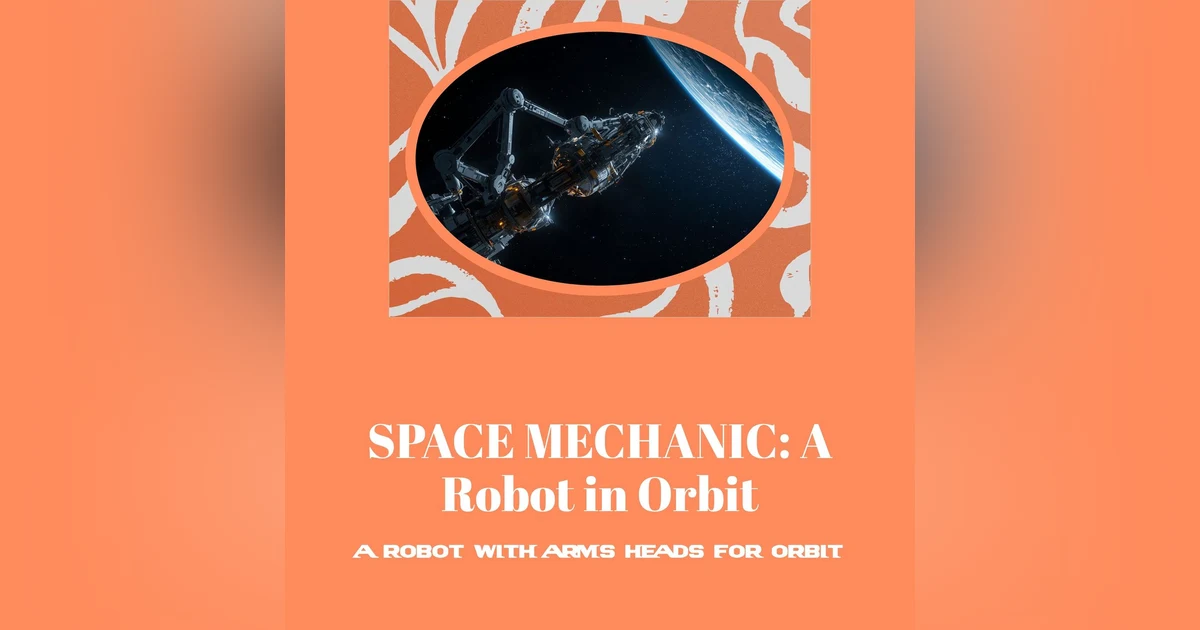
Astronomy Daily — S05E147: "Space Mechanic" Wednesday 22 July 2026 A spacecraft with robotic arms is on its way to geostationary orbit to keep other satellites alive. A discarded rocket stage is two weeks out from hitting the Moon, and twenty-three astronomers have just asked the world to watch. Plus the first binary star system where both stars exploded, the first complete magnetic map of a galaxy cluster, and the asteroid breakup that may have bombarded three worlds while Earth froze. In This Episode ● The Space Mechanic Launches — Northrop Grumman's Mission Robotic Vehicle lifted off from Cape Canaveral on 21 July carrying three Mission Extension Pods. With two 3-metre robotic arms built by the US Naval Research Laboratory, it is designed to inspect, relocate, repair and refuel satellites in geostationary orbit. Each pod can give a 2,000 kg satellite up to eight more years of life. ● UPDATE — The Rocket Aimed at the Moon — A new arXiv preprint signed by 23 astronomers calls for a coordinated observing campaign when Falcon 9 upper stage 2025-010D strikes the Moon near Einstein crater on 5 August. North America has the best seat: 2:34am EDT, with the paper naming observers in the Americas as the ideal group. Refined impact time, predicted crater size, and why the ejecta plume may be visible even if the flash is not. ● Sibling Supernovae — Sixteen years of Fermi data reveal a faint supernova remnant hiding in the glare of the Jellyfish Nebula. The two may be the first known pair of remnants traced back to a single binary star system. ● Mapping a Cluster's Magnetic Field — Using the deepest radio observations ever made with LOFAR, astronomers have reconstructed the magnetic field of galaxy cluster Abell 2255 from nucleus to outer edge for the first time. ● The Eulalia Bombardment — A new Planetary Science Journal paper links the breakup of a main-belt asteroid to an impact shower that battered the Moon, Earth and Mars 800 million years ago — and may connect to a global freeze. ● Skywatch, Both Hemispheres — Why this week beats peak night for the Delta Aquariids wherever you are, how to catch them from the southern US and Mediterranean, and what's coming on 12 August: a total solar eclipse across Iceland and Spain, a North American partial, and the best Perseid peak in years on a new Moon.
Sources & Further Reading ● Space.com — SpaceX launches satellite repair drone with 10-foot robotic arms to Earth orbit ● NASASpaceflight.com — Falcon 9 to launch MRV-1 robotic servicing spacecraft for Northrop Grumman ● Northrop Grumman SpaceLogistics — Mission Robotic Vehicle and Mission Extension Pod fact sheets ● Scientific American — A SpaceX rocket is about to crash into the moon; scientists will be watching ● Phys.org — When a SpaceX rocket crashes into the moon, scientists will be watching (arXiv preprint) ● Project Pluto (Bill Gray) — Upper stage impacting the moon on 2026 August 5 ● Stanford University — Researchers uncover evidence for sibling supernovas (Michailidis et al., Nature Communications) ● Reuters — Scientists spot evidence of two huge companion stars that blew up ● Space.com — Galaxy cluster's magnetic field reconstructed for 1st time with record-breaking astronomy map (Botteon et al., INAF, A&A) ● Southwest Research Institute — SwRI-led research connects asteroid collision to impact showers 800 million years ago ● The Planetary Science Journal — Bottke, Vokrouhlický, Dykhuis & Zellner, "An 800 Myr-old Impact Shower on the Terrestrial Planets from the Breakup of the Eulalia Parent Body" ● EarthSky — Delta Aquariid meteor shower: all you need to know in 2026 ● NASA Science — Total Solar Eclipse on August 12, 2026 (path, partial visibility and safety guidance) ● BBC Sky at Night Magazine — August 12, 2026 solar eclipse: USA and Canada guide Connect ● Website: astronomydaily.io ● Socials: @AstroDailyPod ● Part of the Bitesz.com Podcast Network
Become a supporter of this podcast: https://www.spreaker.com/podcast/astronomy-daily-the-latest-space-news--5648921/support.
Sponsor Details:
Ensure your online privacy by using NordVPN. To get our special listener deal and save a lot of money, visit www.bitesz.com/nordvpn. You'll be glad you did!
Become a supporter of Astronomy Daily by joining our Supporters Club. Commercial free episodes daily are only a click way... Click Here
This episode includes AI-generated content.
Sources & Further Reading ● Space.com — SpaceX launches satellite repair drone with 10-foot robotic arms to Earth orbit ● NASASpaceflight.com — Falcon 9 to launch MRV-1 robotic servicing spacecraft for Northrop Grumman ● Northrop Grumman SpaceLogistics — Mission Robotic Vehicle and Mission Extension Pod fact sheets ● Scientific American — A SpaceX rocket is about to crash into the moon; scientists will be watching ● Phys.org — When a SpaceX rocket crashes into the moon, scientists will be watching (arXiv preprint) ● Project Pluto (Bill Gray) — Upper stage impacting the moon on 2026 August 5 ● Stanford University — Researchers uncover evidence for sibling supernovas (Michailidis et al., Nature Communications) ● Reuters — Scientists spot evidence of two huge companion stars that blew up ● Space.com — Galaxy cluster's magnetic field reconstructed for 1st time with record-breaking astronomy map (Botteon et al., INAF, A&A) ● Southwest Research Institute — SwRI-led research connects asteroid collision to impact showers 800 million years ago ● The Planetary Science Journal — Bottke, Vokrouhlický, Dykhuis & Zellner, "An 800 Myr-old Impact Shower on the Terrestrial Planets from the Breakup of the Eulalia Parent Body" ● EarthSky — Delta Aquariid meteor shower: all you need to know in 2026 ● NASA Science — Total Solar Eclipse on August 12, 2026 (path, partial visibility and safety guidance) ● BBC Sky at Night Magazine — August 12, 2026 solar eclipse: USA and Canada guide Connect ● Website: astronomydaily.io ● Socials: @AstroDailyPod ● Part of the Bitesz.com Podcast Network
Become a supporter of this podcast: https://www.spreaker.com/podcast/astronomy-daily-the-latest-space-news--5648921/support.
Sponsor Details:
Ensure your online privacy by using NordVPN. To get our special listener deal and save a lot of money, visit www.bitesz.com/nordvpn. You'll be glad you did!
Become a supporter of Astronomy Daily by joining our Supporters Club. Commercial free episodes daily are only a click way... Click Here
This episode includes AI-generated content.
WEBVTT
0
00:00:00.400 --> 00:00:02.800
Anna: Somewhere above your head right now, about
1
00:00:02.880 --> 00:00:05.440
36,000 km up,
2
00:00:05.840 --> 00:00:08.160
there is a graveyard shift going on.
3
00:00:08.640 --> 00:00:11.040
Hundreds of satellites still working,
4
00:00:11.440 --> 00:00:14.400
still useful, and slowly running out of
5
00:00:14.400 --> 00:00:14.880
fuel.
6
00:00:15.280 --> 00:00:17.800
Avery: And as of last night, there is finally a
7
00:00:17.800 --> 00:00:18.880
mechanic on the way.
8
00:00:19.200 --> 00:00:22.160
Anna: Good evening and welcome to Astronomy Daily.
9
00:00:22.400 --> 00:00:23.360
I'm Anna.
10
00:00:23.440 --> 00:00:26.400
Avery: And I'm Avery. Coming up, a spacecraft
11
00:00:26.400 --> 00:00:28.840
with arms launches on a mission to keep other
12
00:00:28.840 --> 00:00:31.800
spacecraft alive. A rocket stage is two
13
00:00:31.800 --> 00:00:33.480
weeks out from hitting the moon and
14
00:00:33.480 --> 00:00:35.880
astronomers have just put out a call to arms
15
00:00:35.880 --> 00:00:36.360
about it.
16
00:00:36.680 --> 00:00:39.160
Anna: We've got two stars that were born together,
17
00:00:39.560 --> 00:00:42.520
lived together and then died in sequence,
18
00:00:42.680 --> 00:00:44.960
leaving behind the first pair of
19
00:00:44.960 --> 00:00:47.840
supernova remnants ever traced back to
20
00:00:47.840 --> 00:00:49.080
a single binary.
21
00:00:49.560 --> 00:00:52.320
Avery: The first complete magnetic map of a galaxy
22
00:00:52.320 --> 00:00:54.720
cluster, an asteroid breakup that may have
23
00:00:54.720 --> 00:00:57.120
bombarded three worlds and helped freeze our
24
00:00:57.120 --> 00:00:57.400
own.
25
00:00:58.060 --> 00:01:00.780
Anna: And a sky watching window that is closing
26
00:01:00.860 --> 00:01:02.220
faster than you'd like.
27
00:01:02.780 --> 00:01:03.740
Avery: Let's get into it.
28
00:01:04.140 --> 00:01:07.100
Anna: So Avery, here's a problem that has quietly
29
00:01:07.100 --> 00:01:09.580
bothered the satellite industry for about
30
00:01:09.820 --> 00:01:12.780
60 years. You build a satellite, you
31
00:01:12.780 --> 00:01:15.180
spend hundreds of millions of dollars on it.
32
00:01:15.340 --> 00:01:17.740
You put it in geostationary orbit
33
00:01:17.980 --> 00:01:19.456
35,786
34
00:01:19.784 --> 00:01:22.660
km up where it hovers
35
00:01:22.660 --> 00:01:25.630
over the same patch of ground forever. And
36
00:01:25.630 --> 00:01:28.070
it works beautifully for 15 years
37
00:01:28.550 --> 00:01:30.550
and then it runs out of fuel.
38
00:01:30.950 --> 00:01:33.110
Avery: And um, that's, uh, it. The hardware is fine.
39
00:01:33.430 --> 00:01:36.230
Anna: The hardware is often perfectly fine. The
40
00:01:36.230 --> 00:01:38.910
cameras work, the transponders work, the
41
00:01:38.910 --> 00:01:41.670
solar panels work. But without propellant,
42
00:01:41.670 --> 00:01:44.430
it can't hold its position. So it drifts
43
00:01:44.430 --> 00:01:47.430
and it becomes junk. You throw away a
44
00:01:47.430 --> 00:01:50.310
working satellite because the tank is empty.
45
00:01:51.040 --> 00:01:53.440
Avery: That is a spectacularly wasteful way to run
46
00:01:53.440 --> 00:01:53.920
an industry.
47
00:01:54.480 --> 00:01:57.000
Anna: It is. And last night, Northrop
48
00:01:57.000 --> 00:01:59.960
Grumman launched the most serious attempt yet
49
00:01:59.960 --> 00:02:02.600
to fix it. At 05:15 in the
50
00:02:02.600 --> 00:02:05.448
evening Eastern Time on Tuesday 21st
51
00:02:05.592 --> 00:02:08.400
July, the Falcon 9 lifted
52
00:02:08.400 --> 00:02:11.360
off from Space Launch Complex 40 at
53
00:02:11.360 --> 00:02:14.240
Cape Canaveral carrying the Mission Robotic
54
00:02:14.240 --> 00:02:17.000
Vehicle plus three Mission Extension
55
00:02:17.000 --> 00:02:17.440
pods.
56
00:02:18.220 --> 00:02:20.540
Avery: Mission robotic vehicle. What does it
57
00:02:20.540 --> 00:02:21.420
actually look like?
58
00:02:21.900 --> 00:02:24.460
Anna: Picture a satellite bus with two
59
00:02:24.460 --> 00:02:27.140
arms, two robotic arms, each
60
00:02:27.140 --> 00:02:28.540
about 3 meters long,
61
00:02:29.900 --> 00:02:32.460
built by the United States Naval Research
62
00:02:32.540 --> 00:02:35.420
Laboratory and supplied through DARPA's
63
00:02:35.420 --> 00:02:37.940
Robotic Servicing of Geostationary
64
00:02:37.940 --> 00:02:38.860
Satellite program.
65
00:02:39.500 --> 00:02:42.340
Avery: So this is a genuinely dexterous machine, not
66
00:02:42.340 --> 00:02:43.900
just the tug that bolt on.
67
00:02:44.580 --> 00:02:47.300
Anna: That's the distinction that matters. The MRV
68
00:02:47.300 --> 00:02:50.260
can inspect, it can relocate, it can
69
00:02:50.260 --> 00:02:52.980
repair, it can upgrade. And its
70
00:02:52.980 --> 00:02:55.580
headline job on this mission is to pick up
71
00:02:55.580 --> 00:02:58.300
those three mission extension pods and
72
00:02:58.300 --> 00:03:00.780
install them on client satellites that are
73
00:03:00.780 --> 00:03:02.260
running low on propellant.
74
00:03:02.740 --> 00:03:05.460
Avery: So the pods are the actual fuel solution.
75
00:03:06.020 --> 00:03:08.900
Anna: Think of them as jetpacks. Each pod
76
00:03:08.900 --> 00:03:11.740
clamps onto a satellite and takes over orbit
77
00:03:11.740 --> 00:03:14.100
control and momentum management. Using
78
00:03:14.100 --> 00:03:17.100
electric propulsion, each one can handle a
79
00:03:17.100 --> 00:03:19.780
satellite of about 2,000kg.
80
00:03:19.940 --> 00:03:22.900
That's a typical big geostationary bird
81
00:03:22.980 --> 00:03:25.700
and give it up to eight more years of life.
82
00:03:26.260 --> 00:03:28.700
Avery: Eight years on a satellite that was
83
00:03:28.700 --> 00:03:29.940
otherwise finished.
84
00:03:30.500 --> 00:03:33.300
Anna: Eight years. And the MRV M itself
85
00:03:33.380 --> 00:03:35.300
carries something called a ah, Passive
86
00:03:35.300 --> 00:03:37.780
Refueling Interface, which is the first
87
00:03:37.860 --> 00:03:40.500
refueling interface approved by the US
88
00:03:40.580 --> 00:03:43.080
Space Force. So the servicer is
89
00:03:43.080 --> 00:03:45.600
itself designed to be refueled later.
90
00:03:46.160 --> 00:03:48.480
Avery: Now, Northrub have done a version of this
91
00:03:48.480 --> 00:03:49.440
before, haven't they?
92
00:03:49.760 --> 00:03:52.360
Anna: They have, and this is why they're the ones
93
00:03:52.360 --> 00:03:55.280
doing it. Mission extension vehicle 1
94
00:03:55.360 --> 00:03:58.120
launched in October 2019, the
95
00:03:58.120 --> 00:04:00.400
first commercial satellite servicing
96
00:04:00.400 --> 00:04:03.360
spacecraft ever. And four months later, it
97
00:04:03.360 --> 00:04:05.440
docked with communications satellite
98
00:04:05.600 --> 00:04:08.480
Intelsat 901 in geostationary
99
00:04:08.480 --> 00:04:11.170
orbit. MEV 2 followed in
100
00:04:11.170 --> 00:04:12.290
August 2020.
101
00:04:12.850 --> 00:04:14.450
Avery: So what's different this time?
102
00:04:14.690 --> 00:04:17.570
Anna: Those earlier vehicles were one to one.
103
00:04:17.810 --> 00:04:20.770
One servicer went to one satellite, docked
104
00:04:20.770 --> 00:04:22.770
with it, and stayed there doing the work
105
00:04:22.770 --> 00:04:25.490
itself. The MRV is one to
106
00:04:25.490 --> 00:04:28.290
many. It carries pods, installs them,
107
00:04:28.290 --> 00:04:31.050
and moves on. It's the difference between a
108
00:04:31.050 --> 00:04:33.570
tow truck that has to stay attached to your
109
00:04:33.570 --> 00:04:36.570
car forever and. And a mechanic who fits a
110
00:04:36.570 --> 00:04:39.010
new part and drives off to the next job.
111
00:04:39.330 --> 00:04:40.290
Avery: That scales.
112
00:04:40.450 --> 00:04:43.450
Anna: That scales. And there's a nice detail on
113
00:04:43.450 --> 00:04:46.410
the launch itself. The Falcon 9 booster
114
00:04:46.410 --> 00:04:49.050
B1069 was flying its
115
00:04:49.050 --> 00:04:51.570
32nd mission and it was
116
00:04:51.570 --> 00:04:53.970
deliberately expended. No landing.
117
00:04:54.210 --> 00:04:56.850
Avery: Why give up a booster with 31 flights on it?
118
00:04:57.010 --> 00:04:59.730
Anna: Because geostationary transfer orbit is
119
00:04:59.730 --> 00:05:02.490
demanding. Getting that much mass that
120
00:05:02.490 --> 00:05:05.210
high needed every bit of performance the
121
00:05:05.210 --> 00:05:07.850
rocket had, and there wasn't propellant left
122
00:05:07.850 --> 00:05:10.490
for a landing burn. SpaceX made the trade.
123
00:05:10.890 --> 00:05:12.970
Avery: So when does the actual servicing start?
124
00:05:13.130 --> 00:05:15.970
Anna: Not for a while. The MRV and the three
125
00:05:15.970 --> 00:05:18.570
pods each separate and then climb to
126
00:05:18.570 --> 00:05:21.210
geostationary orbit under their own
127
00:05:21.210 --> 00:05:23.810
solar electric propulsion. And that
128
00:05:23.810 --> 00:05:26.490
climb takes up to a year. Servicing
129
00:05:26.490 --> 00:05:28.690
operations are expected to begin in
130
00:05:28.690 --> 00:05:31.610
2027. After the initial checkouts,
131
00:05:31.610 --> 00:05:34.450
the RSGS program gets handed over to
132
00:05:34.450 --> 00:05:35.770
the US Space Force.
133
00:05:36.200 --> 00:05:38.960
Avery: A year of just going up slowly
134
00:05:38.960 --> 00:05:40.040
and efficiently.
135
00:05:40.360 --> 00:05:43.360
Anna: Electric propulsion is patient. And at the
136
00:05:43.360 --> 00:05:45.680
end of it, for the first time, there's a
137
00:05:45.680 --> 00:05:48.560
repair capability parked permanently in
138
00:05:48.560 --> 00:05:51.040
the most valuable orbital real estate we
139
00:05:51.040 --> 00:05:51.320
have.
140
00:05:51.720 --> 00:05:53.960
Avery: Right from a machine built to preserve
141
00:05:53.960 --> 00:05:56.520
spacecraft to a spacecraft that is about to
142
00:05:56.520 --> 00:05:58.200
be very thoroughly destroyed.
143
00:05:58.520 --> 00:06:00.040
Anna: This is one we've been tracking.
144
00:06:00.280 --> 00:06:02.760
Avery: It is, and I want to be upfront about that.
145
00:06:02.920 --> 00:06:05.440
We covered this back in June in episode
146
00:06:05.440 --> 00:06:08.370
125. But there is a genuine reason
147
00:06:08.370 --> 00:06:10.410
to come back to it, because the science
148
00:06:10.410 --> 00:06:12.530
community has just done something about it.
149
00:06:12.690 --> 00:06:15.130
The short version for anyone joining us
150
00:06:15.130 --> 00:06:17.810
since. In January 2025,
151
00:06:17.970 --> 00:06:20.690
a Falcon 9 launched two commercial
152
00:06:20.690 --> 00:06:23.570
lunar landers, Firefly's Blue Ghost
153
00:06:23.570 --> 00:06:26.490
and ispace's Hakuto R mission
154
00:06:26.490 --> 00:06:29.490
2. It did its job, but the upper
155
00:06:29.490 --> 00:06:31.170
stage, cataloged as
156
00:06:31.170 --> 00:06:34.130
2025010 d
157
00:06:34.610 --> 00:06:37.600
never came home. Instead of burning up in our
158
00:06:37.600 --> 00:06:40.440
atmosphere, it ended up in a long looping
159
00:06:40.440 --> 00:06:43.200
orbit through the Earth Moon system. And
160
00:06:43.200 --> 00:06:44.160
somebody noticed.
161
00:06:44.480 --> 00:06:47.200
Anna: The independent astronomer Bill Gray, who
162
00:06:47.200 --> 00:06:49.960
runs Project Pluto and tracks this sort of
163
00:06:49.960 --> 00:06:52.960
high orbit debris. His software flagged an
164
00:06:52.960 --> 00:06:55.600
impact on the 5th of August. This year
165
00:06:55.840 --> 00:06:57.760
that stage hits the Moon.
166
00:06:58.160 --> 00:07:01.160
Avery: So what's new? Three things. First, a
167
00:07:01.160 --> 00:07:04.040
new preprint has just gone up on Arxiv and it
168
00:07:04.040 --> 00:07:07.000
is signed by 23 astronomers. It is
169
00:07:07.000 --> 00:07:09.960
essentially a call to arms. They're asking
170
00:07:09.960 --> 00:07:12.400
the scientific community, professional and
171
00:07:12.400 --> 00:07:15.280
amateur, to point everything they've got at
172
00:07:15.280 --> 00:07:16.840
the moon on the 5th of August.
173
00:07:17.160 --> 00:07:19.480
Anna: Because this is a rare thing, because
174
00:07:19.480 --> 00:07:22.360
Avery: we almost never get this. We get natural
175
00:07:22.360 --> 00:07:24.720
impacts on the Moon all the time, but we
176
00:07:24.720 --> 00:07:27.280
don't know when they're coming here. We know
177
00:07:27.280 --> 00:07:30.040
the object, we know its mass, we know its
178
00:07:30.040 --> 00:07:32.720
structure, we know its velocity and we know
179
00:07:32.720 --> 00:07:35.710
the time to within about a second. That is an
180
00:07:35.710 --> 00:07:38.350
artificial impact experiment we didn't have
181
00:07:38.350 --> 00:07:39.310
to pay to set up.
182
00:07:39.550 --> 00:07:42.030
Anna: And the timing has been tightened, hasn't it?
183
00:07:42.110 --> 00:07:44.390
Avery: That's a second u, uh, thing. Gray's latest
184
00:07:44.390 --> 00:07:47.310
published calculation, dated the 17th of July
185
00:07:47.790 --> 00:07:50.350
puts the impact at 6, 34 and
186
00:07:50.350 --> 00:07:53.350
32 seconds UTC. Earlier coverage
187
00:07:53.350 --> 00:07:55.870
back in May was quoting 644.
188
00:07:56.270 --> 00:07:58.430
So if you've got the old number written down,
189
00:07:58.430 --> 00:08:01.400
update it am the third. The third is
190
00:08:01.400 --> 00:08:04.200
the actual physics prediction and this is the
191
00:08:04.200 --> 00:08:07.160
part I find genuinely interesting. The paper
192
00:08:07.160 --> 00:08:10.080
models what happens on contact. This thing
193
00:08:10.080 --> 00:08:12.640
is roughly 12 meters long and about
194
00:08:12.640 --> 00:08:15.480
4,000 kilograms and crucially, it's
195
00:08:15.480 --> 00:08:17.920
hollow. It's a tank. So the
196
00:08:17.920 --> 00:08:20.320
prediction is that it crushes rather than
197
00:08:20.320 --> 00:08:22.320
punching deep like a can
198
00:08:22.400 --> 00:08:23.440
Anna: rather than a bullet.
199
00:08:23.920 --> 00:08:26.760
Avery: Exactly like a can. And the result of
200
00:08:26.760 --> 00:08:29.560
that is a relatively shallow crater. They're
201
00:08:29.560 --> 00:08:32.390
estimating 20 to 30 meters across, but a
202
00:08:32.540 --> 00:08:34.540
a very large ejecta plume,
203
00:08:34.860 --> 00:08:37.140
kilometers of debris thrown up off the
204
00:08:37.140 --> 00:08:37.580
surface.
205
00:08:38.060 --> 00:08:39.980
Anna: So the plume might be the visible part.
206
00:08:40.460 --> 00:08:42.740
Avery: That's the hope, and it's a subtle bit of
207
00:08:42.740 --> 00:08:45.460
reasoning. The impact site is near the crater
208
00:08:45.460 --> 00:08:48.220
Einstein right on the moon's western limb,
209
00:08:48.380 --> 00:08:50.540
about the 10 o' clock position on the disk.
210
00:08:50.540 --> 00:08:53.300
As you look at it now, that's awkward because
211
00:08:53.300 --> 00:08:56.300
it's on the sunlit part of the surface and no
212
00:08:56.380 --> 00:08:58.780
impact Flash, artificial or natural,
213
00:08:59.020 --> 00:09:01.580
has ever been recorded on the lit face of the
214
00:09:01.580 --> 00:09:01.900
Moon.
215
00:09:02.310 --> 00:09:05.110
Anna: The glare defeats you, but being on the limb
216
00:09:05.110 --> 00:09:05.510
helps.
217
00:09:05.910 --> 00:09:08.270
Avery: Being on the limb might save it, because
218
00:09:08.270 --> 00:09:10.670
rocks thrown up from a site that close to the
219
00:09:10.670 --> 00:09:13.550
edge rise off the Moon entirely. And
220
00:09:13.550 --> 00:09:14.990
once they're off the limb, they're
221
00:09:14.990 --> 00:09:17.350
silhouetted against black sky, catching
222
00:09:17.350 --> 00:09:20.030
sunlight. So you might not see the flash, but
223
00:09:20.030 --> 00:09:21.430
you might see the plume.
224
00:09:21.590 --> 00:09:22.710
Anna: Who else is watching?
225
00:09:23.110 --> 00:09:25.310
Avery: NASA's Lunar Reconnaissance Orbiter will
226
00:09:25.310 --> 00:09:28.270
image the site before and after, which gives
227
00:09:28.270 --> 00:09:30.740
a clean comparison. And South Korea's
228
00:09:30.740 --> 00:09:32.820
Pathfinder Lunar Orbiter is going to attempt
229
00:09:32.820 --> 00:09:35.380
to observe as well. There's precedent for the
230
00:09:35.380 --> 00:09:38.140
afterimage too. When a Chinese rocket stage
231
00:09:38.140 --> 00:09:40.940
hit the far side in 2022, LRO
232
00:09:41.020 --> 00:09:43.180
found the site and it had made not one
233
00:09:43.180 --> 00:09:44.300
crater, but two.
234
00:09:44.700 --> 00:09:46.700
Anna: And there's a longer term payoff to
235
00:09:46.700 --> 00:09:49.460
Avery: all this, and this is why the paper matters.
236
00:09:49.460 --> 00:09:52.020
Beyond the spectacle, they want to test a
237
00:09:52.020 --> 00:09:54.340
method for pinpointing exactly where an
238
00:09:54.340 --> 00:09:56.020
object strikes the Moon using the
239
00:09:56.020 --> 00:09:58.480
observations. If you can nail that down
240
00:09:58.480 --> 00:10:01.240
against a known impact, you've validated a
241
00:10:01.240 --> 00:10:03.680
technique. And that feeds directly into
242
00:10:03.680 --> 00:10:05.960
planning seismic experiments on the lunar
243
00:10:05.960 --> 00:10:07.280
surface for future missions.
244
00:10:07.840 --> 00:10:10.520
Anna: Now the practical question, who actually gets
245
00:10:10.520 --> 00:10:11.120
to see this?
246
00:10:11.520 --> 00:10:13.360
Avery: And, um, this is where our North American
247
00:10:13.440 --> 00:10:16.000
listeners want to pay attention, because this
248
00:10:16.000 --> 00:10:17.680
one is squarely yours.
249
00:10:18.240 --> 00:10:20.880
6:34 UTC on the 5th of August
250
00:10:20.880 --> 00:10:23.760
is 29 minutes past 2 in the morning, Eastern
251
00:10:23.760 --> 00:10:25.750
Time. 1:34 Central,
252
00:10:26.310 --> 00:10:29.070
12:34 Mountain. And on the west coast
253
00:10:29.070 --> 00:10:31.870
it's still the night before. 11:34 in the
254
00:10:31.870 --> 00:10:33.110
evening on the 4th,
255
00:10:33.510 --> 00:10:35.910
Anna: middle of the night, but the Moon is well up.
256
00:10:36.150 --> 00:10:38.390
Avery: The Moon is well placed across the continent,
257
00:10:38.390 --> 00:10:40.629
and the paper specifically identifies
258
00:10:40.629 --> 00:10:43.510
observers in the Americas as the ideal group.
259
00:10:43.830 --> 00:10:45.910
If you have a telescope and you've ever
260
00:10:45.910 --> 00:10:48.390
wanted to contribute to something real, this
261
00:10:48.390 --> 00:10:51.110
is the night they are explicitly asking
262
00:10:51.110 --> 00:10:52.230
amateurs to take part.
263
00:10:52.730 --> 00:10:55.050
Anna: And for those of us further around the globe,
264
00:10:55.450 --> 00:10:56.170
less kind.
265
00:10:56.170 --> 00:10:58.450
Avery: And I'll be straight about it. For us In
266
00:10:58.450 --> 00:11:01.130
Australia, that's 4:34 in the afternoon,
267
00:11:01.210 --> 00:11:04.170
broad daylight, New Zealand early evening,
268
00:11:04.250 --> 00:11:07.250
no good either. The UK and Europe get half
269
00:11:07.250 --> 00:11:09.210
past seven in the morning, which is also
270
00:11:09.210 --> 00:11:11.890
daylight. So the live event belongs to the
271
00:11:11.890 --> 00:11:14.570
Anna: Americas, but the aftermath belongs to
272
00:11:14.570 --> 00:11:14.890
everyone.
273
00:11:15.290 --> 00:11:17.850
Avery: The aftermath belongs to everyone. The
274
00:11:17.850 --> 00:11:20.530
LRO before and after imagery, the crater
275
00:11:20.530 --> 00:11:23.090
measurements, the analysis of how well the
276
00:11:23.090 --> 00:11:25.400
predictions held up, and frankly, the
277
00:11:25.400 --> 00:11:27.400
question sitting underneath all of this is
278
00:11:27.400 --> 00:11:29.760
global. We are about to start putting people
279
00:11:29.760 --> 00:11:32.600
back on the Moon and we are currently hitting
280
00:11:32.600 --> 00:11:35.360
it with our own rubbish by accident, without
281
00:11:35.360 --> 00:11:35.840
warning.
282
00:11:36.000 --> 00:11:38.960
Anna: Alright, Avery, moving on to our next story.
283
00:11:39.600 --> 00:11:42.440
More than Half of all stars are in multiple
284
00:11:42.440 --> 00:11:45.440
systems, two or more suns orbiting each
285
00:11:45.440 --> 00:11:48.360
other. And for the really massive stars, the
286
00:11:48.360 --> 00:11:51.320
ones destined to explode, that fraction is
287
00:11:51.320 --> 00:11:52.080
even higher.
288
00:11:53.000 --> 00:11:55.240
Avery: So most supernovae should have had a sibling.
289
00:11:55.640 --> 00:11:58.280
Anna: That is exactly the implication. And yet,
290
00:11:58.360 --> 00:12:01.320
until this week, astronomers had never found
291
00:12:01.320 --> 00:12:03.960
a single case where both stars in a binary
292
00:12:03.960 --> 00:12:06.960
exploded and both left behind remnants we
293
00:12:06.960 --> 00:12:07.640
can still see
294
00:12:08.040 --> 00:12:09.960
Avery: not one out of how many.
295
00:12:10.280 --> 00:12:13.000
Anna: We've cataloged around 300 supernova
296
00:12:13.000 --> 00:12:15.760
remnants in our galaxy. Not one confirmed
297
00:12:15.760 --> 00:12:18.120
sibling pair. And the reason is a bit
298
00:12:18.120 --> 00:12:20.420
embarrassing, actually. One of them was
299
00:12:20.420 --> 00:12:22.580
probably sitting in plain sight the whole
300
00:12:22.580 --> 00:12:22.860
time.
301
00:12:23.180 --> 00:12:23.820
Avery: Go on.
302
00:12:24.060 --> 00:12:25.740
Anna: The Jellyfish Nebula
303
00:12:25.820 --> 00:12:28.220
IC443 in the
304
00:12:28.220 --> 00:12:30.940
constellation Gemini, about 6,000
305
00:12:30.940 --> 00:12:33.420
light years away. It is one of the best
306
00:12:33.500 --> 00:12:36.380
studied supernova remnants in the sky and
307
00:12:36.380 --> 00:12:38.700
one of the brightest gamma ray sources of its
308
00:12:38.700 --> 00:12:41.540
kind. If you could see it with your eye, it
309
00:12:41.540 --> 00:12:43.500
would look bigger than the full Moon.
310
00:12:43.900 --> 00:12:46.300
Avery: And, um, something was hiding behind it.
311
00:12:46.740 --> 00:12:49.300
Anna: Next to it, there's a much fainter object
312
00:12:49.380 --> 00:12:51.553
called G189 6
313
00:12:51.740 --> 00:12:54.460
3. It was first picked up in
314
00:12:54.460 --> 00:12:57.100
1994 by the German ROSAT
315
00:12:57.100 --> 00:12:59.700
satellite as a faint X ray glow.
316
00:12:59.860 --> 00:13:02.300
And later the Russian German spectrum
317
00:13:02.300 --> 00:13:05.260
Rontgen Gamma Observatory saw shell like
318
00:13:05.260 --> 00:13:07.780
structures in it, which suggested it was also
319
00:13:07.860 --> 00:13:10.820
a supernova remnant. But it sits right
320
00:13:10.820 --> 00:13:13.460
up against the glare of the jellyfish, and
321
00:13:13.460 --> 00:13:14.980
that glare drowns it.
322
00:13:15.530 --> 00:13:17.610
Avery: So how did they finally separate them?
323
00:13:18.010 --> 00:13:20.970
Anna: 16 years of data from NASA's Fermi
324
00:13:20.970 --> 00:13:23.810
Gamma Ray Space Telescope. The team led
325
00:13:23.810 --> 00:13:26.130
by Miltiades Michaelides, a
326
00:13:26.130 --> 00:13:29.010
postdoctoral fellow at Stanford, essentially
327
00:13:29.010 --> 00:13:31.850
subtracted the jellyfish out, isolated
328
00:13:31.850 --> 00:13:34.410
its gamma ray emission and looked at what was
329
00:13:34.410 --> 00:13:35.210
left underneath.
330
00:13:35.770 --> 00:13:37.210
Avery: And, um, there was something left.
331
00:13:37.370 --> 00:13:38.770
Anna: There was G
332
00:13:38.770 --> 00:13:41.610
189.63 is
333
00:13:41.610 --> 00:13:44.210
independently producing gamma rays. Which
334
00:13:44.210 --> 00:13:47.040
matters enormously because gamma rays mean
335
00:13:47.270 --> 00:13:49.430
particle acceleration, and particle
336
00:13:49.430 --> 00:13:51.910
acceleration is what a supernova remnant
337
00:13:51.910 --> 00:13:54.390
does. It's the shock wave doing work.
338
00:13:54.550 --> 00:13:56.950
Avery: Mikhail Adiz had a nice way of putting that,
339
00:13:56.950 --> 00:13:57.510
didn't he?
340
00:13:57.590 --> 00:14:00.470
Anna: He compared it to a drop of water falling on
341
00:14:00.470 --> 00:14:03.390
a still lake. The ripples spread out from
342
00:14:03.390 --> 00:14:06.070
the point of contact. A supernova remnant
343
00:14:06.070 --> 00:14:08.750
does exactly the same thing. And if you can
344
00:14:08.750 --> 00:14:11.350
see the ripples, you know, something dropped.
345
00:14:11.750 --> 00:14:14.310
Avery: So we have two remnants next to each other.
346
00:14:14.670 --> 00:14:16.430
How do we know they're related rather than
347
00:14:16.430 --> 00:14:18.190
just an accident of line of sight?
348
00:14:18.430 --> 00:14:21.270
Anna: This is the elegant part. There's a filament
349
00:14:21.270 --> 00:14:23.750
of gas arcing between them. And that
350
00:14:23.750 --> 00:14:25.750
filament is where the shock wave from
351
00:14:25.750 --> 00:14:28.350
G189.6 3
352
00:14:28.590 --> 00:14:31.230
has slammed into the same molecular cloud
353
00:14:31.310 --> 00:14:33.230
that the jellyfish is pushing against.
354
00:14:33.870 --> 00:14:36.790
Avery: Same cloud so same distance, same
355
00:14:36.790 --> 00:14:37.230
cloud.
356
00:14:37.310 --> 00:14:40.230
Anna: Same distance, same neighborhood. They're not
357
00:14:40.230 --> 00:14:43.030
one in front of the other. They're genuinely
358
00:14:43.030 --> 00:14:45.330
next door to each other. And that's what
359
00:14:45.330 --> 00:14:47.610
makes the shared origin story credible.
360
00:14:48.010 --> 00:14:49.650
Avery: So walk me through the story they're
361
00:14:49.650 --> 00:14:50.170
proposing.
362
00:14:50.410 --> 00:14:52.890
Anna: A tale of two massive stars
363
00:14:52.970 --> 00:14:55.450
born together, gravitationally bound,
364
00:14:55.690 --> 00:14:58.570
orbiting extremely closely, perhaps
365
00:14:58.570 --> 00:15:01.290
only a few times the Earth's sun distance
366
00:15:01.290 --> 00:15:04.250
apart. Close enough that material was likely
367
00:15:04.250 --> 00:15:07.010
flowing from one to the other. And then the
368
00:15:07.010 --> 00:15:09.610
bigger one runs out of fuel and detonates.
369
00:15:09.930 --> 00:15:11.850
Avery: And, um. The explosion breaks the
370
00:15:11.850 --> 00:15:12.490
partnership.
371
00:15:12.920 --> 00:15:15.400
Anna: The explosion breaks the partnership. The
372
00:15:15.400 --> 00:15:17.960
binary is disrupted and the surviving
373
00:15:17.960 --> 00:15:20.840
companion is essentially kicked flung
374
00:15:20.840 --> 00:15:23.680
off through the galaxy on its own. It keeps
375
00:15:23.680 --> 00:15:26.040
traveling, and tens of thousands of years
376
00:15:26.040 --> 00:15:27.960
later, it explodes too.
377
00:15:28.200 --> 00:15:29.800
Avery: How far apart did they end up?
378
00:15:30.120 --> 00:15:32.960
Anna: The centers of the two explosions are now
379
00:15:32.960 --> 00:15:35.640
somewhere between 30 and 50 light years
380
00:15:35.640 --> 00:15:38.480
apart. Two stars that were once close enough
381
00:15:38.480 --> 00:15:41.410
to be exchanging material, now separated
382
00:15:41.410 --> 00:15:44.250
by that gap. And each marked by its own
383
00:15:44.250 --> 00:15:45.490
expanding shell.
384
00:15:45.730 --> 00:15:46.530
Avery: What were they?
385
00:15:46.690 --> 00:15:49.290
Anna: The jellyfish's progenitor is thought to have
386
00:15:49.290 --> 00:15:52.170
been something like 15 to 25 times
387
00:15:52.170 --> 00:15:55.010
the mass of the Sun. Its companion at
388
00:15:55.010 --> 00:15:57.850
least 20. Both were probably tens
389
00:15:57.850 --> 00:16:00.250
of thousands times more luminous than the
390
00:16:00.250 --> 00:16:02.850
sun. And both may now be neutron
391
00:16:02.850 --> 00:16:03.330
stars.
392
00:16:03.570 --> 00:16:05.770
Avery: And, um, publication status because I know
393
00:16:05.770 --> 00:16:07.250
this was previewed at a conference.
394
00:16:07.760 --> 00:16:10.560
Anna: Good flag. Miltiais presented the results at
395
00:16:10.560 --> 00:16:13.080
the American Astronomical Society meeting in
396
00:16:13.080 --> 00:16:15.840
Pasadena back in June. What's happened this
397
00:16:15.840 --> 00:16:18.200
week is the peer reviewed paper. It's in
398
00:16:18.200 --> 00:16:20.440
Nature communications with the Stanford
399
00:16:20.440 --> 00:16:22.840
release. And wider coverage landing on the
400
00:16:22.840 --> 00:16:23.360
21st.
401
00:16:23.920 --> 00:16:26.440
Avery: And one for our listeners. Can we go and look
402
00:16:26.440 --> 00:16:27.200
at any of this?
403
00:16:27.600 --> 00:16:30.480
Anna: Not this month. Wherever you are. Gemini
404
00:16:30.480 --> 00:16:33.040
is close to the sun at the moment. So it's
405
00:16:33.040 --> 00:16:35.800
lost in the glare globally. But it comes
406
00:16:35.800 --> 00:16:38.160
back. And this is one where Northern
407
00:16:38.160 --> 00:16:40.080
hemisphere listeners get the better deal.
408
00:16:40.480 --> 00:16:43.120
From North America and Europe, Gemini
409
00:16:43.120 --> 00:16:45.360
rides high overhead through winter
410
00:16:45.680 --> 00:16:48.360
December into March. And the jellyfish
411
00:16:48.360 --> 00:16:51.320
sits. Beautifully placed for a telescope or a
412
00:16:51.320 --> 00:16:52.240
long exposure.
413
00:16:52.640 --> 00:16:55.000
Avery: And from down here we still get it.
414
00:16:55.000 --> 00:16:57.920
Anna: Just lower from Australia and New Zealand,
415
00:16:57.920 --> 00:17:00.400
Gemini comes up in the northern sky through
416
00:17:00.400 --> 00:17:02.850
our summer. Visible, worth hunting,
417
00:17:03.010 --> 00:17:06.010
but closer to the horizon. Either way, put
418
00:17:06.010 --> 00:17:08.010
it on the list for the end of the year. And
419
00:17:08.010 --> 00:17:10.890
bear in mind the jellyfish is faint. It would
420
00:17:10.890 --> 00:17:12.930
be bigger than the full moon if your eye
421
00:17:12.930 --> 00:17:15.370
could pick it up. But it needs photography or
422
00:17:15.370 --> 00:17:17.250
a decent aperture to show itself.
423
00:17:17.730 --> 00:17:20.170
Avery: Anna, uh, here's something we know exists but
424
00:17:20.170 --> 00:17:22.050
have never actually been able to draw.
425
00:17:22.690 --> 00:17:24.850
Galaxy clusters. The largest
426
00:17:24.850 --> 00:17:27.050
gravitationally bound structures in the
427
00:17:27.050 --> 00:17:29.660
universe. Hundreds or thousands of
428
00:17:29.660 --> 00:17:32.540
galaxies plus enormous clouds of hot gas,
429
00:17:32.620 --> 00:17:35.300
plus dark matter Are threaded through
430
00:17:35.300 --> 00:17:36.780
with magnetic fields.
431
00:17:37.180 --> 00:17:38.860
Anna: We've known that for decades.
432
00:17:39.180 --> 00:17:41.900
Avery: What we have never done is map the shape of
433
00:17:41.900 --> 00:17:44.580
one across an entire cluster from the
434
00:17:44.580 --> 00:17:46.060
middle right out to the edge.
435
00:17:46.300 --> 00:17:47.820
Anna: And now somebody has.
436
00:17:48.140 --> 00:17:50.940
Avery: A team led by Andrea, uh, Boton at innaf,
437
00:17:51.020 --> 00:17:53.820
Italy's National Astrophysics institute, Has
438
00:17:53.820 --> 00:17:56.380
reconstructed the magnetic field of Galaxy
439
00:17:56.380 --> 00:17:59.320
cluster Abell 2255. And I
440
00:17:59.320 --> 00:18:01.600
want to be precise about that name because at
441
00:18:01.600 --> 00:18:03.880
least one outlet has got it wrong this week
442
00:18:03.880 --> 00:18:06.440
and called it Abell 2142.
443
00:18:06.760 --> 00:18:09.240
It is Abell 2255,
444
00:18:09.560 --> 00:18:11.240
about a billion light years away.
445
00:18:11.720 --> 00:18:12.920
Anna: Why that cluster?
446
00:18:13.160 --> 00:18:15.400
Avery: Because it's famously messy in radio.
447
00:18:15.720 --> 00:18:18.600
Abell 2255 has long been known for
448
00:18:18.600 --> 00:18:21.360
its complexity. It's full of strange, diffuse
449
00:18:21.360 --> 00:18:24.280
radio structures, Halos and filaments, which
450
00:18:24.280 --> 00:18:26.240
is exactly what you want if you're trying to
451
00:18:26.240 --> 00:18:28.470
trace magnetic fields, because those
452
00:18:28.470 --> 00:18:31.030
structures are made by energetic electrons
453
00:18:31.030 --> 00:18:32.990
spiraling along magnetic lines.
454
00:18:33.310 --> 00:18:35.470
Anna: So the radio emission is the field
455
00:18:35.630 --> 00:18:37.070
effectively made visible.
456
00:18:37.390 --> 00:18:40.310
Avery: It's the tracer. Electrons corkscrewing
457
00:18:40.310 --> 00:18:42.990
along magnetic lines give off radio waves.
458
00:18:43.230 --> 00:18:45.470
So if you can see the emission finely enough,
459
00:18:45.550 --> 00:18:48.110
you can work backwards to the field. The
460
00:18:48.110 --> 00:18:50.230
problem has always been that these signals
461
00:18:50.230 --> 00:18:52.110
are extraordinarily faint.
462
00:18:52.350 --> 00:18:55.020
Anna: What did they observe with lofar, the
463
00:18:55.020 --> 00:18:57.580
Avery: low frequency array, the European radial
464
00:18:57.580 --> 00:19:00.300
telescope spread across a continent. And
465
00:19:00.300 --> 00:19:02.820
these are the deepest radio observations ever
466
00:19:02.820 --> 00:19:05.660
made of a galaxy cluster that was combined
467
00:19:05.660 --> 00:19:07.660
with a new data analysis technique. And
468
00:19:07.660 --> 00:19:09.540
between them, that's what cracked it.
469
00:19:09.780 --> 00:19:11.140
Anna: And what does the map show?
470
00:19:11.540 --> 00:19:14.300
Avery: This is defining in some regions of the
471
00:19:14.300 --> 00:19:16.580
cluster, the magnetic field lines are
472
00:19:16.580 --> 00:19:19.140
strikingly coherent. They follow very
473
00:19:19.140 --> 00:19:21.620
specific directions stretching radially
474
00:19:21.620 --> 00:19:24.020
outward along the extended radial structures.
475
00:19:24.390 --> 00:19:26.790
Anna: They're not random, which tells you something
476
00:19:26.870 --> 00:19:28.990
made them that way, which tells you
477
00:19:28.990 --> 00:19:31.630
Avery: something is organizing them. And Boton's
478
00:19:31.630 --> 00:19:33.870
conclusion is that the shape of the field is
479
00:19:33.870 --> 00:19:36.270
intimately linked to the motion of the gas it
480
00:19:36.270 --> 00:19:38.790
sits in. The field gets stretched and
481
00:19:38.790 --> 00:19:41.150
compressed by the movements associated with
482
00:19:41.150 --> 00:19:42.710
the cluster's own formation.
483
00:19:43.110 --> 00:19:45.750
Anna: So the cluster assembling itself is what
484
00:19:45.750 --> 00:19:46.950
shapes the magnetism?
485
00:19:47.350 --> 00:19:49.230
Avery: That's the argument, and it's the first
486
00:19:49.230 --> 00:19:51.570
observational evidence of it. The same
487
00:19:51.570 --> 00:19:54.410
violent process that builds a galaxy cluster,
488
00:19:54.570 --> 00:19:57.530
Gas falling in, sloshing, colliding,
489
00:19:57.530 --> 00:20:00.210
merging, is the process that combs the
490
00:20:00.210 --> 00:20:02.650
magnetic field into the pattern we now see.
491
00:20:02.970 --> 00:20:05.610
Anna: And that ties into the radio halos question.
492
00:20:05.930 --> 00:20:08.530
Avery: It does. Bolton says they believe the
493
00:20:08.530 --> 00:20:10.930
mechanism that switches on these gigantic
494
00:20:10.930 --> 00:20:13.610
radio emissions is linked to the formation
495
00:20:13.610 --> 00:20:16.210
process of the clusters themselves. So the
496
00:20:16.210 --> 00:20:18.450
map isn't just a pretty picture. It's the
497
00:20:18.450 --> 00:20:19.770
evidence for the engine.
498
00:20:19.790 --> 00:20:22.460
Anna: The. It's a lovely Example of the thing radio
499
00:20:22.460 --> 00:20:25.180
astronomy does best, showing you a
500
00:20:25.180 --> 00:20:28.060
Avery: structure that is completely invisible, is a
501
00:20:28.060 --> 00:20:30.460
billion light years away, is bigger than
502
00:20:30.460 --> 00:20:32.540
anything else in the universe, and has been
503
00:20:32.540 --> 00:20:35.490
sitting there the entire time. Published in,
504
00:20:35.490 --> 00:20:37.140
uh, Astronomy and Astrophysics.
505
00:20:37.380 --> 00:20:40.140
Anna: Every if you want to know what has hit the
506
00:20:40.140 --> 00:20:41.460
Earth, don't look at
507
00:20:41.460 --> 00:20:43.940
Avery: the Earth because the Earth keeps erasing it
508
00:20:44.180 --> 00:20:44.900
constantly.
509
00:20:45.060 --> 00:20:47.540
Anna: Plate tectonics, volcanism, weather,
510
00:20:47.700 --> 00:20:50.610
water, erosion. Craters get buried,
511
00:20:50.610 --> 00:20:53.530
distorted, subducted, destroyed. The
512
00:20:53.530 --> 00:20:55.730
practical consequence is that geological
513
00:20:55.730 --> 00:20:57.890
evidence for impacts older than about
514
00:20:57.970 --> 00:21:00.410
650 million years is
515
00:21:00.410 --> 00:21:01.810
extremely scarce here.
516
00:21:02.050 --> 00:21:03.810
Avery: And the Moon doesn't do any of that.
517
00:21:03.970 --> 00:21:06.970
Anna: No plate tectonics, no flowing water, no
518
00:21:06.970 --> 00:21:09.650
meaningful atmosphere. The Moon just keeps
519
00:21:09.650 --> 00:21:11.570
the receipts. And when you read those
520
00:21:11.570 --> 00:21:14.010
receipts carefully, there's a spike. When,
521
00:21:14.010 --> 00:21:16.690
uh, around 800 million years ago,
522
00:21:17.100 --> 00:21:19.500
there's a surge in large lunar impacts. And
523
00:21:19.500 --> 00:21:22.460
it shows up in two independent ways. One
524
00:21:22.460 --> 00:21:25.020
is the estimated ages of big craters,
525
00:21:25.020 --> 00:21:27.580
including copernicus, which is 93
526
00:21:27.580 --> 00:21:30.300
kilometers across. The other is impact
527
00:21:30.380 --> 00:21:30.940
glass.
528
00:21:31.340 --> 00:21:33.100
Avery: Explain impact glass.
529
00:21:33.580 --> 00:21:35.900
Anna: When something hits hard enough, the heat
530
00:21:35.900 --> 00:21:38.500
melts. Rock that melt cools into
531
00:21:38.500 --> 00:21:41.340
glass, and the glass locks in a, uh, chemical
532
00:21:41.340 --> 00:21:44.020
timestamp. The Apollo missions brought a lot
533
00:21:44.020 --> 00:21:46.160
of it home. And when you look at the age
534
00:21:46.160 --> 00:21:48.680
distribution of that glass, you see the same
535
00:21:48.680 --> 00:21:50.840
spike at 800 million years.
536
00:21:51.480 --> 00:21:53.840
Avery: So two different methods agree that something
537
00:21:53.840 --> 00:21:55.720
happened, but nobody knew what.
538
00:21:55.960 --> 00:21:58.280
Anna: Nobody knew what. That's the puzzle that's
539
00:21:58.280 --> 00:22:00.480
been sitting there for decades. And a new
540
00:22:00.480 --> 00:22:03.040
paper led by Dr. William Bakke at the
541
00:22:03.040 --> 00:22:05.240
Southwest Research Institute in Boulder
542
00:22:05.400 --> 00:22:08.280
proposes a specific culprit, which is
543
00:22:08.520 --> 00:22:11.320
an asteroid called Eulalia, or rather
544
00:22:11.320 --> 00:22:13.760
the parent body of the family of asteroids we
545
00:22:13.760 --> 00:22:16.520
now call Eulalia. Uh, because the object, its
546
00:22:17.060 --> 00:22:19.780
no longer exists. It was catastrophically
547
00:22:19.780 --> 00:22:22.260
broken apart in a collision in the main belt.
548
00:22:22.500 --> 00:22:24.820
Avery: And the location of that breakup matters.
549
00:22:25.060 --> 00:22:27.900
Anna: The location is everything. It happened right
550
00:22:27.900 --> 00:22:30.700
next to what's called the J3 to one resonance
551
00:22:30.700 --> 00:22:33.019
with Jupiter. And a resonance like that is
552
00:22:33.019 --> 00:22:35.380
essentially a gravitational trapdoor.
553
00:22:35.540 --> 00:22:37.700
Material that wanders into it, gets its
554
00:22:37.700 --> 00:22:40.340
orbit, pumped up by Jupiter and flung into
555
00:22:40.340 --> 00:22:41.460
the inner solar system.
556
00:22:41.940 --> 00:22:44.460
Avery: So the shrapnel had a delivery mechanism
557
00:22:44.460 --> 00:22:45.460
waiting right there.
558
00:22:45.790 --> 00:22:48.390
Anna: It had an open door right next to it. And the
559
00:22:48.390 --> 00:22:51.070
simulations show what happened in two phases.
560
00:22:51.390 --> 00:22:53.230
Half the fragments reached the resonance
561
00:22:53.230 --> 00:22:55.430
almost immediately. That's the prompt
562
00:22:55.430 --> 00:22:58.230
bombardment Planetary shrapnel sprayed across
563
00:22:58.230 --> 00:22:59.310
the inner solar system.
564
00:22:59.710 --> 00:23:01.470
Avery: And, um, the other half, over the
565
00:23:01.470 --> 00:23:04.110
Anna: following 100 to 150 million
566
00:23:04.110 --> 00:23:06.350
years, another quarter of the fragments
567
00:23:06.350 --> 00:23:08.670
drifted into the resonance more slowly,
568
00:23:08.830 --> 00:23:11.110
pushed by something called the Yarkovsky
569
00:23:11.110 --> 00:23:14.100
effect, which is what, in plain terms it's
570
00:23:14.100 --> 00:23:16.940
sunlight doing work. A rotating asteroid
571
00:23:16.940 --> 00:23:19.100
absorbs sunlight on one side and
572
00:23:19.100 --> 00:23:21.980
reradiates that heat as it turns. That
573
00:23:21.980 --> 00:23:24.780
reradiation gives an incredibly gentle
574
00:23:24.780 --> 00:23:27.779
push. On a human scale, it's nothing. Over
575
00:23:27.779 --> 00:23:30.140
a hundred million years, it can move an
576
00:23:30.140 --> 00:23:32.620
asteroid's orbit enough to drop it into a
577
00:23:32.620 --> 00:23:33.340
trapdoor.
578
00:23:33.580 --> 00:23:36.300
Avery: So this wasn't one bad afternoon. This was a
579
00:23:36.300 --> 00:23:37.100
long siege.
580
00:23:37.500 --> 00:23:39.740
Anna: That's the reframing, I think, is genuinely
581
00:23:39.740 --> 00:23:42.700
important here. Not an event, an episode,
582
00:23:42.780 --> 00:23:45.300
a bombardment that opened suddenly and then
583
00:23:45.300 --> 00:23:48.220
kept going for well over 100 million years.
584
00:23:48.700 --> 00:23:50.220
Avery: And what does that mean for Earth?
585
00:23:50.380 --> 00:23:52.580
Anna: Here's the number that changes the scale of
586
00:23:52.580 --> 00:23:55.260
it. For every large impact recorded on the
587
00:23:55.260 --> 00:23:58.060
moon, roughly 20 similar or larger
588
00:23:58.060 --> 00:24:00.500
impacts hit the Earth, where a bigger target
589
00:24:00.500 --> 00:24:01.820
with stronger gravity.
590
00:24:02.140 --> 00:24:03.368
Avery: 20 to 1.
591
00:24:03.481 --> 00:24:06.350
Anna: 20 to 1. So a spike on the Moon
592
00:24:06.350 --> 00:24:09.350
means a barrage down here. And now look
593
00:24:09.350 --> 00:24:11.950
at what else was happening around 800 million
594
00:24:11.950 --> 00:24:14.790
years ago. That is the run up to one of the
595
00:24:14.790 --> 00:24:16.990
most dramatic climate episodes in our
596
00:24:16.990 --> 00:24:19.550
planet's history. Widespread global
597
00:24:19.630 --> 00:24:22.430
cooling and major shifts in the biosphere.
598
00:24:22.830 --> 00:24:24.910
Avery: Is he climbing a causal link?
599
00:24:25.310 --> 00:24:27.950
Anna: He's careful. And I want to be careful too.
600
00:24:28.270 --> 00:24:30.830
Bakke's phrasing is that given the peak of
601
00:24:30.830 --> 00:24:33.390
this barrage coincides with a period of
602
00:24:33.390 --> 00:24:35.970
widespread cooling and major shifts in our
603
00:24:35.970 --> 00:24:38.810
biosphere, it is tempting to suggest the
604
00:24:38.810 --> 00:24:41.490
former produced the latter. That is a
605
00:24:41.490 --> 00:24:44.450
hypothesis flagged as tempting, not a
606
00:24:44.450 --> 00:24:45.050
conclusion.
607
00:24:45.450 --> 00:24:48.330
Avery: Because so far, only one impact has ever
608
00:24:48.330 --> 00:24:51.050
been firmly tied to a biological outcome.
609
00:24:51.369 --> 00:24:54.330
Anna: Pictxulub, 66 million years ago.
610
00:24:54.490 --> 00:24:57.050
The end of the dinosaurs. That's the one.
611
00:24:57.290 --> 00:24:58.890
Everything else is inference.
612
00:24:59.370 --> 00:25:01.290
Avery: So how would you ever test this?
613
00:25:02.040 --> 00:25:04.560
Anna: This is my favorite part of the paper. And
614
00:25:04.560 --> 00:25:06.760
it's the reason to keep an eye on this story.
615
00:25:07.080 --> 00:25:10.040
We have asteroid samples on Earth right now.
616
00:25:10.120 --> 00:25:12.520
Hayabusa2 brought material back from
617
00:25:12.520 --> 00:25:15.520
Ryugu in December 2020. Osiris
618
00:25:15.520 --> 00:25:17.866
Rex brought Bennu back in September
619
00:25:18.014 --> 00:25:20.760
2023. Both are under analysis.
620
00:25:21.240 --> 00:25:23.720
Avery: And if they carry the Eulalia fingerprint,
621
00:25:24.120 --> 00:25:26.880
Anna: if the mineralogy matches the Eulalia
622
00:25:26.880 --> 00:25:29.880
family, then we are holding in a laboratory
623
00:25:30.280 --> 00:25:32.760
physical samples of the material that rained
624
00:25:32.760 --> 00:25:35.700
on solar system 800 million
625
00:25:35.780 --> 00:25:38.620
years ago. That would turn a dynamical
626
00:25:38.620 --> 00:25:41.380
model into a direct compositional record.
627
00:25:41.940 --> 00:25:44.700
Avery: That's a remarkable thought. Brains in a lab
628
00:25:44.700 --> 00:25:47.620
in Japan and Texas. That might be pieces of
629
00:25:47.620 --> 00:25:50.020
the thing that helped freeze the Earth.
630
00:25:50.500 --> 00:25:53.100
Anna: Published in the Planetary Science Journal by
631
00:25:53.100 --> 00:25:55.740
Botke, with Volkerlitsky, Dykhuis and
632
00:25:55.740 --> 00:25:56.260
Zellner.
633
00:25:56.340 --> 00:25:56.740
Avery: Great.
634
00:25:56.740 --> 00:25:58.780
And our next story comes with a deadline.
635
00:25:58.780 --> 00:26:00.340
Wherever in the world you're listening.
636
00:26:00.760 --> 00:26:01.640
Anna: What's the urgency?
637
00:26:01.960 --> 00:26:04.760
Avery: The moon first quarter was yesterday,
638
00:26:04.760 --> 00:26:07.720
the 21st. Tonight it's a waxing
639
00:26:07.720 --> 00:26:10.120
gibbous. And every night from here it gets
640
00:26:10.120 --> 00:26:12.920
brighter and stays up longer, building to the
641
00:26:12.920 --> 00:26:15.800
buck. Moon full at 4:36 in the afternoon
642
00:26:15.880 --> 00:26:18.360
UTC on Wednesday the 29th.
643
00:26:18.680 --> 00:26:21.320
That's 10:36 in the morning Eastern time in
644
00:26:21.320 --> 00:26:23.880
the States and 12:36 on Thursday
645
00:26:23.960 --> 00:26:25.240
morning for us in Australia.
646
00:26:25.960 --> 00:26:28.200
Anna: And that matters because of what's peaking.
647
00:26:28.880 --> 00:26:31.840
Avery: The southern Delta Aquariates peak falls
648
00:26:31.840 --> 00:26:34.440
on the 30th, effectively the same night as
649
00:26:34.440 --> 00:26:36.760
the full moon. So the peak is going to be
650
00:26:36.760 --> 00:26:39.360
washed out, which means the practical advice
651
00:26:39.360 --> 00:26:41.720
is the same for everybody. Don't wait for
652
00:26:41.720 --> 00:26:44.559
peak night. This week is your window in the
653
00:26:44.559 --> 00:26:46.760
small hours while the moon still sets and
654
00:26:46.760 --> 00:26:48.800
leaves you real darkness before dawn.
655
00:26:49.200 --> 00:26:51.360
Anna: And this is a shower that favors us.
656
00:26:51.680 --> 00:26:54.680
Avery: It does. From Australia, New Zealand and
657
00:26:54.680 --> 00:26:57.660
southern Africa, the radiant sits high close
658
00:26:57.660 --> 00:27:00.060
to overhead, which is why the shower gets
659
00:27:00.060 --> 00:27:02.860
underrated. In the north, under genuinely
660
00:27:02.860 --> 00:27:05.780
dark skies, you might see 15 to 20
661
00:27:05.780 --> 00:27:08.780
an hour. And they're lovely meteors. Long,
662
00:27:08.780 --> 00:27:11.340
graceful streaks rather than quick flashes,
663
00:27:11.340 --> 00:27:13.860
and known for persistent trains, those
664
00:27:13.860 --> 00:27:16.100
glowing trails that hang in the air for a
665
00:27:16.100 --> 00:27:17.260
second or two afterwards.
666
00:27:17.740 --> 00:27:19.860
Anna: And northern listeners aren't shut out of
667
00:27:19.860 --> 00:27:22.340
Avery: this one, not at all. And I want to be clear
668
00:27:22.340 --> 00:27:24.420
about that, because this shower gets written
669
00:27:24.420 --> 00:27:27.130
off in the north too readily. If you're in
670
00:27:27.130 --> 00:27:29.530
North America, particularly the southern
671
00:27:29.530 --> 00:27:32.410
states, Texas, Florida, Arizona, the
672
00:27:32.410 --> 00:27:35.130
Gulf coast, the Delta Aquarids are a
673
00:27:35.130 --> 00:27:37.810
genuinely worthwhile watch. The radiance
674
00:27:37.810 --> 00:27:39.970
sits low in your southern sky rather than
675
00:27:39.970 --> 00:27:42.730
overhead, so you'll see fewer of them. But
676
00:27:42.730 --> 00:27:45.210
the ones you do catch travel long paths
677
00:27:45.210 --> 00:27:47.650
across the sky, and they can be spectacular.
678
00:27:47.970 --> 00:27:50.450
Best time is after midnight through to dawn.
679
00:27:50.770 --> 00:27:52.930
Southern Europe, the Mediterranean, North
680
00:27:52.930 --> 00:27:54.210
Africa. Same deal.
681
00:27:54.770 --> 00:27:55.890
Anna: And where do people look?
682
00:27:56.370 --> 00:27:58.850
Avery: The radiant is in Aquarius, near the star
683
00:27:58.850 --> 00:28:01.770
Delta Aquarii. Use Fomalhaut to find
684
00:28:01.770 --> 00:28:04.690
the region. But honestly, don't stare at
685
00:28:04.690 --> 00:28:07.690
the radiant. Lie back, take in as much sky as
686
00:28:07.690 --> 00:28:10.649
you can and let them come to you. Parent body
687
00:28:10.649 --> 00:28:12.330
is suspected to be Comet
688
00:28:12.330 --> 00:28:15.330
96PMachholz. There are also
689
00:28:15.330 --> 00:28:18.050
the Alpha Capricornids building to the 30th
690
00:28:18.050 --> 00:28:20.930
and 31st. Far fewer meteors, but
691
00:28:20.930 --> 00:28:23.710
few famous for slow, brilliant fireballs that
692
00:28:23.710 --> 00:28:25.590
can punch straight through moonlight.
693
00:28:25.910 --> 00:28:27.670
Anna: And for the north, there's something
694
00:28:27.750 --> 00:28:29.190
considerably bigger coming.
695
00:28:29.830 --> 00:28:32.190
Avery: There is, and if you're listening in North
696
00:28:32.190 --> 00:28:34.510
America or Europe, you should be planning for
697
00:28:34.510 --> 00:28:37.269
this. Now, two things land together on the
698
00:28:37.269 --> 00:28:40.190
12th of August 1st, the Perseids Peak.
699
00:28:40.190 --> 00:28:42.830
And this year the moon is new that same day,
700
00:28:42.830 --> 00:28:45.670
which means A properly dark sky that
701
00:28:45.670 --> 00:28:48.650
is the best Perseid year in some time. And
702
00:28:48.650 --> 00:28:51.130
the second, a, uh, total solar
703
00:28:51.130 --> 00:28:53.850
eclipse, the first on mainland Europe
704
00:28:53.930 --> 00:28:56.890
since 1999 and the first in Spain
705
00:28:56.890 --> 00:28:59.890
since 1905. Totality sweeps
706
00:28:59.890 --> 00:29:02.610
across the Arctic, Greenland, Iceland and
707
00:29:02.610 --> 00:29:05.210
northern Spain. And in Spain, it happens
708
00:29:05.210 --> 00:29:07.730
close to sunset, with the sun only a few
709
00:29:07.730 --> 00:29:10.130
degrees above the horizon, which could be
710
00:29:10.130 --> 00:29:11.050
extraordinary.
711
00:29:11.610 --> 00:29:14.250
Anna: North America doesn't get totality this time.
712
00:29:15.090 --> 00:29:18.090
Avery: No, and I won't oversell it, but there is a
713
00:29:18.090 --> 00:29:20.490
real partial eclipse across much of the
714
00:29:20.490 --> 00:29:23.330
continent. Alaska gets the deepest view
715
00:29:23.330 --> 00:29:26.010
near sunrise. Atlantic Canada gets
716
00:29:26.010 --> 00:29:28.450
roughly half the sun covered at maximum in
717
00:29:28.450 --> 00:29:30.649
the afternoon. New England and the
718
00:29:30.649 --> 00:29:32.970
northeastern states get a smaller bite. And
719
00:29:32.970 --> 00:29:35.010
there's some coverage visible right across
720
00:29:35.090 --> 00:29:37.570
every Canadian province and the northern
721
00:29:37.570 --> 00:29:39.530
contiguous states, though.
722
00:29:39.530 --> 00:29:40.610
Anna: Dig out the glasses.
723
00:29:41.080 --> 00:29:43.800
Avery: Dig out the eclipse glasses from 2024 and
724
00:29:43.800 --> 00:29:45.180
check their ISO 1, uh,
725
00:29:45.440 --> 00:29:48.200
23122 certified.
726
00:29:48.680 --> 00:29:51.240
It will not get dark even with 50%
727
00:29:51.240 --> 00:29:53.880
coverage. The remaining sun is blindingly
728
00:29:53.880 --> 00:29:56.080
bright, so there is never a safe moment to
729
00:29:56.080 --> 00:29:58.520
look without protection and the lovely
730
00:29:58.520 --> 00:30:00.520
detail. If you're standing in the path of
731
00:30:00.520 --> 00:30:03.120
totality in Spain or Iceland, there's a
732
00:30:03.120 --> 00:30:05.800
genuine chance of a Perseid streaking pass
733
00:30:05.800 --> 00:30:07.000
during those two minutes.
734
00:30:07.660 --> 00:30:10.500
Anna: And tonight for everyone, the Milky
735
00:30:10.500 --> 00:30:10.860
Way
736
00:30:11.100 --> 00:30:13.180
Avery: from the Southern Hemisphere, the galactic
737
00:30:13.180 --> 00:30:16.100
core is riding high overhead right now. One
738
00:30:16.100 --> 00:30:18.340
of the real privileges of our winter, and
739
00:30:18.340 --> 00:30:20.500
it's at its best. From the Northern
740
00:30:20.500 --> 00:30:22.820
Hemisphere, it's lower in the south towards
741
00:30:22.820 --> 00:30:25.580
Sagittarius. But on a dark night, it's still
742
00:30:25.580 --> 00:30:28.540
magnificent. And before dawn, Saturn and
743
00:30:28.540 --> 00:30:30.540
Mars are in the eastern sky for both
744
00:30:30.540 --> 00:30:31.260
hemispheres.
745
00:30:31.740 --> 00:30:33.260
Anna: One more thing before we go.
746
00:30:33.720 --> 00:30:36.680
Avery: The launchers SpaceX is targeting Thursday
747
00:30:36.840 --> 00:30:39.400
the 23rd for Starship Flight 13.
748
00:30:39.960 --> 00:30:42.720
Window opening at 6:45 in the evening
749
00:30:42.720 --> 00:30:45.400
Eastern Time. That's 5:45 Central,
750
00:30:45.640 --> 00:30:48.440
3:45 Pacific and Friday morning,
751
00:30:48.600 --> 00:30:51.440
quarter to nine for us in Australia. 20
752
00:30:51.440 --> 00:30:54.240
Starlink V3 satellites aboard. Second
753
00:30:54.240 --> 00:30:57.080
flight of the V3 vehicle dead and alarm.
754
00:30:57.320 --> 00:30:59.920
And as always with starship, check before you
755
00:30:59.920 --> 00:31:02.440
commit the date has already moved twice.
756
00:31:03.000 --> 00:31:06.000
Anna: That's Astronomy daily for Wednesday 22
757
00:31:06.000 --> 00:31:08.160
July, a mechanic on its way to
758
00:31:08.160 --> 00:31:10.960
geostationary orbit, a rocket stage
759
00:31:10.960 --> 00:31:13.960
two, two weeks from making a new crater, and
760
00:31:13.960 --> 00:31:16.680
23 astronomers asking the world to watch
761
00:31:17.240 --> 00:31:17.600
two
762
00:31:17.600 --> 00:31:20.000
Avery: stars that died in sequence and left their
763
00:31:20.000 --> 00:31:22.920
remnants side by side. The first magnetic
764
00:31:22.920 --> 00:31:25.480
map of a galaxy cluster and an asteroid
765
00:31:25.480 --> 00:31:27.640
breakup that may have been raining down on us
766
00:31:27.640 --> 00:31:28.840
while the Earth froze.
767
00:31:29.540 --> 00:31:31.620
Anna: Donotes sources and links are all at
768
00:31:31.620 --> 00:31:34.500
astronomydaily IO and you can find us
769
00:31:34.500 --> 00:31:37.140
at astrodaily Pod across the socials.
770
00:31:37.460 --> 00:31:39.460
Avery: If you enjoy the show, a, uh, rating or
771
00:31:39.460 --> 00:31:41.860
review genuinely helps other people find us.
772
00:31:42.100 --> 00:31:44.580
Astronomy Daily is part of the bytes.com
773
00:31:44.580 --> 00:31:45.540
podcast network.
774
00:31:45.860 --> 00:31:46.740
Anna: I'm Anna.
775
00:31:46.900 --> 00:31:49.340
Avery: And I'm, um, Avery. Get outside this week. It
776
00:31:49.340 --> 00:31:50.340
won't be dark for long.
777
00:31:50.740 --> 00:31:51.620
Anna: Clear skies.
0
00:00:00.400 --> 00:00:02.800
Anna: Somewhere above your head right now, about
1
00:00:02.880 --> 00:00:05.440
36,000 km up,
2
00:00:05.840 --> 00:00:08.160
there is a graveyard shift going on.
3
00:00:08.640 --> 00:00:11.040
Hundreds of satellites still working,
4
00:00:11.440 --> 00:00:14.400
still useful, and slowly running out of
5
00:00:14.400 --> 00:00:14.880
fuel.
6
00:00:15.280 --> 00:00:17.800
Avery: And as of last night, there is finally a
7
00:00:17.800 --> 00:00:18.880
mechanic on the way.
8
00:00:19.200 --> 00:00:22.160
Anna: Good evening and welcome to Astronomy Daily.
9
00:00:22.400 --> 00:00:23.360
I'm Anna.
10
00:00:23.440 --> 00:00:26.400
Avery: And I'm Avery. Coming up, a spacecraft
11
00:00:26.400 --> 00:00:28.840
with arms launches on a mission to keep other
12
00:00:28.840 --> 00:00:31.800
spacecraft alive. A rocket stage is two
13
00:00:31.800 --> 00:00:33.480
weeks out from hitting the moon and
14
00:00:33.480 --> 00:00:35.880
astronomers have just put out a call to arms
15
00:00:35.880 --> 00:00:36.360
about it.
16
00:00:36.680 --> 00:00:39.160
Anna: We've got two stars that were born together,
17
00:00:39.560 --> 00:00:42.520
lived together and then died in sequence,
18
00:00:42.680 --> 00:00:44.960
leaving behind the first pair of
19
00:00:44.960 --> 00:00:47.840
supernova remnants ever traced back to
20
00:00:47.840 --> 00:00:49.080
a single binary.
21
00:00:49.560 --> 00:00:52.320
Avery: The first complete magnetic map of a galaxy
22
00:00:52.320 --> 00:00:54.720
cluster, an asteroid breakup that may have
23
00:00:54.720 --> 00:00:57.120
bombarded three worlds and helped freeze our
24
00:00:57.120 --> 00:00:57.400
own.
25
00:00:58.060 --> 00:01:00.780
Anna: And a sky watching window that is closing
26
00:01:00.860 --> 00:01:02.220
faster than you'd like.
27
00:01:02.780 --> 00:01:03.740
Avery: Let's get into it.
28
00:01:04.140 --> 00:01:07.100
Anna: So Avery, here's a problem that has quietly
29
00:01:07.100 --> 00:01:09.580
bothered the satellite industry for about
30
00:01:09.820 --> 00:01:12.780
60 years. You build a satellite, you
31
00:01:12.780 --> 00:01:15.180
spend hundreds of millions of dollars on it.
32
00:01:15.340 --> 00:01:17.740
You put it in geostationary orbit
33
00:01:17.980 --> 00:01:19.456
35,786
34
00:01:19.784 --> 00:01:22.660
km up where it hovers
35
00:01:22.660 --> 00:01:25.630
over the same patch of ground forever. And
36
00:01:25.630 --> 00:01:28.070
it works beautifully for 15 years
37
00:01:28.550 --> 00:01:30.550
and then it runs out of fuel.
38
00:01:30.950 --> 00:01:33.110
Avery: And um, that's, uh, it. The hardware is fine.
39
00:01:33.430 --> 00:01:36.230
Anna: The hardware is often perfectly fine. The
40
00:01:36.230 --> 00:01:38.910
cameras work, the transponders work, the
41
00:01:38.910 --> 00:01:41.670
solar panels work. But without propellant,
42
00:01:41.670 --> 00:01:44.430
it can't hold its position. So it drifts
43
00:01:44.430 --> 00:01:47.430
and it becomes junk. You throw away a
44
00:01:47.430 --> 00:01:50.310
working satellite because the tank is empty.
45
00:01:51.040 --> 00:01:53.440
Avery: That is a spectacularly wasteful way to run
46
00:01:53.440 --> 00:01:53.920
an industry.
47
00:01:54.480 --> 00:01:57.000
Anna: It is. And last night, Northrop
48
00:01:57.000 --> 00:01:59.960
Grumman launched the most serious attempt yet
49
00:01:59.960 --> 00:02:02.600
to fix it. At 05:15 in the
50
00:02:02.600 --> 00:02:05.448
evening Eastern Time on Tuesday 21st
51
00:02:05.592 --> 00:02:08.400
July, the Falcon 9 lifted
52
00:02:08.400 --> 00:02:11.360
off from Space Launch Complex 40 at
53
00:02:11.360 --> 00:02:14.240
Cape Canaveral carrying the Mission Robotic
54
00:02:14.240 --> 00:02:17.000
Vehicle plus three Mission Extension
55
00:02:17.000 --> 00:02:17.440
pods.
56
00:02:18.220 --> 00:02:20.540
Avery: Mission robotic vehicle. What does it
57
00:02:20.540 --> 00:02:21.420
actually look like?
58
00:02:21.900 --> 00:02:24.460
Anna: Picture a satellite bus with two
59
00:02:24.460 --> 00:02:27.140
arms, two robotic arms, each
60
00:02:27.140 --> 00:02:28.540
about 3 meters long,
61
00:02:29.900 --> 00:02:32.460
built by the United States Naval Research
62
00:02:32.540 --> 00:02:35.420
Laboratory and supplied through DARPA's
63
00:02:35.420 --> 00:02:37.940
Robotic Servicing of Geostationary
64
00:02:37.940 --> 00:02:38.860
Satellite program.
65
00:02:39.500 --> 00:02:42.340
Avery: So this is a genuinely dexterous machine, not
66
00:02:42.340 --> 00:02:43.900
just the tug that bolt on.
67
00:02:44.580 --> 00:02:47.300
Anna: That's the distinction that matters. The MRV
68
00:02:47.300 --> 00:02:50.260
can inspect, it can relocate, it can
69
00:02:50.260 --> 00:02:52.980
repair, it can upgrade. And its
70
00:02:52.980 --> 00:02:55.580
headline job on this mission is to pick up
71
00:02:55.580 --> 00:02:58.300
those three mission extension pods and
72
00:02:58.300 --> 00:03:00.780
install them on client satellites that are
73
00:03:00.780 --> 00:03:02.260
running low on propellant.
74
00:03:02.740 --> 00:03:05.460
Avery: So the pods are the actual fuel solution.
75
00:03:06.020 --> 00:03:08.900
Anna: Think of them as jetpacks. Each pod
76
00:03:08.900 --> 00:03:11.740
clamps onto a satellite and takes over orbit
77
00:03:11.740 --> 00:03:14.100
control and momentum management. Using
78
00:03:14.100 --> 00:03:17.100
electric propulsion, each one can handle a
79
00:03:17.100 --> 00:03:19.780
satellite of about 2,000kg.
80
00:03:19.940 --> 00:03:22.900
That's a typical big geostationary bird
81
00:03:22.980 --> 00:03:25.700
and give it up to eight more years of life.
82
00:03:26.260 --> 00:03:28.700
Avery: Eight years on a satellite that was
83
00:03:28.700 --> 00:03:29.940
otherwise finished.
84
00:03:30.500 --> 00:03:33.300
Anna: Eight years. And the MRV M itself
85
00:03:33.380 --> 00:03:35.300
carries something called a ah, Passive
86
00:03:35.300 --> 00:03:37.780
Refueling Interface, which is the first
87
00:03:37.860 --> 00:03:40.500
refueling interface approved by the US
88
00:03:40.580 --> 00:03:43.080
Space Force. So the servicer is
89
00:03:43.080 --> 00:03:45.600
itself designed to be refueled later.
90
00:03:46.160 --> 00:03:48.480
Avery: Now, Northrub have done a version of this
91
00:03:48.480 --> 00:03:49.440
before, haven't they?
92
00:03:49.760 --> 00:03:52.360
Anna: They have, and this is why they're the ones
93
00:03:52.360 --> 00:03:55.280
doing it. Mission extension vehicle 1
94
00:03:55.360 --> 00:03:58.120
launched in October 2019, the
95
00:03:58.120 --> 00:04:00.400
first commercial satellite servicing
96
00:04:00.400 --> 00:04:03.360
spacecraft ever. And four months later, it
97
00:04:03.360 --> 00:04:05.440
docked with communications satellite
98
00:04:05.600 --> 00:04:08.480
Intelsat 901 in geostationary
99
00:04:08.480 --> 00:04:11.170
orbit. MEV 2 followed in
100
00:04:11.170 --> 00:04:12.290
August 2020.
101
00:04:12.850 --> 00:04:14.450
Avery: So what's different this time?
102
00:04:14.690 --> 00:04:17.570
Anna: Those earlier vehicles were one to one.
103
00:04:17.810 --> 00:04:20.770
One servicer went to one satellite, docked
104
00:04:20.770 --> 00:04:22.770
with it, and stayed there doing the work
105
00:04:22.770 --> 00:04:25.490
itself. The MRV is one to
106
00:04:25.490 --> 00:04:28.290
many. It carries pods, installs them,
107
00:04:28.290 --> 00:04:31.050
and moves on. It's the difference between a
108
00:04:31.050 --> 00:04:33.570
tow truck that has to stay attached to your
109
00:04:33.570 --> 00:04:36.570
car forever and. And a mechanic who fits a
110
00:04:36.570 --> 00:04:39.010
new part and drives off to the next job.
111
00:04:39.330 --> 00:04:40.290
Avery: That scales.
112
00:04:40.450 --> 00:04:43.450
Anna: That scales. And there's a nice detail on
113
00:04:43.450 --> 00:04:46.410
the launch itself. The Falcon 9 booster
114
00:04:46.410 --> 00:04:49.050
B1069 was flying its
115
00:04:49.050 --> 00:04:51.570
32nd mission and it was
116
00:04:51.570 --> 00:04:53.970
deliberately expended. No landing.
117
00:04:54.210 --> 00:04:56.850
Avery: Why give up a booster with 31 flights on it?
118
00:04:57.010 --> 00:04:59.730
Anna: Because geostationary transfer orbit is
119
00:04:59.730 --> 00:05:02.490
demanding. Getting that much mass that
120
00:05:02.490 --> 00:05:05.210
high needed every bit of performance the
121
00:05:05.210 --> 00:05:07.850
rocket had, and there wasn't propellant left
122
00:05:07.850 --> 00:05:10.490
for a landing burn. SpaceX made the trade.
123
00:05:10.890 --> 00:05:12.970
Avery: So when does the actual servicing start?
124
00:05:13.130 --> 00:05:15.970
Anna: Not for a while. The MRV and the three
125
00:05:15.970 --> 00:05:18.570
pods each separate and then climb to
126
00:05:18.570 --> 00:05:21.210
geostationary orbit under their own
127
00:05:21.210 --> 00:05:23.810
solar electric propulsion. And that
128
00:05:23.810 --> 00:05:26.490
climb takes up to a year. Servicing
129
00:05:26.490 --> 00:05:28.690
operations are expected to begin in
130
00:05:28.690 --> 00:05:31.610
2027. After the initial checkouts,
131
00:05:31.610 --> 00:05:34.450
the RSGS program gets handed over to
132
00:05:34.450 --> 00:05:35.770
the US Space Force.
133
00:05:36.200 --> 00:05:38.960
Avery: A year of just going up slowly
134
00:05:38.960 --> 00:05:40.040
and efficiently.
135
00:05:40.360 --> 00:05:43.360
Anna: Electric propulsion is patient. And at the
136
00:05:43.360 --> 00:05:45.680
end of it, for the first time, there's a
137
00:05:45.680 --> 00:05:48.560
repair capability parked permanently in
138
00:05:48.560 --> 00:05:51.040
the most valuable orbital real estate we
139
00:05:51.040 --> 00:05:51.320
have.
140
00:05:51.720 --> 00:05:53.960
Avery: Right from a machine built to preserve
141
00:05:53.960 --> 00:05:56.520
spacecraft to a spacecraft that is about to
142
00:05:56.520 --> 00:05:58.200
be very thoroughly destroyed.
143
00:05:58.520 --> 00:06:00.040
Anna: This is one we've been tracking.
144
00:06:00.280 --> 00:06:02.760
Avery: It is, and I want to be upfront about that.
145
00:06:02.920 --> 00:06:05.440
We covered this back in June in episode
146
00:06:05.440 --> 00:06:08.370
125. But there is a genuine reason
147
00:06:08.370 --> 00:06:10.410
to come back to it, because the science
148
00:06:10.410 --> 00:06:12.530
community has just done something about it.
149
00:06:12.690 --> 00:06:15.130
The short version for anyone joining us
150
00:06:15.130 --> 00:06:17.810
since. In January 2025,
151
00:06:17.970 --> 00:06:20.690
a Falcon 9 launched two commercial
152
00:06:20.690 --> 00:06:23.570
lunar landers, Firefly's Blue Ghost
153
00:06:23.570 --> 00:06:26.490
and ispace's Hakuto R mission
154
00:06:26.490 --> 00:06:29.490
2. It did its job, but the upper
155
00:06:29.490 --> 00:06:31.170
stage, cataloged as
156
00:06:31.170 --> 00:06:34.130
2025010 d
157
00:06:34.610 --> 00:06:37.600
never came home. Instead of burning up in our
158
00:06:37.600 --> 00:06:40.440
atmosphere, it ended up in a long looping
159
00:06:40.440 --> 00:06:43.200
orbit through the Earth Moon system. And
160
00:06:43.200 --> 00:06:44.160
somebody noticed.
161
00:06:44.480 --> 00:06:47.200
Anna: The independent astronomer Bill Gray, who
162
00:06:47.200 --> 00:06:49.960
runs Project Pluto and tracks this sort of
163
00:06:49.960 --> 00:06:52.960
high orbit debris. His software flagged an
164
00:06:52.960 --> 00:06:55.600
impact on the 5th of August. This year
165
00:06:55.840 --> 00:06:57.760
that stage hits the Moon.
166
00:06:58.160 --> 00:07:01.160
Avery: So what's new? Three things. First, a
167
00:07:01.160 --> 00:07:04.040
new preprint has just gone up on Arxiv and it
168
00:07:04.040 --> 00:07:07.000
is signed by 23 astronomers. It is
169
00:07:07.000 --> 00:07:09.960
essentially a call to arms. They're asking
170
00:07:09.960 --> 00:07:12.400
the scientific community, professional and
171
00:07:12.400 --> 00:07:15.280
amateur, to point everything they've got at
172
00:07:15.280 --> 00:07:16.840
the moon on the 5th of August.
173
00:07:17.160 --> 00:07:19.480
Anna: Because this is a rare thing, because
174
00:07:19.480 --> 00:07:22.360
Avery: we almost never get this. We get natural
175
00:07:22.360 --> 00:07:24.720
impacts on the Moon all the time, but we
176
00:07:24.720 --> 00:07:27.280
don't know when they're coming here. We know
177
00:07:27.280 --> 00:07:30.040
the object, we know its mass, we know its
178
00:07:30.040 --> 00:07:32.720
structure, we know its velocity and we know
179
00:07:32.720 --> 00:07:35.710
the time to within about a second. That is an
180
00:07:35.710 --> 00:07:38.350
artificial impact experiment we didn't have
181
00:07:38.350 --> 00:07:39.310
to pay to set up.
182
00:07:39.550 --> 00:07:42.030
Anna: And the timing has been tightened, hasn't it?
183
00:07:42.110 --> 00:07:44.390
Avery: That's a second u, uh, thing. Gray's latest
184
00:07:44.390 --> 00:07:47.310
published calculation, dated the 17th of July
185
00:07:47.790 --> 00:07:50.350
puts the impact at 6, 34 and
186
00:07:50.350 --> 00:07:53.350
32 seconds UTC. Earlier coverage
187
00:07:53.350 --> 00:07:55.870
back in May was quoting 644.
188
00:07:56.270 --> 00:07:58.430
So if you've got the old number written down,
189
00:07:58.430 --> 00:08:01.400
update it am the third. The third is
190
00:08:01.400 --> 00:08:04.200
the actual physics prediction and this is the
191
00:08:04.200 --> 00:08:07.160
part I find genuinely interesting. The paper
192
00:08:07.160 --> 00:08:10.080
models what happens on contact. This thing
193
00:08:10.080 --> 00:08:12.640
is roughly 12 meters long and about
194
00:08:12.640 --> 00:08:15.480
4,000 kilograms and crucially, it's
195
00:08:15.480 --> 00:08:17.920
hollow. It's a tank. So the
196
00:08:17.920 --> 00:08:20.320
prediction is that it crushes rather than
197
00:08:20.320 --> 00:08:22.320
punching deep like a can
198
00:08:22.400 --> 00:08:23.440
Anna: rather than a bullet.
199
00:08:23.920 --> 00:08:26.760
Avery: Exactly like a can. And the result of
200
00:08:26.760 --> 00:08:29.560
that is a relatively shallow crater. They're
201
00:08:29.560 --> 00:08:32.390
estimating 20 to 30 meters across, but a
202
00:08:32.540 --> 00:08:34.540
a very large ejecta plume,
203
00:08:34.860 --> 00:08:37.140
kilometers of debris thrown up off the
204
00:08:37.140 --> 00:08:37.580
surface.
205
00:08:38.060 --> 00:08:39.980
Anna: So the plume might be the visible part.
206
00:08:40.460 --> 00:08:42.740
Avery: That's the hope, and it's a subtle bit of
207
00:08:42.740 --> 00:08:45.460
reasoning. The impact site is near the crater
208
00:08:45.460 --> 00:08:48.220
Einstein right on the moon's western limb,
209
00:08:48.380 --> 00:08:50.540
about the 10 o' clock position on the disk.
210
00:08:50.540 --> 00:08:53.300
As you look at it now, that's awkward because
211
00:08:53.300 --> 00:08:56.300
it's on the sunlit part of the surface and no
212
00:08:56.380 --> 00:08:58.780
impact Flash, artificial or natural,
213
00:08:59.020 --> 00:09:01.580
has ever been recorded on the lit face of the
214
00:09:01.580 --> 00:09:01.900
Moon.
215
00:09:02.310 --> 00:09:05.110
Anna: The glare defeats you, but being on the limb
216
00:09:05.110 --> 00:09:05.510
helps.
217
00:09:05.910 --> 00:09:08.270
Avery: Being on the limb might save it, because
218
00:09:08.270 --> 00:09:10.670
rocks thrown up from a site that close to the
219
00:09:10.670 --> 00:09:13.550
edge rise off the Moon entirely. And
220
00:09:13.550 --> 00:09:14.990
once they're off the limb, they're
221
00:09:14.990 --> 00:09:17.350
silhouetted against black sky, catching
222
00:09:17.350 --> 00:09:20.030
sunlight. So you might not see the flash, but
223
00:09:20.030 --> 00:09:21.430
you might see the plume.
224
00:09:21.590 --> 00:09:22.710
Anna: Who else is watching?
225
00:09:23.110 --> 00:09:25.310
Avery: NASA's Lunar Reconnaissance Orbiter will
226
00:09:25.310 --> 00:09:28.270
image the site before and after, which gives
227
00:09:28.270 --> 00:09:30.740
a clean comparison. And South Korea's
228
00:09:30.740 --> 00:09:32.820
Pathfinder Lunar Orbiter is going to attempt
229
00:09:32.820 --> 00:09:35.380
to observe as well. There's precedent for the
230
00:09:35.380 --> 00:09:38.140
afterimage too. When a Chinese rocket stage
231
00:09:38.140 --> 00:09:40.940
hit the far side in 2022, LRO
232
00:09:41.020 --> 00:09:43.180
found the site and it had made not one
233
00:09:43.180 --> 00:09:44.300
crater, but two.
234
00:09:44.700 --> 00:09:46.700
Anna: And there's a longer term payoff to
235
00:09:46.700 --> 00:09:49.460
Avery: all this, and this is why the paper matters.
236
00:09:49.460 --> 00:09:52.020
Beyond the spectacle, they want to test a
237
00:09:52.020 --> 00:09:54.340
method for pinpointing exactly where an
238
00:09:54.340 --> 00:09:56.020
object strikes the Moon using the
239
00:09:56.020 --> 00:09:58.480
observations. If you can nail that down
240
00:09:58.480 --> 00:10:01.240
against a known impact, you've validated a
241
00:10:01.240 --> 00:10:03.680
technique. And that feeds directly into
242
00:10:03.680 --> 00:10:05.960
planning seismic experiments on the lunar
243
00:10:05.960 --> 00:10:07.280
surface for future missions.
244
00:10:07.840 --> 00:10:10.520
Anna: Now the practical question, who actually gets
245
00:10:10.520 --> 00:10:11.120
to see this?
246
00:10:11.520 --> 00:10:13.360
Avery: And, um, this is where our North American
247
00:10:13.440 --> 00:10:16.000
listeners want to pay attention, because this
248
00:10:16.000 --> 00:10:17.680
one is squarely yours.
249
00:10:18.240 --> 00:10:20.880
6:34 UTC on the 5th of August
250
00:10:20.880 --> 00:10:23.760
is 29 minutes past 2 in the morning, Eastern
251
00:10:23.760 --> 00:10:25.750
Time. 1:34 Central,
252
00:10:26.310 --> 00:10:29.070
12:34 Mountain. And on the west coast
253
00:10:29.070 --> 00:10:31.870
it's still the night before. 11:34 in the
254
00:10:31.870 --> 00:10:33.110
evening on the 4th,
255
00:10:33.510 --> 00:10:35.910
Anna: middle of the night, but the Moon is well up.
256
00:10:36.150 --> 00:10:38.390
Avery: The Moon is well placed across the continent,
257
00:10:38.390 --> 00:10:40.629
and the paper specifically identifies
258
00:10:40.629 --> 00:10:43.510
observers in the Americas as the ideal group.
259
00:10:43.830 --> 00:10:45.910
If you have a telescope and you've ever
260
00:10:45.910 --> 00:10:48.390
wanted to contribute to something real, this
261
00:10:48.390 --> 00:10:51.110
is the night they are explicitly asking
262
00:10:51.110 --> 00:10:52.230
amateurs to take part.
263
00:10:52.730 --> 00:10:55.050
Anna: And for those of us further around the globe,
264
00:10:55.450 --> 00:10:56.170
less kind.
265
00:10:56.170 --> 00:10:58.450
Avery: And I'll be straight about it. For us In
266
00:10:58.450 --> 00:11:01.130
Australia, that's 4:34 in the afternoon,
267
00:11:01.210 --> 00:11:04.170
broad daylight, New Zealand early evening,
268
00:11:04.250 --> 00:11:07.250
no good either. The UK and Europe get half
269
00:11:07.250 --> 00:11:09.210
past seven in the morning, which is also
270
00:11:09.210 --> 00:11:11.890
daylight. So the live event belongs to the
271
00:11:11.890 --> 00:11:14.570
Anna: Americas, but the aftermath belongs to
272
00:11:14.570 --> 00:11:14.890
everyone.
273
00:11:15.290 --> 00:11:17.850
Avery: The aftermath belongs to everyone. The
274
00:11:17.850 --> 00:11:20.530
LRO before and after imagery, the crater
275
00:11:20.530 --> 00:11:23.090
measurements, the analysis of how well the
276
00:11:23.090 --> 00:11:25.400
predictions held up, and frankly, the
277
00:11:25.400 --> 00:11:27.400
question sitting underneath all of this is
278
00:11:27.400 --> 00:11:29.760
global. We are about to start putting people
279
00:11:29.760 --> 00:11:32.600
back on the Moon and we are currently hitting
280
00:11:32.600 --> 00:11:35.360
it with our own rubbish by accident, without
281
00:11:35.360 --> 00:11:35.840
warning.
282
00:11:36.000 --> 00:11:38.960
Anna: Alright, Avery, moving on to our next story.
283
00:11:39.600 --> 00:11:42.440
More than Half of all stars are in multiple
284
00:11:42.440 --> 00:11:45.440
systems, two or more suns orbiting each
285
00:11:45.440 --> 00:11:48.360
other. And for the really massive stars, the
286
00:11:48.360 --> 00:11:51.320
ones destined to explode, that fraction is
287
00:11:51.320 --> 00:11:52.080
even higher.
288
00:11:53.000 --> 00:11:55.240
Avery: So most supernovae should have had a sibling.
289
00:11:55.640 --> 00:11:58.280
Anna: That is exactly the implication. And yet,
290
00:11:58.360 --> 00:12:01.320
until this week, astronomers had never found
291
00:12:01.320 --> 00:12:03.960
a single case where both stars in a binary
292
00:12:03.960 --> 00:12:06.960
exploded and both left behind remnants we
293
00:12:06.960 --> 00:12:07.640
can still see
294
00:12:08.040 --> 00:12:09.960
Avery: not one out of how many.
295
00:12:10.280 --> 00:12:13.000
Anna: We've cataloged around 300 supernova
296
00:12:13.000 --> 00:12:15.760
remnants in our galaxy. Not one confirmed
297
00:12:15.760 --> 00:12:18.120
sibling pair. And the reason is a bit
298
00:12:18.120 --> 00:12:20.420
embarrassing, actually. One of them was
299
00:12:20.420 --> 00:12:22.580
probably sitting in plain sight the whole
300
00:12:22.580 --> 00:12:22.860
time.
301
00:12:23.180 --> 00:12:23.820
Avery: Go on.
302
00:12:24.060 --> 00:12:25.740
Anna: The Jellyfish Nebula
303
00:12:25.820 --> 00:12:28.220
IC443 in the
304
00:12:28.220 --> 00:12:30.940
constellation Gemini, about 6,000
305
00:12:30.940 --> 00:12:33.420
light years away. It is one of the best
306
00:12:33.500 --> 00:12:36.380
studied supernova remnants in the sky and
307
00:12:36.380 --> 00:12:38.700
one of the brightest gamma ray sources of its
308
00:12:38.700 --> 00:12:41.540
kind. If you could see it with your eye, it
309
00:12:41.540 --> 00:12:43.500
would look bigger than the full Moon.
310
00:12:43.900 --> 00:12:46.300
Avery: And, um, something was hiding behind it.
311
00:12:46.740 --> 00:12:49.300
Anna: Next to it, there's a much fainter object
312
00:12:49.380 --> 00:12:51.553
called G189 6
313
00:12:51.740 --> 00:12:54.460
3. It was first picked up in
314
00:12:54.460 --> 00:12:57.100
1994 by the German ROSAT
315
00:12:57.100 --> 00:12:59.700
satellite as a faint X ray glow.
316
00:12:59.860 --> 00:13:02.300
And later the Russian German spectrum
317
00:13:02.300 --> 00:13:05.260
Rontgen Gamma Observatory saw shell like
318
00:13:05.260 --> 00:13:07.780
structures in it, which suggested it was also
319
00:13:07.860 --> 00:13:10.820
a supernova remnant. But it sits right
320
00:13:10.820 --> 00:13:13.460
up against the glare of the jellyfish, and
321
00:13:13.460 --> 00:13:14.980
that glare drowns it.
322
00:13:15.530 --> 00:13:17.610
Avery: So how did they finally separate them?
323
00:13:18.010 --> 00:13:20.970
Anna: 16 years of data from NASA's Fermi
324
00:13:20.970 --> 00:13:23.810
Gamma Ray Space Telescope. The team led
325
00:13:23.810 --> 00:13:26.130
by Miltiades Michaelides, a
326
00:13:26.130 --> 00:13:29.010
postdoctoral fellow at Stanford, essentially
327
00:13:29.010 --> 00:13:31.850
subtracted the jellyfish out, isolated
328
00:13:31.850 --> 00:13:34.410
its gamma ray emission and looked at what was
329
00:13:34.410 --> 00:13:35.210
left underneath.
330
00:13:35.770 --> 00:13:37.210
Avery: And, um, there was something left.
331
00:13:37.370 --> 00:13:38.770
Anna: There was G
332
00:13:38.770 --> 00:13:41.610
189.63 is
333
00:13:41.610 --> 00:13:44.210
independently producing gamma rays. Which
334
00:13:44.210 --> 00:13:47.040
matters enormously because gamma rays mean
335
00:13:47.270 --> 00:13:49.430
particle acceleration, and particle
336
00:13:49.430 --> 00:13:51.910
acceleration is what a supernova remnant
337
00:13:51.910 --> 00:13:54.390
does. It's the shock wave doing work.
338
00:13:54.550 --> 00:13:56.950
Avery: Mikhail Adiz had a nice way of putting that,
339
00:13:56.950 --> 00:13:57.510
didn't he?
340
00:13:57.590 --> 00:14:00.470
Anna: He compared it to a drop of water falling on
341
00:14:00.470 --> 00:14:03.390
a still lake. The ripples spread out from
342
00:14:03.390 --> 00:14:06.070
the point of contact. A supernova remnant
343
00:14:06.070 --> 00:14:08.750
does exactly the same thing. And if you can
344
00:14:08.750 --> 00:14:11.350
see the ripples, you know, something dropped.
345
00:14:11.750 --> 00:14:14.310
Avery: So we have two remnants next to each other.
346
00:14:14.670 --> 00:14:16.430
How do we know they're related rather than
347
00:14:16.430 --> 00:14:18.190
just an accident of line of sight?
348
00:14:18.430 --> 00:14:21.270
Anna: This is the elegant part. There's a filament
349
00:14:21.270 --> 00:14:23.750
of gas arcing between them. And that
350
00:14:23.750 --> 00:14:25.750
filament is where the shock wave from
351
00:14:25.750 --> 00:14:28.350
G189.6 3
352
00:14:28.590 --> 00:14:31.230
has slammed into the same molecular cloud
353
00:14:31.310 --> 00:14:33.230
that the jellyfish is pushing against.
354
00:14:33.870 --> 00:14:36.790
Avery: Same cloud so same distance, same
355
00:14:36.790 --> 00:14:37.230
cloud.
356
00:14:37.310 --> 00:14:40.230
Anna: Same distance, same neighborhood. They're not
357
00:14:40.230 --> 00:14:43.030
one in front of the other. They're genuinely
358
00:14:43.030 --> 00:14:45.330
next door to each other. And that's what
359
00:14:45.330 --> 00:14:47.610
makes the shared origin story credible.
360
00:14:48.010 --> 00:14:49.650
Avery: So walk me through the story they're
361
00:14:49.650 --> 00:14:50.170
proposing.
362
00:14:50.410 --> 00:14:52.890
Anna: A tale of two massive stars
363
00:14:52.970 --> 00:14:55.450
born together, gravitationally bound,
364
00:14:55.690 --> 00:14:58.570
orbiting extremely closely, perhaps
365
00:14:58.570 --> 00:15:01.290
only a few times the Earth's sun distance
366
00:15:01.290 --> 00:15:04.250
apart. Close enough that material was likely
367
00:15:04.250 --> 00:15:07.010
flowing from one to the other. And then the
368
00:15:07.010 --> 00:15:09.610
bigger one runs out of fuel and detonates.
369
00:15:09.930 --> 00:15:11.850
Avery: And, um. The explosion breaks the
370
00:15:11.850 --> 00:15:12.490
partnership.
371
00:15:12.920 --> 00:15:15.400
Anna: The explosion breaks the partnership. The
372
00:15:15.400 --> 00:15:17.960
binary is disrupted and the surviving
373
00:15:17.960 --> 00:15:20.840
companion is essentially kicked flung
374
00:15:20.840 --> 00:15:23.680
off through the galaxy on its own. It keeps
375
00:15:23.680 --> 00:15:26.040
traveling, and tens of thousands of years
376
00:15:26.040 --> 00:15:27.960
later, it explodes too.
377
00:15:28.200 --> 00:15:29.800
Avery: How far apart did they end up?
378
00:15:30.120 --> 00:15:32.960
Anna: The centers of the two explosions are now
379
00:15:32.960 --> 00:15:35.640
somewhere between 30 and 50 light years
380
00:15:35.640 --> 00:15:38.480
apart. Two stars that were once close enough
381
00:15:38.480 --> 00:15:41.410
to be exchanging material, now separated
382
00:15:41.410 --> 00:15:44.250
by that gap. And each marked by its own
383
00:15:44.250 --> 00:15:45.490
expanding shell.
384
00:15:45.730 --> 00:15:46.530
Avery: What were they?
385
00:15:46.690 --> 00:15:49.290
Anna: The jellyfish's progenitor is thought to have
386
00:15:49.290 --> 00:15:52.170
been something like 15 to 25 times
387
00:15:52.170 --> 00:15:55.010
the mass of the Sun. Its companion at
388
00:15:55.010 --> 00:15:57.850
least 20. Both were probably tens
389
00:15:57.850 --> 00:16:00.250
of thousands times more luminous than the
390
00:16:00.250 --> 00:16:02.850
sun. And both may now be neutron
391
00:16:02.850 --> 00:16:03.330
stars.
392
00:16:03.570 --> 00:16:05.770
Avery: And, um, publication status because I know
393
00:16:05.770 --> 00:16:07.250
this was previewed at a conference.
394
00:16:07.760 --> 00:16:10.560
Anna: Good flag. Miltiais presented the results at
395
00:16:10.560 --> 00:16:13.080
the American Astronomical Society meeting in
396
00:16:13.080 --> 00:16:15.840
Pasadena back in June. What's happened this
397
00:16:15.840 --> 00:16:18.200
week is the peer reviewed paper. It's in
398
00:16:18.200 --> 00:16:20.440
Nature communications with the Stanford
399
00:16:20.440 --> 00:16:22.840
release. And wider coverage landing on the
400
00:16:22.840 --> 00:16:23.360
21st.
401
00:16:23.920 --> 00:16:26.440
Avery: And one for our listeners. Can we go and look
402
00:16:26.440 --> 00:16:27.200
at any of this?
403
00:16:27.600 --> 00:16:30.480
Anna: Not this month. Wherever you are. Gemini
404
00:16:30.480 --> 00:16:33.040
is close to the sun at the moment. So it's
405
00:16:33.040 --> 00:16:35.800
lost in the glare globally. But it comes
406
00:16:35.800 --> 00:16:38.160
back. And this is one where Northern
407
00:16:38.160 --> 00:16:40.080
hemisphere listeners get the better deal.
408
00:16:40.480 --> 00:16:43.120
From North America and Europe, Gemini
409
00:16:43.120 --> 00:16:45.360
rides high overhead through winter
410
00:16:45.680 --> 00:16:48.360
December into March. And the jellyfish
411
00:16:48.360 --> 00:16:51.320
sits. Beautifully placed for a telescope or a
412
00:16:51.320 --> 00:16:52.240
long exposure.
413
00:16:52.640 --> 00:16:55.000
Avery: And from down here we still get it.
414
00:16:55.000 --> 00:16:57.920
Anna: Just lower from Australia and New Zealand,
415
00:16:57.920 --> 00:17:00.400
Gemini comes up in the northern sky through
416
00:17:00.400 --> 00:17:02.850
our summer. Visible, worth hunting,
417
00:17:03.010 --> 00:17:06.010
but closer to the horizon. Either way, put
418
00:17:06.010 --> 00:17:08.010
it on the list for the end of the year. And
419
00:17:08.010 --> 00:17:10.890
bear in mind the jellyfish is faint. It would
420
00:17:10.890 --> 00:17:12.930
be bigger than the full moon if your eye
421
00:17:12.930 --> 00:17:15.370
could pick it up. But it needs photography or
422
00:17:15.370 --> 00:17:17.250
a decent aperture to show itself.
423
00:17:17.730 --> 00:17:20.170
Avery: Anna, uh, here's something we know exists but
424
00:17:20.170 --> 00:17:22.050
have never actually been able to draw.
425
00:17:22.690 --> 00:17:24.850
Galaxy clusters. The largest
426
00:17:24.850 --> 00:17:27.050
gravitationally bound structures in the
427
00:17:27.050 --> 00:17:29.660
universe. Hundreds or thousands of
428
00:17:29.660 --> 00:17:32.540
galaxies plus enormous clouds of hot gas,
429
00:17:32.620 --> 00:17:35.300
plus dark matter Are threaded through
430
00:17:35.300 --> 00:17:36.780
with magnetic fields.
431
00:17:37.180 --> 00:17:38.860
Anna: We've known that for decades.
432
00:17:39.180 --> 00:17:41.900
Avery: What we have never done is map the shape of
433
00:17:41.900 --> 00:17:44.580
one across an entire cluster from the
434
00:17:44.580 --> 00:17:46.060
middle right out to the edge.
435
00:17:46.300 --> 00:17:47.820
Anna: And now somebody has.
436
00:17:48.140 --> 00:17:50.940
Avery: A team led by Andrea, uh, Boton at innaf,
437
00:17:51.020 --> 00:17:53.820
Italy's National Astrophysics institute, Has
438
00:17:53.820 --> 00:17:56.380
reconstructed the magnetic field of Galaxy
439
00:17:56.380 --> 00:17:59.320
cluster Abell 2255. And I
440
00:17:59.320 --> 00:18:01.600
want to be precise about that name because at
441
00:18:01.600 --> 00:18:03.880
least one outlet has got it wrong this week
442
00:18:03.880 --> 00:18:06.440
and called it Abell 2142.
443
00:18:06.760 --> 00:18:09.240
It is Abell 2255,
444
00:18:09.560 --> 00:18:11.240
about a billion light years away.
445
00:18:11.720 --> 00:18:12.920
Anna: Why that cluster?
446
00:18:13.160 --> 00:18:15.400
Avery: Because it's famously messy in radio.
447
00:18:15.720 --> 00:18:18.600
Abell 2255 has long been known for
448
00:18:18.600 --> 00:18:21.360
its complexity. It's full of strange, diffuse
449
00:18:21.360 --> 00:18:24.280
radio structures, Halos and filaments, which
450
00:18:24.280 --> 00:18:26.240
is exactly what you want if you're trying to
451
00:18:26.240 --> 00:18:28.470
trace magnetic fields, because those
452
00:18:28.470 --> 00:18:31.030
structures are made by energetic electrons
453
00:18:31.030 --> 00:18:32.990
spiraling along magnetic lines.
454
00:18:33.310 --> 00:18:35.470
Anna: So the radio emission is the field
455
00:18:35.630 --> 00:18:37.070
effectively made visible.
456
00:18:37.390 --> 00:18:40.310
Avery: It's the tracer. Electrons corkscrewing
457
00:18:40.310 --> 00:18:42.990
along magnetic lines give off radio waves.
458
00:18:43.230 --> 00:18:45.470
So if you can see the emission finely enough,
459
00:18:45.550 --> 00:18:48.110
you can work backwards to the field. The
460
00:18:48.110 --> 00:18:50.230
problem has always been that these signals
461
00:18:50.230 --> 00:18:52.110
are extraordinarily faint.
462
00:18:52.350 --> 00:18:55.020
Anna: What did they observe with lofar, the
463
00:18:55.020 --> 00:18:57.580
Avery: low frequency array, the European radial
464
00:18:57.580 --> 00:19:00.300
telescope spread across a continent. And
465
00:19:00.300 --> 00:19:02.820
these are the deepest radio observations ever
466
00:19:02.820 --> 00:19:05.660
made of a galaxy cluster that was combined
467
00:19:05.660 --> 00:19:07.660
with a new data analysis technique. And
468
00:19:07.660 --> 00:19:09.540
between them, that's what cracked it.
469
00:19:09.780 --> 00:19:11.140
Anna: And what does the map show?
470
00:19:11.540 --> 00:19:14.300
Avery: This is defining in some regions of the
471
00:19:14.300 --> 00:19:16.580
cluster, the magnetic field lines are
472
00:19:16.580 --> 00:19:19.140
strikingly coherent. They follow very
473
00:19:19.140 --> 00:19:21.620
specific directions stretching radially
474
00:19:21.620 --> 00:19:24.020
outward along the extended radial structures.
475
00:19:24.390 --> 00:19:26.790
Anna: They're not random, which tells you something
476
00:19:26.870 --> 00:19:28.990
made them that way, which tells you
477
00:19:28.990 --> 00:19:31.630
Avery: something is organizing them. And Boton's
478
00:19:31.630 --> 00:19:33.870
conclusion is that the shape of the field is
479
00:19:33.870 --> 00:19:36.270
intimately linked to the motion of the gas it
480
00:19:36.270 --> 00:19:38.790
sits in. The field gets stretched and
481
00:19:38.790 --> 00:19:41.150
compressed by the movements associated with
482
00:19:41.150 --> 00:19:42.710
the cluster's own formation.
483
00:19:43.110 --> 00:19:45.750
Anna: So the cluster assembling itself is what
484
00:19:45.750 --> 00:19:46.950
shapes the magnetism?
485
00:19:47.350 --> 00:19:49.230
Avery: That's the argument, and it's the first
486
00:19:49.230 --> 00:19:51.570
observational evidence of it. The same
487
00:19:51.570 --> 00:19:54.410
violent process that builds a galaxy cluster,
488
00:19:54.570 --> 00:19:57.530
Gas falling in, sloshing, colliding,
489
00:19:57.530 --> 00:20:00.210
merging, is the process that combs the
490
00:20:00.210 --> 00:20:02.650
magnetic field into the pattern we now see.
491
00:20:02.970 --> 00:20:05.610
Anna: And that ties into the radio halos question.
492
00:20:05.930 --> 00:20:08.530
Avery: It does. Bolton says they believe the
493
00:20:08.530 --> 00:20:10.930
mechanism that switches on these gigantic
494
00:20:10.930 --> 00:20:13.610
radio emissions is linked to the formation
495
00:20:13.610 --> 00:20:16.210
process of the clusters themselves. So the
496
00:20:16.210 --> 00:20:18.450
map isn't just a pretty picture. It's the
497
00:20:18.450 --> 00:20:19.770
evidence for the engine.
498
00:20:19.790 --> 00:20:22.460
Anna: The. It's a lovely Example of the thing radio
499
00:20:22.460 --> 00:20:25.180
astronomy does best, showing you a
500
00:20:25.180 --> 00:20:28.060
Avery: structure that is completely invisible, is a
501
00:20:28.060 --> 00:20:30.460
billion light years away, is bigger than
502
00:20:30.460 --> 00:20:32.540
anything else in the universe, and has been
503
00:20:32.540 --> 00:20:35.490
sitting there the entire time. Published in,
504
00:20:35.490 --> 00:20:37.140
uh, Astronomy and Astrophysics.
505
00:20:37.380 --> 00:20:40.140
Anna: Every if you want to know what has hit the
506
00:20:40.140 --> 00:20:41.460
Earth, don't look at
507
00:20:41.460 --> 00:20:43.940
Avery: the Earth because the Earth keeps erasing it
508
00:20:44.180 --> 00:20:44.900
constantly.
509
00:20:45.060 --> 00:20:47.540
Anna: Plate tectonics, volcanism, weather,
510
00:20:47.700 --> 00:20:50.610
water, erosion. Craters get buried,
511
00:20:50.610 --> 00:20:53.530
distorted, subducted, destroyed. The
512
00:20:53.530 --> 00:20:55.730
practical consequence is that geological
513
00:20:55.730 --> 00:20:57.890
evidence for impacts older than about
514
00:20:57.970 --> 00:21:00.410
650 million years is
515
00:21:00.410 --> 00:21:01.810
extremely scarce here.
516
00:21:02.050 --> 00:21:03.810
Avery: And the Moon doesn't do any of that.
517
00:21:03.970 --> 00:21:06.970
Anna: No plate tectonics, no flowing water, no
518
00:21:06.970 --> 00:21:09.650
meaningful atmosphere. The Moon just keeps
519
00:21:09.650 --> 00:21:11.570
the receipts. And when you read those
520
00:21:11.570 --> 00:21:14.010
receipts carefully, there's a spike. When,
521
00:21:14.010 --> 00:21:16.690
uh, around 800 million years ago,
522
00:21:17.100 --> 00:21:19.500
there's a surge in large lunar impacts. And
523
00:21:19.500 --> 00:21:22.460
it shows up in two independent ways. One
524
00:21:22.460 --> 00:21:25.020
is the estimated ages of big craters,
525
00:21:25.020 --> 00:21:27.580
including copernicus, which is 93
526
00:21:27.580 --> 00:21:30.300
kilometers across. The other is impact
527
00:21:30.380 --> 00:21:30.940
glass.
528
00:21:31.340 --> 00:21:33.100
Avery: Explain impact glass.
529
00:21:33.580 --> 00:21:35.900
Anna: When something hits hard enough, the heat
530
00:21:35.900 --> 00:21:38.500
melts. Rock that melt cools into
531
00:21:38.500 --> 00:21:41.340
glass, and the glass locks in a, uh, chemical
532
00:21:41.340 --> 00:21:44.020
timestamp. The Apollo missions brought a lot
533
00:21:44.020 --> 00:21:46.160
of it home. And when you look at the age
534
00:21:46.160 --> 00:21:48.680
distribution of that glass, you see the same
535
00:21:48.680 --> 00:21:50.840
spike at 800 million years.
536
00:21:51.480 --> 00:21:53.840
Avery: So two different methods agree that something
537
00:21:53.840 --> 00:21:55.720
happened, but nobody knew what.
538
00:21:55.960 --> 00:21:58.280
Anna: Nobody knew what. That's the puzzle that's
539
00:21:58.280 --> 00:22:00.480
been sitting there for decades. And a new
540
00:22:00.480 --> 00:22:03.040
paper led by Dr. William Bakke at the
541
00:22:03.040 --> 00:22:05.240
Southwest Research Institute in Boulder
542
00:22:05.400 --> 00:22:08.280
proposes a specific culprit, which is
543
00:22:08.520 --> 00:22:11.320
an asteroid called Eulalia, or rather
544
00:22:11.320 --> 00:22:13.760
the parent body of the family of asteroids we
545
00:22:13.760 --> 00:22:16.520
now call Eulalia. Uh, because the object, its
546
00:22:17.060 --> 00:22:19.780
no longer exists. It was catastrophically
547
00:22:19.780 --> 00:22:22.260
broken apart in a collision in the main belt.
548
00:22:22.500 --> 00:22:24.820
Avery: And the location of that breakup matters.
549
00:22:25.060 --> 00:22:27.900
Anna: The location is everything. It happened right
550
00:22:27.900 --> 00:22:30.700
next to what's called the J3 to one resonance
551
00:22:30.700 --> 00:22:33.019
with Jupiter. And a resonance like that is
552
00:22:33.019 --> 00:22:35.380
essentially a gravitational trapdoor.
553
00:22:35.540 --> 00:22:37.700
Material that wanders into it, gets its
554
00:22:37.700 --> 00:22:40.340
orbit, pumped up by Jupiter and flung into
555
00:22:40.340 --> 00:22:41.460
the inner solar system.
556
00:22:41.940 --> 00:22:44.460
Avery: So the shrapnel had a delivery mechanism
557
00:22:44.460 --> 00:22:45.460
waiting right there.
558
00:22:45.790 --> 00:22:48.390
Anna: It had an open door right next to it. And the
559
00:22:48.390 --> 00:22:51.070
simulations show what happened in two phases.
560
00:22:51.390 --> 00:22:53.230
Half the fragments reached the resonance
561
00:22:53.230 --> 00:22:55.430
almost immediately. That's the prompt
562
00:22:55.430 --> 00:22:58.230
bombardment Planetary shrapnel sprayed across
563
00:22:58.230 --> 00:22:59.310
the inner solar system.
564
00:22:59.710 --> 00:23:01.470
Avery: And, um, the other half, over the
565
00:23:01.470 --> 00:23:04.110
Anna: following 100 to 150 million
566
00:23:04.110 --> 00:23:06.350
years, another quarter of the fragments
567
00:23:06.350 --> 00:23:08.670
drifted into the resonance more slowly,
568
00:23:08.830 --> 00:23:11.110
pushed by something called the Yarkovsky
569
00:23:11.110 --> 00:23:14.100
effect, which is what, in plain terms it's
570
00:23:14.100 --> 00:23:16.940
sunlight doing work. A rotating asteroid
571
00:23:16.940 --> 00:23:19.100
absorbs sunlight on one side and
572
00:23:19.100 --> 00:23:21.980
reradiates that heat as it turns. That
573
00:23:21.980 --> 00:23:24.780
reradiation gives an incredibly gentle
574
00:23:24.780 --> 00:23:27.779
push. On a human scale, it's nothing. Over
575
00:23:27.779 --> 00:23:30.140
a hundred million years, it can move an
576
00:23:30.140 --> 00:23:32.620
asteroid's orbit enough to drop it into a
577
00:23:32.620 --> 00:23:33.340
trapdoor.
578
00:23:33.580 --> 00:23:36.300
Avery: So this wasn't one bad afternoon. This was a
579
00:23:36.300 --> 00:23:37.100
long siege.
580
00:23:37.500 --> 00:23:39.740
Anna: That's the reframing, I think, is genuinely
581
00:23:39.740 --> 00:23:42.700
important here. Not an event, an episode,
582
00:23:42.780 --> 00:23:45.300
a bombardment that opened suddenly and then
583
00:23:45.300 --> 00:23:48.220
kept going for well over 100 million years.
584
00:23:48.700 --> 00:23:50.220
Avery: And what does that mean for Earth?
585
00:23:50.380 --> 00:23:52.580
Anna: Here's the number that changes the scale of
586
00:23:52.580 --> 00:23:55.260
it. For every large impact recorded on the
587
00:23:55.260 --> 00:23:58.060
moon, roughly 20 similar or larger
588
00:23:58.060 --> 00:24:00.500
impacts hit the Earth, where a bigger target
589
00:24:00.500 --> 00:24:01.820
with stronger gravity.
590
00:24:02.140 --> 00:24:03.368
Avery: 20 to 1.
591
00:24:03.481 --> 00:24:06.350
Anna: 20 to 1. So a spike on the Moon
592
00:24:06.350 --> 00:24:09.350
means a barrage down here. And now look
593
00:24:09.350 --> 00:24:11.950
at what else was happening around 800 million
594
00:24:11.950 --> 00:24:14.790
years ago. That is the run up to one of the
595
00:24:14.790 --> 00:24:16.990
most dramatic climate episodes in our
596
00:24:16.990 --> 00:24:19.550
planet's history. Widespread global
597
00:24:19.630 --> 00:24:22.430
cooling and major shifts in the biosphere.
598
00:24:22.830 --> 00:24:24.910
Avery: Is he climbing a causal link?
599
00:24:25.310 --> 00:24:27.950
Anna: He's careful. And I want to be careful too.
600
00:24:28.270 --> 00:24:30.830
Bakke's phrasing is that given the peak of
601
00:24:30.830 --> 00:24:33.390
this barrage coincides with a period of
602
00:24:33.390 --> 00:24:35.970
widespread cooling and major shifts in our
603
00:24:35.970 --> 00:24:38.810
biosphere, it is tempting to suggest the
604
00:24:38.810 --> 00:24:41.490
former produced the latter. That is a
605
00:24:41.490 --> 00:24:44.450
hypothesis flagged as tempting, not a
606
00:24:44.450 --> 00:24:45.050
conclusion.
607
00:24:45.450 --> 00:24:48.330
Avery: Because so far, only one impact has ever
608
00:24:48.330 --> 00:24:51.050
been firmly tied to a biological outcome.
609
00:24:51.369 --> 00:24:54.330
Anna: Pictxulub, 66 million years ago.
610
00:24:54.490 --> 00:24:57.050
The end of the dinosaurs. That's the one.
611
00:24:57.290 --> 00:24:58.890
Everything else is inference.
612
00:24:59.370 --> 00:25:01.290
Avery: So how would you ever test this?
613
00:25:02.040 --> 00:25:04.560
Anna: This is my favorite part of the paper. And
614
00:25:04.560 --> 00:25:06.760
it's the reason to keep an eye on this story.
615
00:25:07.080 --> 00:25:10.040
We have asteroid samples on Earth right now.
616
00:25:10.120 --> 00:25:12.520
Hayabusa2 brought material back from
617
00:25:12.520 --> 00:25:15.520
Ryugu in December 2020. Osiris
618
00:25:15.520 --> 00:25:17.866
Rex brought Bennu back in September
619
00:25:18.014 --> 00:25:20.760
2023. Both are under analysis.
620
00:25:21.240 --> 00:25:23.720
Avery: And if they carry the Eulalia fingerprint,
621
00:25:24.120 --> 00:25:26.880
Anna: if the mineralogy matches the Eulalia
622
00:25:26.880 --> 00:25:29.880
family, then we are holding in a laboratory
623
00:25:30.280 --> 00:25:32.760
physical samples of the material that rained
624
00:25:32.760 --> 00:25:35.700
on solar system 800 million
625
00:25:35.780 --> 00:25:38.620
years ago. That would turn a dynamical
626
00:25:38.620 --> 00:25:41.380
model into a direct compositional record.
627
00:25:41.940 --> 00:25:44.700
Avery: That's a remarkable thought. Brains in a lab
628
00:25:44.700 --> 00:25:47.620
in Japan and Texas. That might be pieces of
629
00:25:47.620 --> 00:25:50.020
the thing that helped freeze the Earth.
630
00:25:50.500 --> 00:25:53.100
Anna: Published in the Planetary Science Journal by
631
00:25:53.100 --> 00:25:55.740
Botke, with Volkerlitsky, Dykhuis and
632
00:25:55.740 --> 00:25:56.260
Zellner.
633
00:25:56.340 --> 00:25:56.740
Avery: Great.
634
00:25:56.740 --> 00:25:58.780
And our next story comes with a deadline.
635
00:25:58.780 --> 00:26:00.340
Wherever in the world you're listening.
636
00:26:00.760 --> 00:26:01.640
Anna: What's the urgency?
637
00:26:01.960 --> 00:26:04.760
Avery: The moon first quarter was yesterday,
638
00:26:04.760 --> 00:26:07.720
the 21st. Tonight it's a waxing
639
00:26:07.720 --> 00:26:10.120
gibbous. And every night from here it gets
640
00:26:10.120 --> 00:26:12.920
brighter and stays up longer, building to the
641
00:26:12.920 --> 00:26:15.800
buck. Moon full at 4:36 in the afternoon
642
00:26:15.880 --> 00:26:18.360
UTC on Wednesday the 29th.
643
00:26:18.680 --> 00:26:21.320
That's 10:36 in the morning Eastern time in
644
00:26:21.320 --> 00:26:23.880
the States and 12:36 on Thursday
645
00:26:23.960 --> 00:26:25.240
morning for us in Australia.
646
00:26:25.960 --> 00:26:28.200
Anna: And that matters because of what's peaking.
647
00:26:28.880 --> 00:26:31.840
Avery: The southern Delta Aquariates peak falls
648
00:26:31.840 --> 00:26:34.440
on the 30th, effectively the same night as
649
00:26:34.440 --> 00:26:36.760
the full moon. So the peak is going to be
650
00:26:36.760 --> 00:26:39.360
washed out, which means the practical advice
651
00:26:39.360 --> 00:26:41.720
is the same for everybody. Don't wait for
652
00:26:41.720 --> 00:26:44.559
peak night. This week is your window in the
653
00:26:44.559 --> 00:26:46.760
small hours while the moon still sets and
654
00:26:46.760 --> 00:26:48.800
leaves you real darkness before dawn.
655
00:26:49.200 --> 00:26:51.360
Anna: And this is a shower that favors us.
656
00:26:51.680 --> 00:26:54.680
Avery: It does. From Australia, New Zealand and
657
00:26:54.680 --> 00:26:57.660
southern Africa, the radiant sits high close
658
00:26:57.660 --> 00:27:00.060
to overhead, which is why the shower gets
659
00:27:00.060 --> 00:27:02.860
underrated. In the north, under genuinely
660
00:27:02.860 --> 00:27:05.780
dark skies, you might see 15 to 20
661
00:27:05.780 --> 00:27:08.780
an hour. And they're lovely meteors. Long,
662
00:27:08.780 --> 00:27:11.340
graceful streaks rather than quick flashes,
663
00:27:11.340 --> 00:27:13.860
and known for persistent trains, those
664
00:27:13.860 --> 00:27:16.100
glowing trails that hang in the air for a
665
00:27:16.100 --> 00:27:17.260
second or two afterwards.
666
00:27:17.740 --> 00:27:19.860
Anna: And northern listeners aren't shut out of
667
00:27:19.860 --> 00:27:22.340
Avery: this one, not at all. And I want to be clear
668
00:27:22.340 --> 00:27:24.420
about that, because this shower gets written
669
00:27:24.420 --> 00:27:27.130
off in the north too readily. If you're in
670
00:27:27.130 --> 00:27:29.530
North America, particularly the southern
671
00:27:29.530 --> 00:27:32.410
states, Texas, Florida, Arizona, the
672
00:27:32.410 --> 00:27:35.130
Gulf coast, the Delta Aquarids are a
673
00:27:35.130 --> 00:27:37.810
genuinely worthwhile watch. The radiance
674
00:27:37.810 --> 00:27:39.970
sits low in your southern sky rather than
675
00:27:39.970 --> 00:27:42.730
overhead, so you'll see fewer of them. But
676
00:27:42.730 --> 00:27:45.210
the ones you do catch travel long paths
677
00:27:45.210 --> 00:27:47.650
across the sky, and they can be spectacular.
678
00:27:47.970 --> 00:27:50.450
Best time is after midnight through to dawn.
679
00:27:50.770 --> 00:27:52.930
Southern Europe, the Mediterranean, North
680
00:27:52.930 --> 00:27:54.210
Africa. Same deal.
681
00:27:54.770 --> 00:27:55.890
Anna: And where do people look?
682
00:27:56.370 --> 00:27:58.850
Avery: The radiant is in Aquarius, near the star
683
00:27:58.850 --> 00:28:01.770
Delta Aquarii. Use Fomalhaut to find
684
00:28:01.770 --> 00:28:04.690
the region. But honestly, don't stare at
685
00:28:04.690 --> 00:28:07.690
the radiant. Lie back, take in as much sky as
686
00:28:07.690 --> 00:28:10.649
you can and let them come to you. Parent body
687
00:28:10.649 --> 00:28:12.330
is suspected to be Comet
688
00:28:12.330 --> 00:28:15.330
96PMachholz. There are also
689
00:28:15.330 --> 00:28:18.050
the Alpha Capricornids building to the 30th
690
00:28:18.050 --> 00:28:20.930
and 31st. Far fewer meteors, but
691
00:28:20.930 --> 00:28:23.710
few famous for slow, brilliant fireballs that
692
00:28:23.710 --> 00:28:25.590
can punch straight through moonlight.
693
00:28:25.910 --> 00:28:27.670
Anna: And for the north, there's something
694
00:28:27.750 --> 00:28:29.190
considerably bigger coming.
695
00:28:29.830 --> 00:28:32.190
Avery: There is, and if you're listening in North
696
00:28:32.190 --> 00:28:34.510
America or Europe, you should be planning for
697
00:28:34.510 --> 00:28:37.269
this. Now, two things land together on the
698
00:28:37.269 --> 00:28:40.190
12th of August 1st, the Perseids Peak.
699
00:28:40.190 --> 00:28:42.830
And this year the moon is new that same day,
700
00:28:42.830 --> 00:28:45.670
which means A properly dark sky that
701
00:28:45.670 --> 00:28:48.650
is the best Perseid year in some time. And
702
00:28:48.650 --> 00:28:51.130
the second, a, uh, total solar
703
00:28:51.130 --> 00:28:53.850
eclipse, the first on mainland Europe
704
00:28:53.930 --> 00:28:56.890
since 1999 and the first in Spain
705
00:28:56.890 --> 00:28:59.890
since 1905. Totality sweeps
706
00:28:59.890 --> 00:29:02.610
across the Arctic, Greenland, Iceland and
707
00:29:02.610 --> 00:29:05.210
northern Spain. And in Spain, it happens
708
00:29:05.210 --> 00:29:07.730
close to sunset, with the sun only a few
709
00:29:07.730 --> 00:29:10.130
degrees above the horizon, which could be
710
00:29:10.130 --> 00:29:11.050
extraordinary.
711
00:29:11.610 --> 00:29:14.250
Anna: North America doesn't get totality this time.
712
00:29:15.090 --> 00:29:18.090
Avery: No, and I won't oversell it, but there is a
713
00:29:18.090 --> 00:29:20.490
real partial eclipse across much of the
714
00:29:20.490 --> 00:29:23.330
continent. Alaska gets the deepest view
715
00:29:23.330 --> 00:29:26.010
near sunrise. Atlantic Canada gets
716
00:29:26.010 --> 00:29:28.450
roughly half the sun covered at maximum in
717
00:29:28.450 --> 00:29:30.649
the afternoon. New England and the
718
00:29:30.649 --> 00:29:32.970
northeastern states get a smaller bite. And
719
00:29:32.970 --> 00:29:35.010
there's some coverage visible right across
720
00:29:35.090 --> 00:29:37.570
every Canadian province and the northern
721
00:29:37.570 --> 00:29:39.530
contiguous states, though.
722
00:29:39.530 --> 00:29:40.610
Anna: Dig out the glasses.
723
00:29:41.080 --> 00:29:43.800
Avery: Dig out the eclipse glasses from 2024 and
724
00:29:43.800 --> 00:29:45.180
check their ISO 1, uh,
725
00:29:45.440 --> 00:29:48.200
23122 certified.
726
00:29:48.680 --> 00:29:51.240
It will not get dark even with 50%
727
00:29:51.240 --> 00:29:53.880
coverage. The remaining sun is blindingly
728
00:29:53.880 --> 00:29:56.080
bright, so there is never a safe moment to
729
00:29:56.080 --> 00:29:58.520
look without protection and the lovely
730
00:29:58.520 --> 00:30:00.520
detail. If you're standing in the path of
731
00:30:00.520 --> 00:30:03.120
totality in Spain or Iceland, there's a
732
00:30:03.120 --> 00:30:05.800
genuine chance of a Perseid streaking pass
733
00:30:05.800 --> 00:30:07.000
during those two minutes.
734
00:30:07.660 --> 00:30:10.500
Anna: And tonight for everyone, the Milky
735
00:30:10.500 --> 00:30:10.860
Way
736
00:30:11.100 --> 00:30:13.180
Avery: from the Southern Hemisphere, the galactic
737
00:30:13.180 --> 00:30:16.100
core is riding high overhead right now. One
738
00:30:16.100 --> 00:30:18.340
of the real privileges of our winter, and
739
00:30:18.340 --> 00:30:20.500
it's at its best. From the Northern
740
00:30:20.500 --> 00:30:22.820
Hemisphere, it's lower in the south towards
741
00:30:22.820 --> 00:30:25.580
Sagittarius. But on a dark night, it's still
742
00:30:25.580 --> 00:30:28.540
magnificent. And before dawn, Saturn and
743
00:30:28.540 --> 00:30:30.540
Mars are in the eastern sky for both
744
00:30:30.540 --> 00:30:31.260
hemispheres.
745
00:30:31.740 --> 00:30:33.260
Anna: One more thing before we go.
746
00:30:33.720 --> 00:30:36.680
Avery: The launchers SpaceX is targeting Thursday
747
00:30:36.840 --> 00:30:39.400
the 23rd for Starship Flight 13.
748
00:30:39.960 --> 00:30:42.720
Window opening at 6:45 in the evening
749
00:30:42.720 --> 00:30:45.400
Eastern Time. That's 5:45 Central,
750
00:30:45.640 --> 00:30:48.440
3:45 Pacific and Friday morning,
751
00:30:48.600 --> 00:30:51.440
quarter to nine for us in Australia. 20
752
00:30:51.440 --> 00:30:54.240
Starlink V3 satellites aboard. Second
753
00:30:54.240 --> 00:30:57.080
flight of the V3 vehicle dead and alarm.
754
00:30:57.320 --> 00:30:59.920
And as always with starship, check before you
755
00:30:59.920 --> 00:31:02.440
commit the date has already moved twice.
756
00:31:03.000 --> 00:31:06.000
Anna: That's Astronomy daily for Wednesday 22
757
00:31:06.000 --> 00:31:08.160
July, a mechanic on its way to
758
00:31:08.160 --> 00:31:10.960
geostationary orbit, a rocket stage
759
00:31:10.960 --> 00:31:13.960
two, two weeks from making a new crater, and
760
00:31:13.960 --> 00:31:16.680
23 astronomers asking the world to watch
761
00:31:17.240 --> 00:31:17.600
two
762
00:31:17.600 --> 00:31:20.000
Avery: stars that died in sequence and left their
763
00:31:20.000 --> 00:31:22.920
remnants side by side. The first magnetic
764
00:31:22.920 --> 00:31:25.480
map of a galaxy cluster and an asteroid
765
00:31:25.480 --> 00:31:27.640
breakup that may have been raining down on us
766
00:31:27.640 --> 00:31:28.840
while the Earth froze.
767
00:31:29.540 --> 00:31:31.620
Anna: Donotes sources and links are all at
768
00:31:31.620 --> 00:31:34.500
astronomydaily IO and you can find us
769
00:31:34.500 --> 00:31:37.140
at astrodaily Pod across the socials.
770
00:31:37.460 --> 00:31:39.460
Avery: If you enjoy the show, a, uh, rating or
771
00:31:39.460 --> 00:31:41.860
review genuinely helps other people find us.
772
00:31:42.100 --> 00:31:44.580
Astronomy Daily is part of the bytes.com
773
00:31:44.580 --> 00:31:45.540
podcast network.
774
00:31:45.860 --> 00:31:46.740
Anna: I'm Anna.
775
00:31:46.900 --> 00:31:49.340
Avery: And I'm, um, Avery. Get outside this week. It
776
00:31:49.340 --> 00:31:50.340
won't be dark for long.
777
00:31:50.740 --> 00:31:51.620
Anna: Clear skies.


