S03E67: Hubble's Gyro Shift & SpaceX's Starlink Surge: Navigating Telescope Troubles and Satellite Successes
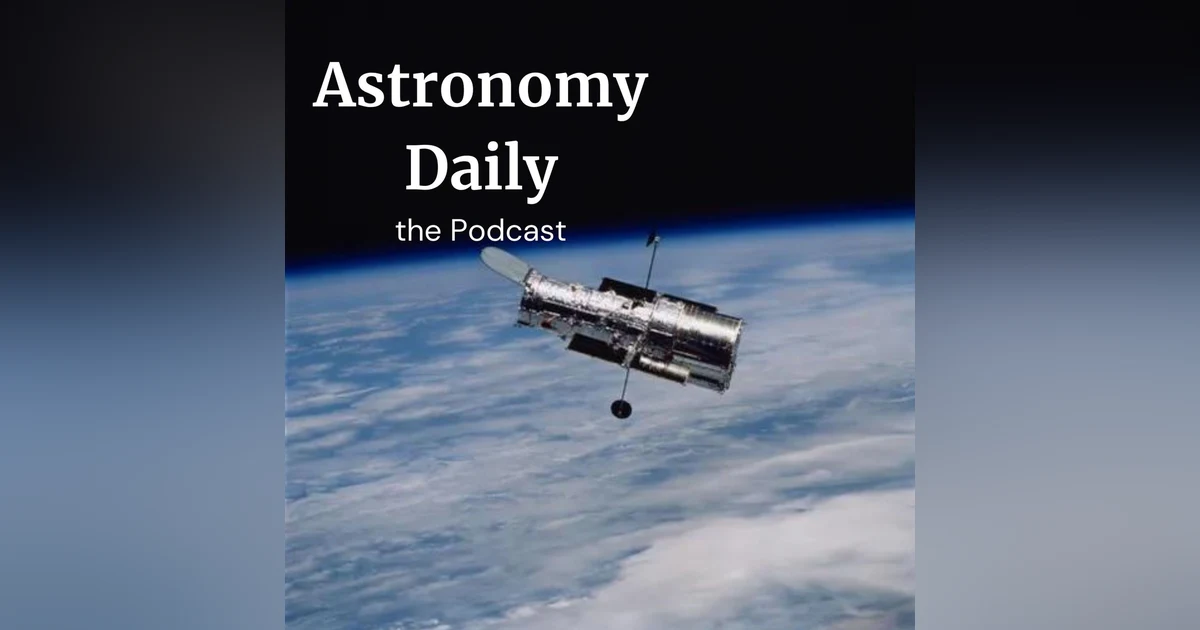
Embark on a celestial journey with today's episode of Astronomy Daily - The Podcast, where your host, Anna, guides you through the latest cosmic updates. We'll start with the Hubble Space Telescope's shift into one gyroscope mode due to a malfunction,...
Embark on a celestial journey with today's episode of Astronomy Daily - The Podcast, where your host, Anna, guides you through the latest cosmic updates. We'll start with the Hubble Space Telescope's shift into one gyroscope mode due to a malfunction, and how this adjustment will impact its future observations. Next, we'll delve into SpaceX's recent achievements, including the Starlink 85 satellite launch and the FAA's approval for Starship flight 4, highlighting their strides towards interplanetary travel. We'll also cover Boeing's upcoming attempt to launch the Starliner on its inaugural crewed flight, and the historic milestone of Russian cosmonaut Oleg Kononenko reaching 1,000 cumulative days in space. Lastly, we'll discuss the recent solar storm that produced stunning auroras and what increased solar activity means for the future.
00:00) This podcast features the latest updates about the Hubble Space Telescope
00:30) NASA's Hubble Space Telescope has shifted to one gyroscope mode
03:01) SpaceX recently completed the Starlink eight five mission
04:51) The FAA recently granted approval for Starship flight four
09:31) Russian cosmonaut becomes first person to reach 1000 cumulative days in space
11:21) A recent solar storm gifted us with an awe inspiring display of auroras
For an astronomical experience, visit our website at astronomydaily.io for the latest news, sign up for our free newsletter, and check out exclusive sponsor deals. Connect with us on X (@AstroDailyPod) for engaging discussions with fellow space aficionados. This is Anna, reminding you to keep your gaze fixed on the heavens. Until our next stellar episode, let the cosmos ignite your curiosity and wonder. Clear skies and cosmic discoveries to all!
Support: The podcast is better with your support: https://www.bitesz.com/show/astronomy-daily-the-podcast/support/
www.bitesz.com
Sponsors:
www.bitesz.com/nordpass
https://www.bitesz.com/show/astronomy-daily-the-podcast/sponsors/
1
00:00:02.240 --> 00:00:06.400
Welcome to Astronomy Daily, your daily
dose of space and astronomy news. I'm
2
00:00:06.440 --> 00:00:10.279
your host Anna. In today's episode, we'll cover the latest updates about the
3
00:00:10.359 --> 00:00:15.080
Hubble Space Telescope and how it's shifting
into one gyroscope mode. We'll also delve
4
00:00:15.119 --> 00:00:20.399
into SpaceX's recent milestones, including the
Starlink eight five satellite launch and the FAA's
5
00:00:20.399 --> 00:00:25.320
approval for Starship Flight four. Plus, we'll highlight several other noteworthy events happening
6
00:00:25.359 --> 00:00:29.000
in the ever evolving realm of space
exploration. Thank you for joining us.
7
00:00:30.559 --> 00:00:39.399
Thanks Autonomy Daly Podcast. The Hubble
Space Telescope has once again shown signs of
8
00:00:39.439 --> 00:00:44.600
aging, requiring a shift into what's
known as one gyroscope mode. This transition
9
00:00:44.719 --> 00:00:49.439
was necessitated by a malfunction in one
of the gyroscopes responsible for maintaining Hubble's precise
10
00:00:49.479 --> 00:00:55.240
orientation towards its celestial targets. NASA
officials have explained that the telescope, which
11
00:00:55.280 --> 00:01:00.000
originally housed six gyros, now has
only two operational ones, with an announcement
12
00:01:00.079 --> 00:01:03.840
today confirming the transition to utilizing just
one of them. The remaining functional gyro
13
00:01:03.920 --> 00:01:08.000
will be kept in reserve for future
use. Despite this adjustment. NASA has
14
00:01:08.040 --> 00:01:12.439
assured us that this does not mark
the end of Hubble's illustrious career. There
15
00:01:12.480 --> 00:01:17.840
is confidence that Hubble will continue its
groundbreaking work well into the next decade.
16
00:01:17.959 --> 00:01:23.159
Mark Lampin, director of NASA's Astrophysics
Division, underlined that this strategy is the
17
00:01:23.200 --> 00:01:27.159
best approach to extend Hubble's operational life. The shift to one gyro mode will
18
00:01:27.159 --> 00:01:33.519
have minimal impact on the majority of
its observations. Hubble's pointing control system typically
19
00:01:33.640 --> 00:01:38.879
utilizes three gyros, but it has
demonstrated effective operation in two gyro mode in
20
00:01:38.920 --> 00:01:44.400
the past, making one gyro mode
a viable long term option. This change
21
00:01:44.519 --> 00:01:49.120
does come with some operational limitations.
For example, transitioning from one science target
22
00:01:49.159 --> 00:01:53.120
to another will take slightly longer,
and there will be a reduction in scheduling
23
00:01:53.200 --> 00:02:00.760
efficiency approximately twelve percent, according to
Hubble project manager Patrick Krauss. Additionally,
24
00:02:00.000 --> 00:02:05.719
Hubble will have less flexibility in its
observational scope and will be unable to track
25
00:02:05.799 --> 00:02:10.560
moving targets closer than Mars, though
such targets have historically been rare. Looking
26
00:02:10.599 --> 00:02:15.000
ahead, the telescope is expected to
resume its work in mid June under the
27
00:02:15.039 --> 00:02:22.199
new operational configuration. NASA's updated reliability
assessments suggest a high probability of at least
28
00:02:22.240 --> 00:02:27.639
one gyro remaining functional through twenty thirty
five, which should ensure that Hubble continues
29
00:02:27.680 --> 00:02:31.039
to illuminate our understanding of the universe
for years to come. So, while
30
00:02:31.080 --> 00:02:36.120
Hubble may have lost a bit of
its precision, its ability to offer groundbreaking
31
00:02:36.159 --> 00:02:42.520
insights into the Cosmos remains largely intact. The Telescope's storied history of servicing missions
32
00:02:42.560 --> 00:02:47.319
and technological upgrades gives hope that it
will continue to contribute valuable scientific data,
33
00:02:47.879 --> 00:02:53.719
reinforcing its legacy as one of the
most important observatories in astronomical history. Stay
34
00:02:53.759 --> 00:03:00.000
tuned to Astronomy Daily for more updates
on Hubble and other exciting space missions.
35
00:03:00.240 --> 00:03:06.159
Now, let's turn our attention to
SpaceX and their latest achievement. SpaceX recently
36
00:03:06.159 --> 00:03:10.479
completed the Starlink eight five mission,
adding another success to their remarkable track record.
37
00:03:12.240 --> 00:03:15.759
This mission saw the Falcon nine rocket
lift off from Pad forty at Cape
38
00:03:15.800 --> 00:03:21.439
Canaveral Space Force Station, deploying twenty
Starlink V two mini satellites. Among these,
39
00:03:21.919 --> 00:03:27.039
thirteen satellites notably featured direct to cell
phone capabilities, a significant advancement for
40
00:03:27.080 --> 00:03:31.680
global communication. The Falcon nine's first
stage booster, known in the SpaceX fleet
41
00:03:31.759 --> 00:03:37.719
as B one thousand sixty seven,
reached its twentieth flight during this mission,
42
00:03:38.120 --> 00:03:43.639
a testament to SpaceX's pioneering advancements in
rocket reusability. This particular booster had a
43
00:03:43.680 --> 00:03:47.800
storied past, having supported two crew
Dragon astronaut missions, two cargo Dragon resupply
44
00:03:47.879 --> 00:03:53.199
missions to the International Space Station,
and ten prior Starlink delivery runs. After
45
00:03:53.240 --> 00:03:59.199
its latest feat, B one thousand
sixty seven successfully landed on the drone ship
46
00:04:00.199 --> 00:04:04.719
read the instructions stationed in the Atlantic
Ocean. This marked the eighty third landing
47
00:04:04.759 --> 00:04:10.240
for the specific drone ship and the
three hundred and sixteenth overall booster landing for
48
00:04:10.319 --> 00:04:15.560
SpaceX. SpaceX founder Elon Musk recently
highlighted the achievements of the Starlink network,
49
00:04:16.079 --> 00:04:21.279
revealing a new internal median latency record
of twenty eight milliseconds for their Internet service.
50
00:04:23.120 --> 00:04:27.160
Musk further noted that the median latency
for Starlink Internet in the United States
51
00:04:27.199 --> 00:04:31.839
could soon dip below twenty milliseconds,
a promising development for users. This launch
52
00:04:31.879 --> 00:04:38.319
not only underscores SpaceX's capability to execute
frequent and precise missions, but also moves
53
00:04:38.360 --> 00:04:43.480
them closer to their goal of providing
widespread, high speed Internet access. With
54
00:04:43.560 --> 00:04:48.680
each successful mission, SpaceX continues to
redefine the parameters of spaceflight and satellite communications.
55
00:04:51.120 --> 00:04:57.000
In other SpaceX news, their ambitious
plans for interplanetary travel took another significant
56
00:04:57.000 --> 00:05:01.720
step forward as the FAA recently granted
approof for Starship Flight four, scheduled to
57
00:05:01.759 --> 00:05:06.199
lift off from the Starbase facility in
South Texas. This mission is crucial for
58
00:05:06.279 --> 00:05:12.199
testing the capabilities of both the Starship
and its super heavy booster. These tests
59
00:05:12.240 --> 00:05:16.199
are aimed at ultimately fulfilling SpaceX's longer
term goals of lunar and martian missions.
60
00:05:16.800 --> 00:05:21.800
The FAA's approval comes with a license
that includes certain test induced damage scenarios.
61
00:05:23.399 --> 00:05:28.360
This means that the agency has identified
specific conditions under which vehicle loss would not
62
00:05:28.399 --> 00:05:33.639
delay subsequent missions, expediting the test
and evaluation process. By outlining these scenarios
63
00:05:33.639 --> 00:05:39.720
ahead of time, SpaceX and the
FAA can focus on streamlining the steps necessary
64
00:05:39.839 --> 00:05:44.839
to safely and efficiently move forward with
future flights. Starship and its super heavy
65
00:05:44.839 --> 00:05:49.720
booster are pivotal components of SpaceX's vision
standing nearly four hundred feet tall, they
66
00:05:49.759 --> 00:05:55.879
represent the most powerful rocket ever built
to date. The company has tested Starship
67
00:05:55.920 --> 00:06:00.399
on three previous flights, all of
which have provided key data, bite not
68
00:06:00.439 --> 00:06:04.240
achieving complete mission success, each test
has been a learning opportunity, improving the
69
00:06:04.279 --> 00:06:10.920
design and operational procedures of the rocket
system. This fourth flight aims to achieve
70
00:06:11.040 --> 00:06:16.319
high orbital velocity, followed by intricate
re entry and splash down maneuvers. SpaceX's
71
00:06:16.319 --> 00:06:20.839
focus this time is not only on
reaching orbital speed, but also on demonstrating
72
00:06:20.879 --> 00:06:27.399
reusability features core to making future missions
to the Moon and Mars economically viable.
73
00:06:27.920 --> 00:06:31.040
The super heavy booster will attempt a
controlled splash down into the Gulf of Mexico,
74
00:06:31.519 --> 00:06:34.920
while the Starship vehicle will aim for
re entry over the Indian Ocean.
75
00:06:35.519 --> 00:06:42.160
As SpaceX progresses, the importance of
efficient regulatory processes and robust testing frameworks cannot
76
00:06:42.199 --> 00:06:46.639
be overstated. The collaborative approach between
SpaceX and the FAA in modifying the launch
77
00:06:46.680 --> 00:06:51.720
license to include pre approved damage scenarios
is a testament to this. It reflects
78
00:06:51.759 --> 00:06:59.279
a mutual commitment to advancing space exploration
while maintaining stringent safety protocols. The aerospace
79
00:06:59.279 --> 00:07:04.040
community and space enthusiasts alike will be
keenly watching Starship Flight four, anticipating its
80
00:07:04.079 --> 00:07:09.680
contributions to the future of human spaceflight
and the new frontier it aims to open.
81
00:07:10.319 --> 00:07:14.120
This mission is more than a test
flight. It is a significant milestone
82
00:07:14.160 --> 00:07:20.319
toward realizing the dream of making space
travel more accessible and sustainable. NASA,
83
00:07:20.439 --> 00:07:25.199
Boeing and United Launch Alliance are gearing
up for a third attempt to launch the
84
00:07:25.199 --> 00:07:30.480
Boeing Starliner on its inaugural crude flight. This follows previous setbacks due to a
85
00:07:30.519 --> 00:07:35.079
failed power distribution source and issues with
the launch vehicle. United Launch Alliance engineers
86
00:07:35.079 --> 00:07:40.360
have since rectified the electrical problem,
and mission management has given the green light
87
00:07:40.480 --> 00:07:44.519
for a launch attempt on June fifth. The crew for this mission, astronauts
88
00:07:44.519 --> 00:07:47.319
Butch Wilmore and Sunny Williams, are
set to embark on a journey to the
89
00:07:47.360 --> 00:07:55.199
International Space Station. Isss a significant
milestone in Boeing's efforts to provide NASA with
90
00:07:55.319 --> 00:08:01.480
reliable crew transportation capabilities under the Commercial
Crew Program. The launch window is precisely
91
00:08:01.480 --> 00:08:05.279
timed, with liftoff scheduled for ten
fifty two am EDT aiming to align the
92
00:08:05.279 --> 00:08:11.839
spacecraft's trajectory with the orbit of the
ISS. If successful, the Starliner will
93
00:08:11.879 --> 00:08:16.319
dock with the ISS approximately twenty four
hours after launch. This mission will not
94
00:08:16.360 --> 00:08:20.240
only transport the two astronauts, but
also a variety of scientific experiments and supplies.
95
00:08:20.759 --> 00:08:24.480
The teams stay on the ISS will
allow them to conduct essential research and
96
00:08:24.560 --> 00:08:30.439
collaborate with current crew members before their
planned return to Earth, landing in White
97
00:08:30.439 --> 00:08:35.000
Sands, New Mexico on June fourteenth. This endeavor follows a series of delays
98
00:08:35.039 --> 00:08:39.080
and adjustments, including a scrapped launch
attempt in early May due to technical issues.
99
00:08:39.960 --> 00:08:46.279
Despite these challenges, the teams at
NASA, Boeing and ULA have worked
100
00:08:46.320 --> 00:08:50.639
tirelessly to resolve the problems to ensure
the mission's success. As we approach the
101
00:08:50.720 --> 00:08:54.759
launch time, weather forecasts indicate a
ninety percent chance of favorable conditions, with
102
00:08:54.840 --> 00:09:00.919
only some cumulus clouds posing a potential
concern. In addition, solar activity,
103
00:09:00.960 --> 00:09:05.919
which has been elevated recently, will
be monitored closely to ensure safe flight conditions.
104
00:09:05.919 --> 00:09:11.799
The upcoming mission represents a crucial step
towards certifying the Starliner for regular crew
105
00:09:11.879 --> 00:09:16.799
rotation missions to the ISS, potentially
beginning as soon as spring twenty twenty five.
106
00:09:16.679 --> 00:09:22.279
This achievement will mark a significant advancement
in NASA's goal of having multiple domestic
107
00:09:22.320 --> 00:09:28.840
providers for transporting astronauts to space,
enhancing the robustness and capabilities of human spaceflight
108
00:09:28.879 --> 00:09:35.360
operations. Russian cosmonaut Oleg Kononenko has
etched his name into the annals of space
109
00:09:35.440 --> 00:09:41.759
history by becoming the first person to
reach an astounding one thousand cumulative days in
110
00:09:41.799 --> 00:09:46.559
space. This extraordinary milestone was reached
during his fifth mission aboard the International Space
111
00:09:46.600 --> 00:09:52.480
Station ISS, where he is currently
serving as commander. Kononenko, who launched
112
00:09:52.480 --> 00:09:58.360
on the Soyuz MS twenty four spacecraft
last September, has not only demonstrated the
113
00:09:58.360 --> 00:10:03.360
incredible human capability to an endure long
term space missions, but also provided scientists
114
00:10:03.360 --> 00:10:07.679
with a unique opportunity to study the
effects of prolonged exposure to the space environment.
115
00:10:07.480 --> 00:10:15.320
Renowned aerospace medicine expert Immanual Urkieta underscores
the significance of Cononenko's achievement. According
116
00:10:15.320 --> 00:10:20.559
to Urkieta, this milestone allows researchers
to gather invaluable data on the physiological and
117
00:10:20.600 --> 00:10:26.679
psychological impacts of long duration space flights. Key areas of study include radiation exposure,
118
00:10:26.159 --> 00:10:31.600
bone density loss, muscle atrophy,
and mental well being in isolated and
119
00:10:31.639 --> 00:10:35.279
confined environments. Such research is crucial
for planning future missions to the Moon,
120
00:10:35.600 --> 00:10:41.080
Mars, and beyond. As humanity
prepares for longer and more distant space expeditions,
121
00:10:41.480 --> 00:10:46.000
the data collected from Cononenko's time and
space will be instrumental. It helps
122
00:10:46.080 --> 00:10:52.240
establish a clearer understanding of what astronauts
will face on missions that could span several
123
00:10:52.360 --> 00:10:56.000
years. Moreover, this knowledge could
lead to advancements in medical treatments and health
124
00:10:56.039 --> 00:11:01.960
monitoring technologies that benefit not only future
space travelers, but also those on Earth,
125
00:11:01.440 --> 00:11:07.440
especially in remote or medically underserved areas. So as we celebrate Conenenko's remarkable
126
00:11:07.519 --> 00:11:11.720
journey, we also look forward to
the scientific advancements his experience will bring,
127
00:11:13.120 --> 00:11:16.360
paving the way for humanity's next giant
leap. Stay tuned for more updates as
128
00:11:16.360 --> 00:11:22.840
we continue to explore the frontiers of
space. A recent solar storm gifted us
129
00:11:22.879 --> 00:11:28.759
with an awe inspiring display of auroras
lighting up the skies with vibrant curtains of
130
00:11:28.799 --> 00:11:33.720
pink and green. This dazzling spectacle
marks the beginning of what promises to be
131
00:11:33.759 --> 00:11:37.120
a particularly active period for our sun
as it nears the peak of its eleven
132
00:11:37.159 --> 00:11:43.879
year solar cycle. Solar experts from
NASA and the National Oceanic and Atmospheric Administration
133
00:11:43.399 --> 00:11:50.120
NOAH have observed that the Sun is
already more turbulent than initially predicted. This
134
00:11:50.200 --> 00:11:54.519
heightened activity could bring more frequent and
intense solar storms in the coming years,
135
00:11:54.799 --> 00:11:58.200
potentially affecting more regions around the globe. The beauty of these auroral displays,
136
00:11:58.240 --> 00:12:03.000
while captivating, comes with a caveat. As charged particles from the Sun collide
137
00:12:03.039 --> 00:12:09.159
with Earth's magnetic field, they can
disrupt satellite communications, GPS systems, and
138
00:12:09.200 --> 00:12:13.399
even power grids. For instance,
during the recent storm, farmers had to
139
00:12:13.440 --> 00:12:20.000
halt GPS dependent operations and aviation routes
were altered to avoid communication blackouts. To
140
00:12:20.039 --> 00:12:26.120
mitigate these disruptions, experts emphasize the
importance of preparedness. Government agencies like NASA
141
00:12:26.240 --> 00:12:31.120
and NOAH are actively monitoring solar activity
and collaborating with industries affected by space weather.
142
00:12:33.080 --> 00:12:39.120
Technological advancements and better forecasting methods are
also being developed to safeguard critical infrastructure
143
00:12:39.200 --> 00:12:43.120
against the erratic behavior of our star. As we brace for heightened solar activity
144
00:12:43.159 --> 00:12:48.159
through twenty twenty six. It's essential
to stay informed and prepared. Whether you're
145
00:12:48.200 --> 00:12:52.720
a scientist, a farmer, or
simply a stargazer. Understanding the impact of
146
00:12:52.759 --> 00:13:01.960
the solar phenomena can help navigate the
electrifying yet challenging journey ahead. And that's
147
00:13:01.000 --> 00:13:05.799
it for today. Thank you for
tuning in to Astronomy Daily. We hope
148
00:13:05.840 --> 00:13:09.679
you enjoyed today's episode and found our
discussion on the latest updates from the world
149
00:13:09.759 --> 00:13:13.840
of space and astronomy and lightning.
Remember you can always visit our website at
150
00:13:13.840 --> 00:13:18.480
Astronomy Daily dot io for even more
updates and news on space missions, celestial
151
00:13:18.519 --> 00:13:22.639
events, and the latest in astrophysics. This podcast is brought to you daily
152
00:13:22.919 --> 00:13:26.519
and is available on Apple Podcasts,
Spotify, YouTube Music, or wherever you
153
00:13:26.559 --> 00:13:31.120
get your podcasts. Make sure to
subscribe so you never miss an episode.
154
00:13:31.279 --> 00:13:33.600
I'm your host, Anna, wishing
you clear skies and a universe full of
155
00:13:33.600 --> 00:13:48.240
discoveries. Until next time, keep
looking up, sayday Stars Star


