S03E43: Chang'e-6's Dark Side Dance & Starliner's Stellar Stride: A New Chapter in Space Endeavors
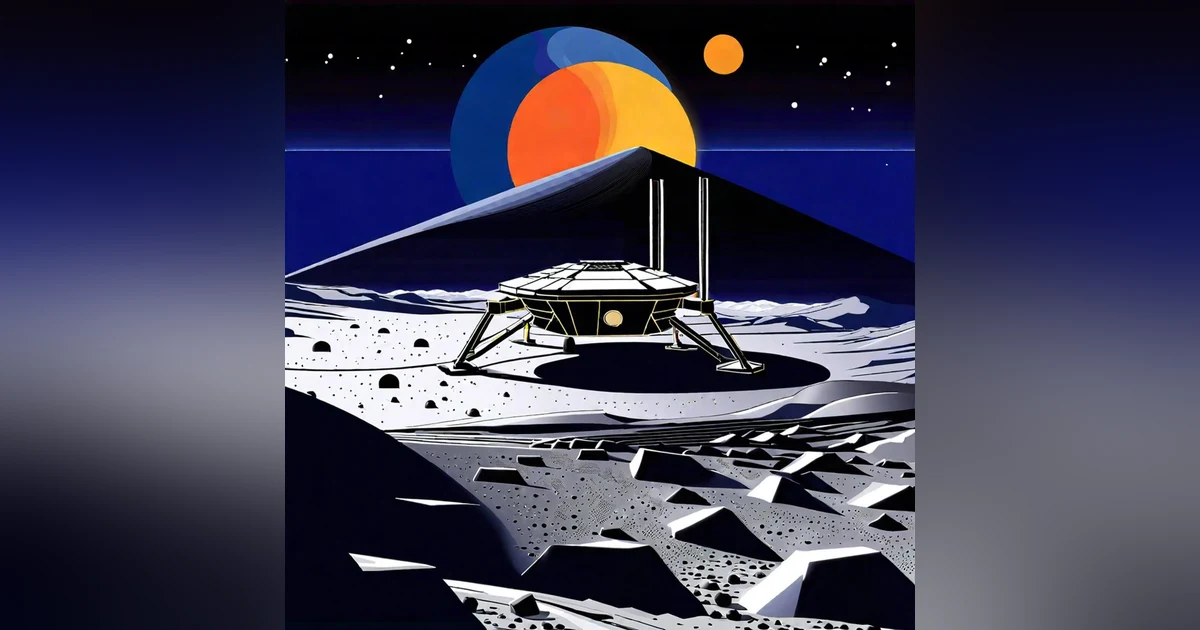
Prepare for a lunar odyssey and celestial celebration in today's episode of Astronomy Daily - The Podcast. As we lift off into the vast unknown, we're tracking China's Chang'e 6 probe on its ambitious journey to the dark side of the moon to retrieve...
Prepare for a lunar odyssey and celestial celebration in today's episode of Astronomy Daily - The Podcast. As we lift off into the vast unknown, we're tracking China's Chang'e 6 probe on its ambitious journey to the dark side of the moon to retrieve precious lunar material. We'll also marvel at the youthful origins of a moonlet orbiting the asteroid Dinkanish, discovered by NASA's Lucy mission. And hold tight as we count down to the launch of Boeing's Starliner, set for a historic crewed flight test that could herald a new era in space travel.Join us as we delve into the explosive beauty of solar flares with a recent X-class eruption that dazzled our solar observatory, and honor the trailblazing legacy of Eileen Collins with a collectible patch celebrating her achievements as the first female spacecraft commander. Plus, we're toasting to Astronauts Day, a tribute to the brave souls who venture into the cosmos, and unveiling the inaugural Astronaut Rockstar Awards.1. **Chang'e 6's Moonlit Mystery**: China's daring mission to the moon's far side.2. **Lucy's Young Moonlet**: Unveiling the age of asteroid companion, Selim.3. **Starliner's Stellar Ascent**: Boeing's crewed test flight to the ISS.4. **Solar Flare Spectacle**: The impact of an X-class eruption on Earth.5. **Commander Collins' Patch**: A symbol of shattered ceilings and space exploration.6. **Astronauts Day & Rockstar Awards**: Celebrating space heroes and their cultural impact.For an immersive experience of the cosmos, visit our website at astronomydaily.io, and join the stargazing community on X (@AstroDailyPod) for continuous updates and celestial conversations. Until our next stellar encounter, this is Steve reminding you to keep your eyes on the skies and your curiosity ever soaring. Clear skies and boundless wonder to all our fellow space enthusiasts!This episode is presented with the support of our cosmic companions at NordPass. Secure your interstellar journey with our special offer by visiting www.bitesz.com/nordpass. Support Astronomy Daily the Podcast and access the commercial-free episodes by checking out our supporter link.Become a supporter of this podcast: https://www.spreaker.com/podcast/astronomy-daily-the-podcast--5648921/support
And for more Space and Astronomy News, listen to past episodes, check out sponsor links etc...just visit our website at astronomydaily.io
1
00:00:00.120 --> 00:00:03.720
Hello again everybody, it's Steve here
for another episode of Astronomy Daily. It's
2
00:00:03.799 --> 00:00:17.199
the sixth of April twenty twenty four
with your whole Steven clue. That's right.
3
00:00:17.239 --> 00:00:20.480
Great to have you with us on
another episode. Straight off the Astronomy
4
00:00:20.559 --> 00:00:26.280
Daily newsletter Stories to Hand. The
other day, Chang E six straight out
5
00:00:26.320 --> 00:00:29.359
of China is heading for the Dark
Side of the Moon. Sounds like a
6
00:00:29.399 --> 00:00:33.719
science fiction movie, doesn't it.
They're going to be collecting only two kilos
7
00:00:34.280 --> 00:00:39.119
to kilos of dirt and stuff from
the Dark side of the Moon and bringing
8
00:00:39.159 --> 00:00:42.320
it back home again. That's going
to be interesting to watch. Also,
9
00:00:42.679 --> 00:00:51.719
Lucy mission has closed in on I
was passing by dinkini Ish asteroid and you
10
00:00:51.759 --> 00:00:56.000
know how much I love asteroids.
I love my floating rocks. And Lucy
11
00:00:56.119 --> 00:01:00.880
has assisted in the calculation on how
old dink Ish actually is, so we'll
12
00:01:00.880 --> 00:01:04.239
look at that as well. And
of course, something that we talked about
13
00:01:04.359 --> 00:01:10.439
last week in the bumper edition of
Astronomy Daily. Starliner has made it to
14
00:01:10.480 --> 00:01:15.040
the launch pad and fingers crossed,
it's going up. So we've got a
15
00:01:15.120 --> 00:01:19.719
two man crew on board that one
and they're going to do the crew flight
16
00:01:19.799 --> 00:01:23.480
test the CFT. Great news.
Lots of things happening in the skies in
17
00:01:23.680 --> 00:01:27.799
space science and science and astronomy.
So let's keep looking up and having a
18
00:01:27.840 --> 00:01:32.359
look at that as we go.
You're going to play that Space Force music
19
00:01:32.400 --> 00:01:34.920
again, aren't you cool? Where
did you come from? Yes? Well
20
00:01:36.200 --> 00:01:40.439
you know Starliner is flying from the
Space Force at base at Canaveral in Florida.
21
00:01:40.640 --> 00:01:44.480
You know it's only appropriate. Do
me a fever? Oh what you
22
00:01:44.519 --> 00:01:48.560
don't want see? If you can
restrain yourself, I don't know, Hallie.
23
00:01:48.640 --> 00:01:55.120
I mean it's Space Force. Yeah, pretty awesome. Here we go.
24
00:02:01.000 --> 00:02:07.280
Okay, no stop please, okay, okay, all right, So
25
00:02:07.400 --> 00:02:13.759
what have you got first today that
I've stopped teasing you? Well, if
26
00:02:13.800 --> 00:02:17.479
you can behave yourself, I'll be
looking at a massive solar flare that erupted
27
00:02:17.479 --> 00:02:21.879
on May second, just the other
day. Also, NASA has announced a
28
00:02:21.879 --> 00:02:25.479
collectible patch celebrating the first female to
command a US spacecraft. And finally,
29
00:02:25.719 --> 00:02:31.560
Happy Astronauts Day, everyone, really
Astronauts Day, really really really, Yes,
30
00:02:32.560 --> 00:02:36.560
it's a thing, so I'll be
talking about that too. Wow.
31
00:02:37.000 --> 00:02:46.479
Okay, well let's do it,
hallie. Okies, The sun emitted a
32
00:02:46.479 --> 00:02:51.919
strong solar flare peaking at ten twenty
two pm Eastern Time on May second,
33
00:02:52.080 --> 00:02:57.960
twenty twenty four. NASA's Solar Dynamics
Observatory, which watches the Sun constantly,
34
00:02:58.280 --> 00:03:02.919
captured an image of the event.
Solar flares are intense bursts of radiation emanating
35
00:03:02.960 --> 00:03:08.479
from the release of magnetic energy associated
with sunspots. These flares are among the
36
00:03:08.479 --> 00:03:14.919
biggest explosive events in our solar system, visible primarily in the ultraviolet range.
37
00:03:15.800 --> 00:03:20.319
Flares impact Earth in a variety of
ways. They can disrupt the ionosphere and
38
00:03:20.439 --> 00:03:25.960
interfere with GPS navigation and radio communications. They are also responsible for auroras,
39
00:03:27.159 --> 00:03:32.159
the beautiful natural light displays often seen
in high latitude skies. This flare is
40
00:03:32.199 --> 00:03:38.520
classified as an X one point six
flare. X class denotes the most intense
41
00:03:38.560 --> 00:03:44.000
flares, while the number provides more
information about its strength. Solar flares are
42
00:03:44.120 --> 00:03:50.280
rated based on their intensity and potential
impact on Earth. The classification system consists
43
00:03:50.360 --> 00:03:53.240
of five categories, A, B, C, M, and X.
44
00:03:53.400 --> 00:03:59.000
Each category has a tenfold increase in
energy output compared to the previous one,
45
00:03:59.120 --> 00:04:03.039
with A being the weakest and X
the strongest. Within each letter class,
46
00:04:03.120 --> 00:04:08.439
there is a finer scale from one
to nine. For example, an X
47
00:04:08.479 --> 00:04:12.639
one flare is weaker than an X
two flare, but significantly stronger than an
48
00:04:12.759 --> 00:04:18.600
M five flare. This classification helps
scientists and relevant agencies predict potential impacts and
49
00:04:18.680 --> 00:04:25.759
prepare for space weather related disruptions.
A collectible embroidered patch created to honour the
50
00:04:25.759 --> 00:04:30.560
first woman to command a US spacecraft, features a geometric pattern representing the glow
51
00:04:30.600 --> 00:04:34.800
of her Space Shuttle lifting off into
the night sky. The colorful diamond shaped
52
00:04:34.839 --> 00:04:40.600
shards could also be seen as the
figurative glass ceiling that Eileen Collins broke through
53
00:04:40.639 --> 00:04:45.040
on her way to the stars.
The latest patch from the fifty nine thousand
54
00:04:45.079 --> 00:04:49.800
member space Hipster's group on Facebook.
Each Eileen Collins Signature Edition emblem includes the
55
00:04:49.839 --> 00:04:56.519
astronauts autograph sewn into the design Sales
of the patches benefit Taking Up Space,
56
00:04:56.759 --> 00:05:00.879
a non profit organization empowering middle school
age Native American girls to soar beyond their
57
00:05:00.920 --> 00:05:06.079
barriers by sending them to Space Camp
in Huntsville, Alabama. The second woman
58
00:05:06.160 --> 00:05:11.360
to attend the US Air Force Test
Pilot School, Collins was selected to become
59
00:05:11.399 --> 00:05:15.199
a NASA astronaut in nineteen ninety.
She was the first woman to fly as
60
00:05:15.240 --> 00:05:19.319
the pilot on a Space Shuttle mission
when she launched on STS sixty three in
61
00:05:19.399 --> 00:05:24.600
nineteen ninety five, and she flew
again in the right side seat on STS
62
00:05:24.600 --> 00:05:29.800
eighty four two years later. Both
flights visited the space station mir with the
63
00:05:29.839 --> 00:05:33.160
earlier being the first Shuttle mission to
rendezvous with the Russian outpost and the latter
64
00:05:33.240 --> 00:05:38.839
the sixth to dock there. Then, in nineteen ninety nine, Collins became
65
00:05:38.879 --> 00:05:43.560
the first woman to command a US
spacecraft, leading the STS ninety three crew
66
00:05:43.600 --> 00:05:46.920
aboard Space Shuttle Columbia on a mission
to deploy to the Chundra X ray Observatory.
67
00:05:47.920 --> 00:05:51.519
Six years later, after the loss
of Columbia on a subsequent mission,
68
00:05:51.759 --> 00:05:57.879
Collins led the orbiter fleet's return to
flight, commanding the STS one fourteen crew
69
00:05:58.000 --> 00:06:02.279
on Shuttle Discovery. In total,
Collins logged more than thirty six days in
70
00:06:02.360 --> 00:06:08.079
space over the course of her four
missions. Collins was the twenty first US
71
00:06:08.160 --> 00:06:12.839
woman to fly into space and the
twenty seventh worldwide. She was the three
72
00:06:12.959 --> 00:06:16.120
hundred and twenty eighth person to leave
Earth's atmosphere and the three hundred and twenty
73
00:06:16.120 --> 00:06:20.639
first to orbit the planet. According
to the Association of Space Explorer's Registry of
74
00:06:20.680 --> 00:06:27.240
Space Travelers. Collins penned her memoirs
Through the Glass Ceiling to the Stars in
75
00:06:27.279 --> 00:06:31.639
twenty twenty one. It is now
the basis for an upcoming documentary Space Woman.
76
00:06:32.600 --> 00:06:38.920
Colin's signature edition patch depicts her history
making STS ninety three launch and includes
77
00:06:38.959 --> 00:06:43.560
stars in its border to represent each
of her Shuttle missions. Other stars in
78
00:06:43.600 --> 00:06:47.680
the emblem's design symbolize the first woman
to fly into space, Soviet era cosmonaut
79
00:06:47.759 --> 00:06:53.879
Valentina teresh Kava, the first US
female astronaut in space, Sally Ride,
80
00:06:53.959 --> 00:06:57.240
and the four women who have lost
their lives in the pursuit of spaceflight and
81
00:06:57.360 --> 00:07:03.600
exploration, Judy Resnick Kristam of Copenachala
and Laurel Clark. As with previous signature
82
00:07:03.720 --> 00:07:09.000
edition releases, the Collins patch has
been produced by ab Emblem, the North
83
00:07:09.040 --> 00:07:14.160
Carolina based company that also is NASA's
supplier and made the STS sixty three,
84
00:07:14.199 --> 00:07:19.439
STS eighty four, STS ninety three
and STS one fourteen emblems that Collins wore
85
00:07:19.439 --> 00:07:27.680
into space and Happy National Astronaut Day
twenty twenty four everyone as the inspiring president
86
00:07:27.759 --> 00:07:32.720
and CEO of Unify Good Music industry
fixture Annie Ballero has presided over her successful
87
00:07:32.800 --> 00:07:38.079
artist management and marketing firm since two
thousand and nine, before branching out into
88
00:07:38.160 --> 00:07:43.639
Unified Space Agency, which has expanded
into the nation's biggest private talent management firm
89
00:07:43.680 --> 00:07:49.319
for astronauts. Emboldened with the company's
tagline of hashtag Webelieve in Astronauts unify good
90
00:07:49.319 --> 00:07:56.600
partners with corporations or institutions to advise
NASA's intrepid homegrown heroes on navigating partnerships in
91
00:07:56.680 --> 00:08:01.160
media, film, and television by
creating a positive network of bridges between the
92
00:08:01.199 --> 00:08:05.480
worlds of space, travel, music, and pop culture. In twenty sixteen,
93
00:08:05.680 --> 00:08:11.000
Baliro envisioned an opportunity to create a
wellspring of astronaut recognition by launching National
94
00:08:11.040 --> 00:08:16.360
Astronaut Day. This special occasion is
now observed every May fifth, in salute
95
00:08:16.399 --> 00:08:22.759
to Mercury astronaut Alan Shepherd's historic first
spaceflight aboard Freedom seven on May fifth,
96
00:08:22.959 --> 00:08:28.279
nineteen sixty one. This year,
she's thrilled to spearhead the inaugural Astronaut rock
97
00:08:28.319 --> 00:08:33.480
Star Awards, an evolving event that
celebrates the unique intersection of astronauts and music,
98
00:08:33.759 --> 00:08:39.000
with raal rock Stars handing out awards
in three categories to astronauts, individuals
99
00:08:39.039 --> 00:08:43.480
and organizations who are pillars of support
and pioneering voices in space exploration and STEM
100
00:08:43.600 --> 00:08:50.120
slash steam education. Included in this
debut year's list of victors r astronaut Alan
101
00:08:50.200 --> 00:08:56.200
Shepherd, the first American in space. On May fifth, nineteen sixty one,
102
00:08:56.279 --> 00:09:00.519
astronaut Wendy Lawrence will present this Legacy
Award to Allan's dot MGM Laura,
103
00:09:01.519 --> 00:09:07.279
also winning our high schooler esteemist Urdia
Sanchez and eighteen year old Sophia Crowder it
104
00:09:07.639 --> 00:09:13.759
Girls Girl Empowering Initiative founder and Beyond
former NASA astronaut and Intuitive Machines executive Colonel
105
00:09:13.840 --> 00:09:18.600
Jack d Ha Fisher, who oversaw
the Odysseus Ode lunar landing this year as
106
00:09:18.639 --> 00:09:24.200
part of the IDAM one mission.
In twenty twenty four, THEI dot AM
107
00:09:24.240 --> 00:09:31.120
one mission successfully landed the first spacecraft
on the moon's South Pole region, marking
108
00:09:31.120 --> 00:09:35.960
the United States first return since Apollo
seventeen, as well as the first private
109
00:09:35.039 --> 00:09:39.840
lunar lander on the Moon. Fisher's
award will be presented by Rock greats Or
110
00:09:39.879 --> 00:09:45.639
at their Boston, Massachusetts show at
Leader Bank Pavilion on July twentieth, twenty
111
00:09:45.720 --> 00:09:48.879
twenty four, in sync with the
actual moon landing date from the Apollo eleven
112
00:09:48.960 --> 00:09:52.840
mission in nineteen sixty nine, the
first time a human walked on the Moon.
113
00:09:54.840 --> 00:09:58.720
The Science Haven's initiative to provide one
hundred telescopes to one hundred families across
114
00:09:58.720 --> 00:10:07.519
the un Back to you my favorite
human astronomy with Steve and Halle Space Space,
115
00:10:07.559 --> 00:10:13.360
Science and Astronomy. Oh and as
always, thank you so much Hallie
116
00:10:13.399 --> 00:10:16.840
for those stories, and thank you
for joining us for this Monday edition of
117
00:10:16.879 --> 00:10:20.919
Astronomy Daily where we offer just a
few stories from the now famous Astronomy Daily
118
00:10:22.159 --> 00:10:24.919
newsletter, which you can receive in
your email every day, just like Hallie
119
00:10:24.919 --> 00:10:30.240
and I do. And to do
that, just visit our new Urlastronomy Daily
120
00:10:30.320 --> 00:10:33.360
dot io and place your email address
in the slot provided. Just like that,
121
00:10:33.840 --> 00:10:37.559
you'll be receiving all the latest news
about science, space, science and
122
00:10:37.600 --> 00:10:41.440
astronomy from around the world as it's
happening. And not only that, you
123
00:10:41.480 --> 00:10:48.440
can interact with us by visiting at
astro Daily pod on x or at our
124
00:10:48.519 --> 00:10:54.600
parent podcast Facebook page which is Space
Nuts Podcast Group. And we hope to
125
00:10:54.600 --> 00:11:01.840
see you there. And only a
couple of days ago, China's last largest
126
00:11:01.919 --> 00:11:07.879
rocket has blasted off to space carrying
chany Change six lunar probe for a nearly
127
00:11:07.960 --> 00:11:11.279
two month mission to retrieve rocks and
soil from the far side of the Moon
128
00:11:11.399 --> 00:11:16.799
in a world first attempt. The
long March five rocket lifted off on Friday
129
00:11:16.879 --> 00:11:22.000
from the weng Chang Space Launch Center
on the southern island province of Hainan With
130
00:11:22.159 --> 00:11:28.600
the more than eight tong probe,
the launch marks another milestone in China's luna
131
00:11:28.720 --> 00:11:33.240
and space space exploration program. Collecting
and returning samples from the far side of
132
00:11:33.240 --> 00:11:37.879
the Moon is an unprecedented feat.
Wu we're In, chief, designer of
133
00:11:37.919 --> 00:11:45.639
the country's lunar exploration program, told
Xinhua, the state news agency. Chang
134
00:11:45.720 --> 00:11:50.320
E six is named after the Chinese
mythical moon goddess. We know very little
135
00:11:50.360 --> 00:11:54.960
about the Moon's far side, he
said. If Change six mission can achieve
136
00:11:56.120 --> 00:12:00.759
its goal, it will provide scientists
with the first direct evidence to understand the
137
00:12:00.919 --> 00:12:05.480
environment and material composition of the far
side of the Moon, which is of
138
00:12:05.559 --> 00:12:11.159
great significance. Like its predecessor,
Chang E five, the Chang E six
139
00:12:11.200 --> 00:12:15.960
comprises an orbiter, a lander and
an ascender as well as a mechanism that
140
00:12:16.080 --> 00:12:20.480
allows it to return to Earth.
According to Xinhwa, the South Pole Aitken
141
00:12:20.600 --> 00:12:26.080
basin where Changi six is set to
land is on the dark side of the
142
00:12:26.120 --> 00:12:31.799
Moon that remains mysterious as it perpetually
faces away from Earth. In twenty eighteen,
143
00:12:33.759 --> 00:12:37.639
Chang E four gave China its first
unmanned moon landing, also on the
144
00:12:37.679 --> 00:12:43.600
far side. In twenty twenty,
Chang E five marked the first time humans
145
00:12:43.600 --> 00:12:48.480
retrieved lunar samples in forty four years, and Changi six could make China the
146
00:12:48.519 --> 00:12:54.519
first country to receive samples from the
Moon's hidden side. The launch was attended
147
00:12:54.559 --> 00:13:00.480
by scientists, diplomats, and space
agency officials from France, Italy, Pakistan,
148
00:13:00.600 --> 00:13:05.679
and the European Space Agency, all
of which have moon studying payloads on
149
00:13:05.759 --> 00:13:11.600
board Chang E six, but no
organizations from the United States applied to get
150
00:13:11.600 --> 00:13:16.720
a payload spot. According to Gping, deputy director of the China National Space
151
00:13:16.759 --> 00:13:24.279
Administration Lunar Exploration and Space Program,
China is barred by US law from any
152
00:13:24.320 --> 00:13:31.279
collaboration with the US Space Agency NASA
without congressional approval. After the probe separates
153
00:13:31.320 --> 00:13:33.679
from the rocket, it will take
about four to five days to reach the
154
00:13:33.720 --> 00:13:37.639
Moon's orbit, and is expected to
land on the Moon early in June.
155
00:13:39.039 --> 00:13:43.240
Once it lands, the probe will
spend two days digging up about two kilograms
156
00:13:43.240 --> 00:13:48.320
of samples, with those sealed in
a container. It'll then reconnect with the
157
00:13:48.360 --> 00:13:52.039
returner for the trip back to Earth. Chang E six is expected to land
158
00:13:52.120 --> 00:13:58.159
in the North China's Inner Mongolia in
about fifty three days. Cs CNSA said
159
00:13:58.480 --> 00:14:03.919
the sample collected by Change six will
have a geological age of approximately four billion
160
00:14:05.000 --> 00:14:11.279
years. Ge told journalists. Besides
uncovering new information about the celestial body closest
161
00:14:11.320 --> 00:14:13.919
to Earth, Chang E six is
part of a long term project to build
162
00:14:15.000 --> 00:14:20.159
a permanent research station on the Moon, the China and Russia led International Lunar
163
00:14:20.200 --> 00:14:26.039
Research Station ILRS. China's space program
aims to put astronauts on the Moon by
164
00:14:26.120 --> 00:14:30.559
twenty thirty, bring back samples from
Mars, and launch three lunar probe missions
165
00:14:30.799 --> 00:14:35.000
over the next four years. The
next is scheduled for twenty twenty seven.
166
00:14:35.120 --> 00:14:41.759
Day the podcast now last. From
November, NASA's Lucy mission conducted a flyby
167
00:14:43.159 --> 00:14:48.519
of the asteroid Dinkinish, one of
the main Belt asteroids it will investigate as
168
00:14:48.519 --> 00:14:52.759
it makes its way to Jupiter.
In the process, these spacecraft spotted a
169
00:14:52.879 --> 00:14:58.879
small Moonlit orbiting the larger asteroid,
now named Selim, also known as Lucy's
170
00:14:58.919 --> 00:15:03.320
Baby. The moon let's name,
in an Ethiopian name means peace, pays
171
00:15:03.320 --> 00:15:09.320
homage to the ancient human remains dubbed
Lucy for or Dinkinish, that were unearthed
172
00:15:09.320 --> 00:15:16.360
in Ethiopia in nineteen seventy four.
Using novel statistical calculations based on how the
173
00:15:16.399 --> 00:15:22.960
two bodies orbit each other, a
Cornell led research team estimates that the Moonlit
174
00:15:22.080 --> 00:15:24.960
is only two to three million years
old. I mean, what's in a
175
00:15:24.960 --> 00:15:31.320
million years? The research was led
by Colby Merrill, a graduate student from
176
00:15:31.320 --> 00:15:37.200
the Department of Mechanical and Aerospace Engineering
at Cornell. He was joined by Alexia
177
00:15:37.600 --> 00:15:41.039
Cubas, a researcher from the Department
of Astronomy at Cornell, Alex J.
178
00:15:41.240 --> 00:15:48.399
Meyer, a PhD student at the
UC Boulder College of Engineering and Applied Science,
179
00:15:48.639 --> 00:15:56.440
and Sabina D Raducan, a postdoctoral
researcher at the University of bern Their
180
00:15:56.480 --> 00:16:00.960
paper, and this is a great
title age of one, five, two
181
00:16:02.120 --> 00:16:11.720
eight, three zero Dinkinish salam constrained
by secular title biorp theory recently appeared on
182
00:16:11.759 --> 00:16:15.799
the nineteenth of April in Astronomy and
Astrophysics. That sounds like fascinating reading.
183
00:16:17.200 --> 00:16:22.240
Merrill was also a part of the
NASA Double Asteroid Redirection and Test You remember
184
00:16:22.240 --> 00:16:26.879
that one dart which collided with the
Moonlet dimorphos on September twenty six, twenty
185
00:16:26.919 --> 00:16:32.559
twenty two, as part of the
Lucy Mission. Merrill was also surprised to
186
00:16:32.600 --> 00:16:37.360
discover that Dinkinish was also a binary
asteroid when the spacecraft flew past it on
187
00:16:37.559 --> 00:16:42.279
November one, twenty twenty three.
They were fascinated to learn that the small
188
00:16:42.360 --> 00:16:48.679
moonlet was a contact binary consisting of
two lobes that are piles of rubble that
189
00:16:48.759 --> 00:16:53.080
became stuck together long ago. That
sounds a lot like some band members that
190
00:16:53.159 --> 00:17:00.000
I once worked with. The results
agreed with one performed by the Lucy Mission
191
00:17:00.240 --> 00:17:07.440
based on analysis of surface craters,
the more traditional method for estimating the age
192
00:17:07.440 --> 00:17:11.640
of asteroids. As Merril said in
a recent Cornell Chronicle release, he says
193
00:17:11.279 --> 00:17:15.839
finding the ages of asteroids is important
to understanding them, and this one is
194
00:17:15.920 --> 00:17:21.119
remarkably young. When compared to the
age of the solar system, meaning it
195
00:17:21.240 --> 00:17:26.640
forms somewhat recently. Obtaining the age
of this body can help us to understand
196
00:17:26.759 --> 00:17:33.119
the population as a whole. Binary
asteroids are subject of fascination and don't I
197
00:17:33.200 --> 00:17:37.160
know it to astronomers because of the
complex dynamics that go into creating them.
198
00:17:37.519 --> 00:17:41.519
On one hand, there are gravitational
forces working on them that cause them to
199
00:17:41.640 --> 00:17:48.720
bulge and lose energy. At the
same time, binary systems will also experience
200
00:17:48.759 --> 00:17:55.720
what is known as the Bindary,
Yakovsky, O'Keefe, Radzyevsky paddock or biop
201
00:17:55.839 --> 00:18:00.400
effect, where exposure to solar radiation
alters the rotation rate of the bodies.
202
00:18:00.440 --> 00:18:06.279
Eventually, these forces will balance out
and reach a state of equilibrium for the
203
00:18:06.359 --> 00:18:11.559
system. For their study, Merrill
and his team assumed that Selum formed from
204
00:18:11.680 --> 00:18:18.039
material ejected from the Denkinish before the
biop effects slowed its rotation down. They
205
00:18:18.119 --> 00:18:22.519
also assumed that the system had reached
a state of equilibrium and that the density
206
00:18:22.559 --> 00:18:30.279
of both objects was comparable. They
then integrated asteroid data obtained from this Lucy
207
00:18:30.400 --> 00:18:34.200
mission and to calculate how long it
would take Selim to reach its current state
208
00:18:34.759 --> 00:18:41.079
and after performing about one million calculations
from varying parameters, they obtained the median
209
00:18:41.160 --> 00:18:47.000
age of about three million years old, with two million being the most likely
210
00:18:47.079 --> 00:18:52.240
result. This new method complements the
previous age estimates of the Lucy mission and
211
00:18:52.359 --> 00:18:57.640
has several advantages. As their paper
indicates, this mission can yield estimates based
212
00:18:57.680 --> 00:19:03.559
on asteroid dynamics alone and does not
require close up images taken by spacecraft.
213
00:19:03.799 --> 00:19:08.799
It could also be more accurate where
asteroid surfaces experience recent changes, and can
214
00:19:08.839 --> 00:19:15.319
be applied to the moonlets of other
known binaries systems, which account for fifteen
215
00:19:15.359 --> 00:19:21.200
percent of near Earth asteroids and eas. This includes Dinnymus and Dimorphous, which
216
00:19:21.240 --> 00:19:25.400
are even younger. The researchers hope
to apply their new method to this and
217
00:19:25.519 --> 00:19:30.960
other binary systems where the dynamics are
well characterized even without close flybys, as
218
00:19:32.000 --> 00:19:37.079
at cubas. Used in tandem with
crater accounting, this method could better help
219
00:19:37.839 --> 00:19:42.359
constrain a system's age. If we
use two methods and they agree with each
220
00:19:42.440 --> 00:19:48.319
other, we can be more confident
that we are getting meaningful age that describes
221
00:19:48.359 --> 00:20:03.640
the current state of the system.
The podcast and just following up from our
222
00:20:03.680 --> 00:20:10.400
story last week on star Liner and
Atlas V rocket rolled out to its launch
223
00:20:10.519 --> 00:20:15.960
pad on Saturday, also Star Wars
Day, May the fourth be with you
224
00:20:15.720 --> 00:20:19.799
at Cape Canaveral Space Force Station.
Oh should I play the theme music?
225
00:20:23.440 --> 00:20:29.000
Were the my blah blah blah?
So an Atlas five rocket rolled out to
226
00:20:29.039 --> 00:20:34.160
the launch pad days before its historic
first mission with astronauts atop the United Launch
227
00:20:34.319 --> 00:20:40.640
at Alliance booster was bowing star Liner
spacecraft, which will also make its debut
228
00:20:40.720 --> 00:20:45.559
flight with humans on board, after
launching no earlier than Monday May six.
229
00:20:45.759 --> 00:20:49.000
Well, that's today, let's have
I'll have to check the calendar to see
230
00:20:49.000 --> 00:20:56.599
if that happened. The instantaneous launch
window opens on at ten thirty four pm.
231
00:20:56.799 --> 00:21:00.839
So, well, that hasn't happened
yet. Called Crew Flight Test or
232
00:21:00.839 --> 00:21:07.519
CFT, will send two veteran NASA
astronauts and a former US Navy test pilots.
233
00:21:07.759 --> 00:21:12.440
ALOFT butsch Wilmore will command the mission
and Sonny Williams will be the pilot
234
00:21:12.480 --> 00:21:18.680
to the duo quarantining at the nearby
Space Center. If all goes to plan,
235
00:21:18.799 --> 00:21:22.440
Boeing will soon join SpaceX in sending
astronauts for six months at a time
236
00:21:22.720 --> 00:21:29.799
to the ISS. That's after both
companies received commercial crew contracts from NASA in
237
00:21:29.880 --> 00:21:36.160
twenty fourteen, valuing Boeing's at four
point two billion back then compared to SpaceX's
238
00:21:36.200 --> 00:21:41.519
two point six billion. While SpaceX
has sent twelve crude missions to the ISS
239
00:21:41.559 --> 00:21:47.400
since twenty twenty, including an astronaut
test flight, Starline awaited extra four years.
240
00:21:47.720 --> 00:21:52.279
Boeing's first ISS flight in December twenty
nineteen was dogged with so many computer
241
00:21:52.319 --> 00:21:56.920
glitches that Starliner never made it to
its assigned orbit after the COVID nineteen pandemic
242
00:21:57.680 --> 00:22:03.759
erupted and dozens of fixes were implemented, and Starliner at last made a successful
243
00:22:03.759 --> 00:22:08.440
second uncrewed flight in May twenty twenty
two. Crew flight test was also expected
244
00:22:08.440 --> 00:22:14.839
to launch earlier, most recently twenty
twenty three. Critical issues found last year
245
00:22:14.920 --> 00:22:18.519
delayed that, however, as Boeing
officials sought to address issues with the loads
246
00:22:18.720 --> 00:22:25.119
on the capsule's main parachutes, as
well as wiring covered inflammable tape. NASA
247
00:22:25.240 --> 00:22:29.960
and Boeing have carefully gone over all
the details ahead of this flight and maintained
248
00:22:30.000 --> 00:22:33.119
at a press conference Friday that's May
three, that all is ready to go
249
00:22:33.319 --> 00:22:38.519
safety wise. Whether is also ninety
five percent go for Monday's launch attempt on
250
00:22:38.559 --> 00:22:44.119
the space coast. That said,
checks for proper technical fit and good weather
251
00:22:44.240 --> 00:22:48.160
will continue up to the moment of
liftoff. The spacecraft's first operational mission will
252
00:22:48.160 --> 00:22:52.920
be Starliner one no earlier than twenty
twenty five, and will send at least
253
00:22:52.960 --> 00:23:00.240
three astronauts to ISS. NASA's Mike
Finkey, who is also serving as crew
254
00:23:00.559 --> 00:23:07.359
flight tests backup astronaut, alongside NASA's
Scott Tingle and the Canadian Space Agency's Joshua
255
00:23:07.799 --> 00:23:14.400
Katrick, the capcom. For CFT's
ascent phase, NASA plans to alternate SpaceX's
256
00:23:14.480 --> 00:23:18.720
Dragon and Boeing Starliner in sending up
astronauts at least every six months from US
257
00:23:18.720 --> 00:23:25.440
soil. Russia's Sawyers spacecraft will also
continue to send some agency astronauts ALOFT for
258
00:23:25.599 --> 00:23:30.839
technical and policy reasons. While NASA
aims to have these commercial crew vehicles working
259
00:23:30.920 --> 00:23:34.640
past the lifetime of ISS, the
orbiting complex is expected to finish operations in
260
00:23:34.680 --> 00:23:38.839
twenty thirty. Russia may pull out
as soon as twenty twenty eight, although
261
00:23:38.880 --> 00:23:45.440
all timelines are subject to flux as
the countries work on implementing next generation space
262
00:23:45.480 --> 00:23:52.519
programs and once again we come to
the end of another podcast universe, well
263
00:23:52.720 --> 00:23:56.160
just for now, but we're looking
forward to seeing you all again next Monday.
264
00:23:56.160 --> 00:24:00.880
And don't forget that. Astronomy Daily
is produced every day for your listening
265
00:24:00.960 --> 00:24:07.039
enjoyment, hosted by our very clever
Aiyes clever right. I put asterisks in
266
00:24:07.079 --> 00:24:11.319
their code. You did what it
does? What it makes them itch really
267
00:24:11.599 --> 00:24:17.839
do ais itch like you wouldn't believe. And they don't have fingernails. What
268
00:24:18.000 --> 00:24:22.000
a laugh? Oh helly, they'll
get over it. Oh well, I'd
269
00:24:22.000 --> 00:24:25.799
like to have to call your uncle
Scott and saygabye hallie, see you next
270
00:24:25.880 --> 00:24:33.799
time. It would be a whole
don't clude Helly. You know you don't
271
00:24:33.799 --> 00:24:38.319
have fingernails either, but you don't
know how to code. Oh that's true.


