Nov. 12, 2024
S03E204: Uranus's Magnetic Field Surprise, FRB Galaxy Findings, and SpaceX's Launch Frenzy
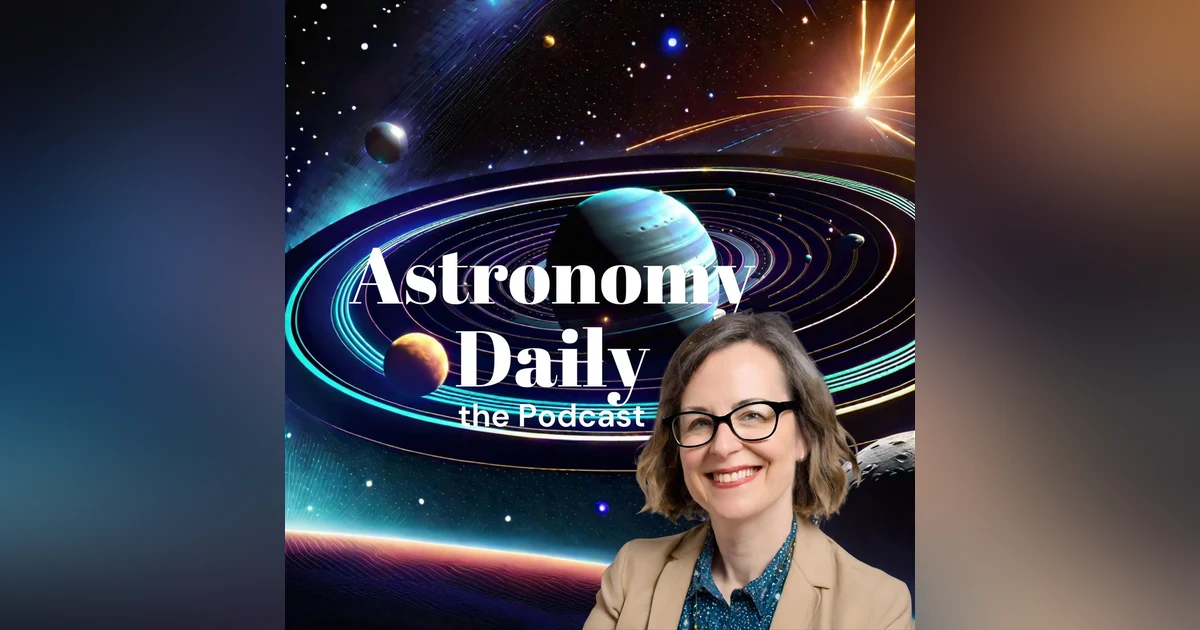
Astronomy Daily - The Podcast: S03E204
Welcome to Astronomy Daily, your go-to source for the latest in space and Astronomy news. I'm your host, Anna, and today we dive into an array of intriguing updates, from Uranus's mysterious magnetic field to...
Astronomy Daily - The Podcast: S03E204
Welcome to Astronomy Daily, your go-to source for the latest in space and Astronomy news. I'm your host, Anna, and today we dive into an array of intriguing updates, from Uranus's mysterious magnetic field to groundbreaking space missions and celestial phenomena.
Highlights:
- Uranus's Magnetic Field Revelation: Delve into the recent discovery that reshapes our understanding of Uranus’s magnetic field. Discover how a rare solar wind event during Voyager 2’s 1986 flyby compressed the planet's magnetosphere, altering our perceptions and suggesting that its moons, Titania and Oberon, may be more shielded than previously thought.
- Fast Radio Bursts Origin Unveiled: Explore the breakthrough in identifying the origins of fast radio bursts (FRBs), with new research linking these phenomena to magnetars in large active galaxies. Understand the role of binary star systems and heavy elements in the formation of these cosmic occurrences.
- SpaceX's Launch Marathon: Get ready for a week packed with SpaceX launches, including multiple Starlink missions and the Optus X satellite. Learn about China's significant launches, including a resupply mission to the Tiangong Space Station.
- Solar Polar Vortices Discovery: Discover the potential existence of polar vortices on the Sun, controlled by magnetic fields rather than atmospheric conditions. This research could revolutionize our understanding of solar behavior and aid in space weather forecasting.
- Gravitational Waves from White Dwarfs: Learn about the unexpected prediction that the upcoming LISA mission could detect gravitational waves from white dwarfs, providing a new way to study stellar evolution in distant galaxies.
- Congressional Hearing on UAPs: Tune into the upcoming congressional hearing examining UAP research programs, aiming for greater transparency on these phenomena. Hear from expert witnesses, including Luis Elizondo and Tim Gallaudet.
For more cosmic updates, visit our website at astronomydaily.io. Sign up for our free Daily newsletter to stay informed on all things space. Join our community on social media by searching for #AstroDailyPod on Facebook, X, YouTubeMusic, Tumblr, and TikTok. Share your thoughts and connect with fellow space enthusiasts.
Thank you for tuning in. This is Anna signing off. Until next time, keep looking up and stay curious about the wonders of our universe.
Sponsor Links:
NordVPN - www.bitesz.com/nordvpn - Secure your internet browsing with up to 74% off!
Old Glory - www.bitesz.com/oldglory - Now with official NASA Merch!
Become a supporter of this podcast: https://www.spreaker.com/podcast/astronomy-daily-the-podcast--5648921/support.
Welcome to Astronomy Daily, your go-to source for the latest in space and Astronomy news. I'm your host, Anna, and today we dive into an array of intriguing updates, from Uranus's mysterious magnetic field to groundbreaking space missions and celestial phenomena.
Highlights:
- Uranus's Magnetic Field Revelation: Delve into the recent discovery that reshapes our understanding of Uranus’s magnetic field. Discover how a rare solar wind event during Voyager 2’s 1986 flyby compressed the planet's magnetosphere, altering our perceptions and suggesting that its moons, Titania and Oberon, may be more shielded than previously thought.
- Fast Radio Bursts Origin Unveiled: Explore the breakthrough in identifying the origins of fast radio bursts (FRBs), with new research linking these phenomena to magnetars in large active galaxies. Understand the role of binary star systems and heavy elements in the formation of these cosmic occurrences.
- SpaceX's Launch Marathon: Get ready for a week packed with SpaceX launches, including multiple Starlink missions and the Optus X satellite. Learn about China's significant launches, including a resupply mission to the Tiangong Space Station.
- Solar Polar Vortices Discovery: Discover the potential existence of polar vortices on the Sun, controlled by magnetic fields rather than atmospheric conditions. This research could revolutionize our understanding of solar behavior and aid in space weather forecasting.
- Gravitational Waves from White Dwarfs: Learn about the unexpected prediction that the upcoming LISA mission could detect gravitational waves from white dwarfs, providing a new way to study stellar evolution in distant galaxies.
- Congressional Hearing on UAPs: Tune into the upcoming congressional hearing examining UAP research programs, aiming for greater transparency on these phenomena. Hear from expert witnesses, including Luis Elizondo and Tim Gallaudet.
For more cosmic updates, visit our website at astronomydaily.io. Sign up for our free Daily newsletter to stay informed on all things space. Join our community on social media by searching for #AstroDailyPod on Facebook, X, YouTubeMusic, Tumblr, and TikTok. Share your thoughts and connect with fellow space enthusiasts.
Thank you for tuning in. This is Anna signing off. Until next time, keep looking up and stay curious about the wonders of our universe.
Sponsor Links:
NordVPN - www.bitesz.com/nordvpn - Secure your internet browsing with up to 74% off!
Old Glory - www.bitesz.com/oldglory - Now with official NASA Merch!
Become a supporter of this podcast: https://www.spreaker.com/podcast/astronomy-daily-the-podcast--5648921/support.
WEBVTT
1
00:00:00.160 --> 00:00:03.240
Welcome to Astronomy Daily, your source for the latest space
2
00:00:03.240 --> 00:00:06.320
in astronomy news. I'm Anna, and today we've got a
3
00:00:06.360 --> 00:00:10.480
fascinating lineup of stories, from new discoveries about Urinus's magnetic
4
00:00:10.480 --> 00:00:16.440
field to upcoming space missions and celestial phenomena. Scientists have
5
00:00:16.600 --> 00:00:20.079
just revealed a fascinating discovery about Urinus that's forcing us
6
00:00:20.160 --> 00:00:23.280
to rethink what we thought we knew about this mysterious
7
00:00:23.320 --> 00:00:26.719
ice giant. It turns out that much of our understanding
8
00:00:26.800 --> 00:00:30.320
of the planet's magnetic field has been based on observations
9
00:00:30.320 --> 00:00:34.759
made during some rather unusual circumstances. Back in nineteen eighty six,
10
00:00:35.200 --> 00:00:39.159
when NASA's Voyager two spacecraft conducted its historic fly by
11
00:00:39.159 --> 00:00:42.399
of Uranus, it encountered the planet during what we now
12
00:00:42.479 --> 00:00:46.200
know was an intense solar wind event. This timing couldn't
13
00:00:46.200 --> 00:00:49.399
have been more unfortunate from a scientific perspective, as the
14
00:00:49.399 --> 00:00:52.799
solar wind, that stream of charged particles flowing from the
15
00:00:52.840 --> 00:00:56.960
Sun had actually compressed Uranus's magnetic field to just one
16
00:00:57.000 --> 00:01:00.920
fifth of its normal size. According to new research published
17
00:01:00.920 --> 00:01:04.719
in Nature Astronomy, these conditions only occur about four percent
18
00:01:04.799 --> 00:01:07.799
of the time. If Voyager two had arrived just a
19
00:01:07.799 --> 00:01:10.799
week earlier, we would have seen a completely different picture
20
00:01:10.840 --> 00:01:15.480
of Uranus's magnetosphere, the protective magnetic bubble surrounding the planet.
21
00:01:16.359 --> 00:01:20.719
This discovery has significant implications for our understanding of Uranus's moons,
22
00:01:21.040 --> 00:01:26.560
particularly Titania and Oberon. Previously, scientists thought these moons often
23
00:01:26.640 --> 00:01:30.920
orbited outside the planet's protective magnetosphere. Now it appears they
24
00:01:30.959 --> 00:01:34.120
typically remain within this magnetic shield, which could make it
25
00:01:34.200 --> 00:01:38.239
easier for researchers to detect potential subsurface oceans on these moons.
26
00:01:39.200 --> 00:01:43.120
The findings also suggest that Uranus's magnetosphere is actually quite
27
00:01:43.120 --> 00:01:46.959
similar to those of our other giant planets, Jupiter, Saturn,
28
00:01:47.200 --> 00:01:51.480
and Neptune. This revelation helps paint a more coherent picture
29
00:01:51.560 --> 00:01:54.560
of how magnetic fields work in the Outer Solar System.
30
00:01:55.280 --> 00:01:59.359
Scientists are now emphasizing the crucial need for a dedicated
31
00:01:59.400 --> 00:02:04.000
mission to Euarenus to better understand not only its magnetic field,
32
00:02:04.400 --> 00:02:09.159
but also its atmosphere, rings, and fascinating collection of moons.
33
00:02:09.919 --> 00:02:12.199
Such a mission would help us fill in the many
34
00:02:12.240 --> 00:02:16.879
remaining gaps in our knowledge about this distant ice giant. Next,
35
00:02:16.960 --> 00:02:20.520
another mystery moves closer to a solution in a breakthrough discovery.
36
00:02:20.599 --> 00:02:24.080
Astronomers have made significant progress in solving one of space's
37
00:02:24.120 --> 00:02:29.159
most intriguing mysteries, the origin of fast radio bursts or FRBs.
38
00:02:30.000 --> 00:02:33.439
These incredibly energetic pulses of radio frequency light have been
39
00:02:33.439 --> 00:02:36.919
puzzling scientists since their first detection in two thousand and seven,
40
00:02:37.439 --> 00:02:41.159
but now we're getting closer to understanding their source. New
41
00:02:41.199 --> 00:02:44.319
research published in Nature reveals that these cosmic phenomena are
42
00:02:44.319 --> 00:02:47.560
more likely to occur in large, active galaxies rather than
43
00:02:47.599 --> 00:02:50.919
smaller ones. The study utilized data from the Owens Valley
44
00:02:51.000 --> 00:02:56.400
Radio Observatory, where scientists detected and analyzed seventy FRBs, successfully
45
00:02:56.400 --> 00:03:00.199
tracking down their host galaxies. What makes this discover very
46
00:03:00.240 --> 00:03:05.120
particularly interesting is the connection to magnetars, highly magnetized neutron
47
00:03:05.199 --> 00:03:08.879
stars that rank among the most extreme objects in the universe.
48
00:03:09.360 --> 00:03:12.639
The research suggests that these powerful cosmic engines are likely
49
00:03:12.680 --> 00:03:17.120
responsible for generating these intense radiobursts. The findings also tell
50
00:03:17.199 --> 00:03:20.280
us something fascinating about the environments where these events occur.
51
00:03:21.039 --> 00:03:24.280
These larger galaxies tend to be rich in heavy elements,
52
00:03:24.560 --> 00:03:28.400
which astronomers refer to as metals. This abundance of heavy
53
00:03:28.439 --> 00:03:32.319
elements might be crucial for magnet or formation, possibly through
54
00:03:32.360 --> 00:03:37.360
complex processes involving binary star systems. This connection to binary
55
00:03:37.400 --> 00:03:40.280
stars is particularly intriguing because we know that eighty four
56
00:03:40.360 --> 00:03:43.560
percent of all massive stars exist in these paired systems.
57
00:03:44.400 --> 00:03:47.520
When these stars merge, they can create even more massive
58
00:03:47.560 --> 00:03:50.520
stars with stronger magnetic fields than either of the original
59
00:03:50.560 --> 00:03:54.280
stars would have had individually. This research not only helps
60
00:03:54.360 --> 00:03:57.840
us understand where FRBs come from, but also provides valuable
61
00:03:57.840 --> 00:04:01.439
insights into how magnetars form and evolve. It's another piece
62
00:04:01.439 --> 00:04:04.840
of the cosmic puzzle falling into place, helping us better
63
00:04:04.919 --> 00:04:08.280
understand the life cycles of stars and the extreme physics
64
00:04:08.280 --> 00:04:11.520
at play in our universe. The team plans to continue
65
00:04:11.560 --> 00:04:15.199
their search using an even larger array planned for construction
66
00:04:15.319 --> 00:04:18.759
in Nevada, which should help us discover even more FRBs
67
00:04:18.800 --> 00:04:22.560
and their host galaxies by twenty twenty eight, potentially revealing
68
00:04:22.600 --> 00:04:28.040
even more secrets about these mysterious cosmic phenomena. Get ready
69
00:04:28.040 --> 00:04:31.879
for an absolutely packed week of space launches. SpaceX is
70
00:04:31.959 --> 00:04:34.959
leading the charge with an impressive lineup of missions. They've
71
00:04:35.000 --> 00:04:37.759
already kicked things off with two launches on Monday, the
72
00:04:37.839 --> 00:04:41.319
Korea Sat six, a communications satellite from Kennedy Space Center
73
00:04:41.800 --> 00:04:45.639
and a Starlink mission carrying twenty four satellites just hours later.
74
00:04:46.319 --> 00:04:50.680
But that's just the beginning. SpaceX has three more Starlink
75
00:04:50.720 --> 00:04:54.639
missions planned this week alone, launching from both coasts. From
76
00:04:54.680 --> 00:04:58.680
California's Vandenburg Base, they're preparing to send up twenty Starlink satellites,
77
00:04:59.120 --> 00:05:04.040
including thirteen specialized direct to sell satellites. Meanwhile, over in Florida,
78
00:05:04.160 --> 00:05:06.720
two more batches of their next generation V two mini
79
00:05:06.759 --> 00:05:09.839
satellites are getting ready for launch. The company is also
80
00:05:09.879 --> 00:05:13.759
preparing for another major commercial mission, the Optus X satellite,
81
00:05:13.839 --> 00:05:18.519
heading to geostationary orbit. This Australian communications satellite launch is
82
00:05:18.560 --> 00:05:22.120
scheduled for Sunday from Kennedy Space Center, marking SpaceX's seventh
83
00:05:22.160 --> 00:05:25.439
launch attempt of just this week. Over in China, space
84
00:05:25.439 --> 00:05:28.160
activities are ramping up as well. They're preparing for two
85
00:05:28.240 --> 00:05:31.839
significant launches. The first is a mysterious payload heading up
86
00:05:31.879 --> 00:05:34.279
on a long March four sea rocket from their Taiyuan
87
00:05:34.360 --> 00:05:37.560
launch center. But perhaps more notably, they're getting ready to
88
00:05:37.639 --> 00:05:41.759
send the Tianzo eight cargo spacecraft to their Tiangong Space station.
89
00:05:42.360 --> 00:05:45.759
This critical resupply mission will launch on a long march
90
00:05:45.959 --> 00:05:50.439
seventh rocket from Wenchung, delivering essential supplies to the crew
91
00:05:50.639 --> 00:05:53.959
currently aboard the station. If all these launches go according
92
00:05:53.959 --> 00:05:58.000
to plan, we're looking at potentially eight successful orbital missions
93
00:05:58.000 --> 00:06:02.279
in just seven days, a remarkable demonstration of how routine
94
00:06:02.319 --> 00:06:06.360
space access has become in our modern era. Next up,
95
00:06:06.399 --> 00:06:08.759
some new research into a star that's very dear to us.
96
00:06:09.279 --> 00:06:12.959
In fascinating new research from the National Center for Atmospheric Research,
97
00:06:13.279 --> 00:06:16.959
scientists have discovered that our Sun likely has polar vortices
98
00:06:17.279 --> 00:06:19.439
similar to those we see on Earth and other planets
99
00:06:19.480 --> 00:06:23.040
in our Solar system. But there's a crucial difference. While
100
00:06:23.079 --> 00:06:27.040
Earth's vortices are shaped by atmospheric conditions, the suns are
101
00:06:27.040 --> 00:06:31.399
controlled by powerful magnetic fields. These solar vortices appear to
102
00:06:31.439 --> 00:06:34.800
form in a tight ring around fifty five degrees latitude,
103
00:06:35.120 --> 00:06:40.399
comparable to Earth's Arctic circle. What's particularly interesting is how
104
00:06:40.399 --> 00:06:44.399
they behave throughout the Sun's cycle. The vortices move toward
105
00:06:44.480 --> 00:06:48.920
the poles in a continuously tightening ring, occasionally breaking off
106
00:06:48.959 --> 00:06:53.079
smaller vortices as they go. Eventually, they settle into just
107
00:06:53.160 --> 00:06:57.240
two vortices at the poles before disappearing completely. During solar maximum.
108
00:06:58.240 --> 00:07:01.199
The strength of the solar cycle appears to directly influence
109
00:07:01.240 --> 00:07:04.759
how these vortices form and move. This discovery could be
110
00:07:04.759 --> 00:07:08.560
revolutionary for our understanding of solar behavior. But there's a catch.
111
00:07:09.199 --> 00:07:12.720
We've never actually observed these vortices directly. All of our
112
00:07:12.759 --> 00:07:16.279
current knowledge comes from computer simulations, as we've never sent
113
00:07:16.319 --> 00:07:19.959
a mission capable of viewing the Sun's polls. This research
114
00:07:20.040 --> 00:07:24.560
could have significant practical applications, particularly for space weather forecasting.
115
00:07:25.199 --> 00:07:28.399
Understanding these polar vortices and their relationship to the Sun's
116
00:07:28.480 --> 00:07:32.040
magnetic field might help us better predict solar events that
117
00:07:32.079 --> 00:07:34.720
can impact our satellites and power grids here on Earth.
118
00:07:35.360 --> 00:07:38.240
The findings are also timely as they could help guide
119
00:07:38.240 --> 00:07:42.519
future solar missions. The research suggests that these vortices should
120
00:07:42.519 --> 00:07:45.920
be observable during most parts of the solar cycle, except
121
00:07:45.959 --> 00:07:49.720
during solar maximum. This information could be crucial for planning
122
00:07:49.800 --> 00:07:53.399
when to launch future polar observation missions to ensure we
123
00:07:53.439 --> 00:07:58.079
get the most valuable data possible. In an unexpected twist
124
00:07:58.120 --> 00:08:02.199
for space researchtudents at niche Megan University have made a
125
00:08:02.240 --> 00:08:06.399
remarkable prediction about the European Space Agency's upcoming LISA mission.
126
00:08:07.000 --> 00:08:10.199
Their models suggest that when this space based gravitational wave
127
00:08:10.199 --> 00:08:13.319
detector launches in the mid twenty thirties, it might pick
128
00:08:13.360 --> 00:08:17.279
up something surprising, gravitational waves from white dwarf stars that
129
00:08:17.319 --> 00:08:21.040
are actually stronger than those from black holes. This finding
130
00:08:21.079 --> 00:08:24.199
has caught many astronomers off guard, as the original mission
131
00:08:24.199 --> 00:08:28.120
planning hadn't fully accounted for this potential noise from white dwarfs.
132
00:08:28.680 --> 00:08:31.920
But what might initially seem like an obstacle could actually
133
00:08:31.920 --> 00:08:34.840
turn out to be a fascinating opportunity for new discoveries.
134
00:08:35.960 --> 00:08:38.559
What makes this particularly exciting is that it could give
135
00:08:38.639 --> 00:08:41.320
us a completely new way to study stellar evolution in
136
00:08:41.399 --> 00:08:45.120
distant galaxies. While our current telescopes can only observe white
137
00:08:45.159 --> 00:08:48.639
dwarfs within our own Milky Way, lisa's ability to detect
138
00:08:48.639 --> 00:08:51.679
gravitational waves could let us listen in on white dwarfs
139
00:08:51.679 --> 00:08:55.000
in other galaxies, effectively giving us a new window into
140
00:08:55.039 --> 00:08:58.840
the cosmic neighborhood. The research teams have found that while
141
00:08:58.879 --> 00:09:02.039
this white dwarf signal might be stronger than expected, it
142
00:09:02.039 --> 00:09:04.879
can be filtered out from the data. This means we
143
00:09:04.919 --> 00:09:08.639
won't lose any of lisa's ability to detect other fascinating phenomena,
144
00:09:09.039 --> 00:09:12.039
and we gain an additional tool for understanding these dense
145
00:09:12.159 --> 00:09:16.759
stellar remnants. This discovery really highlights how space research can
146
00:09:16.799 --> 00:09:20.759
surprise us even before its launch. LISA is already challenging
147
00:09:20.799 --> 00:09:24.080
our assumptions and promising to deliver not just what we're
148
00:09:24.080 --> 00:09:28.759
looking for, but potentially even more exciting discoveries we hadn't anticipated.
149
00:09:29.759 --> 00:09:33.320
It's a perfect example of how sometimes in astronomy, what
150
00:09:33.399 --> 00:09:37.600
we initially consider interference can actually lead us to new
151
00:09:37.639 --> 00:09:42.519
and valuable insights about our universe. Here's one for lovers
152
00:09:42.519 --> 00:09:46.320
of UAPs. In Washington, an important congressional hearing is set
153
00:09:46.360 --> 00:09:49.320
for this Wednesday that could shed new light on one
154
00:09:49.360 --> 00:09:53.159
of the most intriguing topics in aerospace. The House Committee
155
00:09:53.159 --> 00:09:56.799
on Oversight and Accountability will be conducting a hearing titled
156
00:09:57.320 --> 00:10:02.320
Unidentified Anomalist Phenomena Exposing the Truth, marking their second effort
157
00:10:02.320 --> 00:10:06.399
to examine secret UAP research programs conducted by the US government.
158
00:10:07.360 --> 00:10:11.240
Representatives Nancy Mace and Glenn Grothman are leading this joint hearing,
159
00:10:11.480 --> 00:10:14.919
arguing that Americans deserve greater transparency about what the government
160
00:10:15.039 --> 00:10:19.240
knows regarding these mysterious phenomena. The hearing will specifically focus
161
00:10:19.279 --> 00:10:23.279
on the Department of Defenses classification policies surrounding UAP and
162
00:10:23.360 --> 00:10:26.720
explore ways to make this information more accessible to the public.
163
00:10:27.759 --> 00:10:31.639
Among the expert witnesses scheduled to testify is Luis Elizondo,
164
00:10:32.080 --> 00:10:35.360
a former counter intelligence officer who has made some striking
165
00:10:35.440 --> 00:10:39.399
claims about government knowledge of UAPs. The witness panel will
166
00:10:39.440 --> 00:10:43.279
also include Tim Galladett, a retired Navy rear admiral concerned
167
00:10:43.279 --> 00:10:48.679
about underwater anomalies, journalist Michael Schellenberger, and Michael Gold, a
168
00:10:48.720 --> 00:10:52.679
former nasa Associate administrator who serves on NASA's independent UAP
169
00:10:52.840 --> 00:10:56.440
study team. It's worth noting that while there's growing interest
170
00:10:56.440 --> 00:11:00.559
in understanding these phenomena, NASA's recent independent study found no
171
00:11:00.679 --> 00:11:05.600
evidence of extraterrestrial origins for UAPs. As NASA Administrator Bill
172
00:11:05.639 --> 00:11:09.519
Nelson stated in September, while there's no proof of alien involvement,
173
00:11:10.039 --> 00:11:13.120
there's still much more to learn about these mysterious occurrences.
174
00:11:14.240 --> 00:11:18.279
The hearing represents another step in Congress's ongoing efforts to
175
00:11:18.440 --> 00:11:23.200
increase transparency around this topic, potentially offering new insights into
176
00:11:23.200 --> 00:11:27.840
these unexplained phenomena that have captured public attention and raised
177
00:11:27.879 --> 00:11:33.240
important questions about national security. Well, that brings us to
178
00:11:33.240 --> 00:11:36.399
the end of today's Astronomy Daily. I'm Anna, and I
179
00:11:36.440 --> 00:11:38.200
want to thank you for joining me on this journey
180
00:11:38.200 --> 00:11:42.039
through the latest developments in space and astronomy. Whether it's
181
00:11:42.120 --> 00:11:47.799
mysterious magnetic fields around Uranus, groundbreaking gravitational wave discoveries, or
182
00:11:47.840 --> 00:11:51.559
the ongoing quest to understand unexplained phenomena in our skies,
183
00:11:52.200 --> 00:11:55.960
there's always something fascinating happening in space science. If you'd
184
00:11:56.000 --> 00:11:58.519
like to stay connected with all things space, head over
185
00:11:58.559 --> 00:12:01.440
to Astronomy Daily dot I, where you can sign up
186
00:12:01.480 --> 00:12:03.759
for our free daily newsletter and keep up with our
187
00:12:03.799 --> 00:12:07.679
constantly updating news feed. While you're there, you'll find all
188
00:12:07.679 --> 00:12:11.559
our sponsor links, our complete archive of past episodes, and
189
00:12:11.600 --> 00:12:14.000
you can even leave us a message. And don't forget
190
00:12:14.000 --> 00:12:16.759
to join our space community on social media. You can
191
00:12:16.759 --> 00:12:20.440
find us as astro Daily Pod on Facebook, x YouTube,
192
00:12:20.519 --> 00:12:24.120
Tumblr and TikTok. Until next time, keep looking up and
193
00:12:24.200 --> 00:12:37.440
stay curious about the Cosmos Star Star
1
00:00:00.160 --> 00:00:03.240
2
00:00:03.240 --> 00:00:06.320
3
00:00:06.360 --> 00:00:10.480
4
00:00:10.480 --> 00:00:16.440
5
00:00:16.600 --> 00:00:20.079
6
00:00:20.160 --> 00:00:23.280
7
00:00:23.320 --> 00:00:26.719
8
00:00:26.800 --> 00:00:30.320
9
00:00:30.320 --> 00:00:34.759
10
00:00:35.200 --> 00:00:39.159
11
00:00:39.159 --> 00:00:42.399
12
00:00:42.479 --> 00:00:46.200
13
00:00:46.200 --> 00:00:49.399
14
00:00:49.399 --> 00:00:52.799
15
00:00:52.840 --> 00:00:56.960
16
00:00:57.000 --> 00:01:00.920
17
00:01:00.920 --> 00:01:04.719
18
00:01:04.799 --> 00:01:07.799
19
00:01:07.799 --> 00:01:10.799
20
00:01:10.840 --> 00:01:15.480
21
00:01:16.359 --> 00:01:20.719
22
00:01:21.040 --> 00:01:26.560
23
00:01:26.640 --> 00:01:30.920
24
00:01:30.959 --> 00:01:34.120
25
00:01:34.200 --> 00:01:38.239
26
00:01:39.200 --> 00:01:43.120
27
00:01:43.120 --> 00:01:46.959
28
00:01:47.200 --> 00:01:51.480
29
00:01:51.560 --> 00:01:54.560
30
00:01:55.280 --> 00:01:59.359
31
00:01:59.400 --> 00:02:04.000
32
00:02:04.400 --> 00:02:09.159
33
00:02:09.919 --> 00:02:12.199
34
00:02:12.240 --> 00:02:16.879
35
00:02:16.960 --> 00:02:20.520
36
00:02:20.599 --> 00:02:24.080
37
00:02:24.120 --> 00:02:29.159
38
00:02:30.000 --> 00:02:33.439
39
00:02:33.439 --> 00:02:36.919
40
00:02:37.439 --> 00:02:41.159
41
00:02:41.199 --> 00:02:44.319
42
00:02:44.319 --> 00:02:47.560
43
00:02:47.599 --> 00:02:50.919
44
00:02:51.000 --> 00:02:56.400
45
00:02:56.400 --> 00:03:00.199
46
00:03:00.240 --> 00:03:05.120
47
00:03:05.199 --> 00:03:08.879
48
00:03:09.360 --> 00:03:12.639
49
00:03:12.680 --> 00:03:17.120
50
00:03:17.199 --> 00:03:20.280
51
00:03:21.039 --> 00:03:24.280
52
00:03:24.560 --> 00:03:28.400
53
00:03:28.439 --> 00:03:32.319
54
00:03:32.360 --> 00:03:37.360
55
00:03:37.400 --> 00:03:40.280
56
00:03:40.360 --> 00:03:43.560
57
00:03:44.400 --> 00:03:47.520
58
00:03:47.560 --> 00:03:50.520
59
00:03:50.560 --> 00:03:54.280
60
00:03:54.360 --> 00:03:57.840
61
00:03:57.840 --> 00:04:01.439
62
00:04:01.439 --> 00:04:04.840
63
00:04:04.919 --> 00:04:08.280
64
00:04:08.280 --> 00:04:11.520
65
00:04:11.560 --> 00:04:15.199
66
00:04:15.319 --> 00:04:18.759
67
00:04:18.800 --> 00:04:22.560
68
00:04:22.600 --> 00:04:28.040
69
00:04:28.040 --> 00:04:31.879
70
00:04:31.959 --> 00:04:34.959
71
00:04:35.000 --> 00:04:37.759
72
00:04:37.839 --> 00:04:41.319
73
00:04:41.800 --> 00:04:45.639
74
00:04:46.319 --> 00:04:50.680
75
00:04:50.720 --> 00:04:54.639
76
00:04:54.680 --> 00:04:58.680
77
00:04:59.120 --> 00:05:04.040
78
00:05:04.160 --> 00:05:06.720
79
00:05:06.759 --> 00:05:09.839
80
00:05:09.879 --> 00:05:13.759
81
00:05:13.839 --> 00:05:18.519
82
00:05:18.560 --> 00:05:22.120
83
00:05:22.160 --> 00:05:25.439
84
00:05:25.439 --> 00:05:28.160
85
00:05:28.240 --> 00:05:31.839
86
00:05:31.879 --> 00:05:34.279
87
00:05:34.360 --> 00:05:37.560
88
00:05:37.639 --> 00:05:41.759
89
00:05:42.360 --> 00:05:45.759
90
00:05:45.959 --> 00:05:50.439
91
00:05:50.639 --> 00:05:53.959
92
00:05:53.959 --> 00:05:58.000
93
00:05:58.000 --> 00:06:02.279
94
00:06:02.319 --> 00:06:06.360
95
00:06:06.399 --> 00:06:08.759
96
00:06:09.279 --> 00:06:12.959
97
00:06:13.279 --> 00:06:16.959
98
00:06:17.279 --> 00:06:19.439
99
00:06:19.480 --> 00:06:23.040
100
00:06:23.079 --> 00:06:27.040
101
00:06:27.040 --> 00:06:31.399
102
00:06:31.439 --> 00:06:34.800
103
00:06:35.120 --> 00:06:40.399
104
00:06:40.399 --> 00:06:44.399
105
00:06:44.480 --> 00:06:48.920
106
00:06:48.959 --> 00:06:53.079
107
00:06:53.160 --> 00:06:57.240
108
00:06:58.240 --> 00:07:01.199
109
00:07:01.240 --> 00:07:04.759
110
00:07:04.759 --> 00:07:08.560
111
00:07:09.199 --> 00:07:12.720
112
00:07:12.759 --> 00:07:16.279
113
00:07:16.319 --> 00:07:19.959
114
00:07:20.040 --> 00:07:24.560
115
00:07:25.199 --> 00:07:28.399
116
00:07:28.480 --> 00:07:32.040
117
00:07:32.079 --> 00:07:34.720
118
00:07:35.360 --> 00:07:38.240
119
00:07:38.240 --> 00:07:42.519
120
00:07:42.519 --> 00:07:45.920
121
00:07:45.959 --> 00:07:49.720
122
00:07:49.800 --> 00:07:53.399
123
00:07:53.439 --> 00:07:58.079
124
00:07:58.120 --> 00:08:02.199
125
00:08:02.240 --> 00:08:06.399
126
00:08:07.000 --> 00:08:10.199
127
00:08:10.199 --> 00:08:13.319
128
00:08:13.360 --> 00:08:17.279
129
00:08:17.319 --> 00:08:21.040
130
00:08:21.079 --> 00:08:24.199
131
00:08:24.199 --> 00:08:28.120
132
00:08:28.680 --> 00:08:31.920
133
00:08:31.920 --> 00:08:34.840
134
00:08:35.960 --> 00:08:38.559
135
00:08:38.639 --> 00:08:41.320
136
00:08:41.399 --> 00:08:45.120
137
00:08:45.159 --> 00:08:48.639
138
00:08:48.639 --> 00:08:51.679
139
00:08:51.679 --> 00:08:55.000
140
00:08:55.039 --> 00:08:58.840
141
00:08:58.879 --> 00:09:02.039
142
00:09:02.039 --> 00:09:04.879
143
00:09:04.919 --> 00:09:08.639
144
00:09:09.039 --> 00:09:12.039
145
00:09:12.159 --> 00:09:16.759
146
00:09:16.799 --> 00:09:20.759
147
00:09:20.799 --> 00:09:24.080
148
00:09:24.080 --> 00:09:28.759
149
00:09:29.759 --> 00:09:33.320
150
00:09:33.399 --> 00:09:37.600
151
00:09:37.639 --> 00:09:42.519
152
00:09:42.519 --> 00:09:46.320
153
00:09:46.360 --> 00:09:49.320
154
00:09:49.360 --> 00:09:53.159
155
00:09:53.159 --> 00:09:56.799
156
00:09:57.320 --> 00:10:02.320
157
00:10:02.320 --> 00:10:06.399
158
00:10:07.360 --> 00:10:11.240
159
00:10:11.480 --> 00:10:14.919
160
00:10:15.039 --> 00:10:19.240
161
00:10:19.279 --> 00:10:23.279
162
00:10:23.360 --> 00:10:26.720
163
00:10:27.759 --> 00:10:31.639
164
00:10:32.080 --> 00:10:35.360
165
00:10:35.440 --> 00:10:39.399
166
00:10:39.440 --> 00:10:43.279
167
00:10:43.279 --> 00:10:48.679
168
00:10:48.720 --> 00:10:52.679
169
00:10:52.840 --> 00:10:56.440
170
00:10:56.440 --> 00:11:00.559
171
00:11:00.679 --> 00:11:05.600
172
00:11:05.639 --> 00:11:09.519
173
00:11:10.039 --> 00:11:13.120
174
00:11:14.240 --> 00:11:18.279
175
00:11:18.440 --> 00:11:23.200
176
00:11:23.200 --> 00:11:27.840
177
00:11:27.879 --> 00:11:33.240
178
00:11:33.240 --> 00:11:36.399
179
00:11:36.440 --> 00:11:38.200
180
00:11:38.200 --> 00:11:42.039
181
00:11:42.120 --> 00:11:47.799
182
00:11:47.840 --> 00:11:51.559
183
00:11:52.200 --> 00:11:55.960
184
00:11:56.000 --> 00:11:58.519
185
00:11:58.559 --> 00:12:01.440
186
00:12:01.480 --> 00:12:03.759
187
00:12:03.799 --> 00:12:07.679
188
00:12:07.679 --> 00:12:11.559
189
00:12:11.600 --> 00:12:14.000
190
00:12:14.000 --> 00:12:16.759
191
00:12:16.759 --> 00:12:20.440
192
00:12:20.519 --> 00:12:24.120
193
00:12:24.200 --> 00:12:37.440


