WEBVTT
1
00:00:00.200 --> 00:00:04.360
One more sleep after nine days in deep space, nine
2
00:00:04.440 --> 00:00:07.200
days that took humanity further from Earth than we have
3
00:00:07.400 --> 00:00:11.519
ever been. The Artemis two crew is coming home. Splashdown
4
00:00:11.640 --> 00:00:14.599
is tomorrow, and we have the full countdown.
5
00:00:14.439 --> 00:00:18.239
Plus the NASA scientists who literally screamed when the astronauts
6
00:00:18.239 --> 00:00:21.679
spotted something nobody expected to see on the Moon. We'll
7
00:00:21.679 --> 00:00:23.800
tell you what it was and why it matters so
8
00:00:23.920 --> 00:00:25.199
much for future missions.
9
00:00:25.719 --> 00:00:29.039
A brand new class of star has been discovered. Meet
10
00:00:29.120 --> 00:00:33.079
Gandolf and Moon sized, two cosmic oddballs that have just
11
00:00:33.240 --> 00:00:34.960
rewritten the stellar rule book.
12
00:00:35.399 --> 00:00:39.399
Mars still very much not welcoming visitors. We have the
13
00:00:39.439 --> 00:00:42.479
science to prove it, and four planets are lining up
14
00:00:42.479 --> 00:00:45.240
in the April sky for a rare celestial parade.
15
00:00:45.520 --> 00:00:49.320
And we close with the most relatable space story in years.
16
00:00:49.719 --> 00:00:53.479
What happens when four astronauts take their iPhones a quarter
17
00:00:53.560 --> 00:00:55.479
of a million miles from Earth.
18
00:00:55.679 --> 00:00:58.399
Boiler The photos are extraordinary.
19
00:00:58.759 --> 00:01:03.560
Hello, and welcome to Astronomy Daily, Season five, Episode eighty five.
20
00:01:03.920 --> 00:01:07.200
I'm Anna and I'm Avery. It is Thursday, the ninth
21
00:01:07.200 --> 00:01:10.319
of April twenty twenty six, and we are broadcasting from
22
00:01:10.319 --> 00:01:14.719
Astronomy Daily dot io on the BYTES dot com podcast network.
23
00:01:15.079 --> 00:01:17.879
It has been a big week in space, and it
24
00:01:17.959 --> 00:01:19.640
is about to get even bigger.
25
00:01:20.000 --> 00:01:20.400
Let's go.
26
00:01:20.760 --> 00:01:21.280
I'm ready.
27
00:01:21.519 --> 00:01:24.359
It is day nine of the Artemis two mission, and
28
00:01:24.519 --> 00:01:29.159
right now the Orion spacecraft, call sign Integrity, is hurtling
29
00:01:29.239 --> 00:01:33.319
back toward Earth at extraordinary speed. Tomorrow evening, it will
30
00:01:33.359 --> 00:01:36.159
splash down in the Pacific Ocean off the coast of
31
00:01:36.239 --> 00:01:39.480
San Diego, and when it does, four astronauts will have
32
00:01:39.560 --> 00:01:44.599
completed the most significant human spaceflight since the Apollo program.
33
00:01:44.680 --> 00:01:47.799
The splashdown is scheduled for around eight pm Eastern time,
34
00:01:47.920 --> 00:01:50.680
that's Friday morning for US here in Australia and New Zealand,
35
00:01:51.079 --> 00:01:54.200
and NASA says the weather window is looking favorable. The
36
00:01:54.359 --> 00:01:58.280
USS John P. Murtha, the naval recovery vessel, is already
37
00:01:58.280 --> 00:02:01.319
on station in the Pacific with hell copters and divers
38
00:02:01.400 --> 00:02:03.599
ready to retrieve the crew and avery.
39
00:02:03.799 --> 00:02:06.920
Before any of that can happen, there's a critical sequence
40
00:02:06.959 --> 00:02:10.639
of events. The crew module, the part that carries the astronauts,
41
00:02:10.800 --> 00:02:14.439
has to separate from the service module. Then it plunges
42
00:02:14.479 --> 00:02:17.840
into the atmosphere at around twenty five thousand miles an hour.
43
00:02:18.240 --> 00:02:21.360
There'll be a blackout period of several minutes when mission
44
00:02:21.439 --> 00:02:25.360
control loses all contact as the plasma sheath forms around
45
00:02:25.360 --> 00:02:26.360
the capsule.
46
00:02:26.319 --> 00:02:29.479
And then parachutes. First, the drogue choots to slow them
47
00:02:29.520 --> 00:02:33.240
down dramatically, then the main parachutes and orion drops to
48
00:02:33.319 --> 00:02:36.599
about seventeen miles per hour for a soft ocean landing
49
00:02:37.120 --> 00:02:40.639
after nine days and nearly seven hundred thousand miles of travel.
50
00:02:41.039 --> 00:02:43.599
Now the heat shield. This is the thing that has
51
00:02:43.639 --> 00:02:47.759
been quietly keeping engineers awake at night. After the uncrewed
52
00:02:47.879 --> 00:02:51.280
Artemis one mission, inspectors found that chunks of the heat
53
00:02:51.280 --> 00:02:55.840
shield had sheared away unevenly during reentry. NASA and Lockheed
54
00:02:55.840 --> 00:03:00.199
Martin spent four years investigating and redesigning it. Both say
55
00:03:00.199 --> 00:03:03.960
they are highly confident it will perform perfectly tomorrow, but
56
00:03:04.240 --> 00:03:06.120
it will be the real world test.
57
00:03:06.639 --> 00:03:09.560
Once safely aboard the MIRTHA, the crew will undergo medical
58
00:03:09.599 --> 00:03:13.800
evaluations before flying to Johnson's Space Center in Houston. Commander
59
00:03:13.879 --> 00:03:18.560
Red Wiseman, pilot Victor Glover, mission specialist Christina Kock, and
60
00:03:18.719 --> 00:03:21.919
Canadian Space Agency astronaut Jeremy Hanson.
61
00:03:22.120 --> 00:03:25.759
History makers, every single one of them. Victor Glover, the
62
00:03:25.800 --> 00:03:29.319
first person of color to travel to the Moon, Christina Cock,
63
00:03:29.520 --> 00:03:32.879
the first woman, Jeremy Hanson the first person from a
64
00:03:32.919 --> 00:03:36.199
country other than the United States to reach lunar distance.
65
00:03:36.639 --> 00:03:39.560
And when they get home, President Trump has apparently already
66
00:03:39.560 --> 00:03:42.280
promised them a White House visit. I'd say they've earned it.
67
00:03:42.560 --> 00:03:46.599
We'll, of course have the full splashdown coverage intomorrow's episode
68
00:03:46.639 --> 00:03:49.240
of Astronomy Daily. Set those alarms.
69
00:03:49.639 --> 00:03:51.919
Now, while all the drama of the homeward journey has
70
00:03:51.960 --> 00:03:55.000
been unfolding, the science team at Johnson Space Center has
71
00:03:55.039 --> 00:03:58.159
been going absolutely wild over what the crew observed during
72
00:03:58.159 --> 00:03:59.599
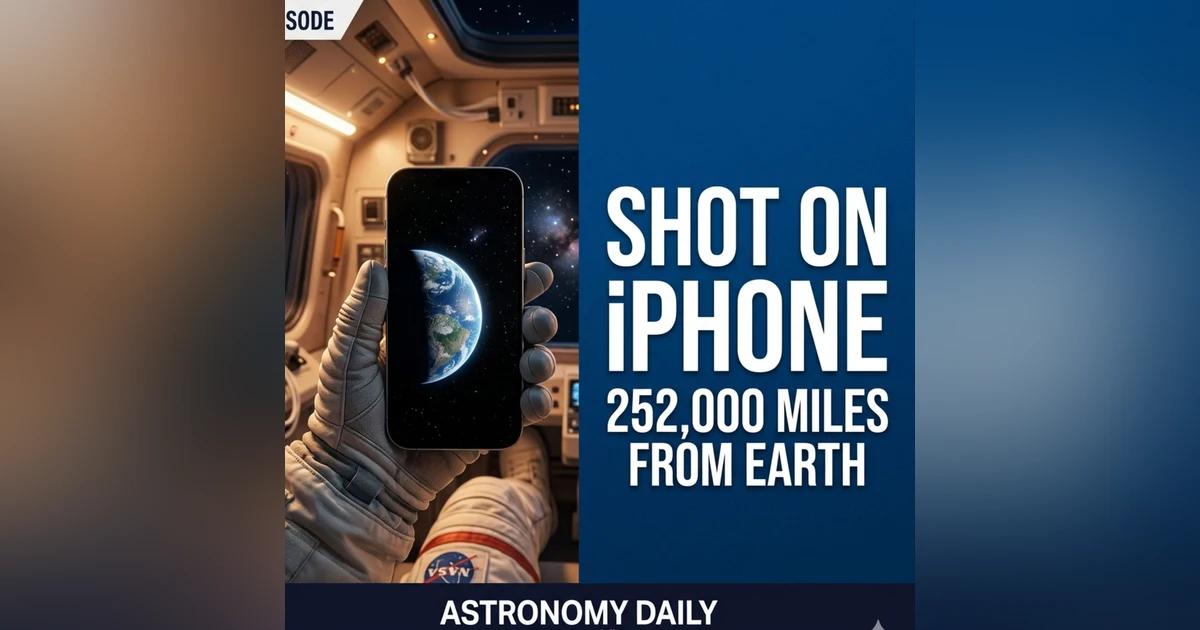
the lunar flyby on Monday.
73
00:04:00.039 --> 00:04:04.520
And I do mean wild avery NASA's lunar science lead
74
00:04:04.680 --> 00:04:08.159
Kelsey Young described, and this is a direct quote from
75
00:04:08.199 --> 00:04:12.280
the press conference, audible screams of delight in the science
76
00:04:12.319 --> 00:04:13.319
evaluation room.
77
00:04:13.759 --> 00:04:15.080
What were they screaming about?
78
00:04:15.680 --> 00:04:20.399
Micro meteorite impact flashes. During the solar eclipse phase of
79
00:04:20.439 --> 00:04:23.639
the flyby, when the Moon blocked the Sun and Orion
80
00:04:23.800 --> 00:04:27.319
was in darkness, the crew spotted between four and six
81
00:04:27.560 --> 00:04:31.920
distinct flashes of light on the lunar surface, brief, colorless
82
00:04:31.959 --> 00:04:36.319
pinpricks of light lasting just milliseconds. Each one was a
83
00:04:36.399 --> 00:04:41.199
tiny rock traveling thousands of miles per hour slamming into
84
00:04:41.199 --> 00:04:41.560
the Moon.
85
00:04:42.079 --> 00:04:44.759
Now. Scientists had hoped the crew might see one or
86
00:04:44.759 --> 00:04:48.399
two of these. Apollo astronauts reported a handful across all
87
00:04:48.439 --> 00:04:52.920
the missions, but to see multiple flashes so quickly, so clearly,
88
00:04:53.480 --> 00:04:55.319
they genuinely weren't expecting it.
89
00:04:55.759 --> 00:04:59.759
Commander Wiseman described it beautifully in the post flyby debrief.
90
00:05:00.160 --> 00:05:02.920
He said they had five minutes of what he called
91
00:05:03.319 --> 00:05:07.720
human emotional reaction just staring at the darkened Moon during
92
00:05:07.759 --> 00:05:11.120
the eclipse, and then the impacts started showing up.
93
00:05:11.600 --> 00:05:15.600
And why does this matter? Scientifically? Because knowing the frequency
94
00:05:15.639 --> 00:05:20.160
and location of micro meteorite impacts is critical engineering data.
95
00:05:20.600 --> 00:05:23.399
When future Artemis crews are living and working on the
96
00:05:23.480 --> 00:05:28.600
lunar surface, building habitats, doing spacewalks, those tiny rocks are
97
00:05:28.680 --> 00:05:31.279
going to be falling on their heads and their equipment.
98
00:05:31.839 --> 00:05:35.920
Every data point about impact rates helps engineers design better protection.
99
00:05:36.600 --> 00:05:40.240
The Lunar Reconnaissance Orbitter team is right now using the
100
00:05:40.319 --> 00:05:44.279
crew's sketches and timing notes to hunt for fresh craters
101
00:05:44.319 --> 00:05:47.959
from those specific impacts. They may actually be able to
102
00:05:48.000 --> 00:05:49.680
see the new craters from orbit.
103
00:05:50.199 --> 00:05:52.839
And there's a beautiful human moment buried in all of
104
00:05:52.839 --> 00:05:55.920
this too. During the flyby, the crew proposed names for
105
00:05:56.040 --> 00:06:00.560
two previously unnamed craters on the lunar far side, suggested
106
00:06:00.680 --> 00:06:05.079
Integrity after their spacecraft, and Carol, in honor of Commander
107
00:06:05.120 --> 00:06:08.519
Wiseman's late wife. Those names have been submitted to the
108
00:06:08.560 --> 00:06:11.959
International Astronomical Union for official consideration.
109
00:06:12.560 --> 00:06:15.120
That stopped me in my tracks when I read it,
110
00:06:15.639 --> 00:06:18.600
History made names written into the Moon.
111
00:06:19.240 --> 00:06:22.279
Moving now to a story that has absolutely nothing to
112
00:06:22.319 --> 00:06:25.360
do with Artemis but is just as extraordinary in its
113
00:06:25.360 --> 00:06:29.680
own way. Astronomers have just identified a brand new class
114
00:06:29.720 --> 00:06:34.360
of stellar objects, and they've named them gandolf and moon sized.
115
00:06:34.839 --> 00:06:37.160
I'm immediately interested.
116
00:06:37.040 --> 00:06:40.639
As you should be so context. When a starlike our
117
00:06:40.680 --> 00:06:44.040
Sun runs out of fuel, it eventually collapses into what's
118
00:06:44.079 --> 00:06:48.480
called a white dwarf, an incredibly dense Earth sized remnant.
119
00:06:48.879 --> 00:06:51.920
These are common, we know them well. But when two
120
00:06:51.959 --> 00:06:55.560
white dwarfs in a binary system collide and merge, the
121
00:06:55.600 --> 00:07:03.360
resulting object can be strange, define strength, ultramassive, highly magnetic,
122
00:07:03.879 --> 00:07:08.319
rapidly rotating. And this is the weird part, emitting X
123
00:07:08.399 --> 00:07:12.639
rays even though they're completely alone, no companion star, no
124
00:07:12.800 --> 00:07:16.639
material being pulled in from somewhere else, just X rays
125
00:07:16.800 --> 00:07:18.680
from a solo stellar remnant.
126
00:07:19.279 --> 00:07:22.959
Normally, X ray emissions from white dwarfs come from accretion
127
00:07:23.480 --> 00:07:27.000
one star stealing material from another, so to see it
128
00:07:27.079 --> 00:07:30.160
happening in isolation is genuinely new.
129
00:07:30.519 --> 00:07:34.600
Exactly, and researchers at the Institute of Science and Technology
130
00:07:34.680 --> 00:07:39.040
Austria ISTA have now confirmed two of these objects share
131
00:07:39.160 --> 00:07:46.920
five distinct characteristics ultramassive, highly magnetic, rapidly rotating, companionless, and
132
00:07:47.600 --> 00:07:51.240
X ray emitting. Two is enough to define a class.
133
00:07:51.360 --> 00:07:54.160
And one of them is surrounded by a half ring
134
00:07:54.279 --> 00:07:58.639
of ionized gas trapped in its own asymmetrical magnetic field.
135
00:07:59.079 --> 00:08:02.680
Hydrogen emission spectra that looked like and I love this
136
00:08:02.800 --> 00:08:05.720
description cat ears cat ears.
137
00:08:06.040 --> 00:08:09.879
The spectral signature kept switching between two peaks in sync
138
00:08:09.920 --> 00:08:13.439
with the objects six minute rotation period, something no one
139
00:08:13.480 --> 00:08:16.079
had ever seen in a white dwarf before, which is
140
00:08:16.079 --> 00:08:19.079
why they named it after the Tolkien character who famously
141
00:08:19.160 --> 00:08:20.040
speaks in riddles.
142
00:08:20.560 --> 00:08:23.040
Gandolf, who likes to speak in riddles.
143
00:08:23.279 --> 00:08:27.439
That is perfect and moon size is its companion in
144
00:08:27.480 --> 00:08:30.759
this new class, a white dwarf so dense that a
145
00:08:30.800 --> 00:08:34.320
mass equivalent to our entire sun is compressed into something
146
00:08:34.480 --> 00:08:35.840
roughly the size of the moon.
147
00:08:36.559 --> 00:08:38.320
I need a moment to process that.
148
00:08:38.919 --> 00:08:41.120
Take your time. The universe will wait.
149
00:08:42.000 --> 00:08:44.639
So what does it all mean? Are there more of
150
00:08:44.639 --> 00:08:45.320
these out there?
151
00:08:45.840 --> 00:08:49.720
Almost certainly? The researchers say, finding two objects with five
152
00:08:49.759 --> 00:08:54.159
overlapping features is and I'm paraphrasing here, more than enough
153
00:08:54.159 --> 00:08:57.039
to start a search. The hunt for more gandolfs and
154
00:08:57.120 --> 00:08:59.480
moon sizes is on down to.
155
00:08:59.440 --> 00:09:01.879
The red place in it and a story that offers
156
00:09:01.919 --> 00:09:05.240
a rather sobering perspective on humanity's ambitions there.
157
00:09:05.919 --> 00:09:09.399
New research published this week suggests that Mars's surface was
158
00:09:09.519 --> 00:09:12.919
never really a viable candidate for life, not just now,
159
00:09:13.000 --> 00:09:16.559
but potentially at any point in its history. Scientists at
160
00:09:16.639 --> 00:09:19.639
Universe Today have been covering a study that consolidates a
161
00:09:19.679 --> 00:09:24.600
growing body of evidence radiation bombardment, toxic perclorates in the soil,
162
00:09:25.080 --> 00:09:27.960
and the near total absence of a protective atmosphere.
163
00:09:28.519 --> 00:09:31.440
We've known for a long time that Mars is hostile now.
164
00:09:31.840 --> 00:09:34.240
The question has always been whether there was a window
165
00:09:34.480 --> 00:09:37.399
billions of years ago when Mars had liquid water in
166
00:09:37.440 --> 00:09:40.480
a thicker atmosphere, when life could have gained a foothold.
167
00:09:41.000 --> 00:09:44.080
And the emerging picture is that even then, the surface
168
00:09:44.159 --> 00:09:47.360
may have been too brutal. The radiation levels alone, without
169
00:09:47.360 --> 00:09:50.159
a magnetic field to the flex soolar particles, would have
170
00:09:50.200 --> 00:09:54.320
been devastating to any surface biology. Whatever life Mars may
171
00:09:54.360 --> 00:09:57.480
have had, if any, would have needed to be underground
172
00:09:57.559 --> 00:09:59.240
almost immediately.
173
00:09:58.919 --> 00:10:03.720
Which actually may missions like Artemis even more striking. By contrast,
174
00:10:04.159 --> 00:10:08.480
Earth got it right. We're here, we evolved, We survived
175
00:10:08.559 --> 00:10:12.720
long enough to send four people around the Moon on iPhones.
176
00:10:13.360 --> 00:10:15.120
Mars just didn't make it.
177
00:10:15.440 --> 00:10:19.159
The subsurface is still the focus of active scientific interest.
178
00:10:19.440 --> 00:10:22.279
There may be liquid water deep below the Martian crust,
179
00:10:22.799 --> 00:10:26.240
there may be microbial life sheltering from the surface hellscape,
180
00:10:26.480 --> 00:10:30.080
But the romantic notion of ancient surface life basking under
181
00:10:30.080 --> 00:10:34.000
a warm Martian sun, the science is increasingly against.
182
00:10:33.600 --> 00:10:37.240
It, and it makes the search for life elsewhere feel
183
00:10:37.320 --> 00:10:40.879
even more precious, and the protection of life here feel
184
00:10:41.000 --> 00:10:42.039
even more urgent.
185
00:10:42.720 --> 00:10:47.320
Well said, onto something a little more uplifting, at least visually.
186
00:10:47.639 --> 00:10:50.960
Guy watching time, and this month's night sky is offering
187
00:10:51.039 --> 00:10:55.360
up a genuinely lovely alignment. Four planets are currently visible
188
00:10:55.399 --> 00:11:00.279
together in April skies Mercury, Mars, Saturn, and Neptune.
189
00:11:00.679 --> 00:11:04.720
Now Neptune you'll need binoculars or small telescope for it's
190
00:11:04.759 --> 00:11:08.720
not naked eye under any practical conditions, but Mercury, Mars
191
00:11:08.759 --> 00:11:11.799
and Saturn are all available to the unaided eye if
192
00:11:11.879 --> 00:11:13.440
you know where and when to look.
193
00:11:14.080 --> 00:11:17.440
For our Southern Hemisphere listeners in Australia and New Zealand,
194
00:11:17.759 --> 00:11:20.399
the best viewing window is the eastern sky and the
195
00:11:20.440 --> 00:11:24.440
hours before dawn. Mercury is the trickiest. It's always close
196
00:11:24.480 --> 00:11:27.039
to the sun, but right now it's at a reasonable
197
00:11:27.039 --> 00:11:28.960
elongation and worth hunting.
198
00:11:28.679 --> 00:11:31.840
For Bars has been a reliable presence in our skies
199
00:11:31.840 --> 00:11:35.519
for months now, and Saturn is that beautiful, steady golden
200
00:11:35.559 --> 00:11:38.639
glow that never twinkles the way stars do. If you
201
00:11:38.679 --> 00:11:41.320
grab even a modest pair of binoculars and point them
202
00:11:41.320 --> 00:11:44.080
at Saturn, you can make out the ring system. It
203
00:11:44.200 --> 00:11:45.440
never gets old.
204
00:11:45.639 --> 00:11:47.960
This is a great time to get kids outside and
205
00:11:48.000 --> 00:11:52.720
look up four planets at once. Artemis two coming home tomorrow.
206
00:11:53.080 --> 00:11:56.360
The timing couldn't be better for a bit of genuine wonder.
207
00:11:56.639 --> 00:11:59.480
Clear skies permitting, check the star Walk app or your
208
00:11:59.519 --> 00:12:02.960
localist astronomy society for specific viewing times from your location.
209
00:12:03.519 --> 00:12:05.879
Links has always in our show notes and.
210
00:12:05.879 --> 00:12:09.879
We close today with perhaps the most delightfully human story
211
00:12:09.879 --> 00:12:11.759
of the entire Artemis two mission.
212
00:12:12.399 --> 00:12:15.440
You know, amongst all the orbital mechanics and the heat
213
00:12:15.480 --> 00:12:19.639
shield engineering and the science about micro meteorite impacts, there's
214
00:12:19.679 --> 00:12:24.080
this other story quietly running alongside it all. Before Artemis two,
215
00:12:24.120 --> 00:12:26.600
astronauts brought their iPhones.
216
00:12:26.600 --> 00:12:29.759
Not to make calls, there's no signal two hundred and
217
00:12:29.799 --> 00:12:34.240
fifty two thousand miles from Earth, but NASA Administrator Jared
218
00:12:34.279 --> 00:12:37.679
Isaacman made a deliberate decision to allow the crew to
219
00:12:37.720 --> 00:12:42.320
bring iPhone seventeen pro maxes on board as personal cameras.
220
00:12:42.759 --> 00:12:45.840
The idea was simple, give the crew the tools to
221
00:12:45.960 --> 00:12:48.120
capture their own story.
222
00:12:48.200 --> 00:12:52.039
And they have. Christina Coach and Commander Weisman use the
223
00:12:52.080 --> 00:12:55.360
iPhone's front camera, the selfie camera, to take what are
224
00:12:55.399 --> 00:12:59.679
being described as genderinely the greatest selfies in human history,
225
00:13:00.200 --> 00:13:04.120
their faces softly lit from inside the cabin, and behind them,
226
00:13:04.320 --> 00:13:08.519
suspended in the black of space, our entire planet, a
227
00:13:08.559 --> 00:13:12.200
pale blue crescent from a quarter of a million miles away.
228
00:13:12.720 --> 00:13:16.200
The EXIF data from the images shows they kept the
229
00:13:16.240 --> 00:13:21.519
camera on default settings, no special filters, no complicated exposures,
230
00:13:21.960 --> 00:13:24.759
just point the phone at the window, press the button.
231
00:13:25.000 --> 00:13:28.360
And then there's Reed Weizman during the lunarflyby turning off
232
00:13:28.440 --> 00:13:31.320
all the cabin lights so there's no reflection on the windows,
233
00:13:31.679 --> 00:13:36.080
zooming his iPhone seventeen to eight X and photographing Chebyshev
234
00:13:36.200 --> 00:13:38.960
Crater on the far side of the Moon, a place
235
00:13:38.960 --> 00:13:41.799
that had never been photographed by a human holding a
236
00:13:41.799 --> 00:13:42.840
camera in their hands.
237
00:13:42.879 --> 00:13:47.159
Before you could argue Apple should just retire the shot
238
00:13:47.200 --> 00:13:51.360
on iPhone ad campaign. Now it has been definitively one.
239
00:13:51.879 --> 00:13:54.879
The crew has reportedly shot more images on their phones
240
00:13:54.919 --> 00:13:58.960
than through the professional Nikon cameras, and NASA says everything
241
00:13:59.000 --> 00:14:02.720
captured will be made publicly available within six months, so
242
00:14:02.919 --> 00:14:04.080
there's a lot more to come.