April 4, 2026
No Course Correction Needed: Artemis II Day 3 Update + Comet MAPS Perihelion Report
Artemis II, Comet MAPS, and Mercury: Your Space Week Just Got Very Busy
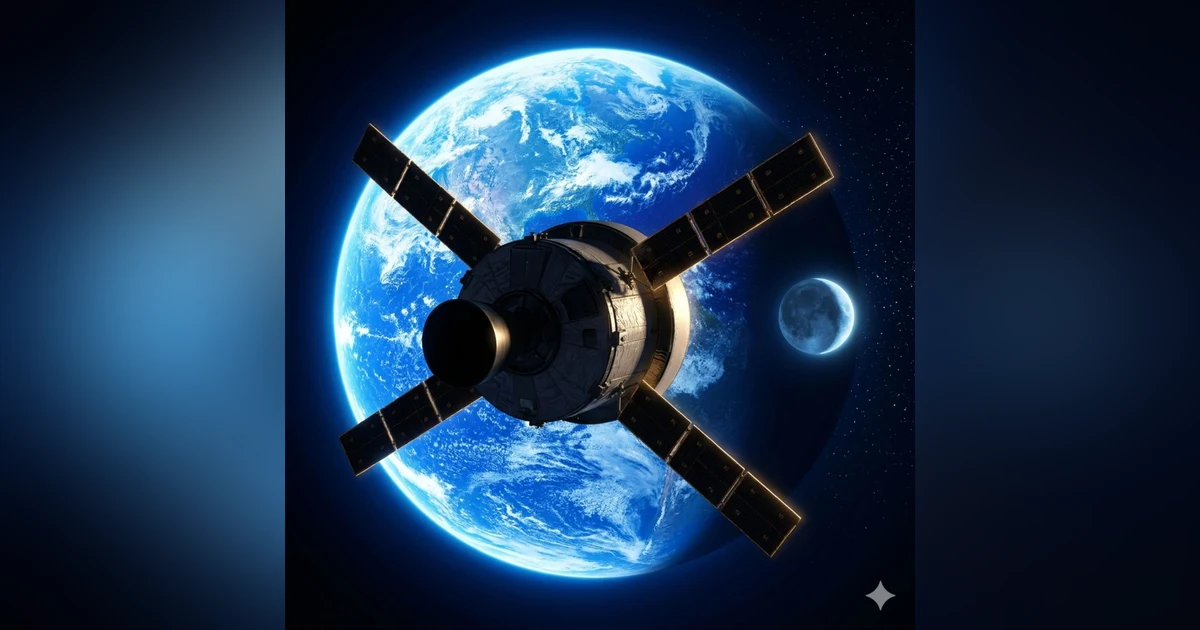
It's Day 3 of the Artemis II mission, a sungrazer comet is emerging from the solar corona, an Atlas V just set a payload record, and Mercury is at its best of the year. Here's everything you need to know from today's episode of Astronomy Daily. Artemis II Flight Day 3: Orion Doesn't Even Need a Course Correction Four humans are on their way to the Moon, and everything is going better than planned. Flight controllers cancelled the first of three scheduled trajectory correction burns today — Orion is already on such a precise path that the burn simply wasn't needed. As Howard Hu, NASA's Orion program manager, noted, this reflects exceptional navigation performance throughout the mission. The crew — Commander Reid Wiseman, Pilot Victor Glover, Mission Specialist Christina Koch, and CSA astronaut Jeremy Hansen — spent Day 3 on medical readiness drills, practising CPR in weightlessness and checking out the spacecraft's medical equipment. They also successfully tested Orion's optical communications system, transmitting HD video back to Earth from deep space. On Monday, April 6th, Orion will swing around the lunar far side at its closest approach — briefly out of radio contact with Earth — and at the mission's farthest point will travel 252,757 miles from home. That breaks the human spaceflight distance record set by Apollo 13 in 1970. Fifty-six years. We're finally going further. Comet MAPS: The Solar Plunge Is Done — Now Comes the Wait At 14:22 UTC on April 4th, Comet C/2026 A1 (MAPS) reached perihelion — passing just 161,000 kilometres from the surface of the Sun, skimming through the lower solar corona. Whether it survived that encounter is still being determined from spacecraft imagery, as the comet remains in the Sun's glare for ground-based observers. If MAPS emerges intact, the Southern Hemisphere viewing window opens April 6th to 10th. Look west after sunset, low on the horizon, near Venus. Brightness predictions range from magnitude -5 (comparable to Venus) to extraordinary scenarios even brighter. Even a nucleus breakup could leave a spectacular dust tail — what's known as a 'headless wonder.' Either way, this story is not over. Atlas V Sets a Record: 29 Amazon Leo Satellites, Heaviest Payload Ever At 1:45 a.m. Eastern Time on April 4th, a ULA Atlas V 551 lifted off from Cape Canaveral carrying 29 Amazon Leo satellites — the heaviest payload in the rocket's 102-mission history. Mission LA-05 continues Amazon's build-out of its 3,200-satellite internet constellation (formerly Project Kuiper), with around 241 satellites now on orbit. Amazon faces an FCC deadline to have half its constellation operational by July 2026. Blue Ghost Challenges a Fundamental View of the Moon New data from Firefly Aerospace's Blue Ghost lander — which operated on the lunar surface for two weeks in March 2025 — is shaking up decades of lunar science. Scientists expected Blue Ghost's landing site at Mare Crisium, well outside the Moon's 'hot zone,' to show significantly cooler interior temperatures than Apollo landing sites. It didn't. The near-side/far-side temperature divide may be far less pronounced than previously thought, suggesting heat-producing elements are more widely distributed beneath the surface. 'We may have to abandon that binary,' said principal investigator Seiichi Nagihara. Pulsars Broadcast Further Than Anyone Knew — With Australian Science Behind the Discovery A study led by Professor Michael Kramer (Max Planck Institute) and Dr Simon Johnston (CSIRO) has found that about one third of millisecond pulsars emit radio waves from two completely separate regions — including a distant zone at the very edge of their magnetic reach called the current sheet. This overturns decades of received wisdom and suggests pulsars should be detectable from a wider range of directions than previously thought — with implications for gravitational wave detection using pulsar timing arrays. Mercury Is at Its Best All Year — And Southern Hemisphere Skywatchers Win Mercury reached greatest western elongation on April 3rd — the year's best opportunity to see the innermost planet. From Australia and New Zealand, this is specifically the best morning apparition of Mercury in 2026. Look east about 30-40 minutes before sunrise for a steady point of light at around magnitude 0.4, just above Mars. Through binoculars or a small telescope, Mercury is currently showing a half-illuminated quarter phase. And on April 18th, Mercury, Saturn, Mars, and Neptune will gather in a tight morning-sky cluster — three of them visible to the naked eye.
Become a supporter of this podcast: https://www.spreaker.com/podcast/astronomy-daily-space-news-updates--5648921/support.
Sponsor Details:
Ensure your online privacy by using NordVPN. To get our special listener deal and save a lot of money, visit www.bitesz.com/nordvpn. You'll be glad you did!
Become a supporter of Astronomy Daily by joining our Supporters Club. Commercial free episodes daily are only a click way... Click Here
This episode includes AI-generated content.
It's Day 3 of the Artemis II mission, a sungrazer comet is emerging from the solar corona, an Atlas V just set a payload record, and Mercury is at its best of the year. Here's everything you need to know from today's episode of Astronomy Daily. Artemis II Flight Day 3: Orion Doesn't Even Need a Course Correction Four humans are on their way to the Moon, and everything is going better than planned. Flight controllers cancelled the first of three scheduled trajectory correction burns today — Orion is already on such a precise path that the burn simply wasn't needed. As Howard Hu, NASA's Orion program manager, noted, this reflects exceptional navigation performance throughout the mission. The crew — Commander Reid Wiseman, Pilot Victor Glover, Mission Specialist Christina Koch, and CSA astronaut Jeremy Hansen — spent Day 3 on medical readiness drills, practising CPR in weightlessness and checking out the spacecraft's medical equipment. They also successfully tested Orion's optical communications system, transmitting HD video back to Earth from deep space. On Monday, April 6th, Orion will swing around the lunar far side at its closest approach — briefly out of radio contact with Earth — and at the mission's farthest point will travel 252,757 miles from home. That breaks the human spaceflight distance record set by Apollo 13 in 1970. Fifty-six years. We're finally going further. Comet MAPS: The Solar Plunge Is Done — Now Comes the Wait At 14:22 UTC on April 4th, Comet C/2026 A1 (MAPS) reached perihelion — passing just 161,000 kilometres from the surface of the Sun, skimming through the lower solar corona. Whether it survived that encounter is still being determined from spacecraft imagery, as the comet remains in the Sun's glare for ground-based observers. If MAPS emerges intact, the Southern Hemisphere viewing window opens April 6th to 10th. Look west after sunset, low on the horizon, near Venus. Brightness predictions range from magnitude -5 (comparable to Venus) to extraordinary scenarios even brighter. Even a nucleus breakup could leave a spectacular dust tail — what's known as a 'headless wonder.' Either way, this story is not over. Atlas V Sets a Record: 29 Amazon Leo Satellites, Heaviest Payload Ever At 1:45 a.m. Eastern Time on April 4th, a ULA Atlas V 551 lifted off from Cape Canaveral carrying 29 Amazon Leo satellites — the heaviest payload in the rocket's 102-mission history. Mission LA-05 continues Amazon's build-out of its 3,200-satellite internet constellation (formerly Project Kuiper), with around 241 satellites now on orbit. Amazon faces an FCC deadline to have half its constellation operational by July 2026. Blue Ghost Challenges a Fundamental View of the Moon New data from Firefly Aerospace's Blue Ghost lander — which operated on the lunar surface for two weeks in March 2025 — is shaking up decades of lunar science. Scientists expected Blue Ghost's landing site at Mare Crisium, well outside the Moon's 'hot zone,' to show significantly cooler interior temperatures than Apollo landing sites. It didn't. The near-side/far-side temperature divide may be far less pronounced than previously thought, suggesting heat-producing elements are more widely distributed beneath the surface. 'We may have to abandon that binary,' said principal investigator Seiichi Nagihara. Pulsars Broadcast Further Than Anyone Knew — With Australian Science Behind the Discovery A study led by Professor Michael Kramer (Max Planck Institute) and Dr Simon Johnston (CSIRO) has found that about one third of millisecond pulsars emit radio waves from two completely separate regions — including a distant zone at the very edge of their magnetic reach called the current sheet. This overturns decades of received wisdom and suggests pulsars should be detectable from a wider range of directions than previously thought — with implications for gravitational wave detection using pulsar timing arrays. Mercury Is at Its Best All Year — And Southern Hemisphere Skywatchers Win Mercury reached greatest western elongation on April 3rd — the year's best opportunity to see the innermost planet. From Australia and New Zealand, this is specifically the best morning apparition of Mercury in 2026. Look east about 30-40 minutes before sunrise for a steady point of light at around magnitude 0.4, just above Mars. Through binoculars or a small telescope, Mercury is currently showing a half-illuminated quarter phase. And on April 18th, Mercury, Saturn, Mars, and Neptune will gather in a tight morning-sky cluster — three of them visible to the naked eye.
Become a supporter of this podcast: https://www.spreaker.com/podcast/astronomy-daily-space-news-updates--5648921/support.
Sponsor Details:
Ensure your online privacy by using NordVPN. To get our special listener deal and save a lot of money, visit www.bitesz.com/nordvpn. You'll be glad you did!
Become a supporter of Astronomy Daily by joining our Supporters Club. Commercial free episodes daily are only a click way... Click Here
This episode includes AI-generated content.
WEBVTT
1
00:00:00.200 --> 00:00:03.240
Welcome back to Astronomy Daily, the show that gets you
2
00:00:03.279 --> 00:00:07.040
caught up on the Cosmos every single day. I'm Anna, and.
3
00:00:06.960 --> 00:00:09.640
I'm Avery and friends. What a day to be a
4
00:00:09.679 --> 00:00:10.279
space fan.
5
00:00:10.679 --> 00:00:13.880
It is day three of the Artemis two mission. Four
6
00:00:13.960 --> 00:00:17.399
humans are right now hurdling toward the Moon and we
7
00:00:17.480 --> 00:00:20.800
have a lot to cover. A record breaking rocket launch,
8
00:00:21.160 --> 00:00:26.120
brand new lunar science, a stunning discovery about dead stars,
9
00:00:26.160 --> 00:00:29.079
and the best chance all year to spot the planet
10
00:00:29.079 --> 00:00:30.839
Mercury with your naked eye.
11
00:00:31.239 --> 00:00:34.320
Plus we promise you an update on comment maps yesterday,
12
00:00:34.359 --> 00:00:37.920
and we are delivering the solar plunge has happened, the
13
00:00:38.039 --> 00:00:41.240
verdict that's still coming in. Stay with us, let's get
14
00:00:41.280 --> 00:00:45.399
into it. Projectory so perfect, NASA canceled its own burn.
15
00:00:45.840 --> 00:00:48.840
We are now into day three of the Artemis two mission,
16
00:00:48.960 --> 00:00:52.640
and the headline today is honestly almost too good to believe.
17
00:00:53.079 --> 00:00:56.439
ASA had planned a trajectory correction burn for this evening,
18
00:00:56.759 --> 00:01:00.640
a small engine firing to nudge Oryan onto the path
19
00:01:00.719 --> 00:01:02.799
to the Moon, and they didn't need it.
20
00:01:03.079 --> 00:01:06.400
Flight controllers in mission control at Johnson's Space Center looked
21
00:01:06.400 --> 00:01:09.439
at the data and made the call cancel the burn.
22
00:01:10.000 --> 00:01:14.319
Orian is already on the precise trajectory it needs. As Howard, who,
23
00:01:14.400 --> 00:01:18.159
the Orion Spacecraft program manager, put it, it's really good
24
00:01:18.159 --> 00:01:20.760
to see that we don't need these minor correction burns.
25
00:01:21.079 --> 00:01:23.920
It shows that our navigation performance and our ability to
26
00:01:23.959 --> 00:01:26.000
get ranging has been outstanding.
27
00:01:26.200 --> 00:01:29.879
This was the first of three planned trajectory correction burns.
28
00:01:30.159 --> 00:01:32.680
The others are still on the schedule if needed, but
29
00:01:32.760 --> 00:01:35.799
this is a genuine vote of confidence in the precision
30
00:01:35.920 --> 00:01:37.640
of the entire mission so far.
31
00:01:38.120 --> 00:01:42.159
Meanwhile, what were Reid Wiseman, Victor Glover, Christina Cock, and
32
00:01:42.280 --> 00:01:46.319
Jeremy Hansen actually doing today? Mission Control woke them up
33
00:01:46.319 --> 00:01:49.040
playing in a day Dream by the Freddie Jones Band,
34
00:01:49.280 --> 00:01:51.920
which is a great alarm clock choice, and then they
35
00:01:51.959 --> 00:01:52.519
got to work.
36
00:01:52.879 --> 00:01:56.879
Day three was all about medical readiness. The crew demonstrated
37
00:01:56.920 --> 00:02:01.760
CPR procedures in weightlessness and checked out Ryan's onboard medical kid,
38
00:02:02.000 --> 00:02:06.480
a thermometer, blood pressure monitor, a steposcope, and otoscope. They
39
00:02:06.599 --> 00:02:12.240
also tested Orion's optical communication system, successfully transmitting high definition
40
00:02:12.400 --> 00:02:15.319
video back to ground stations in the United States.
41
00:02:15.560 --> 00:02:19.240
But the really exciting part, the lunar science team back
42
00:02:19.240 --> 00:02:22.120
on Earth is already building what they call the Lunar
43
00:02:22.240 --> 00:02:28.319
targeting plan. They're selecting specific geological features on the Moon's surface, craters,
44
00:02:28.479 --> 00:02:32.199
ancient lava flows, ridges that the crew will observe and
45
00:02:32.280 --> 00:02:35.719
photograph during their six hour fly by window on Monday.
46
00:02:36.000 --> 00:02:39.039
And Avery has been doing the math on what Monday
47
00:02:39.199 --> 00:02:40.039
actually means.
48
00:02:40.479 --> 00:02:44.319
Well, it's history. On Monday, April sixth, the Artemis two
49
00:02:44.360 --> 00:02:46.759
crew will swing around the far side of the Moon,
50
00:02:47.159 --> 00:02:50.479
briefly out of contact with Earth entirely, and at their
51
00:02:50.520 --> 00:02:53.879
farthest point they will be two hundred and fifty two thousand,
52
00:02:54.199 --> 00:02:57.840
seven hundred and fifty seven miles from home. That breaks
53
00:02:57.879 --> 00:03:01.080
the all time human spaceflight distay since record set by
54
00:03:01.120 --> 00:03:05.000
the crew of Apollo thirteen back in April nineteen seventy
55
00:03:05.520 --> 00:03:09.199
fifty six years. We've been waiting fifty six years to
56
00:03:09.319 --> 00:03:11.879
break that record, and it gets better.
57
00:03:12.240 --> 00:03:16.000
During the lunar flyby, Oryan will enter a solar eclipse,
58
00:03:16.280 --> 00:03:19.639
the Sun moving behind the Moon from the crew's perspective.
59
00:03:20.000 --> 00:03:22.840
The crew will use that window to look for meteoroid
60
00:03:22.879 --> 00:03:26.120
impacts flashing on the lunar surface and to try to
61
00:03:26.159 --> 00:03:29.360
photograph the deep space sky without the Sun in the way.
62
00:03:29.719 --> 00:03:32.479
We'll have full Day four and Monday fly by coverage
63
00:03:32.479 --> 00:03:36.759
in Monday's episode. Right now four humans traveling toward the
64
00:03:36.800 --> 00:03:40.000
Moon and everything is going exactly to plan.
65
00:03:40.639 --> 00:03:42.919
Next the solar plunge has happened.
66
00:03:43.199 --> 00:03:46.240
Now we wait, all right, we promise you this and
67
00:03:46.360 --> 00:03:48.680
here it is your Comet Maps update.
68
00:03:49.120 --> 00:03:52.840
Yesterday we introduced you to Comet C twenty twenty six,
69
00:03:52.960 --> 00:03:57.599
a one known as Maps, a rare kreutz sungrazer, discovered
70
00:03:57.639 --> 00:04:00.639
in January by a team of French astronomers in Chile.
71
00:04:01.159 --> 00:04:03.199
We told you it was about to make one of
72
00:04:03.240 --> 00:04:06.840
the most dangerous journeys in the Solar System, a pass
73
00:04:06.919 --> 00:04:09.960
within one hundred and sixty one thousand kilometers of the
74
00:04:10.039 --> 00:04:14.400
Sun's surface, closer than most comets ever come. And we
75
00:04:14.520 --> 00:04:16.439
promise to bring you the latest today.
76
00:04:16.920 --> 00:04:21.439
So here's where we are at fourteen twenty two UTC today.
77
00:04:21.720 --> 00:04:24.319
That's right in the middle of the day in Australia.
78
00:04:24.600 --> 00:04:29.120
Comet Maps reached perihelion. It passed through the lower corona
79
00:04:29.199 --> 00:04:32.399
of the Sun. The plunge is done.
80
00:04:32.399 --> 00:04:36.800
And the verdict that is genuinely still coming in because
81
00:04:36.879 --> 00:04:40.920
right now Maps is in the Sun's glare, basically invisible
82
00:04:40.920 --> 00:04:45.600
to ground based observers. We're relying on spacecraft imagery, particularly
83
00:04:45.639 --> 00:04:49.160
from Soho's Lasco coronograph, to track what happened.
84
00:04:49.839 --> 00:04:53.279
The big question has shifted. It's no longer just did
85
00:04:53.319 --> 00:04:57.199
it survive, It's what kind of show will it put on?
86
00:04:57.959 --> 00:05:01.639
There are several scenarios. If the the nucleus survived intact,
87
00:05:02.079 --> 00:05:04.600
Maps could emerge in the next day or two as
88
00:05:04.639 --> 00:05:08.800
a stunning naked eye comet. Some predictions put its potential
89
00:05:08.800 --> 00:05:14.680
brightness at magnitude minus five brighter than venus. Others suggest
90
00:05:14.879 --> 00:05:18.720
it could reach magnitude minus fifteen, brighter than the full
91
00:05:18.800 --> 00:05:22.639
moon at perihelion. It may have even been briefly visible
92
00:05:22.680 --> 00:05:23.199
in daylight.
93
00:05:23.600 --> 00:05:26.439
Even if the nucleus broke apart, which is what happens
94
00:05:26.439 --> 00:05:31.160
to most sungrazers, the story isn't necessarily over. A post
95
00:05:31.199 --> 00:05:35.759
perihelian breakup can produce what astronomers call a headless wonder,
96
00:05:36.160 --> 00:05:40.240
a bright, glowing tale with no nucleus behind it. Sometimes
97
00:05:40.279 --> 00:05:42.399
those can be spectacular in their own right.
98
00:05:43.040 --> 00:05:46.639
Maps belongs to the Krutz sun Grazer family, the same
99
00:05:46.680 --> 00:05:50.959
family as comet ikeas Seki in nineteen sixty five, one
100
00:05:50.959 --> 00:05:54.439
of the brightest comets of the twentieth century, and comet
101
00:05:54.519 --> 00:05:58.319
Lovejoy in twenty eleven, which survived its own brush with
102
00:05:58.360 --> 00:06:02.720
the Corona and went on to da Southern Hemisphere observers, and.
103
00:06:02.800 --> 00:06:07.480
That is the key phrase, Southern Hemisphere. If Maps emerges
104
00:06:07.519 --> 00:06:09.959
from the glare as expected, the window to see it
105
00:06:10.000 --> 00:06:13.720
from the ground opens around April sixth to tenth. Look
106
00:06:13.759 --> 00:06:17.519
west after sunset low on the horizon in Australia and
107
00:06:17.560 --> 00:06:21.439
across New Zealand. You are perfectly placed for this. Venus
108
00:06:21.480 --> 00:06:24.360
will be your guide star bright in the western evening sky,
109
00:06:24.800 --> 00:06:27.600
and Maps, if it survived, should appear nearby.
110
00:06:28.199 --> 00:06:31.439
We will have the latest on Monday's episode. This story
111
00:06:31.560 --> 00:06:33.000
is very much not over.
112
00:06:33.519 --> 00:06:38.079
Atlas five lifts its heaviest payload ever, twenty nine Amazon
113
00:06:38.199 --> 00:06:39.199
Leo satellites.
114
00:06:39.759 --> 00:06:42.360
While all eyes were on the Moon this morning, there
115
00:06:42.439 --> 00:06:46.000
was a rocket launch happening simultaneously that setter record of
116
00:06:46.040 --> 00:06:46.439
its own.
117
00:06:46.759 --> 00:06:49.639
In the early hours of this morning one forty five
118
00:06:49.800 --> 00:06:54.480
am Eastern time, a United Launch Alliance Atlas five rocket
119
00:06:54.600 --> 00:06:58.279
lifted off from Cape Canaveral Space for station in Florida.
120
00:06:58.759 --> 00:07:03.680
Its cargo twenty nine Amazon Leo satellites, and that payload,
121
00:07:03.920 --> 00:07:07.959
twenty nine satellites packed into one rocket, made history.
122
00:07:08.319 --> 00:07:08.839
It is the.
123
00:07:08.759 --> 00:07:12.519
Heaviest single payload the Atlas five has ever flown.
124
00:07:12.839 --> 00:07:16.879
This is Mission LA zero five for Amazon LEO, the
125
00:07:16.920 --> 00:07:23.000
satellite Internet constellation, previously known as Project Cooper. Amazon renamed
126
00:07:23.000 --> 00:07:26.399
the constellation in November last year, and they're building it
127
00:07:26.480 --> 00:07:29.879
at pace. With today's launch, they now have around two
128
00:07:30.000 --> 00:07:33.120
hundred and forty one satellites on orbit out of an
129
00:07:33.120 --> 00:07:36.800
eventual constellation of more than three thousand, two hundred.
130
00:07:37.120 --> 00:07:41.240
The Atlas five flew in its most powerful configuration, the
131
00:07:41.360 --> 00:07:44.560
five to five to one variant, with five solid rocket
132
00:07:44.560 --> 00:07:49.879
boosters strapped on and Ula engineers made specific modifications to
133
00:07:49.959 --> 00:07:53.680
the Centaur upper stage and its dispenser system to carry
134
00:07:53.720 --> 00:07:57.720
the extra load. These twenty nine satellites went up on
135
00:07:57.800 --> 00:08:01.480
a northeast trajectory to a low Earth orbit of around
136
00:08:01.639 --> 00:08:03.600
four hundred and fifty kilometers.
137
00:08:03.959 --> 00:08:07.439
Amazon has an FCC deadline looming. They need to have
138
00:08:07.560 --> 00:08:11.360
half of their constellation operational by July twenty twenty six,
139
00:08:11.720 --> 00:08:15.480
which puts them in a serious race. Multiple Atlas five
140
00:08:15.600 --> 00:08:19.519
and Vulcan Centaur launches are planned this year, plus missions
141
00:08:19.519 --> 00:08:22.519
on Arion six, New Glen and Falcon nine.
142
00:08:22.959 --> 00:08:25.959
The Atlas five is one of the most reliable rockets
143
00:08:26.040 --> 00:08:29.040
ever built. This was its one hundred and second mission,
144
00:08:29.360 --> 00:08:31.839
and while the Vulcan Centaur is taking over as the
145
00:08:31.879 --> 00:08:35.679
primary heavy lift vehicle going forward, today proved the old
146
00:08:35.720 --> 00:08:38.159
workhorse has still got it okay.
147
00:08:38.360 --> 00:08:42.360
Our next story, Moon's Hot Cold Divide may be wrong.
148
00:08:42.919 --> 00:08:46.320
Blue Ghost rewrites lunar science with the.
149
00:08:46.360 --> 00:08:49.320
Artemis two crew heading toward the Moon right now. This
150
00:08:49.440 --> 00:08:52.960
next story feels especially timely because new data from the
151
00:08:53.000 --> 00:08:57.480
Moon's surface is challenging something scientists thought they understood for decades.
152
00:08:58.000 --> 00:09:01.759
Firefly Aerospace's Blue ghosts lander touched down in the Moon's
153
00:09:01.840 --> 00:09:05.000
Mari Chrisium, the Sea of Crises, back in March of
154
00:09:05.080 --> 00:09:08.440
twenty twenty five. It operated for a full lunar day,
155
00:09:08.720 --> 00:09:11.559
drilling into the surface and sending back over one hundred
156
00:09:11.559 --> 00:09:14.679
and ten gigabytes of data. And now a year on,
157
00:09:15.240 --> 00:09:19.120
scientists are presenting the first major scientific results, and they
158
00:09:19.159 --> 00:09:20.120
are surprising.
159
00:09:20.360 --> 00:09:22.759
The long standing view of the Moon has been this
160
00:09:23.440 --> 00:09:26.519
The near side, the face we always see from Earth,
161
00:09:26.960 --> 00:09:32.080
is geologically hot. It's dominated by ancient volcanic planes, and
162
00:09:32.120 --> 00:09:37.240
beneath the surface there's a concentration of heat producing radioactive elements,
163
00:09:37.559 --> 00:09:41.759
particularly thorium. In a region called the Prosilarum creep terrain.
164
00:09:42.440 --> 00:09:47.480
The far side, by contrast, is cooler, older, more heavily cratered.
165
00:09:47.799 --> 00:09:51.399
Blue Ghost was specifically sent to land outside that hot
166
00:09:51.440 --> 00:09:55.039
region in mare Chrisium, well away from the creep zone,
167
00:09:55.480 --> 00:09:59.080
precisely to test whether the temperature difference was as dramatic
168
00:09:59.159 --> 00:10:03.080
as scientistics pres affected. The answer has upended the model.
169
00:10:03.720 --> 00:10:07.039
Blue Ghosts heat probe found that the underground temperature at
170
00:10:07.080 --> 00:10:11.720
mari Chrissium is not significantly different from what Apollo astronauts
171
00:10:11.720 --> 00:10:15.759
measured at their landing sites deep inside the supposed hot zone.
172
00:10:15.919 --> 00:10:21.000
As Saichi Nagihara, the principal investigator of Blue Ghost's heat
173
00:10:21.000 --> 00:10:24.440
probe at Texas Tech University, put it, we may have
174
00:10:24.480 --> 00:10:25.879
to abandon that binary.
175
00:10:26.080 --> 00:10:29.639
What does this mean? Heat producing elements like thorium may
176
00:10:29.639 --> 00:10:33.519
be more widely distributed beneath the lunar surface than anyone thought,
177
00:10:34.039 --> 00:10:37.440
and one possible explanation is that volcanic activity in some
178
00:10:37.480 --> 00:10:41.279
regions wasn't driven by those radioactive elements at all. It
179
00:10:41.320 --> 00:10:44.159
may have simply been easier for magma to break through
180
00:10:44.240 --> 00:10:46.000
in places where the crust was thinner.
181
00:10:46.240 --> 00:10:50.279
It's a fundamental rethink of how the Moon formed and evolved,
182
00:10:50.720 --> 00:10:54.360
and it has direct implications for where future crude missions
183
00:10:54.440 --> 00:10:58.120
might land and what they'll find. Blue Ghost Mission I,
184
00:10:58.799 --> 00:11:01.679
expected to launch later this year, will land on the
185
00:11:01.759 --> 00:11:05.600
lunar far side, giving scientists the next data point in
186
00:11:05.639 --> 00:11:06.799
this evolving picture.
187
00:11:07.159 --> 00:11:11.399
Onwards the story five. Let's simply call this one stellar science.
188
00:11:12.000 --> 00:11:15.679
Pulsars are broadcasting from the edge of their magnetic.
189
00:11:15.200 --> 00:11:19.840
Reach down to a discovery that overturns decades of thinking
190
00:11:19.919 --> 00:11:23.279
about some of the most extreme objects in the universe,
191
00:11:23.720 --> 00:11:26.360
and it has an Australian fingerprint on it.
192
00:11:26.840 --> 00:11:31.000
Pulsars are the class remnants of dead stars. They're among
193
00:11:31.039 --> 00:11:34.399
the densest objects we know of. A teaspoon of pulsar
194
00:11:34.480 --> 00:11:38.639
material would weigh around ten million tons on Earth. As
195
00:11:38.679 --> 00:11:42.759
they spin, they sweep beams of radio waves across the cosmos,
196
00:11:42.879 --> 00:11:47.679
like cosmic lighthouses, and a special class called millisecond pulsars
197
00:11:48.039 --> 00:11:52.320
spins hundreds of times per second, so regularly that they
198
00:11:52.519 --> 00:11:54.559
rival atomic clocks in their precision.
199
00:11:55.080 --> 00:11:58.639
For decades, the textbook answer to where those radio pulses
200
00:11:58.679 --> 00:12:01.840
come from was simple. Near the surface, close to the
201
00:12:01.879 --> 00:12:05.879
magnetic poles. That's where scientists assumed all the action happened.
202
00:12:06.480 --> 00:12:09.519
A new study published in Monthly Notices of the Royal
203
00:12:09.559 --> 00:12:14.399
Astronomical Society has just rewritten that. Professor Michael Kramer from
204
00:12:14.399 --> 00:12:17.840
the Max Planck Institute for Radio Astronomy in Germany and
205
00:12:17.919 --> 00:12:23.840
doctor Simon Johnson from Australia's own CSIRO analyzed radio observations
206
00:12:23.879 --> 00:12:27.960
of nearly two hundred millisecond pulsars and compared them with
207
00:12:28.080 --> 00:12:31.080
gamma ray data from NASA's Fermi Space telescope.
208
00:12:31.320 --> 00:12:35.519
What they found, about one third of millisecond pulsars are
209
00:12:35.600 --> 00:12:40.120
broadcasting radio waves from two completely separate regions at once,
210
00:12:40.759 --> 00:12:44.200
not just the magnetic poles, but also from a distant
211
00:12:44.240 --> 00:12:48.759
swirling zone of charged particles called the current sheet right
212
00:12:48.919 --> 00:12:52.480
at what's called the light cylinder. That's the boundary where
213
00:12:52.480 --> 00:12:56.120
the pulsar's magnetic field would need to travel faster than
214
00:12:56.200 --> 00:12:58.759
light just to keep pace with the spinning star.
215
00:12:58.960 --> 00:13:02.840
As doctor Johnston it, these tiny, fast binning stars are
216
00:13:02.879 --> 00:13:06.759
even more complex and surprising than we thought, broadcasting from
217
00:13:06.840 --> 00:13:09.679
both their surfaces and from the very edge of their
218
00:13:09.720 --> 00:13:10.559
magnetic reach.
219
00:13:11.080 --> 00:13:16.200
The practical consequences are significant because the radio signals are
220
00:13:16.279 --> 00:13:20.840
spreading out over a wider range of directions than previously understood.
221
00:13:21.320 --> 00:13:25.639
More pulsars should be detectable than scientists thought, and that's
222
00:13:25.720 --> 00:13:29.919
good news for projects like pulsar timing arrays, networks of
223
00:13:29.960 --> 00:13:35.799
pulsars used as detectors for gravitational waves rippling across the universe.
224
00:13:36.559 --> 00:13:40.000
A great piece of science and a proud moment for CSIRO,
225
00:13:40.399 --> 00:13:42.519
Australia's National Science Agency.
226
00:13:43.200 --> 00:13:47.639
And finally, today an invitation to go outside and look up,
227
00:13:48.000 --> 00:13:52.159
because right now Mercury is putting on its best performance
228
00:13:52.240 --> 00:13:55.720
of the entire year, and we have the best seats
229
00:13:55.720 --> 00:13:56.279
in the house.
230
00:13:56.919 --> 00:14:01.399
Mercury reached what astronomers call greatest elongation on April third,
231
00:14:01.879 --> 00:14:04.279
the point where it appears farthest from the Sun in
232
00:14:04.320 --> 00:14:08.200
our sky. This is the year's greatest elongation for Mercury,
233
00:14:08.320 --> 00:14:11.279
full stop, the best it will get all of twenty
234
00:14:11.320 --> 00:14:11.879
twenty six.
235
00:14:12.600 --> 00:14:16.399
Here's the key thing about Mercury. It's always close to
236
00:14:16.440 --> 00:14:19.639
the Sun in our sky, which makes it genuinely difficult
237
00:14:19.720 --> 00:14:24.039
to spot. Most people have never actually seen it. Greatest
238
00:14:24.080 --> 00:14:28.240
elongation is your best window. The planet pulls as far
239
00:14:28.360 --> 00:14:31.360
from the Sun's glare as it ever gets, giving you
240
00:14:31.480 --> 00:14:34.759
a brief clear opportunity before it slips back.
241
00:14:35.519 --> 00:14:38.639
Right now, Mercury is sitting about twenty eight degrees from
242
00:14:38.679 --> 00:14:42.480
the sun rising in the eastern sky before dawn. Look
1
00:00:00.200 --> 00:00:03.240
2
00:00:03.279 --> 00:00:07.040
3
00:00:06.960 --> 00:00:09.640
4
00:00:09.679 --> 00:00:10.279
5
00:00:10.679 --> 00:00:13.880
6
00:00:13.960 --> 00:00:17.399
7
00:00:17.480 --> 00:00:20.800
8
00:00:21.160 --> 00:00:26.120
9
00:00:26.160 --> 00:00:29.079
10
00:00:29.079 --> 00:00:30.839
11
00:00:31.239 --> 00:00:34.320
12
00:00:34.359 --> 00:00:37.920
13
00:00:38.039 --> 00:00:41.240
14
00:00:41.280 --> 00:00:45.399
15
00:00:45.840 --> 00:00:48.840
16
00:00:48.960 --> 00:00:52.640
17
00:00:53.079 --> 00:00:56.439
18
00:00:56.759 --> 00:01:00.640
19
00:01:00.719 --> 00:01:02.799
20
00:01:03.079 --> 00:01:06.400
21
00:01:06.400 --> 00:01:09.439
22
00:01:10.000 --> 00:01:14.319
23
00:01:14.400 --> 00:01:18.159
24
00:01:18.159 --> 00:01:20.760
25
00:01:21.079 --> 00:01:23.920
26
00:01:23.959 --> 00:01:26.000
27
00:01:26.200 --> 00:01:29.879
28
00:01:30.159 --> 00:01:32.680
29
00:01:32.760 --> 00:01:35.799
30
00:01:35.920 --> 00:01:37.640
31
00:01:38.120 --> 00:01:42.159
32
00:01:42.280 --> 00:01:46.319
33
00:01:46.319 --> 00:01:49.040
34
00:01:49.280 --> 00:01:51.920
35
00:01:51.959 --> 00:01:52.519
36
00:01:52.879 --> 00:01:56.879
37
00:01:56.920 --> 00:02:01.760
38
00:02:02.000 --> 00:02:06.480
39
00:02:06.599 --> 00:02:12.240
40
00:02:12.400 --> 00:02:15.319
41
00:02:15.560 --> 00:02:19.240
42
00:02:19.240 --> 00:02:22.120
43
00:02:22.240 --> 00:02:28.319
44
00:02:28.479 --> 00:02:32.199
45
00:02:32.280 --> 00:02:35.719
46
00:02:36.000 --> 00:02:39.039
47
00:02:39.199 --> 00:02:40.039
48
00:02:40.479 --> 00:02:44.319
49
00:02:44.360 --> 00:02:46.759
50
00:02:47.159 --> 00:02:50.479
51
00:02:50.520 --> 00:02:53.879
52
00:02:54.199 --> 00:02:57.840
53
00:02:57.879 --> 00:03:01.080
54
00:03:01.120 --> 00:03:05.000
55
00:03:05.520 --> 00:03:09.199
56
00:03:09.319 --> 00:03:11.879
57
00:03:12.240 --> 00:03:16.000
58
00:03:16.280 --> 00:03:19.639
59
00:03:20.000 --> 00:03:22.840
60
00:03:22.879 --> 00:03:26.120
61
00:03:26.159 --> 00:03:29.360
62
00:03:29.719 --> 00:03:32.479
63
00:03:32.479 --> 00:03:36.759
64
00:03:36.800 --> 00:03:40.000
65
00:03:40.639 --> 00:03:42.919
66
00:03:43.199 --> 00:03:46.240
67
00:03:46.360 --> 00:03:48.680
68
00:03:49.120 --> 00:03:52.840
69
00:03:52.960 --> 00:03:57.599
70
00:03:57.639 --> 00:04:00.639
71
00:04:01.159 --> 00:04:03.199
72
00:04:03.240 --> 00:04:06.840
73
00:04:06.919 --> 00:04:09.960
74
00:04:10.039 --> 00:04:14.400
75
00:04:14.520 --> 00:04:16.439
76
00:04:16.920 --> 00:04:21.439
77
00:04:21.720 --> 00:04:24.319
78
00:04:24.600 --> 00:04:29.120
79
00:04:29.199 --> 00:04:32.399
80
00:04:32.399 --> 00:04:36.800
81
00:04:36.879 --> 00:04:40.920
82
00:04:40.920 --> 00:04:45.600
83
00:04:45.639 --> 00:04:49.160
84
00:04:49.839 --> 00:04:53.279
85
00:04:53.319 --> 00:04:57.199
86
00:04:57.959 --> 00:05:01.639
87
00:05:02.079 --> 00:05:04.600
88
00:05:04.639 --> 00:05:08.800
89
00:05:08.800 --> 00:05:14.680
90
00:05:14.879 --> 00:05:18.720
91
00:05:18.800 --> 00:05:22.639
92
00:05:22.680 --> 00:05:23.199
93
00:05:23.600 --> 00:05:26.439
94
00:05:26.439 --> 00:05:31.160
95
00:05:31.199 --> 00:05:35.759
96
00:05:36.160 --> 00:05:40.240
97
00:05:40.279 --> 00:05:42.399
98
00:05:43.040 --> 00:05:46.639
99
00:05:46.680 --> 00:05:50.959
100
00:05:50.959 --> 00:05:54.439
101
00:05:54.519 --> 00:05:58.319
102
00:05:58.360 --> 00:06:02.720
103
00:06:02.800 --> 00:06:07.480
104
00:06:07.519 --> 00:06:09.959
105
00:06:10.000 --> 00:06:13.720
106
00:06:13.759 --> 00:06:17.519
107
00:06:17.560 --> 00:06:21.439
108
00:06:21.480 --> 00:06:24.360
109
00:06:24.800 --> 00:06:27.600
110
00:06:28.199 --> 00:06:31.439
111
00:06:31.560 --> 00:06:33.000
112
00:06:33.519 --> 00:06:38.079
113
00:06:38.199 --> 00:06:39.199
114
00:06:39.759 --> 00:06:42.360
115
00:06:42.439 --> 00:06:46.000
116
00:06:46.040 --> 00:06:46.439
117
00:06:46.759 --> 00:06:49.639
118
00:06:49.800 --> 00:06:54.480
119
00:06:54.600 --> 00:06:58.279
120
00:06:58.759 --> 00:07:03.680
121
00:07:03.920 --> 00:07:07.959
122
00:07:08.319 --> 00:07:08.839
123
00:07:08.759 --> 00:07:12.519
124
00:07:12.839 --> 00:07:16.879
125
00:07:16.920 --> 00:07:23.000
126
00:07:23.000 --> 00:07:26.399
127
00:07:26.480 --> 00:07:29.879
128
00:07:30.000 --> 00:07:33.120
129
00:07:33.120 --> 00:07:36.800
130
00:07:37.120 --> 00:07:41.240
131
00:07:41.360 --> 00:07:44.560
132
00:07:44.560 --> 00:07:49.879
133
00:07:49.959 --> 00:07:53.680
134
00:07:53.720 --> 00:07:57.720
135
00:07:57.800 --> 00:08:01.480
136
00:08:01.639 --> 00:08:03.600
137
00:08:03.959 --> 00:08:07.439
138
00:08:07.560 --> 00:08:11.360
139
00:08:11.720 --> 00:08:15.480
140
00:08:15.600 --> 00:08:19.519
141
00:08:19.519 --> 00:08:22.519
142
00:08:22.959 --> 00:08:25.959
143
00:08:26.040 --> 00:08:29.040
144
00:08:29.360 --> 00:08:31.839
145
00:08:31.879 --> 00:08:35.679
146
00:08:35.720 --> 00:08:38.159
147
00:08:38.360 --> 00:08:42.360
148
00:08:42.919 --> 00:08:46.320
149
00:08:46.360 --> 00:08:49.320
150
00:08:49.440 --> 00:08:52.960
151
00:08:53.000 --> 00:08:57.480
152
00:08:58.000 --> 00:09:01.759
153
00:09:01.840 --> 00:09:05.000
154
00:09:05.080 --> 00:09:08.440
155
00:09:08.720 --> 00:09:11.559
156
00:09:11.559 --> 00:09:14.679
157
00:09:15.240 --> 00:09:19.120
158
00:09:19.159 --> 00:09:20.120
159
00:09:20.360 --> 00:09:22.759
160
00:09:23.440 --> 00:09:26.519
161
00:09:26.960 --> 00:09:32.080
162
00:09:32.120 --> 00:09:37.240
163
00:09:37.559 --> 00:09:41.759
164
00:09:42.440 --> 00:09:47.480
165
00:09:47.799 --> 00:09:51.399
166
00:09:51.440 --> 00:09:55.039
167
00:09:55.480 --> 00:09:59.080
168
00:09:59.159 --> 00:10:03.080
169
00:10:03.720 --> 00:10:07.039
170
00:10:07.080 --> 00:10:11.720
171
00:10:11.720 --> 00:10:15.759
172
00:10:15.919 --> 00:10:21.000
173
00:10:21.000 --> 00:10:24.440
174
00:10:24.480 --> 00:10:25.879
175
00:10:26.080 --> 00:10:29.639
176
00:10:29.639 --> 00:10:33.519
177
00:10:34.039 --> 00:10:37.440
178
00:10:37.480 --> 00:10:41.279
179
00:10:41.320 --> 00:10:44.159
180
00:10:44.240 --> 00:10:46.000
181
00:10:46.240 --> 00:10:50.279
182
00:10:50.720 --> 00:10:54.360
183
00:10:54.440 --> 00:10:58.120
184
00:10:58.799 --> 00:11:01.679
185
00:11:01.759 --> 00:11:05.600
186
00:11:05.639 --> 00:11:06.799
187
00:11:07.159 --> 00:11:11.399
188
00:11:12.000 --> 00:11:15.679
189
00:11:15.200 --> 00:11:19.840
190
00:11:19.919 --> 00:11:23.279
191
00:11:23.720 --> 00:11:26.360
192
00:11:26.840 --> 00:11:31.000
193
00:11:31.039 --> 00:11:34.399
194
00:11:34.480 --> 00:11:38.639
195
00:11:38.679 --> 00:11:42.759
196
00:11:42.879 --> 00:11:47.679
197
00:11:48.039 --> 00:11:52.320
198
00:11:52.519 --> 00:11:54.559
199
00:11:55.080 --> 00:11:58.639
200
00:11:58.679 --> 00:12:01.840
201
00:12:01.879 --> 00:12:05.879
202
00:12:06.480 --> 00:12:09.519
203
00:12:09.559 --> 00:12:14.399
204
00:12:14.399 --> 00:12:17.840
205
00:12:17.919 --> 00:12:23.840
206
00:12:23.879 --> 00:12:27.960
207
00:12:28.080 --> 00:12:31.080
208
00:12:31.320 --> 00:12:35.519
209
00:12:35.600 --> 00:12:40.120
210
00:12:40.759 --> 00:12:44.200
211
00:12:44.240 --> 00:12:48.759
212
00:12:48.919 --> 00:12:52.480
213
00:12:52.480 --> 00:12:56.120
214
00:12:56.200 --> 00:12:58.759
215
00:12:58.960 --> 00:13:02.840
216
00:13:02.879 --> 00:13:06.759
217
00:13:06.840 --> 00:13:09.679
218
00:13:09.720 --> 00:13:10.559
219
00:13:11.080 --> 00:13:16.200
220
00:13:16.279 --> 00:13:20.840
221
00:13:21.320 --> 00:13:25.639
222
00:13:25.720 --> 00:13:29.919
223
00:13:29.960 --> 00:13:35.799
224
00:13:36.559 --> 00:13:40.000
225
00:13:40.399 --> 00:13:42.519
226
00:13:43.200 --> 00:13:47.639
227
00:13:48.000 --> 00:13:52.159
228
00:13:52.240 --> 00:13:55.720
229
00:13:55.720 --> 00:13:56.279
230
00:13:56.919 --> 00:14:01.399
231
00:14:01.879 --> 00:14:04.279
232
00:14:04.320 --> 00:14:08.200
233
00:14:08.320 --> 00:14:11.279
234
00:14:11.320 --> 00:14:11.879
235
00:14:12.600 --> 00:14:16.399
236
00:14:16.440 --> 00:14:19.639
237
00:14:19.720 --> 00:14:24.039
238
00:14:24.080 --> 00:14:28.240
239
00:14:28.360 --> 00:14:31.360
240
00:14:31.480 --> 00:14:34.759
241
00:14:35.519 --> 00:14:38.639
242
00:14:38.679 --> 00:14:42.480