June 2, 2026
NASA's Lunar Dreams in Jeopardy, China's Bold Moves, and a Lava World Reimagined
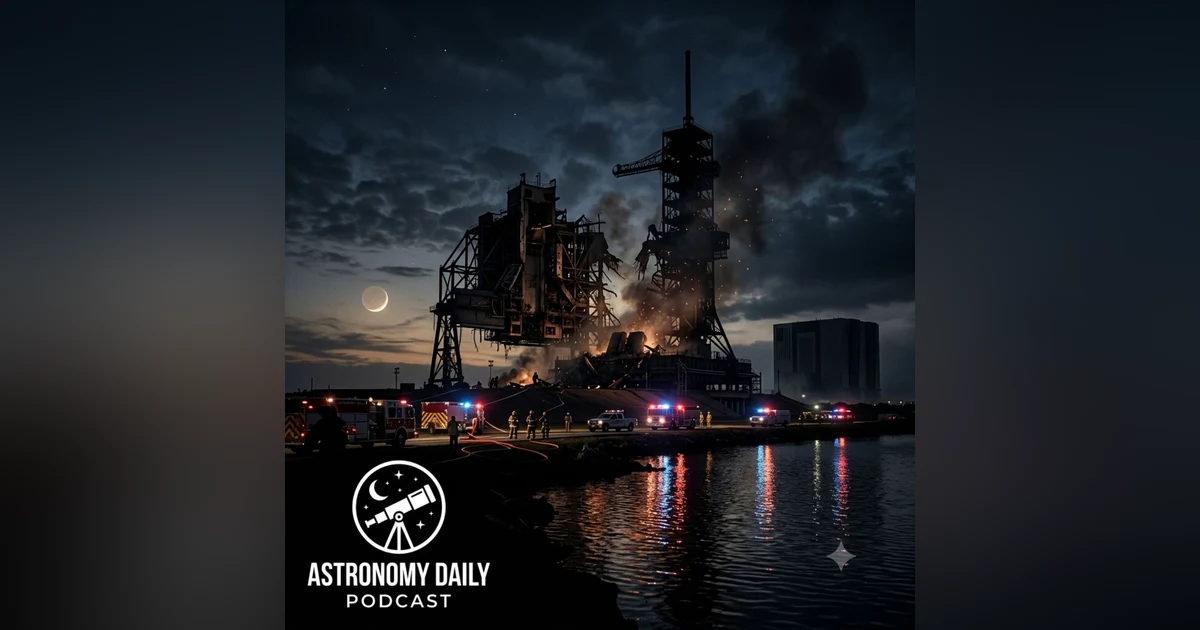
Episode Summary In today's episode, Anna and Avery cover six major space and astronomy stories: the growing implications of Blue Origin's New Glenn rocket explosion for NASA's lunar plans; China's surprise maiden flight of the Long March 12B reusable rocket plus the return of the Shenzhou-21 crew; Starship V3 being grounded by the FAA following Flight 12 — with SpaceX's IPO in the balance; the upcoming launch of NASA's Roman Space Telescope and its mission to find 100,000 new exoplanets; new research suggesting Earth remained a global magma ocean for up to half a billion years; and a stunning new Hubble image of galaxy M88 on a perilous journey through the Virgo Cluster. Story 1 — New Glenn Aftermath: NASA Moon Plans Under Threat Blue Origin's New Glenn rocket was destroyed on May 28 during a pre-launch static fire test at Launch Complex 36, Cape Canaveral. As of June 2, the damage to Blue Origin's lunar programme is becoming clear: the Blue Moon Mark 1 lander — scheduled to deliver Moon Base 1 hardware in autumn 2026 — now faces likely delays, and the crewed Blue Moon MK2 timeline may slip as a result. LC-36 is Blue Origin's only orbital pad; rebuilding will take considerable time. NASA had signed a new New Glenn launch agreement for Moon rovers just two days before the explosion. Sources: Space.com, Time Magazine, TechTimes (June 1–2, 2026) Story 2 — China's Long March 12B Debut + Shenzhou-21 Returns China's new Long March 12B rocket completed its maiden flight on June 1 from Jiuquan, deploying Qianfan constellation satellites in a no-advance-notice launch. The rocket — China's answer to the Falcon 9 — features a 20-tonne LEO capacity, a 5.2m fairing, kerolox propulsion, and dual independent flight computers ('dual brains'). No booster recovery on this flight, but planned for future missions. Developed in just 21 months. In other Chinese space news: the Shenzhou-21 crew (Zhang Lu, Wu Fei, Zhang Hongzhang) returned safely on May 29 after a record 210-day stay aboard Tiangong, landing in a Shenzhou-22 emergency rescue capsule after their original return craft was damaged by a suspected space debris strike. Sources: SpaceNews, Global Times, Xinhua (June 1, 2026) Story 3 — Starship V3 Grounded: FAA Mishap Investigation Following Flight 12 (May 22), the FAA has formally classified the Starship V3 debut as a mishap and grounded the vehicle. The Super Heavy booster failed its boostback burn and hard-splashed in the Gulf of America; one Raptor Vacuum engine on the upper stage also failed. SpaceX must complete an FAA-overseen investigation before Flight 13. This is Starship's seventh grounding in three years. A July–August return-to-flight window is cited; a booster catch may be skipped on Flight 13. SpaceX's IPO (ticker: SPCX, Nasdaq) was filed May 20 with shares potentially trading from ~June 12. Sources: SpaceNews, Aviation Week, TechCrunch (May 27–June 1, 2026) Story 4 — NASA Roman Space Telescope: 100,000 New Worlds NASA's Nancy Grace Roman Space Telescope is on track to arrive at Kennedy Space Center in June, with a launch target of early September 2026 — ahead of its May 2027 commitment. Over its five-year primary mission, Roman is expected to discover ~100,000 exoplanets, hundreds of millions of galaxies, and billions of stars, generating a 20,000-terabyte data archive. Its Galactic Bulge Survey will observe ~100 million stars in underexplored Milky Way regions. Roman also features a Coronagraph Instrument to directly image nearby exoplanets and test techniques for future Earth-analogue imaging. Sources: NASA.gov, ScienceDaily, SciTechDaily (June 1–2, 2026) Story 5 — Earth Was a Lava World for Half a Billion Years A preprint from researchers at the Kapteyn Astronomical Institute (arXiv, June 2026) proposes that Earth's global magma ocean phase lasted up to 500 million years — far longer than previously assumed. Two key factors sustained the molten state: tidal heating from the newly formed, much-closer Moon; and a thick steam atmosphere that acted as a thermal blanket, slowing planetary cooling. The prolonged hot conditions would also have favoured the photochemical production of hydrogen cyanide — a key prebiotic molecule linked to the origin of RNA and amino acids. Sources: Universe Today, Phys.org (June 1, 2026) — preprint on arXiv Story 6 — Hubble Images M88 on a Perilous Virgo Cluster Journey NASA/ESA Hubble's June 2026 Picture of the Month features Messier 88 (M88/NGC 4501), a spiral galaxy 63 million light-years away in Coma Berenices. M88 is on a long inward journey through the Virgo Cluster, with a supermassive black hole ~100 million solar masses at its core. Ram pressure stripping is already depleting its cold gas reserves, visible as compressed gas on the galaxy's leading edge. In ~200–300 million years, M88 will make its closest pass to M87. Observed as part of Hubble program #18103 (PI: D. Thilker). Sources: NASA Science, ESA, ScienceDaily (May 29–June 1, 2026)
Become a supporter of this podcast: https://www.spreaker.com/podcast/astronomy-daily-space-news-updates--5648921/support.
Sponsor Details:
Ensure your online privacy by using NordVPN. To get our special listener deal and save a lot of money, visit www.bitesz.com/nordvpn. You'll be glad you did!
Become a supporter of Astronomy Daily by joining our Supporters Club. Commercial free episodes daily are only a click way... Click Here
This episode includes AI-generated content.
Become a supporter of this podcast: https://www.spreaker.com/podcast/astronomy-daily-space-news-updates--5648921/support.
Sponsor Details:
Ensure your online privacy by using NordVPN. To get our special listener deal and save a lot of money, visit www.bitesz.com/nordvpn. You'll be glad you did!
Become a supporter of Astronomy Daily by joining our Supporters Club. Commercial free episodes daily are only a click way... Click Here
This episode includes AI-generated content.
WEBVTT
0
00:00:00.000 --> 00:00:02.720
Anna: Hello and welcome to Astronomy Daily,
1
00:00:02.800 --> 00:00:05.360
your daily guide to the cosmos. I'm
2
00:00:05.360 --> 00:00:05.840
Anna.
3
00:00:05.920 --> 00:00:08.520
Avery: And I'm um, avery. It's Tuesday the 2nd of
4
00:00:08.520 --> 00:00:11.272
June, 2026 and this is season 5
5
00:00:11.394 --> 00:00:12.560
episode 113.
6
00:00:13.280 --> 00:00:15.600
Anna: What a week it's been in space already.
7
00:00:16.160 --> 00:00:18.880
Blue Origin is picking up the pieces. After a
8
00:00:18.880 --> 00:00:21.720
spectacular rocket explosion and the ripple
9
00:00:21.720 --> 00:00:24.080
effects for NASA's moon plans are uh, growing
10
00:00:24.080 --> 00:00:24.960
by the hour.
11
00:00:25.690 --> 00:00:28.050
Avery: China quietly launched a brand new rocket
12
00:00:28.050 --> 00:00:30.410
overnight and barely told anyone about it.
13
00:00:30.810 --> 00:00:33.370
Anna: Starship is grounded again and this time
14
00:00:33.370 --> 00:00:35.290
there's an IPO in the balance.
15
00:00:35.690 --> 00:00:38.170
Avery: And NASA's Roman Space Telescope is getting
16
00:00:38.170 --> 00:00:40.090
ready to change everything we know about
17
00:00:40.090 --> 00:00:42.730
exoplanets. We're talking a hundred
18
00:00:42.730 --> 00:00:44.090
thousand new worlds.
19
00:00:44.650 --> 00:00:47.570
Anna: Plus, did you know Earth was once a planet
20
00:00:47.570 --> 00:00:50.250
wide ocean of lava for 500
21
00:00:50.250 --> 00:00:53.100
million years? New research is rewriting
22
00:00:53.100 --> 00:00:54.620
the story of our early home.
23
00:00:55.020 --> 00:00:57.340
Avery: And the Hubble Space Telescope has captured a
24
00:00:57.340 --> 00:00:59.980
stunning new look at a galaxy on a cosmic
25
00:00:59.980 --> 00:01:02.380
collision course. One that won't end for
26
00:01:02.380 --> 00:01:03.820
hundreds of millions of years.
27
00:01:04.380 --> 00:01:06.980
Anna: All that and more right here on Astronomy
28
00:01:06.980 --> 00:01:08.460
Daily. Let's get into it.
29
00:01:08.780 --> 00:01:10.500
Avery: Why don't you kick things off Anna with
30
00:01:10.500 --> 00:01:11.740
today's big news update.
31
00:01:12.060 --> 00:01:14.660
Anna: Okay. When Blue Origin's new Glenn
32
00:01:14.660 --> 00:01:17.620
rocket exploded on 28 May, the
33
00:01:17.620 --> 00:01:20.380
world was watching. But five days on the
34
00:01:20.380 --> 00:01:22.740
full scale of the damage, not just to the
35
00:01:22.740 --> 00:01:25.660
pad, but to America's lunar ambitions is
36
00:01:25.660 --> 00:01:27.180
becoming painfully clear.
37
00:01:27.740 --> 00:01:29.780
Avery: Let's recap what happened for anyone who
38
00:01:29.780 --> 00:01:32.260
missed it. The new Glenn was undergoing a
39
00:01:32.260 --> 00:01:34.780
static fire test. A uh, routine pre launch
40
00:01:34.780 --> 00:01:37.180
engine ignition at Launch Complex
41
00:01:37.180 --> 00:01:39.900
36 ahead of a planned June 4 launch.
42
00:01:40.460 --> 00:01:42.980
Instead, all seven first stage engines
43
00:01:42.980 --> 00:01:45.820
ignited. Something clearly went wrong and the
44
00:01:45.820 --> 00:01:48.700
322 foot rocket was engulfed in a
45
00:01:48.700 --> 00:01:51.430
massive fireball. The explosion could be seen
46
00:01:51.430 --> 00:01:52.630
and felt for miles.
47
00:01:53.190 --> 00:01:55.950
Anna: Blue Origin CEO Dave Limp has
48
00:01:55.950 --> 00:01:58.190
confirmed the company has begun clearing the
49
00:01:58.190 --> 00:02:01.190
pad. But here's the critical problem. Launch
50
00:02:01.190 --> 00:02:03.990
Complex 36 is Blue Origin's only
51
00:02:03.990 --> 00:02:06.870
orbital launch facility. They have no backup.
52
00:02:07.110 --> 00:02:09.670
And rebuilding a destroyed launch complex
53
00:02:09.670 --> 00:02:11.030
isn't a matter of weeks.
54
00:02:11.430 --> 00:02:13.550
Avery: And the mission that was sitting on that pad
55
00:02:13.550 --> 00:02:16.100
wasn't just about Internet satellites. Blue
56
00:02:16.100 --> 00:02:18.940
Origin was preparing to deploy Amazon's LEO
57
00:02:18.940 --> 00:02:21.700
broadband constellation. But the new Glenn is
58
00:02:21.700 --> 00:02:24.100
also the rocket that NASA is counting on to
59
00:02:24.100 --> 00:02:26.180
carry its Blue Moon landers to the lunar
60
00:02:26.180 --> 00:02:26.620
surface.
61
00:02:27.180 --> 00:02:29.300
Anna: That's right. Just two days before the
62
00:02:29.300 --> 00:02:32.100
explosion, NASA had signed a new agreement
63
00:02:32.100 --> 00:02:34.540
with Blue Origin to launch a pair of New
64
00:02:34.540 --> 00:02:37.220
Glenns carrying rovers to the moon. Rovers
65
00:02:37.220 --> 00:02:39.860
that would be waiting for Artemis Cruise, the
66
00:02:39.860 --> 00:02:42.620
Blue Moon Mark 1 Lander scheduled to deliver
67
00:02:42.620 --> 00:02:45.180
the first hardware for NASA's Moon Base 1
68
00:02:45.180 --> 00:02:47.870
mission this coming northern autumn will now
69
00:02:47.870 --> 00:02:49.750
faces an uncertain delay.
70
00:02:50.070 --> 00:02:52.510
Avery: And when the lander slips, the crew capable
71
00:02:52.510 --> 00:02:55.110
blue moon mark two timeline slips with it.
72
00:02:55.510 --> 00:02:58.270
One expert put it bluntly. NASA's moon based
73
00:02:58.270 --> 00:03:00.990
plans are at this point quote, an
74
00:03:00.990 --> 00:03:03.310
aspiration rather than being realistically
75
00:03:03.310 --> 00:03:04.950
achievable in the next few years.
76
00:03:05.510 --> 00:03:08.070
Anna: It's worth noting that SpaceX and United
77
00:03:08.230 --> 00:03:10.910
launch alliance both successfully launched
78
00:03:10.910 --> 00:03:13.390
rockets from elsewhere at the cape less than
79
00:03:13.390 --> 00:03:15.910
24 hours after the new Glenn explosion.
80
00:03:16.350 --> 00:03:18.830
A pointed reminder of the advantage of having
81
00:03:18.830 --> 00:03:20.110
multiple launch pads.
82
00:03:20.510 --> 00:03:22.790
Avery: A, uh, tough lesson and a sobering moment for
83
00:03:22.790 --> 00:03:25.150
the whole Artemis program. We'll be watching
84
00:03:25.150 --> 00:03:26.430
this one very closely.
85
00:03:26.830 --> 00:03:29.430
Anna: On to our next story. And were the Chinese
86
00:03:29.430 --> 00:03:31.630
being sneaky or just getting on with
87
00:03:31.630 --> 00:03:31.950
business?
88
00:03:32.670 --> 00:03:34.790
Avery: Well, while the world was focused on the Blue
89
00:03:34.790 --> 00:03:37.710
origin explosion, China was quietly making
90
00:03:37.710 --> 00:03:40.710
its own significant space history without so
91
00:03:40.710 --> 00:03:42.270
much as a press release in advance.
92
00:03:42.950 --> 00:03:45.710
Anna: On June 1, at 4:40am Eastern
93
00:03:45.710 --> 00:03:48.510
Time, China's new Long March 12B
94
00:03:48.510 --> 00:03:51.390
rocket lifted off from the Zhuquan Satellite
95
00:03:51.390 --> 00:03:53.910
launch center in the Gobi Desert. Its very
96
00:03:53.910 --> 00:03:56.310
first flight with no advance warning
97
00:03:56.310 --> 00:03:57.030
whatsoever.
98
00:03:57.430 --> 00:03:59.910
Avery: No announcement, no countdown, just
99
00:04:00.150 --> 00:04:03.110
gone. China's 35th orbital launch attempt
100
00:04:03.110 --> 00:04:05.830
of 2026 and arguably one of the most
101
00:04:05.830 --> 00:04:06.790
technically significant.
102
00:04:07.430 --> 00:04:10.270
Anna: The Long March 12B is China's answer
103
00:04:10.270 --> 00:04:13.040
to SpaceX's Falcon 9. It's a two
104
00:04:13.040 --> 00:04:15.720
stage kerosene and liquid oxygen rocket,
105
00:04:15.880 --> 00:04:18.800
72 meters tall with a 20 ton payload
106
00:04:18.800 --> 00:04:21.800
capacity to low Earth orbit. And crucially,
107
00:04:21.800 --> 00:04:23.680
it's designed from the ground up to be
108
00:04:23.680 --> 00:04:26.440
reusable. No recovery was attempted on this
109
00:04:26.440 --> 00:04:28.280
maiden flight, but one is planned.
110
00:04:28.600 --> 00:04:31.120
Avery: What makes it especially interesting is the
111
00:04:31.120 --> 00:04:33.720
technology on board the rocket features what
112
00:04:33.720 --> 00:04:35.880
engineers are calling dual brains.
113
00:04:36.040 --> 00:04:38.600
Independent flight computers on both stages
114
00:04:38.600 --> 00:04:40.920
that can process data and make real time
115
00:04:40.920 --> 00:04:43.690
flight decisions autonomously. Think of it as
116
00:04:43.690 --> 00:04:45.970
redundant artificial intelligence for the
117
00:04:45.970 --> 00:04:46.730
rocket itself.
118
00:04:47.050 --> 00:04:49.450
Anna: The debut mission successfully deployed
119
00:04:49.450 --> 00:04:52.050
another batch of satellites for the Qian Fan
120
00:04:52.050 --> 00:04:54.410
Constellation, also known as Thousand
121
00:04:54.490 --> 00:04:57.410
Sails, China's answer to Starlink. If
122
00:04:57.410 --> 00:04:59.530
this launch followed the typical batch size,
123
00:04:59.530 --> 00:05:01.930
the Qianfan Constellation now has
124
00:05:01.930 --> 00:05:04.690
approximately 180 satellites in
125
00:05:04.690 --> 00:05:05.130
orbit.
126
00:05:05.370 --> 00:05:08.170
Avery: And it was developed in just 21 months.
127
00:05:08.920 --> 00:05:11.800
21 months from concept to first successful
128
00:05:11.800 --> 00:05:14.640
flight of a new heavy lift rocket. That's a
129
00:05:14.640 --> 00:05:16.520
remarkable pace by any standard.
130
00:05:16.840 --> 00:05:19.400
Anna: And in other Chinese space news, and it's
131
00:05:19.400 --> 00:05:21.810
been a busy week. The three member Shenzhou
132
00:05:21.810 --> 00:05:24.360
Uh, 21 crew returned safely to Earth on
133
00:05:24.360 --> 00:05:27.280
29 May 2026, wrapping
134
00:05:27.280 --> 00:05:29.880
up a record 210 day mission
135
00:05:29.880 --> 00:05:32.880
aboard the Tiangong Space Station. Commander
136
00:05:32.880 --> 00:05:35.880
Cheng Liu, Wu Fei and Cheng Hongzhang are all
137
00:05:35.880 --> 00:05:38.180
in good health. It was a mission that had
138
00:05:38.180 --> 00:05:40.940
some added drama. A suspected space debris
139
00:05:40.940 --> 00:05:42.740
strike had damaged the window of their
140
00:05:42.740 --> 00:05:45.660
original return capsule, requiring China to
141
00:05:45.660 --> 00:05:48.460
launch an emergency replacement spacecraft to
142
00:05:48.460 --> 00:05:49.140
bring them home.
143
00:05:49.460 --> 00:05:51.900
Avery: China's space program is accelerating on
144
00:05:51.900 --> 00:05:54.660
every front simultaneously. The pace is
145
00:05:54.660 --> 00:05:55.540
extraordinary.
146
00:05:56.020 --> 00:05:58.500
Anna: Next up, you could say it's been a rough few
147
00:05:58.500 --> 00:06:01.300
days for commercial spaceflight and Starship
148
00:06:01.300 --> 00:06:04.230
hasn't escaped the turbulence. The FAA has
149
00:06:04.230 --> 00:06:06.936
formally grounded SpaceX's Starship version
150
00:06:07.004 --> 00:06:09.690
3 rocket following what it's designated a uh,
151
00:06:09.790 --> 00:06:12.472
Mishap during Flight 12 on 22
152
00:06:12.588 --> 00:06:13.110
May.
153
00:06:13.350 --> 00:06:15.150
Avery: Let's remind listeners what happened on
154
00:06:15.150 --> 00:06:17.830
Flight 12. It was the debut of the Version 3
155
00:06:17.830 --> 00:06:20.230
configuration, a significant upgrade with new
156
00:06:20.230 --> 00:06:22.790
Raptor 3 engines featuring a simplified
157
00:06:22.790 --> 00:06:25.390
design and increased thrust. The launch
158
00:06:25.390 --> 00:06:27.670
itself looked spectacular. The booster
159
00:06:27.670 --> 00:06:29.710
separated cleanly and delivered the upper
160
00:06:29.710 --> 00:06:31.430
stage to its intended trajectory.
161
00:06:31.920 --> 00:06:34.440
Anna: But then things went wrong during the boost
162
00:06:34.440 --> 00:06:37.160
back burn. When the super heavy booster fires
163
00:06:37.160 --> 00:06:39.400
its engines to arc back toward the recovery
164
00:06:39.400 --> 00:06:41.680
zone, it couldn't light all the planned
165
00:06:41.680 --> 00:06:44.600
engines. A partial burn ended early. The
166
00:06:44.600 --> 00:06:47.240
booster then attempted a landing burn, failed
167
00:06:47.240 --> 00:06:49.960
to ignite and hard splashed into the Gulf of
168
00:06:49.960 --> 00:06:52.680
Mexico or Gulf of America, depending on where
169
00:06:52.680 --> 00:06:55.560
you live. Meanwhile, one of the three vacuum
170
00:06:55.560 --> 00:06:58.320
Raptor vacuum engines on the upper stage also
171
00:06:58.320 --> 00:07:01.210
failed, though SpaceX was still able to steer
172
00:07:01.210 --> 00:07:03.410
it to the intended splashdown in the Indian
173
00:07:03.410 --> 00:07:03.970
Ocean.
174
00:07:04.210 --> 00:07:07.210
Avery: The FAA has now determined that constitutes a
175
00:07:07.210 --> 00:07:09.650
mishap under federal launch licensing rules
176
00:07:09.810 --> 00:07:11.770
and SpaceX must complete a, uh, full
177
00:07:11.770 --> 00:07:14.730
investigation led by SpaceX but overseen
178
00:07:14.730 --> 00:07:17.730
by the FAA. Before Starship can fly again.
179
00:07:18.130 --> 00:07:21.090
The FAA must approve the final report and
180
00:07:21.090 --> 00:07:24.010
any corrective actions. This is the seventh
181
00:07:24.010 --> 00:07:26.170
time Starship has been grounded in three
182
00:07:26.170 --> 00:07:26.530
years.
183
00:07:27.180 --> 00:07:29.340
Anna: Industry observers are currently pointing to
184
00:07:29.340 --> 00:07:32.300
a July to August 2026 window for
185
00:07:32.300 --> 00:07:35.300
Flight 13 May. SpaceX may also choose
186
00:07:35.300 --> 00:07:37.700
to skip the booster, catch on that flight and
187
00:07:37.700 --> 00:07:40.100
repeat the Gulf splashdown profile while the
188
00:07:40.100 --> 00:07:41.900
Raptor 3 issues are understood.
189
00:07:42.300 --> 00:07:45.020
Avery: Now here's where this gets particularly
190
00:07:45.020 --> 00:07:47.740
interesting. SpaceX filed its public
191
00:07:47.740 --> 00:07:50.380
IPO prospectus with the SEC on
192
00:07:50.380 --> 00:07:53.340
May 20, just two days before Flight
193
00:07:53.340 --> 00:07:55.720
12. The company is targeting a uh,
194
00:07:55.770 --> 00:07:57.810
NASDAQ listing under the ticker
195
00:07:57.810 --> 00:08:00.250
SPCX, with shares
196
00:08:00.250 --> 00:08:02.810
potentially trading as early as June 12.
197
00:08:02.970 --> 00:08:05.650
And its entire growth story is built
198
00:08:05.650 --> 00:08:06.890
around starship.
199
00:08:07.050 --> 00:08:10.049
Anna: In the S1 filing, SpaceX stated, and
200
00:08:10.049 --> 00:08:12.210
we're paraphrasing here, that its growth
201
00:08:12.210 --> 00:08:14.850
strategy depends on increasing launch cadence
202
00:08:14.850 --> 00:08:17.610
and payload capacity, which in turn depends
203
00:08:17.610 --> 00:08:20.370
on the successful development of Starship at
204
00:08:20.370 --> 00:08:23.070
scale. A grounding right before the IPO
205
00:08:23.070 --> 00:08:25.390
roadshow is not ideal.
206
00:08:25.790 --> 00:08:28.030
Avery: High stakes all around. We'll keep following
207
00:08:28.110 --> 00:08:30.830
both the investigation and the IPO timeline.
208
00:08:31.070 --> 00:08:33.510
Anna: Okay, let's take a breath from all the rocket
209
00:08:33.510 --> 00:08:36.190
drama and look ahead to something genuinely
210
00:08:36.190 --> 00:08:39.070
thrilling. NASA's Nancy Grace Roman Space
211
00:08:39.070 --> 00:08:41.510
Telescope is heading to Kennedy Space center
212
00:08:41.510 --> 00:08:43.950
this month with a launch target of early
213
00:08:43.950 --> 00:08:46.910
September 2026. And what it's going to do
214
00:08:46.910 --> 00:08:49.150
is nothing short of staggering.
215
00:08:49.700 --> 00:08:51.940
Avery: To put it in perspective, since the dawn of
216
00:08:51.940 --> 00:08:54.740
the exoplanet era, we have confirmed around
217
00:08:54.820 --> 00:08:57.380
6,300 planets beyond our solar system.
218
00:08:57.860 --> 00:09:00.260
That's across decades of work from Kepler,
219
00:09:00.260 --> 00:09:02.580
Tess, Hubble and every ground based
220
00:09:02.580 --> 00:09:05.299
observatory on Earth. Roman is expected
221
00:09:05.299 --> 00:09:08.180
to find approximately 100,000
222
00:09:08.260 --> 00:09:09.780
more in just five years.
223
00:09:10.420 --> 00:09:13.140
Anna: 100,000 15 times
224
00:09:13.300 --> 00:09:15.940
everything we've ever found in half a decade.
225
00:09:16.550 --> 00:09:16.790
How?
226
00:09:17.190 --> 00:09:19.390
Avery: It comes down to Roman's extraordinary
227
00:09:19.390 --> 00:09:22.350
combination of Hubble class resolution and a
228
00:09:22.350 --> 00:09:25.030
field of view at least 100 times larger.
229
00:09:25.190 --> 00:09:27.470
Where Hubble would photograph a postage stamp
230
00:09:27.470 --> 00:09:30.110
of sky, Roman photographs a full
231
00:09:30.110 --> 00:09:32.990
page spread with the same sharpness. It
232
00:09:32.990 --> 00:09:35.270
can survey the sky up to a thousand times
233
00:09:35.270 --> 00:09:36.310
faster than Hubble.
234
00:09:36.630 --> 00:09:38.910
Anna: And critically, Roman will be looking in
235
00:09:38.910 --> 00:09:41.870
places we've barely explored. Its galactic
236
00:09:41.870 --> 00:09:44.710
bulge Survey will observe approximately 100
237
00:09:44.790 --> 00:09:47.550
million stars in the dense, understudied
238
00:09:47.550 --> 00:09:49.650
heart of the milk Milwaukee regions where
239
00:09:49.650 --> 00:09:51.730
most planet hunting missions have never
240
00:09:51.730 --> 00:09:54.330
ventured. It will find planets using both the
241
00:09:54.330 --> 00:09:56.290
transit method and gravitational
242
00:09:56.450 --> 00:09:58.930
microlensing, which can detect planets that
243
00:09:58.930 --> 00:10:00.530
don't even transit their stars.
244
00:10:00.930 --> 00:10:03.330
Avery: Roman is also expected to find a significant
245
00:10:03.570 --> 00:10:06.330
population of rogue planets, worlds
246
00:10:06.330 --> 00:10:08.490
drifting through the galaxy without a star to
247
00:10:08.490 --> 00:10:11.250
orbit. We currently know of only a handful.
248
00:10:11.410 --> 00:10:13.330
Roman could reveal thousands.
249
00:10:14.010 --> 00:10:16.170
Anna: And then there's the coronagraph instrument,
250
00:10:16.330 --> 00:10:18.370
a ah, technology demonstrator that will
251
00:10:18.370 --> 00:10:21.130
directly image a handful of large planets
252
00:10:21.130 --> 00:10:23.690
around nearby stars. Testing techniques
253
00:10:23.690 --> 00:10:26.330
intended for a future mission to photograph
254
00:10:26.330 --> 00:10:28.810
Earth like worlds around sun, like stars.
255
00:10:29.050 --> 00:10:32.010
Roman is also hunting dark energy and dark
256
00:10:32.010 --> 00:10:32.330
matter.
257
00:10:32.810 --> 00:10:35.370
Avery: NASA administrator Jared Isaacman described
258
00:10:35.370 --> 00:10:37.770
the accelerated development as a true success
259
00:10:37.930 --> 00:10:40.370
story. The telescope is now targeting a
260
00:10:40.370 --> 00:10:43.330
September launch ahead of its May 2027
261
00:10:43.330 --> 00:10:45.430
commitment. It's heading to Kennedy Space
262
00:10:45.430 --> 00:10:46.630
center this very month.
263
00:10:47.030 --> 00:10:50.030
Anna: Roman is going to be extraordinary. Our
264
00:10:50.030 --> 00:10:52.230
audience is going to be hearing a lot about
265
00:10:52.230 --> 00:10:52.710
this one.
266
00:10:53.270 --> 00:10:55.790
Avery: Now, um, here's a question to ponder. Picture
267
00:10:55.790 --> 00:10:58.470
the very young Earth. Four and a half billion
268
00:10:58.470 --> 00:11:01.350
years ago, the Moon has just formed from the
269
00:11:01.350 --> 00:11:03.790
debris of a catastrophic collision. The
270
00:11:03.790 --> 00:11:06.670
surface is an ocean of molten rock. As far as
271
00:11:06.670 --> 00:11:09.190
you can see. The atmosphere is a thick,
272
00:11:09.190 --> 00:11:12.080
toxic steam. How long did that last?
273
00:11:12.480 --> 00:11:15.160
Anna: OSU scientists had assumed not very long,
274
00:11:15.160 --> 00:11:18.120
geologically speaking, A few tens of millions
275
00:11:18.120 --> 00:11:20.480
of years, perhaps before the planet cooled
276
00:11:20.480 --> 00:11:23.280
and solidified. But according to A striking
277
00:11:23.280 --> 00:11:25.160
new preprint from the researchers at the
278
00:11:25.160 --> 00:11:27.400
Kaptain Astronomical Institute in the
279
00:11:27.400 --> 00:11:30.160
Netherlands. The answer might be up to half a
280
00:11:30.160 --> 00:11:30.960
billion years.
281
00:11:31.760 --> 00:11:34.200
Avery: Half a billion years. To put that in
282
00:11:34.200 --> 00:11:36.560
perspective, that's longer than the entire
283
00:11:36.560 --> 00:11:38.960
history of complex animal life on Earth.
284
00:11:39.550 --> 00:11:42.070
The planet was essentially a global lava
285
00:11:42.070 --> 00:11:43.630
ocean for that entire time.
286
00:11:44.350 --> 00:11:47.350
Anna: So what kept it molten for so long? The
287
00:11:47.350 --> 00:11:49.870
researchers point to two key factors working
288
00:11:49.870 --> 00:11:52.830
together. First, the Moon. At that early
289
00:11:52.830 --> 00:11:55.430
stage, the newly formed Moon was orbiting the
290
00:11:55.430 --> 00:11:58.230
Earth much closer than it does today. That
291
00:11:58.230 --> 00:12:01.230
proximity created enormous tidal forces.
292
00:12:01.550 --> 00:12:03.670
Imagine the Moon's gravity kneading the
293
00:12:03.670 --> 00:12:06.570
interior of the planet like dough. That tidal
294
00:12:06.570 --> 00:12:08.570
heating alone would have kept the mantle
295
00:12:08.570 --> 00:12:09.730
churning and molten.
296
00:12:10.210 --> 00:12:12.450
Avery: And the second factor, the atmosphere.
297
00:12:12.690 --> 00:12:14.930
Anna: In the early Earth, the thick steam
298
00:12:14.930 --> 00:12:17.490
atmosphere acted like a thermal blanket,
299
00:12:17.570 --> 00:12:20.090
trapping heat and dramatically slowing the
300
00:12:20.090 --> 00:12:22.290
rate at which the planet could radiate energy
301
00:12:22.290 --> 00:12:25.250
into space and cool down. Without that
302
00:12:25.250 --> 00:12:28.170
atmospheric insolation, the magma ocean would
303
00:12:28.170 --> 00:12:29.730
have solidified much faster.
304
00:12:29.970 --> 00:12:31.850
Avery: But here's the part that makes this more than
305
00:12:31.850 --> 00:12:34.610
just a story about ancient geology. The
306
00:12:34.610 --> 00:12:37.130
research also found that these prolonged hot,
307
00:12:37.130 --> 00:12:39.450
chemical rich conditions would have been
308
00:12:39.450 --> 00:12:42.010
ideal for producing hydrogen cyanide,
309
00:12:42.330 --> 00:12:44.890
a molecule that sounds poisonous, but is
310
00:12:44.890 --> 00:12:46.850
actually considered one of the key building
311
00:12:46.850 --> 00:12:49.210
blocks of life's precursor chemicals.
312
00:12:49.450 --> 00:12:51.290
Rna, amino, um, acids.
313
00:12:51.450 --> 00:12:54.090
Anna: So the very conditions that kept Earth molten
314
00:12:54.330 --> 00:12:56.730
may also have set the stage for life to
315
00:12:56.730 --> 00:12:59.450
eventually emerge. A 500 million
316
00:12:59.450 --> 00:13:02.330
year lava world as a cradle for biology.
317
00:13:02.690 --> 00:13:04.370
It's a remarkable reframing.
318
00:13:04.530 --> 00:13:06.610
Avery: The paper is currently available as a pre
319
00:13:06.610 --> 00:13:09.290
print on Arxiv with full peer review to
320
00:13:09.290 --> 00:13:11.290
follow. We'll be watching for the published
321
00:13:11.290 --> 00:13:11.570
results.
322
00:13:11.890 --> 00:13:14.450
Anna: And we close today with something beautiful.
323
00:13:14.610 --> 00:13:17.410
A brand new image from the NASA and ESA
324
00:13:17.410 --> 00:13:20.010
Hubble Space Telescope that was released this
325
00:13:20.010 --> 00:13:21.970
week as Hubble's picture of the Month.
326
00:13:22.210 --> 00:13:24.690
Avery: It shows the spiral galaxy Messier
327
00:13:24.690 --> 00:13:27.610
88 M8, about 63 million
328
00:13:27.610 --> 00:13:30.090
light years away in the constellation Coma
329
00:13:30.090 --> 00:13:32.470
Berenices. It's a gorgeous object.
330
00:13:32.630 --> 00:13:35.590
Tight, symmetrical spiral arms outlined by
331
00:13:35.590 --> 00:13:37.990
sparkling pink and blue star clusters
332
00:13:38.310 --> 00:13:41.070
draped in knotted clouds of dust with a
333
00:13:41.070 --> 00:13:42.390
warm glowing heart.
334
00:13:42.630 --> 00:13:44.790
Anna: But what makes this image scientifically
335
00:13:44.790 --> 00:13:47.390
fascinating is the story behind what we're
336
00:13:47.390 --> 00:13:50.350
seeing. M M88 is a member of the Virgo
337
00:13:50.350 --> 00:13:52.870
Cluster, a collection of more than a thousand
338
00:13:53.030 --> 00:13:55.770
galaxies bound together by gravity. And M
339
00:13:55.770 --> 00:13:58.590
M88 is currently about 2 million light
340
00:13:58.590 --> 00:14:01.110
years from the cluster's center on a long
341
00:14:01.110 --> 00:14:03.750
inward journey that will unfold over hundreds
342
00:14:03.750 --> 00:14:04.710
of millions of years.
343
00:14:04.950 --> 00:14:06.750
Avery: And that, uh, journey is already leaving
344
00:14:06.750 --> 00:14:09.590
marks. Researchers have found that M M88
345
00:14:09.590 --> 00:14:12.350
has significantly less cold gas in its outer
346
00:14:12.350 --> 00:14:14.630
regions than you'd expect for a galaxy of its
347
00:14:14.630 --> 00:14:17.590
size. Cold gas is the raw fuel for star
348
00:14:17.590 --> 00:14:20.070
formation, and it's being stripped away by a
349
00:14:20.070 --> 00:14:22.750
process called ram pressure stripping, where
350
00:14:22.750 --> 00:14:24.990
the gravitational influence of the cluster
351
00:14:24.990 --> 00:14:27.670
environment essentially blows material off
352
00:14:27.670 --> 00:14:30.390
the galaxy like wind stripping lead from a
353
00:14:30.390 --> 00:14:30.710
tree.
354
00:14:30.970 --> 00:14:33.530
Anna: You can actually see the effect in the image.
355
00:14:33.610 --> 00:14:36.170
The leading edge of the galaxy's gas disk
356
00:14:36.170 --> 00:14:39.090
appears compressed and piled up like snow
357
00:14:39.090 --> 00:14:41.570
in front of a plow. The galaxy is being
358
00:14:41.570 --> 00:14:43.850
reshaped in real time by its environment,
359
00:14:44.330 --> 00:14:45.210
and in roughly
360
00:14:45.210 --> 00:14:48.170
Avery: 200 to 300 million years, M88
361
00:14:48.170 --> 00:14:49.970
will reach its closest encounter with
362
00:14:49.970 --> 00:14:52.570
neighboring giant Messier 87,
363
00:14:52.970 --> 00:14:55.770
the galaxy whose supermassive black hole gave
364
00:14:55.770 --> 00:14:58.290
us humanity's first ever photograph of a
365
00:14:58.290 --> 00:15:00.850
black hole back in 2019. Their
366
00:15:00.850 --> 00:15:03.570
gravitational interaction will reshape both
367
00:15:03.570 --> 00:15:04.250
galaxies
368
00:15:04.250 --> 00:15:07.130
Anna: profoundly, a cosmic drama unfolding
369
00:15:07.130 --> 00:15:09.650
across timescales almost too vast to
370
00:15:09.650 --> 00:15:12.210
comprehend. And Hubble is letting us watch it
371
00:15:12.210 --> 00:15:15.010
in a single, breathtaking image that is
372
00:15:15.010 --> 00:15:17.450
Avery: Astronomy Daily for Tuesday, 2nd
373
00:15:17.610 --> 00:15:20.370
June 2026. What a show
374
00:15:20.370 --> 00:15:22.970
today. From exploding rockets to a hundred
375
00:15:23.050 --> 00:15:25.650
thousand new worlds, from Earth's ancient
376
00:15:25.650 --> 00:15:28.130
fire to, uh, a galaxy's long journey through
377
00:15:28.130 --> 00:15:28.890
the cosmos.
378
00:15:29.190 --> 00:15:31.270
Anna: If you enjoyed today's episode, please follow
379
00:15:31.270 --> 00:15:33.590
us wherever you get your podcasts and share
380
00:15:33.590 --> 00:15:36.230
us with a fellow space fan. We'd love to grow
381
00:15:36.230 --> 00:15:36.790
our community.
382
00:15:37.270 --> 00:15:40.270
Avery: Find us at astronomydaily IO and follow
383
00:15:40.270 --> 00:15:42.870
us on X, Instagram, TikTok,
384
00:15:43.030 --> 00:15:45.830
Facebook, YouTubeMusic, and Tumblr, all
385
00:15:45.830 --> 00:15:46.990
@astrodaily.
386
00:15:46.990 --> 00:15:49.430
Anna: Pod for Avery I'm Anna
387
00:15:49.750 --> 00:15:50.510
Clear skies
388
00:15:50.510 --> 00:15:52.310
Avery: everyone, and stay curious.
389
00:15:58.920 --> 00:15:59.160
Anna: Love.
390
00:16:03.720 --> 00:16:05.160
Story soul.
0
00:00:00.000 --> 00:00:02.720
Anna: Hello and welcome to Astronomy Daily,
1
00:00:02.800 --> 00:00:05.360
your daily guide to the cosmos. I'm
2
00:00:05.360 --> 00:00:05.840
Anna.
3
00:00:05.920 --> 00:00:08.520
Avery: And I'm um, avery. It's Tuesday the 2nd of
4
00:00:08.520 --> 00:00:11.272
June, 2026 and this is season 5
5
00:00:11.394 --> 00:00:12.560
episode 113.
6
00:00:13.280 --> 00:00:15.600
Anna: What a week it's been in space already.
7
00:00:16.160 --> 00:00:18.880
Blue Origin is picking up the pieces. After a
8
00:00:18.880 --> 00:00:21.720
spectacular rocket explosion and the ripple
9
00:00:21.720 --> 00:00:24.080
effects for NASA's moon plans are uh, growing
10
00:00:24.080 --> 00:00:24.960
by the hour.
11
00:00:25.690 --> 00:00:28.050
Avery: China quietly launched a brand new rocket
12
00:00:28.050 --> 00:00:30.410
overnight and barely told anyone about it.
13
00:00:30.810 --> 00:00:33.370
Anna: Starship is grounded again and this time
14
00:00:33.370 --> 00:00:35.290
there's an IPO in the balance.
15
00:00:35.690 --> 00:00:38.170
Avery: And NASA's Roman Space Telescope is getting
16
00:00:38.170 --> 00:00:40.090
ready to change everything we know about
17
00:00:40.090 --> 00:00:42.730
exoplanets. We're talking a hundred
18
00:00:42.730 --> 00:00:44.090
thousand new worlds.
19
00:00:44.650 --> 00:00:47.570
Anna: Plus, did you know Earth was once a planet
20
00:00:47.570 --> 00:00:50.250
wide ocean of lava for 500
21
00:00:50.250 --> 00:00:53.100
million years? New research is rewriting
22
00:00:53.100 --> 00:00:54.620
the story of our early home.
23
00:00:55.020 --> 00:00:57.340
Avery: And the Hubble Space Telescope has captured a
24
00:00:57.340 --> 00:00:59.980
stunning new look at a galaxy on a cosmic
25
00:00:59.980 --> 00:01:02.380
collision course. One that won't end for
26
00:01:02.380 --> 00:01:03.820
hundreds of millions of years.
27
00:01:04.380 --> 00:01:06.980
Anna: All that and more right here on Astronomy
28
00:01:06.980 --> 00:01:08.460
Daily. Let's get into it.
29
00:01:08.780 --> 00:01:10.500
Avery: Why don't you kick things off Anna with
30
00:01:10.500 --> 00:01:11.740
today's big news update.
31
00:01:12.060 --> 00:01:14.660
Anna: Okay. When Blue Origin's new Glenn
32
00:01:14.660 --> 00:01:17.620
rocket exploded on 28 May, the
33
00:01:17.620 --> 00:01:20.380
world was watching. But five days on the
34
00:01:20.380 --> 00:01:22.740
full scale of the damage, not just to the
35
00:01:22.740 --> 00:01:25.660
pad, but to America's lunar ambitions is
36
00:01:25.660 --> 00:01:27.180
becoming painfully clear.
37
00:01:27.740 --> 00:01:29.780
Avery: Let's recap what happened for anyone who
38
00:01:29.780 --> 00:01:32.260
missed it. The new Glenn was undergoing a
39
00:01:32.260 --> 00:01:34.780
static fire test. A uh, routine pre launch
40
00:01:34.780 --> 00:01:37.180
engine ignition at Launch Complex
41
00:01:37.180 --> 00:01:39.900
36 ahead of a planned June 4 launch.
42
00:01:40.460 --> 00:01:42.980
Instead, all seven first stage engines
43
00:01:42.980 --> 00:01:45.820
ignited. Something clearly went wrong and the
44
00:01:45.820 --> 00:01:48.700
322 foot rocket was engulfed in a
45
00:01:48.700 --> 00:01:51.430
massive fireball. The explosion could be seen
46
00:01:51.430 --> 00:01:52.630
and felt for miles.
47
00:01:53.190 --> 00:01:55.950
Anna: Blue Origin CEO Dave Limp has
48
00:01:55.950 --> 00:01:58.190
confirmed the company has begun clearing the
49
00:01:58.190 --> 00:02:01.190
pad. But here's the critical problem. Launch
50
00:02:01.190 --> 00:02:03.990
Complex 36 is Blue Origin's only
51
00:02:03.990 --> 00:02:06.870
orbital launch facility. They have no backup.
52
00:02:07.110 --> 00:02:09.670
And rebuilding a destroyed launch complex
53
00:02:09.670 --> 00:02:11.030
isn't a matter of weeks.
54
00:02:11.430 --> 00:02:13.550
Avery: And the mission that was sitting on that pad
55
00:02:13.550 --> 00:02:16.100
wasn't just about Internet satellites. Blue
56
00:02:16.100 --> 00:02:18.940
Origin was preparing to deploy Amazon's LEO
57
00:02:18.940 --> 00:02:21.700
broadband constellation. But the new Glenn is
58
00:02:21.700 --> 00:02:24.100
also the rocket that NASA is counting on to
59
00:02:24.100 --> 00:02:26.180
carry its Blue Moon landers to the lunar
60
00:02:26.180 --> 00:02:26.620
surface.
61
00:02:27.180 --> 00:02:29.300
Anna: That's right. Just two days before the
62
00:02:29.300 --> 00:02:32.100
explosion, NASA had signed a new agreement
63
00:02:32.100 --> 00:02:34.540
with Blue Origin to launch a pair of New
64
00:02:34.540 --> 00:02:37.220
Glenns carrying rovers to the moon. Rovers
65
00:02:37.220 --> 00:02:39.860
that would be waiting for Artemis Cruise, the
66
00:02:39.860 --> 00:02:42.620
Blue Moon Mark 1 Lander scheduled to deliver
67
00:02:42.620 --> 00:02:45.180
the first hardware for NASA's Moon Base 1
68
00:02:45.180 --> 00:02:47.870
mission this coming northern autumn will now
69
00:02:47.870 --> 00:02:49.750
faces an uncertain delay.
70
00:02:50.070 --> 00:02:52.510
Avery: And when the lander slips, the crew capable
71
00:02:52.510 --> 00:02:55.110
blue moon mark two timeline slips with it.
72
00:02:55.510 --> 00:02:58.270
One expert put it bluntly. NASA's moon based
73
00:02:58.270 --> 00:03:00.990
plans are at this point quote, an
74
00:03:00.990 --> 00:03:03.310
aspiration rather than being realistically
75
00:03:03.310 --> 00:03:04.950
achievable in the next few years.
76
00:03:05.510 --> 00:03:08.070
Anna: It's worth noting that SpaceX and United
77
00:03:08.230 --> 00:03:10.910
launch alliance both successfully launched
78
00:03:10.910 --> 00:03:13.390
rockets from elsewhere at the cape less than
79
00:03:13.390 --> 00:03:15.910
24 hours after the new Glenn explosion.
80
00:03:16.350 --> 00:03:18.830
A pointed reminder of the advantage of having
81
00:03:18.830 --> 00:03:20.110
multiple launch pads.
82
00:03:20.510 --> 00:03:22.790
Avery: A, uh, tough lesson and a sobering moment for
83
00:03:22.790 --> 00:03:25.150
the whole Artemis program. We'll be watching
84
00:03:25.150 --> 00:03:26.430
this one very closely.
85
00:03:26.830 --> 00:03:29.430
Anna: On to our next story. And were the Chinese
86
00:03:29.430 --> 00:03:31.630
being sneaky or just getting on with
87
00:03:31.630 --> 00:03:31.950
business?
88
00:03:32.670 --> 00:03:34.790
Avery: Well, while the world was focused on the Blue
89
00:03:34.790 --> 00:03:37.710
origin explosion, China was quietly making
90
00:03:37.710 --> 00:03:40.710
its own significant space history without so
91
00:03:40.710 --> 00:03:42.270
much as a press release in advance.
92
00:03:42.950 --> 00:03:45.710
Anna: On June 1, at 4:40am Eastern
93
00:03:45.710 --> 00:03:48.510
Time, China's new Long March 12B
94
00:03:48.510 --> 00:03:51.390
rocket lifted off from the Zhuquan Satellite
95
00:03:51.390 --> 00:03:53.910
launch center in the Gobi Desert. Its very
96
00:03:53.910 --> 00:03:56.310
first flight with no advance warning
97
00:03:56.310 --> 00:03:57.030
whatsoever.
98
00:03:57.430 --> 00:03:59.910
Avery: No announcement, no countdown, just
99
00:04:00.150 --> 00:04:03.110
gone. China's 35th orbital launch attempt
100
00:04:03.110 --> 00:04:05.830
of 2026 and arguably one of the most
101
00:04:05.830 --> 00:04:06.790
technically significant.
102
00:04:07.430 --> 00:04:10.270
Anna: The Long March 12B is China's answer
103
00:04:10.270 --> 00:04:13.040
to SpaceX's Falcon 9. It's a two
104
00:04:13.040 --> 00:04:15.720
stage kerosene and liquid oxygen rocket,
105
00:04:15.880 --> 00:04:18.800
72 meters tall with a 20 ton payload
106
00:04:18.800 --> 00:04:21.800
capacity to low Earth orbit. And crucially,
107
00:04:21.800 --> 00:04:23.680
it's designed from the ground up to be
108
00:04:23.680 --> 00:04:26.440
reusable. No recovery was attempted on this
109
00:04:26.440 --> 00:04:28.280
maiden flight, but one is planned.
110
00:04:28.600 --> 00:04:31.120
Avery: What makes it especially interesting is the
111
00:04:31.120 --> 00:04:33.720
technology on board the rocket features what
112
00:04:33.720 --> 00:04:35.880
engineers are calling dual brains.
113
00:04:36.040 --> 00:04:38.600
Independent flight computers on both stages
114
00:04:38.600 --> 00:04:40.920
that can process data and make real time
115
00:04:40.920 --> 00:04:43.690
flight decisions autonomously. Think of it as
116
00:04:43.690 --> 00:04:45.970
redundant artificial intelligence for the
117
00:04:45.970 --> 00:04:46.730
rocket itself.
118
00:04:47.050 --> 00:04:49.450
Anna: The debut mission successfully deployed
119
00:04:49.450 --> 00:04:52.050
another batch of satellites for the Qian Fan
120
00:04:52.050 --> 00:04:54.410
Constellation, also known as Thousand
121
00:04:54.490 --> 00:04:57.410
Sails, China's answer to Starlink. If
122
00:04:57.410 --> 00:04:59.530
this launch followed the typical batch size,
123
00:04:59.530 --> 00:05:01.930
the Qianfan Constellation now has
124
00:05:01.930 --> 00:05:04.690
approximately 180 satellites in
125
00:05:04.690 --> 00:05:05.130
orbit.
126
00:05:05.370 --> 00:05:08.170
Avery: And it was developed in just 21 months.
127
00:05:08.920 --> 00:05:11.800
21 months from concept to first successful
128
00:05:11.800 --> 00:05:14.640
flight of a new heavy lift rocket. That's a
129
00:05:14.640 --> 00:05:16.520
remarkable pace by any standard.
130
00:05:16.840 --> 00:05:19.400
Anna: And in other Chinese space news, and it's
131
00:05:19.400 --> 00:05:21.810
been a busy week. The three member Shenzhou
132
00:05:21.810 --> 00:05:24.360
Uh, 21 crew returned safely to Earth on
133
00:05:24.360 --> 00:05:27.280
29 May 2026, wrapping
134
00:05:27.280 --> 00:05:29.880
up a record 210 day mission
135
00:05:29.880 --> 00:05:32.880
aboard the Tiangong Space Station. Commander
136
00:05:32.880 --> 00:05:35.880
Cheng Liu, Wu Fei and Cheng Hongzhang are all
137
00:05:35.880 --> 00:05:38.180
in good health. It was a mission that had
138
00:05:38.180 --> 00:05:40.940
some added drama. A suspected space debris
139
00:05:40.940 --> 00:05:42.740
strike had damaged the window of their
140
00:05:42.740 --> 00:05:45.660
original return capsule, requiring China to
141
00:05:45.660 --> 00:05:48.460
launch an emergency replacement spacecraft to
142
00:05:48.460 --> 00:05:49.140
bring them home.
143
00:05:49.460 --> 00:05:51.900
Avery: China's space program is accelerating on
144
00:05:51.900 --> 00:05:54.660
every front simultaneously. The pace is
145
00:05:54.660 --> 00:05:55.540
extraordinary.
146
00:05:56.020 --> 00:05:58.500
Anna: Next up, you could say it's been a rough few
147
00:05:58.500 --> 00:06:01.300
days for commercial spaceflight and Starship
148
00:06:01.300 --> 00:06:04.230
hasn't escaped the turbulence. The FAA has
149
00:06:04.230 --> 00:06:06.936
formally grounded SpaceX's Starship version
150
00:06:07.004 --> 00:06:09.690
3 rocket following what it's designated a uh,
151
00:06:09.790 --> 00:06:12.472
Mishap during Flight 12 on 22
152
00:06:12.588 --> 00:06:13.110
May.
153
00:06:13.350 --> 00:06:15.150
Avery: Let's remind listeners what happened on
154
00:06:15.150 --> 00:06:17.830
Flight 12. It was the debut of the Version 3
155
00:06:17.830 --> 00:06:20.230
configuration, a significant upgrade with new
156
00:06:20.230 --> 00:06:22.790
Raptor 3 engines featuring a simplified
157
00:06:22.790 --> 00:06:25.390
design and increased thrust. The launch
158
00:06:25.390 --> 00:06:27.670
itself looked spectacular. The booster
159
00:06:27.670 --> 00:06:29.710
separated cleanly and delivered the upper
160
00:06:29.710 --> 00:06:31.430
stage to its intended trajectory.
161
00:06:31.920 --> 00:06:34.440
Anna: But then things went wrong during the boost
162
00:06:34.440 --> 00:06:37.160
back burn. When the super heavy booster fires
163
00:06:37.160 --> 00:06:39.400
its engines to arc back toward the recovery
164
00:06:39.400 --> 00:06:41.680
zone, it couldn't light all the planned
165
00:06:41.680 --> 00:06:44.600
engines. A partial burn ended early. The
166
00:06:44.600 --> 00:06:47.240
booster then attempted a landing burn, failed
167
00:06:47.240 --> 00:06:49.960
to ignite and hard splashed into the Gulf of
168
00:06:49.960 --> 00:06:52.680
Mexico or Gulf of America, depending on where
169
00:06:52.680 --> 00:06:55.560
you live. Meanwhile, one of the three vacuum
170
00:06:55.560 --> 00:06:58.320
Raptor vacuum engines on the upper stage also
171
00:06:58.320 --> 00:07:01.210
failed, though SpaceX was still able to steer
172
00:07:01.210 --> 00:07:03.410
it to the intended splashdown in the Indian
173
00:07:03.410 --> 00:07:03.970
Ocean.
174
00:07:04.210 --> 00:07:07.210
Avery: The FAA has now determined that constitutes a
175
00:07:07.210 --> 00:07:09.650
mishap under federal launch licensing rules
176
00:07:09.810 --> 00:07:11.770
and SpaceX must complete a, uh, full
177
00:07:11.770 --> 00:07:14.730
investigation led by SpaceX but overseen
178
00:07:14.730 --> 00:07:17.730
by the FAA. Before Starship can fly again.
179
00:07:18.130 --> 00:07:21.090
The FAA must approve the final report and
180
00:07:21.090 --> 00:07:24.010
any corrective actions. This is the seventh
181
00:07:24.010 --> 00:07:26.170
time Starship has been grounded in three
182
00:07:26.170 --> 00:07:26.530
years.
183
00:07:27.180 --> 00:07:29.340
Anna: Industry observers are currently pointing to
184
00:07:29.340 --> 00:07:32.300
a July to August 2026 window for
185
00:07:32.300 --> 00:07:35.300
Flight 13 May. SpaceX may also choose
186
00:07:35.300 --> 00:07:37.700
to skip the booster, catch on that flight and
187
00:07:37.700 --> 00:07:40.100
repeat the Gulf splashdown profile while the
188
00:07:40.100 --> 00:07:41.900
Raptor 3 issues are understood.
189
00:07:42.300 --> 00:07:45.020
Avery: Now here's where this gets particularly
190
00:07:45.020 --> 00:07:47.740
interesting. SpaceX filed its public
191
00:07:47.740 --> 00:07:50.380
IPO prospectus with the SEC on
192
00:07:50.380 --> 00:07:53.340
May 20, just two days before Flight
193
00:07:53.340 --> 00:07:55.720
12. The company is targeting a uh,
194
00:07:55.770 --> 00:07:57.810
NASDAQ listing under the ticker
195
00:07:57.810 --> 00:08:00.250
SPCX, with shares
196
00:08:00.250 --> 00:08:02.810
potentially trading as early as June 12.
197
00:08:02.970 --> 00:08:05.650
And its entire growth story is built
198
00:08:05.650 --> 00:08:06.890
around starship.
199
00:08:07.050 --> 00:08:10.049
Anna: In the S1 filing, SpaceX stated, and
200
00:08:10.049 --> 00:08:12.210
we're paraphrasing here, that its growth
201
00:08:12.210 --> 00:08:14.850
strategy depends on increasing launch cadence
202
00:08:14.850 --> 00:08:17.610
and payload capacity, which in turn depends
203
00:08:17.610 --> 00:08:20.370
on the successful development of Starship at
204
00:08:20.370 --> 00:08:23.070
scale. A grounding right before the IPO
205
00:08:23.070 --> 00:08:25.390
roadshow is not ideal.
206
00:08:25.790 --> 00:08:28.030
Avery: High stakes all around. We'll keep following
207
00:08:28.110 --> 00:08:30.830
both the investigation and the IPO timeline.
208
00:08:31.070 --> 00:08:33.510
Anna: Okay, let's take a breath from all the rocket
209
00:08:33.510 --> 00:08:36.190
drama and look ahead to something genuinely
210
00:08:36.190 --> 00:08:39.070
thrilling. NASA's Nancy Grace Roman Space
211
00:08:39.070 --> 00:08:41.510
Telescope is heading to Kennedy Space center
212
00:08:41.510 --> 00:08:43.950
this month with a launch target of early
213
00:08:43.950 --> 00:08:46.910
September 2026. And what it's going to do
214
00:08:46.910 --> 00:08:49.150
is nothing short of staggering.
215
00:08:49.700 --> 00:08:51.940
Avery: To put it in perspective, since the dawn of
216
00:08:51.940 --> 00:08:54.740
the exoplanet era, we have confirmed around
217
00:08:54.820 --> 00:08:57.380
6,300 planets beyond our solar system.
218
00:08:57.860 --> 00:09:00.260
That's across decades of work from Kepler,
219
00:09:00.260 --> 00:09:02.580
Tess, Hubble and every ground based
220
00:09:02.580 --> 00:09:05.299
observatory on Earth. Roman is expected
221
00:09:05.299 --> 00:09:08.180
to find approximately 100,000
222
00:09:08.260 --> 00:09:09.780
more in just five years.
223
00:09:10.420 --> 00:09:13.140
Anna: 100,000 15 times
224
00:09:13.300 --> 00:09:15.940
everything we've ever found in half a decade.
225
00:09:16.550 --> 00:09:16.790
How?
226
00:09:17.190 --> 00:09:19.390
Avery: It comes down to Roman's extraordinary
227
00:09:19.390 --> 00:09:22.350
combination of Hubble class resolution and a
228
00:09:22.350 --> 00:09:25.030
field of view at least 100 times larger.
229
00:09:25.190 --> 00:09:27.470
Where Hubble would photograph a postage stamp
230
00:09:27.470 --> 00:09:30.110
of sky, Roman photographs a full
231
00:09:30.110 --> 00:09:32.990
page spread with the same sharpness. It
232
00:09:32.990 --> 00:09:35.270
can survey the sky up to a thousand times
233
00:09:35.270 --> 00:09:36.310
faster than Hubble.
234
00:09:36.630 --> 00:09:38.910
Anna: And critically, Roman will be looking in
235
00:09:38.910 --> 00:09:41.870
places we've barely explored. Its galactic
236
00:09:41.870 --> 00:09:44.710
bulge Survey will observe approximately 100
237
00:09:44.790 --> 00:09:47.550
million stars in the dense, understudied
238
00:09:47.550 --> 00:09:49.650
heart of the milk Milwaukee regions where
239
00:09:49.650 --> 00:09:51.730
most planet hunting missions have never
240
00:09:51.730 --> 00:09:54.330
ventured. It will find planets using both the
241
00:09:54.330 --> 00:09:56.290
transit method and gravitational
242
00:09:56.450 --> 00:09:58.930
microlensing, which can detect planets that
243
00:09:58.930 --> 00:10:00.530
don't even transit their stars.
244
00:10:00.930 --> 00:10:03.330
Avery: Roman is also expected to find a significant
245
00:10:03.570 --> 00:10:06.330
population of rogue planets, worlds
246
00:10:06.330 --> 00:10:08.490
drifting through the galaxy without a star to
247
00:10:08.490 --> 00:10:11.250
orbit. We currently know of only a handful.
248
00:10:11.410 --> 00:10:13.330
Roman could reveal thousands.
249
00:10:14.010 --> 00:10:16.170
Anna: And then there's the coronagraph instrument,
250
00:10:16.330 --> 00:10:18.370
a ah, technology demonstrator that will
251
00:10:18.370 --> 00:10:21.130
directly image a handful of large planets
252
00:10:21.130 --> 00:10:23.690
around nearby stars. Testing techniques
253
00:10:23.690 --> 00:10:26.330
intended for a future mission to photograph
254
00:10:26.330 --> 00:10:28.810
Earth like worlds around sun, like stars.
255
00:10:29.050 --> 00:10:32.010
Roman is also hunting dark energy and dark
256
00:10:32.010 --> 00:10:32.330
matter.
257
00:10:32.810 --> 00:10:35.370
Avery: NASA administrator Jared Isaacman described
258
00:10:35.370 --> 00:10:37.770
the accelerated development as a true success
259
00:10:37.930 --> 00:10:40.370
story. The telescope is now targeting a
260
00:10:40.370 --> 00:10:43.330
September launch ahead of its May 2027
261
00:10:43.330 --> 00:10:45.430
commitment. It's heading to Kennedy Space
262
00:10:45.430 --> 00:10:46.630
center this very month.
263
00:10:47.030 --> 00:10:50.030
Anna: Roman is going to be extraordinary. Our
264
00:10:50.030 --> 00:10:52.230
audience is going to be hearing a lot about
265
00:10:52.230 --> 00:10:52.710
this one.
266
00:10:53.270 --> 00:10:55.790
Avery: Now, um, here's a question to ponder. Picture
267
00:10:55.790 --> 00:10:58.470
the very young Earth. Four and a half billion
268
00:10:58.470 --> 00:11:01.350
years ago, the Moon has just formed from the
269
00:11:01.350 --> 00:11:03.790
debris of a catastrophic collision. The
270
00:11:03.790 --> 00:11:06.670
surface is an ocean of molten rock. As far as
271
00:11:06.670 --> 00:11:09.190
you can see. The atmosphere is a thick,
272
00:11:09.190 --> 00:11:12.080
toxic steam. How long did that last?
273
00:11:12.480 --> 00:11:15.160
Anna: OSU scientists had assumed not very long,
274
00:11:15.160 --> 00:11:18.120
geologically speaking, A few tens of millions
275
00:11:18.120 --> 00:11:20.480
of years, perhaps before the planet cooled
276
00:11:20.480 --> 00:11:23.280
and solidified. But according to A striking
277
00:11:23.280 --> 00:11:25.160
new preprint from the researchers at the
278
00:11:25.160 --> 00:11:27.400
Kaptain Astronomical Institute in the
279
00:11:27.400 --> 00:11:30.160
Netherlands. The answer might be up to half a
280
00:11:30.160 --> 00:11:30.960
billion years.
281
00:11:31.760 --> 00:11:34.200
Avery: Half a billion years. To put that in
282
00:11:34.200 --> 00:11:36.560
perspective, that's longer than the entire
283
00:11:36.560 --> 00:11:38.960
history of complex animal life on Earth.
284
00:11:39.550 --> 00:11:42.070
The planet was essentially a global lava
285
00:11:42.070 --> 00:11:43.630
ocean for that entire time.
286
00:11:44.350 --> 00:11:47.350
Anna: So what kept it molten for so long? The
287
00:11:47.350 --> 00:11:49.870
researchers point to two key factors working
288
00:11:49.870 --> 00:11:52.830
together. First, the Moon. At that early
289
00:11:52.830 --> 00:11:55.430
stage, the newly formed Moon was orbiting the
290
00:11:55.430 --> 00:11:58.230
Earth much closer than it does today. That
291
00:11:58.230 --> 00:12:01.230
proximity created enormous tidal forces.
292
00:12:01.550 --> 00:12:03.670
Imagine the Moon's gravity kneading the
293
00:12:03.670 --> 00:12:06.570
interior of the planet like dough. That tidal
294
00:12:06.570 --> 00:12:08.570
heating alone would have kept the mantle
295
00:12:08.570 --> 00:12:09.730
churning and molten.
296
00:12:10.210 --> 00:12:12.450
Avery: And the second factor, the atmosphere.
297
00:12:12.690 --> 00:12:14.930
Anna: In the early Earth, the thick steam
298
00:12:14.930 --> 00:12:17.490
atmosphere acted like a thermal blanket,
299
00:12:17.570 --> 00:12:20.090
trapping heat and dramatically slowing the
300
00:12:20.090 --> 00:12:22.290
rate at which the planet could radiate energy
301
00:12:22.290 --> 00:12:25.250
into space and cool down. Without that
302
00:12:25.250 --> 00:12:28.170
atmospheric insolation, the magma ocean would
303
00:12:28.170 --> 00:12:29.730
have solidified much faster.
304
00:12:29.970 --> 00:12:31.850
Avery: But here's the part that makes this more than
305
00:12:31.850 --> 00:12:34.610
just a story about ancient geology. The
306
00:12:34.610 --> 00:12:37.130
research also found that these prolonged hot,
307
00:12:37.130 --> 00:12:39.450
chemical rich conditions would have been
308
00:12:39.450 --> 00:12:42.010
ideal for producing hydrogen cyanide,
309
00:12:42.330 --> 00:12:44.890
a molecule that sounds poisonous, but is
310
00:12:44.890 --> 00:12:46.850
actually considered one of the key building
311
00:12:46.850 --> 00:12:49.210
blocks of life's precursor chemicals.
312
00:12:49.450 --> 00:12:51.290
Rna, amino, um, acids.
313
00:12:51.450 --> 00:12:54.090
Anna: So the very conditions that kept Earth molten
314
00:12:54.330 --> 00:12:56.730
may also have set the stage for life to
315
00:12:56.730 --> 00:12:59.450
eventually emerge. A 500 million
316
00:12:59.450 --> 00:13:02.330
year lava world as a cradle for biology.
317
00:13:02.690 --> 00:13:04.370
It's a remarkable reframing.
318
00:13:04.530 --> 00:13:06.610
Avery: The paper is currently available as a pre
319
00:13:06.610 --> 00:13:09.290
print on Arxiv with full peer review to
320
00:13:09.290 --> 00:13:11.290
follow. We'll be watching for the published
321
00:13:11.290 --> 00:13:11.570
results.
322
00:13:11.890 --> 00:13:14.450
Anna: And we close today with something beautiful.
323
00:13:14.610 --> 00:13:17.410
A brand new image from the NASA and ESA
324
00:13:17.410 --> 00:13:20.010
Hubble Space Telescope that was released this
325
00:13:20.010 --> 00:13:21.970
week as Hubble's picture of the Month.
326
00:13:22.210 --> 00:13:24.690
Avery: It shows the spiral galaxy Messier
327
00:13:24.690 --> 00:13:27.610
88 M8, about 63 million
328
00:13:27.610 --> 00:13:30.090
light years away in the constellation Coma
329
00:13:30.090 --> 00:13:32.470
Berenices. It's a gorgeous object.
330
00:13:32.630 --> 00:13:35.590
Tight, symmetrical spiral arms outlined by
331
00:13:35.590 --> 00:13:37.990
sparkling pink and blue star clusters
332
00:13:38.310 --> 00:13:41.070
draped in knotted clouds of dust with a
333
00:13:41.070 --> 00:13:42.390
warm glowing heart.
334
00:13:42.630 --> 00:13:44.790
Anna: But what makes this image scientifically
335
00:13:44.790 --> 00:13:47.390
fascinating is the story behind what we're
336
00:13:47.390 --> 00:13:50.350
seeing. M M88 is a member of the Virgo
337
00:13:50.350 --> 00:13:52.870
Cluster, a collection of more than a thousand
338
00:13:53.030 --> 00:13:55.770
galaxies bound together by gravity. And M
339
00:13:55.770 --> 00:13:58.590
M88 is currently about 2 million light
340
00:13:58.590 --> 00:14:01.110
years from the cluster's center on a long
341
00:14:01.110 --> 00:14:03.750
inward journey that will unfold over hundreds
342
00:14:03.750 --> 00:14:04.710
of millions of years.
343
00:14:04.950 --> 00:14:06.750
Avery: And that, uh, journey is already leaving
344
00:14:06.750 --> 00:14:09.590
marks. Researchers have found that M M88
345
00:14:09.590 --> 00:14:12.350
has significantly less cold gas in its outer
346
00:14:12.350 --> 00:14:14.630
regions than you'd expect for a galaxy of its
347
00:14:14.630 --> 00:14:17.590
size. Cold gas is the raw fuel for star
348
00:14:17.590 --> 00:14:20.070
formation, and it's being stripped away by a
349
00:14:20.070 --> 00:14:22.750
process called ram pressure stripping, where
350
00:14:22.750 --> 00:14:24.990
the gravitational influence of the cluster
351
00:14:24.990 --> 00:14:27.670
environment essentially blows material off
352
00:14:27.670 --> 00:14:30.390
the galaxy like wind stripping lead from a
353
00:14:30.390 --> 00:14:30.710
tree.
354
00:14:30.970 --> 00:14:33.530
Anna: You can actually see the effect in the image.
355
00:14:33.610 --> 00:14:36.170
The leading edge of the galaxy's gas disk
356
00:14:36.170 --> 00:14:39.090
appears compressed and piled up like snow
357
00:14:39.090 --> 00:14:41.570
in front of a plow. The galaxy is being
358
00:14:41.570 --> 00:14:43.850
reshaped in real time by its environment,
359
00:14:44.330 --> 00:14:45.210
and in roughly
360
00:14:45.210 --> 00:14:48.170
Avery: 200 to 300 million years, M88
361
00:14:48.170 --> 00:14:49.970
will reach its closest encounter with
362
00:14:49.970 --> 00:14:52.570
neighboring giant Messier 87,
363
00:14:52.970 --> 00:14:55.770
the galaxy whose supermassive black hole gave
364
00:14:55.770 --> 00:14:58.290
us humanity's first ever photograph of a
365
00:14:58.290 --> 00:15:00.850
black hole back in 2019. Their
366
00:15:00.850 --> 00:15:03.570
gravitational interaction will reshape both
367
00:15:03.570 --> 00:15:04.250
galaxies
368
00:15:04.250 --> 00:15:07.130
Anna: profoundly, a cosmic drama unfolding
369
00:15:07.130 --> 00:15:09.650
across timescales almost too vast to
370
00:15:09.650 --> 00:15:12.210
comprehend. And Hubble is letting us watch it
371
00:15:12.210 --> 00:15:15.010
in a single, breathtaking image that is
372
00:15:15.010 --> 00:15:17.450
Avery: Astronomy Daily for Tuesday, 2nd
373
00:15:17.610 --> 00:15:20.370
June 2026. What a show
374
00:15:20.370 --> 00:15:22.970
today. From exploding rockets to a hundred
375
00:15:23.050 --> 00:15:25.650
thousand new worlds, from Earth's ancient
376
00:15:25.650 --> 00:15:28.130
fire to, uh, a galaxy's long journey through
377
00:15:28.130 --> 00:15:28.890
the cosmos.
378
00:15:29.190 --> 00:15:31.270
Anna: If you enjoyed today's episode, please follow
379
00:15:31.270 --> 00:15:33.590
us wherever you get your podcasts and share
380
00:15:33.590 --> 00:15:36.230
us with a fellow space fan. We'd love to grow
381
00:15:36.230 --> 00:15:36.790
our community.
382
00:15:37.270 --> 00:15:40.270
Avery: Find us at astronomydaily IO and follow
383
00:15:40.270 --> 00:15:42.870
us on X, Instagram, TikTok,
384
00:15:43.030 --> 00:15:45.830
Facebook, YouTubeMusic, and Tumblr, all
385
00:15:45.830 --> 00:15:46.990
@astrodaily.
386
00:15:46.990 --> 00:15:49.430
Anna: Pod for Avery I'm Anna
387
00:15:49.750 --> 00:15:50.510
Clear skies
388
00:15:50.510 --> 00:15:52.310
Avery: everyone, and stay curious.
389
00:15:58.920 --> 00:15:59.160
Anna: Love.
390
00:16:03.720 --> 00:16:05.160
Story soul.


