WEBVTT
1
00:00:00.360 --> 00:00:05.360
Happy Valentine's Day, everyone. Welcome to Astronomy Daily, the podcast
2
00:00:05.400 --> 00:00:08.519
that brings you the latest space and astronomy news every
3
00:00:08.599 --> 00:00:09.240
single day.
4
00:00:09.640 --> 00:00:13.000
I'm Anna and I'm Avery, and what a day to
5
00:00:13.039 --> 00:00:15.839
be talking about the Cosmo Xana. The universe has really
6
00:00:15.880 --> 00:00:17.960
pulled out all the stops for Valentine's Day.
7
00:00:17.800 --> 00:00:21.839
This year, it really has. We've got astronauts arriving at
8
00:00:21.839 --> 00:00:25.559
the space station today, a dying star sending the universe
9
00:00:25.640 --> 00:00:30.199
a literal Valentine, possible Aurora dancing across the skies tonight,
10
00:00:30.559 --> 00:00:33.200
and a whole lot more. So let's get into.
11
00:00:32.960 --> 00:00:34.520
It ready when you are.
12
00:00:35.039 --> 00:00:38.840
Our top story today is a Valentine's Day rendezvous, not
13
00:00:38.960 --> 00:00:43.280
between sweethearts, but between a Dragon spacecraft and the International
14
00:00:43.280 --> 00:00:48.000
Space Station facex's Crew twelve mission launched yesterday morning at
15
00:00:48.039 --> 00:00:52.079
Cape Canaveral at five point fifteen Eastern time, and as
16
00:00:52.119 --> 00:00:55.200
we speak, four astronauts are on their way to dock
17
00:00:55.280 --> 00:00:57.439
with the ISS later this afternoon.
18
00:00:58.039 --> 00:01:00.799
And what a crew it is. Commanding the mission is
19
00:01:00.880 --> 00:01:05.120
NASA astronaut Jessicamir with Jack Hathaway as pilot. They're joined
20
00:01:05.120 --> 00:01:08.599
by ISSA astronaut Sophie Adenat, whose mission has been named
21
00:01:08.640 --> 00:01:13.400
Epsilon and Ross Cosmos cosmonaut Andre Fetiyev. It's a truly
22
00:01:13.480 --> 00:01:14.519
international crew.
23
00:01:15.239 --> 00:01:19.159
This mission has been particularly urgent avery the ISS has
24
00:01:19.159 --> 00:01:22.719
been operating with just three crew members, a skeleton crew
25
00:01:23.000 --> 00:01:25.879
since mid January, when Crew eleven had to make an
26
00:01:26.000 --> 00:01:29.640
unexpected early return to Earth due to a medical issue
27
00:01:29.640 --> 00:01:30.640
with one of its members.
28
00:01:31.239 --> 00:01:35.040
That left NASA astronaut Chris Williams and two Russian cosmonauts
29
00:01:35.040 --> 00:01:38.680
Sergei kutz Verskov and Sergei Mikhayev, holding down the four
30
00:01:38.760 --> 00:01:42.319
under own. NASA has been clear that seven crew members
31
00:01:42.439 --> 00:01:45.319
is really what you need to maximize a science output
32
00:01:45.560 --> 00:01:48.079
on a station that costs around three billion dollars a
33
00:01:48.159 --> 00:01:49.200
year to operate.
34
00:01:49.439 --> 00:01:52.439
So there was real pressure to get this launch done quickly.
35
00:01:52.879 --> 00:01:56.959
SpaceX actually had the rocket and spacecraft ready ahead of schedule,
36
00:01:57.239 --> 00:02:00.680
but crew training and weather kept pushing the date. They
37
00:02:00.719 --> 00:02:03.599
lost two launch windows earlier in the week to bad
38
00:02:03.640 --> 00:02:06.799
weather along a flight path before finally getting off the
39
00:02:06.799 --> 00:02:08.280
ground yesterday.
40
00:02:08.360 --> 00:02:11.280
And in a lovely touch for Valentine's Day, the crew
41
00:02:11.319 --> 00:02:15.479
revealed their zero gravity indicator, a handmade crocheted model of
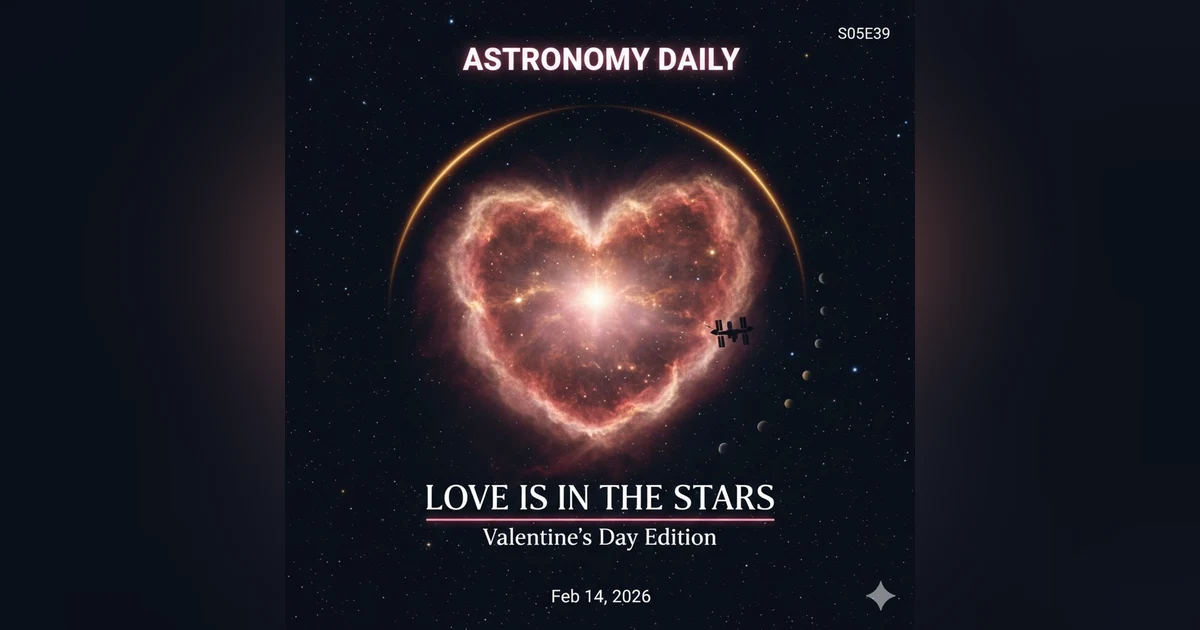
42
00:02:15.520 --> 00:02:19.319
Earth with four little satellites representing each crew member. Plus
43
00:02:19.319 --> 00:02:22.039
a tiny moon for Commander Mer. It was made by
44
00:02:22.120 --> 00:02:26.479
Mer's childhood best friend and Hathaway's daughter. That's pretty adorable,
45
00:02:27.240 --> 00:02:28.039
it really is.
46
00:02:28.599 --> 00:02:32.120
Docking is expected at around three point fifteen pm Eastern
47
00:02:32.159 --> 00:02:34.599
Time today, so by the time many of you are
48
00:02:34.639 --> 00:02:37.639
listening to this, the ISS should be back to its
49
00:02:37.680 --> 00:02:42.960
full complement of seven. NASA Administrator Jared Isaacman praised the teams,
50
00:02:43.319 --> 00:02:47.439
saying they brought Crew eleven home early, pulled Crew twelve forward,
51
00:02:47.680 --> 00:02:50.199
and did it all while preparing for the Artemis two
52
00:02:50.319 --> 00:02:53.479
moon mission. A busy few weeks at NASA, to say
53
00:02:53.520 --> 00:02:54.000
the least.
54
00:02:54.639 --> 00:02:57.560
And speaking of the Artemis to rocket, there was a
55
00:02:57.560 --> 00:03:01.039
fantastic photo from Kennedy Space Center this week showing the
56
00:03:01.080 --> 00:03:04.800
massive SLS Moon rocket photo bombing the Crew twelve Falcon
57
00:03:04.919 --> 00:03:08.960
nine on the neighboring launch pad, two very different rockets
58
00:03:09.080 --> 00:03:13.199
side by side, representing the present and future of human spaceflight.
59
00:03:13.840 --> 00:03:16.319
Now we've been keeping you updated on this one, but
60
00:03:16.439 --> 00:03:19.080
with just three days to go, it's time for a
61
00:03:19.120 --> 00:03:24.280
final reminder. On Tuesday, February seventeenth, the first solar eclipse
62
00:03:24.280 --> 00:03:27.599
of twenty twenty six will take place. An annular solar
63
00:03:27.639 --> 00:03:31.240
eclipse or also known as a ring of fire eclipse.
64
00:03:31.879 --> 00:03:34.240
And here's the thing. This one is going to be
65
00:03:34.319 --> 00:03:38.159
witnessed by more penguins than people. The path of annularity,
66
00:03:38.319 --> 00:03:41.360
where you'd actually see that stunning ring of sunlight around
67
00:03:41.360 --> 00:03:44.520
the Moon, cuts across a remote stretch of Antarctica and
68
00:03:44.560 --> 00:03:45.439
the Southern Ocean.
69
00:03:46.039 --> 00:03:49.599
At maximum eclipse, the Moon will cover about ninety six
70
00:03:49.680 --> 00:03:53.240
percent of the Sun's disc, leaving that slim glowing ring
71
00:03:53.400 --> 00:03:56.479
visible for up to two minutes and twenty seconds. But
72
00:03:56.639 --> 00:03:59.000
you'd need to be at one of the scientific research
73
00:03:59.039 --> 00:04:03.159
stations down in Antarctica, like the French Italian Concordia Station
74
00:04:03.680 --> 00:04:05.120
or Russia's Myrni station.
75
00:04:05.840 --> 00:04:08.759
For the rest of the world, partial phases will be
76
00:04:08.840 --> 00:04:12.280
visible from the very southern tips of Chile and Argentina
77
00:04:12.840 --> 00:04:16.519
and the cross parts of Southern Africa, including South Africa,
78
00:04:16.680 --> 00:04:21.120
Mozambique and Madagascar. But if you're in Europe, North America
79
00:04:21.279 --> 00:04:23.759
or most of Asia, no dice on this one. I'm
80
00:04:23.800 --> 00:04:25.079
afraid Bill.
81
00:04:25.160 --> 00:04:28.360
It's a reminder that eclipse season is upon us, and
82
00:04:28.399 --> 00:04:30.519
that brings us neatly to our next story.
83
00:04:30.879 --> 00:04:34.279
Have you ever noticed that solar eclipses and lunar eclipses
84
00:04:34.319 --> 00:04:37.959
seem to arrive in pairs. It's not a coincidence. Every
85
00:04:38.040 --> 00:04:41.199
eclipse is part of a predictable pattern during a short
86
00:04:41.240 --> 00:04:43.160
window known as an eclipse season.
87
00:04:43.480 --> 00:04:46.879
That's right. An eclipse season lasts about thirty one to
88
00:04:47.120 --> 00:04:50.199
thirty seven days, and there are typically two each year,
89
00:04:50.480 --> 00:04:54.000
roughly six months apart. They occur when the Sun passes
90
00:04:54.040 --> 00:04:56.759
near one of the lunar nodes, the points where the
91
00:04:56.800 --> 00:05:00.319
Moon's tilted orbit crosses the plane of Earth's orbit around
92
00:05:00.319 --> 00:05:03.560
the Sun. During this window, the geometry lines up for
93
00:05:03.600 --> 00:05:04.360
eclipses to.
94
00:05:04.279 --> 00:05:07.319
Happen, and because the window is long enough to contain
95
00:05:07.399 --> 00:05:09.839
both a new moon and a full moon, which are
96
00:05:09.879 --> 00:05:13.240
always about two weeks apart, you almost always get a pair,
97
00:05:13.439 --> 00:05:16.360
a solar eclipse at new moon and the lunar eclipse
98
00:05:16.399 --> 00:05:18.279
at full moon, or vice versa.
99
00:05:18.360 --> 00:05:22.160
So the annular solar eclipse on February seventeenth is the
100
00:05:22.199 --> 00:05:26.360
opening act. Exactly fourteen days later, on March third, the
101
00:05:26.399 --> 00:05:30.560
same eclipse season delivers a total lunar eclipse, a blood moon,
102
00:05:30.839 --> 00:05:34.439
with the Moon spending nearly an hour fully inside Earth's
103
00:05:34.560 --> 00:05:35.720
dark umbrel.
104
00:05:35.360 --> 00:05:39.040
Shadow, and that one is much more accessible observers in
105
00:05:39.120 --> 00:05:43.519
East Asia Australia. The Pacific and western North America will
106
00:05:43.560 --> 00:05:47.120
have excellent views of the Moon turning that gorgeous coppery
107
00:05:47.160 --> 00:05:48.439
color during flatality.
108
00:05:48.639 --> 00:05:51.879
But wait, there's more. The second eclipse season of twenty
109
00:05:51.920 --> 00:05:55.879
twenty six arrives in August, and this one is the blockbuster.
110
00:05:56.360 --> 00:06:01.560
On August twelfth, a total solar eclipse will sweep across Greenland, Iceland,
111
00:06:01.639 --> 00:06:05.519
and northern Spain. That's the first total solar eclipse since
112
00:06:05.600 --> 00:06:08.800
April twenty twenty four, and much of Western Europe and
113
00:06:08.839 --> 00:06:12.240
North America will see at least a deep partial eclipse.
114
00:06:12.800 --> 00:06:16.279
Then two weeks after that, on August twenty eighth, a
115
00:06:16.399 --> 00:06:20.120
partial lunar eclipse rounds out the season. So twenty twenty
116
00:06:20.160 --> 00:06:22.639
six really is shaping up to be a remarkable year
117
00:06:22.680 --> 00:06:27.079
for eclipse chasers, for eclipses, two seasons, and some genuinely
118
00:06:27.120 --> 00:06:30.920
spectacular events. If you've been meeting to plan an eclipse trip,
119
00:06:31.160 --> 00:06:31.839
now's the time.
120
00:06:32.079 --> 00:06:34.720
We'll have much more on the March and August eclipses
121
00:06:34.759 --> 00:06:36.560
as they get closer, so stay tuned.
122
00:06:36.920 --> 00:06:39.600
And now for what has to be the most perfectly
123
00:06:39.639 --> 00:06:42.600
timed astronomy story of the year. Just in time for
124
00:06:42.720 --> 00:06:46.319
Valentine's Day, Space has sent us a heart shaped greeting.
125
00:06:46.680 --> 00:06:50.319
The star Mira A, about three hundred light years from Earth,
126
00:06:50.560 --> 00:06:53.639
has ejected a cloud of gas and dust that forms
127
00:06:53.680 --> 00:06:56.639
a striking heart shape around it. And this isn't just
128
00:06:56.720 --> 00:07:00.879
a pretty picture, it's a genuinely surprising science discovery.
129
00:07:01.360 --> 00:07:03.879
Mira A is a red giant star, one of the
130
00:07:03.879 --> 00:07:07.199
most famous variable stars in the sky. It was first
131
00:07:07.240 --> 00:07:11.079
documented all the way back in fifteen ninety six as
132
00:07:11.120 --> 00:07:13.439
a star. In the last stages of its life, it's
133
00:07:13.439 --> 00:07:17.160
been shedding material into space, but the amount and speed
134
00:07:17.240 --> 00:07:20.199
of this particular rejection caught astronomers off guard.
135
00:07:20.560 --> 00:07:24.519
The study, led by Theo Corey at Sweden's Chalmers University
136
00:07:24.519 --> 00:07:28.839
of Technology, found that Mira A ejected roughly seven earth
137
00:07:28.920 --> 00:07:32.879
masses of material in this burst. Using observations from both
138
00:07:32.920 --> 00:07:36.839
the Very Large Telescope and the Alma radio array in Chile,
139
00:07:37.279 --> 00:07:40.639
the team discovered that gas fills the heart shaped structure,
140
00:07:40.920 --> 00:07:45.480
while dust concentrates along the outer edges, creating a beautiful
141
00:07:45.560 --> 00:07:46.639
glowing outline.
142
00:07:46.879 --> 00:07:50.160
What's particularly fascinating is that the star appears to be
143
00:07:50.199 --> 00:07:55.120
acting like a lighthouse, illuminating its surroundings unevenly. Corey said
144
00:07:55.120 --> 00:07:57.639
that they were very surprised to see the structure, and
145
00:07:57.720 --> 00:08:01.199
that the star's illumination of the surrounding us varies in
146
00:08:01.319 --> 00:08:02.560
unexpected ways.
147
00:08:02.720 --> 00:08:05.600
And there's a companion star in this love story too.
148
00:08:06.160 --> 00:08:09.199
Mira B, a white dwarf star that orbits Mira A,
149
00:08:09.639 --> 00:08:12.879
is already beginning to gather some of the ejected material.
150
00:08:13.360 --> 00:08:17.360
The researchers say they'll keep monitoring the expanding cloud because
151
00:08:17.399 --> 00:08:20.279
it could eventually affect Mira B. Though we've got a
152
00:08:20.319 --> 00:08:24.399
cosmic couple exchanging material on Valentine's Day, You couldn't make
153
00:08:24.439 --> 00:08:24.759
it up.
154
00:08:24.920 --> 00:08:27.759
The study has been accepted for publication in the journal
155
00:08:27.800 --> 00:08:32.360
Astronomy and Astrophysics, and the preprint is already available on archive.
156
00:08:32.960 --> 00:08:34.679
A truly heartfelt discovery.
157
00:08:35.000 --> 00:08:40.120
Literally from hearts to headspinners. Scientists have been lift puzzled
158
00:08:40.120 --> 00:08:43.679
by a comment that has done something truly extraordinary. It's
159
00:08:43.720 --> 00:08:45.600
flipped its rotation direction.
160
00:08:46.159 --> 00:08:50.960
Palmet forty one p Tutal Jacobini Cresak try saying that
161
00:08:51.000 --> 00:08:54.960
three times fast was observed by NASAs Swift spacecrafts back
162
00:08:54.960 --> 00:08:59.759
in twenty seventeen, slowing its rotation dramatically. It went from
163
00:09:00.399 --> 00:09:04.200
once every twenty hours to once every fifty three hours
164
00:09:04.240 --> 00:09:05.399
in just sixty days.
165
00:09:06.159 --> 00:09:08.919
To put that in context, the previous record for a
166
00:09:08.960 --> 00:09:12.759
commentary spin down was held by Comet Hartly II, which
167
00:09:12.799 --> 00:09:16.759
slowed from seventeen to nineteen hours over ninety days. So
168
00:09:17.000 --> 00:09:20.480
Comet forty one p changed its spin rate ten times
169
00:09:20.519 --> 00:09:24.360
more dramatically in two thirds the time. It's unprecedented.
170
00:09:25.159 --> 00:09:28.399
But that's not even the stranger part. New analysis of
171
00:09:28.480 --> 00:09:32.679
Hubble space telescope images by astronomer David Jewett at UCLA
172
00:09:33.039 --> 00:09:37.200
has revealed that after slowing down, the comet's rotation appeared
173
00:09:37.200 --> 00:09:40.559
to actually reverse it started spinning the other way.
174
00:09:41.399 --> 00:09:45.120
The culprit appears to be the comet's own outgassing. As
175
00:09:45.159 --> 00:09:48.240
comets approach the Sun, the heat up and release jets
176
00:09:48.240 --> 00:09:51.759
of gas. When that gas escapes unevenly from the surface,
177
00:09:52.039 --> 00:09:56.399
what scientists call anisotropic outgasing, it creates a torque on
178
00:09:56.440 --> 00:10:00.519
the nucleus, gradually changing and eventually reversing its spin.
179
00:10:01.440 --> 00:10:04.399
Jewett estimates that the nucleus is less than zero point
180
00:10:04.440 --> 00:10:09.240
seven kilometers in radius, making it particularly susceptible to these forces.
181
00:10:09.600 --> 00:10:13.639
And here's the sobering implication. The lifetime of the nucleus
182
00:10:13.639 --> 00:10:17.519
to rotational instability is just a few decades, which is
183
00:10:17.600 --> 00:10:20.720
incredibly short compared to the thousands of years it's been
184
00:10:20.720 --> 00:10:21.639
in its current orbit.
185
00:10:22.480 --> 00:10:26.000
So while the comet's orbit might be stable for millennia,
186
00:10:26.080 --> 00:10:29.639
its physical integrity is much more fragile. It raises the
187
00:10:29.720 --> 00:10:32.559
question of whether comets might not last as long as
188
00:10:32.600 --> 00:10:36.720
we previously thought, with their own internal forces eventually tearing
189
00:10:36.720 --> 00:10:39.799
them apart. The paper is available as a pre print
190
00:10:39.840 --> 00:10:42.759
on archive for anyone who wants to dig into the details.
191
00:10:43.240 --> 00:10:46.120
And finally, here's something for everyone to look forward to.
192
00:10:46.200 --> 00:10:49.840
Later this month, a rare six planet parade is building
193
00:10:49.840 --> 00:10:52.799
in the evening sky, and the best part, it's happening
194
00:10:52.840 --> 00:10:54.639
at a perfectly civilized hour.
195
00:10:55.360 --> 00:10:58.960
Throughout February, six planets are lining up across the sky
196
00:10:59.120 --> 00:11:07.279
in what astronomers call a planetary alignment. The parade features Mercury, Venus, Mars, Jupiter, Uranus,
197
00:11:07.360 --> 00:11:10.759
and Neptune, and the show peaks on February twenty eighth.
198
00:11:11.480 --> 00:11:15.759
Now, four of those Mercury, Venus, Mars, and Jupiter will
199
00:11:15.799 --> 00:11:18.960
be visible to the naked eye, Urinus and Neptune will
200
00:11:18.960 --> 00:11:22.679
require binoculars or a telescope. The best time to look
201
00:11:22.759 --> 00:11:26.080
is about thirty minutes after your local sunset low in
202
00:11:26.120 --> 00:11:29.639
the western sky. You'll want a clear, unobstructed horizon.
203
00:11:30.279 --> 00:11:33.000
Mercury might be the trickiest to spot because of its
204
00:11:33.000 --> 00:11:36.399
low position near the horizon, but Venus and Jupiter should
205
00:11:36.399 --> 00:11:39.759
be unmistakable. They're the brightest objects in the evening sky
206
00:11:39.960 --> 00:11:40.639
after the moon.
207
00:11:41.399 --> 00:11:44.159
Now, this isn't quite as rare as the seven planet
208
00:11:44.159 --> 00:11:47.679
alignment we saw in February last year, which included all
209
00:11:47.679 --> 00:11:51.559
the classical planets plus Uranus and Neptune. That one won't
210
00:11:51.559 --> 00:11:55.159
happen again until twenty forty. But groupings of six planets
211
00:11:55.200 --> 00:11:57.000
are still pretty special.
212
00:11:57.279 --> 00:12:00.759
As astronomer Greg Brown from the Royal Observatory Greenwich has
213
00:12:00.799 --> 00:12:04.240
pointed out. While groups of three or four planets appearing
214
00:12:04.279 --> 00:12:08.320
together are relatively common, the more planets involved, the more
215
00:12:08.480 --> 00:12:12.440
orbital geometry has to cooperate. So a six planet parade
216
00:12:12.559 --> 00:12:14.600
is definitely worth stepping outside for.
217
00:12:15.399 --> 00:12:18.720
Mark your calendars for February twenty eighth, and maybe start
218
00:12:18.759 --> 00:12:22.080
scoping out a good western facing spot with a low horizon.
219
00:12:22.440 --> 00:12:23.919
We'll remind you as a day gets.
220
00:12:23.759 --> 00:12:27.639
Closer before we go, one more little Valentine's Day treat.
221
00:12:28.080 --> 00:12:31.320
If you're in the Northern United States or southern Canada tonight,
222
00:12:31.720 --> 00:12:34.960
you might want to step outside after dark and look north.
223
00:12:35.440 --> 00:12:40.639
NOAA forecasters are predicting possible G one minor geomagnetic storming
224
00:12:40.679 --> 00:12:43.840
this weekend, driven by the combined effects of a coronal
225
00:12:43.919 --> 00:12:48.000
whole high speed solar windstream and a coronal mass ejection
226
00:12:48.159 --> 00:12:49.200
from earlier this week.
227
00:12:49.639 --> 00:12:52.879
So there's a chance, no guarantees, but a chance to
228
00:12:52.919 --> 00:12:56.360
see the Northern lights tonight and into Sunday. Dates like
229
00:12:56.440 --> 00:12:59.320
Michigan and Maine, and of course our friends in Canada
230
00:12:59.399 --> 00:13:02.399
and northern US Europe have the best odds. What could
231
00:13:02.440 --> 00:13:05.559
be more romantic than watching the Aurora dance across the
232
00:13:05.600 --> 00:13:07.080
sky on Valentine's Day?
233
00:13:07.399 --> 00:13:10.960
Imagine telling your date, I arranged the Northern Lights just
234
00:13:11.080 --> 00:13:11.440
for you.
235
00:13:12.080 --> 00:13:15.919
Smooth move, very smooth. Well that's off for today's show.
236
00:13:16.039 --> 00:13:20.120
Whether you're spending Valentine's Day stargazing, watching a spacecraft doc
237
00:13:20.200 --> 00:13:23.279
with the Space Station, or just enjoying the cosmic love
238
00:13:23.320 --> 00:13:26.399
story of Mira A and its heart shaped nebula, we
239
00:13:26.480 --> 00:13:29.200
hope the universe gives you something to smile about today.
240
00:13:29.440 --> 00:13:32.279
Don't forget to subscribe to Astronomy Daily wherever you get
241
00:13:32.279 --> 00:13:35.480
your podcasts, and you can find us online at Astronomy
242
00:13:35.559 --> 00:13:39.600
Daily dot io and on social media at astro Daily Pod.