March 7, 2026
Humanity Just Moved an Asteroid's Orbit Around the Sun
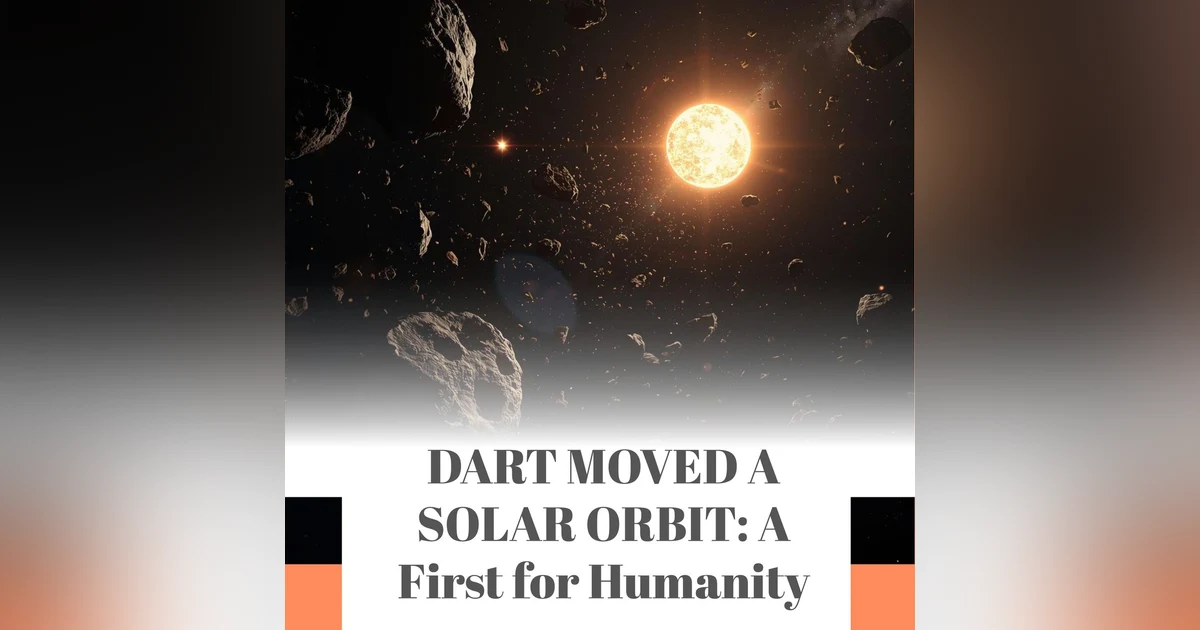
ASTRONOMY DAILY — S05E57 | Saturday 7 March 2026
A landmark week for planetary defence — scientists confirm that NASA's DART impact didn't just move an asteroid's orbit around its companion, it shifted the entire binary system's path around the Sun. Plus: gravitational waves double, a European spacecraft goes silent, a 45-year theory bites the dust, a young Sun caught in the act — and a double planet show in tonight's sky. In This Episode • [00:00] Cold Open — Humanity moved a solar orbit • [02:00] Story 1: DART changed Didymos's orbit around the Sun (Science Advances, March 2026) • [06:00] Story 2: LIGO-Virgo-KAGRA doubles the gravitational wave catalog with GWTC-4 • [10:00] Story 3: ESA's Proba-3 Coronagraph spacecraft goes dark — recovery underway • [13:00] Story 4: Stars keep their rotation pattern for life — 45-year theory overturned (Nature Astronomy) • [16:30] Story 5: Chandra captures first astrosphere around a Sun-like star • [19:30] Story 6: Venus and Saturn pair up in tonight's sky — skywatching guide Connect With Us • Website & Blog: astronomydaily.io • Social: @AstroDailyPod • Network: Bitesz.com Podcast Network
Become a supporter of this podcast: https://www.spreaker.com/podcast/astronomy-daily-space-news-updates--5648921/support.
Sponsor Details:
Ensure your online privacy by using NordVPN. To get our special listener deal and save a lot of money, visit www.bitesz.com/nordvpn. You'll be glad you did!
Become a supporter of Astronomy Daily by joining our Supporters Club. Commercial free episodes daily are only a click way... Click Here
This episode includes AI-generated content.
A landmark week for planetary defence — scientists confirm that NASA's DART impact didn't just move an asteroid's orbit around its companion, it shifted the entire binary system's path around the Sun. Plus: gravitational waves double, a European spacecraft goes silent, a 45-year theory bites the dust, a young Sun caught in the act — and a double planet show in tonight's sky. In This Episode • [00:00] Cold Open — Humanity moved a solar orbit • [02:00] Story 1: DART changed Didymos's orbit around the Sun (Science Advances, March 2026) • [06:00] Story 2: LIGO-Virgo-KAGRA doubles the gravitational wave catalog with GWTC-4 • [10:00] Story 3: ESA's Proba-3 Coronagraph spacecraft goes dark — recovery underway • [13:00] Story 4: Stars keep their rotation pattern for life — 45-year theory overturned (Nature Astronomy) • [16:30] Story 5: Chandra captures first astrosphere around a Sun-like star • [19:30] Story 6: Venus and Saturn pair up in tonight's sky — skywatching guide Connect With Us • Website & Blog: astronomydaily.io • Social: @AstroDailyPod • Network: Bitesz.com Podcast Network
Become a supporter of this podcast: https://www.spreaker.com/podcast/astronomy-daily-space-news-updates--5648921/support.
Sponsor Details:
Ensure your online privacy by using NordVPN. To get our special listener deal and save a lot of money, visit www.bitesz.com/nordvpn. You'll be glad you did!
Become a supporter of Astronomy Daily by joining our Supporters Club. Commercial free episodes daily are only a click way... Click Here
This episode includes AI-generated content.
WEBVTT
1
00:00:00.160 --> 00:00:02.240
You're listening to Astronomy Daily.
2
00:00:02.520 --> 00:00:06.320
I'm Anna and I'm Avery. It is Saturday, the seventh
3
00:00:06.320 --> 00:00:09.400
of March twenty twenty six, and as usual, we have
4
00:00:09.439 --> 00:00:10.759
a packed show for you today.
5
00:00:11.240 --> 00:00:14.839
We absolutely do. Here's a question to get you thinking.
6
00:00:15.439 --> 00:00:19.879
Back in September twenty twenty two, NASA slammed a spacecraft
7
00:00:19.960 --> 00:00:23.280
into an asteroid. You probably remember that, but did you
8
00:00:23.359 --> 00:00:28.000
know that we only just confirmed something remarkable. That impact
9
00:00:28.120 --> 00:00:32.119
didn't just nudge the asteroid, It actually changed the orbit
10
00:00:32.200 --> 00:00:35.640
of an entire asteroid system around the Sun.
11
00:00:36.280 --> 00:00:39.200
For the first time in human history, we move the
12
00:00:39.240 --> 00:00:43.640
celestial body's solar orbit. And that's just story one. We've
13
00:00:43.679 --> 00:00:48.280
also got gravitational waves, a spacecraft emergency, an orbit, a
14
00:00:48.320 --> 00:00:51.439
forty five year old theory biting the dust, our young
15
00:00:51.560 --> 00:00:55.000
Sun blowing its very first cosmic bubble, and the gorgeous
16
00:00:55.039 --> 00:00:57.719
double planet show. Intonight, sky, let's go.
17
00:00:58.320 --> 00:01:01.200
So let's kick off with the dark story, and I
18
00:01:01.200 --> 00:01:04.239
think it deserves a moment to really sync in. We
19
00:01:04.400 --> 00:01:07.120
already knew that Dart was a success. We knew it
20
00:01:07.239 --> 00:01:11.079
shortened the orbit of dimorphous around its partner asteroid Ditamos
21
00:01:11.120 --> 00:01:14.319
by about thirty three minutes. That was confirmed back in
22
00:01:14.359 --> 00:01:17.920
twenty twenty two, but a new study published yesterday in
23
00:01:17.959 --> 00:01:22.079
the journal Science Advances has revealed something even bigger.
24
00:01:22.760 --> 00:01:28.040
Right, because ditamos and dimorphous are gravitationally linked, they moved together,
25
00:01:28.480 --> 00:01:31.760
and researchers have now confirmed that the debris blasted off
26
00:01:31.760 --> 00:01:36.159
Dimorphous during that impact was so enormous We're talking over
27
00:01:36.239 --> 00:01:39.519
a million kilograms of rock and dust, that it gave
28
00:01:39.560 --> 00:01:42.280
the whole binary system an extra kick.
29
00:01:42.519 --> 00:01:46.280
And that extra kick was measurable. The orbital period of
30
00:01:46.319 --> 00:01:50.319
the entire Ditamo system around the Sun shortened by zero
31
00:01:50.400 --> 00:01:54.439
point one point five seconds. Now, I know that sounds tiny,
32
00:01:54.760 --> 00:01:57.799
but this is the first time a human made object
33
00:01:57.879 --> 00:02:01.480
has measurably changed the path of a celestial body around
34
00:02:01.480 --> 00:02:02.000
our star.
35
00:02:02.359 --> 00:02:06.280
To even measure that, the team had to get incredibly creative.
36
00:02:06.760 --> 00:02:10.759
They tracked what are called stellar occultations, moments when the
37
00:02:10.800 --> 00:02:14.360
asteroid passes in front of a background star and briefly
38
00:02:14.400 --> 00:02:18.879
blocks its light. Volunteers around the world contributed twenty two
39
00:02:18.960 --> 00:02:22.800
of these observations between October twenty twenty two and March
40
00:02:22.879 --> 00:02:27.280
twenty twenty five. Twenty two pinpoint moments of a star
41
00:02:27.439 --> 00:02:30.800
blinking out and from those They derived the change of
42
00:02:30.960 --> 00:02:34.599
zero point fifteen seconds in a seven hundred seventy day
43
00:02:34.680 --> 00:02:35.439
solar orbit.
44
00:02:35.680 --> 00:02:39.280
The momentum enhancement factor turned out to be about two,
45
00:02:39.879 --> 00:02:43.759
meaning the debris ejected by the impact roughly doubled the
46
00:02:43.840 --> 00:02:48.000
total push given to the asteroid. Dart didn't just hit dimorphos,
47
00:02:48.319 --> 00:02:51.439
it turned a dimorphous into a rocket, and.
48
00:02:51.439 --> 00:02:55.000
Thomas Statler, leads Sciences for Solar System Small Bodies at
49
00:02:55.080 --> 00:02:59.960
NASA Headquarters, framed it perfectly. He said, a tiny change can,
50
00:03:00.000 --> 00:03:04.280
and given enough time, grow into a significant deflection. This
51
00:03:04.360 --> 00:03:08.840
result validates kinetic impact as a genuine planetary defense technique,
52
00:03:09.199 --> 00:03:11.680
not just for nudging a moon, but for altering the
53
00:03:11.719 --> 00:03:14.840
path of an entire binary system around the Sun.
54
00:03:15.400 --> 00:03:19.719
Lisas harrispacecraft, which launched in twenty twenty four, is expected
55
00:03:19.759 --> 00:03:22.439
to arrive at the Ditamo system later this year to
56
00:03:22.520 --> 00:03:25.680
study the aftermath of close, though the science from this
57
00:03:25.800 --> 00:03:28.280
impact is very much still unfolding.
58
00:03:28.840 --> 00:03:33.159
Story two and it is a landmark one. The LGO
59
00:03:33.360 --> 00:03:38.840
Virgocagra collaboration the LVK has just published the fourth edition
60
00:03:39.000 --> 00:03:44.000
of the Gravitational Wave Transient Catalog known as GWTC four,
61
00:03:44.560 --> 00:03:48.039
and the headline they've more than doubled the total number
62
00:03:48.039 --> 00:03:50.800
of gravitational wave detections ever made.
63
00:03:51.159 --> 00:03:55.639
Before this release, the entire catalog contained ninety candidates from
64
00:03:55.680 --> 00:03:59.840
three previous observing runs stretching back to twenty fifteen. New
65
00:04:00.080 --> 00:04:03.680
catalog adds one hundred and twenty eight new events, all
66
00:04:03.719 --> 00:04:06.599
detected during just the first nine months of the fourth
67
00:04:06.599 --> 00:04:10.400
observing run between May twenty twenty three and January twenty
68
00:04:10.439 --> 00:04:10.919
twenty four.
69
00:04:11.479 --> 00:04:14.840
So we've gone from ninety to two hundred and eighteen
70
00:04:15.039 --> 00:04:18.879
in one update. And it's not just the quantity that's exciting,
71
00:04:19.000 --> 00:04:22.959
it's the variety. The catalog includes the heaviest black hole
72
00:04:23.040 --> 00:04:26.879
binary merger ever detected, with each black hole weighing in
73
00:04:26.920 --> 00:04:29.480
at around one hundred and thirty times the mass of
74
00:04:29.480 --> 00:04:29.879
our Sun.
75
00:04:30.319 --> 00:04:33.279
There's also a binary where both black holes are spinning
76
00:04:33.360 --> 00:04:36.360
at roughly forty percent the speed of light, and there
77
00:04:36.399 --> 00:04:39.480
are two new mixed mergers, a black hole colliding with
78
00:04:39.560 --> 00:04:42.639
a neutron star. Each one of those is a treasure
79
00:04:42.680 --> 00:04:44.040
trove for astrophysics.
80
00:04:44.439 --> 00:04:47.759
Daniel Williams, a researcher at the University of Glasgow and
81
00:04:47.959 --> 00:04:51.480
LVK member, put it well. He said they're pushing into
82
00:04:51.560 --> 00:04:55.279
new parts of parameter space, seeing things that are more massive,
83
00:04:55.480 --> 00:05:00.560
spinning faster, and more astrophysically unusual than anything detect before.
84
00:05:01.199 --> 00:05:03.240
What I love about this is what it means for
85
00:05:03.360 --> 00:05:06.680
testing Einstein. The catalog includes an event with one of
86
00:05:06.720 --> 00:05:11.519
the loudest gravitational wave signals ever recorded GW two three
87
00:05:11.680 --> 00:05:14.279
zero eight one four, and the team used it to
88
00:05:14.360 --> 00:05:18.920
run precision tests of general relativity. It passed with flying colors,
89
00:05:19.120 --> 00:05:21.439
but the fact that we're now running those tests on
90
00:05:21.519 --> 00:05:23.800
events this extreme is remarkable.
91
00:05:24.560 --> 00:05:27.680
Bigro and its partners are currently in a maintenance break,
92
00:05:27.959 --> 00:05:30.720
but a new six month observing run is expected to
93
00:05:30.759 --> 00:05:34.360
begin in late twenty twenty six. Given how rapidly the
94
00:05:34.399 --> 00:05:37.600
catalog is growing, that run could double it again.
95
00:05:38.160 --> 00:05:40.720
All right, story three, and this one has a genuine
96
00:05:40.800 --> 00:05:44.800
element of suspense. Europe's Proba three mission is in trouble.
97
00:05:45.160 --> 00:05:48.240
Issa confirmed yesterday that they have lost contact with one
98
00:05:48.279 --> 00:05:51.240
of the two spacecraft that make up the Proba three mission.
99
00:05:52.040 --> 00:05:55.720
Let me explain what Proba three actually is, because it's
100
00:05:55.759 --> 00:05:59.480
a fascinating concept. It launched from India back in December
101
00:05:59.519 --> 00:06:02.639
twenty two, twenty four, and it consists of two separate
102
00:06:02.680 --> 00:06:07.439
spacecraft designed to fly in extraordinarily precise formation about one
103
00:06:07.560 --> 00:06:11.680
hundred and fifty meters apart. To create artificial solar eclipses
104
00:06:11.720 --> 00:06:12.600
in space.
105
00:06:12.920 --> 00:06:17.000
One spacecraft, the occult, physically blocks the bright face of
106
00:06:17.040 --> 00:06:20.720
the Sun. The other, the coronagraph, uses that shadow to
107
00:06:20.800 --> 00:06:24.959
image the Sun's faint outer atmosphere, the corona, without being
108
00:06:25.000 --> 00:06:28.199
blinded by the solar disc. And to make this work,
109
00:06:28.399 --> 00:06:32.800
the two spacecraft must maintain alignment to within millimeter accuracy.
110
00:06:33.399 --> 00:06:37.439
It's an almost absurdly precise operation, and it was working.
111
00:06:37.959 --> 00:06:41.319
In May of last year. The spacecraft achieved their landmark
112
00:06:41.399 --> 00:06:45.120
formation flying test. In June, they captured the first ever
113
00:06:45.199 --> 00:06:48.800
images of an artificial solar eclipse in space. It was
114
00:06:48.839 --> 00:06:51.639
a genuine technological first.
115
00:06:51.680 --> 00:06:56.000
And then on the weekend of February fourteenth, something went wrong.
116
00:06:56.399 --> 00:07:00.240
The CORONAFT spacecraft, the one doing the imaging experience hinst
117
00:07:00.279 --> 00:07:03.800
an anomaly that prevented it from entering safe mode. Issa
118
00:07:03.879 --> 00:07:07.480
describes it as a progressive loss of attitude. In other words,
119
00:07:07.560 --> 00:07:10.759
the spacecraft slowly lost its orientation.
120
00:07:10.959 --> 00:07:14.199
As it drifted. Its solar panels moved away from the Sun,
121
00:07:14.560 --> 00:07:18.279
the batteries drained, the spacecraft dropped into survival mode and
122
00:07:18.480 --> 00:07:22.839
contact was lost. ESA says root cause is under investigation,
123
00:07:23.279 --> 00:07:26.759
and they're exploring whether the companion occult or spacecraft can
124
00:07:26.800 --> 00:07:29.199
be maneuvered closer to assist in recovery.
125
00:07:29.800 --> 00:07:33.680
Losing either spacecraft would effectively end the probe of three mission.
126
00:07:34.240 --> 00:07:36.839
ESA says teams are working hard and they will provide
127
00:07:36.879 --> 00:07:40.639
updates as new information becomes available. This is very much
128
00:07:40.680 --> 00:07:42.800
a developing story. We'll keep following it.
129
00:07:43.639 --> 00:07:46.800
Story four is a classic example of a long held
130
00:07:46.879 --> 00:07:51.879
scientific belief getting overturned. For forty five years, astronomers thought
131
00:07:51.879 --> 00:07:55.560
they understood how stars like our Sun change as they age,
132
00:07:55.759 --> 00:07:58.680
specifically how their rotation pattern evolved.
133
00:07:59.240 --> 00:08:04.120
The idea this our Sun rotates differentially. The equator takes
134
00:08:04.120 --> 00:08:07.439
about twenty five days to complete one full rotation, while
135
00:08:07.439 --> 00:08:11.839
the poles take about thirty five days. Equator faster, poles slower.
136
00:08:12.240 --> 00:08:16.800
That's called solar type differential rotation, and scientists believed that
137
00:08:16.959 --> 00:08:20.079
as stars slowed down over billions of years, they would
138
00:08:20.120 --> 00:08:23.759
eventually flip the poles would start spinning faster than the
139
00:08:23.800 --> 00:08:24.759
equator instead.
140
00:08:25.519 --> 00:08:31.319
That flip state was called antisolar differential rotation. Theoretical simulations
141
00:08:31.360 --> 00:08:34.399
predicted it. No one had ever observed it, but the
142
00:08:34.399 --> 00:08:37.639
model said it should happen, and for decades the lack
143
00:08:37.679 --> 00:08:41.600
of observations was attributed to limitations in our telescope technology.
144
00:08:41.919 --> 00:08:47.480
But now researchers at Nagoya University in Japan have used Fugaku,
145
00:08:47.919 --> 00:08:52.600
the country's most powerful supercomputer, to run the most detailed
146
00:08:52.639 --> 00:08:57.200
simulations ever of stellar interiors, and the result is clear.
147
00:08:57.600 --> 00:08:59.200
The flip doesn't happen.
148
00:09:00.080 --> 00:09:05.240
Key was resolution. Previous simulations were low resolution, and magnetic
149
00:09:05.279 --> 00:09:09.200
fields faded out of the models entirely. At high resolution,
150
00:09:09.639 --> 00:09:13.519
we're talking five point four billion grid points per simulated star,
151
00:09:14.000 --> 00:09:17.960
the magnetic field stayed strong, and those magnetic fields, it
152
00:09:17.960 --> 00:09:21.159
turns out, are what prevent the rotation from flipping.
153
00:09:21.720 --> 00:09:25.799
Professor Heidiyuki Haata, one of the co authors, set it simply,
154
00:09:26.279 --> 00:09:30.200
turbulence and magnetism keep the equator spinning faster than the
155
00:09:30.240 --> 00:09:34.000
poles throughout the star's life. The switch doesn't happen because
156
00:09:34.080 --> 00:09:38.000
magnetic fields, which previous simulations missed, prevent it.
157
00:09:38.759 --> 00:09:42.679
And there's a bonus finding magnetic fields in solar type
158
00:09:42.679 --> 00:09:47.159
stars weaken continuously throughout their lifetime with no revival In
159
00:09:47.240 --> 00:09:51.559
old age, previous models had predicted a magnetic comeback that
160
00:09:51.720 --> 00:09:52.720
doesn't happen either.
161
00:09:53.440 --> 00:09:57.639
This matters practically too. A corrected model of stellar rotation
162
00:09:57.919 --> 00:10:01.720
helps us better understand the Sun's eleven year sunspot cycle
163
00:10:02.120 --> 00:10:06.279
and could improve our predictions of how magnetic activity affects
164
00:10:06.279 --> 00:10:10.360
the habitability of planets orbiting Sun like stars over billions
165
00:10:10.399 --> 00:10:10.879
of years.
166
00:10:11.720 --> 00:10:15.399
Dory five and it's a lovely one. A real window
167
00:10:15.480 --> 00:10:19.759
into our own Sun's distant past. NASA's Chandra X ray
168
00:10:19.799 --> 00:10:23.440
observatory has captured the very first image of what's called
169
00:10:23.720 --> 00:10:26.240
an astrosphere around the sun like star.
170
00:10:27.000 --> 00:10:30.720
Our Sun has a protective bubble around it, called the heliosphere,
171
00:10:31.080 --> 00:10:34.559
created by the solar wind streaming outward and carving out
172
00:10:34.600 --> 00:10:39.399
a cavity in interstellar space. It's enormous. It extends far
173
00:10:39.480 --> 00:10:42.879
beyond the outer planets and shields the Solar System from
174
00:10:43.000 --> 00:10:46.559
harmful galactic cosmic rays, but we've never been able to
175
00:10:46.600 --> 00:10:48.759
photograph it from the outside.
176
00:10:48.840 --> 00:10:53.039
The star Chandra observed is called HD sixty one zero
177
00:10:53.159 --> 00:10:56.080
zero five, and it sits about one hundred and twenty
178
00:10:56.159 --> 00:11:00.159
light years away in the constellation Pupis. It has roughly
179
00:11:00.200 --> 00:11:03.240
the same mass and temperature as our Sun, but it's
180
00:11:03.279 --> 00:11:07.080
only about one hundred million years old. Our Sun is
181
00:11:07.120 --> 00:11:11.000
around five billion years old, so HD six one zero
182
00:11:11.159 --> 00:11:15.799
zero five is cosmically speaking a baby, and because.
183
00:11:15.519 --> 00:11:19.320
It's so young, its stellar wind is dramatically more powerful.
184
00:11:19.720 --> 00:11:23.080
It blows about three times faster, and it's twenty five
185
00:11:23.200 --> 00:11:26.679
times denser than the wind from our Sun today. That's
186
00:11:26.720 --> 00:11:30.200
why its astrosphere is bright enough to detect an X rays.
187
00:11:30.600 --> 00:11:34.960
The powerful wind collides with the surrounding interstellar dust and gas,
188
00:11:35.320 --> 00:11:39.480
and that collision produces X ray emission that Chandra can detect.
189
00:11:40.159 --> 00:11:43.799
The astrosphere has a diameter roughly two hundred times the
190
00:11:43.919 --> 00:11:47.480
distance between Earth and the Sun. Carry Lists of Johns
191
00:11:47.519 --> 00:11:51.480
Hopkins University, who led the study, put it beautifully, We've
192
00:11:51.480 --> 00:11:55.200
been studying our Son's heliosphere for decades, but we can
193
00:11:55.240 --> 00:11:58.399
never see it from the outside. This is the closest
194
00:11:58.399 --> 00:12:00.879
thing we have to a photograph of what our own
195
00:12:00.960 --> 00:12:04.159
Sun's bubble look like several billion years ago.
196
00:12:04.759 --> 00:12:08.240
The star is also nicknamed the Moth because a surrounding
197
00:12:08.320 --> 00:12:12.679
disc of dust forms a mothlike structure around it, and interestingly,
198
00:12:12.799 --> 00:12:16.279
the dense dusty environment is actually part of why the
199
00:12:16.320 --> 00:12:20.480
astrosphere is so visible here, making HD six one zero
200
00:12:20.559 --> 00:12:24.679
zero five a uniquely ideal subject for this kind of observation.
201
00:12:25.399 --> 00:12:29.039
And we'll finish with some skywatching news because tonight and
202
00:12:29.120 --> 00:12:33.559
tomorrow night offer something quite special. Venus and Saturn are
203
00:12:33.600 --> 00:12:36.200
meeting up in the evening sky, and it's a treat
204
00:12:36.279 --> 00:12:39.080
for anyone who can get outside shortly after sunset.
205
00:12:39.600 --> 00:12:43.159
Venus is already impossible to miss right now. It's shining
206
00:12:43.200 --> 00:12:46.480
at magnitude minus three point nine, which makes it by
207
00:12:46.559 --> 00:12:49.399
far the brightest object in the sky after the Sun
208
00:12:49.440 --> 00:12:53.759
and moon. Tonight and tomorrow, Saturn sits close alongside it,
209
00:12:54.039 --> 00:12:57.480
though considerably fainter at magnitude one point zero.
210
00:12:57.960 --> 00:13:01.000
The best time to look is about thirty minutes after sunset,
211
00:13:01.120 --> 00:13:04.840
when Venus will be roughly seven degrees above the western horizon.
212
00:13:05.240 --> 00:13:08.679
Binoculars will help a lot. Saturn should pop into view
213
00:13:08.759 --> 00:13:12.600
easily near brilliant Venus. You'll have about seventy minutes before
214
00:13:12.639 --> 00:13:14.639
both planets set, and.
215
00:13:14.639 --> 00:13:17.559
If you're pointing a telescope at Venus tonight, you're in
216
00:13:17.639 --> 00:13:20.720
for an extra treat. The planet is currently showing a
217
00:13:20.799 --> 00:13:25.360
ninety seven percent lit disc, almost fully illuminated from our perspective.
218
00:13:25.679 --> 00:13:29.639
It's a gorgeous site. Neptune is also lurking nearby, just
219
00:13:29.720 --> 00:13:32.759
over a degree from Saturn, though you'll need a telescope
220
00:13:32.759 --> 00:13:34.039
to catch that one.
221
00:13:34.120 --> 00:13:38.279
So get outside this evening. If skies are clear, Venus
222
00:13:38.360 --> 00:13:41.480
is your guide. Find that brilliant white beacon low in
223
00:13:41.519 --> 00:13:44.559
the west, and Saturn will be right there waiting for you.
224
00:13:45.120 --> 00:13:48.159
And that's our show for today. Six stories from an
225
00:13:48.200 --> 00:13:51.440
asteroid nudged around the Sun to a planet pairing up
226
00:13:51.480 --> 00:13:55.039
Intonight's sky. It's a great time to be paying attention
227
00:13:55.200 --> 00:13:56.000
to the universe.
228
00:13:56.639 --> 00:14:00.799
If you enjoyed today's episode, please subscribe wherever you're listening
229
00:14:00.919 --> 00:14:03.960
and leave us a rating or review. It genuinely helps
230
00:14:03.960 --> 00:14:05.120
a show reach more people.
231
00:14:05.799 --> 00:14:08.879
You can find us at Astronomy Daily dot io for
232
00:14:08.919 --> 00:14:11.840
the blog and show notes, and follow us at astro
233
00:14:12.000 --> 00:14:15.840
Daily Pod on all the major social platforms. Until Monday,
234
00:14:16.200 --> 00:14:19.000
keep looking up clear skies, everyone.
235
00:14:19.039 --> 00:14:30.759
Sunday Starsz Starz
1
00:00:00.160 --> 00:00:02.240
2
00:00:02.520 --> 00:00:06.320
3
00:00:06.320 --> 00:00:09.400
4
00:00:09.439 --> 00:00:10.759
5
00:00:11.240 --> 00:00:14.839
6
00:00:15.439 --> 00:00:19.879
7
00:00:19.960 --> 00:00:23.280
8
00:00:23.359 --> 00:00:28.000
9
00:00:28.120 --> 00:00:32.119
10
00:00:32.200 --> 00:00:35.640
11
00:00:36.280 --> 00:00:39.200
12
00:00:39.240 --> 00:00:43.640
13
00:00:43.679 --> 00:00:48.280
14
00:00:48.320 --> 00:00:51.439
15
00:00:51.560 --> 00:00:55.000
16
00:00:55.039 --> 00:00:57.719
17
00:00:58.320 --> 00:01:01.200
18
00:01:01.200 --> 00:01:04.239
19
00:01:04.400 --> 00:01:07.120
20
00:01:07.239 --> 00:01:11.079
21
00:01:11.120 --> 00:01:14.319
22
00:01:14.359 --> 00:01:17.920
23
00:01:17.959 --> 00:01:22.079
24
00:01:22.760 --> 00:01:28.040
25
00:01:28.480 --> 00:01:31.760
26
00:01:31.760 --> 00:01:36.159
27
00:01:36.239 --> 00:01:39.519
28
00:01:39.560 --> 00:01:42.280
29
00:01:42.519 --> 00:01:46.280
30
00:01:46.319 --> 00:01:50.319
31
00:01:50.400 --> 00:01:54.439
32
00:01:54.760 --> 00:01:57.799
33
00:01:57.879 --> 00:02:01.480
34
00:02:01.480 --> 00:02:02.000
35
00:02:02.359 --> 00:02:06.280
36
00:02:06.760 --> 00:02:10.759
37
00:02:10.800 --> 00:02:14.360
38
00:02:14.400 --> 00:02:18.879
39
00:02:18.960 --> 00:02:22.800
40
00:02:22.879 --> 00:02:27.280
41
00:02:27.439 --> 00:02:30.800
42
00:02:30.960 --> 00:02:34.599
43
00:02:34.680 --> 00:02:35.439
44
00:02:35.680 --> 00:02:39.280
45
00:02:39.879 --> 00:02:43.759
46
00:02:43.840 --> 00:02:48.000
47
00:02:48.319 --> 00:02:51.439
48
00:02:51.439 --> 00:02:55.000
49
00:02:55.080 --> 00:02:59.960
50
00:03:00.000 --> 00:03:04.280
51
00:03:04.360 --> 00:03:08.840
52
00:03:09.199 --> 00:03:11.680
53
00:03:11.719 --> 00:03:14.840
54
00:03:15.400 --> 00:03:19.719
55
00:03:19.759 --> 00:03:22.439
56
00:03:22.520 --> 00:03:25.680
57
00:03:25.800 --> 00:03:28.280
58
00:03:28.840 --> 00:03:33.159
59
00:03:33.360 --> 00:03:38.840
60
00:03:39.000 --> 00:03:44.000
61
00:03:44.560 --> 00:03:48.039
62
00:03:48.039 --> 00:03:50.800
63
00:03:51.159 --> 00:03:55.639
64
00:03:55.680 --> 00:03:59.840
65
00:04:00.080 --> 00:04:03.680
66
00:04:03.719 --> 00:04:06.599
67
00:04:06.599 --> 00:04:10.400
68
00:04:10.439 --> 00:04:10.919
69
00:04:11.479 --> 00:04:14.840
70
00:04:15.039 --> 00:04:18.879
71
00:04:19.000 --> 00:04:22.959
72
00:04:23.040 --> 00:04:26.879
73
00:04:26.920 --> 00:04:29.480
74
00:04:29.480 --> 00:04:29.879
75
00:04:30.319 --> 00:04:33.279
76
00:04:33.360 --> 00:04:36.360
77
00:04:36.399 --> 00:04:39.480
78
00:04:39.560 --> 00:04:42.639
79
00:04:42.680 --> 00:04:44.040
80
00:04:44.439 --> 00:04:47.759
81
00:04:47.959 --> 00:04:51.480
82
00:04:51.560 --> 00:04:55.279
83
00:04:55.480 --> 00:05:00.560
84
00:05:01.199 --> 00:05:03.240
85
00:05:03.360 --> 00:05:06.680
86
00:05:06.720 --> 00:05:11.519
87
00:05:11.680 --> 00:05:14.279
88
00:05:14.360 --> 00:05:18.920
89
00:05:19.120 --> 00:05:21.439
90
00:05:21.519 --> 00:05:23.800
91
00:05:24.560 --> 00:05:27.680
92
00:05:27.959 --> 00:05:30.720
93
00:05:30.759 --> 00:05:34.360
94
00:05:34.399 --> 00:05:37.600
95
00:05:38.160 --> 00:05:40.720
96
00:05:40.800 --> 00:05:44.800
97
00:05:45.160 --> 00:05:48.240
98
00:05:48.279 --> 00:05:51.240
99
00:05:52.040 --> 00:05:55.720
100
00:05:55.759 --> 00:05:59.480
101
00:05:59.519 --> 00:06:02.639
102
00:06:02.680 --> 00:06:07.439
103
00:06:07.560 --> 00:06:11.680
104
00:06:11.720 --> 00:06:12.600
105
00:06:12.920 --> 00:06:17.000
106
00:06:17.040 --> 00:06:20.720
107
00:06:20.800 --> 00:06:24.959
108
00:06:25.000 --> 00:06:28.199
109
00:06:28.399 --> 00:06:32.800
110
00:06:33.399 --> 00:06:37.439
111
00:06:37.959 --> 00:06:41.319
112
00:06:41.399 --> 00:06:45.120
113
00:06:45.199 --> 00:06:48.800
114
00:06:48.839 --> 00:06:51.639
115
00:06:51.680 --> 00:06:56.000
116
00:06:56.399 --> 00:07:00.240
117
00:07:00.279 --> 00:07:03.800
118
00:07:03.879 --> 00:07:07.480
119
00:07:07.560 --> 00:07:10.759
120
00:07:10.959 --> 00:07:14.199
121
00:07:14.560 --> 00:07:18.279
122
00:07:18.480 --> 00:07:22.839
123
00:07:23.279 --> 00:07:26.759
124
00:07:26.800 --> 00:07:29.199
125
00:07:29.800 --> 00:07:33.680
126
00:07:34.240 --> 00:07:36.839
127
00:07:36.879 --> 00:07:40.639
128
00:07:40.680 --> 00:07:42.800
129
00:07:43.639 --> 00:07:46.800
130
00:07:46.879 --> 00:07:51.879
131
00:07:51.879 --> 00:07:55.560
132
00:07:55.759 --> 00:07:58.680
133
00:07:59.240 --> 00:08:04.120
134
00:08:04.120 --> 00:08:07.439
135
00:08:07.439 --> 00:08:11.839
136
00:08:12.240 --> 00:08:16.800
137
00:08:16.959 --> 00:08:20.079
138
00:08:20.120 --> 00:08:23.759
139
00:08:23.800 --> 00:08:24.759
140
00:08:25.519 --> 00:08:31.319
141
00:08:31.360 --> 00:08:34.399
142
00:08:34.399 --> 00:08:37.639
143
00:08:37.679 --> 00:08:41.600
144
00:08:41.919 --> 00:08:47.480
145
00:08:47.919 --> 00:08:52.600
146
00:08:52.639 --> 00:08:57.200
147
00:08:57.600 --> 00:08:59.200
148
00:09:00.080 --> 00:09:05.240
149
00:09:05.279 --> 00:09:09.200
150
00:09:09.639 --> 00:09:13.519
151
00:09:14.000 --> 00:09:17.960
152
00:09:17.960 --> 00:09:21.159
153
00:09:21.720 --> 00:09:25.799
154
00:09:26.279 --> 00:09:30.200
155
00:09:30.240 --> 00:09:34.000
156
00:09:34.080 --> 00:09:38.000
157
00:09:38.759 --> 00:09:42.679
158
00:09:42.679 --> 00:09:47.159
159
00:09:47.240 --> 00:09:51.559
160
00:09:51.720 --> 00:09:52.720
161
00:09:53.440 --> 00:09:57.639
162
00:09:57.919 --> 00:10:01.720
163
00:10:02.120 --> 00:10:06.279
164
00:10:06.279 --> 00:10:10.360
165
00:10:10.399 --> 00:10:10.879
166
00:10:11.720 --> 00:10:15.399
167
00:10:15.480 --> 00:10:19.759
168
00:10:19.799 --> 00:10:23.440
169
00:10:23.720 --> 00:10:26.240
170
00:10:27.000 --> 00:10:30.720
171
00:10:31.080 --> 00:10:34.559
172
00:10:34.600 --> 00:10:39.399
173
00:10:39.480 --> 00:10:42.879
174
00:10:43.000 --> 00:10:46.559
175
00:10:46.600 --> 00:10:48.759
176
00:10:48.840 --> 00:10:53.039
177
00:10:53.159 --> 00:10:56.080
178
00:10:56.159 --> 00:11:00.159
179
00:11:00.200 --> 00:11:03.240
180
00:11:03.279 --> 00:11:07.080
181
00:11:07.120 --> 00:11:11.000
182
00:11:11.159 --> 00:11:15.799
183
00:11:15.519 --> 00:11:19.320
184
00:11:19.720 --> 00:11:23.080
185
00:11:23.200 --> 00:11:26.679
186
00:11:26.720 --> 00:11:30.200
187
00:11:30.600 --> 00:11:34.960
188
00:11:35.320 --> 00:11:39.480
189
00:11:40.159 --> 00:11:43.799
190
00:11:43.919 --> 00:11:47.480
191
00:11:47.519 --> 00:11:51.480
192
00:11:51.480 --> 00:11:55.200
193
00:11:55.240 --> 00:11:58.399
194
00:11:58.399 --> 00:12:00.879
195
00:12:00.960 --> 00:12:04.159
196
00:12:04.759 --> 00:12:08.240
197
00:12:08.320 --> 00:12:12.679
198
00:12:12.799 --> 00:12:16.279
199
00:12:16.320 --> 00:12:20.480
200
00:12:20.559 --> 00:12:24.679
201
00:12:25.399 --> 00:12:29.039
202
00:12:29.120 --> 00:12:33.559
203
00:12:33.600 --> 00:12:36.200
204
00:12:36.279 --> 00:12:39.080
205
00:12:39.600 --> 00:12:43.159
206
00:12:43.200 --> 00:12:46.480
207
00:12:46.559 --> 00:12:49.399
208
00:12:49.440 --> 00:12:53.759
209
00:12:54.039 --> 00:12:57.480
210
00:12:57.960 --> 00:13:01.000
211
00:13:01.120 --> 00:13:04.840
212
00:13:05.240 --> 00:13:08.679
213
00:13:08.759 --> 00:13:12.600
214
00:13:12.639 --> 00:13:14.639
215
00:13:14.639 --> 00:13:17.559
216
00:13:17.639 --> 00:13:20.720
217
00:13:20.799 --> 00:13:25.360
218
00:13:25.679 --> 00:13:29.639
219
00:13:29.720 --> 00:13:32.759
220
00:13:32.759 --> 00:13:34.039
221
00:13:34.120 --> 00:13:38.279
222
00:13:38.360 --> 00:13:41.480
223
00:13:41.519 --> 00:13:44.559
224
00:13:45.120 --> 00:13:48.159
225
00:13:48.200 --> 00:13:51.440
226
00:13:51.480 --> 00:13:55.039
227
00:13:55.200 --> 00:13:56.000
228
00:13:56.639 --> 00:14:00.799
229
00:14:00.919 --> 00:14:03.960
230
00:14:03.960 --> 00:14:05.120
231
00:14:05.799 --> 00:14:08.879
232
00:14:08.919 --> 00:14:11.840
233
00:14:12.000 --> 00:14:15.840
234
00:14:16.200 --> 00:14:19.000
235
00:14:19.039 --> 00:14:30.759


