April 4, 2025
From Pole to Pole with Fram2, Artemis 2's New Emblem, Lunar Energy Solutions
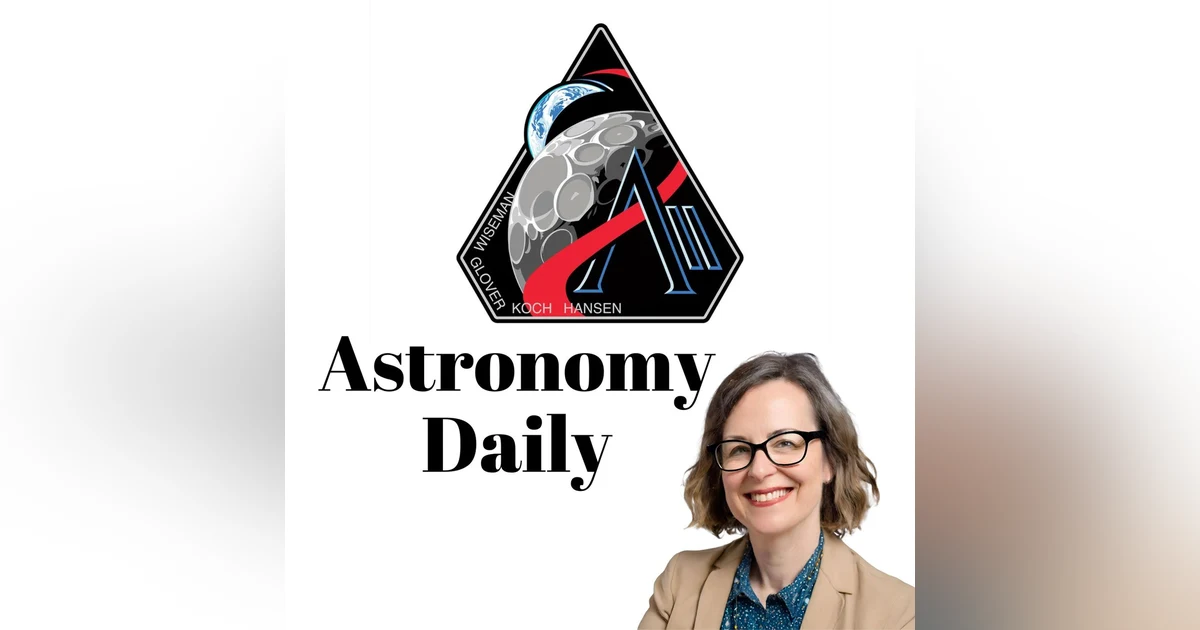
Astronomy Daily | Space News: S04E81
In this exciting episode of Astronomy Daily, host Anna takes you on a captivating journey through the latest milestones in space exploration. From the historic SpaceX FRAM 2 mission to NASA's Artemis 2 mission...
Astronomy Daily | Space News: S04E81
In this exciting episode of Astronomy Daily, host Anna takes you on a captivating journey through the latest milestones in space exploration. From the historic SpaceX FRAM 2 mission to NASA's Artemis 2 mission patch unveiling, this episode is packed with remarkable insights that will fuel your curiosity about our universe.
Highlights:
- SpaceX FRAM 2 Mission: Join us as we follow the groundbreaking crew of SpaceX's FRAM 2 mission, the first team to orbit Earth from pole to pole. Experience their breathtaking views of the planet and hear their reflections on this extraordinary journey, including their unique perspectives of the Arctic and Antarctica.
- NASA's Artemis 2 Mission Patch: Discover the newly unveiled mission patch for Artemis 2, symbolizing humanity's return to lunar exploration. We discuss its design and the historic significance of the mission, which will see astronauts journey around the Moon no later than April 2026.
- SpaceX's Super Heavy Booster Milestone: Explore SpaceX's latest achievement with their Super Heavy booster, which successfully completed a test fire, bringing us closer to the goal of full rocket reusability. Learn about the engineering marvel that is Booster 14 and its role in future missions.
- Moon Dust as Power Source: Delve into the exciting discovery that lunar regolith can be transformed into solar cells, potentially providing a sustainable power source for future lunar settlements. We discuss the implications of this breakthrough for long-term human presence on the Moon.
- Spinlaunch's Ambitious Satellite Plans: Get the scoop on Spinlaunch's innovative approach to satellite deployment, aiming to launch up to 250 microsatellites in a single mission. Learn about their unique centrifuge technology and the potential impact on the future of satellite constellations.
For more cosmic updates, visit our website at astronomydaily.io. Join our community on social media by searching for #AstroDailyPod on Facebook, X, YouTubeMusic, TikTok, and our new Instagram account! Don’t forget to subscribe to the podcast on Apple Podcasts, Spotify, iHeartRadio, or wherever you get your podcasts.
Thank you for tuning in. This is Anna signing off. Until next time, keep looking up and stay curious about the wonders of our universe.
00:00 - Welcome to Astronomy Daily
01:05 - Overview of SpaceX FRAM 2 mission
10:30 - Artemis 2 mission patch unveiling
17:00 - Super Heavy booster test fire
22:15 - Moon dust solar cell breakthrough
27:30 - Spinlaunch satellite deployment plans
✍️ Episode References
SpaceX FRAM 2 Mission Details
[SpaceX](https://www.spacex.com)
NASA Artemis 2 Mission Patch
[NASA](https://www.nasa.gov)
Super Heavy Booster Updates
[SpaceX](https://www.spacex.com)
Lunar Regolith Solar Cells Research
[University of Potsdam](https://www.uni-potsdam.de/en/)
Spinlaunch Satellite Plans
[Spinlaunch](https://www.spinlaunch.com)
Astronomy Daily
[Astronomy Daily](http://www.astronomydaily.io/)
Become a supporter of this podcast:
In this exciting episode of Astronomy Daily, host Anna takes you on a captivating journey through the latest milestones in space exploration. From the historic SpaceX FRAM 2 mission to NASA's Artemis 2 mission patch unveiling, this episode is packed with remarkable insights that will fuel your curiosity about our universe.
Highlights:
- SpaceX FRAM 2 Mission: Join us as we follow the groundbreaking crew of SpaceX's FRAM 2 mission, the first team to orbit Earth from pole to pole. Experience their breathtaking views of the planet and hear their reflections on this extraordinary journey, including their unique perspectives of the Arctic and Antarctica.
- NASA's Artemis 2 Mission Patch: Discover the newly unveiled mission patch for Artemis 2, symbolizing humanity's return to lunar exploration. We discuss its design and the historic significance of the mission, which will see astronauts journey around the Moon no later than April 2026.
- SpaceX's Super Heavy Booster Milestone: Explore SpaceX's latest achievement with their Super Heavy booster, which successfully completed a test fire, bringing us closer to the goal of full rocket reusability. Learn about the engineering marvel that is Booster 14 and its role in future missions.
- Moon Dust as Power Source: Delve into the exciting discovery that lunar regolith can be transformed into solar cells, potentially providing a sustainable power source for future lunar settlements. We discuss the implications of this breakthrough for long-term human presence on the Moon.
- Spinlaunch's Ambitious Satellite Plans: Get the scoop on Spinlaunch's innovative approach to satellite deployment, aiming to launch up to 250 microsatellites in a single mission. Learn about their unique centrifuge technology and the potential impact on the future of satellite constellations.
For more cosmic updates, visit our website at astronomydaily.io. Join our community on social media by searching for #AstroDailyPod on Facebook, X, YouTubeMusic, TikTok, and our new Instagram account! Don’t forget to subscribe to the podcast on Apple Podcasts, Spotify, iHeartRadio, or wherever you get your podcasts.
Thank you for tuning in. This is Anna signing off. Until next time, keep looking up and stay curious about the wonders of our universe.
00:00 - Welcome to Astronomy Daily
01:05 - Overview of SpaceX FRAM 2 mission
10:30 - Artemis 2 mission patch unveiling
17:00 - Super Heavy booster test fire
22:15 - Moon dust solar cell breakthrough
27:30 - Spinlaunch satellite deployment plans
✍️ Episode References
SpaceX FRAM 2 Mission Details
[SpaceX](https://www.spacex.com)
NASA Artemis 2 Mission Patch
[NASA](https://www.nasa.gov)
Super Heavy Booster Updates
[SpaceX](https://www.spacex.com)
Lunar Regolith Solar Cells Research
[University of Potsdam](https://www.uni-potsdam.de/en/)
Spinlaunch Satellite Plans
[Spinlaunch](https://www.spinlaunch.com)
Astronomy Daily
[Astronomy Daily](http://www.astronomydaily.io/)
Become a supporter of this podcast:
WEBVTT
1
00:00:00.200 --> 00:00:03.399
Welcome to Astronomy Daily, your source for the latest space
2
00:00:03.480 --> 00:00:06.360
exploration news. I'm your host, Anna, and we have a
3
00:00:06.400 --> 00:00:09.919
busy episode for you today, with some truly fascinating developments
4
00:00:09.919 --> 00:00:13.119
from across the Cosmos and our ongoing efforts to explore it.
5
00:00:13.839 --> 00:00:16.079
We'll be taking you on board with the SpaceX fram
6
00:00:16.120 --> 00:00:19.359
two astronauts as they make history orbiting Earth from pole
7
00:00:19.440 --> 00:00:23.440
to pole and share their remarkable views from space. Then
8
00:00:23.480 --> 00:00:26.839
we'll look at NASA's newly unveiled Artemis two mission patch
9
00:00:27.320 --> 00:00:30.320
as the agency prepares to return humans to lunar orbit.
10
00:00:31.039 --> 00:00:34.479
SpaceX has also achieved a significant milestone with their super
11
00:00:34.479 --> 00:00:39.479
heavy booster, bringing us closer to full rocket reusability. Plus,
12
00:00:39.799 --> 00:00:42.520
we'll explore how Moondust could become a power source for
13
00:00:42.560 --> 00:00:46.439
future lunar settlements, and dive into Spin launches, ambitious plans
14
00:00:46.479 --> 00:00:50.399
to deploy hundreds of satellites with a single launch. So
15
00:00:50.600 --> 00:00:52.719
strap in for a journey through the latest and greatest
16
00:00:52.759 --> 00:00:56.560
in space exploration right here on Astronomy Daily. First up,
17
00:00:56.640 --> 00:00:58.759
let's get an update on a story we've been covering
18
00:00:58.840 --> 00:01:02.479
this week. The SpaceX fram two mission is making headlines
19
00:01:02.520 --> 00:01:04.719
as the first ever crew to orbit Earth from pole
20
00:01:04.760 --> 00:01:07.920
to pole, giving us a completely new human perspective of
21
00:01:07.920 --> 00:01:11.040
our planet. Now, in their third day aboard the crew
22
00:01:11.079 --> 00:01:14.560
Dragon Resilience, the four person crew has been sharing breath
23
00:01:14.599 --> 00:01:18.239
taking footage of their journey, including unique views of the
24
00:01:18.359 --> 00:01:22.560
Arctic and Antarctica that no human has witnessed firsthand until now.
25
00:01:23.159 --> 00:01:26.599
In videos posted to social media, mission commander Chun Wang
26
00:01:26.640 --> 00:01:30.680
and his crewmates captured incredible moments circling the globe every
27
00:01:30.760 --> 00:01:35.680
ninety minutes. One particularly striking clip shows the spacecraft flying
28
00:01:35.760 --> 00:01:38.799
over Florida's space coast, where they were able to zoom
29
00:01:38.840 --> 00:01:41.400
in on their own launch pad at Kennedy Space Center.
30
00:01:42.239 --> 00:01:44.799
You can hear the excitement in their voices as they exclaim,
31
00:01:45.120 --> 00:01:47.840
I can see our launch pad from here, followed by
32
00:01:47.840 --> 00:01:52.319
Wang's enthusiastic response, it is our launch pad, Oh my god.
33
00:01:52.799 --> 00:01:56.799
The historic crew consists of Malti's cryptocurrency billionaire Chun Wang,
34
00:01:57.159 --> 00:02:01.280
who's funding the mission, along with three spaceflight es Jenica
35
00:02:01.319 --> 00:02:05.640
Michelson of Norway, Rabia Raga of Germany, and Eric Phillips
36
00:02:05.640 --> 00:02:09.360
of Australia. They launched a board Resilience on a SpaceX
37
00:02:09.400 --> 00:02:12.680
Falcon nine rocket from Launch Complex thirty nine, a This
38
00:02:12.759 --> 00:02:17.120
past Monday, Long shared details about their experience, describing the
39
00:02:17.159 --> 00:02:21.159
Falcon nine liftoff as surprisingly smooth. The crew has been
40
00:02:21.199 --> 00:02:25.520
keeping busy with various activities, including ham radio transmissions, capturing
41
00:02:25.680 --> 00:02:28.000
X ray images, and even hosting a movie night where
42
00:02:28.000 --> 00:02:32.439
they re watched their own launch. They've documented spectacular sites,
43
00:02:32.479 --> 00:02:36.479
including massive storm systems swirling over ice covered regions and
44
00:02:36.560 --> 00:02:40.800
what they identified as Norway's Svalbard Islands. During a video
45
00:02:40.840 --> 00:02:44.199
call shown in their latest footage, medical officer Eric Phillips
46
00:02:44.199 --> 00:02:46.960
spoke with his son in Los Angeles, mentioning they would
47
00:02:46.960 --> 00:02:50.759
be splashing down tomorrow, indicating a return to Earth on Friday.
48
00:02:51.199 --> 00:02:53.919
This aligns with the mission's scheduled duration of three to
49
00:02:53.960 --> 00:02:57.639
five days. When Resilience does return, it will mark another
50
00:02:57.719 --> 00:03:00.800
milestone as the first of SpaceX's c Crude missions to
51
00:03:00.919 --> 00:03:04.919
splash down in the Pacific Ocean off California's coast, representing
52
00:03:04.919 --> 00:03:08.000
a shift in the company's recovery operations away from Florida.
53
00:03:08.400 --> 00:03:11.319
The world will be watching as these pioneering polar explorers
54
00:03:11.360 --> 00:03:14.919
complete their historic journey and bring home unprecedented perspectives of
55
00:03:14.919 --> 00:03:19.879
our planet. After five decades without a moonbound crew, insignia.
56
00:03:20.080 --> 00:03:24.280
NASA has officially unveiled the Artemis two mission patch, representing
57
00:03:24.360 --> 00:03:29.439
humanity's long awaited return to lunar exploration. Revealed just yesterday,
58
00:03:29.479 --> 00:03:32.360
this emblem will be worn by the four astronauts scheduled
59
00:03:32.360 --> 00:03:34.879
to journey around the Moon no later than April twenty
60
00:03:34.919 --> 00:03:38.840
twenty six. The distinctive patch shares the same outline as
61
00:03:38.960 --> 00:03:43.360
NASA's broader Artemis program emblem, featuring the letter A with
62
00:03:43.439 --> 00:03:47.360
a red trajectory line forming its crossbar, symbolizing the path
63
00:03:47.439 --> 00:03:50.879
between Earth and our lunar neighbor. What makes this patch
64
00:03:50.919 --> 00:03:55.240
particularly meaningful is its central artwork depicting Earth Rise, the
65
00:03:55.439 --> 00:03:59.039
iconic image first captured by Apollo eight astronauts in nineteen
66
00:03:59.120 --> 00:04:02.199
sixty eight when he humans initially ventured to lunar orbit.
67
00:04:02.719 --> 00:04:05.680
According to the crew's official description, the scene of the
68
00:04:05.719 --> 00:04:09.000
Earth and the Moon represents the dual nature of human spaceflight,
69
00:04:09.120 --> 00:04:14.000
both equally compelling. The Moon represents our exploration destination, focused
70
00:04:14.000 --> 00:04:18.199
on discovery of the unknown. The Earth represents home, focused
71
00:04:18.199 --> 00:04:20.720
on the perspective we gain when we look back at
72
00:04:20.759 --> 00:04:22.800
our shared planet and learn what it is to be
73
00:04:22.920 --> 00:04:27.560
uniquely human. The patch notably designates the mission as Aii,
74
00:04:27.800 --> 00:04:30.639
signifying not just the second major Artemis flight, but what
75
00:04:30.720 --> 00:04:33.959
the crew describes as an endeavor of discovery that seeks
76
00:04:34.000 --> 00:04:37.759
to explore for all and by all. This inclusive message
77
00:04:37.759 --> 00:04:41.360
reflects the historic nature of the crew itself, which consists
78
00:04:41.360 --> 00:04:45.439
of NASA astronauts Read Wiseman serving as commander, Victor Glover
79
00:04:45.519 --> 00:04:49.879
as pilot, Christina Coke as Mission Specialist, and Canadian Space
80
00:04:49.920 --> 00:04:54.519
Agency astronaut Jeremy Hanson also as Mission specialist. Hanson's inclusion
81
00:04:54.560 --> 00:04:58.120
is particularly significant as he'll become the first non American
82
00:04:58.160 --> 00:05:01.480
to travel to the Moon. Already revealed his personal mission
83
00:05:01.519 --> 00:05:07.079
patch featuring indigenous art honoring Canada's original explorers. Artemis two
84
00:05:07.120 --> 00:05:11.040
will mark several historic firsts, the inaugural crude test flight
85
00:05:11.079 --> 00:05:15.839
of NASA's Space Launch System rocket and Oriyon spacecraft, humanity's
86
00:05:15.879 --> 00:05:19.839
first lunar mission since Apollo seventeen in nineteen seventy two,
87
00:05:19.879 --> 00:05:22.720
and possibly the farthest humans have ever traveled from Earth.
88
00:05:23.360 --> 00:05:26.279
The astronauts will journey more than six hundred thousand miles
89
00:05:26.319 --> 00:05:29.959
as they loop around the Moon before returning home, paving
90
00:05:29.959 --> 00:05:33.000
the way for future Artemis missions that aim to establish
91
00:05:33.040 --> 00:05:37.560
a sustainable human presence on the lunar surface next up.
92
00:05:38.279 --> 00:05:42.399
While space X continues working through challenges with Starship's upper stage,
93
00:05:42.600 --> 00:05:45.439
the company has just reached a remarkable milestone with the
94
00:05:45.519 --> 00:05:49.600
rocket's massive first stage booster. Yesterday morning at their star
95
00:05:49.720 --> 00:05:54.120
Base facility in South Texas, SpaceX successfully test fired a
96
00:05:54.199 --> 00:05:57.079
previously flown super heavy booster for the first time ever,
97
00:05:57.639 --> 00:05:59.959
with a spectacular eight second burn that sent a drman
98
00:06:00.000 --> 00:06:03.759
matt plume of orange exhaust across the launch site. This
99
00:06:03.800 --> 00:06:08.680
particular booster, designated Booster fourteen, first launched in January, reaching
100
00:06:08.720 --> 00:06:11.680
the edge of space before returning to Earth. Now it's
101
00:06:11.680 --> 00:06:14.879
poised to fly again, with SpaceX confirming it will power
102
00:06:14.920 --> 00:06:18.279
the next Starship test flight. Of the booster's thirty three
103
00:06:18.399 --> 00:06:22.319
methane fueled Raptor engines, twenty nine are flight proven, making
104
00:06:22.360 --> 00:06:25.399
this a significant step toward what SpaceX describes as their
105
00:06:25.480 --> 00:06:29.680
ultimate goal of zero touch reflight. The super heavy booster
106
00:06:29.800 --> 00:06:33.560
is truly an engineering marvel, standing taller than a Boeing
107
00:06:33.600 --> 00:06:37.160
seven hundred and forty seven jumbo jet. Positioned vertically, it
108
00:06:37.240 --> 00:06:41.279
generates nearly seventeen million pounds of thrust, twice the power
109
00:06:41.319 --> 00:06:44.959
of NASA's legendary Saturn five rocket that sent astronauts to
110
00:06:45.000 --> 00:06:49.279
the Moon. It's arguably the most complex rocket booster ever constructed,
111
00:06:49.639 --> 00:06:53.720
and certainly the largest. What makes this rapid turnaround particularly
112
00:06:53.759 --> 00:06:58.199
impressive is the contrast with SpaceX's first Falcon nine booster
113
00:06:58.279 --> 00:07:02.279
reuse back in twenty seventeen. That process required nearly a
114
00:07:02.399 --> 00:07:06.800
year of thorough inspections, refurbishment, and cross country transportation between facilities.
115
00:07:07.399 --> 00:07:10.279
Booster fourteen, meanwhile, is on track to fly again less
116
00:07:10.279 --> 00:07:14.279
than three months after its initial launch. Unlike the Falcon nine,
117
00:07:14.639 --> 00:07:17.600
which uses landing legs to touch down at a separate location,
118
00:07:18.399 --> 00:07:21.199
Super Heavy is caught by mechanical arms at the launch
119
00:07:21.279 --> 00:07:25.959
tower as it returns, a technique SpaceX calls the chopstick catch.
120
00:07:26.720 --> 00:07:29.720
This approach eliminates the need for landing legs and potentially
121
00:07:29.759 --> 00:07:33.879
allows for much faster turnaround between flights. The speedy reuse
122
00:07:33.920 --> 00:07:38.040
progress is especially noteworthy given super Heavy scale and complexity.
123
00:07:38.079 --> 00:07:42.439
Compared to Falcon nine. With thirty three engines instead of nine,
124
00:07:42.480 --> 00:07:46.560
there are theoretically more potential failure points. Yet SpaceX has
125
00:07:46.600 --> 00:07:50.920
achieved seven consecutive successful Super Heavy launches and has recovered
126
00:07:50.920 --> 00:07:54.920
three boosters in four recent attempts. This rapid progress with
127
00:07:54.959 --> 00:07:59.759
booster reusability is crucial for SpaceX's ambitious starship program, especially
128
00:07:59.800 --> 00:08:02.839
can considering NASA's reliance on the system for future Artemis
129
00:08:02.879 --> 00:08:07.839
lunar landings. When fully operational, multiple starship launches will be
130
00:08:07.879 --> 00:08:10.720
required to refuel lunar landers in orbit before they can
131
00:08:10.800 --> 00:08:14.879
journey to the Moon, making quick and reliable reuse absolutely essential.
132
00:08:16.399 --> 00:08:20.800
Moondust is quickly becoming one of space exploration's most versatile materials.
133
00:08:21.360 --> 00:08:24.399
In an exciting new breakthrough, scientists have now demonstrated that
134
00:08:24.480 --> 00:08:27.920
lunar regolith, the technical term for the dust and fragmented
135
00:08:27.959 --> 00:08:31.800
material covering the Moon's surface, can be transformed into functioning
136
00:08:31.800 --> 00:08:35.080
solar cells. A team led by Felix Laying from the
137
00:08:35.200 --> 00:08:38.840
University of Potsdam in Germany has successfully turned simulated lunar
138
00:08:38.879 --> 00:08:43.639
dust into solar panels, potentially solving a critical power generation
139
00:08:43.799 --> 00:08:47.720
challenge for future lunar settlements. From extracting water for fuel
140
00:08:47.759 --> 00:08:51.200
to building houses with lunar bricks, scientists have been finding
141
00:08:51.200 --> 00:08:54.600
ways to use moondust. Laying explained, now we can turn
142
00:08:54.679 --> 00:08:57.799
it into solar cells too, possibly providing the energy of
143
00:08:57.879 --> 00:09:01.879
future Moon city will need the process is surprisingly straightforward.
144
00:09:02.519 --> 00:09:06.399
The researchers melted simulated lunar regolith to create what they
145
00:09:06.480 --> 00:09:09.960
call moon glass, which can be accomplished on the Moon
146
00:09:10.080 --> 00:09:14.159
simply by focusing natural sunlight to achieve the necessary high temperatures.
147
00:09:14.759 --> 00:09:18.240
This moon glass is then combined with perovskite, a crystalline
148
00:09:18.240 --> 00:09:21.679
material commonly used in solar cells that absorb sunlight and
149
00:09:21.759 --> 00:09:26.120
excites electrons to generate electric current. Manufacturing solar cells on
150
00:09:26.159 --> 00:09:30.399
the Moon offers significant advantages over transporting earth made panels.
151
00:09:30.879 --> 00:09:34.879
Traditional solar cells incorporate glass that adds considerable weight to
152
00:09:34.960 --> 00:09:40.039
launch payloads, dramatically increasing costs. By using local lunar materials,
153
00:09:40.399 --> 00:09:43.679
scientists estimate they could reduce transport weight by an impressive
154
00:09:43.799 --> 00:09:46.879
ninety nine per cent. The moon glass based cells have
155
00:09:46.919 --> 00:09:51.039
another unexpected benefit. Standard glass tends to brown in space,
156
00:09:51.440 --> 00:09:56.080
reducing efficiency as it blocks incoming sunlight. However, moon glass
157
00:09:56.120 --> 00:09:59.200
already has a natural brown tint from impurities in the regolith,
158
00:09:59.519 --> 00:10:03.679
which acts prevents further browning. It's also more resistant to
159
00:10:03.759 --> 00:10:07.639
space radiation, a critical factor in the harsh lunar environment.
160
00:10:09.320 --> 00:10:12.559
While the current efficiency of these moon glass solar cells
161
00:10:13.000 --> 00:10:16.919
sits at around ten percent, considerably lower than the thirty
162
00:10:16.919 --> 00:10:20.519
to forty percent efficiency of premium space based solar panels.
163
00:10:21.120 --> 00:10:24.480
Lang's team believes they can improve this to twenty three
164
00:10:24.519 --> 00:10:29.799
percent by removing certain impurities. Even at lower efficiency, the
165
00:10:29.840 --> 00:10:33.240
ability to mass produce these cells directly on the lunar
166
00:10:33.320 --> 00:10:37.519
surface makes them extremely practical. You don't need ultra efficient
167
00:10:37.559 --> 00:10:40.080
thirty percent solar cells, you just make more of them
168
00:10:40.200 --> 00:10:43.600
on the moon. Lang noted this approach could be particularly
169
00:10:43.720 --> 00:10:47.000
valuable at the lunar South Pole, where permanent sunlight and
170
00:10:47.080 --> 00:10:50.519
nearby water ice deposits make it an ideal location for
171
00:10:50.600 --> 00:10:55.039
a sustainable moon base. Some challenges remain, including how low
172
00:10:55.120 --> 00:10:59.240
gravity might affect the moonglass formation process and how perovskite
173
00:10:59.279 --> 00:11:03.360
solvents might behave in vacuum conditions. To address these questions,
174
00:11:03.600 --> 00:11:07.320
the research team proposes a small scale lunar mission to
175
00:11:07.399 --> 00:11:11.000
test the solar cells in actual lunar conditions, potentially unlocking
176
00:11:11.000 --> 00:11:13.879
a power source that could sustain humanity's long term presence
177
00:11:14.240 --> 00:11:18.919
on our celestial neighbor. Finally, today, in the realm of
178
00:11:18.960 --> 00:11:21.879
space innovation, spin Launch is turning heads with its ambitious
179
00:11:21.919 --> 00:11:25.559
plans for a new broadband satellite constellation. Called Meridian Space.
180
00:11:26.159 --> 00:11:29.600
What makes this project particularly revolutionary is the company's vision
181
00:11:29.639 --> 00:11:32.399
for deployment. They aim to launch up to two hundred
182
00:11:32.440 --> 00:11:35.480
and fifty micro satellites in a single mission, a feat
183
00:11:35.519 --> 00:11:37.879
that would shatter the current record of one hundred forty
184
00:11:37.879 --> 00:11:41.600
three satellites launched at once set by SpaceX's Transporter one
185
00:11:41.600 --> 00:11:45.200
mission in twenty twenty one. This satellite network recently secured
186
00:11:45.240 --> 00:11:49.240
twelve million dollars in funding from Kongsberg Nanoevionics to develop
187
00:11:49.279 --> 00:11:53.639
and commercialize these specialized spacecraft. According to their timeline, we
188
00:11:53.679 --> 00:11:56.679
could see the first on orbit demonstrator as early as
189
00:11:56.720 --> 00:12:01.240
twenty twenty six. The flat stackabled design of these satellites
190
00:12:01.320 --> 00:12:04.440
is key to fitting so many on a single launch vehicle,
191
00:12:05.080 --> 00:12:09.679
with images showing them neatly arranged atop one another. Eric Laie,
192
00:12:10.159 --> 00:12:14.080
president of Kongsberg Defense and Aerospace, has emphasized that the
193
00:12:14.120 --> 00:12:18.799
Meridian Space constellation will provide significantly higher broadband capacity in
194
00:12:18.840 --> 00:12:22.080
a satellite constellation compared with what is available on the
195
00:12:22.080 --> 00:12:27.679
market today. Meanwhile, David Wren, spin Launch's CEO, noted that
196
00:12:27.759 --> 00:12:32.320
Nanoavionic's modular satellite platforms offer a reliable foundation to scale
197
00:12:32.320 --> 00:12:37.480
our constellation quickly and confidently. What truly sets spin Launch apart, however,
198
00:12:37.799 --> 00:12:41.639
is their unconventional approach to reaching orbit. The company is
199
00:12:41.639 --> 00:12:44.600
developing a massive one hundred eight foot long spinning arm
200
00:12:44.639 --> 00:12:48.240
that works as a centrifuge, accelerating launch vehicles to tremendous
201
00:12:48.240 --> 00:12:52.240
speeds before literally flinging them skyward. Once these vehicles reach
202
00:12:52.240 --> 00:12:57.039
sufficient altitude, they ignite their engines, dramatically reducing the fuel
203
00:12:57.240 --> 00:13:02.240
and hardware required to achieve orbit. This isn't just theoretical technology.
204
00:13:02.799 --> 00:13:06.000
NASA has already partnered with spin Launch, signing an agreement
205
00:13:06.039 --> 00:13:09.480
in twenty twenty two for a demonstration that successfully launched
206
00:13:09.519 --> 00:13:14.200
experiments from NASA Airbus and Cornell University to suborbital space
207
00:13:14.360 --> 00:13:17.960
using this centrifuge method. While it remains unclear whether spin
208
00:13:18.039 --> 00:13:20.679
Launch will use their own revolutionary system to deploy the
209
00:13:20.679 --> 00:13:24.720
first Meridian Space Demonstrator or opt for a traditional rocket launch,
210
00:13:25.200 --> 00:13:28.840
their approach represents a fundamental rethinking of how we access space,
211
00:13:29.679 --> 00:13:34.000
potentially making satellite deployment more economical and environmentally sustainable than
212
00:13:34.000 --> 00:13:38.879
ever before. That wraps up today's edition of Astronomy Daily.
213
00:13:39.360 --> 00:13:41.799
From the historic pol to Pole orbit of the FRAM
214
00:13:41.840 --> 00:13:45.360
two mission to SpaceX's breakthrough in super heavy booster reuse.
215
00:13:45.799 --> 00:13:50.200
We've covered some remarkable developments in humanity's ongoing exploration of space.
216
00:13:50.759 --> 00:13:53.879
The Artemis program continues to progress toward returning humans to
217
00:13:53.919 --> 00:13:57.919
the lunar surface, while innovative approaches to utilizing Moondust for
218
00:13:57.960 --> 00:14:02.039
solar power could revolutionize our future presence there, and spin
219
00:14:02.120 --> 00:14:06.519
Launch's ambitious satellite deployment plans show how rapidly space technology
220
00:14:06.559 --> 00:14:09.960
continues to evolve. I'm Anna, and I've been your host
221
00:14:10.000 --> 00:14:13.480
for this cosmic journey. Whether you're fascinated by the technical
222
00:14:13.519 --> 00:14:18.399
achievements of rocket reusability, intrigued by the possibilities of lunar settlements,
223
00:14:18.480 --> 00:14:21.840
or simply love gazing at our planet from space, I
224
00:14:21.879 --> 00:14:25.879
hope today's stories have captured your imagination. Don't forget to
225
00:14:25.960 --> 00:14:28.720
visit our website at Astronomy Daily dot io, where you
226
00:14:28.759 --> 00:14:31.159
can sign up for our free daily newsletter and listen
227
00:14:31.200 --> 00:14:34.000
to all our back episodes. You can also connect with
228
00:14:34.080 --> 00:14:37.279
us across social media by searching for astro Daily Pod
229
00:14:37.399 --> 00:14:43.279
on Facebook, x YouTube, YouTube, music, Instagram, and TikTok. Thanks
230
00:14:43.320 --> 00:14:46.360
for joining me today on Astronomy Daily. Until tomorrow, keep
231
00:14:46.360 --> 00:14:49.159
looking up and wondering about the vast universe that surrounds
232
00:14:49.200 --> 00:15:09.159
us stories. The story is the soul Store, is the
233
00:15:09.320 --> 00:15:12.559
soul m
1
00:00:00.200 --> 00:00:03.399
2
00:00:03.480 --> 00:00:06.360
3
00:00:06.400 --> 00:00:09.919
4
00:00:09.919 --> 00:00:13.119
5
00:00:13.839 --> 00:00:16.079
6
00:00:16.120 --> 00:00:19.359
7
00:00:19.440 --> 00:00:23.440
8
00:00:23.480 --> 00:00:26.839
9
00:00:27.320 --> 00:00:30.320
10
00:00:31.039 --> 00:00:34.479
11
00:00:34.479 --> 00:00:39.479
12
00:00:39.799 --> 00:00:42.520
13
00:00:42.560 --> 00:00:46.439
14
00:00:46.479 --> 00:00:50.399
15
00:00:50.600 --> 00:00:52.719
16
00:00:52.759 --> 00:00:56.560
17
00:00:56.640 --> 00:00:58.759
18
00:00:58.840 --> 00:01:02.479
19
00:01:02.520 --> 00:01:04.719
20
00:01:04.760 --> 00:01:07.920
21
00:01:07.920 --> 00:01:11.040
22
00:01:11.079 --> 00:01:14.560
23
00:01:14.599 --> 00:01:18.239
24
00:01:18.359 --> 00:01:22.560
25
00:01:23.159 --> 00:01:26.599
26
00:01:26.640 --> 00:01:30.680
27
00:01:30.760 --> 00:01:35.680
28
00:01:35.760 --> 00:01:38.799
29
00:01:38.840 --> 00:01:41.400
30
00:01:42.239 --> 00:01:44.799
31
00:01:45.120 --> 00:01:47.840
32
00:01:47.840 --> 00:01:52.319
33
00:01:52.799 --> 00:01:56.799
34
00:01:57.159 --> 00:02:01.280
35
00:02:01.319 --> 00:02:05.640
36
00:02:05.640 --> 00:02:09.360
37
00:02:09.400 --> 00:02:12.680
38
00:02:12.759 --> 00:02:17.120
39
00:02:17.159 --> 00:02:21.159
40
00:02:21.199 --> 00:02:25.520
41
00:02:25.680 --> 00:02:28.000
42
00:02:28.000 --> 00:02:32.439
43
00:02:32.479 --> 00:02:36.479
44
00:02:36.560 --> 00:02:40.800
45
00:02:40.840 --> 00:02:44.199
46
00:02:44.199 --> 00:02:46.960
47
00:02:46.960 --> 00:02:50.759
48
00:02:51.199 --> 00:02:53.919
49
00:02:53.960 --> 00:02:57.639
50
00:02:57.719 --> 00:03:00.800
51
00:03:00.919 --> 00:03:04.919
52
00:03:04.919 --> 00:03:08.000
53
00:03:08.400 --> 00:03:11.319
54
00:03:11.360 --> 00:03:14.919
55
00:03:14.919 --> 00:03:19.879
56
00:03:20.080 --> 00:03:24.280
57
00:03:24.360 --> 00:03:29.439
58
00:03:29.479 --> 00:03:32.360
59
00:03:32.360 --> 00:03:34.879
60
00:03:34.919 --> 00:03:38.840
61
00:03:38.960 --> 00:03:43.360
62
00:03:43.439 --> 00:03:47.360
63
00:03:47.439 --> 00:03:50.879
64
00:03:50.919 --> 00:03:55.240
65
00:03:55.439 --> 00:03:59.039
66
00:03:59.120 --> 00:04:02.199
67
00:04:02.719 --> 00:04:05.680
68
00:04:05.719 --> 00:04:09.000
69
00:04:09.120 --> 00:04:14.000
70
00:04:14.000 --> 00:04:18.199
71
00:04:18.199 --> 00:04:20.720
72
00:04:20.759 --> 00:04:22.800
73
00:04:22.920 --> 00:04:27.560
74
00:04:27.800 --> 00:04:30.639
75
00:04:30.720 --> 00:04:33.959
76
00:04:34.000 --> 00:04:37.759
77
00:04:37.759 --> 00:04:41.360
78
00:04:41.360 --> 00:04:45.439
79
00:04:45.519 --> 00:04:49.879
80
00:04:49.920 --> 00:04:54.519
81
00:04:54.560 --> 00:04:58.120
82
00:04:58.160 --> 00:05:01.480
83
00:05:01.519 --> 00:05:07.079
84
00:05:07.120 --> 00:05:11.040
85
00:05:11.079 --> 00:05:15.839
86
00:05:15.879 --> 00:05:19.839
87
00:05:19.879 --> 00:05:22.720
88
00:05:23.360 --> 00:05:26.279
89
00:05:26.319 --> 00:05:29.959
90
00:05:29.959 --> 00:05:33.000
91
00:05:33.040 --> 00:05:37.560
92
00:05:38.279 --> 00:05:42.399
93
00:05:42.600 --> 00:05:45.439
94
00:05:45.519 --> 00:05:49.600
95
00:05:49.720 --> 00:05:54.120
96
00:05:54.199 --> 00:05:57.079
97
00:05:57.639 --> 00:05:59.959
98
00:06:00.000 --> 00:06:03.759
99
00:06:03.800 --> 00:06:08.680
100
00:06:08.720 --> 00:06:11.680
101
00:06:11.680 --> 00:06:14.879
102
00:06:14.920 --> 00:06:18.279
103
00:06:18.399 --> 00:06:22.319
104
00:06:22.360 --> 00:06:25.399
105
00:06:25.480 --> 00:06:29.680
106
00:06:29.800 --> 00:06:33.560
107
00:06:33.600 --> 00:06:37.160
108
00:06:37.240 --> 00:06:41.279
109
00:06:41.319 --> 00:06:44.959
110
00:06:45.000 --> 00:06:49.279
111
00:06:49.639 --> 00:06:53.720
112
00:06:53.759 --> 00:06:58.199
113
00:06:58.279 --> 00:07:02.279
114
00:07:02.399 --> 00:07:06.800
115
00:07:07.399 --> 00:07:10.279
116
00:07:10.279 --> 00:07:14.279
117
00:07:14.639 --> 00:07:17.600
118
00:07:18.399 --> 00:07:21.199
119
00:07:21.279 --> 00:07:25.959
120
00:07:26.720 --> 00:07:29.720
121
00:07:29.759 --> 00:07:33.879
122
00:07:33.920 --> 00:07:38.040
123
00:07:38.079 --> 00:07:42.439
124
00:07:42.480 --> 00:07:46.560
125
00:07:46.600 --> 00:07:50.920
126
00:07:50.920 --> 00:07:54.920
127
00:07:54.959 --> 00:07:59.759
128
00:07:59.800 --> 00:08:02.839
129
00:08:02.879 --> 00:08:07.839
130
00:08:07.879 --> 00:08:10.720
131
00:08:10.800 --> 00:08:14.879
132
00:08:16.399 --> 00:08:20.800
133
00:08:21.360 --> 00:08:24.399
134
00:08:24.480 --> 00:08:27.920
135
00:08:27.959 --> 00:08:31.800
136
00:08:31.800 --> 00:08:35.080
137
00:08:35.200 --> 00:08:38.840
138
00:08:38.879 --> 00:08:43.639
139
00:08:43.799 --> 00:08:47.720
140
00:08:47.759 --> 00:08:51.200
141
00:08:51.200 --> 00:08:54.600
142
00:08:54.679 --> 00:08:57.799
143
00:08:57.879 --> 00:09:01.879
144
00:09:02.519 --> 00:09:06.399
145
00:09:06.480 --> 00:09:09.960
146
00:09:10.080 --> 00:09:14.159
147
00:09:14.759 --> 00:09:18.240
148
00:09:18.240 --> 00:09:21.679
149
00:09:21.759 --> 00:09:26.120
150
00:09:26.159 --> 00:09:30.399
151
00:09:30.879 --> 00:09:34.879
152
00:09:34.960 --> 00:09:40.039
153
00:09:40.399 --> 00:09:43.679
154
00:09:43.799 --> 00:09:46.879
155
00:09:46.919 --> 00:09:51.039
156
00:09:51.440 --> 00:09:56.080
157
00:09:56.120 --> 00:09:59.200
158
00:09:59.519 --> 00:10:03.679
159
00:10:03.759 --> 00:10:07.639
160
00:10:09.320 --> 00:10:12.559
161
00:10:13.000 --> 00:10:16.919
162
00:10:16.919 --> 00:10:20.519
163
00:10:21.120 --> 00:10:24.480
164
00:10:24.519 --> 00:10:29.799
165
00:10:29.840 --> 00:10:33.240
166
00:10:33.320 --> 00:10:37.519
167
00:10:37.559 --> 00:10:40.080
168
00:10:40.200 --> 00:10:43.600
169
00:10:43.720 --> 00:10:47.000
170
00:10:47.080 --> 00:10:50.519
171
00:10:50.600 --> 00:10:55.039
172
00:10:55.120 --> 00:10:59.240
173
00:10:59.279 --> 00:11:03.360
174
00:11:03.600 --> 00:11:07.320
175
00:11:07.399 --> 00:11:11.000
176
00:11:11.000 --> 00:11:13.879
177
00:11:14.240 --> 00:11:18.919
178
00:11:18.960 --> 00:11:21.879
179
00:11:21.919 --> 00:11:25.559
180
00:11:26.159 --> 00:11:29.600
181
00:11:29.639 --> 00:11:32.399
182
00:11:32.440 --> 00:11:35.480
183
00:11:35.519 --> 00:11:37.879
184
00:11:37.879 --> 00:11:41.600
185
00:11:41.600 --> 00:11:45.200
186
00:11:45.240 --> 00:11:49.240
187
00:11:49.279 --> 00:11:53.639
188
00:11:53.679 --> 00:11:56.679
189
00:11:56.720 --> 00:12:01.240
190
00:12:01.320 --> 00:12:04.440
191
00:12:05.080 --> 00:12:09.679
192
00:12:10.159 --> 00:12:14.080
193
00:12:14.120 --> 00:12:18.799
194
00:12:18.840 --> 00:12:22.080
195
00:12:22.080 --> 00:12:27.679
196
00:12:27.759 --> 00:12:32.320
197
00:12:32.320 --> 00:12:37.480
198
00:12:37.799 --> 00:12:41.639
199
00:12:41.639 --> 00:12:44.600
200
00:12:44.639 --> 00:12:48.240
201
00:12:48.240 --> 00:12:52.240
202
00:12:52.240 --> 00:12:57.039
203
00:12:57.240 --> 00:13:02.240
204
00:13:02.799 --> 00:13:06.000
205
00:13:06.039 --> 00:13:09.480
206
00:13:09.519 --> 00:13:14.200
207
00:13:14.360 --> 00:13:17.960
208
00:13:18.039 --> 00:13:20.679
209
00:13:20.679 --> 00:13:24.720
210
00:13:25.200 --> 00:13:28.840
211
00:13:29.679 --> 00:13:34.000
212
00:13:34.000 --> 00:13:38.879
213
00:13:39.360 --> 00:13:41.799
214
00:13:41.840 --> 00:13:45.360
215
00:13:45.799 --> 00:13:50.200
216
00:13:50.759 --> 00:13:53.879
217
00:13:53.919 --> 00:13:57.919
218
00:13:57.960 --> 00:14:02.039
219
00:14:02.120 --> 00:14:06.519
220
00:14:06.559 --> 00:14:09.960
221
00:14:10.000 --> 00:14:13.480
222
00:14:13.519 --> 00:14:18.399
223
00:14:18.480 --> 00:14:21.840
224
00:14:21.879 --> 00:14:25.879
225
00:14:25.960 --> 00:14:28.720
226
00:14:28.759 --> 00:14:31.159
227
00:14:31.200 --> 00:14:34.000
228
00:14:34.080 --> 00:14:37.279
229
00:14:37.399 --> 00:14:43.279
230
00:14:43.320 --> 00:14:46.360
231
00:14:46.360 --> 00:14:49.159
232
00:14:49.200 --> 00:15:09.159
233
00:15:09.320 --> 00:15:12.559


