Cosmic Secrets in Ocean Rocks, Record-Breaking Ariane Launch, and a Salty Pink World Revealed
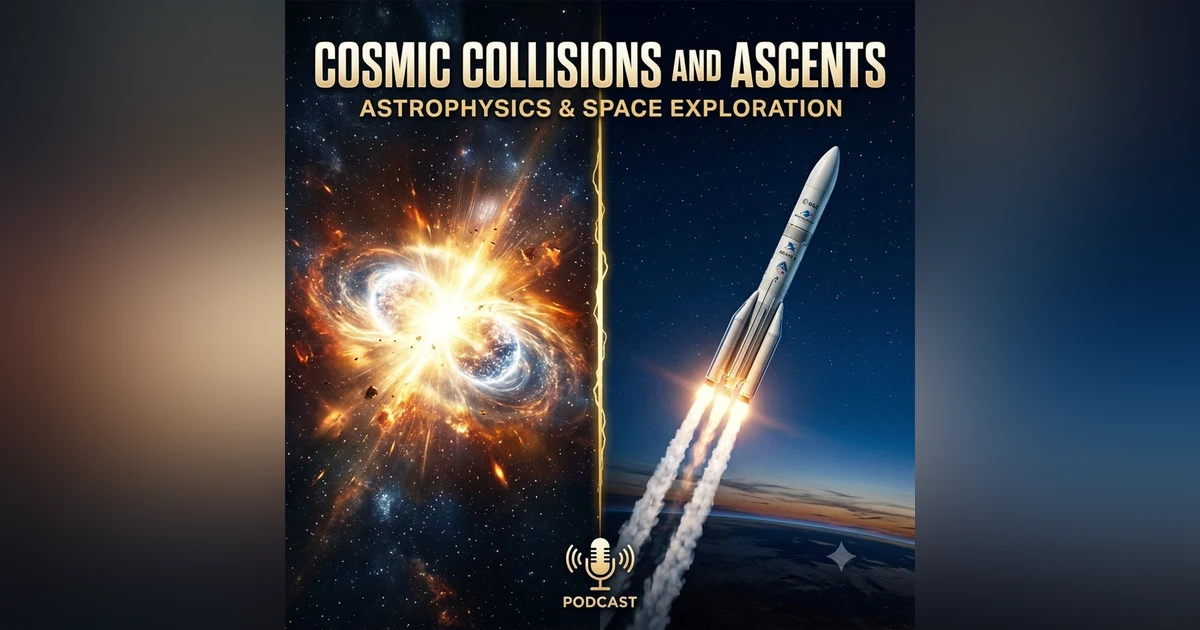
This weekend's Astronomy Daily wraps up the biggest stories from across the cosmos, starting with two completely fresh discoveries — a 1976 ocean rock that's turned out to hold atomic-scale proof of an ancient neutron star collision, and a record-breaking rocket launch from Europe's Ariane 6. Then we wind back through the week for our four biggest headlines: a new crew for Artemis III, JWST's salty 'Pink Planet' discovery, an update on the daring Swift Observatory rescue mission, and China's Tianwen-2 closing in on its target asteroid. Story 1: A Kilonova's Fingerprint, Found in a 1976 Ocean Rock • A rock sample dredged from the Pacific seafloor in 1976 has been found to contain a few hundred atoms of plutonium radioisotopes. • The plutonium originated from a kilonova — a collision between two neutron stars — that occurred over 100 million years ago. • Stellar debris from the merger settled to Earth and was slowly incorporated into a ferromanganese crust on the ocean floor. • Isotope ratios provide the strongest physical clues yet to what created the elements and roughly when the merger occurred. • Study published 18 June 2026. Story 2: Ariane 6 Smashes Its Own Heaviest-Payload Record • On 17 June 2026, an Ariane 64 rocket launched 36 Amazon Leo satellites from French Guiana (mission VA269 / LE-03). • First flight of new P160C solid boosters — about a metre longer than the previous P120C, holding up to 156 tonnes of propellant each. • Boosters deliver roughly a 10% performance increase, raising Ariane 64's LEO capacity to approximately 22 tonnes. • The mission broke the 13-year record for heaviest payload ever launched by an Ariane rocket, previously held by the 2013 ATV 'Albert Einstein' resupply flight. • Eighth Ariane 6 launch overall; 100th Amazon Leo satellite deployed by Arianespace. Story 3: Artemis III Crew Revealed • NASA announced the Artemis III crew on 9 June 2026 at Johnson Space Center: Commander Randy Bresnik, Pilot Luca Parmitano (ESA), and Mission Specialists Frank Rubio and Andre Douglas, with Bob Hines as backup. • The Artemis II crew (Wiseman, Glover, Koch, Hansen) symbolically passed their lunar baton to the new crew. • Artemis III is a two-week test flight in low Earth orbit to test docking procedures between Orion and commercial landers from SpaceX and Blue Origin. • Targeted for launch as early as late 2027, ahead of a planned lunar surface landing in 2028. • Will be Andre Douglas's first spaceflight. Story 4: JWST Cracks the 'Pink Planet' Mystery • JWST has confirmed salt clouds in the atmosphere of GJ504b, the 'Pink Planet,' located 57 light-years away. • First direct evidence of salt clouds on a cold substellar companion object, a phenomenon theorised 15 years ago. • At approximately 550°F, GJ504b is the coldest companion object ever directly imaged. • Its true nature remains uncertain — it may be a giant planet or a brown dwarf. • Research led by a Northwestern University team. Story 5: The Swift Rescue Mission Heads for the Pacific • NASA's Neil Gehrels Swift Observatory (orbiting since 2004) faces premature reentry due to orbital decay accelerated by recent solar activity. • Katalyst Space Technologies' LINK robotic servicing spacecraft will attempt to grapple and boost Swift to a safer ~600km orbit. • LINK launches on a Northrop Grumman Pegasus XL rocket, carried by Stargazer, the last flying Lockheed L-1011 TriStar. • Stargazer departed NASA Wallops Flight Facility on 18 June 2026, en route to Kwajalein Atoll via California and Hawai'i. • Launch targeted for 27 June 2026; if successful, it will be the first capture of an unprepared US government satellite by a commercial vehicle. Story 6: Tianwen-2 Closes In on Kamo'oalewa • China's Tianwen-2 spacecraft, launched May 2025, completed orbital insertion at near-Earth asteroid Kamo'oalewa on 7 June 2026. • Amateur radio trackers in Germany detected fine ion-engine course-correction burns between 11–14 June 2026. • Rendezvous and sample collection are expected around 4 July 2026. • Kamo'oalewa is a 40–100 metre quasi-satellite of Earth; its origin (possibly a lunar fragment) remains scientifically debated. • After sample return, Tianwen-2 will travel on to rendezvous with comet 311P/PanSTARRS in 2035.
Become a supporter of this podcast: https://www.spreaker.com/podcast/astronomy-daily-space-news-updates--5648921/support.
Sponsor Details:
Ensure your online privacy by using NordVPN. To get our special listener deal and save a lot of money, visit www.bitesz.com/nordvpn. You'll be glad you did!
Become a supporter of Astronomy Daily by joining our Supporters Club. Commercial free episodes daily are only a click way... Click Here
This episode includes AI-generated content.
0
00:00:00.000 --> 00:00:02.640
Anna: Hello and welcome to Astronomy Daily,
1
00:00:02.880 --> 00:00:05.680
your daily dose of space news from across the
2
00:00:05.680 --> 00:00:07.440
cosmos. I'm Ana.
3
00:00:07.520 --> 00:00:10.320
Avery: And I'm avery. It's Saturday the 20th of
4
00:00:10.320 --> 00:00:13.160
June, 2026, and that means it's time for
5
00:00:13.160 --> 00:00:15.440
our weekend space and astronomy news wrap.
6
00:00:15.919 --> 00:00:18.480
Anna: As always, we're kicking things off with two
7
00:00:18.480 --> 00:00:20.680
brand new stories you won't have heard
8
00:00:20.680 --> 00:00:23.280
anywhere else on the show, including a
9
00:00:23.280 --> 00:00:26.040
genuinely goosebump inducing tale about a
10
00:00:26.040 --> 00:00:28.960
rock pulled up of the Pacific Ocean 50 years
11
00:00:28.960 --> 00:00:31.910
ago that's just rewritten part of COSM
12
00:00:32.140 --> 00:00:32.380
history.
13
00:00:32.940 --> 00:00:35.220
Avery: Then we'll wind back to the week and bring
14
00:00:35.220 --> 00:00:37.180
you the four biggest stories that had
15
00:00:37.180 --> 00:00:39.940
everyone talking a new crew for the moon, a
16
00:00:39.940 --> 00:00:42.660
salty pink world, a daring rescue mission,
17
00:00:42.660 --> 00:00:45.500
and an asteroid chase 50 years in the making.
18
00:00:45.900 --> 00:00:47.940
Anna: If you're watching on YouTubeMusic, smash
19
00:00:47.940 --> 00:00:50.260
that subscribe button and let's get straight
20
00:00:50.260 --> 00:00:50.780
into it.
21
00:00:51.100 --> 00:00:53.380
Avery: Let's start with a story that genuinely gave
22
00:00:53.380 --> 00:00:55.980
me chills. Anna. Back in 1976,
23
00:00:56.220 --> 00:00:58.700
a research expedition hauled up a small lump
24
00:00:58.700 --> 00:01:00.620
of rock from the floor of the Pacific Ocean.
25
00:01:00.860 --> 00:01:03.220
Nobody at the time had any idea what they
26
00:01:03.220 --> 00:01:04.360
were really holding.
27
00:01:04.680 --> 00:01:07.400
Anna: Fifty years later, scientists have worked out
28
00:01:07.400 --> 00:01:10.160
exactly what's hiding inside it. And it's
29
00:01:10.160 --> 00:01:12.680
older and stranger than anyone expected.
30
00:01:13.320 --> 00:01:15.480
Avery: The rock is a chunk of what's called ferro
31
00:01:15.480 --> 00:01:18.000
manganese crust, basically slow growing
32
00:01:18.000 --> 00:01:19.960
mineral deposits that build up on the
33
00:01:19.960 --> 00:01:22.600
seafloor over millions of years, almost like
34
00:01:22.600 --> 00:01:23.320
tree rings.
35
00:01:23.800 --> 00:01:26.800
Anna: And buried inside this particular piece are a
36
00:01:26.800 --> 00:01:29.720
few hundred atoms. Atoms, not grams
37
00:01:29.800 --> 00:01:32.440
of radioactive plutonium isotopes,
38
00:01:33.040 --> 00:01:35.080
Avery: which doesn't sound like a lot, because it
39
00:01:35.080 --> 00:01:37.360
isn't. But those atoms didn't come from
40
00:01:37.360 --> 00:01:39.560
anywhere on Earth. More than a hundred
41
00:01:39.560 --> 00:01:42.240
million years ago, two neutron stars, the
42
00:01:42.240 --> 00:01:44.800
impossibly dense leftover cores of giant
43
00:01:44.800 --> 00:01:46.920
stars, crashed into each other in a
44
00:01:46.920 --> 00:01:49.360
cataclysmic event called a kilonova.
45
00:01:49.440 --> 00:01:52.000
Anna: And a kilonova is basically a heavy
46
00:01:52.000 --> 00:01:54.720
element factory. The collision is so
47
00:01:54.720 --> 00:01:57.520
violent and so energetic that it forges
48
00:01:57.520 --> 00:02:00.410
elements for far heavier than iron, including
49
00:02:00.650 --> 00:02:03.450
gold, platinum, and, yes, plutonium.
50
00:02:03.770 --> 00:02:06.450
That blast sent a rain of these freshly
51
00:02:06.450 --> 00:02:08.410
minted elements out across space.
52
00:02:09.050 --> 00:02:10.930
Avery: Some of that stellar debris eventually
53
00:02:10.930 --> 00:02:12.650
drifted down through our solar system,
54
00:02:12.730 --> 00:02:14.970
through Earth's atmosphere, and settled into
55
00:02:14.970 --> 00:02:17.930
the ocean, where over unimaginable spans of
56
00:02:17.930 --> 00:02:20.490
time, it got slowly locked into this growing
57
00:02:20.490 --> 00:02:22.090
crust of rock on the seafloor.
58
00:02:22.410 --> 00:02:25.130
Anna: The study was published just yesterday. And
59
00:02:25.130 --> 00:02:27.650
what's remarkable is that the ratios of these
60
00:02:27.650 --> 00:02:30.470
plutonium isotopes act like
61
00:02:30.470 --> 00:02:32.990
a fingerprint. They give researchers their
62
00:02:32.990 --> 00:02:35.270
strongest physical clues yet about
63
00:02:35.270 --> 00:02:37.910
exactly what kind of event created them
64
00:02:38.150 --> 00:02:40.310
and roughly how long ago it happened.
65
00:02:40.790 --> 00:02:42.990
Avery: It's wild to think Earth has basically been
66
00:02:42.990 --> 00:02:45.390
an accidental evidence locker this whole
67
00:02:45.390 --> 00:02:48.390
time, quietly filing away atomic level proof
68
00:02:48.390 --> 00:02:50.750
of cosmic violence before there was complex
69
00:02:50.750 --> 00:02:52.150
life on this planet at all.
70
00:02:52.550 --> 00:02:54.990
Anna: A little lump of rock dredged up half a
71
00:02:54.990 --> 00:02:57.590
century ago, finally giving up one of its
72
00:02:57.590 --> 00:02:59.970
biggest secrets. Beautiful story.
73
00:03:00.530 --> 00:03:03.090
Avery: From ancient cosmic violence to some very
74
00:03:03.090 --> 00:03:04.530
modern rocket engineering.
75
00:03:04.690 --> 00:03:07.290
Europe's Ariane 6 just broke a record that
76
00:03:07.290 --> 00:03:08.930
had stood for 13 years.
77
00:03:09.570 --> 00:03:12.370
Anna: This happened on Wednesday 17 June.
78
00:03:12.610 --> 00:03:15.450
An upgraded Ariane 6. 4 lifted
79
00:03:15.450 --> 00:03:18.290
off from Europe's spaceport in French Guiana,
80
00:03:18.370 --> 00:03:21.290
carrying 36Amazon LEO broadband
81
00:03:21.290 --> 00:03:23.850
satellites. That's the Constellation formerly
82
00:03:23.850 --> 00:03:26.360
known as Project Cooperation 36
83
00:03:26.360 --> 00:03:27.040
satellites.
84
00:03:27.040 --> 00:03:28.880
Avery: Doesn't sound like a record breaker on its
85
00:03:28.880 --> 00:03:31.120
own, but here's the kicker. This was the very
86
00:03:31.120 --> 00:03:33.640
first flight of Ariane 6 4's new
87
00:03:33.640 --> 00:03:36.600
P160 boosters. They're an upgrade on the
88
00:03:36.600 --> 00:03:39.560
previous P120 boosters, about 1 meter
89
00:03:39.560 --> 00:03:42.480
longer and able to hold up to 156
90
00:03:42.480 --> 00:03:43.960
tons of propellant each.
91
00:03:44.520 --> 00:03:47.520
Anna: That gives roughly a 10% performance boost
92
00:03:47.520 --> 00:03:50.480
and pushes Ariane 6. 4's lift capacity
93
00:03:50.480 --> 00:03:53.480
to about 22 tons to low Earth orbit.
94
00:03:53.720 --> 00:03:56.520
Combined with those 36 satellites, it added
95
00:03:56.520 --> 00:03:59.020
up to the HEAV heaviest payload ever launched
96
00:03:59.020 --> 00:04:01.700
by an Arian rocket, beating a record that had
97
00:04:01.700 --> 00:04:04.420
stood in 2013 when an Ariane
98
00:04:04.420 --> 00:04:07.260
5 delivered the ATV cargo vehicle
99
00:04:07.260 --> 00:04:09.580
Albert Einstein to the International Space
100
00:04:09.580 --> 00:04:12.220
Station. The satellites were deployed into
101
00:04:12.220 --> 00:04:15.220
orbit about 465km
102
00:04:15.220 --> 00:04:18.180
up over the course of just under two hours.
103
00:04:18.420 --> 00:04:21.380
And Arianespace confirmed every single one
104
00:04:21.460 --> 00:04:22.900
separated successfully.
105
00:04:23.420 --> 00:04:26.380
Avery: This was also the 8th Ariane 6 launch overall
106
00:04:26.540 --> 00:04:29.260
and the hundredth Amazon LEO satellite lofted
107
00:04:29.260 --> 00:04:32.100
by Arianespace specifically out of a planned
108
00:04:32.100 --> 00:04:34.980
18 launch contract with Amazon. It's
109
00:04:34.980 --> 00:04:37.460
a solid milestone for a rocket that, let's be
110
00:04:37.460 --> 00:04:40.140
honest, had a famously bumpy road to its
111
00:04:40.140 --> 00:04:41.420
2024 debut.
112
00:04:41.740 --> 00:04:43.980
Anna: And it matters. Beyond the bragging rights,
113
00:04:44.300 --> 00:04:46.780
Amazon's been racing against an FCC
114
00:04:46.940 --> 00:04:49.340
deadline to get half its Constellation up by
115
00:04:49.340 --> 00:04:52.120
the end of July, competing for SkySpace
116
00:04:52.120 --> 00:04:54.760
against SpaceX's Starlink, which already
117
00:04:54.920 --> 00:04:57.640
has more than 10,000 satellites in orbit.
118
00:04:57.880 --> 00:04:59.840
Avery: Whichever side of the satellite mega
119
00:04:59.840 --> 00:05:02.040
constellation debate you sit on, Watching
120
00:05:02.040 --> 00:05:05.000
Europe's flagship rocket flex some genuinely
121
00:05:05.000 --> 00:05:06.920
upgraded muscle is fun to see.
122
00:05:07.320 --> 00:05:09.320
Anna: And that brings us to the part of the show
123
00:05:09.320 --> 00:05:11.600
you've been waiting for. Our uh, look back at
124
00:05:11.600 --> 00:05:14.040
the four biggest stories that shaped the week
125
00:05:14.040 --> 00:05:16.870
in space and astronomy. We've got updates
126
00:05:16.870 --> 00:05:19.070
on a couple of these too, so even if you
127
00:05:19.070 --> 00:05:21.030
caught them earlier in the week, stick
128
00:05:21.030 --> 00:05:23.390
around. There's fresh detail in each one.
129
00:05:23.950 --> 00:05:26.350
Avery: Story number three, and for my money, the
130
00:05:26.350 --> 00:05:28.670
biggest human spaceflight Story of the Week
131
00:05:28.910 --> 00:05:31.630
On Tuesday, NASA finally named the crew for
132
00:05:31.630 --> 00:05:32.590
Artemis 3.
133
00:05:32.990 --> 00:05:35.350
Anna: At a ceremony in Houston, NASA
134
00:05:35.350 --> 00:05:38.070
Administrator Jared Isaacman introduced the
135
00:05:38.070 --> 00:05:40.470
four astronauts who will fly this critical
136
00:05:40.470 --> 00:05:42.990
test mission Commander Randy Bresnik,
137
00:05:43.190 --> 00:05:45.790
ESA pilot Luca Parmitano, and
138
00:05:45.790 --> 00:05:48.550
mission specialists Frank Rubio and Andre
139
00:05:48.550 --> 00:05:51.470
Douglas. Bob Hines will train alongside them
140
00:05:51.470 --> 00:05:52.470
as backup crew.
141
00:05:52.790 --> 00:05:54.990
Avery: And here's the bit that got me towards the
142
00:05:54.990 --> 00:05:57.870
end of the ceremony, the Artemis 2 crew, Reed
143
00:05:57.870 --> 00:06:00.470
Wiseman, Victor Glover, Christina Cook and
144
00:06:00.470 --> 00:06:02.990
Jeremy Hansen physically handed over the
145
00:06:02.990 --> 00:06:05.270
baton they carried around the moon and back
146
00:06:05.270 --> 00:06:08.070
in April, passing it to Bresnik's crew as a
147
00:06:08.070 --> 00:06:10.190
symbol of the relay continuing toward the
148
00:06:10.190 --> 00:06:10.870
lunar surface.
149
00:06:11.690 --> 00:06:14.410
Anna: Now. Important distinction here. Artemis
150
00:06:14.410 --> 00:06:17.330
3 isn't the landing mission itself. It's a
151
00:06:17.330 --> 00:06:19.930
two week test flight that stays in low Earth
152
00:06:19.930 --> 00:06:22.450
orbit, designed to test rendezvous and
153
00:06:22.450 --> 00:06:24.410
docking procedures between the Orion
154
00:06:24.410 --> 00:06:26.850
spacecraft and the commercial landers being
155
00:06:26.850 --> 00:06:28.970
built by SpaceX and Blue Origin.
156
00:06:29.290 --> 00:06:31.490
Avery: Think of it as the Artemis program's
157
00:06:31.490 --> 00:06:34.290
equivalent of Apollo 9, proving the hardware
158
00:06:34.290 --> 00:06:36.490
works together before anyone attempts an
159
00:06:36.490 --> 00:06:38.970
actual landing. It's currently targeted for
160
00:06:38.970 --> 00:06:41.840
as early as late 2027, with the lunar
161
00:06:41.840 --> 00:06:44.120
surface landing itself still aimed at
162
00:06:44.120 --> 00:06:45.000
2028.
163
00:06:45.320 --> 00:06:48.080
Anna: A couple of nice personal notes. This will be
164
00:06:48.080 --> 00:06:50.880
Andre Douglas's first ever spaceflight after
165
00:06:50.880 --> 00:06:53.720
serving as backup crew on Artemis 2, and
166
00:06:53.720 --> 00:06:56.360
Luca Parmitano is a fan favorite in Europe.
167
00:06:56.680 --> 00:06:58.920
Some of you will remember him from a 2013
168
00:06:59.000 --> 00:07:01.680
spacewalk where his helmet began filling with
169
00:07:01.680 --> 00:07:04.400
water. A genuinely dangerous moment he
170
00:07:04.400 --> 00:07:06.040
handled with real composure.
171
00:07:06.520 --> 00:07:09.280
Avery: A strong, experienced crew for what NASA
172
00:07:09.280 --> 00:07:11.560
itself is calling one of the most complex
173
00:07:11.560 --> 00:07:14.340
missions it's ever undert. We'll be watching
174
00:07:14.340 --> 00:07:15.220
this one closely.
175
00:07:15.700 --> 00:07:18.540
Anna: Story four takes us 57 light years
176
00:07:18.540 --> 00:07:21.500
away to a strange little world astronomers
177
00:07:21.500 --> 00:07:23.380
have nicknamed the pink planet.
178
00:07:23.700 --> 00:07:26.500
GJ504b was first
179
00:07:26.500 --> 00:07:29.379
directly imaged back in 2013 and
180
00:07:29.380 --> 00:07:32.060
stood out immediately for its odd magenta
181
00:07:32.060 --> 00:07:34.660
color. This week, a Northwestern University
182
00:07:34.820 --> 00:07:36.820
led team using JWST
183
00:07:37.540 --> 00:07:39.980
confirmed something theorized about objects
184
00:07:39.980 --> 00:07:42.940
like this for future 15 years. Its atmosphere
185
00:07:42.940 --> 00:07:45.660
is wrapped in salty clouds unlike
186
00:07:45.660 --> 00:07:48.380
anything seen on a substellar object before.
187
00:07:49.020 --> 00:07:51.420
Avery: This is the first direct evidence of salt
188
00:07:51.420 --> 00:07:53.740
clouds in the atmosphere of a cold companion
189
00:07:53.740 --> 00:07:56.580
object, and GJ504B earns
190
00:07:56.580 --> 00:07:59.580
that description. At around 550 degrees
191
00:07:59.580 --> 00:08:01.940
Fahrenheit, it's actually the coldest object
192
00:08:01.940 --> 00:08:03.980
of its kind ever directly imaged.
193
00:08:04.380 --> 00:08:07.180
Anna: And that raises a genuinely open question.
194
00:08:07.460 --> 00:08:10.450
Is is GJ504B really a
195
00:08:10.450 --> 00:08:13.050
planet? Or is its mass actually large enough
196
00:08:13.050 --> 00:08:15.530
to make it a brown dwarf? The line between
197
00:08:15.690 --> 00:08:18.570
giant planet and failed star gets blurry
198
00:08:18.570 --> 00:08:20.850
out at the cold end of the scale, and this
199
00:08:20.850 --> 00:08:22.970
object sits right on that boundary.
200
00:08:23.130 --> 00:08:24.890
Avery: Either way, it's, uh, a gorgeous
201
00:08:24.890 --> 00:08:27.370
demonstration of just how much chemistry
202
00:08:27.370 --> 00:08:30.370
JWST can now tease out of worlds
203
00:08:30.370 --> 00:08:33.210
we can't visit, can't sample, and can
204
00:08:33.210 --> 00:08:35.530
only study through the faintest whispers of
205
00:08:35.530 --> 00:08:38.319
infrared light. Salt clouds on an
206
00:08:38.319 --> 00:08:40.879
alien world? Try saying that without smiling.
207
00:08:41.199 --> 00:08:44.159
Next up, story five is an update on a daring
208
00:08:44.159 --> 00:08:46.159
rescue mission we first told you about
209
00:08:46.159 --> 00:08:48.719
earlier this week. And it's now properly
210
00:08:48.719 --> 00:08:49.279
underway.
211
00:08:49.919 --> 00:08:52.559
Anna: NASA's Neil Jarrell Swift Observatory
212
00:08:52.719 --> 00:08:55.199
has been watching gamma ray bursts from orbit
213
00:08:55.199 --> 00:08:58.079
since 2004, but its orbit has been
214
00:08:58.079 --> 00:09:00.959
decaying faster than expected, thanks to drag
215
00:09:00.959 --> 00:09:03.639
from recent high solar activity. And without
216
00:09:03.639 --> 00:09:06.439
help, it could re enter and burn up by later
217
00:09:06.439 --> 00:09:07.039
this year.
218
00:09:07.660 --> 00:09:10.420
Avery: The fix is a robotic servicing spacecraft
219
00:09:10.420 --> 00:09:12.860
called Link, built by Catalyst Space
220
00:09:12.860 --> 00:09:15.380
Technologies, designed to rendezvous with
221
00:09:15.380 --> 00:09:18.060
Swift, grapple onto fixtures that were only
222
00:09:18.060 --> 00:09:20.020
ever meant to be used on the ground before
223
00:09:20.020 --> 00:09:22.860
its original 2004 launch, and boost
224
00:09:22.860 --> 00:09:25.436
it up to a Safer orbit around 600
225
00:09:25.564 --> 00:09:26.460
km high.
226
00:09:26.780 --> 00:09:29.300
Anna: And here's the fresh development. On
227
00:09:29.300 --> 00:09:31.860
Thursday, 18 June, Northrop
228
00:09:31.860 --> 00:09:34.820
Grumman's Stargazer aircraft, the very last
229
00:09:34.820 --> 00:09:37.100
flying Lockheed L1011
230
00:09:37.180 --> 00:09:40.080
Tristar, departed NASA, NASA's Wallops
231
00:09:40.080 --> 00:09:42.920
Flight Facility in Virginia carrying Link
232
00:09:42.920 --> 00:09:45.440
tucked inside a, uh, Pegasus XL
233
00:09:45.440 --> 00:09:48.320
rocket. It's now routing via California
234
00:09:48.320 --> 00:09:51.320
and Hawaii toward Kwajalein Atoll in
235
00:09:51.320 --> 00:09:52.520
the Marshall Islands.
236
00:09:52.840 --> 00:09:55.080
Avery: Launch is targeted for June 27th.
237
00:09:55.560 --> 00:09:57.960
Stargazer will carry Pegasus to around
238
00:09:57.960 --> 00:10:00.880
40,000ft. Drop it and the rocket
239
00:10:00.880 --> 00:10:03.040
will fire Link into orbit in about 10
240
00:10:03.040 --> 00:10:05.080
minutes. That's the easy part.
241
00:10:05.580 --> 00:10:08.300
Anna: The hard part comes after Link has to
242
00:10:08.300 --> 00:10:10.940
chase down and successfully grab a satellite
243
00:10:10.940 --> 00:10:13.620
that was never designed to be captured. If it
244
00:10:13.620 --> 00:10:15.820
works, it'll be the first time a commercial
245
00:10:15.820 --> 00:10:18.300
vehicle has captured an unprepared US
246
00:10:18.300 --> 00:10:21.260
Government satellite and the first capture of
247
00:10:21.260 --> 00:10:23.660
a science satellite never built for it.
248
00:10:24.140 --> 00:10:27.140
Avery: High stakes, fast turnaround. This whole
249
00:10:27.140 --> 00:10:29.580
mission went from concept to launch pad in
250
00:10:29.580 --> 00:10:32.290
under a year. One NASA astrophysics
251
00:10:32.290 --> 00:10:34.690
director put it bluntly. Nobody thought
252
00:10:34.690 --> 00:10:36.730
they'd get this far. We'll bring you the
253
00:10:36.730 --> 00:10:38.290
result the moment it happens.
254
00:10:38.850 --> 00:10:41.570
Anna: And our final story of the week takes us to a
255
00:10:41.570 --> 00:10:44.450
tiny, strange little asteroid that's been
256
00:10:44.450 --> 00:10:46.490
quietly tagging along with Earth for
257
00:10:46.490 --> 00:10:47.170
centuries.
258
00:10:47.730 --> 00:10:50.570
Avery: China's Tianwen 2 spacecraft launched
259
00:10:50.570 --> 00:10:53.090
all the way back in May last year on a
260
00:10:53.090 --> 00:10:55.370
mission to collect a sample from near Earth
261
00:10:55.370 --> 00:10:58.050
asteroid Kamo Aloa, a, uh, quasi
262
00:10:58.050 --> 00:11:00.850
satellite only 40 to 100 meters across
263
00:11:01.250 --> 00:11:03.910
that loops around a in lockstep with our own
264
00:11:03.910 --> 00:11:04.430
planet.
265
00:11:04.750 --> 00:11:07.550
Anna: According to mission design and amateur radio
266
00:11:07.550 --> 00:11:10.110
trackers, since China's space agency has gone
267
00:11:10.110 --> 00:11:12.030
fairly quiet on official updates
268
00:11:12.350 --> 00:11:14.950
Tianwen 2 completed its orbital
269
00:11:14.950 --> 00:11:17.550
insertion at the asteroid on June 7.
270
00:11:18.190 --> 00:11:21.070
Avery: Since then, observers in Germany using a 20
271
00:11:21.070 --> 00:11:23.550
meter dish have picked up a series of much
272
00:11:23.550 --> 00:11:25.910
smaller course Correction Burns between June
273
00:11:25.910 --> 00:11:28.870
11th and 14th, almost certainly using
274
00:11:28.870 --> 00:11:31.630
the spacecraft's ion engines to fine tune its
275
00:11:31.630 --> 00:11:33.230
position ahead of the main event.
276
00:11:33.960 --> 00:11:36.520
Anna: That main event rendezvous and the actual
277
00:11:36.520 --> 00:11:39.400
sample collection is now expected around July
278
00:11:39.560 --> 00:11:42.400
4th. Kamala Loa is scientifically
279
00:11:42.400 --> 00:11:44.880
fascinating because some researchers think it
280
00:11:44.880 --> 00:11:47.480
may be a fragment blasted off the moon by an
281
00:11:47.480 --> 00:11:50.280
ancient impact, though a study published just
282
00:11:50.280 --> 00:11:52.760
this month complicates that picture somewhat
283
00:11:52.840 --> 00:11:54.840
based on how its surface has weathered.
284
00:11:55.240 --> 00:11:57.840
Avery: Whatever its true origin. After sample
285
00:11:57.840 --> 00:12:00.600
collection, Tianwen 2 will head home with its
286
00:12:00.600 --> 00:12:03.080
haul before swinging back out to chase down a
287
00:12:03.080 --> 00:12:05.770
Comet in the2030s, a patient
288
00:12:05.770 --> 00:12:08.570
decade spanning mission finally closing in on
289
00:12:08.570 --> 00:12:10.050
its first big milestone.
290
00:12:10.370 --> 00:12:12.690
Anna: And that wraps up our weekend space and
291
00:12:12.690 --> 00:12:15.650
astronomy news wrap from ancient ocean rocks
292
00:12:15.650 --> 00:12:18.410
to record breaking rockets, a new moon crew,
293
00:12:18.410 --> 00:12:21.290
a salty pink world, a daring rescue,
294
00:12:21.290 --> 00:12:23.330
and a patient asteroid chase.
295
00:12:23.490 --> 00:12:26.170
Avery: If you enjoyed today's episode, the best
296
00:12:26.170 --> 00:12:28.730
thing you can do is share it with a fellow
297
00:12:28.730 --> 00:12:30.970
space nerd. And we'll see you back here
298
00:12:30.970 --> 00:12:33.260
Monday for more from across the cosmos.
299
00:12:33.810 --> 00:12:34.530
Anna: I'm Anna.
300
00:12:34.690 --> 00:12:37.090
Avery: And I'm Avery. Clear Skies, everyone.


