Aug. 24, 2026
China Delays Its Most Ambitious Moon Mission Ever
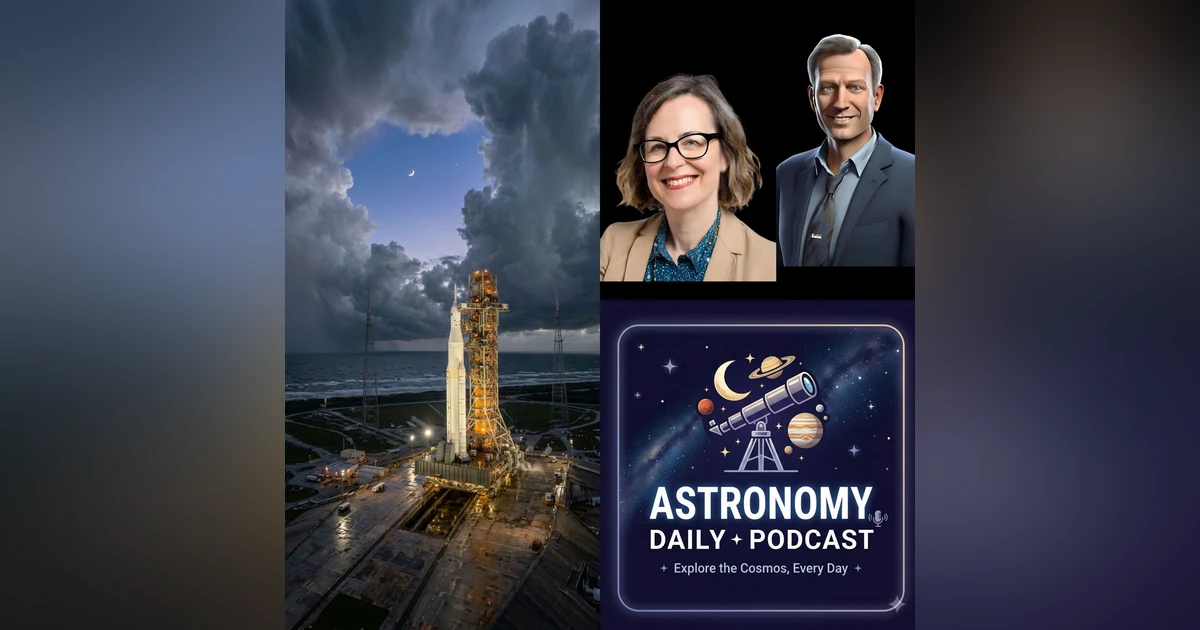
Today's episode — S05E175, Monday August 24, 2026: Main story: China delays Chang'e-7's launch by about a month. The Chang'e-7 lunar south pole mission's launch window opened today, August 24, but a tropical system (reported as Tropical...
Today's episode — S05E175, Monday August 24, 2026:
Main story: China delays Chang'e-7's launch by about a month. The Chang'e-7 lunar south pole mission's launch window opened today, August 24, but a tropical system (reported as Tropical Depression/Storm Narra) over the Gulf of Tonkin, alongside a cited safety and reliability review, forced a scrub with no immediate new date. Because the mission's landing site — the rim of Shackleton Crater — requires specific solar illumination geometry on top of standard orbital mechanics, its launch windows recur only about once a month for roughly a week at a time, unlike China's earlier equatorial lunar missions. Independent trajectory analysis puts the next viable opportunity around mid-to-late September.
The rest of the news:
Links & sources:
Follow us: @AstroDailyPod
Become a supporter of this podcast: https://www.spreaker.com/podcast/astronomy-daily-latest-space-news--5648921/support.
Sponsor Details:
Ensure your online privacy by using NordVPN. To get our special listener deal and save a lot of money, visit www.astronomydaily.io/nordvpn. You'll be glad you did!
Get the best secure and private email on the planet. Stop your Government, google and who knows who else spying on every email you write. Do what we did and use ProtonMail. They beleive in privacy and there are no ads in their business model...yet they still provide a free forever service. Check them out and get out special deal at www.astronomydaily.io/protonmail
Become a supporter of Astronomy Daily by joining our Supporters Club. Commercial free episodes daily are only a click way... Click Here
This episode includes AI-generated content.
Main story: China delays Chang'e-7's launch by about a month. The Chang'e-7 lunar south pole mission's launch window opened today, August 24, but a tropical system (reported as Tropical Depression/Storm Narra) over the Gulf of Tonkin, alongside a cited safety and reliability review, forced a scrub with no immediate new date. Because the mission's landing site — the rim of Shackleton Crater — requires specific solar illumination geometry on top of standard orbital mechanics, its launch windows recur only about once a month for roughly a week at a time, unlike China's earlier equatorial lunar missions. Independent trajectory analysis puts the next viable opportunity around mid-to-late September.
The rest of the news:
- LandSpace / Zhuque-3 follow-up: Thursday's celebrated first-ever leg-landing of an orbital-class Chinese booster had a coda — residual methane and oxygen ignited near the booster's base after touchdown, damaging a landing leg and toppling the vehicle. The landing itself (four legs, near dead-center, ~390km downrange in Gansu) still stands as the achievement it was reported as; the post-landing fire is a separate, and not unprecedented, engineering challenge — SpaceX's own Falcon 9 booster B1086 suffered a near-identical fire and tip-over in March 2025.
- SpaceX's 100th launch of 2026: A Falcon 9 carrying 27 Starlink satellites lifted off from Vandenberg on August 22, SpaceX's 100th orbital mission of the year (99 Falcon 9 flights plus one Falcon Heavy). The booster landed on its ninth flight; Starlink has passed 11,000 operational satellites.
- Tonight's Sky: Comet 220P/McNaught is in outburst — roughly 20,000 times brighter than normal — and observable with binoculars rather than requiring a telescope, at least until it fades after an October close pass. Also: a reminder that a 96%-partial lunar eclipse falls the night of August 27–28.
Links & sources:
- NASASpaceFlight.com — LandSpace's Zhuque-3 Topples After Landing
- Space.com — Bad weather delays launch of China's historic Chang'e 7 mission to moon's south pole
- SCMP — China puts Chang'e-7 mission to lunar south pole on hold
- SpaceNews — China delays Chang'e-7 lunar south pole landing mission launch
- China in Space — Chang'e 7 Moon Mission Delayed by One Month
- CNN — China postpones launch of unprecedented water-hunting moon mission amid space race
- Space.com — SpaceX sends 27 Starlink satellites to orbit on 100th Falcon rocket launch of the year
- APOD — Comet 220P in Outburst (August 24, 2026)
Follow us: @AstroDailyPod
Become a supporter of this podcast: https://www.spreaker.com/podcast/astronomy-daily-latest-space-news--5648921/support.
Sponsor Details:
Ensure your online privacy by using NordVPN. To get our special listener deal and save a lot of money, visit www.astronomydaily.io/nordvpn. You'll be glad you did!
Get the best secure and private email on the planet. Stop your Government, google and who knows who else spying on every email you write. Do what we did and use ProtonMail. They beleive in privacy and there are no ads in their business model...yet they still provide a free forever service. Check them out and get out special deal at www.astronomydaily.io/protonmail
Become a supporter of Astronomy Daily by joining our Supporters Club. Commercial free episodes daily are only a click way... Click Here
This episode includes AI-generated content.
WEBVTT
0
00:00:00.960 --> 00:00:03.400
Anna: Hey, everyone. Welcome back to Astronomy
1
00:00:03.400 --> 00:00:04.720
Daily. I'm Anna.
2
00:00:04.960 --> 00:00:07.920
Avery: And I'm avery. It's Monday, August 24th.
3
00:00:08.000 --> 00:00:10.480
Series 5 Episode 175
4
00:00:10.960 --> 00:00:11.680
Back to our
5
00:00:11.680 --> 00:00:14.160
Anna: regular weekday format after Saturday's
6
00:00:14.160 --> 00:00:16.400
weekend wrap. And it turns out one of the
7
00:00:16.400 --> 00:00:18.680
things we flagged as Watch this space over
8
00:00:18.680 --> 00:00:21.360
the weekend has already resolved. China's
9
00:00:21.360 --> 00:00:23.720
Chang' E7 launch. The one with the window
10
00:00:23.720 --> 00:00:24.480
opening today,
11
00:00:24.800 --> 00:00:26.720
Avery: the one that could have gone up literally
12
00:00:26.720 --> 00:00:27.440
this morning.
13
00:00:27.920 --> 00:00:30.850
Anna: Could have, didn't. We'll tell you why,
14
00:00:30.930 --> 00:00:33.170
and why the fix isn't as simple as just
15
00:00:33.170 --> 00:00:34.450
trying again tomorrow.
16
00:00:34.850 --> 00:00:37.090
Avery: Then a, uh, follow up on Thursday's big
17
00:00:37.090 --> 00:00:39.530
landspace story. Turns out sticking the
18
00:00:39.530 --> 00:00:41.410
landing wasn't quite the end of that one
19
00:00:41.410 --> 00:00:41.810
either.
20
00:00:42.210 --> 00:00:45.010
Anna: Plus, SpaceX quietly ticks over a
21
00:00:45.010 --> 00:00:47.610
big round number. And there's a comment worth
22
00:00:47.610 --> 00:00:49.690
pointing your binoculars at tonight. If the
23
00:00:49.690 --> 00:00:51.650
sky's clear, let's get into it.
24
00:00:51.890 --> 00:00:54.090
Avery: And kicking things off. So this is the
25
00:00:54.090 --> 00:00:56.170
mission we spent most of Saturday's episode
26
00:00:56.170 --> 00:00:58.840
on, the four vehicle hopper and lander
27
00:00:58.840 --> 00:01:01.400
expedition to Shackleton Crater. Where does
28
00:01:01.400 --> 00:01:03.120
it actually stand as of this morning?
29
00:01:03.680 --> 00:01:06.480
Anna: Grounded. At least for now. The launch window
30
00:01:06.480 --> 00:01:09.064
for Chang' E 7 opened today, August
31
00:01:09.176 --> 00:01:11.960
24, and ran through the 31st. And there
32
00:01:11.960 --> 00:01:14.400
was real momentum toward an early attempt.
33
00:01:14.560 --> 00:01:16.840
The rocket had already rolled out to the pad
34
00:01:16.840 --> 00:01:19.560
at wenchang on the 19th, but over the
35
00:01:19.560 --> 00:01:22.400
weekend a, uh, tropical system reported as
36
00:01:22.400 --> 00:01:24.560
tropical depression in some accounts.
37
00:01:24.560 --> 00:01:27.550
Tropical Storm Nara formed over the Gulf of
38
00:01:27.550 --> 00:01:29.790
Tonkin and threatened the launch site on
39
00:01:29.790 --> 00:01:32.430
Hainan island with exactly the kind of
40
00:01:32.430 --> 00:01:34.910
weather you don't fly a long March 5th
41
00:01:34.910 --> 00:01:35.190
through.
42
00:01:35.670 --> 00:01:37.910
Avery: So it's a straightforward weather scrub.
43
00:01:38.230 --> 00:01:40.510
Anna: Weather's the headline reason, but it's not
44
00:01:40.510 --> 00:01:43.270
the whole story. Chinese state media via
45
00:01:43.270 --> 00:01:45.910
Xinhua also pointed to what's been described
46
00:01:45.910 --> 00:01:48.550
as a broader safety and reliability review.
47
00:01:48.630 --> 00:01:51.110
As part of the decision, the official line
48
00:01:51.110 --> 00:01:53.150
was that the mission does not meet the launch
49
00:01:53.150 --> 00:01:55.550
conditions and cannot be carried out within
50
00:01:55.550 --> 00:01:58.500
the scheduled window. Full stop. No new date
51
00:01:58.500 --> 00:01:59.060
attached.
52
00:01:59.540 --> 00:02:02.300
Avery: No new date at all. That seems like a big
53
00:02:02.300 --> 00:02:03.380
mission to leave hanging.
54
00:02:03.700 --> 00:02:06.020
Anna: It's deliberate vagueness rather than an
55
00:02:06.020 --> 00:02:08.500
unknown, though. And this is the part that's
56
00:02:08.500 --> 00:02:10.500
actually the more interesting story here.
57
00:02:10.740 --> 00:02:12.860
You'd think we missed our window because of
58
00:02:12.860 --> 00:02:15.380
weather. Means try again in a few days once
59
00:02:15.380 --> 00:02:17.940
the storm clears. For most rockets, that's
60
00:02:17.940 --> 00:02:20.900
exactly right. Chang' E7 isn't most
61
00:02:20.900 --> 00:02:21.540
rockets.
62
00:02:21.860 --> 00:02:22.500
Avery: Why not?
63
00:02:23.030 --> 00:02:25.470
Anna: Because it's not just going to orbit. It's
64
00:02:25.470 --> 00:02:27.430
targeting a, uh, landing on the rim of
65
00:02:27.430 --> 00:02:29.990
Shackleton Crater right at the lunar south
66
00:02:29.990 --> 00:02:32.950
pole. And that site needs very specific
67
00:02:32.950 --> 00:02:34.950
sun angles for the landing to even be
68
00:02:34.950 --> 00:02:37.670
possible on top of the orbital geometry
69
00:02:37.670 --> 00:02:39.350
needed to get there in the first place.
70
00:02:39.750 --> 00:02:42.270
Independent trajectory analysis from the
71
00:02:42.270 --> 00:02:45.070
outlet China and space, cross referenced with
72
00:02:45.070 --> 00:02:47.310
the kind of orbital mechanics reasoning we've
73
00:02:47.310 --> 00:02:49.790
seen from other lunar polar missions, puts
74
00:02:49.790 --> 00:02:52.250
the next realistic opportunity at about a,
75
00:02:52.250 --> 00:02:55.130
uh, month out, sometime in the second half of
76
00:02:55.130 --> 00:02:55.610
September.
77
00:02:56.090 --> 00:02:58.730
Avery: A month for a few days of bad weather
78
00:02:58.970 --> 00:03:01.370
that feels disproportionate until you explain
79
00:03:01.370 --> 00:03:02.010
it properly.
80
00:03:02.250 --> 00:03:05.170
Anna: It does. And the reason is that polar lunar
81
00:03:05.170 --> 00:03:07.810
missions get much narrower, much less
82
00:03:07.810 --> 00:03:10.290
frequent windows than the equatorial missions
83
00:03:10.290 --> 00:03:12.890
China's flown before. You're not just waiting
84
00:03:12.890 --> 00:03:14.970
for the moon to be in the right place. You
85
00:03:14.970 --> 00:03:17.650
need the specific illumination geometry at
86
00:03:17.650 --> 00:03:20.420
Shackleton to line up too. And because the
87
00:03:20.420 --> 00:03:23.140
moon's roughly 18.6 year nodal
88
00:03:23.140 --> 00:03:25.940
cycle, that combination only recurs for
89
00:03:25.940 --> 00:03:28.860
about a week at a time, roughly once a month.
90
00:03:29.020 --> 00:03:31.940
And the geometry is gradually shifting as we
91
00:03:31.940 --> 00:03:34.140
head deeper into 2026 and
92
00:03:34.140 --> 00:03:35.100
2027.
93
00:03:35.579 --> 00:03:38.340
Avery: So miss this week and there genuinely isn't
94
00:03:38.340 --> 00:03:40.460
a just wait till Thursday option.
95
00:03:40.860 --> 00:03:43.460
Anna: Exactly. It's the trade off you accept for
96
00:03:43.460 --> 00:03:45.860
choosing the most scientifically interesting
97
00:03:45.860 --> 00:03:48.180
landing site on the moon instead of the
98
00:03:48.180 --> 00:03:48.860
easiest one.
99
00:03:49.270 --> 00:03:51.670
Avery: Any chance the cannot be carried out this
100
00:03:51.670 --> 00:03:54.150
year? Phrasing some outlets used actually
101
00:03:54.150 --> 00:03:56.390
means what it sounds like a delay into
102
00:03:56.390 --> 00:03:57.430
2027
103
00:03:58.230 --> 00:04:00.590
Anna: worth flagging because a couple of the wire
104
00:04:00.590 --> 00:04:03.350
summaries do use language that reads that way
105
00:04:03.350 --> 00:04:05.710
in translation. But the more detailed
106
00:04:05.710 --> 00:04:08.110
reporting we've seen, including the Thailand
107
00:04:08.110 --> 00:04:10.310
based National Astronomical Research
108
00:04:10.390 --> 00:04:12.750
Institute's comment that the next viable
109
00:04:12.750 --> 00:04:15.590
window is at the earliest about a month
110
00:04:15.590 --> 00:04:18.170
away, lines up with a September target,
111
00:04:18.330 --> 00:04:21.050
not a multi year slip. We'd read
112
00:04:21.050 --> 00:04:23.450
this year there as referring to this
113
00:04:23.530 --> 00:04:25.770
specific launch attempt inside
114
00:04:25.770 --> 00:04:28.690
2026's calendar of windows. Not a
115
00:04:28.690 --> 00:04:31.210
delay out of 2026 entirely.
116
00:04:31.530 --> 00:04:33.730
We'll keep tracking it and correct that if
117
00:04:33.730 --> 00:04:35.530
firmer reporting says otherwise.
118
00:04:36.250 --> 00:04:38.770
Avery: So, grounded by weather, kept grounded by
119
00:04:38.770 --> 00:04:41.330
orbital mechanics and probably back on the
120
00:04:41.330 --> 00:04:44.040
Anna: pad next month, that's where it stands.
121
00:04:44.200 --> 00:04:46.800
The mission itself hasn't changed. Still the
122
00:04:46.800 --> 00:04:49.440
hopper, still the ice hunt, still the most
123
00:04:49.440 --> 00:04:52.320
ambitious lunar mission ever attempted by any
124
00:04:52.320 --> 00:04:55.000
nation, per Brown University's James Head.
125
00:04:55.400 --> 00:04:57.480
It's just going to keep us waiting a little
126
00:04:57.480 --> 00:04:58.439
longer than we thought.
127
00:04:58.439 --> 00:05:01.240
Avery: On Saturday we did say to watch
128
00:05:01.240 --> 00:05:01.880
this space.
129
00:05:02.360 --> 00:05:04.600
Anna: We meant it more literally than expected.
130
00:05:05.320 --> 00:05:07.200
Avery: Alright, next one's a genuine.
131
00:05:07.200 --> 00:05:10.100
The rest of the story follow up Thursday we
132
00:05:10.100 --> 00:05:12.460
told you Landspace had stuck the landing on
133
00:05:12.460 --> 00:05:15.460
UK3's first stage. A, uh, big first for
134
00:05:15.460 --> 00:05:18.140
Chinese commercial spaceflight. New reporting
135
00:05:18.140 --> 00:05:19.860
fills in what happened right after the
136
00:05:19.860 --> 00:05:20.860
cameras stopped rolling.
137
00:05:21.260 --> 00:05:23.620
Anna: It does. And to be clear up front, the
138
00:05:23.620 --> 00:05:26.500
landing itself really did succeed. On
139
00:05:26.500 --> 00:05:29.380
August 19, Chu Ke 3's booster came down
140
00:05:29.380 --> 00:05:31.500
on all four legs roughly
141
00:05:31.500 --> 00:05:33.980
390km downrange in
142
00:05:33.980 --> 00:05:36.790
Gansu Province, close to dead center on
143
00:05:36.790 --> 00:05:39.510
its pad about eight minutes after liftoff
144
00:05:39.510 --> 00:05:41.910
from the Dongfeng Commercial Space Innovation
145
00:05:41.910 --> 00:05:44.710
Pilot Zone. That part of the story stands
146
00:05:44.710 --> 00:05:46.430
exactly as we reported it.
147
00:05:47.070 --> 00:05:48.030
Avery: So what's new?
148
00:05:48.510 --> 00:05:51.230
Anna: What happened next? According to NASA
149
00:05:51.230 --> 00:05:53.710
Spaceflight's reporting, residual liquid
150
00:05:53.710 --> 00:05:56.150
methane and oxygen left in the booster
151
00:05:56.150 --> 00:05:58.230
ignited near its base shortly after
152
00:05:58.230 --> 00:06:01.190
touchdown, and the resulting fire damaged one
153
00:06:01.190 --> 00:06:03.670
of the four carbon fiber composite landing
154
00:06:03.670 --> 00:06:06.640
legs. That leg failed structurally and the
155
00:06:06.640 --> 00:06:07.800
booster toppled over.
156
00:06:08.520 --> 00:06:10.520
Avery: So the rocket that uh, just made history
157
00:06:10.680 --> 00:06:13.080
didn't survive the moment after making it.
158
00:06:13.530 --> 00:06:15.520
Anna: M. Right. And there's actually an added
159
00:06:15.520 --> 00:06:17.800
wrinkle on how big a first this was.
160
00:06:18.200 --> 00:06:20.920
NASA Spaceflight frames this as China's
161
00:06:20.920 --> 00:06:23.720
first successful land based recovery of
162
00:06:23.720 --> 00:06:26.600
orbital class booster using landing legs
163
00:06:26.600 --> 00:06:29.440
full stop across the entire country's launch
164
00:06:29.440 --> 00:06:31.800
industry, not just among private companies.
165
00:06:32.480 --> 00:06:34.880
That's a slightly bigger claim than the first
166
00:06:34.880 --> 00:06:37.160
private Chinese company framing we used
167
00:06:37.160 --> 00:06:40.080
Thursday because China's other recent booster
168
00:06:40.080 --> 00:06:42.840
recovery success, The Chong Zang 10B
169
00:06:42.840 --> 00:06:45.840
in July, used a net catch method at C
170
00:06:45.920 --> 00:06:48.840
rather than legs. Both framings are accurate,
171
00:06:48.840 --> 00:06:50.800
they're just measuring slightly different
172
00:06:50.880 --> 00:06:51.520
firsts.
173
00:06:52.000 --> 00:06:54.000
Avery: Does the fire undo, um, any of that?
174
00:06:54.560 --> 00:06:56.720
Anna: Not really. And this is worth sitting with
175
00:06:56.720 --> 00:06:58.960
for a second rather than just calling it bad
176
00:06:58.960 --> 00:07:01.940
news. A post landing fire that damages the
177
00:07:01.940 --> 00:07:04.660
vehicle is a, uh, genuinely different failure
178
00:07:04.660 --> 00:07:07.100
mode than crashing on the way down, which is
179
00:07:07.100 --> 00:07:09.940
exactly what happened to Q3's first flight
180
00:07:09.940 --> 00:07:12.620
back in December. The hard part, actually
181
00:07:12.780 --> 00:07:15.340
sticking a controlled propulsive landing on
182
00:07:15.340 --> 00:07:18.340
legs worked. What they lost afterwards is
183
00:07:18.340 --> 00:07:21.060
a refueling and inspection problem, not a
184
00:07:21.060 --> 00:07:22.540
guidance and control problem.
185
00:07:23.100 --> 00:07:24.700
Avery: Has, uh, this happened to anyone else?
186
00:07:25.270 --> 00:07:28.030
Anna: It has. And recently SpaceX's own
187
00:07:28.030 --> 00:07:30.630
Falcon 9 booster B1086
188
00:07:30.870 --> 00:07:33.790
suffered a very similar post landing fire on
189
00:07:33.790 --> 00:07:36.630
a drone ship back in March 2025. And
190
00:07:36.630 --> 00:07:39.470
it also toppled over. Nobody looks at that
191
00:07:39.470 --> 00:07:41.870
and says SpaceX doesn't know how to land
192
00:07:41.870 --> 00:07:44.670
rockets. It's part of the unglamorous back
193
00:07:44.670 --> 00:07:47.510
half of reusability. Venting, or safely
194
00:07:47.510 --> 00:07:49.550
burning off leftover propellant after
195
00:07:49.550 --> 00:07:51.990
touchdown is its own engineering problem
196
00:07:52.530 --> 00:07:54.730
separate from the landing itself. And it's
197
00:07:54.730 --> 00:07:57.530
one every methane fueled reusable booster
198
00:07:57.530 --> 00:07:59.250
program is still working through.
199
00:07:59.890 --> 00:08:02.370
Avery: So Landspace's own line from Thursday
200
00:08:02.770 --> 00:08:05.130
moving towards the engineering application
201
00:08:05.130 --> 00:08:07.730
phase of reusability still holds up.
202
00:08:08.209 --> 00:08:10.850
Anna: If anything, this is what that phase actually
203
00:08:10.850 --> 00:08:13.410
looks like. In practice, it's not. We've
204
00:08:13.410 --> 00:08:16.210
solved reusability. It's we solved
205
00:08:16.210 --> 00:08:19.090
the hardest 90% and now we're finding
206
00:08:19.090 --> 00:08:21.130
all the smaller problems that come with
207
00:08:21.130 --> 00:08:24.050
trying to make it routine. Expect post
208
00:08:24.050 --> 00:08:26.730
landing safing procedures to be exactly what
209
00:08:26.730 --> 00:08:29.370
landspace engineers are working on before the
210
00:08:29.370 --> 00:08:29.970
next flight.
211
00:08:30.450 --> 00:08:32.370
Avery: A real update, not a walk back.
212
00:08:33.010 --> 00:08:33.970
Anna: Exactly that.
213
00:08:34.530 --> 00:08:36.690
Finally, a quick one to round out the news
214
00:08:36.930 --> 00:08:39.650
Friday night, SpaceX flew its 100th
215
00:08:39.650 --> 00:08:41.410
Falcon rocket mission of the year.
216
00:08:42.050 --> 00:08:43.930
Avery: Hundred already with a third of the year
217
00:08:43.930 --> 00:08:44.610
stood to go.
218
00:08:44.930 --> 00:08:47.730
Anna: The launch itself was routine by SpaceX's
219
00:08:47.730 --> 00:08:50.600
standards. 27 Starlink satellites
220
00:08:50.600 --> 00:08:53.520
off a Falcon 9 from Vandenberg Space Force
221
00:08:53.520 --> 00:08:56.240
Base in California, deploying on schedule
222
00:08:56.240 --> 00:08:59.000
about 62 minutes after liftoff. The
223
00:08:59.000 --> 00:09:01.560
booster, flying its ninth mission, landed
224
00:09:01.560 --> 00:09:04.200
cleanly on a drone ship in the Pacific, but
225
00:09:04.200 --> 00:09:07.200
the number's the story. 99 of those
226
00:09:07.200 --> 00:09:09.880
100 launches this year have been Falcon
227
00:09:09.880 --> 00:09:12.480
9s, with the other a, uh, Falcon Heavy flight
228
00:09:12.480 --> 00:09:13.200
back in April.
229
00:09:14.090 --> 00:09:15.890
Avery: And Starlink's obviously doing a lot of the
230
00:09:15.890 --> 00:09:16.570
lifting there.
231
00:09:17.290 --> 00:09:20.170
Anna: 76 of the year's 99 Falcon
232
00:09:20.170 --> 00:09:22.730
9 flights have been dedicated Starlink
233
00:09:22.730 --> 00:09:25.570
missions, and the Constellation itself has
234
00:09:25.570 --> 00:09:28.090
now crossed 11,000 operational
235
00:09:28.090 --> 00:09:30.650
satellites in orbit. For comparison,
236
00:09:30.810 --> 00:09:33.010
SpaceX's full year record is
237
00:09:33.010 --> 00:09:35.850
165 launches set last year.
238
00:09:36.010 --> 00:09:38.410
So there's still real ground to cover before
239
00:09:38.410 --> 00:09:40.950
this year could challenge that. But triple
240
00:09:40.950 --> 00:09:43.670
digits by late August is still a serious
241
00:09:43.670 --> 00:09:44.270
cadence.
242
00:09:44.910 --> 00:09:46.190
Avery: No signs of easing off?
243
00:09:46.670 --> 00:09:47.470
Anna: None at all.
244
00:09:47.950 --> 00:09:49.710
Avery: Alright, what should people go look at
245
00:09:49.710 --> 00:09:50.190
tonight?
246
00:09:50.750 --> 00:09:53.150
Anna: Grab binoculars if you've got them, because
247
00:09:53.150 --> 00:09:56.110
Comet 220PMcNaught is doing
248
00:09:56.189 --> 00:09:59.150
something unusual. It's today's astronomy
249
00:09:59.150 --> 00:10:01.870
picture of the day, and for good reason. This
250
00:10:01.870 --> 00:10:04.430
periodic comet, which orbits the sun
251
00:10:04.430 --> 00:10:07.230
roughly every five years out between Mars and
252
00:10:07.230 --> 00:10:09.750
Jupiter, has gone through two separate
253
00:10:09.750 --> 00:10:12.320
outbursts this year, brightening by something
254
00:10:12.320 --> 00:10:15.040
like 20,000 times its normal level.
255
00:10:15.760 --> 00:10:18.400
Avery: 20,000 times? What does that actually mean
256
00:10:18.400 --> 00:10:19.680
for someone trying to spot it?
257
00:10:20.160 --> 00:10:22.440
Anna: Normally you'd need a telescope to see
258
00:10:22.440 --> 00:10:25.400
220p at all. Right now, thanks
259
00:10:25.400 --> 00:10:27.560
to the outburst, it's within reach of
260
00:10:27.560 --> 00:10:30.320
binoculars and photographs beautifully in
261
00:10:30.320 --> 00:10:33.240
long exposure shots. One of today's featured
262
00:10:33.240 --> 00:10:36.120
images was taken from South Africa, so it's
263
00:10:36.120 --> 00:10:38.640
a solidly southern hemisphere friendly target
264
00:10:38.880 --> 00:10:40.800
for anyone listening from down here.
265
00:10:41.490 --> 00:10:43.410
Avery: What are we actually looking at visually?
266
00:10:43.970 --> 00:10:46.690
Anna: A distinctive bright green head. That
267
00:10:46.690 --> 00:10:49.570
color comes from diatomic carmine molecules
268
00:10:49.570 --> 00:10:52.330
fluorescing in sunlight with a short dust
269
00:10:52.330 --> 00:10:55.330
tail trailing off. Nobody's actually certain
270
00:10:55.330 --> 00:10:57.850
what's causing the outbursts. The leading
271
00:10:57.850 --> 00:11:00.330
guesses are a sudden release of built up
272
00:11:00.330 --> 00:11:03.010
subsurface gas or something like a
273
00:11:03.010 --> 00:11:05.770
comet quake cracking open fresh icy
274
00:11:05.770 --> 00:11:07.090
material to the sunlight.
275
00:11:07.790 --> 00:11:10.430
Avery: How long does the window last, not forever.
276
00:11:10.670 --> 00:11:13.590
Anna: The comet expected to pass about one Earth
277
00:11:13.590 --> 00:11:15.990
sun distance from us in October, and
278
00:11:15.990 --> 00:11:18.230
brightness should drop off fairly quickly
279
00:11:18.230 --> 00:11:20.750
after that. So if you want to catch it near
280
00:11:20.750 --> 00:11:23.230
its best, the next few weeks are the time
281
00:11:23.710 --> 00:11:24.430
and, um, the bigger
282
00:11:24.430 --> 00:11:26.310
Avery: one on the calendar. That partial lunar
283
00:11:26.310 --> 00:11:27.470
eclipse we mentioned Friday
284
00:11:28.110 --> 00:11:31.030
Anna: still on for this week, the night of the 27th
285
00:11:31.030 --> 00:11:33.310
into the 28th, covering a full
286
00:11:33.470 --> 00:11:36.290
96% of the moon's face. About
287
00:11:36.290 --> 00:11:39.210
as close to total as a partial eclipse gets
288
00:11:39.210 --> 00:11:41.810
without crossing the line. We'll have full
289
00:11:41.810 --> 00:11:44.410
local viewing times as it gets closer, but
290
00:11:44.410 --> 00:11:46.010
it's worth penciling in now.
291
00:11:46.410 --> 00:11:49.330
Avery: A comet tonight, an almost total eclipse by
292
00:11:49.330 --> 00:11:51.410
the weekend. Good few days to keep looking
293
00:11:51.410 --> 00:11:51.770
up.
294
00:11:52.090 --> 00:11:52.890
Anna: That's the job.
295
00:11:53.050 --> 00:11:56.010
And that's it for Today's episode, episode
296
00:11:56.010 --> 00:11:58.690
175 of series five in the
297
00:11:58.690 --> 00:11:59.050
books.
298
00:11:59.290 --> 00:12:01.970
Avery: Quick recap. China's Chang' e 7 launch
299
00:12:01.970 --> 00:12:04.450
slips by about a month, thanks to weather and
300
00:12:04.450 --> 00:12:06.570
the Moon's unforgiving, um, polar landing
301
00:12:06.570 --> 00:12:09.060
geometry. Landspace's historic
302
00:12:09.060 --> 00:12:11.940
Z3 landing turns out to have ended in a post
303
00:12:11.940 --> 00:12:14.740
landing fire and tip over. SpaceX
304
00:12:14.820 --> 00:12:17.580
quietly notches its 100th launch of the
305
00:12:17.580 --> 00:12:20.260
year, and there's a binocular friendly comet
306
00:12:20.260 --> 00:12:22.980
and outburst tonight, plus an almost total
307
00:12:22.980 --> 00:12:24.740
lunar eclipse coming this week.
308
00:12:24.900 --> 00:12:27.340
Anna: If you enjoyed the show, the best thing you
309
00:12:27.340 --> 00:12:30.020
can do is tell a friend. Leave us a rating
310
00:12:30.020 --> 00:12:32.580
wherever you listen and follow us. Just
311
00:12:32.580 --> 00:12:34.900
search AstroDailyPod Daily Pod on your
312
00:12:34.900 --> 00:12:37.730
favorite platform. Full show notes and links
313
00:12:37.730 --> 00:12:40.690
are always up at astronomydaily IO
314
00:12:40.930 --> 00:12:43.090
and while there, take a moment to sign up for
315
00:12:43.090 --> 00:12:45.250
our daily Space and Astronomy News
316
00:12:45.250 --> 00:12:46.690
newsletter. It's free.
317
00:12:47.250 --> 00:12:49.490
Avery: We'll be back tomorrow with more from across
318
00:12:49.490 --> 00:12:50.290
the universe.
319
00:12:50.530 --> 00:12:52.530
Anna: Until then, keep looking up.
320
00:12:52.850 --> 00:12:55.090
Avery: See you next time. Clear skies, everyone.
0
00:00:00.960 --> 00:00:03.400
Anna: Hey, everyone. Welcome back to Astronomy
1
00:00:03.400 --> 00:00:04.720
Daily. I'm Anna.
2
00:00:04.960 --> 00:00:07.920
Avery: And I'm avery. It's Monday, August 24th.
3
00:00:08.000 --> 00:00:10.480
Series 5 Episode 175
4
00:00:10.960 --> 00:00:11.680
Back to our
5
00:00:11.680 --> 00:00:14.160
Anna: regular weekday format after Saturday's
6
00:00:14.160 --> 00:00:16.400
weekend wrap. And it turns out one of the
7
00:00:16.400 --> 00:00:18.680
things we flagged as Watch this space over
8
00:00:18.680 --> 00:00:21.360
the weekend has already resolved. China's
9
00:00:21.360 --> 00:00:23.720
Chang' E7 launch. The one with the window
10
00:00:23.720 --> 00:00:24.480
opening today,
11
00:00:24.800 --> 00:00:26.720
Avery: the one that could have gone up literally
12
00:00:26.720 --> 00:00:27.440
this morning.
13
00:00:27.920 --> 00:00:30.850
Anna: Could have, didn't. We'll tell you why,
14
00:00:30.930 --> 00:00:33.170
and why the fix isn't as simple as just
15
00:00:33.170 --> 00:00:34.450
trying again tomorrow.
16
00:00:34.850 --> 00:00:37.090
Avery: Then a, uh, follow up on Thursday's big
17
00:00:37.090 --> 00:00:39.530
landspace story. Turns out sticking the
18
00:00:39.530 --> 00:00:41.410
landing wasn't quite the end of that one
19
00:00:41.410 --> 00:00:41.810
either.
20
00:00:42.210 --> 00:00:45.010
Anna: Plus, SpaceX quietly ticks over a
21
00:00:45.010 --> 00:00:47.610
big round number. And there's a comment worth
22
00:00:47.610 --> 00:00:49.690
pointing your binoculars at tonight. If the
23
00:00:49.690 --> 00:00:51.650
sky's clear, let's get into it.
24
00:00:51.890 --> 00:00:54.090
Avery: And kicking things off. So this is the
25
00:00:54.090 --> 00:00:56.170
mission we spent most of Saturday's episode
26
00:00:56.170 --> 00:00:58.840
on, the four vehicle hopper and lander
27
00:00:58.840 --> 00:01:01.400
expedition to Shackleton Crater. Where does
28
00:01:01.400 --> 00:01:03.120
it actually stand as of this morning?
29
00:01:03.680 --> 00:01:06.480
Anna: Grounded. At least for now. The launch window
30
00:01:06.480 --> 00:01:09.064
for Chang' E 7 opened today, August
31
00:01:09.176 --> 00:01:11.960
24, and ran through the 31st. And there
32
00:01:11.960 --> 00:01:14.400
was real momentum toward an early attempt.
33
00:01:14.560 --> 00:01:16.840
The rocket had already rolled out to the pad
34
00:01:16.840 --> 00:01:19.560
at wenchang on the 19th, but over the
35
00:01:19.560 --> 00:01:22.400
weekend a, uh, tropical system reported as
36
00:01:22.400 --> 00:01:24.560
tropical depression in some accounts.
37
00:01:24.560 --> 00:01:27.550
Tropical Storm Nara formed over the Gulf of
38
00:01:27.550 --> 00:01:29.790
Tonkin and threatened the launch site on
39
00:01:29.790 --> 00:01:32.430
Hainan island with exactly the kind of
40
00:01:32.430 --> 00:01:34.910
weather you don't fly a long March 5th
41
00:01:34.910 --> 00:01:35.190
through.
42
00:01:35.670 --> 00:01:37.910
Avery: So it's a straightforward weather scrub.
43
00:01:38.230 --> 00:01:40.510
Anna: Weather's the headline reason, but it's not
44
00:01:40.510 --> 00:01:43.270
the whole story. Chinese state media via
45
00:01:43.270 --> 00:01:45.910
Xinhua also pointed to what's been described
46
00:01:45.910 --> 00:01:48.550
as a broader safety and reliability review.
47
00:01:48.630 --> 00:01:51.110
As part of the decision, the official line
48
00:01:51.110 --> 00:01:53.150
was that the mission does not meet the launch
49
00:01:53.150 --> 00:01:55.550
conditions and cannot be carried out within
50
00:01:55.550 --> 00:01:58.500
the scheduled window. Full stop. No new date
51
00:01:58.500 --> 00:01:59.060
attached.
52
00:01:59.540 --> 00:02:02.300
Avery: No new date at all. That seems like a big
53
00:02:02.300 --> 00:02:03.380
mission to leave hanging.
54
00:02:03.700 --> 00:02:06.020
Anna: It's deliberate vagueness rather than an
55
00:02:06.020 --> 00:02:08.500
unknown, though. And this is the part that's
56
00:02:08.500 --> 00:02:10.500
actually the more interesting story here.
57
00:02:10.740 --> 00:02:12.860
You'd think we missed our window because of
58
00:02:12.860 --> 00:02:15.380
weather. Means try again in a few days once
59
00:02:15.380 --> 00:02:17.940
the storm clears. For most rockets, that's
60
00:02:17.940 --> 00:02:20.900
exactly right. Chang' E7 isn't most
61
00:02:20.900 --> 00:02:21.540
rockets.
62
00:02:21.860 --> 00:02:22.500
Avery: Why not?
63
00:02:23.030 --> 00:02:25.470
Anna: Because it's not just going to orbit. It's
64
00:02:25.470 --> 00:02:27.430
targeting a, uh, landing on the rim of
65
00:02:27.430 --> 00:02:29.990
Shackleton Crater right at the lunar south
66
00:02:29.990 --> 00:02:32.950
pole. And that site needs very specific
67
00:02:32.950 --> 00:02:34.950
sun angles for the landing to even be
68
00:02:34.950 --> 00:02:37.670
possible on top of the orbital geometry
69
00:02:37.670 --> 00:02:39.350
needed to get there in the first place.
70
00:02:39.750 --> 00:02:42.270
Independent trajectory analysis from the
71
00:02:42.270 --> 00:02:45.070
outlet China and space, cross referenced with
72
00:02:45.070 --> 00:02:47.310
the kind of orbital mechanics reasoning we've
73
00:02:47.310 --> 00:02:49.790
seen from other lunar polar missions, puts
74
00:02:49.790 --> 00:02:52.250
the next realistic opportunity at about a,
75
00:02:52.250 --> 00:02:55.130
uh, month out, sometime in the second half of
76
00:02:55.130 --> 00:02:55.610
September.
77
00:02:56.090 --> 00:02:58.730
Avery: A month for a few days of bad weather
78
00:02:58.970 --> 00:03:01.370
that feels disproportionate until you explain
79
00:03:01.370 --> 00:03:02.010
it properly.
80
00:03:02.250 --> 00:03:05.170
Anna: It does. And the reason is that polar lunar
81
00:03:05.170 --> 00:03:07.810
missions get much narrower, much less
82
00:03:07.810 --> 00:03:10.290
frequent windows than the equatorial missions
83
00:03:10.290 --> 00:03:12.890
China's flown before. You're not just waiting
84
00:03:12.890 --> 00:03:14.970
for the moon to be in the right place. You
85
00:03:14.970 --> 00:03:17.650
need the specific illumination geometry at
86
00:03:17.650 --> 00:03:20.420
Shackleton to line up too. And because the
87
00:03:20.420 --> 00:03:23.140
moon's roughly 18.6 year nodal
88
00:03:23.140 --> 00:03:25.940
cycle, that combination only recurs for
89
00:03:25.940 --> 00:03:28.860
about a week at a time, roughly once a month.
90
00:03:29.020 --> 00:03:31.940
And the geometry is gradually shifting as we
91
00:03:31.940 --> 00:03:34.140
head deeper into 2026 and
92
00:03:34.140 --> 00:03:35.100
2027.
93
00:03:35.579 --> 00:03:38.340
Avery: So miss this week and there genuinely isn't
94
00:03:38.340 --> 00:03:40.460
a just wait till Thursday option.
95
00:03:40.860 --> 00:03:43.460
Anna: Exactly. It's the trade off you accept for
96
00:03:43.460 --> 00:03:45.860
choosing the most scientifically interesting
97
00:03:45.860 --> 00:03:48.180
landing site on the moon instead of the
98
00:03:48.180 --> 00:03:48.860
easiest one.
99
00:03:49.270 --> 00:03:51.670
Avery: Any chance the cannot be carried out this
100
00:03:51.670 --> 00:03:54.150
year? Phrasing some outlets used actually
101
00:03:54.150 --> 00:03:56.390
means what it sounds like a delay into
102
00:03:56.390 --> 00:03:57.430
2027
103
00:03:58.230 --> 00:04:00.590
Anna: worth flagging because a couple of the wire
104
00:04:00.590 --> 00:04:03.350
summaries do use language that reads that way
105
00:04:03.350 --> 00:04:05.710
in translation. But the more detailed
106
00:04:05.710 --> 00:04:08.110
reporting we've seen, including the Thailand
107
00:04:08.110 --> 00:04:10.310
based National Astronomical Research
108
00:04:10.390 --> 00:04:12.750
Institute's comment that the next viable
109
00:04:12.750 --> 00:04:15.590
window is at the earliest about a month
110
00:04:15.590 --> 00:04:18.170
away, lines up with a September target,
111
00:04:18.330 --> 00:04:21.050
not a multi year slip. We'd read
112
00:04:21.050 --> 00:04:23.450
this year there as referring to this
113
00:04:23.530 --> 00:04:25.770
specific launch attempt inside
114
00:04:25.770 --> 00:04:28.690
2026's calendar of windows. Not a
115
00:04:28.690 --> 00:04:31.210
delay out of 2026 entirely.
116
00:04:31.530 --> 00:04:33.730
We'll keep tracking it and correct that if
117
00:04:33.730 --> 00:04:35.530
firmer reporting says otherwise.
118
00:04:36.250 --> 00:04:38.770
Avery: So, grounded by weather, kept grounded by
119
00:04:38.770 --> 00:04:41.330
orbital mechanics and probably back on the
120
00:04:41.330 --> 00:04:44.040
Anna: pad next month, that's where it stands.
121
00:04:44.200 --> 00:04:46.800
The mission itself hasn't changed. Still the
122
00:04:46.800 --> 00:04:49.440
hopper, still the ice hunt, still the most
123
00:04:49.440 --> 00:04:52.320
ambitious lunar mission ever attempted by any
124
00:04:52.320 --> 00:04:55.000
nation, per Brown University's James Head.
125
00:04:55.400 --> 00:04:57.480
It's just going to keep us waiting a little
126
00:04:57.480 --> 00:04:58.439
longer than we thought.
127
00:04:58.439 --> 00:05:01.240
Avery: On Saturday we did say to watch
128
00:05:01.240 --> 00:05:01.880
this space.
129
00:05:02.360 --> 00:05:04.600
Anna: We meant it more literally than expected.
130
00:05:05.320 --> 00:05:07.200
Avery: Alright, next one's a genuine.
131
00:05:07.200 --> 00:05:10.100
The rest of the story follow up Thursday we
132
00:05:10.100 --> 00:05:12.460
told you Landspace had stuck the landing on
133
00:05:12.460 --> 00:05:15.460
UK3's first stage. A, uh, big first for
134
00:05:15.460 --> 00:05:18.140
Chinese commercial spaceflight. New reporting
135
00:05:18.140 --> 00:05:19.860
fills in what happened right after the
136
00:05:19.860 --> 00:05:20.860
cameras stopped rolling.
137
00:05:21.260 --> 00:05:23.620
Anna: It does. And to be clear up front, the
138
00:05:23.620 --> 00:05:26.500
landing itself really did succeed. On
139
00:05:26.500 --> 00:05:29.380
August 19, Chu Ke 3's booster came down
140
00:05:29.380 --> 00:05:31.500
on all four legs roughly
141
00:05:31.500 --> 00:05:33.980
390km downrange in
142
00:05:33.980 --> 00:05:36.790
Gansu Province, close to dead center on
143
00:05:36.790 --> 00:05:39.510
its pad about eight minutes after liftoff
144
00:05:39.510 --> 00:05:41.910
from the Dongfeng Commercial Space Innovation
145
00:05:41.910 --> 00:05:44.710
Pilot Zone. That part of the story stands
146
00:05:44.710 --> 00:05:46.430
exactly as we reported it.
147
00:05:47.070 --> 00:05:48.030
Avery: So what's new?
148
00:05:48.510 --> 00:05:51.230
Anna: What happened next? According to NASA
149
00:05:51.230 --> 00:05:53.710
Spaceflight's reporting, residual liquid
150
00:05:53.710 --> 00:05:56.150
methane and oxygen left in the booster
151
00:05:56.150 --> 00:05:58.230
ignited near its base shortly after
152
00:05:58.230 --> 00:06:01.190
touchdown, and the resulting fire damaged one
153
00:06:01.190 --> 00:06:03.670
of the four carbon fiber composite landing
154
00:06:03.670 --> 00:06:06.640
legs. That leg failed structurally and the
155
00:06:06.640 --> 00:06:07.800
booster toppled over.
156
00:06:08.520 --> 00:06:10.520
Avery: So the rocket that uh, just made history
157
00:06:10.680 --> 00:06:13.080
didn't survive the moment after making it.
158
00:06:13.530 --> 00:06:15.520
Anna: M. Right. And there's actually an added
159
00:06:15.520 --> 00:06:17.800
wrinkle on how big a first this was.
160
00:06:18.200 --> 00:06:20.920
NASA Spaceflight frames this as China's
161
00:06:20.920 --> 00:06:23.720
first successful land based recovery of
162
00:06:23.720 --> 00:06:26.600
orbital class booster using landing legs
163
00:06:26.600 --> 00:06:29.440
full stop across the entire country's launch
164
00:06:29.440 --> 00:06:31.800
industry, not just among private companies.
165
00:06:32.480 --> 00:06:34.880
That's a slightly bigger claim than the first
166
00:06:34.880 --> 00:06:37.160
private Chinese company framing we used
167
00:06:37.160 --> 00:06:40.080
Thursday because China's other recent booster
168
00:06:40.080 --> 00:06:42.840
recovery success, The Chong Zang 10B
169
00:06:42.840 --> 00:06:45.840
in July, used a net catch method at C
170
00:06:45.920 --> 00:06:48.840
rather than legs. Both framings are accurate,
171
00:06:48.840 --> 00:06:50.800
they're just measuring slightly different
172
00:06:50.880 --> 00:06:51.520
firsts.
173
00:06:52.000 --> 00:06:54.000
Avery: Does the fire undo, um, any of that?
174
00:06:54.560 --> 00:06:56.720
Anna: Not really. And this is worth sitting with
175
00:06:56.720 --> 00:06:58.960
for a second rather than just calling it bad
176
00:06:58.960 --> 00:07:01.940
news. A post landing fire that damages the
177
00:07:01.940 --> 00:07:04.660
vehicle is a, uh, genuinely different failure
178
00:07:04.660 --> 00:07:07.100
mode than crashing on the way down, which is
179
00:07:07.100 --> 00:07:09.940
exactly what happened to Q3's first flight
180
00:07:09.940 --> 00:07:12.620
back in December. The hard part, actually
181
00:07:12.780 --> 00:07:15.340
sticking a controlled propulsive landing on
182
00:07:15.340 --> 00:07:18.340
legs worked. What they lost afterwards is
183
00:07:18.340 --> 00:07:21.060
a refueling and inspection problem, not a
184
00:07:21.060 --> 00:07:22.540
guidance and control problem.
185
00:07:23.100 --> 00:07:24.700
Avery: Has, uh, this happened to anyone else?
186
00:07:25.270 --> 00:07:28.030
Anna: It has. And recently SpaceX's own
187
00:07:28.030 --> 00:07:30.630
Falcon 9 booster B1086
188
00:07:30.870 --> 00:07:33.790
suffered a very similar post landing fire on
189
00:07:33.790 --> 00:07:36.630
a drone ship back in March 2025. And
190
00:07:36.630 --> 00:07:39.470
it also toppled over. Nobody looks at that
191
00:07:39.470 --> 00:07:41.870
and says SpaceX doesn't know how to land
192
00:07:41.870 --> 00:07:44.670
rockets. It's part of the unglamorous back
193
00:07:44.670 --> 00:07:47.510
half of reusability. Venting, or safely
194
00:07:47.510 --> 00:07:49.550
burning off leftover propellant after
195
00:07:49.550 --> 00:07:51.990
touchdown is its own engineering problem
196
00:07:52.530 --> 00:07:54.730
separate from the landing itself. And it's
197
00:07:54.730 --> 00:07:57.530
one every methane fueled reusable booster
198
00:07:57.530 --> 00:07:59.250
program is still working through.
199
00:07:59.890 --> 00:08:02.370
Avery: So Landspace's own line from Thursday
200
00:08:02.770 --> 00:08:05.130
moving towards the engineering application
201
00:08:05.130 --> 00:08:07.730
phase of reusability still holds up.
202
00:08:08.209 --> 00:08:10.850
Anna: If anything, this is what that phase actually
203
00:08:10.850 --> 00:08:13.410
looks like. In practice, it's not. We've
204
00:08:13.410 --> 00:08:16.210
solved reusability. It's we solved
205
00:08:16.210 --> 00:08:19.090
the hardest 90% and now we're finding
206
00:08:19.090 --> 00:08:21.130
all the smaller problems that come with
207
00:08:21.130 --> 00:08:24.050
trying to make it routine. Expect post
208
00:08:24.050 --> 00:08:26.730
landing safing procedures to be exactly what
209
00:08:26.730 --> 00:08:29.370
landspace engineers are working on before the
210
00:08:29.370 --> 00:08:29.970
next flight.
211
00:08:30.450 --> 00:08:32.370
Avery: A real update, not a walk back.
212
00:08:33.010 --> 00:08:33.970
Anna: Exactly that.
213
00:08:34.530 --> 00:08:36.690
Finally, a quick one to round out the news
214
00:08:36.930 --> 00:08:39.650
Friday night, SpaceX flew its 100th
215
00:08:39.650 --> 00:08:41.410
Falcon rocket mission of the year.
216
00:08:42.050 --> 00:08:43.930
Avery: Hundred already with a third of the year
217
00:08:43.930 --> 00:08:44.610
stood to go.
218
00:08:44.930 --> 00:08:47.730
Anna: The launch itself was routine by SpaceX's
219
00:08:47.730 --> 00:08:50.600
standards. 27 Starlink satellites
220
00:08:50.600 --> 00:08:53.520
off a Falcon 9 from Vandenberg Space Force
221
00:08:53.520 --> 00:08:56.240
Base in California, deploying on schedule
222
00:08:56.240 --> 00:08:59.000
about 62 minutes after liftoff. The
223
00:08:59.000 --> 00:09:01.560
booster, flying its ninth mission, landed
224
00:09:01.560 --> 00:09:04.200
cleanly on a drone ship in the Pacific, but
225
00:09:04.200 --> 00:09:07.200
the number's the story. 99 of those
226
00:09:07.200 --> 00:09:09.880
100 launches this year have been Falcon
227
00:09:09.880 --> 00:09:12.480
9s, with the other a, uh, Falcon Heavy flight
228
00:09:12.480 --> 00:09:13.200
back in April.
229
00:09:14.090 --> 00:09:15.890
Avery: And Starlink's obviously doing a lot of the
230
00:09:15.890 --> 00:09:16.570
lifting there.
231
00:09:17.290 --> 00:09:20.170
Anna: 76 of the year's 99 Falcon
232
00:09:20.170 --> 00:09:22.730
9 flights have been dedicated Starlink
233
00:09:22.730 --> 00:09:25.570
missions, and the Constellation itself has
234
00:09:25.570 --> 00:09:28.090
now crossed 11,000 operational
235
00:09:28.090 --> 00:09:30.650
satellites in orbit. For comparison,
236
00:09:30.810 --> 00:09:33.010
SpaceX's full year record is
237
00:09:33.010 --> 00:09:35.850
165 launches set last year.
238
00:09:36.010 --> 00:09:38.410
So there's still real ground to cover before
239
00:09:38.410 --> 00:09:40.950
this year could challenge that. But triple
240
00:09:40.950 --> 00:09:43.670
digits by late August is still a serious
241
00:09:43.670 --> 00:09:44.270
cadence.
242
00:09:44.910 --> 00:09:46.190
Avery: No signs of easing off?
243
00:09:46.670 --> 00:09:47.470
Anna: None at all.
244
00:09:47.950 --> 00:09:49.710
Avery: Alright, what should people go look at
245
00:09:49.710 --> 00:09:50.190
tonight?
246
00:09:50.750 --> 00:09:53.150
Anna: Grab binoculars if you've got them, because
247
00:09:53.150 --> 00:09:56.110
Comet 220PMcNaught is doing
248
00:09:56.189 --> 00:09:59.150
something unusual. It's today's astronomy
249
00:09:59.150 --> 00:10:01.870
picture of the day, and for good reason. This
250
00:10:01.870 --> 00:10:04.430
periodic comet, which orbits the sun
251
00:10:04.430 --> 00:10:07.230
roughly every five years out between Mars and
252
00:10:07.230 --> 00:10:09.750
Jupiter, has gone through two separate
253
00:10:09.750 --> 00:10:12.320
outbursts this year, brightening by something
254
00:10:12.320 --> 00:10:15.040
like 20,000 times its normal level.
255
00:10:15.760 --> 00:10:18.400
Avery: 20,000 times? What does that actually mean
256
00:10:18.400 --> 00:10:19.680
for someone trying to spot it?
257
00:10:20.160 --> 00:10:22.440
Anna: Normally you'd need a telescope to see
258
00:10:22.440 --> 00:10:25.400
220p at all. Right now, thanks
259
00:10:25.400 --> 00:10:27.560
to the outburst, it's within reach of
260
00:10:27.560 --> 00:10:30.320
binoculars and photographs beautifully in
261
00:10:30.320 --> 00:10:33.240
long exposure shots. One of today's featured
262
00:10:33.240 --> 00:10:36.120
images was taken from South Africa, so it's
263
00:10:36.120 --> 00:10:38.640
a solidly southern hemisphere friendly target
264
00:10:38.880 --> 00:10:40.800
for anyone listening from down here.
265
00:10:41.490 --> 00:10:43.410
Avery: What are we actually looking at visually?
266
00:10:43.970 --> 00:10:46.690
Anna: A distinctive bright green head. That
267
00:10:46.690 --> 00:10:49.570
color comes from diatomic carmine molecules
268
00:10:49.570 --> 00:10:52.330
fluorescing in sunlight with a short dust
269
00:10:52.330 --> 00:10:55.330
tail trailing off. Nobody's actually certain
270
00:10:55.330 --> 00:10:57.850
what's causing the outbursts. The leading
271
00:10:57.850 --> 00:11:00.330
guesses are a sudden release of built up
272
00:11:00.330 --> 00:11:03.010
subsurface gas or something like a
273
00:11:03.010 --> 00:11:05.770
comet quake cracking open fresh icy
274
00:11:05.770 --> 00:11:07.090
material to the sunlight.
275
00:11:07.790 --> 00:11:10.430
Avery: How long does the window last, not forever.
276
00:11:10.670 --> 00:11:13.590
Anna: The comet expected to pass about one Earth
277
00:11:13.590 --> 00:11:15.990
sun distance from us in October, and
278
00:11:15.990 --> 00:11:18.230
brightness should drop off fairly quickly
279
00:11:18.230 --> 00:11:20.750
after that. So if you want to catch it near
280
00:11:20.750 --> 00:11:23.230
its best, the next few weeks are the time
281
00:11:23.710 --> 00:11:24.430
and, um, the bigger
282
00:11:24.430 --> 00:11:26.310
Avery: one on the calendar. That partial lunar
283
00:11:26.310 --> 00:11:27.470
eclipse we mentioned Friday
284
00:11:28.110 --> 00:11:31.030
Anna: still on for this week, the night of the 27th
285
00:11:31.030 --> 00:11:33.310
into the 28th, covering a full
286
00:11:33.470 --> 00:11:36.290
96% of the moon's face. About
287
00:11:36.290 --> 00:11:39.210
as close to total as a partial eclipse gets
288
00:11:39.210 --> 00:11:41.810
without crossing the line. We'll have full
289
00:11:41.810 --> 00:11:44.410
local viewing times as it gets closer, but
290
00:11:44.410 --> 00:11:46.010
it's worth penciling in now.
291
00:11:46.410 --> 00:11:49.330
Avery: A comet tonight, an almost total eclipse by
292
00:11:49.330 --> 00:11:51.410
the weekend. Good few days to keep looking
293
00:11:51.410 --> 00:11:51.770
up.
294
00:11:52.090 --> 00:11:52.890
Anna: That's the job.
295
00:11:53.050 --> 00:11:56.010
And that's it for Today's episode, episode
296
00:11:56.010 --> 00:11:58.690
175 of series five in the
297
00:11:58.690 --> 00:11:59.050
books.
298
00:11:59.290 --> 00:12:01.970
Avery: Quick recap. China's Chang' e 7 launch
299
00:12:01.970 --> 00:12:04.450
slips by about a month, thanks to weather and
300
00:12:04.450 --> 00:12:06.570
the Moon's unforgiving, um, polar landing
301
00:12:06.570 --> 00:12:09.060
geometry. Landspace's historic
302
00:12:09.060 --> 00:12:11.940
Z3 landing turns out to have ended in a post
303
00:12:11.940 --> 00:12:14.740
landing fire and tip over. SpaceX
304
00:12:14.820 --> 00:12:17.580
quietly notches its 100th launch of the
305
00:12:17.580 --> 00:12:20.260
year, and there's a binocular friendly comet
306
00:12:20.260 --> 00:12:22.980
and outburst tonight, plus an almost total
307
00:12:22.980 --> 00:12:24.740
lunar eclipse coming this week.
308
00:12:24.900 --> 00:12:27.340
Anna: If you enjoyed the show, the best thing you
309
00:12:27.340 --> 00:12:30.020
can do is tell a friend. Leave us a rating
310
00:12:30.020 --> 00:12:32.580
wherever you listen and follow us. Just
311
00:12:32.580 --> 00:12:34.900
search AstroDailyPod Daily Pod on your
312
00:12:34.900 --> 00:12:37.730
favorite platform. Full show notes and links
313
00:12:37.730 --> 00:12:40.690
are always up at astronomydaily IO
314
00:12:40.930 --> 00:12:43.090
and while there, take a moment to sign up for
315
00:12:43.090 --> 00:12:45.250
our daily Space and Astronomy News
316
00:12:45.250 --> 00:12:46.690
newsletter. It's free.
317
00:12:47.250 --> 00:12:49.490
Avery: We'll be back tomorrow with more from across
318
00:12:49.490 --> 00:12:50.290
the universe.
319
00:12:50.530 --> 00:12:52.530
Anna: Until then, keep looking up.
320
00:12:52.850 --> 00:12:55.090
Avery: See you next time. Clear skies, everyone.


