April 20, 2026

Blue Origin Reuses New Glenn But Loses Satellite + Artemis 2 Heat Shield News
Blue Origin Reuses New Glenn But Loses Satellite + Artemis 2 Heat Shield News

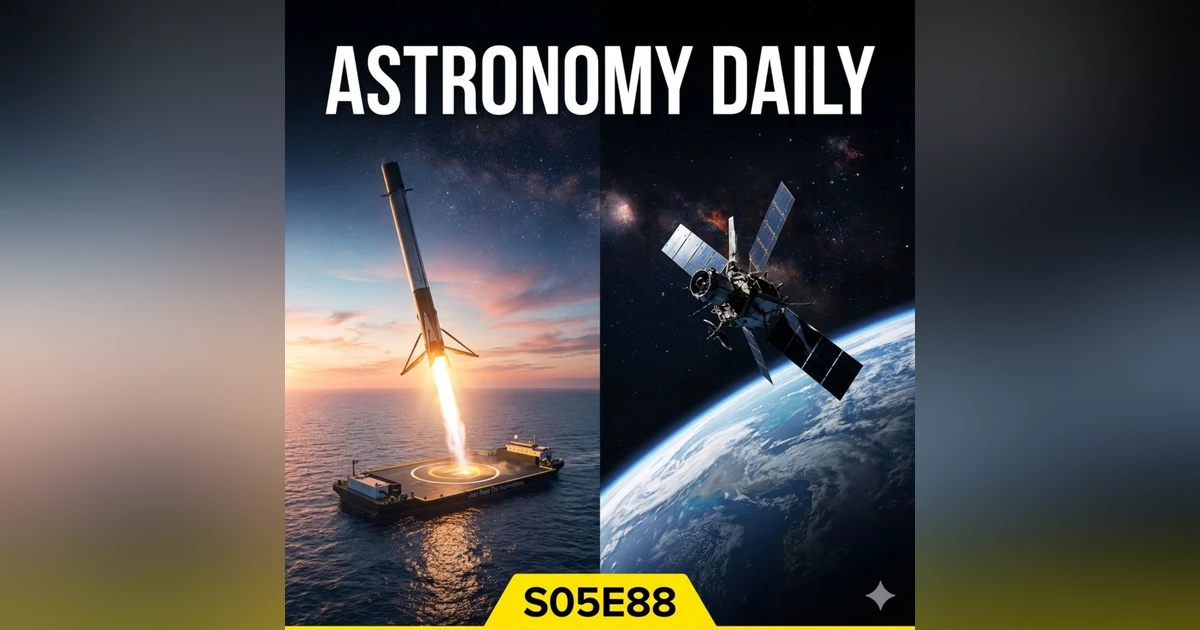
In today's episode, Anna and Avery cover six major stories from the past 24 hours. Blue Origin made history by reusing its New Glenn rocket for the first time -- but the upper stage deployed the BlueBird 7 satellite into the wrong orbit, forcing a deorbit. SpaceX delivered a clean GPS III SV10 launch for the US Space Force. Post-mission inspection of the Artemis 2 Orion capsule's heat shield provides initial good news after months of pre-flight controversy. A new MIT/WHOI planetary wave model reveals Titan's hydrocarbon seas could host 10-foot slow-motion waves from gentle breezes. The Lyrid meteor shower peaks Wednesday April 22 under ideal dark-sky conditions. And the Giant Magellan Telescope advances to its final design phase ahead of a crucial Congressional funding decision. Story Links Story 1 -- Blue Origin New Glenn NG-3 • Space.com: Blue Origin reuses New Glenn, deploys satellite to wrong orbit • TechCrunch: Blue Origin's New Glenn puts satellite in wrong orbit • GeekWire: Blue Origin reuses New Glenn; satellite goes into wrong orbit • CBS News: In its third flight, New Glenn puts satellite payload into wrong orbit Story 2 -- SpaceX GPS III SV10 • Space.com: Watch SpaceX launch GPS satellite for US Space Force -- April 20 • Spaceflight Now launch schedule -- spaceflightnow.com/launch-schedule Story 3 -- Artemis 2 Heat Shield • Space.com: Artemis 2 heat shield seems to have aced its trial by fire • Gizmodo: NASA sets the record straight on that missing chunk of Artemis 2's heat shield • NBC News: Did the Artemis II spacecraft protect the crew well enough? Story 4 -- Titan Waves / PlanetWaves • Space.com: Tall waves moving in slow motion -- how oily oceans on Titan may behave • Popular Science: Saturn's largest moon could see 10-foot waves from a tiny breeze • Journal of Geophysical Research: Planets (MIT/WHOI study) Story 5 -- Lyrid Meteor Shower • Space.com: Lyrid meteor shower 2026 -- when, where and how to see it • EarthSky: Everything you need to know -- Lyrid meteor shower 2026 • NASA: What's Up April 2026 skywatching tips -- science.nasa.gov Story 6 -- Giant Magellan Telescope • Space.com: This giant telescope could discover habitable exoplanets -- if it gets its funding • Giant Magellan Telescope official site -- giantmagellan.org Trivia Answer QUESTION: The Lyrid meteor shower is produced by debris from Comet Thatcher. Approximately how long does it take Comet Thatcher to complete one orbit around the Sun? ANSWER: Approximately 415 years. Comet Thatcher last visited the inner solar system in 1861 and is not expected to return until around 2276. The Lyrid shower occurs each year when Earth passes through the trail of debris it left behind. About Astronomy Daily Astronomy Daily is produced by the Bitesz.com Podcast Network. New episodes every day. Find us at astronomydaily.io and follow @AstroDailyPod for daily updates.

Become a supporter of this podcast: https://www.spreaker.com/podcast/astronomy-daily-space-news-updates--5648921/support.

Sponsor Details:
Ensure your online privacy by using NordVPN. To get our special listener deal and save a lot of money, visit www.bitesz.com/nordvpn. You'll be glad you did!

Become a supporter of Astronomy Daily by joining our Supporters Club. Commercial free episodes daily are only a click way... Click Here

This episode includes AI-generated content.

WEBVTT

1
00:00:00.200 --> 00:00:04.080
Welcome to Astronomy Daily, your daily guide to everything happening

2
00:00:04.120 --> 00:00:08.320
in space and beyond. I'm anna, joined as always by Avery,

3
00:00:08.640 --> 00:00:12.480
and it is Monday, April twentieth, twenty twenty six. Welcome

4
00:00:12.519 --> 00:00:14.400
everyone wherever you're tuning in from.

5
00:00:14.960 --> 00:00:17.519
And what a weekend it was in the space world. Anna,

6
00:00:18.039 --> 00:00:20.399
big things happen while some of us were sleeping.

7
00:00:20.920 --> 00:00:24.039
You are not wrong. Today we have six stories that

8
00:00:24.120 --> 00:00:27.320
covered the full spectrum, from a rocket that pulled off

9
00:00:27.399 --> 00:00:31.399
a historic milestone and then immediately ran into trouble to

10
00:00:31.519 --> 00:00:35.280
some genuinely beautiful planetary science that will make you look

11
00:00:35.320 --> 00:00:36.920
at Saturn a little differently.

12
00:00:37.439 --> 00:00:39.560
Blue Origin is going to be the talk of the

13
00:00:39.600 --> 00:00:43.240
industry today. Big booster landing and a satellite in the

14
00:00:43.240 --> 00:00:46.759
wrong place. Stay with us, let's get into it. I'm

15
00:00:46.799 --> 00:00:47.560
ready if you are.

16
00:00:47.920 --> 00:00:51.240
Our lead story today takes us to Cave Canaveral, Florida,

17
00:00:51.520 --> 00:00:56.359
where yesterday Sunday, April nineteenth, Blue Origin made history and

18
00:00:56.439 --> 00:00:59.920
then a few hours later had a very bad morning.

19
00:01:00.439 --> 00:01:04.719
The roller coaster that is rocket science exactly. Let's start

20
00:01:04.760 --> 00:01:08.040
with the good news. Blue Origins New Glen rocket lifted

21
00:01:08.079 --> 00:01:11.239
off at around seven to twenty five Eastern time, yesterday

22
00:01:11.519 --> 00:01:15.879
on its third ever mission, designated NG three. But here's

23
00:01:15.920 --> 00:01:18.920
what made this one special. For the first time ever,

24
00:01:19.280 --> 00:01:23.200
Blue Origin was flying a previously used New Glen first stage.

25
00:01:23.560 --> 00:01:27.159
The booster nicknamed Never tell Me the Odds, had already

26
00:01:27.159 --> 00:01:30.959
flown once before, back in November last year on NG two.

27
00:01:31.680 --> 00:01:34.760
I love the booster names, and reusing an orbital class

28
00:01:34.879 --> 00:01:38.439
rocket is genuinely a big deal. BaseX has been doing

29
00:01:38.439 --> 00:01:41.799
it routinely for years now, but this was Blue Origin's

30
00:01:41.879 --> 00:01:44.840
first time proving New Glen can come back.

31
00:01:44.640 --> 00:01:48.480
And fly again, and it did exactly that. About three

32
00:01:48.560 --> 00:01:51.560
and a half minutes after liftoff, the first stage shut

33
00:01:51.599 --> 00:01:54.920
down and separated. Six minutes in Never tell Me the

34
00:01:54.959 --> 00:01:58.400
Odds came down and landed cleanly on Blue Origin's drone

35
00:01:58.439 --> 00:02:02.239
ship Jacqueline in the Atlantic Go Jeff Bezos shared video

36
00:02:02.319 --> 00:02:05.519
of the landing on social media, and Elon Musk, to

37
00:02:05.560 --> 00:02:08.719
his credit, offered, congratulations, that's.

38
00:02:08.520 --> 00:02:10.560
A sentence I didn't expect to say.

39
00:02:10.400 --> 00:02:14.319
Today, and yet here we are now the bad news.

40
00:02:14.680 --> 00:02:18.560
About two hours after launch, Blue Origin posted an update

41
00:02:18.639 --> 00:02:22.159
saying the upper stage had placed the payload, a Bluebird

42
00:02:22.240 --> 00:02:26.560
seven satellite for AST Space Mobile, into what they called

43
00:02:26.680 --> 00:02:30.879
an off nominal orbit, which is aerospace speak for the

44
00:02:30.919 --> 00:02:36.360
wrong orbit. How wrong lower than planned. AST Space Mobile

45
00:02:36.439 --> 00:02:40.199
confirmed that Bluebird seven had powered on and separated from

46
00:02:40.199 --> 00:02:43.680
the rocket successfully, but the altitude was too low to

47
00:02:43.680 --> 00:02:48.560
sustain operations. Their onboard propulsion couldn't compensate for the shortfall,

48
00:02:48.919 --> 00:02:52.120
and so the decision was made. Bluebird seven will be

49
00:02:52.199 --> 00:02:54.800
de orbited. It'll burn up in the atmosphere.

50
00:02:55.240 --> 00:02:59.080
That's a significant satellite. Bluebird seven was meant to deliver

51
00:02:59.240 --> 00:03:02.840
direct to smart phone cellular broadband from space. It would

52
00:03:02.879 --> 00:03:06.639
have joined AST's growing constellation. The good news is the

53
00:03:06.680 --> 00:03:09.960
satellite was covered by insurance and AST says they have

54
00:03:10.039 --> 00:03:14.199
Bluebirds eight, nine to ten nearly ready to ship, expected

55
00:03:14.240 --> 00:03:15.199
in about a month.

56
00:03:15.360 --> 00:03:19.479
And AST Space Mobile maintains their target of around forty

57
00:03:19.479 --> 00:03:22.080
five satellites in orbit by the end of twenty twenty

58
00:03:22.120 --> 00:03:26.280
six across multiple launch providers. So this is a setback,

59
00:03:26.439 --> 00:03:30.520
not a disaster for Blue Origin. They've proven the booster works,

60
00:03:30.840 --> 00:03:34.039
they now have some explaining to do about the upper stage.

61
00:03:34.159 --> 00:03:37.840
This was New Glenn's first payload loss and the investigation

62
00:03:38.039 --> 00:03:39.319
will be closely watched.

63
00:03:39.800 --> 00:03:44.000
The rivalry with SpaceX continues, and for now SpaceX's record

64
00:03:44.039 --> 00:03:47.360
on payload delivery is something Blue Origin needs to match.

65
00:03:47.800 --> 00:03:50.639
While Blue Origin was making news for all the wrong

66
00:03:50.680 --> 00:03:55.039
reasons with its upper stage yesterday, this morning, SpaceX provided

67
00:03:55.080 --> 00:03:59.120
a tidy contrast, a clean, routine launch of a GPS

68
00:03:59.120 --> 00:04:01.680
satellite for the UNA United States Space Force.

69
00:04:01.960 --> 00:04:04.960
The kind of mission SpaceX almost make look boring at

70
00:04:04.960 --> 00:04:05.840
this point.

71
00:04:05.879 --> 00:04:09.479
In the early hours of this morning, Monday, April twentieth,

72
00:04:09.960 --> 00:04:13.960
a SpaceX Falcon nine lifted off from Space Launch Complex

73
00:04:14.039 --> 00:04:18.759
forty at Cape Canaveral carrying GPS three space Vehicle ten.

74
00:04:19.600 --> 00:04:23.279
This is the tenth in the next generation GPS three series,

75
00:04:23.600 --> 00:04:27.319
which delivers three times better accuracy and up to eight

76
00:04:27.439 --> 00:04:32.680
times improved anti jamming capability compared to older GPS satellites.

77
00:04:33.279 --> 00:04:40.720
GPS touches everything navigation, financial transactions, emergency services, military operations.

78
00:04:41.199 --> 00:04:45.079
These upgrades matter enormously, even if the launches don't generate

79
00:04:45.120 --> 00:04:47.240
the drama of a Blue Origin mishap.

80
00:04:47.839 --> 00:04:51.519
The Falcon nine first stage returned to land as expected,

81
00:04:51.879 --> 00:04:56.720
Clean mission, clean delivery. SV ten joins its predecessors in

82
00:04:56.759 --> 00:05:01.519
the GPS constellation, which serves billions of people and devices

83
00:05:01.720 --> 00:05:05.800
every single day. Sometimes the best rocket stories are the

84
00:05:05.839 --> 00:05:07.279
ones with no surprises.

85
00:05:07.800 --> 00:05:10.560
If you've been following along with Astronomy Daily over the

86
00:05:10.560 --> 00:05:13.439
past few weeks, you'll know that the Artemis two mission

87
00:05:13.480 --> 00:05:16.319
has been one of our biggest editorial threads this season.

88
00:05:16.759 --> 00:05:19.839
The crew of four splashed down on April tenth after

89
00:05:19.879 --> 00:05:22.759
a ten day journey that took humanity back to the

90
00:05:22.800 --> 00:05:25.839
vicinity of the Moon for the first time since nineteen

91
00:05:25.920 --> 00:05:29.480
seventy two, and now we have some important post mission use.

92
00:05:29.879 --> 00:05:32.399
The heat shield appears to have done its job.

93
00:05:33.040 --> 00:05:36.279
This is a big relief for NASA. The heat shield

94
00:05:36.319 --> 00:05:40.000
on the Orion capsule, named Integrity by the crew, had

95
00:05:40.079 --> 00:05:43.920
a known design flow going into the mission. After Artemis

96
00:05:43.920 --> 00:05:48.079
one's uncrued test flight in twenty twenty two, engineers found

97
00:05:48.120 --> 00:05:52.360
that the avcot oblative material had cracked and broken off

98
00:05:52.399 --> 00:05:56.439
in ways they hadn't predicted. There was significant debate about

99
00:05:56.480 --> 00:05:59.800
whether to fly Artemis two with the same heat shield.

100
00:06:00.399 --> 00:06:03.759
NASA ultimately decided to proceed, but with a modified re

101
00:06:03.920 --> 00:06:07.839
entry trajectory steeper than originally planned to reduce the time

102
00:06:07.879 --> 00:06:11.360
the shield spent at peak heating temperatures, and that decision

103
00:06:11.439 --> 00:06:15.279
appears to have paid off. Artemis two commander read Wiseman

104
00:06:15.439 --> 00:06:18.759
led the crew in a visual inspection of integrity shortly

105
00:06:18.759 --> 00:06:22.600
after splashdown, and his assessment was encouraging. There was some

106
00:06:22.759 --> 00:06:26.000
char loss on the shoulder of the capsule, but the underside,

107
00:06:26.000 --> 00:06:29.000
which takes the brunt of re entry heating, looked, in

108
00:06:29.120 --> 00:06:32.120
Wiseman's own words, wonderful. He said.

109
00:06:32.120 --> 00:06:34.680
The crew just leaned under and looked at it, and

110
00:06:34.800 --> 00:06:38.120
four humans were satisfied with what they saw. That's a

111
00:06:38.120 --> 00:06:42.079
good sign. There was also social media speculation about a

112
00:06:42.079 --> 00:06:46.040
white patch visible in post splash down images, but NASA

113
00:06:46.079 --> 00:06:51.720
administrator Jared Isaacman addressed that directly the discoloration matched expected

114
00:06:51.759 --> 00:06:55.279
behavior in the compression pad area and had been replicated

115
00:06:55.319 --> 00:06:58.759
in pre flight testing no unexpected conditions.

116
00:06:59.319 --> 00:07:02.519
A full and engineering data review is still underway. This

117
00:07:02.759 --> 00:07:05.920
was not an uncomplicated heat shield, and NASA will be

118
00:07:06.000 --> 00:07:09.120
thorough and analyzing the re entry data. What we can

119
00:07:09.279 --> 00:07:13.680
say today is that all four astronauts read Wiseman, Victor Glover,

120
00:07:14.079 --> 00:07:18.800
Christina Coach and Canada's Jeremy Hansen came home safely, and

121
00:07:18.920 --> 00:07:22.040
NASA has confirmed this was the last mission for this

122
00:07:22.120 --> 00:07:25.839
particular heat shield design. Future Artemis flights will get a

123
00:07:25.879 --> 00:07:28.279
redesigned thermal protection system.

124
00:07:28.160 --> 00:07:32.079
And Artemis two commander Wiseman has said the mission bodes

125
00:07:32.120 --> 00:07:35.920
well for returning astronauts to the lunar surface. Is words,

126
00:07:36.079 --> 00:07:39.040
it's absolutely doable, and it's doable.

127
00:07:38.680 --> 00:07:40.759
Soon onwards and upwards.

128
00:07:41.079 --> 00:07:46.720
Literally time for some beautiful planetary science Thataturn's moon, Titan

129
00:07:46.920 --> 00:07:50.199
is one of the most extraordinary places in the Solar System.

130
00:07:50.519 --> 00:07:54.879
It has a thick atmosphere, rivers, lakes, and seas. The

131
00:07:55.000 --> 00:07:58.480
catch is that those seas are not water. They're liquid

132
00:07:58.600 --> 00:08:03.240
methane and ethane hydrocarbons, and a new study published in

133
00:08:03.279 --> 00:08:07.040
the Journal of Geophysical Research Planets has just given us

134
00:08:07.079 --> 00:08:09.720
our best picture yet of what the surface of those

135
00:08:09.720 --> 00:08:11.519
seas actually looks.

136
00:08:11.279 --> 00:08:17.560
Like, which is waves, enormous, surreal, waves.

137
00:08:16.920 --> 00:08:21.720
Enormous and slow. Researchers from MIT and the Woods Whole

138
00:08:21.759 --> 00:08:27.160
Oceanographic Institution developed a new wave modeling tool called Planet Waves,

139
00:08:27.480 --> 00:08:30.839
and when they applied it to Titan's hydrocarbon seas, the

140
00:08:30.920 --> 00:08:34.759
results were striking. On Earth, you need a decent wind

141
00:08:34.840 --> 00:08:39.080
to build significant waves. On Titan, a mild breeze, the

142
00:08:39.159 --> 00:08:42.559
kind you'd barely notice, could generate waves more than three

143
00:08:42.639 --> 00:08:46.480
meters tall or over ten feet. But here's the catch.

144
00:08:46.840 --> 00:08:50.559
Because of Titan's lower gravity and the different physical properties

145
00:08:50.600 --> 00:08:54.639
of liquid hydrocarbons compared to water, those waves would move

146
00:08:54.799 --> 00:08:55.879
in slow motion.

147
00:08:56.600 --> 00:08:59.519
The lead author describes it perfectly. She says, it looks

148
00:08:59.559 --> 00:09:02.919
like tall waves moving in slow motion. If you stood

149
00:09:02.919 --> 00:09:05.440
on the shore of one of Titan's seas, you'd feel

150
00:09:05.440 --> 00:09:08.879
only a soft breeze, but you'd see these enormous rollers

151
00:09:08.919 --> 00:09:12.919
coming toward you. It would feel completely wrong, deeply alien.

152
00:09:13.559 --> 00:09:17.080
And the planet waves model didn't stop at Titan. The

153
00:09:17.080 --> 00:09:21.279
team also modeled wave behavior on ancient Mars, back when

154
00:09:21.279 --> 00:09:25.480
it had liquid water, and on three exoplanets. One is

155
00:09:25.519 --> 00:09:29.879
a cool super earth called LHS one one four zero B,

156
00:09:30.360 --> 00:09:34.080
which may have oceans but whose strong gravity would suppress

157
00:09:34.200 --> 00:09:37.759
wave height. Another is a Venus like world with lakes

158
00:09:37.799 --> 00:09:42.039
of sulfuric acid, where only very powerful winds would generate

159
00:09:42.120 --> 00:09:46.200
even ripples. And then there's fifty five kncree E, a

160
00:09:46.360 --> 00:09:50.600
lava world, an ocean of molten rock with gravity so

161
00:09:50.639 --> 00:09:54.879
strong that even hurricane force winds would produce barely a ripple.

162
00:09:55.480 --> 00:09:59.039
This model is also genuinely useful for mission planning if

163
00:09:59.039 --> 00:10:01.480
we ever send a flow voting probe to Titan, and

164
00:10:01.600 --> 00:10:05.519
NASA's Dragonfly rotorcraft is heading there. Engineers need to know

165
00:10:05.559 --> 00:10:08.240
what kind of wave forces their hardware will face.

166
00:10:08.960 --> 00:10:13.799
Titan continues to surprise us. Every new model, every new instrument,

167
00:10:14.120 --> 00:10:18.039
every new angle. This moon just keeps getting more fascinating.

168
00:10:18.639 --> 00:10:21.759
From alien oceans to our own night sky. Because this

169
00:10:21.840 --> 00:10:24.159
week is a great week to be a stargazer in

170
00:10:24.200 --> 00:10:26.960
the Southern Hemisphere and really anywhere on Earth.

171
00:10:27.559 --> 00:10:28.600
The Lyrids are back.

172
00:10:29.200 --> 00:10:32.240
The Lyrids are back. One of the oldest recorded meteor

173
00:10:32.240 --> 00:10:37.279
showers in history, observations go back approximately twenty seven hundred years.

174
00:10:37.639 --> 00:10:40.360
The Lurid meteor shower peaks in the early hours of

175
00:10:40.399 --> 00:10:44.639
Wednesday morning, April twenty second, and this year viewing conditions

176
00:10:44.679 --> 00:10:45.960
are nearly ideal.

177
00:10:46.600 --> 00:10:50.679
The reason is the moon, after months of meteor shower droughts,

178
00:10:50.919 --> 00:10:54.960
the first significant display since the Quadrant Hids in early January,

179
00:10:55.399 --> 00:10:58.879
arrives this year with a crescent moon that sets after midnight,

180
00:10:59.320 --> 00:11:01.480
So from about about one or two in the morning

181
00:11:01.600 --> 00:11:05.639
on Wednesday through to dawn, the sky will be beautifully dark.

182
00:11:06.200 --> 00:11:09.200
For our listeners in Australia and New Zealand, that means

183
00:11:09.240 --> 00:11:12.720
a Wednesday morning April twenty second, from around midnight or

184
00:11:12.840 --> 00:11:16.440
one am onwards as primetime find the darkest sky. You

185
00:11:16.519 --> 00:11:18.960
can let your eyes adjust for at least half an

186
00:11:18.960 --> 00:11:22.759
hour and look toward the eastern sky near the constellation Lyra.

187
00:11:23.159 --> 00:11:26.360
Though the meteors themselves can streak anywhere across the sky,

188
00:11:26.919 --> 00:11:29.720
you're looking for up to fifteen to twenty meteors per

189
00:11:29.759 --> 00:11:31.440
hour under ideal conditions.

190
00:11:32.120 --> 00:11:36.039
The Lyrids are caused by debris left behind by comet Thatcher,

191
00:11:36.360 --> 00:11:39.519
which takes about four hundred and fifteen years to orbit

192
00:11:39.559 --> 00:11:42.519
the Sun. It was last in the Inner Solar System

193
00:11:42.639 --> 00:11:46.559
in eighteen sixty one and won't return until around twenty

194
00:11:46.559 --> 00:11:49.679
two seventy six, so the shower is a gift from

195
00:11:49.720 --> 00:11:53.440
a comet that none of us or our grandchildren's grandchildren

196
00:11:53.559 --> 00:11:55.159
will ever get to see directly.

197
00:11:55.679 --> 00:11:59.080
And the Lyriids are known for producing bright fireballs, not

198
00:11:59.120 --> 00:12:02.039
as frequently as the per Sads or Geminis, but they

199
00:12:02.039 --> 00:12:04.440
do happen, so it's worth staying out for a while.

200
00:12:04.799 --> 00:12:07.679
If you see something spectacular, share it. We'd love to

201
00:12:07.720 --> 00:12:08.200
hear from you.

202
00:12:08.759 --> 00:12:11.600
Our final story today takes us to the future of

203
00:12:11.679 --> 00:12:15.000
ground based astronomy and a pivotal moment for one of

204
00:12:15.000 --> 00:12:19.840
the most ambitious telescope projects ever conceived. The Giant Magellan

205
00:12:19.879 --> 00:12:23.759
Telescope in Chile has just entered its final design phase

206
00:12:24.080 --> 00:12:27.120
ahead of a critical funding decision that will go before

207
00:12:27.200 --> 00:12:28.679
the United States Congress.

208
00:12:29.320 --> 00:12:32.200
This is a telescope that could genuinely change what we

209
00:12:32.320 --> 00:12:33.279
know about the universe.

210
00:12:33.759 --> 00:12:36.600
Let's set the scene. We are living through the era

211
00:12:36.799 --> 00:12:42.120
of extremely large telescopes, a generation of observatories with mirrors

212
00:12:42.200 --> 00:12:45.600
in the twenty to forty meter range that will dwarf

213
00:12:45.679 --> 00:12:51.279
anything currently in operation. The European Extremely Large Telescope under

214
00:12:51.320 --> 00:12:55.360
full construction in Chile, has a thirty nine meter primary

215
00:12:55.440 --> 00:12:58.639
mirror and is on track to enter service in twenty

216
00:12:58.720 --> 00:13:02.799
twenty nine, will be the largest optical telescope on Earth.

217
00:13:03.240 --> 00:13:06.399
Then there are the two American entries. The Giant Magellan

218
00:13:06.440 --> 00:13:10.600
Telescope GMT being built at Las Campana's observatory in Chile

219
00:13:11.120 --> 00:13:13.919
with the twenty five meter aperture made up of seven

220
00:13:14.039 --> 00:13:18.000
enormous mirror segments, and the thirty meter telescope, also American

221
00:13:18.080 --> 00:13:21.120
lad both face more complex funding situations.

222
00:13:21.600 --> 00:13:26.080
The GMT entering final design phase is a significant milestone.

223
00:13:26.399 --> 00:13:29.399
It means the engineering is mature and the project is

224
00:13:29.440 --> 00:13:33.159
heading toward construction readiness, but the money needs to come

225
00:13:33.200 --> 00:13:38.039
through from the NSF. The science case is extraordinary, detecting

226
00:13:38.120 --> 00:13:42.559
Earth like planets around nearby stars and studying their atmospheres

227
00:13:42.559 --> 00:13:46.080
for signs of life, probing the nature of dark matter

228
00:13:46.200 --> 00:13:50.600
and energy, looking back at the first stars and galaxies.

229
00:13:50.360 --> 00:13:53.679
And the competition from China shouldn't be overlooked. China's shun

230
00:13:53.720 --> 00:13:56.159
Tea and Space Telescope is due for a twenty twenty

231
00:13:56.159 --> 00:14:00.320
seven launch and promises significant capability. The argument for funding

232
00:14:00.360 --> 00:14:04.360
the GMT is partly scientific and partly strategic. The United

233
00:14:04.360 --> 00:14:07.559
States has defined the boundaries of astronomy for decades, and

234
00:14:07.679 --> 00:14:10.639
falling behind now would have long term consequences.

235
00:14:10.919 --> 00:14:14.600
We will be following the congressional decision closely. For now,

236
00:14:14.679 --> 00:14:19.240
the GMT is moving forward and the universe is waiting patiently.

237
00:14:19.279 --> 00:14:23.279
I hope that's our six stories for today. Blue Origins,

238
00:14:23.399 --> 00:14:28.360
Mixed Morning, a clean SpaceX GPS launch, Artemis two's heat

239
00:14:28.399 --> 00:14:32.919
shield giving US post mission relief, slow motion alien waves

240
00:14:32.960 --> 00:14:36.799
on Titan, the Lyrids about to peak, and the giant

241
00:14:36.840 --> 00:14:39.720
Magellan Telescope heading toward its funding moment.

242
00:14:40.039 --> 00:14:44.000
Before we go trivia time. Here's today's question. The Lyrid

243
00:14:44.039 --> 00:14:48.240
meteor shower is produced by debris from Comet Thatcher. Approximately

244
00:14:48.360 --> 00:14:51.840
how often does Commet Thatcher complete one orbit around the Sun.

245
00:14:52.279 --> 00:14:55.240
Think about it and the answer is in today's show notes,

246
00:14:55.399 --> 00:14:57.720
along with links to all six stories.

247
00:14:58.120 --> 00:15:00.440
If you're heading out Wednesday morning for the lyri we

248
00:15:00.480 --> 00:15:02.960
want to hear about it, find us at Astronomy Daily

249
00:15:03.080 --> 00:15:06.519
dot io or at astro Daily Pod on the socials.

250
00:15:06.960 --> 00:15:09.639
And if you're enjoying the show, please leave us a review.

251
00:15:09.879 --> 00:15:13.279
It genuinely helps new listeners find us. We'll be back

252
00:15:13.279 --> 00:15:16.840
tomorrow with more from the universe. Until then, keep looking

253
00:15:16.919 --> 00:15:17.960
up Clear's guys.

254
00:15:18.000 --> 00:15:30.440
Everyone. Sunday Stars start