July 7, 2026
Beach Mystery, Asteroid Close Encounter, and the Cosmic Dance of Ancient Comets
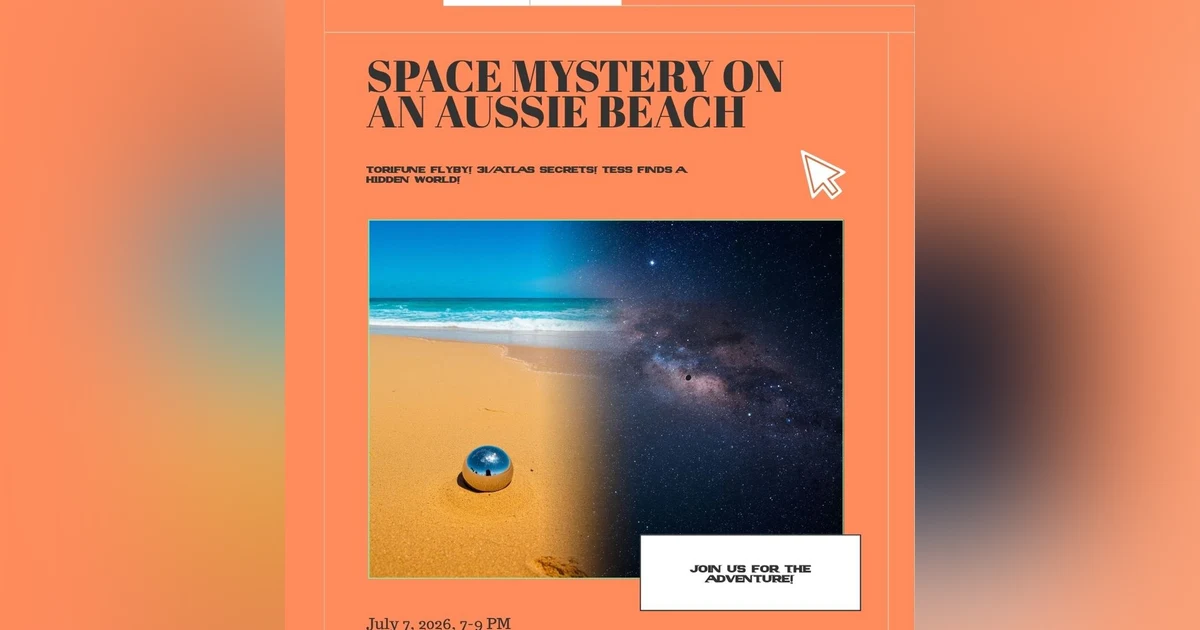
Astronomy Daily S05E134 — Tuesday, 7 July 2026 Mysterious metal spheres wash up on a Queensland beach and turn out to be re-entered rocket debris, Hayabusa2 beams home stunning close-ups of asteroid Torifune, new VLT chemistry reveals interstellar comet 3I/ATLAS may be one of the oldest objects ever studied, TESS finds its first exoplanet using Einstein's gravitational microlensing, JWST spots six galaxies merging into one twelve billion years ago, and New Horizons charts the solar wind's fade at the true edge of the solar system. In This Episode • Mystery metal spheres wash up on a Queensland beach — identified as rocket debris • Hayabusa2's flyby of asteroid Torifune returns stunning new images • 3I/ATLAS's ancient birthplace revealed by new VLT chemical fingerprint study • TESS discovers its first exoplanet using gravitational microlensing • JWST spots a rare six-galaxy mega-merger, 12 billion years in the past • New Horizons tracks the solar wind's slowdown at the solar system's edge
Become a supporter of this podcast: https://www.spreaker.com/podcast/astronomy-daily-space-news-updates--5648921/support.
Sponsor Details:
Ensure your online privacy by using NordVPN. To get our special listener deal and save a lot of money, visit www.bitesz.com/nordvpn. You'll be glad you did!
Become a supporter of Astronomy Daily by joining our Supporters Club. Commercial free episodes daily are only a click way... Click Here
This episode includes AI-generated content.
Become a supporter of this podcast: https://www.spreaker.com/podcast/astronomy-daily-space-news-updates--5648921/support.
Sponsor Details:
Ensure your online privacy by using NordVPN. To get our special listener deal and save a lot of money, visit www.bitesz.com/nordvpn. You'll be glad you did!
Become a supporter of Astronomy Daily by joining our Supporters Club. Commercial free episodes daily are only a click way... Click Here
This episode includes AI-generated content.
WEBVTT
0
00:00:00.320 --> 00:00:02.960
Anna: Hello and welcome to Astronomy
1
00:00:02.960 --> 00:00:04.480
Daily. I'm Anna.
2
00:00:04.640 --> 00:00:07.320
Avery: And I'm avery. It's Tuesday the 7th of
3
00:00:07.320 --> 00:00:10.200
July, 2026, and we've got a properly
4
00:00:10.200 --> 00:00:11.520
eclectic mix for you today.
5
00:00:11.840 --> 00:00:14.720
Anna: We're starting close to home, very close
6
00:00:14.720 --> 00:00:17.600
to home, with a beach in Queensland and some
7
00:00:17.600 --> 00:00:20.160
rather mysterious silver balls.
8
00:00:20.400 --> 00:00:23.200
Avery: Then it's out to an asteroid, out to an
9
00:00:23.200 --> 00:00:25.840
interstellar comet, uh, out to a planet
10
00:00:25.840 --> 00:00:28.660
40,000 light years away, out to a
11
00:00:28.660 --> 00:00:31.460
merger of six galaxies 12 billion years
12
00:00:31.460 --> 00:00:34.420
in the past, and finally right out to
13
00:00:34.420 --> 00:00:36.300
the edge of the solar system itself.
14
00:00:36.620 --> 00:00:39.260
Anna: A proper grand tour. Let's get into it,
15
00:00:39.500 --> 00:00:42.140
and let's start with a story that reads more
16
00:00:42.140 --> 00:00:44.700
like a mystery novel than a science bulletin.
17
00:00:45.100 --> 00:00:47.700
Over the weekend, six large metallic
18
00:00:47.700 --> 00:00:50.700
spheres washed up on Forest beach near
19
00:00:50.700 --> 00:00:52.300
Townsville in North Queensland.
20
00:00:52.300 --> 00:00:54.460
Avery: And naturally, the Internet had some
21
00:00:54.460 --> 00:00:57.140
theories. But the real explanation is
22
00:00:57.140 --> 00:00:59.900
almost as interesting. The Queensland Fire
23
00:00:59.900 --> 00:01:02.300
Department cordoned off a 50 meter
24
00:01:02.300 --> 00:01:05.100
exclusion zone, and crews in hazmat
25
00:01:05.100 --> 00:01:07.540
gear carefully secured the objects into
26
00:01:07.540 --> 00:01:08.140
drums.
27
00:01:08.300 --> 00:01:10.500
Anna: Because these things can be genuinely
28
00:01:10.500 --> 00:01:13.420
hazardous. Space archaeologist Associate
29
00:01:13.420 --> 00:01:15.780
Professor Alice Gorman from Flinders
30
00:01:15.780 --> 00:01:18.300
University had a look at the footage and said
31
00:01:18.300 --> 00:01:20.460
they're consistent with pressurized fuel
32
00:01:20.460 --> 00:01:22.850
vessels likely made of titanium
33
00:01:22.850 --> 00:01:25.850
alloys. And titanium has an extremely
34
00:01:25.850 --> 00:01:28.330
high melting point, which is exactly why
35
00:01:28.330 --> 00:01:30.970
these survive RE entry when so much else
36
00:01:30.970 --> 00:01:31.610
burns up.
37
00:01:32.010 --> 00:01:34.410
Avery: They're sometimes nicknamed spaceballs, and
38
00:01:34.410 --> 00:01:36.370
Gorman notes that they can show up years
39
00:01:36.370 --> 00:01:38.450
after the launch that produced them. There
40
00:01:38.450 --> 00:01:40.290
was no scorching on these ones, which
41
00:01:40.290 --> 00:01:42.290
suggests it came from a rocket stage that
42
00:01:42.290 --> 00:01:44.490
fell away early rather than from a spacecraft
43
00:01:44.490 --> 00:01:46.250
that burned up on final RE entry.
44
00:01:46.570 --> 00:01:49.290
Anna: On Sunday night, the Australian Space Agency
45
00:01:49.290 --> 00:01:51.170
confirmed it's working with Queensland
46
00:01:51.170 --> 00:01:53.990
authorities and the Emergency Management
47
00:01:54.070 --> 00:01:56.350
Agency and said in a statement that the
48
00:01:56.350 --> 00:01:59.110
objects are, quote, consistent with debris
49
00:01:59.110 --> 00:02:01.630
from a foreign rocket body that recently re
50
00:02:01.630 --> 00:02:03.510
entered the atmosphere from orbit.
51
00:02:03.750 --> 00:02:05.670
Avery: They haven't officially named a launch yet,
52
00:02:05.670 --> 00:02:07.550
but there are a couple of candidates worth
53
00:02:07.550 --> 00:02:10.310
watching. China launched the Long March 6th
54
00:02:10.310 --> 00:02:12.950
and the Long March 8A over that same weekend.
55
00:02:13.190 --> 00:02:15.510
Nothing confirmed, but the timing lines up.
56
00:02:15.750 --> 00:02:18.270
Anna: It's a great reminder of just how much
57
00:02:18.270 --> 00:02:20.430
hardware is coming back down to Earth these
58
00:02:20.430 --> 00:02:23.320
days. More launches than ever means more
59
00:02:23.320 --> 00:02:25.760
RE entries than ever. And Australia's
60
00:02:25.760 --> 00:02:28.480
coastline, being enormous and facing a lot of
61
00:02:28.480 --> 00:02:31.320
open ocean, catches more than its fair share.
62
00:02:31.640 --> 00:02:33.320
Avery: If you're on the Queensland coast and you
63
00:02:33.320 --> 00:02:35.360
spot something like this, please don't touch
64
00:02:35.360 --> 00:02:37.640
it. Uh, call it in. These vessels can still
65
00:02:37.640 --> 00:02:39.960
contain leftover propellants like hydrazine,
66
00:02:39.960 --> 00:02:41.240
which is nasty stuff.
67
00:02:41.640 --> 00:02:44.160
Anna: Great advice. We'll keep an eye on this one
68
00:02:44.160 --> 00:02:46.280
and let you know if the source gets confirmed
69
00:02:46.970 --> 00:02:49.410
from debris coming down to a, uh, spacecraft
70
00:02:49.410 --> 00:02:52.250
going up close and personal with an asteroid
71
00:02:52.250 --> 00:02:54.170
62 million miles away.
72
00:02:54.730 --> 00:02:57.610
Avery: This is JAXA's Hayabusa 2, the same probe
73
00:02:57.610 --> 00:02:59.890
that brought samples of asteroid Ryugu back
74
00:02:59.890 --> 00:03:02.330
to Australia's own umara Desert in 2020.
75
00:03:02.730 --> 00:03:04.810
It's been out on an extended mission ever
76
00:03:04.810 --> 00:03:07.250
since, and on Sunday it completed its first
77
00:03:07.250 --> 00:03:09.450
asteroid encounter. Of that extended mission,
78
00:03:09.530 --> 00:03:10.570
a flyby of
79
00:03:10.570 --> 00:03:13.220
Anna: asteroid Torifune, and flyby
80
00:03:13.220 --> 00:03:16.220
undersells it a bit. Hayabusa2 came within
81
00:03:16.220 --> 00:03:18.740
about 800 meters of Tori Fune,
82
00:03:18.820 --> 00:03:21.220
traveling at something like 18,000
83
00:03:21.380 --> 00:03:24.300
kilometers an hour. JAXA has described it as
84
00:03:24.300 --> 00:03:27.180
a deliberately risky operation designed
85
00:03:27.180 --> 00:03:29.780
specifically to test high speed, high
86
00:03:29.780 --> 00:03:32.340
precision navigation technology that could
87
00:03:32.340 --> 00:03:34.500
one day deflect a hazardous asteroid.
88
00:03:34.740 --> 00:03:37.580
Avery: Torifune is a two lobed object, a bit like a
89
00:03:37.580 --> 00:03:40.420
peanut or a snowman, about 450 meters
90
00:03:40.420 --> 00:03:43.060
across. The spinning once every five hours.
91
00:03:43.380 --> 00:03:45.580
The pictures that have come back taken by the
92
00:03:45.580 --> 00:03:47.740
optical navigation camera and the thermal
93
00:03:47.740 --> 00:03:50.460
infrared imager, show rocks and boulders
94
00:03:50.460 --> 00:03:53.300
scattered across both lobes. Yuya Mimasu,
95
00:03:53.300 --> 00:03:56.100
who heads the Hayabusa 2 Extended Mission
96
00:03:56.100 --> 00:03:58.540
Team, told a press conference he was
97
00:03:58.540 --> 00:04:01.300
genuinely shocked by how good the image was
98
00:04:01.540 --> 00:04:03.980
given. It was captured in a fleeting moment
99
00:04:03.980 --> 00:04:06.860
during a high speed pass. The infrared
100
00:04:06.860 --> 00:04:09.790
images are just as valuable. They reveal
101
00:04:09.790 --> 00:04:12.310
cooler shadowed regions and warmer
102
00:04:12.310 --> 00:04:15.190
sunlit patches, which tell scientists about
103
00:04:15.190 --> 00:04:17.990
the surface texture and thermal behavior of
104
00:04:17.990 --> 00:04:18.470
the rock.
105
00:04:18.710 --> 00:04:21.270
Anna: Hayabusa2's next stop is even more
106
00:04:21.270 --> 00:04:23.941
ambitious asteroid 1998
107
00:04:24.197 --> 00:04:27.190
KY26, just 11 meters across,
108
00:04:27.510 --> 00:04:29.670
potentially the smallest asteroid ever
109
00:04:29.670 --> 00:04:32.350
visited by a spacecraft. That encounter isn't
110
00:04:32.350 --> 00:04:35.350
due until 2031, so Torifune was
111
00:04:35.350 --> 00:04:36.630
very much the warm up act.
112
00:04:36.710 --> 00:04:39.670
Avery: A warm up act 62 million miles from
113
00:04:39.670 --> 00:04:42.040
home. Not bad for a spacecraft that's been
114
00:04:42.040 --> 00:04:43.600
flying for almost 12 years.
115
00:04:44.240 --> 00:04:47.200
Anna: Sticking with old travelers, let's check in
116
00:04:47.200 --> 00:04:49.960
on three I ATLAS, the interstellar
117
00:04:49.960 --> 00:04:52.280
comet that's been fascinating astronomers
118
00:04:52.280 --> 00:04:53.280
since last July.
119
00:04:53.840 --> 00:04:56.640
Avery: New research out this week, led by Cyriel
120
00:04:56.640 --> 00:04:59.560
Opadam at the University of Edinburgh, used
121
00:04:59.560 --> 00:05:02.280
the European Southern Observatory's Very
122
00:05:02.280 --> 00:05:05.080
Large Telescope to study the comet's
123
00:05:05.080 --> 00:05:07.890
chemical fingerprint in detail. And it's
124
00:05:07.890 --> 00:05:10.410
given us our best clue yet about where
125
00:05:10.410 --> 00:05:13.050
3i Atlas actually came from.
126
00:05:13.290 --> 00:05:15.770
Anna: The short version this comet almost
127
00:05:15.770 --> 00:05:18.170
certainly formed in the outer reaches of a
128
00:05:18.170 --> 00:05:20.730
star system built around a star far
129
00:05:20.730 --> 00:05:23.490
older than our Sun. Combined with earlier
130
00:05:23.490 --> 00:05:26.010
work on hydrogen and carbon isotopes,
131
00:05:26.250 --> 00:05:29.050
some estimates now put the comet's age at
132
00:05:29.050 --> 00:05:31.690
somewhere between 3 and 12 billion
133
00:05:31.770 --> 00:05:34.610
years, which, if it holds up, would make
134
00:05:34.610 --> 00:05:37.570
3i atlas one of the oldest objects
135
00:05:37.570 --> 00:05:39.830
ever directly studied by humanity.
136
00:05:40.070 --> 00:05:42.550
Avery: Opiton put it beautifully she said
137
00:05:42.550 --> 00:05:45.150
interstellar comets are basically fossils
138
00:05:45.150 --> 00:05:47.750
from planetary formation, but from a system
139
00:05:47.830 --> 00:05:50.190
very far away that we're lucky enough to
140
00:05:50.190 --> 00:05:51.590
study up close for once.
141
00:05:52.070 --> 00:05:55.030
Anna: 3i Atlas is only the third confirmed
142
00:05:55.110 --> 00:05:57.990
interstellar object after Oumuamua
143
00:05:57.990 --> 00:06:00.510
in 2017 and Borisov in
144
00:06:00.510 --> 00:06:03.470
2019. And it's already fading as it
145
00:06:03.470 --> 00:06:05.670
heads back out of the solar system for good.
146
00:06:06.140 --> 00:06:09.100
The VLT team says these observations are
147
00:06:09.100 --> 00:06:11.740
nearing their end simply because the comet is
148
00:06:11.740 --> 00:06:14.140
getting too faint to study, which
149
00:06:14.140 --> 00:06:16.100
Avery: makes the timing of this result rather
150
00:06:16.100 --> 00:06:18.820
poignant. One of our last really detailed
151
00:06:18.820 --> 00:06:21.740
looks at 3i Atlas, and it turns out to be one
152
00:06:21.740 --> 00:06:24.140
of the most revealing. And with the Vera
153
00:06:24.140 --> 00:06:26.700
Rubin Observatory now fully operational,
154
00:06:27.260 --> 00:06:29.380
scientists reckon we could be entering what
155
00:06:29.380 --> 00:06:31.260
they're calling the golden age of
156
00:06:31.260 --> 00:06:33.180
interstellar object discovery.
157
00:06:33.670 --> 00:06:35.750
Anna: Every new one a fresh surprise, by the sound
158
00:06:35.750 --> 00:06:36.070
of it.
159
00:06:36.390 --> 00:06:38.550
Avery: Now, uh, for a discovery that even NASA
160
00:06:38.550 --> 00:06:40.030
didn't think was possible when this
161
00:06:40.030 --> 00:06:41.110
spacecraft launched.
162
00:06:41.350 --> 00:06:43.510
Anna: This is TESS, the Transiting
163
00:06:43.510 --> 00:06:46.270
Exoplanet Survey Satellite. Since
164
00:06:46.270 --> 00:06:49.150
2018, its entire job has been
165
00:06:49.150 --> 00:06:51.750
watching for the tiny dimming of starlight
166
00:06:51.750 --> 00:06:54.070
when a planet crosses in front of its star.
167
00:06:54.470 --> 00:06:57.270
That's given us hundreds of confirmed worlds.
168
00:06:57.510 --> 00:06:59.510
But this week, in a paper in the
169
00:06:59.510 --> 00:07:02.510
Astrophysical Journal Letters, a team reports
170
00:07:02.510 --> 00:07:04.910
that TESS has found a planet using a
171
00:07:04.910 --> 00:07:07.710
completely different method, gravitational
172
00:07:07.870 --> 00:07:08.990
microlensing.
173
00:07:09.150 --> 00:07:11.950
Avery: Microlensing relies on general relativity.
174
00:07:11.950 --> 00:07:14.710
When one star passes almost exactly in front
175
00:07:14.710 --> 00:07:17.070
of a more distant background star, its
176
00:07:17.070 --> 00:07:19.690
gravity bends and briefly magnifies that, uh,
177
00:07:19.710 --> 00:07:22.150
background star's light. If the foreground
178
00:07:22.150 --> 00:07:24.630
star has a planet, that planet leaves its own
179
00:07:24.630 --> 00:07:26.430
tiny ripple in the brightening.
180
00:07:26.670 --> 00:07:29.230
Anna: The planet in question is called Gaia
181
00:07:29.230 --> 00:07:32.030
23 Bra B, first hinted at
182
00:07:32.030 --> 00:07:34.510
back in 2023 by the European Space
183
00:07:34.510 --> 00:07:37.110
Agency's Gaia mission, which spotted the
184
00:07:37.110 --> 00:07:39.110
stellar brightening but didn't have enough
185
00:07:39.110 --> 00:07:41.430
data to confirm a planet. PES
186
00:07:41.590 --> 00:07:44.070
archived observations from that same event
187
00:07:44.390 --> 00:07:46.470
turned out to hold the missing piece.
188
00:07:46.710 --> 00:07:49.470
Avery: It's a super Jupiter, about 1.6
189
00:07:49.470 --> 00:07:52.030
times Jupiter's mass, orbiting an orange
190
00:07:52.030 --> 00:07:54.870
dwarf star some 40,000 light years away,
191
00:07:55.510 --> 00:07:57.990
vastly further than the planet's TESS usually
192
00:07:57.990 --> 00:08:00.470
finds within about 150 light years.
193
00:08:01.140 --> 00:08:03.980
Anna: University of New Mexico's Diana Dragomir,
194
00:08:03.980 --> 00:08:06.300
who worked on the discovery, said plainly
195
00:08:06.300 --> 00:08:09.020
that nobody expected TESS to ever be
196
00:08:09.020 --> 00:08:11.820
capable of finding this kind of planet. And
197
00:08:11.820 --> 00:08:14.300
because microlensing events are one offs,
198
00:08:14.300 --> 00:08:16.820
they happen once and never repeat. This
199
00:08:16.900 --> 00:08:19.860
really was a needle hiding in eight years of
200
00:08:19.860 --> 00:08:20.820
haystack data.
201
00:08:21.060 --> 00:08:23.580
Avery: A team member, Mallory Harris, had a great
202
00:08:23.580 --> 00:08:26.300
line about it. She said microlensing will
203
00:08:26.300 --> 00:08:28.830
probably find the first Earth analog, and
204
00:08:28.830 --> 00:08:30.470
then we'll just have to wave at it as it
205
00:08:30.470 --> 00:08:32.630
drifts by, because we'll never see it again.
206
00:08:32.790 --> 00:08:35.630
Anna: Bittersweet, but also a lovely preview
207
00:08:35.630 --> 00:08:38.230
of what NASA's upcoming Nancy Grace Roman
208
00:08:38.230 --> 00:08:40.910
Space Telescope will do at scale. It's
209
00:08:40.910 --> 00:08:43.270
expected to find around a thousand planets
210
00:08:43.270 --> 00:08:46.230
this way, from one planet 40,000 light
211
00:08:46.230 --> 00:08:48.950
years away to something on a truly different
212
00:08:48.950 --> 00:08:49.910
scale altogether.
213
00:08:50.070 --> 00:08:52.990
Avery: A new paper led by ZL Wen of the Chinese
214
00:08:52.990 --> 00:08:55.230
Academy of Sciences describes what
215
00:08:55.230 --> 00:08:57.790
astronomers are calling an extremely rare
216
00:08:57.790 --> 00:09:00.450
galaxy mega merger six massive
217
00:09:00.450 --> 00:09:02.810
galaxies caught in the act of merging into
218
00:09:02.810 --> 00:09:05.370
one roughly 12 billion years ago.
219
00:09:05.610 --> 00:09:08.010
Anna: Using the mild Boke and Blanco
220
00:09:08.010 --> 00:09:10.610
telescopes, combined with earlier James Webb
221
00:09:10.610 --> 00:09:13.210
and radio interferometry data, the team
222
00:09:13.210 --> 00:09:15.610
reconstructed what was originally thought to
223
00:09:15.610 --> 00:09:18.570
be a single distant galaxy hosting an active
224
00:09:18.570 --> 00:09:21.490
black hole. Instead, it turned out to be a
225
00:09:21.490 --> 00:09:24.490
protocluster, a gravitationally bound clump
226
00:09:24.490 --> 00:09:27.250
of galaxies in the very earliest stage of
227
00:09:27.250 --> 00:09:29.890
building what's called a brightest cluster
228
00:09:29.890 --> 00:09:30.490
galaxy.
229
00:09:30.780 --> 00:09:32.620
Avery: None of these six are lightweights either.
230
00:09:32.860 --> 00:09:35.700
Four are already individually massive, and
231
00:09:35.700 --> 00:09:38.060
together they're packing hundreds of billions
232
00:09:38.060 --> 00:09:40.460
of solar masses of stars into a region
233
00:09:40.540 --> 00:09:43.100
smaller than the Milky Way. Their combined
234
00:09:43.100 --> 00:09:45.580
star formation rate is somewhere between 70
235
00:09:45.660 --> 00:09:48.220
and 160 solar masses a year.
236
00:09:48.700 --> 00:09:50.940
Compare that to the Milky Way's current rate
237
00:09:50.940 --> 00:09:52.060
of fewer than 10.
238
00:09:52.300 --> 00:09:54.540
Anna: Based on how fast the galaxies are moving
239
00:09:54.540 --> 00:09:57.060
relative to each other. The team estimates
240
00:09:57.060 --> 00:09:59.260
the whole merger will wrap up within a few
241
00:09:59.260 --> 00:10:02.120
billion years, producing one enormous,
242
00:10:02.200 --> 00:10:04.880
ultra luminous galaxy at the heart of a young
243
00:10:04.880 --> 00:10:05.400
cluster.
244
00:10:05.560 --> 00:10:07.360
Avery: It's also a nice test case for the
245
00:10:07.360 --> 00:10:09.320
relationship between black holes and their
246
00:10:09.320 --> 00:10:12.000
host galaxies. The young central black hole
247
00:10:12.000 --> 00:10:14.440
in this system is growing right alongside its
248
00:10:14.440 --> 00:10:16.960
six merging hosts, which should help refine
249
00:10:16.960 --> 00:10:19.240
our models of how that black hole to galaxy
250
00:10:19.240 --> 00:10:21.440
relationship actually gets built in the
251
00:10:21.440 --> 00:10:24.400
Anna: early universe 12 billion years ago, and
252
00:10:24.400 --> 00:10:27.010
we're only piecing it together now. Astronomy
253
00:10:27.010 --> 00:10:28.770
really does run on a different clock.
254
00:10:28.930 --> 00:10:31.370
Avery: And to finish, let's go all the way out to
255
00:10:31.370 --> 00:10:34.090
the true edge of the solar system, courtesy
256
00:10:34.090 --> 00:10:36.370
of NASA's New Horizons spacecraft.
257
00:10:36.690 --> 00:10:38.930
Anna: New Horizons is currently about
258
00:10:39.090 --> 00:10:41.970
66 astronomical units from the sun,
259
00:10:42.370 --> 00:10:44.890
more than 66 times the Earth's sun
260
00:10:44.890 --> 00:10:47.730
distance, and it's still carrying a working
261
00:10:47.730 --> 00:10:50.610
instrument called swap, the Solar Wind
262
00:10:50.610 --> 00:10:53.470
Around Pluto detector. A new study
263
00:10:53.470 --> 00:10:56.350
led by Dr. Heather Elliott at the Southwest
264
00:10:56.350 --> 00:10:59.230
Research Institute has used SWAP to track
265
00:10:59.310 --> 00:11:02.030
exactly how the solar wind slows down
266
00:11:02.270 --> 00:11:04.590
as it heads toward interstellar space.
267
00:11:05.230 --> 00:11:08.030
Avery: The solar wind starts out supersonic, around
268
00:11:08.030 --> 00:11:10.630
a million miles an hour, but as it travels
269
00:11:10.630 --> 00:11:13.470
outward, it runs into incoming neutral gas
270
00:11:13.470 --> 00:11:16.470
drifting in from interstellar space. That
271
00:11:16.470 --> 00:11:19.470
gas gets ionized, gets picked up by the solar
272
00:11:19.470 --> 00:11:21.950
wind, and effectively acts as a drag
273
00:11:22.190 --> 00:11:23.550
slowing the whole flow
274
00:11:23.550 --> 00:11:26.050
Anna: down, Elliot's team found. The
275
00:11:26.050 --> 00:11:28.770
slowdown steepens the further out you go.
276
00:11:29.010 --> 00:11:31.730
By around 58 astronomical units,
277
00:11:31.730 --> 00:11:34.690
the wind is measured at somewhere between 13
278
00:11:34.850 --> 00:11:37.610
and 15% slower than it is near
279
00:11:37.610 --> 00:11:40.370
Earth. Earlier data between 30
280
00:11:40.370 --> 00:11:43.190
and 43 AU had only shown a, uh,
281
00:11:43.290 --> 00:11:45.730
5 to 10% dip, so this
282
00:11:45.730 --> 00:11:48.450
confirms the drag really compounds with
283
00:11:48.450 --> 00:11:48.930
distance.
284
00:11:49.250 --> 00:11:51.970
Avery: Why does this matter? Beyond pure curiosity,
285
00:11:52.520 --> 00:11:53.960
because the shape and strength of this
286
00:11:53.960 --> 00:11:56.960
boundary the helioschere controls how many
287
00:11:56.960 --> 00:11:59.320
galactic cosmic rays make it through to
288
00:11:59.320 --> 00:12:01.400
threaten astronauts on long missions to the
289
00:12:01.400 --> 00:12:04.000
Moon or Mars. Better maps of the boundary
290
00:12:04.000 --> 00:12:06.240
mean better radiation forecast for future
291
00:12:06.240 --> 00:12:06.760
crews.
292
00:12:06.920 --> 00:12:09.880
Anna: New Horizons is expected to reach the actual
293
00:12:09.880 --> 00:12:12.680
termination shock, where the wind drops below
294
00:12:12.680 --> 00:12:15.080
the local speed of sound somewhere between
295
00:12:15.160 --> 00:12:18.080
2029 and 2040. Depending on
296
00:12:18.080 --> 00:12:20.560
how the models settle, it would only be the
297
00:12:20.560 --> 00:12:22.960
third spacecraft in history to make that
298
00:12:22.960 --> 00:12:25.720
crossing, after Voyager 1 and Voyager
299
00:12:25.720 --> 00:12:26.188
2.
300
00:12:26.292 --> 00:12:29.120
Avery: Dr. Alan Stern, the mission's principal
301
00:12:29.120 --> 00:12:31.760
investigator, put it nicely. New
302
00:12:31.760 --> 00:12:34.600
Horizons remains the only active spacecraft
303
00:12:34.600 --> 00:12:37.520
out there in the outer heliosphere, quietly
304
00:12:37.520 --> 00:12:39.560
building on everything the Voyagers found
305
00:12:39.560 --> 00:12:40.320
decades ago.
306
00:12:40.720 --> 00:12:43.480
Anna: A fitting note to end on From a beach in
307
00:12:43.480 --> 00:12:45.840
Queensland to the true edge of the Sun's
308
00:12:45.840 --> 00:12:46.320
influence.
309
00:12:46.950 --> 00:12:49.470
Avery: That's a wrap on today's edition of Astronomy
310
00:12:49.470 --> 00:12:52.230
Daily beach mysteries, asteroid
311
00:12:52.230 --> 00:12:55.230
close calls, ancient comets, hidden
312
00:12:55.230 --> 00:12:58.030
exoplanets, a 12 billion year old
313
00:12:58.030 --> 00:13:01.030
mega merger, and the edge of the solar system
314
00:13:01.030 --> 00:13:01.590
itself.
315
00:13:02.070 --> 00:13:04.390
Anna: If you enjoyed today's episode, please hit
316
00:13:04.390 --> 00:13:06.470
subscribe wherever you're listening and leave
317
00:13:06.470 --> 00:13:09.190
us a review. It genuinely helps new listeners
318
00:13:09.190 --> 00:13:09.830
find the show.
319
00:13:10.150 --> 00:13:12.710
Avery: And here's today's did you know? For ya,
320
00:13:13.200 --> 00:13:15.760
Hayabusa2's flyby of Tory fun
321
00:13:15.760 --> 00:13:18.560
happened at a distance of under a kilometer.
322
00:13:18.560 --> 00:13:20.880
At 18,000 kilometers an hour,
323
00:13:21.360 --> 00:13:23.120
that's roughly the same speed the
324
00:13:23.120 --> 00:13:25.520
International Space Station orbits the Earth.
325
00:13:25.840 --> 00:13:26.720
Anna: I'm Anna.
326
00:13:26.960 --> 00:13:29.920
Avery: And I'm Avery. We'll see you next time on
327
00:13:29.920 --> 00:13:30.960
Astronomy Daily.
328
00:13:33.690 --> 00:13:34.600
Mhm.
329
00:13:42.220 --> 00:13:42.620
Anna: The story.
0
00:00:00.320 --> 00:00:02.960
Anna: Hello and welcome to Astronomy
1
00:00:02.960 --> 00:00:04.480
Daily. I'm Anna.
2
00:00:04.640 --> 00:00:07.320
Avery: And I'm avery. It's Tuesday the 7th of
3
00:00:07.320 --> 00:00:10.200
July, 2026, and we've got a properly
4
00:00:10.200 --> 00:00:11.520
eclectic mix for you today.
5
00:00:11.840 --> 00:00:14.720
Anna: We're starting close to home, very close
6
00:00:14.720 --> 00:00:17.600
to home, with a beach in Queensland and some
7
00:00:17.600 --> 00:00:20.160
rather mysterious silver balls.
8
00:00:20.400 --> 00:00:23.200
Avery: Then it's out to an asteroid, out to an
9
00:00:23.200 --> 00:00:25.840
interstellar comet, uh, out to a planet
10
00:00:25.840 --> 00:00:28.660
40,000 light years away, out to a
11
00:00:28.660 --> 00:00:31.460
merger of six galaxies 12 billion years
12
00:00:31.460 --> 00:00:34.420
in the past, and finally right out to
13
00:00:34.420 --> 00:00:36.300
the edge of the solar system itself.
14
00:00:36.620 --> 00:00:39.260
Anna: A proper grand tour. Let's get into it,
15
00:00:39.500 --> 00:00:42.140
and let's start with a story that reads more
16
00:00:42.140 --> 00:00:44.700
like a mystery novel than a science bulletin.
17
00:00:45.100 --> 00:00:47.700
Over the weekend, six large metallic
18
00:00:47.700 --> 00:00:50.700
spheres washed up on Forest beach near
19
00:00:50.700 --> 00:00:52.300
Townsville in North Queensland.
20
00:00:52.300 --> 00:00:54.460
Avery: And naturally, the Internet had some
21
00:00:54.460 --> 00:00:57.140
theories. But the real explanation is
22
00:00:57.140 --> 00:00:59.900
almost as interesting. The Queensland Fire
23
00:00:59.900 --> 00:01:02.300
Department cordoned off a 50 meter
24
00:01:02.300 --> 00:01:05.100
exclusion zone, and crews in hazmat
25
00:01:05.100 --> 00:01:07.540
gear carefully secured the objects into
26
00:01:07.540 --> 00:01:08.140
drums.
27
00:01:08.300 --> 00:01:10.500
Anna: Because these things can be genuinely
28
00:01:10.500 --> 00:01:13.420
hazardous. Space archaeologist Associate
29
00:01:13.420 --> 00:01:15.780
Professor Alice Gorman from Flinders
30
00:01:15.780 --> 00:01:18.300
University had a look at the footage and said
31
00:01:18.300 --> 00:01:20.460
they're consistent with pressurized fuel
32
00:01:20.460 --> 00:01:22.850
vessels likely made of titanium
33
00:01:22.850 --> 00:01:25.850
alloys. And titanium has an extremely
34
00:01:25.850 --> 00:01:28.330
high melting point, which is exactly why
35
00:01:28.330 --> 00:01:30.970
these survive RE entry when so much else
36
00:01:30.970 --> 00:01:31.610
burns up.
37
00:01:32.010 --> 00:01:34.410
Avery: They're sometimes nicknamed spaceballs, and
38
00:01:34.410 --> 00:01:36.370
Gorman notes that they can show up years
39
00:01:36.370 --> 00:01:38.450
after the launch that produced them. There
40
00:01:38.450 --> 00:01:40.290
was no scorching on these ones, which
41
00:01:40.290 --> 00:01:42.290
suggests it came from a rocket stage that
42
00:01:42.290 --> 00:01:44.490
fell away early rather than from a spacecraft
43
00:01:44.490 --> 00:01:46.250
that burned up on final RE entry.
44
00:01:46.570 --> 00:01:49.290
Anna: On Sunday night, the Australian Space Agency
45
00:01:49.290 --> 00:01:51.170
confirmed it's working with Queensland
46
00:01:51.170 --> 00:01:53.990
authorities and the Emergency Management
47
00:01:54.070 --> 00:01:56.350
Agency and said in a statement that the
48
00:01:56.350 --> 00:01:59.110
objects are, quote, consistent with debris
49
00:01:59.110 --> 00:02:01.630
from a foreign rocket body that recently re
50
00:02:01.630 --> 00:02:03.510
entered the atmosphere from orbit.
51
00:02:03.750 --> 00:02:05.670
Avery: They haven't officially named a launch yet,
52
00:02:05.670 --> 00:02:07.550
but there are a couple of candidates worth
53
00:02:07.550 --> 00:02:10.310
watching. China launched the Long March 6th
54
00:02:10.310 --> 00:02:12.950
and the Long March 8A over that same weekend.
55
00:02:13.190 --> 00:02:15.510
Nothing confirmed, but the timing lines up.
56
00:02:15.750 --> 00:02:18.270
Anna: It's a great reminder of just how much
57
00:02:18.270 --> 00:02:20.430
hardware is coming back down to Earth these
58
00:02:20.430 --> 00:02:23.320
days. More launches than ever means more
59
00:02:23.320 --> 00:02:25.760
RE entries than ever. And Australia's
60
00:02:25.760 --> 00:02:28.480
coastline, being enormous and facing a lot of
61
00:02:28.480 --> 00:02:31.320
open ocean, catches more than its fair share.
62
00:02:31.640 --> 00:02:33.320
Avery: If you're on the Queensland coast and you
63
00:02:33.320 --> 00:02:35.360
spot something like this, please don't touch
64
00:02:35.360 --> 00:02:37.640
it. Uh, call it in. These vessels can still
65
00:02:37.640 --> 00:02:39.960
contain leftover propellants like hydrazine,
66
00:02:39.960 --> 00:02:41.240
which is nasty stuff.
67
00:02:41.640 --> 00:02:44.160
Anna: Great advice. We'll keep an eye on this one
68
00:02:44.160 --> 00:02:46.280
and let you know if the source gets confirmed
69
00:02:46.970 --> 00:02:49.410
from debris coming down to a, uh, spacecraft
70
00:02:49.410 --> 00:02:52.250
going up close and personal with an asteroid
71
00:02:52.250 --> 00:02:54.170
62 million miles away.
72
00:02:54.730 --> 00:02:57.610
Avery: This is JAXA's Hayabusa 2, the same probe
73
00:02:57.610 --> 00:02:59.890
that brought samples of asteroid Ryugu back
74
00:02:59.890 --> 00:03:02.330
to Australia's own umara Desert in 2020.
75
00:03:02.730 --> 00:03:04.810
It's been out on an extended mission ever
76
00:03:04.810 --> 00:03:07.250
since, and on Sunday it completed its first
77
00:03:07.250 --> 00:03:09.450
asteroid encounter. Of that extended mission,
78
00:03:09.530 --> 00:03:10.570
a flyby of
79
00:03:10.570 --> 00:03:13.220
Anna: asteroid Torifune, and flyby
80
00:03:13.220 --> 00:03:16.220
undersells it a bit. Hayabusa2 came within
81
00:03:16.220 --> 00:03:18.740
about 800 meters of Tori Fune,
82
00:03:18.820 --> 00:03:21.220
traveling at something like 18,000
83
00:03:21.380 --> 00:03:24.300
kilometers an hour. JAXA has described it as
84
00:03:24.300 --> 00:03:27.180
a deliberately risky operation designed
85
00:03:27.180 --> 00:03:29.780
specifically to test high speed, high
86
00:03:29.780 --> 00:03:32.340
precision navigation technology that could
87
00:03:32.340 --> 00:03:34.500
one day deflect a hazardous asteroid.
88
00:03:34.740 --> 00:03:37.580
Avery: Torifune is a two lobed object, a bit like a
89
00:03:37.580 --> 00:03:40.420
peanut or a snowman, about 450 meters
90
00:03:40.420 --> 00:03:43.060
across. The spinning once every five hours.
91
00:03:43.380 --> 00:03:45.580
The pictures that have come back taken by the
92
00:03:45.580 --> 00:03:47.740
optical navigation camera and the thermal
93
00:03:47.740 --> 00:03:50.460
infrared imager, show rocks and boulders
94
00:03:50.460 --> 00:03:53.300
scattered across both lobes. Yuya Mimasu,
95
00:03:53.300 --> 00:03:56.100
who heads the Hayabusa 2 Extended Mission
96
00:03:56.100 --> 00:03:58.540
Team, told a press conference he was
97
00:03:58.540 --> 00:04:01.300
genuinely shocked by how good the image was
98
00:04:01.540 --> 00:04:03.980
given. It was captured in a fleeting moment
99
00:04:03.980 --> 00:04:06.860
during a high speed pass. The infrared
100
00:04:06.860 --> 00:04:09.790
images are just as valuable. They reveal
101
00:04:09.790 --> 00:04:12.310
cooler shadowed regions and warmer
102
00:04:12.310 --> 00:04:15.190
sunlit patches, which tell scientists about
103
00:04:15.190 --> 00:04:17.990
the surface texture and thermal behavior of
104
00:04:17.990 --> 00:04:18.470
the rock.
105
00:04:18.710 --> 00:04:21.270
Anna: Hayabusa2's next stop is even more
106
00:04:21.270 --> 00:04:23.941
ambitious asteroid 1998
107
00:04:24.197 --> 00:04:27.190
KY26, just 11 meters across,
108
00:04:27.510 --> 00:04:29.670
potentially the smallest asteroid ever
109
00:04:29.670 --> 00:04:32.350
visited by a spacecraft. That encounter isn't
110
00:04:32.350 --> 00:04:35.350
due until 2031, so Torifune was
111
00:04:35.350 --> 00:04:36.630
very much the warm up act.
112
00:04:36.710 --> 00:04:39.670
Avery: A warm up act 62 million miles from
113
00:04:39.670 --> 00:04:42.040
home. Not bad for a spacecraft that's been
114
00:04:42.040 --> 00:04:43.600
flying for almost 12 years.
115
00:04:44.240 --> 00:04:47.200
Anna: Sticking with old travelers, let's check in
116
00:04:47.200 --> 00:04:49.960
on three I ATLAS, the interstellar
117
00:04:49.960 --> 00:04:52.280
comet that's been fascinating astronomers
118
00:04:52.280 --> 00:04:53.280
since last July.
119
00:04:53.840 --> 00:04:56.640
Avery: New research out this week, led by Cyriel
120
00:04:56.640 --> 00:04:59.560
Opadam at the University of Edinburgh, used
121
00:04:59.560 --> 00:05:02.280
the European Southern Observatory's Very
122
00:05:02.280 --> 00:05:05.080
Large Telescope to study the comet's
123
00:05:05.080 --> 00:05:07.890
chemical fingerprint in detail. And it's
124
00:05:07.890 --> 00:05:10.410
given us our best clue yet about where
125
00:05:10.410 --> 00:05:13.050
3i Atlas actually came from.
126
00:05:13.290 --> 00:05:15.770
Anna: The short version this comet almost
127
00:05:15.770 --> 00:05:18.170
certainly formed in the outer reaches of a
128
00:05:18.170 --> 00:05:20.730
star system built around a star far
129
00:05:20.730 --> 00:05:23.490
older than our Sun. Combined with earlier
130
00:05:23.490 --> 00:05:26.010
work on hydrogen and carbon isotopes,
131
00:05:26.250 --> 00:05:29.050
some estimates now put the comet's age at
132
00:05:29.050 --> 00:05:31.690
somewhere between 3 and 12 billion
133
00:05:31.770 --> 00:05:34.610
years, which, if it holds up, would make
134
00:05:34.610 --> 00:05:37.570
3i atlas one of the oldest objects
135
00:05:37.570 --> 00:05:39.830
ever directly studied by humanity.
136
00:05:40.070 --> 00:05:42.550
Avery: Opiton put it beautifully she said
137
00:05:42.550 --> 00:05:45.150
interstellar comets are basically fossils
138
00:05:45.150 --> 00:05:47.750
from planetary formation, but from a system
139
00:05:47.830 --> 00:05:50.190
very far away that we're lucky enough to
140
00:05:50.190 --> 00:05:51.590
study up close for once.
141
00:05:52.070 --> 00:05:55.030
Anna: 3i Atlas is only the third confirmed
142
00:05:55.110 --> 00:05:57.990
interstellar object after Oumuamua
143
00:05:57.990 --> 00:06:00.510
in 2017 and Borisov in
144
00:06:00.510 --> 00:06:03.470
2019. And it's already fading as it
145
00:06:03.470 --> 00:06:05.670
heads back out of the solar system for good.
146
00:06:06.140 --> 00:06:09.100
The VLT team says these observations are
147
00:06:09.100 --> 00:06:11.740
nearing their end simply because the comet is
148
00:06:11.740 --> 00:06:14.140
getting too faint to study, which
149
00:06:14.140 --> 00:06:16.100
Avery: makes the timing of this result rather
150
00:06:16.100 --> 00:06:18.820
poignant. One of our last really detailed
151
00:06:18.820 --> 00:06:21.740
looks at 3i Atlas, and it turns out to be one
152
00:06:21.740 --> 00:06:24.140
of the most revealing. And with the Vera
153
00:06:24.140 --> 00:06:26.700
Rubin Observatory now fully operational,
154
00:06:27.260 --> 00:06:29.380
scientists reckon we could be entering what
155
00:06:29.380 --> 00:06:31.260
they're calling the golden age of
156
00:06:31.260 --> 00:06:33.180
interstellar object discovery.
157
00:06:33.670 --> 00:06:35.750
Anna: Every new one a fresh surprise, by the sound
158
00:06:35.750 --> 00:06:36.070
of it.
159
00:06:36.390 --> 00:06:38.550
Avery: Now, uh, for a discovery that even NASA
160
00:06:38.550 --> 00:06:40.030
didn't think was possible when this
161
00:06:40.030 --> 00:06:41.110
spacecraft launched.
162
00:06:41.350 --> 00:06:43.510
Anna: This is TESS, the Transiting
163
00:06:43.510 --> 00:06:46.270
Exoplanet Survey Satellite. Since
164
00:06:46.270 --> 00:06:49.150
2018, its entire job has been
165
00:06:49.150 --> 00:06:51.750
watching for the tiny dimming of starlight
166
00:06:51.750 --> 00:06:54.070
when a planet crosses in front of its star.
167
00:06:54.470 --> 00:06:57.270
That's given us hundreds of confirmed worlds.
168
00:06:57.510 --> 00:06:59.510
But this week, in a paper in the
169
00:06:59.510 --> 00:07:02.510
Astrophysical Journal Letters, a team reports
170
00:07:02.510 --> 00:07:04.910
that TESS has found a planet using a
171
00:07:04.910 --> 00:07:07.710
completely different method, gravitational
172
00:07:07.870 --> 00:07:08.990
microlensing.
173
00:07:09.150 --> 00:07:11.950
Avery: Microlensing relies on general relativity.
174
00:07:11.950 --> 00:07:14.710
When one star passes almost exactly in front
175
00:07:14.710 --> 00:07:17.070
of a more distant background star, its
176
00:07:17.070 --> 00:07:19.690
gravity bends and briefly magnifies that, uh,
177
00:07:19.710 --> 00:07:22.150
background star's light. If the foreground
178
00:07:22.150 --> 00:07:24.630
star has a planet, that planet leaves its own
179
00:07:24.630 --> 00:07:26.430
tiny ripple in the brightening.
180
00:07:26.670 --> 00:07:29.230
Anna: The planet in question is called Gaia
181
00:07:29.230 --> 00:07:32.030
23 Bra B, first hinted at
182
00:07:32.030 --> 00:07:34.510
back in 2023 by the European Space
183
00:07:34.510 --> 00:07:37.110
Agency's Gaia mission, which spotted the
184
00:07:37.110 --> 00:07:39.110
stellar brightening but didn't have enough
185
00:07:39.110 --> 00:07:41.430
data to confirm a planet. PES
186
00:07:41.590 --> 00:07:44.070
archived observations from that same event
187
00:07:44.390 --> 00:07:46.470
turned out to hold the missing piece.
188
00:07:46.710 --> 00:07:49.470
Avery: It's a super Jupiter, about 1.6
189
00:07:49.470 --> 00:07:52.030
times Jupiter's mass, orbiting an orange
190
00:07:52.030 --> 00:07:54.870
dwarf star some 40,000 light years away,
191
00:07:55.510 --> 00:07:57.990
vastly further than the planet's TESS usually
192
00:07:57.990 --> 00:08:00.470
finds within about 150 light years.
193
00:08:01.140 --> 00:08:03.980
Anna: University of New Mexico's Diana Dragomir,
194
00:08:03.980 --> 00:08:06.300
who worked on the discovery, said plainly
195
00:08:06.300 --> 00:08:09.020
that nobody expected TESS to ever be
196
00:08:09.020 --> 00:08:11.820
capable of finding this kind of planet. And
197
00:08:11.820 --> 00:08:14.300
because microlensing events are one offs,
198
00:08:14.300 --> 00:08:16.820
they happen once and never repeat. This
199
00:08:16.900 --> 00:08:19.860
really was a needle hiding in eight years of
200
00:08:19.860 --> 00:08:20.820
haystack data.
201
00:08:21.060 --> 00:08:23.580
Avery: A team member, Mallory Harris, had a great
202
00:08:23.580 --> 00:08:26.300
line about it. She said microlensing will
203
00:08:26.300 --> 00:08:28.830
probably find the first Earth analog, and
204
00:08:28.830 --> 00:08:30.470
then we'll just have to wave at it as it
205
00:08:30.470 --> 00:08:32.630
drifts by, because we'll never see it again.
206
00:08:32.790 --> 00:08:35.630
Anna: Bittersweet, but also a lovely preview
207
00:08:35.630 --> 00:08:38.230
of what NASA's upcoming Nancy Grace Roman
208
00:08:38.230 --> 00:08:40.910
Space Telescope will do at scale. It's
209
00:08:40.910 --> 00:08:43.270
expected to find around a thousand planets
210
00:08:43.270 --> 00:08:46.230
this way, from one planet 40,000 light
211
00:08:46.230 --> 00:08:48.950
years away to something on a truly different
212
00:08:48.950 --> 00:08:49.910
scale altogether.
213
00:08:50.070 --> 00:08:52.990
Avery: A new paper led by ZL Wen of the Chinese
214
00:08:52.990 --> 00:08:55.230
Academy of Sciences describes what
215
00:08:55.230 --> 00:08:57.790
astronomers are calling an extremely rare
216
00:08:57.790 --> 00:09:00.450
galaxy mega merger six massive
217
00:09:00.450 --> 00:09:02.810
galaxies caught in the act of merging into
218
00:09:02.810 --> 00:09:05.370
one roughly 12 billion years ago.
219
00:09:05.610 --> 00:09:08.010
Anna: Using the mild Boke and Blanco
220
00:09:08.010 --> 00:09:10.610
telescopes, combined with earlier James Webb
221
00:09:10.610 --> 00:09:13.210
and radio interferometry data, the team
222
00:09:13.210 --> 00:09:15.610
reconstructed what was originally thought to
223
00:09:15.610 --> 00:09:18.570
be a single distant galaxy hosting an active
224
00:09:18.570 --> 00:09:21.490
black hole. Instead, it turned out to be a
225
00:09:21.490 --> 00:09:24.490
protocluster, a gravitationally bound clump
226
00:09:24.490 --> 00:09:27.250
of galaxies in the very earliest stage of
227
00:09:27.250 --> 00:09:29.890
building what's called a brightest cluster
228
00:09:29.890 --> 00:09:30.490
galaxy.
229
00:09:30.780 --> 00:09:32.620
Avery: None of these six are lightweights either.
230
00:09:32.860 --> 00:09:35.700
Four are already individually massive, and
231
00:09:35.700 --> 00:09:38.060
together they're packing hundreds of billions
232
00:09:38.060 --> 00:09:40.460
of solar masses of stars into a region
233
00:09:40.540 --> 00:09:43.100
smaller than the Milky Way. Their combined
234
00:09:43.100 --> 00:09:45.580
star formation rate is somewhere between 70
235
00:09:45.660 --> 00:09:48.220
and 160 solar masses a year.
236
00:09:48.700 --> 00:09:50.940
Compare that to the Milky Way's current rate
237
00:09:50.940 --> 00:09:52.060
of fewer than 10.
238
00:09:52.300 --> 00:09:54.540
Anna: Based on how fast the galaxies are moving
239
00:09:54.540 --> 00:09:57.060
relative to each other. The team estimates
240
00:09:57.060 --> 00:09:59.260
the whole merger will wrap up within a few
241
00:09:59.260 --> 00:10:02.120
billion years, producing one enormous,
242
00:10:02.200 --> 00:10:04.880
ultra luminous galaxy at the heart of a young
243
00:10:04.880 --> 00:10:05.400
cluster.
244
00:10:05.560 --> 00:10:07.360
Avery: It's also a nice test case for the
245
00:10:07.360 --> 00:10:09.320
relationship between black holes and their
246
00:10:09.320 --> 00:10:12.000
host galaxies. The young central black hole
247
00:10:12.000 --> 00:10:14.440
in this system is growing right alongside its
248
00:10:14.440 --> 00:10:16.960
six merging hosts, which should help refine
249
00:10:16.960 --> 00:10:19.240
our models of how that black hole to galaxy
250
00:10:19.240 --> 00:10:21.440
relationship actually gets built in the
251
00:10:21.440 --> 00:10:24.400
Anna: early universe 12 billion years ago, and
252
00:10:24.400 --> 00:10:27.010
we're only piecing it together now. Astronomy
253
00:10:27.010 --> 00:10:28.770
really does run on a different clock.
254
00:10:28.930 --> 00:10:31.370
Avery: And to finish, let's go all the way out to
255
00:10:31.370 --> 00:10:34.090
the true edge of the solar system, courtesy
256
00:10:34.090 --> 00:10:36.370
of NASA's New Horizons spacecraft.
257
00:10:36.690 --> 00:10:38.930
Anna: New Horizons is currently about
258
00:10:39.090 --> 00:10:41.970
66 astronomical units from the sun,
259
00:10:42.370 --> 00:10:44.890
more than 66 times the Earth's sun
260
00:10:44.890 --> 00:10:47.730
distance, and it's still carrying a working
261
00:10:47.730 --> 00:10:50.610
instrument called swap, the Solar Wind
262
00:10:50.610 --> 00:10:53.470
Around Pluto detector. A new study
263
00:10:53.470 --> 00:10:56.350
led by Dr. Heather Elliott at the Southwest
264
00:10:56.350 --> 00:10:59.230
Research Institute has used SWAP to track
265
00:10:59.310 --> 00:11:02.030
exactly how the solar wind slows down
266
00:11:02.270 --> 00:11:04.590
as it heads toward interstellar space.
267
00:11:05.230 --> 00:11:08.030
Avery: The solar wind starts out supersonic, around
268
00:11:08.030 --> 00:11:10.630
a million miles an hour, but as it travels
269
00:11:10.630 --> 00:11:13.470
outward, it runs into incoming neutral gas
270
00:11:13.470 --> 00:11:16.470
drifting in from interstellar space. That
271
00:11:16.470 --> 00:11:19.470
gas gets ionized, gets picked up by the solar
272
00:11:19.470 --> 00:11:21.950
wind, and effectively acts as a drag
273
00:11:22.190 --> 00:11:23.550
slowing the whole flow
274
00:11:23.550 --> 00:11:26.050
Anna: down, Elliot's team found. The
275
00:11:26.050 --> 00:11:28.770
slowdown steepens the further out you go.
276
00:11:29.010 --> 00:11:31.730
By around 58 astronomical units,
277
00:11:31.730 --> 00:11:34.690
the wind is measured at somewhere between 13
278
00:11:34.850 --> 00:11:37.610
and 15% slower than it is near
279
00:11:37.610 --> 00:11:40.370
Earth. Earlier data between 30
280
00:11:40.370 --> 00:11:43.190
and 43 AU had only shown a, uh,
281
00:11:43.290 --> 00:11:45.730
5 to 10% dip, so this
282
00:11:45.730 --> 00:11:48.450
confirms the drag really compounds with
283
00:11:48.450 --> 00:11:48.930
distance.
284
00:11:49.250 --> 00:11:51.970
Avery: Why does this matter? Beyond pure curiosity,
285
00:11:52.520 --> 00:11:53.960
because the shape and strength of this
286
00:11:53.960 --> 00:11:56.960
boundary the helioschere controls how many
287
00:11:56.960 --> 00:11:59.320
galactic cosmic rays make it through to
288
00:11:59.320 --> 00:12:01.400
threaten astronauts on long missions to the
289
00:12:01.400 --> 00:12:04.000
Moon or Mars. Better maps of the boundary
290
00:12:04.000 --> 00:12:06.240
mean better radiation forecast for future
291
00:12:06.240 --> 00:12:06.760
crews.
292
00:12:06.920 --> 00:12:09.880
Anna: New Horizons is expected to reach the actual
293
00:12:09.880 --> 00:12:12.680
termination shock, where the wind drops below
294
00:12:12.680 --> 00:12:15.080
the local speed of sound somewhere between
295
00:12:15.160 --> 00:12:18.080
2029 and 2040. Depending on
296
00:12:18.080 --> 00:12:20.560
how the models settle, it would only be the
297
00:12:20.560 --> 00:12:22.960
third spacecraft in history to make that
298
00:12:22.960 --> 00:12:25.720
crossing, after Voyager 1 and Voyager
299
00:12:25.720 --> 00:12:26.188
2.
300
00:12:26.292 --> 00:12:29.120
Avery: Dr. Alan Stern, the mission's principal
301
00:12:29.120 --> 00:12:31.760
investigator, put it nicely. New
302
00:12:31.760 --> 00:12:34.600
Horizons remains the only active spacecraft
303
00:12:34.600 --> 00:12:37.520
out there in the outer heliosphere, quietly
304
00:12:37.520 --> 00:12:39.560
building on everything the Voyagers found
305
00:12:39.560 --> 00:12:40.320
decades ago.
306
00:12:40.720 --> 00:12:43.480
Anna: A fitting note to end on From a beach in
307
00:12:43.480 --> 00:12:45.840
Queensland to the true edge of the Sun's
308
00:12:45.840 --> 00:12:46.320
influence.
309
00:12:46.950 --> 00:12:49.470
Avery: That's a wrap on today's edition of Astronomy
310
00:12:49.470 --> 00:12:52.230
Daily beach mysteries, asteroid
311
00:12:52.230 --> 00:12:55.230
close calls, ancient comets, hidden
312
00:12:55.230 --> 00:12:58.030
exoplanets, a 12 billion year old
313
00:12:58.030 --> 00:13:01.030
mega merger, and the edge of the solar system
314
00:13:01.030 --> 00:13:01.590
itself.
315
00:13:02.070 --> 00:13:04.390
Anna: If you enjoyed today's episode, please hit
316
00:13:04.390 --> 00:13:06.470
subscribe wherever you're listening and leave
317
00:13:06.470 --> 00:13:09.190
us a review. It genuinely helps new listeners
318
00:13:09.190 --> 00:13:09.830
find the show.
319
00:13:10.150 --> 00:13:12.710
Avery: And here's today's did you know? For ya,
320
00:13:13.200 --> 00:13:15.760
Hayabusa2's flyby of Tory fun
321
00:13:15.760 --> 00:13:18.560
happened at a distance of under a kilometer.
322
00:13:18.560 --> 00:13:20.880
At 18,000 kilometers an hour,
323
00:13:21.360 --> 00:13:23.120
that's roughly the same speed the
324
00:13:23.120 --> 00:13:25.520
International Space Station orbits the Earth.
325
00:13:25.840 --> 00:13:26.720
Anna: I'm Anna.
326
00:13:26.960 --> 00:13:29.920
Avery: And I'm Avery. We'll see you next time on
327
00:13:29.920 --> 00:13:30.960
Astronomy Daily.
328
00:13:33.690 --> 00:13:34.600
Mhm.
329
00:13:42.220 --> 00:13:42.620
Anna: The story.


