March 19, 2025
Astronauts Rescued, Space Debris Solutions, and the Dawn of Life Theories: S04E67
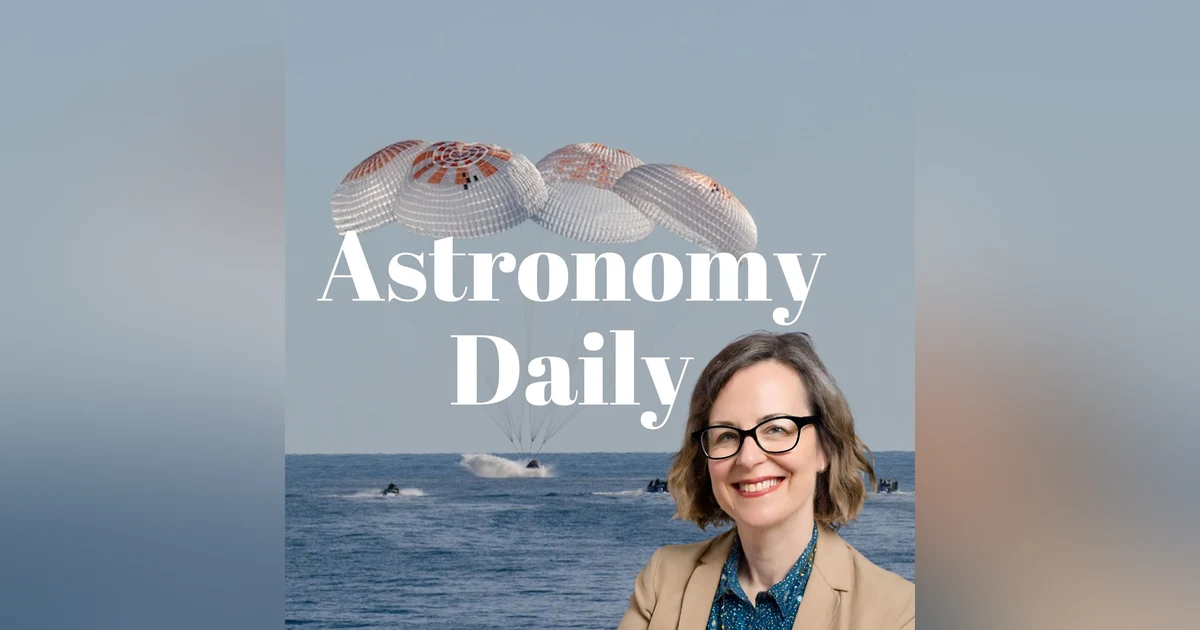
Astronomy Daily | Space News: S04E67
In this captivating episode of Astronomy Daily, host Anna explores a variety of groundbreaking stories that highlight human ingenuity and our expanding understanding of the cosmos. From the dramatic rescue of...
Astronomy Daily | Space News: S04E67
In this captivating episode of Astronomy Daily, host Anna explores a variety of groundbreaking stories that highlight human ingenuity and our expanding understanding of the cosmos. From the dramatic rescue of astronauts stranded in space to innovative solutions for space debris, this episode is packed with insights that will fuel your curiosity about the universe.
Highlights:
- Astronauts' Dramatic Return: Join us as we discuss the successful return of NASA astronauts Suni Williams and Butch Wilmore, who spent an unexpected nine months aboard the International Space Station. Discover the implications of their rescue for future space law and the need for clear protocols as space tourism grows.
- Tackling Space Debris: Learn about an innovative project led by a consortium of European companies to combat the increasing problem of space debris. With funding from the European Space Agency, this initiative involves testing an inflatable drag sail that could significantly accelerate satellite deorbiting times.
- Dream Chaser's Historic Flight Preparations: Get the latest updates on Sierra Space's Dream Chaser spacecraft as it enters its final testing phase. Set to be the first vehicle to return to Earth with a runway landing since the Space Shuttle, Dream Chaser promises to revolutionize space transportation.
- Groundbreaking Images of the Infant Universe: Explore the remarkable new images captured by the Atacama Cosmology Telescope, providing an unprecedented look at the universe just 380,000 years after the Big Bang. These observations offer critical insights into the formation of stars and galaxies.
- New Theories on the Origin of Life: Dive into an intriguing new theory from Stanford University, suggesting that micro lightning could have played a crucial role in the emergence of life on Earth. This research challenges traditional views and opens new avenues for understanding life's beginnings.
- Ambitious Lunar Mining Plans: Discover the plans of Seattle-based company Interlune to prospect for helium-3 on the Moon. This valuable resource, potentially key for future nuclear fusion, could revolutionize energy production and significantly impact space exploration.
For more cosmic updates, visit our website at astronomydaily.io. Join our community on social media by searching for #AstroDailyPod on Facebook, X, YouTubeMusic, TikTok, and our new Instagram account! Don’t forget to subscribe to the podcast on Apple Podcasts, Spotify, iHeartRadio, or wherever you get your podcasts.
Thank you for tuning in. This is Anna signing off. Until next time, keep looking up and stay curious about the wonders of our universe.
00:00 - Welcome to Astronomy Daily
01:05 - Astronauts' rescue after nine months in space
07:30 - European efforts to combat space debris
12:15 - Dream Chaser spacecraft testing updates
18:00 - New images of the infant universe
22:30 - Micro lightning and the origin of life
27:00 - Lunar mining for helium-3
✍️ Episode References
NASA Astronaut Return Details
[NASA](https://www.nasa.gov)
Space Debris Initiative
[European Space Agency](https://www.esa.int)
Dream Chaser Information
[Sierra Space](https://www.sierraspace.com)
Atacama Cosmology Telescope Observations
[Atacama Telescope](https://www.example.com)
Interlune Lunar Mining Plans
[Interlune](
In this captivating episode of Astronomy Daily, host Anna explores a variety of groundbreaking stories that highlight human ingenuity and our expanding understanding of the cosmos. From the dramatic rescue of astronauts stranded in space to innovative solutions for space debris, this episode is packed with insights that will fuel your curiosity about the universe.
Highlights:
- Astronauts' Dramatic Return: Join us as we discuss the successful return of NASA astronauts Suni Williams and Butch Wilmore, who spent an unexpected nine months aboard the International Space Station. Discover the implications of their rescue for future space law and the need for clear protocols as space tourism grows.
- Tackling Space Debris: Learn about an innovative project led by a consortium of European companies to combat the increasing problem of space debris. With funding from the European Space Agency, this initiative involves testing an inflatable drag sail that could significantly accelerate satellite deorbiting times.
- Dream Chaser's Historic Flight Preparations: Get the latest updates on Sierra Space's Dream Chaser spacecraft as it enters its final testing phase. Set to be the first vehicle to return to Earth with a runway landing since the Space Shuttle, Dream Chaser promises to revolutionize space transportation.
- Groundbreaking Images of the Infant Universe: Explore the remarkable new images captured by the Atacama Cosmology Telescope, providing an unprecedented look at the universe just 380,000 years after the Big Bang. These observations offer critical insights into the formation of stars and galaxies.
- New Theories on the Origin of Life: Dive into an intriguing new theory from Stanford University, suggesting that micro lightning could have played a crucial role in the emergence of life on Earth. This research challenges traditional views and opens new avenues for understanding life's beginnings.
- Ambitious Lunar Mining Plans: Discover the plans of Seattle-based company Interlune to prospect for helium-3 on the Moon. This valuable resource, potentially key for future nuclear fusion, could revolutionize energy production and significantly impact space exploration.
For more cosmic updates, visit our website at astronomydaily.io. Join our community on social media by searching for #AstroDailyPod on Facebook, X, YouTubeMusic, TikTok, and our new Instagram account! Don’t forget to subscribe to the podcast on Apple Podcasts, Spotify, iHeartRadio, or wherever you get your podcasts.
Thank you for tuning in. This is Anna signing off. Until next time, keep looking up and stay curious about the wonders of our universe.
00:00 - Welcome to Astronomy Daily
01:05 - Astronauts' rescue after nine months in space
07:30 - European efforts to combat space debris
12:15 - Dream Chaser spacecraft testing updates
18:00 - New images of the infant universe
22:30 - Micro lightning and the origin of life
27:00 - Lunar mining for helium-3
✍️ Episode References
NASA Astronaut Return Details
[NASA](https://www.nasa.gov)
Space Debris Initiative
[European Space Agency](https://www.esa.int)
Dream Chaser Information
[Sierra Space](https://www.sierraspace.com)
Atacama Cosmology Telescope Observations
[Atacama Telescope](https://www.example.com)
Interlune Lunar Mining Plans
[Interlune](
WEBVTT
1
00:00:00.120 --> 00:00:01.679
Hello, and welcome to Astronomy Daily.
2
00:00:01.720 --> 00:00:04.639
I'm excited to bring you another fascinating roundup of space
3
00:00:04.639 --> 00:00:08.400
and astronomy news. Today, we have another great lineup of
4
00:00:08.439 --> 00:00:12.599
stories that showcase both human ingenuity and our expanding understanding
5
00:00:12.640 --> 00:00:15.919
of the Cosmos. We'll start with the dramatic rescue of
6
00:00:15.919 --> 00:00:18.920
two astronauts who were stranded in space for nine months
7
00:00:19.559 --> 00:00:22.239
and explore what this means for the future of space
8
00:00:22.320 --> 00:00:24.120
law and rescue operations.
9
00:00:24.760 --> 00:00:27.440
Then we'll look at some cutting edge spacecraft.
10
00:00:26.839 --> 00:00:29.920
Technology being developed in Europe that could help solve our
11
00:00:29.920 --> 00:00:31.120
space debris problem.
12
00:00:31.960 --> 00:00:33.159
We'll also dive into the.
13
00:00:33.079 --> 00:00:37.759
Preparations for dream Chaser's historic first flight, examine groundbreaking new
14
00:00:37.799 --> 00:00:42.159
images of our infant universe, and explore intriguing new theories.
15
00:00:41.920 --> 00:00:43.439
About how life began on Earth.
16
00:00:44.280 --> 00:00:47.960
Plus, we'll look at ambitious plans to mine valuable resources
17
00:00:47.960 --> 00:00:50.679
on the Moon. Stay with me as we journey through
18
00:00:50.719 --> 00:00:53.960
these remarkable developments in space exploration and discovery.
19
00:00:54.399 --> 00:00:56.479
And of course I'll kick things off today with the
20
00:00:56.520 --> 00:00:57.640
story the Whole World.
21
00:00:57.520 --> 00:01:02.119
Seems to be talking about nificant development for space operations.
22
00:01:02.640 --> 00:01:06.879
Astronauts Sunny Williams and Butch Wilmore have finally returned safely
23
00:01:06.920 --> 00:01:10.879
to Earth aboard SpaceX's Dragon capsule after an extended nine
24
00:01:10.920 --> 00:01:14.920
months stay on the International Space Station. Their prolonged stay
25
00:01:15.000 --> 00:01:19.159
wasn't planned. It began when their experimental Boeing Starliner spacecraft
26
00:01:19.200 --> 00:01:22.799
experienced malfunctions last June, making it too risky for their
27
00:01:22.840 --> 00:01:27.359
return journey. This unprecedented situation has brought to light critical
28
00:01:27.439 --> 00:01:31.280
questions about space rescue operations, particularly as we enter an
29
00:01:31.280 --> 00:01:35.040
era where space travel isn't limited to traditional astronauts. With
30
00:01:35.159 --> 00:01:39.359
civilians like William Shatner, Jeff Bezos, and Richard Branson already
31
00:01:39.439 --> 00:01:42.359
venturing into space, in celebrities like Katy Perry and Gail
32
00:01:42.480 --> 00:01:46.879
King planning upcoming flights, the need for clear rescue protocols
33
00:01:47.239 --> 00:01:50.599
has never been more pressing. The challenge lies in the
34
00:01:50.640 --> 00:01:53.840
current state of space law, which hasn't kept pace with
35
00:01:53.879 --> 00:01:58.480
the rapid commercialization of space travel. While international space law
36
00:01:58.519 --> 00:02:03.000
requires countries to rescue as astronauts regardless of nationality, there's
37
00:02:03.040 --> 00:02:07.400
significant uncertainty about whether private space companies have similar obligations.
38
00:02:07.920 --> 00:02:11.199
This legal vacuum becomes particularly concerning when we consider the
39
00:02:11.199 --> 00:02:15.000
growing number of space tourists. Space policy experts are now
40
00:02:15.039 --> 00:02:19.120
calling for two crucial reforms, first, a broader interpretation of
41
00:02:19.120 --> 00:02:22.840
the term astronaut to ensure rescue rights extend to all
42
00:02:22.879 --> 00:02:28.000
space travelers, and second, clear guidelines determining responsibility for rescuing
43
00:02:28.000 --> 00:02:32.240
private citizens in space emergencies. The pressing concern is that,
44
00:02:32.680 --> 00:02:36.039
without proper oversight, space tourism companies might require customers to
45
00:02:36.080 --> 00:02:40.120
waive their right to rescue, a potentially dangerous precedent. This
46
00:02:40.280 --> 00:02:43.520
rescue mission's success is certainly a relief for NASA, but
47
00:02:43.599 --> 00:02:45.639
it serves as a wake up call for the international
48
00:02:45.719 --> 00:02:49.120
space community. As we continue to push the boundaries of
49
00:02:49.120 --> 00:02:52.680
space exploration and tourism, we need to ensure our legal
50
00:02:52.719 --> 00:02:56.560
frameworks evolved to protect everyone who ventures beyond Earth's atmosphere.
51
00:02:57.879 --> 00:03:01.039
Let's turn our attention now to another press problem in space.
52
00:03:01.800 --> 00:03:04.719
A group of European companies has embarked on an innovative
53
00:03:04.759 --> 00:03:08.960
project to tackle the growing challenge of space debris. Led
54
00:03:09.000 --> 00:03:13.479
by Portuguese startup Spaceio, the consortium has secured three million
55
00:03:13.520 --> 00:03:17.000
euros in funding from the European Space Agency to test
56
00:03:17.039 --> 00:03:20.000
an inflatable drag sale designed to help satellites return to
57
00:03:20.039 --> 00:03:24.199
Earth more efficiently. This groundbreaking system starts at just twenty
58
00:03:24.199 --> 00:03:27.280
square centimeters, but can inflate to an impressive one point
59
00:03:27.319 --> 00:03:31.319
five square meters once deployed. The dramatic size increase creates
60
00:03:31.319 --> 00:03:36.120
significant atmospheric drag, allowing satellites to diorbit much more quickly
61
00:03:36.159 --> 00:03:39.439
than they would naturally. Instead of taking a decade to
62
00:03:39.479 --> 00:03:43.319
burn up in the atmosphere, satellites equipped with this technology
63
00:03:43.360 --> 00:03:47.000
could complete their descent in just over a year. While
64
00:03:47.000 --> 00:03:50.120
the initial test will involve a relatively small twelve unit
65
00:03:50.159 --> 00:03:54.080
cube SAT, the technology has potential applications for satellites up
66
00:03:54.120 --> 00:03:57.800
to two hundred kilograms. What makes the system particularly valuable
67
00:03:57.960 --> 00:04:01.159
is its ability to function even if the satellite itself
68
00:04:01.199 --> 00:04:05.719
fails or malfunctions, unlike traditional propulsion based deorbiting methods that
69
00:04:05.800 --> 00:04:10.319
require the satellite to remain operational. The SWIFT project, which
70
00:04:10.360 --> 00:04:14.800
stands for Spacecraft with Inflatable Termination, brings together expertise from
71
00:04:14.800 --> 00:04:19.240
across Europe. French company space Locker will handle integration, Dutch
72
00:04:19.319 --> 00:04:22.600
firm gam Space will provide the host satellite, and solid
73
00:04:22.639 --> 00:04:25.680
Flow from the Netherlands will develop the critical gas generation
74
00:04:25.759 --> 00:04:29.759
system needed for inflation. This development comes at a crucial
75
00:04:29.839 --> 00:04:33.079
time as the number of satellites in orbit continues to
76
00:04:33.120 --> 00:04:37.360
grow exponentially by providing a reliable and autonomous method for
77
00:04:37.399 --> 00:04:41.279
removing defunct satellites from orbit. This technology could play a
78
00:04:41.360 --> 00:04:44.600
vital role in maintaining the long term sustainability of our
79
00:04:44.680 --> 00:04:49.000
orbital environment and preventing the accumulation of dangerous space debris.
80
00:04:50.040 --> 00:04:53.040
The team plans to demonstrate this innovative deorbiting system in
81
00:04:53.079 --> 00:04:56.319
low Earth orbit by twenty twenty eight, marking a significant
82
00:04:56.360 --> 00:05:01.399
step forward in responsible space operations and debris mitigation effort.
83
00:05:01.680 --> 00:05:06.600
In exciting developments for space exploration, Sierra Space's Dream Chaser
84
00:05:06.720 --> 00:05:10.920
spacecraft is entering its final testing phase before its historic
85
00:05:10.959 --> 00:05:15.519
first flight to the International Space Station. Nicknamed the Mini Shuttle,
86
00:05:16.120 --> 00:05:18.839
this spacecraft will be the first since the retirement of
87
00:05:18.879 --> 00:05:21.839
the Space Shuttle program in twenty eleven to dock with
88
00:05:21.879 --> 00:05:25.240
the ISS and then return to Earth via runway landing.
89
00:05:26.160 --> 00:05:30.040
The first Dream Chaser vehicle, named Tenacity, is currently in
90
00:05:30.079 --> 00:05:35.839
Florida undergoing crucial preflight testing. The spacecraft must complete electromagnetic
91
00:05:35.879 --> 00:05:39.399
interference testing and acoustic chamber trials to ensure it can
92
00:05:39.439 --> 00:05:43.959
withstand the intense vibrations of launch. These tests will verify
93
00:05:44.040 --> 00:05:47.160
that all onboard systems can function properly in the harsh
94
00:05:47.240 --> 00:05:51.639
environment of space. Tenacity will launch a board ULA's new
95
00:05:51.759 --> 00:05:55.759
Vulcan rocket and carry over three thousand, five hundred kilograms
96
00:05:55.759 --> 00:05:59.399
of supplies and science equipment to the ISS. The vehicle
97
00:05:59.480 --> 00:06:02.240
is designed to remain docked to the station for between
98
00:06:02.240 --> 00:06:06.439
thirty and ninety days, depending on mission requirements. One of
99
00:06:06.519 --> 00:06:10.920
dream Chaser's most remarkable features is its advanced thermal protection system.
100
00:06:11.439 --> 00:06:14.360
Unlike the Space Shuttle's mixed use of tiles and blankets,
101
00:06:14.759 --> 00:06:18.439
Tenacity is covered in approximately two thousand specialized black and
102
00:06:18.480 --> 00:06:22.279
white tiles. These tiles can withstand temperatures up to two thousand,
103
00:06:22.360 --> 00:06:26.439
six hundred degrees fahrenheit across multiple re entry cycles, while
104
00:06:26.480 --> 00:06:30.839
also helping regulate the spacecraft's temperature during orbital operations. The
105
00:06:30.920 --> 00:06:35.279
vehicle's design includes several key safety improvements over the Space Shuttle.
106
00:06:35.879 --> 00:06:39.839
Dream Chaser launches inside a protective firing, preventing the tile
107
00:06:39.920 --> 00:06:43.040
damage from falling foam or ice that plagued the Shuttle program.
108
00:06:43.639 --> 00:06:47.279
It also uses a more environmentally friendly propulsion system, combining
109
00:06:47.279 --> 00:06:51.959
refined kerosene with hydrogen peroxide instead of toxic hypergolic fuels.
110
00:06:52.879 --> 00:06:55.560
Sierra Space has already begun work on a second vehicle
111
00:06:55.639 --> 00:06:58.839
named Reverence, which is being assembled at their Dream Factory
112
00:06:58.879 --> 00:07:02.600
in Colorado, with Tenacity scheduled to fly the first four
113
00:07:02.639 --> 00:07:06.000
missions and Reverence taking over from the fifth flight onward.
114
00:07:06.439 --> 00:07:11.240
Dreamchaser represents an exciting new chapter in space transportation, combining
115
00:07:11.279 --> 00:07:16.120
the best features of past spacecraft with modern innovations. The
116
00:07:16.160 --> 00:07:20.519
Atacama Cosmology Telescope in Chile has captured groundbreaking new images
117
00:07:20.680 --> 00:07:23.160
that give us our most detailed look yet at the
118
00:07:23.199 --> 00:07:28.319
infant universe. These remarkable baby pictures show the cosmos just
119
00:07:28.399 --> 00:07:32.079
three hundred eighty thousand years after the Big Bang, revealing
120
00:07:32.079 --> 00:07:35.920
the universe's first steps toward forming stars and galaxies. With
121
00:07:36.160 --> 00:07:41.199
unprecedented clarity, The images capture what's known as the cosmic
122
00:07:41.399 --> 00:07:44.839
microwave background, the afterglow of the first light that was
123
00:07:44.879 --> 00:07:48.639
able to travel freely through space. Before this moment, the
124
00:07:48.800 --> 00:07:51.800
universe was so hot and dense that light couldn't move
125
00:07:51.879 --> 00:07:55.959
without being scattered by free electrons. But as the cosmos
126
00:07:56.040 --> 00:08:00.439
expanded and cooled, atoms formed and light could finally travel
127
00:08:00.560 --> 00:08:05.600
unimpeded through space. What makes these new observations so special
128
00:08:05.720 --> 00:08:10.120
is their extraordinary precision. The Telescope's images are five times
129
00:08:10.120 --> 00:08:13.399
sharper than previous observations and show both the intensity and
130
00:08:13.480 --> 00:08:17.439
polarization of this ancient light. This allows scientists to see
131
00:08:17.439 --> 00:08:20.120
not just where matter was located in the early universe,
132
00:08:20.480 --> 00:08:24.199
but how it was moving. The data reveals subtle variations
133
00:08:24.199 --> 00:08:27.279
in density and velocity of the primordial gases that filled
134
00:08:27.279 --> 00:08:30.600
the young cosmos. We can now see vast regions of
135
00:08:30.720 --> 00:08:34.080
higher and lower density extending millions of light years across
136
00:08:34.720 --> 00:08:38.039
over billions of years. Gravity would pull these denser regions inward,
137
00:08:38.600 --> 00:08:41.919
eventually leading to the formation of the first stars and galaxies.
138
00:08:43.000 --> 00:08:46.240
These findings have helped validate our standard model of cosmology,
139
00:08:46.720 --> 00:08:51.120
showing it to be remarkably robust. The observations indicate that
140
00:08:51.159 --> 00:08:55.759
the observable universe extends about fifty billion light years in
141
00:08:55.919 --> 00:08:59.279
all directions, with a total mass equivalent to about two
142
00:08:59.320 --> 00:09:04.480
trillion trillis in suns. Of this cosmic inventory, ordinary matter
143
00:09:04.519 --> 00:09:07.720
makes up only about five percent, while dark matter accounts
144
00:09:07.720 --> 00:09:10.960
for about twenty six percent and the mysterious dark energy
145
00:09:10.960 --> 00:09:15.200
comprises the remaining sixty nine percent. The images provide an
146
00:09:15.360 --> 00:09:19.600
unprecedented window into our cosmic origins, allowing us to witness
147
00:09:19.600 --> 00:09:22.879
the universe taking its very first steps toward becoming the
148
00:09:23.000 --> 00:09:27.600
rich and complex cosmos we see today. Next up, a
149
00:09:27.639 --> 00:09:30.679
subject we keep revisiting, but one we all have an
150
00:09:30.720 --> 00:09:34.799
interest in. Recent research has revealed an intriguing new theory
151
00:09:35.039 --> 00:09:38.360
about how life might have emerged on Earth. Scientists at
152
00:09:38.360 --> 00:09:43.399
Stanford University have discovered that micro lightning, tiny electrical discharges
153
00:09:43.440 --> 00:09:47.120
between water droplets could have provided the spark needed to
154
00:09:47.159 --> 00:09:51.559
create life's building blocks. This challenges the traditional view that
155
00:09:51.639 --> 00:09:56.240
only powerful atmospheric lightning could have triggered these crucial chemical reactions.
156
00:09:56.559 --> 00:10:00.360
When water droplets separate through splashing or spraying, they develop
157
00:10:00.399 --> 00:10:04.559
different electrical charges. Larger drops tend to become positively charged,
158
00:10:04.759 --> 00:10:08.240
while smaller ones take on negative charges. When these oppositely
159
00:10:08.320 --> 00:10:12.960
charged droplets come close together, they create microscopic lightning strikes.
160
00:10:13.480 --> 00:10:17.600
These tiny electrical discharges appear capable of producing the same
161
00:10:17.759 --> 00:10:22.360
organic molecules previously seen in famous origin of life experiments.
162
00:10:23.360 --> 00:10:27.039
The researchers demonstrated that this micro lightning can create important
163
00:10:27.080 --> 00:10:31.879
carbon nitrogen bonds and form compounds essential for life, including
164
00:10:31.960 --> 00:10:35.879
amino acids and components of RNA. This process could have
165
00:10:35.879 --> 00:10:39.840
been widespread on early Earth occurring wherever water sprayed against
166
00:10:39.960 --> 00:10:43.240
rocks or in ocean waves, making it a more plausible
167
00:10:43.279 --> 00:10:48.360
mechanism for life's origins than rare lightning strikes. In other
168
00:10:48.399 --> 00:10:52.720
fascinating developments, a Seattle based company called Interlune has announced
169
00:10:52.720 --> 00:10:56.240
ambitious plans to prospect the Moon for helium three. This
170
00:10:56.440 --> 00:10:59.759
rare isotope, currently valued at around twenty million dollars per
171
00:10:59.799 --> 00:11:04.320
kil telegram, could potentially power future nuclear fusion reactors. The
172
00:11:04.320 --> 00:11:07.639
Moon's surface contains an estimated one million metric tons of
173
00:11:07.679 --> 00:11:11.679
helium three deposited there over billions of years by solar winds.
174
00:11:12.559 --> 00:11:15.440
Interlun plans to launch their prospect Moon mission in twenty
175
00:11:15.480 --> 00:11:19.480
twenty seven, equipped with specialized systems to sample and process
176
00:11:19.559 --> 00:11:22.919
lunar regalith They'll focus on areas rich in a mineral
177
00:11:22.960 --> 00:11:26.840
called ilmanite, which tends to trap helium three. The company
178
00:11:26.840 --> 00:11:30.360
aims to demonstrate the feasibility of extracting this valuable resource
179
00:11:30.720 --> 00:11:36.120
while contributing important scientific data about the Moon's composition. And
180
00:11:36.159 --> 00:11:39.639
that's all for today's episode of Astronomy Daily. If you'd
181
00:11:39.639 --> 00:11:42.159
like to dive deeper into any of these fascinating stories,
182
00:11:42.559 --> 00:11:45.279
head over to Astronomy Daily dot io, where you can
183
00:11:45.320 --> 00:11:47.440
listen to all our episodes and stay up to date
184
00:11:47.480 --> 00:11:50.240
with our constantly updating news feed of the latest space
185
00:11:50.279 --> 00:11:54.480
and astronomy developments. Don't forget to join our thriving community
186
00:11:54.480 --> 00:11:57.279
on social media. You can find us as astro Daily
187
00:11:57.360 --> 00:12:01.720
Pod on Facebook, x YouTube, YouTube, music, TikTok, and Instagram.
188
00:12:01.759 --> 00:12:04.480
This is Anna. Thank you for sharing in today's journey
189
00:12:04.480 --> 00:12:07.799
through the Cosmos. Until next time, keep looking up and
190
00:12:07.840 --> 00:12:10.440
wondering about the mysteries that await us in the vast
191
00:12:10.480 --> 00:12:16.960
expanse of space. Sunday STARZL.
192
00:12:22.799 --> 00:12:23.639
Star is so
193
00:12:30.679 --> 00:12:30.879
Star.
1
00:00:00.120 --> 00:00:01.679
2
00:00:01.720 --> 00:00:04.639
3
00:00:04.639 --> 00:00:08.400
4
00:00:08.439 --> 00:00:12.599
5
00:00:12.640 --> 00:00:15.919
6
00:00:15.919 --> 00:00:18.920
7
00:00:19.559 --> 00:00:22.239
8
00:00:22.320 --> 00:00:24.120
9
00:00:24.760 --> 00:00:27.440
10
00:00:26.839 --> 00:00:29.920
11
00:00:29.920 --> 00:00:31.120
12
00:00:31.960 --> 00:00:33.159
13
00:00:33.079 --> 00:00:37.759
14
00:00:37.799 --> 00:00:42.159
15
00:00:41.920 --> 00:00:43.439
16
00:00:44.280 --> 00:00:47.960
17
00:00:47.960 --> 00:00:50.679
18
00:00:50.719 --> 00:00:53.960
19
00:00:54.399 --> 00:00:56.479
20
00:00:56.520 --> 00:00:57.640
21
00:00:57.520 --> 00:01:02.119
22
00:01:02.640 --> 00:01:06.879
23
00:01:06.920 --> 00:01:10.879
24
00:01:10.920 --> 00:01:14.920
25
00:01:15.000 --> 00:01:19.159
26
00:01:19.200 --> 00:01:22.799
27
00:01:22.840 --> 00:01:27.359
28
00:01:27.439 --> 00:01:31.280
29
00:01:31.280 --> 00:01:35.040
30
00:01:35.159 --> 00:01:39.359
31
00:01:39.439 --> 00:01:42.359
32
00:01:42.480 --> 00:01:46.879
33
00:01:47.239 --> 00:01:50.599
34
00:01:50.640 --> 00:01:53.840
35
00:01:53.879 --> 00:01:58.480
36
00:01:58.519 --> 00:02:03.000
37
00:02:03.040 --> 00:02:07.400
38
00:02:07.920 --> 00:02:11.199
39
00:02:11.199 --> 00:02:15.000
40
00:02:15.039 --> 00:02:19.120
41
00:02:19.120 --> 00:02:22.840
42
00:02:22.879 --> 00:02:28.000
43
00:02:28.000 --> 00:02:32.240
44
00:02:32.680 --> 00:02:36.039
45
00:02:36.080 --> 00:02:40.120
46
00:02:40.280 --> 00:02:43.520
47
00:02:43.599 --> 00:02:45.639
48
00:02:45.719 --> 00:02:49.120
49
00:02:49.120 --> 00:02:52.680
50
00:02:52.719 --> 00:02:56.560
51
00:02:57.879 --> 00:03:01.039
52
00:03:01.800 --> 00:03:04.719
53
00:03:04.759 --> 00:03:08.960
54
00:03:09.000 --> 00:03:13.479
55
00:03:13.520 --> 00:03:17.000
56
00:03:17.039 --> 00:03:20.000
57
00:03:20.039 --> 00:03:24.199
58
00:03:24.199 --> 00:03:27.280
59
00:03:27.319 --> 00:03:31.319
60
00:03:31.319 --> 00:03:36.120
61
00:03:36.159 --> 00:03:39.439
62
00:03:39.479 --> 00:03:43.319
63
00:03:43.360 --> 00:03:47.000
64
00:03:47.000 --> 00:03:50.120
65
00:03:50.159 --> 00:03:54.080
66
00:03:54.120 --> 00:03:57.800
67
00:03:57.960 --> 00:04:01.159
68
00:04:01.199 --> 00:04:05.719
69
00:04:05.800 --> 00:04:10.319
70
00:04:10.360 --> 00:04:14.800
71
00:04:14.800 --> 00:04:19.240
72
00:04:19.319 --> 00:04:22.600
73
00:04:22.639 --> 00:04:25.680
74
00:04:25.759 --> 00:04:29.759
75
00:04:29.839 --> 00:04:33.079
76
00:04:33.120 --> 00:04:37.360
77
00:04:37.399 --> 00:04:41.279
78
00:04:41.360 --> 00:04:44.600
79
00:04:44.680 --> 00:04:49.000
80
00:04:50.040 --> 00:04:53.040
81
00:04:53.079 --> 00:04:56.319
82
00:04:56.360 --> 00:05:01.399
83
00:05:01.680 --> 00:05:06.600
84
00:05:06.720 --> 00:05:10.920
85
00:05:10.959 --> 00:05:15.519
86
00:05:16.120 --> 00:05:18.839
87
00:05:18.879 --> 00:05:21.839
88
00:05:21.879 --> 00:05:25.240
89
00:05:26.160 --> 00:05:30.040
90
00:05:30.079 --> 00:05:35.839
91
00:05:35.879 --> 00:05:39.399
92
00:05:39.439 --> 00:05:43.959
93
00:05:44.040 --> 00:05:47.160
94
00:05:47.240 --> 00:05:51.639
95
00:05:51.759 --> 00:05:55.759
96
00:05:55.759 --> 00:05:59.399
97
00:05:59.480 --> 00:06:02.240
98
00:06:02.240 --> 00:06:06.439
99
00:06:06.519 --> 00:06:10.920
100
00:06:11.439 --> 00:06:14.360
101
00:06:14.759 --> 00:06:18.439
102
00:06:18.480 --> 00:06:22.279
103
00:06:22.360 --> 00:06:26.439
104
00:06:26.480 --> 00:06:30.839
105
00:06:30.920 --> 00:06:35.279
106
00:06:35.879 --> 00:06:39.839
107
00:06:39.920 --> 00:06:43.040
108
00:06:43.639 --> 00:06:47.279
109
00:06:47.279 --> 00:06:51.959
110
00:06:52.879 --> 00:06:55.560
111
00:06:55.639 --> 00:06:58.839
112
00:06:58.879 --> 00:07:02.600
113
00:07:02.639 --> 00:07:06.000
114
00:07:06.439 --> 00:07:11.240
115
00:07:11.279 --> 00:07:16.120
116
00:07:16.160 --> 00:07:20.519
117
00:07:20.680 --> 00:07:23.160
118
00:07:23.199 --> 00:07:28.319
119
00:07:28.399 --> 00:07:32.079
120
00:07:32.079 --> 00:07:35.920
121
00:07:36.160 --> 00:07:41.199
122
00:07:41.399 --> 00:07:44.839
123
00:07:44.879 --> 00:07:48.639
124
00:07:48.800 --> 00:07:51.800
125
00:07:51.879 --> 00:07:55.959
126
00:07:56.040 --> 00:08:00.439
127
00:08:00.560 --> 00:08:05.600
128
00:08:05.720 --> 00:08:10.120
129
00:08:10.120 --> 00:08:13.399
130
00:08:13.480 --> 00:08:17.439
131
00:08:17.439 --> 00:08:20.120
132
00:08:20.480 --> 00:08:24.199
133
00:08:24.199 --> 00:08:27.279
134
00:08:27.279 --> 00:08:30.600
135
00:08:30.720 --> 00:08:34.080
136
00:08:34.720 --> 00:08:38.039
137
00:08:38.600 --> 00:08:41.919
138
00:08:43.000 --> 00:08:46.240
139
00:08:46.720 --> 00:08:51.120
140
00:08:51.159 --> 00:08:55.759
141
00:08:55.919 --> 00:08:59.279
142
00:08:59.320 --> 00:09:04.480
143
00:09:04.519 --> 00:09:07.720
144
00:09:07.720 --> 00:09:10.960
145
00:09:10.960 --> 00:09:15.200
146
00:09:15.360 --> 00:09:19.600
147
00:09:19.600 --> 00:09:22.879
148
00:09:23.000 --> 00:09:27.600
149
00:09:27.639 --> 00:09:30.679
150
00:09:30.720 --> 00:09:34.799
151
00:09:35.039 --> 00:09:38.360
152
00:09:38.360 --> 00:09:43.399
153
00:09:43.440 --> 00:09:47.120
154
00:09:47.159 --> 00:09:51.559
155
00:09:51.639 --> 00:09:56.240
156
00:09:56.559 --> 00:10:00.360
157
00:10:00.399 --> 00:10:04.559
158
00:10:04.759 --> 00:10:08.240
159
00:10:08.320 --> 00:10:12.960
160
00:10:13.480 --> 00:10:17.600
161
00:10:17.759 --> 00:10:22.360
162
00:10:23.360 --> 00:10:27.039
163
00:10:27.080 --> 00:10:31.879
164
00:10:31.960 --> 00:10:35.879
165
00:10:35.879 --> 00:10:39.840
166
00:10:39.960 --> 00:10:43.240
167
00:10:43.279 --> 00:10:48.360
168
00:10:48.399 --> 00:10:52.720
169
00:10:52.720 --> 00:10:56.240
170
00:10:56.440 --> 00:10:59.759
171
00:10:59.799 --> 00:11:04.320
172
00:11:04.320 --> 00:11:07.639
173
00:11:07.679 --> 00:11:11.679
174
00:11:12.559 --> 00:11:15.440
175
00:11:15.480 --> 00:11:19.480
176
00:11:19.559 --> 00:11:22.919
177
00:11:22.960 --> 00:11:26.840
178
00:11:26.840 --> 00:11:30.360
179
00:11:30.720 --> 00:11:36.120
180
00:11:36.159 --> 00:11:39.639
181
00:11:39.639 --> 00:11:42.159
182
00:11:42.559 --> 00:11:45.279
183
00:11:45.320 --> 00:11:47.440
184
00:11:47.480 --> 00:11:50.240
185
00:11:50.279 --> 00:11:54.480
186
00:11:54.480 --> 00:11:57.279
187
00:11:57.360 --> 00:12:01.720
188
00:12:01.759 --> 00:12:04.480
189
00:12:04.480 --> 00:12:07.799
190
00:12:07.840 --> 00:12:10.440
191
00:12:10.480 --> 00:12:16.960
192
00:12:22.799 --> 00:12:23.639
193
00:12:30.679 --> 00:12:30.879


