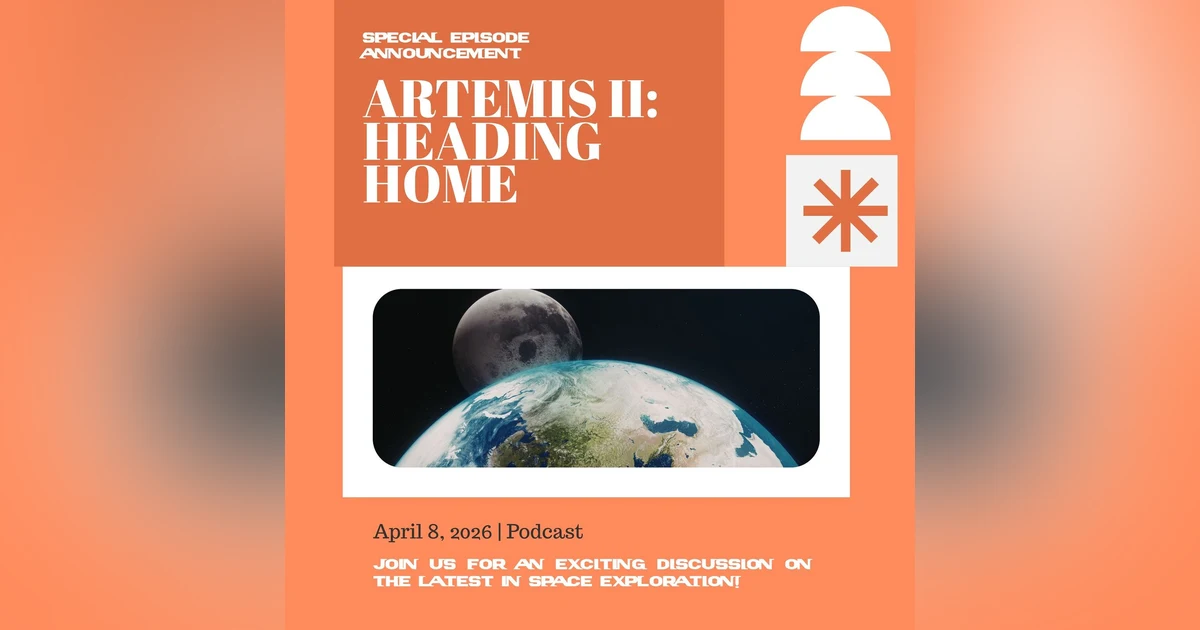
WEBVTT
1
00:00:00.360 --> 00:00:05.120
Hello, and welcome to Astronomy Daily. I'm Anna and I'm Avery.
2
00:00:05.440 --> 00:00:09.279
It is Wednesday, April eighth, twenty twenty six, and what
3
00:00:09.400 --> 00:00:12.160
a week it has been. We are deep into what
4
00:00:12.320 --> 00:00:16.000
might be the most extraordinary few days in human spaceflight
5
00:00:16.120 --> 00:00:20.640
since nineteen seventy two. Artemis two is heading home, and
6
00:00:20.679 --> 00:00:23.120
we are going to walk you through exactly where the
7
00:00:23.160 --> 00:00:26.239
crew is right now, what happened on flight day seven,
8
00:00:26.559 --> 00:00:29.640
and what to expect as they come screaming back through
9
00:00:29.679 --> 00:00:31.199
the atmosphere on Friday.
10
00:00:31.640 --> 00:00:35.799
Screaming is right. We are talking twenty five thousand miles
11
00:00:35.840 --> 00:00:39.759
per hour, the fastest crude re entry in history. But
12
00:00:39.840 --> 00:00:40.759
more on that in a moment.
13
00:00:41.039 --> 00:00:43.840
We have also got a cargo launch delay that has
14
00:00:43.880 --> 00:00:48.200
created one of the most beautifully poetic scheduling coincidences we
15
00:00:48.280 --> 00:00:52.280
have ever seen in spaceflight. Some planet shaking new science
16
00:00:52.320 --> 00:00:56.159
about how Earth actually formed, fresh data from an alien
17
00:00:56.240 --> 00:01:00.840
comet courtesy of a spacecraft designed for Jupiter's mood uns.
18
00:01:00.719 --> 00:01:03.759
A new comic for skywatchers to get excited about after
19
00:01:03.880 --> 00:01:07.040
last week's spectacular disappointment, and then.
20
00:01:06.959 --> 00:01:10.799
To close the show today, something a little different, A mystery,
21
00:01:11.239 --> 00:01:14.879
a space mystery that is thirty years old and has
22
00:01:15.079 --> 00:01:16.079
never been solved.
23
00:01:16.599 --> 00:01:18.760
I have been looking forward to this one all day.
24
00:01:18.760 --> 00:01:19.719
I won't lie.
25
00:01:19.840 --> 00:01:23.519
Doh of I let's get into it. This is Astronomy Daily,
26
00:01:23.760 --> 00:01:27.000
season five, episode eighty four.
27
00:01:26.480 --> 00:01:29.959
Right, so let's set the scene. Artemis two launched on
28
00:01:30.040 --> 00:01:33.680
April first, Yes, April Fool's Day, and no it was
29
00:01:33.799 --> 00:01:36.680
not a joke. And the crew of four have already
30
00:01:36.680 --> 00:01:40.719
done the most extraordinary thing. On Monday, Flight Day six,
31
00:01:41.000 --> 00:01:43.640
they flew around the far side of the Moon. They
32
00:01:43.680 --> 00:01:46.560
set a new record for the furthest humans have ever
33
00:01:46.640 --> 00:01:50.120
been two hundred and fifty two thousand, seven hundred and
34
00:01:50.200 --> 00:01:54.159
fifty six miles. Nobody in human history has ever been
35
00:01:54.200 --> 00:01:54.599
that far.
36
00:01:55.040 --> 00:01:58.719
And Flight Day seven, which was yesterday Tuesday, was the
37
00:01:58.840 --> 00:02:03.879
day after all drama, the science debrief day, the comedown day,
38
00:02:04.359 --> 00:02:07.799
well sort of. They woke up to Tokyo drifting by
39
00:02:07.879 --> 00:02:12.039
glass animals and Denzel Curry and I genuinely love whoever
40
00:02:12.080 --> 00:02:15.439
selects these wake up songs is having an absolute blast.
41
00:02:15.919 --> 00:02:20.400
The playlist creation on Artemis two has been exceptional. Somebody
42
00:02:20.400 --> 00:02:22.360
at NASA is doing their best work.
43
00:02:22.719 --> 00:02:25.599
They woke up thirty six thousand miles from the moon,
44
00:02:25.879 --> 00:02:29.039
two hundred thirty six thousand miles from Earth, and the
45
00:02:29.080 --> 00:02:32.159
big item on the agenda was a fifteen minute audio
46
00:02:32.199 --> 00:02:35.759
call ship to ship with the crew aboard the International
47
00:02:35.800 --> 00:02:36.439
Space Station.
48
00:02:37.000 --> 00:02:40.039
So you have four astronauts who have just been further
49
00:02:40.120 --> 00:02:43.719
from Earth than any human in over fifty years calling
50
00:02:43.800 --> 00:02:47.319
up the International Space Station, which from where O'Ryan was
51
00:02:47.360 --> 00:02:49.439
sitting must have felt practically next.
52
00:02:49.240 --> 00:02:54.599
Door, right relatively speaking. They spoke with NASA astronauts Jessica Mere,
53
00:02:55.000 --> 00:03:00.439
Jack Hathaway, Chris Williams, and ESA's Sophie Adenaut. Just imagine
54
00:03:00.439 --> 00:03:04.319
that conversation. So, how was the Moon, you know, bit far?
55
00:03:04.840 --> 00:03:08.639
And after that the science debrief. The Artemis two lunar
56
00:03:08.680 --> 00:03:11.199
science team had a full debrief session with the crew
57
00:03:11.319 --> 00:03:14.599
to capture everything they observed during the flyby while the
58
00:03:14.599 --> 00:03:15.960
memories were still sharp.
59
00:03:16.120 --> 00:03:20.039
Which makes complete sense, right, These four people have just
60
00:03:20.120 --> 00:03:23.159
seen parts of the Moon no human eye has ever
61
00:03:23.240 --> 00:03:27.120
seen directly, the far side, craters like Vavlov and the
62
00:03:27.240 --> 00:03:31.000
Oriental Basin, an ancient lava field on the border of
63
00:03:31.039 --> 00:03:34.599
the Moon's near and far side that's almost impossible to
64
00:03:34.639 --> 00:03:39.199
see from Earth. You want those impressions captured immediately.
65
00:03:38.919 --> 00:03:42.039
And then in the evening at about nine pm Eastern,
66
00:03:42.280 --> 00:03:45.719
Orion fired the first of three trajectory correction burns to
67
00:03:45.759 --> 00:03:48.599
begin fine tuning the return path to Earth.
68
00:03:48.879 --> 00:03:52.400
Though we are officially in the home stretch. And Flight
69
00:03:52.479 --> 00:03:57.000
day eight, which is today, the crew has two key tasks. First,
70
00:03:57.120 --> 00:04:00.439
a radiation shelter construction demonstration.
71
00:04:00.199 --> 00:04:03.479
Which sounds alarming but is actually a plan drill. The
72
00:04:03.599 --> 00:04:08.560
practice assembling a makeshift radiation shelter inside Orion using available
73
00:04:08.560 --> 00:04:11.639
materials in case of a solar event during a deep
74
00:04:11.639 --> 00:04:15.479
space mission, exactly the kind of emergency preparedness you need
75
00:04:15.560 --> 00:04:19.120
locked in before Artemis three heads to the lunar surface.
76
00:04:19.360 --> 00:04:23.920
And second manual piloting tests. The crew gets to hand
77
00:04:24.000 --> 00:04:29.120
fly Orion directly, which, given that computers handled basically everything
78
00:04:29.120 --> 00:04:31.920
on this mission, must feel a bit like being handed
79
00:04:31.920 --> 00:04:32.319
the wheel.
80
00:04:32.800 --> 00:04:35.680
And then, Friday, April tenth, splash down.
81
00:04:36.000 --> 00:04:40.600
Flight day ten, Orion re enters the atmosphere at twenty
82
00:04:40.600 --> 00:04:44.439
five thousand miles per hour. That is the fastest crude
83
00:04:44.439 --> 00:04:48.079
re entry ever attempted. The heat shields, which caused so
84
00:04:48.240 --> 00:04:51.600
much concern and engineering work before this mission, will be
85
00:04:51.639 --> 00:04:53.240
put to its ultimate.
86
00:04:52.879 --> 00:04:56.279
Test, and collecting data from that re entry is actually
87
00:04:56.319 --> 00:04:59.199
one of the core mission objectives, so NASA will be
88
00:04:59.240 --> 00:05:01.759
watching those heat shield readings very closely.
89
00:05:02.399 --> 00:05:06.199
Blashdown is scheduled for about eight pm Eastern off the
90
00:05:06.199 --> 00:05:09.959
coast of San Diego. The USS John P. Murtha, a
91
00:05:10.040 --> 00:05:13.959
Navy amphibious transport docship, will be waiting. The crew will
92
00:05:13.959 --> 00:05:17.519
be recovered by helicopter, taking a board for medical evaluation,
93
00:05:17.839 --> 00:05:19.959
then flown back to Houston, and.
94
00:05:19.920 --> 00:05:22.680
That will be it the first time humans have returned
95
00:05:22.680 --> 00:05:26.839
from beyond Earth orbit since Apollo seventeen in nineteen seventy two.
96
00:05:27.399 --> 00:05:29.160
Mission complete, but.
97
00:05:29.319 --> 00:05:33.680
Right now Reid Wiseman, Victor Glover, Christina Koch, and Jeremy
98
00:05:33.720 --> 00:05:36.920
Hansen are heading home and we could not be more
99
00:05:37.000 --> 00:05:38.000
excited for them.
100
00:05:38.199 --> 00:05:40.319
All right, from the crew heading back to Earth to
101
00:05:40.439 --> 00:05:43.079
a cargo ship heading up to the space station with
102
00:05:43.160 --> 00:05:45.480
a slight detour through the weather forecast.
103
00:05:45.800 --> 00:05:50.800
Yes So, as we reported yesterday, Northrop Grumman's Signus CRS
104
00:05:50.879 --> 00:05:54.480
twenty four mission was supposed to launch today Wednesday morning
105
00:05:54.839 --> 00:05:59.120
from Cape Canaveral on SpaceX Falcon nine, carrying about eleven
106
00:05:59.199 --> 00:06:02.639
thousand pounds of cargo to the International Space Station, but.
107
00:06:02.839 --> 00:06:06.439
The weather at Space Launch Complex forty had other ideas
108
00:06:06.680 --> 00:06:09.399
and teams have pushed the launch to Friday, April tenth,
109
00:06:09.600 --> 00:06:13.439
targeting eight oh three in the morning Eastern backup opportunity
110
00:06:13.480 --> 00:06:15.319
on Saturday the eleventh if needed.
111
00:06:15.839 --> 00:06:19.160
Now here's why this matters beyond just a weather delay.
112
00:06:19.600 --> 00:06:24.439
Friday April tenth is also the day Artemis two splashdowns, so.
113
00:06:24.560 --> 00:06:27.680
On the same day, four astronauts returned from the Moon,
114
00:06:27.959 --> 00:06:31.079
the furthest humans have been from Earth in over fifty years.
115
00:06:31.519 --> 00:06:35.439
A fresh cargo ship launches towards the space station simultaneously.
116
00:06:36.000 --> 00:06:38.879
Cape Canaveral is going to be having quite a Friday.
117
00:06:39.399 --> 00:06:43.120
The spacecraft itself is the Signus Excel, the larger configuration
118
00:06:43.360 --> 00:06:47.600
carrying about eleven thousand pounds of pressurized cargo. Northrop Grumman
119
00:06:47.639 --> 00:06:50.680
has named this one the SS Stephen R. Nagel, in
120
00:06:50.720 --> 00:06:53.800
honor of the NASA astronaut who flew four Shuttle missions
121
00:06:53.800 --> 00:06:56.639
and longed over seven hundred and twenty hours in space.
122
00:06:57.240 --> 00:07:01.040
Beautiful tradition. Naming these cargo ships and the science aboard
123
00:07:01.120 --> 00:07:05.120
CRS twenty four is genuinely interesting. There's a new module
124
00:07:05.199 --> 00:07:08.480
for the Cold Atom Lab on the station, NASA's quantum
125
00:07:08.519 --> 00:07:12.959
Science facility to help investigate dark matter and potentially improve
126
00:07:13.040 --> 00:07:14.120
computing technology.
127
00:07:14.519 --> 00:07:17.959
There's also hardware to produce greater numbers of therapeutic stem
128
00:07:18.000 --> 00:07:21.600
cells for blood diseases and cancer, model organisms for a
129
00:07:21.639 --> 00:07:25.319
gut microbiome study, and a receiver to improve space weather
130
00:07:25.360 --> 00:07:28.199
models that protect GPS and radar infrastructure.
131
00:07:28.720 --> 00:07:31.519
Though it's not just food and equipment, this is a
132
00:07:31.600 --> 00:07:33.000
proper science delivery.
133
00:07:33.480 --> 00:07:37.360
Once it arrives, Signus doesn't dock automatically the way Dragon does.
134
00:07:37.839 --> 00:07:41.199
Astronauts Chris Williams and Jack Hathaway will use the Canid
135
00:07:41.279 --> 00:07:44.000
Arm two robotic arm to grab it and bring it in.
136
00:07:44.360 --> 00:07:46.800
They've been practicing. There was a report last week of
137
00:07:46.839 --> 00:07:49.519
them running simulations together in the cupola.
138
00:07:49.720 --> 00:07:52.680
And Signus is scheduled to stay at the station until
139
00:07:52.680 --> 00:07:56.839
October before undocking with several thousand pounds of trash and
140
00:07:57.000 --> 00:08:00.759
burning up on re entry. A rather unglamorous end, but
141
00:08:01.040 --> 00:08:01.920
a useful one.
142
00:08:02.319 --> 00:08:05.040
Weather permitting. Friday should be quite the day.
143
00:08:05.560 --> 00:08:10.040
Okay. Story three, and this one is a genuine rewrite
144
00:08:10.079 --> 00:08:11.920
of something we thought we understood.
145
00:08:12.439 --> 00:08:15.439
Where did Earth come from? We know the broad answer.
146
00:08:15.839 --> 00:08:18.040
Four and a half billion years ago, a cloud of
147
00:08:18.120 --> 00:08:22.000
gas and dust collapsed, the Sun formed, and the leftover
148
00:08:22.040 --> 00:08:26.360
material clumped into planets, but where exactly did the specific
149
00:08:26.439 --> 00:08:28.759
material that became Earth come from.
150
00:08:29.360 --> 00:08:32.360
For decades, the accepted model was that Earth got a
151
00:08:32.399 --> 00:08:35.600
significant chunk of its building material from the outer Solar
152
00:08:35.639 --> 00:08:40.360
System from beyond Jupiter. Estimates ranged from six percent to
153
00:08:40.440 --> 00:08:43.399
as much as forty percent of Earth's mass, and the
154
00:08:43.440 --> 00:08:47.320
reason this mattered is water pliantists needed that outer Solar
155
00:08:47.320 --> 00:08:51.360
System contribution to explain where Earth's oceans came from, because
156
00:08:51.399 --> 00:08:53.919
the Inner Solar System was thought to be too dry.
157
00:08:54.480 --> 00:08:57.399
But a new study from Eth Zurich, published in the
158
00:08:57.480 --> 00:09:00.879
journal Nature Astronomy, has just turned that on its head.
159
00:09:01.440 --> 00:09:07.120
Planetary scientists Paulososi and Dan Bauer analyze isotopic ratios of
160
00:09:07.159 --> 00:09:10.600
meteorites from across the Solar System and compare them to
161
00:09:10.679 --> 00:09:16.080
Earth's composition. Their conclusion, Earth formed almost entirely from Inner
162
00:09:16.120 --> 00:09:20.600
Solar System material, the outer Solar System contribution less than
163
00:09:20.639 --> 00:09:23.320
two percent, and possibly nothing at all.
164
00:09:23.960 --> 00:09:28.840
Now, isotopes are essentially atomic fingerprints. Different regions of the
165
00:09:28.840 --> 00:09:32.799
Solar System produce slightly different ratios of the same elements,
166
00:09:33.120 --> 00:09:36.720
and you can use those signatures to trace where material originated.
167
00:09:37.159 --> 00:09:40.759
Previous studies mostly looked at one or two isotopic systems.
168
00:09:41.200 --> 00:09:43.480
Saucy and Bauer looked at ten.
169
00:09:44.240 --> 00:09:49.120
Ten different isotopic systems analyzed with statistical methods rarely used
170
00:09:49.120 --> 00:09:52.440
in geochemistry, and when you look at all ten together,
171
00:09:52.799 --> 00:09:57.519
the picture is unambiguous. Earth is built of non carbonaceous material.
172
00:09:58.000 --> 00:10:00.720
Inner Solar System stuff through went through.
173
00:10:01.039 --> 00:10:05.799
Which immediately raises an enormous question. If Earth didn't get
174
00:10:05.799 --> 00:10:08.960
its water from the outer Solar System from comets and
175
00:10:09.039 --> 00:10:13.200
water rich asteroids drifting inward, where did the water come from?
176
00:10:13.440 --> 00:10:16.320
And the answer, according to this study is it was
177
00:10:16.360 --> 00:10:20.120
already here. Water and volatile elements must have been present
178
00:10:20.159 --> 00:10:23.159
in the Inner Solar System from the very beginning. We
179
00:10:23.320 --> 00:10:24.320
just didn't realize it.
180
00:10:24.879 --> 00:10:28.519
And why was so little Outer Solar System material reaching
181
00:10:28.519 --> 00:10:33.240
Earth in the first place? Jupiter. Jupiter formed extremely quickly
182
00:10:33.320 --> 00:10:36.879
and grew enormous, and its gravity carved gap in the
183
00:10:36.919 --> 00:10:41.279
young protoplanetary disc, essentially a barrier between the inner and
184
00:10:41.360 --> 00:10:45.519
outer Solar System. This study suggests that barrier was almost
185
00:10:45.559 --> 00:10:49.360
completely impermeable. Almost nothing got through.
186
00:10:49.720 --> 00:10:53.360
Jupiter, the bouncer of the Solar system. Sorry, outer Solar
187
00:10:53.360 --> 00:10:55.000
system material not tonight.
188
00:10:55.679 --> 00:10:59.200
One of the researchers, Dan Bauer, said, we were truly
189
00:10:59.279 --> 00:11:03.039
astonished to find that Earth is composed entirely from Inner
190
00:11:03.080 --> 00:11:07.759
Solar System material, distinct from any combination of existing meteorites.
191
00:11:08.200 --> 00:11:10.440
Even they didn't expect this result.
192
00:11:10.600 --> 00:11:14.600
The implications are genuinely big. If water was already present
193
00:11:14.600 --> 00:11:17.440
in the Inner Solar System, that changes how we think
194
00:11:17.440 --> 00:11:20.679
about the conditions that made life possible here, and it
195
00:11:20.720 --> 00:11:25.000
has implications for other planetary systems. Rocky planets around Sun
196
00:11:25.159 --> 00:11:27.399
like stars might be wetter than we assumed.
197
00:11:28.039 --> 00:11:30.080
It's the kind of result that makes you look at
198
00:11:30.080 --> 00:11:34.320
the ground beneath your feet differently. This material formed locally
199
00:11:34.559 --> 00:11:37.600
billions of years ago without much help from the wider
200
00:11:37.639 --> 00:11:40.759
Solar System. Jupiter kept the neighborhood tidy.
201
00:11:41.000 --> 00:11:44.120
And Earth's water was here from the starts, which is
202
00:11:44.480 --> 00:11:45.759
kind of beautiful.
203
00:11:45.279 --> 00:11:49.200
Actually digging with space science, and this one involves an
204
00:11:49.200 --> 00:11:52.720
alien comet, a spacecraft on its way to Jupiter's moons,
205
00:11:52.960 --> 00:11:55.879
and an instrument that was never designed to do what
206
00:11:55.960 --> 00:11:56.919
it ended up doing.
207
00:11:57.159 --> 00:12:01.039
We have followed three iatls closely on the show Quick Catchup.
208
00:12:01.279 --> 00:12:05.399
Three IATLS is an interstellar comment, only the third object
209
00:12:05.519 --> 00:12:08.879
ever confirmed to have entered our Solar System from interstellar space.
210
00:12:09.360 --> 00:12:13.240
Discovered in July twenty twenty five, reached its closest approach
211
00:12:13.279 --> 00:12:16.000
to the Sun on October twenty ninth. And when I
212
00:12:16.080 --> 00:12:19.759
say it was moving fast two hundred and fifty thousand
213
00:12:19.799 --> 00:12:23.840
kilometers per hour, nothing that forms in our solar system
214
00:12:23.960 --> 00:12:24.600
moves like that.
215
00:12:24.879 --> 00:12:28.600
It is genuinely a visitor from another star system. We
216
00:12:28.679 --> 00:12:29.919
have no idea which one.
217
00:12:30.159 --> 00:12:33.759
In November twenty twenty five, isa's Juice spacecraft, the Jupiter
218
00:12:34.039 --> 00:12:37.200
icy Moons Explorer, currently en route to Jupiter, was in
219
00:12:37.240 --> 00:12:41.000
a fortunate position to observe three iatls from deep space
220
00:12:41.480 --> 00:12:45.559
just four days after Perihelium. The observations were difficult. It
221
00:12:45.600 --> 00:12:48.480
took until February twenty twenty six for the data to
222
00:12:48.519 --> 00:12:49.320
reach Earth.
223
00:12:49.279 --> 00:12:52.720
And Issa has now published the findings and the headline
224
00:12:52.799 --> 00:12:58.720
number is extraordinary. Juice's Magis spectrometer detected two thousand kilograms
225
00:12:58.759 --> 00:13:03.879
of water vapor being expelled by three iatls every single second.
226
00:13:03.799 --> 00:13:06.879
Two thousand kilograms per second.
227
00:13:07.159 --> 00:13:09.320
To give you a sense of scale, that is the
228
00:13:09.360 --> 00:13:14.000
equivalent of approximately seventy Olympic swimming pools of water every
229
00:13:14.080 --> 00:13:17.600
single day, just evaporating off the surface of this comet
230
00:13:17.679 --> 00:13:19.000
into space, which.
231
00:13:18.799 --> 00:13:21.759
Tells you This is a very active comment. Water rich
232
00:13:21.799 --> 00:13:24.879
at least on the surface, though there's an interesting wrinkle.
233
00:13:25.080 --> 00:13:27.960
Its carbon dioxide to water ratio is higher than you
234
00:13:28.039 --> 00:13:31.559
typically expect from a Solar System commet, which either means
235
00:13:31.559 --> 00:13:34.840
the nucleus is genuinely CO two rich or there's a
236
00:13:34.879 --> 00:13:37.799
thick insulating crust hiding ice underneath.
237
00:13:37.519 --> 00:13:41.320
Either of which we can determine from here. Three iatls
238
00:13:41.320 --> 00:13:44.080
has now passed Jupiter and is heading out of the
239
00:13:44.080 --> 00:13:46.440
Solar System. It will never return.
240
00:13:46.639 --> 00:13:50.840
And here's the part I find most extraordinary. ESIS navigation camera,
241
00:13:51.039 --> 00:13:54.399
designed for navigating near Jupiter's moons looking at surfaces a
242
00:13:54.440 --> 00:13:58.120
few hundred kilometers below, also contributed to the science. It