#310 The Power of Self-Care: Bethany Stone on Rebuilding Your Life from the Inside Out


 Spotify
 RSS Feed
 Overcast
 Castbox
 PocketCasts
 RadioPublic
 Apple Podcasts
 Are you living by design or by default? In this deeply moving episode of the Meditation Podcast, we sit down with Bethany Stone, a master mindset and life skills coach who helps high-achievers and survivors of trauma rebuild their lives with clarity and compassion. Drawing from her 20 years as a Montessori educator, Bethany reveals how the environments we create both internally and externally, shape our ability to think, feel, and grow. She shares her personal journey of healing from emotional abuse, the profound lessons she learned from her son’s health crisis, and her unique "hot takes" on mindset from the sauna. Whether you're struggling with burnout, navigating toxic relationships, or simply seeking a steadier sense of self, Bethany’s wisdom on emotional awareness and intentional living will provide the roadmap you need to thrive. Timestamp Topic Description 0:00 Welcome & Introduction to Bethany Stone 1:23 Skydiving & The 10-Second Rule: How to change any emotion instantly 4:00 Solo Jumps & Martial Arts: Roy's skydiving story 6:10 The Birds in the Office: A son's mission and finding a voice 6:44 The Montessori Journey: From ballroom dancing to early certification 9:01 The Emerging Curriculum: Meeting children where they are developmentally 10:45 Nurturing the Adult Soul: Applying Montessori principles to grown-ups 11:59 A Mother's Zealotry: Selling a school to care for a sick son 12:22 Mitochondrial Dysfunction: The health crisis that changed everything 13:40 The "Health Buffer": Why nutrition is medicine for the soul 14:40 "Be Grateful You Have a Cup": Life lessons from an 18-year-old son 15:50 The 4-Hour Day: Prioritizing what truly matters 36:08 Thriving by Nature: The philosophy behind Bethany's podcast 37:08 Mindset in the Sauna: The origin of "Hot Takes" 38:42 Purposeful Phone Use: Replacing "Doom Scrolling" with growth 40:53 Identifying Burnout: Warning signs and the justification trap 42:52 The Basement Analogy: Why you can't just "jump" out of burnout 43:40 Non-Negotiables: Building a foundation of self-care 46:19 Social Self-Care: Navigating toxic relationships and setting boundaries 47:28 Story vs. Fact: Separating perception from reality in relationships 49:26 Breaking Generational Cycles: Taking responsibility for your own healing 56:03 The 1% Better Rule: Direction, education, and finding your guide 57:05 Where to Find Bethany: ThrivingByNature.com and the free journal 58:13 Outro: RoyCoughlan.com and supporting the show 🔗 Where to Find Bethany Stone •Website: ThrivingByNature.com (or BethanyStone.com) •Podcast: Thriving by Nature •YouTube: Thriving by Nature with Bethany Stone •Free Resource: Download the beautiful PDF Journal on her website. 🔗 About Your Host (Roy Coughlan) •Website: RoyCoughlan.com •Virtual Assistants: VA.world •Podcasts: Awakening Podcast, Speaking Podcast, Meditation Podcast, Healing Podcast, Crypto Podcast, Brain Fitness Podcast. •Communities: BrainGym.fitness Learn about a Private Networking Group in 50 US States & 39 Countries with 640+ Members https://connectedleaders.academy/ #MeditationPodcast #BethanyStone #MindsetCoach #SelfCare #EmotionalAwareness #IntentionalLiving #MontessoriMethod #OvercomingTrauma #BurnoutRecovery #PersonalResponsibility #ThrivingByNature #HealingJourney #MentalHealth #Mindfulness #PodcastInterview #RoyCoughlan
Welcome to the meditation podcast. You can find all our episodes on meditationpodcast.org. Find everything about me, scan the QR code, go to roycon.com, find everything about my six podcasts, my podcast coaching, two school groups, one on podcasting, one on brain fitness, and yeah, you'll see everything at braingym.fitness as well. Now, I'm looking forward to this because I know this lady through a business group that we're connected with.
She's a master mindset and life skills coach who helps people rebuild their lives from the inside out to the power of self-care, emotional awareness, intentional living, and personal responsibility. After overcoming early trauma and a long journey of healing from emotional abuse, she learned how to nurture her life the same way she once nurtured children as a Montessori educator. Her 20 years of Montessori experience gave her a deep understanding that the environment we create shapes the way we think, feel, and grow.
Now, she uses that same philosophy with adults, guiding them back to clarity, compassion, confidence, and a steady sense of self. She's also a podcaster and an author as well. So, please welcome Bethany Stone.
Thank you. I'm excited to be here. So, I'd like to, I've seen a picture because people send me pictures and I say, you know, something that grabs people's attention ourselves, and there's one of you skydiving, and I've done a skydive.
So, you might tell us about the experience, why you decided to do it, and how it felt. Well, my, I have a friend a couple of years ago that was like, you know what, I'm turning 40, and I want to go skydiving, and we have a group of 14, about 14 of us women, and she sends out this message, and everyone's like, ah, no, no, no, no, heck no, I'm not going to do that. No, no, no.
I'm like, I will do this with you. And then we got one other woman to do this with us, and I've always wanted to do that because, I mean, I go cliff jumping, and I'm, I like these types of things. I like cliff jumping, and I like, I don't know, dirt biking, and mountain biking, and I like all that stuff.
Some like skydiving. Okay, let's do it. And it was so cool.
They were pretty nervous, but I don't get as nervous because I just realized a long time ago that, you know, your emotions are just a tiny feeling, and within 10 seconds, you can change whatever emotion you want, you know, and so I had the fear and the anticipation, and when we went up there, this is the coolest part about skydiving, and I think that since you've gone skydiving, maybe you experience this too, but right before you jump out of that plane, it just seems so surreal. It just doesn't even seem like this is a real thing, and you look out there, and you're, like, feeling the butterflies. You're feeling just all the feels, and you look outside, and literally, the thought I had in my mind is, I'm Mary Poppins.
I'm going to be jumping into a chalk picture because that's what it looked like. It doesn't even look real because you're so high up, and I just was like, let's go, and I just, the whole time, I'm like, I just was like, this is what Mary Poppins felt like, jumping into a chalk picture, you know, and it was beautiful and wonderful, and it just felt exhilarating, so, and when you landed, you just felt like you could do anything. You're like, I just came out of the sky.
That was pretty cool, so I'm pretty sure I can do anything now. Yeah, I'd encourage everyone to do it once. I think it must have been nearly 30 years ago when I did it, and same thing, it was like, six of us going to do it, and then slowly but surely, it all started kind of disappearing, and the fear kicked in, and we were, like, I live in the south of Ireland, in Cork, and we were doing it up the north, like an eight-hour drive, and one guy beforehand dropped us off, so it was just two of us went up, done the eight-hour training.
This was a solo jump. We were doing, we weren't attached to anybody, and after doing the training, he said, I'm not doing it, and I just said, yeah, I'm doing it. I, you know, because there was other people training as well that we didn't know, so I said, I'll do it, and I had a recorder at the time, a video recorder, so I gave it to him to record me, and it, the way it is, yeah, I remember when you said about looking out, it kind of, it's, it's a strange feeling, like you're flying along, you're going, I'm jumping out of this, but two things can go wrong.
The parachute cannot open fully, or it can be twisted, and I had bought, and I remember when I looked up, I went, like, I just, it was like fear for a second, and then because of the, they were really good at training us, I was able to do it. It was like, one, you toggle, and the other, you just kind of hold it like that, and then it was grand, and then it was something like four and a half minutes that you're kind of just coming down, and the only thing is, at the end, I was like, I pulled the cords fast, whereas they didn't tell us about that, and I kind of went towards the ground, but I was doing martial arts, so I just break all those ground, but I know some people kind of hurt themselves, and you just, it's just, your body just fills with energy, like, it's incredible, and the thing is, the guy that was recording me the whole way down, he never took off the cap, so I have no pictures, nothing for, I just, I just have a certificate of that I did it, but it's in my head, but it's like, yeah, but I still encourage everyone to do it, because it is a fantastic experience. I got a pen and a certificate, and every once in a while, I'll use my pen, and I'm like, this is the most expensive pen I've ever bought, you know? Anyways, it's like skydiving, I'm like, oh, wow, this, this is the proof that I did it, it's my pen.
So, prior to recording, you said, oh, the birds are chirping. Are they birds that you have yourself, or just outside your house? No, they're birds that I have myself. Well, they're actually my son's birds, and I moved my office around in our house into his room, because I felt like, because he went on a mission for our church, and so the birds were alone, and they were making terrible noises all by themselves, and I just was like, I'm not going to do that for them, so now I'm with the birds, so that they can hear a voice every day.
So, you got into Montessori teacher, so kind of, you might kind of take us through your journey, what made you get into that? So, I've done things early my whole life, I've been very ambitious, and I just, I just came that way. I don't know why, I just did, I just, I just was born and was like, these are the things I want to do, and I graduated school early. I was a competitive ballroom dancer, and while I was competitive ballroom dancing, my dance coach came out to me, and two other girls at the time, and said, there is a Montessori certification that is happening, and it doesn't usually happen in this part of the country, and it was about four and a half hours away, and she goes, I think that you guys should take it, and I'm like, well, I really just want to have my own cooking show when I grow up, but I guess that if I take a Montessori certification, that could benefit if I ever become a mom.
So, I was 17, 16, I was 16 at the time, and just graduated school early. I was like, might as well, this is my next thing, and me and two other girls, every Tuesday night, would drive four and a half hours, take four hours worth of class, and drive back the same day, and we just did this for a year and a half, I believe, and then when I was 17, I was ready to do my internship, and move it, stayed away from my family, and do that, and I'm like, okay, and it just kind of evolved, and I found that I really loved it, and I'm a really good teacher. Like, I'm like, this is just something really natural for me.
Like, I love teaching. I love, like, the light when people understand, and that feeling of just exuberant joy when you just get something, and to see that, and was really good at teaching children how to read, and breaking things down, and making them understand difficult concepts, and so it just kind of evolved, and I taught for a long time, and then I got an opportunity to be one of the founding members of a school, and the school is an inclusive school, whereas 20% of the population had special needs, and so we had to get some special needs trainings, and so I got certified in, you know, Down syndrome, autism, ADHD, and everything else, and I created a curriculum, and it was called the Emerging Curriculum because it was meeting kids where they were developmentally and not chronologically, so it didn't matter how old they were because what we were seeing in the school system is that the kids would not understand the concepts, but because they were a certain age, they were pigeonholed into this classroom regardless, and so we were having kids that were either really, really ahead and needing more material, or they're really behind, and so we were meeting them where they were developmentally, and it changed everything, and this curriculum I created was published in a Montessori magazine, and then I started speaking at conferences about it, so I started speaking at international Montessori conferences about this curriculum and about meeting people where they're at and children, and it evolved to not just children but to adults because this was not just for children, I found out. So many of us as adults feel like we are pigeonholed into like the idea of what people think that we need to be, and we're not quite ready and there yet.
Anyways, and so I talked about nurturing ourselves, and so everything just kind of evolved. Well, this Montessori journey has just buoyed me through a lot of trauma, a lot of different, two very abusive marriages, and after my second divorce, I moved back home to Idaho, which is a tiny, tiny small town, like a thousand people, and I think small towns are just like, I don't know if you've ever seen a Hallmark movie, but they're just the salt of the earth, just so fulfilling, and I was just really fulfilled to be home, and I had some people reach out to me because I was consulting with schools, and I was training teachers, and I was doing all the things, and I had a doctor reach out to me and say, if I give you a building, will you open up a school? We need one here, and we need you to be the teacher, so I opened up a school, and I opened up a school. It grew and grew and grew, and then my son got sick, and I sold the school and transitioned to being home.
Actually, the son that has the birds, he was the one that got sick, and so I transitioned from owning a school and running a school to being home and doing what was already evolving. It was already evolving to there is more of a population that needs to know what I'm doing and how to help them, so I'm honestly, at this point, I'm just like an adult Montessori teacher. I had heard the story about your son, so it was like, you know, it was fairly serious, and hence why you had the zealotry.
Can you just let the listeners know what happened? Yeah, so about, well, he was 15, and he was a cross-country runner, so he would run for the local school, and just running was his life. One day, he got sick, and he just came down with a for three days, and with that fever, all of a sudden, he was not able to walk, and it was scary. It was really scary, so we bring him to every doctor.
Every test is coming back normal, every single test, but all the doctors can also see that he can't walk, like he physically cannot walk, so we ended up going down the path of just genetics, and it took a long time to diagnose, and he did get better, and it ended up being very interesting, whereas he would go to sleep, he would be able to walk, and then he'd have tremors, and he'd have to use a cane, and then his tremors would turn into his legs giving out, and then his legs giving out, we would have to carry him around, and it just was this rollercoaster every morning, and it ended up being a lot of nutrition, and he was diagnosed with mitochondrial dysfunction disorder, and there was a variant in his DNA, and the fever that he had just kind of set things off, and he has to take a lot of nutrients now to be able to function, to be able to be okay, and it's really crazy. I mean, my husband, I do all the nutrients anyways, I'm peppy, I do all the plants, I do all the things, and I've always done nutrition, and having to go in such a deep nutritional journey with him, realizing that every single thing that he eats is going to affect his body, because everyone that is typically healthy has like a health buffer, so we have like this health buffer, so if we eat like a piece of cake and things that are not so good, we're just biting into it a little bit, and it's not going to make us sick, and we're not going to notice things right away, but he has no health buffer, and so if he were to just eat anything that was not good, he would instantly react to it, instantly get inflamed, not be able to walk, and I have learned more lessons from that kid, because he is the happiest, most optimistic kid in the entire world. He is amazing, and he would have friends come over, and he would try, like he still to this day, he still does this roller coaster, but he's more, has more ups than downs, and still to this day, he still tries to run.
He may only run like a half mile, but it still is his love, because if he only has that much energy, that's what he does with it. It's such an interesting thing, but he taught me some really neat lessons. I remember one day when he was just really kind of down, and I went and sat by him, and he said, mom, if you only had four hours a day, what would you do? And I thought about that a lot.
I actually think about that quite frequently. It really helps me to not waste my time, because if I only have four hours a day that I can do the most important things, what are those things? And he told me, he goes, you know, I think the most important things for me is spending time with each one of my family members and with God. Those are the most important things to me, and that's all he could do.
And another thing that he told me that I thought was really impactful in my life is that he told me, he said, I don't understand this whole cup half full thing. He goes, I don't understand it. He said, people say, you know, cup half full, cup half empty.
He goes, people just need to be grateful that they have a cup. He goes, I don't understand. People just need to just be grateful for what they have.
And I'm like, uh, yeah, like this. He came this way. He did.
Like he just had a different vision on life all the time. And he taught me so much during that really difficult time of trying to get diagnosed and trying to figure out his nutrients and trying to figure out how to like make him work. And it has been a difficult journey, but now it is like completely nutrient-based.
And I mean, I heard this before that, you know, your food can be your medicine and it truly can be. I didn't know that until like I saw this and have experienced it and lived it and realized the importance of me growing my huge garden and preserving it because the things that are in my garden are like gold because I cannot get them at the store. Like I cannot get that type of nutrients that I can grow at the store.
And this is why I will preserve things and can things and save things because this is gold because I can see how it is beneficial for his soul and for his body. And well, for all of us and all of, I mean, our whole family's benefited, honestly, just because, you know, now we have to eat healthy. Gosh dang it.
The thing is, you know, I think we've been conditioned between, you know, TV programs and everything with in that they're showing all the cereal, everything is inverted, you know, what they tell you and most of it is toxic, you know, unfortunately. But once you start eating healthier, you find you get way more done and you feel way better. And it's like cravings go as well.
So, you know, it's what age is your son now? He is 18. Yeah, 18 and a half. And does he know what he wants to do now? Will he do college or will he? He wants to do college.
Like we were surprised that he so he's not even living at home right now. This is big. He is now taking ownership of his nutrients and his diet.
And that's why sometimes it's even worse right now. Just because now he has to become independent in this. But he decided when he was just building that relationship with God so much, he's like, I want to serve a mission.
I do. I'm like, OK. And so when he turned 18, he put in mission papers and he got approved.
And so now he is in Texas for two years serving a mission. And it's amazing. And he calls me and we talk and he's like, and I send him packages and I send him all of his pills and stuff because I can't can't get them there.
So they come here and I package everything and I send them down. And he was so cute because on Tuesday he sent me this really cute picture because it was the first package I had sent him that did not have pills in it. And he's like, this was the best box ever, mom.
And I sent him a little tiny Christmas tree, his advent and all of the things that you need to start Christmas and celebrate this month. And mini Christmas tree, little lights, all the things. And he sends me this picture and he's like, this is the best box ever.
Thank you. I'm like, you're welcome. You need to also not always be like, oh, here's another box of pills for me.
And they're all vitamins. It's all vitamins and nutrients. It's insane that this kid is never going to age.
You know, you talk about these people that have done biohacking and my husband is really big into all of that stuff. And I know way more than I probably should. But literally this kid is never going to age because it's all for his cells because mitochondria is your cell system.
And so when you are giving nutrients directly to your cell system and feeding your body directly so that your cells have support and energy like that is literally what biohacking is. This kid is never going to age. I'm pretty sure.
Excellent. So just because like what you're doing now with kind of the coaching and kind of helping people from burnout and stuff. Do you touch on nutrition? Because a lot of the time people, they just kind of look at the work environment or the family environment.
And a lot of the time it actually starts from the nutrition because then they're grumpy or they're just foggy and they're, you know, struggling, you know, taking 10 cups of coffee a day and things like that. I kind of nurture it up to that. So my program has five different, I call them buckets.
And the reason why I call them buckets is because there is a song that, a children's song that I would never teach as a Montessori teacher because it drove me insane. And it's this song goes, there's a hole in your bucket, dear Lila, dear Lila. You know that song? Well, they never fixed the hole in the bucket, the entire song.
There's still the hole. They stick the bucket and it starts. Anyways.
So when I was like making my stuff, everyone's like, oh, you should call it pillars and things like that. No, I'm calling it buckets because I'm tired of that song. It's more of a personal thing.
I'm going to fix it. I want to fix the buckets. So I call it the five buckets, but nutrition is the middle one.
And the reason why is because you, as a Montessori educator, you have to nurture it up. If you just tell somebody that, okay, well, you need to eat healthy and these are the things you need to do, the percentage of people willing to do that is not going to happen. But if you teach them about your emotions, so you work with emotional self-care first, and you teach them how you're developed, how these emotions are developed, how you developed fear very first, and how we'll revert back to fear because it's one of our carnal survival emotions that we first experienced when we came out of our mother's womb.
And you just teach them about why you have these, develop them. Then you do spiritual self-care, a power greater than yourself, gratitude, grounding. And then you go into physical self-care, which incorporates your environment, your nutrition, your eating, well, your movement, as well as your sleeping habits and your water intake.
These are so crucial. And they are the center of all these five buckets. You have to prepare yourself to be able to handle it because once you have nutrition in place and your movement that you love, it's crazy because your whole life changes, completely changes.
And I'm a fitness instructor as well. I teach bungee fitness and ballroom dance still to this day. And it does, it changes everything.
And it makes you really start questioning, you know, am I feeling terrible because I ate that donut? Am I feeling terrible because I've had like five cups of coffee? Like, why am I feeling like this? And you're able to start distinguishing that because it's a really big factor in a lot of our lives. And we don't talk enough about it. My kids joke that I'm, I don't know, I guess the term that they use is crunchy.
I don't know if you understand that term. They think I'm very crunchy in the terms that we don't have processed food. We have ingredients in my home.
And they don't love that. They don't love that we have all the ingredients. And sometimes I'll tell them that you can't, like, I do have chocolate chips.
I have chocolate chips. And I will tell them, and that's what they will want to be. I'm like, you cannot eat these.
These are for something special. Anyways, but it's been an interesting thing because they'll have friends come over and the friends won't, at first, they're always hesitant to eat dinner with us. And then they eat dinner and they're like, oh, wow, this is good.
And now I have friends that come over and they're so excited whenever dinner time comes around. And yes, I cook breakfast, I make their lunches and I cook dinner, like, because that is how important it is to me. It is so crucial that we are fueled in a way that is going to like support our souls, our spirits, our bodies in every way.
My youngest son, he'll be 12 at the end of this month. And, you know, like, if he was into hot dogs or something like that, because sometimes there's other people that are putting this and then they get a taste for something. And what I do is I just sit down with him and I play the video showing how it's made.
And same with chicken nuggets or even Pringles or things like that, because I know people can go through a bunch of Pringles, they think they're nice potatoes chopped up lovely. And it's not, it's just the combination of gunk. And when they see that, then they kind of go, oh, and then they think about it.
Also, I use an app. So we go shopping, we just scan something and it tells you. And I say they're warning labels.
When you see all this processed stuff, it's a warning label. And, you know, I try to, I go to the farmer, get as much as I can from the farmer. But obviously you go to the shop and sometimes you'll see this stuff as a naturalness and it's not, it's all trickery.
Everything is trickery. And that's the frustrating thing, because there's a lot of people that are actually trying to, and they're being tricked by these big corporations that are making it look like this is natural. And then they're wondering what's wrong.
Well, I'm eating healthy and I'm doing this, but it might be that they're eating healthy. Same with like, I mean, obviously you'd understand, you know, like minerals and vitamins and things like that. But there's even a high percentage of that as well, this trickery.
Like I get stuff here that's really good. And even when I was talking to my folks, like my father passed two years ago, but before he was kind of a big into that kind of thing. And sometimes the things that I was getting for quarter of the price or a tenth of the price were nearly 10 times the amount, milligrams or mgs, whatever.
And sometimes people think I get zinc and zinc is zinc. And it must be frustrating when you see the trickery and like when somebody really says, all right, I'm going to make a change. And because of, you know, external circumstances that aren't beneficial to them, they don't see the change.
But if they were like, if they had the right advice and kind of guided in the right direction, everything would change for them. Yeah. Well, and I mean, especially if you're kind of forced into it, like, I mean, I've always done healthy and everything else, but you know, we would sometimes do, you know, a pizza or whatever.
Right. But now everything is different in the fact that you realize that everything that you put in your mouth is going to affect how you feel in your future. Like if you were to take the perspective that if you put this in your mouth, are you going to be able to function tomorrow? Like you have to like kind of reframe things.
And there's so many things like so I keep dates on hand. You know, so many people struggle with that sugar craving because that is a difficult one. And I still like I will admit I still eat chocolate, but it has to be good Swiss chocolate because I'm Swiss and I call that my vitamin C. I only have it sometimes.
Anyways, but I will often have dates and dates are so great because they kind of they don't spike your glucose levels very high. They keep you level and they help you with that sugar craving. Like they're perfect.
Like if you're trying to break a sugar craving, those are the best things that you could incorporate into your diet or just keep on the counter and just you know, I need a quick snack and I really want to grab a candy or something and have a date. It will change. It's just the little tiny things that you can do that are going to change all your future.
And I think that that's what we forget that these little tiny movements that we make can completely change the path that we're on now. Yeah, it's definitely compound effect. You see, like if people ate a McDonald's and they felt terrible and then they'd never do it again.
But unfortunately, they don't realize the damage it's doing and they're just going to, I mean, just trace everything. But when you mentioned the chocolate, like if you gave me a cheap bar of chocolate, you'd eat the whole lot. But with high cocoa, 80%, 90%, it's kind of bitter.
But at the same time, you still get the chocolate from it. You'll never eat a full bar of that. No, you have like eight piece.
Exactly. I'm done now. Yeah, exactly.
Exactly. Yeah. Well, and because things are so processed, it's kind of like I've used this term before where one of the reasons why our food is just not as good is because, you know, I live in farm country.
What is happening is that the nutrients in our soil has been depleted quite a bit. So we're still growing produce. We're still growing carrots and potatoes and all these wonderful vegetables.
But the nutrients within them is so much less than it was 20 years ago. So even though it's fresh and comes out of the ground, the vitamins that were within that are not nearly what they were 20 years ago because our soil is becoming so depleted of nutrients. And I kind of like think of that as like our people as well.
You think about, I mean, I've been in teaching for 23 years, and the kids that I saw 23 years ago were not the kids that I saw when I was teaching. But recently, not just our nutrients are becoming depleted, our people are becoming depleted with the skill set, with their emotional intelligence, with just the readiness to become independent people. Like there's so many young adults, now I have four young adult boys, and I'm grateful that I've been able to raise them.
But there are some times that they question, you know, am I adulting? That's a thing. I'm like, yeah, you're big enough to make these big boy choices now. But I mean, you hesitate because there's a lot of fear put in place because they don't have the experience behind it like we used to.
I remember reading a book, Dr. Wrench, it must be 90 years that it was written. And it was like studying the people in the Himalayas. And it was all about food, why they were living to over 100.
But it was crop rotation, which we don't do. And we're depleting the minerals. And I know we've covered it in a few of the shows in the Awakening.
It was like even spinach, it's like 5% of what it was previously. So someone eating a bowl of spinach, you know, kind of going, hey, I'm doing the right thing. And unless it's done properly, you're not getting the minerals.
Yeah. No, this is why everyone has to take a multivitamin. Like, I don't care who you are.
If you're not taking multivitamin, and you eat a perfect diet, you still are probably deficient in something. Because we have to have that much extra nutrients just to be able to feel good. You mentioned, was it bungee fitness that you said? Yes.
That's a new one for me. I've never, I've heard of bungee jumping, but not bungee fitness. Oh, bungee fitness.
That's fun. It's when, so you have a bungee that hangs from the ceiling. And you put on, it's almost like a backwards rock climbing harness.
So the loop instead of in the front is on the back. And you just kind of hook yourself up to the ceiling. Well, I hook everybody up to the ceiling.
Anyways, and then you have this resistance. So it's like a constant resistance that you have. So every time you're doing a pushup, you have like, if I mean, I feel like I can do a million pushups when I have something helping me up and down, right? But it helps you with your strength.
But then you can like also you can run and you can jump and you can fly. You can do so many deeper squats. You can, it's great because you get to work the muscles that you don't normally work because you get fatigued too quickly, or it hurts to squat more than a 90 degrees.
But when you're on a bungee, you're like, Oh, I can do this forever, you know? And so you got to work out these extra muscles with the less resistance on your knees. And so I love it. It's so fun.
And is it typically like an hour session or half hour? It's an hour. And it's like choreographed to music and it's just fun. It's just fun.
I think that there are times where I think people misjudge and they think it's going to be an easy workout because you have this bungee, you know, attached to you. And there will be many times where I will have a full class and I'll look over in the mirror and everyone is dying watching me exercise. And I'm like, I feel, why am I the only one exercising here? And we're just like, Oh, I'm like, okay.
All right. I will bring it down. I'm sorry.
We've got to bring it down, Bethany. Calm down. So yeah, that happens.
But I think for those that mightn't have done class training as well, it's a nice environment because, you know, say you are planking, because I done a lot of classes at one stage because there's a gym near me that I'm joining. And like you push yourself, because if you're just kind of doing it on your own or whatever, you kind of just kind of give, but if there's a whole room, 30 people, and I'd say it must be the same with that, like, cause you don't want to be the first one to just go, I'm stopping or whether you're doing the pushups or squats. And I think it really, you benefit a lot more when there's a group there.
Yeah. And there's a mirror. Everyone can see you.
It's like, do you want to stop? Just keep going. Just push through it. So you've, you've a podcast as well.
So you might let us know what's it called and what are you talking about? My podcast is called thriving by nature, which is the same as my business. It's talk about life skills. That's really what I talk about.
I talk about patience and persistence. I talk about how sometimes we have to cut off toxic relationships so that we can grow. I talk about importance of journaling.
I talk about, I don't know, all the things. And then I have, I don't have guests. It's just me.
They're really short. They're like under 20 minutes, every one of them. And it's just about a life skill to just make you think about it and help to enhance your life.
One of them is even about meditation. Like they're just all about how to incorporate these small little themes into your life. Right.
And what I saw as well as what you're doing is, I don't know, something about the sauna. It's like, just, it's like, but it's very good. It's a very good idea because, because unfortunately the society we're in today, it's like they're picking up the phone and they're just, and you're, you know, obviously there's a percentage of people who will watch an hour or two hour or whatever, but most people are just looking for the dopamine hit.
And you're given very good, you're given very good knowledge in, I don't know, sometimes like 30 seconds, 15 seconds, but I think that will touch the person that needs to hear it. And how did that come about? Well, so I had, uh, I, well, I have, I have a marketer and she's like, you know, you need to make your, your presence more because I am not a super loud person. I just am not.
I don't love being in front of people and I'm not like, I just am not that person. And she's like, you have to make, you know, your presence more blah, blah, blah. I'm like, Oh, this is so out of my comfort zone.
And I'm like, and I, I, I time block everything. I'm like, the only time I'd have a time to like do anything is literally when I'm in the sauna. Cause every day I'll take 20 minutes and I go and I sit in the sauna and it's a time where I like meditate and I just like have a minute.
And so she's like, well, do it when you're in the sauna. And I'm like, okay. I'm like, like a hot take.
And she's like, that's a great name. I'm like, okay. So I named them hot takes mindset in the sauna.
And here's the best part about those. I only have three minutes to get something recorded and it's one take because it's so hot in there that it is like, and I am sweaty and gross. I have no makeup on.
My hair is in the ponytail. I am gross. I'm like, this is it.
Like, this is the time I have. So this is what I'm doing. And I just give a little tiny thing.
And most of the time it's either like things that I've been talking with my clients about things that are happening in my family. Like I have kids that are in their young twenties and I have clients that are in their eighties. And there's some things that just cross all like all ages.
And I'm like, wow, that would make a really good hot take. So I just write things down or when I'm exercising, I just come up with an idea, think of it. And then I go, when I sit in the sun, I'm like one take.
Here we go. Done. And it has to be one take because the phone overheats really, isn't it? It'll overheat like, and that's it.
And I'm like, and that's what I post and that's what I do. And it's like, sometimes they're great. And sometimes like, uh, I never rewatched that one again.
You know, actually I probably don't rewatch any of them just like, okay, see what happens, you know, but at least I'm, and I am, I just, I want people because we do. Sometimes we just, my kids call it doom scrolling. Sometimes you doom scroll, right? And if we're going to doom scroll, I'd rather fill a feed with something that is going to be beneficial because that's how I try to use my phone is I try to, like, if I'm going to do things, I'm going to be purposeful.
I call it purposeful phone use. And if we can fill our phones with more purposeful phone use and see things and fill our, our feeds with content that fill us and teach us, then that's going to be more beneficial than all this negativity that's in the world. Excellent.
So another one of the things that you help people with is burnout. And I mean, I think most people, we've all experienced burnout at some stage, you know, we just kind of chug through life and then it kind of hits us. Oh, I suppose if we touch on it, how does someone identify it? Because sometimes they don't really know it.
Someone else has kind of seen it happen. What's the kind of warning signs there? And then how can you help somebody? And how do they help themselves? A lot of the signs of burnout is, well, almost the signs of depression, which is kind of sad. You kind of start letting go of things.
So let's say that for a long time you were going to the gym and then all of a sudden you got really busy and you just kind of dropped going to the gym or you start justifying not going to the gym or you know what, I'm just too busy. I will just go pick up a hamburger. I'm just like you start dropping habits that you knew benefited you.
And that is one of the very first signs that you are headed towards burnout is because you're dropping things that you know are going to help you. And then you want to close off towards people. And it's funny because we go through this justification process of, no, I'm fine.
I'm fine. I just need to do self-care. So I'm just going to binge watch Netflix all day just so I can have a down day to recharge my battery.
These are things we tell ourselves, but that is not the truth. We're lying to ourselves. We are burned out.
We are emotionally drained. Our situations are too heavy. And we're really feeling the weight of the world.
And we feel like we want to just be by ourselves. We want to simplify life. We just want everything to go away.
And we think that if we can just hide, things will get better. But that is not true. And how you fix that is first, you have to recognize it.
The very first thing is you have to recognize that you are really there. And a lot of times we have justified so hard that we are not there, that it takes the emotional awareness. So many people are emotionally intelligent.
Most people are emotionally intelligent. But a very small population is emotionally aware. And it's the emotional awareness that you have to have to step back and be like, okay, I need to reevaluate.
And this is how you take the first steps to get out of burnout, is you take a step back, you get out a piece of paper, and you get out a pen, and you decide what are your non-negotiables for your life? What are the things that you have to do no matter what? And you write those down. And then, even if it's just one thing, like my non-negotiable is I need to be in bed by 10pm, right? And just work towards that, because you're going to now shape everything towards something that's going to benefit you. And you know that if you go to bed before 10pm, you're going to wake up and you're going to feel better, you're going to have more energy.
Okay, let's add another non-negotiable. Another non-negotiable that I'm going to add is that, you know, I know I need to drink. I'm going to add this as a non-negotiable.
I'm going to drink eight cups of water a day. Okay, this is now a non-negotiable. And building your life towards these things that you know are going to build you, even though yeah, you're probably going to still do Netflix bingeing or whatever it is.
But you're changing your habits very slowly. And you're creating more awareness towards how you're feeling. It's a really difficult thing.
And people don't understand that. You don't just jump out of burnout. You have to build because burnout is, I feel like everyone has a foundation.
And we kind of build upon it. When you have burned out, you have gone through your foundation, you have burned down to the ground. You are now digging a hole and you're digging a basement.
And that's not great, because how deep is your basement going to go? You know, and we don't realize that we have literally just burned all the way down. And we're digging now a basement. We are past the foundation, digging a basement.
And all we have to do is literally turn around and there's a ladder. We don't need to keep digging. We need to turn around and we need to start climbing up that ladder and look at our foundation and repair it.
And that is why it doesn't, it's not a quick fix. And once you fix that foundation, you build awareness and you build protections to never go past that foundation again. This is my foundation.
These are my non-negotiables. Now what do I do from here? How do I continue to build my home, build my life, build the things I want to build in my life, keeping on this firm foundation? And that's what I do is I teach people how to do that. And if people are in a relationship and one side goes through that, that's kind of maybe getting the coaching.
Do you get the other person involved? Because sometimes there's, I mean, and you know, sometimes it can be caused by the other person, but other times they're just not aware and they want to be supportive. Yeah. So sometimes you think.
Yeah. Yes. And it's very, it's very actually common, especially once we get to social self-care.
And the reason why is because that is your relationships. That is your relationships. And after you have concentrated on you, that's why, so it's, as we're building this, you're emotional, you're spiritual, you're physical, you are now stronger.
You are starting to build your foundation. Now we can deal with your social self-care. And your social self-care is going to now attack your emotions.
But you've built that. It's going to now question your diet, because now we have emotional eating and all this other things that tag along with that. And you're able to now, I help give tools to be able to separate story from fact.
Because a lot of the times we are living in stories that we create, especially when it comes to relationships. And we feed our stories. And we keep making our stories evolve.
And we bring people into our stories to validate our stories. And it's when we stop living in that story, that we can actually see whether this is a toxic situation, whether this is a healthy situation, what needs to happen. And both people, both parties involved, need to stop living in a story.
And that's usually when I'll bring in the other person. Even on the self-care, like even, like with people, what I find fascinating is, as we get older, we all, we kind of condition ourselves to a story that we believe is true. And if, say you have four people in a room, they all have different versions.
And that's fascinating. And they're all 100% convinced that they're right in their beliefs. Yeah.
Our perception is so strong. What we perceive to be true is so strong. But then when we take away that story, and we step back and be like, OK, so what are the facts? There's so many times where when we step back, we feel so wronged by somebody.
A lot of people will feel wronged by their parents, by how they were raised, by, you know, resentment that has happened because, you know, I don't just, I feel like all of my relationship problems are because my mom didn't love me, so now I don't know how to love other people. Like you hear these things, and it's this blame being pushed off. But then when you take away the story, and you realize that, well, did her mother love her? Did she, you know, did she do the best that she could? Well, yeah.
And I'm like, then why are you blaming her? Let's take away the story. She did the best that she could. She didn't know any better.
Don't create a story. Now you take responsibility for your actions and you choose. And it's that realization that we have the choice.
We don't need to create a story. We need to step back. We need to look at the facts.
And then we need to create, you know, a reality. And I think it's strange that most of the information from past generations was never kept and passed on. Because even as you say that, if you look at somebody and you go, oh, say the father wasn't that close with the kids or whatever.
But then if you look back and you say, oh, but his dad was an alcoholic and he was 10 times better than his dad. And who knows what was before that? It's strange we never kind of keep it. But where I think, because there's so many levels of trauma, and a lot of it comes from youth.
I think with your Montessori kind of training and experience and things that you've developed, us as adults, I mean, I can see so many people and I can say, they're still a kid. Yeah. They might be running multimillion pound jobs doing brilliant deals, but I can see the child inside them.
And I think with your experience, you'd be able to take off the layers and kind of find the true person to kind of be themselves, I suppose, and grow up. Yeah, well, and there's there's something that's called childhood emotional neglect. And a lot of people are dealing with that.
Because the most sensitive times of your development is between the ages of one and seven years old. Those are the most critical times of development. That is the time where so many core memories, values, and who you are formed.
And if things happen, I'm pretty sure that I was not the perfect parent when my children were in those years. I know. They were going through trauma.
I was going through trauma. I was going through divorces and abusive marriages. And guess what? These are the most crucial times of my children's life.
You think that they're not going to have issues? They do. And now that they're adults, they'll talk to me. And my 21-year-old, he actually, one of the things that he was so upset with me about, and he would like argue with me about is, Mom, you moved us so many times when we were little.
We had to move so many times. I'm like, yeah, we did. And I'm really sorry about that.
And he resented that for a long time in his youth, in his teenage years and everything. And now he's becoming a young man. And he's like, I cannot believe how good of a job you did.
And I'm like, what do you mean? And he's like, you know how you kept moving us? I'm like, yeah. And he's like, I didn't know that you weren't getting any child support. I didn't know that you were working like five jobs.
I didn't know. Like he didn't know these things. And as he gets older, and he's like now responsible for his money in his own apartment and things like that.
He's like, you did such a good job. I'm like, wow, thank you. Because we live in our stories.
And that was the story he told himself for a long time. And is that, you know, we had to move and he kept losing his friends and all these things. But then when he was able to actually take away the story and realize that, yeah, I did, I did the best I could.
It wasn't, I wasn't trying to create trauma. There's situations that happen that this is the way it is. And I think as parents as well, like we want to have the best for our kids and support them.
So you don't want to be bar, you know, putting that on them saying, Hey, this is why you're doing it. You'd want them to be even thinking about that. So you can be going through a load of stuff and they're just kind of going along.
And sometimes, yeah, it's, it's as they become young adults that they find out the truth. And I mean, it is what it is. But at the end of the day, we, we, we do the best we can, we're dealt different cards.
You know, we get into relationships that don't work and it's like, you know, there's a curve ball every day. I think as soon as you think something's going great, life is next. You just get slapped and you think, Oh, I'm right on the right road now.
And I've got, I can see the, you know, route 88 say in the USA. And before you know that the road is closed and you have to go somewhere else and that we just have to deal with it. And I think the more we deal with our emotions and kind of be in touch with ourself, then we're able to react to these things instead of us totally throwing us off.
And that's just a learning curve. And I think, you know, when people are like working with, like say yourself, like just kind of, some people aren't aware of the different things, emotions and stuff like that, or even taking care of themselves. You know, people don't even, some, a lot of people, they don't care, take care of themselves and then they get ill or they're just resentful, you know, without, and then they become a horrible person to be around, even though they're trying their best for the family and things like that.
So I think, I think we all need support, you know, and not be ashamed to put up our hand. Well, and that's the thing. I feel like we are living in such a society where there's, we want to hide.
We want to hide the truth. You know, we want to just push them under the rug a little bit and just not look at them. I know.
Well, that's the thing. It starts becoming so lumpy. You can't even walk on that thing.
You know, you got to deal with it. And it's hard. And we don't grow unless we go through hard things, though.
Like if we're trapped and we just keep hitting our head against that brick wall, maybe it's because you got to look under that rug. You know, it's, it's a thing. And it's, it's difficult to deal with.
And right now, there's this huge movement of this 1% better, you know, everyone needs to be 1% better. And there's so many people that are trying to be 1% better, but they don't know how. They don't know how to do that.
They don't know how to like, get that going. And that's why that was actually one of the reasons why I made this, this whole entire curriculum is because at the end, when you go through intellectual self-care, which is the last one about the drive to continue to learn and how to grow and how to keep nurturing yourself, you end up with what is called a Better Me List. And it's your exact map on how you can be that 1% better.
If you do all of these things every day, you're going to be better than the person you were yesterday. You always get to challenge that version of yesterday. And if you don't get everything done, that's OK, because you get tomorrow.
And you at least have that idea and that roadmap to be able to get you there, which is something that I think is unique in the fact that people aren't, they, they need the direction and they need the education behind it. They need the why. They need to have the, just the, somebody to lead them.
And I feel like that's something that we're lacking in, in our society is enough leaders to help buoy this up. I call them guides. You need more guides.
Absolutely, absolutely. Listen, Bethany, thoroughly enjoyed it. And you might let the listeners know where they can find you.
Yeah, you can find me at my website, thrivingbynature.com. Or even if you type in bethanystone.com, I will also lead you to my website. And everything is on there. I have a free journal to download.
It's a really beautiful PDF journal that you can print out. And it is beautiful because I've actually downloaded it. And I was shocked.
I was like, wow, you're giving this away free. It's, it's fantastic. I encourage everybody to download that journal.
It is beautiful. Thank you. Because I feel like I am not a gatekeeper.
I want to help and support. And if you can just learn something small, if you can just learn something that's going to fill your bucket, and not let it leak out, then you're going to be able to grow. And so yeah, on my website is everything you can find me on YouTube.
And my podcast is thriving by nature. And my YouTube is thriving by nature with Bethany Stone. And you can see all my hot takes there.
And all of my podcasts there as well. And make sure I put the link spot on the audio, the video. Thank you very much.
Thank you. And just for the list, as I mentioned that we're in a professional business group together. And I listened to Bethany weekly, you know, sometimes giving advice.
And that's how I knew I had to have her on the show because she's full of wisdom. Listen to her sauna talks. They're brilliant on her podcast.
So you find everything about me, scan the QR code, go to ridecall.com. You'll find everything I do, all the school groups and everything. Make sure you give us a thumbs up if I've thrived and share with your friends. And when you check out Bethany's podcast, please do the same really helps until next week.
Take care

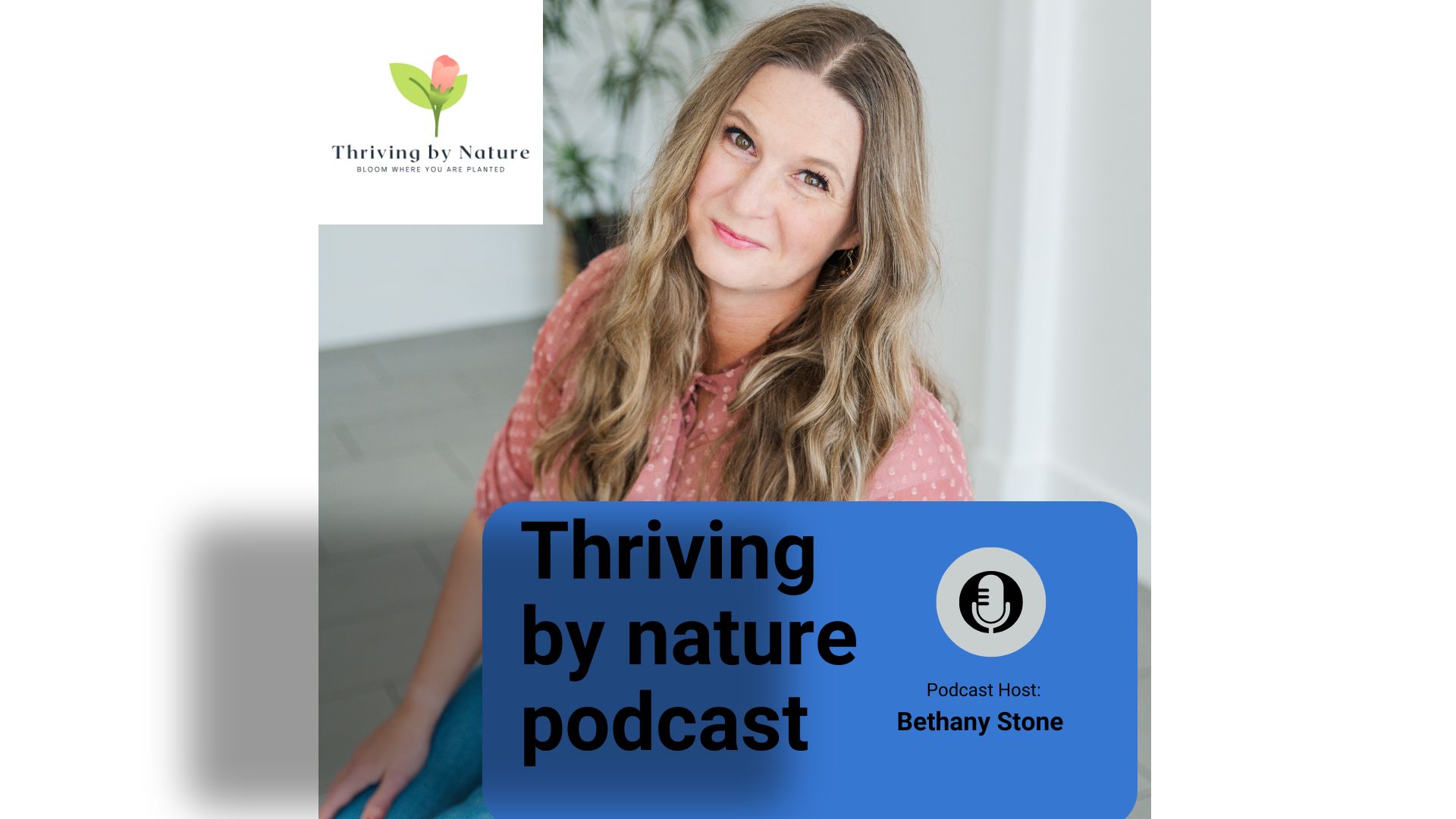
Speaker/Coach/Podcaster/Mom
Bethany Stone is a Master Mindset and Life Skills Coach who helps people rebuild their lives from the inside out through the power of self care, emotional awareness, intentional living, and personal responsibility. After overcoming early trauma and the long journey of healing from emotional abuse, Bethany learned how to nurture her life the same way she once nurtured children as a Montessori educator. Her twenty years of Montessori experience gave her a deep understanding that the environment we create shapes the way we think, feel, and grow. She now uses that same philosophy with adults, guiding them back to clarity, compassion, confidence, and a steady sense of self.
Bethany is the founder of Thriving by Nature, a coaching practice built around her five areas of self care which include emotional, spiritual, physical, social, and intellectual well being. She teaches simple practices that help people reconnect with who they are, trust their inner voice, and move through overwhelming seasons with more peace and intention.
Her work has helped clients recover from burnout, strengthen their emotional resilience, and create a life that feels supportive, authentic, and sustainable. She is also the host of the Thriving by Nature podcast and a popular speaker at conferences and retreats where she focuses on self care, mindset skills, and living with purpose.
Bethany brings an honest, grounded presence to every conversation. She believes healing is possible for everyone and that even small acts of self care can become powerful catalysts for change.