#70: Creator Economy Secrets 🚀 – How Ordinary People Build Million-Dollar Brands


Building a million-dollar business used to require massive venture capital, heavy payrolls, and a five-year commercial lease. Today, the blueprint has completely inverted. Thanks to the creator economy, ordinary people are building extraordinary businesses from their laptops by turning their specific knowledge into highly profitable digital brands. In this episode of the Smart Entrepreneur Show, we look under the hood of these million-dollar solo operations, breaking down the exact five-step sequence they use to build an audience, earn deep trust, and strategically layer multiple income streams without burning out. Timestamps Timestamp Topic 00:00 Introduction — the creator economy and the end of gatekeepers 00:41 The structural inversion: from physical leverage to digital leverage 02:03 The 5 growth accelerators: tools, global reach, digital products, AI, and zero startup costs 02:41 Why not everyone can do it — specific knowledge as your initial capital 03:21 The 5-step creator blueprint vs. the traditional VC gamble 04:14 The town square analogy: why the audience must come before the business 04:38 The psychological bridge — why trust cannot be hacked or automated 05:28 The 7 monetisation streams and why you should never build them all at once 06:37 Moving off rented platforms: driving traffic into an owned email newsletter 07:16 Year-by-year income layering: consulting → course → community 08:15 Why the creator graveyard is real — the 5 fatal mistakes 09:16 The vanity metric domino effect: how follower obsession destroys your niche trust 10:43 The 1,000 true fans rule: the surprisingly simple math behind a million-dollar brand 11:38 Full blueprint recap: knowledge, trust, owned assets, authenticity 12:24 Final thought: will human flaws and authentic connection be the only things AI can't replicate? Contact & Resources Listen to this episode on Podbean: smartentrepreneur.podbean.com Explore more podcasts: Find all podcasts at the PodFather Network Website: RoyCoughlan.com Need help running your business? If you are looking for a Virtual Assistant and get reliable support for your daily operations. Virtual Assistants: VA.world Communities: BrainGym.fitness Learn about a Private Networking Group in 50 US States & 39 Countries with 640+ Members: connectedleaders.academy #SmartEntrepreneurShow #CreatorEconomy #MillionDollarBrand #DigitalBusiness #PersonalBranding #OnlineBusiness #ContentCreator #Monetization #AudienceBuilding #Entrepreneurship #SpecificKnowledge #1000TrueFans #RoyCoughlan #PodFatherNetwork #VAWorld #BrainGymFitness #SmartEntrepreneur
Welcome to the smart entrepreneurs show the podcast, where we share smart ideas, strategies, and lessons to help entrepreneurs build better businesses. A few years ago, building a million dollar brand seemed possible only for large companies with huge budgets today. That's no longer true.
Thanks to the creator economy, ordinary people are building extraordinary businesses from their laptops, smartphones, and personal brands. Creators are turning their knowledge, skills, stories, and audiences into thriving businesses that generate income, impact, and freedom. In today's episode, we'll explore how the creator economy works and how everyday people are building million dollar brands online.
Let's get started. Yeah. Thank you for having me.
And, you know, welcome to all of you listening right now. I'm really excited to get into this because our mission for this deep dive is to basically look under the hood of these million dollar solo operations, right? We're going to strip away all the hype and give you the actual practical blueprint that these creators are using. Right.
Because it really is a massive shift. Okay. Let's unpack this.
In the past, if you wanted to build a business that reached that million dollar mark, you were looking at, um, physical infrastructure. Oh, absolutely. Heavy payrolls, big offices.
Yeah, exactly. There's a brick and mortar world. You'd have to sign like a five-year commercial lease, manufacture physical inventory, deal with global distribution networks.
And get past a dozen gatekeepers just to see if the market even wanted your product. Right. But today you're replacing all that with a digital storefront run entirely from a smartphone.
But, I mean, let me push back a little here. Is it really that simple? What do you mean? Well, I hear this narrative all the time that anyone can do it. And that sounds, um, a little suspiciously optimistic, you know, like are the barriers to entry really as low as they seem or is that just a myth? What's fascinating here is that the barriers really are that low, but the bottleneck is just shifted.
It's a complete structural inversion. Okay. An inversion how? Well, we've moved from an economy of physical leverage to digital leverage.
And the boom we're seeing right now, it isn't just because social media exists. We've had that for, you know, over a decade. It's the convergence of these five specific growth accelerators.
You've got incredibly easy access to creation tools, global reach via social platforms, the rise of digital products. And this is the big one, AI and automation. Oh, right.
The software doing the heavy lifting. Exactly. A solo operator can now use AI to edit video, draft, copy, manage customer service all at the same time.
Plus the startup costs are basically zero. So the financial friction is gone. Completely gone.
But to answer your question about whether anyone can do it, no, not anyone. Because when the cost of distributing information drops to zero, the volume of noise just goes through the roof. Right.
There's so much content out there now. Yeah. So the market stops valuing the loudest voice and starts valuing the most reliable filter.
Yeah. So the prerequisite isn't having money or being a charismatic entertainer. It's having valuable, specific knowledge.
I see. So your specific knowledge is your initial capital. Exactly.
That and the consistency to share it over time. That makes a lot of sense. So if the tools are accessible and the capital is your expertise, how do people actually cross the finish line? Because the timeline of this business model is, well, it's the complete opposite of a traditional business.
It really is. The traditional venture capital model is a massive gamble. Right.
You raise money, you spend a year building a product in total secret, and then you launch it and pour millions into marketing, just praying that people actually want to buy it. Which more often than not, they don't. Yeah.
But the blueprint of a million dollar creator runs completely in reverse. There's this five step sequence they all seem to follow. Yeah.
It starts with building the audience first. That's the golden rule here. The audience comes first and the business follows later.
Right. So step one is build an audience. Step two is create valuable content for them.
And step three is earning their trust, which is honestly the most critical part of the whole sequence. Yeah. And then step four is monetizing through products or services.
And step five is scaling with systems. You've got it. But skipping straight to step four monetization is fatal.
It's why most beginners fail. It's like, think about it like building a town square before you open a tavern. If you just build a tavern in an empty field, you're going to go bankrupt waiting for foot traffic.
That's a great analogy. Right. But if you host the town square, if you're the one giving people a space and providing value for free, the foot traffic is already there.
So when you finally open the tavern, there's a line out the door. Exactly. And that speaks directly to the psychology of this ecosystem because there's a psychological bridge between your content and your business.
And that bridge is trust. Which you can't just hack or automate. No, you really can't.
If you try to jump straight from getting someone's attention on a video to asking for their credit card, you're treating them transactionally. Oh, I hate that. It feels like getting a cold pitch from a stranger in your LinkedIn DMs.
Right. Your brain immediately puts up defensive shields, like who is this person and what do they want from me? Totally. Immediate resistance.
But the successful creators, they spend months, sometimes years, just giving away their best insights for free. They're proving their expertise in public. So by the time they do ask for a sale, it doesn't feel like a hard pitch at all.
It feels earned. Exactly. They transition from being a salesperson to a trusted advisor.
Okay. So let's say you've done that hard work. You've built the town square.
You've earned the trust. Where does this audience actually live and how does that trust turn into money? Because here's where it gets really interesting. We're looking at a staggering amount of diversification here.
Oh, massive diversification. That's the survival rule of this whole economy. Right.
Because the primary staging grounds are platforms like YouTube, TikTok, Instagram, LinkedIn. But you can't just rely on platform ad revenue. Our sources list seven distinct monetization streams.
Yep. And you need to build them up over time. Right.
So we're talking brand sponsorships, digital products, online courses, membership communities, affiliate marketing, coaching or consulting, and paid newsletters. It's quite the list. It is.
And honestly, isn't it overwhelming for an everyday person to be on all those platforms and manage seven different income streams at once? Like, that sounds like a fast track to burnout. Oh, if you tried to do it all on day one, it would be impossible. But if we connect this to the bigger picture, successful creators don't do it all at once.
It's a highly strategic sequencing process over a period of years. Okay. So how does that sequence actually play out? Well, think of social media platforms as the top of your funnel.
TikTok is an amazing discovery engine, right? It puts your face in front of millions of strangers. But it's terrible for deep relationships. Exactly.
And LinkedIn is great for professional authority, but the smartest creators know they have to move that attention off those rented platforms. Right. You have to own the asset.
Precisely. They drive that social media traffic into an owned asset, which is almost always an email newsletter. Because once they're on your email list, you aren't at the mercy of some algorithm change.
Right. You have a direct line to their inbox. And that's where the monetization sequence begins.
In year one, a creator might only have their newsletter and maybe one income stream, like high ticket, one-on-one consulting. Which is active work. You're trading time for money.
You are. But you're also getting paid to beta test your frameworks. You're learning exactly what your audience struggles with.
Then, in year two, you take those proven frameworks and package them into a scalable digital product, like an online course. Oh, wow. So you aren't just guessing what course to make? Never.
You build the exact course your consulting clients have already validated, and you set up an automated email sequence to sell it. Now you have two income streams. That's brilliant.
Then in year three, maybe you add a paid membership community for the people who bought the course. Now you have three. You're layering them slowly.
And that layering is a massive defensive mechanism. It is. The smartest creators never rely on just one single income stream.
If YouTube demonetizes you tomorrow, you still have your course, your consulting, and your newsletter. You're fully insulated. Okay.
But that brings us to a pretty stark reality. If the tools are basically free, and the blueprint is this clearly defined, why do so many aspiring creators fail? Yeah. The creator graveyard is very real.
It is. So what does this all mean? What separates the people who build these resilient brands from the thousands who just burn out and quit? It all comes down to the ultimate asset in this economy. Your personal brand, or more simply, your reputation.
Right. Because people trust people more than they trust logos now. Exactly.
Historically, consumers liked massive faceless corporations because size implied safety. But today, consumers are deeply skeptical of that. They want individual authenticity.
But building that reputation is delicate. And our sources outline these five fatal mistakes that just destroy it. Yes.
Focusing only on followers, quitting too early, copying others instead of being authentic, ignoring what your audience actually needs, and trying to monetize before trust is built. And the most destructive one seems to be that first one obsessing over vanity metrics. This raises an important question, though.
Why is checking your follower count so destructive? It acts as a psychological trigger that literally knocks over all the other pillars of your business. It creates a domino effect. Exactly.
Let's say you're an expert in supply chain logistics, right? Okay. Pretty niche. Very niche.
You're building a small, highly engaged audience on LinkedIn. But then you look over and see some creator making generic office comedy sketches, and they're getting millions of views. The algorithm is just feeding them massive numbers.
Right. So because you're tracking vanity metrics, you pivot. You stop sharing your deep expertise and you start making viral office comedy to chase those numbers.
So you copy others, which is mistake number three, and sacrifice your authenticity. You sacrifice authenticity and you completely abandon the actual needs of your audience, which is mistake number four. The supply chain professionals who trusted you are now just confused.
They're watching you do skits. Yeah. And you've broken the trust sequence.
You might get a spike in temporary followers, but they are passive scrollers. They aren't potential customers. And then when you finally try to launch your consulting service, crickets.
Absolute crickets. The new audience doesn't care and the old audience doesn't trust you anymore. So the monetization fails and the creator quits out of sheer exhaustion.
That is such a predictable cycle of failure. You chase the broad algorithm instead of serving the niche community. Which is why the ultimate takeaway here is that you do not need millions of followers.
You just need the right audience and the right strategy. This goes back to that concept of 1000 true fans, doesn't it? It absolutely does. The math behind a million dollar solo brand is actually surprisingly simple.
Let's hear it. If you have a digital course or consulting package that solves a massive, painful problem for a specific group and you price it at $1,000. You only need 1000 people to buy it in a year to hit a million dollars in revenue.
Exactly. 1000 people out of the billions of people on the internet. Finding 1000 people who deeply trust your reputation is incredibly achievable, but you have to ignore the vanity metrics.
You do. A million passive scrollers who just tap like will give you nothing but burnout. 1000 true fans will support a thriving, resilient business for life.
That completely reorients how we should measure success. It really does. So just to quickly synthesize what we've covered.
Please do. First, the convergence of global reach and AI tools means specific knowledge is your only real prerequisite. Second, you have to adopt the audience first blueprint.
Give away immense value, earn trust, and never skip straight to monetization. Build the town square first. Exactly.
Third, protect yourself by moving that audience off rented platforms and into own assets like a newsletter and diversify your income streams over time. And finally, fiercely protect your reputation by choosing authenticity over vanity metrics. Depth of connection will always outperform width of exposure.
I love that. Depth over width. You know, it really is a fundamentally more democratic era of entrepreneurship.
But it demands a completely different mindset. We talked earlier about how AI and automation are fueling this boom by making content creation frictionless. But I want to leave you with a final thought to mull over as you step back into your own business.
As AI gets increasingly better at generating slick, perfectly structured, flawless information at zero cost. Won't a creator's human flaws, their unique perspective, their hard earned reputation, and their messy, authentic personal connection soon become the absolute only things that hold any tangible value in the market. Hmm.
That's a powerful thought. Something to think about. If you enjoyed this episode of the smart entrepreneur show, make sure to follow the podcast so you don't miss future episodes and feel free to share your thoughts or experiences in the comments.
PodFather
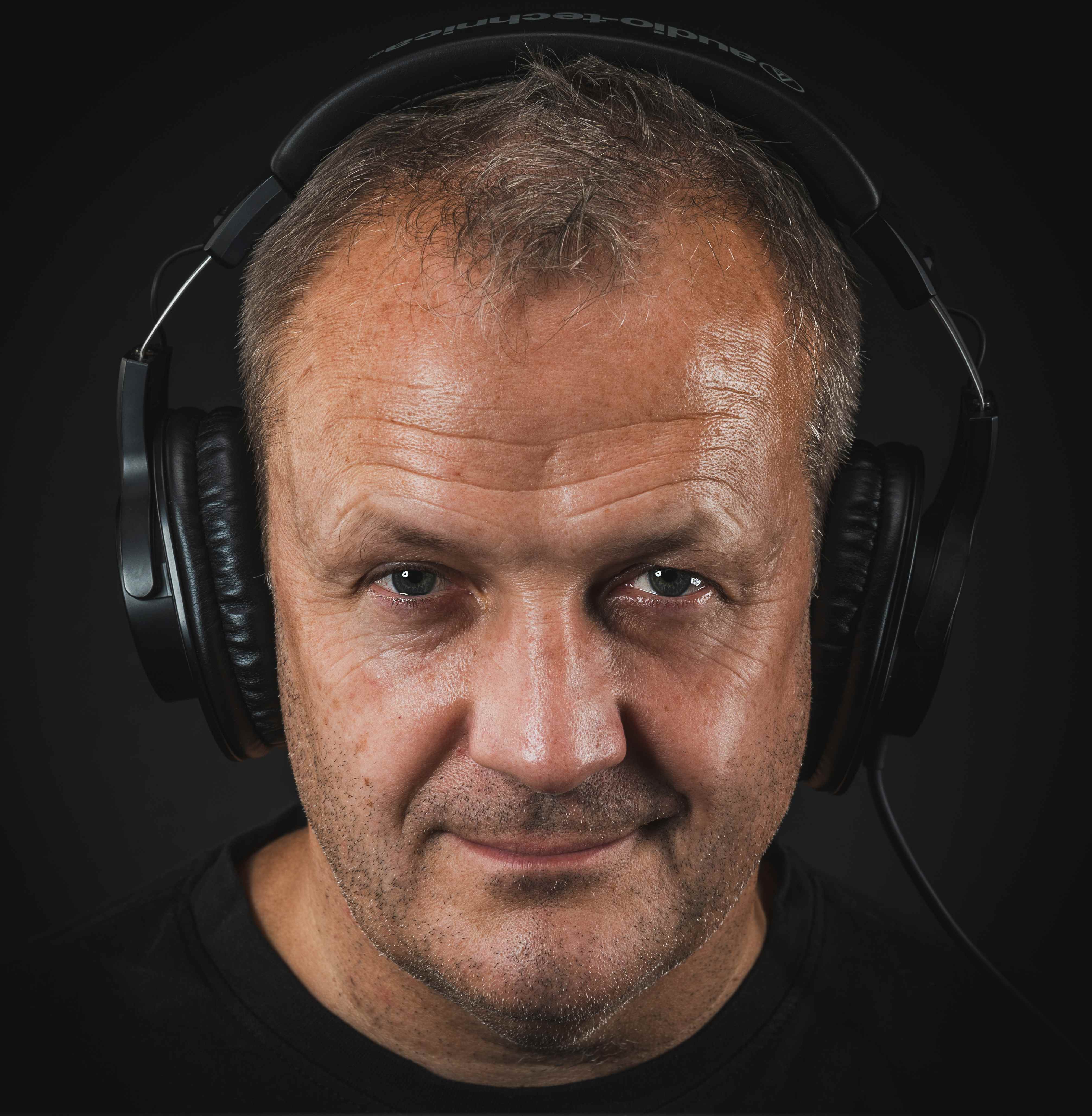
I am a serial entrepreneur who has founded 21 companies across 6 countries. Known in the industry as “The PodFather,” I am a business podcast coach and host who has launched eight successful podcasts—6 ranking in the Top 5%, with four reaching the coveted Top 0.5% globally.
Beyond podcasting, I co-founded brainupgrade.org a platform designed to boost cognitive performance and unlock peak mental potential. I am also the co-founder of VA.World, connecting businesses with exceptional Virtual Assistants tailored to their unique needs.
I also have Sponsorship ads available that are Dynamically inserted into my 8 shows