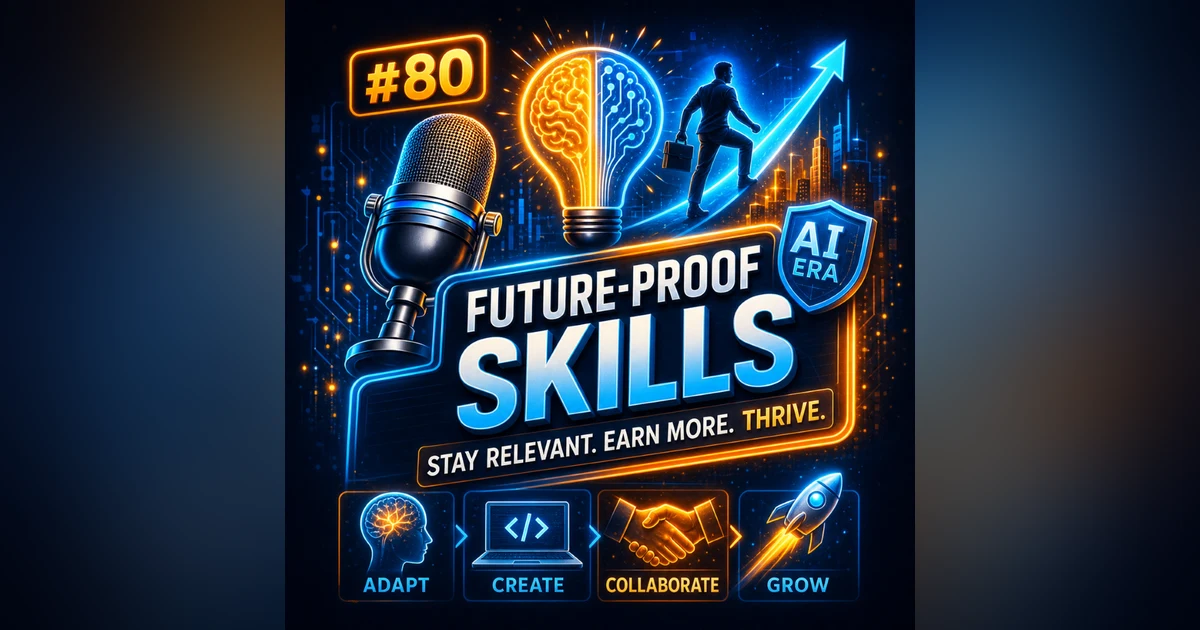
#80 Future-Proof Skills for the Next Decade Stay Relevant, Earn More & Thrive in the AI Era


When we hear the word "influence," we usually picture celebrities, famous entrepreneurs, or social media stars with millions of followers. But what if the most powerful form of influence doesn't require fame at all? In this episode of the Smart Entrepreneur Show, we decode the actual mechanics of "quiet power." We break down why the brain uses scale as a shortcut for passive attention rather than actual trust, how to manufacture durable influence from scratch by being relentlessly useful, and the exact blueprint for turning your highly specific knowledge into an undeniable reputation that scales your business — even if you have a tiny audience today. Timestamps Timestamp Topic 00:00 Introduction — decoding the actual mechanics of "quiet power" 00:54 The difference between seeking popularity and building durable trust 01:37 Why 1,000 loyal supporters are vastly more valuable than 100,000 passive followers 01:52 The local mechanic vs. the celebrity car enthusiast analogy 02:13 How the human brain processes scale (passive attention) vs. trust 03:10 Vanity metrics are hollow: true influence is measured by problems solved 03:26 The Billboard vs. The White Paper analogy 03:59 The engine of trust: asking "what problem can I help solve today?" 04:36 The fear of cannibalizing your business by giving away solutions for free 05:01 Why information is infinite, but synthesized insight is the actual scarce resource 05:11 The psychology of reciprocity: unbalanced ledgers and removing friction 05:41 The open-source software analogy: free distribution creates demand for the expert 06:14 Why you must narrow your focus to become a specialist (the floodlight vs. the laser beam) 07:04 Cognitive load theory: why people want to file you under a single, highly specific tag 07:46 The risk of being too clinical: why data alone doesn't build long-term trust 08:06 Authenticity vs. unprofessional oversharing (the "crying CEO" trap) 08:48 Curated vulnerability: sharing failures to provide an actionable lesson 09:15 Why lifting others up and making introductions cements you as the indispensable hub 10:12 The unsexy reality of consistency: the compound interest of small daily actions 10:38 The coral reef analogy: building an ecosystem one tiny polyp at a time 11:00 Why so many entrepreneurs quit right before the compound interest pays off 11:34 Subjugating your ego: suppressing the desire for mass attention 11:54 Final thought: how does trust translate across boundaries when you inevitably pivot? Contact & Resources Listen to this episode on Podbean: smartentrepreneur.podbean.com Explore more podcasts: Find all podcasts at the PodFather Network Website: RoyCoughlan.com Need help running your business? If you are looking for a Virtual Assistant and get reliable support for your daily operations. Virtual Assistants: VA.world Communities: BrainGym.fitness Learn about a Private Networking Group in 50 US States & 39 Countries with 640+ Members: connectedleaders.academy #SmartEntrepreneurShow #QuietPower #BusinessInfluence #PersonalBranding #Entrepreneurship #BusinessGrowth #AudienceBuilding #MarketingStrategy #TrustBuilding #CreatorEconomy #RoyCoughlan #PodFatherNetwork #VAWorld #BrainGymFitness #SmartEntrepreneur
#80 Future-Proof Skills for the Next Decade Stay Relevant, Earn More & Thrive in the AI Era
Welcome to the Smart Entrepreneurs Show, the podcast where we share smart ideas, strategies, and lessons to help entrepreneurs build better businesses. Today, we're going to talk about a powerful idea that many people misunderstand. When people hear the word influence, they often think of celebrities, famous entrepreneurs or social media stars with millions of followers.
But here's the truth. You don't need to be famous to be influential. In fact, some of the most influential people in business, communities and industries are not famous at all.
They simply know how to build trust, provide value and create meaningful relationships. In this episode, we'll explore how you can build influence in your field, grow your reputation and become someone people listen to, even if you have a small audience today. Let's get started.
It is such a vital topic, honestly. Yeah. And for you listening right now, we are really embarking on a deep dive today to sort of decode the actual mechanics of quiet power.
Right. Because whether you are, you know, a solo founder trying to gain traction or maybe a community leader or just an emerging voice in your field, this shift in mindset is huge. It's everything.
Moving from like seeking popularity to actually building trust. That's the ultimate competitive advantage, isn't it? It absolutely is, because, you know, popularity is fragile. It depends on algorithms that you have literally zero control over.
But trust, trust is durable. Yeah. When you stop engineering your actions just to get passive eyeballs and start providing undeniable value to the people already paying attention, your whole business changes.
OK, let's unpack this, because the sources we're looking at today completely dismantle the premise that influence requires mass scale. They really do. They argue that, you know, a thousand loyal supporters are vastly more valuable than a hundred thousand passive followers.
Which is mathematically and practically true. Right. But let me give you a relatable analogy for the listeners.
Yeah. Think of a local mechanic that everyone in town relies on versus, say, a celebrity car enthusiast on TV. Oh, that's a great way to look at it.
The celebrity has massive reach, obviously, but the mechanic has the actual influence to make you, you know, buy a specific brand of tire. But wait, I have to push back a little here. Sure.
Isn't a huge follower count at least a shortcut to gaining that trust? Like, if I see a million followers, I instantly think, oh, they must be legit. What's fascinating here is the difference between how the brain processes scale versus how it processes trust. OK.
How so? Well, the brain does use scale as a shortcut, but it's a shortcut for noticing someone, not necessarily trusting them. Ah, I see. Yeah.
Evolutionary psychology wired us to pay attention to large crowds or loud noises, right? Right. Because they usually meant a big threat or a massive resource. Right.
Right. So that's passive attention. A million followers makes you stop scrolling for three seconds because your brain registers a crowd.
But actually changing a consumer's behavior, getting them to trust you enough to buy something that requires overcoming a lot of friction. So passive attention gets you in the door, basically. Barely.
It just measures the radius of the noise you're making. Vanity metrics like likes and views, they just fail to measure real impact. Right.
They're hollow. Exactly. True influence is measured by problem solved.
If 100,000 people like your photo, you have noise. If a thousand people use your advice to fix their supply chain, you have real influence. I am.
That's such a critical distinction. It's like the difference between buying a billboard in Times Square and publishing a highly technical white paper. Oh, perfectly said.
Like the billboard gets millions of passive impressions, but nobody makes a complex business decision while walking through Times Square. No, of course not. But if that white paper is read by, say, just 400 people, but those people control massive IT budgets, the impact is huge.
And that's because the billboard relies on serendipity while the white paper relies on utility. Being relentlessly useful is how you manufacture trust from scratch. Which brings us perfectly to the actual engine of this whole concept.
Because once we understand trust is the goal, the next question is, well, how do we build it? And the answer is just being relentlessly useful. Right. The sources outline this engine as sharing valuable knowledge consistently.
You know, tips, experiences, lessons learned. Constantly solving problems. Yes.
The core mantra they suggest is asking yourself, what problem can I help solve today? It's such a simple but profound shift. It is. I mean, imagine if your only marketing strategy was just making your audience's day slightly easier.
It would completely change how you show up online. But, you know, if I'm an entrepreneur, I have to ask the practical question here. How do I balance giving away my best solutions for free with actually running a profitable business? Yeah, that's the immediate fear, right? That you'll cannibalize your own business.
Exactly. If I'm a consultant and I just hand out the blueprint for free, why would anyone hire me? Well, that assumes information is the scarce resource, but it's not. Information is virtually infinite now.
That's true. Google is free. Right.
The actual scarce resources are synthesized insight and successful implementation. To understand why this works, we have to look at the psychology of reciprocity. OK.
Tell me more about that. When you solve a problem for someone for free, you aren't just giving them data. You're removing friction from their day.
Oh, for sure. And human beings are deeply uncomfortable with unbalanced ledgers. When someone helps us, we inherently want to follow them and champion them.
Like we owe them one. Exactly. Plus, giving away the solution proves your credibility.
It establishes the competence that makes people want to work with you directly for the implementation. It kind of reminds me of the open source software movement. Oh, that's a brilliant comparison.
Because, you know, giving away the code for an operating system seemed insane to traditional companies. But by giving it away, they became the foundational infrastructure of the Internet. Right.
And then companies paid billions for experts to actually implement that free code. Exactly. The free distribution of the solution created the demand for the expert.
Yes. You haven't given away the farm. You've just proved your soil is the most fertile and now they want to buy your crops.
Here's where it gets really interesting, though. Because if you are trying to be relentlessly useful, you can't just try to solve everyone's problems. Oh, definitely not.
That's a huge mistake. The sources are super clear on this. You have to narrow your focus.
Become known for one thing, marketing, podcasting, fitness, whatever it is. Right. Because if you don't, you just become background noise.
Yeah. It's the classic jack of all trades trap that catches so many ambitious founders. They want to capture a larger market share, so they generalize.
Right. It's it's the difference between being a floodlight that just kind of weakly illuminates a whole yard versus a laser beam that can literally cut through steel. If we connect this to the bigger picture, narrowing your focus doesn't actually limit your potential at all.
It doesn't. No. It exponentially increases your influence within a specific domain.
Cognitive load theory shows us that people want to file you away in their brain under a single highly specific tag. Oh, like an API in software. Yes.
If a tool promises to do your accounting, email, payroll and graphic design, you assume it's terrible at all of them. It's totally bloated. Right.
But if it just does one specific thing like exclusively processing payments. Right. It becomes an industry standard.
Exactly. The more competent you become in one niche by continuously learning and improving, the more intensely people seek out your specific advice. You become the specialist.
Yes. People don't seek generalists for critical problems. But, you know, there's a risk here.
If you just act as a specialized API, just dispensing hyper-focused data, it can feel really cold. Very clinical. Right.
So to make that high-level expertise actually resonate, it requires a human element. Q-data doesn't build long-term trust. Exactly.
The sources talk a lot about authenticity, avoiding fake personalities, sharing genuine successes and being open about failures. Which is what prevents your influence from just being commoditized by a faster AI or something. Let me play devil's advocate for a second, though.
Go for it. Authenticity is such a buzzword right now. Oh, the most weaponized buzzword in business.
Truly. So how do you share genuine experiences and failures without, you know, accidentally veering into unprofessional oversharing? It comes down to intent and utility. Unprofessional oversharing is when you're demanding emotional labor from your audience.
You want pity or validation. Like the crying CEO selfies. Exactly.
That drains the trust account. True authenticity is curated vulnerability that actually pays a dividend to the audience. Curated vulnerability.
I like that. Yeah. You don't share a failure to say, look how hard my life is.
You share it to say, here's the systemic error I made and here's the exact framework I built. So you never have to make this mistake. Wow.
OK. So it still loops back to solving a problem. Always.
The vulnerability is the raw material, but the actionable lesson is the finished product. That makes so much sense. And the sources tie this authenticity directly to championing others.
Yes. Point eight in the material. Helping others succeed by sharing opportunities and making introductions.
Which honestly feels a little counterintuitive. If I'm trying to build my own reputation, why would I introduce my audience to another expert? Because lifting others up is the most genuine, ego free way to build a memorable reputation. Oh, I see.
Think about network theory. The most powerful node in a network isn't the one hoarding the data. It's the hub through which the most valuable connections flow.
So by making those introductions, you cement your position as the indispensable hub. Exactly. People might forget a random tip you gave them, but they never forget the person who opened a door that changed their career.
Right. They remember who helped them grow. When you become known as a connector, your influence scales exponentially.
OK. So we have this blueprint now. You narrow your niche.
You provide relentless value. You share authentic lessons and you champion others. It's a solid architecture.
But there's one final piece. The marathon. The unsexy reality of consistency.
This is where the actual filtering happens in the market. So what does this all mean for the day to day? Because the sources talk about engaging with people, replying to comments, doing small, repeated efforts over the long term. It's microscopic daily actions.
It reminds me of compound interest. Answering one comment today feels small, but it compounds over years into an undeniable reputation. Or even like building a coral reef.
Oh, I love that analogy. Right. Because it's built one tiny polyp at a time.
For a long time, it just looks like a rock in the ocean. Yeah. Laying down one obscure answer on a forum today feels completely insignificant.
But day after day, it becomes massive. It sustains a whole ecosystem. This raises an important question, though.
With a strategy this solid, why do so many people quit too early? Because of the digital feedback loops we live in. We are conditioned to expect overnight viral fame. Right.
We see someone hack an algorithm and assume that's the baseline. Exactly. So an entrepreneur starts sharing deep knowledge and for eight months, they only get three or four interactions a week.
And they feel like they're failing. They abandon the small daily relationship building efforts right before the compound interest of their quiet influence begins to pay off. They abandon the reef just before the ecosystem moves in.
Exactly. And it requires such a subjugation of ego. You have to suppress the desire for mass attention to be undeniably valuable to a very small group.
It's a discipline, but it's also proactive. You control the engine of your own influence by deciding how many problems you solve today. That is incredibly empowering.
It really is. But as we wrap this up, there's one final lingering thought I want to leave everyone with. We've established that true influence is built on deep trust in one specific niche, right? Well, what happens when you and your audience inevitably evolve and outgrow that original topic? Oh, wow.
If your influence is built entirely on that one narrow focus, how does trust translate across new boundaries when you have to pivot? That is such a profound question to mull over as you build your own quiet power. If you enjoyed this episode of the Smart Entrepreneur Show, make sure to follow the podcast so you don't miss future episodes and feel free to share your thoughts or experiences in the comments.
PodFather
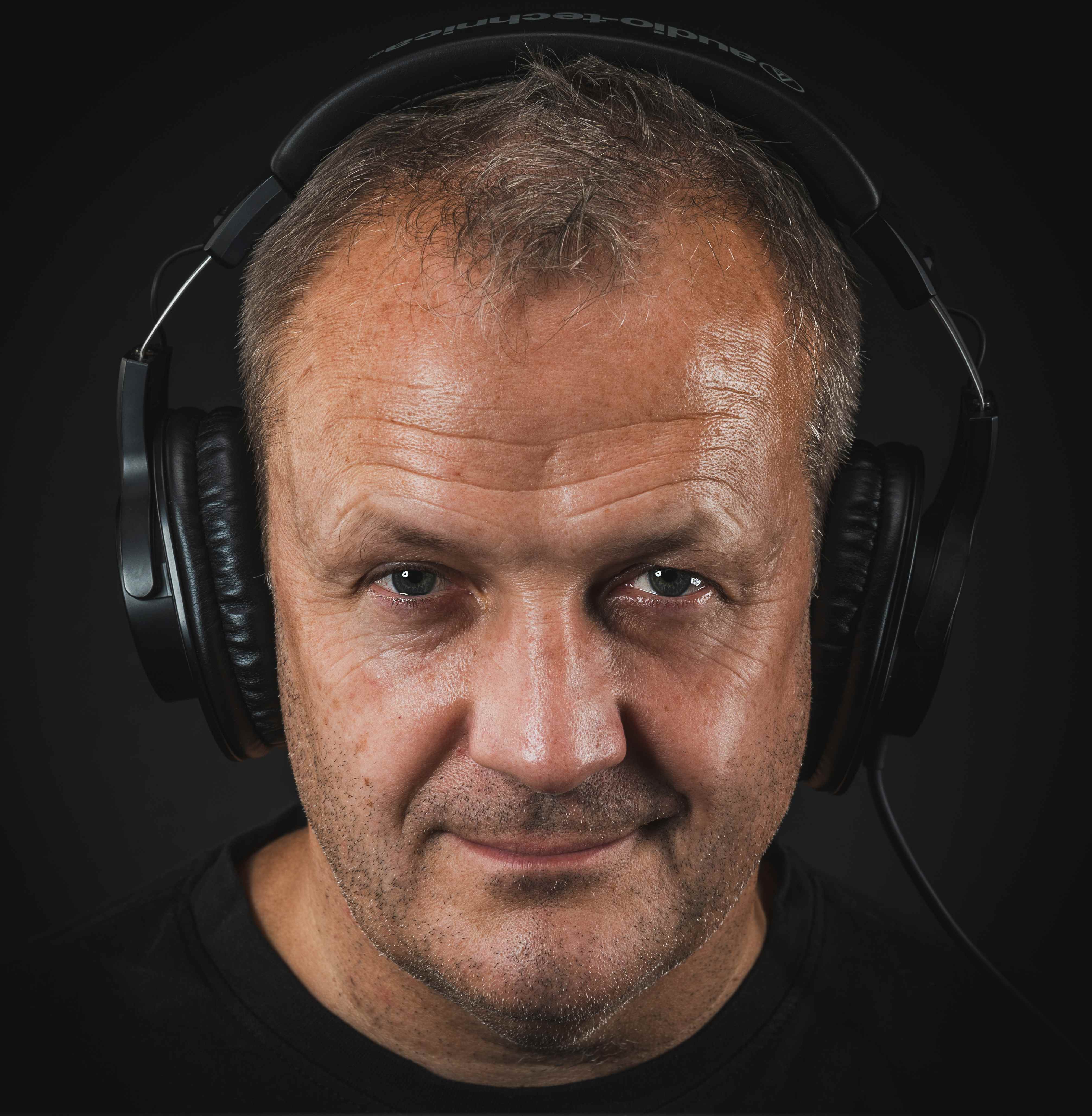
I am a serial entrepreneur who has founded 21 companies across 6 countries. Known in the industry as “The PodFather,” I am a business podcast coach and host who has launched eight successful podcasts—6 ranking in the Top 5%, with four reaching the coveted Top 0.5% globally.
Beyond podcasting, I co-founded brainupgrade.org a platform designed to boost cognitive performance and unlock peak mental potential. I am also the co-founder of VA.World, connecting businesses with exceptional Virtual Assistants tailored to their unique needs.
I also have Sponsorship ads available that are Dynamically inserted into my 8 shows