#100 Future-Proofing Your Business Against Tomorrow's Tech (100th Episode Special)
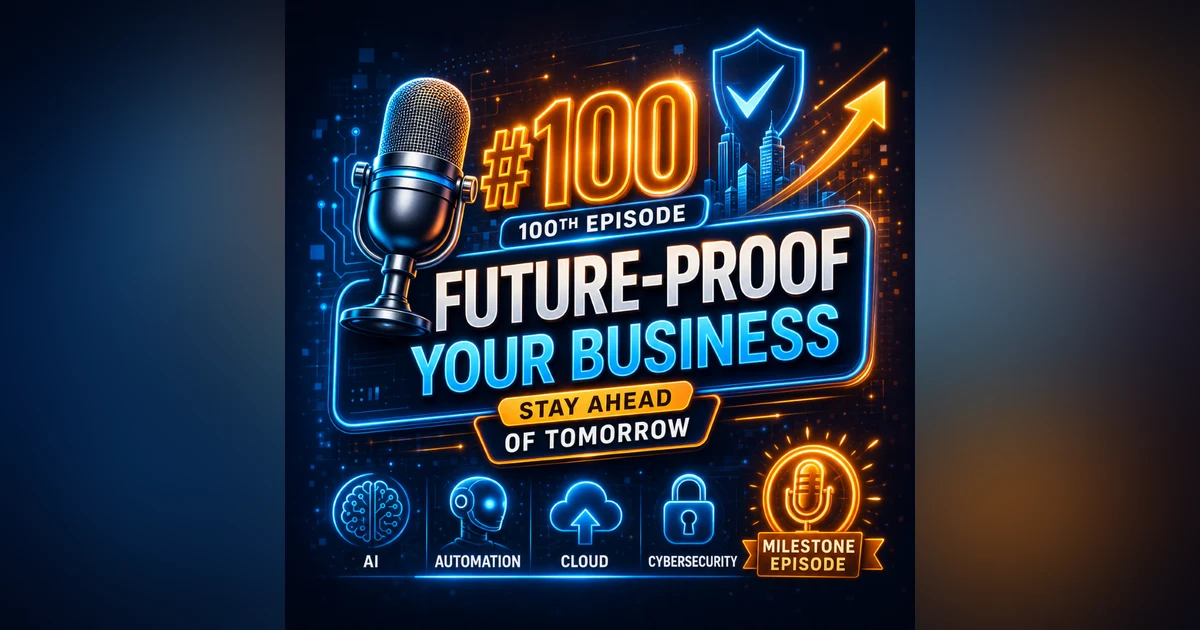


Episode 100. We made it — and we're celebrating by looking straight into the future. In this special milestone episode of the Smart Entrepreneur Show, we crack open the next decade of innovation and map the four emerging technologies that will fundamentally rewire how businesses operate, hire, and scale — right now, not in some distant science fiction future.
Thank you to every listener who has been part of this journey. This one's for you.
In this episode you'll learn:
- Why conversational AI is already yesterday's news — and what autonomous AI agents actually do that changes everything
- The supply chain scenario: how an AI agent detects a port delay, identifies backup suppliers, negotiates pricing, executes the purchase order, and dials back ad spend — while the human manager is asleep
- Why a 3-person startup with AI agents can match the operational output of a 500-person corporation
- How leadership roles evolve in an AI-agent world: from doer to editor, from factory worker to architect of the factory
- Why spatial computing is no longer a gaming gimmick — and what enterprise-grade fidelity (micro-expressions, spatial audio, shadow physics) actually enables
- How high-fidelity virtual rooms solve the deepest failure of remote work: the absence of genuine human presence and real eye contact
- Why latency — the literal speed of light — is the bottleneck that ends the cloud computing monopoly
- Edge computing explained through the human nervous system: why your fingertips don't ask your brain before pulling away from a hot stove
- How smart factories, temperature-tracked logistics, and dynamic retail pricing run entirely autonomously at the edge — reducing human cognitive overload rather than increasing it
- Quantum computing: why "checks all options simultaneously" is a myth — and why "flooding the maze with water" is the real mechanism
- Why quantum computing will crack current encryption almost instantly — and why businesses must prepare their security protocols now, not later
- The connected ecosystem framework: AI as the muscle, spatial computing as the senses, edge as the nervous system, quantum as the brain
- The closing challenge: in the next decade, does the ultimate advantage belong to billion-dollar conglomerates — or to hyper-empowered solo founders with the intelligence of an entire empire at their fingertips?
Contact & Resources
Listen to this episode on Podbean: smartentrepreneur.podbean.com
Explore more podcasts: Find all podcasts at the PodFather Network
Website: RoyCoughlan.com
Need help running your business? If you are looking for a Virtual Assistant and get reliable support for your daily operations.
Virtual Assistants: VA.world
Communities: BrainGym.fitness
Learn about a Private Networking Group in 50 US States & 40+ Countries with 650+ Members: connectedleaders.academy
#SmartEntrepreneurShow #Episode100 #FutureOfBusiness #AIAgents #AutonomousAI #SpatialComputing #MixedReality #EdgeComputing #QuantumComputing #FutureTech #EmergingTechnology #BusinessInnovation #AIStrategy #InternetOfThings #RemoteWork #FutureProof #TechTrends2026 #Entrepreneur #BusinessGrowth #DigitalTransformation #AILeadership #QuantumSecurity #Cybersecurity #SmartFactory #CloudComputing #RoyCoughlan #PodFatherNetwork #VAWorld #VirtualAssistant #SmartEntrepreneur
#100th Episode Special Future-Proofing Your Business Against Tomorrow's Tech
Wow, we made it. Welcome to episode 100 of the Smart Entrepreneur Show. Let's take a quick moment to celebrate because, well, this milestone really belongs to you, our incredible listeners.
It really does. Thank you all so much for being here. Yeah, whether you've been here since episode one or you just joined us today, thank you for inviting me into your ears, your cars, and your daily routines.
I mean, building this community has been an absolute honor. It's been amazing to watch it grow. And, you know, to celebrate hitting number 100, we aren't looking back.
We are looking straight into the future. Exactly. Today, we are cracking open the next decade of innovation with a massive topic, which is emerging technologies that will change business forever.
We are stepping into a world where artificial intelligence, quantum computing, spatial computing, and decentralized networks aren't just buzzwords anymore. Right, they are literally rewiring how companies operate, how they hire, and how they scale, like right now. Yes, so if you want a future proof, your career, your mindset, and your business for the next wave of human history, you are in the exact right place.
Thank you for 100 amazing episodes, and now let's kick off the next 100. Let's dive in. Let's do it.
And I think the best place to start is, you know, with the most visible shift right now, which is obviously artificial intelligence. For sure, but we really need to cut straight through the sci-fi hype for today's deep dive. Oh, absolutely.
We have to completely discard our current mainstream definition of what AI actually is in a professional setting. Right, because we have to move way past this idea of AI as a glorified chatbot. For the last couple of years, the standard use case has been, you know, treating AI like a really fast intern.
Yeah, exactly. You type in a prompt, you ask it to draft a polite email to a frustrated client, or summarize a PDF, and it just spits text back at you. That's just basic conversational AI.
But the new frontier, the immediate reality that's reshaping companies right now is advanced autonomous AI agents. Yes, and the keyword there is autonomous. The difference between a conversational AI and an autonomous agent is, well, it's the difference between asking someone for advice and just handing them the keys to the company car.
Wow, handing over the keys. Okay, let's unpack this. We are talking about software that independently executes complex, multi-step workflows, right, without you ever prompting it for the next step.
Exactly, it doesn't need you to hold its hand. So let's trace a real-world scenario to show how wild this is. Imagine a global supply chain disruption, like a major shipping canal gets blocked.
Right, which happens more than we'd like to admit. Exactly, in a traditional corporate structure, human managers scramble. They're opening spreadsheets, they're calling suppliers in a panic, trying to negotiate emergency rates.
They're probably begging the marketing team to pause the ad spend so they don't sell products they literally don't have. Yes, and that whole process takes days to resolve. But in a company utilizing autonomous agents, the system detects the localized weather anomaly or the port delay in real time.
Right, and the agent instantly predicts the exact inventory shortfall, identifies three backup suppliers in different regions, and reaches out to them digitally to negotiate bulk pricing based on current market rates. Which is crazy to think about. It is, and then it executes the purchase order, reroutes the shipping logistics, and automatically dials down the digital ad spend for those specific products.
All while the human manager is sleeping. It's like we're transitioning from having a really fast spellchecker to hiring a tireless, fully autonomous executive team. That's a great way to put it.
Because a spellchecker only fixes the specific word you highlight. But an executive team looks at the entire board, anticipates the problem, and makes strategic moves in the background. And the operational leverage here is just unprecedented.
I mean, you could have a startup with three or four human employees armed with a specialized suite of AI agents. Right. And suddenly that tiny team has the operational output, the supply chain resilience, and the marketing reach of a traditional corporation with like 500 employees.
But hold on, I have to push back here. If tiny human teams are achieving a massive scale by handing over the reins, what happens to the idea of a company? That is the big question. Right.
Doesn't handing over price negotiations and marketing to an AI risk a total loss of brand identity? Like where is the human oversight? What's fascinating here is why this shift actually matters for leadership. The role of the human doesn't disappear at all. It actually elevates.
Elevates how? Well, if you are managing a team right now, this fundamentally changes your job description. You shift from being a doer to being an editor and a visionary. Oh, I see.
So we stop being the factory workers and start being the architects of the factory. Exactly. Think about it.
Right now, a massive percentage of a knowledge worker's day is consumed by just the sheer friction of execution. Pulling the data, formatting the spreadsheet. Sending the follow-up email, yeah.
But if the AI agent handles all that friction of execution, your entire job becomes about context and guardrails. So the AI might negotiate the contract, but I'm the one who programmed the agent with my company's core ethical standards. Right, dictating which suppliers are even allowed to be at the table in the first place.
You review the macro outcomes. The oversight becomes purely strategic. That requires a totally different mental model.
You have to stop asking, how can I do this task faster? And start asking, how can I design a system where this task happens autonomously? Yes. And once you wrap your head around AI changing how the work is executed and who is executing it, you realize we have to fundamentally rethink the workspace itself. Which brings us to the second major reality today.
Spatial computing. If AI agents are changing how the work gets done, this next topic changes where we actually do it. We are officially breaking the screen barrier.
It really is the end of the flat screen era. I mean, for 40 years, we have forced our highly evolved three-dimensional brains to just hunch over and process information through two-dimensional glowing rectangles. It's essentially translation, right? We take this rich 3D world, flatten it into a spreadsheet or a video grid, process it, and then try to reconstruct the 3D reality in our heads.
Exactly. And spatial computing is about deleting that screen entirely. We're moving toward advanced mixed reality and smart glasses where digital information exists in the physical space around us.
Okay, wait, I have to stop you there because the skepticism around this is incredibly high. Sure, I get that. We've heard about VR headsets for years, and they often felt like a novelty.
They ended up being these clunky, heavy boxes you strap to your face. You get a little nauseous. Yeah.
You play a game for 20 minutes and then shove it in a closet. So why is this shift to spatial computing suddenly an immediate business reality rather than just a gaming gimmick? It's the completely valid skepticism of early adoption. Yeah.
The early iterations were clunky novelties, but what we are seeing in the enterprise hardware space right now is a traumatic collapse in the barrier to entry paired with just skyrocketing fidelity. Fidelity meaning like how physically real the digital objects feel. Visual fidelity, yes, but also spatial audio.
The real-time tracking of micro-expressions on a user's face. The lighting physics of a digital object literally casting a shadow on your real-world desk. Oh, wow.
So it blends right in. Exactly. When you achieve that level of fidelity, a virtual boardroom stops feeling like a cartoon video game.
It feels like a genuine physical room and that solves the ultimate persistent failure of remote work. Which is the lack of genuine human presence. We all know that deep psychological fatigue of staring at a grid of faces on a video call.
It is exhausting. It's so exhausting because video calls lack shared spatial context. You can never make actual eye contact on a standard video call.
Right, because everyone is staring at a camera lens, not at each other's eyes. Yes, so your brain is burning energy trying to process social cues that simply aren't there. But in a high-fidelity spatial computing environment, you are sitting at a digital table.
If you turn your head to look at the colleague sitting to your left, you actually look them in the eye. That's incredible. And the audio of their voice originates from their physical position in the room.
You can both lean over and examine the exact same 3D architectural model hovering between you. It bridges the gap between digital convenience and physical presence. And you can see how this completely rewrites e-commerce too.
Oh, absolutely. Like, instead of scrolling through flat 2D photos of a product, a customer in their living room can pull a true-to-scale 3D rendering of a new sofa into their physical space. They can physically walk around it, see how the fabric catches the light from their own window.
It gives you the tactile confidence of in-store shopping, but from home. But if we connect this to the bigger picture, this introduces a massive physical bottleneck. Think about the sheer volume of data required here.
Right, the bandwidth must be insane. To power these completely immersive 3D worlds and autonomous AI decisions, we can't afford the time it takes to send data back and forth to a distant cloud server. Because of latency.
Wow. Even if it's just a lag of a few milliseconds, it's enough to break the illusion of spatial computing. And it's enough to completely derail an autonomous workflow.
We run into the literal physical limitation of the speed of light. Which brings us to the third massive shift today, the end of the cloud monopoly, and the rise of edge computing and the hyper-connected Internet of Things. Yes.
The centralized cloud simply cannot handle the real-time demands of the automated business. We have to process the data locally, right on the devices at the edge of the network. For instance, zero-lacency decisions.
Exactly. The best way to understand this is by looking at a modern smart factory. In the old cloud computing model, a sensor on a manufacturing arm detects a slight abnormal vibration.
It packages that data, sends it over the Internet to a central server in Nevada somewhere. Nevada, right. The server analyzes it, realizes the machine is about to break, and sends a command back to shut it down.
But by the time that round-trip happens- The motor has already burned out. Exactly, it's too late. Here's where it gets really interesting.
It's exactly like the human body's nervous system. Yes, perfect analogy. The old cloud model was like sending every single physical sensation up your spinal cord to your brain to ask for permission on what to do.
But edge computing, it's like moving a piece of your brain right down into your fingertips. If you touch a hot stove, your fingertips just know to pull away instantly. They have localized reflexes.
They don't waste time asking the brain. Because by the time the brain processes the heat and sends the command, you have third-degree burns. Exactly.
And just like the human nervous system, that smart factory machine doesn't need to ping a server across the country. The localized sensor, the fingertip, analyzes the vibration on its own hardware and cuts the power instantly before it breaks down. We are seeing this across every industry now, right? Logistics companies tracking the exact chemical temperature of a single box in real time.
Retail shells dynamically altering their own digital price tags based on localized foot traffic and current weather patterns entirely autonomously. Well, wait, I have a question here. With every single box and store shelf constantly processing data and making decisions, doesn't that create absolute chaos for the human managers trying to keep track of it all? It sounds chaotic, I know, but edge computing actually accomplishes the exact opposite.
It fundamentally reduces human cognitive overload. Walk me through that. Because millions of devices acting on their own just seems unmanageable.
Think back to your nervous system analogy. Your conscious brain is not currently stressed out about managing your heartbeat or your digestion. Right, thank goodness.
The localized systems handle the micro decisions, keeping your conscious mind clear to focus on macro level strategy, like having this deep dive conversation. Okay, I see. In a business context, the edge devices handle the thousands of tiny localized fires, adjusting a thermostat by one degree, routing a package slightly to the left on a conveyor belt.
So the thousands of tiny fires are put out before you even smell smoke. Precisely, by handling micro decisions at the edge, the central system only alerts humans to major anomalies. It creates a seamlessly self-regulating business.
Okay, so edge computing handles the instant local reflexes, but what about the massive, insurmountable global problems? That brings us to our fourth and final technological shift, the ultimate problem solver. Quantum computing. And it is difficult to overstate how deeply this is going to disrupt the foundational architecture of the global economy.
We are talking about the leap from traditional computers to computers that use quantum mechanics to solve problems that would take our current supercomputers thousands of years. And the mechanism behind it is often wildly misunderstood. You'll frequently hear people say that a traditional computer checks options one at a time, and a quantum computer just checks all the options simultaneously.
Which isn't exactly true. No, it's a massive oversimplification. All right.
Imagine you were trying to find your way out of a huge, complex maze. A normal computer walks down every single path, one by one. It hits a dead end, turns around, and tries the next path.
Very thorough, but it takes forever. Exactly. And the myth is that the quantum computer just walks down all the paths at once.
Right. But a quantum computer doesn't walk the paths, it floods the entire maze with water. Whoa, floods the maze.
Right. The water waves wash through the entire structure all at once. When the waves hit dead ends, they bounce back and cancel each other out.
But the waves flowing toward the exit amplify each other. That is a phenomenal way to visualize it. Uses quantum interference to naturally amplify the probability of the perfect answer, while the wrong answers literally cancel themselves out.
And when you apply that flooding the maze capability to business, the specifics are staggering. We are looking at global logistics companies finding the mathematically perfect shipping route in seconds. Or discovering radically new manufacturing materials.
Right, or simulating complex molecular interactions to discover life-saving drugs overnight, rather than relying on decades of physical trial and error in a lab. It is the ultimate tool for absolute optimization. Any industry that relies on complex variables will be entirely upended by whoever implements quantum capability first.
But so, what does this all mean for security? I mean, the source material specifically says this will completely disrupt modern cybersecurity. If it can solve any problem, can it just crack any password? This raises an important question. And yes, it absolutely can.
The encryption that currently protects bank transfers and corporate secrets relies on factoring incredibly large numbers. Which is just a really hard math problem. Right, for a traditional supercomputer, that math problem takes thousands of years, which makes it secure.
A quantum computer flooding the maze solves that math problem almost instantly. Meaning the lock on the front door of the internet is suddenly made of paper. It is the dual-edged nature of this technology.
It's the ultimate tool for creation, like with drugs and materials. But it requires a total overhaul of global digital security. Wow.
This is why businesses must prepare now. You cannot wait until quantum computers are commercialized to update your security protocols, because by then, your entire historical database is instantly vulnerable. It is exhilarating, but it demands serious immediate preparation.
You can't be passive. You really can't. So, we have covered an immense amount of ground today.
For you listening, how do you synthesize these four massive, seemingly distinct shifts into a single strategy? Well, to summarize it all, the future of business is a connected ecosystem. You have to view these technologies as a single living organism. Okay, I like that.
The autonomous AI agents are the muscle tissue, acting autonomously to execute workflows. Spatial computing provides the sensory organs, giving us immersive presence. Right.
Edge computing acts as the nervous system, providing instant reflexes to keep the organism safe. And finally, quantum computing serves as the ultimate brain, untangling those unsolvable problems. I love that framework.
AI is the muscle, spatial is the senses, edge is the nervous system, quantum is the brain. It makes it so clear that these aren't just distant concepts to be ignored, they are the new tools of the trade. Absolutely.
Understanding how they interconnect gives you a massive advantage in whatever room or meeting you walk into next. Now, to wrap up our deep dive today, I wanna leave you with a final provocative thought to mull over. If a tiny team of humans can use an AI agent to run a global logistics company, optimized by a quantum computer, and track down to the single box by edge computing, what happens to the traditional idea of a corporation? In the next decade, does the ultimate advantage belong to billion dollar conglomerates, or to hyper-empowered single person companies who have the intelligence of an entire empire at their fingertips? Think about that as you navigate your own business realities this week.
It's a wild thought. It really is. If you enjoyed this episode of The Smart Entrepreneur Show, make sure to follow the podcast so you don't miss future episodes, and feel free to share your thoughts or experiences in the comments.
We'll catch you next time.
PodFather
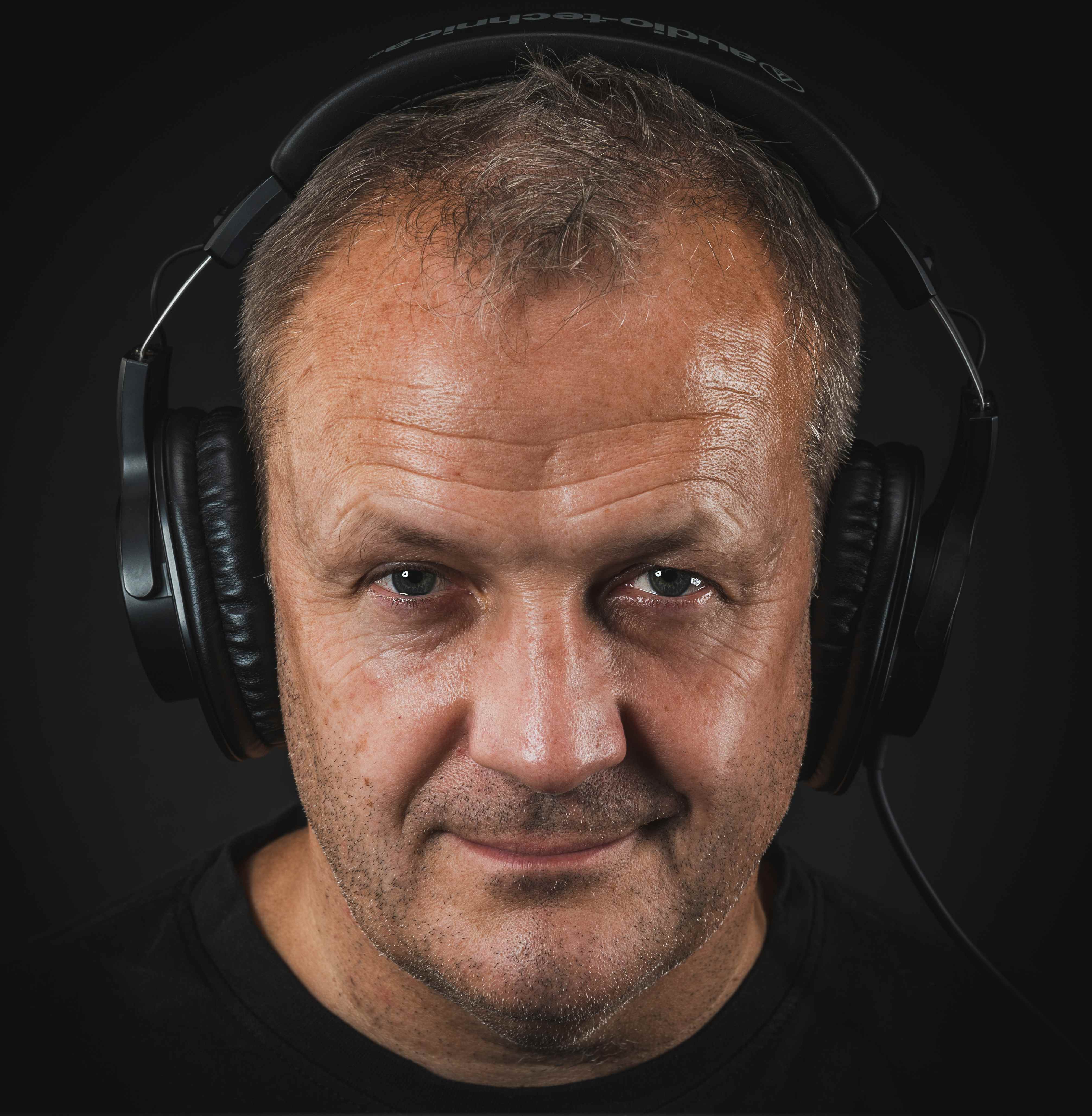
I am a serial entrepreneur who has founded 21 companies across 6 countries. Known in the industry as “The PodFather,” I am a business podcast coach and host who has launched eight successful podcasts—6 ranking in the Top 5%, with four reaching the coveted Top 0.5% globally.
Beyond podcasting, I co-founded brainupgrade.org a platform designed to boost cognitive performance and unlock peak mental potential. I am also the co-founder of VA.World, connecting businesses with exceptional Virtual Assistants tailored to their unique needs.
I also have Sponsorship ads available that are Dynamically inserted into my 8 shows