Every Bodily Function
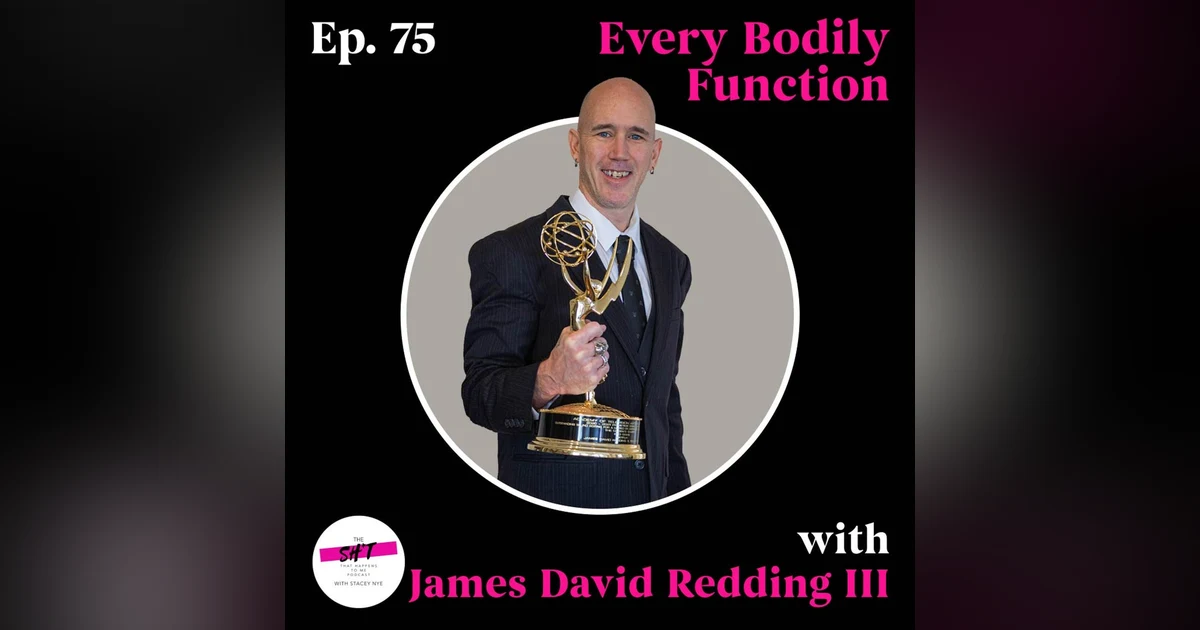

In Episode 75 of The SH*T That Happens to Me, Stacey sits down with award-winning Sound Designer James David Redding III to hear about the many crazy ways he's created sounds in film and television.
New Podcast Up Here Click the link to Listen:...


In Episode 75 of The SH*T That Happens to Me, Stacey sits down with award-winning Sound Designer James David Redding III to hear about the many crazy ways he's created sounds in film and television.
New Podcast Up Here Click the link to Listen:
Straw Hut Media Up Here Podcast
From Straw Hut Media
0:00 Hey, everyone, Welcome to season four of The Shit That Happens to Me Podcast. I'm your host, Stacy Nie. I've been away for a while. Did you miss me? I really missed you all so much. I was on a little hiatus doing another podcast called Psychoanalyzing the Patient, which was a companion podcast to the Hulu show The Patient. It was so much fun with my co host Lindsey Jones. We hope to be doing more in the near future, so stay tuned for that. But now let's talk about some shit. Emmy Award winning sound designer and sound effects editor James David Reading the Third is on the show today. You may know him from shows like The Americans and The Queen's Gambit. I met James when he was a guest on Psychoanalyzing the Patient. He has done numerous shows and films in the past, and I was thrilled that he was willing to talk to me today for episod SO seventy five, Season four of The Shit That Happens to Me Podcast.
1:04 He tells us some really interesting stories today, like about how they get the sound effects of bodily functions on different shows, and how the sound of a t rex made us way into a very serious documentary. So just a reminder, subscribe, rate, and review this podcast, The Shit that Happens to Me Podcast, Share with your friends, tell everyone you know, and now onto the show. Shit happens, bad shit, good shit, crazy shit, and it usually happens when we least expect it. So tuned into The Shit that Happens to Me Podcast and hear me and everyone I meet tell their shitty stories. You'll laugh, you'll cry. You probably won't cry. Why would you cry? These are mostly funny stories. You'll learn a few lessons, probably not. It's definitely not that kind of podcast, but you will have a great time. Honestly, you can't make this shit up. Hi, everyone, welcome back to the Ship that Happens to Me Podcast. We are back after a brief hiatus while I had a little fun on the side doing a new podcast called Psychoanalyzing the Patient, which is a Hulu show.
2:20 The Patient did a companion podcast for that, so if you haven't listened to that, you should definitely go check that out after you listen to me today. So for our seventy fifth episode, I've been doing this podcast for three over three years. Seventy five episodes I have on Emmy Award winning sound designer and sound effects editor James David reading the third. I am so excited to have him here. He has worked on some of my favorite television shows, including The Queen's Gambit, The Americans, Thirty Rock, Alaska Daily, and most recently The Patient. So James was a guest on Psychoanalyzing the Patient and hinted during that conversation that he had many crazy stories to tell. So I reached out and here he is. Welcome, James, thank you, thank you for having me. Stacy. How you doing today? Doing pretty good?
3:21 You know. I've had a couple of weeks off, which has been nice to sort of regroup. I haven't had a break in about a year, so it was kind of nice to sort of regroup and refresh and everything. And I actually go back into the studio tomorrow for a couple of days to do another episode of Alaska Daily. Really, I'm so excited because I was watching that show and then it ended and it was on a cliffhanger, I might add, so it's coming back. Yeah, that was the mid season break. I think they start airing new episodes in February. They're finishing shooting now. I think actually they finished last week. They finished shooting and we're doing episode seven of season one starting tomorrow, and then we'll finish up the season in January and February, just as the new episodes start airing.
4:14 So oh good, I'm so excited. I'm also I'm going to Alaska in July, so I'm really appreciating also, just like you know, the location and everything, so that's great. Alaska is Alaska is gorgeous. I have family that lives in Fairbanks, and I went when I was in high school and it is such an amazing place to me. We got to go hiking and climbed up mountains, and my cousins have these what they call campsites, but they have log cabins on them, but they're miles outside of civilization, just in the woods, and the only way to get to one of their cabins is via riverboat, and the other one you can only get to via a TV. And it was is such a cool experience. So oh it sounds wonderful. I can't wait. Thank you, thank you. So um.
5:09 Maybe first you can tell the listeners exactly what a sound designer and sound effects editor does sure. So when you watch any sort of media, especially with picture, all the sounds in there are somehow controlled, and part of my job is controlling those sounds. On a television show, the only thing that is captured live, or the only thing that they're trying to capture live, is the dialogue from the actor's performance. But everything else we pretty much add in afterwards, including ambiances, birds, wind, leaves, water, We put in all the door opens and closes, cars running, you know, dogs barking outside, dogs barking inside. We control all of that, and by sound design, we're designing the way that audio affects your visualization.
6:06 Audio plays a big part in our perception of the world, and we're sort of manipulating that so that you believe that this fake world on television is real, and so that that's probably the easiest way I can explain it without sort of getting too technical and getting too audio geeky. Well, I mean, I don't. I didn't know anything about audio, and I am still not an expert at all, not even a novice, But I was really fascinated to hear about all the ways in which audio is added after the fact. So one of the stories that you told us well. One of the questions that I asked you about being on the patient was all of the times that I'm sorry to bring this up again, but it's I think one of the funny things to talk about is how Donald Gleason kept going into the bathroom and peeing, and so we were asking about did he really pee in the toilet?
7:10 How did you get that sound of peeing in the toilet? And that was all added afterwards in various different ways. Some of it wasn't even peeing correct correct the peace sound for the patient. Some of it was peen. None of it was Donald's peen. None of it was done on set. It was all done afterwards. There's recordings that I have from around my house. My daughter and I also took a bucket of water and poured it slowly into a toilet to get the sound. There's other sound libraries that had peen in it. And really what it came down to with, especially with the patient, was getting the fuel right for the fact that he would walk into another room, close the door and go into a bathroom behind that door, and it wasn't that he was walking into a bathroom. He was walking into a bedroom that had on suite off the side, So it was trying to get the right feel for that a distance as far as and going through a door. And then there was also the whole fact of that the jay's for the show. The show runners for the show UM wanted it to be sort of an extended as they used to call it, a young man's pee, because that was part of the story. And so we had to nail down the right length of how long it was going to be. We had to nail down the right flow to say that it was a young person and such like that. So we most of it was recorded and then cut in later.
8:37 That That was one of my jobs was recording and cutting in different ways of peeing sounds, and we didn't use the same one each time. I will admit that we didn't use the same recording each time because we wanted different lengths just to play with time in there, and also just to give different perspectives sometimes so that it wasn't like, oh, they're just using the same sound over and over again, because your brain does pick up on that. In a television show, you sort of and sometimes you want that sometimes you want to set up like, oh, it's the same sound because it's being used as a marker, right, And we did do that with the P as far as timing of the P because that was a device in the show that we used to play with time episode six. And so sometimes you want to be the same thing, sometimes you don't. And to me, I always like sort of refreshing the sounds and having not exactly the same but similar.
9:31 So I probably recorded myself just for that show at least thirty different urination type sounds. What thirty different urination type sounds? That's a lot, and how many compared to some things that I record. Some things I record like doors. I have so many different sounds of doors, because you just never know what's going to fit right for what you need. So tell me then, like what's some crazy things that happen or what could go terribly wrong, or you know, tell me some disasters or something. Sure, well, usually you know, most disasters that are worth telling and happen with other people.
10:22 I find disasters that happen to yourself are just sort of sad a little bit to myself. That's how I always feel about it. So usually the disasters that come about with other things are usually in the realm of adr which I'm assuming most people don't know what that is, but that is automated dialogue replacement, which we go and replace dialogue in a scene from a show or a movie. And it could be before technical reasons. You know, if they were filming outside of an airport and an airplane flew overhead and you couldn't hear the actor, but their facial expressions were right, we just want to replace their voice. Or it could be for story reasons. We need to change something in the story, character's name, or the time that was mentioned or a date that was mentioned, so we'll replace them and have the actor come into a studio and give us that line again with a slight change, or just for the technical reasons. And usually, you know, some funny things can happen during that time. You know, you can have the actors have to get back into you know, say their character has been running well, now we have to get them winded again, so you have to ask them to run in place or do some exercise. I had one actor come in that was doing voiceover for a documentary and they knew that their stomach grumbled a lot, and they feel bad about that because the stomach grumble will ruin a take, and so they came in. They actually have a pillow that they always brought. I thought this was the sweetest thing because they were really
11:54 excited about doing the voice over and they took this pill and they would put it over their stomach to quiet their stomach well so that you wouldn't hear it on the microphone. But we've also had some you know, terrific horror stories where and it's by no fault of anybody in the session. It's just circumstance. When we ask actors to do their job, we're asking them to be very vulnerable. We're asking them to portray a character and portray that person sort of inner being that you know, we're putting them in a very vulnerable state. And sometimes it's really hard for them to get back to that state, especially if they've shot you know, months ago, and now they have to come back and redo it. And so I've had actors come in and just completely break down because they feel like they can't get back to the spot that they need to. I've had them, you know, they're trying, and sometimes we do multiple takes, right we'll you know, you would love to get it in maybe three takes, but most the time, you know.
13:00 I've had one time where I was shooting an ADR with an actor and one line took twenty five takes. Oh, because they have to get the sound of their voice back, they need to get the emotion back to where it needs to be. They're trying to get it back and sync with their own lips so that we believe that it's actually happening on screen. And so you're you're putting them in this vulnerable place and for all intensive purposes. They are in a fish bowl. They're in a soundproof booth that has a glass window, and everybody is looking at them through this window. So they're just sort of buy themselves in this space, and we keep asking them for more and more, and so I've seen some people just break down where they've completely lost it. I had one actor who after a long day of shooting, they put in probably a twelve hour day on set and then had to come and do about four hours of ADR afterwards for a previous episode of a TV show.
14:03 They were not having it. And there's nothing quite like somebody that you don't really know. You know the character because you've seen them so often, but you don't really know the person, and they come in and they're tired and they're just in a bad mood. And this one actor came in. We were connected with studio across the country and the producers were on the line for the connection and the actor came in. I said, oh, the mic is live so that you can immediately start talking with the studio execs. And they walk in. They just start going, fuck you, you fucking fucks. I'm fucking tired and I'm fucking tired of this shit. I cannot deal with this. And they're like, hey, how's it going, body, and I'm like, he can't hear you yet. He hasn't put on the headphones and they're like oh, and he's still going off. And then he finally puts on the headphones and they're like, hey, how's it going.
14:54 He goes fuck you and he throws the headphones and walks out. We were like, hey, you know, we'll get through this. And I'm like he walked out. Yeah, he coming back, and I'm like, I don't know, and the like nope, Like I'm not gonna go chase after somebody that that's that's that angry, you know. I had one time where Uh, an actor and a director just did not get along at all. And um they the actor came in to fulfill their adr obligation, but did not make it easy. And they fought every line, and they, you know, wanted reasoning for why are we doing this line? Why?
15:45 And most of the lines were they were all it was nothing to do with performance. It was all technical reasons. There was a noise that we couldn't get rid of, that we needed to get rid of, and uh, yeah, it was just it was a it was a four hour fight to get them to reproduce a line. So this is something new that I'm learning again that So you might have an actor do let's say ten minutes of dialogue and you're telling me that there might be a minute of it in the middle that something I don't know, a glass dropped or something like that, and so you have to just rerecord that one minute of dialogue and then you have to stick it in or are you just going to do the whole ten minutes again or you don't know yet, We don't know yet. Usually if they've shot it on set, if it's something like a long monologue or something like that, hopefully they have multiple takes that they did on set, and hopefully we can just take one of those other takes and take the word that is getting obstructed and fix it. That is the best case scenario. Otherwise we will have the actor come into the booth and rerecord, and we try to get as little as possible to fix. It's also just for ease for the actor, but sometimes in order to make it believable, we have to get what we call handles a little bit on either side of the problem so that
17:15 we can blend it easier. Part of it so that the actor can get back into the character and get into the flow of how they were talking. And part of it also is just for sonically, for us to use our tools to manipulate it so that it matches better. So hopefully we don't have to do the full ten minutes. Again, yeah, for everybody's stake. But and even even if we do the full ten minutes, we sometimes whittle it down to just taking Sometimes we just take syllables to fix things. Huh Okay. And then you said that they're like in a sound booth all by themselves doing this, so they are not I mean, might they be with their co star or something? Or no, Nope, at this point that it's it's just them just because we're trying to get their dialogue as clean as possible. Okay, so we try not Sometimes depending on the ADR stage, sometimes the director and mixer might be in the same room with them and not looking at them through a piece of glass. But it is just them reacting to what has already been shot on screen. So they're listening to the scene as it was shot and they're trying to respond to it as they did on set, just to replace a line of dialogue. And so you call this their ADR obligation. So they know when they are chosen to be in a film or a TV show that this is almost inevitable correct, depending on their contract. In most cases, usually the contract does stipulate that they have to
18:48 do be obligated to do some ADR if necessary. It's not like if everything went down fine and we were able to fix it all, then they don't have to do any AD. Yeah, you know, and that's what we really try to go for. Oh, that's what most of us strive for because of the fact that it's usually a better performance that way if we can fix it. You know, everybody always likes what happens on set. It's also technically just usually better because they're in the same space as the lines. Yeah, yeah, so it works better technically sonically for you. Yeah, And I would think it would just be more authentic. And you know, I'm just imagining, like you have to match up, like the words with the way their mouth is moving and because they might do it differently the second time. And wow, that is really I mean, obviously that's really technical.
19:41 Some actors do see it as a good way of improving their performance, right, because sometimes they feel like, oh, I could have hit that note a little bit better as far as you know, timing and stuff like that. And as far as sync, we do have some leeway with how we can manipulate the syllables to make them match up with the voice with the lips. So sometimes sync is not as important as much as the motion. But there's so many parts that can play because then what's even gets even trickier. Is all right, So now we've done the adr, we've recorded it, we've edited it in, we've mixed it in, and now we have to show it to the director or the producer or whoever has the final approval.
20:22 And sometimes just because they know that we've done it. They go, oh, that's a d R. I don't like it, and you're like, well, because and it's more of a psychole lot. Sometimes it's a psychological game. Sometimes it is it doesn't doesn't work right. But sometimes it's just like they know that it was done. And there have been plenty of times too where we're like, we know you shot a DR for this, but we didn't use it and so this is actually production. They're like, oh, okay, play for me again. UM. So sometimes it's a psychological thing of like they know that it was done, so they're you know, they're wary of it. They're they're thinking something might be wrong. It's the same thing with um with lip sync, if one somebody notices something out of lip sync, you have to work really hard to make sure that it's not out of sync. But then it's almost always in your mind as being out of sync because it was a problem, you know, and it's it's one of those instinctual things that happens to us as humans, is you know, it's how we learn not to play with fire. Right, we touched fire, it hurt, don't touch it again. It's like it was out of like, here's a problem. The sync was a problem, and it's going to be a problem in this spot every time in our brain, you know, and sometimes it's hard to get over that. You sort of have to like step away for a little bit, come back, and then watch it again sort of fresh. Okay. So one of the other things that's that's sort of fun about being a sound designer is the recording process, right is going out and recording peeing or whatever else. I worked on a project one time where in order to make the sound that we want to make,
21:55 which was an explosion with glass debris, we went around and at this time I was actually living in Los Angeles. We went around two Junkyards around the Greater Los Angeles area. And this was in the nineties, so there was still tube televisions, the big tube televisions, and so we went around to Junkyards in the nineties and bought twenty seven inch or bigger tube televisions. I think the biggest one we got was only thirty two or thirty six inches or something like that, and we bought I think twelve of them from Junkyards and we took them back to a folly stage, which is a soundproof room where footsteps and other sound effects can be performed to picture, and we took them back to the folly stage and we took the plastic casing off of them.
22:47 And our folly artist for the project had learned that if you laid the television down with the glass side, the viewing side down and through some thing at the back tube of the television, it made the best implosion because the glass would break and then the vacuum would fill up and it would implode, and plus all the glass would go down instead of sprain all over. Yeah. So we set up a television in a pit in the fully room, and we put up these big baffles around the television just to protect ourselves, these foot foot thick foam baffles sound baffles, and we hung microphones over it all around. We hung I think about eight microphones around because we had different recorders recording at different levels just in case, and the fully artist would jump up on a step stool over the baffle, throw a brick at the television and then duck so that nothing would just in case something went wrong, and we recorded I would say nine televisions this way, each one having a different type of concussive boom with glass. And then I guess, like the last one that we did, so number twelve, he goes up and it was just a twenty seven It was the smallest one we had, a twenty seven inch goes up, throws the brick at it, and the implosion. I always want to say explosion because that's what we used the sound for it. But
24:18 the implosion of the television was such a concussive sound. It actually shook everything in the room. And this was all like an airport hanger size room that we're in, and I was on the other side of the baffle, and you just felt it ripple through your body. You just felt the sound just shake your whole body. And I remember just going holy shit and not even thinking that microphones are running, so at the very end of this awesome explosion, you just barely hear me go, oh, we used the sound, We layered them and used them for this explosion that we wanted them for.
24:59 We did cut out my holy shit. Yeah, but I just remember just being like so frightened just because there was like the one of these loud things I never thought would happen. Um and boss, you're also sitting there like this thing was that big, and actually overall it wasn't. It was the sound way that came from it that was so big right there. We were in no danger from it than any of the other ones. It was just that the sound the way the vacuum imploded on that one was just wow massive. Um, So that that was an interesting story as far as things that happened. I feel like that the the holy shit would have been like an like an interesting thing to have left in I can just I can hear like you know, um, Bruce willis saying like holy shit, right, you know, like in like in a one of the die Hard movies, you know, watching that happen and hearing holy shit. But it probably wasn't fitting for them the thing you were doing at the time. That also, he gets paid to talk. I get paid to be quiet, right, right, right right, that's true. We actually have to be careful when we're putting in background voices for TV shows and films. So you have the background actors who are in the background and they're mouthing words. They're actually not allowed to talk, or they're not supposed to be speaking, they're mouthing words, so that you get the principal dialogue clean, and when we go and fill in those background scenes like a bar or something like that, we will put
26:32 in what we call walla, which is just sort of a murmur of voices but they're not saying anything in particular. And then we also have what's known as loop group, which is a group of actors that are hired to recreate background voices, especially for a region. So you know, if it's a New York bar, you get a bunch of actors that are doing New York accents. If it's a Southern bar, same sort of thing. But they have to be careful that they're portraying somebody that's in the space, but not necessarily a particular person, because if it is thought to be that actor, they could possibly i mean, the actor should get paid more if they are talking on camera, And we have to be careful that we don't cause it that people think that actor is the one talking because of the fact that, you know, depending on the budget of the project, it could be a problem if all of a sudden, this actor who was getting paid whatever for being a non speaking role, all of a sudden got bumped up to a speaking role. Wow, But Yeah, So there's those weird things that you have to consider. But I do have one other story, not to do with sound effects for recording, but have to do with mixing, which is the final part of our journey and sound is we mix the sounds together, and that's sort of what everybody comes to know as the sound of the film or TV show. And there's one time when I was mixing a film and
28:03 sitting there and I'd been mixing it for about two weeks. It was a documentary, and it was a very cool documentary. But sitting there with the producer and we were mixing it and everybody's happy. And then the director and the director's wife and a friend of the director came in and they came in to watch the film down for the final playback for review and give me notes and everything. And we're like, okay, cool, And so they come in. We're like, we're going to watch the whole movie as a movie. You're going to lower the lights, have your popcorn, have your coffee, you know, but watch it like a movie and give me notes. They're like okay, So we lower the lights, I hit play and the movie starts, and it starts off with the sequence with cameras going off and people walking on the red carpet type of scene we've all seen seeing these things, and all of a sudden, the somebody jumps up in front of me because I'm sitting towards the back of the room and they jump up in front of me, and I'm like, I think they spelled their coffee or something happened, right, And so I stopped the movie and I turn on the lights and I'm like, if everybody okay, is everything okay? And they're like, yeah, yeah, yeah, but we thought you said this movie was insurround sound, and I'm like, it is in surround sound. They're like, but I don't hear it in surround sound. I said, well, that's because this part of the film doesn't have anything happening behind you.
29:23 So that's why they're like, but it's surrounds sound. And this comes to the fact that people get very lost in the nomenclature of things and not necessarily what it means. So here we are in this professional mixed studio with somebody and wasn't the director. It was it was a friend. It was somebody who's not in the industry who just was confused about what they were hearing. So then I took about ten to fifteen minutes to explain to them how surround sound works. And I had to mute the front speakers. And for the listeners who don't know, there's usually at least three speakers up front by the screen, a left, center and a right and then we have a left surround in a right surround. There's many more nowadays, but that's the basics, and so yeah, I had a mute the front speakers and play just a section where something was happening in the back. And even so, when something happens in the back, we're trying unless it's something like saving Private Ryan or The Fast and the Furious or an Avengers movie, nothing should really be exciting in the back because you don't want to distract from what's happening on the screen. And so yeah, it's been about fifteen minutes, and the director was thankful that I did it, But at the same time, I could only imagine going through their heads like, wow, I just paid for fifteen minutes of a educational lesson for my friend to learn about sounds. But I didn't know this either, James, Because we have surround sound and sometimes I don't hear anything from the back, and I look at my husband and I
30:56 go, Steve, I don't think the surround sound is working. But you're telling that's how surround sound works. You're not always going to hear it from all the speakers at the same time. Yeah, because I'm not always placing it in all the speakers at the same time. You know, as part of my control as the sound and part of the sound is onming, is what gets placed where on in the speakers. Right, I have full control over whether or not a sound goes across the screen or goes behind you or stays in front of you. In the New Dolby, atmost we can do height speakers that go up into the ceiling, and we control all of that. And that's part of the storytelling. Right during an action sequence like the storming of the beach and saving Private Ryan, they do a wonderful job.
31:40 And I remember walking into the theater during this scene and the bullets are whizzing past you, and those are going into the surround speakers and going They're going from the front to the back and the back to the front and side and every which way and everything like that, and Star Wars, Right, you have that opening shot where the pan happens in the star destory or comes overhead, right, that goes from back to front. That's when the surrounds are going to be used. And even though in most times, like in The Patient, just because we know that's a show that I recently worked on, you know, there is ambience in all the speakers in that show to make the basement seem like a cave almost. You know, we put in basement in all the speakers, but it's not very strong in the back speakers because we don't want you to turn your head and be like, what's that noise happening behind me? Yeah, And it's because it's not so strong when you're watching it in your own house, it's not going to be fairly noticeable because your house makes a lot of noise that's very similar to the noise that we're putting in for the basement, right. But in that also, if you remember an episode two of The Patient, there's one point where Steve Carrell's character, here's somebody upstairs, right, and he looks upstairs, those sounds come out of all the speakers, just try to simulate that they're overhead of you, because we did not mix this in Dolby. At most, we didn't have ceiling speakers in mind for this show. We did another phase correlation trick
33:13 with it, where we put it so that it sort of if you're sitting in the sweet spot, those footsteps, those house noises would sound like they're coming from in front of you, So you know, that's when we're going to play with those things. But to have something constantly going back there, that's going to be distracting. You know, as soon as you take a viewer off of the screen, you've pulled them out of the story. Yeah, and we don't ever want to pull somebody out of the story. Just tell me what's been your favorite thing to work on. I don't know if you feel comfortable saying that, either your favorite show or your favorite episode of a show, or your favorite kind of thing, like do you like the thing you know, like choo choo choo going you know over you? I could never be a sound effects anything, but or do you like my jobs Jeopardy now? Yeah? I think so. I mean, favorites are really hard to to pin down. I am a person who likes uh different.
34:20 I don't like to be pigeonholed. I like to work on different types of things. I've worked on so many great projects that really the ones that I would say are my favorite are the ones that give me a challenge, and I feel like I've met the challenge in One of one of my favorite scenes I do like to talk about is from The Americans. In season three, there was a scene where there had to be a tooth extraction. M Carrie Russell's character had broken a tooth and being a Russian spy, can't just go to any dentist, right, um, So now her husband and quotes has to extract the tooth in their basement. And that scene, to me, was such a subtle sound design challenge that we had to make it. It was a very It was shot very intimately. It was actually shot like a love scene, very close up on the eyes and reactions that way, and but yet we had to get the nuances of pliers on a tooth trying to pull them out, and but yet at the same time make it a very tender moment, you know, but at the same time make it very disturbing.
35:35 You know. My wife actually still can't watch that scene because she's just like she's like, I'm going to close my eyes and then she's like, I can't close my ears. This is horrible. But that was probably one that one was one of my favorites just because it was it was such a challenge to find this balance of disturbing and intimate that made people realize that these characters do actually have a love for each other and also for their job. That was one of my favorites. I worked on a show for Tom Fontana called Borgia for Netflix with U and that was that was fun and challenging ways because I've worked with Tom for a number of years. For about almost my whole career twenty one years or so, I've been working with Tom on different shows, and he allows us to explore the sonic possibilities of scenes, and he allows us to have a little creative fun with how to show get the emotion out sonically. And so in Borgia, there is one scene where we got to really just kind of go crazy, which was a lot of fun.
36:43 Rodrigo Borgia had sort of become addicted to his medicine and it was causing him to hallucinate, and there's this whole sequence of him hallucinating and pretty much everybody was like his family was popping in and out of his vision and stuff, and you didn't really quite know what was going on. And so I had the fun job of making what I call the brain break sound, because they had these quick camera moves that would sort of, you know, whip your head around right, and each time that happened, something visually happened differently, like a different his son cesare would show up or and so then we I got to come up with, like, all right, what would happen sonically at this moment, right? And you could just go for the normal whoosh for the camera, but I wasn't doing the camera. I was doing what was happening in Rodrigo's brain. So I had to come up with the sound of you know, brains are electrical, and so it was sort of this sort of electrical discharge sound, something breaking and stuff like that. So that was a lot of fun because it's you know, fifteenth century Rome.
37:50 You don't expect to hear these sort of electrical sounds, but yet we made it work for this sequence. It was a lot of fun, you know, every I like it when I work on documentaries, and there was a documentary I worked on where the director and I got along great. We just we sat there and we worked on there on her film, and it was just so much. I don't want to say fun, because when I tell you what the category of the documentary was, you're gonna be like, that's not fun. But when you can collaborate with somebody, it's just a rewarding experience. Sure, when you're working on tough material like that, you kind of want to try to lighten the mood a little bit, like on lunch breaks, you know, you just kind of And so we were working and we took a lunch break and the director and I were having a conversation.
38:38 She was just like, oh, so, you know, so similar to this. What's the craziest thing that you've ever been asked to do for sound? And I said, well, my nephews one time came to the studio when they were three, five, and seven. They came to the studio to visit me, and I was like, hey, guys, what do you want to hear? Because I got every sound in the world. And you know, my one nephew is a race car enthusiast, and he's like, I want to hear a race car. And I was like, all right, so type it into my database and Brown got race cars everywhere. Next nephew is like, I want to hear a t rex because nobody could record one of those, And of course I type in t rex and so many people have made made t rex sounds. There's t rex is going on and I don't know. And then my youngest nephew just goes sloth and I'm like sloth, Like yeah, sloth, and I'm like, I didn't have a sloth sound anywhere, like, oh my god. And they do make sounds but I didn't happen to have any at that time. And I was like, oh. So I was telling this director the story and she was just like, oh my goodness, that's so funny. By the way, I want the sound of a t Rex in my film somehow. And I'm like what She's like, She's like, I want you to put a t Rex in my film. And I'm like, okay, well, challenge accepted.
39:53 I will somehow find a way to make a t Rex work in this film. And so there this one shot where we're following, you know, some guerrilla warriors going through the jungle sort of thing. It was a recreation that she had done to show these soldiers marking through, marching through, and it just had this sort of Slytherin type camera feel to it. And so I found one of my t Rex sounds that was this low, rumbly growl, and I put it in and it just sort of followed the movement of the camera behind these soldiers and it just added this menacing feel to it, which was so perfect. I mean, it really did fit. But you're sitting there like, wow, I just put a t Rex sound in a documentary. But the director actually tells that story at every screening because she's just trying to lighten the mood too. Yeah, you know, she realizes this is a heavy subject matter and we're not trying to make light of it.
40:55 But in order to keep people engaged, you have to bring them back out of it, as I'm sure you know. Of course. You know, I've done documentaries where it's like I've worked on documentaries for six months in a row. There's one time and I was I never get the happy documentaries. I almost always get the you know, really tough material ones. My wife was like, oh my god, you are so depressed, Like because all I've been doing for the last yeah, six months is hearing the horrors that are out there. Yeah, So you know, just feel free to call me next time. You know, it's okay, I'll talk it out with you, or I can like come visit the sets or you know. I've been fairly lucky recently that all the stuff I've been called upon when it is a doc, it's not super long and depressing. It's usually I get called on for like a week or two. But this was early on in my career, and really I didn't say no to anything. Then we have other things where we take t rex sounds and put them. I had a one film, here's a good one for you that it was a fiction piece.
42:07 It was a narrative piece that you know, had the story revolved around homeless shelters, and it was you followed one character as he bounced in and out of homeless shelters. And it was actually a very nice piece of very redeeming piece, very sort of different than your Hollywood piece, which was kind of nice. There was no soundtrack score with it. In fact, the only time score came in was at in like the last five minutes of the film. Throughout the rest of the film there was music but it was all diegetic music. It was like, you know, somebody's radio coming from their apartment, or you know, a car driving by playing a song sort of thing.
42:49 So sound really played a big part in this. In fact, there wasn't as much dialogue in the film because you just sort of followed this man along, and so we had to build this soundscape of New York. It was really a great challenge, a lot of fun to do. And the director was like, I want it to be an assault. I want you know that we're in this guy who's homeless in New York and it's just an assault of a city, right, And it's like, okay, So we built this soundscape up and then the direction said, and I also have one more challenge for you. I want to hear every bodily function happened at some point during this film. And I'm like what He's like, I want a fart, I want pee, I want oop, I want burp, I want sneeze, I want cough, I want yawn, I want everything.
43:38 I want all to happen is and the star of the film, the main character, also happened to be a producer, and he's like, just don't make it sound like I'm doing all those things. I was like, okay, we will keep it from you. But the challenge was was to make sure that every bodily function, at some point or another me And it wasn't something that you're like, oh, there's the fart. It was just like sneak it in there, right it was. It was kind of like we always do these, you know, filmmakers always have these little easter eggs, right. Um. We can't do them for ourselves, you know, we we we you know, the folks from Skywalker are known for the Wilhelm scream, which is this scream that Ben Burt had discovered from an old western and it has been used in like every Star Wars film since of this ridiculous other top type thing, right um. And that's sort of like now the general public knows about it, so everybody's looking for the Wilhelm scream, but internally we all sort of put in these little things to ourselves that you know, it's it's like, oh, that's my dog barking in the background, did you hear my you know, like that sort of thing. So for this film, it was a bodily function. I mean, that's so idiosyncratic, but I love it, just like, you know, just like the dinosaur Like, it wasn't like here's a dinosaur, it was just use this sound somewhere in the film to add to the mood or something like that. So yeah, yeah, that's fascinating. And that's part of what I really have
45:13 to do and think about whenever I'm working on something, right, is you know, do I always need to use the same thing to make the sound that you're hearing? No, I need to make the feeling with sound, right, So who's the feeling that is meant to be conveyed? So who got paid to poop and record it? That's how do you get a job like that? Oh well, that's the thing. It's not actually poop that you know. There are many ways to make it sound like what you need, right, just just like the urinating sound. You know, I could take a picture and pour it slowly into a toilet and make it sound just like somebody's peeing. Oh yeah, the same sort of thing with with poop.
45:59 We actually I used a very similar sound in one of the episodes of The Americans in the first season. Also, okay, all right, on that note, it's always on the poop note. Yeah, it's always always going to end with pooh. James, thank you so much for coming on. I really appreciate it. I loved I mean, I really appreciated like learning more. And I'm sure obviously there's countless more things I don't know, but I really enjoyed hearing kind of the things that went wrong or just the really interesting things you get asked to do as the sound designer, you know, like add a t rex or something. So that was really great.
46:47 Thanks. It was my fason beyond here. It's fun sort of talking about the story. Normally when I get interviewed, it's always you know, how did you make this sound? So it's kind of nice to be able to tell the wackier stories. Yeah, yeah, yeah, that's what this show's all about, all the everyone's wacky story. So well, thank you so much, and good luck with Alaska Daily and I will look forward to watching that in February, and good luck on future projects. And thank you. Yeah, it was a pleasure. Thank you so much. Same here. Thank you. So that was James David Reading, the third sound designer and sound effects editor for shows like The Americans and The Queen's Gambit and The Patient.
47:39 That was so interesting, and normally at this moment in my show, Tyler would come on and we would talk about what just happened on the interview today. And from now on, I have Maggie Bowls, who was already on an episode of this Ship that Happens to Me podcast. I think it was episode seventy four, being in Paris. Maggie is now the producer of my show. Welcome Maggie, how are you? Hello? Thank you. I'm doing great. So let's talk about that episode with James. What did you think about that? I was thought that was like I learned so much.
48:20 I still don't know what I don't know, right, Yeah, yeah, I I never really I don't really spend a lot of time thinking about all of that sound design that goes into TV and movies. But there was the one he talked about with the Americans, the scene where they have to pull the tooth in the Americans, and I remember watching that scene and how intense and kind of gross, but but personal, I don't know I was that scene thinking about all of the pieces that went into making that scene feel less intense as it was. That was very cool to me. Yeah, And I think you just don't think about I mean, I think after you've listened to this podcast, you're going to think about it a lot. How so much sound is added after the fact. Like think about when you watch like two characters. You watch a character on screen in a phone call, and you can hear the person on the other end talking. I mean, that's a really obvious one, but it's just the seamless part of the show that you're watching. You just take it for granted that you can hear what the other person is saying, but clearly they've had to add that sound, right, Yeah, but you also you might hear a door slam down the hall boom that's added afterwards. You might hear someone pull up outside on the gravel. That sound is added afterwards. Like every single sound is added, and you just don't even And that's his job is to make you not even
49:52 think about the fact that it's added. Yeah, well, all those little things, like just like being alive in the world everywhere you are, all the little noises that are happening at all times. That makes something feel real. You know that all has to be very intentionally placed, and the like the levels and where it is. If it's around sound like you know, if it's coming from behind you or the side, or you know, or like he was talking about the in the patient when it's upstairs. You know, how they made that happen, how they make it feel like it's like the sound is coming from upstairs. I think that's that's pretty cool. And that he's thinking about where a sound, what speaker you're going to hear that sound from, Like I didn't know that that he's the one making that sound come from the back speaker, or from the back to the front, from the front to the back, from the left to the right, the right to the left. It's obviously it sounds so technical. I had no idea that it was something involved. Yeah, what was your favorite part about that?
50:51 I mean I think that the the the tooth pulling thing was really yeah, right, that that stay. I mean I already mentioned it, but that really stood out to me as because I was like transported back into that scene, you know, And I was thinking about he said his wife, like his wife like closes her eyes, but when she sees it, when she sees the scene, but she can still hear it, you know, And like I think about that all the time because I hate Gore. I hate gore in movies, and so I'll always cover my own eyes if something scary is happening. But it doesn't matter if like the noises, the squorshing, you know, or like the smashing, you know, all of that stuff. Like the sound contributes so much to the creepiness of so many things.
51:34 So it's it's why I won't watch a zombie movie because you can cover your eyes, but you can still hear them. And I hate the sound of zombies. I agree. I also hate the sound of songs. I loved the story about about that one director who wanted every bodily function in his film. That yeah, yeah, that was so strange. What an odd request, I know, and that that's like his little Easter egg. Maybe he does that in every film. You know, he didn't want to tell us who it was, but maybe he does that in every film he makes. That would be really bizarre. Go crosscheck IMDb with directors and yes, we can figure out who it is. Yeah, let's do that. I'll literally do that, like we're gonna say goodbye, and I'm literally gonna go on and do that. I'll let you know if I learn anything. Great.
52:31 All right, Well, thanks everyone, Thank you Maggie for producing my show. Now and stay tuned for more really great and exciting guests, and don't forget to subscribe, rate, review the podcast, share with your friends, tell everyone you know, and we'll be back in a couple of weeks for another episode of the Ship that Happens to Me. Bye bye, Thanks for listening to my ship. I really appreciate it. Come back and hear more shit next time on the Ship that Happens to Me podcast. Do you think I've said shit enough for one podcast episode? Tune in next time to the Ship that Happens to Me podcasts. You gotta, baby,


