US Open 2026 Review: New Champions, Big Talking Points & Lessons from New York


 Apple Podcasts

 Spotify

 Overcast

 Castro

 RSS Feed
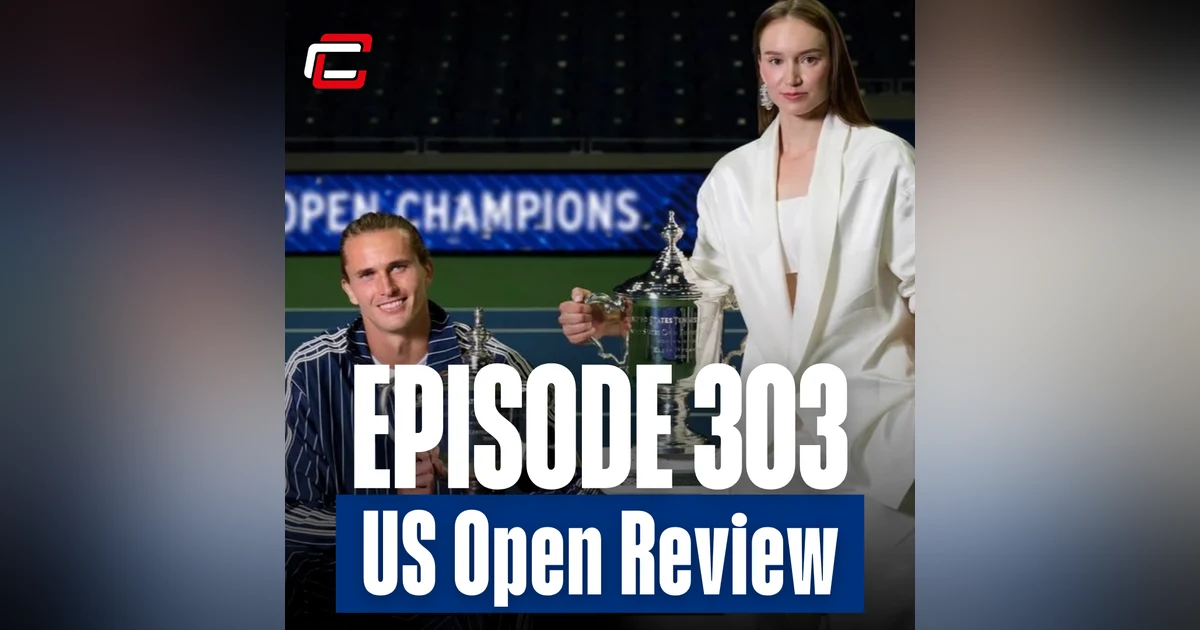
What a US Open! We saw two new champions crowned in New York, plenty of our pre-tournament predictions were ripped up, and both draws gave us lots of storylines.
In our final Grand Slam Review episode of 2026, Host Dan Kiernan is joined by our panel:-
- Denmark´s Davis Cup Captain and 2012 Wimbledon Doubles Champion, Freddie Nielsen
- Sports broadcaster and former CNN anchor Candy Reid
- Coach, podcaster and former agent Johnny Delgado
- Kieron Vorster, Fitness Coach to Tem Henman, Dan Evans & Wayne Ferreria
As ever, this isn’t just a review of the results. The panel gets into the realities behind elite performance: handling pressure, managing expectations, coping with defeat, the role of parents and coaches, and what players at every level can learn from the very best in the game.
In this episode:
- Alexander Zverev finally gets his US Open moment beating Shelton in the final, and his emotional on-court speech about his mother and managing Type 1 diabetes.
- Ben Shelton´s breakthrough run to his first Grand Slam final
- Could 2027 give us a new “Big Three”? The panel discusses whether Zverev can now consistently challenge Alcaraz and Sinner.
- Rafael Jodar’s shock first-round exit despite being a dark-horse pick off the back of a career-best summer.
- Elena Rybakina defeats Aryna Sabalenka. Why Rybakina’s balance, composure and first-strike tennis caused Sabalenka so many problems in the final , and the panel discuss how the best players handle nerves differently.
- Serena Williams skipping press conferences again and the panel's take on tournaments letting stars off the hook.
- The strength of the women's draw: Zheng Qinwen's run through qualifying, Iva Jovic, Mirra Andreeva and Coco Gauff's continued dominance on and off the court
- The Djokovic debate: a first-round exit, falling out of the world's top 10 for the first time in over two decades, and whether he can still go deep in a Slam at 37.
- Wheelchair tennis: GB´s Alfie Hewett, Tokito Oda and the extraordinary standard at the top of the wheelchair game.
- Neal Skupski and Christian Harrison's men's doubles title, and the debate around the future and recognition of doubles tennis
- Katerina Siniakova keeps making history! Her continued dominance and double Golden Slam achievement.
- What happens next? The panel looks ahead to the remainder of 2026, including the race for year-end No.1, Holger Rune’s return, the Next Gen Finals and the WTA Finals.
There are plenty of disagreements, predictions and laughs along the way, but also some brilliant takeaways for players, parents and coaches on pressure, resilience, expectations and what really separates the very best when the biggest moments arrive.
🎧 Sit back and enjoy our US Open 2026 Review!
This episode is brought to you by Novellus: https://novellusfinance.com/uk/
Links Mentioned in this Episode
Follow the Podcast here: Instagram | Facebook | Email us
SotoTennis Academy: https://www.instagram.com/sototennis
Mentioned in this episode:
Train Smarter Anywhere: Strength & Conditioning for Tennis Players On the Go 🎾
For players who don’t always have access to in-person coaching, progress doesn’t have to stop. TennisAthlete is an online Strength & Conditioning platform, designed specifically for tennis players who want structured, affordable and flexible training. Wherever they are in the world. TennisAthlete helps you stay consistent, improve performance, and train with purpose. Train smarter. Anywhere.

Episode 303: US Open 2026 Review: New Champions, Big Talking Points & Lessons from New York
DISCLAIMER: Please note we use a transcription service, so there may be some errors in the following transcript for the episode. If you can, refer to the audio for the exact quotations.
Dan Kiernan(00:01)
Welcome to episode 303 of Control the Controllables. And this is our US Open 2026 review panel. And I am delighted to say we have the ever-present Freddie Nielsen, Davis Cup captain for Denmark, as they go into their tie this weekend against Bulgaria. And also 2012 Wimbledon men's doubles champion to Johnny Delgado.
The great Johnny Delgado, the former agent coach. He's now a podcaster. He's an influencer. He's all sorts of things from the famous Delgado family. And it's always delightful to have Johnny on the show. And then Candy Reid, who not only was a fantastic tennis player, but is a brilliant broadcaster. You would have seen her on CNN for many years. And you will hear her on pretty much every channel when you were watching those tennis events.
And then how can we not mention Kieron Vorster ?Kieron Vorster who's been at the game for many years, working with so many players on the on the fitness side, but also on the tennis side as well, does a brilliant job, says it as he sees it, and makes for a brilliant podcast guest as well. New York 2026 gave us lots to talk about. There was lots of storylines. There's things that we probably won't get to, as there will be things that we do get to.
As ever, we want to hear your opinions. Did did you agree with us, not agree with us? What do you want to hear more? But first sit back and enjoy US Open twenty twenty six review panel.
Dan Kiernan (01:39)
Our US Open twenty twenty six review panel. How you doing?
Freddie Nielsen(01:44)
good, thanks. How are you?
Johnny Delgado (01:46)
Very good then.
Dan Kiernan (01:48)
And we've got hey, we've got a few tonight. You know, they might ha tonight's gonna have to be a it's gonna have to be a hands up job, I think, to to to get your word in edgeways. although we don't have the rants of Calvin Betton. So that might that might free up a little bit of space. Calvin, we love you, we miss you. but thanks for giving us some space this evening.
this the starting point, I think, as we as we jump in, is I kind of got thrown under the bus.
You know, one of my one of my rules that I have with as you guys know, with anybody involved in the podcast working at Soto Tennis Academy is they're only allowed to put up videos when I get something right. anyway, the newcomers the newcomers in town obviously—
Candy Reid (02:33)
So it never happens.
Dan Kiernan (02:34)
—they didn't read the the the short the short terms on the on the contract because they took a lot of joy over over over getting it all over Instagram
that I picked, Mr. Jodar to win the men's title.
And this is no word of a lie. I had all like I had all sorts of people, like Jacob Fearnley’s coach, as I was getting on the bus one night to go back to Manhattan, looked over it, went, Dan, great call with Jodar. You know, so there was it it seemed to kind of make its way through New York.
So let's start there, Vozzy, because you weren't with us. Mr. Delgado, his first time with us, picked Jodar as a Dark horse. We didn't quite he didn't get the rules, but I picked Jodar as a potential winner. It felt maybe it was time that someone was gonna sneak up on us.
Jodar I'd heard unbelievably good things, I'd seen good things the last few months, and then he managed to win four games in the first round.
Kieron Vorster (03:32)
Yeah, I mean I that would have been one of my my picks to be fair, 'cause I thought he had a decent summer coming in there. And I think obviously Johnny and I were talking on a daily basis, with the three we we looked at were Jodar, Shelton, Zverev. those were the those—
Johnny Delgado (03:46)
Okay.
Kieron Vorster (03:47)
—were the three that we we chatted with a lot.
But yeah, I'd I would have I would have said that he was an informed player coming in. but yeah, I I mean obviously the US Open grabs a lot of people. I think it's quite quite difficult getting getting the bus first thing in the morning, last thing at the at the day, working out timings and stuff and you know the the the Manhattan can swallow you as well.
So I mean I know I spent a lot of time in the States, but I you know, first US Open…
He'll learn a lot from that. with he also had the issue with the shoes and stuff that the press were picking on. But yeah, but to be fair it was a bit disappointing, his first round result.
Dan Kiernan(04:24)
Is that Jodar done for the year type of burnout result, put in a great shift, knackered, or is that just like Vozy saying a bit of a one off, a bit of a a bit of a Manhattan nightmare?
Johnny Delgado (04:36)
Yeah.
I mean, there's two things. It's complete shock to everyone. It kind of completely came out of the blue. But think, like Kieron said, New York, US Open, you know, for the first time, it is a big, big experience to take on. The one thing I haven't actually heard much afterwards in terms of like any excuses or any things that might have been wrong with him physically. He was typically kind of Spanish in his response and just kind of held his hands up and said, I wasn't very good today.
But he didn't actually give any insight, I don't think, from what I've heard, of there being anything wrong. yeah, I'd like to think he's physically fine and can kind of dust himself off and get going for the rest of the year because he's had such an amazing six months. it was a complete shock to me and to everyone, really, that the result came in.
Dan Kiernan(05:21)
What do you think, Candy, of that sort of response? Like when you guys in the media, you're trying to talk to players, you want to get, for lack of a better word, you don't want those vanilla responses. You know, you want to have something a little bit more than that. And Hodar sits there and he pretty much said that, no, I'm fine. Just didn't play very well.
Johnny Delgado (05:38)
Yeah, yeah, I fine.
Candy Reid (05:39)
Yeah, yeah, it was interesting. think firstly, I think why he lost is Bu, who he lost to and got four games to come through qualifying. So he was very match fit. I think probably New York is a different situation
Dan Kiernan(05:51)
Lucky loser. Lucky loser, huh?
Candy Reid (05:52)
for Jodar. Yeah, lucky loser, you're right. But he played three matches. The courts we heard from Butorac and Moore were going to be a little faster this year. So they were, I thought medium fast, fast.
I thought they were fast rather than medium fast. That's my personal opinion. And I think he played a lot of matches. So he's won 49 matches this season. He's lost 16. That is a lot of matches and he played a lot coming up, didn't he? Because he did well in Montreal semis, So he just played, I think he just played a lot of matches, won a couple of matches in Cincy as well. So it was just a lot going on, I think. Maybe he just got a bit overwhelmed.
But yes, of course, we'd want to know a bit more into it. But I think with Jodar, his father doesn't speak any English. I've met Rafa for a few years now because I met him when he was a hitting partner at the Next Gen. And then, of course, he played last year. So I've had quite a lot of chat and he does keep everything close to his chest. He's not going to reveal anything at all. He's quite quiet and introverted naturally. And I think he also now has a lot of pressure on his shoulders. A lot of people are starting to look at him as a...
a big name and a big target. So I can understand sort of why he lost early, but I suspect he's going to have a great end of season if he's not injured.
Johnny Delgado (07:06)
Yeah, I just want to jump in there. The other thing I said a couple of weeks ago when the tournament started, was talking about some of the social media stuff that Sabalenko was doing and is that taking a focus off. And just with him, there's so much going into a first Grand Slam in New York. And I saw him quite doing quite a bit of I think he was doing an Adidas photo shoot around the town, like in Central Park and…
And it just looked to me from the outside, being a former agent, like just looked like quite a lot to do in your preparations before your first New York, whether or not, you know, kind of doing again, I don't know how long that photo shoot was, but it looked like it was out and about in the town of New York before the week
Candy Reid (07:41)
Yes.
Johnny Delgado (07:41)
Before his first Grand Slam. It smacks a little bit of maybe not the focus, not being totally there. And again, that's an experience thing, isn't it? I mean, he's going to learn that going to his next Grand
Dan Kiernan(07:49)
Sabalenka
Johnny Delgado (07:50)
Slam.
Dan Kiernan(07:50)
Sabalenka would not be happy with you, Johnny Delgado. She she snapped. She snapped on
Johnny Delgado (07:54)
No, no, said it last time, Yeah. Yeah.
Dan Kiernan(07:58)
In every single press conference she was in when anyone even suggested that she wasn't focused. Do you wanna, you wanna delve into that a bit more?
Johnny Delgado (08:07)
Well, mean, I just, again, it's not just her in particular, there's, I mean, what they're being asked to do is still a bit too much. I think that the experienced Grand Sampayers are very diligent with their time, especially that week before. I know they have to do more now with the media day and things like that, but there seem to be quite a lot of parties in Manhattan that I was seeing, and I'm just scrolling from it here in London, so I'm not there, but it seems to be a lot of events…
that a lot of the players, not just her, a lot of the players are being asked to go to. And it just in the case of Jodar, that's the most I've seen of him media wise, which was the three or four days before his first Grand Slam. So and again, it might not have been something, but it probably wouldn't be my suggestion for somebody in their first New York.
Dan Kiernan(08:49)
I'm stirring a, I'm stirring a little bit because I think I think with the Sabalenka thing, I think I was of a similar opinion. I liked what she said. I also had a similar thought with Gaby Dabrowski coach, because she the week before she's with IAMate and she's with a couple of different companies. And we'd had a conversation and and actually after speaking to Gaby and then hearing Sabalenka's response, I quite liked…
the the more the ones that I think have been around a while, they're so selective on who they are working with that that actually those events are are not a a a bit that big of a drain the week before. You know, whereas maybe a younger player working with different brands and they're not used to the expectation or or they don't have the relationships, let's say
you know, with the people in those brands, it can maybe be a little bit more of a drain.
It's a it's interesting. But Freddie, I want to bring you in at this point because, you know, you guys have had a lot of experience with a young up and comer in in Denmark in in Holger, also with I guess Clara as well, Tauson, you know, you you're currently I know you're currently at the at the tie as as captain of Denmark…
against Bulgaria this weekend and Holger's hopefully making his comeback. There is also a lot of talk around Hodar around he needs to get a proper team around him. That's not my words. I'm paraphrasing what has been said. You know, he's he's had his dad in his corner, but that's kind of it. You know, it is a very kind of basic, simple. Is it is it a kit we see then Alcaraz with a team of 11 or 12 around him? You know, is that maybe the demand…
that the that the tour now brings, that you need all of these people in place. what would your advice or or your opinion from from the outside of Rafael Hudar in terms of how what his next steps are as he's I guess the next next step for him is pushing towards trying to win the Grand Slams and not make me look so stupid next time.
Freddie Nielsen(10:55)
I mean there's also so much that goes into it, right? Because y you can say there's a there's something with the team, but also we also have to sometimes respect the fact that these guys are also learning on the go and they're also pretty on it and they will be they're they're not stupid, you know, they're not gonna go against what people say just to prove a point here.
If there is a need to to fill a void in the team, they will do it. And he's learning as they go. And I think for him right now, I think very important, regardless of what they do with stability and and no knee-jerk reactions just to a few results that might have been a bit disappointing.
So far, it's only been one. I think a very important point to remember when you are young and you're coming through is that in the beginning, everything is happy days. Every result is unexpected, basically, and you're not playing up to anything else than just
What a great story this is. And at to a certain depo point you get so good that all of a sudden you have expectations going. And I think this was the first time really because he had such a great…
summer as well, where he came into a slam, like you thinking that he was a favorite. And that means that he was gonna be favorite to play basically all the matches, part two maybe in this tournament. And that can be overwhelming because he'd basically been been playing with the feeling of having be…
Sorry, been playing with house money in his career so far. And and that can be a big challenge. And and like you said, New York is a strange play to play, it's a strange place to play. It's very overwhelming in many ways. so I think there's a lot of stuff that can be accumulated and exactly now because his status is changing from up and coming where everything is happy days to now have to live up to something.
I think stability is more important than anything else. And maybe it's better to just take a breather, keep going with this and then reevaluate in the off season and see if you can get some good guys in because I think also quality is more important than just getting someone in for the sake of getting somebody in.
And and I'm pretty sure that he will have good enough people around him. You know, he's with the Davis Cup team now. They have David Ferrer as captain. There's a lot of good guys. I'm sure he people will be giving him good advice and they have pretty sound people that that that he can lean against.
Dan Kiernan(13:13)
And somebody's going, What are you lot talking about? We've just had the men's final a couple of days ago and both players had their dad as their coach and have long term had their dad as their coach, right? You know, which has gotta be…
Freddie Nielsen(13:27)
yeah, but but I don't think I don't think it's so much the the the coaching side, it's more the quantity of the…
Dan Kiernan(13:31)
No, I'm not saying you, Freddie. It's more the…
yeah, it's more the way that I probably asked the question than what you said. You know, I maybe implied a little bit of that. I don't I don't think you were implying that at all.
But it's it is it's gotta be a first, Fozzy. You're the you're the oldest in this group. You've been around the longest. Yeah, is that if you can you remember two dads coaching? I mean, Serena and Venus, I guess, had their their dad when they played in their finals. but what about on the men's side?
Kieron Vorster (13:55)
Yeah, Vince Vince Badia, Justin. Vince Badia, Jean-Michel Gamble, two nutbags. and the final sorry, the final for slam.
Dan Kiernan(14:00)
In the final of a slam. The final of a slam.
Candy Reid (14:02)
Mm-hmm.
Kieron Vorster (14:05)
No. No, I can't I I mean I can't I I can't recall that. and I'm going back to ninety…
Dan Kiernan(14:14)
Fifties.
Kieron Vorster (14:15)
yeah, ninety ninety ninety three, ninety four.
Candy Reid (14:19)
I think we looked into it in the commentators' US Open. It's never happened before.
Kieron Vorster (14:22)
Yeah, but
Johnny Delgado (14:23)
Yeah.
Kieron Vorster (14:23)
but can we just clarify something here? I mean, Zverev’s dad was a an amazing tennis player under the USSR flag. And I I I've had this ratified by by by Olga Morozova.
Candy Reid (14:39)
So I
Kieron Vorster (14:39)
And and and and obviously Bryan Shelton played to a top level. So it's not it's not dads that have pulled up a coaching manual and thought, okay, I'm gonna
I'm I'm I'm gonna give this this gig an absolute blast. They both come from tennis pedigree. So—
Dan Kiernan(14:57)
Yes.
Kieron Vorster (14:58)
—as as kids—
Freddie Nielsen(14:58)
And and he coached his older brother too very successfully.
Kieron Vorster (15:01)
—Yeah, and and and and and so the kids are blessed to to have two to two parents that played to a good level. I think I think where I I feel sorry for somebody like Cruz Hewitt playing because the pressure on him must be so big with his dad and his dad's trying to coach him and and it's a shit show. So…
You know, so I think I think there's there's a there's an element of, you know, performer number one in the world and then trying to keep up, you know, try and keep up with with the Joneses. I I think that that's a tough kick.
I mean, obviously with with with Shelton, he was a very good tennis player, but he wasn't a top top ten player. But he he obviously is a great role model to guide him through through the process and and and then obviously separating the the dad from the coach.
and then obviously Zverev’s dad, you know, th was was a very good tennis player in the USSR. So…
Dan Kiernan(15:53)
And Candy, we don't know much about Zverev's dad. He keeps himself to himself, but we cer we certainly know a bit more about Bryan and you know, I know you've had Bryan on your podcast. I know you know Bryan pretty well, but what what a delightful man he is and what a job he's doing with Ben as well, huh?
Candy Reid (16:09)
Yeah, I agree with that, think Bryan’s shown his playing credentials. I remember seeing him at Wimbledon when he was playing and he was a very good player. And then he went to Georgia Tech to coach the women's team, won the NCAA title while I was at CNN. So I became really friendly with him then. Then of course he went to the University of Florida, started coaching the men, won the NCAA title there. I don't think anyone else has ever done that. Maybe one other coach. Okay.
Kieron Vorster (16:32)
Yeah, that's correct. That is correct. He's the only coach to win it both men and women.
Candy Reid (16:36)
Yeah, that's astonishing.
Johnny Delgado (16:36)
Well.
Candy Reid (16:37)
And I think he's just got such a great way about him. I speak to him quite privately sometimes, and I know his wife, Lisa, a little bit now. And I just think they're an all-around good family. A lot of the time, and I won't mention names, but there's some really crazy parents in the background, surprisingly so, of players that are so calm and you hear the backstory, and they really have a bonkers parent. And it's not the case in the Shelton's. They are so well adjusted.
And you could tell, I interviewed Ben actually before his quarterfinal match and he is like laser focused. Like normally he gives me a hug when he sees me and he just kind of gave me a little hand thing and then, sorry, should, for those who were just listening, he gave me a little knuckle punch, not a hand thing, sorry.
Dan Kiernan(17:23)
Control the Controllables available on on YouTube. Just if you want to find the fist pump—
Candy Reid (17:28)
Sorry.
Dan Kiernan(17:29)
—from Candy.
Candy Reid (17:29)
Yeah, he gave me a little fist bump. And he just kind of almost looked like through everybody. He was so focused. It was crazy. And Dad was the same. Like they've got, they went into lockdown mode there. It was,
Dan Kiernan(17:41)
Yeah, they did, yeah.
Candy Reid (17:42)
yeah, it was incredible. And I just think that they've, they've been working on specific parts of his game, particularly getting out of the corners on the backhand side and his backhand return. They've just been working on that so hard. And the numbers you can see are different from last year, from the year before, it's improving…
steadily and he's of course you've got a massive serve so well done to team Shelton I think you'll get one eventually.
Dan Kiernan(18:04)
Yeah, and and look, let's jump into the final. Now I definitely want to come back because as I look at my sheet, I can see Freddie pick one first round, pick two first round, dark horse first round. Okay, so I'd definitely like to bring it back to Freddie in a minute on on his picks.
Freddie Nielsen(18:22)
I have nothing to say. I hold my hand on. I had
a shocking US Open. I was desperately clinging to Coco Gauff, winning that just to save a little bit of face, but no serious raw egg on my face in this tournament. I'm gonna go go—
Candy Reid (18:39)
You were close with Coco though, got semi finalist.
Freddie Nielsen(18:42)
—Yeah, but that's not gonna.
Dan Kiernan(18:43)
Yeah, but he said about seven players that all lost first round in every other category.
Freddie Nielsen(18:49)
That was poor. But again it just kinda feeds into the whole Wild West theory, right?
Dan Kiernan(18:55)
He even brought up Djokovic. We all knew Djokovic. I he's Djokovic. He's that guy's got no chance and Freddie brought him back to our our our focus.
Candy Reid (19:03)
Yeah.
Freddie Nielsen(19:03)
Yeah.
Dan Kiernan(19:04)
as well.
Freddie Nielsen(19:05)
Yeah. It was I've…
Candy Reid (19:06)
I think you were quite insistent about that, Freddie.
Freddie Nielsen(19:09)
I mean that was I gotta say I was deeply perplexed by what was going on there, yeah.
Dan Kiernan(19:14)
But we're not moving it to the final vozie. It it actually we we do a thing at the the academy, the marketing team go around and ask people who's gonna win and put it on social media and and it was something like it basically 80% of people said Shelton. And then I was at the academy on on Sunday afternoon at a table, there was about 12 of us, and I think eleven people other than me were like, Yeah, Shelton's gonna win. And I was like…
I said, guys, I'm sorry to be boring and tennis coachy here, but look at the numbers. And the numbers going into that match. If you are someone who is just looking at data and making decisions based on that, they'd played five times previously. Shelton had won the first set of the first match, and then and then Zverev had won the last ten sets. Zverev was forty-four and one against his…
last last 45 left handers. You know, Shelton up until the point that he'd played against against Alcaraz was somewhat like on eighteen in Grand Slams in sets or matches against players in the top five. Like absolutely everything went to Zverev for me, other than the emotion and maybe the American crowd, you know, and maybe Shelton was gonna but I just don't think emotion wins over five sets, Fozzy.
It just it fe feels like as a matchup, the Shelton matchup matches so nicely s for Zverev and it and and I don't think that Zverev's a great customer for Shelton to get the better of either over five sets.
Kieron Vorster (20:50)
I totally agree. I mean, to be honest with you, it was men versus boys. I watched the first two sets. and Shelton's backhand is just not good enough for for a player of Zverev’s caliber, and Zverev would just go four forehand gunk, or well, when I say forehand gunk, but just four four forehand shape to his backhand and and Shelton couldn't do any with it. And then when Shelton was going out to hit the the inside out forehand, he was he was…
in the middle of that tram line or or or even outside the tram line and then there's too much caught for the Zverev to play with. Zverev served really well as well. so that put Shelton under a lot of pressure.
Dan Kiernan(21:26)
He's such a got such a good server.
Kieron Vorster (21:29)
Yeah, he's got a good serve and and and I think I you know I think you know if if that was Alcaraz, Alcaraz matchup it would be a completely different but yeah I'm f I think that I think like I mean Candy you've hit the nail on the head.
There's still a lot of work in progress for Shelton to to work on. I th I th I didn't I I also didn't agree with the serving tactic. The guy's got a rocket and he was mixing it up so much instead of just serving heat, you know, if you've got the heat, you know, dish it out. and and you know, Zverev I mean, Zverev was standing literally at right at the back of the court for the second serve. and he had so much time on the return and…
I mean Shelton volleys well, but he doesn't volley well enough. So I think those are the areas that I that I think he would need to to really focus on. and and then obviously where, what Shelton has in his locker that he he and he he's probably what top four, top five athletes out there in terms of how he moves and stuff. So yeah, that's that's great foundations for him to work on. But yeah, I th I just thought it was men versus boys.
Johnny Delgado (22:33)
Yeah, I loved his run. I love Shelter. I mean, it was such a great couple of weeks that he had. I just thought on the finals day, he didn't quite have that intimidation factor that he'd had in the first two weeks. He didn't quite look as confident, which is natural because it's his first Grand Slam final in New York, but he just didn't have that quite same energy that he had in the Alcaraz match, for example. And then something I heard Zverev say afterwards, which I found quite interesting was…
Like Fozzy said there, he basically said, look, I was giving him no pace on the back end. So I decided that that was my plan beforehand. Give him no pace in the back end. And I was thinking to myself, look, that's, mean, it's very, it was my pick, but he just doesn't lose to people in Grand Slams that are lower than him in ranking. He just doesn't, you know, he doesn't do that. People have obviously been telling him, you know, if you want to beat the sinner in Alcaraz, you've got to be aggressive and you've got to go for it you've got to do this and that. But he knows in the matches that he, everyone he faced.
He could kind of, not revert to type is probably a unfair, but he could kind of go back to what he knows will get that win, which is what I thought he did on Sunday. He just said, look, I know I'm just going to sit here, give him no pace in the back end and I'll get through this. But whether or not he could play like that and beats in or an Alcaraz is a different question.
Dan Kiernan(23:44)
What do you think of the final Freddy, Candy?
Freddie Nielsen(23:46)
Yeah, well I I think the most important thing was also that after French Open it seems like Zverev has overcome a mental hurdle and—
Candy Reid (23:55)
Yeah.
Freddie Nielsen(23:55)
—it's not that much of a it's not obviously it's still a big deal, but it feels like he goes into the those kind of matches basically convinced that he's gonna win. And like you said, Dan there's there's a lot of emotion.
And there's a lot of you know, he builds the momentum then. But that's why in my opinion, that you you need to play the clan Grand Slams over five sets because you need consistent quality as well. And it's it it's y you need to be able to back up that emotion with some quality against a guy who's just gonna be rock solid himself and…
You know, it was qu pretty spectacular against Alcaraz and can you do that seven matches, fair play too? But it's really difficult. And you gotta keep finding those holes against the guy who, like you said, his backhand is money against Shelton. So I think that's also why there's it's a bad matchup for Shelton. He's very a very…
good server. And then when he overcomes that mental hurdle of having won it, I think that the next few years are gonna be massive for Zverev and Ben would have to bring a more quality to the to the table than just emotion and big serving.
Dan Kiernan(25:09)
Can I just add as well that and before I chuck it to you, Candy, is obviously with the Carlos Alcaraz match, the 3 33 a.m. finish, which yes, I was guilty. I was guilty to still be up in New York watching. But that was kind of like a best of three set match because the second and fourth sets basically didn't happen. They were kind of weird set. They were like…
i in some ways, you know, like Alcaraz kind of weirdly almost tanked the second set. And then Shelton went fully missing in the fourth set as well. And I and I think an an Alcaraz,
Johnny Delgado (25:43)
Okay.
Dan Kiernan(25:45)
especially an undercooked Alcaraz, is can maybe give you that. And and I think Zverev is more of the Sinner Djokovic ilk that he's kind of there. You've got to truly win. You know, I always and and maybe this is unfair…
to say, but I always like the Alcaraz, Federer, Sampras. There's that type of player that can be sometimes just guilty of giving you a few games. Whereas I think there's also your lockdown players on the men's side, your Djokovic, your Sinner, you and I think Zverev's a bit more of that ilk. I think that's a much bigger challenge for Ben because really it was the first and fifth sets that…
were box office in that match against Alcaraz. You know, the end of the first set and then I think the fifth set then developed into like an unbelievable gladiatorial battle with, you know, two big personalities.
You know, the the fact I don't like that it's finishing at that time, but it kind of if you were watching it, added a bit to the drama, to the narrative, to the you know, the New York, the under the light, everyone comes down on those coats into the kind of lower ball area of Arthur Ash and you know, it it kind of felt quite special. I don't know, I don't know what you think of that, Candy.
Candy Reid (27:00)
Yeah, it was a great spectacle, I think. And I also think that if Alcaraz had had some matches before, he probably would have won that. I think he did terrifically well and it was great sportsmanship at the end for him to say what he did about Ben. And I think he overall was quite pleased with his tournament. I was actually expecting him to have a much tougher time with Safiullin in the first round. I picked Safiullin as my dark horse. So maybe Ben—
Johnny Delgado (27:24)
Okay.
Candy Reid (27:25)
—had a little opportunity there to get better of Alcaraz for the first time.
But I will say just sort of behind the scenes, I thought after Zverev from Roland Garros, he looked like a much more relaxed figure at Wimbledon. But I've heard from somebody in the team that actually at the beginning of the US Open, he was starting to feel really pressurized again.
I've just been having a chat with Bjorn Fritangelo and obviously Maddie Keys just won the Australian Open last year. And he said actually after that, the pressure increased on her rather than decreased because now she felt like she had to back up her Australian Open win, she had a big target on her back.
And I think that's really interesting for somebody like Zverev and Keys who've been right up there and had opportunities and haven't quite done it, like he did at 2020 US Open and she did it at 2017 US Open. And then eventually they win, you'd think like they're so released and that's what I thought he looked like. But then again, at the beginning of the US Open, had those two five setters and then coming through those, perhaps not playing well, then he just seemed to release.
He was just the best player, wasn't he, at the US Open? And I think mentally, like Freddie said, he's just in a different place and he's such a good player and arguably the hardest worker on tour. I mean, that guy is always practicing whenever I see him. He's always working on things. His whole family is there. Dad, mum was there with a dachshund who's got testicles like you wouldn't believe. And Mischa, and it's just like a big family. know, Jez Green's obviously right there. They just travel around together and they trust each other.
He's got the same hitting partner. Apparently this guy, hitter, another Mikhail Mischa, is like an amazing hitter that hits the ball so clean, was one of the best juniors in the world.
Freddie Nielsen(29:06)
Lit Litovsky kids on it.
Candy Reid (29:08)
Yeah, that guy doesn't really smile very much, but I see him a lot. But apparently he's amazing at what he does. So it's just a really settled team. say what you want about Zverev. He is an exceptional tennis player. And now mentally he's got it as well.
Dan Kiernan(29:23)
And Vozzi, nice what he said about his mum as well, I thought in the speech. Actually, I thought it was nice to bring that I don't think he necessarily comes across great Zverev normally, but I think bringing his his mum in and and obviously how how can you tell us obviously about his being diabetic and, you know, age four when he was diagnosed with that and then obviously how he s saying how his mum basically the role she played in that.
And it's you know true, you know, having having kids we we know, you know, s anything that's difficult and medically challenging for your kids, you know, can add a whole different perspective to your world. From a physical standpoint, how how challenging do you think that's been for Zverev over the last twenty plus years to be a diabetic and and have to have to go through what he's what he's gone through to become arguably one of the one of the best sportsmen in the world?
Kieron Vorster (30:16)
extremely it's it's it's extremely stressful because you you you constantly sidetracked…
So you you know, you've got the focus of trying to play, but at the same time, you've got to check your blood sugar levels you know, constantly to see if they're dipping or or or not. and so it's a got yeah—
Dan Kiernan(30:33)
Even in a match, huh? Even in a match sometimes.
Kieron Vorster (30:35)
—yeah, eve even in a match and I saw he he he pulled it out in in in the final. So it's a garganic effort by him to to get there and also obviously showing gratitude,
to to his his his mother and and the unconditional love that that she showed to toward him. you know, obviously in the last twenty odd years to to where he's at now. I also think I think a huge shout out needs to go to Jez Green on as well, because Jez has been there from when he was like seventeen. I know they—
Dan Kiernan(31:01)
Yeah.
Kieron Vorster (31:02)
—had a sabbatical, but but you know, and I Johnny and I spoke about this as well. yeah, but the but the yeah the medical implications on that, but but but look…
He's he's he's managed it for so long, it it's like second nature to him. It's not and we we talk about it like it like it's a huge thing and it is a huge thing, but but because he's he's so seasoned with it, he he knows what to do and when to do it. And when his body you know, if you if he feel if he's feeling feeling he'll feel it in his body, then he'll take the readings.
Dan Kiernan(31:31)
Yeah.
Johnny Delgado (31:31)
Hmm.
Dan Kiernan(31:32)
And and…
Candy Reid (31:32)
Can I just quickly add, Dan, my husband's type 1 diabetic and I've asked Lerner about it. And I mean, I found it just amazing knowing what my husband goes through for Alexander Zverev to be the top of his game as a tennis player in unbelievably difficult conditions, in different times, different locations, different food. is astonishing that he has done so well, given he's dealing with that.
Dan Kiernan(31:57)
Are we are we Freddy now? Not that we want to wish 2026 away. I know there's plenty of tennis still to go, but I guess the the storyline of 2027 is gonna be is there a big three rather than a big two on on the men's side? You know, is this gonna give the little kick start that if there ever I think if we're all honest and we've talked about it on the show before, he probably didn't quite believe he could beat those guys in the big moments. You know, we saw him…
I think it was the Rome matchup, you know, laughing and joking with Sinner before the final, and then going and getting his arse whooped one and two. You know, he's kind of almost got to that point. I know he's pushed them a little bit in in the odd match, but it's kind of felt like his belief system was like, nah, not these two.
Especially Sinner, actually. I think. I think Sinner is almost built on a pedestal even higher. are we talking about him seriously contending with those two once they're back fit and healthy in twenty twenty seven.
Freddie Nielsen(32:55)
Of course, you have to. And you said that they're back and fit fit and healthy. Are they gonna be fit and healthy? I mean, that's also a good question, Mark, because I think it's a bit worrying that they're this bothered this early in their careers. And Serv has been in extremely consistent. He had one big injury which was like a on court twisted ankle, of course. But apart from that, he is fit and healthy and he…
I think he can keep going for a long time. I think he's just come here to to be part of the game and I think I definitely think he'll win a slam next year. Definitely. I'm convinced of it after having had this year yet now.
But you have to put him in there. How can you not? Right? And the other two need to be fit, but they need to be fit. And if they're not fit, then who w who else are you gonna pick over him, you know?
Dan Kiernan(33:43)
Definitely. Well and Alcaraz, Johnny. I was fortunate enough to I actually sat courtside in Lloyd Glasspool and Erin Routliffe's coaching box in the mixed doubles, which feels like a lifetime ago. Back to the mixed doubles event at US Open. And that was quite special actually seeing Carlos Alcaraz and Serena Williams walk onto the court. It was, you know, really something and
we've missed Alcaraz, I think, you know, and having having him back, having having the the colour that he brings to the tennis court is is quite incredible really.
Johnny Delgado (34:19)
I think, I mean, we spoke about this, that match, didn't we? Last time we spoke about the... He was looking a bit rusty on the...
the mixed doubles court. I was so impressed with him. For somebody that hasn't been playing a match for four months, nobody had any idea how he's going to play and I thought that first week obviously he's playing players again, spoke to my brother Jamie about it, he's playing players that he's a lot better than so we know that he knows that he's going on court and he's a better player than some of the players he's playing but I just thought you know for somebody that hasn't played for four or five months to come out he's playing some lights out stuff first couple of rounds.
Candy, you're right, think there was a couple of loose balls in the fifth set against Ben, but to put himself in a quarterfinal, having not played any matches, just showed his class to me. And again, you, Dan, you work in a junior academy, just that's a figure of him walking down the corridor smiling after he lost at 3.30 in the morning. The amount of times we say to kids over the years, you've got to just enjoy playing tennis, forget about the score and they ignore you. They'll nod their head and say, yeah, I'll do that. I'll do that.
But he genuinely just loves playing tennis and it was just so evident. So I thought he was actually a really good positive story for the tournament. Just the way he completely lit it up for two weeks and just loved playing, know, just showed his love of the game and love of competing. And he will get better. I don't have any doubts that he's going to be absolutely firing by the time Australia comes around, which would put him, I'd imagine, as a close favourite. But Zverev has had three finals in a row in the semis this year, so he's also very, very confident.
But yeah, I was so impressed with Carlos.
Dan Kiernan(35:51)
So pleased you mentioned the smile. Think that was the picture for of the of the tournament for me actually. Was just like wow, you know, how's how is this guy doing that? Whereas the opposite
for me, Vozzy, is Serena Williams. And I know she's a great champion. And I know that she's brought so much to the game over the years.
But I have this image because so Erin Routliffe, someone I've I worked with for a couple of years and I'm very close with Erin. Erin’s played a three times this summer. Erin got two beautiful hugs at the net on the occasions that Miss Williams won the match. The time that Erin didn't win the match, was the time Erin won the match in Berlin, there wasn't any hugs given I can tell you that at the end of at the end of the match.
And that's now two tournaments in a row where she's just refused to go to media after the match. It's been taught a lot on social media and people are saying, why should she have to do that? And for me, I feel pretty strongly on this. You know, if you are you are there as a wild card, you are there representing our sport, you are in that position. People want to hear from Serena Williams, you know, aft after the match. That is a story, that is a chance to get eyes on our sport…
out of the respect for the sport, the respect for the tournament, respect for everything to do with tennis. Get yourself into that press conference, you know, and what what the story seems to be is she walked off the court straight into one of the cars, back to whichever place she was staying, and actually just left all of her bags, left her husband, left everybody. I don't think that's a great look, Fozzie.
Kieron Vorster (37:28)
No, not at all. To say the least, I goes back to that same thing as like she probably thinks she's bigger than the game. And and without giving her the fines, the game are pretty much saying, Yeah, you are bigger than the game.
It's not a good look at all. But the tournaments have to do something about it. and then it also goes, you know, again, it's it's how the how the sports how the sport is is being marketed. It's it's all star dependent, not anything else. and they need to re look at that and get away from…
marking it on the stars and more on the entertainment. And I've said this a few years ago and I brought it up the last couple of weeks. that yeah, you need to to to really to have a paradigma shift, otherwise this the sport's going to be in trouble. And it doesn't help when Serena does stuff like that at at two of the biggest events in the world and gets away with it.
Freddie Nielsen(38:23)
Also just what is the big deal? I don't understand. I never understood these people that don't want to do a press conference. How difficult is it really? I mean, I understand…
that you're gonna be faced some critical questions, but all these people have training. It's pretty easy to just dismantle it. You don't even have to give great answers. You can just kinda wing it. I mean, it's and it's it I think it's also it's like we always talk about these…
role models and yeah i it it also sends the signal that you know y this is a job basically it's entertainment or whatever but it's also a job and it comes with some requirements and one of the requirements is doing the press and it's not up to you to decide whether it's it's right or wrong. It's just something that comes with it. That every job has downsides and a lot of jobs have some serious downsides compared to what it is to go out and just say…
Yeah, we gave it our best and it wasn't our day and we lost. And that's it. And you don't even have to say anymore. I mean, you you can you can complete, but but at least just it's part of it. I don't understand what the big deal is and why people get so I mean, maybe it's just because I've never been a good player and haven't haven't faced media scrutiny after a big loss or or something like that. But I just don't see why the big…
Kieron Vorster (39:34)
You're spot on, Fred. I totally agree.
You you're you're spot on. Everything you said is a hundred percent correct. Hundred percent. But but if nothing's done if nothing's…
Dan Kiernan(39:40)
Apart apart from saying that you're not a good player.
Freddie Nielsen(39:44)
Yeah.
Kieron Vorster (39:45)
Yeah, exactly. No, you're a great player, Fred. But yeah, but I'm no—
Freddie Nielsen(39:48)
Well thank you, your two points.
Kieron Vorster (39:50)
—on all seriousness, if you and then if you fine them then you're sending out the right message, right? Not that it's gonna affect their bank balance that much, but at least do the right thing.
Freddie Nielsen(39:58)
Yeah, exactly. And that's basically it. You know, they're the they they they don't care about the consequences because it's it makes it doesn't move the needle at all in their lives. And I think it's a shame.
Kieron Vorster (40:09)
Well, right now there's been no consequence.
Freddie Nielsen(40:11)
really?
Kieron Vorster (40:12)
Well then I got they got no fine, right? There's been zero consequence.
Freddie Nielsen(40:15)
I thought it was mandatory that you would face a mandatory fine for not doing the
Dan Kiernan(40:20)
It at Wimbledon she got away with it because she had a bad knee, I believe. So there wasn't the there was an…
Kieron Vorster (40:28)
Yeah, but you but but I don't r d does you need talk? Does you need talk?
Dan Kiernan(40:31)
i I I'm not saying hey, look, I'm I'm fully with you, Vozzy. But but the but…
Freddie Nielsen(40:34)
This is where this is where we need
Kel to Kel to compare it to other finds that have been given in Wimbledon history. I'm sure he would have something to say about that.
Dan Kiernan(40:43)
Yeah, I'm I'm sure. And and right and rightly so, right? And rightly so. But this time this time there was no reason given. It was just and no fine given either. What do you think on it, Candy?
Candy Reid (40:59)
yeah, I think she should have done the press conference. I don't know quite why she got away with it. I imagine that the USTA have just been very cautious in hopes that they get her back because she's such a big draw. I mean, that has to be the only reason, doesn't it? It has to be, unless, again, there's something and it was, there is an exemption, isn't there, if you're injured and you don't do the press conference and you don't have to pay the fine. And so that's why she didn't do it at Wimbledon.
But I don't know the actual story at the US Open. haven't heard anything and I don't really get it. I don't really understand it. But obviously she was very upset about not winning and her expectations were high. And she has been hitting—
Dan Kiernan(41:34)
Yeah, I get it.
Candy Reid (41:36)
—the ball really nicely. yeah, I think. Yeah.
Dan Kiernan(41:38)
She was terrible in that match, by the way. She was terrible. In in that, she was very good in the mixed doubles. And she was—
Candy Reid (41:44)
Yes.
Dan Kiernan(41:44)
— absolutely appalling in the women's doubles. And and Venus played fantastic. I've watched Venus quite a bit this year, and Venus hasn't been very good. And I don't I think we might have talked about it on one of the maybe the live podcasts. It's kind of crazy that Venus Williams was given a wild card in the singles when she's owned 14 over the last couple of years.
And then she got a wild card in the singles and then was put on court at midnight when nobody was there to watch her. So if you're gonna give her a wild card, give her a wild card and put her on centre stage and sell some tickets, you know? But like they put a second match that went on, I think twelve thirty, they went on centre court on Arthur Ashe. So that was ridiculous. But fair play, I tip my hat to Venus Williams because she played a really good doubles match, but but Serena…
As Barker's my old coach used to say, couldn't hit a, couldn't hit a bond store. What what do you used to say, Del what what was it, Johnny?
Johnny Delgado (42:41)
it was barn door, you're absolutely right. Yeah, couldn't hit a barn door. Yeah.
Dan Kiernan(42:43)
Yeah. Yeah.
Something it so but just and that and she was she was shocking. I think ultimately we can talk about it till the cows come home or come out of the barn or whatever they are. Anyway. but it it it's she's just a bad loser. She's just a sort of she's like she's like if you played Monopoly at Christmas, she would be the one that would be throwing the Monopoly board around the around the table. That's just she just is. She's just a really, really, really bad loser.
And some people will say that's why she was such a winner. But for me, I think you've gotta have a little bit more dignity than that, in in in my opinion. And and talking of that, to a little segue, Johnny. Aryna Sabalenka. We we watched the final as a family and I must admit there was in our family, our kids, we were we were crack we were cracking up, and what we were cracking up about…
we've got lots of fidget e people in our family. Our children, including myself, are quite fidgety. So we have been known to, you know, when my kids win the Wimbledon and the player box for the Wimbledon final a couple of months ago. You know, my youngest daughter, we gave we give her a little squidgy, you know, so when she's feeling a bit fidgety, she's got the little squidgets things. I don't know if that's the right way you call them, just just to just to play with. And Sabalenka was sat looking like she'd been put on the naughty step after she lost with her team as Rybakina was waiting to go for the trophy.
Not one of her team was speaking. They were just looking just like, you know, that horrible moment you can imagine around Sabalenka. And then her fiance pulled out one of these little squinch squidchies out of his bag and started playing with it himself because he was just clearly incredibly nervous.
That his his fiancee Arena Savalenka was about to kinda go off, but I don't think that was a great look either.
Johnny Delgado (44:42)
Yeah, I mean look, I don't like the fact that you can see as well after the court after the match that she smashed a racket in a backstage room. I don't like that they're videoing that myself. But she she again Yeah—
Dan Kiernan(44:51)
Well she just did it on the court this time.
Johnny Delgado (44:53)
—on the on the court at match point. But look, I I I'm not too concerned by her melting a racket at match point. Ca sh there's different ways all the players have different ways of dealing with these stressful moments. She's one that gets very uptight. Like we were just saying, Carlos, he's taking it quite loosely.
I think with her as well, just going on the women's final, she had something similar. I thought it was quite obviously similar game styles, they're both just banging down serves. So I thought it was actually a pretty poor watch in terms of tennis wise. They were both kind of on the baseline. It was first strike tennis or quite short rallies. But I just thought with her, she looked a little bit…
more tentative in her face and a bit nervous in her face during that match. Again, probably noticing that her opponent was the same game style as her, but just doing it better than her…
on the day. and sh I don't think she could process that in her mind. 'Cause she's thinking, I've got the big serve, I've got the big groundies in every match she plays. She tries to play that game on on Saturday it was. And I just thought she looked a little bit stressed out during the match just because she wasn't getting her way of her game style in the match. which she she she didn't have that demeanour throughout the rest of the tournament from what I was watching. So yeah, I just thought again her she she was…
Bit like Ben Shelton, not the same person as she had been in the six matches prior, I'd say.
Dan Kiernan(46:07)
But fair play, she still made her speech
Johnny Delgado (46:10)
Yeah. Yeah.
Dan Kiernan(46:11)
on the court in
Freddie Nielsen(46:12)
Yeah, and you're allowed to be you're you're allowed to be upset when you lose a very important tennis match. I'm I'm I'm all for that, but as long as you do your duties, right? And you do what what what what you're supposed to do. But this whole thing, I mean, that's why we like Carlos because he's nice, but it's also nice to see that this matters to people, you know, this is important to them and th this is the sincere emotions.
We always talk about the emotions, and she certainly is no poker player. So I don't mind it.
Kieron Vorster (46:40)
but I'm I'm a big believer in being gracious in defeat and and victory and and and there's a there's a huge difference between how Sabalenka behaves when she loses compared to when she wins. And it's like…
Freddie Nielsen(46:50)
There’s always something admirable to that. But and you can be gracious then upset. I think one thing doesn't exclude the other, but sure you're…
Kieron Vorster (46:56)
Yeah, I get that. But but there's a massive extreme with
Freddie Nielsen(46:59)
yeah, you're right. There there's obviously a border if you become somewhat intolerable or an asshole about it, then it's obviously too much. But I don't think it's it's bad that you're upset and angry or don't look like sunshine and rainbows after losing a flampire.
Kieron Vorster (47:11)
No, no, no. No no. No, that's a good sign. I mean if you…
Johnny Delgado (47:15)
I find I find it fascinating as well, what you're saying, Dan, as well, about that player box having all the players that are in the draw, they've all got different mentalities and different, you know, stress levels throughout the match. So how people react in those player boxes has always fascinated me, being somebody who's been mainly a spectator over the years. it you know, having a poker face, it's a tough job. It's a tough job. You know, when you hear Judy Murray talking about sitting in sitting in Andy's box, you it's
You don't want to give away any sort of emotions and different things. So it can be a tough ask over a five hour match for these men's matches and three three sets for the women's matches. but that's why we love tennis, isn't it? So it's got so much emotions in it. it's different to any other sport.
Dan Kiernan(47:57)
What a strong woman, Candy, that she had those four men frightened to even give an expression on their face. Do you know what I mean? It was like she was sat there, you know.
Candy Reid (48:05)
I actually thought she was really antsy and frustrated from point one. She just looked really aggravated to me and she just couldn't settle. And you could almost tell, I think she did really well to get a set there, because we know Rybakina shows nothing at all and she just looked really, really on edge. I think some of it was all the questions she was asked, being asked about the number one ranking, which of course she's now lost…
and she hasn't won a major title this year, so getting a lot of questions about that as well. And I just think she was so on edge, which actually didn't work for her. Whereas in the semi-final against Pegula, I think she got it just right. And obviously she's got a bigger game than Pegula, but she was so aggressive in that match against JP, who couldn't really do anything. But against Rybakina, as everyone said, the pace, the ball and her serve, Rybakina serves better. And Rybakina loves the pace that Sabalenka was giving her.
But I just felt that she just didn't settle the whole match. And I think she just blew up. think just the pump was rising and then eventually it just exploded.
Johnny Delgado (49:06)
I think on also just something while it was in my mind is just her stubbornness and actually both of the girls' stubbornness in in that final to not give up the baseline. But I was watching the first set and I was just shouting at the screen like she was not even standing one one inch back off the baseline off a s first serve return. And in the second set, she was actually giving herself a bit like you know, only half a yard behind the baseline.
But I was just amazed in the first set that she like she was literally guessing on a first serve, not getting…
Dan Kiernan(49:32)
She only received twenty seven percent of them, though, in the first set. Twenty twenty seven Rybakina and a hit in the first set. Twenty seven percent first serves.
Johnny Delgado (49:35)
really it's not not a high percentage. Yeah. Yeah. But I just thought there was a stubbornness there to not write, you I'm I'm I'm a bigger player, I can do this and it didn't quite work out.
Dan Kiernan(49:45)
Do you I actually I commentated on Sabalenka's first round match and I thought she was all over the place. Technically, I thought she was all over the place on the forehand side. And you you we've you've talked about the courts and Candy, I agree with you. I think they were fast. I think the courts were fast. You know, we play on a lot of courts throughout the year, and I think I think that's a quick hard court in New York, and it was quick…
this year and it was skiddy and it was and any ball I felt even she played Asario in the first round, any ball of the of of quality from Asario into Sabalenka's forehand, there was zero adjustment on the forehand swing, and she she str she missed a lot of forehands in that match, but she also looked antsy and edgy in that match.
Now I actually don't know. I didn't watch that much of Sabalenka throughout the tournament, but I when I watched that day, I thought, well, she's gonna struggle. But within the first three, four, five games of the final, I thought there was one player that was clearly better.
And and my not so expert eye, just kind of looking at it, I was like, Rybakina fully on balance, and I'd love to get your thoughts on this, Fozie. Rybakina looked fully on balance when she was hitting the ball. And I reckon Sabalenka was hardly on balance for a shot in that final. It felt like she was almost doing the splits. The legs were going, the arms were going.
And if we talk about like under sustained pressure over two, three hours, who's gonna win that match? One player that's probably hitting with a little bit higher quality and is also on balance for every shot.
And the other player that's off balance for every shot and maybe not quite hitting at the same quality. And I think she just used that stubbornness to will herself to win the second set somehow. Cause I actually thought it was quite a routine victory for Rabakina, but it just somehow she got that set in the middle. And that's the tennis scoring system that sometimes fight will get you through. But I actually thought it was quite an easy victory. I don't know what you think on that from a physical standpoint, Vozi, or what you…
what you felt seeing the match with with the two with the matchup. But it I think I think that's a t gonna be a tough matchup moving forward, maybe, for Sabalenka as well.
Kieron Vorster (52:05)
Yeah, it's a tough matchup. and and I also think that like if if Rybakina was timing the ball well and hitting it big, then she's she's obviously and then a
final and and the whole the whole thing getting getting getting to as well. She you know, the body was probably not moving freely enough. and then she may be struggling with the timing a bit.
And then yeah, she just felt completely uncoordinated out there. And Rybakina felt pretty pretty comfortable out there against Sabalenka at the the whole time. And so like you said, that was the wheel that got her over the pro probably the second set. But…
Yeah, I think it's something that she would need to look at moving forward because and also right like when you when you watch Rybakina play, nothing really phases her. You know, like you know, when she's winning or losing, it's it seems like just takes it in her stride. I you know, I was lucky enough to be court side when Sorana Cirstea beat her at the at the US Open in in the third round, in twenty three.
And but was it she wasn't getting upset or or or faced, she just kind of was accepting she was, you know, at at this moment, at this time, the skill was b you know, be better, better on the day. But I think that yeah, I I mean, but it's also it's also good that someone's challenging Sabalenka as well. put putting her under that pressure. But yeah, the th the moment may have got to her a little bit as well.
Maybe there was a little bit more expectation from Sabalenka thinking that she was gonna do some damage in the final, but yeah, your body can freeze as well. So that could have been a contributing factor.
Dan Kiernan(53:38)
Do you think, do you think that's vozzy though? And anyone else jump in here as well? Do you think that's because I think we sometimes do this with junior tennis players as well. There's external behavior and action that we see, and there's then internal processing that's happening, right? And some people have the more personality that that that what they are feeling and thinking, like if Freddie says Sabalenka's no poker player, you know, there's the the that some people that are…
better at having that mask because even if we if we do take Rabak in it, she did she did serve two double faults serving for the match. You know, she did, you know, certainly at the end of the second set there seemed to be a couple of nervy points, you know. I find it hard to believe that she's as cool, calm and collected inside as she is on the outside.
Freddie Nielsen(54:26)
Yeah, for sure. I think we've we've known that from everybody, right? All the players throughout time have they have come out and said that they feel nerves. all the top players. It's just like you say, how do you handle it and how do you show it to the world or not show it, right?
And a lot of people like Rybakina they they like Raja, for example, they have this cool image, they think they're unfaced, but I think they're also just very good at dealing with it, maybe. 'Cause I don't think anybody in the world is not nervous at any point in a sporting event.
Kieron Vorster (54:55)
Your intrinsic feelings are completely different to the extrinsic outlook that you're giving people. But that they probably…
Freddie Nielsen(55:00)
Exactly.
Kieron Vorster (55:01)
intrinsically are shitting a brick. but but—
Freddie Nielsen(55:04)
Exactly.
Kieron Vorster (55:05)
—to the rest of the world they don't see it. It is, yeah. I went to—
Dan Kiernan(55:05)
Is that is that a technical term?
Kieron Vorster (55:09)
—university to get that degree.
Dan Kiernan(55:10)
Yeah.
Candy Reid (55:11)
Mm-hmm.
Freddie Nielsen(55:13)
And that's also for example from a coaching point of view, what we try to say, everybody, that you're feeling the same things as as the top players do. They just are are very trained and very skilled at dealing with
it. So that you think that they're not affected by it, but but they've somehow managed to deal with it better in a way so they can still control themselves. And I think with the s the lower you get in level, the the more the emotions control you and your actions, whereas the better you get, you can see that these people they still control their actions despite their, them being nervous or wanting to do something else.
Dan Kiernan(55:44)
And the top four seeds on the women's side candy, first time since nineteen seventy five, making the way to the semifinals. I do think it would have been nice to have one of the Americans in the final.
Candy Reid (55:58)
It was a real shame. think Pegula versus Coco would have been amazing. The line up with the quarterfinal line up was just a blockbuster though on the women's side. I think the women did better actually than the men in terms of interest and anticipation as to who was going to win. Mirra Andreeva was playing really well. Zheng Qinwen coming through qualifying, getting that far. That was unbelievable. Came back from Love 5 twice back to back.
Beat Maddie Keys that way. It was unbelievable. The storylines were phenomenal on the women's side. It really was a shame for the US Open not to have a Coco or a Jesse Pagula in the final, but I just think both were outclassed in their semis. Pagula, absolutely. Sabalenko was just a different level. And we were talking about that because I picked Pagula to win and it was more because I want her to win. And she's just getting so close and she does everything right, but she doesn't have that X factor, does she? She doesn't have the...
massive serve, the big weapons. She needed help from the others. She needed Sabalenka to have a poor day and then Rybakina to have a poor day in the final or not quite as good. I think she could have beaten Coco. But yeah, it wasn't as good as a final display for the fans and everyone there because it was Sabalenka versus Rybakina, even though they absolutely deserved it.
But it would have been amazing to have Pagula and Coco. I'm not sure now that Pegula is going to win one. I think that was her best chance at 32 on the court surface, but maybe she will. She just needs to get a bit lucky, I think.
Dan Kiernan(57:27)
There was some I was trying to get facts and I'm not about to present a fact 'cause I read the article but I'm a bit stupid maybe and I couldn't quite work it out. but maybe you know this candy. But what it was implying, this article I was reading just before we came on, is that Coco Gauff semi final with Rybakina, I believe had the highest viewing figures of the US Open.
I don't know that's fact, but that was what it was seemed to be implying on ESPN. That it that it that it was like 2.6 million at its peak, and the average for that match was 2.3. And then for like the sh for the Shelton, Alcaraz match, that peaked at like 1.3 million, but in the early first set. And then believe it or not, at 3 33 a.m. it had it had it had gone down.
You know, if we want to If we wanna if we wanna get some answers onto the stupidity of that those times. But I think women's tennis, we've heard it for years. We've heard men harp on about I don't want to bring the whole equal pay thing out, but we've heard men harping on for years and years and years. And I've always I've always said my argument on that has always been if it's the same the same gender tournament, and this would be my one of my doubles arguments as well, then…
Then it has to be equal pay because you can't differentiate. If it's not, then you know, there's a tournament in Vienna and there's a tournament in Barcelona. Well, one of them might be men, one of them might be women. Who's bringing in the most money in terms of TV, in terms of this? And I always used to used to say to people, I remember when I was at US College around the Williams era, late 90s, early 2000s.
The US Open's viewing figures were often higher for women's tennis at that time than they were for men's tennis, to which—
Candy Reid (59:20)
Mm.
Dan Kiernan(59:21)
—some men that you say that to don't believe you and give the usual kind of crappy response. But it seems like we're maybe in a bit of an era now, certainly, certainly in the US, that the women's event is is demanding those eyeballs more than the men's event.
Candy Reid (59:36)
Yeah, I think it's a really good point. I think it was the Coco Gauff, you're right. Rybakina was number one and then Eala, Jovic was right up there as well because Jovic's fan—
Johnny Delgado (59:45)
Yeah.
Candy Reid (59:45)
—base, I'm sorry, Eala’s fan base is absolutely out of control.
Dan Kiernan(59:48)
Yeah.
Candy Reid (59:49)
It's so fun. And she's just an absolute rock star, as is Iva Jovic. And I think it's about personalities, isn't it? It's about what they bring to the table. It was in Washington, DC where Alex Eala won her first title at 500 level beach, Pegula 6-11 the third set and you should have seen the crowd. It's just bringing in a different—
Dan Kiernan(1:00:07)
Wild.
Candy Reid (1:00:08)
—kind of personnel to tennis. It's wonderful and they're all so respectful of everyone. It's absolutely brilliant. Coco Gauff is the number one highest paid sportswoman in the world. I think it's 15 of the top 20 tennis players, aren't they? It's an exceptional record. She's just such a fine young woman. Absolutely brilliant for tennis. Long live Coco Gauff. Long live the fact that she's playing a bit better now. Things are starting to...
I think she's got more major titles in her. I don't know how many much more, but I think Jovic in the future could be right up there as well. There's obviously a few things she needs to develop, but think, yeah, women's tennis is in a really good spot now because we've got so many different characters, different game styles. If you add Muchova and players like that in as well, think we've got a lot of interest. So, yeah, it's a really good shape.
Dan Kiernan(1:00:55)
So Freddie, should women be paid more than men?
Freddie Nielsen(1:00:58)
Sorry you broke up, I couldn't hear.
Candy Reid (1:01:00)
Hahaha.
Dan Kiernan(1:01:01)
you would say that. So so if
Freddie Nielsen(1:01:03)
I don't know. I think it's—
Candy Reid (1:01:03)
Mm-hmm.
Freddie Nielsen(1:01:04)
—a that's a rabbit hole. I mean sure. Why not?
Dan Kiernan(1:01:06)
Ha ha ha.
Freddie Nielsen(1:01:08)
Why not? Why shouldn't they? And what what why shouldn't the men? And
Dan Kiernan(1:01:10)
Absolutely.
Freddie Nielsen(1:01:11)
there's just too much different variables to go get into. I think yeah, it's supply and demand, right? But at the at the at the at the combined event they should definitely be be the same, that's for sure. But those other events that you talk about, obviously the ATP tour and the WTA tour.
They they have different tours of their the tournaments are different, I guess, many places. I think there's just too, so many things.
Dan Kiernan(1:01:36)
There is. I'm not re…
Johnny Delgado (1:01:37)
What?
Dan Kiernan(1:01:37)
I'm not really asking you that question, Johnny.
Johnny Delgado (1:01:40)
No, I'm with Candy.I was really impressed with the women's event this year. It's quite a lot of different stories. That Eala, Jovic match, I actually picked out Jovic and Gauff before the tournament, but that was such a good match, I thought, for the game, especially especially the age they are.
and I'm with you, Candy. I think Jovic is gonna come through. But the Zheng story as well was fantastic. There's those two five love sets. I thought I mean were you in the room when Madison Keys did the press conference, Candy? Awesome.
Candy Reid (1:02:07)
Yeah, well I watched it from Arthur Ash and ugh. Yeah.
Johnny Delgado (1:02:11)
I mean it's horrible, right? I mean that was horrible to watch, but great for spectators here on the sofa in London, but yeah, it was horrible to see. But great effort from that Jane. So yeah, but I there were some really good stories, you know, Andreeva and yeah, so there's some good young ones and having the top four in the world reach the semis.
We've been saying that for so many years with the top with the big four from years ago always getting to the semis. It's quite it's actually quite a nice thing, I think,for fans to get a bit more familiar, whatever that word is, familiarity with those top four players. So I think it's good to have a bit of repetition on who gets into those semis.
Dan Kiernan(1:02:43)
I I want to just pick up on the Maddie Keys. I actually something came over me which I wouldn't normally do. I was on Instagram and I listened to that. And I actually ended up messaging on Instagram openly on the where where whoever shared at WTA or maybe the tournament and and kind of not that I expected her to reply, but I actually kind of tagged her in.
to to say thank you for that actually. And and and it goes to me, you know, we talk about we've talked about S the Serena situation and not going to your press conference. And and and and I just think for for these players to be brave enough to show that level of vulnerability,
Johnny Delgado (1:03:23)
Hmm.
Dan Kiernan(1:03:24)
What she experiences hundreds, thousands of tennis players around the world are experiencing on a daily basis and on a weekly basis.
at their own levels, right? At their own levels juniors. So to then have someone like a Madison Key showcasing that, I thought was unbelievably powerful actually. And it's again one of the reasons I I I like, you know, we talk about earlier on I mentioned like Hodar. For me, that's like he's just Jeffrey boycotted. For anyone that's not from England, that's a cricketer from many years ago. the the it it back, you know, in terms of the question.
Whereas I love that we we got that just raw. It was raw emotion, wasn't it? And what I actually said to to Maddy, and again, I'm sure she never read it, but I what I actually said to her is one of the most used videos I've ever had at the My Academy is Madison Keys, the year she w she won Australian Open. She had a great press conference where she talked about being uncomfortable ninety-nine percent of the time.
And for any tennis player out there that is expecting to feel comfortable on the court, it doesn't happen. I've just won the Australian Open, yet for 99% of this tournament I've felt uncomfortable. You know, and and and that was for me quite a powerful I think she's lovely, Matt. I don't know that well personally, but again with Bjorn, I think they come across really well, just good normal people with her husband Bjorn who coaches her as well. But like…
It it those those clips and those videos I I think are absolute gold dust to the realities because we all of us are involved in the sport in in some way. And I think one of our one of our big jobs working with youngsters and with parents is that we teach them of the realities of the sport. And one of the realities of the sport is that you're gonna feel useless and heartbroken and…
devastated and that you've left people down and you've experienced all of those strong emotions. However, I'm sure next time we see Madison Keys, she'll have a big smile on her face and she would have worked through that and she'll she'll she'll be ready to go again. So I'm pleased you brought that up, Johnny, because I think that was that was quite I I think we need more of that. I think we we need to we need to see and feel those those raw emotions a little bit more.
Johnny Delgado (1:05:48)
Mm. No, yeah, I said the women's game thought was a really good event for the women's game, the US Open this year. It was excellent.
Dan Kiernan(1:05:54)
And think we have to mention Djokovic, Fozzy. I think we do. I think I think he deserves that. Freddie rightly so told us at the preview that we we needed to mention, and Freddie was exactly right on that. You know, twenty-four time Grand Slam champion Novak Djokovic. you know, incredible, you know, his his record. he'd won seventy-eight consecutive…
First round matches at Grand Slams. He's 37 and on the first two rounds at the US Open in his career. You know, he's just for the first time since July 2018, he's going to fall out of the world's top top 10. for the first time in 24 years, the next world ranking update will have a top 10 missing at least one of Djokovic, Nadal, and Federer. You know, you can almost kind of go on and on.
But the one thing I'm gonna move it to you before you talk, Vozzi, is as is Feder and Nadal and Djokovic all have one thing in common. They last won a Grand Slam age thirty six. And I think that's probably how it's gonna be forevermore.
Kieron Vorster (1:06:56)
Yeah, I'm not gonna argue that. I think it's I just don't like the hype. Like obviously Novak went into the US Open and and he's complaining about this virus he's got and and ill health. Well if you when you go into the cauldron the Coliseum, if you if you're not a hundred percent fit then don't play.
You know, when you go when you go out there and you lose, just just basically say to the guy was a better player, don't don't bring up your health. Don't bring up those issues. I I also don't think he plays enough anymore going to the events. and I always stand by if if you play, you know, one match a week or two matches a week like Ronaldo does, he he probably would still be w up there with as one of the best players. But y you know, e ev even though he lost first round, I d I just don't think his body even healthy can take
seven grueling matches, best of five, is with a minimum of three sets every match. you know, when you're playing nor north to a level, that's you know, playing three sets every match, you'd think, geez, that's that deal and you win the torn. That's that's a big ask. so yeah, it's it's and and interesting enough, did you know the last person that that beat Novak first round at the Grand Slam?
Johnny Delgado (1:08:04)
Vince Spadia.
Candy Reid (1:08:05)
Hmm.
Kieron Vorster (1:08:06)
Paul Goldstein.
Johnny Delgado (1:08:07)
I knew was one of the Americans. I knew it was one of the Americans.
Dan Kiernan(1:08:08)
Huh. They w they they kinda look similar.
Johnny Delgado (1:08:11)
Yeah, I knew it was a ground I knew it was
Kieron Vorster (1:08:11)
Yeah. Yeah.
Johnny Delgado (1:08:13)
a ground stroke guy.
Dan Kiernan(1:08:14)
Yeah.
Kieron Vorster (1:08:14)
Yeah. so yeah, no, but but look, he's he's he's a great champion and you know, I was just looking like like I think his his his winning percentage is eighty six point seven percent. It's it's y there's only one person who's got a higher winning percentage in their career than than Novak Djokovic. Do you know who that is?
Dan Kiernan(1:08:34)
Rod Lever.
Kieron Vorster (1:08:35)
Christopher Lloyd.
Candy Reid (1:08:36)
Wow.
Kieron Vorster (1:08:36)
Chrissy Evert has a high, she's the only person that's got a higher winning percentage than Novak. But if you look at all the records, Novak was up there. So yeah, it's it's a it's it's sh it's an incredible career, but I know he's desperate to win a twenty fifth twenty fifth Grand Slam, but I can't see it. I I can't I just can't see it.
Dan Kiernan(1:08:53)
You came to play tonight with these stats, huh?
Johnny Delgado (1:08:57)
He's got another one as well. Tell them Kieron about one of Grand Slam winners.
Kieron Vorster (1:08:59)
Yeah. Yeah, so since two thousand four, there's only been two non Europeans that have won a Grand Slam in two events.
Dan Kiernan(1:09:09)
Del Potro.
Kieron Vorster (1:09:10)
That's one.
Freddie Nielsen(1:09:10)
Del Potro is one.
Kieron Vorster (1:09:11)
And they're both from the same country, so give it another go.
Since two thousand and four. There you go, you got it.
Dan Kiernan(1:09:14)
Nalbandian. Puerta. Gaudio.
Johnny Delgado (1:09:17)
Gaston Gaston Gaudio, good.
Freddie Nielsen(1:09:17)
Caudio.
Kieron Vorster (1:09:20)
Gaudio two thousand and four and Potro, two thousand and nine. Otherwise it's always been a European champion at a grand slam. It's madness. On the…
Dan Kiernan(1:09:23)
This is on the on on the men's on the men's side.
Kieron Vorster (1:09:28)
Men's, yeah, I I try to look at the women's. It was it's a it's quite quite mixy matchy. But it yeah, that that that's the one stat. yeah, it was quite interesting. So but it's it's it's
Dan Kiernan(1:09:37)
Very much.
Kieron Vorster (1:09:38)
I think it's also a great testimony to to Chrissy Evert as well on from the women's side. Like we our default is always to think men who's got the the the highest winning percentage or or whatever, we l we look at stats and there's some some incredible…
Dan Kiernan(1:09:50)
She doesn't get the credit
she deserves, Chris Evert. She often gets overlooked with what with Navratilova and Graf and Serena and but she's up there with the stats.
Kieron Vorster (1:09:52)
Yep. Yeah. Yeah.
Johnny Delgado (1:09:57)
Great documentary.
Kieron Vorster (1:09:59)
I tell you I'd tell you what's I'd–
Johnny Delgado (1:09:59)
Great documentary.
Kieron Vorster (1:10:00)
—tell you what's also really, really sad is that I was working with a Japanese girl this this summer and we traveled like four, five weeks together and I you know, we like when you talk about students of the game, obviously at one of the tournaments Mary Joe Fernandez was there.
'cause her son was was playing and I went, that's Mary Joe Fernandez. She she went, Who's she? well she actually made final the AO, she was a top ten player. then I said, Have you heard of Steffi Graff? No, I never heard of Steffi Graff. you know, it's madness. It like when you talk to these young girls who who are playing tennis, like say eighteen to twenty two, and you talk about, know, it's Steffi Graf winning the fastest French open final in thirty one minutes should be Zvereva, remember Zvereva? in thirty one minutes.
You just they just don't have no idea. It is it's and you know then to then talking about you know the like the American players and just just it's mind blowing that they just don't that they're just not students of the game. It's quite sad.
Dan Kiernan(1:11:05)
We need to do a podcast. We need to get all of our best facts and stats from the last fifty years that, you know, stick with us and we need to deliver them and then we need to get the podcast out far and wide.
Kieron Vorster (1:11:20)
Yeah, but and also another interesting another interesting way of doing stats is many losing finalists can you name in Grand Slams? Finals.
Freddie Nielsen(1:11:28)
Well, how many losing finalists in all of history or what?
Kieron Vorster (1:11:32)
Law like like let's say we go back to say from two thousand
Freddie Nielsen(1:11:35)
I'll throw my granddad in there.
Dan Kiernan(1:11:38)
Whee.
Kieron Vorster (1:11:41)
Exactly. So just you know, like you just quickly forget who
Freddie Nielsen(1:11:45)
Nishikori, Korea.
Candy Reid (1:11:48)
We're gonna be here a while.
Freddie Nielsen(1:11:49)
Sealage. We're gonna be here for a while.
Kieron Vorster (1:11:50)
No, but you gotta go go in the yeah. Yeah.
Johnny Delgado (1:11:53)
Let's get a quiz night sorted for that. Yeah.
Dan Kiernan(1:11:54)
Well Zverev,
Kieron Vorster (1:11:55)
Anyway.
Dan Kiernan(1:11:55)
Zverev.
Freddie Nielsen(1:11:57)
Yeah.
Kieron Vorster (1:11:57)
Yeah.
Dan Kiernan(1:11:58)
This is good. Well, Vozzy, I think you need to host the next one because you are on fire.
Johnny Delgado (1:12:02)
No magnum tonight. Yeah.
Kieron Vorster (1:12:04)
No magnum, no testicles, just focusing, mate.
Dan Kiernan(1:12:07)
We was this what you were doing? We all saw the picture on Instagram. In the well poor Johnny's on the bloody treadmill, you know, working hard and you're you're at the laptop to me. Is this what you were doing? You were…
Kieron Vorster (1:12:16)
There we go.
Dan Kiernan(1:12:18)
you were, you were getting your facts for the evening. Like—
Kieron Vorster (1:12:21)
—You gotta you gotta do your homework. I can't believe you did the preview whilst I was on the flight. A couple of hours later I was—
Dan Kiernan(1:12:26)
Yeah.
Kieron Vorster (1:12:27)
—there.
Dan Kiernan(1:12:28)
Very good. And last we we we I wanna move into into a couple more little bits and I do want to give a big shout out to Alfie Hewett. Candy what a reaction that was, you know, and playing against Tokito Oda who has kind of got his number. He's he's a unbelievably talented wheelchair tennis player, is Oda, you know, like he can rack at head speed off the charts, you know, it's just
Candy Reid (1:12:55)
crazy.
Dan Kiernan(1:12:56)
shot makes off the charts. And it and it meant meant a lot to Alfie the day before winning this twenty-six grand slam with Gordon Reid. And then, you know, getting the and in his reaction he just almost went to immediate tears. And that was that was a special thing to see as well.
Candy Reid (1:13:11)
He's just a lovely chap. I've interviewed him several times for various associations and he's just really, really fun. But I have to say I did the wheelchair world tour finals in China last year and Odo was just so much better than everyone else. He's absolutely fun to watch. He's like Alcaraz on wheels. He's incredible—
Dan Kiernan(1:13:31)
Yeah.
Candy Reid (1:13:32)
—and he's really, really young and he's just so much fun. So was really surprised that Alfie won that one, but credit to him.
He just doesn't go away, does he? They are the... Yes, for the year Grand Slam, Oda. Yeah.
Johnny Delgado (1:13:40)
Was he, was he on for the Grand Slam? Yeah Yeah.
Dan Kiernan(1:13:43)
Yes, Oda was, yeah.
Johnny Delgado (1:13:45)
Yeah, incredible.
And he's like twenty or something, isn't he?
Candy Reid (1:13:48)
Yes, he's only 20 and I think actually that's what went wrong a bit in the first set, was six love. I think he was thinking about that and he just got a bit overwhelmed because we do see that, don't we? Like Kamiji, the Japanese girl was going for the complete golden slam.
She's won everything, but she couldn't get Wimbledon and she got Wimbledon finally this year. She got a specialist coach to help her, which was Shingo Kunieda ex-coach that helped him win his first Wimbledon.
But that was like, she just could not win it. She kept going to the final and couldn't do it. And then eventually she gets it. So I think the—
Kieron Vorster (1:14:22)
Okay.
Candy Reid (1:14:22)
—overwhelming thought of what they're trying to do maybe made an impact.
Dan Kiernan(1:14:26)
Very good. There is another quiz question. Who is Hewett's doppelganger?
Candy Reid (1:14:32)
Yeah. Chris Pratt.
Dan Kiernan(1:14:36)
No.
Candy Reid (1:14:36)
Well he is. Chris Pratt and Alfie Hewett look just like each other.
Dan Kiernan(1:14:40)
Are they? Well maybe the maybe the maybe if you're listening you can tell us who. We were watching it the other day. My wife was convinced and I must admit she showed me a picture and I was like, yeah, absolutely.
Candy Reid (1:14:51)
Okay.
Dan Kiernan(1:14:53)
Taron Egerton.
Johnny Delgado (1:14:54)
Okay, yeah. Yeah, I do
Candy Reid (1:14:55)
that's pretty good too.
Johnny Delgado (1:14:56)
I do see that actually. Yeah, I do see that. Yeah.
Dan Kiernan(1:14:57)
Let us know.
Let us know if you agree or not. and on the on the double side, Siniakova. I think she now I think it's number twelve that she's won. I think she goes to two hundred weeks, I think, at world number one, which is now second only behind Martina Navratilova. I heard her speaking on a podcast the other day actually in
I love what she said as well, 'cause she's actually thirty, thirty-five in the world in singles, you know, and but she what she said, which I think was was a great thing to hear, someone that's kind of got the respect in both sides. She just said, like, why is…
it that we're we're comparing basically she said, football players with hockey players, you know, they're different sports. And she said, you know, I see it, you know, the doubles players are working as hard as we do on the singles. It's just different, different skills.
You know, and she's managed to kind of seems to have mastered both of them to a to a degree. But kind of a storyline that I think Freddie goes under the radar bit, what what Siniakova that's. I think it's she's done the double grand slam. You know, she did it with Barbora Krejcikova and now she's done it with Taylor Townsend as well.
Freddie Nielsen(1:16:08)
Absolutely. And you wonder why that is, but it's maybe because she doesn't do anything spectacular off the court. She just lets her racket speak. And I think if you gave an average quiz fan, just to prove your point, the question how many slams she's won, but I think there would be way off. So all credit to her. It's it's a really good effort. You've obviously coached against her several times, so you know how good she is, right? And yeah, I think that—
Dan Kiernan(1:16:35)
What yeah, yeah.
Freddie Nielsen(1:16:37)
—The quality doesn't really hide there.
Dan Kiernan(1:16:39)
I think what she is, I think I think what's often underrated not not with you guys who know tennis, but with a lot of people with tennis, pretty much every match comes down to stressful moments. You know, like in and these kind of one or two moments. And what what Cine Acker certainly does show and she showed it again on this in this tournament, she shows a bit of vulnerability in certain matches, like players will have a lot of set points or you know, there's…
chances of going out early. But she kind of epitomizes the word clutch, you know, and she what she what she does very well is, you know, some people get angry and then feel a bit sorry for themselves and get distracted and then go off the boil. She…
she seems to have mastered the ability to experience those emotions and anger and actually put them into a little bit of fight more fight.
And she she's a she's a just a raw she just fights and and it's it's unbelievable how often and you know, if you watch back to like the semifinal they had they save two or three set points in the semi final, and it tends to be time and time and time again, she's coming up with a big shot in a in a in a in a big moment where she's where she puts a ball in a in a space and I and I and I don't think you win that many grand slams without having that trait.
You know, because it just is. It's like i in in those those are the real defining moments of whether you're gonna put, you know, you Freddie, you you're a you're a Grand Slam champion and you go back to twenty twenty twenty twelve, you know, yourself and Johnny Marray, you'll be able to look back at some moments where you both were or one or the other were pretty clutch, right? You know, and if as you go through the whole tournament.
Freddie Nielsen(1:18:24)
Yeah, but that was maybe a little more situational and it's easier to be to use your words, clutch if something goes absolutely your way for two great weeks, he's clutch year in and year out.
Dan Kiernan(1:18:37)
Exactly. Exactly. And that but what I'm saying is how impressive that is as a it's maybe an under appreciated trait. Like it's not that like Siniakova is not just much, much better than everybody on the doubles court. You know, there is and I won't talk about it on this podcast, but there's there's absolutely weaknesses and if you do the right things against her, you can expose her in certain moments, right? And she but she's been able to just time and time and time again come up with it and…
You know, the twelve grand slams, but also the two hundred weeks at number one. yeah, a big a big well done to her. And then talking of that, Neil Skopsky and and Christian Harrison on on the men's side, you know, basically sorry, Neil, sorry, Christian, 'cause they're they're friends of mine and they're they're both on the podcast if they are listening, but they've had a bit of a shit, yeah.
Apart from Australian Open and you and you.
Freddie Nielsen(1:19:30)
Top of winning two slams.
Dan Kiernan(1:19:31)
exactly. And—
Candy Reid (1:19:31)
Hahaha
Dan Kiernan(1:19:32)
—it's it's like and they would probably say that themselves. I think they're they're they've won outside of the slams. I I I again might need fact checked, but it it's they've basically won the same matches that they've lost or lost as many matches as they've won. You know, they're about they're about five hundred on the year outside of the slams, outside of the hard court slams, whereas I don't think they've dropped a set.
in Australian Open or or or US Open and incredibly impressive. Neil Skupski his third men's doubles title, his fifth overall. He's got two mixed doubles. And we talk about stories and maybe a bit of a funny bit of a funny story. I was at one of the ATP meetings earlier on, earlier on in New York.
And we had the commercial managers talking through like some of the directions they were going and they were telling us about, you know, they're gonna have they've had twenty-one spotlights on coaches over the last few months. And Candy, we spoke about this in New York, and they're looking to spotlight eight coaches with this new commercial brand that they've got. So I just asked an innocent question of those twenty one spotlights, how many of those were doubles coaches? to which they didn't…
have an answer, which their answer obviously was zero, but they they didn't want to say zero, so they kind of hid from the question. And then they talked, I asked how many of the spaces of these eight coaches will be doubles coaches as well, to which I didn't really have an answer. But they told us that they'd spotlighted four father and son relationships. And they were great stories and such an easy story to tell to narrate that.
And I happened to be sat next to Ken Skupski at the time, to which I turned to to let the the commercial managers know at the ATP that I have a story for you. And this not so young man sat next to me, was a top fifty, top sixty doubles player in the world when his brother graduated college. And he then went back and played ITF futures tournaments for six or twelve months…
with his brother to to piggyback him into the top hundred in the world, you know, for him to then play with him. They went on, won ATP titles together. And then a few years ago, he was then sat in the coaches box as his coach as Neil Skobsky picked up the Wimbledon trophy. You know, and as I tell that story even now, I get goosebumps and then they're there with everyone from Liverpool playing you'll never walk alone and it's a it's a it's an absolutely incredible story…
that they've that they've been through. And I just kind of wanted to maybe shine a torch on how we could maybe tell some of those stories as well, you know, because I think that the you know deserves a lot. As with Louis Cayer, you know, we take men's doubles now. I think it's somebody was saying the other day that nine of the last ten finals have have had British players in and six of those nine have been won by by British players, you know, and that's…
All the legacy of Louis Cayer as well. So a big well done to Neil and Christian. did you see that one coming, Freddie? I know you're follow following the doubles.
Freddie Nielsen(1:22:51)
I'll put it this way, I wouldn't be completely surprised if they did win it. I would maybe think that it was some of the more big serving teams that would have won. But yeah, I think they would definitely be in the contention. I think Christian, you talk about clutch. I think he's pretty clutch and I think he came through last year with Evan.
Dan Kiernan(1:23:11)
He was in the final.
Freddie Nielsen(1:23:13)
Yeah, and came through last year with Evan. And I think well I watched quite a bit of their matches and I think he played great every time there was a big occasion. So I and I think he really wants it, you know. He's always wanted it. And and Neil is just a very competent, very good player who's been consistently good regardless of what partner he has. So I think you would be foolish to rule them out beforehand.
Dan Kiernan(1:23:34)
And in terms of guys, before before you go, we some people do say maybe this should be the end of the road for for tennis at the end of US Open, the end of twenty twenty six. It maybe feels like you know what guys, let's let's put it away until Australia. however WTA, ATP…
Everyone else has got another idea, and there's a hell of a lot of tennis still to come, right? We got you got Davis Cup, we Billie Jean King Cup finals that are happening this weekend before we then move into the Asian swing. I mean, even Gaby and Luisa, the players I'm working with, they went from New York straight to Sao Paulo for a 250 event, that they start tomorrow. You know, it kind of never ends. But I always like to ask you guys, what have we got to look forward to? Give us a storyline, pluck a storyline out there, that we've got
you know, maybe that we're not seeing coming Johnny, you know, in the for the rest of twenty twenty six.
Johnny Delgado (1:24:36)
Well,
I mean it's it's a pretty obvious one, but I'll be looking to see if Sascha can finish the year number one. He's obviously got himself to number one, but he's gonna have to play some of tennis towards the end of the year to make sure that he finishes the year as number one. He's obviously been the clearly the best in Grand Slams, but we all know that the these last few months of the year is is is quite influential in the way you finish up for the year. So yeah, who's gonna finish up year end number one? I think as I picked Sascha.
I just yeah, I've known him since he was a kid, so I'm always looking out for him and I think just how hard he's worked over his life, over his career, deserves to finish the year at number one once in his career.
Dan Kiernan(1:25:12)
Anybody else?
Freddie Nielsen(1:25:14)
Well, I'm I have
Candy Reid (1:25:14)
I'm.
Freddie Nielsen(1:25:15)
I'm gonna play my usual Danish card. I'm very intrigued to see how Holger is gonna come back and do. I think he's still a big name in the world of tennis. I think there'll be a lot of eyes on him and he's excited to come back. So I think that's a good story to look out for.
Candy Reid (1:25:30)
I'm going to go for the next gen finals. They're going to be in Reggio, Italy in December. I'm just looking at the lineup. So it's the best under 20s. We've got Jodar, Fonseca, Landaluccio, Sakamoto, Cina, who's a young Italian who everyone is tipping to be really, really good. Actually did his first round match lost to Alex Michelsen and he did look really good. Joel Schwarzer and Jam Kunstadt.
So they're already in it and I just think that tournament's such a precursor for who's going to be incredibly good at the start of next year.
Kieron Vorster (1:26:06)
I don't have any stories. I think tennis should shut down after after this open. Give the guys give the guys a rest, guys and girls a rest for four months. It's it's it's a joke. yeah, I like the Asian string is token gesture, the indoors is token gesture. Just let the guys recharge if they wanna play exos, go play exos. But then, you know, if they're choosing to go and play these events it's it's up to them.
Interesting to see it. I mean, one story maybe Vacherot defending a Shanghai tournament. Let's see how how he does. but other than that, I don't really yeah. After the US Open it's just down tools. Get ready for next year.
Dan Kiernan(1:26:48)
I actually I think I think one to to look out for. I think Indian Wells in November is interesting. WTA finals being outdoors. It's it's kind of I was in Cancun three years ago and they said they wouldn't ever play it outdoors again after what happened in Cancun. You know the the weather ended up taking over the tournament to the point that
They weren't sure it was gonna finish, which which seems wrong to put your flagship event under such pressure. I know in Palm Springs you're probably not expecting bad weather. but I would imagine it's pretty cold in Palm Springs at this time of year. when it gets to what it gets to November on on an evening, you know, in particular. So I I'm I'm interested to see.
How that unfolds, you know, knowing what a success Indian Wells is as a tournament, but to only have, you know, the eight best singles and players and doubles pairs there. It's gonna be interesting to see if they're able to sell the tickets, if they're able to get the the the crowd full and and really run it as it deserves. You know, I I often talk about this. I think that the WTA finals is arguably the biggest female sporting event in the world.
In terms of superstars, you know, because as I think Candy said earlier, 15 of the top 20 earners in the world, athletes in the world are are women, right? You know, on on the on the men's side you've got other sporting you've got other athletes that are making more money in other sports. So having all of those all of those players and and superstars in one place, I think is going to be interesting. And my kind of…
I wanna say this is left field, but I don't think it is that left field. I think we're gonna have a big, big scandal of sorts in terms of a drugs ban that's gonna drop.
Candy Reid (1:28:44)
You know something.
Dan Kiernan(1:28:44)
I don't have any, I don't know anything. I promise you. I don't. I..
Johnny Delgado (1:28:49)
We need stories.
Dan Kiernan(1:28:50)
I don't know anything. I don't. People I promise you people don't talk to me about those sort of things. My ears not so close to that ground. however, it's just yeah, it's just I think that's where our sports are. I think I think unfortunately I'd like to think not, but if we go over the last two, three, four years, there's kind of been a big one that's dropped at some point. I think we've probably tried to downplay some of them. there's been some favours…
done, you know, in terms of how some of them were downplayed. You know, Jannik Sinners was downplayed to just be a three month ban to fit perfectly in between the tournaments that he wasn't overly fussed to miss. You know, Iga Swiatek was kind of brushed a little bit under the carpet. we've got Vondrousova who, you know, not is not talked about that much, but she's she's four year, got a four year ban.
As Wimbledon champion. yeah, it doesn't feel like it would be so abnormal if something does drop. well and
Kieron Vorster (1:29:45)
I'm curious, huh? Kyrgios just got a month.
Dan Kiernan(1:29:50)
then Kira and Kiri also are given only a month, exactly. so yeah it let's and then all and then obviously Max Passell, you know you had you had a couple of those Aussie guys that you know that was the the vitamins they went over the top with the with the old vitamin IVs. so yeah
Just it this this is certainly not a watch this space that Dan knows something, but that's that's my we we gotta kinda—
Candy Reid (1:30:16)
Watch this space.
Dan Kiernan(1:30:17)
—we gotta we gotta just pluck something sometimes.
Johnny Delgado (1:30:19)
Can I just also add a just send out the love I heard I saw some news about Yastremska in Ukraine. I saw her her family's apartment was apparently kind of blown up. So that was she was on the BBC News this morning or yesterday. I was listening to a talk. I think it's her uncle's apartment was bombed over the the last couple of days. So just love to her. It's a difficult time for the Ukrainians.
Dan Kiernan(1:30:44)
There's a there' a little doors of perspective that we need, Johnny. You know, and I'm certainly—
Johnny Delgado (1:30:48)
Thank you.
Dan Kiernan(1:30:49)
—we're certainly not going to be complaining about playing in sixteen degrees in Indian Wells anymore after that, you know, then I think it's it's it's well said and and very important. and can I just to to give that love to you guys as well. Thank you as ever for your time. love having the opportunity to chat to all of you. Vozzy, you were a star tonight. You got a bit grumpy at the end though, did you? You you ran out—
Candy Reid (1:31:12)
Mm.
Dan Kiernan(1:31:13)
—of
You ran out of protein or something over there, you know. You yeah. Yeah.
Kieron Vorster (1:31:15)
No, no, no, no. But like I always, I always think like after the US Open it I've I've always said it. So after the US Open it's just it's kind of like Bitty. you know, you've got—
Dan Kiernan(1:31:25)
It is, it is.
Kieron Vorster (1:31:27)
—you've you've got you've got the players that go play the Rolex Shanghai Masters. So whether they play or not, you'll get Al Christ go, you'll get Cynako and you'll get Federer go because they're all sponsored by Rolex. So that for them is a mandatory to go. So Yeah, and—
Johnny Delgado (1:31:40)
Try being with him every day.
Kieron Vorster (1:31:45)
—and then and then you know but but yeah I don't I don't see but I but yeah there may be some good stories coming out but and also also some good stories are—
Dan Kiernan(1:31:52)
I think the only counter I've got Vozzy.
Kieron Vorster (1:31:54)
—good some good stories are the like coaching swapping as well. it's that's always good to watch. So you see who gets fired and well just gets spits spat out somewhere else.
Dan Kiernan(1:32:04)
Especially with all the drugs bans coming.
Candy Reid (1:32:06)
Yeah
Kieron Vorster (1:32:06)
Yeah, exactly.
Dan Kiernan(1:32:07)
But the only but the only thing I'd add on that, Vozzi, sorry, just to give a little bit of a voice for the for the lower rank players, is the issue with tournaments stopping after US Open, which I agree, from the lens of the top players, yes. But from the lens of the players trying to get into the next events next year, or even then the lens of the players that are lower—
Kieron Vorster (1:32:28)
Yeah. Yeah, yeah.
Dan Kiernan(1:32:30)
—ranked than that, I think that's, there's a lot of complexities to how that would be done. You know, and I think that's where I think some of the challenges fall with it within that as well.
Kieron Vorster (1:32:39)
Mm.Mm. Not agree.
Dan Kiernan(1:32:41)
Freddie, good luck this weekend. if we Johnny…
Candy Reid (1:32:44)
Good luck, Freddie.
Freddie Nielsen(1:32:44)
Thank you much. Thank you.
Dan Kiernan(1:32:46)
Johnny well, John are not giving any information despite Freddie trying to get information about Davis Cup. I love that you guys wouldn't put–
Johnny Delgado (1:32:53)
Poker face, poker face.
Dan Kiernan(1:32:54)
—a poker face that one away.
Candy Reid (1:32:54)
You've got nothing out of him, nothing.
Dan Kiernan(1:32:57)
So but but all the best guys and and yeah, hopefully see you the next time. Thank you.
Johnny Delgado (1:33:03)
Cheers, Dan.
Candy Reid (1:33:03)
Thanks Sam,
Johnny Delgado (1:33:03)
Cheers guys.
Candy Reid (1:33:04)
bye all.
Freddie Nielsen(1:33:04)
See you then,
Kieron Vorster (1:33:04)
Cheers, guys.
Freddie Nielsen(1:33:04)
ciao.
Kieron Vorster (1:33:05)
Cheers. Cheers. Cheers.
Dan Kiernan(1:33:07)
And for me, just I just wanna say a big big thank you. I did say it at the end of the podcast, but to say a big, big thank you to the panel. You know, we've been doing this for years now, you know, the the US Open, the French Open, Australian Open, Wimbledon, basically eight times a year that that they come on and they give their time up for for for free. They are always enthusiastic, they always get stuck in. I never expect them to come on. We've got to enjoy them.
whilst we have them. They're brilliant tennis brains, you know, where they're very present in the tennis world now as well. And I feel very lucky to have that panel panel with me. So a big, big thank you to all of the guys that came on and and whether you were there this time or or not, people that have been on previously as well. You know, these these sort of podcasts which seem to be well received by you are certainly not possible.
without such great guests because I certainly can't hold the fort on my own to to talk through everything that happens in these amazing Grand Slams. So thank you guys. This one big shout out goes to you guys rightly so. Hope you enjoyed it. Thought it was a brilliant US Open, certainly on a personal side. We didn't talk about it on the podcast, not for any reason. It's just if if it comes up, it comes up. Another great event for Gaby Dabrowski and Luisa Stefani.
semi-final, bit of a heartbreaking semifinal loss. You know, when you have match points in a semifinal when you're when you're ahead, they were eight two up in the final set tie break. But fair play to Ashton Krueger and Robin Montgomery, who came up with the goods and very, very proud coach to to have been sat courtside as they have made four four semifinals, well three semifinals and a final this year at Grand Slam level. And certainly been a privilege for me to have…
played a small role in that. So a big, big well done to Gaby Dobrowski and Luisa Stefani as well. And they will push on with the rest of their year. You know, very much the philosophy of let's just keep getting better every single day. That's what we're working towards. you know, not too attached to the outcomes. Of course, you want those things to happen, but you can't force those things. But if you stick to your day-to-day processes, it sounds boring, it sounds obvious, but the truly…
ones that are able to do that are the ones that can go on and do fantastic things as Gaby and Luisa have done, as I'm sure they're gonna do in the future as well. loved my New York experience, love the opportunity to do some work with BBC, love the opportunity to be part of the Mixed Doubles event, which we talked about on the on the preview. If you want our thoughts on that as well, and just the opportunity to be around this amazing sport, you know, on some of the biggest courts in the world.
You know, as a tennis fan, as a tennis enthusiast, I feel incredibly grateful to have those opportunities and also to be able to talk tennis with these great people and to have you listening as well. So please do reach out. Thanks for everyone that does. we've been getting lots and lots of traction on our Instagram account, on our TikTok accounts, on our YouTube as well. Don't forget to sign up on our YouTube so you can see us in person as well.
and please keep sharing them around because we're having a hell of a lot of fun doing it. to a fellow from a fellow tennis enthusiast to you. A big, big thank you. Hope you have a great next few weeks. I do my next guest, which I can reveal will be the incoming top hundred ATP singles player, the young Brit Toby Samuel, who I will have the pleasure of speaking to over the next few days…
after his Davis Cup adventure. so that will be coming with you in in the next week or so. So look out for that and we'll endeavor to keep bringing lots more to you. But until next time, I'm Dan Kiernan and we are Control the Controllables.


