Ingrid Neel: How To Be Mentally Resilient Recovering From Injuries And Set Backs.
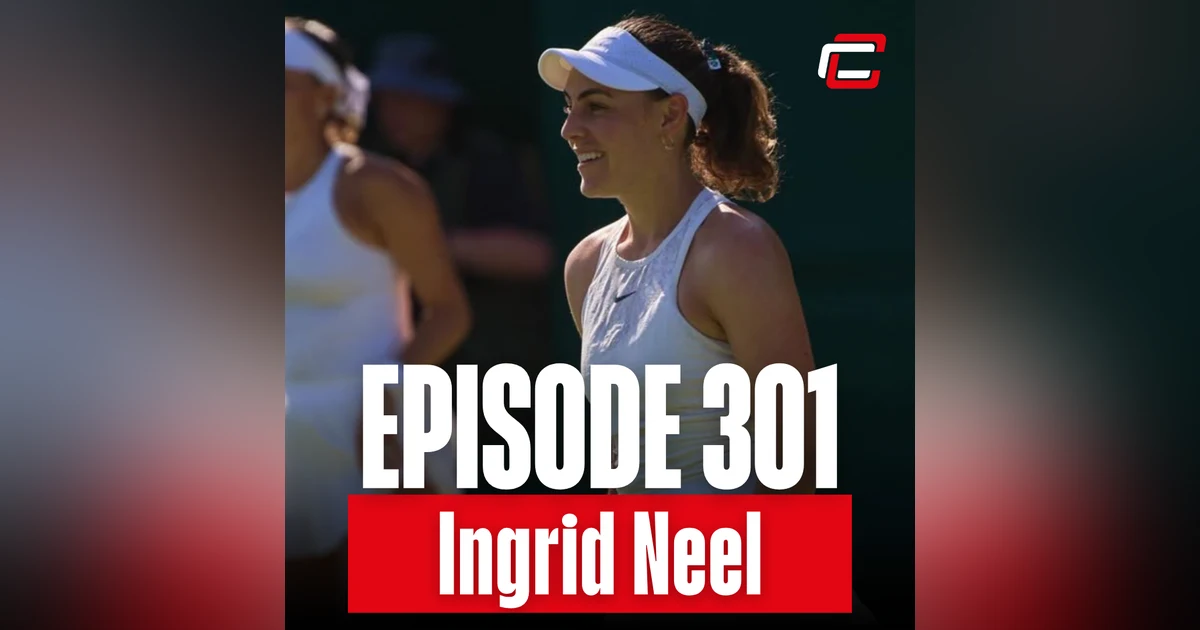

 Apple Podcasts
 Spotify
 Overcast
 Castro
 RSS Feed
 Follow the Podcast Here: https://www.instagram.com/ctc.podcast/
Follow Tennis Athlete Here: https://www.instagram.com/tennisathlete_sta/
Follow SotoTennis Academy Here: https://www.instagram.com/sototennis/?hl=en
Email us: info@sototennis.com
You've drilled the technique. You've done the fitness. And still, in the match or the tiebreak, when you have chances to close out, something else takes over. That's not a skill you're missing. It's something that's never actually been measured, until now.
Click the link here for a FREE diagnostic: https://clutchquotient2026.scoreapp.com/
Ingrid Neel
Ingrid Neel was one of the most decorated US juniors of her generation, winning every Little Mo age group, a 10-and-under world championship in France, and the deciding match in the NCAA finals. Then came a slipped disc in Tokyo, wrist surgery, two and a half years away from the sport, and a ranking that dropped to zero.
A year on, she made the quarterfinals of Wimbledon, which was her best-ever Grand Slam result. On the court she loves most.
This episode is one of the most honest and warm conversations we've had on Control the Controllables. Ingrid speaks about injury, identity, friendship, family and what it really means to keep going when you've lost your relevance, your ranking and your answer to the question of who you are without the sport.
In this episode:
- Wimbledon quarterfinalist, reflecting on her best ever Grand Slam result a year after wrist surgery
- Being present at Wimbledon and the US Open while injured and not competing, and why it helped
- How she genuinely celebrated others' success while struggling herself
- Can you have true, real friendships in an individual sport and still be the ultimate competitor?
- The back injury that nearly ended her season in Tokyo, and how she won the tournament anyway
- The wrist surgery that made her question whether she'd ever play again
- Growing up in Minnesota, the Bollettieri Academy and Nick giving her open access
- Being a prodigy, winning every Little Mo age group and a 10-and-under world title in France
- Did the values her parents instilled help her, or hold her back?
- Self-worth, identity and who you are when the ranking says inactive
- Choosing to represent Estonia and the story of the grandmother she is named after
- The Quickfire Round
TennisAthlete provides age-appropriate, research-backed strength and conditioning programmes from proven S&C coaches. The platform Dan recommends for physical development. Visit sototennis.com/tennisathlete

Episode 301: Ingrid Neel
DISCLAIMER: Please note we use a transcription service, so there may be some errors in the following transcript for the episode. If you can, refer to the audio for the exact quotations.
Dan (00:01)
Welcome to episode 301 of Control the Controllables. And another brilliant guest coming your way today in Ingrid Neel. Ingrid, who had a fantastic junior career, one of the top US juniors. And then she's gone on and she's now a top 30 doubles player in the world. It's another great episode that...
You know, really gets to the heart of what tennis is about. It's not an easy sport. You know, there's someone who was maybe destined to be a top 50 singles player in the world, but that journey's not smooth. Ingrid talks through that with amazing honesty, amazing humility, as anyone that knows Ingrid Neel would do. Now, before I pass you on to Ingrid, I also want to just let you know just a little something actually in the link below.
It's, your clutch tennis scorecard and I'm, I'm joining together with a team that we're actually, you know, ironically, I'm here in New York actually at the mixed doubles championship before the main event starts. And the matches have been going down to that match tiebreak, the 10 eights, the 11 nines in the third. And, and it often, tennis often comes down to those couple of moments. So we've been working together on, on how we can help you.
If you're playing in your club, your school, junior tennis, how you can get better in those moments and you can turn those matches around. And we're just starting this program, but if you just have a little click of the link in, in the show notes, you'd be able to take a little diagnostic costs free. It doesn't cost you a penny to do. And you go on there and it takes you two or three minutes and we'll be able to identify maybe some of the key areas that you...
need to work on in your game. You're turning those narrow losses into wins because we know that you win 50 % of the points. You win 50 % of the matches. You win 52 % of the points. You're winning 96 % of your matches. So have a little look on that. And I'm now going to pass you over to Ingrid Neel.
Dan (02:15)
So Ingrid Neel, a big welcome to Control the Controllables. How you doing?
Ingrid (02:20)
I'm doing great. Thanks so much for having me on.
Dan (02:23)
And you are my first guest of the next 300 episodes that I'm gonna do on Control the Controllables.
Ingrid (02:31)
What an honor. This is incredible. Well,
Dan, I I always knew you were meant to be a podcast star because we meet so many people and we're around, you know, so many different cultures. You have one of my favorite accents that I've come across. So it's—
Dan (02:47)
They, well, they,
I've got the accent and the face for radio, people tell me. So that's, that's, this
Ingrid (02:52)
No chance. No no not No no. This is why we're on video. It's good.
Dan (02:57)
Is why we hide the video when we put the podcast out. But a massive, a massive thanks for coming on. I think, look, my starting point, there's lots that we've got. You've had an interesting life, you know, a relatively young life, but you've had a very interesting life. And, I have to start, and I said it to you at Wimbledon.
I was genuinely over the moon for you and I know a lot of people were because you're one of the good ones out there on the tour. were a couple of weeks on but you had obviously an incredible run at Wimbledon. Reflect on that. How were those couple of weeks and you know after what you've been through over the last year or so, how did it feel to go to the quarterfinals of Wimbledon?
Ingrid (03:42)
Gosh. It's it's everything. I mean, I did spend basically a fortnight there, even though I, you know, didn't win. I didn't I only I got to the quarters and I almost said I only got to the quarters, right? Because there's plenty of tournament left to play. But I will say Wimbledon has always been my favorite event hands down for many reasons. I go into that. But if I look back exactly a year ago, I wasn't even practicing. I was barely holding a racket and able to hit the ball because I was going through my post-op from wrist surgery.
I was actually at Wimbledon, funny enough, last year, but I came mostly for friends and to be around and to get some treatment and that kind of thing. And before that I had said let's say, you know, a few months before July, I said, I'm not going to Wimbledon. That's there's nothing that's gonna hurt me more than, you know, being there, not being able to play at my favorite event, watching even players that I love, like watching them compete and I'm not able to. But then I did and I actually really found a different type of enjoyment being there and realizing, you know what, I might not be in the spot that I want to be, which is on the court, but life is more than that. And I'm still at Wimbledon. This is my community for now. Like tennis will be done one day.
Dan (05:27)
Oop.
Ingrid (05:28)
But these are the people that I have connections, relationships, you know, friendships with.
So I actually really enjoyed my time there. And then fast forward, you know, 365 days later. And I'm playing, I'm fully healthy. I have a wonderful doubles partner next to me. And you don't know any tournament you go into, you have no idea how it's gonna go. The competition's, you know, so stiff. And you could tumble out first round, or you could make a run, and mine just so happened to be the best run I had ever made in a slam. So that was a very, very I don't know, in a sense like poetic, for me.
Dan (06:12)
Yep.
Ingrid (06:13)
And but I also say like I'm not I'm not done either.
Dan (06:18)
I was thinking it's very commendable to go on, feel like I've seen you at a few events that you weren't playing,I mean, obviously you were at US Open.
Ingrid (06:26)
Yeah. Probably most notably also the the US Open l last year as well. And you were there the whole time. Yep. yeah.
Dan (06:30)
Yes, exactly. And I was there all the way through, maybe longer than I should have been that night as well, but afterwards.
Ingrid (06:40)
Ha ha.
Dan (06:42)
In terms of that, do you think that helped you this year? You know, having almost the experience of being around it and familiar and maybe that little bit of extra drive and motivation and feeling and vision and those type of things.
Ingrid (06:58)
I have to say absolutely, it was something that I thought about before, you know, making these trips. Like, is this really what I want to do? And also sometimes, like, what are other people gonna think? Are you just some sort of like groupie that, you know, but I if I think about you know how much time I had spent away for me, away from the game, you know, honestly, the better part of two and a half years, I was out for about two.
So I was disconnected and a lot of times, you know, I felt kind of lost and definitely bored. But I think it helped a ton. It also helped go through like what emotions I was feeling, you know, when I'm at these events and I'm just there, you know, training and again, cheering maybe for the people that I want to do well. The US Open was a really cool one because I was only meant to stay a week. And then Erin and Gaby, you know, kept winning. And I was like, what am I going home for exactly? Like they're still going. I'm around, you know, Bruce and all these Max and all these people, these coaches that I can work with. And I was able to kind of be close to you guys. And I remember sitting there in Arthur Ashe in the finals.
And I said, like this will if I ever, you know, get the chance to play on Arthur Ashe one day, I know this will help me. It's there's no doubt in my mind.
Dan (08:39)
I love it, and again this is why for me you're so popular as well, because you have that ability to do that. But I guess two things that I want to jump into before we get into your story, because we do need to get there as well, one, tennis is a sport we have small windows of relevance.
Like I'm acutely aware of that as a coach as well. You can, you have this relevance and all of a sudden there's a lot of noise around and people kind of want to speak to you and you get this and you get that and a bit of adulation and you're getting like all of these kinds of feelings, right? Ego gets tickled a bit and it's like, Ooh, this is nice, you know? But, but then two, two years out of two and a half years, we almost, in the nicest possible way you do lose your relevance and—
Ingrid (09:31)
Yeah.
Dan (09:32)
A large percentage of the tennis world forget who Ingrid Neel is for that moment, right? It's like,—
Ingrid (09:38)
Yeah, yeah.
Dan (09:39)
Know, so the first part of the question is how do you deal with that? The second part of the question is how have you got your head into a space where I've always admired you greatly for your ability to celebrate other people's successes in what is a very genuine way and you're able to even there that you're saying you're sat on the final reframing that in a way that this is also helping you for future potential future opportunities and that's that again that's a really underestimate how strong men what a strong mentality that is so so how have you dealt with it maybe tell us about maybe some of the laws the places you can go when you're outside of that relevance and you you
You use the word bored, but I would imagine sometimes it's deeper than just boredom.
And—
Ingrid (10:30)
Yes, much.
Dan (10:32)
Second, how have you been able to get your mind into that space of, that's a powerful head space to be in, be able to celebrate other people's successes whilst—
Ingrid (10:41)
It is.
Dan (10:42)
You are, whilst you are struggling and in a position yourself of injury, but you also are still trying to be a professional tennis player.
Ingrid (10:50)
Yes. Well, I'll start with that concept because as I've grown and mature and gotten older, I've realized that it doesn't take anything away from your ability to succeed if someone else does. Like that's just the biggest thing in tennis, growing up, you know, it's so competitive. It's one-on-one. It's individual. A lot of times you feel like you're almost
I mean, I grew up in also the academy world IMG, and I feel like one of my greatest strengths was my quiet, competitive nature, I would say. Like people might not have seen it outwardly, but they knew it. They were like, wow, she's just she just goes about her business and you know, no nonsense, but she's got that more like fire in her.
And but I always think it's like you're young and you're always sizing yourself up against that next person that's your age, your peer, your the coaches, you know, they're standing there, and it always felt like they're assessing you constantly. And then you go into you know a college where you're getting recruited, and it's again, and it's almost like this thing where I have to impress them more than maybe the next person impresses them. And then…
You know, as you go on with the the tour life and figure out like, wait, what makes me actually what drives me to get better and want to do this? And there's every day I could play someone and I could win or I could lose. And if I'm just constantly like, like I lost, so I want them to lose, it's just, it's truly kind of toxic. And I think I realized…
Like there's no for me, no sustainability in that. And I one of my favorite things about the tour and about doing this is the friendships that I've made. I mean, the people closest to my life who I believe will be with me the rest of my life are tennis. And if I don't genuinely feel like joy for them, happiness for them, if I can't you know, almost sometimes like we cry on each other's shoulder. Like I don't really see the point because you're missing that like human aspect. So I really got to a space where it's like, okay, it doesn't matter if, you know, I have a bum wrist and I can't hit. Like and I'm watching, you know, people who I love playing and they're in the biggest match of their life on the biggest stadium.
That doesn't have any relevance like to where I am now, except for me celebrating that, picturing myself, like I believe like I can do that too. I I don't think that's selfish, you know, in in any way. And again, I don't take it for granted that those girls, it's you know, Erin, Gaby, were like, please stick around, you know, and and to be that just one more supporter.
I've realized, you know, how beautiful and important that is when I'm playing. I think when I think of tournaments, and yes, you remember the result that you had and that was a great run. Mostly I remember who was around and how uplifting it was and the memories. Like that's what I carry. Cause I'm like, I wanna go, I wanna do Wimbledon again tomorrow because I want the people there that I, you know.
I cherish the most to be a part of it. And when they feel, and then tennis is very, you know, everything's around the player. It has to be. It must be. That's the you know paradox about a coach. It's like you guys help so much, but you're also, it's all like around our schedule and our needs. And sometimes I do feel a little. Yeah, I do feel bad. I honestly am like,—
Dan (15:04)
You're so selfish, it's unbelievable.
Ingrid (15:09)
but but when you don't make us feel
Yeah, it's like this is this is the nature, this is the dynamic of it. And when people are just like, we're here, we all have the same goal. I mean, you we might be spending 10 hours, 12 hours on site, especially for slams, you know how that goes. I'm thinking, like, how could anyone truly be, you know, elated to do that? But when they are, it's so powerful and it really gets us through. So
I would that's kind of that second half of your question. And then the first of course. Yeah.
Dan (15:46)
Can I ask a quick question before you go into the first part on the back of that?
Can you in an individual sport have true, true, true friendships and still be the ultimate competitor.
Ingrid (16:02)
I believe yes. Today, that my answer is yes. If you asked me again, maybe six years ago, I I probably would have stumbled over that and been like, I don't know. People tell me I'm not successful because I'm a little too nice, or you know, I don't have that killer. And pe or not even that, like maybe they knew I had a killer instinct, but they're like, but other people don't, your opponents.
Like if you're too nice to them, they're not gonna see that they're gonna, you know, walk all over you. I don't love that message, especially for youngsters and for kids. I think I was really fortunate that I grew up with one other girl my exact age. She ended up getting a full ride to UNC. She was we did USTA camps together. She was phenomenal. Her—
Dan (16:55)
Yep.
Ingrid (16:56)
—name's Jesse Ainey. She played you know, US Open. She, she…
got to top hundred or around then in in doubles. And we played every single day after school. We would play in almost every tournament because we'd both make it, you know, to the deep rounds, like the semis and finals. We were best friends. And I think that was just the defining like time where you could hold both things, like true friendship. And then just like I there I don't want to lose to you…
Ever, not in anything, like in a board game, in—
Dan (17:32)
Yeah, yeah.
Ingrid (17:33)
—you know, spike ball, like it one-on-one basketball. I mean, I think one time she was a true, you know, athlete, and and she actually could have went to the Olympics in hockey and we were playing one-on-one basketball. And I think she like body checked me. It was like fair game, you know, everything. But this is I I really believe you can because in tennis it's.
Dan (17:55)
But it's not easy.
Ingrid (17:57)
.It's not it's not easy. I would say it's not easy here in mentally. Yeah.
Dan (17:58)
Because you almost, yes, because almost any relationship out there, this is maybe getting a little bit deep.
Ingrid (18:07)
Mm-hmm.
Dan (18:08)
It's very hard for a relationship to be completely 50-50 in certain situations, right? So in—
Ingrid (18:16)
Might never be.
Dan (18:17)
—most friendships, there's a bit of a boss. There's a bit of a boss.
Ingrid (18:21)
Yeah, yeah.
Dan (18:22)
Who maybe dictates the energy, dictates—
Ingrid (18:24)
Mm-hmm.
Dan (18:25)
—the... I've got lots of good friends who, but like if they don't organize the dinner or the night out or the party, they're a bit miserable, right? But whereas if they've organized it, everyone has to go with that.
You know, similar thing with siblings, right? You've got, you—
Ingrid (18:41)
yeah.
Dan (18:41)
—know, you can have these sort of setups. Do you think that the friendships can influence—
Ingrid (18:49)
Mm.
Dan (18:49)
—what happens when you compete? Like, yes, I believe you can have some true friendships for sure. I think it's more challenging in tennis than some sports, but I also think.
Sometimes we know later on who the true friends were as well that comes out—
Ingrid (19:04)
Yeah, yes, yes.
Dan (19:06)
—a little a little bit later.
Ingrid (19:07)
They respond to wins and losses. I mean, if you have a friend who won't speak to you when you win, but are the friendliest person after they win, there's a there's a sign there, you know. It's like and and I always I make a I don't wanna say it's 'cause it's truly not fake, but I've always made a huge point to be like, I don't…
Treat people differently based on the result. I don't act differently. Like if I'm gonna text you about something, it's gonna be regardless of that, you know? And it's we don't have a, I mean, we don't have a context for. So that helps a little bit. I mean, pegs, you could say, are the closest thing to like when there's a little bit of maybe animosity, but yeah, it's doubles, specifically in this—
Dan (19:57)
Yeah.
Ingrid (19:58)
—case. So…
I think also when people see it look, class shows over time. I don't think you are aiming to like win people over. And I don't think that happens, you know, with just one moment. It's like, how does someone carry themselves over the long term? And yeah, it that's just pretty, pretty clear.
And I just wanna be and it for me it's it's actually an authentic thing. Like I I don't posture and act a certain way because I want people to like me. It's just, hey, that's—
Dan (20:37)
Yep.
Ingrid (20:38)
—that's sport. That's our sport. And then now we're we're human beings, you know, above all. So.
Dan (20:45)
Good, good, good answer. So now take me back to the first part that I asked a few minutes ago.
Ingrid (20:48)
Yeah.
Oof. Okay. So I was out for six months with a back injury. And this was actually it really happened during Tokyo 2023, the 500, that Ulrike and I ended up winning. Okay. But I woke up after my first round like basically bored, like couldn't move. I, you know, I was like trying to move, body didn't respond. I was like, that's new. What's happening? And subsequently, you know, I would go, I would basically go to the trainers for an hour and a half to get like three degrees range of motion. I didn't even remember if I warmed up before the match and I was like go out there. But sometimes I have an ability to sometimes play not my best…
In the sense of like, I'm not gonna be as mobile, but I can really focus when I'm badly injured or really sick, you know, and you play with the flu, and you have no other, you know, distractions except for getting through that moment. And once you're on the court, I I I'm like, hey, if I'm taking the court, like I'm aiming to win here. This is not just like go through the motions and walk away.
And try not to like embarrass yourself thing. It's like, I'm out here, let's go. So the adjustments a lot were, you know, don't sit on the changeovers. I need to stand because my back couldn't handle that. Don't do eye formation, but you can do Aussie because I couldn't crouch. Like things—
Dan (22:31)
Yep.
Ingrid (22:32)
—like that, you know, serve at a pace that you can sustain for a match. So we ended up, yeah, we find ourselves, you know, we won the tournament and that was a feat. And I
actually had to like well, had to fly business class to get back to the States, had to buy like three seats to lie down from California to Florida. Like it was that bad. So anyway, six months I dealt with this like slip disc actually. And so I come back feeling and I worked, you know, I worked on everything I had to from a physical standpoint. So I come back.
And I luckily, because you know how this goes, you don't know if your partner, the partner you played with, and Ule and I had really started this partnership. And I now all of a sudden I'm out for six months. She could have easily, you know, had true success with someone else. And then I'm just like, well, when I come back, I gotta fish for a partner. In this case, that wasn't it. Like she she was ready to play when I came back. So I was like, that's that's one thing off my plate. Let's go. And I thought we were…
Were a great team. We made a final of a 500, my first tournament back. So I was like, I'm back. This is awesome. I felt felt great. I felt you know, as fit as I ever had. So I played 14 weeks straight. maybe ill-advised as you look back. So that was from April, like Stuttgart through Wimbledon. But then also when you think about it.
Where you know, where do you take the break? You know, you're not a lot of people actually, if they're from the US, they don't go back in that time because you go from clay, rolling garros, and then grass season straight away. You know, you know the calendar. So I come back after one.
Dan (24:26)
Well Zhang…
Zhang's up to 41 weeks straight this year so you're nothing on her.
Ingrid (24:30)
I I just yeah, so just invert those numbers, fourteen fourteen to forty one.
That would be my absolute last year on tour period, probably. So definitely power to her. But I literally came back after Wimbledon felt fine but just recovered. And then I go into that first event, DC…
And something happened with my wrist. I was like, this is actually not good. But I sat out Toronto Cincy to be ready for the open. That was tough because actually at that point I had only just gotten my ranking to get into 1000. So I wasn't even capitalizing yet. Tokyo propelled me into the top 50 for the first time. And I skipped those two to play the open. And I thought I was okay.
I was like, look, you know, at least I'm not hurt. The open that was, you know, to get in the slam, great. Let's let's move on with the rest of the year. And I just re something happened on the court in Guadalajara and I was like, this is this is actually really not good. So I spent the better part of two, three months going like full rest, rehab, thinking there's no way I'm not ready for Australia. We're in September.
And I just have to be ready by January to this isn't getting better. And I've shut it down for 10 weeks and I've been so diligent with my PT. And during that time, I think so many athletes probably relate to the first of like, you might have a diagnosis, you're still figuring out what's the best protocol, but you're in this limbo because you're thinking, Well, is this working? What would be the…
Next step of treatment, should I have to go there? And I think our minds always, you know, worst case, but sometimes what has to happen is surgery. and I had never been down that road before. I think when I was younger, a lot of times I said, if I had to get surgery, that would be the moment that I stopped the sport. So that's interesting.
Dan (26:46)
Okay.
Ingrid (26:47)
Then once you're in it.
And you're like, actually, this might be my only option. One, to get back to doing what I want to do, but two, just for a lifestyle. You know, my my wrist…
Was hurting, a driving stick shift, you know, like that, that kind—
Dan (27:02)
I'm okay.
Ingrid (27:03)
—of thing. So, so I was like, I really just want, you know, I'm young enough. I'd like my life back. And I would almost say go going into surgery helped my mind be like, okay, and now I have this like…
Sure thing of I know what I'm doing and they told me six months. So I was floundering before that because I tried everything, nothing worked. So if we talked about, you know, being bored, being kind of depressed, it was like I had a moment where I was like, I am truly out of answers. So I got surgery and I was, it was kind of projected I'd be okay, maybe even to play Wimbledon. So that would be six months from December when I got it.
And like I said, I wasn't even holding a racket at Wimbledon. But all throughout that just taught me again so much more about patience and my timeline. Like there reached a point where I was like, why do I have a rush? Like whether I'm out six months, a year, a year and a half, as long as I can feel like I can get through this and I really, really want to come back. I felt I had not reached my potential. I felt like my career, book was not closed. I was like, I have so much more left to show myself, but also in a way, like tennis is it's showing the world. And you mentioned how people you become your relevance, you know, dies a—
Dan (28:39)
Yep.
Ingrid (28:39)
—bit because they're they're out there doing their thing and you're not there. You're not there in person. You're not there on the ranking sheet. You get taken off completely, right? Like I would Google myself if if I and it's zero. It's she's an inactive player. So that was, you know, it's like, yep, that is really reality.
Dan (28:56)
Yeah. And if you, and in a sport where I think from an early age, and we've touched on this as well, the world of comparison, the world of, competition, being, judged, being all of these things, it's, it's a very natural feeling that we then have our self-worth attached to that, right?
And you were, get to it in a bit, you were a very good junior. You were very relevant at that time. you went to a top university, you, you won the deciding match in NCAA finals. You've, you've had, you know, like proper, you've had a lot of, lot of things that have been in your world from a young age. So, so that's, that's a big lesson to learn mid twenties that actually—
Ingrid (29:43)
Right.
Dan (29:45)
—how do I, how do I value Ingrid Neel the person, not—
Ingrid (29:50)
Yes.
Dan (29:50)
—just Ingrid Neel the tennis player. And I think that's one of the things that tennis players find the hardest through.
Ingrid (29:55)
Who well, who am I without tennis? What do I have without tennis? I was in it wasn't necessarily like every day. I'd wake up and write that and be like, how do I answer this? But those were very much like in the mind because you're faced with, look, I might have to move on. That might not even be my choice at this point, right? Like, do you get your health back? Do you get your I would say level for me?
That question was always gonna be based on how much I could get my body to, you know, cooperate and that—
Dan (30:35)
Yeah.
Ingrid (30:35)
—kind of thing. Cause I I believed, I was like, I I'm there. Like it wasn't a fluke that I got to where I got, yet I didn't get to where I still want to go. You know, you have you have that. I think people.
Some people were like, you gotta be so proud of what you've accomplished. I'm like, I I guess, like, sure, again, your self-worth is not determined by your tennis results. Because, or at least if mine were, I would be it, I would not be a happy person. I can tell you that. But no, the the junior thing is also so interesting because I I would consider myself, not that I…
Wanted to think this, but in a sense, like a little bit of a prodigy. Like I won all the I don't do are you familiar with the Little Mo tournaments? yeah.
Dan (31:27)
Yeah.
Ingrid (31:28)
I won every age group, eights, nines, tens, elevens.
Dan (31:32)
Wow.
Ingrid (31:33)
I yeah. And I, you like many times players, I started young, but I actually I won like a 10 and under world championship in France. and I was asked.
Dan (31:45)
Who humbled you because you don't act like that person?
Ingrid (31:50)
Well, those were just here's the thing. I just went I didn't know this was not normal—
Dan (31:56)
layer.
Ingrid (31:56)
—stuff either. That first event that I had, you know, traveled to France at 10 years old, I actually had no idea if I was good or not. I wasn't as It was
Dan (32:05)
Was it ore? Did you play ore? Do you know what they're...
Ingrid (32:10)
So the name of it was the UAT Once Upon a Time Tennis Kids' cup. And this wasn't even it wasn't Le Petites As . Like, I didn't play that. This is really hilarious. In the finals, I played Maia Lumsden. And—
Dan (32:24)
She was good at that age.
Ingrid (32:26)
—she was phenomenal. And I also at do you know the Smrikva bowl? That's like, yes. So—
Dan (32:33)
Yes, yes of course. In Croatia, yeah.
Ingrid (32:36)
—two in Croatia, two girls from the US, two guys played the winner and runner up of that, you know, European. I think it's I want to say 10 and under smeared football. So it was—
Dan (32:48)
It is,
Ingrid (32:50)
—Katarina Jokic. She played at Georgia and she was really—
Dan (32:54)
Okay.
Ingrid (32:55)
—good. I think she beat Maia in the final. So Maia, so I lose to Maia on my first red clay match and ever. And I'm standing this is how this is my game. I'm standing on the baseline the entire match and just getting…
Toyed with because I didn't know any different. You know, I was used to like fast indoor hardcourts. And I was like, whoa, what is this? Like I I played on green clay, but I was like, this line is slippery. And everyone's like, why is she standing on the baseline on clay? Like this is absurd. And then the next week was hardcourt in France. And so I ended up winning that. But I was like, I I'm okay. Like if I can win outside of, you know…
Minnesota and Texas where the little Mo was. Like maybe there's something to this. I also though I didn't grow up, I grew up with you know, parents who liked sports more recreationally than anything, but I didn't have any sense of like what a pro sports career was, anything like that. My coach would mention these, you know, how they call it satellite tournaments rather than futures. And I'm like, that sounds…
Terrible. Like, don't put me in any of I was like, what do you mean? And I had traveled to tournaments. The Nike Junior Tour was at Stanford. And I played tournaments very often at the University of Minnesota Tennis Center. So I've been to two college campuses by the time I was 12. And I was like, I'm gonna go to one of those two schools, Stanford or University of Minnesota. Like as if those are equal programs. You know, it's so like so hilarious. But this was my…
Just like, I'm doing the thing. And then, I took visits to the Bollettieri Academy, and Nick did a little assessment when I was like 10 or 11 because of a friend. You know, my parents were like, could Ingrid maybe get an hour with Nick and not pay $900? And the friend was like, maybe he'll do do me a solid. And Nick was like…
Anytime that you want to come and train here, you know, you have the keys. So I would take some visits down there. And that was, I mean, I grew so much because I was playing basically I was playing male teaching pros. And then that other girl, Jesse, who was my age that I mentioned, and high school boys, like that was my development and tournaments.
I hadn't played against people my age for a long time, day in and day out, because of where I grew up. So I go to Florida and I was like, this is actually freaking fun. Like I'm now sizing myself up against intense girls, intense boys too, but you know, you could actually play girls at that time because the competition in Florida was there. And it would just charge me. Like when I came back.
Then I would play at my club back home. And they're like, what got—
dan (36:05)
Okay.
Ingrid (36:06)
—into you? Like you're not only way more tan, but you just have this like energy that you're just so into it. So it was really, it was really nice. And I don't think I would have been ready to do that full time, you know, at age 12, but by 14, I moved full time down—
Dan (36:23)
Okay.
Ingrid (36:24)
—to play. And it really was my parents always stressed that.
This is the goal from this is not, you know, a bunch of grand slams and glory and all this. If that comes, great, but there's an intrinsic value that you get on this journey through tennis. How many things in your life can you take to the nth degree? That's such a gift. They they were like, I think you could be a doctor or a lawyer.
Very like, I don't want to say easily because I understand like how hard that is, but it's hard in a different way. They're like, if you want to do that, they're like, we have no doubt that you could do that. But when do you have this opportunity to do this thing? And it happens to be tennis. And I I loved it. You know, I always had a a true passion for it because for me it was always fun. It was the best part of my day. It was…
the people I liked hanging out with, like those were my friends, way more so than the friends I made at school. So it was a natural thing. And then.
Dan (37:39)
Do you think you took that message from your parents though? As a 14 year old—
Ingrid (37:45)
Right.
Dan (37:45)
—do you think, were you like, okay, this is great. Or were you like, yeah, right, whatever, I'm gonna go win some Grand Slams.
Ingrid (37:52)
I actually feel like I took that message and at the same time I I dreamt, like especially when I would watch the slams and mostly I would say what sticks out, like US Open, Wimbledon, you know, you'd watch the battles and you're like, I see myself there.
I'm gonna be, I'm gonna be the last, you know, girl standing. I'm gonna give the speech. I my my actually grandparents grew up in flushing. So I was like, they're gonna be there. I'm gonna be, you know, dedicating this this win to them, this Grand Slam win, you know, stuff like that. And, you know, I'm gonna I I had also a unique style game. Like I actually in singles…
Served and volleyed and came in and I had a lot there was a lot of talk throughout my life surrounding it. Like, can that actually work? Can you actually make it? I guess the answer Dan is no, because I didn't I didn't make it in singles. Yeah.
Dan (39:04)
But can I dig a little bit on this? Because if your parents are listening, I'm sorry and I'm not, I'm absolutely not having a go at them.
Ingrid (39:11)
No ge go, please.
Dan (39:13)
You my parents would be that way inclined as well. And I think that maybe shows in both of us, right? Of like, values that are installed and it's not just about winning, it's about having, you know, all of the different intrinsic values and everything that comes through. But do you think that messaging could also have maybe held you back to not be desperate enough to then go and get it? I don't like the word desperation too much, but it is sometimes desperation. It's this obsession, this desperation. I have to get it. I have to do that. I will find a way of doing that.
And I know that can sometimes lead to people not being able to relax and play, but at the same time it can lead to people to just, I'm not losing. Yes.
Ingrid (39:59)
Sure. Or it could push them to reach heights that they never would have. Yeah.
Dan (40:05)
Even though I'm all for that message and that's the message I give as a parent
and as a coach, is the danger that that message holds someone back as well?
Ingrid (40:17)
No, it's a it's a great question. Cause I've always I've even always thought about, you know, there are people that played to get out of like I think Navratilova and Lendl were like, we played to for our almost like our freedom so we could leave the circle, you know, it that's how powerful is that, right? And I'm absolutely, absolutely. Yep, yep.
Dan (40:37)
Djokovic carries that, Djokovic carries that. Sabalenka’s carrying that a bit, something, there's something there, you know, it's like...
Ingrid (40:46)
There's no doubt. And I had so for me, yeah, it would it had to be all that's like internal. Now I will say, although my parents said those things, they're intense individuals. Like like—
Dan (40:59)
Right, okay.
Ingrid (41:00)
—they so they would I wouldn't say we're dealing with chill, like voluntary.
Dan (41:05)
Well, the fact that you said, the fact that you said, if you're not going to be a professional tennis player, you will be a lawyer or a doctor told me a little bit. There was still, there was still quite a high achieving standard in there. Sorry. You said voluntary said, sorry. I want to hear that.
Ingrid (41:12)
Sure, that's maybe right. Or you're still 100%. No, but he he even like he's dealing with, you know, Yuri Sharipov and Richard Williams, and he makes a similar connection to my mother. And I'm like, whoo, okay, I guess, you know, and—
Dan (41:34)
Hehehehehe
Ingrid (41:37)
—and he's from New York and she's from New York. And it's it's—
Dan (41:39)
Yeah.
Ingrid (41:40)
—very so in a different way the drive was just like be as good as you can be. You have time though, and always I mean look, I have been this way my my whole life, and I would say thanks to my family, I my wins and losses…
Truly weren't a determiner of like, do my parents love me? And that kind of thing. So I don't think I would have handled it very well if it had been like, you're not eating tonight unless you win. Now they were severely disappointed if my effort level wasn't there, something like that. So I think the markers of which I…
was judged on were pretty healthy. and then there were times when I'm like…
But why on the sidelines, like are you acting psychotic? Like I have, I have a very, I have a very this is not even that long ago. It was the French Open. And I was sharing Bruce with Erin, and it just so happens that they put us perfectly at the same time on two—
Dan (42:53)
They do.
Ingrid (42:54)
—opposite ends of the facility. And so Bruce goes, All right, I'm gonna go…
First half to Erin's match, you know, hopefully she cleans up quickly, and then I'll head over to yours. And he'll be judging like how the match is going. And I think we're down a set and a break. And it's like, we kind of need coach here. And he did say he we learn all this after he says to Erin, he's looking at her, goes, I got gotta go, gotta go. And she's like, Go where? Like he's like, No, no, no, like I'm going to Ingrid's match. She's okay. Like I thought you were telling me like…
Gotta get to net, gotta go somewhere, you know, this kind of thing. So you see, I was like, I thought I would have thought that too. That would have been my first initial—
Dan (43:31)
Well, I've seen it before, The confusion.
Ingrid (43:37)
—reaction. But I so I'm on the court, we're sitting on a changeover, and I hear a voice behind me, and it's my mother's, and she's trying to like tell me stuff. Meanwhile, you know, I'm 26 years old. My family is there on their supposed like French holiday vacation to watch me at Roland Garros.
And I'm like, this is and I go, I turn around like fuming. I'm like, you're gonna get us a warning and a point penalty. I go, sit down right now. And no, she doesn't sit though. She proceeds to like just walk from like corner to corner because she's probably like just this nervous energy. And I was like, some things never change. And then after the match, we we pulled it out, we won. And after the match, you know, it's happiness, it's joy, but then you the stories come out and it was like the entire my entire family in the box was just, you know, stress baskets. And at one point my uncle just goes, hey everyone, now's a great time to shut the F up. Like it was just like these are you—
Dan (44:43)
She's caught it.
Ingrid (44:45)
—could you could be doing this your whole life and things like never change.
Dan (44:48)
Yeah.
Ingrid (44:48)
So in a sense, intrinsic value and everyone's super zen until they're not, you know.
Dan (44:54)
Yes, well I had a question in my head when you were talking earlier. Why were you so good when you were younger?
Ingrid (45:00)
Hmm. Hmm.
Dan (45:02)
But I think you've just described one of the reasons probably.
Ingrid (45:06)
Well, I had a I had a mental toughness. I didn't even realize it. Actually, like I could handle chaos really well. I would also say could be a natural thing, but my my childhood coach, he designed his practices and drills to basically…
In a sense, like give me the hardest time possible, but always on a stress of like making it fun. He's he goes, I want the kids I'm working with to work hard without even knowing they are. I mean, we his favorite game to play with us was called Death. And he would literally like his feeds were so egregiously tough and bad that it's like, well, if you can win this game or else you're…
You're suffering, you know, on the floor because you're like trying to get wind. Like it was kind of it was that. But it wasn't in a like we're gonna, you know, bludgeon our way through this and make you suffer. It was just like, but if you lost the game because you like couldn't run anymore, that's okay. But that's what it was. And the and I we did so many like we we would play, you know, tennis with our handles. We would play, we would be on the court and half the time was…
Soccer, tennis, like stuff like this. And I really just learned how to win by any like almost means necessary, but truly just tennis. Like no gamesmanship, no like cheating to me was a completely foreign thing. I would give people balls that were, you know, a foot out on the serve. And people watching me were like, this is actually…
Really annoying that Ingrid cannot call balls properly. You know, she like her opponent double falls 12 times and she's just giving away points because that wasn't what was important to me, was just the result. It was literally like the essence of of playing. And then I I think my other strength was timing. I think I had really, really great like hand eye coordination timing. And I I played this like…
Get to net, come forward, take the ball on the rise. I enjoyed that and that's where I kept going.
Dan (47:32)
But how do you win when you're young doing that? Because you would have been titchy, you would have been, you know, like, because that game style gets lobbed or.
Ingrid (47:38)
You instead of letting them shirt, you take swing volleys. Like literally wasn't even a qu it was like I'm stepping in. I'm taking this in the air. I'm not letting you reset the point because I'm gonna be at net and the volley's going to the opposite corner. Like literally, I actually didn't have the patience to sit there and watch them, you know, recover from a shot where I had the upper hand or beat me.
Because they were able to hit, you know, sky, sky lobs. I was like, absolutely not. So and and standing in and like basically probably to my detriment later, later on, but I literally was like, I'll stand halfway up the box. Like, I I can't say I did a saber technique on returns, but that was kind of my thing, is like almost a stubbornness of like…
No, no, no, you're not gonna let me, you know, get into these long, drawn out, on your term top spin rallies.
Dan (48:44)
I mentioned it earlier I was at the 2014 Eddie Hearn Orange Bowl in 2014, you would have been sixth.
Ingrid (48:55)
I played, yeah, those are years I played.
Dan (48:57)
And, well I know you made the final.
Ingrid (49:01)
In
Dan (49:02)
2014.
Ingrid (49:04)
2014. Are we talking doubles or singles?
Dan (49:09)
The singles.
Ingrid (49:10)
Well, orange bowl? I did.
Dan (49:14)
Orange Bowl you made final and lost to Sofia Kenin. Yeah.
Ingrid (49:17)
Orange wool eighteens. Yep. Yep.
Dan (49:19)
But you when you were only 16.
Ingrid (49:23)
Yes, and I came through quallies there.
Dan (49:27)
I remember your name and I remember following and I remember thinking you know, I watched you play a bit and I remember knowing how good you were. Then, you know, obviously you went on and made the final as a 16 year old. So that's, that's trending. That's trending towards being—
Ingrid (49:43)
Yeah.
Dan (49:44)
—a top player, top singles player, you know.
Ingrid (49:47)
Sure, sure. Yeah.
Dan (49:49)
What then happened, that moment, 2014, I mentioned earlier that you went to college, University of Florida. I mentioned earlier that you had a look on your face that made me think that this information was wrong, that you won the deciding match and the NCAA’s. That's right, okay. So, again, Stanford.
Ingrid (50:06)
No, it was it was right. I I clinched I clinched NCAA's…
And against Stanford and and the indoor indoor championship against UNC actually.
Dan (50:20)
But only played one year.
Ingrid (50:22)
Only played one semester, yeah.
Dan (50:25)
So one semester, so you're having these proper experiences, know.
Ingrid (50:30)
Sure. Yep.
Dan (50:32)
Then you play professionally, you walk away from college, go professional, 2017 time.
At that point, do you think that you were on track to be in the top 100 singles player?
Ingrid (50:51)
Rewind to where I, you know, I made Orange Bowl finals, those results obviously really help show where you truly stack up, but I felt like, yeah, like I believed I could compete, you know, with the top juniors in the world.
You know, that's one result, but I was able to, you know, then qualify for the for junior slams, stuff like that. And I was like, this is this is going well. And I'm actually not even playing that many ITFs. I did not put a premium on my junior ITF career, which looking back, I actually wish I had played more, but that's a that could be a convo for another time. But I went quickly into…
Pros and I actually won my first at the time it wasn't 15Ks, it was 10 Ks, but I won my first at 16. I won another singles, these are singles 10K, 17.
Dan (51:49)
Yep.
Ingrid (51:50)
So those are and those are pretty good and in the US. So those are good results. Like actually, if we're looking at again who I was practicing with at IMG, it's like that was super on par for what they were hoping would happen when they put…
Their resources into girls, boys, anyone. So I felt like, here we are. Like we're really on track. And I had coaches that I did not think were, you know, just blowing smoke that said this group, like it was me and Fanny Stollar and…
Natalia Vikhlyantseva and Jaqueline Cristian. And he was like, you guys are all gonna be top 50 singles players unless something terribly goes wrong. Like that was kind of his his message. And I was like, like that's cool, you know, that if someone has been around tennis says that, you know, that's that means something. with the college, I actually had a very, in my opinion…
Down year right before college, I was my game was not where I wanted it. I was struggling. I couldn't figure it out. I actually, you know, at that point I'm like searching for is it a coach that I need to find? Like what's gonna get me out of this rut? And so I go into college, like finding my stride again, but not fully…
Where I was maybe in the peak of my junior career. I was the number one college recruit in the country at that time. So I I chose, you know, I could choose almost any program I wanted, which just helped relieve the stress of like, yeah, I think even when I was younger, it was like, what college? Like what's gonna who's gonna want me? Right. So that's that's alleviated. And.
Dan (53:50)
That you didn't go to Minnesota or Stanford.
Ingrid (53:52)
I didn't go to Minnesota or Stanford. It's crazy. I wasn't I really let my my you know 10-year-old, 12-year-old self down, maybe. Yes, yes. Our biggest, our—
Dan (54:02)
And then you beat them in the bloody final of the NCAAs!
Ingrid (54:06)
—biggest rival. They and Stanford and Florida, you know, they did have a historic rivalry and it was quite quite cool that that experience. But I left college. I decided to leave college in my mind before we won.
Honestly, either event, like either the indoors or the outdoor champion the NCAA championship. But I the reason for that was I was like, I need to develop my game like a tremendous amount before I'm ready to go on tour. So actually I was not doing it because I was ready. I was doing it in order to one day be ready, if that makes sense. Because if I felt if I stayed at college…
I was going to come out, you know, two years, three years behind of where I had to be. So was like, I need to run my tennis, my career, the only way that I see a path to success. So that's why I chose to leave. I started off, you know, grinding singles and and 25Ks, quallies, pretty much. I mean, I wouldn't say…
Everywhere but like Italy, Portugal. I didn't go to the Egypt tournaments or the tournaments in Turkey where you play, you know, six weeks in a row. I never did that. But I and I played a bunch in the States. I ran into some real good players in qualities. Like I remember I played Danielle Collins, Caroline Dolehide, Lucia Bronzetti.
I, you know, I've I was like, dang, I'm losing like six four in the third against like in quallies of 25s, like how bad am I, type of thing. You know, looking back—
Dan (55:56)
Yep.
Ingrid (55:56)
—a lot of players were they made it. They did quite phenomenal, but I I struggled at that time. You know, I didn't have again my I didn't have a team. I was alone. I felt a…
I felt some financial pressure, absolutely. And so then what happens at that age in your mind? You're like, I'll give myself a arbitrary number, twelve months, sixteen months. And if I'm not by this ranking, you know, I gotta it's just I
Dan (56:27)
Lose around the neck.
Ingrid (56:29)
I don't know what I would tell myself now, but I definitely that's a that's a hard you know, my.
Dan (56:36)
It's a big, it's a big, anyone that I'm involved in their tennis, the second that comes out, I'm like, no, we stop that immediately. You've got no.
Ingrid (56:42)
It’'s just and I'd be curious to know, you know, you've probably dealt with it a ton. So now we're dealing with my doubles is going a lot better. I'm losing belief in my singles, like actually, you know, and I'm losing that belief that I saw myself holding Grand Slam singles trophies and now I'm like, what I can't even get past, you know, a first main draw round at a 25k out of 50k like yeah like.
Dan (57:14)
This is when you're 19, 18, 19.
Ingrid (57:16)
Right out yeah at 18, 19, 20. And then I doubles was going well. Like results, you know, now I'm making semis of a hundreds and it's like I'm not even focusing on doubles. I'm just taking my natural style and game and and we're doing quite well. So it was like, well that seems to be way more successful…
Endeavor for you. And I actually did have a lot of push from my parents and coach at that time to just go full on doubles. And I was like, wow, because I I think I've heard often from a lot of people that make that transition that they their parents or whoever's close to them were like, that's giving up or that's, you know, what are what are you going to do with that?
Yeah, I but I was it was the opposite for me. They were like, I think you need to stop playing singles. And I was like, you're telling me to give up my lifelong dream. Like that's do you understand like how hard that is? But practicality sets in. I think your mind takes over from your feelings. You're like, actually, I see the path here and I want to play…
At the biggest stage in tennis in Wimbledon and all the big tournaments and all the 1000s and and not be in obscure places where I'm fighting to, you know, get through a a qualifying in the hopes that what, maybe I break 300 in singles, you know, stuff stuff like that. So that was really for me like the that question of like what do I want my life and my career to look like? What do I think is possible?
Dan (59:04)
What age was that Ingrid? What age was that?
Ingrid (59:06)
I pretty much chose doubles. It would be tr 20 twenty one, basically. I was like, every decision is gonna be based on doubles. Now I might get lucky and enter in singles and get in and hope that, you know, maybe I make a little run, but yeah.
Dan (59:28)
Was that linked to any injuries? Was that linked?
Ingrid (59:31)
Yeah, I would say it was linked to a lot of physical problems and the you know, basically I actually have and we don't have to like go into this, but I have like an autoimmune condition that affects my joints. It affects my it's like it's called like AS, like ankylosing spondylitis, but it's like a spondylorthropathy.
There's actually a handful of players and they've talked about it. It's like Ava Leese and and Hari, Hilivara and and Storm. And this is something that like I truly am so inspired by them. But I was going through these weird pains and just like felt like my body was completely working against me. So that was a huge, a huge factor. But I think it was just like compilation of all the things in my life at that time. Again money, body, results. If you're having results and you're like, I don't feel great all the time, but like I'm crushing it, I think your world is a looks a lot different.
Dan (1:00:38)
You would have seen, obviously, all the ATP doubles stuff that's kind of come out at Wimbledon. I've been fairly active on social media the last two or three weeks. We've had some pretty, I think, passionate conversations on the podcast about it. I'm not necessarily looking to go there today, per se, but I do want to throw one comment.
And I think what I'm passionate about actually in this is, I am passionate about doubles, but I'm passionate about tennis. And I'm passionate about you guys, and I'm passionate about what it takes and what goes into being a great tennis player. And I'm also passionate about what goes into being a great singles player. But I'm also passionate about what goes into being a great doubles player, because there's a lot of complexities to that.
Work and maturity that needs to happen and understanding of the game and just passionate about the sport in general being better and being together and growing as one because we're all part of a team. But there is certain individuals that have been speaking in quite derogatory terms. And look, this is, I sat talking about this at Wimbledon with a player and the player's wife.
And she rightly said, this is what we experience as women all the time.
That was quite an eye-opening comment. And I think an important comment as well in these conversations of what, of what we're feeling, because that is that derogatory ways what…
I've been really strongly picking up on. And if I threw one of the comments at you, I'd love to hear what your response would be.
Ingrid (1:02:23)
Mm-hmm.
Dan (1:02:24)
You're a doubles player but that's because you were a failed singles player.
Ingrid (1:02:29)
Sure. I mean, one, I mean, I don't want to speak for all doubles players, but I've said that to myself. I've actually been like, yeah, that kind of, and that was probably what was holding me back from embracing the double sooner, which is mind blowing. Like how much I held myself back with that.
Like, ugh, I I actually said maybe I should just stop tennis if I'm going to go into doubles instead of the single like so now fast forward today, like I am proudly a doubles player. It has been one like the most rewarding thing. I can't even I don't even think about really what my life…
Would look like had it worked out for singles because it doesn't matter. Like I am so grateful to be doing this. Doubles has kept me in the sport. Doubles players probably relate to each other so much is like we are fighting to continue doing the thing that we love doing. And for one reason or another…
Now it's doubles and now we put our heart and our soul into this. And I think it's a beautiful thing that we can, you know, hopefully make a living out of it. I think we, you know, not yes, not to open a huge conversation, but I think there's so much worth and merit in doubles that we should be making probably a greater living, but that's just, you know, that's…
My opinion, I'm biased because I love it so much, but and I think it's amazing for the game. I never actually it one thing to say is I never look down on doubles ever. Like I just thought singles was the ultimate. Like when you grow up playing tennis, it's very rare that you throw a kid in and they're like, I'm just playing, I'm it's doubles, right? Like the sport is singles, I think.
Dan (1:04:48)
Yeah, see, it's quite interesting.
Ingrid (1:04:48)
Is how we approach it.
Dan (1:04:50)
Well, it's quite interesting because, again, I've had a lot of actually direct messages with these various players that have said these things. Because I like to think in situations I can use my human skills to try and to argue, but to try and see other people's points of view. I'm probably at the stage now two weeks in and hours of direct messages with certain players where I'm like, I'm beating my head against the brick wall here. There's no—
Ingrid (1:05:18)
Absolutely.
Dan (1:05:19)
—it's not, they're not on the same wavelength of trying to have their respectful conversation on this. You know, it's just my way or the highway type of conversation. But me as a coach, I've got a tennis academy in Spain and I've had it for 16 years. I've always massively valued doubles. So I won Les Petits As doubles and under 14s.
But my tennis started a lot with doubles in club tennis in England that you said that's the way it was. You know, I couldn't—
Ingrid (1:05:48)
Mm-hmm.
Dan (1:05:49)
—afford that much coaching. So a lot of tennis that I played was with older people with doubles. So that was a lot of my start. So to be honest, that was always in my stratosphere, to be honest. And I never devalued at any less than singles. And I think I've kind of passed that on within my academy. You know, we do do double sessions.
We do talk about it a lot. And when I do have a lot of players will come in at quite a young age and go, want to be a doubles player. But that's because I think we've created that pathway and that vision. The majority of tennis doesn't come from that standpoint. But then where are most coaches? Most coaches are failed tennis players who have got that message.
That's the message that they got and they're just kind of rejigging that message in our sport. So that's the ecosystem probably holds that quite strong and true, hopefully there is more people out there and I know there is, because I know that they're almost advancing that thought process. Because for me, it's different skill sets. It's like it's a different sport almost.
There's different skill sets to it. Anyway, that we could delve into a much bigger conversation on that. And if anyone wants to hear more, go to Control the Controllables Instagram, because it's all over. It's everywhere. We've gone viral on all sorts of video clips on it. But the question I do want to bring it to, as someone who is very proud to work on the WTA tour and on the ATP tour…
There's a significant difference that I feel in terms of the attitude from the other players on the tour. That's the bit, like I'm not sitting here saying doubles players should get paid the same money as singles players. No, not at all. But there's a place for both, right? And there's a place to have more places in our sport and entertaining. Obviously there needs to be marketing better. We need to storytell all these things.
You as a player on the WTA Tour, do you feel that there's a bit of a derogatory feeling of who you are and your place on the WTA Tour because you're only a doubles player coming from the singles players?
Ingrid (1:08:24)
Sure, sure. I would say very tangibly. I mean, court time, practice slots.
Dan (1:08:32)
Yes.
Ingrid (1:08:32)
Those I mean, that's just so obvious. And I think.
Dan (1:08:36)
But I would counter that because I want to give fair arguments. I would
counter that with, let's take a read of Savalenko. I see us as a traveling circus, right? We're all on the same team. Let's
Ingrid (1:08:48)
Yeah. Yes.
Dan (1:08:50)
get over ourselves a little bit, right? We're—
Ingrid (1:08:54)
Couldn't agree
Dan (1:08:55)
—All on the same team. And part of the product of tennis is, there's a traveling circus that is selling out thousands of people around the world and broadcasting rights and there's a lot more can be done on that side but is you have your stars who are carrying the the mainstay of that like the traveling circus the trapezium artist or whatever you know the main headline act and as—
Ingrid (1:09:19)
Yes, yeah.
Dan (1:09:20)
—part of being the main headline act Coco Gauff, Aryna Sabalenka comes straight to mind is probably our two biggest stars is their media commitments are massive
Ingrid (1:09:32)
Right. That's right.
Dan (1:09:34)
So on behalf of the sport of tennis or the WTA Tour, they are doing big things. me personally, with those sort of players, I have no issue with them getting almost preferential times.
Ingrid (1:09:51)
Absolutely.
Dan (1:09:52)
Because of their commitments and their carrying the torch, per se. Okay…
Maybe.
Ingrid (1:09:56)
Yes.
Dan (1:09:56)
A singles player who's 80 in the world that's not doing any, for me, I almost see it as like you've got your A superstars.
If they've maybe got your B's who maybe like Cost Duke and Rebecca and her and, you know, I'd even put eager out on put eager as an A probably openers would be. And then you've got 15 and down 20 and down singles are basically the C's with the doubles players.
But I think we, let's park the court time bit, even though it's a thing, just in terms of attitude more than anything. Like respect attitude that you feel from other players. You know, is that like in the locker room? Like I know that like, as an example, there's a lot like, lot of the ATP stuff is personal agenda around the doubles players are entitled to, they only play on half a court and they're taking up all the physio slots.
Ingrid (1:10:50)
Mm.
Dan (1:10:50)
Like that's the, there's this sort of, there's this sort of attitude—
Ingrid (1:10:52)
Yeah.
Dan (1:10:53)
—which is like, what, like we're making decisions on the history of tennis based on the fact that you pissed off that there—
Ingrid (1:10:59)
Yeah.
Dan (1:11:00)
—are doubles players using the physio, you know, that, is, but that's kind of a, that's on the men's side, that's quite strong. And the doubles players—
Ingrid (1:11:07)
That's a common trope. Yeah.
Dan (1:11:10)
—feel that it's like this personal ego driven agendas.
Is that something that is coming across on the women's side?
Ingrid (1:11:21)
Actually no, but I I'm unsure if that's because I don't…
Look at it from a let I'm not looking for that I would say is one. So sometimes it's like it's there. Maybe I'm just a little bit not, I'm a little naive to it. Or you mentioned previously about you know how the how women, it's just like there's put less opportunity or you're treated a little differently. I've been pretty lucky in my life that and through sport it's like hey merit based.
How I'm doing, I didn't feel like I was excluded from, you know, practicing with guys or certain teams that they they kind of took me seriously and all those things because I proved, you know, like, hi, I'm a legitimate person with the—
Dan (1:12:16)
Yep.
Ingrid (1:12:17)
—talent to compete with you, that kind of thing. I will say that I'm I'm aware of that, if you want to call it a respect thing like and in the physio room I'm aware when singles players are coming in and and well if someone has a match I mean it's like very clear it was priority they're very good with that sort of thing but it's like yeah I could see that them being thinking that but I also if they're not voicing it if they're not coming directly to me and making it a thing like I'm not gonna put you know any…
Effort cognitively into that until it becomes an issue. And then we can talk and we can, I can defend myself or we can come to a better, I don't know, arrangement, what have you. So I would say that's not very on the forefront for me. Gym, let's say gym space, you know, things can get really crowded. I more just operate, it's like, what's I don't want to be in a crowded gym space.
So sometimes I'll be like you know, there's a camera on so and so warming up for their big match. It's like, I'm gonna be way over here or sort of adjust, but that's I would just say you leave your ego behind a little bit and you're just like, okay, what can I do that still serves me and kind of doesn't get in another person's way. I don't think and I don't think doubles I truly don't think it…
Gets in anyone's way and that's why I get annoyed. It's like how are we affecting the singles players negatively? I think it uplifts the entire game.
Dan (1:13:59)
My last one on it because we could do a full podcast on this and more. If the same proposals that they have on the ATP tour, which are half in the draw sizes, going from an 80 20 split to a 90 10 split. ATP 250s and below. So challenges ATP 250s to only get be able to enter on your singles ranking, which is ultimately stopping the pathway of doubles specialists. Know, players are saying they want to have something in place where you must have been a top hundred singles player to earn the right to play doubles.
If those things are being proposed on the WTA side, do you think the higher ranked singles players would step up and support doubles or do you think they would do what the men have done which they all have to a man either just zip their mouth and just not said anything they've said the like Alex De Miñaur is I've heard he's a very good guy I don't know personally but I think this would sum it up he got asked the question he just said I feel really bad for my for my friends with doubles players, ultimately the numbers don't add up. So what he's doing is he's just voicing a propaganda agenda. That's not fact. That's not fact. He's just voicing what he heard, which means he just can't be bothered really to find it out. And then you've obviously got some that are a bit lower ranked.
How do you think the WTA singles players would react if the same proposals came through?
Ingrid (1:15:36)
I fear that they're not gonna stick their neck out for someone, for even a whole, you know, tour of people that they're gonna look at there, it doesn't, they're gonna think it doesn't affect them. And it's really hard for people to have the life perspective of like, I'm gonna do something someone else, whether it impacts me or not. Like that's that's a unique trait. It's a very…
Admirable and I think the more you go through life, the more you see that is that's that's growing and that's true leadership, but it's a rare quality to possess. So I have to say I I think it would be very similar to how the men are reacting and not from an animosity, not from like, yeah, we just want to, you know, shunt these doubles players. It's just like…
Who is, you know, doesn't really affect me. not gonna put—
Dan (1:16:32)
Yep.
Ingrid (1:16:32)
—the time in to fight a fight that's quote, not really mine. That's how I see it going. Sadly. I love when the singles players play doubles. It's just they tend to pull out, they withdraw, they don't, yeah.
Dan (1:16:47)
Well they play a lot more on the WTA than they do on the ATP,
Ingrid (1:16:50)
Yeah, they do. And they got I—
Dan (1:16:50)
a lot more, a lot more.
Ingrid (1:16:51)
—think a lot of them got their s not their starts, like, but I mean even Sabalenka played a lot—
Dan (1:16:57)
Yeah, yeah.
Ingrid (1:16:57)
—of doubles at the beginning. And yes, okay, now her schedule is just can she win every tournament she enters in singles? So it's a lot different. But I think you have to remember where you where you s came from as well. And I hope they would have that perspective. So hope I'm not giving them enough credit actually.
Dan (1:17:15)
Yeah. want to just last couple of things. I could talk to you for hours,
Ingrid (1:17:19)
Yeah.
Dan (1:17:20)
There's a lot more of your story we haven't gone into, but I'm conscious of your time. But I do want to talk Estonia. 2023, you changed your, I guess, allegiances. You started to compete under the Estonian flag.
I remember the first time I saw it, was like, Estonia, what was your reason of motivation behind going from the US flag to the Estonian flag?
Ingrid (1:17:48)
Well, one was to truthfully like stay afloat in financially like in the sport and to really give myself a good chance of like I'm close. I think at the time I switched I was like 130 or 120, but in the rankings, doubles rankings, you're not really making you're not making a profit, that's for sure. think I was like 25 at the time.
I've probably received my last wild card for US Open or anything like that. And and I knew, I was like, I'm not even wanting that nor expecting that anymore. Like if I'm not where I want to be soon, like there we have bigger problems than let's say handouts or wild cards from my current federation. But they, Estonia, approached me and they said, like, this sounds crazy, but would you consider playing for us? And was like, It's way less crazy than you think. And then it was just coming to, you know, a agreement which was actually so easy.
But I felt the fact that I was really wanted by country that is you know super important to my family ties. I my grandma, you know, is very Estonian, very patriotic about it. She always flew the American flag and the Estonian flag, you know, at her house. And it meant something to me. And I was like, it also keeps me, again, in the sport, fighting to play this—
Dan (1:19:20)
Yep.
Ingrid (1:19:20)
—game and truly a no-brainer. I did not what? Because I don't look up and see Ingrid Neel, United States flag. It's like this is a different part of me as well. And I think over time I probably can make a bigger difference in this nation than I would in the United States, actually. Which could be really w maybe I already have, but then also going to the Olympics is another dream that I have and that would be very, very cool to do that for such a small, small country. and it would mean a hell of a lot.
Dan (1:20:00)
And your grandmother's also called Ingrid. Tell us a little bit about—
Ingrid (1:20:02)
She is. So yeah, she's the original.
Dan (1:20:05)
—her because I know there's a story, she escaped back in World War II, you know, and I know there—
Ingrid (1:20:09)
Yeah, exactly.
Dan (1:20:12)
—was a big old story linked to that with our little research. We found that out as well, but over—
Ingrid (1:20:15)
Yes. Yeah.
Dan (1:20:16)
—to you on that one.
Ingrid (1:20:18)
It's a I mean, in in nineteen forty four she had to flee with her family and they spent years in refugee camps and then ultimately like immigrated to the United States. And you know, you have you have nothing. You literally come with the clothes on your back, as they say, but very actually very resourceful, smart.
I mean, my great grandmother, so her grandmother was a or her mother, sorry, was a teacher and spoke like five different languages and just stressed the importance of hard work. And so my grandmother ended up becoming at the time it was not easy to become a female doctor and she did it and has given us, you know, beautiful life and I love hearing the stories of how truly like th that is hardship, you know, like almost dying because you're close to starvation. You know, it's it's really is that level. And you know, the disease and stuff like that. And and overcoming that and just I mean, we're talking about me playing tennis as a career.
You know, very, very fortunate. And I am also so lucky that she and my grandfather they always say like how how proud they are and I'm like, well that's that does mean a lot because again, I'm I'm an athlete. Like I have a lot of privilege and she, you know, grew up basically trying to figure out how to feed her siblings, stuff like this. So it was very, you know, the paradox.
But she doesn't even that's not even something that she speaks about you have to draw out of her. Maybe that's a bit of an Estonian stoic thing. When I asked, you know, Estonia proposed that I play for them. And I was like, I genuinely can't see a reason I don't want to do this. But I, you know, I asked my family and they were like, if you want like it's totally up to you. You decide what's best. And I was like, I'm going for it. And they're like, great and now now that's the flag I'm flying.
Dan (1:22:32)
When you think, we think about the skills, right? The skills of a professional tennis player, and you've touched on so many of them today, but resilience, perseverance are huge, right? They just are. You suffer. You suffer—
Ingrid (1:22:47)
Everything. Yeah.
Dan (1:22:49)
—in the sport. I know it's not suffering with hunger, and we have to keep a perspective on that. You know, it's our suffering in our world.
But how much inspiration do you draw from family's experiences like that? And when you use the word, I wrote the word down actually, you wrote the word lost. I think—
Ingrid (1:23:09)
Mm-hmm.
Dan (1:23:10)
—you said the word lost when you were talking about your injuries and your time away from the sport. I think most young people could probably associate with the word lost, but certainly people that are trying to make their way in a very difficult industry, in a very difficult world, right? And when we do feel lost and helpless and all of those things, we have to draw even bigger onto that resilience and that perseverance. You know, how big of an influence has your grandmother and her story, and I guess the family history had on you and your career.
Ingrid (1:23:49)
It’s it's an inner strength that I guess I took for granted a little bit 'cause you grow up in it and you think, that's what everyone is like there's no choice but to pick yourself up by your bootstraps and keep going and not dwell and think, like I'm a victim. It w it's such the opposite of like a victim mentality, which I think is so important in sports as well, right? It's like…
Take ownership. How can I improve? What can I do? It's it's that looking like at the self. So was we didn't even have to have conversations about it. It was like work hard because I see, you know, my grandparents or parents working hard and not talking about it and not complaining. I mean, I don't think I ever heard my grandmother complain. So it it's very much by like osmosis.
That you you pick these things up and you think that's so normal. And that's why when people compliment you, you're like, wait, I'm just doing exactly what I've always done. What do you mean? You know, sometimes I get a little sheepish about like, this is so wonderful the way that you're handling it, and it's really inspiring. And I'm like, just it's just who I am, you know. But it is, it is always nice to hear and to realize and to give yourself that like pat on the back, actually, because you have to be kind to yourself first and foremost, especially doing something like this where it could easily get deterred by the losses of every week you go through something like that, and you're like, this is this my self-worth is on the line? It's not.
Dan (1:25:33)
I could like I say we haven't even talked with what John McEnroe written down here we'll get I have to get into him next time he's not he's not come up we've got obviously PTPA we've got here there's a big story around you being a named plaintiff in the PTPA but that's gonna we're gonna tease them for the next time you come on because because we we have our—
Ingrid (1:25:51)
Okay, leave it as a teaser.
Dan (1:25:53)
—very quick fire round but before I do the quick fire around what's what's the future hold for Ingrid Neel?
Ingrid (1:26:01)
I gotta figure out who I am and what I have without tennis, can't say I came up with an answer, but I can say that I just feel so secure in who I am and I am living very much in the present, which I think has been helping me with my tennis. It's like I'm giving it all I have for this time that I'm able to play. And who knows, you know, how much how many more years I have, but I am so I haven't ever played Toronto before. That's my next tournament. Like these are very exciting things for me. I've never gotten into Cincinnati on my own ranking. I had a wild card.
I get to play the US Open with the same partner that I made, know, a quarterfinal run with at Wimbledon. Like this is just exciting stuff for me. And I'm really, I'm not taking it for granted. I am cherishing everything I can about it because I know there will be times when I'm like, God, this is frustrating. And because we all go through that, right? And we could have multiple weeks where we're like we're not performing the way we want to, but I have to think about everything else that has led me to get here. So kind of two part like I have the US swing and but it's just it represents so much more for me.
Dan (1:27:29)
You're a star, thank you. Are you ready for the quick fire round?
Ingrid (1:27:34)
I'm so ready. This is like when a coach feeds to you at net for your reflexes and you're just trying to survive.
Dan (1:27:40)
Exactly, exactly.
Ingrid (1:27:46)
Roger.
Even though can I say my sister's name is Raphael, not Rafaela, Raphael, we call her Rafa, yet I'm still gonna choose Roger.
Dan (1:27:56)
Should we have medical timeouts or not?
Ingrid (1:27:59)
Yes, we should. I don't think it harms the game. I think it's another thing you have to deal with. And I always look at it if I'm I'm usually never the one taking medical, although when I have maybe once or twice it actually was desperate and it in a sense helped. So but when the other opponent takes it, it's like just another thing to…
To get through and and come out on top, hopefully.
Dan (1:28:28)
Serve or return?
Ingrid (1:28:29)
Serve because I was able to break for the first time in my career triple digits. I know that doesn't sound like much, but we've done it. It took twenty-four years because I started at age four. I'm twenty-eight now, but that that was a big one for me.
Dan (1:28:45)
Singles are doubles?
Ingrid (1:28:46)
Doubles.
Dan (1:28:47)
Should we have let cord net cords or not?
Ingrid (1:28:51)
All right, gonna say you're talking about on the serve, right? Like take.
Dan (1:28:55)
College rules or pro rules?
Ingrid (1:28:58)
Let's go college rules. Let's go college rules. I'd like to see it.
Dan (1:29:01)
Five sets for women's singles in slams or not?
Ingrid (1:29:06)
No.
Dan (1:29:07)
Match tie breaks or full third set for doubles?
Ingrid (1:29:10)
Full third.
Dan (1:29:11)
Sudden death deuce or full games for doubles?
Ingrid (1:29:13)
Full games. More tennis.
Dan (1:29:14)
You want more court time, huh?
Ingrid (1:29:17)
I do. I do.
Dan (1:29:18)
Will you be a coach in the future?
Ingrid (1:29:21)
No. I get it. I'm gonna say that no right now.
Dan (1:29:25)
Who's your biggest role model in both your, in your tennis career?
Ingrid (1:29:30)
My gosh. A really kind of a hot take. I don't have one. My when I was growing up, I mean, Roger Federer was my idol and it it's funny 'cause I'm a girl and I I just I watched him the most and I I think I learned to love tennis the most through him. So that would be the closest thing I had to an idol. But other than that, I never really had one.
Dan (1:29:55)
Could repeat one match or redo one match in your career, what would it be?
Ingrid (1:30:04)
That's a great question.
I'm trying to think probably what comes to mind is a final, but actually give me the quarters of Wimbledon again. That was two weeks ago. But just I think we have to say that was in a sense like the biggest match that I've played because I've never gotten to that round in a slam. Give it to me again. I would love that. No regrets, but I would love that.
Dan (1:30:27)
What's one rule change you would have in tennis?
Ingrid (1:30:32)
Really good one. Well, you you touched on it, but would say the doubles take out the noad first. Like I would say more of our priority than the 10-pointer. I it's not that I don't like the noad. There's a fun element, but I would way rather. I don't want to go across the world and play an hour and ten minutes. You know, I I just…
I don't like that for doubles, so I would say full full games.
Dan (1:31:02)
What does control the controllables mean to you?
Ingrid (1:31:06)
Look more internally at what I have the power to influence because well, let's say from a tennis perspective, when I'm on the court, everyone, it's obvious. You can control your attitude, you can control your effort, we're beyond that. We're so much more nuanced than that. It's like, did I do everything today to make the opponent play bad to even…
Move the game to the strategy or the play that like I want. It's I don't love coming off the court. I would always give credit to my point, but I don't love coming off the court saying, like they were just too good that day. It's like, did I go through my whole repertoire of things and or was I stubborn and I just wanted to try to win this way? You know, so that that's really what it means to me in tennis.
Dan (1:31:53)
Great answer.
My last ever question that I ask on the podcast is,
Who should our next guest be on Control the Controllables? However, answer this with the thought process of you are passing the baton on to that person. You are part of the responsibility to get that person on though.
Ingrid (1:32:16)
I don't think you've have you done Giuliana Olmos? Because that's okay, right now that would be my answer because I just played with her and we're continuing, but she is just a lovely human being. I've actually been so fortunate that my she's now maybe my third person in my whole doubles career that I've able to play a consistent you know, let's say season with and all three have been just the most wonderful humans. So that's probably also love what I do. But I would say her.
Dan (1:32:56)
Juju has been called to the stage.
Ingrid (1:32:58)
There we go. Call to action.
Dan (1:33:01)
Ingrid, genuinely, you're a star. That was brilliant. We talked for quite a while. However, I could have gone on for a lot longer. I wish you every success the next few weeks. I genuinely mean it when I say I'm all to the moon to see you out there competing healthy.
and.
Ingrid (1:33:20)
Means a lot.
Dan (1:33:21)
Also doing really, really good things out there. And I know there's a lot more to come. So thank you so much.
Ingrid (1:33:27)
Thank you, Dan. Really appreciate it. Definitely part two. Maybe that should have been.
Dan (1:33:31)
Absolutely.
Ingrid (1:33:32)
My answer. Like another one of me. So self-centered. All right.
Dan (1:33:36)
Well, well apart you have a podcast future after your tennis as well because you speak very well. Thank you, and I don't say this lightly, haven't said this for a while, actually, I value every guest that comes on to Control the Controllables. But this was a special one. Thought, Ingrid spoke incredibly well, very raw in, in, in how she, she, she came across, she, she gave us the, the, the real insights. was, there was nothing held back and someone who I absolutely wish.
Well, I been fortunate enough to get to know Ingrid quite well over the last couple of years and she is as delightful as she sounds and she has a bright few years ahead. You know, she, she, she really does. And I hope you took loads and loads from that podcast. I am here now in New York. I'm going to be, I am going to be bringing some live shows to you. If there's anything that you want to hear from Control the Controllables, then let us know. Don't forget to subscribe to our YouTube channel.
That's where a lot of our live shows do happen and all of our podcasts are now going on there as well. So it's your chance to also see the guests in person, you know, as, as we're having our conversations, there's going to be lots more coming your way over the next couple of weeks.
We'll also have our US open Preview. You know, there's lots to talk about, know, call us Alcaraz is here in New York. I also saw Roger Federer today. That was a, that was a treat. He's not going to win it cause he's not going to be in the event, boy, boy, boy, did he look smooth. And we'll be bringing lots and lots to you over the next couple of weeks. Please reach out, please share, you know, like subscribe. I haven't asked anyone for a while to do one of those ratings. You know, you go onto the podcast and you, you talk about, you know, you give your review of the podcast. Please do that as well. Get involved. But until next time…
I'm Dan Kiernan, and we are Control the Controllables.


