Maxime Tchoutakian: Coaching Vicky Mboko & Life on the WTA Tour


 Apple Podcasts

 Spotify

 Overcast

 Castro

 RSS Feed
What does it really take to coach at the very top of the game?
And how does a 32-year-old coach find himself leading the journey of one of the fastest-rising players in world tennis?
In this episode of Control the Controllables, we sit down with Maxime Tchoutakian, the coach of Vicky Mboko — a 19-year-old who has taken the tennis world by storm, breaking into the Top 10 in less than a year.
But Max’s story is just as compelling as the player he now coaches.
Ranked 530 in the world as a player, he took the US college route at Baylor University, rebuilt his career from scratch after COVID, and walked into the Mouratoglou Academy with no clear coaching plan, only to have one practice with Victoria Azarenka and receive a call from her agent 30 minutes later.
What he shares in this episode gives a rare, honest look at what it really means to operate inside the world's best tennis teams.
In this episode:
- What it was actually like telling a former World Number 1 how to improve her game at age 26.
- The moment Azarenka asked him to become her full-time coach and how scary that felt.
- Why adaptation is the single most important skill to survive life on the WTA tour.
- His honest take on whether coaches are paid well enough for what they sacrifice.
- What makes Victoria Mboko so special and why Max believes she will win multiple Grand Slams.
- The brutal truth about French tennis: why talented kids keep falling short when it matters most.
- His biggest coaching regret and why he wishes he'd trusted himself sooner.
CONNECT WITH CONTROL THE CONTROLLABLES
- Website: https://www.controlthecontrollables.co.uk/
- Instagram: https://www.instagram.com/ctc.podcast/
- Email us: ctc.podcast@sototennis.com

DISCLAIMER: Please note we use a transcription service, so there may be some errors in the following transcript for the episode. If you can, refer to the audio for the exact quotations.
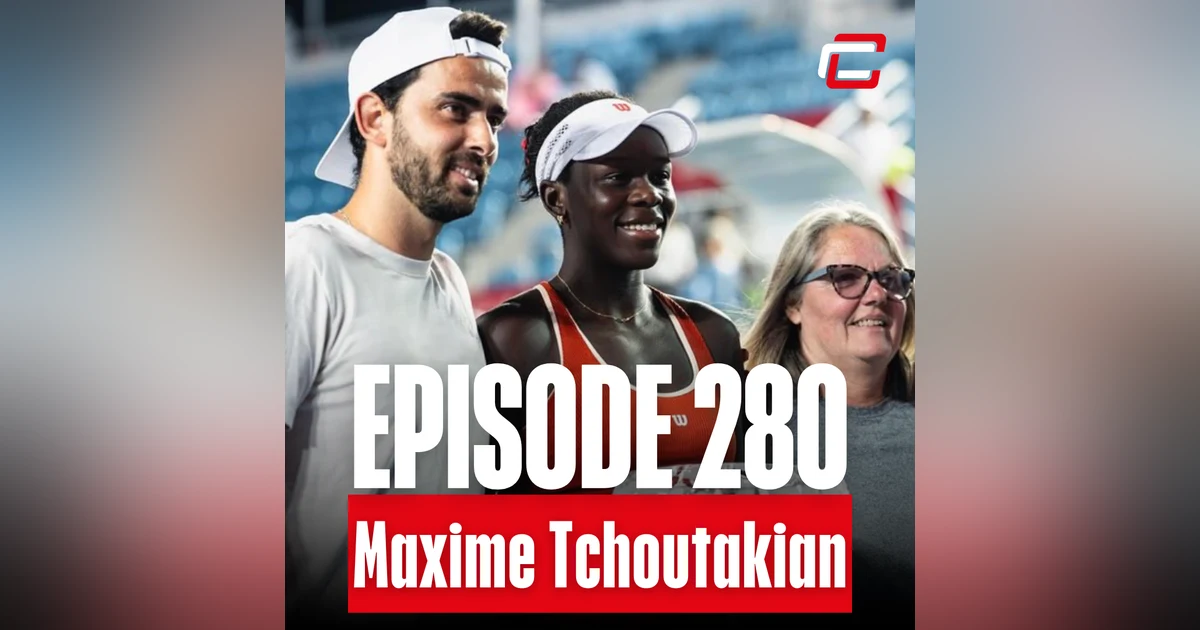
Episode 280: Maxime Tchoutakian: Coaching Vicky Mboko & Life on the WTA Tour
Dan Kiernan (00:00)
Welcome to episode 280 of Control the Controllables.
Dan Kiernan (00:05)
And today we have Maxime Tchoutakian, who is coming onto the show. He is the current coach of Vicky Mboko, who has taken the absolute tennis world by storm over the last nine months or so. The 19 year olds moved into the top 10 in the world. And Maxime's got a great story. He's 32 years old, working with one of the…
absolutely hottest prospects in the world and you think well how how does a 32 year old have a a have a gig like that well when you listen to him you'll see you'll see you'll see why you know and Max is you know he's got his own playing career his own his own story you know he was ranked 530 in the world as a singles player top 400 in doubles the US college route which we see a lot with…
so many of these players and coaches now at Baylor University. And then he worked with Victoria Azarenka for three or four years. You you'll get into the depths of that. He's had a little period also with Haddad Maia as well. know, even though he's 32, he has a lot of experience. He's someone I feel really lucky I've got to know pretty well over the last few months…
through our time, I guess, with Canadian players, you know, meeting at the United Cup in Sydney and then seeing about all of the different events. And he's just, he's a low-key good guy who's doing a great job and I'm delighted to have him on the show. I'll pass you over to Max.
Dan Kiernan (01:44)
So Maxime Tchoutakian, a big welcome to Control the Controllables. How you
Maxime Tchoutakian (01:49)
how are you? I'm good, thanks. Thanks for having me.
Dan Kiernan (01:52)
So come on then, out of ten, how did I do with the pronunciation?
Maxime Tchoutakian (01:56)
Yeah, was a solid 8, 9.
It was pretty good.
Dan Kiernan (02:01)
Little do they know that I've just spent five minutes rehearsing trying to try trying to get that right. And I still couldn't get it higher. And I have that. So that your surname, your French, but the surname doesn't sound French.
Maxime Tchoutakian (02:14)
Yeah, it's Armenian background from my dad's side, obviously, obviously I'm fully French. I just have the look of an Armenian, I guess, and the name, you know.
Dan Kiernan (02:24)
And how did umpires used to call that one out? You know, game set match.
Maxime Tchoutakian (02:27)
I had some crazy, crazy ones, like touch taken. I had everything. Especially in college as well. That was quite funny in the States. Some very good ones,
Dan Kiernan (02:39)
And look, we're going to we're going to get into it all, obviously, at a relatively young career still, Max. And, I had the pleasure of spending some time with you out in Sydney at United Cup. And, you know, for me, you know, a fascinating story to see someone so young who still could be playing. You know, you got your young, you look young, you know, you got the young looks you you you are still play very well. But now coaching.
Maxime Tchoutakian (03:00)
Try hard.
Dan Kiernan (03:07)
A top 10 player in the world and making him ball court. But as we always do on the podcast, I tennis is, guess, the thing that brings us all together. Right. And I'm always fascinated by the stories into tennis, you know, how, you know, here we are traveling, drinking a coffee in Australia to Doha, to this place, to that place. but how did it get into your blood if you take go back kind of 20, 25 years? How did it all start?
Maxime Tchoutakian (03:26)
Yeah.
Wow, so yeah, I started tennis when I was like two and a half or three years old with my brother. I have an older brother that is five years older than me. So he started to play tennis and I got into him because of and then since then, I been like pretty much my whole So yeah, I did like...
everything you can imagine in terms of tournaments in south of France. And then I also travel like Europe wise, then I played a little bit of juniors. I was always like in the top, yeah, top like five, 10 in my group age, especially at a young But at the same time, you know, like in France, when you are like ranked, let's say five in your group age, well, you don't get the same help…
from the Federation. It's always a bit tricky. So I had my parents' then, yeah, so I played pretty much until I was like 20. Then I took a break. I went to college in the States. I went to Baylor. I graduated from Baylor in 2017. Before that, I was ranked around like...
Dan Kiernan (04:37)
Yep.
Maxime Tchoutakian (04:46)
600, 700 Went to college, got my degree, amazing experience. And then, yeah, and then after I came back, I came back home, I started to play all over again. So without any points, going through qualies in the middle of Portugal, like Tunisia, like all this, all these 15 Ks and 25…
yeah, and then I went up to 500 ATP around 530. And then COVID came. I was 26 years old at that, so still quite young, but at the same time, know, when you're like 500, you don't make a living out of it. So I was kind of like questioning myself, like, what do I really want to do and stuff? then yeah, COVID hit.
Dan Kiernan (05:17)
Okay.
Maxime Tchoutakian (05:35)
Lockdown, all of that. And I was like, OK, maybe it's the right time for me to take another path. I wanted to start coaching, but I didn't know where and how to start. So my parents live in South of France. They live close from Moratoglou Academy. So I decided to go there and do my degree as a coach, French coaching.
Dan Kiernan (05:53)
Yep.
Maxime Tchoutakian (05:59)
So I went there, when I went there, I was still ranked like 500, you know, so I was still playing quite, quite OK. So I did my degree, but at the same time, I was a hitting partner for all these guys like Tsitipas, Jérémy Shardy, Medvedev that I played also in the future and also a bunch of girls. So I was hitting with Coco Gauff, Anisimova.
Dan Kiernan (06:13)
Okay.
Maxime Tchoutakian (06:26)
—all these girls and especially Azarenka that came to practice there. I knew her coach at that time. yeah, for me, I didn't know much if I wanted to coach on the men's side or on women's side, but I knew on the women's side, also start when you are that young, you also start very often as a hitting partner. So for me, was kind of like the path also, you know, to learn gradually—
Dan Kiernan (06:31)
Yep.Yeah.
Maxime Tchoutakian (06:50)
—follow that and I was fine with that. And yeah, I had one practice with Azarenka. She kind of liked it and liked me. Then I got a call from her agent like 30 minutes after and she was like, okay, she wants you to come for preseason. Can you do that? And then it picked up. And from there, I started with her to do a few weeks and then...
It turned into month and then it turned into okay can you actually travel more and after yeah yeah yeah it's it's it's it's it's it's tough in that sense but yeah it's a lot of travel.
Dan Kiernan (07:21)
Now you haven't been home since. It's going back to whereabouts in France you're from.
Maxime Tchoutakian (07:37)
I'm from Aix-en-Provence, close to Marseille. Yeah, nice area.
Dan Kiernan (07:40)
Very nice. Yeah, well, I know that you're a Marseille football fan. My research tells me, you know, well, I'm you, Newcastle United. So we did play you this year in the Champions League, but we won't talk about that today. But I will ask you, Dzerby, Dzerby, you like him? You know, he's obviously trying to keep Spurs up in England right now.
Maxime Tchoutakian (07:45)
Yes, I am. Yeah, yeah, yeah, I am. Yeah. Yes. Yes. Yeah. Let's not talk about it. Yeah. Yes. Yeah. He's a character, man. I don't know. I feel like he was suiting quite well to the team, to Olympique de Marseille. He's a little bit crazy, and that's what people like in Marseille, guess. Super fans and stuff.
Dan Kiernan (08:23)
But yeah, I don't feel he's the right man to try and keep a team up in the league, you know, like, that's four games. Yeah, that's true. But if you go back there to that time, because so I actually played for a club in Saint-Tropez actually, in club tennis many years ago. So I used to play a lot of matches in that area. And I used to talk without a lot of knowledge because you go and you play these events.
Maxime Tchoutakian (08:27)
Yeah, but who can in Marseille? Okay, yeah. Okay. Yeah. Okay.
Dan Kiernan (08:52)
I played German league tennis, but I also played French league tennis. And I would just, I had this theory that French tennis was just a incredible because of the clubs, you know, and I couldn't believe I could turn up to this club. And I had so many people to practice with who, who, who wanted to play because they wanted to play for the team at the weekend and not embarrass themselves. And there was this community feeling and everyone wanted to play tennis. And I can go back to the UK and I'll be like, well, nobody wants to play tennis.
Unless you say you're playing as a professional, coaches don't really play, nobody, and just culturally was so different. So you can tell me with actual knowledge, how good is that system? And what are the real positives? And I guess there's maybe one or two flaws, maybe, and if they are, what are they? What are those?
Maxime Tchoutakian (09:46)
Yeah, it's a good topic. mean, French tennis in general, the level and the amount, as you said, the amount of players we have, it's insane. I mean, as you said, it started in the club and you have like a bunch of coaches that are actually still in shape and can play at a really high level. And I feel like it's also, it's something that people...
look up to in a way in France and they want to have a coach that is still able to hit the ball well and stay competitive. So as you said, have pretty much in France, can play pretty much like two or three tournaments a week. And I'm talking about level, it's called the CNGTs, National—
Dan Kiernan (10:16)
Yep.
Maxime Tchoutakian (10:35)
—Grand Tournoi is like the big tournaments in France and you can play like an actual circuit. It's a circuit on its own and the level is like if you want to win one of these tournaments you have to play like top 300 ATP level. And so we have a range of players. I'm talking about the highest—
Dan Kiernan (10:38)
Yep.
Yeah.
Maxime Tchoutakian (11:00)
—level in France, but the range of players is just amazing. So then you have the club matches as well. There are, as you know, like very, very successful with a lot of also foreigners coming and trying to play those matches. But yeah, in general, the French system in terms of tournaments and players is quite unique, I think.
Dan Kiernan (11:24)
And the other thing that I always took from French, like I remember playing in juniors as well. was so many juniors, you know, like I used to like, we used to have a bit of a joke actually. You don't want to see, you don't want to see FRA next to the name. You know, like when you went and played like a junior tournament, obviously I go like Torbz. That was my like career highlight. I won the doubles at Torbz, La Petita, you know, like, you know, and.
Maxime Tchoutakian (11:39)
Yeah.
Dan Kiernan (11:52)
Yeah, and the same year that Juan Carlos Ferrero actually won the, bit of a funny story. So I, me and my partner won that and crazy. I mean, it was 1994 and in qualifier, there you go. so you weren't there to witness it, but in the qualifying we played Andy Ram from Israel and his partner. Then in the first round main draw, played—
Maxime Tchoutakian (12:01)
Okay.That's my year actually. That's where I was born. No.
Dan Kiernan (12:20)
—Xavier Melisse and Olivia Rockers.
Maxime Tchoutakian (12:22)
Yeah, because everybody is from Belgium. Amazing player.
Dan Kiernan (12:25)
And then we played Marat Safin and Artem Derepasko in the quarterfinals. And then anyway, some Swedish guys in the semis. And then we played Fernando Gonzalez and his partner in the final. Now Juan Carlos Ferrero won the singles and beat Fernando Gonzalez in the final. So fast forward to maybe it was 2020 and I was at a futures a British player.
Maxime Tchoutakian (12:30)
Idol.
Dan Kiernan (12:51)
A player that I was working with at the time, was like 300 singles, Evan Hoyt. And Evan was playing against Carlos Alcaraz at age 16 in the quarterfinals, semi-finals of the futures. But another couple of players I were with, Jonny Binding and Pete Bothwell, they won the doubles. And then Carlos won the singles.
Maxime Tchoutakian (12:55)
Yeah, I know him,
Okay.
Yeah.
Dan Kiernan (13:17)
So, and I actually went up to Juan Carlos and said, look, this is like all these years on, you know, back in tarps, you know, we were the doubles, you won the singles, my players were winning the doubles, you're winning the singles, you know, you might not remember me, and I got a photo and he just kind wasn't overly bothered. I thought it was quite a good story, but he just kind of, he just kind of looked at me as if, but what I did ask him at the start of that week is I said, look, how
How good is Carlos? Know, like I've seen he said no, no, no, he's already top 50 level. He's already top 50 level. And he was he was he was 16. He said he's already top 50. You know, like that's what I'm doing anyway. I'm going off going off on a tangent. But the one thing with the French players, Max, that we always thought is how flurry they were, you know, and how so like you speculate, right? And you go, well, why is that? Are they not?
Maxime Tchoutakian (13:52)
16 years old, that's insane.
Yeah.
Yeah.
Dan Kiernan (14:12)
Are they not over coached? You start questioning yourself in our country, maybe we over coach, know? And there was this kind of a saying in the UK, Fabrice Santoro, that people would say, well, he would never be able to come through the British system because people would say you can't play like that. So why do we have all these kind of extravagant ways of playing tennis with French players? Why do you think that happens?
Maxime Tchoutakian (14:18)
Mm-hmm.
Yeah. Yeah, I guess it's like a cultural thing. I would say maybe the level of coaching at a really young age. But also, are also, as a kid, always try to spend a lot of time on court and playing mini tennis games. ⁓French people are very, how can I say that without sound terrible, like fucking around in a way, you know, when we play and we play with a lot of like—
Dan Kiernan (15:01)
Yeah, yeah.
Maxime Tchoutakian (15:04)
—hand touch games, you know, and that brings a certain variety in our game in a way, I guess. But also like technically in France, I think the coaches in general, they do a really good job. Like my coach when I was very young, from a very young age, when I started like playing more and more from let's say six to 12 years old, I had the same coach and I felt developed my technique in a—
Dan Kiernan (15:06)
Yep.
Okay.
Maxime Tchoutakian (15:30)
—in a really good way. And I had a lot of people telling me, you play like a French guy with a lot of touch and stuff, like very skilled, you know. But yeah, I guess I would say our culture, the way that we also spend time on court, because we have that in France, it's very easy to say, the French player, like mentally is kind of weak, but he's very talented and he knows how to—
Dan Kiernan (15:31)
Yep.
Yeah. Yeah.
Maxime Tchoutakian (15:59)
—to manage the ball around so we can be dangerous that way. But yeah, I guess it's more like a culture thing and also the level of coaching and developing players ⁓ at a young age and try and try to develop a proper technique. Even though everyone has his own technique, you will rarely see a French player having a bad technique, in my opinion.
Dan Kiernan (16:25)
And what about the mental part, the mental weakness? Because that again, when I was younger, we used to call it the French tank. Right? Which was almost like, the French tank was almost for us actually, as Brits, it was almost, they made you feel like you weren't trying. And then you you got roped in. And before you knew, before you know it,
Maxime Tchoutakian (16:31)
Yeah.Yeah, well...Yeah.
Yeah.Yeah.
Dan Kiernan (16:55)
Before you know it, you were kind of, this match has won and then you're not focused anymore. And then these bloody French kids would then go and like break us back. And before you knew it, we were losing our mind and we'd been done by the French tank. You know, is that a thing? Is this mental weakness a thing? it what's this?
Maxime Tchoutakian (17:02)
Yeah.Yeah. Yeah. Yeah. Yeah, it's so funny.
I can relate to that. mean, to be quite honest, I don't think I was like that. I never tanked matches or I never pretend to tank matches. I wasn't, I would say, built like that. But I think it comes down also, I went a couple of weeks ago before Indian Wells, actually, I went to O'Rea.
You know, already the tournament, I was there because my girlfriend works for Yonex and she was doing the scouting over there. So I went with her before jumping in the plane to Indian Wells and I watched the kids. And again, you see a lot of kids at 12 years old, amazing technique, playing some great tennis. But as soon as it starts to get a little bit rusty and you have to hustle and fight and go through it, you know—
Dan Kiernan (17:37)
Yeah, yeah, the little 12-12, yeah.
Maxime Tchoutakian (18:04)
—they just ran away and then you see some Czech guys, some Russians, some other countries, like they are here and they're die on court, And I think also it's a mental, like it's a habit that we have as French kids in a way, but at the same time, it's also come down to like sponsors, for example. When you're young in France and you play quite okay, you get...
a shit amount of clothes, a shit amount of rackets and everything easy, you know? And you miss a little bit of that hanger and, like, I'm going to grind and I'm going to hustle and maybe I'm going to earn my way. Like, and you see, I'm talking about the Czech guys because I saw a Czech player there that was 12 years old way he was acting on court, how kid was on court and—
Dan Kiernan (18:34)
Alright, okay.
Yep.
Yep.
Maxime Tchoutakian (18:56)
—handling the momentums that we find also at the highest level with players, like top 10 players, like highs and lows and the way he navigates through it and the way he answered that at his age. was like on top of the fact that he was playing extremely well, but I was actually very shocked and the guy you can tell, he was wearing a—
Dan Kiernan (18:59)
Yep.
Maxime Tchoutakian (19:21)
—Nike shirt with Adidas shorts and he had a racquet, like a babala racquet with a head bag, you know, and then you're like, okay, if he was this kid in France, he would get sponsored and he would, you know, everything would come much easier. And I think it drags... Sorry? Yeah, yeah, but you know, at the end of the day, it drags you away from the essence of—
Dan Kiernan (19:38)
And then agents as well, even worse. The agents as well come in at that age, which makes it even worse.
Maxime Tchoutakian (19:50)
—why you're on the tennis court and what you have to go through. So I think for me it's a big topic because this is something that I experienced also as a kid and then went on into juniors and because I was top players in my group age in France in terms of sponsor I would get pretty much everything and sometimes you lose yourself a bit in there and as you say like agent and like...
can be put, because you play quite good, can be put up there even though you haven't done anything yet, in my opinion.
Dan Kiernan (20:27)
So interesting. It's like that because I think there's a there's another point to this, which is hopefully to explain my point, Luke Saville, remember, don't remember Luke Saville. Was so so he's your age, I think, you know, so now Luke, I remember because I coached Josh Ward- Hibbert and, you know, I was with Liam Broady those.
Maxime Tchoutakian (20:39)
I remember, yeah, course. Yeah, he's 94.I played, I played Josh Ward- Hibbert. Yeah. I, I played him actually. It's so funny. I played him in doubles in Bahrain, 15 K. I was, I was playing with Julien Cagnina from Belgium in doubles and we play against him and Liam Broady.
Dan Kiernan (20:51)
Where did you play him? Because I've always known your name. So I would have seen your name. I'm sure I would have seen...
Okay.
Dan Kiernan (21:12)
My big thing with Luke was I remember watching him play. It was actually the year Broady ended up making final of Junior Wimbledon. I want to say 2011, 2011, 20, but watching Luke that year, he lost to Luke in the final. But when I watched Luke, as good as Luke was, my concern, if I was like scouting talent, my concern was he was so good mentally that I felt he was winning because of his maturity. And I felt that like maybe some of the other players, when they caught up a bit with that maturity, had a bit, had more game.
Maxime Tchoutakian (21:41)
Yeah. Yeah. Yeah. Okay.
Dan Kiernan (21:51)
And, and, know, like that, would just sometimes that that's just one of mine. So I guess you have things right. Like confirmation biases we all have in this life that we then it sticks in our mind. So that for me, when I see youngsters who are really good, like mature, I sometimes wonder, they winning now because of their maturity? And is that maybe an upside that someone else is going to gain on them—
Maxime Tchoutakian (22:12)
Yeah.
Dan Kiernan (22:18)
—over the next few years. bit like probably like I wouldn't, certainly on the doubles court, but we won quite a bit when we were younger. I was like six foot when I was 12. So I was winning certain matches because of my size. And then I maybe didn't develop some of the other skills and tools that the smaller player did. Know, that's why I think talent scouting is fascinating because for that reason, I mean, you get your generational talents, of course, that anyone can see.
Maxime Tchoutakian (22:28)
Okay.
Mm-hmm. Yeah.
Dan Kiernan (22:48)
You know, think any of us could, I saw Alcaraz at 13, 14 and anybody I saw Andy Murray at 12, but there's, yeah, it's quite an interesting topic as well, just in terms of whether that mental maturity at a young age is a good thing. It's obviously a good thing, but is that maybe something that maybe catches up in future? Don't know what you think.
Maxime Tchoutakian (23:04)
Yeah.
Yeah, it can. I mean, it can, you're right. It's a good point. And it's very tough because we all evolve differently. Maybe, as you say, the physical part is also huge. I remember when I was young, there were so many players that were pretty good, I think, because of their fitness and the fact that they were very tall at a young age compared to me, where I was extremely short as a kid. But then it catches up, you know?
If you don't develop your technique, obviously your mental, your tactical aspect also. So many compounds like aspects, know, that can also trigger at some point. But definitely. It's not also because you're very good at a young age that you're going to end up being successful on the tour. We know so many players that...
played extremely well in the juniors and under and then they never ever made it, you So, it's a way.
Dan Kiernan (24:11)
So Max,
Marseille to Waco, Texas.
Maxime Tchoutakian (24:16)
Sorry what? Marseille or?
Dan Kiernan (24:18)
From Marseille to Waco, Texas. What a contrast. You know, that is a serious contrast. So how did you manage that contrast? I was in LSU, I don't know if we spoke about this, but I was LSU many years ago. I'm a big advocate of college tennis, but Baylor's always been a powerhouse. How was your time there?
Maxime Tchoutakian (24:21)
Way code text is... Yeah, sorry, sorry, yeah.
Yeah, yeah, yeah, good score.
Yeah.
Yes.
It was amazing. I developed mostly as a man there, but also on the fitness part was a lot. We had a lot of morning workouts, very tough sessions. Our school and our coaches at that time, well, it was almost made like a military kind of training. So it was very tough.
I learned a lot and also, I I would definitely suggest to parents and players at a young age when you're 16, 17, 18 to look for that path because now we see a lot of players coming out on tour and making it and having their time of their life after their college career and when they go pro. And for me, it's like if you're not…
top elite player at 16 like Zverev or Bonatoric or Alcaraz, Sinner, these guys, you should definitely consider going to college because the level is extremely high. And this is something also in France, we struggle a lot and we didn't have a lot of French players going there until like now, because we always thought that, okay, if you go to college, you're gonna give up your...
your tennis career after, is completely wrong in a So yeah, my time was amazing. I went to the biggest schools. had my scholarship, everything was paid. ⁓ I mean, we had a lot of budgets, so we were traveling a lot, like East Coast, West Coast. So we've seen...
We see a lot and you also play not only for yourself, you play for a team and I think it also helps to grow as a human being, you know, in a But yeah, I have a funny fact actually about that. It's like when I was 18, I had a lot of school trying to reach out, you know how it is and trying to get me into the team. And I was like, oh, no, no, no, I deny. I don't want to go to college. And when I was…
playing professional. I was in in qualities of a challenger in Geneva last round of qualities and I played Radu Albot. He was 160 in the world. I was at that time, think seven, 700, 750, whatever. I'm up 7640 indoors. Can't win the game. I lost 7661. I was destroyed and…
After the match, get a text from Baylor’s coach. And he's like, OK, I watched your match. I think you played great, blah, blah. I would like for you to come and visit the school. I will offer for you just to catch a flight in the next days. You come for four days and you visit the school. then you have a certain view on what's like college, know, like tennis college. College, sorry.
And at that time I was like talking to my coach and we were discussing about, maybe you can take that path and go to college and then maybe mature and see also and get a degree. Because for me, it was important also to have a degree, my English, see also a side of life, I guess. And so when I got that message, I was like, okay, full on, you know what, I'm going to catch a flight. So I caught a flight, I think the very next day.
I went to Baylor, I visited the school and I saw the facilities they to Europe, it's insane. You have all the physios you own, you had so many gyms, have cafeteria as and everything evolves around the athletes, you and to me, it was amazing. I was like, okay, you know what…
college so I signed up and so this was back in like what October and I and I signed up and I played my first college match in in January so it was it was very like very short transition but obviously at the beginning was it was quite tough especially with the English you know with the barrier and stuff but it was after after a few months I felt like I felt good and it was—
Dan Kiernan (29:08)
Amazing.
Maxime Tchoutakian (29:09)
—It was the best decision of my life, I think, in terms of when I was 20ish, you know?
Dan Kiernan (29:15)
The path, the sliding doors moments is, it's incredible. You win that match and you know, maybe you, maybe then you don't have the humility, right? If you win that match, you, you know, we had that with Josh Ward-Hibbett actually, because he, he was all signed to go to Texas and that was always, that was always the path. We'd always talked about that.
Maxime Tchoutakian (29:18)
Yes.Yeah Yeah. Yeah.
Yeah, it was fun. Yeah.
Dan Kiernan (29:40)
And then he made quarterfinals of the singles at the 2012 Aussie Open Juniors and won the doubles. And then the LTA said, okay, we're going to offer him this package, our top package to support, support him. I said, but we sat in a meeting one month ago and agreed that college was the right route.
Maxime Tchoutakian (29:47)
Yeah. Yeah.
Dan Kiernan (30:06)
What's changed?
Well, he's top 10 in the world in juniors now. done that. Yeah, he was, he was the same. He's the same player. He's just, he's just had an okay result. Yeah, but we kind of feel we have to, you know, now that he's ranked like this and he.
Maxime Tchoutakian (30:13)
It doesn't Yeah, it's political anyways.
Dan Kiernan (30:26)
And he and so his sliding doors moment took him away from college because he had this one great result and and then he's now a professional basketball player. So it's like. Yeah, so the slight mean he ended up going, he won a couple of futures, he got to maybe 500, but then.
Maxime Tchoutakian (30:30)
Yeah.
Wow, that's insane. I didn't know that. Okay, wow, that's a good turnaround, I guess,
Dan Kiernan (30:52)
When he went into the LTS system, didn't suit him really. He ended up going to Loughborough University and then when he was at Loughborough University playing tennis, he started playing a bit for their basketball team. He was always a good basketball player and then he was picked up.
Maxime Tchoutakian (31:04)
Yeah. Yeah, he was still tall.
Dan Kiernan (31:08)
Yeah. And, and, then he's had, he's still,
still now professional basketball player, actually in Newcastle in the UK. So it makes a good living place for Great Britain in the Commonwealth games or England in the Commonwealth games, and he's, and he's doing all of those things. So it's, it's, it's amazing how, how, how it happens. And now before I move on from college, cause I want to move into your coaching.
Maxime Tchoutakian (31:15)
Okay.
Dan Kiernan (31:30)
National titles? Bail is always in and around them. Any, is this a sole subject? Semis, okay.
Maxime Tchoutakian (31:36)
NCAAs, NCAAs semis.
Yeah, we were ranked one in the country throughout pretty much the whole year with Virginia. We were like one and two. And, but actually we lost in semis against them. I think that that year in 2015, they were one, we were three or they were, we were one, they were three, something like that. I don't remember, but yeah, we lost in semis against them. We won the big 12 like conference few times. Yeah, I mean, we had we had success for sure like we were ranked top 10 each year. good.
Dan Kiernan (32:11)
It's still a, it's a very, we made NCAA final four at LSU and it's still, it's still for me, granted I didn't have this amazing playing career, but I did play Wimbledon a couple of times. It's still by far the most amazing experience I've ever had. Just like we played UCLA in Georgia.
Maxime Tchoutakian (32:16)
Yeah. Yeah. Yeah, yeah.
Dan Kiernan (32:32)
Just, just before georgia were playing old miss in the other semi-final so pak pak stands my goodness.
Maxime Tchoutakian (32:36)
Yeah, so in the stands, with the stands. It's amazing. I had tough matches there as well, actually. Against Georgia, I won an epic match and I turned around and I showed the BU sign. It was great times, yeah.
Dan Kiernan (32:53)
It makes us do all sorts of things. you've had a decent playing career, but if I take you forward, it's like...
Maxime Tchoutakian (32:56)
Yeah.
Yeah.
Dan Kiernan (33:05)
When we start talking about the names like Azarenka, know, obviously Vicky, who you're working with now, you know, these players, obviously Vicky's not there yet, but know, Grand Slam champions, world number ones, you know, when you look at yours, it's somewhat moderate, you know, in terms of that. But you want to get into coaching, you've gone the hitting part in the route and it's like, it seems to almost be, I guess my starting question on it is,
Is that almost the only way, if you haven't played or coached to that level, is the only way of getting in, do you think, almost as a hitting partner?
Maxime Tchoutakian (33:48)
I don't know. can just talk for myself. Yeah, I was her hitting partner at the start. We obviously chatted and we chatted and talked a lot about her games during practices. And I felt like she kind of liked the way I saw her game and what I thought was needed as well to implement and try to work on. She gave me my chance.
Dan Kiernan (33:52)
Yeah.
Maxime Tchoutakian (34:15)
That's about that, you know, and at some point she was like, okay, after I would say a good four months, like, like traveling with her. Yeah, she gave him my chance and, and yeah, I mean, it wasn't, it wasn't easy. was, I was, I was starting. So obviously I would, I was making mistakes for sure. I'm still making mistakes. I don't pretend to know everything by far.
Dan Kiernan (34:18)
After how long? After how long before she can?
Maxime Tchoutakian (34:44)
For me, it was a learning process and she also knew it in a way. But she was also at a stage of her career. She was like 31 years old, you know, back on tour after some time off. And yeah, she trusted me and I felt like I was working hard and trying to always learn.
And I had my views on her game. And even though, she was ranked number one in the world in the past and had tremendous success, I felt there were many stuff that can be improved. She wasn't done, you know. And yeah, I just went day by day and tried to make her better in a way.
Dan Kiernan (35:32)
How does that conversation go with someone like Azarenka asking you to become the coach? She do that directly with you? Is that something that happens through the agent? How does that happen?
Maxime Tchoutakian (35:47)
Yeah, so what happened is at that time she was working with a French coach that now coach Gaël Monfils. His name is Dorian Descloix. He's amazing guy. We are very, very close. Good guy. I used to play future with him. We went in the middle of Turkey together to play futures and stuff. And at that time he was coaching her.
Dan Kiernan (35:58)
Yeah, I met him. I met him in Indian Wells, actually. Lovely guy. Yeah, I did, Yeah.
Maxime Tchoutakian (36:15)
But the thing is, he has a family, he had three kids, he couldn't do 40 weeks on the road, like you know how it we decided at some point to split the weeks. But we proposed that to Vika, and at first she's like, yeah, why not? And at some point, they had their things and he went on the—
Dan Kiernan (36:26)
Okay.
Maxime Tchoutakian (36:43)
—on a different direction. from there, she basically asked me, I want you to be my only coach. I want you to coach me. Because at first I was more as an assistant coach, a way, would say. mean, hitting partner, then assistant coach. And then it transitioned to actually full-time coaching. But it came pretty natural, I would say, on her side. Again, she felt...
She felt the need, you know, she also like told me that she that she trusted me and she and she wanted to, yeah, to to to take on, you know, and and for me, obviously, at first, he was he was he was a bit scary because you're like working with top athletes, right. And someone that has been at the top. it's it's a lot of pressure. But in a way, I felt like, OK, this is an opportunity for me and I didn't want…
mess it up and I've tried, at least I've tried hard in my opinion and tried to help her the best I could.
Dan Kiernan (37:50)
That stage Max are you do you have do you feel like you've got your own philosophies do you feel like you've got your way of working or I guess you've kind of been thrown into this world from your playing career how much of that is
you're just going with what you feel and then kind of fast forward now six years, how much do you feel that you've now maybe evolved as a coach and maybe have some sort of stronger philosophies that you believe in?
Maxime Tchoutakian (38:13)
Yeah.
Yeah,
I think at first, the fact that I was playing at a quite decent level also helped me to transition into the coaching career, especially reading the games. also, I was watching tennis 24-7, I'm watching every single match. And I think it helped me to build—
Dan Kiernan (38:29)
course.
Maxime Tchoutakian (38:45)
—also my philosophy as a coach and what I believe and what is important right now on the women's tour. And it evolves every single day because if you look at like the WTA like 10 or 15 years ago compared to now, the game has changed drastically.
Dan Kiernan (39:05)
What are the biggest changes do you think?
Maxime Tchoutakian (39:07)
To me, the serve and forehand, the serve plus one, return plus one is like if you compare from 10 years ago, 15 years ago to now, like the girls now, they are serving bombs, like the top girls, if you look at them, it's like they serve really big and the first shot is becoming so important as well. But that's just one of other examples that we can find.
But to me, the serve plus one is massive. I think for me, the fact that I was playing before helped me also to build my own identity as a coach. And now for sure, six years later, or yeah, five, six years later, I feel...
I feel that I have more skills also the way I communicate with the player and when to say something, when to shut up also, which also changes depending on the players you are working with, right? everyone is different and I'm not coaching Vicky Mboko the same way I coach Azarenka, you know, because they are like different.
Dan Kiernan (40:13)
Yep. Just got a couple of things i want to ask you before i want to want to jump into vicky you have any regrets so far on your coaching career is there anything that you go I wish I hadn't have done that I hadn't have said that I hadn't have done
Maxime Tchoutakian (40:29)
I don't know, it's a tricky question. Any regrets? Yes, maybe sometimes I felt like I didn't trust myself enough because in a way I knew I was young and I was a young coach. So like sometimes I would doubt myself maybe because I was that young. Looking back, I'm like, man, I think you were all...
pretty much like spot on. And I know it sounds arrogant, but sometimes I felt like, well, maybe I could have done that or I could have said that as well, you know, and which now it's a bit more different. I'm taking maybe more risk in my coaching way, you know, especially during matches with the tension and the nerves and I'm going maybe more into it.
Dan Kiernan (40:57)
Yeah. Yeah. Yeah.
Maxime Tchoutakian (41:22)
When before at times I could be a little bit more, it's not shy, but know, a little bit more doubtful in a way, you
Dan Kiernan (41:30)
This during matches.
Maxime Tchoutakian (41:32)
Yeah, or doing matches or also if I had like ideas and sometimes maybe not this. But for me, it's a trial and fell like a felon trial process, and you keep and you have to always keep evolving. And as I said, like I'm still making mistakes and I'm fine with that in a way because it's who doesn't, you know, and I have my values and I have my beliefs, sorry.
Dan Kiernan (41:43)
Yeah, yeah.
Maxime Tchoutakian (42:01)
And I try to stick to it more and more, I would say. So I don't know if it's a regret or anything, but in the past I could get a little bit within myself in that way. I don't know if that makes sense.
Dan Kiernan (42:15)
No, no, does. It's interesting, Max, because when you were talking earlier, as a 26-year-old starting or being involved in Vika's team, know, you know, certainly from the outside, she's got a bit of an aura, you know, she was, you know, her, you know, like, and she's obviously around the Williams's and Serena, all of that, you know, you can think of these iconic matches. And if we take...
Maxime Tchoutakian (42:29)
a lot for me.
Dan Kiernan (42:40)
to all the 26 year olds in the world, you've got to be very high percentile one of the ballsy ones to be able to get your belief across the board to somebody like that. know, like the largest percentage of 26 year olds in the world wouldn't even ever even dream of having the confidence to start telling—
Maxime Tchoutakian (42:52)
Yeah.
Dan Kiernan (43:03)
—a former world number one something, do you know what I mean? I think that's like a real skill that you clearly have.
Maxime Tchoutakian (43:06)
No, I agree.
Yeah, guess. mean, also it's the fact that our relationship like coaches, players last for close to four years, which I think, as you know, on the WTA is pretty big, Yeah, it doesn't, it's not always like that. So,
Dan Kiernan (43:23)
Yeah. Amazing. It's like a knighthood, it's like a knighthood in the UK, you know?
Maxime Tchoutakian (43:36)
quite funny because I mean, yes, as you said, it's ballsy in a way as a 26 years old. looking back, I didn't get to the point where, I was doubting myself to like, no, I can't do it. Like it wasn't about that, but it was at times, you know, we had, as you know, we had like struggles and ups and downs. But I was quite like...
questioning myself a lot and it's draining also in a way, you know, it's when you come out of a working relationship like that, it's not easy also to bounce back and get into a new project, I would say.
Dan Kiernan (44:03)
It is, what do you think the biggest skills are needed to work on the tour?
Maxime Tchoutakian (44:22)
Adaptation.
I don't know if that makes sense to me. To me, need constantly, you need to constantly adapt. I mean, we are traveling on all continents and you're facing different opponents. Sometimes you play the same player the first week and the second week. Out of a sudden, it's a different match. I mean, we can talk for hours, but you need to constantly adapt to—
Dan Kiernan (44:25)
Yeah, yeah, for sure. No, does, for sure. Constantly.
Maxime Tchoutakian (44:53)
—to something new and something unexpected. And if you are not, to me, this is like the best advice I could give also to like young coaches. If you're not ready to sacrifice also a lot of your private life and your, how can I say? Yeah, yeah, your private life and put your own life aside and I'm sure you can relate on that.
If you're not ready for that and the fact that you need to adapt to two different things in your career, if you're not ready for that, you're going to lose track and you're not going stay in that field.
Dan Kiernan (45:38)
And we talked off air, you obviously, you guys have been doing a bit of work with Carlos Rodriguez this week in Barcelona, ready for the clear coat season. And I asked you, you know, he obviously spent a lot of time, he's a big name coach, I guess, on the tour, spent a lot of time with some big players. And I asked you, what makes a good coach? know, spending time with someone like that.
Maxime Tchoutakian (45:45)
Yeah. Yeah. Yeah.
Dan Kiernan (46:04)
You know, what is it when you're around these people and you've got, know, a win for set, see a lot of them kind of working with a lot of top players. What are the things in your opinion that make that coach so successful?
Maxime Tchoutakian (46:20)
Yeah, yeah, I think first experience. think this is something you cannot teach. They have a lot of experience. mean, Carlos with Justin and I, he won I don't know how many slams, but they had they had a tremendous success and he's very he's very calm. He works hard, he's humble. He sees the game very precisely.
Technically, I think he has a lot of stuff to bring. I was very pleased also to talk. I'm pleased to talk with him about a lot of tactics, especially on clay. the way for me, when you define a good coach, is also the way you communicate to the player and the way you approach and how you can send the message across.
You know, because we can, we can all say pretty much the same thing, but it's how, how you, you identify it and how you, how you send it through. And that goes through the player because at the end of the day, can say whatever you want. If the player doesn't really listen or it doesn't go through and you don't work through it. It's a.
It's only blah, blah, blah, you, And I feel like he has that kind of maybe an aura, I would say, in a coach that...
Dan Kiernan (47:41)
Yeah. Yep.
Maxime Tchoutakian (47:50)
Goes through the audience and catches people. And to me, this is what I see on few coaches on tour or where I feel like, OK, this guy knows his stuff.
Dan Kiernan (48:07)
Sorry, I'm gonna have to be careful on this subject, because I could talk for hours on this subject, or I could question you on this subject a lot. so my theory on this, or philosophy on this is, people always ask, who's the best coach? Who's the best coach? Who's the best coach? And for me, there's a best coach, or there's a good coach. For a player,
at a certain period of time stage and that is the best coach for what they need in that certain particular period of time for whatever reason. it's like, whereas what I see, and I guess one of my pet peeves a little bit is I almost see the agents parading coaches to the players.
Maxime Tchoutakian (48:32)
I agree.
Dan Kiernan (48:54)
And I've had, I've had coaches on, and Michael Joyce, won't mind me saying it, but I question him a lot on this. And I like to, I like to question the coaches how it comes about. And I won't say names, but I spoke to a, I spoke to a player, it was US Open, and they were like, yeah, I'm working with this new coach. And I saw who's that, they like, ah, this, it's, it was like a named coach.
And, and, said, and how was that process? Oh, well, my coach just said, you know, that this is, there's this coach. Okay. And what conversations happened and how much did you go for? No, no, no. Well, we're just doing a trial period for six months. And I won't like what. Like, you know, and, and I actually got into it, not trouble, but I said something on BBC about Emma Radacanu at Australian open that…
with kind of some people, they made a headline out of it. But what I was saying is I was saying like someone like an Emma Radacanu . No, I don't. I don't think she needs a coach right now. Actually, I think she needs to understand herself first. And then then you actually start putting the coach into what you know you need. And that's like at that stage in your life and your stage of a career. Like, I think that connection is that—
Maxime Tchoutakian (49:51)
Hmm. Yeah.
Dan Kiernan (50:05)
—that strong, whereas I see so many players almost just like taking like throwing darts in the dark because they've because they've there's a name and it's and in some ways within our industry I guess I've gone off on a few tangents there but like it that's that's the that's the bit for me of like what's why I want to ask about Carlos because it's like—
Maxime Tchoutakian (50:11)
Mm-mm. Yeah. Yes.
No, no, no, but yeah, I get it.
Dan Kiernan (50:28)
—sometimes part of me thinks it's a bit luck. It's a bit of timing, you know, but then once you're in, if I take my personal situation, now I'm in the world of WTA, ATP doubles. The perception maybe is that I'm this really good coach, but I think I was okay a few years ago when I was also working with players that were playing lower level tournaments, but now naturally the eyes go to those. And I just wonder how many coaches are out there that aren't getting the opportunities.
Maxime Tchoutakian (50:49)
Yeah.
I think you're right. think a lot, I think first of all, it's a business, right? So when we talk about agents, for sure the agents, have their names, they have their coaches names as well. And whenever there is a player looking for a coach, they're going to most likely send the big names that they have in their pockets, right? And that shows that a lot of coaches are not having the chance to even have a trial with a player because at the end of the day,
You can hire the best coach that you think, whatever. But if you don't have a connection with the player, with the player and coach, if they cannot find that connection as a person at first, I would say it's you go, you go in the wrong direction in my opinion. So I don't think there is a recipe, you know, to say, okay, this coach is amazing or this coach ⁓ is not, but everyone has, has their
⁓ strength, I would say. And as you mentioned, yes, it's very important that the player also, like the younger, the better, but the player has to understand what he needs and what he's looking into a person and a coach. So then he can fine tune that and actually find the right fit. And I think it goes the same for coaches. I don't think––
Dan Kiernan (52:24)
Yes.
Maxime Tchoutakian (52:25)
—I don't think coaches can, I cannot coach maybe the same people that you might coach, you know, because we have different, maybe different values, different thoughts on how to work and person wise as well. it's, I think it goes both ways, you know, and it's more about how you approach and the communication you have—
Dan Kiernan (52:31)
Yes. Yep.
Maxime Tchoutakian (52:53)
—early on also in the relationship.
Dan Kiernan (53:00)
Yeah, I agree. Like I love like like the Anton story with Sabalenka. Like I don't know the full story, but I don't think Anton coached anyone before. Right, OK. And like, obviously, can put your feet if OK, so you feel that connection or, you know, Andrew Bettles with Svitolina. And I know there was hitting partner stuff. It's a common thing. But I like—
Maxime Tchoutakian (53:04)
Yeah. No, and he was her hitting partner. I think he was. Yeah.
Dan Kiernan (53:26)
—there's different people that can really add and add value to these players' lives and stories that aren't just big name coaches. Now, I know your current player, Vicky, I got to know a little bit in Sydney and certainly even age 19.
Maxime Tchoutakian (53:31)
Hmm. Yeah.
Dan Kiernan (53:43)
She's poor, a switched on kid, right? Bloody hell. was, I was like, wow. You know, so I'm sure she knows what she wants. You know, I'm sure she also has a lot of people that are telling her what she should want and shouldn't want because she's, she's a superstar, but tell us how did that come about? You know, that, that you were part of Vicky's team.
Maxime Tchoutakian (54:03)
Yeah, well, they were looking because she was enrolled with the Tennis Canada. mean, part of Tennis Canada, they were looking to add a coach as well in the team. And it happened that I knew her agent at that time. So we started to chat and yeah.
Dan Kiernan (54:12)
Yeah.
Maxime Tchoutakian (54:29)
Pretty much it went that I did a trial with her last year in Ningbo. We did Ningbo, Tokyo and Hong Kong. I mean, she won Hong Kong. I think she felt quite good with me and even myself. Like I felt she's a nice kid. She works hard. She's a nice kid. has very good values.
Very, very stable and in a way also very mature for her age. And I think it helps coming back to what we discussed earlier. And so, yeah, we did a trial and it went well. And here I am coaching her now for a few months now. It's been, she's honestly, I think she has that type of aura as a—
Dan Kiernan (55:01)
Yeah.
Maxime Tchoutakian (55:20)
—as a big player already. Everyone loves her. She's a superstar, but at the same time, she's still very young. You know, it's process for her. She has done only not even a year on tour, like fully, you know. So, I mean, last year she was ranked like 300 something in January, you know. Yeah, so everything comes—
Dan Kiernan (55:46)
incredible journey already.
Maxime Tchoutakian (55:50)
—comes very fast. So yeah, we need to remain calm. need to stay humble and we need to work because obviously everyone is good. Everyone is trying to chase and chase her already. Even though she's 19, people now start to understand how she plays ⁓ and what she does. it's also, she's going to have also to deal with the...
with more pressure and she's already like dealing with that, you know? But she's handling herself extremely well so far and it's important to try to remain that way and stay calm, you know, because we've seen in the past a lot of players also having big results and out of a sudden they are out of the door in few months, you know?
I'm excited, but at the same time, I'm trying to remain calm and keep the team also calm so we can work in the right direction because we know how tough this journey is.
Dan Kiernan (56:59)
And what does the daily work look like in terms of, in your role as coach? Like, how much of it is on the mental side, the physical side, the technical side, the tactical side? How much involvement do you have with data? Like I know when Iga’s trained, came to my academy in Sotogrande, SotoTennis Academy.
when she was 19 or 20, so similar age. And she actually came with a team, but the performance analyst came as well. And I had big chats with him, Mike James, who a friend of mine. I found out that week is she was using data for development, not necessarily for scouting.
Maxime Tchoutakian (57:30)
Yes. I know him well.
Dan Kiernan (57:43)
Whereas I remember he was telling me at the time, when he'd done stuff with Stan Wawrinka is an example of that business end of his career or what we thought was towards the end of his career five years ago, he's still bloody going, is he would use it more from scouting purposes.
So how much are you doing of that and how much of it's like management of the team and all the bits to just being able to just be a tennis coach and get on the court and develop, days and weeks are split up with all of that?
Maxime Tchoutakian (58:15)
Yeah, yeah, I mean, it's a good topic, but definitely using the analysis. I'm using it a lot. Like we work with analysis and it definitely helps for myself as a tennis coach to build up the sessions and see what we need to improve. That's for sure. But it helps also the fitness part in terms of movement and what we also need to improve when we can rewatch the matches and…
and do some short video clips and cut things and then show and be able to show also Vicky if we need to because I think it's important for the player to visualize what they do, especially in matches. And then obviously there is the scouting part where this is how I also build the wicks in terms of scouting where I go through players and I try to...
understand also lot of patterns like serve patterns, returns, what's their strength ⁓ in terms of positioning in the court, what's most likely to happen. And then, yeah, of course I try to bring that and make something summarize this. So then when I am able to talk with Vicky, I'm trying to keep it simple because also for the players I know.
Dan Kiernan (59:28)
Yeah.
Maxime Tchoutakian (59:34)
And this comes with experience as well. know you sometimes less is better in a way, you know, when you communicate with the player, especially during tournaments and stuff. And you have to also be precise, but sometimes condense what you want to say because it can be overwhelming at times. And this can apply to pretty much…
every player and some works better with having stats, some doesn't, some players don't want to hear it at all, you you have to constantly adapt and for sure it's a big part of ⁓ our job because people think that, okay, you are on court for one hour in the morning and two hours in the afternoon or vice versa.
but it doesn't come down to only that. It's how you manage around and how you schedule things have to go back again during the week to try to build something big for your player.
Dan Kiernan (1:00:39)
How good is she?
Maxime Tchoutakian (1:00:40)
Honestly, she's going to win multiple slams. It's not going to be easy for sure, but I think she has that in her. What's important as well is what the players also see in her. And when you chat around and you see what the player has had to say…
about her they also see her being up there. She's improving for sure, she has a lot of work to do obviously but I think if she stays healthy for sure she will be one of the big names for the next years.
Dan Kiernan (1:01:28)
I took three things away from spending time with you guys, fortunately, in Sydney, specifically to Vicky. One, and first and foremost, and I've said it to you before, and I've also said it to Vicky, she was a delight, like genuinely, I almost probably need to stop saying it, because people are gonna say, you're obsessed with this Vicky and vocal, but I could not believe how...
someone so good, so young. And maybe this is a negative in our sport because you are used to almost people like that, not necessarily showcasing that humility, you know, in our sport. And it was like, it was every morning at breakfast. I didn't really know a lot of people, you know, in the Canadian team, you know, and then, but she would come up every morning and shake my hand and say good morning, you know, like little things that you don't forget, right? You know, like so many.
Maxime Tchoutakian (1:02:26)
Okay.
Dan Kiernan (1:02:27)
So many little small things or a smile or a, you know, just, just you, for me, I thought that was brilliant. And I saw it, saw it happen a lot. The second, the second one for me was I was like, wow, she's running a lot. Every time I seem to look, I was like, whoa, that she's doing, she's doing a lot of sprints and I can see she's just cracking on and getting the, getting the work done, you know, as well, which was, which was impressive, you know, in the, and the third one was.
Maxime Tchoutakian (1:02:50)
Yeah.
Dan Kiernan (1:02:55)
It was a match warm up and it was Cleve Harper who I worked with. Cleve was warming her up and obviously you were there. And it was the noise when she hit the ball the little canopy. I was like, whoa, that's like the noise. It was different. The noise was, was, and I know you said earlier about the women's game with the serve and I know we're back in a serves beautifully.
Maxime Tchoutakian (1:03:02)
Yeah.Yeah. I remember that one. Yeah.Yeah. Yeah.
Dan Kiernan (1:03:21)
You know, obviously Sabalenka can serve, for me, Rybakina, she is. Yes, exactly. You know, you know, and then, but from what I saw that week, that is a seriously special serve that Vicky has. And I'm sure that you guys are developing and it is, it is going to be, and those three standouts, you know, for, for, for me were there and that like, to see the character going with the ability and to see all of those things. And then I loved.
Maxime Tchoutakian (1:03:24)
Yeah, Rybakina is next level in my opinion as well.
Yeah.
Dan Kiernan (1:03:51)
Spending time with you, know, having a humble coach and someone around her as well. She's someone that certainly, I'm a big supporter of you guys. You know, I know I'm out there on the tour as well, but I'm a big fan and supporter of you guys as well and wish you guys the absolute best. You know, I really do.
Now you've been very kind with your time Max, but we do have a quick fire round to finish us off now. It can be as quick as you want. So it can be really quick. I don't want to keep you too much longer because you've got a practice session to get ready for tomorrow and a clay court season to prepare for.
But what does control the controllables mean to you?
Maxime Tchoutakian (1:04:28)
Yes.
Yeah, it's basically like taking care of stuff that is manageable and that's a tough one. Yeah, it's taking care of the stuff that we can manage, would say.
Dan Kiernan (1:04:52)
Alcoraz or Sinner?.
Maxime Tchoutakian (1:04:54)
Oof. Sinner. I like both, but sinner to me is out of this world. love him.
Dan Kiernan (1:05:02)
What's your favorite tournament?
Maxime Tchoutakian (1:05:03)
Australian Open
Dan Kiernan (1:05:04)
We all say that.
Maxime Tchoutakian (1:05:06)
Yeah, but I mean, when you have the chance to go through the whole calendar and you've done it all, which is our case, to me, Australian Open, you cannot compare.
Dan Kiernan (1:05:19)
What's the best piece of advice you've ever received as a coach?
Maxime Tchoutakian (1:05:24)
Trust yourself.
Dan Kiernan (1:05:26)
Very good.
What's harder? What's more difficult? Being a player or being a coach?
Maxime Tchoutakian (1:05:30)
Yeah.
Being a coach. I mean, I've been in both sides now pretty intense when you're a coach because you can't control much in my opinion.
Dan Kiernan (1:05:35)
Our coaches paid well enough. And let me just preempt that a little bit. Even in our relatively short conversation today.
We both know, right? We know, but people hopefully know, or most people know, you are basically sacrificing your life for somebody else in lots of ways. So all of that being said, our coaches paid well enough for what they are actually doing, considering what the players are being paid.
Maxime Tchoutakian (1:06:06)
Yes. Yeah. That's a tricky one. Let me say that way, I think we do.
But at the same time, because we don't have that job secure for quite a long time, our job, let's be honest, our job is on the line pretty much every day, right?
Our contract means very little. Don't know if you would agree with me, but that's a tough topic, but it means so little that a weekly base, maybe we are getting paid well enough, but on the long run...
Dan Kiernan (1:06:59)
So good on you.
Maxime Tchoutakian (1:07:00)
Yeah, that's
Dan Kiernan (1:07:01)
That's a good answer.
That guarantee of an annual wage. Yes.
Maxime Tchoutakian (1:07:05)
Yes, you don't have any guarantee, know, it's like, yes, we are getting paid, I think, well enough, but at the same time, on the long run, you might be you might be short for weeks, month or more, you know, so.
Dan Kiernan (1:07:20)
Yeah. Yeah. And there's also
no control. I certainly am not giving my opinion saying we're not, but it's like, for me it's the lack of control and also understanding what the right payers as well. Within there's no governing body, right? It's all, it's just a free world. So it's also hard to know what the going rates are or what the relevant percentages are. But there's obviously very big sacrifices that go into it.
Maxime Tchoutakian (1:07:38)
Yeah, exactly. that's it. Yes. Yes.
Dan Kiernan (1:07:51)
Who's your role model in your tennis career?
Maxime Tchoutakian (1:07:55)
Roger Federer, I'm a big fan. But I used to be obsessed with Lleyton Hewitt. Yeah, I was playing with the reverse hat because of him. Just love his—
Dan Kiernan (1:08:03)
Yeah.
Maxime Tchoutakian (1:08:10)
—how like feisty he was on court and how pumped he was and like I just loved everything about him. that would be one. Marat Safin for the backhand, the cleanness of his backhand for sure.
Dan Kiernan (1:08:25)
And his aura at the tournaments. Just his aura at the tournaments now when he walks in. Coach Stafford.
Maxime Tchoutakian (1:08:28)
Sorry? Yeah, yeah, true. And you know what?
There is one guy that I got the chance to meet throughout my young career as a coach is Andy Murray. I met Andy Murray. We exchanged a words watched him practice when he was, I think it was probably 2022, something like that.
So he was like by the end of his career. But the dedication he had on the tennis court at his age with all the success he had. And that's something that I found also with Azarenka, the way she executed, the way she put everything on the tennis court, if it was five minutes or two hours…
the intensity she brought and that's something that Andy had as well, in my opinion. And also the chance to like talk to him and see how nice guy he is. I was very impressed and that's something I look up. Sometimes I run into him in some of the tournaments and I was like, that's the guy, you know, that kind of feeling.
Dan Kiernan (1:09:43)
I'm a lot older than you because all of the players you're saying are all my era. Do you know what? was Stefan Edberg was my first as a player. And then I got practice with him when I was 16 because he used to practice in London. And I had this amazing two weeks where I practiced with him every day. And it was just like, oh my goodness—
Maxime Tchoutakian (1:09:48)
Yeah. What about yours?
Yeah.
Dan Kiernan (1:10:10)
—how he, I couldn't play for the first couple of days because I was so nervous, but then I actually got like on really what good terms with him and just how graceful he was as a person, but also how he moved on the court and you know, his, so he was, he was kind of probably my, my first big player that, mid eighties. then, Federer was my age.
But he became my guy, really Federer. know, like, he just, come on, I mean this guy. mean watching him play that tiebreak against Casper Ruud and Australian Open this year, I think I watched it about 15 times on Instagram, you know? I was like, oh, I mean, just, he's just still got it. He's just everything. And then look, and then as a British guy, even though I'm older than Andy, and I played against Andy, when Andy was coming through—
Maxime Tchoutakian (1:10:37)
Yeah, I mean...
Yeah, of course, yeah. But we all did. I think we all did.
Dan Kiernan (1:11:04)
—my admiration for Andy was just through the roof. You know, just what he did and what he did for British tennis and how he carried kind of, he carried it through, he carried through this place where we almost felt it was impossible to get through, you know, with the British media and all of those things and, you know, see it. it's all very, very, very similar to you actually.
And my ego story, there's always, and I apologize for anyone who listens in every time, but about sharing my stories. But when you're 46 years old, you've got to try and relive something, you know, was 1994 Windmill Cup, under 14 event in Holland. I played Lleyton Hewitt for the one and only time in singles in the semi-finals of the consolation draw—
Maxime Tchoutakian (1:11:42)
Yeah. Yeah.
Dan Kiernan (1:11:58)
—and managed to get a win. So I'm one and all over Leighton. But you playing Leighton, you were in the consolation draw. He was still doing the come-ons and touch of Johnny Mac and all of these. was that feisty, feisty guy. So we've been blessed with a lot of amazing, amazing players.
Last couple, really quick. Should we have net codes or not? College tennis doesn't. ITF juniors doesn't.
Maxime Tchoutakian (1:12:00)
That's a good one. Yeah. Yeah. Yeah. Yeah. Yeah. I see what
Dan Kiernan (1:12:24)
pro tennis should you have a net cord or is it just if the serve goes over whether it touches it we play on or should it be a let?
Maxime Tchoutakian (1:12:33)
No, I would keep the tradition on that. Keep the let.
Dan Kiernan (1:12:36)
Medical timeouts or not? Should we have them?
Maxime Tchoutakian (1:12:40)
I would get rid of it.
Dan Kiernan (1:12:41)
One rule change that you would make to tennis. It's not the medical timeout rule.
Maxime Tchoutakian (1:12:47)
Less tournaments?
In terms of scheduling, like this is the only sport where you have like 11 months like schedule, you know, of tournaments and then it's I think it burns players in a I'm talking for singles.
Dan Kiernan (1:13:01)
that burned out.
But it's doubles the same. Look, I had a conversation. I'm Mark Petchey in Miami, and it was the day before my girls played in the semi-finals. he's there working for the Tennis Channel. So it's
Maxime Tchoutakian (1:13:04)
Yeah.
Dan Kiernan (1:13:21)
And he was saying, I didn't actually see the match, but he said that, you know, Carlos Alcaraz seemed very burnt out in the match against against Korda. And it's and it's like, but everyone's it's not just the players, it's all the coaches. It's all the the stringers, the physios, the the broadcasters, the you know, this it's like this everyone. It's like.
Maxime Tchoutakian (1:13:27)
Yeah. Yeah.
Everyone. Everyone involved.
Dan Kiernan (1:13:44)
The weeks like that, to be in America for four weeks for Indian Wells in Miami is just crazy. It's like, you know, for these tournaments and it's like just, it never stops.
Maxime Tchoutakian (1:13:53)
But it never stops.
Yeah, the following week is Charleston, then you have, and it keeps going. It keeps going. Yeah.
Dan Kiernan (1:14:02)
Yeah.
Yeah. And look, it's people are going to go, are you looking at it? It is. And it's amazing what we do, right? We're we're very privileged, they does. There's there's there's definitely a way of making making it a little bit better and more maybe humane for for for everyone and their welfare.
The last question I always ask Max on the on the podcast is, but before you answer, whatever you answer, you are you are taking on the responsibility of helping get this person—
Maxime Tchoutakian (1:14:10)
Yes, exactly. We are. Yeah.
Dan Kiernan (1:14:35)
—on the show next. So don't just throw somebody random like, you know, I had Adam Jones on. I don't know if you know Jonesy. was he was said Jonesy was on last week and Jonesy said Carlos Alcaraz. Now, Jonesy, if you're listening, you still haven't got Carlos Alcaraz on the show, mate. So you better get to work. Somebody said Donald Trump. I'm not sure I want I'm not sure I want Donald Trump on the show. But anyway, Andy Murray said Daniel Medvedev.
Maxime Tchoutakian (1:14:37)
Okay. Yeah, I know, yeah, of course I know, I know, yeah.
Dan Kiernan (1:15:02)
And Andy Murray, if you are listening, you still have not produced Daniel Medvedev for me. So who should come on the show?
Who should be next on Control the Controllables?
Maxime Tchoutakian (1:15:12)
Okay, I would say the first name that comes to my mind, Pol Toledo, the coach of Paola Badoza.
Dan Kiernan (1:15:20)
Nice.
Maxime Tchoutakian (1:15:22)
Very nice guy, very humble, young guy as well my age. I think it would be good to have his view also on this journey.
Dan Kiernan (1:15:23)
Nice. Yes. Yeah.
Awesome. Well, I'll be in touch. Well, I will be seeing you next week in Madrid so we can, we can get it set up. The listeners will be, will be saying, come on, we're waiting for him. But Max, you're an absolute star. For me, it's just nice to chat to you. I'm sorry I took a bit longer than I said I would, but I always enjoy our conversations. I you're doing a brilliant job. Keep up the great work and look forward to catching up next week.
Maxime Tchoutakian (1:15:38)
Yeah. Yes, for sure we will. Thank you so much for having me on the podcast. Thank you so much.
Dan Kiernan (1:16:04)
So there we have it. many, I guess so many topics that we jumped into. I always feel with my conversations with Max, there's so many more conversations that I can have. I find calm, very composed, very assured in what he's doing, which is mature beyond these years. Certainly doing an absolutely brilliant job with Vicky Mboco. Which in terms of the conversations…
You know, we touched on lots of different areas, know, the what makes a good coach, you know, conversation always very interesting. The French tennis, you know, I found that fascinating as well, you know, getting that insight into French tennis that has been so successful for so many years. And then to be a multiple Grand Slam champion, you know, I think…
It's a big statement, but it's is right. You know, he's right in what he's what he's saying. He's right in what the feeling is on the tour. You know, the the the Vicky and Boko train is well and truly on its way. You know, she's someone that has not only the game in abundance, but she has the character in abundance as well. And he's doing a brilliant job leading that train on it on its charge right now. And whatever happens…
in Max's career. didn't get to that because I overstepped our timing of what's next. I have no doubts that he's going to have a very successful career on the tour as a coach. It just feels to me that he's made to be a coach. You know, he's someone that you'd want in your corner, In everywhere that he speaks. And if there's any one else that you guys want, we've got the potential of Paolo Badosa's coach coming on…
over the next couple of weeks with with max with max saying that but who do you want to hear from what do you want to hear about you know are we writing asking the right questions you know are we digging into the areas of interest for you i know i love having these conversations i've got a lot of curiosity but what is it that you guys want to hear and what do you want from control the controllables as well i thank you all for your support as ever we will be continuing to try and get…
more episodes out over the next few weeks. I myself will be on the road a little bit more over the next few weeks. Madrid, Rome and French Open, the clay court season for me in between my time. be at sort of tennis academy as well. So come out and see us there as well. And then we'll have the green grass before you know it and hopefully see some of you in the UK at Queen's at Wimbledon and wherever else you are in the world. Please do. I love it when you come up…
and say hello. had somebody who came up and spoke to me in Tokyo at the end of last year, a couple of people that were listening to the podcast and that really makes my day as well. So please reach out, please get in touch with us. Please do come and say hello wherever you see us in the world.
But until next time, my name is Dan Kiernan and we are Control the Controllables.


