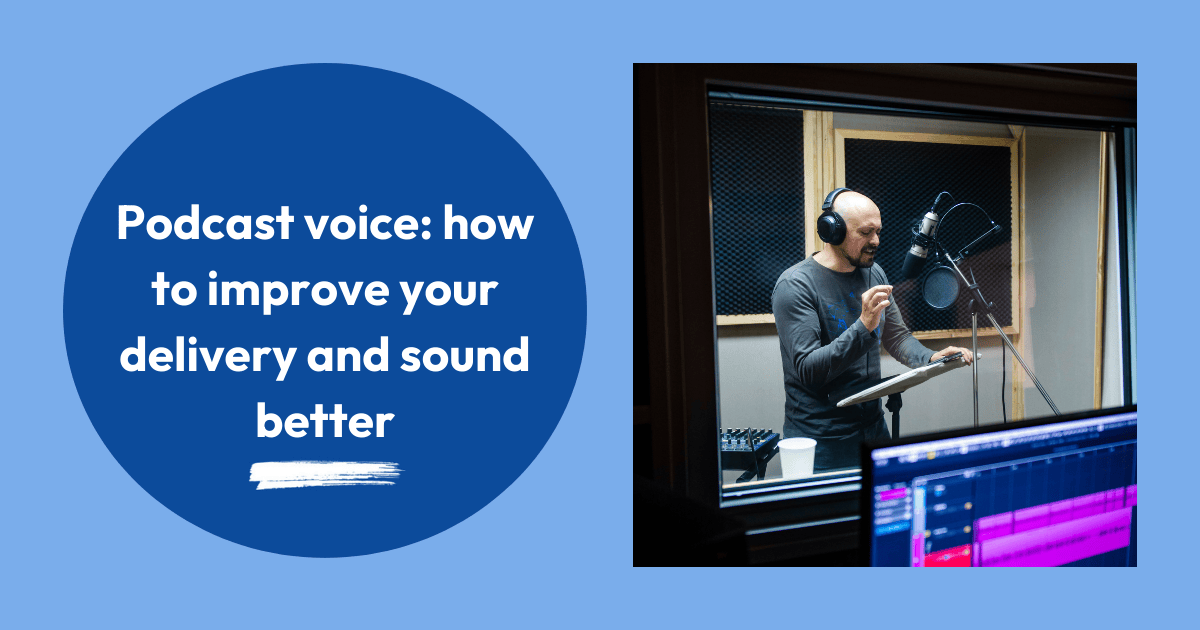
Your voice is your instrument.
Listeners decide within minutes whether they trust you, understand you, and want to keep listening. Improving your podcast voice is not about sounding like a radio announcer. It’s about control, contrast, and intention.
In this guide, we break down how to improve your podcast voice, strengthen your delivery, and create a listening experience that helps you grow your audience. We also explain why your voice alone is not enough—and how a professional website on Podpage.com supports long-term growth.
What is a “podcast voice”?
A podcast voice is not a fake voice.
It is the clearest, most intentional version of your natural speaking voice. The goal is to sound:
- Clear
- Controlled
- Engaging
- Trustworthy
Listeners are not looking for perfection. They are looking for confidence and clarity.
1. Slow down more than feels natural
Most new podcasters speak too fast.
When you are nervous or excited, your pace increases. To listeners, that can sound rushed and difficult to follow.
Try this:
- Pause between key ideas
- Finish sentences fully
- Breathe intentionally
If it feels slightly slow to you, it likely sounds right to your audience.
Pauses create authority. They give your ideas weight.
2. Use contrast to create intensity
It is not bad to raise the tone of your voice.
Energy is useful. Excitement is useful. But if everything sounds excited, nothing sounds excited.
Contrast creates emphasis.
If you want something to feel fast, place it next to something slow.
If you want something to feel intense, lower your voice first.
If you want something to stand out, change your pace or tone around it.
Using different tones and speeds is a tool. It adds structure and emotional range to your topic.
Think of it as dynamics in music. Without variation, listeners tune out.
3. Add more energy than feels natural
Podcasting is a performance.
That does not mean you should shout like a sports radio host. It means you should bring slightly more energy than you would in a normal conversation.
A practical exercise:
Push your energy to a level that feels slightly obnoxious.
Then dial it back 10–15 percent.
What remains usually sounds confident and engaging on microphone.
Microphones flatten energy. What feels animated in the room often sounds flat in headphones.
4. Improve clarity and articulation
Clear articulation improves listener retention.
Mumbling, trailing off at the end of sentences, or inconsistent volume forces listeners to work harder. When listening requires effort, people leave.
Practice:
- Over-enunciating during warmups
- Recording short test clips
- Listening back critically
Most podcasters avoid listening to themselves. That slows improvement.
5. Smile when appropriate
Smiling changes tone.
Even if listeners cannot see you, they can hear it. Your voice becomes warmer and more open.
This works especially well for introductions, transitions, and calls to action.
6. Warm up before recording
Professional broadcasters warm up for a reason.
Before recording:
- Read a paragraph out loud
- Stretch your neck and shoulders
- Take deep breaths
- Practice short vocal drills
A simple drill you can use:
Take a deep breath and slowly count from 1 to 10, focusing on steady airflow and consistent volume. Then repeat the count, but this time exaggerate your articulation—clearly hitting every consonant. Finally, read one sentence from your show outline with slightly elevated energy and deliberate pacing.
This takes less than five minutes. It improves breath control, clarity, and vocal presence immediately.
7. Edit for delivery, not just mistakes
Strong podcast voice continues in post-production.
Cut:
- Long filler phrases
- Repeated words
- Distracting vocal habits
- Anything that doesn't deliver value to your audience
Cleaner audio increases perceived authority.
Your voice attracts listeners. Your website converts them.
Improving your podcast voice helps you retain listeners.
But retention alone does not grow your audience.
To grow, you need:
- Search visibility
- A clear place to subscribe
- A mailing list
- A professional online presence
This is where Podpage.com plays a critical role.
When someone hears your voice and wants more, they search for your show. If they find a fast, SEO-optimized, professional website, they are more likely to subscribe and join your email list.
If they find nothing—or a slow, outdated page—you lose momentum.
Why podcasters use Podpage to support audience growth
Podpage automatically creates a professional podcast website designed to:
- Rank in search engines
- Convert visitors into subscribers
- Collect email addresses
- Showcase episodes clearly
- Display reviews automatically
You focus on improving your voice and content. We handle the infrastructure that turns listeners into long-term fans.
A strong podcast voice builds trust.
A strong website builds growth.
Final thoughts
Improving your podcast voice is a skill. It requires:
- Awareness
- Practice
- Consistency
You do not need to change who you are. You need to refine how you deliver your ideas.
Use contrast. Use pacing. Use energy deliberately.
When your delivery is clear and dynamic—and your show is supported by a professional website on Podpage.com—you create the conditions for sustainable audience growth.
Work on your voice.
We will help you grow.
```


