One Gear, No Plans, Big Adventure
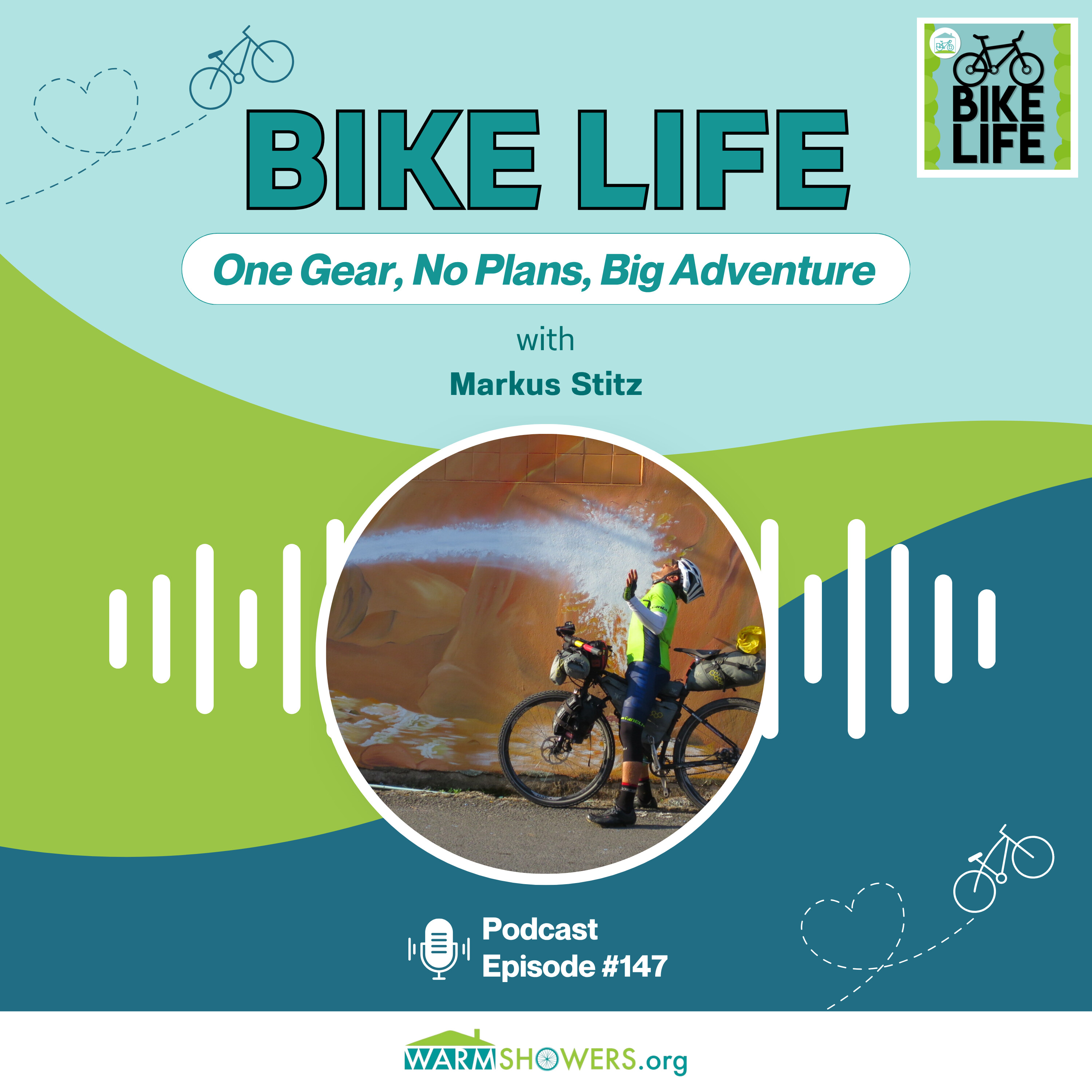
Markus Stitz’s epic 34,000-kilometer journey around the world on a single-speed bike reveals how letting go of the plans and leaning into curiosity can transform your perspective and connect you with humanity.

 Apple Podcasts
 Spotify
 Overcast
 PocketCasts
 RSS Feed
 Imagine pedaling 34,000 kilometers around the world... on a single-speed bike.
Markus Stitz joins us to share his ultimate slow-travel adventure. From grinding through New Zealand’s hills to experiencing the incredible hospitality of Iranian villagers, Markus proves what can happen when you throw away the itinerary and let curiosity lead the way.
Tune in to hear how a simple bike can break down cultural walls, why human connection is the best part of travel, and how the bravest thing you can do is just start pedaling.
Highlights
- The reality of tackling the globe without gears.
- Heartwarming stories of hospitality from Iran and beyond.
- Learning to trust the journey and leave the details behind.
Get ready to be inspired by Markus’ unforgettable story!
Catch up with Markus on his blog, Markus Stitz, and plan your next tour on Bikepacking Scotland.
Join our community at Warmshowers.org, follow us on Instagram @Warmshowers_org, and visit us on Facebook.
Watch this and all episodes of the Bike Life Podcast on YouTube.
Special thanks to our sponsor, Bikeflights – the best in bicycle shipping service and boxes, guaranteed.
Theme Music by Les Konley | Produced by Les Konley
Happy riding and hosting!
Jerry Kopack [00:00:02]:
Welcome to Bike Life, a podcast from the Warmshowers Foundation. Here we celebrate our global community of touring cyclists and hosts who make life on the road unforgettable. Through stories, insights and shared experiences, we explore the connections that fuel every journey. Whether you're pedaling across countries or welcoming travelers into your home, you're part of a movement rooted in generosity and adventure. Discover more and join the community at warmshowers.org now let's hit the road together. Hey, everyone. This is Jerry Kopeck, the host of Bike Life, coming to you from the mountains of Breckenridge, Colorado. Today, I'm joined by Markus Stitz, a German cyclist who first discovered bike touring while living in New Zealand, drawn in by the simplicity and slowness of traveling by bike.
Jerry Kopack [00:00:56]:
Since then, he's taken that idea to the extreme, riding more than 34,000 kilometers around the world in a single year and wait for it on a single speed bike. These days, Marcus is based in Scotland, where he develops bike packing routes, writes guidebooks, and works to make cycling more inclusive and accessible. Marcus, welcome to Bike Life.
Markus Stitz [00:01:17]:
Thanks for having me. Welcome.
Jerry Kopack [00:01:19]:
Now, I want to talk about your origin story. You said that touring in New Zealand is where it all started and that you were drawn in by the slowness of travel. Tell me more about that mentality.
Markus Stitz [00:01:31]:
Yeah, I found. So I went to a bit backstory. I, I finished university and then chose New Zealand as the furthest away point I could go to, from, from Germany. So that was kind of the intention behind that. And I took my bike, but I hadn't really done any proper touring beforehand. And then I think after a few months living in Wellington, I was kind of like, you know, why don't they kind of do a bit of a longer trip? And then I was, I was hiking initially and then in a hut, I met Glenn and Clint was on this trip to New Zealand. I think original attention was to cycle from Britain to India. And for, for whatever reason, he couldn't do that.
Markus Stitz [00:02:11]:
So he, he was in New Zealand and did a tour of the north and the South Island. So we had a good chat in the hut and like, I think he, he, he really talked me into cycle touring. I thought that, you know what, I've got a bike in Wellington, I just have to put some on it and put a rack on it and I just join you in a couple of days and we can probably cycle together. And so, so we did. So, yeah, so we ended up cycling together and it was, it was great. I loved it. I mean, I had To. I had done longer, longer distances before and that wasn't an issue, but not with.
Markus Stitz [00:02:43]:
With luggage. And. Yeah. So that initial trip on the south island of New Zealand then started. Yeah. Well, has not ended ever since. Yeah.
Jerry Kopack [00:02:52]:
Did you ever make it over and do that route from England to India?
Markus Stitz [00:02:58]:
No. So that was like. It's a funny thing. So I think. No, never, never did that. But I think so in New Zealand. I think so. New Zealand actually has quite a significant place in my life.
Markus Stitz [00:03:10]:
So I ended up actually being in New Zealand for two years. So I was there from 2007 to 2009 and when I left New Zealand, I think I had always like. So on the south island, there's a town called Dunedin. And Dunedin has basically the same grit of streets as Edinburgh, has kind of the same street names, Princess street and all of the street names are basically the same. I mean, it looks very different. It is not like Edinburgh at all. But Dunedin is also the old name for Edinburgh. So inspired by that, when I then left Wellington to go back to Europe, I said to a friend in a pub on the night beforehand, look, next time I come to visit you, I'm not going to do the whole journey by plane.
Markus Stitz [00:03:58]:
I'm definitely going to cycle part of the way. And that was basically where I plant seed for doing around the world trip. But it's the kind of. It's also the kind of thing when you. The one thing which was great about it is like, Fred, who was my friend I was talking to, he's the sort of person who would take you up on a yearly basis and say, you remember this conversation we had in the publish, probably over a few beers and you kind of committed to coming back here by bike? That's what you did. And I thought, yeah, yes, I did. And I think having that was actually really good because at some stage I then literally said, look, I'm gonna do a trip from Edinburgh to Dunedin by bike. And that then turned into the round the world trip.
Markus Stitz [00:04:41]:
Because I thought, like, if I'm going half the way around the world, I might as well go the other half back. Because it's not about, you know, it's probably not about the time you spent. It's more about making that initial commitment to do or to start something on the scale like this. And so, yeah, so like, so I feel thankful to New Zealand. Those two years are probably some of the most influential ones in my life so far.
Jerry Kopack [00:05:06]:
So I love that you said that your friend kind of held you accountable when you had mentioned as you said over after a few pints, were you serious about doing this ride and, or were you just kind of like, yeah, this is what we talk about. I had a few beers. I wasn't sure what I was saying, but it sounds like he did a good job. Like, hey mate, remember you said this so now you got to do it.
Markus Stitz [00:05:28]:
Yeah, I think I was serious about it, you know, I mean it's just like, you know, having a few beers probably doesn't help the case that much, but I think in a way it's probably a good thing as well because if you, I think it was something I had thought about it more than one time beforehand. You know, I love the speed of cycling. I really got into, I have quite an addictive personality. So if I, if I start something I really want to do. Like I, I used to work so my background before all of this was music. I used to work as DJ and then used to run a music festival for five years. So whenever I, you know, started something like this, I kind of like, you know, I, I, I, let's say I did it properly. And, and it's the same with cycling where I kind of felt like I, in New Zealand I really, really improved on the mountain biking and off road riding skills.
Markus Stitz [00:06:25]:
So you know, I left the country with like being a much, much better cyclist. And also funnily enough, Wellington back in those days was a hotspot for single speed culture. Like all the, all the bike careers were riding fixed gear bikes. There was a lot of single speed mountain biking going on. And I think this is where I kind of really got into, I'd never had any contact point with that sort of riding beforehand as well. And my friend, he was, he was a bike journalist, he was a dj. So we had so much in common. So I think this is why we clicked together quite well.
Markus Stitz [00:07:00]:
And the kind of thing. So yeah, I mean it came out over a few beers and then you kind of wake up the next morning, kind of go what did I just say? And then you kind of go like, well I said that for a reason. You know, it didn't come totally out of the blue. It wasn't something else. And I, and I, I just, I think this is an interesting thing on about wider adventures as well. I think that point, committing to something is so important because I think that is the most riding around the world as, you know, as tough as it sounds and spending a year on the bike, I think the toughest moment of that journey as well then to make the commitment and I Made that commitment at night when I handed in, when I wrote the notice for my job I had before I left for the round the world trip. Typed it down, but like, I could sleep on this for another night. But then I probably changed my mind again.
Markus Stitz [00:07:51]:
So I just typed it out, went into the office the next day, said to my boss, here we go, here's my notice. And she was kind of like, whoa. And I was like, well, you know, this is, this is the sort of decision like I, I was going to make at some stage and I'm just going to do it now and then it's over and done with. And by that time, like a thing is just kind of like you kind of feel the weight of your shoulders and you kind of go, right, I got to do it now. Yeah, right, because there's no turning, there's no way back.
Jerry Kopack [00:08:19]:
And sometimes as you know, the first step is just saying it out loud or telling people because then you do have that sort of understood accountability that, okay, you said this, now you're going to do it.
Markus Stitz [00:08:31]:
Yeah, yeah. And that is super important. I mean there's so much, I think there's so much stuff you can take from, from, from any of those bike rides for, for life in general business, this kind of thing. And it's just kind of like this, this stuff you don't just use for a bike. Right. You know, it's, that's the wider thing as well. And, and, and, and the also the other thing as well. And it's just kind of like.
Markus Stitz [00:08:57]:
So I'm German and I think Germany has a reputation for being a country where people plan a lot. I've heard sometimes even, even, even the plan is planned for as well. So you know, like, and what this. And then I, and then I lived in a culture. New Zealand is very much, much closer to, to the States and, and, and, and, and the British culture where you just do things, you know, and it might not be the right thing and then just correct. Cause and you do it in a different way and you know, and then you kind of, and that was exactly the same with, with my around the world trip where I thought like, you know what? I, I literally when I handed in my nose, I had no plan. Get no idea how I'm actually going to get this off the ground. But then I thought like, you know, it's gonna, it's kind of, there's the certain things I probably need to plan and the other things they're going to sort themselves out along the way and, and I think Therefore, having that experience from New Zealand, because New Zealand, I mean, when I look back to my first trip is literally taking a ferry to Wellington, going into the bike shop, ask them for work and to pannier bikes, chucking them on the bike and cycling back to meet Glenn.
Markus Stitz [00:10:05]:
And then we were on the road for about four, six weeks even, I think, you know, and it was just. And yeah, of course there were days in there where I thought it might have been a good plan to, you know, sort some stuff on the bike beforehand or learn some mechanical skills. But hey, ho. You know, if you're in the middle of nowhere and you need to fix your bike, you manage to do it, or otherwise you can find someone where you can get a ride with and get a bike shop to fix it. So, you know, you learn things the hard way, but it's a good thing.
Jerry Kopack [00:10:37]:
So I. I want to go back to New Zealand. Your experience there. There. There's a pretty famous route, and I'm gonna mispronounce the name, but it's the. The Tour of Aotera.
Markus Stitz [00:10:48]:
I would tell where.
Jerry Kopack [00:10:49]:
Yeah, yeah. Have you, have you done that route?
Markus Stitz [00:10:52]:
Yeah, I cycle. So that was basically my route on the roundabout trip. So I cycled almost the entire route except the northern section. So I started in Auckland. I didn't do the first bit from Cape Ranger, so, but I started in Auckland and I actually, funnily enough, I had the pleasure of mapping 5km of that route before the final route came out. So.
Jerry Kopack [00:11:12]:
It's amazing.
Markus Stitz [00:11:14]:
Yeah, so, yeah, amazing. It's probably my. My still my. My. My favorite bikepacking journey in the world. Yeah, beautiful.
Jerry Kopack [00:11:22]:
I. I discovered that roots maybe 10 years ago, and it's. It's been on my list of places that I. I want to go see and check out because it sounds. It sounds amazing. Right. I think it goes North north island to the South Island. Right?
Markus Stitz [00:11:34]:
Yeah. And it's. I mean, the nice thing about this. So like, kind of circling back to New Zealand, kind of. The more I talk about this country, I think the more I realize how much of an impact it had in my life. So Tua Tuarua is one of those routes where I think in New Zealand it's. It's a little bit like Scotland, like, in terms of, like, everything's bigger than in Scotland. But it's also.
Markus Stitz [00:11:56]:
I think I did find the Northern Ireland or the bit on the Northern island of the tour probably even more interesting than the South Island. So south island is what I think where everyone basically goes when they go to New Zealand, because that's the more rural part, less people there, more sheep, higher mountains, rainforest. Whereas I think the north island always has this kind of reputation that it's like this is where people live. You know, Wellington is the capital and like you've got Auckland there, you've got Hamilton and some of the bigger towns. So I think, like from the outset I was just like, kind of my first perception was like, this is probably the least and the less interesting part of the wood. Whereas I think having done it, the north island is probably the like, you know, it's certainly the bit that surprised me the most in, in some cases, the Wanganui river journey, for example, like the part on the ranging where you go on the Ranganui river and have to take a boat back is, is logistically like, interestingly, because you basically, you have to time yourself super well there. But yeah, lovely place. And, and, and so New Zealand.
Markus Stitz [00:13:09]:
So that route is mapped by the Kenneth Brothers, who. So when I arrived in New Zealand, the first thing I bought was a guidebook and there was classic New Zealand mountain bike rights from the Kenneth Brothers. Back then, one book. Now it's turned into two books, one for the north and one for the South Island. And I always love their style of writing. I think there was a good sense of humor in there sometimes because, you know, whenever there was a short section where you might have to push your bike like that was, I just found that really interesting and quite honest as well. And that's why when I went around the World, I caught up with one of the Canon products in Wellington, had breakfast and that's where I was also talked into mapping the last bit of the tour to Aurora because I was going through there anyway.
Jerry Kopack [00:13:57]:
So let's talk about that around the World tour. You said that New Zealand was part of it, but where did you start and how did you decide where you wanted to go?
Markus Stitz [00:14:08]:
So I started and finished in Edinburgh and it is a pretty conscious decision because like, so timeline of events. In March, I handed them my notice. I'd always had a keen interest on probably moving a bit more into the tourism sector after I come back from the around the World trip. And so I felt like I'm going to map my first bike packing route before I leave around the World, which is the Capital trail, which goes 250km around Edinburgh and that starts and finishes at Portobello Beach. So I was just then jokingly saying, look, I'm going to leave from Portobello beach in Edinburgh and just do an extended capital to l like. So instead of 250km, I do. I didn't know back then that it would turn into 34,000km. So left on the beach in Portobello and then I was pretty much.
Markus Stitz [00:14:59]:
I was guided very much by the seasons other than, other than the wind direction. So I did the opposite direction to what people normally do. Cycled across the UK first, then through France, all the way down to Barcelona and then from Barcelona with a plane to Iceland. I always wanted to cycle in Iceland. I thought, like, if I'm going to do such a big trip, I might as well spent a few days in Iceland. So the 10 days in Iceland and then from Reykjavik to New York City and then from New York all the way over to Santa Monica on the west coast and up to San Francisco. And that first part of the trip was basically kind of very much defined by places I'd lived before. And so I spent a reasonable amount of time in New York City to do an internship there.
Markus Stitz [00:15:48]:
I spent some time doing a work on travel experience in the US so and I worked in the Grand Canyon and in San Francisco. So I really wanted to go back to San Francisco because I really love the town. And then from San Francisco to Auckland, all across New Zealand, all the way down to, to the bottom of the south island and then over to Dunedin, because I really wanted to include Dunedin. And then a loop back from Dunedin to Queenstown and then from Queenstown to Sydney with the plane in Australia, and then from Sydney all the way across Australia. That was the longest bit, six and a half thousand kilometers to Perth and then from Perth to Singapore and then to Singapore. Singapore is not big. It was quite hectic, quite a lot of traffic to Malaysia, Thailand, Lao and Vietnam. And then I was.
Markus Stitz [00:16:44]:
So I think the only thing I was a little bit restrained by on the, on the round the world trip that I had given myself like a year to do the trip. And I also wanted to catch up with my Buddha and cycle like at least three weeks together with him. So we agreed on cycling in Iran. So I then had to take a plane from Hanoi in Vietnam to Tehran, caught up with Matthias and Tehran, and then we cycled together for three and a half weeks to Iran, all the way into, into Turkey and then I crossed Turkey and then basically from Turkey all the way back on land to. Oh, where did I take the ferry from? From Dover, from Calais to Dover and then across Britain. And so the last, so all the way into Germany was pretty much straightforward, you know, kind of the most direct route I could Take in Germany. I ended up in Germany close to my birthday, so I thought I might as well pop in to see my mom have birthday in Germany. So I kind of went north in Germany and went back south again.
Markus Stitz [00:17:54]:
And then I had a few days to spare. And this is the reason why I went over to the UK Instead of cycling straight home to Edinburgh, I made a detour over Ireland and then that way into Scotland with a few ferries in between.
Jerry Kopack [00:18:08]:
That is massive. And I know that you know this is massive.
Markus Stitz [00:18:12]:
Yeah.
Jerry Kopack [00:18:14]:
Today's episode is brought to you by bikeflights.com Bikeflights delivers everything you need to ship your bike, whether you're riding a bucket list tour, selling your bike online, or moving across the country. Bikeflights easy to pack bike boxes, carbon neutral shipping and pick up to delivery monitoring. Make it simple and save you up to 40%. Visit bikeflights.com warmshowerstoday to book a shipment. Now back to the show. I, I've been to a lot of the places that you've mentioned, but the one place that kind of got my attention, that made my ears twitch a little bit is you mentioned Iran. And as an American, obviously that's probably not a situation that I can get into which I'm really supported by that. But I was fortunate to meet a couple of Swiss bike travelers years ago and they traveled through Iran.
Jerry Kopack [00:19:07]:
And I've mentioned the story on the show before. They said that was one of the kindest, most generous places they have ever been. They were there for four weeks. They said they didn't pay for a meal or a night stay the entire time. They said the people were genuinely wonderful. And I'm curious, does that match up with your experience in Iran?
Markus Stitz [00:19:26]:
Yeah, totally. It's is my favorite country on the whole around the world trip. And I would probably also say from the countries I've cycled so far, it's, it's still my favorite country. I mean, I find it difficult to rate countries. You know, they all have their own specifics and, you know, you can't compare the US with Iran. It's just simply not possible. Like, it's, you know, it's totally different. Yeah, totally.
Markus Stitz [00:19:52]:
It was, that was exactly my experience. You know, I, I, so my German passport made it easy. You know, there was like, it was super easy to get into the country. There was no visa. Like, I got my visa on the airport. You know, the only thing you need to negotiate a little bit what you pay because you need to pay your health insurance upfront. And that differs depending on who's on the border. But you're not talking about much, you're talking about €80 max.
Markus Stitz [00:20:20]:
So it's just like on the larger scale of. And then yeah, like, I mean it's exactly, you know, I think like. And my, it's, it's the same for my brother. Like you know the first day we cycled out of Tirwan we got stopped for lunch. So it was trying to find a place to eat in town and there was this guy on a motorbike and or the moped over. There were other things very like Iran. Imagine being transported back to the 70s because that's like late 70s. It's when, when the sanctions started and ever since like, you know like it's, it's just a fun of mind blowing what they can fix still.
Markus Stitz [00:20:57]:
You've got old Mercedes trucks and old cars and everything is still running. Just kind of have to keep it going because they've got no other alternative. But yeah, the hospitality of the people was amazing. So this guy took us into a restaurant, said look, my brother owns this, here's the menu, help yourself. You know, this is it like. And I was just like, you know, and I, I wasn't really sure because I also knew, you know, we are like we were rich people in that country, you know, compared to what the people have in Iran. And it's got much, much worse ever since then. You know, we're basically cycling around with a, with a, with a pile of cash notes because the inflation back then was already.
Markus Stitz [00:21:39]:
You pay in millions, you know, you have absolutely no relationship to the currency. It's just impossible. But yeah, so we sat together for lunch and, and that, that happened in every town. Like, you know, it's amazing. And it was also, I found it really interesting. The people were generally curious, you know, they were really interested in where we come from. So it wasn't the one sided conversation. So what I took on around the world trip was a couple of photographs from you know, personal photographs, my parents, my, where I live, you know, all of those kind of things because you can show them to people and even if they don't speak your language, you know, you've got like a common thing to talk about.
Markus Stitz [00:22:24]:
And they were fascinated by it because it was also the sort of stuff, you know, propaganda in Iran. Like it's really difficult for those people to kind of get information from the rest of the world which is not filtered in some shape or form. So for, for them we were like, they wanted to know what it's like, you Know, they asked this question, you know, is this also. We talk about the States, we talked about other countries. They were just really curious because, like, they don't get that information. Like, this is the kind of thing, like, it's heavily influenced by what they can access. And also really well educated people as well. Like, a lot of people speak fluent English.
Jerry Kopack [00:23:06]:
Yeah.
Markus Stitz [00:23:07]:
So it's easy to have conversation with. And if they don't speak English, you know, the joy of mobile phones, they call a relative. So we always had this mobile phone in the middle of the table as someone was translating our words to the other person and vice versa. And. Yeah, just. Yeah, amazing. Like, super nice. And I guess the other thing.
Markus Stitz [00:23:28]:
And this is, I think this is why it's probably not, you know, I don't have to tell anyone what the news are at the moment, but it's just, it's the prime example. Or when you actually go into a country like this, what do you will. What you experience on the ground is so far removed from what you see in the news. Like, you know, like a Tehran is. Is a big city, like any other big city. But as soon as you go into the countryside, what's, you know, those, those are literally walled villages. And what is in those walls stays in those walls. Like, people took us in, you know, we stayed with local people and slept on the floor, you know, and we played volleyball with them.
Markus Stitz [00:24:14]:
So volleyball is a massive thing in Iran. You know, every village has a volleyball team, had food with them. So, yeah, it's just like. And, you know, we had. We had a couple of encounters. So I think there's two things that stick out to me from that trip. There's one picture my product took of me being basically, there was this guard on a mosque who was quelling. My arm was taking me away.
Markus Stitz [00:24:39]:
And if you look at the picture, you kind of think is, someone's arresting me. No, he wasn't. He was literally just guiding me to the next water place to kind of like. He was like, oh, you must. You guys must be. You must be thirsty. There you go. There's a, there's a.
Markus Stitz [00:24:53]:
There's a well there. And that water is totally drinkable, so help yourself. So there was the one occasion, and then we also got stopped by the police once. And I thought, like, you know, that's where my heart was beating a little bit faster. I thought like, oh, I'm not so sure about this. And they were like, you know what? You would just. We just want to have a chat. You know, it's absolutely we're not gonna.
Markus Stitz [00:25:14]:
We're not gonna arrest you. And if you want some coffee. So it's the only thing you can't find in our honest coffee, like, tea everywhere. So they were like, if you want some coffee, we've got, like, a secret supply of coffee. You help yourself. So it's just like. Yeah, it's just really.
Jerry Kopack [00:25:29]:
Man, I. I'm getting goosebumps listening to these stories. And at the same time, it hurts my heart to know that what's happening there and, you know, without this being a political conversation. But it's definitely your. Your experiences, your stories only make me want to go and experience that place even more because I'm sure that, like, Iran, you've been other places where the news may depict a certain country in a certain way. Maybe it's dangerous. Maybe they say the people are crazy, but in my experience, people are just people, right? They. They all have their goals, their dreams, their aspirations, their stressors, the things that make them happy.
Jerry Kopack [00:26:12]:
And it's. It's. Sometimes it's politics, it's governments that. That make the place sound dangerous because, you know, like you said with going to Iran, the people were wonderful. Even though the news in the United States may say a different story or the news in Western Europe may say a different story, but once you are on the ground in those villages, it's a completely different situation.
Markus Stitz [00:26:35]:
Yeah, totally. I mean, I'm also not denying, you know, there is a. There is a certain amount of risk, you know, you. You might get into the wrong situation. But then, to be honest, you know, you. You'll have that. You'll probably have that in every country if you're in the wrong place at the right. At the wrong time, that, you know, but I think, like, just kind of like on this as well.
Markus Stitz [00:26:55]:
So what I also found quite interesting, and I think this is probably kind of explaining a little bit human behavior as well. So we then crossed over the border into. Into eastern. Yeah, Eastern Turkey. And that was in the time. I don't know what the situation is, like what now? But that was. That was when there was loads of military to a unit there in order to kind of keep the curse. Like, there's.
Markus Stitz [00:27:24]:
It's. You know, there's places in the world where there's an ongoing conflict. There's the same. There's a border region in Thailand, which I. Again, not to my knowledge, because it doesn't really feature that much in the news. And I just found it quite interesting. So again, the same hospitality of people, you know, and. And There was both.
Markus Stitz [00:27:44]:
Both from the Kurdish population and the Turkish population. Like, there was no. There was absolutely no difference between the two of them. But what I found so interesting. So I was quite shocked when we came over the border, and literally there's a military checkpoint every 10, 15 kilometers. And you literally, like, imagine you cycle towards tanks with guns pointing at you, because this is kind of like, you know, And I just found it. Found it really uncomfortable. And I knew very much they had absolutely no interest on two guys on the push bike, you know, whatever.
Jerry Kopack [00:28:19]:
Yeah.
Markus Stitz [00:28:20]:
But I just found it interesting how quickly we got used to that. Like, the first day, I was just like, whoa, you know, I feel really uncomfortable about this. And it became normal by day two and three. And that's the kind of thing where it's just like, whoa. Like, this is. You know, that kind of shows you on a very personal level how quickly you get numb to those external influences.
Jerry Kopack [00:28:48]:
Yeah. And I don't know throughout your travels if you made your way into Israel or not, because I had a similar experience. I was in the northern part of Israel, in the Golan Heights, which is along the border of Syria and also Lebanon. And there were tanks, there were Humvees, there were people with military fatigues, machine guns. And at first it was scary. It was shocking to me. But then I look around with people in town, in these villages and the border wall. You can reach out and touch the border wall.
Jerry Kopack [00:29:17]:
It's right there. And you look across into the other country, into Syria and Lebanon. It looks like a normal country. We conjure up these visions of what we think it's going to look like. And there's people over there, and the people on this side of the wall, people on that side of the wall, and people are walking around, going to cafes, having their tea, having their coffee, going to work, and it's. It's no big deal. And to your point, you definitely get used to it. It becomes just.
Jerry Kopack [00:29:42]:
This is just what life is. And, wow, what a crazy thought to think that you could just get used to living with tanks driving down your street.
Markus Stitz [00:29:50]:
Right.
Jerry Kopack [00:29:51]:
I mean, we take that for granted where we live, that we don't have that.
Markus Stitz [00:29:55]:
Oh, it's. It's crazy. Like. Yeah, but it's just, you know, it kind of shows you a little bit like, I don't know how. And it's also. I mean, it was interesting because I, you know, my. My trip to Iran also prohibited me to go to the US For. For.
Markus Stitz [00:30:11]:
Because I couldn't just get an Esther. And I'm I'm working with the Arkansas government at the moment on a project. So I thought like, I, you know, so for years I stayed clear of the US Because I just like, literally couldn't be bothered to jump to all of those hoops. And then I thought like, right, this is kind of. But also on my around the world trip, I would, I would say the US was another one of those countries where I really enjoyed cycling there. You know, people were super hospitable. They were very excitable. You know, it was, it was great.
Markus Stitz [00:30:43]:
I had a great experience. So I thought that, you know what, I just don't want one. You know, I just personally, like, I think to bring it down to a personal level, I don't want my personal experience be in any kind of shape form by the political situation in the country. And, and again, like, I went to Arkansas in October and you know, there were loads of people that probably said, oh, you know, be careful with taking a camera, etc. Etc. I had no problems. You know, it was, it was just, you know, it was no different to what I had experienced 10 years ago. So it's the kind of like.
Markus Stitz [00:31:18]:
And that, I think that's the kind of thing like, you know, is. And this is the, like, I think full stop, that's the reason why I ride bikes. You've got no cage around you. You are just a very, very, very small thing in a very, very big world, you know, so I understand and I think immediately it makes people less suspicious to you. So I met a couple in California who gave me the access code to their mansion south of San Francisco, which was like huge. You know, I stayed on a vineyard while the owners were very cycling and they were like, help yourself to whatever you want to help yourself. There's a fully stocked fridge. Obviously, staying on a vineyard, you can have as much wine as you'd like to.
Markus Stitz [00:32:04]:
And I thought like, dangerous. I was just like, wow, those people have met me in the pub for half an hour over a beer.
Jerry Kopack [00:32:12]:
Yeah.
Markus Stitz [00:32:13]:
And they trust me to go and like. And so I was just curious, asking the question, why bike? And they were like, you know what, look at your bike. There's absolutely nothing you can take. You're riding a single speed bike with a couple of bike packing bikes.
Jerry Kopack [00:32:28]:
Yeah.
Markus Stitz [00:32:28]:
If you want to steal anything, you can't.
Jerry Kopack [00:32:31]:
You're not going to steal our television. Right.
Markus Stitz [00:32:34]:
And someone who, you know, hangs around in the pub with us and cycles around the world, you know, this is kind of like. And I fall. Yeah, yeah, right, exactly. And, and that's kind of stayed with me ever since then as well. You know, I'm. I'm trusting. You know, there's like, you know, in Scotland. There's places in Scotland you don't need to look your bike, you don't need to lock your front door.
Markus Stitz [00:32:54]:
You know, nothing really happens. And I think this is the kind of thing which stayed with me from the round the world trip. You know, just as a. I think as a baseline trust. People trust they're gonna have good intentions. There might be the odd one or two where that is not the case, but it's such a tiny fracture. The rest is good.
Jerry Kopack [00:33:14]:
I agree. I came back after traveling for a year and a half or two years, similar as you, and I came back with that sort of perspective that people are just people. They're kind. Not everyone is trying to steal from me, rob me. And I love the fact that you said that you don't need to lock your bike or lock your house, and that's. I mean, what a wonderful world to. To think of like that. Right?
Markus Stitz [00:33:41]:
Yeah. And. But funnily enough, it does exist, you know, it's still there. Like, you know, I. Even in a town like Edinburgh, it's a bit more tricky. There's bike theft there, whatever. So you need to be a bit more careful not advocating for leaving your bike somewhere. I'm not.
Markus Stitz [00:33:56]:
But I also didn't have any. Any negative experience so far. It's just probably what I. What I. So another thing I found on the round the world trip, and this is again, like, this is life advice in general, is if you are grumpy and you had a. You had a rough day, and you approach people, you know, although you're probably trying to hide this, your body language might suggest something else. So people get, you know, people like you. You're not just communicating with your words, you're communicating with your whole behavior.
Markus Stitz [00:34:27]:
And it's the kind of thing. And it's like. And so if you are, you know, if you are approaching someone in a suspicious way, then people will get suspicious if you come to them and say, look, hi, I'm Marcus. There we go. That's cool. You know, most of the people will kind of go like, yeah, there we go. Let's have a conversation. You know, and it's just kind of like, yeah, it's just.
Markus Stitz [00:34:50]:
There's so much. Yeah, I learned a lot in that trip. It's not that I wasn't like this beforehand, but it kind of like reassured you in many ways that you can just Be like this. That's cool.
Jerry Kopack [00:35:05]:
Yeah. So I want to, I want to talk about your, your, your trip, how it finished up. But first we kind of glossed over this. You did this on a single speed. And I have a little bit of experience with riding a single speed. I used to, I, I think I raced a single speed mountain bike for a season, but it's probably been 15 years ago and I think you'll appreciate this. I had this idea that maybe I would try to pick up a single speed again and just for fun and go ride it on the mountain bike trails. And so I borrowed one from a friend last week and again, I haven't ridden one in 15 years and I forgot just how hard it is.
Jerry Kopack [00:35:41]:
And you know, there's that old saying that if you have a single speed, you actually have two gears. One of them is walking and one of them is riding. And so I just, I just want to talk to you about your mindset with that. Obviously it's a simplified way of doing things. There's no derailer, there's there, there is no cassette. There's nothing that can really go wrong. But tell me why you chose a single speed and did you have any regrets along the way? Like, oh God, I wish I had some gears.
Markus Stitz [00:36:10]:
So two things, simplicity and curiosity, I think are the two things that made me choose it. Some simplicity for a way. I picked up a signal speed for a very practical reason. When I cycled home for Christmas from Edinburgh to the middle of Germany in 2010. And we normally don't get any hot winters in Scotland, but that year we did. And so I was like, again, I had committed to the journey, had told someone, I'm going to cycle home for Christmas. And then six weeks before the trip, I freaked out a little bit. I was just like, oh my gosh, we actually get proper snow here.
Markus Stitz [00:36:43]:
And what if my hydraulics freeze, etc. Etc. I was just like. So I saw this single speed bike online, looked at it for like, this looks cool. It's got orange wheels, got a blue frame. It looks nice. I'm going to buy this and cycle this. And I, you know, this was so.
Markus Stitz [00:37:01]:
And I kept on, it was a Swobo Crossby actually. And I kept on cycling that bike. I loved it, it was so good. And that's where also, like, back then I was in my heydays of cycling, you know, I, I managed to cycle 424km to the Isle of Skye from Edinburgh two years beforehand. Yeah. So, you know, it was just like. And I thought, you know, physically I've got the ability to ride this bike without any problem, mindset wise probably as well because I had done a lot of cycling beforehand and so yeah, and then I just kept on cycling a single speed and then when it came to the round the world trip five, five years later, I was good friends with Surly Rep in the UK and he was like, look happy to support you with a bike because, yeah, long story, but it's probably too long for this podcast. So I had, you know, someone wants to give me a bike and, and then we had this conversation.
Markus Stitz [00:38:05]:
I was like, right, no, no, let's just, let's put some gears on it. And then he's like, why would you put some gears on it? You the only person I know just spend five years cycling on the single speed bike, Take a single speed, you know. And I thought like, yeah, you've got a point. So I took a single speed. Like just love the idea of simplicity and curiosity because so I, I'm not a person who goes for world records or anything like this, but I, I, I like to change perception a little bit for people. So back then I thought like when I, there's a few people I talk to and they're like, I get the concept of simplicity but you're gonna absolutely knacker your knees on a trip like this. And I felt like, don't think know, cycled five years on a single speed and I've done big days on, on, you know, it wasn't cycling on the flat, it was doing big mountain passes. So I was, yeah, it was simply, simply the, to see if it's possible to cycle on one gear around the world.
Markus Stitz [00:39:08]:
And yeah, it was like I never went into that trip with so I was very much sure that I can do it, but I never told anyone, like I'm not, I didn't boast about it. I, I wasn't going in there saying I'm gonna smash a world record, etc, etc, I was just like, here's my bike, gonna spend the year like cycling around the world. That's what I'm doing. And that, that was it. So yeah, so yeah, and yeah, it's good fun.
Jerry Kopack [00:39:39]:
So you, you finished your tour on single speed, didn't need any more gears, came home. When you finished, were you ready to be done or you still think like I wanted to get back out there?
Markus Stitz [00:39:51]:
No, I was, no, I was, I was, I was, I was ready to finish.
Jerry Kopack [00:39:56]:
Okay.
Markus Stitz [00:39:59]:
Like the trip and you know there's phases in the trip where you absolutely Love what you're doing. And then there's times where you probably also question yourself. I think, like I, I wouldn't go out there to tell the world, look, it's been, it's been plain sailing all along the way. It's, it's not. And I do think everyone who's done bike touring will, will have that, you know, and it's just, as I said, you learn a lot about yourself and especially if you're on a single speed bike and you ride across another bar in Australia, you probably question life choices more than once, but it's fine. And like, I think so one of the reasons why I look, so I had a bit of time to spend at the end of the trip. That's why I didn't look to Ireland, Northern Ireland and that way in Scotland, because I also thought, like, I want to give myself a few days in Scotland, cycling in Scotland, just to kind of gently ease back into what would then become my living again, you know, you, like, I think if you're on the road, life on the road is super simple. There's just, you know, you eat, you cycle, you sleep and you repeat that every day.
Markus Stitz [00:41:14]:
And every now and then you have to book a flight and find accommodation. But there's nothing, nothing complicated, I think, come back to real, real life. Everything is a bit more interconnected, a bit more complex and the kind of thing. So I've just, I'm thinking in those. And those last four days in Scotland were good because I had the idea of doing something similar to Bikepack in Scotland already in my head and it was just literally to reconfirm to myself, look, this is a cool country. I'm actually living in a place which is stunning, you know, like, I've cycled through a lot of different countries around the world and I've seen amazing things, but I'm actually really, really comfortable being back here, you know, no regrets at all of coming back. And it was, and I think it was also the kind of thing. So, you know, I was.
Markus Stitz [00:42:04]:
It wasn't that. Yeah, there was probably a bit, a little bit of a feeling when I, when I had the first day off and I was just like, oh, actually, you know, I wasn't done done. It wasn't that. I said, look, bike going to go in the corner. I'm never going to touch that bike again. Absolutely not. It was three days home and then I had to cycle down south to catch a ride to Eurobike. You know, it's a kind of.
Markus Stitz [00:42:30]:
So I wasn't done I wasn't totally exhausted. I wasn't kind of like I hadn't lost a lot of cycling, but it was also a different chapter, and that was the nice thing about it. So I kind of closed one. You know, I closed the book when I came into Edinburgh and thought like, the neck, whatever comes next is different and it works.
Jerry Kopack [00:42:52]:
I love that you have shared so many great stories, inspirational stories. You're. You're making me want to get back on the bike again. And I'm actually planning a trip here in a few weeks. Hopefully I can pull it off. I'm trying to head back down to the High Atlas mountains of Morocco. I've been there probably eight years ago. I don't know if you've been there or not, but it's a pretty special place.
Jerry Kopack [00:43:15]:
But as we wrap things up, give me a kind of like some. Some short thoughts of why do you think people should explore the world by bike? Maybe with. Maybe with more than one gear, but why should they get out there and travel the world by bike?
Markus Stitz [00:43:33]:
Well, so, so one thing is like, you know, I think the warnings of the experience and the speed of travel. So I think for me, the joy of a bike sits somewhere in. It is like, I think in many ways is quite a simple object. You know, it's like you can make it difficult and you can make it complicated, but like, you know, in its essence, a bike's got two wheels of frame, handlebars, chain, stuff like this. But it makes you go so much further than you could do than if you would just be on your feet, you know, walking, I think is. Is quite exciting. And I actually admire the few people I met on around the World who kind of attempted to walk around the world. That's a totally different scale, you know, but, you know, I think it's a good middle ground to sit in between.
Markus Stitz [00:44:27]:
Like, you know, like you. You go at a decent pace, you can stop. And this is, I think there's one thing which is so cool about a bike. You can stop everywhere and it's like, this is why I' also now encouraging people to kind of. It's not about the distance you travel, it's not about smashing big, that you can do that totally fine. But, you know, on the bike, yeah, you just, you see something cool on the roadside, you pull in and that's it. You know, you can stop, you can take a picture, you can do whatever you want to do. Try that in a car.
Markus Stitz [00:44:58]:
It's impossible, you know, it's just not, you know, so that little Bit of inconvenience you have potentially by having to use your own steam. And, you know, you get sweaty and you get rained upon, whatever. Like, I think that makes up for. So that gives you so much more of an experience. You can smell places, you can hear them. You know, it's such an unfiltered experience. And I think this is. That's, for me, in the essence.
Markus Stitz [00:45:23]:
And. And at the same time, you're doing something great for your body. You know, you. You have a physical exercise. But I think the thing which is like, the physical thing, it's important. But I think the what is. I think which is even more important is. Is.
Markus Stitz [00:45:37]:
Is. Is. Is the mental exercise. You have, like, your ability to. To put things in perspective, let off steam. You know, it's just like, I think just mental health is. Is a big thing. I often think, like, it's much talked about, but, like, it's the kind of like, if you're on a bike.
Markus Stitz [00:45:57]:
Yeah, it just. Just kind of just gets you into a totally different perspective. It's like, you know, whenever I'm driving, I'm driving as well, and I'm absolutely no person who kind of says cars are bad whatsoever. I use them from now and then, but every time I drive longer distances, it just is not relaxing, you know, whereas if I cycle for a long, long time, then it's kind of. Yeah, you know, probably a bit uncomfortable to begin with. And, you know, if you will know the feeling, you know, if you haven't been touring for a while, the first two days, you kind of go like, oh, why am I doing this? It's like, decided, this is good for me, and then you should come further down the trip. You kind of go like, yeah, this is exactly why it is. Yeah.
Jerry Kopack [00:46:39]:
I love this and I love that we had this conversation today, so thank you for taking time out of your day, and I want to thank all the listeners out there who tuned into my conversation today with Markus Stitz. Stories like these hopefully will inspire you to set up on your own bicycle adventure and maybe make the world feel a little bit smaller, one pedal stroke at a time. Until then, keep the wheels rolling and the stories coming. Thanks for joining us on Bike Life. I'm Jerry Kopak, and I hope you enjoyed today's episode as much as we enjoyed sharing it with you. Please leave us a rating and review or just tell your friends. This helps us reach more cyclists and hosts around the world to learn more or become part of this amazing community. Visit us at warmshowers.org or follow us on Instagram at @warmshowers_org.
Jerry Kopack [00:47:32]:
If you'd like to be a guest on the show or have a question you'd like us to explore, email us at podcast@warmshowers.org.