Accidental Adventurers: Two Strangers, 20 Countries, Zero Experience
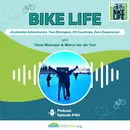
Join Tessa and Marco as they cycle from the Netherlands to Australia, discovering generosity across continents, facing unexpected challenges, and forging unforgettable connections through the Warmshowers community.

 Apple Podcasts

 Spotify

 Overcast

 PocketCasts

 RSS Feed
Two near-strangers, zero long-distance touring experience, and a wild plan to pedal halfway around the globe, from the flat roads of the Netherlands to Australia's rugged landscapes.
Tessa Molenaar and Marco van der Tuin take us through the adventure, mishaps, and powerful bonds they form on the road. From surprising gear decisions to unforgettable acts of kindness, it’s a story of improvisation, love, and resilience on two wheels.
Here’s a sneak peek:
- How a spontaneous meeting became the start of a two-year, 20-country cycling journey.
- Why packing extra cassettes (and an axe) taught some heavy lessons about what you actually need on tour.
- The thrill and terror of river crossings, snowy mountain passes, and adapting to life in the unknown.
- How Warmshowers hosts and local strangers transformed tough days into lasting memories.
It’s proof that you don’t need to be an expert to start; sometimes you just need each other and the willingness to embrace the adventure.
Catch up with Tessa & Marco at @mentobecycling on YouTube and on Instagram @mentobecycling.
Join our community at Warmshowers.org, follow us on Instagram @Warmshowers_org, and visit us on Facebook.
Watch this and all episodes of the Bike Life Podcast on YouTube.
Theme Music by Les Konley | Produced by Les Konley
Happy riding and hosting!
Jerry Kopack [00:00:01]:
Welcome to Bike Life, a podcast from the Warmshowers Foundation. Here, we celebrate our global community of touring cyclists and hosts who make life on the road unforgettable. Through stories, insights, and shared experiences, we explore the connections that fuel every journey. Whether you're pedaling across countries or welcoming travelers into your home, you're part of a movement Rooted in generosity and adventure. Discover more and join the community at warmshowers.org. Now let's hit the road together. Hey everyone, this is Jerry Kopec, the host of Bike Life, coming to you from the Rocky Mountains of Breckenridge, Colorado. Tessa and Marco met at a cycling event in the Netherlands.
Jerry Kopack [00:00:50]:
She already had a pretty ambitious idea in mind. Cycling all the way to Australia. And it didn't take long for Marco to become part of that plan. Along the way, they crossed more than 20 countries, endured some pretty brutal conditions, and experienced incredible hospitality from Warmshowers hosts. Today, we'll talk about that journey and what they've learned along the way. Hey guys, welcome to Bike Life.
Tessa [00:01:14]:
Hello, welcome.
Marco [00:01:15]:
Welcome. Thank you. Thank you for having us.
Jerry Kopack [00:01:18]:
All right, Tessa, I want to just jump right into this. Tell me the story. How did you guys meet?
Tessa [00:01:24]:
So we met each other during a cycling event. That's a yearly event in the Netherlands, and it's called the 11 City Tour. So normally it's an ice speed skating event, but nowadays, because the winters are not really that cold enough, they made a cycling event of it. So it's 235 kilometers in one day, and there I met Marco. Wait a minute.
Jerry Kopack [00:01:49]:
235 kilometers in one day?
Tessa [00:01:52]:
Yeah.
Marco [00:01:52]:
Yeah, on a road bike. Wow.
Jerry Kopack [00:01:55]:
How long does something like that take?
Marco [00:01:58]:
Riding time, probably 8 hours, but we spent at least 12 hours.
Tessa [00:02:02]:
Yeah, for a lot of coffee and cake stops and chatting.
Jerry Kopack [00:02:08]:
That's incredible. Now, obviously, the Netherlands is a very big cycling community. I think I read somewhere there's more bicycles than people per capita throughout the country. I haven't verified that, but I know when I was in Amsterdam a number of years ago, I definitely saw bikes everywhere. It's a pretty amazing place.
Tessa [00:02:30]:
Yes, it is. It's like you grow up with bikes, so it's for us so normal to have this great infrastructure for bicycles and to cycle everywhere where you want to go, and then it's always safe.
Marco [00:02:42]:
Yeah, you can ride everywhere. And about the bicycles, I think every citizen, like we have 20 million people here, and they have 3 bikes average. So we could have 60 million bikes in the Netherlands.
Jerry Kopack [00:02:56]:
That is incredible. Oh my goodness, I love that. I remember talking to somebody a few years ago and the conversation came up and I totally understood what they're talking about. And what they were saying is, someone asked me, what happens when it rains? I ride my bicycle. What happens when it snows? Like, I ride my bicycle. I don't understand the nature of your conversation. 'Cause, you know, so many people are more fair-weathered cyclists. Like, well, if it's raining, I'm gonna get in my car.
Jerry Kopack [00:03:26]:
But that isn't the mindset of the Dutch. Am I correct?
Marco [00:03:30]:
That's correct.
Tessa [00:03:31]:
Yeah, that's very correct. Even when you were a kid and you just had to cycle to school, it was rain suit on and you would just go. No other choice. I love that.
Jerry Kopack [00:03:41]:
And I know that there's been, I think that the women's Tour de France winner Demi Vollering. She's Dutch, an author.
Marco [00:03:49]:
Yes, that's correct.
Jerry Kopack [00:03:51]:
A men's legend, Mathieu van der Poel, also Dutch cyclist.
Marco [00:03:55]:
Yes.
Tessa [00:03:56]:
Yeah. Yeah, we have some good cyclists.
Jerry Kopack [00:03:58]:
We have some really good cyclists. So let's talk about this tour, Tessa. What was it about Australia that got you excited, or why Australia?
Tessa [00:04:11]:
When I was a kid, I think I was 9 years old, my niece, and she was around 18 or 20 years old, went backpacking in Australia for 6 months. And then I already said to my parents and my friends and my family, when I'm older, I want to go to Australia too. And that was always a dream.
Jerry Kopack [00:04:31]:
What is it about Australia?
Tessa [00:04:34]:
I don't know. I think it was just very far away. It was very— it is just a large and big country and I don't know, something mysterious about it that I didn't know. And I just wanted to go there and travel and explore. And yeah, I never did it in the end until we started this bike trip, of course. But I went to New Zealand before and then with the bike trip to Australia.
Jerry Kopack [00:04:59]:
Wow. Okay. So were you already planning on making this trip before you met Marco?
Marco [00:05:06]:
Yeah.
Tessa [00:05:07]:
Yeah, I already had the idea because I did some backpacking before, but then I thought, I want to do something different, not like the normal going to the hostel every time. I want a new adventure. And then I looked on the internet and I found an article about a Dutch lady, also from the province where Marco is from in Friesland. And she rode her bike from that province all the way to Australia to visit a friend. And then I thought, I can do this too. I had no experience, but I thought, that's an adventure, right? So let's try and do it.
Jerry Kopack [00:05:40]:
Incredible. So you were going to go even before you met Marco, but then you meet this wonderful man. And Marco, how did you get brought into this?
Marco [00:05:51]:
Thank you very much. Yeah, like Tess has told you, during this event, we got in contact and it felt pretty good. I had no idea if she would see me as a boyfriend, of course. But so we met up again and again. And after 2 days, she said to me, yeah, I'm going to cycle to Australia. I was like, ah, that's way too far. You're never going to make that. And no, no, sure.
Marco [00:06:17]:
I already bought my bike. And she was like, oh, are you kidding me? That's interesting. So if you want to keep seeing each other and maybe get in touch for a longer time, I have to join your trip. Otherwise we have to separate here. So from that moment, I already was thinking, ah, I really like her and this is a crazy idea. So from that moment I said, you know what, I'm going to join your trip and support you. And of course for me it was also a big adventure. I would never do that by myself, I think, or at least no one in my surroundings would do a big trip on the bike all the way to Australia.
Marco [00:06:57]:
So it was pretty bold.
Jerry Kopack [00:06:59]:
Yeah.
Marco [00:07:00]:
Yeah.
Jerry Kopack [00:07:00]:
I mean, that's quite an interesting ultimatum. So if you like me and if you want to maybe date me, you have to come to Australia. Otherwise, this is a big trip. I might not see you for a year or however long it takes.
Marco [00:07:16]:
Exactly. That's true.
Tessa [00:07:16]:
Yeah.
Marco [00:07:16]:
And yeah, after all, it was at least 2 years. So I would not see her for 2 years.
Jerry Kopack [00:07:22]:
No pressure.
Marco [00:07:23]:
No, but on the end of the day, I'm more than happy that I did it because now my whole vision about the world and people and everything has changed from that moment. So I'm really grateful.
Jerry Kopack [00:07:36]:
So let's talk about that trip. What was your route, Tessa?
Tessa [00:07:43]:
So we first, we didn't really have a route. So we started in the Netherlands and then we said to each other, okay, we first will just follow the Rhine River and then we will go to Venice because A friend of Margot was living there and then we can meet her, meet up with her and then we will just see and then make a route every now and then for like maybe 1,000 kilometers or 500 kilometers or wherever there was a nice ending point for us to take a little bit of a rest. Normally that was the route.
Marco [00:08:13]:
So we spent way too much time sightseeing and sitting on the beach and no stress. The first couple of weeks, it was really shitty weather, pouring rain, 6 degrees in Germany. Every day we had the rain suit on and yeah, it was pretty horrible.
Jerry Kopack [00:08:32]:
What month did you leave?
Marco [00:08:35]:
We left in April. So the first 2 days were like sunny, 25 degrees. And then suddenly when we entered Germany, the weather changed. We were not prepared for that, of course. So we just had to rush, or at least we had the feeling we have to make the distance and get out of Germany as fast as we could, and we did.
Jerry Kopack [00:08:55]:
Okay. Now, is it true that you guys had never really done a bike tour before? You've done these, this one-day cycling event, but you hadn't done an actual bike tour. What was that like? How did you prepare for this?
Tessa [00:09:10]:
So we, when we both had bought our bikes, we did like 2 nights on a campsite and then just cycling a bit. And then we thought, okay, we're prepared. We like this. So luckily there is internet and there were a lot of like, some people had a website with a packing list. So we looked on that a bit and then we bought some gear and then we thought, okay, we'll just see on the road how this goes. And then if not, there's always a Decathlon or another sports store at least where we can buy some stuff or maybe order it online or whatever. But I think we did a pretty good job.
Marco [00:09:47]:
Yeah, I think because we were not really scared about it or we had no clue what to expect, that helped a lot. So we just jumped into it, we start riding and experience. And while riding and the time is ticking, yeah, you just have to gear up or throw stuff away. So you're learning by doing it, and that was the whole thing, and that the whole trip was like that. Constantly we were like adapting on situations, circumstances, and yeah, if it was hot or cold, you just adapt on it. You don't need a lot of experience to do a trip. You just have to need, yeah, you need the motivation to start riding, have fun with it, and then you will experience it.
Jerry Kopack [00:10:31]:
Now those first couple days, that first week or two while you were starting out, were there times where either of you thought like, Maybe this wasn't such a great idea. Let's turn around. Or were you fully committed the whole time?
Tessa [00:10:45]:
We were fully committed the whole time. So I think it was good that we had the 2 weeks or the first 3 weeks with only rain because we were so motivated, like, we're going to do this. But I bought the wrong bike in the beginning. So I sort of bought a secondhand bike, had no clue what kind of bike I should need. I got some advice, but apparently the wrong one. advice because I think from the moment we left, after the first 5 kilometers, I already had to go to like a bike mechanic. And then—
Jerry Kopack [00:11:16]:
Wait, the first 5 kilometers?
Tessa [00:11:18]:
Yeah, the first 5 kilometers.
Jerry Kopack [00:11:20]:
That's a hard start.
Tessa [00:11:23]:
It was a hard start. And then I think every day, 2 or 3 times a day, something happened. So I had a very big mental breakdown. Just before we arrived at our first Warmshowers with my bike, I literally wanted to throw it in the Rhine River.
Marco [00:11:40]:
I said, please don't do that because then I have to carry all your stuff and you on the bike. So did you— luckily, Tessa organized this Warmshowers place after a couple of nights. So it was— we just arrived in Germany basically. We only had problems with the bike and we said, oh, first we go there and from there on we will see what happens, make a plan or see the situation. Luckily we did because otherwise, yeah, it would be a hard trip.
Jerry Kopack [00:12:12]:
Yeah. So, so talk to me about that for that first Warmshowers experience, because it sounds like it was memorable. How did you, how did you learn about Warmshowers since you weren't previous bikepackers or bike tourists?
Tessa [00:12:24]:
We learned about Warmshowers via other cyclists we followed via social media. So I asked them also some questions as a preparation for our trip. For example, how do you make the routes? Or what do you bring? Or how do you meet other people? Or where do you stay? Or all those kind of questions. And then most of the people also suggested to become a member of Warmshowers as it's like a cycling community. And yeah, if you stay there, people can help you maybe.
Jerry Kopack [00:12:54]:
Yeah.
Tessa [00:12:56]:
You get to know the locals and it's a very nice way to sort of learn something about the country as well. So I thought, oh, let's download Warmshowers.
Marco [00:13:05]:
Yeah.
Tessa [00:13:05]:
And yeah, then we were in pouring rain in Germany in the tent in an industrial dog walking park. And then we thought, oh, we feel really miserable at the moment. So I thought, let's give it a try. And then they responded. And that was close to Leverkusen. Yeah. So that was super great. We were like, oh yes, thank God that this is going to happen.
Tessa [00:13:30]:
Yeah.
Marco [00:13:31]:
These people were so nice and they didn't have any guests for a long time. I think we were probably the first one they had.
Tessa [00:13:38]:
Yeah. Because all their emails of Warmshowers, they came into the spam folder. And then exactly that night that I sent the message, they were looking in the spam folder. So they were like, oh, Oh, we got all these messages, but then they also replied on us. And we— so we were their first guest.
Marco [00:13:54]:
Yeah, we were lucky.
Tessa [00:13:56]:
And it was also our first Warmshowers experience.
Jerry Kopack [00:13:58]:
You were their first guest ever?
Marco [00:14:01]:
Yeah.
Jerry Kopack [00:14:02]:
That's incredible. And it was your first time being hosted?
Marco [00:14:06]:
Yeah. So it was almost the best experience ever, right? Yeah.
Jerry Kopack [00:14:10]:
Yeah. Tell me about that. Obviously, did they help you with your bike? Because you sound like you had some bike problems leading up to this.
Marco [00:14:18]:
Yeah, they said, ah, just first take a shower. And we had dinner and started conversation, of course, to get to know each other. And I expected to be there one day and then you move on, right? Like, yeah, it's like almost like a race, you know, we want to reach Australia and we don't have much time. Because I was a professional athlete before and I was always about speed and training, so always time rushed. And suddenly there was no time rush anymore, but my brain didn't realize that. So I expected to start riding on the same bike the next day, but then she said, no, this is a big city here. Uh, I think it was Cologne. Yeah.
Marco [00:15:00]:
And there's a bike shop. If you want to check it out there, you can go there, ask for advice, or maybe buy a new bike. So we just said, all right. But at first I looked to Tessa, do we have time to stay another night then here? Yes, we have time. Marco, don't panic.
Tessa [00:15:17]:
It doesn't work like that. You can stay another night. Yeah.
Jerry Kopack [00:15:22]:
Amazing. Yeah. So you went to a bike shop?
Marco [00:15:27]:
Yeah.
Tessa [00:15:27]:
And then we bought a new bike and I wanted to sell my old bike, but that didn't really work like that in Germany, apparently. So because in the Netherlands, we are used to when you buy a new bike, you bring your old bike and you can get like a discount on your new bike.
Marco [00:15:43]:
Yeah. So they buy your bike.
Tessa [00:15:44]:
Yeah, so they buy your bike and then it's fixed. So we thought we can do the same here, but that doesn't work like that there. Maybe if we were in the wrong shop, but in general, I had to, in the end, just give my old bike away because we also didn't really want it to stay for a long time in Germany or at the same spot to sell the bike. So I was like, okay, it's a loss. But then I had a really great bike who brought me all the way to Australia.
Marco [00:16:09]:
Yeah.
Tessa [00:16:11]:
With no trouble.
Jerry Kopack [00:16:12]:
Amazing. Uh, Marco, you had mentioned that you were a professional athlete, speed skater, is that correct?
Marco [00:16:21]:
Yes, that's correct.
Jerry Kopack [00:16:22]:
Did you find any— is there any crossover or benefit to being a speed skater to being a long-distance bicycle traveler?
Marco [00:16:32]:
Yeah, a lot of similarities, I think. And I did also a lot of bike training as a training for for skating. So fitness-wise, I was already in advantage, so no worries to do 5 or 6 hours every day on the bike. And also the mechanic part, so if we had a problem on the bike, I could fix a lot of stuff myself because I already was working on my bike before. So that was also helpful for Tessa.
Jerry Kopack [00:16:57]:
Right.
Marco [00:16:58]:
She had no idea what to do when there was a flat tire or a spoke or something. So We kind of were the perfect team in that sense. And then also the mental challenge of, uh, yeah, and being initiative and trying to fix stuff. As an athlete, you also try to be creative and it's not always easy, right? So you have ups and downs and on the bike trip, it's basically the same. Every day is different. You don't know what to expect, but yeah, you just have to do it.
Jerry Kopack [00:17:30]:
Yeah. Uh, since you mentioned that you brought up that you were experienced with fixing bikes, was there a point when you were fixing Tessa's bike for the 3rd, 4th, 5th time that you said, maybe let's try a different option? Yeah.
Marco [00:17:44]:
Like the first 2, 3 days were horrible because we had to stop everywhere and the bike was shaking apart. So I already saw, no, it's not going to work. So luckily we bought that second, the new bike for her and the problems were solved from that point. Of course, there was a minor problem like a tire or something, but that's super easy. My bike instead was always broken.
Jerry Kopack [00:18:07]:
Wait, yours was?
Marco [00:18:09]:
Yeah, it was way too heavy. I was like, my bike with the gear and the bike itself was like 65 kilos. So on an aluminum bike with aluminum racks and panniers, it's just the vibration, potholes and everything, it just breaks. So later on, after more than a year, we of course learned from that. But the first big part of the trip was always heavy, heavy, heavy.
Jerry Kopack [00:18:35]:
65 kilos is a lot. So when you're starting out, I know I had this experience as well, you're not sure what you're going to need. So if you have space in your panniers, she's like, well, I'll just bring it because I have space. But then pretty soon your bike weighs 65 kilos, which That's something like 140 pounds, which is a lot. Were there things that you eventually got rid of because you realized you didn't need it or this is too heavy?
Marco [00:19:07]:
Yeah, every day it happens. But the funny part, you start and you have no idea if 65 kilos or 70 is too heavy, right? Because you don't have any reference. That's the good part. So you just do it. The riding was a bit hard, but at least at some point you get used to that. But then the problem with storage for groceries or something is a problem. You cannot carry much because everything is already packed. So you start looking at your bags and like, oh, this extra shoes, do I need it? No.
Marco [00:19:38]:
Like brand new Salomon shoes. Like I didn't really like them anyway, but just in the park in Italy, oh, if you find it, it's yours. And the cutting plate and other Materials were like unnecessary, we just get rid of it, so the bike gets lighter and lighter, but still you have these massive panniers, like 25 liters each, or I think more, from Ortlieb, waterproof of course, but heavy and bulky, so you chuck everything in it.
Tessa [00:20:10]:
But also you had a lot of extra gear, do you remember that?
Marco [00:20:14]:
I was prepared as well, so Before the trip, we had all this list and you need a down jacket, rain jacket, of course, the normal stuff. But I also said, yeah, I have a cassette on the bike and she also has it, but that's going to wear out. And if you are in the middle of nowhere, you don't know if you can find something. So I brought extra cassettes, 2 extra chains each and tools too, because if you want to repair something on your bike, you need a lot of tools. But if you have a garage or a bike mechanic and you have your own space, then it's not a problem. But if you're traveling and you bring all this heavy stuff with you, Yeah, that's a problem.
Jerry Kopack [00:20:51]:
Marco, you, you brought spare cassettes for both your bikes?
Marco [00:20:54]:
Yeah.
Jerry Kopack [00:20:55]:
Wow. I, I've, I've talked to a lot of people who bike travel. I've never heard someone bringing spare cassettes. And then of course you bring cassette, you need a chain whip to remove the cassette. That also weighs something.
Marco [00:21:09]:
Yeah.
Tessa [00:21:10]:
Wow.
Jerry Kopack [00:21:11]:
Did— I'm speechless.
Marco [00:21:13]:
Okay. I even had more. I had all those heavy stuff with me. Had an axe with us. So we had a dagger and another knife because you want to make fires, right? So we did some training with my brother. He's in the army, so he said, oh, you need this and you need this. And so we had everything.
Jerry Kopack [00:21:34]:
Uh, interesting. Did you end up swapping out those cassettes?
Marco [00:21:39]:
Yeah, I think in Kazakhstan, in Almaty or something around there, I finally said, oh, now we did 10,000K. I want to change the cassette because it's just too heavy to bring. So I want to get rid of it. But I was like, oh, there was just a bike shop there. You could just, you could buy something. Yes. For the next trip, if our advice for other people, I would say, don't bring all that stuff.
Jerry Kopack [00:22:04]:
Yeah.
Marco [00:22:04]:
And if you have a problem, there are always people around to help you out. So yeah.
Jerry Kopack [00:22:09]:
I feel like my go-to is I bring a spare chain link in case I break a chain, for sure brake pads. But beyond that, I've had pretty good luck even in remote places being able to find, say, tires or a chain or something like that. Tessa, anything that you offloaded that you didn't really need?
Tessa [00:22:34]:
Yeah, I think clothing. So we bought a lot of extra clothes that we brought. I think too many clothing. At some point you're like, okay, I don't need the winter pants that can go out. And then When we were traveling in China, it was very cold. So it was winter. And then we were carrying a lot of extra heavy stuff. So very big jackets, a very heavy sleeping bag.
Tessa [00:22:59]:
And I remember the point when we were in, I think it was Japan at some point, and then we could finally send a box with stuff, but it was way too heavy because it was all for winter. Away home, I think it was more than 10 kilos.
Marco [00:23:14]:
Yeah, up to 15 in total.
Tessa [00:23:18]:
Yeah, something like this. 13 or— yeah, I don't know anymore.
Jerry Kopack [00:23:22]:
That must have felt amazing with those bikes with all that weight lifted off.
Tessa [00:23:27]:
Yeah. And we were, I think, taking the ferry from China to Korea. And at that point, it was already getting warmer. So it was a sunny and nice day and we were also wearing quite heavy shoes.
Marco [00:23:40]:
For winter.
Tessa [00:23:41]:
For winter. And we were on the ferry and we said to each other, we're leaving these shoes here. I can't stay anymore on the ferry.
Marco [00:23:50]:
Brand new.
Tessa [00:23:52]:
Then we arrived in Korea and I think after 2 days, we stayed there also with a warm shower.
Jerry Kopack [00:23:58]:
Yeah.
Tessa [00:23:58]:
And we wanted to start cycling again. It started to snow and then it was the whole time we were there, like -15 again. They were like, oh, we left the shoes on the ferry.
Marco [00:24:10]:
My toes were frozen for 2 weeks straight. I had this, yeah, small skinny cycling shoes from the Decathlon. I thought, oh, I have to swap it now because sunny weather, good. And then my toes were every day frozen.
Jerry Kopack [00:24:25]:
I had a similar experience when I was in China as well when it was snowing. And someone taught me this concept of what they called, I think they said, poor man's Gore-Tex. And what it was is in China and Asia, they have plastic bags with everything. So, if you buy an apple, they give you a plastic bag. If you buy buy some grapes, they give you a plastic bag. But if you slide your foot into that plastic bag and then slide that into your shoe, it helps a little bit. Did you guys try any of those tricks?
Marco [00:24:53]:
Yeah, we tried, but it works a bit but not massively.
Jerry Kopack [00:24:58]:
Yeah, not as great as a nice solid shoe.
Tessa [00:25:02]:
Yeah. Oh, and in Germany, we did it as well because it was raining all the time and very cold. And then we got in a bakery those plastic gloves you normally use for cleaning or getting food or whatever. So, I think we pulled them over our gloves and then they were a bit protected for the rain. Otherwise, your gloves were all the time wet.
Jerry Kopack [00:25:26]:
Good trick. I haven't thought about that one, but yeah, same idea, right?
Marco [00:25:31]:
Yeah.
Tessa [00:25:31]:
Yeah.
Marco [00:25:31]:
Because water, like, temperature is not a big problem. If it's dry and cold, you can kind of deal with it. But when it's wet, then you have a problem.
Jerry Kopack [00:25:42]:
Yeah, that's miserable to be cold and wet. There's not much worse than that. When you guys were setting off on this big trip, how much time did you budget for? You said, Marco, I think you said around 2 years it took you. Is that correct?
Marco [00:25:57]:
Yeah, we spent 2 years in total, but I had preparation time of maybe 8 months.
Jerry Kopack [00:26:03]:
Oh, Yeah.
Marco [00:26:05]:
So I met her and then from that moment till we left was less than a year, so like 8 or 9 months. So we had to buy a bike and start saving up because I didn't have any savings at that moment. So I was like, oh, this is going to be a challenge. But yeah, as we are Dutchies and we are initiative and we know how to do stuff, so yeah, you just make choices.
Jerry Kopack [00:26:29]:
So 2 years from start to finish, was there a particular country that each of you were really looking forward to seeing along the way? Tessa, what do you think?
Tessa [00:26:42]:
As we didn't really prepare the trip, we sort of didn't know. I think we looked, yeah, we were looking for Turkey, as in it was our first real border crossing, as in Europe you don't really do border crossing, you do a border crossing, but it's not, not really anything special. You know, sometimes it's like they check your passport. Most of the time you can just cross the border. So it's more for yourself that you think, oh yeah, we crossed the border and we're in a new country. But in Turkey, it was something really different, as in it was an insanely big gate that we had to go through. And it was really spectacular for us because we never experienced something like that. So I think that was actually the first country where we were sort of a bit nervous, but also very excited for because we also never had been there.
Tessa [00:27:33]:
It was leaving Europe as well.
Jerry Kopack [00:27:36]:
Yeah, because Turkey is essentially where East meets West, where Asia meets Europe, and it's essentially right in Istanbul. You can see almost the divide between the different cultures.
Marco [00:27:48]:
Yeah, we spent also some time in Istanbul. Also for the food, of course.
Jerry Kopack [00:27:55]:
Of course, of course.
Marco [00:27:57]:
Cyclists like to eat. Yeah, we had also a Warmshowers host there, and so we could stay, I think, almost a week there.
Tessa [00:28:05]:
Yeah, it was amazing. He's so nice.
Marco [00:28:07]:
Yeah, and the breakfast was just wonderful.
Jerry Kopack [00:28:12]:
So you stayed with the Warmshowers host in Turkey for a week?
Tessa [00:28:17]:
Yeah, yeah, we didn't plan on that. I think we never stayed that long with a Warmshowers host, but he was like, Doesn't matter. Oh, if you want to explore more, you have to go there and there, stay another day. And we were like, okay, you know, it's just not really what we're used to.
Marco [00:28:33]:
But, um, and I also had another couple guests coming in, so we were like not the only one. So we had more coming. And at the same time, he said, look, I'm, I'm, uh, I booked a trip to the Netherlands for cycling, so I'm happy that you're here. Now you can help me making the route. Amazing. going for 2 weeks to the Netherlands, I think I remember. And yeah, he had all these Warmshowers, like 10 or something already organized.
Tessa [00:28:58]:
And yeah, he was making drawings for each of them. So it was really cute. And we gave him tips for where he should go and what to eat. And yeah, and he did it for us. So that was great.
Jerry Kopack [00:29:10]:
I love hearing that. That is, that is just such an example of why Warmshowers is so fantastic because You wouldn't have gotten that experience if you just stayed at the local hotel or the hostel. Like, you probably would've met some people, but just having that local knowledge, that local intel of saying, oh, you should stay a little bit longer because you really need to go and see this place or go and do this thing. And it's so great that you guys were able to reciprocate that and say, hey, when you're in the Netherlands, also make sure to not miss this place.
Tessa [00:29:44]:
Yeah. And I remember that his family was living next door and then at some point they were making those rice and wine leaves filled with rice. And then we were picking, we needed to help and pick those wine leaves. And then we were making with everyone those rice-filled wine leaves. And then they had to like pickle them, I think, or something. I don't exactly remember anymore how it worked, but it was really great because you met also his whole family and they can't really speak English, but that doesn't matter. It's more doing something together, you know, which you would never do back home.
Jerry Kopack [00:30:20]:
Yeah, seriously. I think they're called dolmas and I love them. They're, they're not easy to find in the US, but I've been to Turkey and they are fantastic and they're everywhere. And then of course there's all the, the honey desserts like baklava, right? Like, oh my goodness, can just eat so much of that.
Marco [00:30:41]:
Yeah. And the good part is when you're cycling, you can eat a lot because you're most of the time on the bike during the day. But if you're just back home and you don't do much, you cannot eat that much. You'll gain a lot of weight.
Jerry Kopack [00:30:56]:
I want to keep talking about your trip because I'm enjoying living vicariously through you because I've been to some of these places and it brings back some really, really great memories. But I've talked about this on the show in previous episodes, People really romanticize bike traveling, and for a good reason, because it's an incredible way to see the world. But as you know, there are some tough days. Is there a day or a time or an event that sticks out with you that you wonder like, wow, this is going to be tough, or how am I going to get out of this one? I know one.
Marco [00:31:30]:
Tell me which one.
Jerry Kopack [00:31:31]:
Do it, Tessa.
Tessa [00:31:32]:
We were cycling, we were following the Pamir Highway, and at some point So that was in Tajikistan. You can choose a valley. You don't have to. You can also stick on the Pamir Highway, but we chose to do the Bartang Valley. Very remote valley, but we love the challenge. It was already half October, I think, when we started the Bartang Valley. There was no other cyclist anymore because winter was kicking in. And I remember the last day when we were on the Bartang Valley and it was already snowing and you're on altitude.
Tessa [00:32:07]:
And we had to cross a lot of rivers and they were very, very cold. But yeah, you just do it because you have no other choice. There's no people around in that valley. And yeah, for 4 days you already have, or maybe 5 or something, no reception. So it was the last river and it was already 4 o'clock and it was getting dark soon and we had not a lot of food anymore and we knew we have to get back to the main road again. And it was only 5 kilometers. to go. But it was a very, very big and wide river.
Tessa [00:32:40]:
And yeah, the streaming was fast and we were like, okay, we'll just try and see how deep it is. So Marco went in first and then these big pieces of ice.
Marco [00:32:53]:
Yeah, just cut straight through my toes and was like bleeding. It was like, oh, this is not great because it's like 4 o'clock. And if you have a big problem there in ice cold water with running ice through you, There's no help, so it's like I went back, dried my feet, and tried to make a plan with Tessa. And we had another traveler with us from Poland, really nice fella, and we were debating for more than an hour, like, are we going to do it or not? But what if he crashes into the water? Because the river was maybe a meter deep or more, because you couldn't really see how deep it was. With all the current, it's like, ah, if he gonna go in the water, then no one is gonna help you, right?
Tessa [00:33:36]:
If you fall.
Marco [00:33:37]:
Yeah, so it took us more than an hour and then we finally had the balls to do it. So bikes on the shoulders, me and a friend from Poland, we were walking the bikes. Tessa was also crossing this river. Then we had to go another 3 times because we still had this massive luggage with us with all the panniers. So we had to cross the same river multiple times through the ice. Finally made it to on the other side, almost celebrated, but then we realized, oh, we are not even on the Pamir Highway yet, so we still have to find the road. And then already the sun was fading, getting darker and darker, temperature drops. So, and I remember looking for the road I had on Maps.me.
Marco [00:34:18]:
It's like an offline map to see where the road was, and I saw it really close to me, but in reality I couldn't see any road. So I was like, oh, I hope this map is still working, otherwise we have a big problem. And suddenly, like, out of nowhere, like 5 meters in front of me, bang, there was this road. And we're like, oh, and our friends start to cry and like, oh, he was so happy.
Tessa [00:34:42]:
After all those hard remote days with the snow and the expedition, it was really great to see that road where no car or any truck was driving, but it was at least a road back to sort of a civilization point.
Jerry Kopack [00:34:58]:
Yeah, that's incredible. And was it a tarmac road or was it dirt?
Marco [00:35:03]:
Yeah, it was a tarmac. Yeah, not really, not great, but it was tarmac. Yeah. And that's the thing that was the M41. So that's the prior highway, the Pamir Highway.
Tessa [00:35:15]:
Yeah.
Marco [00:35:16]:
And it's on the end of the whole thing all the way back to Kyrgyzstan. So there's the one little village and then you have the border crossing and then you go into Kyrgyzstan. Wow.
Jerry Kopack [00:35:27]:
Now, when you were thinking about planning this trip, however many months prior, did you plan on signing up for an adventure at this level? Like crossing a crazy river like this in the Bartang Valley?
Tessa [00:35:42]:
It was good that— I always say that to Marco. I think it's good that you not know what's going to happen, you know, because before you start like another new adventure, As in maybe you get scared or you don't want to do it then, and now it just feels like when you started, we're going to start an adventure, we'll just see what happens.
Marco [00:36:00]:
Yeah, and we were not prepared enough, I think. We, like, gear-wise, we had still the summer equipment from the start, so we had not any winter equipment. And when we wanted to do the Pamir Highway, we were in the capital city, uh, Dushanbe in Tajikistan, and they have this bazaar, so you can buy something from the bazaar. And they don't sell any Gore-Tex, Arc'teryx, or whatever fancy stuff. So they sell something and that says -30 on the gloves, but in reality it was 10 degrees and your hands were frozen. So that was the stuff we had and it was -15 on the coldest night. So I was basically doing burpees while Tessa was freezing in the tent trying to make some dinner. And then the next morning you wake up and there's like half a meter snow next to your tent.
Marco [00:36:45]:
And I said, all right, how are we going to do this now? Let's start walking. So we walked 20 kilometers through the snow on the same road, but it's of course only dirt. There's no proper road on the valley, but at least you know which direction you have to go because you have to walk through the mountains.
Jerry Kopack [00:37:04]:
Wow. Did you, uh, did you find that the more experienced you guys got that you started looking for more adventurous routes? So coming out of the Netherlands, going through Germany, everything is paved, it's main roads. You start getting into Central Asia, Tajikistan, Kyrgyzstan. Did you feel like, okay, I'm feeling pretty confident, let's, let's try something a little bit more adventurous?
Tessa [00:37:27]:
Yeah. And I think especially after like Tajikistan and Kyrgyzstan, where we did a lot of off-road and very adventurous routes, we sort of got a bit spoiled because we were really loving those remote areas, but we had our touring bikes. And during those trips we made there, we also met some other people in Kyrgyzstan, for example, and they were cycling on more off-grid bikes, like mountain bike kind of bikes. And while we saw that and with less gear and you're thinking, how do they do that?
Marco [00:38:05]:
That's cool.
Tessa [00:38:06]:
I didn't even know that this was an option. Yeah.
Marco [00:38:08]:
People had nothing with that, huh?
Tessa [00:38:10]:
No, and then we said to each other, when we get to a country where we can actually change our setup, we will do that because then we can also do more off-road gravel routes and less on the main roads.
Marco [00:38:26]:
But for the whole big trip to Australia and through Australia, we still had the same bike from the start, and of course we changed the gear multiple times based on the conditions. We were still stuck on these road bikes, touring bikes, and after a while cycling on asphalt or tarmac, whatever you want to call it, it gets quite boring for us. So we wanted to chase this adventure what we had in the Pamir Highway, and from there on we also made a new idea to, oh, let's change the whole setup at some point because we need this adventure.
Jerry Kopack [00:39:01]:
Mountain bike with maybe wider tires, maybe front suspension.
Tessa [00:39:07]:
Exactly.
Marco [00:39:07]:
That would be even better, but I didn't realize that at that moment. So in Australia, we did the swap.
Jerry Kopack [00:39:16]:
You did? Okay. Yeah. So tell me about that. You made it to Australia, you made the swap. When you got to Australia, was it this big sense of, we made it, this accomplishment? Were you ready to be done or did it just make you want to keep going?
Tessa [00:39:36]:
So when we made it to Australia, not really, because we still wanted to cycle. So we arrived in Perth, we flew from Vietnam and arrived in Perth, and then we said to each other, no, it doesn't really feel like it's done. So we first want to cycle another 5,000 kilometers. We will just do Perth to Melbourne. No idea what we could expect, but we'll just do Perth to Melbourne. And A lot of people we met said, oh, but then you're gonna do the Nullarbor, right? And we're like, yeah, I don't know what the Nullarbor is, but yeah, we're gonna do the Nullarbor.
Marco [00:40:08]:
Yeah, yeah, we were not always so prepared. We didn't look much into it. We were, I think, just too busy enjoying what we're doing and getting all those experiences into us. But if we had looked into, for example, a YouTube video with the Nullarbor, then we had an idea what to expect. Yeah.
Tessa [00:40:28]:
And I think Melbourne was in our head then our final destination, but then you arrive in Melbourne and it's sort of the moment where you look forward to as well at some point when you're getting closer. And then you come to Melbourne and it's like, oh yeah, we're there.
Marco [00:40:44]:
There was no party, eh?
Tessa [00:40:46]:
There's not someone who is waiting and cheering you or, you know, like, oh, you made it. We're like, no, it's just us. It's like, oh, we're there.
Marco [00:40:54]:
Now let's celebrate.
Jerry Kopack [00:40:56]:
Was it kind of anticlimactic? Like, oh, like you said, well, we're here, I guess, I guess we're done.
Marco [00:41:02]:
Okay.
Jerry Kopack [00:41:02]:
So we fly home now.
Marco [00:41:05]:
No. Yeah, of course. Yeah. We were done with that kind of part of the trip, but we also knew already we applied for a working holiday visa for a year. So we wanted to work in Australia as well. So we were not planning to go straight back. That would be a really quick trip. So, we stayed another 5, 6 months from there around Melbourne in a little place called Bright in the Alpine region.
Marco [00:41:29]:
So, we had a job there and from there, we could plan the last part of the trip.
Jerry Kopack [00:41:35]:
Okay. I love how your trip, it sounds like it just seems to evolve over time. You didn't start off with a ton of plans. You maybe thought you're going to be gone for 8 months, turned into 2 years, and now you're doing remote work. Was there a point along this trip where this went from being a trip to, this is just our life?
Tessa [00:41:58]:
Yeah, I think when we were working in Australia, you sort of actually get the time to think about the trip because when you're doing the trip, you think not really about what you've done. Sometimes you still talk about it, of course, but then the next crazy thing is happening the next day. So, you don't really have the time to actually process what's happening all the time. So in Australia, we could actually do that. And then, yeah, we sort of thought, this is amazing. We really like to do this and we want to do another little trip, at least before we would go home and then see how we get our lives sort of sorted in still an adventurous way. So we wanted to go to New Zealand to make another adventure on different bikes.
Marco [00:42:44]:
Yeah, that was the bike swap as well.
Tessa [00:42:46]:
There was also the bike swap. To gravel bikes.
Marco [00:42:48]:
Yeah. Okay.
Tessa [00:42:49]:
With lighter setup.
Jerry Kopack [00:42:51]:
I love it. And was it night and day better?
Marco [00:42:55]:
Yeah, 100%. But again, the same problem. You still put too much on the bike because we get the bike and we bought the panniers and everything is organized and you think, oh, lightweight sleeping bag, lightweight tent. And then you gear up. We didn't really prepare it in Australia. We didn't have time to to do our little trip because we were constantly working.
Tessa [00:43:18]:
Save money.
Marco [00:43:18]:
Suddenly we were in New Zealand and like, all right, how does this work? So I was busy with it all day to set it on the bike. And then I realized already from the start, oh, this is still too heavy. Well, it was only 30 kilograms in total.
Jerry Kopack [00:43:34]:
That's a lot better, a lot better than you said, 65 or 70.
Marco [00:43:40]:
Yeah, but the bike was, I think, probably 8 kilos, right? So that's already doubled.
Tessa [00:43:46]:
So yeah, yeah, that was a problem maybe.
Marco [00:43:50]:
Yeah, but then we had to drop more stuff and my bike was full carbon fiber. So with all the weight, the vibration was way too big and it was wobbly. And I heard also other people had the same problem with those setups. So yeah. Learning by doing it.
Jerry Kopack [00:44:10]:
I want to pivot and talk about something here. You guys left home as a relatively new couple with no bicycle touring experience. And how has this journey changed you both as just as people and as a couple? And I want to pause there because I've had friends tell me that for relationship testing, they've said, if you want to see how strong a relationship is, have a kid, but maybe a transcontinental bikepacking trip will also tell you what kind of relationship you have. So Tessa, I want to start with you.
Tessa [00:44:46]:
I think it's the best relationship test ever, as in you sort of get tested in the most extreme conditions, as we also told a bit. And I think communication is also something that, yeah, that you will just learn on the way. Luckily, Marco was already a good talker, but I was not really. But the problem is when you're on the bike, you can have maybe a discussion or fight, but you really have to talk about it quickly, as in you still have to set up the tent, you still cycle behind each other, you know. So it's sort of pretty hard to ignore each other all the time. So for me, it was really good to learn to talk about my feelings or how I feel, or it always starts because you're tired or you're hungry or something is Mostly hungry. Mostly, yeah. So I think for a couple that was, um, yeah, the best test ever.
Tessa [00:45:47]:
And I think we even got strong because of all those talking. We got really strong as a couple as well. But I think for myself, it was also a good challenge to see how far I can go and what I like and what I adore and why I love the adventure and what kind of places I love the most and where I would like to go back to.
Marco [00:46:09]:
All right.
Jerry Kopack [00:46:10]:
Yeah, Marco, what are your thoughts about the whole immersive relationship test of a transcontinental bike trip?
Marco [00:46:20]:
The good part, I think, I was open into it, so I didn't have any expectations. So that's probably one of the good start point. We already get along pretty well, Tess and I, before. So we didn't have much fight. We just had the same ideas, same mentality, both sporty driven. She was always running. I was always cycling. So we had a lot of things in common.
Marco [00:46:47]:
So also not much to argue about. We both like food. We both like the same outdoor style. So that's, I think, already good to start doing a trip with someone who is comparable to yourself, or at least thinks in the same way. And during the trip, we also like to take a lot of time for coffee stops and lunch breaks and all that stuff. But if you see other cyclists, they spend maybe 1 minute for a stop and they make a race again. So if you have a partner with you and it's not in the same mindset, then I think it's not going to work. But luckily we had basically the same ideas to do in every place.
Jerry Kopack [00:47:31]:
Yeah.
Marco [00:47:32]:
So yeah, we were just a good team on the bike. I did the navigation, the small things, watching the bike while Tessa did the groceries and she organized the visas and I did the bike repair and stuff like that, or setting up the tent when it was -25 degrees. Because someone has to do that, right?
Jerry Kopack [00:47:51]:
Right. It sounds like, I was going to say, it sounds like you definitely found your kind of your roles along the way and it really made you much stronger of a couple throughout your journey.
Marco [00:48:04]:
100% true. Yeah. And that's nowadays still happening. So we are now back home, or at least back in the Netherlands. We don't still really have a home. We're still nomads. So yeah, we still enjoy that lifestyle as well. So even when there is no traveling happening, we still get along well.
Jerry Kopack [00:48:28]:
Wonderful. I love hearing that. And as we wrap this up, I want to bring it home and ask you guys one more question here. Tessa, I know that you said that you wanted to travel in a way that would bring you closer to local people. Tell me more about that. And did this experience give you what you were looking for?
Tessa [00:48:47]:
Yes, definitely. I really love meeting new people. And especially, I think I was just surprised. Like, I sort of knew that there would be generous people along the way. And, but when you're from the western side of Europe, they're also very kind people, but mostly people really live a bit more for themselves and not really giving. And yeah, and we traveled through so many countries where people had nothing but gave you everything. And in the beginning, we had no idea, at least I had no clue sort of how to receive it. Like, I have to give something back, but they did not want that.
Tessa [00:49:24]:
So I've been so mind-blown about that. They were so kind to us and so helpful. And even if they could not speak any word of English or we could not speak their language, you could still communicate. And I think that was the best experience of the trip. I'm really, really happy that I've met all those amazing people we have met.
Marco [00:49:45]:
Yeah. And there were a lot of people.
Tessa [00:49:48]:
Yeah, there were a lot of people.
Marco [00:49:51]:
Yeah. Sometimes you kind of forget it, but, and then we talk about it and, oh, do you remember that situation? Oh yeah. And sometimes it needs a bit more of explanation and then, oh yes, I know, I understand which moment we are talking about. Yeah. Because you're every day on the move, right?
Jerry Kopack [00:50:07]:
Yeah, that is an amazing sentiment. And it's a great place to end our conversation today because that is just really captures the spirit of why we travel by bikes. Guys, I want to thank you so much for taking time out of your busy day to share stories, to share emotions, to just to share your experience with us. So thank you for being here today.
Tessa [00:50:33]:
You're welcome.
Marco [00:50:33]:
And thank you for having us.
Jerry Kopack [00:50:36]:
All right. And I want to thank everyone who's listened to my conversation today with Tessa and Marco. I hope stories like these will inspire you to set off on your own bicycle adventure and maybe make the world feel a little bit smaller, one pedal stroke at a time. Until then, keep the wheels rolling and the stories coming. Thanks for joining us on Bike Life. I'm Gerry Kopak, and I hope you enjoyed today's episode as much as we enjoyed sharing it with you. Please leave us a rating and review, or just tell your friends. This helps us reach more cyclists and hosts around the world.
Jerry Kopack [00:51:10]:
To learn more or become part of this amazing community, visit us at warmshowers.org or follow us on Instagram at WarmShowers_Org. If you'd like to be a guest on the show or have And if you have a question you'd like us to explore, email us at podcast@warmshowers.org.