Shift Control Back to the Athlete: Why Growth Is the Only Stat That Matters with Author Brad Dalton



 RSS Feed
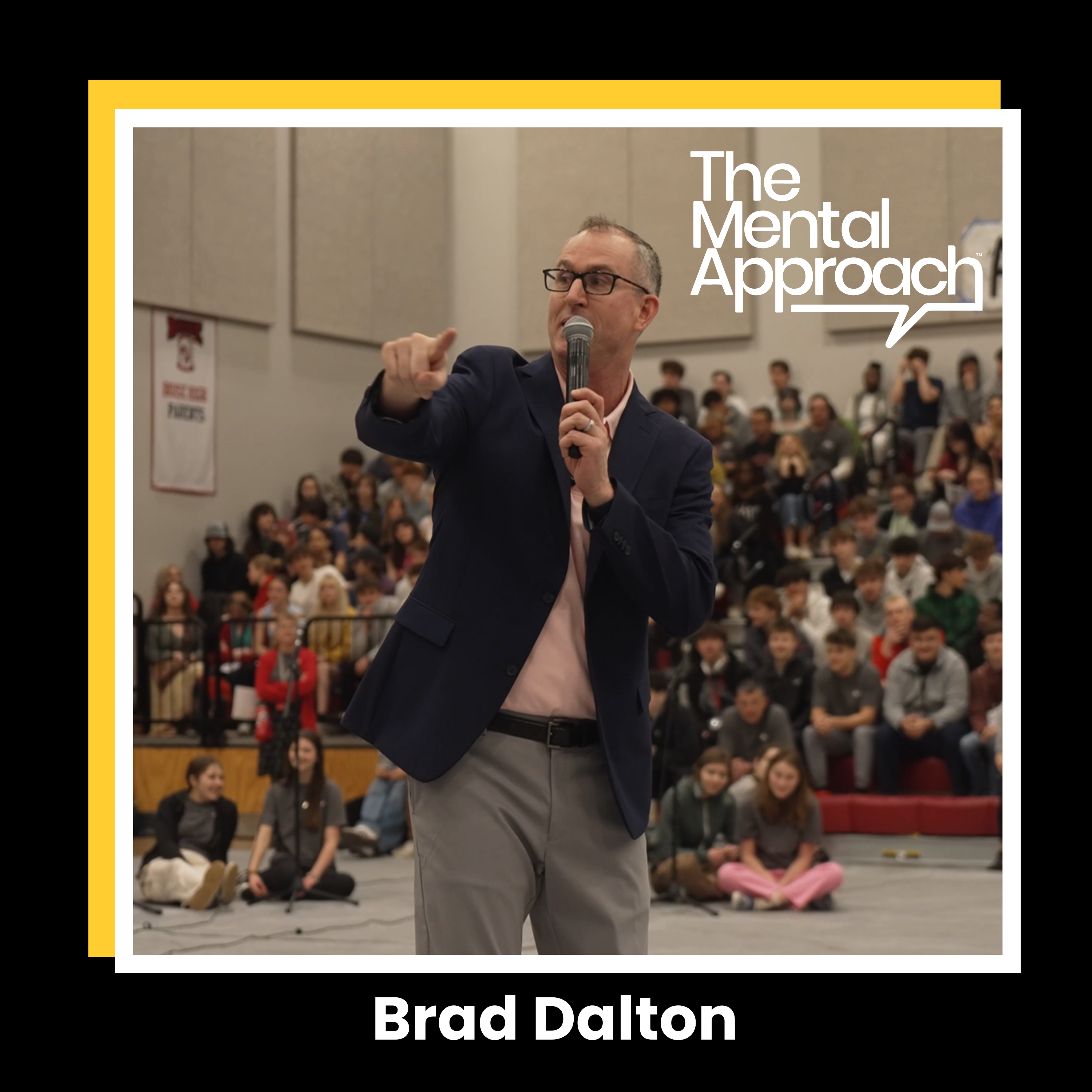
 Todd Arkell sits down with Brad Dalton—mental performance coach, educator, and bestselling author of DNA of a Winner: 8 Steps to Building the Soul Print of a Winner.
In a youth sports culture increasingly obsessed with stats, rankings, and immediate outcomes, Brad makes a compelling case for shifting the focus away from what you achieve and back toward who you are becoming. Whether you are a young athlete trying to filter out the noise, a coach building team culture, or a parent supporting from the sidelines, this conversation provides an actionable roadmap for building mental toughness and focusing on what truly matters.
Areas of Conversation
Growth is the Only Stat That Matters: Why treating success as a continuous journey—rather than a final result—builds long-term resilience and sustained high performance.
Redefining "Winning": How coaches and parents can reward daily habits, effort, and positive behaviors instead of fixating solely on the scoreboard.
Navigating the Recruiting Game: Practical advice for young athletes seeking the right program fit over ego-driven rankings or division titles.
The "Soul Print" & In-Game Reset: Practical strategies for taking action, preparing mentally before high-pressure moments, and breaking out of negative mid-game thought loops.
Perspective & Significance: Brad shares how his family's personal journey navigating an autism diagnosis reshaped his outlook on aggressive patience, meeting people where they are, and prioritizing impact over ego.
See Privacy Policy at https://art19.com/privacy and California Privacy Notice at https://art19.com/privacy#do-not-sell-my-info.
Matt Cundill 0:01
This is the mental approach, where we discuss mindfulness, mental performance, and the tools available for coping in a high-performance world. Here's Todd Arkell. If
Todd Arkell 0:12
you are a young athlete, a coach, a sport parent listening right now, you know how noisy the youth sports world can be. We are constantly flooded with stats, rankings, standard metrics of what it means to be successful, and what happens when that outcome-driven pressure causes anxiety, burnout, or any other identity crisis is in our kids. Our guest today is here to help completely rip up the old script. Brad Dalton, known as the best self catalyst, lifelong educator, mental performance coach, number one best-selling author of DNA of a Winner: Eight Steps to Building the Soul Print of a Winner, and he's on a mission to shift athletes away from tracking what they achieve and focus instead of who they're becoming. Brad, welcome to the show.
Brad Dalton 1:00
I'm jacked to be here, Todd.
Todd Arkell 1:03
I'm I'm excited too because I know you're mr. Positivity, so we're going to be just fired up for the next 45 minutes. It's going to be awesome.
Brad Dalton 1:09
Let's do it, man. Let's let's pump some positive action into their veins.
Todd Arkell 1:13
There is definitely a lot of outcome obsession out there, and I think from your point of view, you're trying to shift control back to the athlete, and so in the book DNA of a winner, you talk about focus on your who, on your who, who. I can't speak today. Focus on your who. In a youth sports culture completely obsessed with tracking stats, like we talked about, how do you define a true winner in a young athlete?
Brad Dalton 1:41
Listen, life isn't about what you get; it's about who you become. And taking a step further, it's about the unfolding story of who you become. And a winner-I mean, we could do 40 episodes, 40 minutes a piece on what goes into being a winner. But I think at the end of the day, what's happened with a lot of peeps? It could be we could be talking about athletics, we could be talking about business, we could talk about education, we could talk about anything. This the focus has shifted from from who do we wish become to what can we get. Everyone's everyone's fixated on scholarships. Everyone's fixated on being a 4.0 student, everyone's fixated on getting six figure salaries. Everyone's everyone's fixated on things, and what's happening is, I think it's contributed big time to mental health issues, to lacking the focus on the habits that get you to becoming who it is you wish to become. The beautiful part about athletics is that you get to learn so many life lessons in athletics. So many life lessons. I mean, you're a Detroit Tigers fan. Baseball. If we're just talking about baseball, you earn 10 million a year
Todd Arkell 3:00
or more, succeeding
Brad Dalton 3:01
60% like third, like 25% of the time.
Todd Arkell 3:05
Yeah,
Brad Dalton 3:05
you know, there is so many times that they did not get their desired outcome. But success isn't the end of the road. Success is the road, and we have to teach that. Like we have to reward the behaviors and the actions and the thoughts, and the conversations that lead us to who it is we want to become. But so much of the time, I think what what the average person think is winning really isn't winning. Winning isn't a result. Like the best people don't feel like they've ever really reached it. They're always in a state of becoming. So I don't know if I answer your question there, but I'm definitely fired up, Todd.
Todd Arkell 3:42
Well, you know, it definitely is that I kind of start to think about how do we change that culture, like even just schools, sports. I mean, the people that are making the curriculum or running the programs, they have to start to alter. How do we do that? I guess it's obviously not going to be a massive shift across the world all at once, but you know, maybe in a small way. What are what are some of the ways people can start to to maybe shift their thinking about what winning is really about?
Brad Dalton 4:13
Yeah, I think it kind of ties a little bit back to a little bit of what some people describe as a winner. I mean, a lot of people think that they are experts because they play professional baseball, basketball, football, whatever. That doesn't make you a great teacher. A lot of people are really intelligent in this world that have a hard time holding down jobs when they're in their 40s. You know, but they always just assume that they are a credible source or that they can do it or whatever. And what we have to understand as coaches and as teachers and as as adults is we say we want them to become this. We say that we want them to be happy. We see that that we want them to be successful. We say that we want all these things. Well, what are the habits that need to be encouraged for them to become the type of person? Who does those things? It's not what you're teaching; it's how you're teaching what you're teaching. It's not what you're coaching; it's how are you going about doing that, and what are the behaviors we want to repeat. So, a lot of people that are glass half empty, glass half full, however you want to put it, they're in a habit of pointing out the things that didn't go well, and they impulsively get negative inside situations. Well, when you're doing that, I know they're not meaning to do it. I mean, it's it's a good problem that they they feel and that they care. That's why they're reacting. But you're also getting self centered in that moment. You are becoming a self-centered individual when you're taking it so personally. You know, yeah, if it's an effort thing, that's an issue in any lane. But if they actually are giving effort, they're going to be more prone to trying again if you are constructive in how you go about approaching how things didn't go well, so catching people doing good, talking well behind people's back. You know, everyone always thinks about talking behind someone's back as a bad thing. It isn't always a bad thing. You can be talking well behind someone's back. You can make it a mission. Make it a mission to see how many fist bumps, how many high fives, how many pats on the back, how many times you can catch people doing good today. That should be a mission. You know what you want them to become. You know what your team's identity needs to be. You know all these things. Well, what are you going to do in practice every single day that's going to encourage those things? That's how you start to inch. Now it doesn't guarantee you success, but it guarantees us our best shot at success. It guarantees us our best shot at being our best self. And our goal isn't to be World Series champs today. Our goal is to just get a sliver better, because growth is the only stat that matters. Growth is the only stat that matters. Today, when we step on the field, step on the court, step on the field, step on the mat, whatever. The only goal is to grow, and that could be between the ears. It could be fundamentally. It could be whatever. As a parent, it has to be the same way. It has to be the same way. It has to be the same way. The car ride home, dinner table talk, on the way to practice, whenever. The only stat that matters is growth, and how we do what we do is imperative to making that happen. No matter how frustrated we are, if if your goal as a parent is to, you know, you want your kid to be a hard worker. We all say that we want our kid to have a good attitude and we want them to work hard. Those are controllables. Well, what that needs to be in your conversation. You know what I mean. They can't be talking.
Todd Arkell 7:57
You also need to model that.
Brad Dalton 7:59
Yes, they need to model that. They need to. Yes, they need to. So sorry, another long-winded answer, but
Todd Arkell 8:06
no, no, not at all. It does. It's exactly it. And I know you talk in in some of your stuff, you know, about scoreboard being meaningless. And let's translate that because all the competitive kids. I can remember when. Oh, we're not keeping score today.
Tara Sands (Voiceover) 8:21
Yeah,
Todd Arkell 8:21
and it's like, and then my son would come out, you know, like four or five playing soccer. Ah, we won 10 two. The kids keep track for some reason, right? Even even when you're trying to eliminate that, I know that this it isn't meaningless. But I know what you're talking about. It's it's, you know, where does the outcome become? You know, it's it's it's more around, you know, as you said that that growth piece. What have you did you put in the effort? Right, you can control your effort. You can control your attitude. All those different things. So, you know, where where do you think the outcome belongs?
Brad Dalton 8:57
Well, I do. It's not that I don't think it's important. I mean, I was an athlete too. I was competitive. I always wanted to keep score. Those kind of things. But I was. I mean, there's a lot of different layers to that onion. I was also surrounded by a lot of people that were outcome based, and and I growing up, I always won when I was an actual coach. Coach, like I always won, I almost I rarely had losing seasons, even starting back to when I was like 10 years old to now. I've you know I've jokingly say I spell fun W I N, you know. So the the outcome, I'm not saying that's not important. I I I think that gets overblown a little bit, and that I do think you should compete your tail off, but compete your tail off doing the right things, leading to the results you're you're looking for. That should be the focus. It's not that I don't think where you're at in the standings. It's not that I don't think that stuff is important, but the habits that need to be put in place for you to get those. Desired outcomes-that's where the focus needs to be, and I also think it's it's layered, like in terms of how old you are, your age group, all that stuff. I mean, if you're a college head football coach, they say you get hired to get fired. Yeah, you got to win. It matters what's on the scoreboard. But again, if you're not taking care of business with all the daily habits and routines and actions and thoughts, and if you're not doing all that, you're not going to get those things that you're looking for. You're not going to get those things, and I'll put a little bow on top of that. Maybe you are winning by the traditional sense. Maybe you are killing it every year. Your your win loss records amazing. You're winning championships, all that stuff. If your only focus is on that, I would question how much you're really enjoying
Todd Arkell 10:50
it, right?
Brad Dalton 10:50
Because I know a lot of people who have won a lot of games, who I think completely have missed the boat. They don't have super strong relationships. Do they respect your credibility as a coach in terms of your your IQ? Maybe, maybe. But if you don't view relationships as the true power grid in coaching, you're missing the boat. You're completely missing it. You have no idea. You're not leaving the impact you think you're leaving? Did they have fun winning? Yes, but you're going to get fried as a parent. You're going to get fried as a coach. You're going to get fried as a what? As a leader in any lane, if the only thing you focus on are numbers, you're going to get fried, and you're really not going to have as much fun as you could. You could do both. You could have a lot of fun winning and a lot of fun building relationships, and one day you you go to their weddings. One day you get to know who their their wife and their kids are. I mean, they keep coming back to you wanting to have lunch because the that what you left on the inside of them, not something that was outside of them.
Todd Arkell 12:01
Yeah, I think people maybe look at it as a either or when it can actually be both. I mean, if you look at even college recruiting, right? It's 100% stats, rankings, offers, exposure events. You know, you know. I think about how does an athlete hold on to who I'm becoming when every coach is evaluating them only cares what they produced last weekend. Like, from your philosophy, how does that you know survive the recruiting process that's built on outcomes? And how can the athlete feel you know juggle the two right have that growth, but also you know, they're they're gonna they're gonna present what they present talent wise. Yeah,
Brad Dalton 12:44
I think the recruiting game. There's a lot of kiddos out there, a lot of students, a lot of phenomenal athletes that had their eyes on the wrong stuff. I mean, at the end of the day, you know, every kid dreams of playing Division One or getting drafted. You know, if you're like a baseball or a hockey or something like that, but those things are cool. But again, I would encourage us to get away from being so goal conscious and be more growth conscious. Goal conscious thinkers, goals are great, but goals are guaranteed to win one time. Growth conscious is guaranteeing you to win repeatedly, and that's what we want. So, when looking for a place to go, you-if you're a dude-they're going to find you, and you're going to land somewhere. Right now, you may land in the wrong spot if your eyes are in the wrong place. Sure,
Todd Arkell 13:40
it's kind
Brad Dalton 13:41
of like in football. If a safety's eyes are in the wrong place, he's going to get beat. An offense's job in football is to try to get your eyes going the wrong direction. It's like how that's how it is in recruiting. So figure out what your values are, what is important to you, what's important to you, and then from there, when you see those recruiters have questions. The greatest companies, the greatest leaders, the greatest athletes in the world are aren't run by great answers. They're run by great questions. So have questions that gear towards the things that you deem important. And there are people just like you. There are programs just like you out there where you're going to be a great fit. It doesn't guarantee you're going to be you know starter on day one or ever, but they are a better fit for you. It's true. I mean, I have clients, I have friends that are college coaches, and they get a million different clips of videos. Their inbox is full every day. They're going to see a ton. There's there's ways to do it. There's ways not to do it. Yeah, your talent that might be something that perks them a little bit. But the best coaches in the business are also good at asking questions, and they want the right fit. And so now you're both. Asking questions, and I guarantee you, some of your questions are going to perk some of them too. So yeah, maybe your athleticism gets you on their radar, but at the end of the day, the only thing that matters is you finding now that could be d1 that could be d2 that could be NAI, that could be JC. Don't follow a classification. Follow the fit, because there are d1 athletes playing JC baseball. There are d1 athletes playing JC football. You know, so
Todd Arkell 15:33
we we talk we talk about that all the time. I mean, and I just finished you know launching a couple of recruiting episodes where I talked to different head coaches and recruiting coordinators across women's sports, men's sports, different sports, and you know a lot of it fundamentally is the same. And I do agree. I mean, you have to kind of you have to reach for that fit for yourself, right? Like more than anything else, everybody ego's a tough thing. You got to kind of take that out of it, I believe, and it it probably starts at a younger age trying to get that out of them than it does at an older age, right? Like just trying to let them kind of make that make that happen, not so they can you know put the oh I'm going d1 on my Instagram and then that's when the work starts. It's not even the you know it is what it is, and I don't think everybody knows what what's expected. So, you know, kind of building the foundation for an athlete. One of your core concepts is the soul print of a winner. So, for a young athlete stepping into a hyper competitive environment, critical tryout, whatever it is, what's a practical step they can take to to establish that mental attitude?
Brad Dalton 16:46
Yeah, well, I think every young athlete needs to understand that you can't. If you sit there and wait to be motivated, you're going to get left behind, right? Everything that you're looking for in life is an action. You know everything you're looking for in life is a verb. You need action. So if you want to be more confident, you don't wait to get motivated before taking the first step. The first step is the first step. You know, love is an action. Confidence is an action. Everything you're looking for is an action. So if you want to have the soul print of a winner, which essentially means we're going to expand from the inside out, you've got to take action. And listen, there's going to be people in there out there that don't get it at every age level and every level period, from the bottom to the top. There are people that don't get it. Some people get away with it longer than others because they're just that talented, but for the bulk of us, we can't get away with that.
Todd Arkell 17:49
Yep.
Brad Dalton 17:49
And so we got to do is we got to be intentional. We got to be intentional. We can't shoot from the hip. If we say that we want to be X amount of pounds and yoked. Well, then you know we got to do that. And by May to have the sole print of the winner, you also have to understand that it is going to be hard. It's going to be hard. It's everything in life is hard, and you really have to embrace that. If you embrace that, you may still dip your toes in pity city, but you don't have to make it a staycation. Like you don't have to stay there. If you're going to be great, there's going to be a lot of hard. If you're not going to be great, that's also hard. So you know, not having that you know that tough conversation, that's going to be hard, but so is you know months of resentment because you don't like whatever you know not getting up for that AM workout that's hard. No different than if you did show up, it was going to be hard. Like it's going to be hard. Doesn't matter what you do. It's going to be hard. So you got to choose your heart. So don't chase easy; chase worth it.
Matt Cundill 19:06
Now, more of the mental approach with Todd Arkell.
Todd Arkell 19:11
I guess when you're looking at the at the growth mindset, you know you get a lot of kids thinking, "Hey, if I win this game, then I'll feel like a winner. And you know, from what I'm reading, you kind of flip that on its head, that identity comes from before the result, right? So yes, when a kid catches themselves mid game in a negative loop, like I'm choking, I'm letting everyone down. What's the what's the literal script to interrupt that? What what can they do to kind of write themselves?
Brad Dalton 19:40
Yeah. Well, first thing is awareness. You know, every our words, none of our words today will be neutral. Our words are either going to build us up or tear us down, and it's the same way with how we treat our friends and our teammates. There's no such thing as neutral words. You're either building. Or tearing, and so when when that happens, we will have built a routine going in. The worst thing to do anything in life is in the moment you're going to do it. Like the worst thing to be thinking about what I need to say is in the moment I'm saying, or the worst time to be trying to break myself out of this funk is in the game that, and that's where people that I work with as a mental performance coach. That's what we do. We got to have the will to win, but we got to have the will to prepare. And if we don't want to be overwhelmed, we can't be underprepared. So we would have a routine established in advance. So depending on the sport, there's usually breathing that goes into that. There's usually a focal point that goes into that. There's usually some sort of verbiage that goes on during that, and it's always customized and specific to that individual. But when you can combine verbalizing with breathing, with a focal point, it doesn't guarantee you're going to win your next rep, but it guarantees you that you're putting a, you're pumping the brakes, and then like anything else in life, you know you use that muscle enough, and if you believe in it, if you give it a legit shot, you have a shot at breaking that pattern, and that's all we can do.
Todd Arkell 21:26
You know, sometimes you ask a question. It's kind of in this little little thing, and it it is broader than that because you do have to do the work before it's. There's no magic, magic in the moment. I am strong. Whatever, whatever you want to say to yourself. Like, if you're not doing that work ahead of time, I mean, I know I was talking to a parent a little while ago. They were had reached out to me, I don't know, maybe eight months ago, and they're like, "Hey, you know, do you have a mental performance coach that you think my kid could could talk to? And I said, "Oh, I know a bunch of them. I can give you some names, and you have a conversation. See what a good fit is, right? Because again, we're talking about fit, right? So obviously, you want that to fit. And then I saw them this summer at a park, and I said, "Oh, how did how'd that work out? Oh well, he's playing real well, so we we've kind of not not gone forward with that. And I see your. For those that are just listening to the audio, Brad's face sunk, and I said to him, "I go, yeah, that's when you need it the most, yeah, right. Like, and I was like, "Okay. I go, "I I urge them to can, you know, if that's something they felt was an issue in the past, it doesn't magically just fix itself.
Brad Dalton 22:38
We live in such a reactive society.
Todd Arkell 22:41
Yeah,
Brad Dalton 22:41
everyone always wants to wait till things are going wrong before we try to fix it. Why not get ahead so that we can stay ahead? I mean, every sport. Tom Brady had a mental performance coach. Tiger Woods has a mental had a mental performance coach. Everyone, these people that are seemingly the goats of their sports, all have a mental performance coach. They weren't waiting till things sucked. They got ahead. They they invested. Every parent talks about how these things are so important to them, but yet we see all this money being dumped and all these things and all the coolest gear and tech and uniforms and clubs and hey, all those things are cool. I'm not saying any of those things aren't cool, but for me, my focus, and I'm a parent too, and and my focus when I talk to coaches and when I talk to players and parents is that there's going to be a small percentage of you that move on, but even those people that move on, if you have any deficiency you have between the ears, even if it's just small, as you move up the ladder, those things-it's like a highlighter gets put over the top of it. Doesn't make you a crummy human being, right? Doesn't make any of these people crummy human beings. But what it does is we almost set them up for even tougher times? They may be tough anyway, but it's going to be even tougher. That visit to Pity City is going to be a little bit longer because things were going well and we just didn't touch it. And that's just not how the best of the best do it. There's a, I mean, most people reactive. Most of the people, you know, I'd say 70-5% of the people I work with are reactive, but the other 30% I mean, they're killing it already. But they're not waiting around. They're gonna, they're gonna invest in the six inches between their ears because they know that even when things are going well, things are going well partly because they've already been investing in the mental side, they're not they're not having giant slumps in their sport because they've already worked out a routine and a process that give them their best shot at getting out of those holes, out of the out of those pity city tip your toes moments.
Todd Arkell 24:59
No, absolutely. Absolutely, and I think it's funny too because some of that, some of that realization for people that maybe this isn't some I always joke woo woo thing is you know last last year my my son starting to work with a coach and having kind of a long period of success and getting all the things that he wanted, they attribute. Oh, well, we need a coach.
Brad Dalton 25:26
Yeah, yeah,
Todd Arkell 25:26
you probably do. That's the reason this podcast exists: is to basically tell people you can you can shoot 1000 free throws every night, but if you're not fixing the the six inches between your ears, then then it's not going to work. You just need you need help to process a lot of this stuff, especially kids. We as parents, you know, maybe I'm better equipped than than most, but I'm still not great, just because I'm in the space talking to people all the time. But I think we, you know, we don't have the tools necessarily as parents to give our kids the things that they need to understand what's going on in their world around them. You know, teachers that are crappy, coaches that are shitty, whatever it is that's creating a lot of negativity within them, even you know, and really kind of hurting their their confidence in a lot of ways, or you know, creating negativity in their world where somebody thinks they're trying to motivate somebody. But so having somebody on the outside to kind of talk through that and and give you some some tools to deal with it is a positive thing for any kid in in that space. So let's see.
Brad Dalton 26:42
I agree.
Todd Arkell 26:43
Feeding the peas, yeah. Stay out of the weeds and feed the peas. I gave you the heads up. I'm going to talk about the positive people. Those are the peas.
Brad Dalton 26:53
Yeah,
Todd Arkell 26:53
we all know that. I just talked about youth sports ecosystems. Toxic, noisy, and you know what? I don't think people are ill-intentioned. I just think it gets away from people, and it does get toxic because I I call it the the seagull mentality. Everybody is mine, mine. They're all about me, me, and they care. Everybody wants that one piece of bread. They don't realize that there could be a much larger piece of bread if everybody kind of cooperated. Anyhow, how do you how do you help them filter out you know negative noise so they can focus on their growth? Like, what are some of the things? I mean, we talked about things you know breathing whatever, but are there any sort of specific things you can point to to just say, hey, this is how we try to funnel out all that negativity.
Brad Dalton 27:45
Yeah. Well, one, if I'm a parent, I make this a priority when I'm trying to find a place for my kid to play. You can choose, and with today's world, it's not like you and I were when we were growing up, where it was little league and you were you were playing in your neighborhood with all your friends, and you like just got put on a team, or like when I was younger, Optimus football-they just put you on a team with the people that were closest to your school. Like so much today in every sport: volleyball, basketball, baseball, hock, whatever. You get to choose where you're going, and so if I'm a parent, you say these things are important to you. Keep that stuff in mind. Like, but I would also say that, like, if I'm a if I'm a player, and again, if I'm a parent or I'm a coach listening, I call it signs of success. We we do assimilate to whom we associate. We do assimilate to the environment we are in, even we we we like to think that we wouldn't. We like to think that we're strong enough to not let that happen. But if all of you listening right now thought about your just your stages growing up at whatever age you are right now, like you've probably started listening to music that you never thought you would listen to. You probably started saying verbiage and lines that come out of your mouth that you hadn't said previously, but once you started hanging out with certain people that start you know started doing things, started picking up habits, whatever we assimilate to the people we associate. It happens. We associate to the things that are visual to us as well. So, you know, you could make it a habit where you write a different positive affirmation or different positive fuel type thought on a post-it note, and you put it on your mirror every day. You could take an Expo Mar and write on the mirror every day. You could listen to podcasts like this every day, you could get on an Instagram account like mine that has positive stuff all the time, every day. Like we work so hard for all these other things in life. Why not work our tails off to surround ourselves with stuff that's going to help create the identity that we want? You said it earlier. So many people take their identity from what they do, as opposed to bringing their identity to what they do. And you get your identity off the court. You get your identity off the diamond, off the grid. Art. It's not always the seen moments that create the fantastic beasts you're meant to become. It's the unseen stuff that I mean. You've probably heard the stories of Kobe Bryant. I mean, Kobe Bryant. Quick story. I heard a story. Many of your listeners may have already heard this before, but when he was on the Olympic team, I think they were playing. They were playing in somewhere in Europe. I, I think they. I think they were in Barcelona anyway. They were in Europe, and you know the best of the best in the world. We've got, I mean, literally all the best NBA players in the world are going, and they couple of them decide the night before that not as a team, just a couple of them together. We want to get out early. We want to set the tone early for this team. We want everyone to see that we're workers and we're leaders and all this stuff. And the next morning, early is probably like six or seven in the morning. They they get dressed. They go down the elevator. Elevator doors open up, and there's Kobe Bryant waiting to get back in, drenched in sweat. He'd already been working out for an hour or two before anyone else even woke up. Unseen stuff, like the unseen stuff. What are you doing to work on yourself when nobody's looking? And you're not doing it to be seen. You're not doing it so you can tell everybody. Nobody would have known Kobe Bryant did that had they not seen him getting out of the elevator, I would surround yourself with success.
Brad Dalton 31:44
Whether it be what you listen to, something you can you know use as one of your senses or multiple senses: see, sound, feel, touch, whatever. Surround yourself with that, and start to absorb a whole lot of awesome, and be aware of your surroundings. Start being aware of the negative Nellies. Start being aware of the Debbie Downers. You don't have to buy into that. Positive thinking. Being positive is not about full-time positive thinking. Being positive is about full-time positive action, no matter what you're thinking, and so we have the opportunity today, tomorrow, all the days moving ahead for the next 364 days after this one, 365. We're counting this one to have positive action, and we don't have to give anybody else permission to steal that from us. We've got to give it up. Is that if that makes sense,
Todd Arkell 32:42
yeah, no, totally makes sense. Yeah, I, you know, it's funny. I, someone I know just recently issue with they kind of fell off the let's just say the norm of society and did something probably that well wasn't wasn't well thought of, and my comment was, "Well, show me your five friends, and I'll show you your future. And that particular person was hanging out, and it doesn't absolve them from their decisions or or or movement forward. It's just if you're in a certain environment, you tend to justify things that oh this makes sense everybody's doing that or everybody's doing this or as my mother used to say if everybody was jumping off a bridge would you jump off a bridge thanks mom yeah I I love the message because you you have to take control of that yourself and you have to figure out what that is it's not always easy for those kids that are listening to kind of walk away from a friend group or whatever it is. But if you want something more, you have to kind of figure out how to make that happen. So, I would say most most kids and parents, you know, they aren't they aren't five star recruits. They're maybe late bloomers. They're, you know, they're brought. They might be getting overlooked. All those different things, and you know, what is what does the DNA of a winner framework kind of offer specifically to a family whose kid maybe isn't on the radar yet, but certainly wants to be
Brad Dalton 34:21
sure. Well, the book itself, as you alluded to, was a bestseller, and I, I, it's it's an easy read. It's an easy read. It's it's not rocket science. It's pretty easy to to kind of pick up on, and the whole idea is just the book itself is just their actions that help you align with who it is you say you want to become, the how, and to get to where your who is, and you know little mind shifts. You know, there's so many kids out there that a lot of the people that I work with they they struggle with pressure. Well, inside that book, you you would read a. How pressure is a privilege. We don't we don't grow up hoping to be in jobs that suck that don't pay well. We we don't grow up hoping to be in relationships that stink. We don't grow up hoping to play in stands that are empty. Like this is what we've been we've been looking for this. This is what we've been working for. This is phenomenal. Doesn't you know? Just because we're having fun doesn't guarantee we're going to win in this moment. But man, the the relaxed, confident guy wins in life, in everything. And when you read a book like DNA of a winner, or there's a million different books out there, you are putting yourself in the best position to win. It doesn't guarantee you going to win, but like everything else in life, you've got to have not just the will to win. You got to have the will to prepare. And the worst time to be doing something or thinking about doing something is in the moment you think about the Super Bowl. Well, you don't just win the Super Bowl the day of the Super Bowl. If you're a couple getting married, you didn't just fall in love the day you tied the knot. You didn't win the interview the day of the interview. You didn't win Game Seven of whatever the day of Game Seven. You won it by investing in the the things that Todd's asking you and and laying out for you in all of his episodes with me with the book, all that stuff. That would be advice I'd give to you guys. Like, don't wait till you're in it.
Todd Arkell 36:32
Yeah,
Brad Dalton 36:32
buy into the preparation. If you don't want to feel overwhelmed, one of your best bets is to not be underprepared.
Todd Arkell 36:40
Fair enough. So, you've also shared a lot of moving insights into your family's journey navigating. Once you found out that one of your sons was diagnosed with autism, how do you think that really changed? Were you as positive before? How did that change your outlook and how you coach kids now. Like, was that a real
Brad Dalton 37:04
flip
Todd Arkell 37:04
for your family and for yourself?
Brad Dalton 37:06
Yeah, it's one of those deals where you don't know that you don't know. Like, I thought I was pretty awesome before that, and I realized I wasn't nearly as awesome as I thought I was. Wow, I mean, trying not to get too long winded with it, like I, I'd been a career educator, my wife had been a career educator. We'd had so many amazing relationships with, with all kinds of kiddos, and our oldest was killing it. We felt like we were just like we were man, we were rewriting this book of parenting. We're killing this thing, and then our youngest gets diagnosed at the age of three as being on the autism spectrum, and it wasn't that we were going to love him any less. Like there was, it wasn't a fear like that. It was that we knew things. We knew there would be bullying. We knew there would be constant over overlooked, constant underestimated, constant all this garbage just because he was not typical, and so there was massive fears, man. There was tears. There's driving 20-five and a 30-five. There was questioning all this stuff. But the beautiful thing is that we soon realized what an amazing opportunity this was, and man, the things that came out of it, Todd, like being aggressively patient. I mean, we are so quick to punch the gas on everything in life. How about we have a little aggressive patience? Ooh, to be you know, and that really goes along with an uber shift to really understanding that success is not a destination, and that growth really is the only stat that matters. I mean, people would always ask us, "Where do you see him when he gets older? When do you see him when he graduates from high school? Valid questions, and my answer was always, "Man, I don't know what two weeks from now is going to look like. I don't, I don't know what, but you know what? We're gonna dominate today, and it really emphasizes being where our feet are at. It really emphasized that tomorrow's not guaranteed. Yesterday's over over extending its stay, but we do have a chance to be great today, and you know things like that. Meeting people where they're at. I mean, there isn't a person listening right now that has the same fingerprint. We all grew up in different houses. We still live in different houses for the most part. Like we're all different. So why is it that we expect everyone to learn the same way, to react the same way, to have the same amount of growth? I mean, some people have a lot more room to grow than others because they haven't been put in positions to grow. Like they don't have you know people that buy into the stuff that we're talking about today. They're going to see the the gap close, but there's not all of us have that. So why do we expect everyone to be the exact same? So we got to meet people where they're at, and that is an art. Those things, but those are just a few. But it, man, it changed the way I taught, the way I coached, the way I lived, the way everything, everything truly changed, despite me already seemingly having a lot of success.
Todd Arkell 40:20
Right?
Brad Dalton 40:20
Yeah. So
Todd Arkell 40:22
that probably well, I just gonna I could have put a point on that. In that, you know, growth, right? It created growth, even though you thought you were successful in what was defined as success. It created more growth and and ultimately fueled more success.
Brad Dalton 40:38
You know what it also does is it it it establishes the difference between success and significance. Success so much, and I still use the word success probably too much. But success is a lot of times attached to what look what I've done, whereas significance is attached to look who I helped build. It really wasn't a success challenge; it was a significance challenge for me, if I hadn't made all these really like bought into doing whatever is possible, like all these all those things I talked about, those became non-negotiables because I wanted to give him a life that was significant for him and how that looks like for everyone's different, but I wanted to put him in a position to be successful. And the only way that was going to happen is if I invested in me, and I invested in being flexible and dynamic with the six inches between my ears. Maybe the question we should ask ourselves is: Look who he is becoming because who I am becoming, look who is becoming better because I'm becoming better. I think that's so important, and just kind of piggybacking on what I I'm very passionate about that, as you know. Yeah, no, that's
Todd Arkell 41:52
it's it's amazing, Brad. I appreciate your time today, and for those that you want to reach out to Brad in the show notes below, I'll have all of his information so you can get in touch with him. I appreciate the the conversation. Appreciate you. Thanks for the time.
Brad Dalton 42:09
You bet, man. Great job. Thank you very much.
Todd Arkell 42:11
Thank you.
Matt Cundill 42:13
Thanks for listening. For more, including resources and more about the show, go to thementalapproach.com
Tara Sands (Voiceover) 42:20
A production of the Sound Off Media Company.

