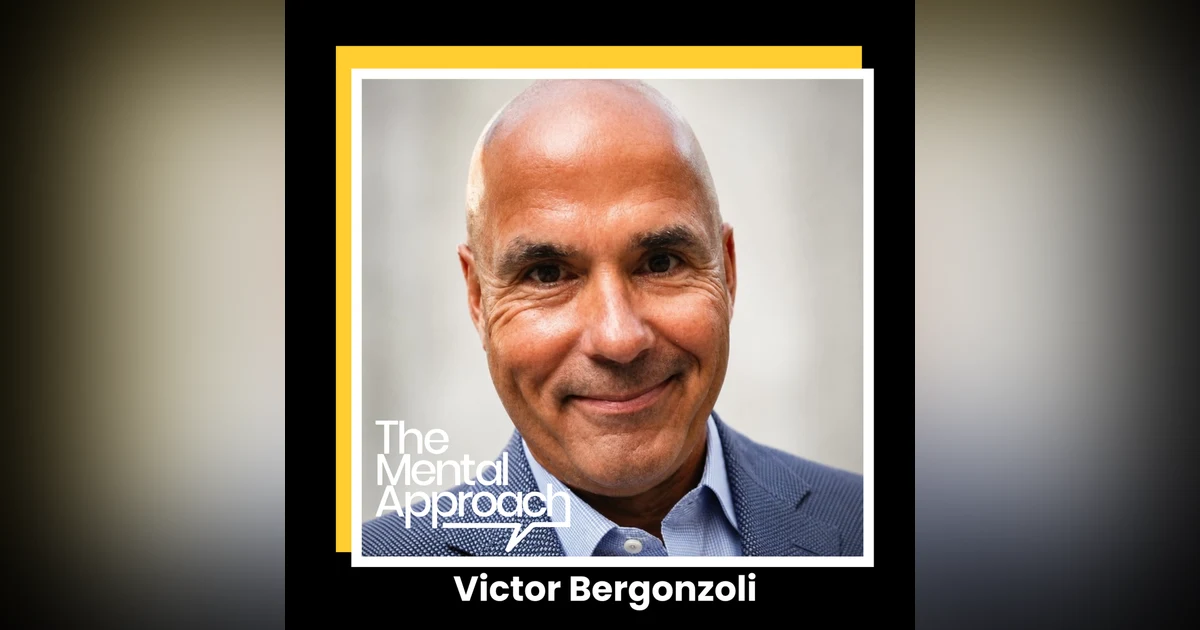
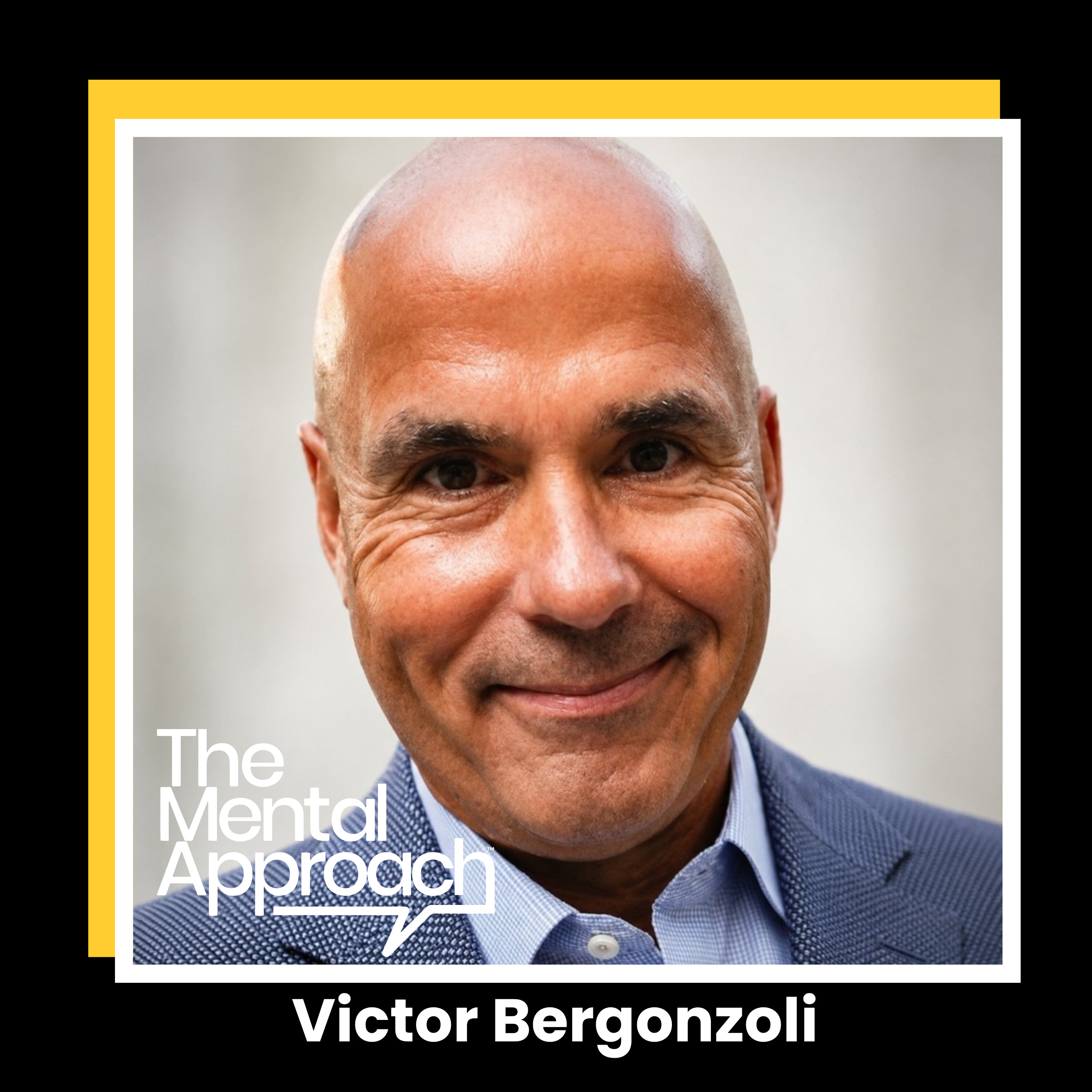
Pay-to-Play Childhood: The $40 Billion Youth Sports Problem with Victor Bergonzoli


 RSS Feed
Youth sports has become a nearly $40 billion industry in North America, bigger than the NFL. Private equity is buying up leagues, tournaments, and rankings while five-year-olds get "scouted." In this episode, host Todd Arkell sits down with Victor Bergonzoli, who spent a decade building elite performance-tracking tech at Dartfish (used by Olympic broadcasters and athletes like Novak Djokovic) before pivoting to lead Sports Ed TV, a platform that gives away high-level coaching content for free.
The premise for this discussion came after reading a New York Magazine article by Caitlyn Moscatello, detailing the potential issues with the gold rush around youth sports. Victor makes the case that private equity isn't the villain — it's the parents chasing scholarships and professional sports dreams who are driving the dysfunction. He unpacks what Norway's youth sports model gets right, why specialization before age 13 backfires, how "stay-to-play" tournament economics work, and why 23 years without an American Grand Slam champion in Tennis might be the sport's own warning sign. It's a candid conversation about money, benched kids, burnout, and how parents can protect their kid's love of the game inside a system built to monetize it.
See Privacy Policy at https://art19.com/privacy and California Privacy Notice at https://art19.com/privacy#do-not-sell-my-info.
Matt Cundill 0:01
This is the Mental Approach, where we discuss mindfulness, mental performance, and the tools available for coping in a high-performance world.
Todd Arkell 0:10
Here's Todd Arkell. Welcome to the Mental Approach. I'm your host, Todd Arkell. Every parent listening to this show has felt it at some point that moment in the car after a game or a tryout or a tournament, and you catch yourself wondering, "Are we doing this right?
Todd Arkell 0:27
Is travel sports actually good for my kid, or am I just afraid of what happens if we don't do it? Is it about my child's development or somebody's bottom line? Those questions used to feel a little paranoid to ask out loud. They don't anymore. Though, in my opinion, youth sports in this country, and we'll talk about North America, has become nearly a $40 billion industry, bigger than the NFL. Private equity firms are buying up leagues, rinks, tournament circuits. Five year olds are getting scouted, and there's real research now showing what a lot of parents already sensed-that some of this is quietly costing kids their mental health, their identity, and in a lot of cases, their love of the game entirely. My guest today has spent his entire career inside that world, on both ends of it. Victor Bergenzali co-founded Dartfish, a video analysis technology that Olympic broadcasters, national federations, and athletes like Novik Dojivik have used to chase every last fraction of a percent of performance. He spent a decade building tools for the most elite-level sport has to offer. Today, he's the CEO of Sports Ed TV, a company built on almost the opposite idea: give away world-class coaching for free to anyone with an internet connection, and stop measuring success by who wins U10 championships. Victor recently wrote a piece that I read directing some of the most uncomfortable questions in esports right now about money, about private equity, about why we built a system that seems to reward a short-term win at the expense of kids who actually stick with sport for life. We're going to get into all of that today. His own evolution for elite performance technology to free access for everyone, what he's learned watching the industry from the inside for over two decades, and what he thinks parents actually need to hear right now, Victor, welcome to the show.
Victor Bergonzoli
Thank you, Todd. Thank you for having me. And wow, what an introduction!
Todd Arkell 0:27
Well, you know what? How we got connected really was I read a piece you wrote. It was in response to an article in the New York Magazine, penned by Caitlin Moscatello, I believe it is. It was called the pay-to-play. Childhood private leagues have made youth sports expensive, hyper-competitive, and all-consuming. Investors are making a killing. Your first line in your article was, "I think it's important to repeat something that can easily get lost in this discussion. Private equity is not the culprit, so why don't we flush it out a little bit deeper for the listeners?
Victor Bergonzoli 3:06
Sure, I'm originally from Switzerland. You can hear an accent; it's a French accent. And I came to this country in 2001. A daughter was born in 2002, and a son was born in 2004. When my son turned six, he wanted to play lacrosse, so I said no problem to my dismay because I'm like I know a lot about soccer, but I don't know much about lacrosse. I didn't even know what it was. But anyway, I said good for you, and as any good dad, I I wanted him to be successful, so because I was with Dartfish at the time, I became the video coordinator for the amazing team that a six-year-old can attend. Right, I'm gonna move move forward. In a few years back, he played lacrosse for many years, and just before high school, they became the state champion. And as I was going, people were asking me, "Why? Just one is pretty good. When are you going to do travel teams? I didn't know the concept of travel team. You know, with Dartfish, we were selling to the high-end teams. You know, the Olympics and everything. I was not that involved with youth coaching, but I'm like, "What do you mean? Oh, during the summer, you know, you can go and travel, and you have all these teams, and you know it's important for the U10. And my son was was 10. I'm like, guys, we we don't do that in Europe. When you have a summer vacation, camps are maybe a way for the kids and the parents to have free time. But I'm not going to travel with a young kid and put pressure on him on one sport. I want him to discover other sports, and that's how I came to learn what you know this concept is. And that was 15 years ago, but things have gotten out of control. People are spending a ton of money, putting pressure on young kids. I mean, you speak about kids who are 1011, 12, and they are dreaming, and dreams are amazing, you know. But they are dreaming of their kids playing in the NBA, and of course, a lot of them are thinking about scholarship in you know Division One, Division Two, you know, football or basketball or baseball or anything, and you look at the percentage of kids who are ever going to make it in Division One or Two or Three in college. It's very minor, but then playing for the NBA. I'm going to ask you a question: How many people have played NBA basketball in the past 80 years? Do you know?
Todd Arkell 5:40
Oh, I don't know the number, but it's not big.
Victor Bergonzoli 5:42
5500, 5500. That's it, and 80 years of NBA basketball. I mean, before NBA, and then I'm counting everything. It's 5500 people. So you are telling me that you know you need to spend a ton of money to travel everywhere, put your son with 10. Put pressure on him, or your daughter, because you believe they have a shot in the NBA. So it's time to to frame our dreams. And if my kids can play in high school, and even if it's not in the varsity on the varsity team, if they can play sports in high school for their lives, going to be so beneficial. I'm not saying don't have dreams. I'm just saying, watch out how you spend your money. And the the more we spend the money, the more we create an economy that is taking people out of it. And the goal for a nation, should be everybody has to be healthy, you know. People have to fall in love with the game that they're going to continue play after high school, after college, not even at a competitive level. I started playing tennis six years ago, and I play twice a week now. And I never played tennis before, but I fell in love with the game. I'm an old dude. That's the power of sport, and I'm keeping healthy. And that's what we need to instill in our kids. And not necessarily you are going to become the next big NBA player.
Todd Arkell 7:13
It's a fair point. I mean, I've said I didn't start out this way. I came to a realization at some point. You know, I have four kids. They all played athletics in some some shape or form because I felt that they should just to be part of a team aspect and and all those different things. And then I had one kid who was very good at a couple of different sports and has progressed and is now you know a freshman in college on a baseball scholarship. But I've said if we took all the money, and I'll speak from a Canadian perspective, all the money we invest in hockey in this country, and we invested it in education, our the education of our child, tutors and whatever that is, we'd have a million rocket scientists instead of a million hockey players. It
Victor Bergonzoli 8:00
it it just feels that way. I believe sports is essential for a great life. I agree. You know, Aristotle or Socrates was saying, you know, you need to have a great mind, a great body, and I I believe that everything is essential in the development of a child. But what I'm saying is, don't put so much pressure on young kids. And I always like to to look at Europe, and a model that is amazing to me is Norway. Look at the number of medals they have had. Of course, the Winter Olympics they have a lot of cross country, but it's a nation of 5.5 million people, and not only they do well in the Winter Olympics, and people are going to tell me yes, but that's all they do. I'm like, hold on, we have more cross-country skiers in the U.S. than they have in Norway, you know. But they have more medals. The Norwegian team did pretty well at the at the World Cup for a formation of 5.5 million. So did well in many sports, and they have a great system. You cannot almost become like a professional before the age of 12. You cannot just play one sport. They don't want you, you two. Look at Ben Shelton. Ben Shelton was playing football until the age of 11, I think, and his his father said his father, great coach, ATP player, was able to convert him and become a tennis player. But I mean, the kid didn't only play tennis, you know, when he was six and seven and eight. So he developed his physicality when he when he started playing tennis, he was ready to do it, and you can do several sports. My my partner Robert Matzukeli, at the age of 12, decided to take tennis. He he was playing tennis, but he had he was a baseball player, he was a hockey player. His dream was to play for the Bruins. He was from Ireland, and finally said, "Okay, you know, I'm gonna, I'm gonna go and focus on tennis. And he did that as a high schooler, before just before high school, because he he he was playing tennis and he saw who are the members of clubs, and in his mind, he's like, "If one day I cannot have a professional career, but I want to have a life skill that I can take in the corporate world. He was very mature for his age. He said tennis is the one, and he he got a scholarship division while at Richmond. He was he was playing number one at Richmond, but he could have played baseball or he could have played hockey at this level, and that shows that you need to give the kids fun and not put so much pressure. And what I put in my article is parents are responsible of putting too much pressure on these kids, putting the money as well on the kids, and this pressure is not is not healthy. So, what's one thing you think about the Norwegian model that is maybe most realistic for an average American sport or league to adopt. Not the whole philosophy, but just a starting point. Fun when you play, have fun when you're a coach and you're coaching kids U10 level, give each of them a play time. You know how many kids are benched games after games because the coach wants to win. You learn about the sport when you play, not only you know in practice, and that's what I saw. It's it's very American. You know the coach U10 is like my my my son was part of a select team, and he's like, we need to win, you know. And he was telling the kids, and some of the kids never played really. Maybe 10 seconds here, a minute there, and I'm like, you're just having to get off the game, you know. How many kids leave soccer and other sports at 13 because they're like enough. Let them have fun. When you have fun, your pool of kids having fun is great. You create fans for life, because when you play a sport, you become usually a fan.
Victor Bergonzoli 12:13
So you know we should have this culture of saying we need these fans as well, and not having these kids disgusted by the fact that they are benched, and I see it on Facebook, the number of groups where people are saying, you know, my daughter is playing volleyball and she's benched because she's not that great, and I'm like, how sad is this? What what do we care if we don't win every game? My favorite coach these days is Ted Lasso.
Todd Arkell 12:40
Yes,
Victor Bergonzoli 12:41
Ted Lasso. understand what a great coach you know must do, and and then you never know. You may have somebody who's not that great, but all of a sudden he brings up the team, and he develops like a nice flower, and that's what we need to do. We are acting too much as professional at the very very young age.
Todd Arkell 13:02
That's a good segue to. I I feel like I should trademark this, but I call it the professionalism of you sports. It you know kids walk in wearing ties to the hockey arena, or you know it's just the way that they're expected a young age to to kind of perform. I was reading, and I think it was in the New York article, and I didn't even know this about Minnesota hockey, but they've got kind of a a real working counterexample. They, you know, they use public rinks. It's like 200 to $400 a season. No kids get cut. It's actually funded, kind of funny, partly by charitable gambling machines. So we're taking a gambling addiction and putting it into to pick kids, but regardless, do you think that model's exportable into other sports in states, or do you think it's maybe only because Minnesota has such a great hockey culture and infrastructure, or there other sports that they could be doing things like this in?
Victor Bergonzoli 13:54
Well, I think it's happening in many different sports. Look at lacrosse developing everywhere, baseball. I mean, you have what 500,000 youth teams, baseball teams, and softball teams in the in the country, and I don't know how many travel teams they are. It's a lot, and and I'm glad that people do it. So I, you know, I I don't want to destroy an economy. People are making good money, and people were blaming PE. PE is not the culprit. The culprit of the parents are getting crazy, and I'm not against having travel teams for you know kids at a certain age that you know you need them to travel. You need to develop them. We we have this culture in Europe when you are good at a certain age, you know, like soccer, when you get to 1213, then you can join a Juventus or AC Milan or Barcelona, and you get in their program. And the kids travel a little bit, you know, but they they never travel, you know, too far. It's never crazy. And these clubs try to help as well with the cost. The challenge here is, you know, with the the pay to play, is you make parents believe that their kid is amazing, but all it is is a cash machine. So you put pressure on kids, you put pressure on parents that sometimes have to put everything on the credit card for the wrong reason. the The real reason for a nation is looking at the number of obese people in the U.S. and you have what 46% of people are obese. It's huge, and I'm like, we need to look at that and say, what? How do we change behavior to make a nation healthier? Because that's a cost that you know as we are all aging, we won't be able to to deal with anymore. You know when everybody is fat, sick, and unhealthy, and that starts at the very young age. That that's the culture we need to change, and and by changing that, you're going to increase the the size of people playing sport, and you have good talent. I just wrote a post today on on LinkedIn. We have not had any Grand Slam American or U.S. champ or winner in the past 23 years. Not a single one. Pete Sampras was that the last one? 2003. So the last time an American won a Grand Slam, and you have four Grand Slams a year, was 2003. And and we have in the U.S. we have around 25 million, I believe, tennis players, and more or less the same in Europe. Europe has been dominating, and yes, Federer Djokovic and Nadal was just the new hard time with the name. But if you know, are from Europe, and the trilogy would just win one after the other. I understand that, but 23 years is a long, long run.
Todd Arkell 17:00
Yeah, no, 100% Well, you go back. You know, you're talking about the, you know, the the money in the sport too. And I, I'm not going to give it too much airtime. And I'm not sure if you've seen this trailer, but Kim Kardashian has created a new show called Baseball Moms, and it's definitely been in my orbit. I've seen it a ton on social media, and it is based in Scottsdale, Arizona, and it's very young kids playing travel baseball. And you can imagine the behavior of the parents. I don't know whether I want to watch it to educate myself about what's really going on, or I don't know if I want to ignore it because I think it's crazy. But you know, part of it is I know in the article you kind of made a comparison that there's almost like quarterly earnings pressures on how people are running their kids' childhoods, and I've often talked about that's why I feel there is bad behavior in hockey arenas. So much of it has to do with financial pressure families are under, coupled with how they envision their child's athletic outcome to be, either a scholarship or a professional or whatever, and and how they're going to extract value at the end of all this investment they're making. But where do you see the pressure show up most directly in how parents behave? Do you think it really is probably financial in a lot of cases, or do you think it's otherwise?
Victor Bergonzoli 18:25
I think it is. I went to one of the best business schools in Switzerland. It was free. We were 800 in my class the first year, and 200 the year two. So 75% failed because it's hard, cost of college in the U.S. is very high. It's very expensive. It's a financial burden. It puts pressure on people saying, "Oh, you know, if they can get a scholarship. Again, the development of a child is not only for the 20 years, 22 years the child is with you. It's for the long term, and what we should look at is, you know, how can I raise a great individual that's going to be healthy for life? Sports is essential. Playing sports from a young age, going into high school, and then being active in college and after college is essential. The people who don't play sports in college, they have fun, they go drinking, and even if it's illegal, we are not blind. Unfortunately, I don't condemn drinking at all. I don't drink, but they do. They party. That's what you know. College life is all about. But and then after college, they start playing again. You know, they may say, "No, I'm going to be active again. If you never played sport, you don't know what it is, and you know you you miss on something important. If you are the dad or the mom of a young daughter, it's even more important. 90, I think it's 97% of C-level executives. Women C-level executive that played sports at the you know in high school or at youth at the at a good level, so it shows that there's a strong correlation between learning what you know playing for a team or even if it's an individual sport, it gives you a mindset that is amazing. It gives you discipline. It gives you you know strengths, so there are many benefits. And as a parent of two kids, I always thought about. I knew that no, none of my kids were going to to be Division One players or professionals. This is going to be great for them. And my son played lacrosse. He did karate. My daughter did you know horse riding, and she played basketball. She she did volleyball as well. So they tried everything until you know until high school came. And my daughter was a color guard in high school. She enjoyed it for a year, and I never put the pressure on them, saying, "Oh, you need to. We have a scholarship coming, and we hope that you know you can pay for your your college. I had colleagues who did it, spend a lot of money on softball travel, volleyball as well. I remember out of her three kids, one got a scholarship in a division two or three school. The other one, she said, "Well, for the waste of money. I said, "No, it was not a waste of money because you gave them something amazing, incredible, but you don't you don't need to go that far to give them this experience.
Matt Cundill 21:30
Now more of the mental approach with Todd Arkell
Todd Arkell 21:34
with Sports Ed TV. You guys offer content for free rather than behind a subscription. So in a business built on capital and sponsorship, like the rest of you sports, why give away the one thing-the coaching access-that's usually the most expensive gatekeeper.
Victor Bergonzoli 21:51
One of the key reasons is why we created sports at TV and why it has become one of the leading brands. You know, the main leading brands of sports education online is first of all wanted everybody to have access. When when my son played lacrosse at the age of six, I wanted to be a good dad, and I said I'm going to find videos of lacrosse players and coaches. And I went to YouTube. It was you know back then only YouTube. It was the beginning of Facebook and Instagram, so no TikTok, nothing. Everybody is on every channel, and I remember watching a few videos, and they had a lot of views, like hundreds of 1000s of views. And I sent that to his coach, and I said, "Coach, must be good, a lot of views. And he's like, "No, don't do that. I'm like, "Okay, so what do I do? You know, that stuck with me for a long time. So when we created Sports Ed TV, we said we need to have a place where we are going to have a lot of videos, good videos, taught by great coaches, but you know we we control the production as well. So we created we have almost 900 videos, we have over 1800 articles as well, written by top experts. We have 450 experts on the platform, and the reason we wanted that to be free is we wanted that to be accessible by all. We have a paid subscription on Sportsnet TV for people who want to do more, not the content, but they want to organize the content, create groups, so we can do that. That was key to us. And the way we make money is we get brands who want to be in front of an audience, and we we say you know we can connect you with people who are really into helping their kids on the platform. 30% are coaches, and then you have athletes and parents. We have all kind of sports. I don't know if you play pickleball.
Todd Arkell 23:45
No, but my wife's trying to convince me to.
Victor Bergonzoli 23:48
We have more than 100,000 people on our network now. Pickleball players. That's amazing. It's a nice one. And we we publish you know our content everywhere. You saw my post on LinkedIn. We you know, during the World Cup, the the content we published on Instagram and Facebook, we got 27 million views, impressions.
Todd Arkell 24:09
Incredible!
Victor Bergonzoli 24:10
And all the content is educational. Speaking about the rules, it can be, you know, who are the greatest athletes of all time, and you know, we we really try to make it entertaining, and we wanted to keep it free so everybody has access to it.
Todd Arkell 24:25
In a lot of ways, you guys use some of the same tools of capital you defend in the essay as responding to demand. But do you see sports ed TV as a as proof that capital can serve the mission instead of distorting it, or is that a harder needle to thread than it sounds.
Victor Bergonzoli 24:41
So depends on what you call capital. An absolute was defending PE private equity. They invest into something. Usually they have a window. Let's say the six years, and what they're trying to do is increase the revenue, make sure that the EBITDA is solid. And then they can, you know, divest. Maybe they they do an IPO or they sell it to another group or they consolidate. That's what they do. And if they see that there is a growing market and there is a demand, it's part of what they do. So capital is not bad, and money. I mean, we you know we live with sponsors. If I am, I don't know. I'm going to take an example: Chobani, Chobani yogurt. You know, I love Chobani yogurts. 20 grams of protein in in my little yogurt. Sorry, I'm not sponsored by Chobani.
Todd Arkell 25:32
Little commer, little commercial Chobani. Sponsor me too.
Victor Bergonzoli 25:36
But imagine that you know the sponsor like this can sponsor a big event like the FIFA World Cup. You watch the World Cup, do you remember all the sponsors? Certainly not. No. If a brand like this, I'm going to take another example, Oikois from Danon Group. Oikois is the Chobani competitor, main one. They say, you know what? What if we we offer a video library to millions of kids in in the U.S. there are parent. You watch sports TV videos, all the drills that help you work with your kid. Automatically, you are going to try to thank indirectly the people who bring you the the videos. That's our business model, and it's good for everybody. You do something good for the community, you get a return because parents are going to watch those videos. Most likely, are going to say, you know what? I need to reward these people. I'm going to buy Oikos instead of another brand, as an example, and we get the money to continue, you know, creating content and accomplishing our mission. Of course, we we are a private company. We, you know, we are here to make money. But what I'm saying is, you can make money with good business model, doing it in the right way. If if I'm a private equity investor today, and and I keep increasing the cost because I have control over these pay-to-play systems. I'm going to reduce the number of families who can do it, and I'm going to maybe kill my source, you know, at the start. If I do something that allows me to have even more participants, I build something for the very long term, and that's what I was speaking about: the quarterly returns. How many companies are looking at the past three months, investing in health, investing in a good society? It's like planting a tree. When you plant a tree, you know you're not going to have a shadow in the next five years, but maybe your kids and grandkids are going to be on in the shadow of the tree and say, you know what, my dad or my grandpa planted this tree, and today I can really rest in the shadow, and the the sun is not burning my my head, and that's what I was referring to. If an athlete has access to coaching content on your platform, and their family can't afford travel teams or elite facilities. Do you think that can help change things for them? I think so. I mean, we-I always like to take the Chicago Public School example. Chicago Public School uses our videos in volleyball and basketball, and this is for I think fifth grader and sixth grader. We created curriculums for them over you know 10 weeks period, and they are serving some of neighborhoods that don't have much money. So we help them develop the curriculum, and the the teachers or coaches as well were able to follow a very good curriculum. We did the same with the Y, the YMCA, that are using our videos in their curriculum, and that helps get people to fall in love with the game and understand the basics. And more importantly, if I send a child to a video, you know how to do the crossover. I like the crossover because we have Tim Hardaway Senior himself teaching the crossover on Sports Ed TV, and he's the one who invented it, right? And he's a Hall of Famer. If I if I send my kids to Sports Ed TV, I know that the content is safe. I know that if they watch one video and then another and then a third one, they're not going to get you know some of the videos you may have on other platforms. You don't want them to necessarily watch those videos, so it's a safe place as well. And it's qualitative content in both ways. The teaching is good, and the production is good. So we always believe it was very important to have good production on what we did. Are we replacing coaches? No. Well, you know we we cannot replace a coach. The venue is AI, and we are we are developing some AI coaches that are going to be revolutionary. Oh, interesting. But still, an AI coach. Or an AI system doesn't replace this emotional connection you have with a coach.
Victor Bergonzoli 30:06
You know, I remember my coach when I was 12, 100% And I think it's it's very important as a mentor and being here when you go to a competition and you know seeing you sweat and giving you the right advice and advice on nutrition and mental, and so we're never going to replace coaches, but we can provide quality qualitative information to all of them. And if if some some of them don't have access to the top coaches that they may pay for, we are here for them. You know, I I mean I can imagine. Look at the according to the Aspen Institute, they say families making under $25,000 are all but squeezed out of athletics and you know that kind of thing. And I think that a free content library can actually help solve for that. For you know the the way that things are going. I mean, I've often thought that clubs should have scholarships
Todd Arkell 31:00
for families. You know, there are different programs. I know in Canada there's ones that Canadian Tire runs thing called Jump Start, where there's money that's available to help their kids play play in sport and kind of kind of do that. But usually, the family has to ask for that money, and that's hard to hard to do. So in the in the New York Magazine article, they talk about stay-to-play model. One I know all too well as a parent of an athlete, where you've got to stay in the hotel, the tournament shows, and they own the hotel block, they own the media rights, the parking. You got to pay to go see your kid play, get a weekend pass. Does that model feel like a neutral market response to you, or do you think that bundling of ownership crosses into something else?
Victor Bergonzoli 31:47
I think if you're the parent and we decide you are okay with it and you pay, it's something very legal. It's almost like I don't want to say it. I'm going to say it. The drug dealer, you know, saying, "Hey, as long as you pay, I'm going to give you. In this case, the rules are established from the get-go. When you when you start your kids in travel teams, and you know that you're going to pay for that, don't complain. You're the one who decides that your nine-year-old is so good that he needs to do that. And I know there is peer pressure. I know that. I know that you know all your friends are are going. So why don't you go? Then you take it as a vacation, and you decide, okay, that's my vacation money. I didn't do it with my kids, and we went on vacation to Switzerland to see the family, and I think it gave them a lot of benefits. But I cannot blame the people who do it if other people are willing to pay for it. At one time, somebody will. I believe in a, you know, in a free society. I believe in capitalism, and there is going to be someone saying, you know what? Let's do our own league, and let's not do the, you know, these force people to stay in hotels and buy the passes to see your own kids, and then competition will come, and that's going to change. I'm not blaming the people who do it. I'm blaming the people who decide to spend the money on it.
Todd Arkell 33:12
How do we break out of that cycle where, basically, parents feel, oh, I got, I I have to do it. My my brother-in-law once said, "He goes, you know whose business it is for your kid to play summer hockey. When I said, "No, he goes, "The guy whose business it is for your kid to play summer hockey, and you know that was a that was a bit of a light bulb moment. I was like, "Yeah, and then people think I need to do this, I need to do that, even when there's all kinds of evidence that talk about what you're talking about. Is that play all kinds of sports, don't specialize young, that that type of stuff. So
Victor Bergonzoli 33:51
don't specialize before you're 13. Do gymnastics, do other sports. You know, it's it's so key, and have fun. If all you do is play hockey all year long, including the summer, what's going to happen? The kids are going to say enough, so you're going to lose them. That's that's the reality. One
Todd Arkell 34:13
of the things I read in the article was they they described kids as at best valuable only if they can perform to expectations, and at worst dispensable. Referencing guest players replacing kids, all kinds of bad behavior. So, you know, in your opinion, how does a parent protect a kid's sense of self-worth inside a system that's built like that?
Victor Bergonzoli 34:38
Choose the right coach for your kid. You know, before you you join a team, do your research on the coach. And if the coach is paid by a system that rewards wins, then you you know that your kid, unless he's a star player, will be benched. So you're going to pay for benching. I what I know. Is play time. Playing time is crucial in a kid's development. You learn in practice, but you really learn when you are playing. You know, I when I started playing tennis, I was practicing for two years. You have to learn all the strokes, and I didn't know there were so many different strokes in tennis until I started playing. But then I started playing my games, my matches. I went on join the league, and I really learned when I joined the league. And for kids, it's so important: put them on the pitch, let them have fun. The challenge is some parents become so aggressive. You should see them online in forums, complaining, oh my my daughter has been benched, you know, and she doesn't play, and the coach this and the coach that. If the coach is forced to come back with wins instead of just growing the kids, that's his job. So before you join a program as a parent, do your research. That's my best advice. What are the coaching principles? Everybody has the shot at playing. You know, how do I make sure that my kids benefit from this experience instead of suffering? Now, I'm not saying that you don't have elite programs. Elite programs are essential. You know, as I was saying, comes to an age where you need to join a club. You need to. You know that you are going to. You take this pool of really talented kids, who not only are talented but they want to go further, and you work with them to bring them to the next level. the The large proportion of them are not going to be those kids. I've seen it myself. My my son was part of a select team, and the the other kids were not part of the select team. Still had fun playing. They were playing lacrosse. They had fun. They were playing in the games and scoring, and and that's what counts. Nobody's going to remember the wins you had when you were 10. You know when you go and you say, "Hey, I'm a I'm this person of this quality and this and that, and they are going to ask why. I say, yeah, because I I played sports and that made me who I am. Nobody, when you're 25 or 30 or 40, are going to ask, yeah, but did you win when you were 10? Were you a state champion? It's like nobody cares.
Todd Arkell 37:19
My son last weekend they were had a five hour ride to their game, and the air conditioning broke down on the bus. And he said, "We're all sitting in here with our shirts off and sweat pouring down because they're down in the heart of Texas. And I said, "I said, well, that's a core memory that you and your teammates will have for a long time, right? You probably remember that long before you'll remember some of the other things about what you did, right? It and it builds. My, I think my wife said, "Well, that's character building.
Victor Bergonzoli 37:51
Yes, it is. And how do you behave? What do you do? Take the phone away when they're on the bus and let them speak and have fun together. Remember when we were kids, you would go on a bus and you would, you know, make faces to the passengers and at games and maybe you would read a book. Now you go on a bus and everybody is on their phone and they don't even speak. And these are, you know, these are moments that a good coach gonna say, "Okay, guys, let's put the phone off for a while, and let's do make do a game, or you know we, it's terrible. I mean, even if you go and watch parents, half of them are on their phone. They don't watch the kids anymore. I'm sure you have seen this commercial. I don't know if it's for AT&T or Verizon, but you have the dad. The dad is there's always a dad filming, say, oh, the dad who is here, dad who is there, and you see the dad with the phone like this, and at the end the camera goes around the dad, and you see that he has just been watching a game on the phone and never filmed his kids' components.
Todd Arkell 38:54
I haven't I haven't seen that one. I'll have to keep an eye out for it. In the U.S. Congress has let the kids play act, which they're trying to push through to force divestment from private equity owners engaged in certain practices. What do you think about government's involvement in in this, or should we just continue to let the market shift on its own?
Victor Bergonzoli 39:19
When the government gets involved, they are always finding ways around, and I'm not sure that's a solution. I think the government should tackle more important issues. I think I believe in education. I believe in educating parents, telling them why it's important, what is important, and you know not reward these behaviors, but you know, going after private equity, you know, if if it's about putting some money towards other goals, like you know, lottery playing the lottery is not good. Essentially, you're playing money to try to win more, but a big portion of the lottery gains. Giving back to education, so maybe you know a way would be okay. You know we you can do this, but part of the proceeds have to has to go back to the good of you know a larger population. Why not? I would have to spend more time on what they are working on and voting on to really give a smart assessment.
Todd Arkell 40:23
So, if you had to point to one thing that Sports Ed TV does that you think genuinely counters this trend, what would it be?
Victor Bergonzoli 40:33
What we are trying to do is educating people on long-term health. If you play golf and you want to beat your brother-in-law. We are here for you. If you are a parent of a kid who wants to have, you know, some knowledge on how to play basketball and how to do the crossover, we are here for you. And we are not charging money to you. We are just making sure that some of the sponsors, and we are very selective with the sponsors we choose, we don't take alcohol or cigarettes or tobacco products. That's important as well. We we are very very safe on this side as well, and you know we are trying for you to look at long term development, and we are for your kids and for yourself too, that's that's our goal. Our big mission is really to help this society become a healthier society overall, and that's a long-term mission.
Todd Arkell 41:30
Love it, Victor. I appreciate the time today. I appreciate your insight in sharing all of your for those listening all of the information on Sports Ed TV and how you can check it out and and see if it works for you. Will be in the show notes. Victor, thanks for your time.
Victor Bergonzoli 41:45
Thank you, Doug. Was a real pleasure.
Matt Cundill 41:48
Thanks for listening. For more including resources and more about the show, go to thementalapproach.com.
Speaker 1 41:56
A production of the Sound Off Media Company.

