From the Paint to a Purpose: Val Whiting on Survival, Silence, and the Mental Game Nobody Taught Her


 RSS Feed
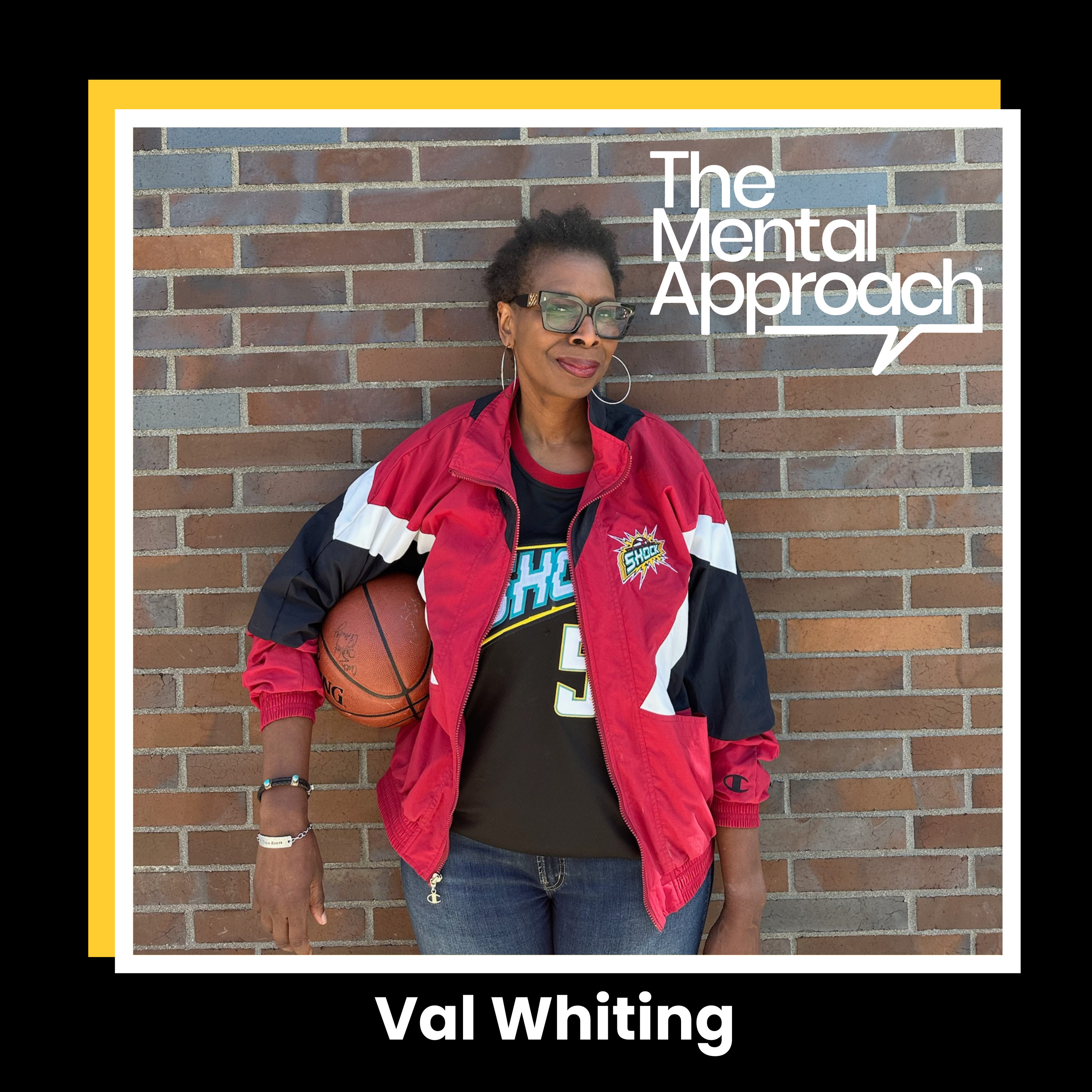
 Val Whiting is one of the most decorated college basketball players of her generation — two national championships at Stanford, Pac-10 Player of the Year twice, a pro career that took her from Italy and Brazil to the ABL and the WNBA. But behind the highlights was a player who was silently drowning, with no tools to combat performance anxiety, no one to talk to, and a coach who called her unmotivated. It took two hospitalizations, a pandemic, and a TikTok video for Val to turn her pain into purpose.
Now a credentialed mental performance consultant with a master's in sport and performance psychology, Val breaks down exactly what she wished she'd had as an athlete — from bounce-back routines to process-over-outcome thinking — and what parents and coaches are still getting dangerously wrong. Plus, Val doesn't hold back on the WNBA's hottest debates: trans athletes in women's sports, the Caitlin Clark phenomenon, and why the league's refereeing is letting everyone down.
Connect with Val
X: @iamcoachval
Instagram: iam.coachval
Website: www.mentallystrongher.com
Matt Cundill 0:00
This is the mental approach, where we discuss mindfulness, mental performance, and the tools available for coping in a high-performance world. Here's Todd Arkell.
Todd Arkell 0:11
Today, my guest is Val Whiting. Two national championships at Stanford, Pac-10 Player of the Year, twice, named one of the top 25 college basketball players of the last 25 years by ESPN and the NCAA. After college, Val took her game overseas, Italy, Brazil, before becoming an anchor player in the American Basketball League, as well as being an All-Star in the ABL. She was then drafted to the WNBA, playing for the Detroit Shock and the Minnesota Lynx before retiring in 2003, and now a certified mental performance coach. Val, welcome to the show.
Val Whiting 0:49
Thanks for having me.
Todd Arkell 0:50
I have what I'd like to say: female basketball royalty here. I mean, it's I'm I'm super super excited to have have you on, and we'll we'll dig into a little bit about the NBA a little later because there's lots going on. It's a it's a hot topic today with everything that's going on with the with the league, and I think in a lot of ways I think it's good that it's being talked about. So, you know, regard regardless of what the the the topic is of the day, I wanted to kind of start with with with you growing up and and stuff that you know, as I'm doing research, you know, growing up in in the in the Delaware area, you've been kind of open about being bullied as a youngster, and like you almost didn't play basketball. Like, what a crime that would have been. Walk me through kind of how that how that all kind of originated.
Val Whiting 1:39
Well, the bullying started in well, make well middle school to make the bullying stop. I thought, hey, that's trial for cheerleading. Maybe you know cheerleaders are cool, get to wear the cool uniforms, they get to perform at basketball games or or whatever. And so, I tried out for cheerleading. I didn't make it, mind you. I was about probably six feet tall as a seventh grader and 11 years old, and that same week, my math teacher said, "Hey, why don't you come out for basketball? And I was like, "Sure. And I, which was interesting, because I had never had any exposure to any sports at all. Both my parents played basketball, but they never forced a sport on me. I have no idea why I say yes, but I did, and I I went out for the team,
Todd Arkell 2:24
and the rest is history.
Val Whiting 2:25
Yeah, and the rest is history.
Todd Arkell 2:26
Got to thank that matt teacher.
Val Whiting 2:28
Yeah, mr. Pearlman.
Todd Arkell 2:30
There you go, mr. Pearlman. Good on you. Good on you. Yeah, I had a stepfather that was in in grade eight. He was six foot six, and see pictures of him in high school with his arms outstretched across his entire starting line, right? Like, you know, when you're tall, that might be an advantage in that sport, right?
Val Whiting 2:47
Yeah, just a little. Yeah, no,
Todd Arkell 2:49
absolutely. You you end up becoming very good at the sport, and then going to Stanford. So on on a pre med track, how is that as an athlete going to a school as storied as as Stanford with with that kind of academics, how was how was juggling that?
Val Whiting 3:06
It was tough. A lot of times, I couldn't take certain classes because they coincided with practice, or because I needed certain labs to graduate for my major or for the whole pre med track. I remember my senior year, we had me and my another teammate who's actually a doctor now. We had a lab that we needed to take, and it was our last year to take it. And we had we had to move practice to six a.m. in the morning because of that lab. I'm sure my teammates were not happy about that, but that was just something we had to do just to get you know get those classes in.
Todd Arkell 3:43
At that time, like when you went to Stanford, did you see basketball as a way for you to become a doctor, or did you have dreams of being a being a basketball player or doing something with basketball after after college?
Val Whiting 3:57
No, my my I've always wanted to be a doctor, and I used to even, you know, play house as I was a doctor. I would make arms, prosthetic arms for my for my dolls and stuff, and perform surgery. So when I decided to be pre med at Stanford, I didn't really, I wasn't thinking about basketball, and in fact, I was going to play basketball for two years overseas, and then go back to medical school. That was the whole plan. And then women's basketball opened up in the United States with the American Basketball League, and that's when I kind of just said, "Let me play some more ball.
Todd Arkell 4:34
Was the goal? Were you just saying, "Well, I'll just take this as far as it goes, and then go back to med school? Like even after the ABL.
Val Whiting 4:40
Yeah, but I I kind of lost the passion for going back to school after just loving basketball and and playing in front of my family and being being able to stay in the United States. I I actually got into med schools my senior year at Stanford and deferred admissions and for two years actually because I was supposed to just go play ball for two years and come back. So yeah, when I tried to do it again, just thinking about going back to school and you know taking the MCATs again because that's what I probably would have had to do. The passion wasn't there.
Todd Arkell 5:11
Yeah, I think that's I think that's true of most things. If you get away from it for a while, it's it definitely is hard to get back into the school mentality, isn't it?
Val Whiting 5:18
Yeah, it is. But you know, recently I went back to school and got my master's in sport and performance psychology, and that passion was there for that. Especially since being a professional athlete at WBA, I struggled with my mental game, and I didn't want female athletes to go through what I went through. So I decided to go back and get more training and open up a private practice.
Todd Arkell 5:40
Playing in the ABL, I mean that was, I mean very early infancy. I think you know the those athletes playing in the WNBA now owe a lot to the athletes like yourself and Jennifer Azzi. You know that you played with. What was that experience like playing in front of you know 10,000 fans a game? It it just, I mean, obviously, in college there's large numbers, but being able to play professionally and and do that, what what was that experience like? It
Val Whiting 6:07
was great. The when I played for the ABL, Jennifer Azi and I were part of the the anchor players for that team for the San Jose Lazars, and that team was actually owned by the owner of the Warriors, Joe Lakeup, yeah, who owns the Valkyries now, and so it was a great experience. We obviously drew a lot of old Stanford fans to come out to the games, as well as we had other Stanford players on our team. Was part of the draw, and it was just nice being able to play in front of your home, your home team, your home fans, your family. My, you know, my parents didn't have to fly out to Italy or Brazil. My parents actually came over there to watch me play. They didn't have to do that. They can stay in the United States to watch me. Games were televised, so it was it was a great it was a great experience, but I also know was when I went to the WNBA, I could see the difference because the W had the big money behind it with the NBA, so it was definitely a difference between playing at the San Jose I don't know convention center I can't remember where we played versus playing in a big NBA arena.
Todd Arkell 7:23
I mean, the ABL disappears overnight. What does that do? Like from a mental perspective, how did you deal with that identity-wise? Like you know, here you are. You've decided you've given up medical school. You're going to be a professional basketball player, and then all of a sudden it's gone. What? How did that? How did that kind of affect you.
Val Whiting 7:41
Well, for me, I knew I was going to go, you know, get dropped into the W. I'd already was talking to teams even before the the ABL folded. I was talking to teams when I was deep. Coming back to the ABL, but it was tough because the toughest part from going to the ABL for the WBA was the salary change? I was making, you know, I think 125 in the ABL, and then went to the WBA and made 30,000. So that was that was probably the hardest thing for me and a lot of people. You know, we I bought a house for my salary in the ABL, had different expenses, bought a car, and so then going to the WNBA, making 30,000. It was that was a big hit for me.
Todd Arkell 8:29
Yeah, I mean, drafted 17th overall, new city, new team, high expectations. I mean, you've talked about having some struggles there. So, how did that kind of affect your play, and and and sort of, what do you what do you think? I mean, now being a mental performance coach, what do you think was kind of driving some of that stuff internally?
Val Whiting 8:49
Yeah, you know, I I think about that time a lot, and I'm trying to figure out what snapped that I all of a sudden struggled with my game that much. But it was interesting. People were like, "Oh, maybe it was competition change. Well, it wasn't because ABL had the better players at the time, and so us going to the WNBA spiked up the level of competition. So it wasn't anything about my ability. I don't know. I just all of a sudden started doubting myself more, struggling with my confidence. My hyper perfectionism kicked in, and I just-I guess I-I lost that edge I normally had mentally.
Todd Arkell 9:30
Back then, there wasn't really anybody you could talk to about those kind of things, was there? It wasn't a thing.
Val Whiting 9:35
There were sports psychologists, and I actually went to one, but it didn't. He didn't really give me any practical tools and tips that I could use, I kept it quiet. Like you don't even talk about it because back then it's seen as a weakness, not something as you're going to get your game right, your mental game right to help you even get an edge. So I didn't. Most people didn't. Know that I was struggling with depression. The coach at the time thought it was a motivation issue, and then end up taking a whole season off, the next season off because of you know depression. And I didn't even tell anybody. I just said it was personal reasons, and held on to that for you know until 2020 when I finally came out and said, "Hey, this is why I took that season off. This is what you know I was struggling with during my career as a WNBA player.
Todd Arkell 10:27
Well, that must have been incredibly hard to kind of internalize and do yourself. And I mean, a coach calling you unmotivated for somebody with your background, like what? What does that label kind of? How does that affect you as well?
Val Whiting 10:40
It's anger. You feel betrayed, like that's not even you know my you know my personality being type A personality anyway. You call unmotivated. That's like the worst insult you can give somebody. Yeah, it was it was just interesting. It just shows you the lack of not just empathy but knowledge that coaches may have had at that time when someone is struggling with their mental health.
Todd Arkell 11:04
Yeah, I mean, looking back, then, what do you think you needed in that moment that nobody gave you?
Val Whiting 11:12
It would be nice to just have a a talk with the coach and what I was going through. I needed just as this empathy and the right people to talk to, as well, and not being seen as weak. That's how I was seen as somebody who's just you know weak and not mentally tough, and that wasn't the case.
Todd Arkell 11:35
So you get through that, you've retired, COVID happens, and you decide to make a TikTok video.
Val Whiting 11:44
Yeah,
Todd Arkell 11:45
take me through that because that sort of is really what I think kicked off your next chapter of your life, wasn't it?
Val Whiting 11:52
Yeah, it did. I lost my job because you know I was losing a job during COVID, and I was like, hey, let me go on TikTok and make videos for female athletes. I don't even know why I decided to, you know, like what was like go to TikTok, especially somebody who you know my age bracket and wasn't really on TikTok that much. But I always had a passion for speaking to female athletes and uplifting female athletes, even though I'm a mom of two boys, but I've always been on that track of, you know, what can I do for the female athlete, and so I started making content, and then I made the video about you know my mental health struggles when I was playing in the WNBA, and it got some traction, meaning other female athletes were saying, "Thank you for saying this. This is how I felt. How did you get out of it? And they started also asking me questions about mental performance, you know, about confidence, about performance anxiety. So that's what led me to get more trained in it because I've always had an interest in the mental side of the game. Even when I was doing player basketball player development, I would talk about mindset a lot. But I didn't want to be that that athlete who goes from playing to just tagging mental performance coach after my name without having the proper training. Because honestly, you can study for four months and put that after your name, and I didn't want to be that person and not have those skills. So we're back to school, got my master's degree in sport and performance psychology. Also got some other certifications as well, and then I got credentialed by the Association for Applied Sports Psychology, which is the gold standard in the field to become mental performance consultant, and been practicing since 2020, pretty much.
Todd Arkell 13:45
That's awesome. Here is a good one too. I mean, people think about it all the time. About if you could explain the difference, be say between say mental performance coaching and therapy. Like, how would you define the difference for families?
Val Whiting 13:57
Okay, that's a that's a good question. There is a little bit of overlap because obviously I use a lot of the psychology skills, you know, cognitive behavior therapy and acceptance and commitment therapy. I we're taught that stuff, and when we're taking a when are in the master's program, but I don't deal with issues like mental health issues, illnesses like depression or ADHD or anxiety. Obviously, I don't prescribe medication. If someone has those symptoms, I refer out. My focus is on performance and how I can help you perform better as an athlete.
Todd Arkell 14:39
I mean, I do. I've been doing this for about two years, and talk to all kinds of different people about different things. And you do all this research, and you know, there's stats out there that say you know, in the 90 percentile of athletes, you know, 16 to 18 are you know experiencing some level of stress. You know, I always call it the professional. Of youth sports, having a young athlete as well, and seeing the struggles that go on back and forth mentally. What what do you think parents should recognize so that they can actually find people like yourself to help their their young athlete? Personally, think it's not just about oh help them become a better athlete. It's like help them through this process so they can be a better person, right? And and go on with their life. But what do you think parents should should do?
Val Whiting 15:27
Well, one thing about this work is that it it doesn't just apply to the sport. It when we work on your mental game, it it helps you in school, it helps you in life, it gives you life skills. But parents should be looking for the athlete if they're amazing in practice, and then they get in the game. You're like, who is that? That's that's a sign that something something is different. Or how they talk about the sport. My love is not there, or they don't have the joy they used to have, or even looking at how they talk to themselves. You know, hey, mom, dad, I just suck. I'm I'm terrible at this. Their self talk game is not life is not where it should be. So those are just some some ways that you can recognize in your child that maybe they need they need some help. And actually, I don't even look at it that you need help. I look at an interperformance as getting an edge. You can be, you can still be performing well, and still need to have a mental performance coach because you want to. Hey, I want to take my game to another level. What can I be doing to get my mental game so I can have that mamba mentality no matter who I'm playing against? So even you might have players that in the big games they score 30, and then when they're playing against competition is not as well. They're like out there getting 10 points and not playing as aggressive. So that's that's another sign they're not having consistency in terms of their their performances.
Todd Arkell 16:48
Yeah, I remember there was a guy from near my hometown. He got into the NHL and ended up absolutely lighting the house on fire in the playoff, scoring all kinds of things, right? Then next year, signs a big contract, and you know, was kind of so-so, sort of average. And his father owned like a burger restaurant, local burger restaurant. And I remember being in there and talking to his dad. And his dad says, you know, the interesting thing is, all through his whole career, you know, he he would do very well, but then when he got put onto the first line and he had the attention or people knew who he was, then it seemed to actually he couldn't kind of break through to the same way. And probably you know we don't know for sure, and unless I talk to him, and maybe he should be a guest on the show, we can talk about it. But you know maybe it was a was a mental block for him trying to break through that tougher level of competition.
Val Whiting 17:44
Well, sometimes another thing is he had higher expectations, and the bigger contract, people know who you are. I mean, when no one knows who you are, you're not expected to play well. That's like you have nothing to lose attitudes. You can go out there and just be. But then when someone they know and expect you to play well, and then you put that added pressure on yourself. Athletes can struggle, so that could have been it as well.
Todd Arkell 18:08
Yeah, no, absolutely. I mean, here here in Toronto, where I live, Vladimir Guerrero Jr. signed a $500 million contract, and all the talk on sports radio is how he hasn't hit a home run at home all season, and you could see him play. He's passionate. He's trying, whatever, right? But that's be a great thing to unpack if he ever comes out and kind of talks about that later. Kind of what was going on for him because something's happening. Could be physical, could be mental. Don't know, but yeah, I mean, it's interesting to see, and I do think there is an expectation, especially on professional athletes, when there's a lot of money involved, right?
Val Whiting 18:45
And expectations, especially unrealistic ones, end up adding more pressure to the athlete. And what I always tell them is, have no expectations. Focus on the moment. Have small objectives or process goals that you can do every game or every match that keeps you in the moment. Because when you have expectations, that that takes you to being more outcome focused instead of process focused. And fear lives in the outcome, but when you're in the process, you're you're where your feet are. You're where your cleats are. You're right there, and that's when athletes perform their best when they're present moment focused.
Todd Arkell 19:30
That's awesome, little Ken Revisa. There, be where you be, be where your feet are. Yeah,
Val Whiting 19:34
yeah,
Todd Arkell 19:35
right.
Val Whiting 19:35
Yeah.
Todd Arkell 19:36
So let's pivot. Let's pivot to the WNBA. I want to get. I want to get some hot takes on everything that's going on. My personal opinion right now, I mean, there's so many things going on about inclusivity and all these things in the league. I think a lot of the coaches and the league officials have painted themselves into a corner. Now you got former NBA players coming out going. I identify as a female, and I'm going to enter the draft. Like, what's your opinion on that? Number one, but also, what do you think the league's going to have to do with that? Like, I mean, I feel like they're in almost a no-win situation.
Val Whiting 20:13
Well, they just came out of a statement where they met the task force met, but they didn't come out with any Eligibility requirements, and then something came out today that they're not going to. They said it's in bad faith for those two NBA players that they were going to come to the league. They're not going to even give any attention to that or something. I have to read my because I get the. I don't know if you get the ES. I'm on the ESPN app and always get like so came out. Have to read it, but something else came out today. But my position on it is that I, I believe, and it's not just my belief; it's from science that trans women have an unfair advantage in when they play in sports with women, with biological women. I used to think the the opposite. I used to feel that trans women. It was because there was research that said that there there was no advantage. But then I met some cool people that gave me some studies that showed me that after puberty and even before puberty, there is an advantage that people that are born male have over biological women have an advantage. So I feel that is a disadvantage. I've been called lots of names as a result: transphobic, a bigot, everything, because I feel that I did not have anything against trans transgender individuals. I just want female spaces to be for female athletes only, and I can't call myself the hype woman for the female athlete if I didn't believe that.
Todd Arkell 21:54
And I think that's why they're in that pickle because nobody wants to come out and take a stand. They want to keep everybody be all things to all people and and and inclusivity. I get it, right? But it's it is hard. Like I mean, you even look at like here in here in Canada, hockey being a big thing. The women's Olympic team for Canada has played exhibition games against like 1617, year old boys, and lost. And these are like exceptional female hockey players that most of them play professionally, and you know there's just there is a physical difference.
Matt Cundill 22:37
Now more of the mental approach with Todd Arkell.
Todd Arkell 22:41
I have a good friend. She she played hockey. She's a lesbian. Her her son. She said I couldn't basically after 1314 I couldn't keep up with him on the ice. Like when they would go on the ice and practice and everything. She goes. It's just a reality of it is from a physical perspective. I couldn't couldn't kind of keep up, so I can imagine it. Obviously, in every sport, it's interesting how you know. I just think it's it it's such a cultural thing almost now, right? Like it's like how are they going to deal with this in a in a realistic way? And I think maybe the WNBA feels they're going to lose fans if they take a stand,
Val Whiting 23:21
yeah, I didn't realize that it's such a such a political issue, and like it can. I mean, I'm not a I'm not a big Sophie Cunningham fan because I feel not a lot of her popularity popularity is because she's playing with Caitlin Clark and what happened last year when she fouled J.C. Sheldon, but it it is it does take a certain amount of bravery to speak out. She's booed now in arenas when she catches the ball because of what she said about wanting to keep female spaces female, and I wonder myself, you know, will it affect my business? Is because because of my views and things I've I've said. I don't really talk a lot about a lot. I've said some things recently just because of the traction is getting in on the internet. But I don't understand why it's such a big deal to feel that way. I don't think it. I do feel like there are people who use that argument to pretend they care about women's sports? They really don't. They just want to be hateful and transphobic. But that's not the space that I'm coming from. I don't think that's the space that Sophie Cunningham was coming from either.
Todd Arkell 24:35
It's you know I can tell you even just well you know being on X and that's how I found you, and we first started talking. And I posted something political several months ago. wasn't really. I didn't think it was all that controversial, or I had a I had a point of view or a perspective. And I lost like 300 followers almost overnight. And I was like, they couldn't all be bots. And I was like. Hmm. Maybe I shouldn't post anything political. Not that you're chasing that, but you're like going, "Wow, it's amazing how polarizing the world has become. I guess, right? Like,
Val Whiting 25:10
yeah, I've gotten it from both. I've gotten people mad at me because I, I was quiet about it. Why don't you say anything about it? You advocate for female athletes. Blah blah blah. What are you scared of? And then I get people when I said something. How dare you? You're transphobic. You're parroting what right wing conservatives talk about. Are you MAGA? So it's been. It's like you can't win. You really. You really can't. That's why I see. That's why I notice people don't say anything at all. I can. I understand why.
Todd Arkell 25:40
Well, I mean, look at Riley Gaines is probably one of the most outspoken people about it, and and maybe that's part of the challenge too, because Donald Trump and the Republicans have kind of latched on her as a bit of a symbol and do that other. So you know, then the other side, I just feel like there's got to be a very meaty middle of us who kind of are not so upset, I guess, all the time about these things, right? So
Val Whiting 26:05
it's a it's amazing, and I I get it. I I think about the the children who are feel that they're born in the wrong body and how they feel the world use them, and that I empathize with that, and that makes me you know as a parent, I can't imagine parents going through that with their kids, but also feel that I want little girls to to be able to play in a space of their own.
Todd Arkell 26:30
No, 100% I mean, look at I when they when they started the professional women's hockey league, you know, it's obviously it's hugely popular. People have asked me, "Oh, what do you what do you think about it? And I said, "Look at it. There's no question that women's professional hockey and men's professional hockey are two different games, right? And I said, "But I'm very excited about the fact that young girls who grow up playing a sport have maybe a long-term dream. You know, I even think about you know as I'm kind of researching this, you were an unbelievably decorated NCAA basketball player. If professional basketball doesn't come along, you know it's it's you go on, you have a regular life just like everybody else. But you know now for people like yourself in today's world, they go to the NCAA. They have a, they have maybe a a dream, something they can do further, right? And I think it's important.
Val Whiting 27:28
Yeah, it really is. And I don't think the kids today know how great they have it. I try to tell this story all the time. Like when I when I was in high school, women's basketball came on. There was three games on TV total, the two final four games, and then the championship game, and I just record them on my you know my BCR, and then watch the games over and over and over and over the whole year until the next year came around.
Todd Arkell 27:55
Oh my god!
Val Whiting 27:56
And and now every NCAA game is on TV in terms of tournament, and you have games on throughout the whole year, they have the WNBA to look up to. I didn't have that. My favorite player growing up was James Worthy. I had a James Worthy jersey. You know, that's how I wanted to be like him.
Todd Arkell 28:12
Valid choice.
Val Whiting 28:13
Yeah. So now they got, you know, they can see Caitlin Clark. They can see Asia Wilson. They they can see players that they want to play like and and be like, and it's it's such a privilege.
Todd Arkell 28:26
Why do you think so many people hate Caitlyn Clark?
Val Whiting 28:29
I don't know. I think it's more like I get more annoyed with the fans of her. That I think that's the reason why they get annoyed because of the fans and how she's put on that pedestal to be like, she's now the goat of the WNBA. She's the best player in the WNBA. They say things like that, and and then they people hope for her downfall because of that. That's my opinion. Then it's also obviously some race issues that go into there as well. But I think she's a great player. Sometimes I wish her body language was different on the court, but she's almost average. I think a double double with points and assists, right? She's doing things. You know, she had 45 and 10 a couple years, couple weeks ago. People aren't that players aren't doing, but the main hate comes from the fans, and it all started in 2023 when Angel Reese taunted her, and everything just got more more of a racial divide. So, I think if it didn't happen like that in 2023, and she didn't attract a certain kind of crowd, I don't think she would have the kind of hate she has now.
Todd Arkell 29:39
And that's fair. And I mean that's you know even just the most recent story with the with the hard foul against Sophie Cunningham, and then you have is it Dijona is that how you say her name? She she goes in and tweets white privilege, and now we have a everybody's got a million comments. Like I've I've followed it online and from. From African Americans to you know white America, whatever everybody's got a different opinion, and it's always and it's flip flop too, and I don't even know what to think about all of that. And I go, why are we talking about this? This is crazy.
Val Whiting 30:13
Yeah, I know the foul would have been an issue anyway, but Dejanay wouldn't tweeted that or whatever she did on Threads. That just made it to a whole nother level, and I actually feel she should have been fined because the rules or the laws or the bylaws say that you can't, you're not supposed to be on your phone.
Todd Arkell 30:32
Oh, interesting!
Val Whiting 30:33
In the locker room, yeah, it was something like that. I remember someone, so I was surprised the league didn't punish her for anything.
Todd Arkell 30:40
Well, and that's I think sometimes from an outside observer, and I also am cognizant of often the algorithm is feeding you stuff, and you don't always see everything, and you have to kind of seek out more stuff. What I see a lot of is, oh, Caitlin Clark being abused, and I'm sure she does stuff right. You know what I mean. It is like, oh my God, I go. How is the league letting this happen? Like she's kind of a poster child, right? And so, and there, if LeBron was getting hacked like that every game, the NBA would take care of it. Like, so I feel like we also get fed stuff that are self fulfilling prophecies, right? And we don't always understand everything.
Val Whiting 31:20
Yeah, I had a conversation with someone on X, and he was like, "Katelyn Clark and Sophie Cunningham are two of the best players in WNBA. Caitlin Clark, yes, but Sophie Cunningham, no, right? And I was like, "Do you watch the W? He was like, "Oh no, I don't. I was like, "I'm like, well, you can't say stuff like that, so that's just the ignorance that's out there. Whatever, whatever's getting pushed, like you said, whatever's getting pushed to you, you believe it's a it's amazing. And if you only watch Fever games and you see Caitlyn getting fouled, but you don't watch other games and you're seeing you know maybe Jordan Canada of the Atlanta Dream getting hacked, or Ryan Howard or Angel Reese. You think your special player is the only one getting hit, and that's not true. Then there's the argument: well, all you know, there's a certain amount of flagrant fouls on Caitlyn. Well, how many of those flagrant fouls are hard closeout fouls? Because a hard closeout is a flagrant. I mean, a reckless closeout. So that's that's another. You know they don't keep track of. They just say flagrant. So and she's a great three porn shooter. So here we're gonna close out on our heart. Yes, like what you get fed, you definitely believe. Like like Facebook is crazy. I get so many fake headlines about Adriel Reese on there. Like you would think you and then they put up these fake tweets that she's made, and they're not even. She didn't even say any of that, and it's and people are believing this, like they're like just going in the you know just tearing her up in the comments.
Todd Arkell 32:51
I've had this conversation with my father, who's like 85 years old, and he's like, "Did you read? I go, "Dad, you got to dig a little deeper. You got to sometimes like if I see something that enrages me, we'll call it. I don't know if enrages is probably a little bit too spicy, but something that I go like, oh my god! I'll go, okay, take a breath. Let me do a few googling and figure out if this is actually factual or what's the backstory. Whatever, like if I'm really that upset, I figure I should at least figure it out. And if I'm not that upset, I just ignore it, and I'm not repeating it as as fact, because it probably isn't. There's no question about it. And I mean, when I went to university, I was in the Detroit area, and it was in the days of the bad boys. And you want to talk about hard fouls? I kind of laugh now at the NBA. The NBA is really soft compared to what it used to be in the '80s and the '90s. Like it was a different game, right? So, I think the WNBA, like a lot of the clips I see, is like I go, man, I haven't even watched a game from start to finish. And now we have a team here in Toronto, so I'm hoping to get to hope to get to a game and actually see one live. But I'm like, this is physical. These ladies are going at each other, right? Like it's not just a hey, come down, take a shot, right? They're they're competing hard.
Val Whiting 34:09
They are, and the the problem is the refereeing the refers been so inconsistent. You don't know what to expect every game. You see some games where they can't. You you you you not split hand check period? But then you see games they're hand checking the whole time, and you see games you can't touch the whole time. So we need better referees as well, and and that's that's been a complaint from all fan bases.
Todd Arkell 34:33
No, fair enough. All right, we'll circle back to mental performance. I really I just had to get your take on that because it's just it's everywhere. Everywhere I look, that's all. But I think that, in a way, I think that's amazing for the league, though, because people that might not have any idea or even really pay that much attention are now kind of trying to dig in to see what's really going on. So
Val Whiting 34:54
yeah, it just unfortunately just attracts some idiots.
Todd Arkell 34:57
Well, that's true because there is a lot of the negativity. Stuff right, and people are going crazy. Like I think we beat that horse a little dead. There's there's there's gonna be there's gonna be crazies coming out of the woodpile, no matter what it is. Is it like that in
Val Whiting 35:11
the NBA?
Todd Arkell 35:12
Pardon?
Val Whiting 35:13
Is it like that in the NBA? I don't follow the NBA. I don't
Todd Arkell 35:16
see it in the same way. I mean, okay, it doesn't. It it seems. It honestly seems like, to me, that it is very politicized. Like you said, like like everything that's going on, it's it's black white. It's you know, it's a race thing. It's uh, you know, it's
Val Whiting 35:35
straight lesbian,
Todd Arkell 35:36
whatever. It's it's it's uh, you know, like there's just always something. You know, like it's a it's a a sex thing. It's you're transphobic or you're not transphobic. Like all these things, and they're and it's like people are bringing all that into the sport. When I bet you, if you talk to all the players, that that doesn't even come across their minds for the most part.
Val Whiting 35:56
Yeah,
Todd Arkell 35:56
you know, I don't I don't know, and I maybe it's just the online world trying to do that to get clicks and attention and everything else, right? And and using those types of things to kind of get people to to share this and and lash out. So it's, but I guess as they say, no bad press. There is no bad press. I think is what what the word is. And it going back to even you saying like you know the fans, you know it's always the thing is like you know I'll say people say oh do you you hate the the Boston Red Sox as as a or the Yankees and I go it's not the team I hate it's their fans so anyways because usually they're very you know it's that bravadoness of of different fans that can kind of tick you off so listen up Caitlin Clark fans get it together. Best mental performance habit you'd give every young athlete starting today. What's what's? I mean, there's more than one, but you know, what's something that comes to top of mind? The
Val Whiting 36:51
biggest one is how you bounce back from mistakes, and something I never knew how to do. I would hold on to those bad boys, and someone told me, a sports psychologist told me that a basketball player holds onto their mistakes an average of 90 seconds, and you know a lot can happen in 90 seconds in a basketball game. Well, any sport.
Todd Arkell 37:11
Sure, 90 seconds takes about 15 minutes on television. Yeah,
Val Whiting 37:16
my oldest son is always that's he's always complaining about. He plays soccer, but he's always complaining about basketball. It's like how much time that mom the game? Five minutes. Okay, I'll be back in hour in an
Todd Arkell 37:26
hour. Yeah, that's funny.
Val Whiting 37:28
Everybody needs a bounce back routine or a mistake ritual. And what I say is, you develop a word, which is your reset word, something that means something special to you, something you know, maybe that how how you feel when you're playing your best? I'll I'll use the word confident or confident and free. So you take a deep breath. No, you say your word confident and free. Then you take a deep breath and then you do a physical motion, whether it's clap or you know brush off, and then it's it's gone. The mistake is gone, and it's best to practice that in a lower stress environment, like in practice, than to try for the first time in the game. Because you're gonna you're gonna come back to me and say, Coach Bao, I did it and it didn't work. Well, I didn't expect it to work. You tried it in the game, the highest pressure moment possible. So I I always tell kids to do it and get as many reps in as possible. Just like you get your shots up, get your reps in, and working on your bounce back routine.
Todd Arkell 38:27
Yeah, that's great. Morgan Braun, a former NCAA FEMA player, now a mental coach as well, was on my on my show, and she said she literally painted a reset button on that she could just push the button.
Val Whiting 38:39
Well, I like that,
Todd Arkell 38:40
right? Like as a you know on a on a on a either tape or or on a on a sweat band or whatever, right? So
Val Whiting 38:48
yeah, I like that.
Todd Arkell 38:49
And I was like, cool. Or and she at one point she said she was like she started with Sharpie, I think it was. She drew it drew it on with a with a sharpie, and then she could just push the button and and do that, right? So yeah, no, I I love that. It's it's a good thing, and I, I was just listening to something from Phil Jackson. He was kind of talking about when he first came to the Bulls. It was like trying to explain to the players when you come to the bench to just sit, take a deep breath, reset, go back, you know, and just and he really was one of those early pioneers on yeah on mindset, right, and and kind of doing that, and seemed to work out for the Bulls, except they did have Michael and Scotty, so I, you know, there's there's that too, and Rodman, and go on and on and on. So there was there's a little talent there, but you know, I think you said it earlier that mindset to take you to that next level. Players and teams can have talent, but what is the thing that's going to separate you?
Val Whiting 39:45
College coaches always say mental is the physical as four as to one. She always said that.
Todd Arkell 39:50
What's one of the hardest things you had to unlearn from your playing days?
Val Whiting 39:53
I'm still learning. You don't have to be perfect. That and that's something I struggle with as a player. Even as a you know a coach now, even as a parent, you know you want to make the you want to make the perfect session, the perfect parenting advice, and it's it's totally it's impossible. And having self compassion, giving your giving yourself grace, we have grace for others, we don't give ourselves grace when we when we mess up,
Todd Arkell 40:21
that's fair. So, what do you know now that maybe could have changed some things when you were 16?
Val Whiting 40:26
Lighten up. I took myself way too seriously back then. If you ever watched me play, I've rarely smiled. I don't know if I smiled at all when I see athletes like joking on the court. You know, now you know having a conversation. It's like I would have never done that. I'm like, you're my enemy. I'm not talking. You know, I'm not smiling, having more fun, being lighter on the court. I think that's what I would have done. Would have done differently.
Todd Arkell 40:51
I think you know. It's funny that you say that you're my enemy. I think that's it's interesting. Really changed in professional sports. Like I felt that as a, you know, like as a teenager and young adult watching professional sports. These people disliked each other, right? Like, maybe not truly, but they did, right? They showed up with a "I'm here to win, right? That that kind of thing. And now it seems like they're all friends.
Val Whiting 41:18
I know it's so weird. I I don't know. Maybe it's because I, you know, I grew up playing in the 90s, different mentality. I know Jordan probably would be like, "What is going on?
Todd Arkell 41:32
Totally, totally different. If you can look back and you've gone through all of this, what's one thing you might tell your coach who called you unmotivated?
Val Whiting 41:41
Get some training, some continue education. Look at your player as a person, not just a player. That can be applied to today as well. Coaches just at times thinking in wins and losses, and not in people in relationships.
Todd Arkell 41:57
Totally fair. And for those watching on video, we have a special appearance by Val's cat. What's your cat's name?
Val Whiting 42:03
Well, his name is Lasley, but he responds to Kitty Cat.
Todd Arkell 42:06
Yeah, there you go, Val. I really appreciate this. I I'm so happy that you were able to make the time to join. I wish you all the best in in the endeavor as a coach. And for those listening, her information on how to get in touch will be in the show notes. Thank you so much.
Val Whiting 42:22
Thanks, Todd.
Matt Cundill 42:24
Thanks for listening. For more, including resources and more about the show, go to thementalapproach.com. A
Tara Sands (Voiceover) 42:32
production of the Sound Off Media Company.

