Building Champions On and Off the Ice: OHL & Memorial Cup Success with Jeff Kyrzakos


 RSS Feed
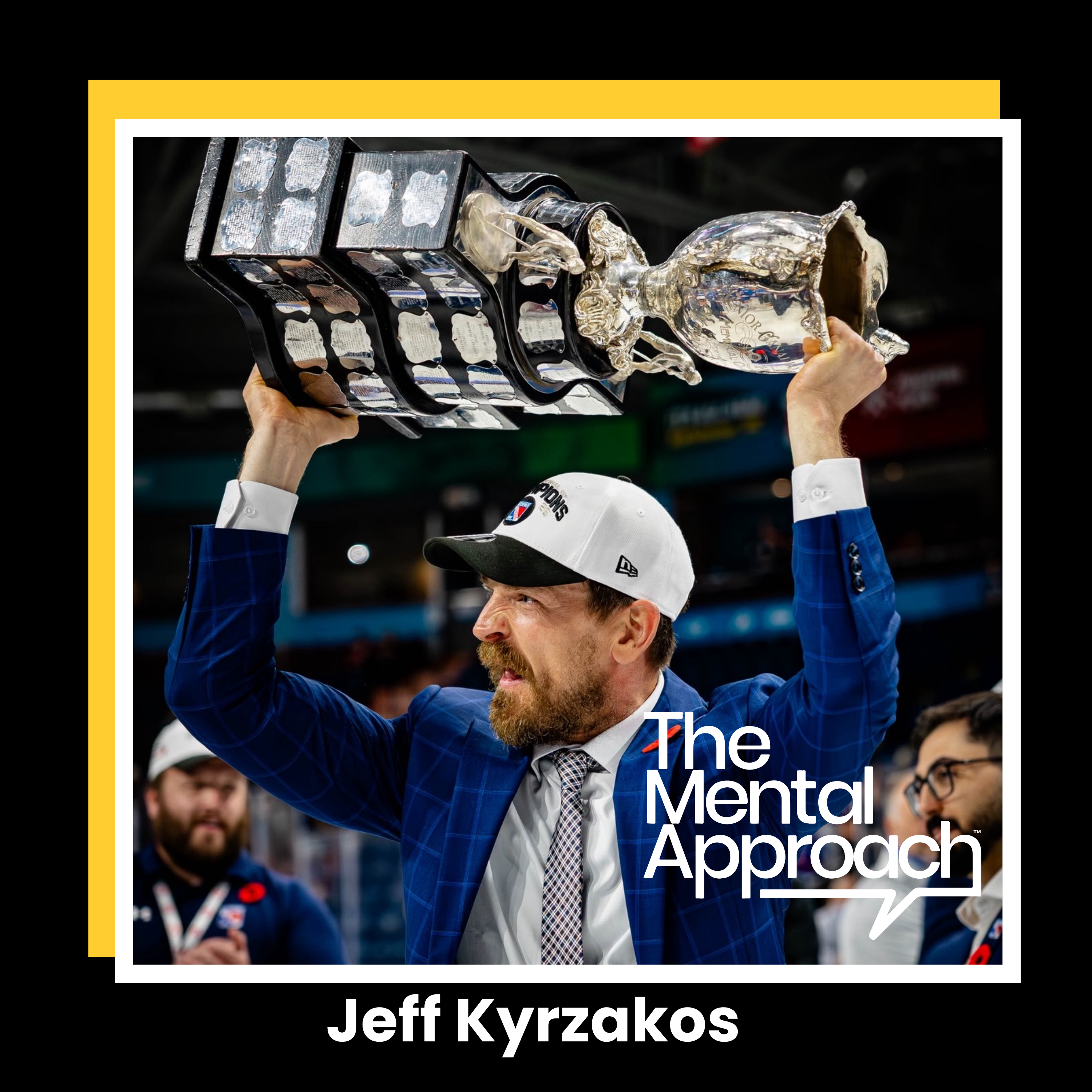
In this episode of The Mental Approach, host Todd Arkell sits down with Jeff Kyrzakos, freshly named the 26th Head Coach of the Kitchener Rangers following their dual championship run to capture both the OHL Championship and the Memorial Cup.
Drawing on over a decade of coaching experience and his own journey as a player through the OHL, NCAA, and professional ranks, Kyrzakos shares valuable insights into the evolving landscape of junior hockey. He breaks down how coaches can cultivate resilience, maintain player confidence, and shape character during critical developmental years.
What you will hear in this episode: How to build real confidence, the two pillars of coaching, navigating the NCAA/CHL landscape, how a player can balance pressure and identity as well as some advice for hockey parents
See Privacy Policy at https://art19.com/privacy and California Privacy Notice at https://art19.com/privacy#do-not-sell-my-info.
Matt Cundill 0:01
This is the Mental Approach, where we discuss mindfulness, mental performance, and the tools available for coping in a high-performance world. Here's Todd Arkell.
Todd Arkell 0:11
Welcome to the Mental Approach podcast. My name is Todd Arkell, and today my guest is one who spent over a decade building one of the most respected coaching reputations in the Ontario Hockey League, and this past spring he got to experience the pinnacle of junior hockey. Jeff Krasakos, which I'm sure I butchered it, and those who know him call him Crackers, probably because his name's been butchered, was named the 26th head coach in Kitchener Rangers franchise history just this past July, stepping into a role after serving as the Rangers' assistant coach and assistant general manager for the past three seasons, most importantly for this show, Jeff spent his entire coaching career working with young athletes at a critical time in their lives, helping them develop not just as players but as people. And this past May, he guided the Rangers to their fifth OHL championship and third Memorial Cup championship in franchise history, winning both for the first time in his coaching career. Jeff, welcome to the Mental Approach.
Jeff Kryzakos 1:10
Thanks for having me, Todd.
Todd Arkell 1:11
And for those listening, and you're not watching any of the video when it comes out, I usually have some sort of Easter egg hat, and just so happens, I have a Kelowna Memorial Cup hat on today. Somebody was kind enough to bring it back for me. Thought I might like it, so I I only have about 150 hats in my collection. But it was perfect for today's interview.
Jeff Kryzakos 1:34
Now, did you get a Ranger logo put on the other side?
Todd Arkell 1:36
No, but I think I could probably take it to Lids and get it customized. I wonder if they have that in their in their piece. I should bring it by to have you sign it. Yeah, and congratulations on that because it truly is. For those that don't know, I think Carlo Koliacovo, who I had on my show before, called it you know one of the hardest trophies to win in sport. Maybe even harder than than the Stanley Cup because you have to go through so many rounds of hockey just to even get there, and then it's a it's it's quite the tournament to kind of to get that. So congrats again on that.
Jeff Kryzakos 2:07
Thank you. Yeah, I mean it was a it was an awesome experience, and it certainly is a a long run in terms of four rounds of OHL playoffs, and then you know you go up against two other champions and a host team that usually is built for for the Memorial Cup, so it's it can be a challenge to have success at the Memorial Cup, even if you do win your league. So we were fortunate, and obviously had a pretty special year.
Todd Arkell 2:29
Yeah, no, awesome. So let's take back to as a player, born and raised in Toronto. Instead of taking a direct to the OHL route or CHL route, which a lot of kids did or do, you you started playing at NCAA? So, kind of walk through that going from probably I guess late would would have even been past midget at that point, probably juvenile going to Western Michigan, and then how do you find yourself in in the OHL?
Jeff Kryzakos 2:56
Yeah, we had a bantam draft back then for the OHL, and I was going to St. Mike's at the time, and I ended up playing three years at St. Mike's and and going to Western Michigan, and you know the school was was good. I enjoyed myself there. The hockey, I didn't enjoy, and you know it was a situation where I didn't necessarily want to hold myself hostage for four years for the for the free school. And at the end of the day, I leave it to come back to the OHL. There was an agreement in place to pay for all my schooling, anyway. So, you know, I'm I'm happy I came back. I had I wouldn't trade it for anything. I had a great time playing up in one sound, you know. But both routes are viable routes, and you know that's kind of how how I ended up.
Todd Arkell 3:37
Well, it's certainly I mean it's changed, and we'll talk about in a little while. It's it's really a little bit different now over the past two years, and and how that's done, and it almost feels like you can have your cake and eat it too now, as opposed to making that choice. And it certainly plays a different role for you guys. But you know that experience in the OHL, and then I know you went on to play professional hockey, and then started started coaching in Arizona, but how did that experience in the in the OHL sort of shape you as a player? And then, did you ever have any thoughts even then? Was it just, "Hey, I'm going to play" Like, when did you start to think about maybe my path as coaching and not playing?
Jeff Kryzakos 4:16
That's a good question. When I started piecing that together, to be honest, just my time in No H L was was excellent. How it shaped me. I mean, I was older when I came back. I played 19 and 20 as an OHL player. What it did for me was it gave me the confidence to know that I could go and play pro and you know take a shot at at being a player. And that for me was you know that those were critical years in terms of building that pathway and and mindset that I could do it, you know. And in terms of knowing that I was going to become, I don't know. I think it was probably in my mind a little bit. I was always paying attention to coaches I liked, and you know, things I liked, and maybe would take if I ever coached one day. But it's hard when you're an athlete and then you play it professionally. Just stopping is one of the hardest things. The world to do cold turkey. It's like everything you've ever known is is no more, and you're trying to figure out your identity and what you are. So, I always thought it would be healthy when I stopped to to actually do nothing in hockey the first year, which I did do. But I was pretty keenly aware, especially in my last you know three to four years playing, that I did want to coach and stay in the game, but I thought it was healthy to kind of have a reset from hockey, so I took the year off. But got right into coaching after that. You know, it's been been doing it ever since. So,
Todd Arkell 5:30
how long were you at Arizona before you jumped into the OHL ecosystem?
Jeff Kryzakos 5:36
Oh, I was so I was still playing when I when I started there. That was just something we, you know, the miners like we we fired our coach and you know we didn't have a coach to take over right away so it was I kind of just did it really really quickly on an interim basis till we found a coach and
Todd Arkell 5:52
little Reggie Dunlop action
Jeff Kryzakos 5:54
yeah and then I was hurt at the time so it was a pretty easy thing to do you know I took the year off and then I got into where I used to play and go to school. So I was I coached at St. Mike's with the buzzers. Trying to remember what year that was now, probably 14, 2014. So,
Todd Arkell 6:12
so I mean, even going back then, what do you think some of the biggest changes are from a mental perspective for the players? Are I mean, when you were playing, I'm sure there was nobody to talk to.
Jeff Kryzakos 6:23
Yeah, it was. I mean, it was obviously way different. I'm at the rink here now. We just finished our practice, and guys are still kind of hanging around doing their thing. But we have constant communication today with players, and you know they they always want to know where they stand. Players ask why now a lot more than they, you know, kind of when I played, it was it was just you weren't asking questions like that, and I had some coaches I loved. It was great, but just things have evolved and changed, and you know I've been asked a bunch of questions since I was hired here philosophically, and the one thing I say is I think that to be a successful coach, your players have to. There's two things that you kind of got to check the boxes, and one is your players have to know that you care about them completely outside of your sport. Just you care about them as as people, and then two, they got to believe that you can help them. And those two things come before anything tactically that you do as a coach. So, for me, you know that mental approach to the game is critically important. Confidence is the baseline for any success in our game and and any sport really. So, having players be of clear mind and and know how to handle building their own confidence is huge. Because I tell players all the time, I can't give you confidence. I know I can take it away as a coach for sure, but I can't give it to you. So there are ways for me you can work on building that confidence and that resilience in times where maybe you're struggling. So, you know, a lot of it is focusing on little things that are controllables, right? So, guys equate points in hockey a lot to being successful, scoring blows or getting assists, and those are largely yeah things you do make those somewhat controllable. But you can't control games you score, but you can control effort and little things such as you know blocking shots, being good defensively, making plays on the wall, good passes, you know taking a hit to make a play, getting pucks out. Like there's a lot of little things you can do every game that have nothing to do with goals and assists. Because at the end of the day, I think whether you're just a human in regular life or you're an athlete, you want to know that what you're doing is worthwhile. And if you're an athlete, you want to know that you're helping your team win. So, I tell players to focus on if you can replay all those little things you did well in your head, even throughout the course of a game. Just focus on those little things you did well. It's funny how it builds, and then all of a sudden you find you find the goal or two, and and then you're off to the races. So I think too many times guys can dwell on just you know the sheer simplicity of you know what their numbers look like in the last five or 10 game segment, and yeah, it's not necessarily always indicative whether you're helping the team win or not.
Todd Arkell 8:55
Yeah, no, that's fair. I mean, I can even remember just one of my kids went young, and you know somebody? Oh, you you played hockey today? Did you get a goal? They'd ask him, and I'd be like, "Shut up! Yes, he probably got a goal, but that wasn't the point. You know, because there's kids that go the whole year and don't score a goal. And are we tying your your self worth to how many points you got?
Jeff Kryzakos 9:17
I agree. I mean, we obviously we just won the Memorial Cup, and there's a lot of guys we wouldn't have won it without that had very few goals for us. So, but they defended hard and they they played they played hard and they killed penalties and there's many different facets to whether you're contributing and and how you're contributing. So just from that mental standpoint, I just you got to get guys to know that they're valued and that they are contributing and those metrics aren't always just goals and assists; they can be measured a bunch of different things.
Todd Arkell 9:46
Yeah, so I mean, let's go back to the Memorial Cup. Your team arrives at the tournament. Did you observe anything different in their mentality? Like, you know, where they seem more locked in, or was there anything you guys? Did to try to get them kind of locked in for that one week.
Jeff Kryzakos 10:04
Yeah, I mean it's yeah, it's a longer term. We were out there 12 days, but yeah, so you know, getting the buy to the final, we had four days in between the round robin and the final. But the OHL playoffs is a long, long run. It's a couple months, and you know, for us, it was we were lucky to end some series pretty quickly, so you know we'd have a week off in between, and we tried to give our guys we'd give them a couple days off, really at the end of every round. That was kind of clear your head, you know, go home if you want non hockey thoughts, and so when they came back, they were always pretty focused and they weren't like locked in 100% of the time. But when they had to be, they were. And I think you know we had an older team, a veteran group, and they were laser focused when when we were at the rink. But they were also pretty good at you know an off day around Kelowna, while being mindful that they were maybe playing the next day or two days later, so they weren't out doing stupid things. But they were out doing things that got their mind off the game, and I think that just helped them be able to dial it in when when the time came.
Todd Arkell 11:05
Yeah, so I talked a little bit earlier about NCAA path, CHL path. I mean, the development path for a player in Canada and in some Americans, but mostly Canadians and you know a few Europeans used to be CHL or NCAA, and you had to make a choice. And now, with the advent of the new rules, this has kind of created a bit of a different pathway for CHL teams and how they construct their rosters. And I think now, in many cases, you're developing kids not just for the NHL, but for the NCAA. Really, I mean, there's probably a lot of kids that'll age out and go directly to to a school. Is there anything that you guys are doing differently from a hockey operations perspective to kind of maximize your opportunities with talent? I
Jeff Kryzakos 11:52
mean, we're really still in the infancy of this, and I think it's it's going to settle down. It's you know the new cool thing to do is is go to school. You know, and it's great. I think it's an unbelievable pathway for guys who have kind of aged out of our league. I think some guys are going a little too early right now, and we're going to see there'll be some negative consequences to that. Some guys are ready to go, and they go, and it is what it is. But at the end of the day, I think for those guys who are high end and special, they're closer to playing in the NHL than they should be worried about leaving our league for the NCAA, you know, there's Porter Martone went and played in Michigan State last year. You're telling me he couldn't have been on Philly right from the beginning of the year, like he was that close and ready to go. So, you know, I think it's we're still just finding finding the way. I think it's an unbelievable thing for a guy who's played four years or five years that they now have another window of three to four years to go play in the NCAA. I think that's that's an amazing pathway for them, and extends everybody's window. You know, you can play four years in junior, and you could play another four at school. Give yourself an eight-year window for those guys who maybe aren't drafted and signed. It gives you a longer pathway and runway to to find your way, especially for late boomers, to where you want to go. You know, obviously, we're seeing guys make some decisions based on no money right now, and whether or not it's the best decision for their hockey career is is a question mark. And I think, I think this is all going to level out over the next few years, and we'll kind of get some more predictability to it. But our job is always to develop hockey players, and now our job is to retain hockey players, you know, during their junior window. And I think here in Kitchener, we'd like to we'd like to think we do things at a pretty pretty high level for our our players in terms of their development, how they're treated, and the facilities. And we don't want to give guys reasons to leave. And I think we do a pretty good job of that. We've we've put a lot of guys on to the National Hockey League, and hopefully continue to do that and and be a successful program. So I don't know how much we've changed. I think it's just adjusting to you know you can't really plan for three four years out in terms of a year you're maybe going to go for it or plan to be good because anything can change from one year to the next, guys can leave, or you can get guys you didn't think you were getting.
Todd Arkell 14:05
Yeah, fair enough. I mean, it's almost like I see it almost like NHL teams. Okay, I draft a guy, and now is the NHL club going? Hey, you know, you don't have to sign right now. Why don't you go play at X Y Z big school for a couple of years, and then we'll we'll bring you in. It it just seems, and I don't know whether it's that much of a conspiracy theory, but it feels like a little bit like the NHL can now use the NCAA as a development route on top of to kind of delay them having to contract and pay players.
Jeff Kryzakos 14:39
They can. I mean, at the end of the day, if guys are signed and they get sent back to our league, it's not really cost the NL team money. Their contracts just roll over and get deferred. You know what it does do is they only get 50 contracts. So to be able to place a guy in the NCAA, he doesn't have to sign. They retain his rights. Yeah, it's an option, but they also they. Also, run a pretty good gamble too. Of if that guy's time, if his four-year window expires in terms of, because now the rules have changed to get drafted at 18, NHL team holds your rights for four years. They run the risk of those expiring and that guy becoming a free agent and going going where he wants. So, I think you're going to see lots of things over you know the next number of years. Well, people are all figuring this out, but I don't doubt for a second. Actually, I know for a fact that teams are telling players to either, and different teams have different preferences. I know of teams that are telling players, "Yeah, you can go to the NCAA and go there for a year, and then we'll sign you. And I know there are teams that are saying, "No, you're not going to school. We want you in the Canadian Hockey League, so I think it's teach their own, and you guys can see the the patterns and pathways of some teams. It's pretty obvious whether they're pro CHL or pro NCAA with their player transactions.
Todd Arkell 15:54
Certainly creates a challenge for those of you running hockey teams. That's for sure as to how to how to deal with that. Some teams have been caught unaware when it first happens, so hopefully it does settle itself down, and players kind of figure out how to deal with that.
Matt Cundill 16:11
Now, more of the mental approach with Todd Arkell.
Todd Arkell 16:16
For those that are uninitiated, OHL players are 16 to 20 years old, which is in a lot of ways an enormous performance pressure at an age where their identity is still forming. How do you guys help as a club help the players kind of separate? And you mentioned about it before. Hey, when you're ready to hang it up, my identity is a. I don't know what you know. Who am I? How do you help them separate their worth as a person from their performance on the ice,
Jeff Kryzakos 16:44
well, they they are in definitely a high pressure spot. You know, especially in our market here, we get 7000 people in our building every night, and and this team means a lot to everyone in this community. At the same time, the guys who come in here, they're still just kids, and we recognize that, so I think giving them time to be kids from time to time and giving them time away when we can is important. But at the end of the day, you know their ability to separate and not not take it with them every day when they leave the rink often determines whether or not they become very successful in the game, or it's or it's something that eats them up. And I mean, that's really that's an athlete on kind of any level, being able to deal with those pressures. And yeah, they're they're younger, but I mean, some of these guys come in at 16, and you know they'll be 18 year olds in the NHL this year, so it's not far off. And I think these kids are they're on a maturity level that's ahead of all their peers in society. A 16 year old coming to Noah's L is often, I would say, two three years ahead of just a regular regular person in terms of their maturity level because they've had to be their whole life, and most guys deal with it pretty well. But we have resources to certainly help them out through it. Some are internal with our with our team, and if they don't feel comfortable with that, we have external resources that are confidential, and there's lots of kind of outlets for them to, you know, whether it's mental health or it's just strictly working with someone like Cassidy, who you've had on before, you know, in terms of kind of that mental game.
Todd Arkell 18:15
Well, fair enough. I know it's look, it's hard for kids moving away from home at a young age, being thrust into you know an environment which is, I mean, very close to an NHL schedule, which is why the league is looked at so highly regarded by the NHL because of what the players actually go through. So yeah, it can't be easy. You know, depends on your billet family. Get good billets might be good. Don't get good billets. Might not be great. There's all kind. You can just Google all that stuff in the newspaper. There's all kinds of interesting things that they only talk about the bad stuff. They never talk about the good stuff. And full disclosure, our house was a billet house once upon a time for different kids. So, and which is actually in a lot of ways why this podcast started because I started to see kids like this up and down, and coach hates me. Coach loves me. Coach hates me. Coach loves me, and I'm like, guys, like you got to get the six inches together, right? The six inches between your ears, because it is. I think they're away from home. They're in a new environment, and you know, you as you move up in any sport, you know, the pond gets filled with all the big fish eventually, right? And so it, it, it. I think it's difficult for them to sometimes think about what their role might be where it used to be something different where they came from.
Jeff Kryzakos 19:34
Yeah, you know, I mean, I think guys ride the wave a little too much, and you know, teaching them to just be even keeled and and deal with you know they're going to have good days and bad and especially when they first come in. But you're right. I mean, guys typically coming into our league have always been a top player, one of the top players on their team, and then they come in and and everyone's a top guy. It's it's an adjustment. And when guys leave here and go play pro or go play in the NCAA, it's like there's great players that. Obviously, in pro and there's great players in the NCAA too. It's it's you know your time of dominating the game and being so much better than ever else is kind of over, and it's now now you have to figure out how to gain that little edge that bumps you from being an average player to a good player or good player to an elite player, you know. And I think for for those guys coming in, it shouldn't be a hard adjustment, but it is. They're 16, and it's it's tough for them to always be able to look at something logically and say, you know, it's not. Yeah, okay, my coach was mad at me today because you know I turned the puck forward, I made the same mistake, and they scored. Most of us, anyways, we're not holding grudges at at at this age group. We're we're looking to teach and certainly have players navigate their way through in terms of learning and not making the same mistakes and developing and getting their game ready to become a pro. So you know, players aren't always going to look at logically, but that's our job is to try and get them to see it. And sometimes, sometimes not the end of the world.
Todd Arkell 20:58
Yeah, no, I hear you. So Canada, for sure, and America, to a certain extent, are filled with hockey-obsessed parents. Probably Canada in a slightly higher per capita ratio. At least that's just my experience. But you know, there's parents in our audience who are raising kids who play at high levels of hockey. They may have aspirations, and maybe not even the kid. The parents might have aspirations that their kid plays in the OHL, the WHL, NCAA, pro hockey. The parents seem deeply affected by their kid's performance. And so, as someone who's played at all levels of the game and now guide these young men, I think you have a unique perspective. So, what do you want to tell hockey parents for their journey for their kid?
Jeff Kryzakos 21:44
I think 90% of them are nuts, to be honest. Just even in terms of some of the stuff they're doing with kids at a young age, like in their summers and skill development, for example. For me, there's no need for any hockey player to do skill development until they're about 14 or 15 years old, you know they should be doing what everyone else did growing up. You're playing on pawns, you're playing shinny, you're playing with your buddies. That's how you conceptualize the game, and and you end up having hockey sense. And to me, we're just creating a bunch of robots who have maybe high end stick skill, but they can't think the game these days. So I don't think they're doing them any favors there. And at the end of the day, they gotta trust the coaches where their kids are, and just let the coaches coach. It's good for your kid. They might not think it is, but it is. It's good for your kid to figure things out on their own and and find their own way. And you know, I know because I go on scout games all the time. You can hurt your kid. We simply won't draft a player if his parents are are idiots. We won't do it. We find out who they are. We know who the parents are at games, and they're yelling, screaming, or saying stupid things. You know, and we talk to the coaches too. That there's parents who are constantly meddling. It's just going to cost your kid. You're not helping them. You're hurting them. So the best thing parents can do is be supportive. Go to games, watch the games. You can provide for your for your son or daughter playing the game, you know. But remove yourself from trying to control the environment 100% of the time.
Todd Arkell 23:10
Yeah, that's good advice. I love it. I don't know. You know, I keep saying I don't know how this doesn't happen, how people haven't got it yet. But you know, and I'd probably argue maybe I was a little overzealous at a little bit of a younger age and then realized oh this is probably not the best look, right? Don't behave that way. I don't know what it is about. It just feels like it's the sport of hockey because I don't see it in any other sports to the extent.
Jeff Kryzakos 23:37
Well, I mean, a lot of these people leave the rink too, and they're they're wonderful people. It's like they go nuts when they get inside the rink. You know, I've I've said for years that minor hockey'd be great if the parents had to drop their kids off at the door and weren't allowed in. Be unbelievable. So,
Todd Arkell 23:52
well, I had a guest on, and she said where she is in Pennsylvania, they actually do blackout blinds on the rink, and the parents aren't allowed in for tryouts. And I thought that's friggin' And they turn the cameras, and I thought that's friggin' brilliant.
Jeff Kryzakos 24:09
So for sure,
Todd Arkell 24:10
yeah, it's a. I love it. I can remember one of the kids I billeted. I was like, "Oh, I met your mom tonight at the game. He goes, "Don't let her fool you. She once made me walk home from the rink after I played like shit.
Jeff Kryzakos 24:22
Oh yeah,
Todd Arkell 24:23
which was hysterical. To your point, lovely, lovely person, lovely family. But at one point, decided that they make their kid walk home. I'm not sure how far it was. It could have been a kilometer. I have no idea. But you know, it is what it is. Regardless, seems a little weird. Now, were your parents pretty even keeled when you played hockey, or were they?
Jeff Kryzakos 24:45
Yeah, you know what, my dad didn't really ever play the game. My mom came from a family who, you know, her brothers and father loved hockey, but they were pretty content to let me kind of carve my own path. And I think my dad coached a little bit when I was. Younger, like pre 10 years old type thing, but I think around that age, he's like got to let him do his own thing and be coached by by other people. And you know, I think they saw the value in hockey outside of. I think if your kid plays competitive hockey growing up, you know, from four or five years old until he's 16 plus, I think all the benefits he gets as a human being make the whole experience worth it, whether or not he ever has a chance to become an OHL, an NCAA, or a pro hockey player. I think the tangible benefits from being a teammate and playing in that environment-that's just that's life, and those are those are life lessons. And I think that's why you put kids in sport. That should be why you're putting kids in sport when they're young. There should be no hoping for your kid to play as a professional athlete and make millions of dollars. That should be something. If it happens, it's unbelievable, but it shouldn't be the reason you're putting kids in sport.
Todd Arkell 25:54
Yeah, no, and I think you know it's interesting. I talk to people all the time. They ask about my kid in a certain sport. Well, do you think this is going to happen? I go. I don't know. It's up to him. It's you know. And people will say, "Oh, congratulations! I go. I don't know. I'm transport and finance. Don't talk to me. I didn't do the work. I didn't put in the time. Right. All I did was make sure they got there and make sure it was paid for.
Jeff Kryzakos 26:17
Yeah, and that's. I. I think sometimes parents kind of confuse the the two like their son or daughter can't get there without them. They certainly need that love and support and financial commitment. But when you give them the financial commitment and the time and getting them there, it's like they can get there on their own outside of that. So, you know, you don't need to help them through the coaching process of it and navigating how they deal with their coaches or their teammates. Your job simply is to to be a parent and love them, support them, help them out financially. But that's kind of where it ends. And I I think parents sometimes have a real difficult time seeing where the line is.
Todd Arkell 26:56
Good advice. So I'll pivot from that. Joe Birch calls you a tremendous communicator who builds strong relationships. I mean, I think communications is a mental performance skill in itself. So, how do you adjust your communication style for different kinds of athletes?
Jeff Kryzakos 27:13
I think you got to be able to read the individual. So, some guys need more. Some guys need less. Some guys really, really need to always know where they stand. Other guys are are fine, and some guys need a push. It's just you know you have to get to know your players, and how do you get to know your players outside of just watching them play hockey? Have conversations with them. It doesn't have to be about hockey, to be about anything, you know. But when you when they feel comfortable enough to come in and talk to you at any given moment about anything, you often do eliminate any of those days where they're really, really wondering what's going on or what you're thinking. You know, so for me, it's it's critically important, and I also think they're young, they're away from home, they don't necessarily always have their parents to talk to, or it might be something they're not even comfortable talking to their parents about, and you know, I really do end up. I mean, anyone who plays for me or has played in the past on a team I've I've been coaching on, I care about all those guys, and I want to see them all make it, and I want to see them all happy and and successful. And you know, for me, it's about doing anything we can to to get players where they want to go. So, it can be a really, really rewarding job, but that communication piece and and relationship building is is at the forefront.
Todd Arkell 28:28
So, I mean, a lot of times, great team cultures, great coaching cultures are are certainly intentional. Are there any specific things that you try to do to help shape that environment inside the dressing room.
Jeff Kryzakos 28:43
Yeah, I mean, there's definitely things we do. I think the biggest one, just from our standpoint, is is the types of people we want as part of our group. So, you know, if you if you're not a fit, if you're not a a team first player, if you're innately overly selfish, those are players that won't be here very long because they're not good for the environment. They're not good for the culture of our hockey club, and then we want guys who work and compete and are willing to to dig in when when it gets hard. And finding guys who dig in when it gets hard instead of looking for an easy path out is a little more challenging now than it's been in the past. And I think we have some some great kids here, and we obviously had a bunch of really really great guys here last year. Only one, but I think our culture was a huge piece of that. And credit goes to the players. There are a lot of a lot of really really good kids in there who wanted to work for each other, not just themselves. And we're certainly very team focused. And the end of the day, you need some luck to win, but you need good kids.
Todd Arkell 29:43
So you're now the head coach of the defending Memorial Cup champions. So big expectations. How are you approaching the mental challenge of that for yourself, and how you're framing it for your players, so that maybe they're hunting something instead of protecting.
Jeff Kryzakos 30:01
Well, I mean, yeah, we're defending when we're in the Cup champions, but when the puck drops, nobody's defending it, and we're just we're just one of 20 teams trying to compete in our league. You know, at the end of the day, we obviously lost a lot of players. We lost 14 guys from last year's team. You know, we're a pretty young team this year. I think managing expectations is is huge. Not putting too much on the players is something that's big. And you know, from my own personal standpoint, I just think you know there's a lot of you read the chatter and you look at some of the social media stuff, and it's I think the auto the default thing as well. They won last year. They lost all their good players. They're not going to be very good this year, and I think that's great. The first year our staff came in here three, four years ago, that was the narrative, and we ended up doing okay. We use it as fuel, and I don't mind if people think we're not going to be very good because we still have 10 or 12 guys returning from World Cup team. I would never count those guys out.
Todd Arkell 30:59
I love it. Pivot. Here's an interesting one. I would, if I didn't ask this question, I'd be remiss. So, you know, you you got a kid that maybe at 12, 1314, they're a great hockey player, and and it's almost like a lot of people in society seem to give them a pass. You know, like maybe they're blowing smoke up their ass all the time, or whatever it is, and then do they get a sense of entitlement?
Jeff Kryzakos 31:25
Potentially, you know. I hate when we get kids here who come with entitlement because the only thing you're entitled to do is to be a good person at the end of the day and a good teammate. That should be your focus before anything else. So I don't think it really? Yeah, they get a pass on some things. Yeah, they might, and they shouldn't. But they they might, whether it's academic or beyond that. I just think there's there's just so many so many kids in this game who are awesome.
Todd Arkell 31:54
So if you could go back and give 17 year old Jeff some some think back to you, then what's some piece of mental performance advice you could give to kids today, kind of going through that grind?
Jeff Kryzakos 32:09
Oh, there's a couple things. One, you know, any isolated day or incident doesn't matter as much as you think it does. You know, I think players dwell on things and believe any certain game or play to be the end of the world, and it really isn't. Learning to become resilient through moments like that are are kind of what separates guys who are really successful in this game and and guys who struggle with it. And then just you know, 17 years old, you'd always love to go back in life without talking or anything else, knowing what you know. And there's things I do different. I just think I don't realize sometimes maybe your compete or your body language or whatever it is. It's like you think back and you're like, especially now that you coach, you're like, I'm sure I was an idiot and a handful at times, you know, and my coaches wanted to kill me. So those are the you'd love to go back and and be the perfect player for your coach when you're 17,
Todd Arkell 33:01
and then for the coaches in the audience, you know what's one mindset shift you could challenge them to make this year as they work with their with their players.
Jeff Kryzakos 33:11
What level hawk here are talking?
Todd Arkell 33:13
Any level.
Jeff Kryzakos 33:15
I mean the mindset shift, and I learned a lot from UC Hocus, who was here, just his patience and not overreacting to any one thing, I really believe it came out in our players in terms of how resilient they became and showed they were down the stretch through the playoffs into the Moro Cup. That for me is like that mental shift. It's easy to get mad at any one game or one player and snap, but the end of the day, you only have so many bullets as a coach, and you know he can't be shooting them all the time. It's there's got to be a reason for it, and you know don't get too high, don't get too low. I think if you can be a pretty even keeled coach, it really comes out in your players.
Todd Arkell 33:52
Jeff, I appreciate the time and the insight. Good luck this season and going forward as the head coach of the Kitchener Rangers.
Jeff Kryzakos 34:01
Thanks, daughter. Appreciate it.
Matt Cundill 34:03
Thanks for listening. For more, including resources and more about the show, go to thementalapproach.com. A production of the Sound Off Media Company.

