Betting on Himself: Jake Sanford’s Journey from Yankees Prospect to Responsible Gambling Advocate


 RSS Feed
What happens when a million-dollar dream is derailed by a hidden addiction?
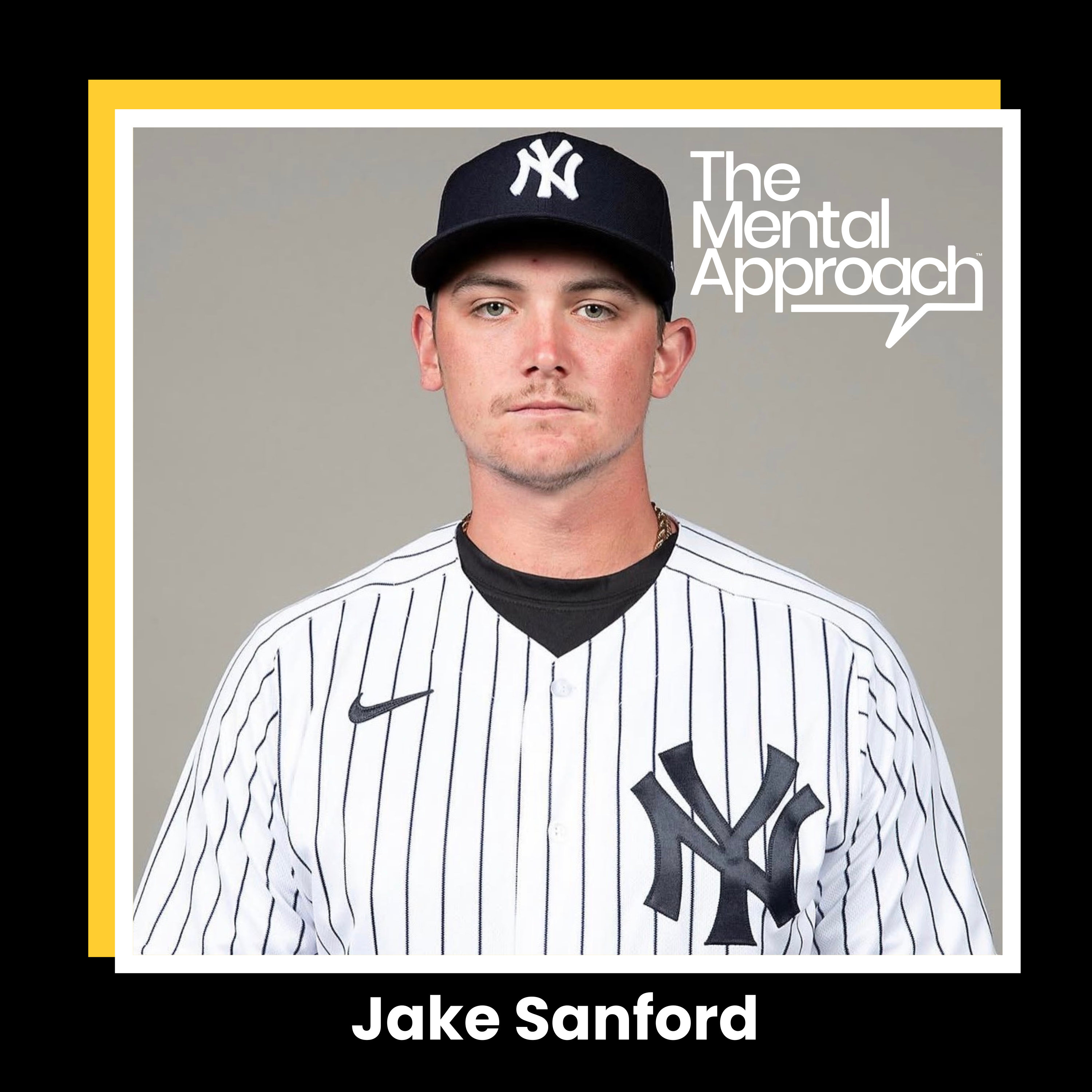
In this candid episode of The Mental Approach, host Todd Arkell sits down with Jake Sanford—the highest MLB draft pick ever to come out of Nova Scotia (3rd round, New York Yankees). Jake takes us through his incredible journey from an unrecruited walk-on in small-town Nebraska to signing a $600,000 bonus with the most famous franchise in sports. But behind the scenes, a growing gambling addiction—sparked by innocent casino trips and fueled by locker room culture, rapidly spiraled out of control. Costing him his spot on the Yankees roster and threatening his future.
In this episode, we unpack many topics around the current gambling epidemic plaguing young people today
The Slippery Slope: How a $100 win turned into chasing six-figure losses in high-stakes VIP rooms.
The Reality of Sports Betting Today: The hidden pressures young athletes face from mobile apps, campus fans, and online sports culture.
Rebuilding & Redemption: How Jake got honest with his family, reclaimed his career in independent ball, and transitioned into an international speaker helping the NCAA, NHL, and MLB educate young athletes on responsible gambling.
A raw, powerful conversation on mental toughness, self-awareness, and turning life's hardest lessons into a mission to help others.
See Privacy Policy at https://art19.com/privacy and California Privacy Notice at https://art19.com/privacy#do-not-sell-my-info.
Matt Cundill 0:01
This is the mental approach, where we discuss mindfulness, mental performance, and the tools available for coping in a high-performance world. Here's Todd Arkell.
Todd Arkell 0:12
Today, my guest is Jake Sanford. Jake is a not well-known person from Cole Harbor, Nova Scotia. Well, those listeners would maybe know Nathan McKinnon and Sidney Crosby, but they should know Jake Sanford because he was one of the one of the first kids, probably the highest draft pick ever to come out of Nova Scotia, being selected by the New York Yankees in the third round in the 2019 MLB draft. wasn't even recruited out of high school. A walk-on at McCook Community College, and then to Western Kentucky University, where he won the Conference USA Triple Crown and was drafted by the Yankees. Welcome to the show, Jake.
Jake Sanford 0:51
Yeah, thanks for having me. Excited to be here.
Todd Arkell 0:53
It's yeah, not exactly obviously Cole Harbor, known as a hockey town, but not so much a baseball town. So, how did you end up choosing baseball over hockey?
Jake Sanford 1:02
Yeah, so when I was younger, hockey was the main sport. Grew up a goalie, and then I had to do something in the summer, and I decided to play some baseball. And being Nova Scotia, you only have about two two and a half months of baseball season, so it was something to bridge the gap between fall hockey, spring hockey, and then get back ready for the fall again. So it was something to do, and all my friends did it. So I was excited to play it. And then I decided, hey, I'm actually pretty good at this. Let's take it a little bit further. And then yeah, so I stopped playing hockey in grade 12, and I don't know, grade 11, and then grade 12. I focused on training for baseball and seeing where that could go.
Todd Arkell 1:40
Okay, so
Jake Sanford 1:41
I could have went there and played university volleyball. Could have stayed close to home, but I decided to take the junior college route and go to McCook, Nebraska. And
Todd Arkell 1:49
so, how does that come about? How do you end up in the
Speaker 1 1:54
U.S.
Jake Sanford 1:55
tournament 12, a big prospect camp for baseball players finishing up high school? So a bunch of schools were there. I ended up actually hitting three home runs in the tournament and playing really good. But I still, being from Cole Harbor, I didn't really get any notice. So I ended up after that going out on a recruiting website and reaching out to 300 schools by myself, sending emails, just stats and everything. And obviously, stats don't translate that much from Coal Harbor to the U.S. because you only have 5060, at bats a year, and it's tough to get a read on that. So I ended up getting reached back by three schools: one junior college, McCook, an NAIA school in Tennessee, and then a Division Three school. But I decided, hey, what the heck? Let's go try the junior college route. I've heard so much about it. I wanted to try it, see if I can hone my skills and get better, and and then yeah, just develop my baseball because McCook, small town, McCook, Nebraska, on the Borey, Kansas. There's only 3000 people there, a lot of cornfields and cows, and then Jiko baseball, so there wasn't much else to do. So that's where I really kind of defined my baseball career.
Todd Arkell 3:07
Yeah, no, that's amazing. Bet on yourself, as they always say, right? Yeah, yeah,
Jake Sanford 3:11
yeah. And I was a walk on there, and then after my first semester, I got a full ride scholarship for the next three semesters at McCook. So basically, I flew out there. My parents flew out there and met me after we were at junior nationals. So we flew out there and met there, and we were like, "Where is this place? We thought we were getting lost. They dropped me off there. It was about 110 degrees, and the first two weeks of it was all conditioning. We didn't bring bats, gloves, or anything. It was just a test to see how much willpower do you had? Because in the JUCO in the fall, they bring in about 90 players, so they and your roster is only 30 at the end of it. So they're trying to see who's strong enough to make it through that, and then see you can make it into the baseball phase. I guess.
Todd Arkell 3:55
Yeah, that's yeah. I call it the the Hunger Games for baseball kids for sure. For sure, yeah. Now it's gotten a little less like that, but still. So the numbers may not be as high, but they they're definitely up there. Yeah, definitely. And it's
Jake Sanford 4:10
definitely it's more of a Canadian thing now too. There's a lot more Canadians going to junior colleges. Like I said before, the scouting isn't so great in Canada for baseball. All of the island states, our seasons are so short here, and in the states they're playing 1011, months a year. So I always used to say when I got there, I was like, I'm probably 1500 at bats behind you guys in my career because just experience wise and being able to get on the field,
Todd Arkell 4:37
it is a big deal. I think Canadian kids, my kids, one of them, and a lot of his teammates taking a gap year, taking that extra year. That's also sort of changing now with a lot of the new rules in the NCAA, but with the five and five, so it's interesting in that respect. But you need that. I think you need that extra year just to kind of get on almost equal playing ground, but not quite. I mean, you're. Texas, Georgia, Florida, California-those guys are playing, like you said, 10 to 11 months of the year, and they're definitely getting a lot more experience. And that's what
Jake Sanford 5:08
I think. What's good about JUCO too is you come in as a freshman and you're only competing with the sophomores.
Todd Arkell 5:14
Yeah,
Jake Sanford 5:14
so you're just competing with the guys that are there for the second year. So it's not as intimidating as a 1718-year-old, coming in, you're not playing with 21-year-olds, so it's a little bit different. What made my JUCO a little bit special was we were wood bat, so it kind of felt yeah, it kind of felt like at home. Like in Canada, we swing wood bat since we're 1314,
Todd Arkell 5:35
Yeah,
Jake Sanford 5:35
yeah. So it was good to get there, and then after I get a little further in my career, we go back to metal. It was kind of it was kind of like eye opening to me.
Todd Arkell 5:44
Well, and then you make the transition to go pro. And going back to me saying you bet on yourself, and that's actually why we're talking today. Where the topic today is really about about gambling and betting, and we kind of maybe lead into that a little bit. You're on great track in in the minors with the Yankees over the course of two years. I mean, stat line I got written down here is 267 with 23 homers and 88 RBIs in 161 games, which I think is is pretty good and is definitely going to be moving you up the depth chart. But maybe let's start with I know you things that I've read, you talked about having going back to when you were in Kentucky. All of a sudden, you started to to go to some casinos and different things like that, and maybe take us through sort of what happened there, and then how that sort of led into things that that transpired during Pro Bowl.
Jake Sanford 6:38
Yeah, so being from Nova Scotia, you're allowed to go to the casino when you're nine. So when I came back from McCook during Christmas break and fall break and stuff like that, I would go with my grandmas. But they, I had two little grandmas that loved going to the casino every Friday. But their thing was they'd spend their $100, and if they if they won, they would leave. If they lost, they would leave. So that's how it started. I went there the first time on my 19th birthday with them actually, and the first day they both gave me $100, and next thing by the end of that trip, that first time there, I left with $1,200. So that was kind of the first big rush for me being 19. I was like, "Whoa, it's that easy. So it started like that, and then, like I said, yeah, when I went to Kentucky, it became more of like a team thing, so we would go to the baseball house, have bonfire priorities and stuff like that. The first time I was there, I remember I pulled up and then one of the freshmen went into the house, got a big table, got the flat screen TV from the living room, plopped it on the table, hooked up their laptop, and next thing you know, all the guys are Venmoing and sending money to this one guy so they could bet on blackjack and roulette on the table right there, and then being on a baseball team in general-the bus rides, the plane rides, seeing the locker room-it was always guys playing poker, playing blackjack. It's more like a team mentality at that point, just for entertainment. They're not trying to take hundreds of dollars from each other; they're just doing it for fun. But at the end of the year, we had our conference tournament in Biloxi, Mississippi, which is basically Las Vegas of the South. There's like 50, 60 casinos on one strip, and yeah, we ended up actually our team hotel for the week was the Golden Nugget Casino. So, being college athletes, we got per diem. So every day we were there, we were trying to, we were just trying to make a little bit extra money. So we would go down there with our per diem and try to double it. And after five days there, we only won one day. But it was kind of crazy for me to see how we kept going back chasing. That's one of the biggest things in gambling is chasing your losses, where it kind of develops a problem. But at the end of the tournament, we were eliminated. We were done. The season was over, and one of the seniors texted us and said, "Let's have one last hurrah together. Let's go hang out. We don't know when we're going to see each other again. So I had about $300 left. I went down to the casino, and I lost $200 within five minutes. And then this slot machine caught my eye, and next thing I had that last $100 turned into $3,500. So I that was that next big rush, that adrenaline rush that I was chasing. And but within two hours, I thought to myself, I saw what $100 can do. I wonder what $3,500 can do. And then within those two hours, I was down the original 300, down to 3500 that I won, and then I went back to the ATM and took another 500 out, and then lost that as well. So kind of in my head, I was like, "This is how fast it can get out of control. And then yeah, and then I get drafted to pick one and five overall, and I signed for $600,000 U.S. It's almost a million dollars Canadian at 21 years old, I kind of felt invincible at that point. I was like, "Oh, this money's never going to run out. So when I went to my first spring training or first fall instructional league camp, we were in Tampa. We lived five minutes from the High Rock Casino. We only had to be at the field from eight till noon every day. So we had to find stuff to do for the rest of the day.
Jake Sanford 10:02
I found myself with a group of guys that loved going to the casino, and that's where it starts to get out of control a little bit. It started out with, "Oh, let's go spend 500 bucks. Let's go grab dinner. Let's go hang out, play a little bit of cards, and then go home. But then those $500 days turned into $1,000 days, turned into $1,500 days, turned into $5,000 days, and ultimately like $10,000 days because I was chasing the losses from the days before, and it was crazy because like I thought in my head, oh, it's never going to run out, and I was 21. I didn't really want to tell my parents what was going on at that point. I was scared to tell them. I didn't like. I couldn't be honest with myself how deep of a hole I was digging. So how can I be honest with my friends and my family of what's going on?
Todd Arkell 10:51
I think I was fortunate enough in university to be playing cards with your buddies, and again, it's a couple of bucks, whatever. And we started playing guts, and then the pot was 1500 bucks, and it was me and one other guy, and I did have a good hand, but I was like, and I like, and the other guy didn't drop, and I was like, great, now I got to find $1,500 from my part time work while I'm at school to pay this guy back, right? And that for me, anyways, I was like, all right, that's it, I'm never doing this crap again. So I took a totally different take because I was like, oh my god, I'm killing myself here. But I've gone to casinos and I'll take 100 bucks and don't take my bank card, or 200 bucks, don't take my bank card. Go play some slots or play some cards and be lucky. And I've ran into people. I remember being in Vegas. Guy, he goes, I said, oh, how's your day going? Oh, it's great. I won $3,000 at the blackjack. Oh, that's awesome! He goes, yeah, I lost five earlier, but you know, and I'm like, no, you've lost two. So there's that mentality, right? That's your
Jake Sanford 11:49
gambler's mindset. It's yeah, and then this is the thing too. Gamblers have a lot of superstitions and mindsets and stuff like that. Oh, walk in with 500 and you win 500 right away. You're like, oh, I'm even basically in your mind, and if you win right away as a gambler, you don't want to leave. You just got there, right? So you end up you playing the next year. You're down, or you're going back to the ATM, taking out more money within the first three months of my signing bonus. But they do it in two parts, half and half, and within the first three months, the first half has already gone, so it was insane to see how fast it went from spending $100 with my grandma at the casino to spending over almost 150, $175,000 within three months.
Todd Arkell 12:34
Yeah, so I mean, as this piles up, and what ends up starting to add some of the trouble, right? You so you started, I guess, borrowing money.
Jake Sanford 12:45
Yeah. So my second part of my sign bonus hit after Christmas when we go back to spring training, and I ended up going back to the casino, walking in, and being approached by the actual casino staff, and they're like, "Hey, we know who you work for. We know what you sign for, but we like to offer you a credit line. And I was 22 at the time, and I was like, "Who's gonna as what 22 year old is gonna turn down $25,000 whenever they want? So basically, you just go up to the table, ask for your credit line, and if you win that day, you pay it back, and if you lose, they take it out of your bank account within two weeks, but at that time it was already almost down to nothing, and they didn't know that. Obviously, they probably did, but I did based off the number, and I agreed to it, and it was just crazy. I remember the first time I took out the credit line; it also gave me access to the VIP blackjack room, so you had to go up his elevator to the 17th floor. I walk out of the elevator, and the first three people I see were Michael Jordan, Charles Barkley, and Wayne Gretzky, playing blackjack. I was at a table right beside them, and that made me kind of think I'm not in the same tax bracket as those guys, so I probably should not be up here. And that's when I started to think of like what's going on, but my other side of my brain was like, this line of credit is what might get me out of the hole that I'm already in. But obviously, just kept digging deeper. I won the first time. I actually paid off the $25,000, and I left with $10,000 myself. So, like you said before, I didn't even have to bring my debit card to the casino anymore because they were offering me that money, but the next time I took it out, I lost, and I didn't have the money to cover it in my bank account, so I had two weeks to figure that out. And yeah, me and my buddies with the Yankees, we we loan each other money every now and then because we're all from different countries. takes time for money to transfer over from accounts and stuff from Canada to U.S. Dominican U.S. stuff like that. So we made deals like, oh, you loan me 3000 here, I'll give you $3,500 next Friday, and it always worked. And this time the guys did bail me out. They helped me pay this $25,000 off, and but I didn't have the money. Cover it. So I was thinking, what do I do? What do I do? And the day before, I owed them the money. Next thing you know, Brian Cashman from the GM or the GM of the Yankees walks into the facility that morning and says, "We're going to be shut down for the weekend. It was COVID. The day before, I had to owe these guys money, so I called them that night. I'm like, boys, I don't have the money to pay you guys back tomorrow. I'll work to pay you guys back monthly, and they're like, sure. Most of them were big leaguers; they had all the money. It was just the principle of giving the money back. So we made a deal, pay them back monthly, and then next thing in that baseball for 18 months, we weren't getting paid. So I went home back to Canada, and I was working part time at the container yard. I was just being a stevedore, basically. I was just working on the ships, stuff like that, just to make money to pay these guys back. And then after the 18 months, I owed them a little bit of money left. It wasn't 25 grand. We got back to spring training that next year, and yeah, next thing we have a meeting, kind of general meeting of everything, and then we also include gambling. And they knew that there was a group of us that loved to go to the casino. We loaned each other money, and after that whole team meeting, the whole organization meeting, they pulled six of us up to the head office, and they they sat us down.
Jake Sanford 16:21
It's like if you guys owe any money, outstanding money has to be paid back by a certain date, or we're gonna have to let you guys go. And like I said, yeah, during spring training in the minor leagues, we didn't get paid spring training, so it was tough. I was there in Florida for three months, not getting paid basically, and just trying to find ways to pay these guys back, and next thing that day rolls around, those guys were still fine with me paying them back monthly. But the Yankees organization wasn't. They didn't want to come out that there was guys in the organization that had gambling issues or gambling addictions and owed teammates money. So that's what happened there, and ultimately I got released by the Yankees because of that, and that was probably one of the hardest days ever. Because, like I said, those guys were fine with me paying them back the monthly, but they didn't want to get out in New York media, especially because it's New York, one of the biggest brands in baseball in the world, almost that somebody had an addiction like that. So it was definitely tough. But on paper, I got released for poor play, so that was one of the biggest things. Was in that spring training, I hit seven home runs, so obviously wasn't for poor play, but they still didn't want to get out that there was an addiction going on there, and they just didn't really have the proper tools at that time to kind of walk me through it. Basically, I had to kind of work on it myself of what to do and how to get out of this situation. So when I got released, I had to tell my mom because all of this time she didn't really know what was going on. I talked to my dad most of the time because in in my world, my dad was a softer parent. He was most of my money was back in Canada, so I'd get I would text him almost daily. Can you send me this money to my U.S. account for this? And I would lie to him because I was in such a hole, I didn't want to be honest with him. What's what was going on? Because I didn't. I felt like there was no other way to get out of this hole. So he was sending me money from my account. He said, "Just don't be stupid with it. And I was being stupid. Obviously, I was texting him from the blackjack table, knowing that I was probably going to lose money, and I needed more money to try to get out of this hole. It was one of the toughest things, but when I got released, I when I flew home, first thing I did when I got in the car, I was like, "This is what I'm going through. This is what's going on, and I need to get help because I need to get this fixed before it ruins anything else in my life.
Todd Arkell 18:35
Well, first off, incredible foresight to recognize it finally, and actually take a step to to stop it on your own. I mean, obviously, probably one of the most embarrassing things ever is kind of going back to your family, right? I mean, it's one thing you're dealing with it, but having to go back and tell them you you failed and everything that you kind of worked for it, it kind of fell apart. Yeah, so
Jake Sanford 19:00
they set me up with kind of a counselor, but she looked after multiple teams through the MLB organizations, and it was kind of a funny conversation. I talked to her, and she actually talked to my parents, and she knew the situation and everything. But basically, it wasn't even getting the help that I needed. It was more based on paying those guys back. She basic basically is well. Maybe it's time to get a job, and I was like, I'm a top prospect. This is my job, right? But that was basically her one thing was like, yeah, you should probably go and get a job and pay these guys back. And I'm like, well, this is what I'm trying to do through baseball. Baseball, you can create way more opportunities money wise than going back and working McDonald's or something like that, so that's what I was trying to do. But like I said, when I got home, talked to my mom, and within a couple hours, we were on the phone with one 800 gambler. Got in touch with the counselor there, and this was in 2022. I've been talking with the counselor since then to get myself better, to teach myself how to deal with this stuff, and. If anybody I know goes through it, be able to show the signs of what they're going through before it gets too deep, like I did in my career.
Matt Cundill 20:10
Now, more of the mental approach with Todd Arkell.
Todd Arkell 20:14
I mean, now I know you work with an organization to kind of provide some some guidance. I think about. I mean, you said, "Hey, we're on the bus; we'd play cards. I mean, now you've got every platform in the world. I can't go to a baseball game or a sporting event where I don't hear people around me talking about the parlay they got on the game or changing their bets in game, and they make it so easy with the phone. What's advice you have for kids today that are there with these things? Because they do make it super accessible.
Jake Sanford 20:48
Yeah, basically every commercial on TV today is something to do with sports betting or online casinos. Canada does a little bit better job of it than the U.S. From my experience of the responsible gambling, it's not just a regular gambling ad. There's usually a responsible gambling ad following it. One of the biggest things is just know your limit. Like I said before, there's most of the people in the world can gamble their whole lives and use it as a form of entertainment. Have a limit and set, and they don't go back and add more money to their account when they lose and stuff like that. That's one of the biggest things: is just being able to know your limit. Make sure you don't spend your right money, your food money, stuff like that. Is one of the biggest things is because a lot of younger generation is doing that. Gambling is not a for a form of revenue. It's it's entertainment. You can't expect to win. Obviously, all these big casinos and stuff aren't built on their own money, built on everybody else losing money, right? So that's one of the biggest things. And yeah, so I work with a company now, Epic Global Solutions. We work heavily with the NCAA, NHL, MLB, NFL, NBA, and we go in and do one-on-one sessions. So I'm basically a lived experience facilitator. First 30 minutes is about education. We have a gambling spectrum, so it goes from like the green to the red. So the green being the regular gambler, the entertainment phase. Then it goes into the yellow, which is when you start to go down the slippery slope a little bit, and you start going back and adding more money to your account when you lose and stuff like that, and then ultimately the red, which is like the full blown addiction, where you're borrowing money, you're betting on sports, you know nothing about going to the casino when you have no money, and you're boring that money, and that's when that full blown addiction comes into play. Going into these college campuses, it's pretty cool because, like I always say, oh, you hear, oh, there's going to be a compliance meeting about gambling. You think somebody in a suit is just going to come and talk to you with a bunch of numbers and stuff like that. But we go in there and share our personal story of what we went through and how quickly it can change and go from being in that entertainment phase to go into the addiction. Especially me being younger, I can kind of resonate with those those athletes because I was in those seats six or seven years ago, right? So kind of resonate and hit with them, and going in and talking to those guys, it's great because we leave room for questions at the end. But most of the time, they come up to me, talk to me personally, of oh, my teammates going through this, or I'm going through this, and now I have the opportunity to be like, oh, I can change somebody, or I can help somebody, and I don't didn't just sit and dwell on what I did or what happened when I was younger. I can be able to actually point them in the right direction before I get too deep, because I don't want to see people take the same path that I did. Obviously, I wish I had this kind of education when I was going through it, because maybe it would have opened my eyes or I would have seen something that I could have stopped it.
Todd Arkell 23:39
Yeah, it's hard. I mean, that's an absolute bitter pill to swallow, having everything that you wanted come and then have it kind of taken away. So good on you in sharing that because absolutely, I think people always think it won't happen to me. I mean, I got a almost 19 year old son, same thing. Oh, that'll never happen. Or but whatever it is that we're talking about, and you're like, well, good. It just wants to be aware now
Jake Sanford 24:01
today, because it's so in your face. You have a casino on your phone 24/7.
Todd Arkell 24:05
Yeah, I know
Jake Sanford 24:06
friends that come over for dinner or whatever, and they go to the bathroom and they're like, "Oh, I just lost $500. It's just it's so easy. It's so in your face.
Todd Arkell 24:14
I and you know what's crazy, and I mean, all these if you if anybody from a gambling platform is listening to this, I mean, it's crazy easy. These and the the checks and balances they have. I mean, underage kids setting up accounts using their parents' driver's license, whatever it is, right? Setting up accounts in other people's names. Like, there's really not a huge amount of checks and balances there. And then you get. I've heard all kinds of stories amongst my my son's high school friends on how they've done that, and oh, they'll give you 50 bucks if you bet 100, and all these different things, right? There's so many all the incentives
Jake Sanford 24:52
and everything, yeah. So ways now too is like the prediction market as well. Like they don't make don't technically call gambling because. You're not exchanging money. You're exchanging basically it's like crypto, but you're exchanging trades. Basically, they call them, and it's you can bet on anything on these prediction markets. You can bet on the weather. You can bet on how hot it is at the airport. You can bet on anything. Yeah, I
Todd Arkell 25:17
can I can share with you one that I was just reading about was a guy who was in charge of Donald Trump's speeches was using one of those platforms to basically wager on what he was going to say next in a speech when he had the information, right? Yeah. So it's wild. And then you've also that's the other part we haven't even talked about is the manipulation. Yeah,
Jake Sanford 25:39
that's the one thing too is prop bets. It's you can bet on literally anything. If the first pitch is going to be a ball, and then you see him just spike the ball, and then the better is betting this, and then he'll get a cut of it. So it's basically just legitimacy of sports. Now you got to question every pitch. You got to question every every shot on net and hockey and stuff like that, and
Todd Arkell 26:01
yeah,
Jake Sanford 26:01
happened with Johnte Porter in basketball. Like it was like like it's all over the place now, and no, I know you got to question everything almost.
Todd Arkell 26:10
Well, and I think that's the challenge. I used to be really huge in to listen to sports radio, and it's almost unlistenable now because all they talk about are the odds and the it's.
Jake Sanford 26:22
I remember when I was young. You see the bottom. You see the scores for everything. Now you just see the money lines. You see the over/unders. You see everything, and it's crazy how much it's kind of developed.
Todd Arkell 26:32
So, how do you kind of put this across to kids, like to understand the perils? I mean, look at what happened to you. Should be the post. Like you should be the poster boy for why you should maybe stay away from this, especially if you find yourself like, hey, you want to bet 50 bucks, cool, you got a little extra money, whatever you want to do that, but what is the message? Hey, maybe don't start at all.
Jake Sanford 26:56
Maybe start if you are going to start. Maybe start when you're a little bit older. You know more about finances and stuff like that. Being able to control because being young, you have a lot like less self control, I guess. But one of the biggest things I said before is being able to set the limits. If your limit is 100 bucks, spend that. If you lose that, don't go back and put more in that day. Go back another day and try again or something like that. But don't keep adding to the account and chasing those losses because that's what gets you into that hole and gets you in into that like mindset of oh maybe I will win one day and clear all this up and then bet more. That's one of the biggest things is just being able to stay level with it if you do, and yeah, just being I guess honest with yourself and honest with your account of what's going on and being able to keep it under control because you know, like I said, gambling doesn't just affect the gambler; it affects their whole circle. It's known as like the hidden addiction because you only really know how deep it is unless the gambler tells you. And if the gambler can't even be honest with himself or herself, how are they going to be honest with their friends and family of what's going on.
Todd Arkell 28:02
So, I mean, you talk to a lot of schools, a lot of athletes. If you could mandate one policy change, or maybe even an educational program for the NCAA regarding gambling, what would it be?
Jake Sanford 28:14
Yeah, so I think it would be when if you create an account, you have to set a limit because I know some of these websites don't make you set limits, so if you don't have that self control that I was talking about, yeah, you should be able to have a limit set. Say your limit is for the week, $500, and you won't be able to go over it until that next week. So that would definitely help that kind of population because that's one of the biggest things is with gambling. It's oh the next one. Especially being athletes, we're used to failure. Especially in baseball, if you fail seven out of 10 times, you're still you're a Hall of Famer. So that's one of the biggest things that kind of hurt me was basically the memory of a goldfish. It was like, oh, if I lost one, okay, on to the next one, onto the next one. Just like an at bat, if you strike out, boom, get ready for that next one, and that-that's one of the biggest things with a baseball player is also being very superstitious. That goes along with gambling and baseball as well. But yeah, just being able to the limits is the biggest thing because, and also right now the FBI is cracking down on a lot of the on a lot of those proxy bets. So that's when you're betting with somebody else's account. Say your friend lives in the U.S. but he can't bet, and he sends money to you in Canada, and you bet. They can track all this money getting transferred over, and they can figure out where it's going. And that's what's going on a lot right now. You can see in with the NBA, the FBI is tracking down on that because it's it's illegal to bet under somebody else's name, and say you like when you're younger, you bet with your parents' name. Sure, you might figure, oh, I'm not going to get caught. I'm not going to get caught. But if you start winning or you start putting more money into the account, it's going to start raising red flags, and they're going to start to dig into that. And that's a lot of trouble. It's it's not just regular jail. Like federal prison, right? It becomes gambling. Gambling's a big thing.
Todd Arkell 30:04
Yeah, and you know what comes with gambling, and for those that may be uninitiated, I mean, Las Vegas was was built by organized crime. There's a lot of stuff in the background, as we said. There's people getting paid off to do this, that, and the other thing in a variety of sports. So yeah, I mean, you go from something that seems ah this is not a big deal to to something greater. I mean, my own personal opinion: if they can track that for everybody, what about Shohei? But we'll leave that one alone for now. Anyways, whether or not there's where there's smoke, there's usually fire. Is the way we kind of look at it, right? So, how hard was it? How hard was it for you to show up at the ballpark and actually try to compete every day with the weight of all of this must have been enormous.
Jake Sanford 30:50
So it was kind of weird. Like in my career, it was I was kind of living like a double life, and so when I was outside the white lines, it was the gambling? It was focusing on trying to pay these guys back and stuff like that. But when I crossed the lines, it was all baseball, and that's what kind of saved me because I was able to just think about the sport and be able to compete and do what I loved because it got my mind off everything else. I was gambling through all that time, and I was still top level competing. But yeah, it was tough to walk into locker room and stuff like that, and see these guys and apologize them. Oh, I don't have the money today, but I'll pay you tomorrow or something like that. But that's when I realized I was starting to hurt the clubhouse, and I didn't want that. So that's when I kind of rechecked the Yankees before, and I was like, "This is what's going on. I owe these guys this money, and I'm trying to figure out how to get this done, and first off, they're like, "Okay, just figure it out and get it done, so we can keep you moving through the ranks. And then the COVID hit, and then I was kind of lost because it was like I didn't have baseball, I didn't have the money to pay these guys back, and it was like, "What do I do? And yeah, that's when the born the money came into play, trying to get these guys to get them covered, so I wasn't in trouble with them.
Todd Arkell 32:06
I can't imagine how you're trying to do that at that kind of level, like to be able to play professional baseball, have all this on there. So unbelievable compartmentalization, I believe, on your part for sure.
Jake Sanford 32:17
And then yeah, once I got released, I didn't know if I was going to get another shot, but within five days, the Ottawa Titans of the Frontier League reached out and signed a deal with them. Went on to have a great year with them. 23 homers, hit over 300, and like I said, yeah, it was just being able to get out there and compete and play the game I loved. But one of the hardest things was after my first game there. After I got released, I played my first game had a home run, a double, felt great. Came into locker room, and my phone was blowing up. Everybody else's phones were blowing up, saying Yankees prospect released for stealing equipment. And I kind of looked at myself and I was like, None of that ever happened. Yes, I did borrow money to help pay my gambling debts back, but never did I steal equipment. I was a third rounder. I had my own gear deals. I had my own bat deals. Everything, so that really caught me off guard. And that reporter, that report on that story, he kind of it was like a fly by night thing. It was 24 hours after or whatever after, and he was just trying to get a story out because he heard that I was working with ESPN of what actually went on, my my gamma addiction and everything, so it was literally my first day with the guys, the new team, and they were looking at me. So I sat them down in the locker room and I was like, "Hey, fellas, none of this is right. I did not steal equipment. You don't have to lock your stuff up in your lockers. You don't have to do any of that stuff. I did borrow money and paid these guys back, so that was one of the biggest things was being able to clear that with those guys because I feel like if I didn't do that right away, I would have been pushed to the corner. I wouldn't have been felt like I was welcome and stuff like that. So that was one of the hardest things too was just trying to explain myself what was going on, and then by the end of that year, Sportsnet reached out and they came down to Halifax, did an interview with me and my family for three days, and I was finally able to get my story out of what I was going through and the actual gamutation.
Todd Arkell 34:11
Yeah, yeah, that's crazy. I mean, I can't even imagine the the enormity on your shoulders of trying to deal with that kind of stuff, right? I mean, it's bad enough you had your world sort of upended by rightfully by your own actions, but still having people make up stories. Was there also death threats or things like that? Kind of came out against yeah.
Jake Sanford 34:33
Like after that, that story came out. There was a bunch of threats and stuff online, messaging me, med dad, and that's one of the biggest things right now too. And in gambling, is that I'm seeing in the NCAA is these athletes talk to me after their presentations, like, "Oh, I missed this three pointer, and this this fan on campus had money on the game, and he came and messaged me on Instagram saying, 'Oh, you owe me this money, or I'm gonna find you, or something like that.'" People think that they're able to just message somebody that now because they have money on the game. They feel like obligated that they're able to, and it's insane.
Todd Arkell 35:10
You've got 100 people on campus, and you missed a shot, and now they're all chasing you down. Yeah,
Jake Sanford 35:16
it's crazy. Like I was at University of Buffalo, and there was a football player last year. He had to transfer because he caught a pass on the one yard line. He stepped out, and they thought he was rigging sports.
Todd Arkell 35:26
I mean, honestly, I know it's easy to sit back and say I feel like we got to go a little bit backwards on some of the accessibility of this because just what you're telling me, I'm going like, oh my god, there's so many ways this could go wrong for so many people for no reason at all, actually. Yeah. So
Jake Sanford 35:45
with me, mine was a little bit more casino based, but yeah, like the same thing. It's just like I went to some schools where some female teams didn't attend the sessions because the coaches are like, oh, that doesn't affect our girls. I'm like, well, it might not affect them directly, but their boyfriends, their parents, or something like that might be going through it, and they could see something, and they can get them out of that habit, right? So that's one of the biggest things is like that stigmatism behind it. I always say, if you walk into a casino, you don't have to see men gambling in there. There's a lot of females in there as well.
Todd Arkell 36:16
I'm thinking, what do they think that females don't sports bet?
Jake Sanford 36:20
Yeah, because yeah, that's one of the biggest things. Is yeah, they think females don't gamble, but they might not be as prominent or talk about it as much. Because obviously, guys, when they win a big bet, they like to share, but gamblers don't like to share when they lose. Like you said earlier, oh, I I brought 5000, I won 3000 in blackjack.
Todd Arkell 36:41
Yeah,
Jake Sanford 36:41
but they said that they didn't say I lost 2000. They only talk about their wins, not their losses.
Todd Arkell 36:46
Yeah, no, no doubt. Yeah, it's and it's hard. It's it. Look, they do everything they can to seduce you. I remember being in Vegas for a work thing, and we're walking. We had obviously everything is walking you through a casino. You can't get out of a building without going past something. And a buddy goes, "Oh, let's play some blackjack. And I said, "No, I don't have any. I didn't bring any money. He goes, "I'll give you 100 bucks. Fine. And I sit down with him, and through through luck, after maybe 2025 minutes, I was up 500 bucks, and I basically said, "Okay, here you go. Tossed him $100 chip, and got up and walked away, and I was like, "But it's hard to do that because you're like going, 'Ooh, yeah, it's the
Jake Sanford 37:26
adrenaline rush, especially being an athlete. You love to chase wins as an athlete. You have that competitiveness in you, and when I was going through it, every big win felt like hitting a home run for me. It was that same kind of feeling I got from hitting a home run as winning that next big jackpot,
Todd Arkell 37:42
yeah. Well, we were just out west, and my son's baseball team was in the Canadian national championships for his age group. They, it was 19U, and in Alberta, the age is 18.
Jake Sanford 37:54
I'm working with FanDuel now. I'm like the responsible gambling coordinator of Canada. So I was out there a few weeks ago. Yeah, they just launched online gambling on july 13, and it's kind of scary because 18 there are still people in high school betting. Yeah, so you can be in high school and be able to bet there. Like in Halifax, it's 19, but still 18, you're not really fully developed, and you don't really know what's going on. You can get yourself a deep hole before you even really start your life.
Todd Arkell 38:18
Well, the crazy part was where they stayed. Is their hotel rooms were in the Deerfoot Casino? Now their coach was like, "You're not going in there. Now I'm sure there was a few of them that snuck in or didn't. Right? I don't know. In fact, but I'm like going. You put a whole bunch of teams of kids who are able to gamble and maybe have never gambled before, and then the only hotel in Calgary you could find for them was in a casino. I thought that was an odd choice.
Jake Sanford 38:43
Like I, I spend a lot of times in the casino still, and I don't gamble. But doing presentations and doing stuff for the operators and everything like that. Like I don't really have the urge to gamble anymore because I seen what it did to me, did to my family, my friends, my teammates. I don't want to go down that path again. My friends still talk about their parlays and stuff in the group chat and everything, and I'm just like, just remember, you know my story. Just be smart about it. If you guys need any help, I can point you in the right direction.
Todd Arkell 39:10
Oh
Jake Sanford 39:11
man! And he never gambled before, but he caught that bug, and I seen it. And he reached out to me, and I was like, I can help you. I can point you in the right direction. I have a team that I work with now that can help you defuse situation.
Todd Arkell 39:27
Yeah, and that's what's good
Jake Sanford 39:28
about that. My job now is like I can actually point somebody in the right direction if I can help them directly, and being able to help it before it gets too deep and you lose everything.
Todd Arkell 39:39
That's amazing. I I'm sorry I had to go through that. I guess that's probably even the toughest thing, the the what ifs that that could have happened, right? I'm
Jake Sanford 39:48
grateful I still get to play. Like I said, I didn't know if I had the opportunity. I'm battling an Achilles injury right now, but I'll be on the field again next year, and yeah, it's just being able to play, be with the guys, yeah. And now I can talk about what I did, even sometimes joke around about it. It's just just a form of coping, I guess.
Todd Arkell 40:07
I mean, I think the reality is you probably at one point thought your purpose was to be a baseball player, and now your purpose is a little bit of a higher calling to help people not fall into the same traps. For sure,
Jake Sanford 40:18
yeah, it was definitely a horrible situation I put myself through with my actions, but now I kind of have a better following of what I can do to help others instead of me going through the situation. Still,
Todd Arkell 40:30
no, that's awesome, Jake. I appreciate you being so candid and open about it. In the show notes, I will make sure there's some information on responsible gambling and and who to call if there's any issues, and I appreciate your time. Thanks for the chat.
Jake Sanford 40:45
Awesome, yeah. Thank you. Thanks for having me.
Matt Cundill 40:49
Thanks for listening. For more, including resources and more about the show, go to thementalapproach.com.
Speaker 2 40:56
A production of the Sound Off Media Company.

