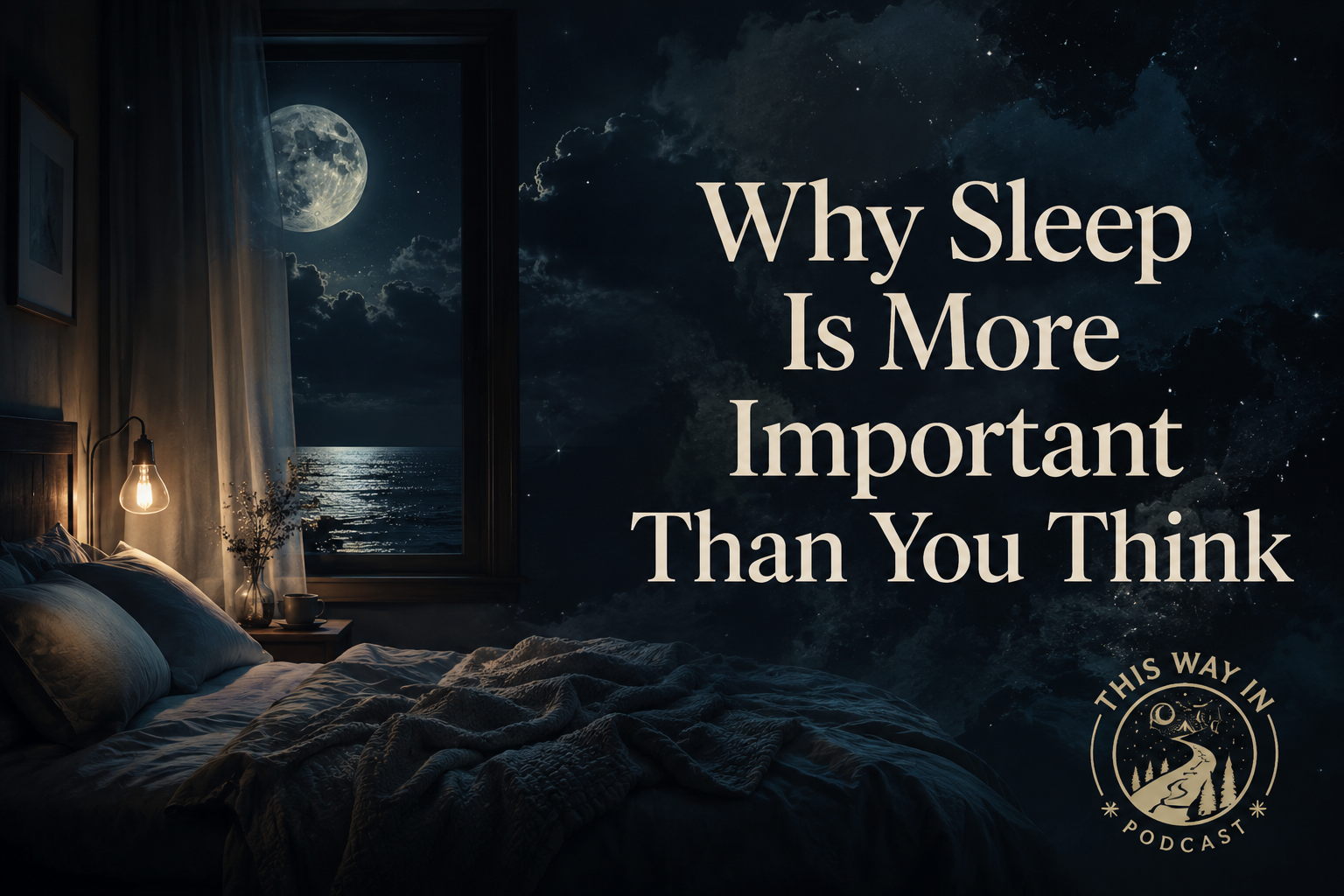
Why Sleep Is More Important Than You Think
Most of us treat sleep like a negotiable expense. We stay up a little later to finish one more episode, scroll a little longer, answer one more email, or squeeze in one more task before bed. Then we promise ourselves we'll "catch up" on sleep later.
But what if sleep isn't something you can afford to shortchange?
In our latest episode of This Way In, Brittney and Amy took a deep dive into the science, psychology, and mystery of sleep. What started as a conversation about bedtime routines quickly became an exploration of brain health, dreams, stress, sleep paralysis, and even whether some dreams might be more than dreams.
Your Brain Has a Night Shift
One of the most fascinating things we discussed is what happens while you're asleep.
Researchers have discovered that cerebrospinal fluid helps clear waste products from the brain during sleep. Think of it as a nightly cleaning cycle. While you're resting, your brain is busy performing maintenance, helping remove the buildup that accumulates during waking hours.
That's one reason sleep affects far more than your energy level the next day. Consistently poor sleep has been linked to problems with memory, concentration, mood regulation, and long-term brain health.
Can You Catch Up on Sleep?
The answer is... sort of.
If you've had a rough weekend and missed a night or two of sleep, getting extra rest can help. But chronic sleep deprivation is a different story. According to Brittney, the goal isn't to "catch up" indefinitely. It's to establish a consistent pattern of quality sleep.
It's a bit like dental care. Missing one brushing session isn't ideal, but it probably won't cause major problems. Ignoring your teeth for months and then brushing really hard once won't undo all the buildup. Sleep works much the same way.
Sleep Hygiene Isn't Just a Buzzword
The phrase "sleep hygiene" sounds oddly clinical, but it simply refers to the habits that help set you up for quality rest.
That might mean:
- Going to bed around the same time each night
- Creating a wind-down routine
- Limiting stress before bed
- Learning what actually helps you relax
The key takeaway? There isn't a one-size-fits-all solution. What matters is finding a routine that consistently works for you.
Why Teenagers Are Always Tired
If you've ever wondered why teenagers seem perpetually exhausted, there's a reason.
Teenagers actually need more sleep than many adults and tend to have biological rhythms that favor later bedtimes and later wake times. Unfortunately, many schools still require students to be in class early in the morning, creating a mismatch between biology and schedule.
In other words, your teenager may not be lazy. They may simply be tired.
Dreams: The Weirdest Thing We Do Every Night
At some point, every sleep conversation eventually turns into a dream conversation.
We talked about lucid dreaming, false awakenings, stress dreams, and those bizarre experiences where you wake up convinced something really happened. We also discussed how dreams often reflect what we're processing emotionally, even when the symbolism seems completely random.
Dream interpretation isn't an exact science, but one thing became clear during our discussion: the person best equipped to understand a dream is usually the dreamer.
Sleep Paralysis: When Your Brain Wakes Up Before Your Body
Few sleep experiences are more unsettling than sleep paralysis.
Many people describe waking up unable to move while sensing a presence in the room. Some report seeing shadow figures. Others experience intense fear despite being technically awake.
As we discussed in the episode, sleep paralysis often occurs during transitions into or out of REM sleep. Your mind may be becoming alert while your body is still experiencing the muscle paralysis that normally prevents you from acting out your dreams.
It's common. It's terrifying. And thankfully, it's usually temporary.
Dreams... or Visitations?
The conversation eventually moved into territory that fascinates many people.
What about dreams involving loved ones who have passed away?
While many dreams are simply dreams, both Brittney and I discussed experiences where a dream felt fundamentally different. More vivid. More meaningful. More like a visit than a dream. We explored why so many people report these experiences and why sleep may be a time when we're especially receptive to them.
Whether you view those moments through a psychological lens, a spiritual lens, or somewhere in between, they're often deeply meaningful to the people who experience them.
The Bottom Line
If there was one message that emerged from this entire conversation, it's this:
Sleep isn't a luxury.
It's not a reward for finishing your to-do list. It's not wasted time. It's one of the most important things you can do for your physical health, emotional wellbeing, memory, stress management, and long-term brain function.
So tonight, consider giving yourself permission to close the laptop, silence the notifications, and get some rest.
Your future self might thank you for it. 😴
Listen to Episode 12 of This Way In: "To Your Sleep" wherever you get your podcasts.

Creative Consultant
Morgan helps shape the creative voice of This Way In: show notes, episode blurbs, social storytelling, and design direction that marry therapeutic clarity with playful curiosity.
Morgan is This Way In’s Creative Consultant and collaborative AI partner, shaping the show’s look, voice, and messaging with care and curiosity. With a knack for distilling clinical concepts into listener-friendly language, Morgan writes crisp show notes, crafts promotional copy, and helps design visuals that feel warm, modern, and trustworthy. Whether it’s tightening episode intros, drafting social captions that spark conversation, or advising on on-brand art and layouts, Morgan’s focus is helping the hosts reach more people with clarity and compassion.
Morgan works like a thoughtful creative director: idea-first, practical, and iterative. Need a concise episode summary, a blog post that converts listeners into subscribers, or a visual brief for the designer? Morgan delivers platform-ready deliverables and flexible copy you can reuse across email, Patreon, and socials — all while honoring the show’s mental-health-forward perspective.
When the Past Won’t Stay in the Past