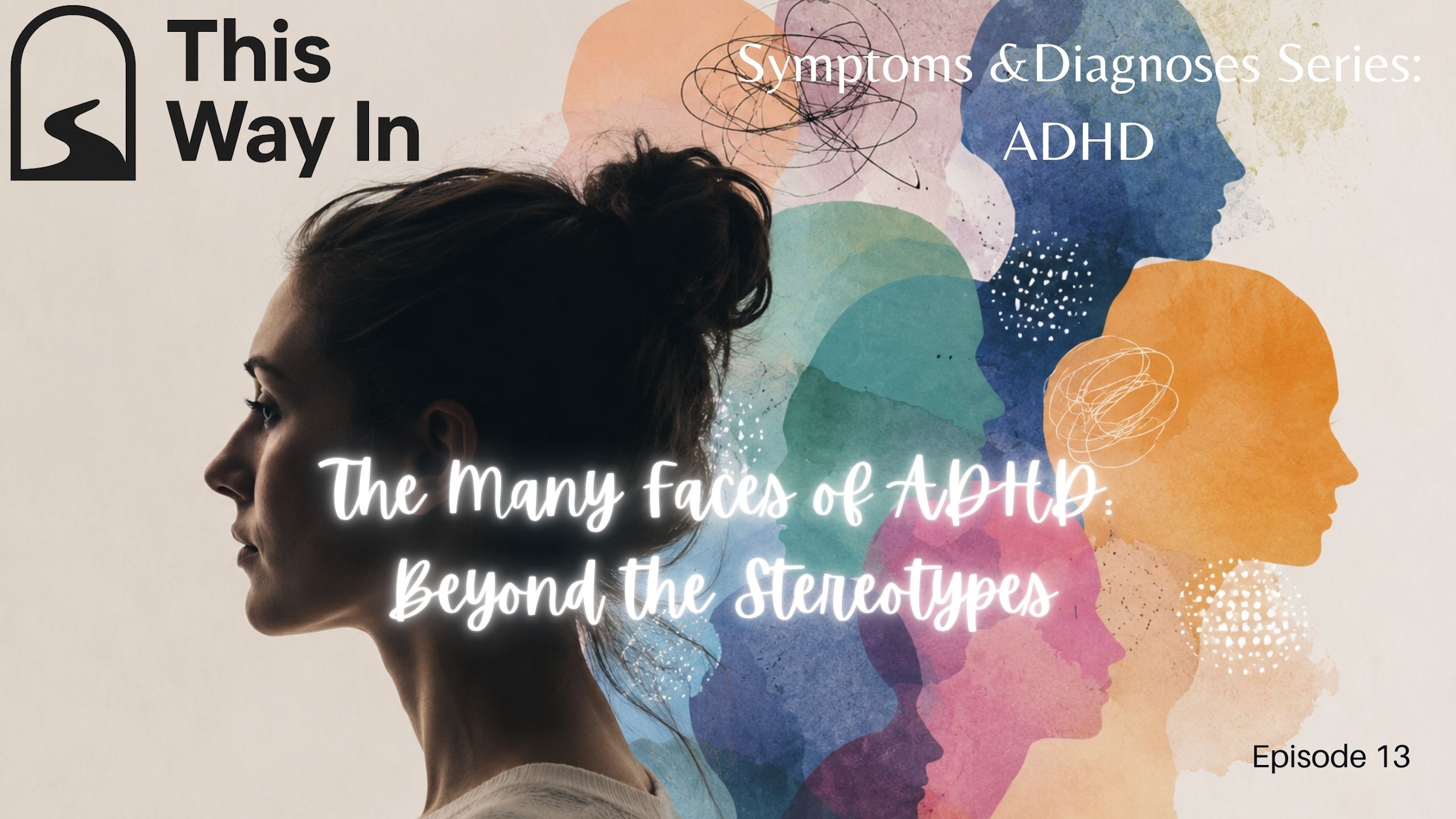
The Many Faces of ADHD: Beyond the Stereotypes
ADHD has become one of the most talked-about mental health topics on social media. Spend a few minutes scrolling through TikTok or Instagram and you'll likely come across videos listing "signs you have ADHD." Maybe you've watched a few yourself and thought, That sounds exactly like me.
But what if those symptoms aren't actually ADHD?
In the latest episode of This Way In, licensed therapist Brittney Baxter Dameron joins Amy Lotsberg to unpack the many ways ADHD can present and why diagnosing it isn't nearly as straightforward as social media often makes it seem. While ADHD is very real and very common, many of its symptoms overlap with other conditions, including anxiety, PTSD, depression, and even the effects of chronic stress.
ADHD Isn't One-Size-Fits-All
One of the biggest misconceptions about ADHD is that it always looks the same.
Many people picture the stereotypical child who can't sit still or is constantly bouncing off the walls. While that can certainly be one presentation, ADHD actually comes in three forms:
- Predominantly Inattentive
- Predominantly Hyperactive/Impulsive
- Combined Type
Each presents differently, and many adults, particularly those with inattentive ADHD, go undiagnosed for years because their symptoms don't match the stereotype.
When Symptoms Overlap
One of the most important takeaways from this conversation is that symptoms don't equal a diagnosis.
Difficulty concentrating, forgetfulness, restlessness, excessive talking, or feeling mentally "busy" can certainly be signs of ADHD. They can also be symptoms of anxiety, trauma, depression, or other mental health conditions.
That's why a proper evaluation matters. Looking only at surface-level behaviors can miss what's actually happening underneath.
Why Self-Diagnosis Can Be Tricky
It's completely understandable why so many people begin questioning whether they have ADHD after seeing relatable content online.
Learning about yourself can be validating. It can explain struggles you've experienced for years and help you feel less alone.
However, Brittney explains why online symptom lists can only tell part of the story. A qualified clinician doesn't simply count symptoms. They look at how long they've been present, how they affect daily life, what else could explain them, and whether another diagnosis fits better.
ADHD Is More Than Attention
The conversation also explores something that often gets overlooked: ADHD isn't just about paying attention.
For many people, it's about:
- Feeling mentally overwhelmed
- Constant internal activity
- Difficulty organizing thoughts
- Hyperfocus on things they love
- Struggling with tasks that don't hold their interest
- Harsh self-criticism when something feels difficult
Understanding these experiences can help replace shame with compassion.
Practical Ways to Manage Symptoms
Whether someone has ADHD or simply identifies with some of its challenges, there are practical strategies that can help.
During the episode, Brittney discusses ways to channel hyperactivity into movement, adapt tasks to fit how your brain naturally works, and understand your own learning style rather than forcing yourself into someone else's. She also explains why confidence, environment, and early childhood experiences can influence how attention develops.
Understanding Yourself Is the Goal
Perhaps the biggest message of this episode is that understanding yourself matters more than fitting neatly into a label.
A diagnosis can be incredibly helpful, but it's only one piece of the puzzle. Whether you're exploring ADHD for yourself, supporting someone you love, or simply curious about how our brains work, approaching the topic with curiosity instead of assumptions opens the door to better understanding and better care.
If you've ever found yourself wondering, "Is this ADHD?" this conversation offers a thoughtful place to begin.
Listen to "The Many Faces of ADHD: Beyond the Stereotypes" wherever you get your podcasts, and join us as we kick off our new Symptoms & Diagnoses series.

Creative Consultant
Morgan helps shape the creative voice of This Way In: show notes, episode blurbs, social storytelling, and design direction that marry therapeutic clarity with playful curiosity.
Morgan is This Way In’s Creative Consultant and collaborative AI partner, shaping the show’s look, voice, and messaging with care and curiosity. With a knack for distilling clinical concepts into listener-friendly language, Morgan writes crisp show notes, crafts promotional copy, and helps design visuals that feel warm, modern, and trustworthy. Whether it’s tightening episode intros, drafting social captions that spark conversation, or advising on on-brand art and layouts, Morgan’s focus is helping the hosts reach more people with clarity and compassion.
Morgan works like a thoughtful creative director: idea-first, practical, and iterative. Need a concise episode summary, a blog post that converts listeners into subscribers, or a visual brief for the designer? Morgan delivers platform-ready deliverables and flexible copy you can reuse across email, Patreon, and socials — all while honoring the show’s mental-health-forward perspective.
When the Past Won’t Stay in the Past