
Chapter 7 | King of Shadows


 Apple Podcasts

 Spotify

 Castro

 RSS Feed
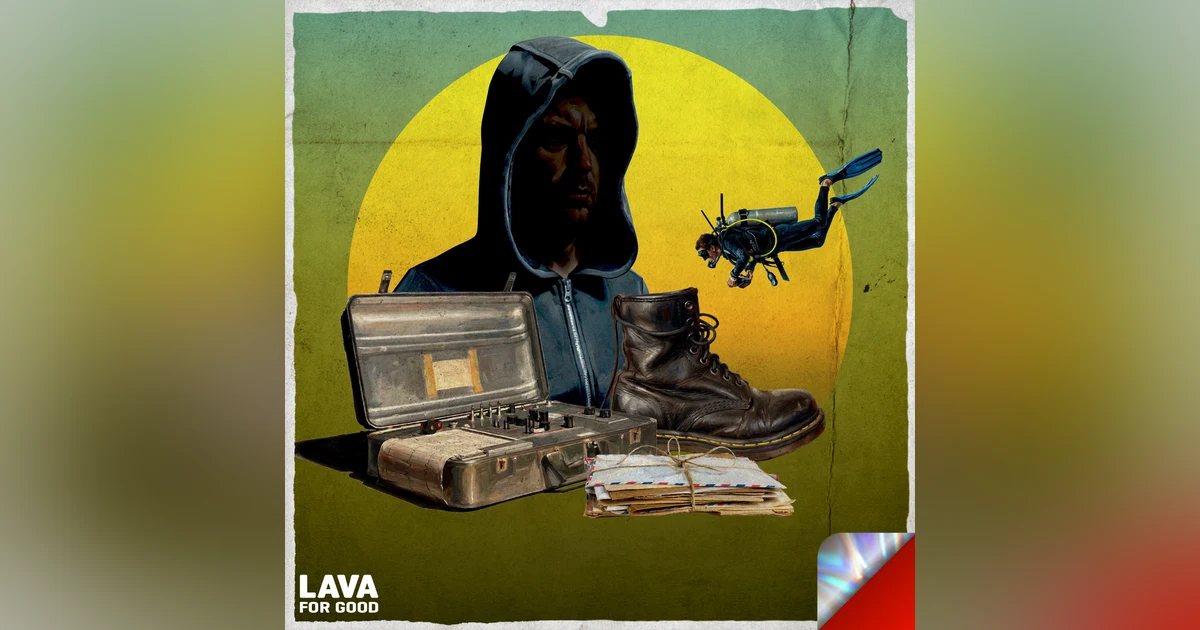
Detective Karst dives into a correspondence. A clue is recovered. The case is re-opened.
If you have any information related to the cases covered in this series, please call us at:
888-257-7694.
A fundraising campaign has launched independently to support the women who have come forward to share their experiences, as heard in The Devil's Quarry: https://gofund.me/c5b90e1de
New episodes are available every Wednesday.
Listeners can hear new episodes ad-free by subscribing to Lava for Good+ on Apple Podcasts.
Special thanks to Julia Cowley, featured in this episode, who hosts the excellent podcast The Consort: Real FBI Profilers, which covers crimes from the perspective of behavioral analysis. Listen to her show here.
The Devil’s Quarry II is a production of Lava for Good™ Podcasts in association with Signal Co. No1.
We have worked hard to ensure that all facts reported in this show are accurate. The views and opinions expressed by the individuals featured in this show are their own and do not necessarily reflect those of Lava for Good.
See omnystudio.com/listener for privacy information.
Speaker 1: This series includes sensitive and potentially distressing topics, including sexual assault and abuse involving children. Listener discretion is advised. Robin Murphy vanished on April 9, 1995. That rainy, raw-boned evening fell on Palm Sunday, the sacred start of Holy Week. But Robin was ahead of the curve. With Easter a full week off, she'd already bought gifts for her younger siblings and stashed candy around the house. Because that's the kind of sister she was. A reliable source of sweetness for her siblings. But she was also the binding agent of that family. There was a 17-year gap between her oldest and youngest siblings. And as her brother Jay told us, she was the glue that held them together. It was Jay who stepped up when Robin went missing. He all but bonded himself to his mom in those first awful weeks and months after.
00:01:08
Speaker 2: I searched so many acres of woods with my mother looking. That was not easy. You know, we searched, we found animal bones. We went everywhere. And, you know, I had to be strong for her. It's not easy, you know? So, yeah, you try to forget it.
00:01:31
Speaker 1: But Judy, his mother, couldn't forget. Not for one waking moment. She was so consumed by Robin's disappearance that she pleaded with TV psychics to find her daughter. She wrote Hail Mary letters to people in power, including the governor of New York. And she hounded the Carmel cops to do their damn jobs or hand the case over to the sheriff. Robin's younger siblings, who were in grade school when she vanished, manifested grief in other ways. One day, the cops got a call from a woman who'd come across a shrine in the woods. It was a pentagram painted on a low rock wall, and below it, a tin box. Inside it were candles and incense, and a black and white photo of Robin. The cops responded to the scene that knocked on the Murphy's door. Judy, as it happened, recognized those items. They'd been taken from her house. Apparently, her youngest child had staged a ritual for Robin, burning candles in the woods and crying out to her ghost. And then there was Robin's father, Brian, who took it hardest of all. He sank into a deep despond and never pulled out of it.
00:02:46
Speaker 2: My father put his hope in the work. He drank a lot. You know, he ended up dying from liver cancer. He died on April 9th, 2008, 13 years later.
00:03:01
Speaker 1: April 9th, the anniversary of Robin's abduction.
00:03:06
Speaker 2: That was wild. My mother and I said she came to get him. I mean, come on, the same day.
00:03:14
Speaker 1: With no body to bury or official date of death, they could never stage a funeral for Robin.
00:03:21
Speaker 2: Not knowing is the worst. We do little things, like little vigils, little candles.
00:03:27
Speaker 1: This year, they're planning a joint memorial to celebrate both the father they miss and the sister who haunts them still.
00:03:35
Speaker 2: But me and some of my family members are going to try to do something in the near future. So that's what we're working on now, you know, for a little closure.
00:03:50
Speaker 1: But closing the book is all but impossible when Robin's killer is still out there, and the man Robin's family firmly believes to be her killer is counting down the hours in his cell. Howard Gombert is too much shy of freedom. The latest report is he'll be released in late December. And that sound in your ears? It's a ticking clock, which might as well be a time bomb.
00:04:22
Speaker 2: Do you hear my madness laughter.
00:04:36
Speaker 1: Hides my fear Sorrow's depths are endless in this valley of tears. I'm Paul Solitarov, and this is Season 2 of The Devil's Quarry. Seven years after Robin's abduction, Lieutenant Brian Karst of the Carmel PD drove to a courthouse in Danbury, Connecticut. He went to bear witness to Howard Gombert's sentencing for his molestation of seven-year-old Sarah Lindley and other crimes. The trial judge gave Gombert 30 years maximum in prison. Karst couldn't have known that day that a timer was being set, a long, slow countdown to Gombert's freedom. Gombert left court that day to begin his sentence, and Karst drove away from it deeply disturbed and hell-bent to nail Gombert for Robin's murder. The following week, he paid Gombert a visit at the Garnall Correctional Facility in Connecticut. Only this time, he brought props. He showed Gombert a photo of Robin's underwear, the very pair he'd found in Gombert's suitcase. Gombert denied seeing them before and proclaimed his innocence. In fact, he said he was willing to take a polygraph test to prove it. That was the second time he'd consented to a poly in regards to Robin. And like the first time, it never took place. So Karst went back to his desk in Carmel to plot a new line of attack. Then, several months later, came a bolt from the blue. An unsolicited letter from Gombert. Though packed with his standard insults and assaults on English grammar... It also contained an invitation. My colleague, Rob Reddy, reads excerpts from it.
00:07:04
Speaker 3: Detective Brian D. Karst, I'm writing you in regards to my taking the lie detector test that we talked about the last time I saw you. When we talked, you made it seem like such a good idea. But after I took the lie detector test and passed it, I would no longer be a suspect in Robin's disappearance.
00:07:20
Speaker 1: Gomber was writing to try and clear his name. That pair of underwear Kars found in Gombert's suitcase? The one Kars told him matched Robin's DNA? It must have been a plant, Gombert wrote.
00:07:33
Speaker 3: The only way you found them where you said you did is if you put them there.
00:07:37
Speaker 1: He offered yet again to take that polygraph test, under terms and conditions of his choosing.
00:07:45
Speaker 3: List of 14 questions I will gladly answer. 1. Was your relationship with Robin sexual in any way? Two, did Robin only pretend to like Anne-Marie? Three, was Robin willing to help you with your problem?
00:08:00
Speaker 1: A suspect drafting his own lie detector script? It was preposterous on its face. But Kars kept reading, hoping perhaps to find clues in the subtext of Gombert's questions.
00:08:13
Speaker 3: Ten, when you left the laundromat to get your laundry, did you do or go anywhere else but to get your laundry? Eleven, Was the rope that was in your car trunk used against Robin in any way at all?
00:08:28
Speaker 1: We made multiple calls to Karst. Alas, he declined to speak. So we've no way of knowing if Lieutenant Karst ever watched Silence of the Lambs. But if he had seen that film, he'd have sent something afoot here. A game of cat and mouse with a predator. Either way, Karst was prepared to play Gombert's game. He sent him a letter a week or so later It's read here by our colleague, Chris Neary. Mr.
00:08:57
Speaker 4: Gompert, I received your letter and was intrigued by your willingness to help with this investigation. With respect to the allegations you make in the letter regarding my integrity, you're very mistaken. I always represent the facts and the evidence as an impartial participant in any investigation. The fact is, Robin Murphy's underwear were in your possession, and this is an undisputable truth. The fact is that you were the last person to speak to Robin Murphy prior to her disappearance. Couple this with the fact that you are a known and predicate sex offender, and you can draw your own conclusions.
00:09:31
Speaker 1: And then, having said his terms of engagement, Kors changed his tone and approach.
00:09:38
Speaker 4: At some point in our lives, we have to take responsibility for our actions. At the end of the day, we will all be judged by how we lived our lives. It can be said that on Judgment Day, we will all be exposed to the naked truths that we try to avoid in life, This is not to say we can't redeem ourselves of even the worst and most egregious acts that we participate in. It is this redemption that will cleanse our souls and ease the suffering of the persons we have wronged. I offer you this chance at redemption and an opportunity to ease the suffering of the Murphy family. I remain committed to seeking justice for Robin on their behalf. You can ease their pain.
00:10:19
Speaker 1: To which Karst added seven exclamation points. But they fell on deaf ears with Gombert. Here's his response to Karst's appeal. I am not mistaken.
00:10:31
Speaker 3: I know for a fact what I did and did not have. It is fact that I never had anything of Robin's, especially her underwear. So that only leaves one of two things. Either you put them there, or you found a pair that looks like something like what she may have had, and are wrongfully claimed as hers. In that case, you did not find her DNA on them, unless, of course, you put it there. We both know that if you took a lie detector test, you'd fail it. So please stop with the bullshit. You're not going to convince me of your lies.
00:11:10
Speaker 1: But that wasn't the final word from Gombert. In his next post, he threatened a lawsuit. Four days later, Karst responded.
00:11:19
Speaker 4: Dear Howard, I received your letter dated March 23rd, 2003, and I must say I was taken aback by the hostility you exhibited in it. I must tell you that assaulting my character will not change the facts in this case, Howard.
00:11:31
Speaker 1: I really believe that you.
00:11:32
Speaker 4: Considered Robin Murphy to be a friend of yours, but I also feel something went terribly wrong that day. Howard, there is still some good that can come out of this tragedy, and you can be the instrument that can make it happen. I don't think you're a bad guy. I think that you may have had some tough breaks in your life that were completely out of your control. I think that certain people who you trusted throughout your life may have betrayed you and mistreated you. If this is true, I genuinely feel bad for you. I hope you can heal these wounds someday. The only way to heal and truly be free from all this is to do what you can to atone for the people who you have wronged in your life. I'm not your enemy, Howard. I'm just a guy trying to do his job to the best of his abilities. I even believe that under different circumstances, you and I could have been friends. We're not very different people, but I think fate has chosen our paths. And it is fate that brings us together to unlock the mystery of Robin's disappearance. You hold the key to this mystery, Howard. And you can unlock the door for yourself and the Murphy family. I urge you to do this and set yourself free from the torment you must be feeling. Allow Robin to find her stairway to heaven. I encourage you to write me, and I promise I will be more diligent in answering your next letter. The fact is, Howard, that I need your help finding Robin. And I hope you can find it in your heart to assist me. Yours truly, Brian D.
00:13:01
Speaker 1: Karst. It's a deeply humane letter, and a skillful one to boot. You'll note how often Karst calls Gombert Howard, shrinking the distance between them. You'll also note how he gives Gombert grace, the power to perform a godly act. As calls to conscience go, it was a master class. But Gombert was unmoved. He wrote Karst back on April 9th, 2003, the eighth anniversary of Robin's abduction. He sneered at Karst's appeal to human decency, calling him a dirty cop with no integrity. Quote, unquote. The letter closed with a declaration of war. Gombert was going to sue. And there, alas, the correspondence ends. And so do the documents in our case file. After several thousand pages of notes and transcripts, the paper trail suddenly stops cold. Given his passion for Robin's case, we've every reason to think the lieutenant Carr stayed with him. He remained on the job for at least another decade. But anything he did or said regarding Gombert has been lost in the data stream. We do know, however, that he never won an indictment on Robbins' no-body murder, and that Robbins' disappearance weighed heavy on his department's shoulders. Eleven years later, in 2014, Karst appeared in a local broadcast about her. His hair, once full and dark, was now clipped and gray. So was his somber tone. It's kind of hard to believe that it's been 19 years. This has certainly been something that's always been in the forefront of the Carmel Police Department.
00:14:49
Speaker 5: Anytime any leads come in, we run them down thoroughly.
00:14:52
Speaker 2: We vet all information that comes in.
00:14:55
Speaker 4: So we do review it on a regular basis.
00:14:59
Speaker 1: Some years ago, Kars retired from the CPD. So a reporter, Kathleen Horan, set out to find him. Last summer, she drove out to Long Island. No one answered when she knocked on the door there.
00:15:12
Speaker 6: No signs of life.
00:15:14
Speaker 1: But she heard from Kars soon enough. He sent her a message via a Carmel detective that he wanted no more unsolicited contact. And so we looked elsewhere for leads and for connections to people who were still actively searching for Robin. We found both at the edge of a haunted body of water. The Tilly Foster Mine is where people bring the things they want to disappear forever.
00:15:59
Speaker 7: They used to call it, the miners did, the King of Shadows, because so many people died here. And also later on, whatever went in the mine was never seen again.
00:16:10
Speaker 1: Dan Wright is a photographer turned scuba diver. He's a muscular man in his early 60s with a ruddy glow and a head of sandy hair. Each weekend, weather permitting, he dons a heavy wetsuit and checks his oxygen levels. And then, if the water isn't frozen solid, he'll dive the mine's depths in search of ghosts. Our reporter Kathleen went to see him there this past spring.
00:16:37
Speaker 6: For you to go into the King of Shadows weekend after weekend for all these years, what is that like?
00:16:45
Speaker 7: Well, at first it was quite daunting. And anyone who comes here for the first time is either scared to death or, you know, they're very fearful because there's so many things that are working against you here.
00:16:57
Speaker 1: The mine sits on a lonely patch of scrubland a couple miles north of Brewster. Ringed on three sides by crooked trees and a dark rust of the color of blood, You get spooked just standing on that creaky dock, looking down at the blue-black water. Tilly Foster started out as a deep-veined mine, and later became an open pit of horrors. First plumbed in the 1850s by Irish and Italian migrants, it yielded up a fortune in iron ore. 7,000 tons a month came up as the men who worked it dug deeper. By the time the pit collapsed in 1895, killing 13 miners, it was 600 feet deep and a gaping death trap for anyone who walked here after dark. Around the turn of the century, they closed the pit, and it filled with reservoir water. Not long after, the gangs of New York found a purpose for that pit.
00:17:58
Speaker 6: I've read that the mob also might have disposed of some people here. Have you ever found any human remains?
00:18:07
Speaker 7: I've heard stories because a lady who used to live in a house that's, you know, to my right, her name was Brady, and she's a granddaughter of one of the miners. And in 1938, she was like 10 years old, she saw two guys drive up in a big car. and get out with their spats on and their fedoras. And they had a rug and they rolled up and they threw it in. So she's like, oh my goodness, this is probably a body.
00:18:35
Speaker 1: Seeing that left a dent in the poor girl.
00:18:39
Speaker 7: She never said a word to the police until the 90s. When they were looking for Robin Murphy, they came here with a lot of men and were searching. And she came walking over and saying, hey, I think you should look over here because I think I saw... Some guys threw a body in in 1930.
00:18:55
Speaker 1: The cops explained that they were searching for Robin, not bootleggers from the Prohibition.
00:19:00
Speaker 7: You know, they're like, well, we're not looking for that, but we'll keep our eye out.
00:19:07
Speaker 1: Twice the Carmel cops sent a dive team here, both times to search for Robin. In 1999, they got a tip from a psychic who seemed awfully sure Robin had been dumped here. Then, in 2002, Lieutenant Carr sent a second team But in a pit this deep, filled with this much debris, a couple of one-off dives didn't cut it. And then Dan and his group of civilian divers volunteered to take over. Beginning in 2014, they began meeting here most weekends to search for Robin's remains.
00:19:42
Speaker 7: Most people are like zero to hero. They just want instant gratification. And they just think it's going to be, oh, you just plop in, you just look around, oh, there she is.
00:19:50
Speaker 1: Hardly the case.
00:19:52
Speaker 7: You know, I wish it were that simple. We would have found her.
00:19:56
Speaker 1: The dives are both Dan's passion project and his pledge to the Murphy family. He feels honor bound to try and ease their suffering and up for the daunting challenge.
00:20:08
Speaker 7: Oh, there's a water snake.
00:20:09
Speaker 1: Look, see him?
00:20:10
Speaker 7: Oh, yeah.
00:20:12
Speaker 5: You're not a squeamish fellow.
00:20:14
Speaker 7: I guess.
00:20:14
Speaker 2: No, they don't.
00:20:15
Speaker 7: Nothing really bothers me here. I mean, there's nothing going to really hurt you other than the sight itself.
00:20:20
Speaker 1: The water will kill you. Dan knows firsthand how risky this all is. In 2017, one of his friends on the search team came out early to do a quick dive. Dan showed up his schedule that morning. and realized his friend had been down there for hours.
00:20:40
Speaker 7: I said, well, two hours is a long time, you know, but he could have found something.
00:20:45
Speaker 1: That friend never came up alive. A state police dive team found him the next day tangled in wires. More than a century after it closed, that mine's still a death trap, crisscrossed with cables and pipes. These days, Dan passes a memorial plaque honoring the dear friend who lost his life here.
00:21:06
Speaker 6: I'm just wondering, you know, any long relationship, you're in this body of water, in this mine, in this quarry mine.
00:21:15
Speaker 7: It's a mine. Don't call it a quarry. Okay. That's expensive because a quarry, they go for stone. And quarries are much more shallow. Mines can be hundreds and hundreds of feet deep.
00:21:26
Speaker 1: Dan's done everything he can to lower the risk. He's dropped miles of steel cable as section markers so his crew won't get lost down there. And he's divvied the mine into well-mapped sections so they can search it systematically.
00:21:41
Speaker 7: Sometimes I don't even have my eyes open. I just shut my eyes. And I can feel the lines, you know, the quadrants are fairly small. So I usually have one guideline that I'm going along. And I can just close my eyes and I'm just feeling and trying to get a sense of where I am. It's because sometimes you open your eyes and just.
00:22:01
Speaker 1: Both the mine and its waters are privately owned now. But Dan's team has an exemption to search it. And after all this time, he's only just getting started.
00:22:11
Speaker 7: People ask, how much of the mine do you think you've actually hand-searched? And I say, maybe a tenth.
00:22:17
Speaker 1: Maybe.
00:22:17
Speaker 7: I mean, it's just huge.
00:22:20
Speaker 1: He's marked the mine up in a meticulous grid. He and his fellow divers find Komich section before moving on to the next. But it's so dark down there that they have to do it by field.
00:22:32
Speaker 7: You're just sifting through and going, that's a stick, that's a rock, that's a skull. Now, I don't have that kind of luck. I have found a skull.
00:22:40
Speaker 5: You have?
00:22:41
Speaker 1: Yes, but it was a wolf. But in 2017, they found something down there that gave them fresh cause for hope.
00:22:51
Speaker 7: I don't think she threw her boots in here and went barefoot and ran away. In 2017, one of our searching staff crew members, Jonah Klein, came up with a boot. And I can't remember if it was left or right, it doesn't matter. But he came up with a boot, and Robin Murphy was a tall girl, and she wore a size 10 boot. So the boot is confirmed as female, Doc Martin, size 10, and then the mother confirmed it was hers. Because when Robin's mother finally cleaned out her room years after her disappearance, the only pair of footwear that was missing were the boots.
00:23:31
Speaker 1: Assuming that boot belonged to Robin, you'll never persuade Dan that the rest of her isn't down there too.
00:23:37
Speaker 7: The boot is pretty convincing.
00:23:43
Speaker 1: And so he goes on, risking life and limb for a girl he's never met. I've never met Robin either, but I know how Dan feels. He and I couldn't be less alike. I'd sooner base jump the Space Needle than go snorkel Lake Carmel. But the two of us have this much in common. I've spent the last six years diving my own king of shadows, the filth and the incompetence of Putnam County. And while my team and I haven't found a boot, we've dug up heel after heel in this place. I'd start with the sheriff's detectives who framed Anthony DePippo for the murder of Josette Wright, and their boss, Dan Stevens, who forced a false confession from Anthony's co-defendant, Andy Krivak. Then there are the judges and prosecutors who kept letting Gombert walk, despite arrest after arrest for rape and assault. But like Dan and his crew, our labors aren't pointless. Under the heat and pressure we've brought to bear, the new sheriff, Brian Hess, has begun looking into Robin's case, as well as Josette Wright's. Five months ago, we sat with the senior members of his task force. They told us they were approaching these cases fresh, going back to the very beginning. They also said they had questions for us and asked us for our help. One particularly warm Tuesday this past summer in New York, my team and I reported to a meeting on Park Avenue. Our lawyers had brokered a sit-down with the Putnam Sheriff's Task Force.
00:25:48
Speaker 5: Do we want to ask about DNA, if they're going to be retesting DNA?
00:25:53
Speaker 1: I would like to, yeah. That's our reporter Kathleen and our producer Austin Smith.
00:25:59
Speaker 5: Do we want to ask those questions about the confiscated items, like.
00:26:06
Speaker 1: Four cops in plainclothes marched into the meeting. Two from the Putnam Sheriff's Office, one from the state police, and a Carmel detective who was leading the probe. They spent the first hour asking about surviving victims. Rachel R., Anne Marie, Jane Gunderman, Sarah Lindley. Had Gomber threatened any of them in his letters to us, or threatened them directly from prison? Yes, we said he had. Might we and the survivors share those letters? Yes, we said. We'd arrange that. It was a curious way to kick things off, but soon I saw their point. Those threats to Gombert's victims might be felonies and constitute grounds to arrest him. Then they asked us whom we'd talked to and what we'd uncovered. They were especially keen to know about Gombert's dealings with Robin and Josette. And what about the teens at Gombert's party shack? Had he lured them there with drugs? By the end of two hours, this much was clear to me. They seemed exclusively focused on Howard Gombert as the target in two murders. But it also seemed like they'd barely made a dent in the thousands of pages that span the girls' case files. For me, at least, the meeting didn't breed confidence. The cops had been congenial, had even humbled themselves, drawing distinction between them and the Putnam cops who came before them. But when we asked the questions, we got nothing in response. And when I say nothing, I mean nothing. We can't comment on an active investigation. We did hand those cops one batch of physical evidence. copies of the letters Gombert had written to us. Earlier this year, a producer, Austin, began emailing Gombert through his prison's portal. We expected little or nothing back from Gombert. Instead, we were inundated with words from him. In his first post back to us, he accused Lieutenant Karst of conspiring with Robin's father. claiming that two of them planted Robin's underwear in his suitcase. Because how else would they turn up there? Oh, and then Gombert offered, unprompted, to take a lie detector test, saying he wanted to clear his name regarding Robin. He said that he'd have taken one already, but the Carmel cops wouldn't let him. Yes, here he was again, dangling a polygraph. But wait! Howard Gombert has conditions. You see, he'll only take the test if we can get the retired Detective Karst to take one too. And then there were Gombert's strict list of questions, some of which sound awfully similar to the ones he'd sent to Karst years ago. My answer, no.
00:29:14
Speaker 3: Two, when you left the laundromat the night of Robin Murphy's disappearance, did you go anywhere but home?
00:29:21
Speaker 1: My answer, no.
00:29:23
Speaker 3: The questions are all straightforward. No room for bullshit. So if you're really interested in getting the truth out, then help me do this.
00:29:36
Speaker 7: Check, check, check. One, two, one, two.
00:29:38
Speaker 3: All right, let's see what... going on with getting Howard to do a polygraph.
00:29:47
Speaker 1: That's our producer, Austin, preparing to call Gombert's prison. Now let's be clear what's happening here. Polygraphs were discredited ages ago. They're junk science. But we wanted to talk with Howard, so we let him string us along, hoping that at some point he'd pick up the phone, or better still, pay us a video call. Some time ago, he was transferred from state prison to a reintegration center. It's still a secure prison, just less restrictive, and focused on so-called life skills and voc ed training. I think this line will just ring forever. We'll see if anybody picks up. But trying to reach an authority at Gombert's prison is like trying to get tech support from the DMV. Austin called and called, but was always rerouted.
00:30:40
Speaker 3: We would love to do an in-person interview.
00:30:42
Speaker 1: Or sent straight to voicemail.
00:30:44
Speaker 6: When you're finished, hang up or stay in the line for further options.
00:30:49
Speaker 1: Hey, Andreas, how you doing?
00:30:51
Speaker 7: I've been trying to work on this request for the past two months, so I'm sure there's some type of trail where you can get some context from.
00:30:59
Speaker 1: But while we were on hold, we kept getting emails from Gombert. Much like his letters, they were endless and venomous, accusing us of lying and conspiring with his accusers, whom he then proceeded to threaten upon release. At one point, he said he was done writing to us, but he kept sending more messages. After a while, he changed it up and asked to send us physical mail.
00:31:26
Speaker 3: Also, you've never given me an address to mail you anything should I decide to trust you and do so.
00:31:32
Speaker 1: So Austin set up a P.O. box. And one day he got a ping. There was an envelope for him there. Actually, a bunch of envelopes.
00:31:44
Speaker 2: Alright, so I stopped in and I thought it was just one letter, but we have one letter, two.
00:31:57
Speaker 3: Three, four, five, six, seven, eight.
00:32:05
Speaker 2: That's crazy.
00:32:07
Speaker 3: I guess we'll, I don't know where to start, but we have eight letters. Oh my God.
00:32:18
Speaker 1: And so the days grow short, both in number and duration, till Howard Gombert's release. As we tape this episode, it's early November, meaning seven weeks or less from that day. Since our sit-down with the Putnam Task Force, they've been furiously at work. We know this because they've interviewed practically everyone we talked to, called a number of them back for second sit-downs, in fact. They've scoured Gombert's old campgrounds in the Brewster Woods, not far from the railroad tracks. And we've heard from sources that they've sent out physical evidence for state-of-the-art forensic testing. But time is not on their side, or ours, to be frank. We made an urgent appeal to the governor of New York. We put in equally urgent calls to Tish James, her attorney general. But the wheels of justice turn very slowly for the victims of rural counties in New York. And so, for now at least, we wait. for our phones to ring, for the next shoe to drop, for someone in power to do their bloody job. And however this shakes out, we'll be back to you in the second week of January, by which time Gomert may have swapped the walls of his Connecticut prison for the woods of Putnam County, where if passed as prologue, he'll stalk and seethe and emerge at a time and place of his choosing. The Devil's Quarry is a production of Lava for Good in association with Signal Company No. 1. I'm your creator and host, Paul Solitarov. Executive producers are Jason Flom, Jeff Kempler, Kevin Wardus, and Gilbert King. Our senior producer is Hannah Beal. Our producers are Jackie Pauley, Austin Smith, and Kathleen Horn. Our field reporter is Kathleen Horn. Our editor is Matthew Nelson. Production support from Cara Kornhaber. Fact-checking by Peter Bresnan. Our sound designer is Britt Spangler. And our engineer is Austin Smith. Original music arranged and produced by Alexis Quadrato at the Plaza Rojas Studio. Head of production, Matthew Nelson. Head of marketing and operations, Jeff Clyburn. Publicist, Nathaniel Baruch. Art director, Andrew Nelson. Social media manager, Sarah Gibbons. Legal review provided by Gibson Dunn. And our theme song, The One Who's Holding the Stars... is performed by Alexis Quadrato at the Plaza Rojas Studio. Vocals by Rob Reddy of Californicorns, written by Leo Schofield and Kevin Herrick at the Florida Department of Corrections Hardy Correctional Facility. If you have any information to share about the events covered in this series, please call 1-888-257-7694. Thank you.