April 21, 2026
Young Stars Dim Quicker, Surprising Solar Winds, and Dream Chaser's Milestone
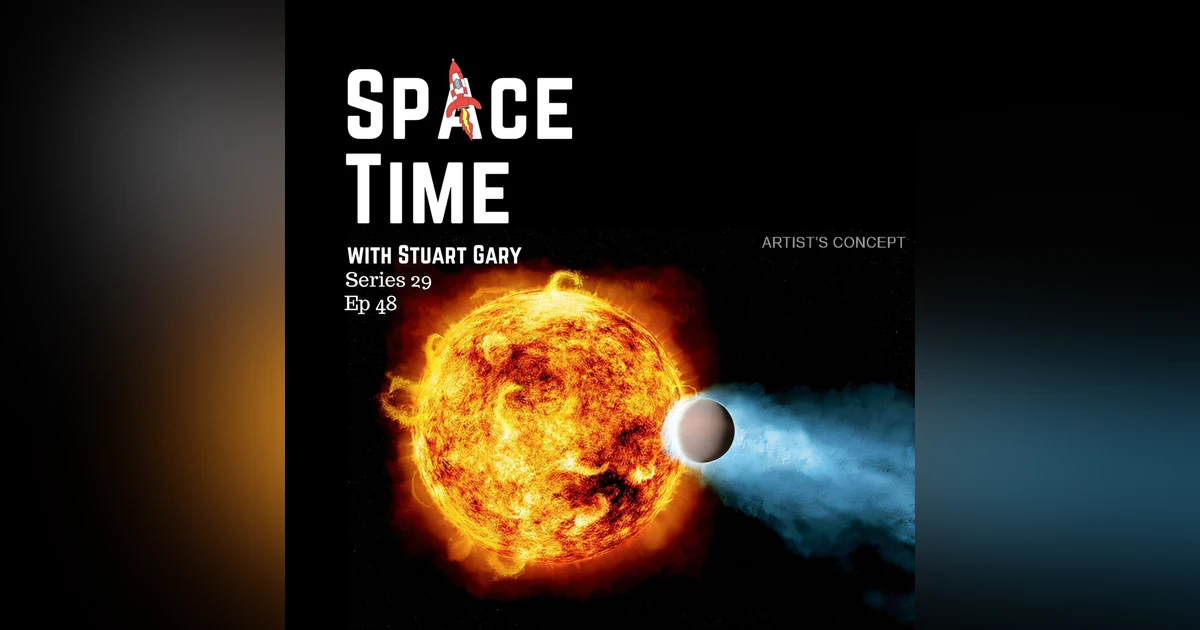
Sponsor Link: This episode is brought to you by NordVPN. For the best online protection and a great price check out our special deal: https://bitesz.com/nordvpn SpaceTime Series 29 Episode 48 *Finding that young Sun like stars dim quickly is good...


 Spotify Spotify
  Apple Podcasts Apple Podcasts
  Youtube Music Youtube Music
  iHeartRadio iHeartRadio
  Spreaker Spreaker
  PocketCasts PocketCasts
  Amazon Music Amazon Music
  YouTube YouTube
  Castbox Castbox
  Deezer Deezer
  TuneIn TuneIn
  Rumble Rumble
  Overcast Overcast
  Podcast Addict Podcast Addict
  Podchaser Podchaser
  JioSaavn JioSaavn
  Castro Castro
  RSS Feed RSS Feed
 Sponsor Link:
This episode is brought to you by NordVPN. For the best online protection and a great price check out our special deal: Click Here
SpaceTime Series 29 Episode 48 *Finding that young Sun like stars dim quickly is good news for life A new study has discovered that young Sun like stars settle down and start to dim more quickly than previously thought, potentially benefiting orbiting planets and the prospects of life. *A surprisingly speedy solar wind found in inner corona A new study has found that the solar wind is travelling up to four times faster than expected in the Sun’s inner corona. *Dream Chaser passes another critical milestone The Sierra Space Dream Chaser space plane Tenacity has just completed launch acoustic testing at NASA’s Space Systems Processing Facility. *The Science Report Long-term HIV remission achieved following a stem cell transplant. How to save Venice from rising sea levels. Half of all answers to health and medical questions by AI found to be problematic. Alex on Tech: The 6G countdown has begun.
Become a supporter of this podcast: https://www.spreaker.com/podcast/spacetime-with-stuart-gary--2458531/support.
This episode is brought to you by NordVPN. For the best online protection and a great price check out our special deal: Click Here
SpaceTime Series 29 Episode 48 *Finding that young Sun like stars dim quickly is good news for life A new study has discovered that young Sun like stars settle down and start to dim more quickly than previously thought, potentially benefiting orbiting planets and the prospects of life. *A surprisingly speedy solar wind found in inner corona A new study has found that the solar wind is travelling up to four times faster than expected in the Sun’s inner corona. *Dream Chaser passes another critical milestone The Sierra Space Dream Chaser space plane Tenacity has just completed launch acoustic testing at NASA’s Space Systems Processing Facility. *The Science Report Long-term HIV remission achieved following a stem cell transplant. How to save Venice from rising sea levels. Half of all answers to health and medical questions by AI found to be problematic. Alex on Tech: The 6G countdown has begun.
Become a supporter of this podcast: https://www.spreaker.com/podcast/spacetime-with-stuart-gary--2458531/support.
The Astronomy, Space, Technology & Science News Podcast.
WEBVTT
1
00:00:00.440 --> 00:00:03.560
This is Spacetime Series twenty nine, episode forty eight, for
2
00:00:03.640 --> 00:00:06.440
broadcast on the twenty second of April twenty twenty six.
3
00:00:07.080 --> 00:00:10.720
Coming up on space Time, discovery that young sun like
4
00:00:10.800 --> 00:00:13.880
stars dim quickly good news for the possibility of life,
5
00:00:14.320 --> 00:00:17.839
a surprisingly speedy solar wind discovered in the inner corona,
6
00:00:18.440 --> 00:00:22.679
and the dream chase of space plane passes another critical milestone.
7
00:00:23.199 --> 00:00:26.160
All that and more coming up on space Time.
8
00:00:27.399 --> 00:00:30.559
Welcome to space Time with Stewart Gary.
9
00:00:46.399 --> 00:00:49.640
A new study has discovered that young sun like stars
10
00:00:49.880 --> 00:00:52.479
tend to settle down and start to dim much more
11
00:00:52.560 --> 00:00:56.280
quickly than previously thought, and that could potentially benefit any
12
00:00:56.359 --> 00:01:00.719
orbiting planets and the prospects of life developing there. The findings,
13
00:01:00.840 --> 00:01:04.079
reported in the Astrophysical Journal are based on new observations
14
00:01:04.120 --> 00:01:08.680
by NASA's Earth Orbiting Chandra X ray space telescope. Astronomers
15
00:01:08.760 --> 00:01:12.159
use Chander and other telescopes to monitor how powerful radiation
16
00:01:12.280 --> 00:01:15.239
from young stars, often in the form of dangerous X rays,
17
00:01:15.280 --> 00:01:19.000
can pummel any planets orbiting around them. However, they didn't
18
00:01:19.000 --> 00:01:22.079
know how long this high energy barrage would last. That's
19
00:01:22.120 --> 00:01:26.000
where the new observations come in. Astronomers studied eight clusters
20
00:01:26.000 --> 00:01:28.840
of stars between forty five and seven hundred and fifty
21
00:01:28.879 --> 00:01:32.280
million years old. The authors found that sun like stars
22
00:01:32.319 --> 00:01:35.159
in these clusters unleashed only about a quarter to a
23
00:01:35.200 --> 00:01:38.439
third of the X rays they're expecting. The studies lead
24
00:01:38.519 --> 00:01:42.359
author Constantine Gatman from Penn State University says the observations
25
00:01:42.400 --> 00:01:45.280
reveal a natural quietening of young sun like stars in
26
00:01:45.439 --> 00:01:49.120
X rays, possibly because their internal generation of magnetic fields
27
00:01:49.159 --> 00:01:52.959
becomes less efficient, and Gatman believes this karmi could have
28
00:01:53.000 --> 00:01:55.640
been a boom for the formation of life on planets
29
00:01:55.680 --> 00:01:58.519
around stars that are younger versions of our own four
30
00:01:58.560 --> 00:02:02.640
point six billion year olds. That's because large amounts of
31
00:02:02.799 --> 00:02:06.200
X rays can erode a planet's atmosphere, preventing the formation
32
00:02:06.280 --> 00:02:09.240
of molecules necessary for organic life as we know it.
33
00:02:09.840 --> 00:02:12.840
On average, three million year old stars with a mass
34
00:02:12.840 --> 00:02:15.080
equal to that of the Sun produced around one thousand
35
00:02:15.120 --> 00:02:18.800
times more X rays than our Sun does today. Meanwhile,
36
00:02:18.879 --> 00:02:21.639
one hundred million year old solar mass stars are about
37
00:02:21.680 --> 00:02:24.439
forty times brighter in X rays than the present day Sun,
38
00:02:25.039 --> 00:02:27.599
and it's possible that we owe our own existence to
39
00:02:27.680 --> 00:02:30.400
our Sun doing the same thing several billion years ago.
40
00:02:31.439 --> 00:02:33.919
The authors found that stars with about the same mass
41
00:02:33.919 --> 00:02:37.080
as the Sun widened down relatively rapidly after just a
42
00:02:37.080 --> 00:02:40.639
few hundred million years, while those with less mass kept
43
00:02:40.719 --> 00:02:43.400
up their high level of X ray emissions for much longer.
44
00:02:44.000 --> 00:02:46.319
Combined with the decrease in the energy of the X
45
00:02:46.439 --> 00:02:49.840
rays and the disappearance of energetic particles, the Sun size
46
00:02:49.840 --> 00:02:53.039
stars are apparently better suited to host planets with robust
47
00:02:53.080 --> 00:02:58.159
atmospheres and possibly blossoming life than previously thought. Yetman and
48
00:02:58.199 --> 00:03:01.120
colleagues also used data from the Europeans Space Agencies Gaya
49
00:03:01.240 --> 00:03:04.719
satellite and the ROSAT mission. This allowed them to identify
50
00:03:04.759 --> 00:03:08.039
stars that were members of clusters rather than either foreground
51
00:03:08.080 --> 00:03:11.120
of background stars. To measure the X ray outputs from
52
00:03:11.120 --> 00:03:14.520
the stars, the authors made new Chandra observations of five
53
00:03:14.599 --> 00:03:17.639
clusters with ages between forty five million and one hundred
54
00:03:17.719 --> 00:03:20.960
million years. In addition to using Chandra and ROSAT data
55
00:03:20.960 --> 00:03:24.280
from archives, the study three older stellar clusters with ages
56
00:03:24.319 --> 00:03:26.639
between two hundred and twenty and seven hundred and fifty
57
00:03:26.680 --> 00:03:30.439
million years. Astronomers hadn't previously been able to study the
58
00:03:30.479 --> 00:03:33.280
exact X ray output of stars in this age range.
59
00:03:33.759 --> 00:03:36.680
Most have relied on sparse data and a relationship from
60
00:03:36.759 --> 00:03:39.680
previous work between the X ray missions produced by young
61
00:03:39.719 --> 00:03:43.199
stars and their ages and spin rates. All the more
62
00:03:43.240 --> 00:03:47.199
slowly rotating stars are usually fainter in X rays, but
63
00:03:47.280 --> 00:03:50.039
the authors found that X ray output drops off about
64
00:03:50.039 --> 00:03:53.400
fifteen times more rapidly than the relationship predicts during the
65
00:03:53.479 --> 00:03:57.840
specific adolescent phase. While they're still investigating the cause of
66
00:03:57.879 --> 00:04:00.680
this slower than expected activity, a strong us think the
67
00:04:00.719 --> 00:04:04.439
processes that generate magnetic fields in these stars may become
68
00:04:04.520 --> 00:04:07.479
less efficient, and that would lead to the stars becoming
69
00:04:07.520 --> 00:04:11.039
quieter inn X rays more quickly as they age. This
70
00:04:11.159 --> 00:04:15.520
is space time still to come. A surprisingly speedy solar
71
00:04:15.560 --> 00:04:18.240
wind found in the Sun's inner corona, and this Ierra
72
00:04:18.279 --> 00:04:22.800
space dream Chaser space playing tenacity passes another critical milestone
73
00:04:23.240 --> 00:04:26.079
or that and more still to come on space time.
74
00:04:42.160 --> 00:04:44.600
A new study has found that the solar wind is
75
00:04:44.600 --> 00:04:47.279
traveling up to four times faster than expected in the
76
00:04:47.360 --> 00:04:51.240
Sun's inner corona. The solar wind is a constant stream
77
00:04:51.240 --> 00:04:54.759
of church particles flowing out from the Sun. The new findings,
78
00:04:54.839 --> 00:04:58.639
reported in the Astrophysical Journal Letters, provides fresh details about
79
00:04:58.639 --> 00:05:02.240
the inner workings of our local star. The discovery marks
80
00:05:02.279 --> 00:05:06.120
the first result from the European Space Agency's pro three mission.
81
00:05:06.600 --> 00:05:11.079
PROBA three comprises two spacecraft flying in millimeter precise formation.
82
00:05:11.839 --> 00:05:14.399
The exacting nature of their orbit allows one of the
83
00:05:14.480 --> 00:05:17.439
vehicles to directly a cult or block out Sun from
84
00:05:17.480 --> 00:05:20.920
the other in a process creating an artificial solar eclipse.
85
00:05:21.439 --> 00:05:25.399
This allows astronomers to study the Sun's faint, wispy corona
86
00:05:25.560 --> 00:05:28.079
that's the atmosphere of the Sun normally obscured by the
87
00:05:28.160 --> 00:05:32.000
Sun's glare. The PROBA three mission, launched last year and
88
00:05:32.040 --> 00:05:35.639
at so far created fifty seven artificial solar eclipses, collecting
89
00:05:35.680 --> 00:05:38.319
more than two hundred and fifty hours of high resolution
90
00:05:38.519 --> 00:05:42.639
videos of the Sun's atmosphere. Before PROB three, a solar
91
00:05:42.680 --> 00:05:45.160
eclipse seen from Earth was the best way to see
92
00:05:45.199 --> 00:05:48.720
the suns in a corona. See when the Moon blocks
93
00:05:48.759 --> 00:05:51.920
out the Sun's direct light, scientists can capture details in
94
00:05:51.959 --> 00:05:55.279
the solar atmosphere around the Sun. The problem is total
95
00:05:55.319 --> 00:05:58.560
solar eclipses only happen on average once every eighteen months
96
00:05:58.639 --> 00:06:01.720
or so, and when they do happen totality, that's when
97
00:06:01.759 --> 00:06:04.240
the Moon totally blocks out the Sun usually only lasts
98
00:06:04.279 --> 00:06:07.360
for a few minutes at most, so the observations by
99
00:06:07.439 --> 00:06:10.639
PROBA three amounts to the same amount of observing time
100
00:06:10.720 --> 00:06:14.920
as five thousand solar eclipse campaigns on Earth. This is
101
00:06:14.959 --> 00:06:17.560
the first time astronomers have been able to carefully track
102
00:06:17.600 --> 00:06:20.439
how material from the Sun moves through the inner corona,
103
00:06:20.480 --> 00:06:24.480
where space weather is born. For around five hours at
104
00:06:24.480 --> 00:06:28.319
a time, the occulta spacecraft acts like an artificial moon,
105
00:06:28.480 --> 00:06:31.160
blocking out the Sun's direct light, so the other space
106
00:06:31.199 --> 00:06:35.000
graft the chronograph, can see the Sun's corona, and PROBA
107
00:06:35.079 --> 00:06:38.560
three's chronograph instrument can see down to seventy thousand kilometers
108
00:06:38.600 --> 00:06:41.800
above the Sun's surface. That's one tenth of the Sun's radius.
109
00:06:42.399 --> 00:06:45.759
No other space based chronograph can observe the light scattering
110
00:06:45.759 --> 00:06:48.399
off particles in the Sun's corona this close to the
111
00:06:48.439 --> 00:06:52.360
solar surface. The instrument takes one or two images a minute.
112
00:06:52.879 --> 00:06:55.839
These are then combined into videos that reveal never before
113
00:06:55.879 --> 00:06:58.360
seen movement in the hard to observe in a corona.
114
00:06:59.120 --> 00:07:02.079
Is this pro three project scientist Joe Zender says these
115
00:07:02.120 --> 00:07:05.040
sorts of intricate movements have never previously been observed in
116
00:07:05.079 --> 00:07:08.000
optical wavelengths so low that the Sun's in a corona.
117
00:07:08.639 --> 00:07:11.720
Sender says PROBA three can track how the solar wind
118
00:07:11.800 --> 00:07:15.160
speeds up through the Sun, showing speeds in accelerations that
119
00:07:15.199 --> 00:07:18.759
are surprising scientists. Just like wind here on Earth, the
120
00:07:18.839 --> 00:07:21.879
solar wind can be fast or slow, smooth or gusty.
121
00:07:22.480 --> 00:07:25.879
A fast solar wind usually flows in smooth currents from
122
00:07:25.879 --> 00:07:30.720
magnetic structures called coronal holes. In contrast, slow solar winds
123
00:07:30.720 --> 00:07:34.199
are variable and gusty, making understanding how it all works
124
00:07:34.279 --> 00:07:38.279
more difficult. Scientists think the slow solar wind is generated
125
00:07:38.319 --> 00:07:41.879
by the Sun's magnetic field lines changing how they connect, merge,
126
00:07:41.959 --> 00:07:45.639
and separate. This process pushes out blobs of plasma in
127
00:07:45.759 --> 00:07:49.839
large bright raising the corona, called streamers. In the inner corona,
128
00:07:49.920 --> 00:07:53.240
a region difficult to observe, astronomers saw slow solar wind
129
00:07:53.240 --> 00:07:57.120
gusts moving three or four times faster than expected. Previously,
130
00:07:57.319 --> 00:07:59.759
scientists had found that close to the Sun's surface, the
131
00:08:00.040 --> 00:08:02.120
solar wind should have been traveling at speeds of around
132
00:08:02.120 --> 00:08:05.240
one hundred kilometers per second, but instead they track some
133
00:08:05.319 --> 00:08:07.560
of these blobs of plasma, moving it between two hundred
134
00:08:07.600 --> 00:08:11.079
and fifty and five hundred kilometas a second. Overall, the
135
00:08:11.079 --> 00:08:14.680
wide range of speeds, accelerations and movement directions in the
136
00:08:14.759 --> 00:08:18.240
data explain why the slow solar wind is so hard
137
00:08:18.240 --> 00:08:22.680
to understand. It's naturally not uniform, involving lots of small
138
00:08:22.680 --> 00:08:25.680
scale structures in the Sun's magnetic field, which astronomers can
139
00:08:25.680 --> 00:08:29.600
now see thanks to PROBA three. The discovery comes just
140
00:08:29.759 --> 00:08:33.039
weeks after contact was re established with one of the spacecraft,
141
00:08:33.039 --> 00:08:35.960
which had suddenly gone silent following an onboard glitch, the
142
00:08:36.039 --> 00:08:39.360
cause of which is still being investigated. Zender says this
143
00:08:39.399 --> 00:08:41.799
first data set is just the beginning of a much
144
00:08:41.840 --> 00:08:45.080
longer journey to fully understand what's happening in the Sun.
145
00:08:45.720 --> 00:08:48.080
Most of the data collected by PROBA three so far
146
00:08:48.399 --> 00:08:51.879
is yet to be analyzed. Key open questions yet to
147
00:08:51.879 --> 00:08:55.440
be answered include funny out exactly what accelerates the solar wind,
148
00:08:55.759 --> 00:08:58.960
how the Sun flings out material in coronal mass ejections,
149
00:08:59.200 --> 00:09:01.960
and why the sun solar corona is so much hotter
150
00:09:02.279 --> 00:09:05.080
the surface of the Sun. After all, things are supposed
151
00:09:05.080 --> 00:09:07.399
to get cooler the further away you get from the
152
00:09:07.440 --> 00:09:10.440
het source this report, and the brilliance of the pro
153
00:09:10.639 --> 00:09:12.240
three emission from a TV.
154
00:09:12.679 --> 00:09:16.000
During a solar eclipse, the Earth is plunged into darkness
155
00:09:16.000 --> 00:09:20.279
and the Sun's ghostly atmosphere becomes visible. But what exactly
156
00:09:20.360 --> 00:09:23.799
causes solar eclipses? And how do scientists create their own
157
00:09:23.919 --> 00:09:28.399
artificial solar eclipses? And how will our mission PROBA three
158
00:09:28.480 --> 00:09:33.840
generate artificial solar eclipses on demand? Let's find out. So
159
00:09:34.159 --> 00:09:38.320
how do solar eclipses happen? The answer is simple. It's
160
00:09:38.360 --> 00:09:41.519
when the Sun, Moon, and Earth of the perfectly aligned,
161
00:09:41.639 --> 00:09:44.200
and the Moon covers the entire disk of the Sun.
162
00:09:45.120 --> 00:09:47.559
The fact that solar eclipses happen at all is a
163
00:09:47.600 --> 00:09:50.799
cosmic coincidence. It just so happens that the Sun is
164
00:09:50.840 --> 00:09:53.799
four hundred times bigger than our Moon, but also four
165
00:09:53.879 --> 00:09:57.279
hundred times further away, so the two bodies look the
166
00:09:57.279 --> 00:10:02.080
same size in our sky. Solar eclipses are extremely valuable
167
00:10:02.120 --> 00:10:05.360
because they allow scientists to study the Sun's atmosphere, also
168
00:10:05.480 --> 00:10:09.360
known as the solar corona. Scientists are particularly interested in
169
00:10:09.399 --> 00:10:11.480
this region of the Sun because it's the source of
170
00:10:11.559 --> 00:10:15.639
solar wind and space weather, which can impact satellites and Earth.
171
00:10:16.200 --> 00:10:21.039
These effects are especially noticeable during coronal mass ejections, enormous
172
00:10:21.039 --> 00:10:25.440
bubbles of superheated gas ejected from the Sun. The solar
173
00:10:25.480 --> 00:10:28.360
corona is a million times fainter than the Sun's surface,
174
00:10:28.559 --> 00:10:30.600
so the light from the solar disc needs to be
175
00:10:30.639 --> 00:10:33.639
blocked in order to see it. This is why eclipses
176
00:10:33.679 --> 00:10:37.120
are ideal for studying this region, and scientists trek all
177
00:10:37.159 --> 00:10:42.240
over the world to see them. Unfortunately, though, solar eclipses
178
00:10:42.279 --> 00:10:45.039
are a rare phenomenon, occurring only for a few minutes
179
00:10:45.120 --> 00:10:48.080
every eighteen months or so. But how do we know
180
00:10:48.159 --> 00:10:51.759
anything about the solar corona given the eclipses occur so rarely.
181
00:10:52.639 --> 00:10:56.559
Scientists use corona graphs, special telescopes that use a disc
182
00:10:56.799 --> 00:11:01.360
to block the Sun's bright surface. Other words, a coronagraph
183
00:11:01.360 --> 00:11:08.000
produces an artificial solar eclipse bar who. Coronagraphs are not
184
00:11:08.080 --> 00:11:11.480
only used on the ground, but also in space. Previous
185
00:11:11.480 --> 00:11:15.159
sun observing missions, such as SOHO incorporate coronagraphs to study
186
00:11:15.200 --> 00:11:19.440
the corona, but their effectiveness is limited. Mimicking a real
187
00:11:19.519 --> 00:11:24.559
solar eclipse is difficult. When using a coronagraph, light spills
188
00:11:24.559 --> 00:11:27.440
around the edge of the disc, distorting the view we get.
189
00:11:27.759 --> 00:11:30.200
The best way to minimize this spill over stray light
190
00:11:30.480 --> 00:11:33.720
is to move the disc further away from the telescope lens.
191
00:11:34.000 --> 00:11:37.960
But how much further away approximately one hundred and fifty
192
00:11:38.039 --> 00:11:41.240
meters the length of one and a half football pitches,
193
00:11:41.639 --> 00:11:44.440
and sending something that big into space is just not
194
00:11:44.639 --> 00:11:48.759
a practical idea. So how can we create a perfect
195
00:11:49.080 --> 00:11:53.360
artificial solar eclipse in space? This is where our Robo
196
00:11:53.399 --> 00:11:56.759
three mission comes in. Instead of relying on a single
197
00:11:56.879 --> 00:12:01.360
in practically long coronagraph, Probo three consist of two spacecraft,
198
00:12:01.519 --> 00:12:05.759
a camera satellite and a disk satellite. They fly together
199
00:12:05.960 --> 00:12:09.519
so precisely that they operate like a single corona graph
200
00:12:09.919 --> 00:12:14.639
around one hundred and fifty meters long. One spacecraft blocked
201
00:12:14.679 --> 00:12:18.320
the Sun, creating an artificial eclipse, while the other observed
202
00:12:18.360 --> 00:12:21.519
the Sun. To make this possible, the two spacecraft have
203
00:12:21.600 --> 00:12:25.919
to stay positioned with millimeter scale accuracy to create artificial
204
00:12:26.000 --> 00:12:30.759
solar eclipses on demand, significantly advancing our understanding of this
205
00:12:30.919 --> 00:12:32.120
mysterious region.
206
00:12:32.720 --> 00:12:36.480
This is space time. Still the CAM the Dream Chase
207
00:12:36.519 --> 00:12:40.039
of Spaceplate Tenacity completes a major acoustic test Master and
208
00:12:40.120 --> 00:12:44.039
FINESSA and later in the science report, engineers and ciders
209
00:12:44.320 --> 00:12:46.879
looking at ways to save Venus from the threat of
210
00:12:47.000 --> 00:12:49.960
rising sea levels or there and more. Still the CAM
211
00:12:50.559 --> 00:13:09.480
on space Time, the Serra Space Dream Chaser space plane
212
00:13:09.480 --> 00:13:13.600
Tenacity has just completed launch acoustic testing at NASA's Space
213
00:13:13.639 --> 00:13:18.399
Systems Processing facility. The key milestone event validates the vehicle's
214
00:13:18.399 --> 00:13:22.879
ability to withstand the intense vibrations produced during launch. The
215
00:13:22.960 --> 00:13:25.720
test and a specially designed hangar at the Kennedy Space
216
00:13:25.720 --> 00:13:28.960
Center in Florida, uses an array of ninety stack Giant
217
00:13:29.039 --> 00:13:33.480
speakers to simulate the sounds and vibrations experienced during blast off.
218
00:13:34.000 --> 00:13:36.840
The dream Chaser spaceplane was positioned at the center of
219
00:13:36.879 --> 00:13:39.480
the test set up with its wing stowed, mirroring the
220
00:13:39.519 --> 00:13:42.159
configuration you would have when it's mounted inside the five
221
00:13:42.240 --> 00:13:46.480
meter payload fairing during an actual launch. The successful test
222
00:13:46.639 --> 00:13:50.679
validated the durability of dream Chaser's critical electronics systems and
223
00:13:50.840 --> 00:13:55.000
confirm the structural integrity of the spacecraft. So Dream Chaser
224
00:13:55.039 --> 00:13:59.919
has now achieved several key milestones, including EMI and AMC testing,
225
00:14:00.159 --> 00:14:04.759
high speed tow testing, and post landing recovery rehearsals. It's
226
00:14:04.799 --> 00:14:09.159
also demonstrated command and telemetry capabilities with mission control using
227
00:14:09.279 --> 00:14:13.039
NASA's tracking and data relay satellite system. With the acoustic
228
00:14:13.039 --> 00:14:16.279
testing now completing Forloridda, Dream Chase has been transported back
229
00:14:16.320 --> 00:14:21.200
to Colorado for final modifications and mission specific upgrades. Serra's
230
00:14:21.200 --> 00:14:24.639
space dream Chaser program manager Dan Pollis says it's a
231
00:14:24.720 --> 00:14:29.000
key step in getting the spacecraft ready for flight. Now
232
00:14:29.080 --> 00:14:33.360
NASA's slated Dream Chas's tenacity for initial six missions. It's
233
00:14:33.399 --> 00:14:37.080
first possibly later this year. That forty five day flight
234
00:14:37.120 --> 00:14:40.600
won't visit the International Space Station, but instead undertake low
235
00:14:40.639 --> 00:14:44.360
Earth orbit testing. Although originally designed to carry crews of
236
00:14:44.440 --> 00:14:47.440
up to seven to the International Space Station, the reusable
237
00:14:47.480 --> 00:14:49.720
wing space plane will only be used by NASA to
238
00:14:49.759 --> 00:14:53.039
transport cargo and supplies to and from the orbiting outpost
239
00:14:53.159 --> 00:14:57.320
as part of NASA's commercial resupply Services to contract. Dream
240
00:14:57.440 --> 00:15:00.879
Chase is capable of carrying five thousand kilogram of pressurized
241
00:15:01.000 --> 00:15:04.720
five hundred kilograms of unpressurized cargo during the ascent phase.
242
00:15:04.879 --> 00:15:07.960
On its uphill climb to the space station, and on
1
00:00:00.440 --> 00:00:03.560
2
00:00:03.640 --> 00:00:06.440
3
00:00:07.080 --> 00:00:10.720
4
00:00:10.800 --> 00:00:13.880
5
00:00:14.320 --> 00:00:17.839
6
00:00:18.440 --> 00:00:22.679
7
00:00:23.199 --> 00:00:26.160
8
00:00:27.399 --> 00:00:30.559
9
00:00:46.399 --> 00:00:49.640
10
00:00:49.880 --> 00:00:52.479
11
00:00:52.560 --> 00:00:56.280
12
00:00:56.359 --> 00:01:00.719
13
00:01:00.840 --> 00:01:04.079
14
00:01:04.120 --> 00:01:08.680
15
00:01:08.760 --> 00:01:12.159
16
00:01:12.280 --> 00:01:15.239
17
00:01:15.280 --> 00:01:19.000
18
00:01:19.000 --> 00:01:22.079
19
00:01:22.120 --> 00:01:26.000
20
00:01:26.000 --> 00:01:28.840
21
00:01:28.879 --> 00:01:32.280
22
00:01:32.319 --> 00:01:35.159
23
00:01:35.200 --> 00:01:38.439
24
00:01:38.519 --> 00:01:42.359
25
00:01:42.400 --> 00:01:45.280
26
00:01:45.439 --> 00:01:49.120
27
00:01:49.159 --> 00:01:52.959
28
00:01:53.000 --> 00:01:55.640
29
00:01:55.680 --> 00:01:58.519
30
00:01:58.560 --> 00:02:02.640
31
00:02:02.799 --> 00:02:06.200
32
00:02:06.280 --> 00:02:09.240
33
00:02:09.840 --> 00:02:12.840
34
00:02:12.840 --> 00:02:15.080
35
00:02:15.120 --> 00:02:18.800
36
00:02:18.879 --> 00:02:21.639
37
00:02:21.680 --> 00:02:24.439
38
00:02:25.039 --> 00:02:27.599
39
00:02:27.680 --> 00:02:30.400
40
00:02:31.439 --> 00:02:33.919
41
00:02:33.919 --> 00:02:37.080
42
00:02:37.080 --> 00:02:40.639
43
00:02:40.719 --> 00:02:43.400
44
00:02:44.000 --> 00:02:46.319
45
00:02:46.439 --> 00:02:49.840
46
00:02:49.840 --> 00:02:53.039
47
00:02:53.080 --> 00:02:58.159
48
00:02:58.199 --> 00:03:01.120
49
00:03:01.240 --> 00:03:04.719
50
00:03:04.759 --> 00:03:08.039
51
00:03:08.080 --> 00:03:11.120
52
00:03:11.120 --> 00:03:14.520
53
00:03:14.599 --> 00:03:17.639
54
00:03:17.719 --> 00:03:20.960
55
00:03:20.960 --> 00:03:24.280
56
00:03:24.319 --> 00:03:26.639
57
00:03:26.680 --> 00:03:30.439
58
00:03:30.479 --> 00:03:33.280
59
00:03:33.759 --> 00:03:36.680
60
00:03:36.759 --> 00:03:39.680
61
00:03:39.719 --> 00:03:43.199
62
00:03:43.240 --> 00:03:47.199
63
00:03:47.280 --> 00:03:50.039
64
00:03:50.039 --> 00:03:53.400
65
00:03:53.479 --> 00:03:57.840
66
00:03:57.879 --> 00:04:00.680
67
00:04:00.719 --> 00:04:04.439
68
00:04:04.520 --> 00:04:07.479
69
00:04:07.520 --> 00:04:11.039
70
00:04:11.159 --> 00:04:15.520
71
00:04:15.560 --> 00:04:18.240
72
00:04:18.279 --> 00:04:22.800
73
00:04:23.240 --> 00:04:26.079
74
00:04:42.160 --> 00:04:44.600
75
00:04:44.600 --> 00:04:47.279
76
00:04:47.360 --> 00:04:51.240
77
00:04:51.240 --> 00:04:54.759
78
00:04:54.839 --> 00:04:58.639
79
00:04:58.639 --> 00:05:02.240
80
00:05:02.279 --> 00:05:06.120
81
00:05:06.600 --> 00:05:11.079
82
00:05:11.839 --> 00:05:14.399
83
00:05:14.480 --> 00:05:17.439
84
00:05:17.480 --> 00:05:20.920
85
00:05:21.439 --> 00:05:25.399
86
00:05:25.560 --> 00:05:28.079
87
00:05:28.160 --> 00:05:32.000
88
00:05:32.040 --> 00:05:35.639
89
00:05:35.680 --> 00:05:38.319
90
00:05:38.519 --> 00:05:42.639
91
00:05:42.680 --> 00:05:45.160
92
00:05:45.199 --> 00:05:48.720
93
00:05:48.759 --> 00:05:51.920
94
00:05:51.959 --> 00:05:55.279
95
00:05:55.319 --> 00:05:58.560
96
00:05:58.639 --> 00:06:01.720
97
00:06:01.759 --> 00:06:04.240
98
00:06:04.279 --> 00:06:07.360
99
00:06:07.439 --> 00:06:10.639
100
00:06:10.720 --> 00:06:14.920
101
00:06:14.959 --> 00:06:17.560
102
00:06:17.600 --> 00:06:20.439
103
00:06:20.480 --> 00:06:24.480
104
00:06:24.480 --> 00:06:28.319
105
00:06:28.480 --> 00:06:31.160
106
00:06:31.199 --> 00:06:35.000
107
00:06:35.079 --> 00:06:38.560
108
00:06:38.600 --> 00:06:41.800
109
00:06:42.399 --> 00:06:45.759
110
00:06:45.759 --> 00:06:48.399
111
00:06:48.439 --> 00:06:52.360
112
00:06:52.879 --> 00:06:55.839
113
00:06:55.879 --> 00:06:58.360
114
00:06:59.120 --> 00:07:02.079
115
00:07:02.120 --> 00:07:05.040
116
00:07:05.079 --> 00:07:08.000
117
00:07:08.639 --> 00:07:11.720
118
00:07:11.800 --> 00:07:15.160
119
00:07:15.199 --> 00:07:18.759
120
00:07:18.839 --> 00:07:21.879
121
00:07:22.480 --> 00:07:25.879
122
00:07:25.879 --> 00:07:30.720
123
00:07:30.720 --> 00:07:34.199
124
00:07:34.279 --> 00:07:38.279
125
00:07:38.319 --> 00:07:41.879
126
00:07:41.959 --> 00:07:45.639
127
00:07:45.759 --> 00:07:49.839
128
00:07:49.920 --> 00:07:53.240
129
00:07:53.240 --> 00:07:57.120
130
00:07:57.319 --> 00:07:59.759
131
00:08:00.040 --> 00:08:02.120
132
00:08:02.120 --> 00:08:05.240
133
00:08:05.319 --> 00:08:07.560
134
00:08:07.600 --> 00:08:11.079
135
00:08:11.079 --> 00:08:14.680
136
00:08:14.759 --> 00:08:18.240
137
00:08:18.240 --> 00:08:22.680
138
00:08:22.680 --> 00:08:25.680
139
00:08:25.680 --> 00:08:29.600
140
00:08:29.759 --> 00:08:33.039
141
00:08:33.039 --> 00:08:35.960
142
00:08:36.039 --> 00:08:39.360
143
00:08:39.399 --> 00:08:41.799
144
00:08:41.840 --> 00:08:45.080
145
00:08:45.720 --> 00:08:48.080
146
00:08:48.399 --> 00:08:51.879
147
00:08:51.879 --> 00:08:55.440
148
00:08:55.759 --> 00:08:58.960
149
00:08:59.200 --> 00:09:01.960
150
00:09:02.279 --> 00:09:05.080
151
00:09:05.080 --> 00:09:07.399
152
00:09:07.440 --> 00:09:10.440
153
00:09:10.639 --> 00:09:12.240
154
00:09:12.679 --> 00:09:16.000
155
00:09:16.000 --> 00:09:20.279
156
00:09:20.360 --> 00:09:23.799
157
00:09:23.919 --> 00:09:28.399
158
00:09:28.480 --> 00:09:33.840
159
00:09:34.159 --> 00:09:38.320
160
00:09:38.360 --> 00:09:41.519
161
00:09:41.639 --> 00:09:44.200
162
00:09:45.120 --> 00:09:47.559
163
00:09:47.600 --> 00:09:50.799
164
00:09:50.840 --> 00:09:53.799
165
00:09:53.879 --> 00:09:57.279
166
00:09:57.279 --> 00:10:02.080
167
00:10:02.120 --> 00:10:05.360
168
00:10:05.480 --> 00:10:09.360
169
00:10:09.399 --> 00:10:11.480
170
00:10:11.559 --> 00:10:15.639
171
00:10:16.200 --> 00:10:21.039
172
00:10:21.039 --> 00:10:25.440
173
00:10:25.480 --> 00:10:28.360
174
00:10:28.559 --> 00:10:30.600
175
00:10:30.639 --> 00:10:33.639
176
00:10:33.679 --> 00:10:37.120
177
00:10:37.159 --> 00:10:42.240
178
00:10:42.279 --> 00:10:45.039
179
00:10:45.120 --> 00:10:48.080
180
00:10:48.159 --> 00:10:51.759
181
00:10:52.639 --> 00:10:56.559
182
00:10:56.799 --> 00:11:01.360
183
00:11:01.360 --> 00:11:08.000
184
00:11:08.080 --> 00:11:11.480
185
00:11:11.480 --> 00:11:15.159
186
00:11:15.200 --> 00:11:19.440
187
00:11:19.519 --> 00:11:24.559
188
00:11:24.559 --> 00:11:27.440
189
00:11:27.759 --> 00:11:30.200
190
00:11:30.480 --> 00:11:33.720
191
00:11:34.000 --> 00:11:37.960
192
00:11:38.039 --> 00:11:41.240
193
00:11:41.639 --> 00:11:44.440
194
00:11:44.639 --> 00:11:48.759
195
00:11:49.080 --> 00:11:53.360
196
00:11:53.399 --> 00:11:56.759
197
00:11:56.879 --> 00:12:01.360
198
00:12:01.519 --> 00:12:05.759
199
00:12:05.960 --> 00:12:09.519
200
00:12:09.919 --> 00:12:14.639
201
00:12:14.679 --> 00:12:18.320
202
00:12:18.360 --> 00:12:21.519
203
00:12:21.600 --> 00:12:25.919
204
00:12:26.000 --> 00:12:30.759
205
00:12:30.919 --> 00:12:32.120
206
00:12:32.720 --> 00:12:36.480
207
00:12:36.519 --> 00:12:40.039
208
00:12:40.120 --> 00:12:44.039
209
00:12:44.320 --> 00:12:46.879
210
00:12:47.000 --> 00:12:49.960
211
00:12:50.559 --> 00:13:09.480
212
00:13:09.480 --> 00:13:13.600
213
00:13:13.639 --> 00:13:18.399
214
00:13:18.399 --> 00:13:22.879
215
00:13:22.960 --> 00:13:25.720
216
00:13:25.720 --> 00:13:28.960
217
00:13:29.039 --> 00:13:33.480
218
00:13:34.000 --> 00:13:36.840
219
00:13:36.879 --> 00:13:39.480
220
00:13:39.519 --> 00:13:42.159
221
00:13:42.240 --> 00:13:46.480
222
00:13:46.639 --> 00:13:50.679
223
00:13:50.840 --> 00:13:55.000
224
00:13:55.039 --> 00:13:59.919
225
00:14:00.159 --> 00:14:04.759
226
00:14:04.799 --> 00:14:09.159
227
00:14:09.279 --> 00:14:13.039
228
00:14:13.039 --> 00:14:16.279
229
00:14:16.320 --> 00:14:21.200
230
00:14:21.200 --> 00:14:24.639
231
00:14:24.720 --> 00:14:29.000
232
00:14:29.080 --> 00:14:33.360
233
00:14:33.399 --> 00:14:37.080
234
00:14:37.120 --> 00:14:40.600
235
00:14:40.639 --> 00:14:44.360
236
00:14:44.440 --> 00:14:47.440
237
00:14:47.480 --> 00:14:49.720
238
00:14:49.759 --> 00:14:53.039
239
00:14:53.159 --> 00:14:57.320
240
00:14:57.440 --> 00:15:00.879
241
00:15:01.000 --> 00:15:04.720
242
00:15:04.879 --> 00:15:07.960