Sept. 24, 2026
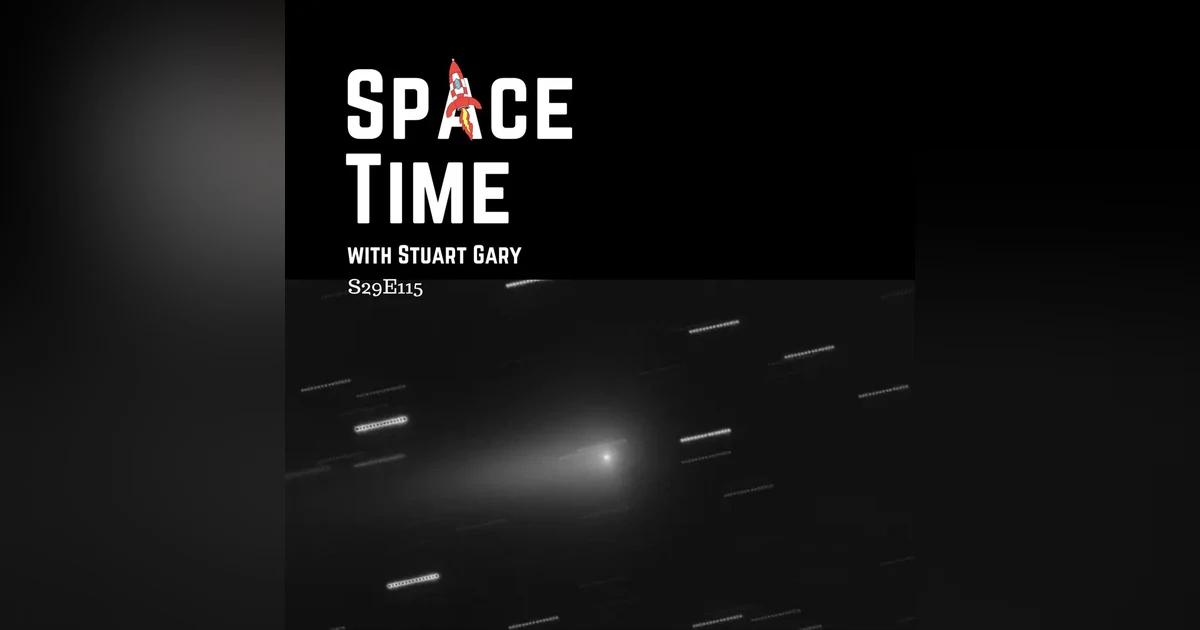
Comet 3I ATLAS: Unveiling the Secrets of an Ancient Interstellar Wanderer


 Spotify Spotify
  Apple Podcasts Apple Podcasts
  Youtube Music Youtube Music
  iHeartRadio iHeartRadio
  Spreaker Spreaker
  PocketCasts PocketCasts
  Amazon Music Amazon Music
  YouTube YouTube
  Castbox Castbox
  Deezer Deezer
  TuneIn TuneIn
  Rumble Rumble
  Overcast Overcast
  Podcast Addict Podcast Addict
  Podchaser Podchaser
  JioSaavn JioSaavn
  Castro Castro
  RSS Feed RSS Feed
 SpaceTime Series 29 Episode 115 A comet older than the Sun Astronomers have found new clues about the origin of interstellar comet 3I/ATLAS suggesting it’s more than twice as old as the Sun and solar system. The nearby “Super Earth” that might be a candidate for life Astronomers have taken a closer look at a nearby exoplanet finding it may be more Earth-like than previously thought. A new way to study the birth of the universe Scientists have discovered a new way to create quark gluon plasma – the first matter in the universe. The Science Report The number of women testing positive for gonorrhoea doubles over the past decade. New study shows people taking medicinal marijuana are far worse drivers. The growing problem of human pollution now present over the entire planet. The discovery of a half-billion-year-old fossil has rewritten the origin story of starfish Skeptics guide to the four flavours of aliens Our Guest This Week Professor Bill Collins from Curtin University Our regular guests: Alex Zaharov-Reutt from techadvice.life Tim Mendham from Australian Skeptics 🌏 Get Our Exclusive NordVPN deal here ➼ www.bitesz.com/nordvpn . The discounts and bonuses are incredible! And it’s risk-free with Nord’s 30-day money-back guarantee! ✌ If you’d like to support the podcast and gain access to bonus content by becoming a SpaceTime crew member, you can do just that through The Big Bang editions on Patreon, Spotify and Apple Podcasts. Details on the Support page on our website https://www.bitesz.com/show/spacetime/support/ For more SpaceTime and show links: https://linktr.ee/biteszHQ
The Astronomy, Space, Technology & Science News Podcast.
WEBVTT
0
00:00:00.000 --> 00:00:02.481
Stuart Gary: This is space time series 29 episode
1
00:00:02.599 --> 00:00:05.180
115 full broadcast on 25
2
00:00:05.326 --> 00:00:08.160
September 2026 coming up on
3
00:00:08.160 --> 00:00:10.880
Space, a comet older than the
4
00:00:10.880 --> 00:00:13.720
sun, the nearby super Earth planet
5
00:00:13.720 --> 00:00:16.600
that might be a candidate for life, and a
6
00:00:16.600 --> 00:00:18.880
new way to study the birth of the universe.
7
00:00:19.600 --> 00:00:22.480
All that and more coming up on, uh, Space
8
00:00:22.480 --> 00:00:25.200
Time. Welcome to
9
00:00:25.200 --> 00:00:27.280
Space Time with Stuart G.
10
00:00:43.660 --> 00:00:45.700
Astronomers have found new clues about the
11
00:00:45.700 --> 00:00:48.460
origin of interstellar comet 3I ATLAS,
12
00:00:48.460 --> 00:00:50.580
suggesting it may be more than twice as old
13
00:00:50.580 --> 00:00:53.180
as our sun and solar system. The
14
00:00:53.180 --> 00:00:55.060
findings, reported in the journal Nature
15
00:00:55.060 --> 00:00:57.460
Astronomy, are based on observations by the
16
00:00:57.460 --> 00:00:59.380
European Southern Observatory's Very Large
17
00:00:59.380 --> 00:01:01.380
Telescope in Chile, which studied the
18
00:01:01.380 --> 00:01:03.380
composition of the alien visitor, which is
19
00:01:03.380 --> 00:01:05.000
now considered to be the brightest
20
00:01:05.000 --> 00:01:07.160
interstellar object ever seen in detail.
21
00:01:08.200 --> 00:01:11.000
By measuring specific chemical fingerprints,
22
00:01:11.000 --> 00:01:13.080
the first observations of this kind for a
23
00:01:13.080 --> 00:01:15.200
comet formed outside our solar system, the
24
00:01:15.200 --> 00:01:17.480
authors found that 3i Atlas likely
25
00:01:17.480 --> 00:01:20.199
originated in the outskirts of an older star
26
00:01:20.200 --> 00:01:22.960
system. One of the study's authors,
27
00:01:22.960 --> 00:01:24.640
Cyril Opitum from the University of
28
00:01:24.640 --> 00:01:26.760
Edinburgh, says the findings are shining new
29
00:01:26.760 --> 00:01:29.080
light on the formation history of this comet.
30
00:01:29.730 --> 00:01:31.770
Interstellar comets are icy objects formed
31
00:01:31.770 --> 00:01:33.970
around stars other than the sun that have
32
00:01:33.970 --> 00:01:36.210
occasionally wandered into our solar system.
33
00:01:36.690 --> 00:01:39.250
Opidib says. They're sort of fossils from a
34
00:01:39.250 --> 00:01:41.610
planetary formation process that happen far
35
00:01:41.610 --> 00:01:43.690
away but, uh, which give scientists a chance
36
00:01:43.690 --> 00:01:46.650
to study them up close. Three Eye Atlas is
37
00:01:46.650 --> 00:01:48.290
the third interstellar object ever
38
00:01:48.290 --> 00:01:51.090
discovered. It follows One Eye Omau Maua back
39
00:01:51.090 --> 00:01:53.730
in 2017 and two I Borisov in
40
00:01:53.730 --> 00:01:56.580
2019. It was found as it was approaching
41
00:01:56.580 --> 00:01:58.740
the sun, spending enough time in our solar
42
00:01:58.740 --> 00:02:01.180
system for astronomers to study it in some
43
00:02:01.180 --> 00:02:03.780
detail. While it was difficult to measure the
44
00:02:03.780 --> 00:02:05.540
composition of the first two interstellar
45
00:02:05.540 --> 00:02:07.980
objects, with no gas detected from A MAU Maua
46
00:02:07.980 --> 00:02:10.460
and Borisov being too faint, this was not the
47
00:02:10.460 --> 00:02:13.380
case for 3i Atlas. Thanks to the object's
48
00:02:13.380 --> 00:02:15.380
unprecedented brightness, the authors were
49
00:02:15.380 --> 00:02:17.740
able to measure the comet's isotopic ratios,
50
00:02:17.740 --> 00:02:19.700
the relative amounts of different forms of
51
00:02:19.700 --> 00:02:22.530
the same element. They measured the ratios of
52
00:02:22.530 --> 00:02:25.130
carbon and nitrogen isotopes in cyanide
53
00:02:25.130 --> 00:02:27.250
molecules present in the gas around the
54
00:02:27.250 --> 00:02:30.010
comet. These ratios are a good indicator of a
55
00:02:30.010 --> 00:02:32.050
comet's origin, as they're sensitive to the
56
00:02:32.050 --> 00:02:33.730
physical conditions in the formation
57
00:02:33.730 --> 00:02:36.170
environment and not expected to change much
58
00:02:36.170 --> 00:02:38.970
as the comet travels through space. Unlike
59
00:02:38.970 --> 00:02:41.290
comets from our solar system, three EYE Atlas
60
00:02:41.290 --> 00:02:43.410
was found to carry unusually high carbon and
61
00:02:43.410 --> 00:02:45.450
nitrogen isotopic ratios.
62
00:02:46.500 --> 00:02:48.660
A similar study led by Martin Cordinna from
63
00:02:48.660 --> 00:02:50.420
NASA's Goddard Space Flight Centre in
64
00:02:50.420 --> 00:02:52.140
Greenbelt, Maryland, which was published in
65
00:02:52.140 --> 00:02:54.380
last month's Nature, found a similar isotopic
66
00:02:54.380 --> 00:02:56.740
ratio for carbon, as well as elevated levels
67
00:02:56.740 --> 00:02:59.220
of deuterium, a heavy form of hydrogen.
68
00:02:59.700 --> 00:03:01.940
That study used data from NASA's Webb Space
69
00:03:01.940 --> 00:03:04.860
Telescope. Overall, the findings by
70
00:03:04.860 --> 00:03:07.300
OPITIM's team indicate that the comet likely
71
00:03:07.300 --> 00:03:09.780
formed in the outer regions of an old low
72
00:03:09.780 --> 00:03:12.660
metallicity star. Low metallicity
73
00:03:12.660 --> 00:03:14.900
stars are ones with compositions containing
74
00:03:14.900 --> 00:03:16.980
few elements heavier than hydrogen and
75
00:03:16.980 --> 00:03:19.490
helium. These types of stars are thought to
76
00:03:19.490 --> 00:03:21.090
have formed when the universe was much
77
00:03:21.090 --> 00:03:23.250
younger and less chemically rich than what it
78
00:03:23.250 --> 00:03:26.090
is now. Therefore, the authors suspect Thria
79
00:03:26.090 --> 00:03:28.530
ATLAS originated around a star much older
80
00:03:28.530 --> 00:03:30.850
than our sun and may be more than twice as
81
00:03:30.850 --> 00:03:33.410
old as the solar system. This
82
00:03:33.410 --> 00:03:35.770
interstellar traveller was first detected by
83
00:03:35.770 --> 00:03:38.330
NASA's Asteroid Terrestrial Impact Last Alert
84
00:03:38.330 --> 00:03:41.066
System back on July 1,
85
00:03:41.194 --> 00:03:43.890
2025. David Finossia from
86
00:03:43.890 --> 00:03:46.290
NASA's Jet Propulsion Laboratory in Pasadena,
87
00:03:46.290 --> 00:03:48.810
California says It was about 670 million
88
00:03:48.810 --> 00:03:50.990
kilometres the sun within the orbit of
89
00:03:50.990 --> 00:03:52.950
Jupiter when it was first discovered.
90
00:03:52.950 --> 00:03:55.950
David Finacia: 3i Atlas was discovered on July 1st by the
91
00:03:55.950 --> 00:03:58.630
NASA funded Atlas Survey. Uh, it was
92
00:03:58.630 --> 00:04:00.710
discovered using their uh, telescope at Rio
93
00:04:00.710 --> 00:04:03.150
Hurtado in Chile and it was first detected as
94
00:04:03.150 --> 00:04:04.910
a speckled light moving relative to
95
00:04:04.910 --> 00:04:07.910
background stars. We collected a good amount
96
00:04:07.910 --> 00:04:10.110
of data, more than 100 observations. We know
97
00:04:10.110 --> 00:04:12.430
its trajectory fairly well. We know it came
98
00:04:12.430 --> 00:04:14.630
from outside the solar system. Uh, from
99
00:04:14.630 --> 00:04:16.710
images we also saw that this object is
100
00:04:16.710 --> 00:04:18.459
active. We, which means that around the
101
00:04:18.459 --> 00:04:20.339
nucleus there is some coma, which is an
102
00:04:20.339 --> 00:04:22.019
indication that this object is in fact a
103
00:04:22.019 --> 00:04:24.619
comet. Right now it's hard to say how big
104
00:04:24.619 --> 00:04:26.859
this object is because being active, the
105
00:04:26.859 --> 00:04:29.379
brightness that we see is partially due to
106
00:04:29.379 --> 00:04:31.939
the size of the object, but also, uh, is
107
00:04:31.939 --> 00:04:33.819
partially due to the activity. And so we
108
00:04:33.819 --> 00:04:36.299
cannot really pinpoint the nucleus, uh, size
109
00:04:36.539 --> 00:04:38.539
directly. We have to better understand how
110
00:04:38.539 --> 00:04:41.379
active this object is and then uh, we can
111
00:04:41.379 --> 00:04:43.419
refine the size estimate and get a good idea.
112
00:04:43.720 --> 00:04:45.440
It's moving at a velocity of about
113
00:04:45.440 --> 00:04:48.280
135,000 miles per hour. So it's going
114
00:04:48.280 --> 00:04:50.760
really fast for that distance from the sun.
115
00:04:51.000 --> 00:04:52.880
This is really exceptional. You have to be an
116
00:04:52.880 --> 00:04:54.720
interstellar object to be going that fast at
117
00:04:54.720 --> 00:04:56.800
that distance from the sun. The more data we
118
00:04:56.800 --> 00:04:59.479
get, the better we can measure the position
119
00:04:59.479 --> 00:05:01.280
of this object as it travels through the
120
00:05:01.280 --> 00:05:04.160
solar system and it moves out of it. But
121
00:05:04.160 --> 00:05:05.480
we also want to collect physical
122
00:05:05.480 --> 00:05:07.280
characterization data. For instance, we would
123
00:05:07.280 --> 00:05:09.360
like to understand better what the size of
124
00:05:09.360 --> 00:05:11.040
this object could the levels of activity.
125
00:05:11.040 --> 00:05:13.090
We're just bracing ourselves to get as much
126
00:05:13.090 --> 00:05:15.090
information as possible. We're really excited
127
00:05:15.090 --> 00:05:16.930
about these objects. So far we've discovered
128
00:05:16.930 --> 00:05:18.930
three interstellar objects. The first one was
129
00:05:18.930 --> 00:05:21.290
Oumuamua, um, in 2017, the second one
130
00:05:21.290 --> 00:05:23.690
Borisov in 2019 and now we have the third
131
00:05:23.690 --> 00:05:26.090
one, 3i Atlas. So it's a rare
132
00:05:26.090 --> 00:05:28.730
opportunity and uh, as a scientific community
133
00:05:28.730 --> 00:05:30.730
we want to collect as many data as possible
134
00:05:30.890 --> 00:05:33.450
to uh, characterise this object and learn as
135
00:05:33.450 --> 00:05:34.090
much as we can.
136
00:05:34.090 --> 00:05:36.370
Stuart Gary: That's David Fanasia from NASA's Jet
137
00:05:36.370 --> 00:05:38.450
Propulsion Laboratory in Pasadena,
138
00:05:38.450 --> 00:05:41.420
California. And this is space
139
00:05:41.420 --> 00:05:44.260
time still to come, the nearby
140
00:05:44.260 --> 00:05:46.340
super Earth planet that may be a candidate
141
00:05:46.340 --> 00:05:49.180
for life and a new way to study the birth of
142
00:05:49.180 --> 00:05:51.900
the universe. All that and more still to come
143
00:05:52.220 --> 00:05:53.340
on, um, space time.
144
00:06:09.480 --> 00:06:11.280
Astronomers have taken a closer look at a
145
00:06:11.280 --> 00:06:13.320
nearby exoplanet, finding it may be more
146
00:06:13.320 --> 00:06:15.760
Earth like than previously thought. The
147
00:06:15.760 --> 00:06:17.600
planet, catalogued as GJ
148
00:06:17.600 --> 00:06:20.240
3378b, orbits a small
149
00:06:20.240 --> 00:06:23.080
spectral type M red dwarf star 25 light years
150
00:06:23.080 --> 00:06:24.760
away in the direction of the northern
151
00:06:24.760 --> 00:06:27.760
constellation Camilla Padalis. A report in
152
00:06:27.760 --> 00:06:30.000
the Astrophysical Journal claims the planet
153
00:06:30.000 --> 00:06:32.040
orbits within the star's habitable zone.
154
00:06:32.040 --> 00:06:33.800
That's the region where temperatures could
155
00:06:33.800 --> 00:06:35.920
allow liquid water to exist on a planet's
156
00:06:35.920 --> 00:06:38.000
surface, thereby making this planet a
157
00:06:38.000 --> 00:06:40.700
candidate to host life. The
158
00:06:40.700 --> 00:06:42.820
study's lead author, Paul Robertson from the
159
00:06:42.820 --> 00:06:45.180
University of California, Irvine, says the
160
00:06:45.180 --> 00:06:48.060
mantra is follow the water. It's the one
161
00:06:48.060 --> 00:06:50.100
thing every known living thing on Earth
162
00:06:50.100 --> 00:06:52.580
needs. So that's the first thing astronomers
163
00:06:52.580 --> 00:06:54.660
look for when trying to find environments
164
00:06:54.660 --> 00:06:57.060
that could sustain life, at least life as we
165
00:06:57.060 --> 00:06:59.900
know it. So Robertson and colleagues took
166
00:06:59.900 --> 00:07:01.940
a closer look and found that it may be more
167
00:07:01.940 --> 00:07:04.540
Earth like than they previously thought. Red
168
00:07:04.540 --> 00:07:06.580
dwarfs are the smallest, coolest group of
169
00:07:06.580 --> 00:07:08.340
stars. They have surface temperatures of
170
00:07:08.340 --> 00:07:11.020
around 2,400 to 3,900 degrees
171
00:07:11.170 --> 00:07:13.730
degrees that compares to the sun's 6,000
172
00:07:13.730 --> 00:07:16.610
degrees. They're also much smaller and dimmer
173
00:07:16.610 --> 00:07:19.050
than our sun and often appear reddish, hence
174
00:07:19.050 --> 00:07:21.770
their name. But red dwarfs are the most
175
00:07:21.770 --> 00:07:24.290
common type of star in the galaxy, making up
176
00:07:24.290 --> 00:07:27.169
some 70% of the entire galactic stellar
177
00:07:27.169 --> 00:07:29.650
population. However, the problem with red
178
00:07:29.650 --> 00:07:32.290
dwarfs is they tend to launch stellar flares
179
00:07:32.290 --> 00:07:35.250
far more often than sun like stars. And this
180
00:07:35.250 --> 00:07:37.410
intense stellar flare activity can erode a
181
00:07:37.410 --> 00:07:39.850
planet's atmosphere, irradiating its surface
182
00:07:39.850 --> 00:07:42.050
and any life that may be on that surface.
183
00:07:42.780 --> 00:07:44.940
Also, because these stars are so dim and
184
00:07:44.940 --> 00:07:47.060
Earth like planets are so small, they can be
185
00:07:47.060 --> 00:07:48.980
very difficult to detect and require
186
00:07:48.980 --> 00:07:51.820
specialised instrumentation. So to Learn
187
00:07:51.820 --> 00:07:54.500
more about JG3378B, the
188
00:07:54.500 --> 00:07:56.820
authors used the Habitable Zone Planet Finder
189
00:07:56.820 --> 00:07:58.940
instrument on the Hobby Eberley telescope at
190
00:07:58.940 --> 00:08:01.140
the McDonald Observatory in order to study
191
00:08:01.140 --> 00:08:04.020
its host star. As the planet orbits
192
00:08:04.020 --> 00:08:06.620
the star, its gravitational force tugs on the
193
00:08:06.620 --> 00:08:09.460
star. This creates a slight wobble, a
194
00:08:09.460 --> 00:08:11.420
Doppler shift, which is visible on the host
195
00:08:11.420 --> 00:08:14.030
star. And that Doppler shift can be used to
196
00:08:14.030 --> 00:08:16.510
calculate a planet's mass and orbit. The
197
00:08:16.510 --> 00:08:19.030
habitable zone Planet Finder is optimised to
198
00:08:19.030 --> 00:08:22.030
use infrared light. As a star gets smaller
199
00:08:22.030 --> 00:08:23.990
and they get cooler, most of their energy
200
00:08:23.990 --> 00:08:26.630
comes out in infrared wavelengths. So
201
00:08:26.630 --> 00:08:28.750
astronomers put an infrared spectrometer on
202
00:08:28.750 --> 00:08:31.190
the 10 metre telescope, giving them more raw
203
00:08:31.190 --> 00:08:33.470
light collecting power to observe these faint
204
00:08:33.470 --> 00:08:35.670
stars. GJ
205
00:08:35.670 --> 00:08:38.470
3378b is described as a super
206
00:08:38.470 --> 00:08:40.950
earth that is a terrestrial or rocky planet,
207
00:08:40.950 --> 00:08:43.150
larger than the Earth, but not so big as to
208
00:08:43.150 --> 00:08:45.169
hold onto a thick atmosphere that would crush
209
00:08:45.169 --> 00:08:47.849
any life on its surface. When the planet was
210
00:08:47.849 --> 00:08:50.209
first discovered in 2024, it was thought to
211
00:08:50.209 --> 00:08:52.209
be about five times the mass of the Earth.
212
00:08:52.289 --> 00:08:54.569
But this new analysis shows it's closer to
213
00:08:54.569 --> 00:08:57.449
around 2.3 times Earth's mass. And that
214
00:08:57.449 --> 00:08:59.609
change increases the likelihood that the
215
00:08:59.609 --> 00:09:02.129
planet doesn't hold a smothering atmosphere.
216
00:09:02.449 --> 00:09:04.609
The authors also refined the planet's orbit
217
00:09:04.609 --> 00:09:06.929
down from 25 Earth days to 21.
218
00:09:07.600 --> 00:09:09.689
Uh, even though both of these are tiny orbits
219
00:09:09.689 --> 00:09:10.870
compared to, in comparison, the Earth has a
220
00:09:10.870 --> 00:09:13.590
365 day orbit with a host star roughly a
221
00:09:13.590 --> 00:09:16.030
third the size of our sun. That proximity is
222
00:09:16.030 --> 00:09:18.110
necessary to place the planet within that
223
00:09:18.110 --> 00:09:20.830
star's habitable zone. Now, that said,
224
00:09:20.830 --> 00:09:23.150
its smaller orbit also subjects the planet to
225
00:09:23.150 --> 00:09:25.430
intense radiation which could evaporate any
226
00:09:25.430 --> 00:09:27.870
atmosphere present. So more
227
00:09:27.870 --> 00:09:30.030
observations will be needed for astronomers
228
00:09:30.030 --> 00:09:32.630
to be sure. This, uh, is space time
229
00:09:33.270 --> 00:09:36.030
still to come. A new way to study the birth
230
00:09:36.030 --> 00:09:38.410
of the universe. And later in the Science
231
00:09:38.410 --> 00:09:40.770
report, the discovery of a half billion year
232
00:09:40.770 --> 00:09:43.370
old fossil which has rewritten the origin
233
00:09:43.370 --> 00:09:46.170
storey of starfish. All that and more still
234
00:09:46.170 --> 00:09:48.210
to come on, um, space time.
235
00:09:53.970 --> 00:09:55.850
Scientists have discovered a new way to
236
00:09:55.850 --> 00:09:58.490
create a glide gluon plasma, the first matter
237
00:09:58.490 --> 00:10:01.090
to form in our universe. The findings,
238
00:10:01.170 --> 00:10:02.850
reported in the journal Physical Review
239
00:10:02.850 --> 00:10:05.210
Letters, opens a new window on the first
240
00:10:05.210 --> 00:10:08.190
microseconds after the big bang, 13.8
241
00:10:08.190 --> 00:10:10.790
billion years ago. What happened in those
242
00:10:10.790 --> 00:10:13.070
first moments of the universe, before the
243
00:10:13.070 --> 00:10:14.910
building blocks of life and the world as we
244
00:10:14.910 --> 00:10:17.870
know it came into existence? Physicists at
245
00:10:17.870 --> 00:10:20.150
cern, the European Organisation for Nuclear
246
00:10:20.150 --> 00:10:22.070
Research, are trying to answer this question
247
00:10:22.150 --> 00:10:24.750
by recreating some of the extreme conditions
248
00:10:24.750 --> 00:10:26.990
that prevailed in the universe at the very
249
00:10:26.990 --> 00:10:29.790
beginning of time. Now, researchers from the
250
00:10:29.790 --> 00:10:31.590
Niels Bohr Institute, together with
251
00:10:31.590 --> 00:10:33.350
colleagues from the alice collaboration at
252
00:10:33.350 --> 00:10:35.350
CERN's Large Hadron Collider, the world's
253
00:10:35.350 --> 00:10:37.150
biggest atom smasher have come one step
254
00:10:37.150 --> 00:10:39.180
closer to understanding those conditions.
255
00:10:40.050 --> 00:10:42.690
At CERN, uh, physicists collide atomic nuclei
256
00:10:42.690 --> 00:10:45.490
at some 99.9999%
257
00:10:45.490 --> 00:10:47.970
the speed of light, in the process creating
258
00:10:47.970 --> 00:10:50.010
the tiny droplets of primordial matter that
259
00:10:50.010 --> 00:10:51.770
filled the universe during its first
260
00:10:51.770 --> 00:10:54.570
millionth of a second of creation. This
261
00:10:54.570 --> 00:10:57.570
substance is known as quark gluon plasma, and
262
00:10:57.570 --> 00:10:58.970
it's thought to have been the earliest form
263
00:10:58.970 --> 00:11:01.810
of matter in our universe. For many
264
00:11:01.810 --> 00:11:04.170
years, scientists have assumed that creating
265
00:11:04.170 --> 00:11:06.770
this plasma required collisions between very
266
00:11:06.770 --> 00:11:09.210
heavy atomic nuclei, such as leading.
267
00:11:09.680 --> 00:11:11.960
But physicists from the Niels Bohr Institute
268
00:11:11.960 --> 00:11:13.760
have now succeeded in creating this
269
00:11:13.760 --> 00:11:16.000
primordial matter by smashing much smaller
270
00:11:16.000 --> 00:11:18.680
nuclei of oxygen 16 and neon 20
271
00:11:18.680 --> 00:11:21.640
together. The study's lead author, uh Xiao
272
00:11:21.640 --> 00:11:23.440
Xu from the Niels Bohr Institute and the
273
00:11:23.440 --> 00:11:25.880
University of Copenhagen, says they've pushed
274
00:11:25.880 --> 00:11:27.920
the boundaries for how small the atomic
275
00:11:27.920 --> 00:11:30.480
nuclei can be while still recreating this
276
00:11:30.480 --> 00:11:33.280
quark gluon plasma. The discovery
277
00:11:33.280 --> 00:11:35.400
means scientists now know more about the
278
00:11:35.400 --> 00:11:37.510
fundamental conditions required required for
279
00:11:37.510 --> 00:11:40.230
matter to transition into this extreme state.
280
00:11:40.710 --> 00:11:42.990
This in turn will help researchers better
281
00:11:42.990 --> 00:11:45.110
understand how plasma behaved during the
282
00:11:45.110 --> 00:11:47.270
first moments of the universe and how it
283
00:11:47.270 --> 00:11:49.590
later evolved into the forms of matter that
284
00:11:49.590 --> 00:11:52.310
everything we see around us today is made of.
285
00:11:53.190 --> 00:11:55.510
When the atomic nuclei collide, their
286
00:11:55.510 --> 00:11:57.790
constituents, ah, are transformed into tiny
287
00:11:57.790 --> 00:12:00.190
droplets of quark gluon plasma that exist for
288
00:12:00.190 --> 00:12:03.110
just a fraction of a second. This droplet of
289
00:12:03.110 --> 00:12:05.510
extremely hot matter then expands.
290
00:12:06.710 --> 00:12:08.390
Researchers can't observe the plasma
291
00:12:08.390 --> 00:12:10.550
directly, but they can measure the particles
292
00:12:10.550 --> 00:12:12.350
that this matter turns into shortly
293
00:12:12.350 --> 00:12:15.150
afterwards. And the movement pattern of these
294
00:12:15.150 --> 00:12:17.510
particles reveals the shape of the atomic
295
00:12:17.510 --> 00:12:20.429
nucleus. Collisions between two oxygen
296
00:12:20.429 --> 00:12:22.950
nuclei produce a more rounded pattern, While
297
00:12:22.950 --> 00:12:25.110
collisions involving neon produce a more
298
00:12:25.110 --> 00:12:27.750
boiling pin shaped pattern. The particles
299
00:12:27.750 --> 00:12:29.750
from the primordial matter are, uh, directly
300
00:12:29.750 --> 00:12:31.950
governed by the geometric shape of their
301
00:12:31.950 --> 00:12:34.550
atomic nucleus. So if two atomic
302
00:12:34.550 --> 00:12:36.510
nuclei being smashed together are spherical,
303
00:12:36.510 --> 00:12:38.270
they'll produce one pattern. And if they're
304
00:12:38.270 --> 00:12:40.030
shaped like bowling pins, they'll produce
305
00:12:40.030 --> 00:12:42.790
another. By studying how the particles move
306
00:12:42.790 --> 00:12:44.710
after the collision, scientists can gain
307
00:12:44.710 --> 00:12:46.870
fresh insights into atomic nuclei that would
308
00:12:46.870 --> 00:12:49.670
otherwise be difficult to obtain. The authors
309
00:12:49.670 --> 00:12:51.750
describe it as being like shining a light on
310
00:12:51.750 --> 00:12:54.390
an object and seeing its shadow. You can't
311
00:12:54.390 --> 00:12:56.230
see the object directly, but its shadow
312
00:12:56.230 --> 00:12:58.870
reveals its shape. In the same way, the
313
00:12:58.870 --> 00:13:00.470
movement of these particles reveals reveals
314
00:13:00.470 --> 00:13:02.670
the geometric shape of the atomic nuclei
315
00:13:02.670 --> 00:13:04.270
present at the beginning of the collision.
316
00:13:04.590 --> 00:13:07.150
The shape of an atomic nucleus is not merely
317
00:13:07.150 --> 00:13:09.790
a matter of geometry. It reveals how
318
00:13:09.790 --> 00:13:11.990
protons and neutrons are organised and
319
00:13:11.990 --> 00:13:14.030
provides important information about the
320
00:13:14.030 --> 00:13:16.429
strong nuclear force, One of nature's four
321
00:13:16.429 --> 00:13:18.430
fundamental forces which scientists are still
322
00:13:18.430 --> 00:13:20.710
trying to fully understand. The others being
323
00:13:20.710 --> 00:13:22.950
the weak nuclear force, the electromagnetic
324
00:13:22.950 --> 00:13:25.550
force and gravity. That assumes, of course,
325
00:13:25.550 --> 00:13:28.180
that gravity really is a force, which it's
326
00:13:28.180 --> 00:13:30.700
probably not. Until now,
327
00:13:30.700 --> 00:13:32.540
physicists have primarily investigated
328
00:13:32.540 --> 00:13:34.900
nuclear structure at low energies by studying
329
00:13:34.900 --> 00:13:37.140
things like the rotation and vibration of
330
00:13:37.140 --> 00:13:40.100
atomic nuclei. Zhao says the precise
331
00:13:40.100 --> 00:13:42.180
understanding of nuclear structure helps
332
00:13:42.180 --> 00:13:44.220
scientists understand the strong nuclear
333
00:13:44.220 --> 00:13:46.940
force. But instead of carefully investigating
334
00:13:46.940 --> 00:13:48.980
nuclei at low energies, they've smashed
335
00:13:48.980 --> 00:13:50.980
together at the highest energies, allowing
336
00:13:50.980 --> 00:13:52.860
scientists to read their shape from the
337
00:13:52.860 --> 00:13:55.560
imprint they leave behind. Researchers still
338
00:13:55.560 --> 00:13:57.480
don't know the exact boundary when a quark,
339
00:13:57.480 --> 00:14:00.200
gluon, um, plasma can be created. So the next
340
00:14:00.200 --> 00:14:02.040
step will be to try experiments with even
341
00:14:02.040 --> 00:14:04.960
lighter nuclei, such as helium 4. The
342
00:14:04.960 --> 00:14:07.160
experiment will allow scientists to both
343
00:14:07.160 --> 00:14:09.240
learn about the structure of atomic nuclei
344
00:14:09.240 --> 00:14:11.240
and to gain a better understanding of what
345
00:14:11.240 --> 00:14:13.080
happened during the birth of the universe.
346
00:14:14.200 --> 00:14:16.840
And it turns out these two things may be much
347
00:14:16.840 --> 00:14:19.080
more closely connected than previously
348
00:14:19.080 --> 00:14:19.400
thought.
349
00:14:21.010 --> 00:14:22.130
This is space, time.
350
00:14:38.050 --> 00:14:40.090
And time outta. Take another brief look at
351
00:14:40.090 --> 00:14:41.690
some of the other storeys making news in
352
00:14:41.690 --> 00:14:43.730
Science this week with the Science Report.
353
00:14:44.530 --> 00:14:47.010
A major sexual health clinic in Melbourne has
354
00:14:47.010 --> 00:14:49.210
seen an almost doubling over the past decade
355
00:14:49.210 --> 00:14:51.650
of women testing positive for gonorrhoea.
356
00:14:52.110 --> 00:14:53.910
The authors analysed data from the clinic
357
00:14:53.910 --> 00:14:56.790
between 2015 and 2024, looking for the
358
00:14:56.790 --> 00:14:58.510
characteristics of women contracting
359
00:14:58.510 --> 00:15:00.470
gonorrhoea amid a rise in sexually
360
00:15:00.470 --> 00:15:02.750
transmitted diseases among women in Melbourne
361
00:15:02.750 --> 00:15:05.750
in recent years. The findings reported in the
362
00:15:05.750 --> 00:15:07.870
journal Sexual Health Cher gonorrhoea cases
363
00:15:07.870 --> 00:15:10.790
increased from 1.3% in 2015 to
364
00:15:10.790 --> 00:15:13.510
2.3% in 2024. The
365
00:15:13.510 --> 00:15:15.390
authors say the women diagnosed were
366
00:15:15.390 --> 00:15:17.790
predominantly young, had multiple casual male
367
00:15:17.790 --> 00:15:19.560
partners and used condoms in contemporary
368
00:15:19.710 --> 00:15:22.430
Consistently oral gonorrhoea saw the largest
369
00:15:22.430 --> 00:15:25.150
increase in cases during the study. Most of
370
00:15:25.150 --> 00:15:27.350
these cases are asymptomatic and can only be
371
00:15:27.350 --> 00:15:29.150
picked up through regular screening.
372
00:15:30.350 --> 00:15:32.670
The New South Wales State government has just
373
00:15:32.670 --> 00:15:34.990
passed new legislation allowing people to
374
00:15:34.990 --> 00:15:37.190
drive when under the influence of medicinal
375
00:15:37.190 --> 00:15:40.190
cannabis. The passing of this bill comes as
376
00:15:40.190 --> 00:15:42.910
Canadian researchers have analysed 40 regular
377
00:15:42.910 --> 00:15:45.350
edible cannabis users testing their driving
378
00:15:45.350 --> 00:15:47.990
skills in a simulator before and after eating
379
00:15:47.990 --> 00:15:50.850
THC gummies. The findings reported
380
00:15:50.850 --> 00:15:52.250
in the Journal of the American Medical
381
00:15:52.250 --> 00:15:54.610
association show that higher doses of
382
00:15:54.610 --> 00:15:57.570
THC led to poorer lane control, slower
383
00:15:57.570 --> 00:16:00.370
reaction times and less consistent speeds.
384
00:16:00.850 --> 00:16:02.890
And um, that's despite the participants blood
385
00:16:02.890 --> 00:16:04.730
tests showed they remained below the legal
386
00:16:04.730 --> 00:16:07.210
thresholds for driving with cannabis in
387
00:16:07.210 --> 00:16:09.570
Canada, New Zealand and now New South Wales.
388
00:16:09.570 --> 00:16:12.050
That legal limit is 5 nanograms per
389
00:16:12.050 --> 00:16:14.770
millilitre. Human
390
00:16:14.850 --> 00:16:17.330
pollution affects our entire planet,
391
00:16:17.330 --> 00:16:19.650
destroying environments wherever people go
392
00:16:20.520 --> 00:16:22.600
Now a report in the journal PLOS ONE
393
00:16:22.600 --> 00:16:24.840
describes how researchers have found plastic
394
00:16:24.840 --> 00:16:26.480
litter on more than half of their remotely
395
00:16:26.480 --> 00:16:28.600
operated dives to the bottom of the Mardel
396
00:16:28.600 --> 00:16:31.240
Plata canyon near Argentina, three kilometres
397
00:16:31.240 --> 00:16:34.040
below the sea surface. After 17
398
00:16:34.200 --> 00:16:37.040
dives in 2025, scientists analysed
399
00:16:37.040 --> 00:16:39.640
approximately 240 hours of video footage,
400
00:16:39.640 --> 00:16:41.560
finding some stationary creatures like
401
00:16:41.560 --> 00:16:44.080
starfish and corals had attached to the trash
402
00:16:44.080 --> 00:16:46.200
dumped by humans, including packets of fried
403
00:16:46.200 --> 00:16:49.060
noodles, plastic cups and even old boots.
404
00:16:49.540 --> 00:16:51.820
A few months earlier, expeditions found cans
405
00:16:51.820 --> 00:16:53.900
and plastic bags on the bottom of the Mariana
406
00:16:53.900 --> 00:16:56.220
Trench, the planet's deepest fissure in the
407
00:16:56.220 --> 00:16:57.620
western Pacific Ocean.
408
00:16:59.060 --> 00:17:01.100
The discovery of a half billion year old
409
00:17:01.100 --> 00:17:03.540
fossil has rewritten the origin history of
410
00:17:03.540 --> 00:17:06.300
starfish. Palaeontologists uncovered the
411
00:17:06.300 --> 00:17:09.060
518 million year old remains in southwestern
412
00:17:09.060 --> 00:17:11.780
China. It comes from a period of rapid
413
00:17:11.780 --> 00:17:13.500
evolutionary development known as the
414
00:17:13.500 --> 00:17:15.860
Cambrian Explosion, when most major animal
415
00:17:15.860 --> 00:17:17.860
groups first appeared in the fossil record.
416
00:17:18.589 --> 00:17:20.980
The new find, named Eugenia glunitotinica,
417
00:17:20.980 --> 00:17:23.109
uh, are thought to be closely related to the
418
00:17:23.109 --> 00:17:25.989
last common ancestor of Ambula clarians, the
419
00:17:25.989 --> 00:17:28.069
modern group that includes starfish, sea
420
00:17:28.069 --> 00:17:30.269
stars, sea urchins and acorn worms.
421
00:17:30.829 --> 00:17:33.189
A report in the journal Current Biology shows
422
00:17:33.189 --> 00:17:35.109
the new discovery ate their food using
423
00:17:35.109 --> 00:17:37.669
tentacles and not passively using their gills
424
00:17:37.669 --> 00:17:40.500
as previously thought. A,
425
00:17:40.500 --> 00:17:42.909
uh, pseudoscience and UFO researcher says
426
00:17:42.909 --> 00:17:45.029
he's uncovered evidence that four different
427
00:17:45.029 --> 00:17:47.549
types of extraterrestrial alien species have
428
00:17:47.549 --> 00:17:50.420
visited our planet. Hal Putoff, a
429
00:17:50.420 --> 00:17:52.540
former Advanced Aerospace Weapons System
430
00:17:52.540 --> 00:17:55.460
Applications programme advisor and CIA funded
431
00:17:55.460 --> 00:17:57.140
researcher, uh, claims bodies of four
432
00:17:57.140 --> 00:17:59.020
different species have been recovered from
433
00:17:59.020 --> 00:18:01.260
various UFO crashes by the US government.
434
00:18:01.900 --> 00:18:03.990
But as the sceptics Timms Mendham points out,
435
00:18:03.990 --> 00:18:06.260
uh, he's provided no evidence to support his
436
00:18:06.260 --> 00:18:06.700
claims.
437
00:18:06.700 --> 00:18:08.380
Tim Mendham: They all look a bit humanoid, which is, I
438
00:18:08.380 --> 00:18:09.740
don't know, to me, surprising. I don't know
439
00:18:09.740 --> 00:18:11.460
why aliens always have to look like humans.
440
00:18:11.460 --> 00:18:13.900
Now to our octopus people. No, no, no
441
00:18:14.220 --> 00:18:16.060
sentient bacteria or anything like that.
442
00:18:16.060 --> 00:18:17.740
There's the lizard people who look like
443
00:18:17.740 --> 00:18:19.620
lizards have tails. Uh, there's the Nordic
444
00:18:19.620 --> 00:18:21.440
who look very sort of glamour Norwegian
445
00:18:21.440 --> 00:18:23.640
looking people. There's the insect people who
446
00:18:23.640 --> 00:18:25.400
are a bit scary, look like praying mantises,
447
00:18:25.530 --> 00:18:27.640
um, and of course there's the greys, the
448
00:18:27.640 --> 00:18:30.040
cliched modern looking little people, big
449
00:18:30.040 --> 00:18:31.840
heads, big eyes, that sort of thing. They all
450
00:18:31.840 --> 00:18:34.720
have sort of hands, fingers, five, obviously
451
00:18:34.720 --> 00:18:37.280
scary in some cases, some cases benign. You
452
00:18:37.280 --> 00:18:38.560
got to look at the people who are promoting
453
00:18:38.560 --> 00:18:39.800
this stuff. I mean, obviously there's no
454
00:18:39.800 --> 00:18:41.240
evidence for it at all. There's just
455
00:18:41.240 --> 00:18:43.600
conjecture, made up, cliches, memes,
456
00:18:43.600 --> 00:18:45.160
whatever. Some of the people promoting it,
457
00:18:45.160 --> 00:18:47.560
one in particular recently is Dr. Hal
458
00:18:47.560 --> 00:18:50.160
Puthoff, who was a former
459
00:18:50.240 --> 00:18:52.600
Advanced Aerospace Weapons Systems
460
00:18:52.600 --> 00:18:54.920
Application programme revisor for it. He was
461
00:18:54.920 --> 00:18:56.720
also involved in a place called the Stanford
462
00:18:56.720 --> 00:18:59.130
Research Institute back in the 70s with a uh,
463
00:18:59.130 --> 00:19:00.680
Harold Targ partner, uh, who were
464
00:19:00.680 --> 00:19:02.640
investigating Uri Geller. And they came out
465
00:19:02.640 --> 00:19:04.880
very much in favour of Uri Geller, saying he
466
00:19:04.880 --> 00:19:06.840
had definite spoon bending talents and all
467
00:19:06.840 --> 00:19:08.600
sorts of psychic powers and things. The
468
00:19:08.600 --> 00:19:10.600
protocols that they used in their laboratory
469
00:19:10.600 --> 00:19:12.160
testing were very dodgy or at least
470
00:19:12.160 --> 00:19:13.760
questionable, let's put it that way. And
471
00:19:13.760 --> 00:19:15.960
certainly someone as sceptic is noted as
472
00:19:15.960 --> 00:19:17.920
James Randi. The late James Randi described
473
00:19:17.920 --> 00:19:19.490
them as the Laurel and Hardy of uh,
474
00:19:19.490 --> 00:19:22.020
parapsychology research. But he has come out
475
00:19:22.020 --> 00:19:23.620
recently and said that there is definitely
476
00:19:23.620 --> 00:19:26.420
these four types of UFO occupants. He
477
00:19:26.420 --> 00:19:28.340
hasn't seen them of course, but he's heard of
478
00:19:28.340 --> 00:19:31.020
them. He said testimony from members of
479
00:19:31.020 --> 00:19:33.900
supposed crash retrieval programmes who tend
480
00:19:33.900 --> 00:19:35.500
not to come forward to actually talk about
481
00:19:35.500 --> 00:19:37.260
their work because they fear for their lives.
482
00:19:37.260 --> 00:19:38.980
It's annoying that all these people with
483
00:19:38.980 --> 00:19:40.420
evidence don't come forward with it. So
484
00:19:40.420 --> 00:19:42.020
therefore you have to say, well what evidence
485
00:19:42.020 --> 00:19:43.700
do they have? I could say the, the moon is
486
00:19:43.700 --> 00:19:45.100
made of cheese. And people say where's the
487
00:19:45.100 --> 00:19:46.740
evidence? Well I can't give it to you because
488
00:19:46.740 --> 00:19:48.220
it's secret, you know. And you say right,
489
00:19:48.220 --> 00:19:50.300
okay, I'm supposed to believe that. So all
490
00:19:50.300 --> 00:19:52.300
these people who are claiming UFOs and they
491
00:19:52.300 --> 00:19:54.380
know of someone who know of someone who knows
492
00:19:54.380 --> 00:19:56.980
of someone who has seen these occupants of
493
00:19:57.060 --> 00:19:59.180
interplanetary uh, craft, there's no evidence
494
00:19:59.180 --> 00:19:59.500
for it.
495
00:19:59.500 --> 00:20:01.580
And you get people like Al Puthoff who might
496
00:20:01.580 --> 00:20:03.660
be going through attention deficit disorder.
497
00:20:03.660 --> 00:20:05.620
He wants to sort of put his hand up again
498
00:20:05.780 --> 00:20:07.820
even in his aged years or something because
499
00:20:07.820 --> 00:20:09.340
he has been around a long time, since the
500
00:20:09.340 --> 00:20:12.220
early 70s. His record is not crash shot. So
501
00:20:12.220 --> 00:20:14.220
as a source of information, despite the fact
502
00:20:14.220 --> 00:20:16.100
he supposedly has this sort of research
503
00:20:16.100 --> 00:20:18.220
background, it's not necessarily as exciting
504
00:20:18.220 --> 00:20:20.180
as it might sound to be. Not necessarily as
505
00:20:20.260 --> 00:20:22.040
respectable, uh, or reliable as it might
506
00:20:22.040 --> 00:20:24.560
sound to be. Saying I worked with the CIA on
507
00:20:24.790 --> 00:20:26.600
uh, projects in the 70s is nothing
508
00:20:26.600 --> 00:20:28.520
particularly exciting. So you see I was
509
00:20:28.520 --> 00:20:30.280
funding anything going and came out with
510
00:20:30.280 --> 00:20:32.360
nothing at the end. But anyway, Hal put off
511
00:20:32.360 --> 00:20:33.800
you're saying there's four, um, different
512
00:20:33.800 --> 00:20:36.240
types of aliens, all of whom look humanish.
513
00:20:36.320 --> 00:20:38.880
And uh, none of them any evidence for them at
514
00:20:38.880 --> 00:20:40.480
all. There was a documentary made about
515
00:20:40.480 --> 00:20:42.400
disclosure things. This is before the.
516
00:20:42.480 --> 00:20:43.880
Stuart Gary: Let's call it a mockumentary.
517
00:20:43.880 --> 00:20:45.680
Tim Mendham: It's a, it's a mockumentary with nothing new.
518
00:20:45.680 --> 00:20:48.440
It's Age of Disclosure had a lot of puffery
519
00:20:48.440 --> 00:20:50.560
before it came out and people have seen it
520
00:20:50.560 --> 00:20:52.040
say there's nothing new there. It's all the
521
00:20:52.040 --> 00:20:54.020
same old same old, same characters who keep
522
00:20:54.020 --> 00:20:55.500
appearing and being interviewed. Of course
523
00:20:55.500 --> 00:20:57.500
it's going to it's a preamble to the film,
524
00:20:57.500 --> 00:20:59.620
Spielberg film called Disclosure talks about
525
00:20:59.620 --> 00:21:01.940
alien interaction with people, etc. All sorts
526
00:21:01.940 --> 00:21:03.500
of, you know, they walk among us type things.
527
00:21:03.500 --> 00:21:05.700
No real evidence and a lot of claims but no
528
00:21:05.700 --> 00:21:07.940
evidence. And that goes on has been going on
529
00:21:07.940 --> 00:21:10.900
since the 1940s and every researcher of UFOs
530
00:21:10.900 --> 00:21:12.740
has always said any day now is going to be
531
00:21:12.740 --> 00:21:15.220
the great reveal. And that day has never
532
00:21:15.220 --> 00:21:17.940
arisen. So we're waiting. They've never
533
00:21:17.940 --> 00:21:20.260
presented, never presented any irrefutable
534
00:21:20.260 --> 00:21:22.260
anything close to irrefutable evidence. Just
535
00:21:22.260 --> 00:21:22.660
claims.
536
00:21:22.660 --> 00:21:24.990
Stuart Gary: That's the sceptics. Timms Mendham and this
537
00:21:24.990 --> 00:21:25.830
is Space Time.
538
00:21:41.350 --> 00:21:44.230
And that's the show for now. Space Time
539
00:21:44.230 --> 00:21:46.310
is available every Monday, Wednesday and
540
00:21:46.310 --> 00:21:49.190
Friday through bytes.com soundcloud,
541
00:21:49.190 --> 00:21:51.620
YouTube, your favourite podcast download
542
00:21:51.620 --> 00:21:52.780
provider, and from
543
00:21:52.780 --> 00:21:54.900
spacetimewithstuartgarry.com
544
00:21:55.460 --> 00:21:57.460
spacetime is also broadcast through the
545
00:21:57.460 --> 00:21:59.700
National Science foundation on Science Zone
546
00:21:59.700 --> 00:22:02.180
Radio and on both iHeartradio and
547
00:22:02.180 --> 00:22:05.100
TuneIn radio. And you can help to support our
548
00:22:05.100 --> 00:22:07.820
show by visiting the Space Store for a range
549
00:22:07.820 --> 00:22:10.580
of promotional merchandising goodies or by
550
00:22:10.580 --> 00:22:12.980
becoming a Space patron, which gives you
551
00:22:12.980 --> 00:22:14.980
access to triple episode commercial free
552
00:22:14.980 --> 00:22:17.020
versions of the show, as well as lots of
553
00:22:17.020 --> 00:22:19.380
bonus audio content which doesn't go to air,
554
00:22:19.540 --> 00:22:21.900
access to our exclusive Facebook group, and
555
00:22:21.900 --> 00:22:24.020
other rewards. Just go to
556
00:22:24.020 --> 00:22:26.540
spacetimewithstuartgarry.com for full
557
00:22:26.540 --> 00:22:29.460
details. You've been listening to Space Time
558
00:22:29.460 --> 00:22:31.940
with Stuart Gary. This has been another
559
00:22:32.020 --> 00:22:34.900
quality podcast production from bytes.com.
0
00:00:00.000 --> 00:00:02.481
Stuart Gary: This is space time series 29 episode
1
00:00:02.599 --> 00:00:05.180
115 full broadcast on 25
2
00:00:05.326 --> 00:00:08.160
September 2026 coming up on
3
00:00:08.160 --> 00:00:10.880
Space, a comet older than the
4
00:00:10.880 --> 00:00:13.720
sun, the nearby super Earth planet
5
00:00:13.720 --> 00:00:16.600
that might be a candidate for life, and a
6
00:00:16.600 --> 00:00:18.880
new way to study the birth of the universe.
7
00:00:19.600 --> 00:00:22.480
All that and more coming up on, uh, Space
8
00:00:22.480 --> 00:00:25.200
Time. Welcome to
9
00:00:25.200 --> 00:00:27.280
Space Time with Stuart G.
10
00:00:43.660 --> 00:00:45.700
Astronomers have found new clues about the
11
00:00:45.700 --> 00:00:48.460
origin of interstellar comet 3I ATLAS,
12
00:00:48.460 --> 00:00:50.580
suggesting it may be more than twice as old
13
00:00:50.580 --> 00:00:53.180
as our sun and solar system. The
14
00:00:53.180 --> 00:00:55.060
findings, reported in the journal Nature
15
00:00:55.060 --> 00:00:57.460
Astronomy, are based on observations by the
16
00:00:57.460 --> 00:00:59.380
European Southern Observatory's Very Large
17
00:00:59.380 --> 00:01:01.380
Telescope in Chile, which studied the
18
00:01:01.380 --> 00:01:03.380
composition of the alien visitor, which is
19
00:01:03.380 --> 00:01:05.000
now considered to be the brightest
20
00:01:05.000 --> 00:01:07.160
interstellar object ever seen in detail.
21
00:01:08.200 --> 00:01:11.000
By measuring specific chemical fingerprints,
22
00:01:11.000 --> 00:01:13.080
the first observations of this kind for a
23
00:01:13.080 --> 00:01:15.200
comet formed outside our solar system, the
24
00:01:15.200 --> 00:01:17.480
authors found that 3i Atlas likely
25
00:01:17.480 --> 00:01:20.199
originated in the outskirts of an older star
26
00:01:20.200 --> 00:01:22.960
system. One of the study's authors,
27
00:01:22.960 --> 00:01:24.640
Cyril Opitum from the University of
28
00:01:24.640 --> 00:01:26.760
Edinburgh, says the findings are shining new
29
00:01:26.760 --> 00:01:29.080
light on the formation history of this comet.
30
00:01:29.730 --> 00:01:31.770
Interstellar comets are icy objects formed
31
00:01:31.770 --> 00:01:33.970
around stars other than the sun that have
32
00:01:33.970 --> 00:01:36.210
occasionally wandered into our solar system.
33
00:01:36.690 --> 00:01:39.250
Opidib says. They're sort of fossils from a
34
00:01:39.250 --> 00:01:41.610
planetary formation process that happen far
35
00:01:41.610 --> 00:01:43.690
away but, uh, which give scientists a chance
36
00:01:43.690 --> 00:01:46.650
to study them up close. Three Eye Atlas is
37
00:01:46.650 --> 00:01:48.290
the third interstellar object ever
38
00:01:48.290 --> 00:01:51.090
discovered. It follows One Eye Omau Maua back
39
00:01:51.090 --> 00:01:53.730
in 2017 and two I Borisov in
40
00:01:53.730 --> 00:01:56.580
2019. It was found as it was approaching
41
00:01:56.580 --> 00:01:58.740
the sun, spending enough time in our solar
42
00:01:58.740 --> 00:02:01.180
system for astronomers to study it in some
43
00:02:01.180 --> 00:02:03.780
detail. While it was difficult to measure the
44
00:02:03.780 --> 00:02:05.540
composition of the first two interstellar
45
00:02:05.540 --> 00:02:07.980
objects, with no gas detected from A MAU Maua
46
00:02:07.980 --> 00:02:10.460
and Borisov being too faint, this was not the
47
00:02:10.460 --> 00:02:13.380
case for 3i Atlas. Thanks to the object's
48
00:02:13.380 --> 00:02:15.380
unprecedented brightness, the authors were
49
00:02:15.380 --> 00:02:17.740
able to measure the comet's isotopic ratios,
50
00:02:17.740 --> 00:02:19.700
the relative amounts of different forms of
51
00:02:19.700 --> 00:02:22.530
the same element. They measured the ratios of
52
00:02:22.530 --> 00:02:25.130
carbon and nitrogen isotopes in cyanide
53
00:02:25.130 --> 00:02:27.250
molecules present in the gas around the
54
00:02:27.250 --> 00:02:30.010
comet. These ratios are a good indicator of a
55
00:02:30.010 --> 00:02:32.050
comet's origin, as they're sensitive to the
56
00:02:32.050 --> 00:02:33.730
physical conditions in the formation
57
00:02:33.730 --> 00:02:36.170
environment and not expected to change much
58
00:02:36.170 --> 00:02:38.970
as the comet travels through space. Unlike
59
00:02:38.970 --> 00:02:41.290
comets from our solar system, three EYE Atlas
60
00:02:41.290 --> 00:02:43.410
was found to carry unusually high carbon and
61
00:02:43.410 --> 00:02:45.450
nitrogen isotopic ratios.
62
00:02:46.500 --> 00:02:48.660
A similar study led by Martin Cordinna from
63
00:02:48.660 --> 00:02:50.420
NASA's Goddard Space Flight Centre in
64
00:02:50.420 --> 00:02:52.140
Greenbelt, Maryland, which was published in
65
00:02:52.140 --> 00:02:54.380
last month's Nature, found a similar isotopic
66
00:02:54.380 --> 00:02:56.740
ratio for carbon, as well as elevated levels
67
00:02:56.740 --> 00:02:59.220
of deuterium, a heavy form of hydrogen.
68
00:02:59.700 --> 00:03:01.940
That study used data from NASA's Webb Space
69
00:03:01.940 --> 00:03:04.860
Telescope. Overall, the findings by
70
00:03:04.860 --> 00:03:07.300
OPITIM's team indicate that the comet likely
71
00:03:07.300 --> 00:03:09.780
formed in the outer regions of an old low
72
00:03:09.780 --> 00:03:12.660
metallicity star. Low metallicity
73
00:03:12.660 --> 00:03:14.900
stars are ones with compositions containing
74
00:03:14.900 --> 00:03:16.980
few elements heavier than hydrogen and
75
00:03:16.980 --> 00:03:19.490
helium. These types of stars are thought to
76
00:03:19.490 --> 00:03:21.090
have formed when the universe was much
77
00:03:21.090 --> 00:03:23.250
younger and less chemically rich than what it
78
00:03:23.250 --> 00:03:26.090
is now. Therefore, the authors suspect Thria
79
00:03:26.090 --> 00:03:28.530
ATLAS originated around a star much older
80
00:03:28.530 --> 00:03:30.850
than our sun and may be more than twice as
81
00:03:30.850 --> 00:03:33.410
old as the solar system. This
82
00:03:33.410 --> 00:03:35.770
interstellar traveller was first detected by
83
00:03:35.770 --> 00:03:38.330
NASA's Asteroid Terrestrial Impact Last Alert
84
00:03:38.330 --> 00:03:41.066
System back on July 1,
85
00:03:41.194 --> 00:03:43.890
2025. David Finossia from
86
00:03:43.890 --> 00:03:46.290
NASA's Jet Propulsion Laboratory in Pasadena,
87
00:03:46.290 --> 00:03:48.810
California says It was about 670 million
88
00:03:48.810 --> 00:03:50.990
kilometres the sun within the orbit of
89
00:03:50.990 --> 00:03:52.950
Jupiter when it was first discovered.
90
00:03:52.950 --> 00:03:55.950
David Finacia: 3i Atlas was discovered on July 1st by the
91
00:03:55.950 --> 00:03:58.630
NASA funded Atlas Survey. Uh, it was
92
00:03:58.630 --> 00:04:00.710
discovered using their uh, telescope at Rio
93
00:04:00.710 --> 00:04:03.150
Hurtado in Chile and it was first detected as
94
00:04:03.150 --> 00:04:04.910
a speckled light moving relative to
95
00:04:04.910 --> 00:04:07.910
background stars. We collected a good amount
96
00:04:07.910 --> 00:04:10.110
of data, more than 100 observations. We know
97
00:04:10.110 --> 00:04:12.430
its trajectory fairly well. We know it came
98
00:04:12.430 --> 00:04:14.630
from outside the solar system. Uh, from
99
00:04:14.630 --> 00:04:16.710
images we also saw that this object is
100
00:04:16.710 --> 00:04:18.459
active. We, which means that around the
101
00:04:18.459 --> 00:04:20.339
nucleus there is some coma, which is an
102
00:04:20.339 --> 00:04:22.019
indication that this object is in fact a
103
00:04:22.019 --> 00:04:24.619
comet. Right now it's hard to say how big
104
00:04:24.619 --> 00:04:26.859
this object is because being active, the
105
00:04:26.859 --> 00:04:29.379
brightness that we see is partially due to
106
00:04:29.379 --> 00:04:31.939
the size of the object, but also, uh, is
107
00:04:31.939 --> 00:04:33.819
partially due to the activity. And so we
108
00:04:33.819 --> 00:04:36.299
cannot really pinpoint the nucleus, uh, size
109
00:04:36.539 --> 00:04:38.539
directly. We have to better understand how
110
00:04:38.539 --> 00:04:41.379
active this object is and then uh, we can
111
00:04:41.379 --> 00:04:43.419
refine the size estimate and get a good idea.
112
00:04:43.720 --> 00:04:45.440
It's moving at a velocity of about
113
00:04:45.440 --> 00:04:48.280
135,000 miles per hour. So it's going
114
00:04:48.280 --> 00:04:50.760
really fast for that distance from the sun.
115
00:04:51.000 --> 00:04:52.880
This is really exceptional. You have to be an
116
00:04:52.880 --> 00:04:54.720
interstellar object to be going that fast at
117
00:04:54.720 --> 00:04:56.800
that distance from the sun. The more data we
118
00:04:56.800 --> 00:04:59.479
get, the better we can measure the position
119
00:04:59.479 --> 00:05:01.280
of this object as it travels through the
120
00:05:01.280 --> 00:05:04.160
solar system and it moves out of it. But
121
00:05:04.160 --> 00:05:05.480
we also want to collect physical
122
00:05:05.480 --> 00:05:07.280
characterization data. For instance, we would
123
00:05:07.280 --> 00:05:09.360
like to understand better what the size of
124
00:05:09.360 --> 00:05:11.040
this object could the levels of activity.
125
00:05:11.040 --> 00:05:13.090
We're just bracing ourselves to get as much
126
00:05:13.090 --> 00:05:15.090
information as possible. We're really excited
127
00:05:15.090 --> 00:05:16.930
about these objects. So far we've discovered
128
00:05:16.930 --> 00:05:18.930
three interstellar objects. The first one was
129
00:05:18.930 --> 00:05:21.290
Oumuamua, um, in 2017, the second one
130
00:05:21.290 --> 00:05:23.690
Borisov in 2019 and now we have the third
131
00:05:23.690 --> 00:05:26.090
one, 3i Atlas. So it's a rare
132
00:05:26.090 --> 00:05:28.730
opportunity and uh, as a scientific community
133
00:05:28.730 --> 00:05:30.730
we want to collect as many data as possible
134
00:05:30.890 --> 00:05:33.450
to uh, characterise this object and learn as
135
00:05:33.450 --> 00:05:34.090
much as we can.
136
00:05:34.090 --> 00:05:36.370
Stuart Gary: That's David Fanasia from NASA's Jet
137
00:05:36.370 --> 00:05:38.450
Propulsion Laboratory in Pasadena,
138
00:05:38.450 --> 00:05:41.420
California. And this is space
139
00:05:41.420 --> 00:05:44.260
time still to come, the nearby
140
00:05:44.260 --> 00:05:46.340
super Earth planet that may be a candidate
141
00:05:46.340 --> 00:05:49.180
for life and a new way to study the birth of
142
00:05:49.180 --> 00:05:51.900
the universe. All that and more still to come
143
00:05:52.220 --> 00:05:53.340
on, um, space time.
144
00:06:09.480 --> 00:06:11.280
Astronomers have taken a closer look at a
145
00:06:11.280 --> 00:06:13.320
nearby exoplanet, finding it may be more
146
00:06:13.320 --> 00:06:15.760
Earth like than previously thought. The
147
00:06:15.760 --> 00:06:17.600
planet, catalogued as GJ
148
00:06:17.600 --> 00:06:20.240
3378b, orbits a small
149
00:06:20.240 --> 00:06:23.080
spectral type M red dwarf star 25 light years
150
00:06:23.080 --> 00:06:24.760
away in the direction of the northern
151
00:06:24.760 --> 00:06:27.760
constellation Camilla Padalis. A report in
152
00:06:27.760 --> 00:06:30.000
the Astrophysical Journal claims the planet
153
00:06:30.000 --> 00:06:32.040
orbits within the star's habitable zone.
154
00:06:32.040 --> 00:06:33.800
That's the region where temperatures could
155
00:06:33.800 --> 00:06:35.920
allow liquid water to exist on a planet's
156
00:06:35.920 --> 00:06:38.000
surface, thereby making this planet a
157
00:06:38.000 --> 00:06:40.700
candidate to host life. The
158
00:06:40.700 --> 00:06:42.820
study's lead author, Paul Robertson from the
159
00:06:42.820 --> 00:06:45.180
University of California, Irvine, says the
160
00:06:45.180 --> 00:06:48.060
mantra is follow the water. It's the one
161
00:06:48.060 --> 00:06:50.100
thing every known living thing on Earth
162
00:06:50.100 --> 00:06:52.580
needs. So that's the first thing astronomers
163
00:06:52.580 --> 00:06:54.660
look for when trying to find environments
164
00:06:54.660 --> 00:06:57.060
that could sustain life, at least life as we
165
00:06:57.060 --> 00:06:59.900
know it. So Robertson and colleagues took
166
00:06:59.900 --> 00:07:01.940
a closer look and found that it may be more
167
00:07:01.940 --> 00:07:04.540
Earth like than they previously thought. Red
168
00:07:04.540 --> 00:07:06.580
dwarfs are the smallest, coolest group of
169
00:07:06.580 --> 00:07:08.340
stars. They have surface temperatures of
170
00:07:08.340 --> 00:07:11.020
around 2,400 to 3,900 degrees
171
00:07:11.170 --> 00:07:13.730
degrees that compares to the sun's 6,000
172
00:07:13.730 --> 00:07:16.610
degrees. They're also much smaller and dimmer
173
00:07:16.610 --> 00:07:19.050
than our sun and often appear reddish, hence
174
00:07:19.050 --> 00:07:21.770
their name. But red dwarfs are the most
175
00:07:21.770 --> 00:07:24.290
common type of star in the galaxy, making up
176
00:07:24.290 --> 00:07:27.169
some 70% of the entire galactic stellar
177
00:07:27.169 --> 00:07:29.650
population. However, the problem with red
178
00:07:29.650 --> 00:07:32.290
dwarfs is they tend to launch stellar flares
179
00:07:32.290 --> 00:07:35.250
far more often than sun like stars. And this
180
00:07:35.250 --> 00:07:37.410
intense stellar flare activity can erode a
181
00:07:37.410 --> 00:07:39.850
planet's atmosphere, irradiating its surface
182
00:07:39.850 --> 00:07:42.050
and any life that may be on that surface.
183
00:07:42.780 --> 00:07:44.940
Also, because these stars are so dim and
184
00:07:44.940 --> 00:07:47.060
Earth like planets are so small, they can be
185
00:07:47.060 --> 00:07:48.980
very difficult to detect and require
186
00:07:48.980 --> 00:07:51.820
specialised instrumentation. So to Learn
187
00:07:51.820 --> 00:07:54.500
more about JG3378B, the
188
00:07:54.500 --> 00:07:56.820
authors used the Habitable Zone Planet Finder
189
00:07:56.820 --> 00:07:58.940
instrument on the Hobby Eberley telescope at
190
00:07:58.940 --> 00:08:01.140
the McDonald Observatory in order to study
191
00:08:01.140 --> 00:08:04.020
its host star. As the planet orbits
192
00:08:04.020 --> 00:08:06.620
the star, its gravitational force tugs on the
193
00:08:06.620 --> 00:08:09.460
star. This creates a slight wobble, a
194
00:08:09.460 --> 00:08:11.420
Doppler shift, which is visible on the host
195
00:08:11.420 --> 00:08:14.030
star. And that Doppler shift can be used to
196
00:08:14.030 --> 00:08:16.510
calculate a planet's mass and orbit. The
197
00:08:16.510 --> 00:08:19.030
habitable zone Planet Finder is optimised to
198
00:08:19.030 --> 00:08:22.030
use infrared light. As a star gets smaller
199
00:08:22.030 --> 00:08:23.990
and they get cooler, most of their energy
200
00:08:23.990 --> 00:08:26.630
comes out in infrared wavelengths. So
201
00:08:26.630 --> 00:08:28.750
astronomers put an infrared spectrometer on
202
00:08:28.750 --> 00:08:31.190
the 10 metre telescope, giving them more raw
203
00:08:31.190 --> 00:08:33.470
light collecting power to observe these faint
204
00:08:33.470 --> 00:08:35.670
stars. GJ
205
00:08:35.670 --> 00:08:38.470
3378b is described as a super
206
00:08:38.470 --> 00:08:40.950
earth that is a terrestrial or rocky planet,
207
00:08:40.950 --> 00:08:43.150
larger than the Earth, but not so big as to
208
00:08:43.150 --> 00:08:45.169
hold onto a thick atmosphere that would crush
209
00:08:45.169 --> 00:08:47.849
any life on its surface. When the planet was
210
00:08:47.849 --> 00:08:50.209
first discovered in 2024, it was thought to
211
00:08:50.209 --> 00:08:52.209
be about five times the mass of the Earth.
212
00:08:52.289 --> 00:08:54.569
But this new analysis shows it's closer to
213
00:08:54.569 --> 00:08:57.449
around 2.3 times Earth's mass. And that
214
00:08:57.449 --> 00:08:59.609
change increases the likelihood that the
215
00:08:59.609 --> 00:09:02.129
planet doesn't hold a smothering atmosphere.
216
00:09:02.449 --> 00:09:04.609
The authors also refined the planet's orbit
217
00:09:04.609 --> 00:09:06.929
down from 25 Earth days to 21.
218
00:09:07.600 --> 00:09:09.689
Uh, even though both of these are tiny orbits
219
00:09:09.689 --> 00:09:10.870
compared to, in comparison, the Earth has a
220
00:09:10.870 --> 00:09:13.590
365 day orbit with a host star roughly a
221
00:09:13.590 --> 00:09:16.030
third the size of our sun. That proximity is
222
00:09:16.030 --> 00:09:18.110
necessary to place the planet within that
223
00:09:18.110 --> 00:09:20.830
star's habitable zone. Now, that said,
224
00:09:20.830 --> 00:09:23.150
its smaller orbit also subjects the planet to
225
00:09:23.150 --> 00:09:25.430
intense radiation which could evaporate any
226
00:09:25.430 --> 00:09:27.870
atmosphere present. So more
227
00:09:27.870 --> 00:09:30.030
observations will be needed for astronomers
228
00:09:30.030 --> 00:09:32.630
to be sure. This, uh, is space time
229
00:09:33.270 --> 00:09:36.030
still to come. A new way to study the birth
230
00:09:36.030 --> 00:09:38.410
of the universe. And later in the Science
231
00:09:38.410 --> 00:09:40.770
report, the discovery of a half billion year
232
00:09:40.770 --> 00:09:43.370
old fossil which has rewritten the origin
233
00:09:43.370 --> 00:09:46.170
storey of starfish. All that and more still
234
00:09:46.170 --> 00:09:48.210
to come on, um, space time.
235
00:09:53.970 --> 00:09:55.850
Scientists have discovered a new way to
236
00:09:55.850 --> 00:09:58.490
create a glide gluon plasma, the first matter
237
00:09:58.490 --> 00:10:01.090
to form in our universe. The findings,
238
00:10:01.170 --> 00:10:02.850
reported in the journal Physical Review
239
00:10:02.850 --> 00:10:05.210
Letters, opens a new window on the first
240
00:10:05.210 --> 00:10:08.190
microseconds after the big bang, 13.8
241
00:10:08.190 --> 00:10:10.790
billion years ago. What happened in those
242
00:10:10.790 --> 00:10:13.070
first moments of the universe, before the
243
00:10:13.070 --> 00:10:14.910
building blocks of life and the world as we
244
00:10:14.910 --> 00:10:17.870
know it came into existence? Physicists at
245
00:10:17.870 --> 00:10:20.150
cern, the European Organisation for Nuclear
246
00:10:20.150 --> 00:10:22.070
Research, are trying to answer this question
247
00:10:22.150 --> 00:10:24.750
by recreating some of the extreme conditions
248
00:10:24.750 --> 00:10:26.990
that prevailed in the universe at the very
249
00:10:26.990 --> 00:10:29.790
beginning of time. Now, researchers from the
250
00:10:29.790 --> 00:10:31.590
Niels Bohr Institute, together with
251
00:10:31.590 --> 00:10:33.350
colleagues from the alice collaboration at
252
00:10:33.350 --> 00:10:35.350
CERN's Large Hadron Collider, the world's
253
00:10:35.350 --> 00:10:37.150
biggest atom smasher have come one step
254
00:10:37.150 --> 00:10:39.180
closer to understanding those conditions.
255
00:10:40.050 --> 00:10:42.690
At CERN, uh, physicists collide atomic nuclei
256
00:10:42.690 --> 00:10:45.490
at some 99.9999%
257
00:10:45.490 --> 00:10:47.970
the speed of light, in the process creating
258
00:10:47.970 --> 00:10:50.010
the tiny droplets of primordial matter that
259
00:10:50.010 --> 00:10:51.770
filled the universe during its first
260
00:10:51.770 --> 00:10:54.570
millionth of a second of creation. This
261
00:10:54.570 --> 00:10:57.570
substance is known as quark gluon plasma, and
262
00:10:57.570 --> 00:10:58.970
it's thought to have been the earliest form
263
00:10:58.970 --> 00:11:01.810
of matter in our universe. For many
264
00:11:01.810 --> 00:11:04.170
years, scientists have assumed that creating
265
00:11:04.170 --> 00:11:06.770
this plasma required collisions between very
266
00:11:06.770 --> 00:11:09.210
heavy atomic nuclei, such as leading.
267
00:11:09.680 --> 00:11:11.960
But physicists from the Niels Bohr Institute
268
00:11:11.960 --> 00:11:13.760
have now succeeded in creating this
269
00:11:13.760 --> 00:11:16.000
primordial matter by smashing much smaller
270
00:11:16.000 --> 00:11:18.680
nuclei of oxygen 16 and neon 20
271
00:11:18.680 --> 00:11:21.640
together. The study's lead author, uh Xiao
272
00:11:21.640 --> 00:11:23.440
Xu from the Niels Bohr Institute and the
273
00:11:23.440 --> 00:11:25.880
University of Copenhagen, says they've pushed
274
00:11:25.880 --> 00:11:27.920
the boundaries for how small the atomic
275
00:11:27.920 --> 00:11:30.480
nuclei can be while still recreating this
276
00:11:30.480 --> 00:11:33.280
quark gluon plasma. The discovery
277
00:11:33.280 --> 00:11:35.400
means scientists now know more about the
278
00:11:35.400 --> 00:11:37.510
fundamental conditions required required for
279
00:11:37.510 --> 00:11:40.230
matter to transition into this extreme state.
280
00:11:40.710 --> 00:11:42.990
This in turn will help researchers better
281
00:11:42.990 --> 00:11:45.110
understand how plasma behaved during the
282
00:11:45.110 --> 00:11:47.270
first moments of the universe and how it
283
00:11:47.270 --> 00:11:49.590
later evolved into the forms of matter that
284
00:11:49.590 --> 00:11:52.310
everything we see around us today is made of.
285
00:11:53.190 --> 00:11:55.510
When the atomic nuclei collide, their
286
00:11:55.510 --> 00:11:57.790
constituents, ah, are transformed into tiny
287
00:11:57.790 --> 00:12:00.190
droplets of quark gluon plasma that exist for
288
00:12:00.190 --> 00:12:03.110
just a fraction of a second. This droplet of
289
00:12:03.110 --> 00:12:05.510
extremely hot matter then expands.
290
00:12:06.710 --> 00:12:08.390
Researchers can't observe the plasma
291
00:12:08.390 --> 00:12:10.550
directly, but they can measure the particles
292
00:12:10.550 --> 00:12:12.350
that this matter turns into shortly
293
00:12:12.350 --> 00:12:15.150
afterwards. And the movement pattern of these
294
00:12:15.150 --> 00:12:17.510
particles reveals the shape of the atomic
295
00:12:17.510 --> 00:12:20.429
nucleus. Collisions between two oxygen
296
00:12:20.429 --> 00:12:22.950
nuclei produce a more rounded pattern, While
297
00:12:22.950 --> 00:12:25.110
collisions involving neon produce a more
298
00:12:25.110 --> 00:12:27.750
boiling pin shaped pattern. The particles
299
00:12:27.750 --> 00:12:29.750
from the primordial matter are, uh, directly
300
00:12:29.750 --> 00:12:31.950
governed by the geometric shape of their
301
00:12:31.950 --> 00:12:34.550
atomic nucleus. So if two atomic
302
00:12:34.550 --> 00:12:36.510
nuclei being smashed together are spherical,
303
00:12:36.510 --> 00:12:38.270
they'll produce one pattern. And if they're
304
00:12:38.270 --> 00:12:40.030
shaped like bowling pins, they'll produce
305
00:12:40.030 --> 00:12:42.790
another. By studying how the particles move
306
00:12:42.790 --> 00:12:44.710
after the collision, scientists can gain
307
00:12:44.710 --> 00:12:46.870
fresh insights into atomic nuclei that would
308
00:12:46.870 --> 00:12:49.670
otherwise be difficult to obtain. The authors
309
00:12:49.670 --> 00:12:51.750
describe it as being like shining a light on
310
00:12:51.750 --> 00:12:54.390
an object and seeing its shadow. You can't
311
00:12:54.390 --> 00:12:56.230
see the object directly, but its shadow
312
00:12:56.230 --> 00:12:58.870
reveals its shape. In the same way, the
313
00:12:58.870 --> 00:13:00.470
movement of these particles reveals reveals
314
00:13:00.470 --> 00:13:02.670
the geometric shape of the atomic nuclei
315
00:13:02.670 --> 00:13:04.270
present at the beginning of the collision.
316
00:13:04.590 --> 00:13:07.150
The shape of an atomic nucleus is not merely
317
00:13:07.150 --> 00:13:09.790
a matter of geometry. It reveals how
318
00:13:09.790 --> 00:13:11.990
protons and neutrons are organised and
319
00:13:11.990 --> 00:13:14.030
provides important information about the
320
00:13:14.030 --> 00:13:16.429
strong nuclear force, One of nature's four
321
00:13:16.429 --> 00:13:18.430
fundamental forces which scientists are still
322
00:13:18.430 --> 00:13:20.710
trying to fully understand. The others being
323
00:13:20.710 --> 00:13:22.950
the weak nuclear force, the electromagnetic
324
00:13:22.950 --> 00:13:25.550
force and gravity. That assumes, of course,
325
00:13:25.550 --> 00:13:28.180
that gravity really is a force, which it's
326
00:13:28.180 --> 00:13:30.700
probably not. Until now,
327
00:13:30.700 --> 00:13:32.540
physicists have primarily investigated
328
00:13:32.540 --> 00:13:34.900
nuclear structure at low energies by studying
329
00:13:34.900 --> 00:13:37.140
things like the rotation and vibration of
330
00:13:37.140 --> 00:13:40.100
atomic nuclei. Zhao says the precise
331
00:13:40.100 --> 00:13:42.180
understanding of nuclear structure helps
332
00:13:42.180 --> 00:13:44.220
scientists understand the strong nuclear
333
00:13:44.220 --> 00:13:46.940
force. But instead of carefully investigating
334
00:13:46.940 --> 00:13:48.980
nuclei at low energies, they've smashed
335
00:13:48.980 --> 00:13:50.980
together at the highest energies, allowing
336
00:13:50.980 --> 00:13:52.860
scientists to read their shape from the
337
00:13:52.860 --> 00:13:55.560
imprint they leave behind. Researchers still
338
00:13:55.560 --> 00:13:57.480
don't know the exact boundary when a quark,
339
00:13:57.480 --> 00:14:00.200
gluon, um, plasma can be created. So the next
340
00:14:00.200 --> 00:14:02.040
step will be to try experiments with even
341
00:14:02.040 --> 00:14:04.960
lighter nuclei, such as helium 4. The
342
00:14:04.960 --> 00:14:07.160
experiment will allow scientists to both
343
00:14:07.160 --> 00:14:09.240
learn about the structure of atomic nuclei
344
00:14:09.240 --> 00:14:11.240
and to gain a better understanding of what
345
00:14:11.240 --> 00:14:13.080
happened during the birth of the universe.
346
00:14:14.200 --> 00:14:16.840
And it turns out these two things may be much
347
00:14:16.840 --> 00:14:19.080
more closely connected than previously
348
00:14:19.080 --> 00:14:19.400
thought.
349
00:14:21.010 --> 00:14:22.130
This is space, time.
350
00:14:38.050 --> 00:14:40.090
And time outta. Take another brief look at
351
00:14:40.090 --> 00:14:41.690
some of the other storeys making news in
352
00:14:41.690 --> 00:14:43.730
Science this week with the Science Report.
353
00:14:44.530 --> 00:14:47.010
A major sexual health clinic in Melbourne has
354
00:14:47.010 --> 00:14:49.210
seen an almost doubling over the past decade
355
00:14:49.210 --> 00:14:51.650
of women testing positive for gonorrhoea.
356
00:14:52.110 --> 00:14:53.910
The authors analysed data from the clinic
357
00:14:53.910 --> 00:14:56.790
between 2015 and 2024, looking for the
358
00:14:56.790 --> 00:14:58.510
characteristics of women contracting
359
00:14:58.510 --> 00:15:00.470
gonorrhoea amid a rise in sexually
360
00:15:00.470 --> 00:15:02.750
transmitted diseases among women in Melbourne
361
00:15:02.750 --> 00:15:05.750
in recent years. The findings reported in the
362
00:15:05.750 --> 00:15:07.870
journal Sexual Health Cher gonorrhoea cases
363
00:15:07.870 --> 00:15:10.790
increased from 1.3% in 2015 to
364
00:15:10.790 --> 00:15:13.510
2.3% in 2024. The
365
00:15:13.510 --> 00:15:15.390
authors say the women diagnosed were
366
00:15:15.390 --> 00:15:17.790
predominantly young, had multiple casual male
367
00:15:17.790 --> 00:15:19.560
partners and used condoms in contemporary
368
00:15:19.710 --> 00:15:22.430
Consistently oral gonorrhoea saw the largest
369
00:15:22.430 --> 00:15:25.150
increase in cases during the study. Most of
370
00:15:25.150 --> 00:15:27.350
these cases are asymptomatic and can only be
371
00:15:27.350 --> 00:15:29.150
picked up through regular screening.
372
00:15:30.350 --> 00:15:32.670
The New South Wales State government has just
373
00:15:32.670 --> 00:15:34.990
passed new legislation allowing people to
374
00:15:34.990 --> 00:15:37.190
drive when under the influence of medicinal
375
00:15:37.190 --> 00:15:40.190
cannabis. The passing of this bill comes as
376
00:15:40.190 --> 00:15:42.910
Canadian researchers have analysed 40 regular
377
00:15:42.910 --> 00:15:45.350
edible cannabis users testing their driving
378
00:15:45.350 --> 00:15:47.990
skills in a simulator before and after eating
379
00:15:47.990 --> 00:15:50.850
THC gummies. The findings reported
380
00:15:50.850 --> 00:15:52.250
in the Journal of the American Medical
381
00:15:52.250 --> 00:15:54.610
association show that higher doses of
382
00:15:54.610 --> 00:15:57.570
THC led to poorer lane control, slower
383
00:15:57.570 --> 00:16:00.370
reaction times and less consistent speeds.
384
00:16:00.850 --> 00:16:02.890
And um, that's despite the participants blood
385
00:16:02.890 --> 00:16:04.730
tests showed they remained below the legal
386
00:16:04.730 --> 00:16:07.210
thresholds for driving with cannabis in
387
00:16:07.210 --> 00:16:09.570
Canada, New Zealand and now New South Wales.
388
00:16:09.570 --> 00:16:12.050
That legal limit is 5 nanograms per
389
00:16:12.050 --> 00:16:14.770
millilitre. Human
390
00:16:14.850 --> 00:16:17.330
pollution affects our entire planet,
391
00:16:17.330 --> 00:16:19.650
destroying environments wherever people go
392
00:16:20.520 --> 00:16:22.600
Now a report in the journal PLOS ONE
393
00:16:22.600 --> 00:16:24.840
describes how researchers have found plastic
394
00:16:24.840 --> 00:16:26.480
litter on more than half of their remotely
395
00:16:26.480 --> 00:16:28.600
operated dives to the bottom of the Mardel
396
00:16:28.600 --> 00:16:31.240
Plata canyon near Argentina, three kilometres
397
00:16:31.240 --> 00:16:34.040
below the sea surface. After 17
398
00:16:34.200 --> 00:16:37.040
dives in 2025, scientists analysed
399
00:16:37.040 --> 00:16:39.640
approximately 240 hours of video footage,
400
00:16:39.640 --> 00:16:41.560
finding some stationary creatures like
401
00:16:41.560 --> 00:16:44.080
starfish and corals had attached to the trash
402
00:16:44.080 --> 00:16:46.200
dumped by humans, including packets of fried
403
00:16:46.200 --> 00:16:49.060
noodles, plastic cups and even old boots.
404
00:16:49.540 --> 00:16:51.820
A few months earlier, expeditions found cans
405
00:16:51.820 --> 00:16:53.900
and plastic bags on the bottom of the Mariana
406
00:16:53.900 --> 00:16:56.220
Trench, the planet's deepest fissure in the
407
00:16:56.220 --> 00:16:57.620
western Pacific Ocean.
408
00:16:59.060 --> 00:17:01.100
The discovery of a half billion year old
409
00:17:01.100 --> 00:17:03.540
fossil has rewritten the origin history of
410
00:17:03.540 --> 00:17:06.300
starfish. Palaeontologists uncovered the
411
00:17:06.300 --> 00:17:09.060
518 million year old remains in southwestern
412
00:17:09.060 --> 00:17:11.780
China. It comes from a period of rapid
413
00:17:11.780 --> 00:17:13.500
evolutionary development known as the
414
00:17:13.500 --> 00:17:15.860
Cambrian Explosion, when most major animal
415
00:17:15.860 --> 00:17:17.860
groups first appeared in the fossil record.
416
00:17:18.589 --> 00:17:20.980
The new find, named Eugenia glunitotinica,
417
00:17:20.980 --> 00:17:23.109
uh, are thought to be closely related to the
418
00:17:23.109 --> 00:17:25.989
last common ancestor of Ambula clarians, the
419
00:17:25.989 --> 00:17:28.069
modern group that includes starfish, sea
420
00:17:28.069 --> 00:17:30.269
stars, sea urchins and acorn worms.
421
00:17:30.829 --> 00:17:33.189
A report in the journal Current Biology shows
422
00:17:33.189 --> 00:17:35.109
the new discovery ate their food using
423
00:17:35.109 --> 00:17:37.669
tentacles and not passively using their gills
424
00:17:37.669 --> 00:17:40.500
as previously thought. A,
425
00:17:40.500 --> 00:17:42.909
uh, pseudoscience and UFO researcher says
426
00:17:42.909 --> 00:17:45.029
he's uncovered evidence that four different
427
00:17:45.029 --> 00:17:47.549
types of extraterrestrial alien species have
428
00:17:47.549 --> 00:17:50.420
visited our planet. Hal Putoff, a
429
00:17:50.420 --> 00:17:52.540
former Advanced Aerospace Weapons System
430
00:17:52.540 --> 00:17:55.460
Applications programme advisor and CIA funded
431
00:17:55.460 --> 00:17:57.140
researcher, uh, claims bodies of four
432
00:17:57.140 --> 00:17:59.020
different species have been recovered from
433
00:17:59.020 --> 00:18:01.260
various UFO crashes by the US government.
434
00:18:01.900 --> 00:18:03.990
But as the sceptics Timms Mendham points out,
435
00:18:03.990 --> 00:18:06.260
uh, he's provided no evidence to support his
436
00:18:06.260 --> 00:18:06.700
claims.
437
00:18:06.700 --> 00:18:08.380
Tim Mendham: They all look a bit humanoid, which is, I
438
00:18:08.380 --> 00:18:09.740
don't know, to me, surprising. I don't know
439
00:18:09.740 --> 00:18:11.460
why aliens always have to look like humans.
440
00:18:11.460 --> 00:18:13.900
Now to our octopus people. No, no, no
441
00:18:14.220 --> 00:18:16.060
sentient bacteria or anything like that.
442
00:18:16.060 --> 00:18:17.740
There's the lizard people who look like
443
00:18:17.740 --> 00:18:19.620
lizards have tails. Uh, there's the Nordic
444
00:18:19.620 --> 00:18:21.440
who look very sort of glamour Norwegian
445
00:18:21.440 --> 00:18:23.640
looking people. There's the insect people who
446
00:18:23.640 --> 00:18:25.400
are a bit scary, look like praying mantises,
447
00:18:25.530 --> 00:18:27.640
um, and of course there's the greys, the
448
00:18:27.640 --> 00:18:30.040
cliched modern looking little people, big
449
00:18:30.040 --> 00:18:31.840
heads, big eyes, that sort of thing. They all
450
00:18:31.840 --> 00:18:34.720
have sort of hands, fingers, five, obviously
451
00:18:34.720 --> 00:18:37.280
scary in some cases, some cases benign. You
452
00:18:37.280 --> 00:18:38.560
got to look at the people who are promoting
453
00:18:38.560 --> 00:18:39.800
this stuff. I mean, obviously there's no
454
00:18:39.800 --> 00:18:41.240
evidence for it at all. There's just
455
00:18:41.240 --> 00:18:43.600
conjecture, made up, cliches, memes,
456
00:18:43.600 --> 00:18:45.160
whatever. Some of the people promoting it,
457
00:18:45.160 --> 00:18:47.560
one in particular recently is Dr. Hal
458
00:18:47.560 --> 00:18:50.160
Puthoff, who was a former
459
00:18:50.240 --> 00:18:52.600
Advanced Aerospace Weapons Systems
460
00:18:52.600 --> 00:18:54.920
Application programme revisor for it. He was
461
00:18:54.920 --> 00:18:56.720
also involved in a place called the Stanford
462
00:18:56.720 --> 00:18:59.130
Research Institute back in the 70s with a uh,
463
00:18:59.130 --> 00:19:00.680
Harold Targ partner, uh, who were
464
00:19:00.680 --> 00:19:02.640
investigating Uri Geller. And they came out
465
00:19:02.640 --> 00:19:04.880
very much in favour of Uri Geller, saying he
466
00:19:04.880 --> 00:19:06.840
had definite spoon bending talents and all
467
00:19:06.840 --> 00:19:08.600
sorts of psychic powers and things. The
468
00:19:08.600 --> 00:19:10.600
protocols that they used in their laboratory
469
00:19:10.600 --> 00:19:12.160
testing were very dodgy or at least
470
00:19:12.160 --> 00:19:13.760
questionable, let's put it that way. And
471
00:19:13.760 --> 00:19:15.960
certainly someone as sceptic is noted as
472
00:19:15.960 --> 00:19:17.920
James Randi. The late James Randi described
473
00:19:17.920 --> 00:19:19.490
them as the Laurel and Hardy of uh,
474
00:19:19.490 --> 00:19:22.020
parapsychology research. But he has come out
475
00:19:22.020 --> 00:19:23.620
recently and said that there is definitely
476
00:19:23.620 --> 00:19:26.420
these four types of UFO occupants. He
477
00:19:26.420 --> 00:19:28.340
hasn't seen them of course, but he's heard of
478
00:19:28.340 --> 00:19:31.020
them. He said testimony from members of
479
00:19:31.020 --> 00:19:33.900
supposed crash retrieval programmes who tend
480
00:19:33.900 --> 00:19:35.500
not to come forward to actually talk about
481
00:19:35.500 --> 00:19:37.260
their work because they fear for their lives.
482
00:19:37.260 --> 00:19:38.980
It's annoying that all these people with
483
00:19:38.980 --> 00:19:40.420
evidence don't come forward with it. So
484
00:19:40.420 --> 00:19:42.020
therefore you have to say, well what evidence
485
00:19:42.020 --> 00:19:43.700
do they have? I could say the, the moon is
486
00:19:43.700 --> 00:19:45.100
made of cheese. And people say where's the
487
00:19:45.100 --> 00:19:46.740
evidence? Well I can't give it to you because
488
00:19:46.740 --> 00:19:48.220
it's secret, you know. And you say right,
489
00:19:48.220 --> 00:19:50.300
okay, I'm supposed to believe that. So all
490
00:19:50.300 --> 00:19:52.300
these people who are claiming UFOs and they
491
00:19:52.300 --> 00:19:54.380
know of someone who know of someone who knows
492
00:19:54.380 --> 00:19:56.980
of someone who has seen these occupants of
493
00:19:57.060 --> 00:19:59.180
interplanetary uh, craft, there's no evidence
494
00:19:59.180 --> 00:19:59.500
for it.
495
00:19:59.500 --> 00:20:01.580
And you get people like Al Puthoff who might
496
00:20:01.580 --> 00:20:03.660
be going through attention deficit disorder.
497
00:20:03.660 --> 00:20:05.620
He wants to sort of put his hand up again
498
00:20:05.780 --> 00:20:07.820
even in his aged years or something because
499
00:20:07.820 --> 00:20:09.340
he has been around a long time, since the
500
00:20:09.340 --> 00:20:12.220
early 70s. His record is not crash shot. So
501
00:20:12.220 --> 00:20:14.220
as a source of information, despite the fact
502
00:20:14.220 --> 00:20:16.100
he supposedly has this sort of research
503
00:20:16.100 --> 00:20:18.220
background, it's not necessarily as exciting
504
00:20:18.220 --> 00:20:20.180
as it might sound to be. Not necessarily as
505
00:20:20.260 --> 00:20:22.040
respectable, uh, or reliable as it might
506
00:20:22.040 --> 00:20:24.560
sound to be. Saying I worked with the CIA on
507
00:20:24.790 --> 00:20:26.600
uh, projects in the 70s is nothing
508
00:20:26.600 --> 00:20:28.520
particularly exciting. So you see I was
509
00:20:28.520 --> 00:20:30.280
funding anything going and came out with
510
00:20:30.280 --> 00:20:32.360
nothing at the end. But anyway, Hal put off
511
00:20:32.360 --> 00:20:33.800
you're saying there's four, um, different
512
00:20:33.800 --> 00:20:36.240
types of aliens, all of whom look humanish.
513
00:20:36.320 --> 00:20:38.880
And uh, none of them any evidence for them at
514
00:20:38.880 --> 00:20:40.480
all. There was a documentary made about
515
00:20:40.480 --> 00:20:42.400
disclosure things. This is before the.
516
00:20:42.480 --> 00:20:43.880
Stuart Gary: Let's call it a mockumentary.
517
00:20:43.880 --> 00:20:45.680
Tim Mendham: It's a, it's a mockumentary with nothing new.
518
00:20:45.680 --> 00:20:48.440
It's Age of Disclosure had a lot of puffery
519
00:20:48.440 --> 00:20:50.560
before it came out and people have seen it
520
00:20:50.560 --> 00:20:52.040
say there's nothing new there. It's all the
521
00:20:52.040 --> 00:20:54.020
same old same old, same characters who keep
522
00:20:54.020 --> 00:20:55.500
appearing and being interviewed. Of course
523
00:20:55.500 --> 00:20:57.500
it's going to it's a preamble to the film,
524
00:20:57.500 --> 00:20:59.620
Spielberg film called Disclosure talks about
525
00:20:59.620 --> 00:21:01.940
alien interaction with people, etc. All sorts
526
00:21:01.940 --> 00:21:03.500
of, you know, they walk among us type things.
527
00:21:03.500 --> 00:21:05.700
No real evidence and a lot of claims but no
528
00:21:05.700 --> 00:21:07.940
evidence. And that goes on has been going on
529
00:21:07.940 --> 00:21:10.900
since the 1940s and every researcher of UFOs
530
00:21:10.900 --> 00:21:12.740
has always said any day now is going to be
531
00:21:12.740 --> 00:21:15.220
the great reveal. And that day has never
532
00:21:15.220 --> 00:21:17.940
arisen. So we're waiting. They've never
533
00:21:17.940 --> 00:21:20.260
presented, never presented any irrefutable
534
00:21:20.260 --> 00:21:22.260
anything close to irrefutable evidence. Just
535
00:21:22.260 --> 00:21:22.660
claims.
536
00:21:22.660 --> 00:21:24.990
Stuart Gary: That's the sceptics. Timms Mendham and this
537
00:21:24.990 --> 00:21:25.830
is Space Time.
538
00:21:41.350 --> 00:21:44.230
And that's the show for now. Space Time
539
00:21:44.230 --> 00:21:46.310
is available every Monday, Wednesday and
540
00:21:46.310 --> 00:21:49.190
Friday through bytes.com soundcloud,
541
00:21:49.190 --> 00:21:51.620
YouTube, your favourite podcast download
542
00:21:51.620 --> 00:21:52.780
provider, and from
543
00:21:52.780 --> 00:21:54.900
spacetimewithstuartgarry.com
544
00:21:55.460 --> 00:21:57.460
spacetime is also broadcast through the
545
00:21:57.460 --> 00:21:59.700
National Science foundation on Science Zone
546
00:21:59.700 --> 00:22:02.180
Radio and on both iHeartradio and
547
00:22:02.180 --> 00:22:05.100
TuneIn radio. And you can help to support our
548
00:22:05.100 --> 00:22:07.820
show by visiting the Space Store for a range
549
00:22:07.820 --> 00:22:10.580
of promotional merchandising goodies or by
550
00:22:10.580 --> 00:22:12.980
becoming a Space patron, which gives you
551
00:22:12.980 --> 00:22:14.980
access to triple episode commercial free
552
00:22:14.980 --> 00:22:17.020
versions of the show, as well as lots of
553
00:22:17.020 --> 00:22:19.380
bonus audio content which doesn't go to air,
554
00:22:19.540 --> 00:22:21.900
access to our exclusive Facebook group, and
555
00:22:21.900 --> 00:22:24.020
other rewards. Just go to
556
00:22:24.020 --> 00:22:26.540
spacetimewithstuartgarry.com for full
557
00:22:26.540 --> 00:22:29.460
details. You've been listening to Space Time
558
00:22:29.460 --> 00:22:31.940
with Stuart Gary. This has been another
559
00:22:32.020 --> 00:22:34.900
quality podcast production from bytes.com.


