Aug. 30, 2026
Martian Mysteries and Stellar Journeys: Unveiling the Red Planet's Thermal Anomaly


 Spotify Spotify
  Apple Podcasts Apple Podcasts
  Youtube Music Youtube Music
  iHeartRadio iHeartRadio
  Spreaker Spreaker
  PocketCasts PocketCasts
  Amazon Music Amazon Music
  YouTube YouTube
  Castbox Castbox
  Deezer Deezer
  TuneIn TuneIn
  Rumble Rumble
  Overcast Overcast
  Podcast Addict Podcast Addict
  Podchaser Podchaser
  JioSaavn JioSaavn
  Castro Castro
  RSS Feed RSS Feed
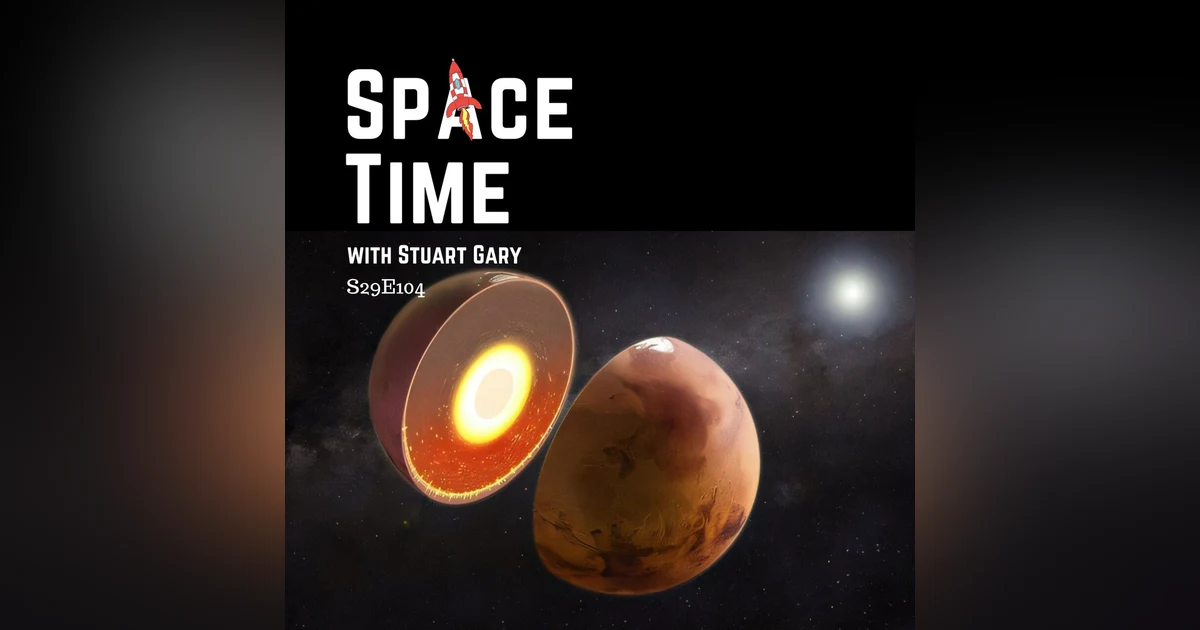
 SpaceTime Series 29 Episode 104 Strange anomaly discovered below the Martian south pole Astronomers have discovered a strange thermal asymmetry deep beneath the surface of the Martian southern hemisphere. Starship bound for home Starship 40 has finally left Australian waters bound for home. The orbiter used for SpaceX test flight 13 has been loaded aboard the 48,000-tonne semi-submersible vessel Forte for the long journey back to Starbase Texas. Roman Space Telescope final countdown The final countdown is now underway for the launch of NASA’s new Nancy Grace Roman Space Telescope. The Science Report A new record for keeping brain organoids made in a laboratory alive and developing. A new study shows smoking rates have continued to drop while vaping rates climb. Warnings that Australia’s native reptiles are disappearing at twice the rate previously thought. A new dog study says man’s best friend may be communicating with you through blinking. Skeptics guide to covering up the South Australian algal bloom. Our regular guests: Alex Zaharov-Reutt from techadvice.life Tim Mendham from Australian Skeptics 🌏 Get Our Exclusive NordVPN deal here ➼ www.bitesz.com/nordvpn . The discounts and bonuses are incredible! And it’s risk-free with Nord’s 30-day money-back guarantee! ✌ If you’d like to support the podcast and gain access to bonus content by becoming a SpaceTime crew member, you can do just that through The Big Bang editions on Patreon, Spotify and Apple Podcasts. Details on the Support page on our website https://www.bitesz.com/show/spacetime/support/
The Astronomy, Space, Technology & Science News Podcast.
WEBVTT
1
00:00:00.210 --> 00:00:04.030
This is Space Time, Series 29, Episode 104, for broadcast
2
00:00:04.089 --> 00:00:08.320
on the 31st of August, 2026. Coming up on Space Time,
3
00:00:08.859 --> 00:00:14.259
the strange anomaly discovered under the Martian South Pole. Starship
4
00:00:14.259 --> 00:00:18.379
40 finally leaves Australian waters bound for home. And the
5
00:00:18.480 --> 00:00:23.289
final countdown now underway for NASA's Roman Space Telescope. All
6
00:00:23.309 --> 00:00:25.870
that and more coming up on Space Time.
7
00:00:27.140 --> 00:00:30.379
Welcome to Space Time with Stuart Gary.
8
00:00:46.250 --> 00:00:50.350
Astronomers have discovered a strange thermal anomaly deep beneath the
9
00:00:50.429 --> 00:00:54.850
surface of the Martian Southern Hemisphere. The findings suggest the
10
00:00:54.890 --> 00:00:58.310
red planet's southern interior is somewhere around 200 to 400
11
00:00:58.310 --> 00:01:02.109
degrees Celsius warmer than the planet's northern hemisphere, and it's
12
00:01:02.149 --> 00:01:06.299
still partially molten. The surprising findings reported in the journal
13
00:01:06.340 --> 00:01:10.040
Nature add context to Martian history and the periods during
14
00:01:10.079 --> 00:01:13.019
which it may have hosted conditions favourable for life as
15
00:01:13.060 --> 00:01:16.760
we know it. The study's lead author, Alexander Byrne from
16
00:01:16.840 --> 00:01:20.739
Caltech and the University of Arizona, says understanding the interior
17
00:01:20.799 --> 00:01:24.879
structure of planetary bodies helps scientists unravel the processes that
18
00:01:24.980 --> 00:01:28.799
shape their formation and evolution. The new findings are based
19
00:01:28.879 --> 00:01:32.290
on a model developed by Byrne using variations in gravitational
20
00:01:32.329 --> 00:01:35.409
data to infer the internal structure of a planetary body.
21
00:01:36.150 --> 00:01:39.519
Byrne and colleagues then applied this model to the Martian interior,
22
00:01:39.620 --> 00:01:43.459
using data collected over decades from three different Martian orbital missions,
23
00:01:43.620 --> 00:01:47.939
Global Surveyor, Mars Odyssey and the Mars Reconnaissance Orbiter. The
24
00:01:48.019 --> 00:01:52.040
authors measured tiny variations in the spacecraft's velocities and then
25
00:01:52.159 --> 00:01:56.120
used that to reconstruct the gravitational field around Mars. The
26
00:01:56.170 --> 00:01:59.730
gravitational forces exerted by the Sun on Mars vary over
27
00:01:59.790 --> 00:02:03.890
seasonal timescales. That's due to the planet's slightly elliptical orbit
28
00:02:04.030 --> 00:02:08.069
and its tilted rotational axis. So a technique called tidal
29
00:02:08.129 --> 00:02:12.280
tomography can measure how these gravitational signatures vary over time,
30
00:02:12.509 --> 00:02:15.639
allowing astronomers to produce a model of the planet's interior.
31
00:02:16.819 --> 00:02:20.580
Byrne says scientists usually assume that the interiors of planetary
32
00:02:20.620 --> 00:02:24.419
bodies are generally spherical and symmetric, but that's not necessarily
33
00:02:24.460 --> 00:02:27.909
the case. He says as you get more gravity data,
34
00:02:27.990 --> 00:02:30.870
you can start to determine the three-dimensional intricacies of a
35
00:02:30.930 --> 00:02:36.569
planetary interior. On the surface, Mars is a geologically asymmetrical planet.
36
00:02:37.210 --> 00:02:41.069
Its southern hemisphere contains towering mountains and deep craters, whereas
37
00:02:41.090 --> 00:02:44.509
the northern hemisphere is composed of low-lying flatlands, the dry
38
00:02:44.550 --> 00:02:49.990
remains of a once planetary ocean. The new observations also
39
00:02:50.050 --> 00:02:53.469
suggest explanations for other phenomena observed on the red planet,
40
00:02:53.689 --> 00:02:57.009
such as magnetic anomalies found in iron minerals in the south.
41
00:02:57.729 --> 00:03:00.280
A thermal anomaly in the southern mantle could mean that
42
00:03:00.289 --> 00:03:03.060
a magnetic field existed that was strong enough to cause
43
00:03:03.099 --> 00:03:06.460
magnetic differences between the north and south. And of course,
44
00:03:06.500 --> 00:03:10.639
don't forget NASA's InSight mission had previously discovered seismic waves
45
00:03:10.719 --> 00:03:13.539
dissipate more quickly in the south, which could be explained
46
00:03:13.599 --> 00:03:17.729
if that region's hotter. Mind you, it's still unclear what
47
00:03:17.830 --> 00:03:21.469
created this thermal dichotomy, and there are several hypotheses for
48
00:03:21.530 --> 00:03:25.099
its origins, including a giant impact releasing heat from the north,
49
00:03:25.280 --> 00:03:29.259
past spontaneous convection in the Martian southern hemisphere, and thick
50
00:03:29.300 --> 00:03:34.099
geological features trapping excess heat from escaping. Only time and
51
00:03:34.120 --> 00:03:37.000
a more detailed exploration of the red planet will tell.
52
00:03:37.960 --> 00:03:42.590
This is space time. Still to come... Starship 40 finally
53
00:03:42.650 --> 00:03:46.680
leaving Australian waters bound for Texas. And the final countdown
54
00:03:46.740 --> 00:03:49.699
now underway for the launch of NASA's new Nancy Grace
55
00:03:49.759 --> 00:03:53.039
Roman Space Telescope. All that and more still to come
56
00:03:53.719 --> 00:04:11.729
on Space Time. Starship 40 has finally left Australian waters
57
00:04:11.849 --> 00:04:16.230
bound for home. The orbiter used for SpaceX's test flight
58
00:04:16.230 --> 00:04:20.439
13 has been loaded onto the 48,000-ton semi-submersible vessel Forte
59
00:04:20.480 --> 00:04:25.339
for the long journey back to Starbase, Texas. The 52-metre-long
60
00:04:25.399 --> 00:04:28.279
spacecraft splashed down in the Indian Ocean off the western
61
00:04:28.300 --> 00:04:32.379
Australian coast back on July 25 following a successful test flight.
62
00:04:32.899 --> 00:04:35.420
The mission was only the second flight for the Starship
63
00:04:35.459 --> 00:04:39.050
and Super Heavy Block III vehicles. The flight test began
64
00:04:39.089 --> 00:04:42.709
with Super Heavy igniting all 33 Raptor III engines and
65
00:04:42.750 --> 00:04:46.129
blasting off from the Boca Chica launch pad at Starbase, Texas,
66
00:04:46.250 --> 00:04:50.019
climbing high into blue skies over the Gulf Coast. The
67
00:04:50.040 --> 00:04:53.839
successful first stage ascent was followed by a hot staging maneuver,
68
00:04:53.959 --> 00:04:57.019
with Starship's upper stage igniting all six of its Raptor
69
00:04:57.100 --> 00:05:01.399
engines to continue its flight to orbit. Following stage separation,
70
00:05:01.500 --> 00:05:04.290
the Super Heavy booster performed its boost backbone and flip
71
00:05:04.310 --> 00:05:07.750
maneuver to return to Earth. and the ignition sequence for
72
00:05:07.769 --> 00:05:10.029
this was modified this time in order to provide a
73
00:05:10.069 --> 00:05:13.790
more robust timing variability in engine startup and flip to
74
00:05:13.870 --> 00:05:18.069
the desired direction. The Super Heavy booster then successfully descended,
75
00:05:18.180 --> 00:05:21.199
completing the high-thrust portion of its boost-back burn with all
76
00:05:21.199 --> 00:05:25.120
33 Raptor engines firing, before ending the burn early and
77
00:05:25.160 --> 00:05:28.879
letting the Earth's atmosphere do the work. However, only 10
78
00:05:28.879 --> 00:05:31.319
of the Plan 13 Raptor engines lit up for the
79
00:05:31.379 --> 00:05:34.720
landing burn, with two of those engines failing shortly afterwards,
80
00:05:34.920 --> 00:05:39.470
resulting in an unusually heavy splashdown in Gulf waters. Meanwhile,
81
00:05:39.689 --> 00:05:43.730
Starship successfully continued its journey to orbit, deploying 20 Starlink
82
00:05:43.810 --> 00:05:47.399
Version 3 test satellites before undertaking a restart of one
83
00:05:47.420 --> 00:05:51.410
of its Raptor engines. It then re-entered Earth's atmosphere above
84
00:05:51.470 --> 00:05:55.230
the Indian Ocean, successfully gathering critical data on the performance
85
00:05:55.269 --> 00:05:58.410
of its heat shield before executing a dynamic banking maneuver
86
00:05:58.430 --> 00:06:01.449
to practice the sort of trajectories needed for future missions
87
00:06:01.509 --> 00:06:05.740
returning to Starbase. Starship then guided itself using its four
88
00:06:05.779 --> 00:06:10.199
flaps to the pre-planned splashdown zone 1,300 kilometers west of Dampier.
89
00:06:11.029 --> 00:06:15.589
After reigniting three Raptor engines, Starship successfully executed a landing flip,
90
00:06:15.769 --> 00:06:19.149
its landing burn, and a soft splashdown, coming to rest
91
00:06:19.230 --> 00:06:22.930
intact on the surface of the Indian Ocean. But instead
92
00:06:22.970 --> 00:06:26.310
of sinking as expected, it remained intact, bobbing up and
93
00:06:26.370 --> 00:06:30.389
down in the warm tropical swell. And its unexpected survival
94
00:06:30.470 --> 00:06:33.970
provided a unique opportunity for SpaceX to gather crucial data
95
00:06:33.990 --> 00:06:37.290
of an intact heat shield for the first time. After
96
00:06:37.329 --> 00:06:41.290
a survey by SpaceX's splashdown monitoring ship Go Australis, the
97
00:06:41.329 --> 00:06:44.639
company worked with the Australian Space Agency on a recovery operation,
98
00:06:44.860 --> 00:06:48.420
using two ocean-going tugs, Norman Ranger and Skimmer Tide, to
99
00:06:48.459 --> 00:06:52.360
tow the 200-ton spacecraft back to shore. However, with the
100
00:06:52.420 --> 00:06:55.759
empty 200-ton spacecraft sitting high in the water, current and
101
00:06:55.819 --> 00:06:58.750
wind conditions eventually led to the abandonment of the initial
102
00:06:58.810 --> 00:07:02.629
plan to tow east to Dampier. And instead, Starship was
103
00:07:02.670 --> 00:07:06.410
taken north to Christmas Island, eventually arriving in sheltered waters
104
00:07:06.430 --> 00:07:10.629
in the island's Flying Fish Cove. The semi-submersible ship Forte
105
00:07:10.670 --> 00:07:13.389
then arrived a few days later, flighting its ballast tanks
106
00:07:13.430 --> 00:07:16.269
to submerge enough to allow Starship to be floated into
107
00:07:16.310 --> 00:07:19.689
position above its deck. It then emptied those ballast tanks
108
00:07:19.750 --> 00:07:22.689
and refloated, lifting the spacecraft out of the water for
109
00:07:22.750 --> 00:07:27.360
transport back to Texas. The 13,000 kilometre journey back to
110
00:07:27.399 --> 00:07:30.660
Starbase should see the spacecraft arrive in late September or
111
00:07:30.860 --> 00:07:34.579
early October. And needless to say, we'll keep you informed.
112
00:07:35.269 --> 00:07:39.319
This is Space Time. Still to come, the final countdown
113
00:07:39.360 --> 00:07:42.339
for NASA's new Roman Space Telescope and later in the
114
00:07:42.420 --> 00:07:45.980
science report. A new study shows that smoking rates have
115
00:07:46.019 --> 00:07:49.220
continued to drop in Australia while vaping rates are continuing
116
00:07:49.240 --> 00:07:52.680
to climb. All that and more still to come on
117
00:07:52.759 --> 00:08:11.350
Space Time. Music The final countdowns are underway for the
118
00:08:11.389 --> 00:08:15.310
launch of NASA's new Nancy Grace Roman Space Telescope. The
119
00:08:15.329 --> 00:08:18.610
mission will fly aboard a SpaceX Falcon Heavy rocket from
120
00:08:18.629 --> 00:08:21.899
the historic Space Launch Complex 39A at the Kennedy Space
121
00:08:21.939 --> 00:08:24.740
Center at the Cape Canaveral Space Force Base in Florida.
122
00:08:24.759 --> 00:08:27.980
That's the same launch pad where Apollo 11 was launched
123
00:08:28.100 --> 00:08:31.790
on the first manned mission to the lunar surface. Named
124
00:08:31.899 --> 00:08:35.129
after NASA's first chief astronomer, the mother of the Hubble
125
00:08:35.169 --> 00:08:38.970
Space Telescope, the Nancy Grace Roman Space Telescope will help
126
00:08:39.029 --> 00:08:42.470
settle essential questions about some of the most interesting topics
127
00:08:42.529 --> 00:08:46.870
in astronomy. After launch and stage separation from its launch vehicle,
128
00:08:47.049 --> 00:08:50.769
Roman will travel to the Sun-Earth Lagrangian L2 position, about 1.5
129
00:08:50.769 --> 00:08:54.379
million kilometers away on the nighttime side of the planet.
130
00:08:55.159 --> 00:08:57.940
Roman has a five-year primary mission, with the goal of
131
00:08:58.019 --> 00:09:01.629
operating for at least 10 years. The telescope spaced around
132
00:09:01.690 --> 00:09:04.570
one of two spare Keyhole spy satellites given to NASA
133
00:09:04.590 --> 00:09:08.669
in 2012 by the National Reconnaissance Office. These spacecraft were
134
00:09:08.690 --> 00:09:11.330
being stored in a special clean room in upstate New
135
00:09:11.389 --> 00:09:14.669
York and were surplus to needs at the time. They're
136
00:09:14.690 --> 00:09:18.110
generally similar in design to the Hubble Space Telescope. Hubble
137
00:09:18.149 --> 00:09:20.590
is also based on the Keyhole spy satellite, but was
138
00:09:20.649 --> 00:09:23.500
modified to look up into deep space instead of down
139
00:09:23.559 --> 00:09:27.539
onto the Earth's surface. However, these two donated satellites have
140
00:09:27.580 --> 00:09:31.070
shorter focal lengths and hence wider fields of view than Hubble.
141
00:09:31.669 --> 00:09:33.929
That means Roman will have a field of view at
142
00:09:33.950 --> 00:09:37.450
least 100 times larger than Hubble's, potentially measuring light from
143
00:09:37.570 --> 00:09:42.200
billions of galaxies. It's crisp, sweeping surveys will help astronomers
144
00:09:42.250 --> 00:09:45.740
investigate dark energy and dark matter, discover and map billions
145
00:09:45.779 --> 00:09:49.399
of galaxies, study black holes, and explore objects from our
146
00:09:49.519 --> 00:09:51.860
own solar system right to the very edge of the
147
00:09:51.899 --> 00:09:56.139
observable universe. The telescope will also be able to block starlight,
148
00:09:56.299 --> 00:10:00.620
allowing it to directly see exoplanets and planet-forming disks. It
149
00:10:00.649 --> 00:10:03.720
will help complete a statistical census of planetary systems in
150
00:10:03.759 --> 00:10:07.000
our own galaxy, and it will settle essential questions on
151
00:10:07.100 --> 00:10:11.279
infrared astrophysics. This report from NASA TV.
152
00:10:11.600 --> 00:10:16.720
Observatories like the Webb and Hubble Space Telescopes are transforming
153
00:10:16.799 --> 00:10:20.559
our understanding of the universe. They have revealed that black
154
00:10:20.620 --> 00:10:24.360
holes are common, helped measure the age of the cosmos,
155
00:10:24.700 --> 00:10:27.320
and even played a key role in one of astronomy's
156
00:10:27.399 --> 00:10:33.000
greatest surprises, the discovery that the universe's expansion is accelerating,
157
00:10:33.539 --> 00:10:37.360
driven by an unknown force we simply call dark energy.
158
00:10:38.350 --> 00:10:41.889
But some of the biggest questions in science remain unanswered.
159
00:10:42.580 --> 00:10:46.700
What actually is dark energy? What is dark matter? How
160
00:10:46.799 --> 00:10:50.379
common are planetary systems like our own? And how did
161
00:10:50.419 --> 00:10:54.399
the universe evolve from the first isolated galaxies into the
162
00:10:54.480 --> 00:10:59.309
cosmic web we see today? NASA's Nancy Grace Roman Space
163
00:10:59.370 --> 00:11:04.669
Telescope is designed to help answer those questions. Roman will
164
00:11:04.710 --> 00:11:09.370
carry a mirror the same size as Hubble's, 2.4 meters across,
165
00:11:09.870 --> 00:11:13.710
but its true power comes from something entirely different. Its
166
00:11:13.789 --> 00:11:17.820
wide-field instrument will allow Roman to see enormous portions of
167
00:11:17.860 --> 00:11:21.799
the sky at once. A single Roman image will capture
168
00:11:21.820 --> 00:11:25.080
an area a hundred times larger than Hubble's or Webb's
169
00:11:25.159 --> 00:11:30.470
infrared views, while still delivering high resolution and sensitive observations.
170
00:11:31.659 --> 00:11:36.159
Roman does this with a unique array of 18 4K detectors.
171
00:11:37.019 --> 00:11:39.820
They are arranged in an arc to make full use
172
00:11:39.899 --> 00:11:44.220
of the optical system's region of best image quality. Combined,
173
00:11:44.500 --> 00:11:49.610
they form a 300-megapixel image. That combination of power and
174
00:11:49.730 --> 00:11:53.990
scale changes what is possible. Instead of studying a few
175
00:11:54.129 --> 00:11:57.870
objects at a time, Roman will survey vast regions of
176
00:11:57.909 --> 00:12:01.919
the universe. During its first five years, it is expected
177
00:12:01.960 --> 00:12:05.710
to observe more than a billion galaxies and collect data
178
00:12:05.759 --> 00:12:09.690
that would take centuries for other observatories to gather. One
179
00:12:09.730 --> 00:12:14.659
of Roman's primary goals is investigating dark energy. More than
180
00:12:14.710 --> 00:12:19.409
a century ago, Albert Einstein's equation suggested the universe should
181
00:12:19.470 --> 00:12:24.669
either expand or contract. In 1929, Edwin Hubble confirmed that
182
00:12:24.730 --> 00:12:27.950
galaxies are moving away from one another, showing that the
183
00:12:28.070 --> 00:12:34.070
universe is expanding. For decades, astronomers assumed gravity would gradually
184
00:12:34.149 --> 00:12:40.360
slow that expansion. Then, in 1998, observations of distant exploding
185
00:12:40.419 --> 00:12:44.879
stars revealed something unexpected. The expansion of the universe is
186
00:12:44.980 --> 00:12:49.320
speeding up. Something appears to be pushing the cosmos apart.
187
00:12:50.419 --> 00:12:55.659
Scientists call that unknown influence dark energy. Today, dark energy
188
00:12:55.740 --> 00:12:59.309
is thought to account for roughly 68% of the universe.
189
00:12:59.950 --> 00:13:03.029
Yet its true nature remains one of the greatest mysteries
190
00:13:03.110 --> 00:13:08.509
in physics. Roman will approach this problem using multiple independent techniques.
191
00:13:09.279 --> 00:13:12.279
It will map the positions of millions of galaxies in
192
00:13:12.330 --> 00:13:17.429
three dimensions, study distant supernova explosions, and measure how light
193
00:13:17.509 --> 00:13:23.250
bends through a phenomenon known as gravitational lensing. Together, these
194
00:13:23.370 --> 00:13:26.909
observations will allow scientists to trace how the universe has
195
00:13:27.009 --> 00:13:30.970
changed over billions of years and test whether dark energy
196
00:13:31.029 --> 00:13:36.080
has remained constant or evolved over time. ROMAN will also
197
00:13:36.139 --> 00:13:42.029
help illuminate another cosmic mystery. Dark Matter Although invisible, dark
198
00:13:42.090 --> 00:13:45.409
matter exerts a gravitational pull and appears to make up
199
00:13:45.500 --> 00:13:49.179
most of the matter the universe is made of. Astronomers
200
00:13:49.240 --> 00:13:53.580
can infer its presence because galaxies and galaxy clusters behave
201
00:13:53.639 --> 00:13:56.639
as though they contain far more mass than we can see.
202
00:13:57.419 --> 00:14:02.039
Something is there. Roman will map both visible matter and
203
00:14:02.080 --> 00:14:05.899
dark matter across enormous stretches of space by measuring small
204
00:14:05.980 --> 00:14:10.470
changes in the shapes of distant galaxies. These measurements will
205
00:14:10.500 --> 00:14:13.529
provide one of the most detailed views ever created of
206
00:14:13.610 --> 00:14:17.190
how matter is distributed throughout the cosmos and how large
207
00:14:17.309 --> 00:14:22.289
objects like galaxies evolved over cosmic history. Closer to home,
208
00:14:22.669 --> 00:14:25.629
Roman will also conduct one of the most ambitious searches
209
00:14:25.710 --> 00:14:30.879
for planets beyond our solar system. Most exoplanets discovered so
210
00:14:30.960 --> 00:14:34.639
far have been found using the transit method, which detects
211
00:14:34.720 --> 00:14:37.820
tiny dips in starlight when a planet crosses in front
212
00:14:37.840 --> 00:14:42.159
of its host star. Roman will complement those discoveries by
213
00:14:42.259 --> 00:14:47.690
primarily using a technique called gravitational microlensing. When a star
214
00:14:47.769 --> 00:14:51.230
passes in front of a more distant star, gravity bends
215
00:14:51.330 --> 00:14:55.490
and magnifies the background starlight. If a planet is orbiting
216
00:14:55.509 --> 00:14:59.509
the foreground star, it leaves a distinctive fingerprint in that signal.
217
00:15:00.549 --> 00:15:04.330
By continuously monitoring millions of stars in the crowded center
218
00:15:04.350 --> 00:15:08.000
of the Milky Way, Roman is expected to discover thousands
219
00:15:08.070 --> 00:15:12.669
of new worlds, including planets smaller than Mars, planets orbiting
220
00:15:12.750 --> 00:15:16.509
far from their stars, and even rogue planets drifting freely
221
00:15:16.570 --> 00:15:21.169
through space. These discoveries will help astronomers build the most
222
00:15:21.230 --> 00:15:26.559
complete census yet of planetary systems throughout our galaxy. Roman
223
00:15:26.600 --> 00:15:31.639
will also carry a coronagraph instrument. a technology demonstration designed
224
00:15:31.679 --> 00:15:35.559
to block the overwhelming glare of nearby stars. This will
225
00:15:35.600 --> 00:15:40.379
allow astronomers to directly image giant exoplanets and dusty disks
226
00:15:40.500 --> 00:15:44.659
around neighboring stars, helping pave the way toward future missions
227
00:15:44.759 --> 00:15:51.019
capable of finding Earth-like worlds. Beyond its primary investigations, Roman's
228
00:15:51.080 --> 00:15:55.570
vast surveys will become a treasure trove for astronomy. The
229
00:15:55.610 --> 00:15:59.070
mission is expected to discover some of the earliest galaxies
230
00:15:59.129 --> 00:16:04.529
in the universe, uncover distant quasars powered by supermassive black holes,
231
00:16:05.149 --> 00:16:10.110
reveal streams of stars swirling into nearby galaxies, and provide
232
00:16:10.129 --> 00:16:13.850
an unprecedented map of the cosmos, stretching back to when
233
00:16:13.889 --> 00:16:16.909
the universe was only a fraction of its current age.
234
00:16:17.970 --> 00:16:21.610
Many of the most important discoveries may be things astronomers
235
00:16:21.730 --> 00:16:25.909
aren't even expecting to find. That's because Roman is designed
236
00:16:25.950 --> 00:16:29.250
not just to study individual objects, but to reveal the
237
00:16:29.289 --> 00:16:33.840
bigger picture. The phenomenon Roman will detect in its wide-field
238
00:16:33.879 --> 00:16:38.059
images will be followed up with detailed, higher-resolution studies by
239
00:16:38.120 --> 00:16:41.799
Hubble and Webb, which together cover wavelengths of light ranging
240
00:16:41.840 --> 00:16:47.509
from ultraviolet to mid-infrared. Along with observatories like Hubble, Webb,
241
00:16:47.950 --> 00:16:52.759
ESA's Euclid mission, and the VeriC-Rubin Observatory, Roman will usher
242
00:16:52.840 --> 00:16:56.820
in a new era of discovery, giving scientists an unprecedented
1
00:00:00.210 --> 00:00:04.030
2
00:00:04.089 --> 00:00:08.320
3
00:00:08.859 --> 00:00:14.259
4
00:00:14.259 --> 00:00:18.379
5
00:00:18.480 --> 00:00:23.289
6
00:00:23.309 --> 00:00:25.870
7
00:00:27.140 --> 00:00:30.379
8
00:00:46.250 --> 00:00:50.350
9
00:00:50.429 --> 00:00:54.850
10
00:00:54.890 --> 00:00:58.310
11
00:00:58.310 --> 00:01:02.109
12
00:01:02.149 --> 00:01:06.299
13
00:01:06.340 --> 00:01:10.040
14
00:01:10.079 --> 00:01:13.019
15
00:01:13.060 --> 00:01:16.760
16
00:01:16.840 --> 00:01:20.739
17
00:01:20.799 --> 00:01:24.879
18
00:01:24.980 --> 00:01:28.799
19
00:01:28.879 --> 00:01:32.290
20
00:01:32.329 --> 00:01:35.409
21
00:01:36.150 --> 00:01:39.519
22
00:01:39.620 --> 00:01:43.459
23
00:01:43.620 --> 00:01:47.939
24
00:01:48.019 --> 00:01:52.040
25
00:01:52.159 --> 00:01:56.120
26
00:01:56.170 --> 00:01:59.730
27
00:01:59.790 --> 00:02:03.890
28
00:02:04.030 --> 00:02:08.069
29
00:02:08.129 --> 00:02:12.280
30
00:02:12.509 --> 00:02:15.639
31
00:02:16.819 --> 00:02:20.580
32
00:02:20.620 --> 00:02:24.419
33
00:02:24.460 --> 00:02:27.909
34
00:02:27.990 --> 00:02:30.870
35
00:02:30.930 --> 00:02:36.569
36
00:02:37.210 --> 00:02:41.069
37
00:02:41.090 --> 00:02:44.509
38
00:02:44.550 --> 00:02:49.990
39
00:02:50.050 --> 00:02:53.469
40
00:02:53.689 --> 00:02:57.009
41
00:02:57.729 --> 00:03:00.280
42
00:03:00.289 --> 00:03:03.060
43
00:03:03.099 --> 00:03:06.460
44
00:03:06.500 --> 00:03:10.639
45
00:03:10.719 --> 00:03:13.539
46
00:03:13.599 --> 00:03:17.729
47
00:03:17.830 --> 00:03:21.469
48
00:03:21.530 --> 00:03:25.099
49
00:03:25.280 --> 00:03:29.259
50
00:03:29.300 --> 00:03:34.099
51
00:03:34.120 --> 00:03:37.000
52
00:03:37.960 --> 00:03:42.590
53
00:03:42.650 --> 00:03:46.680
54
00:03:46.740 --> 00:03:49.699
55
00:03:49.759 --> 00:03:53.039
56
00:03:53.719 --> 00:04:11.729
57
00:04:11.849 --> 00:04:16.230
58
00:04:16.230 --> 00:04:20.439
59
00:04:20.480 --> 00:04:25.339
60
00:04:25.399 --> 00:04:28.279
61
00:04:28.300 --> 00:04:32.379
62
00:04:32.899 --> 00:04:35.420
63
00:04:35.459 --> 00:04:39.050
64
00:04:39.089 --> 00:04:42.709
65
00:04:42.750 --> 00:04:46.129
66
00:04:46.250 --> 00:04:50.019
67
00:04:50.040 --> 00:04:53.839
68
00:04:53.959 --> 00:04:57.019
69
00:04:57.100 --> 00:05:01.399
70
00:05:01.500 --> 00:05:04.290
71
00:05:04.310 --> 00:05:07.750
72
00:05:07.769 --> 00:05:10.029
73
00:05:10.069 --> 00:05:13.790
74
00:05:13.870 --> 00:05:18.069
75
00:05:18.180 --> 00:05:21.199
76
00:05:21.199 --> 00:05:25.120
77
00:05:25.160 --> 00:05:28.879
78
00:05:28.879 --> 00:05:31.319
79
00:05:31.379 --> 00:05:34.720
80
00:05:34.920 --> 00:05:39.470
81
00:05:39.689 --> 00:05:43.730
82
00:05:43.810 --> 00:05:47.399
83
00:05:47.420 --> 00:05:51.410
84
00:05:51.470 --> 00:05:55.230
85
00:05:55.269 --> 00:05:58.410
86
00:05:58.430 --> 00:06:01.449
87
00:06:01.509 --> 00:06:05.740
88
00:06:05.779 --> 00:06:10.199
89
00:06:11.029 --> 00:06:15.589
90
00:06:15.769 --> 00:06:19.149
91
00:06:19.230 --> 00:06:22.930
92
00:06:22.970 --> 00:06:26.310
93
00:06:26.370 --> 00:06:30.389
94
00:06:30.470 --> 00:06:33.970
95
00:06:33.990 --> 00:06:37.290
96
00:06:37.329 --> 00:06:41.290
97
00:06:41.329 --> 00:06:44.639
98
00:06:44.860 --> 00:06:48.420
99
00:06:48.459 --> 00:06:52.360
100
00:06:52.420 --> 00:06:55.759
101
00:06:55.819 --> 00:06:58.750
102
00:06:58.810 --> 00:07:02.629
103
00:07:02.670 --> 00:07:06.410
104
00:07:06.430 --> 00:07:10.629
105
00:07:10.670 --> 00:07:13.389
106
00:07:13.430 --> 00:07:16.269
107
00:07:16.310 --> 00:07:19.689
108
00:07:19.750 --> 00:07:22.689
109
00:07:22.750 --> 00:07:27.360
110
00:07:27.399 --> 00:07:30.660
111
00:07:30.860 --> 00:07:34.579
112
00:07:35.269 --> 00:07:39.319
113
00:07:39.360 --> 00:07:42.339
114
00:07:42.420 --> 00:07:45.980
115
00:07:46.019 --> 00:07:49.220
116
00:07:49.240 --> 00:07:52.680
117
00:07:52.759 --> 00:08:11.350
118
00:08:11.389 --> 00:08:15.310
119
00:08:15.329 --> 00:08:18.610
120
00:08:18.629 --> 00:08:21.899
121
00:08:21.939 --> 00:08:24.740
122
00:08:24.759 --> 00:08:27.980
123
00:08:28.100 --> 00:08:31.790
124
00:08:31.899 --> 00:08:35.129
125
00:08:35.169 --> 00:08:38.970
126
00:08:39.029 --> 00:08:42.470
127
00:08:42.529 --> 00:08:46.870
128
00:08:47.049 --> 00:08:50.769
129
00:08:50.769 --> 00:08:54.379
130
00:08:55.159 --> 00:08:57.940
131
00:08:58.019 --> 00:09:01.629
132
00:09:01.690 --> 00:09:04.570
133
00:09:04.590 --> 00:09:08.669
134
00:09:08.690 --> 00:09:11.330
135
00:09:11.389 --> 00:09:14.669
136
00:09:14.690 --> 00:09:18.110
137
00:09:18.149 --> 00:09:20.590
138
00:09:20.649 --> 00:09:23.500
139
00:09:23.559 --> 00:09:27.539
140
00:09:27.580 --> 00:09:31.070
141
00:09:31.669 --> 00:09:33.929
142
00:09:33.950 --> 00:09:37.450
143
00:09:37.570 --> 00:09:42.200
144
00:09:42.250 --> 00:09:45.740
145
00:09:45.779 --> 00:09:49.399
146
00:09:49.519 --> 00:09:51.860
147
00:09:51.899 --> 00:09:56.139
148
00:09:56.299 --> 00:10:00.620
149
00:10:00.649 --> 00:10:03.720
150
00:10:03.759 --> 00:10:07.000
151
00:10:07.100 --> 00:10:11.279
152
00:10:11.600 --> 00:10:16.720
153
00:10:16.799 --> 00:10:20.559
154
00:10:20.620 --> 00:10:24.360
155
00:10:24.700 --> 00:10:27.320
156
00:10:27.399 --> 00:10:33.000
157
00:10:33.539 --> 00:10:37.360
158
00:10:38.350 --> 00:10:41.889
159
00:10:42.580 --> 00:10:46.700
160
00:10:46.799 --> 00:10:50.379
161
00:10:50.419 --> 00:10:54.399
162
00:10:54.480 --> 00:10:59.309
163
00:10:59.370 --> 00:11:04.669
164
00:11:04.710 --> 00:11:09.370
165
00:11:09.870 --> 00:11:13.710
166
00:11:13.789 --> 00:11:17.820
167
00:11:17.860 --> 00:11:21.799
168
00:11:21.820 --> 00:11:25.080
169
00:11:25.159 --> 00:11:30.470
170
00:11:31.659 --> 00:11:36.159
171
00:11:37.019 --> 00:11:39.820
172
00:11:39.899 --> 00:11:44.220
173
00:11:44.500 --> 00:11:49.610
174
00:11:49.730 --> 00:11:53.990
175
00:11:54.129 --> 00:11:57.870
176
00:11:57.909 --> 00:12:01.919
177
00:12:01.960 --> 00:12:05.710
178
00:12:05.759 --> 00:12:09.690
179
00:12:09.730 --> 00:12:14.659
180
00:12:14.710 --> 00:12:19.409
181
00:12:19.470 --> 00:12:24.669
182
00:12:24.730 --> 00:12:27.950
183
00:12:28.070 --> 00:12:34.070
184
00:12:34.149 --> 00:12:40.360
185
00:12:40.419 --> 00:12:44.879
186
00:12:44.980 --> 00:12:49.320
187
00:12:50.419 --> 00:12:55.659
188
00:12:55.740 --> 00:12:59.309
189
00:12:59.950 --> 00:13:03.029
190
00:13:03.110 --> 00:13:08.509
191
00:13:09.279 --> 00:13:12.279
192
00:13:12.330 --> 00:13:17.429
193
00:13:17.509 --> 00:13:23.250
194
00:13:23.370 --> 00:13:26.909
195
00:13:27.009 --> 00:13:30.970
196
00:13:31.029 --> 00:13:36.080
197
00:13:36.139 --> 00:13:42.029
198
00:13:42.090 --> 00:13:45.409
199
00:13:45.500 --> 00:13:49.179
200
00:13:49.240 --> 00:13:53.580
201
00:13:53.639 --> 00:13:56.639
202
00:13:57.419 --> 00:14:02.039
203
00:14:02.080 --> 00:14:05.899
204
00:14:05.980 --> 00:14:10.470
205
00:14:10.500 --> 00:14:13.529
206
00:14:13.610 --> 00:14:17.190
207
00:14:17.309 --> 00:14:22.289
208
00:14:22.669 --> 00:14:25.629
209
00:14:25.710 --> 00:14:30.879
210
00:14:30.960 --> 00:14:34.639
211
00:14:34.720 --> 00:14:37.820
212
00:14:37.840 --> 00:14:42.159
213
00:14:42.259 --> 00:14:47.690
214
00:14:47.769 --> 00:14:51.230
215
00:14:51.330 --> 00:14:55.490
216
00:14:55.509 --> 00:14:59.509
217
00:15:00.549 --> 00:15:04.330
218
00:15:04.350 --> 00:15:08.000
219
00:15:08.070 --> 00:15:12.669
220
00:15:12.750 --> 00:15:16.509
221
00:15:16.570 --> 00:15:21.169
222
00:15:21.230 --> 00:15:26.559
223
00:15:26.600 --> 00:15:31.639
224
00:15:31.679 --> 00:15:35.559
225
00:15:35.600 --> 00:15:40.379
226
00:15:40.500 --> 00:15:44.659
227
00:15:44.759 --> 00:15:51.019
228
00:15:51.080 --> 00:15:55.570
229
00:15:55.610 --> 00:15:59.070
230
00:15:59.129 --> 00:16:04.529
231
00:16:05.149 --> 00:16:10.110
232
00:16:10.129 --> 00:16:13.850
233
00:16:13.889 --> 00:16:16.909
234
00:16:17.970 --> 00:16:21.610
235
00:16:21.730 --> 00:16:25.909
236
00:16:25.950 --> 00:16:29.250
237
00:16:29.289 --> 00:16:33.840
238
00:16:33.879 --> 00:16:38.059
239
00:16:38.120 --> 00:16:41.799
240
00:16:41.840 --> 00:16:47.509
241
00:16:47.950 --> 00:16:52.759
242
00:16:52.840 --> 00:16:56.820