July 21, 2026
Mars, Moon, and Charon: A Cosmic Exploration of Our Celestial Neighbours


 Spotify Spotify
  Apple Podcasts Apple Podcasts
  Youtube Music Youtube Music
  iHeartRadio iHeartRadio
  Spreaker Spreaker
  PocketCasts PocketCasts
  Amazon Music Amazon Music
  YouTube YouTube
  Castbox Castbox
  Deezer Deezer
  TuneIn TuneIn
  Rumble Rumble
  Overcast Overcast
  Podcast Addict Podcast Addict
  Podchaser Podchaser
  JioSaavn JioSaavn
  Castro Castro
  RSS Feed RSS Feed
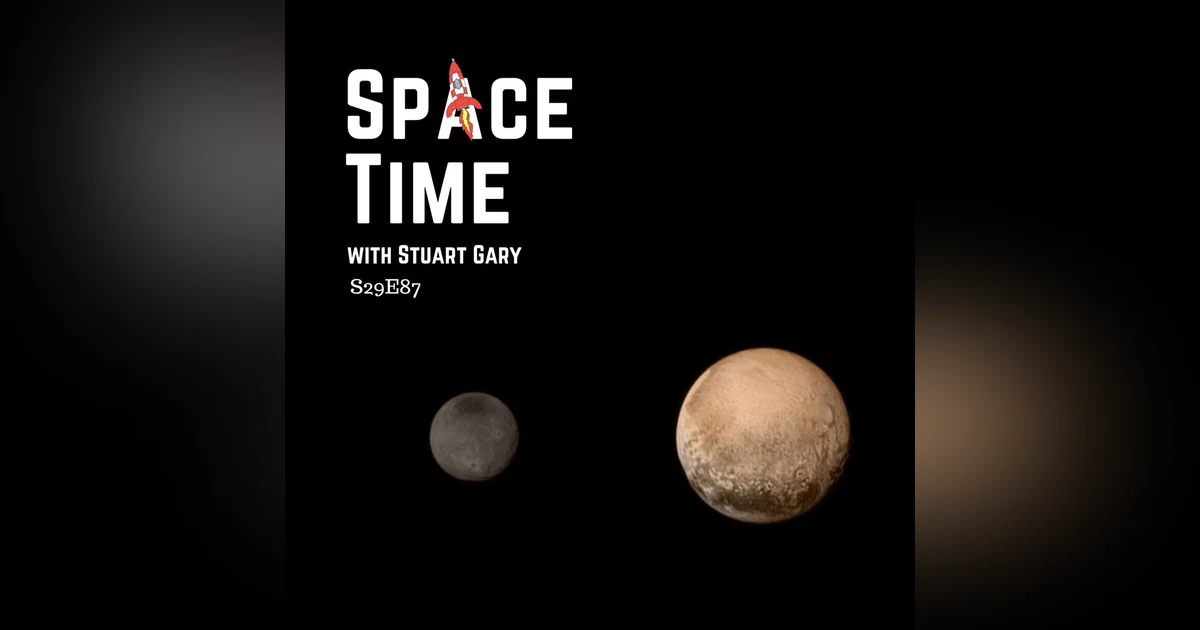
 SpaceTime Series 29 Episode 87 Ancient impacts display the red planet’s past history A new study has shown how ancient Martian rocks exposed on the rim of Jezero Crater are preserving a 3.9-billion-year-old “weather report” from the solar system’s most dynamic era. Understanding of the Moon’s regolith for human habitation Scientists have mapped out the thickness of the Moon’s regolith, the layer of loose dust and rock that covers the entire lunar surface finding it averages about six meters in the highlands and about four meters in the maria. Strange goings on Pluto’s Charon A new study has found that the rotation of Pluto’s binary partner Charon is slowing down. The Science Report Heart disease linked to nine specific molecules produced in your gut biota. A billion more people now face at least one day of extreme heat stress compared to the 1970s. Claims consuming an avocado daily, lowers the risk of heart disease in people with obesity. Just like humans, monkeys appear to dislike AI avatars that look like them, but are just a bit wrong. Alex on Tech: APPLE IOS-27 beta publicly released.
Our Guests This Week: Mars Perseverance Rover Deputy Project Scientist Katy Stack Morgan NASA JPL Mars Perseverance Rover project Scientist Ken Farley NASA JPL Mars Perseverance Rover Deputy Project Manager Matt Wallace NASA JPL Mars Perseverance Rover Chief Engineer Adam Steltzner NASA JPL Mars Perseverance Rover Mobility Team Member Farah Alibay NASA JPL And our regular guests: Alex Zaharov-Reutt from techadvice.life Tim Mendham from Australian Skeptics 🌏 Get Our Exclusive NordVPN deal here ➼ www.bitesz.com/nordvpn . The discounts and bonuses are incredible! And it’s risk-free with Nord’s 30-day money-back guarantee! ✌ If you’d like to support the podcast and gain access to bonus content by becoming a SpaceTime crew member, you can do just that through The Big Bang editions on Patreon, Spotify and Apple Podcasts. Details on the Support page on our website https://www.bitesz.com/show/spacetime/support/
Our Guests This Week: Mars Perseverance Rover Deputy Project Scientist Katy Stack Morgan NASA JPL Mars Perseverance Rover project Scientist Ken Farley NASA JPL Mars Perseverance Rover Deputy Project Manager Matt Wallace NASA JPL Mars Perseverance Rover Chief Engineer Adam Steltzner NASA JPL Mars Perseverance Rover Mobility Team Member Farah Alibay NASA JPL And our regular guests: Alex Zaharov-Reutt from techadvice.life Tim Mendham from Australian Skeptics 🌏 Get Our Exclusive NordVPN deal here ➼ www.bitesz.com/nordvpn . The discounts and bonuses are incredible! And it’s risk-free with Nord’s 30-day money-back guarantee! ✌ If you’d like to support the podcast and gain access to bonus content by becoming a SpaceTime crew member, you can do just that through The Big Bang editions on Patreon, Spotify and Apple Podcasts. Details on the Support page on our website https://www.bitesz.com/show/spacetime/support/
The Astronomy, Space, Technology & Science News Podcast.
WEBVTT
0
00:00:00.000 --> 00:00:02.960
Stuart Gary: This is space Time Series 29, episode 87
1
00:00:03.040 --> 00:00:05.382
for broadcast on 22 July
2
00:00:05.524 --> 00:00:08.160
2026. Coming up on Space
3
00:00:08.640 --> 00:00:11.160
Ancient Impacts displaying the Red Planet's
4
00:00:11.160 --> 00:00:13.360
past history, understanding the Moon's
5
00:00:13.360 --> 00:00:15.360
regolith in preparation for future human
6
00:00:15.360 --> 00:00:18.200
missions to the lunar surface. And we
7
00:00:18.200 --> 00:00:21.080
cheque out the strange goings on on Pluto's
8
00:00:21.080 --> 00:00:23.840
binary partner Sharon out in the Kuiper Belt.
9
00:00:24.240 --> 00:00:26.840
All that and more coming up, uh, on Space
10
00:00:26.840 --> 00:00:29.520
Time. Welcome to
11
00:00:29.520 --> 00:00:31.720
Space Time with Stuart Gary.
12
00:00:47.720 --> 00:00:50.040
A new study has shown how ancient Martian
13
00:00:50.040 --> 00:00:52.880
rocks exposed on the rim of Jezero Crater are
14
00:00:52.880 --> 00:00:55.400
preserving a 3.9 billion year old weather
15
00:00:55.400 --> 00:00:57.950
report from the solar system's most dynamic
16
00:00:58.340 --> 00:01:01.100
era. NASA's Mars Perseverance Rover
17
00:01:01.100 --> 00:01:03.820
has uncovered evidence that a 75 metre
18
00:01:03.820 --> 00:01:06.020
thick stack of debris around the Jezero
19
00:01:06.020 --> 00:01:08.100
crater rim, known as the Broom Point member,
20
00:01:08.180 --> 00:01:11.060
was built up by repeated asteroid impacts.
21
00:01:11.380 --> 00:01:13.780
The sequence of layered bedrock is likely
22
00:01:13.780 --> 00:01:16.660
more than 3.9 billion years old, making
23
00:01:16.660 --> 00:01:18.860
it among the oldest terrain ever examined on
24
00:01:18.860 --> 00:01:21.420
the Red Planet. The findings, reported in the
25
00:01:21.420 --> 00:01:23.340
Journal of Geophysical Research Planets,
26
00:01:23.340 --> 00:01:25.180
offers a new window into one of the most
27
00:01:25.180 --> 00:01:27.100
tumultuous chapters in the history of the
28
00:01:27.100 --> 00:01:30.070
solar system. Mars Perseverance Rover project
29
00:01:30.070 --> 00:01:32.030
scientist ken Farley from NASA's Jet
30
00:01:32.030 --> 00:01:34.510
Propulsion Laboratory in Pasadena, California
31
00:01:34.510 --> 00:01:36.310
says that since leaving the crater,
32
00:01:36.310 --> 00:01:38.790
Perseverance has been exploring a chapter of
33
00:01:38.790 --> 00:01:41.590
Martian time that predates the crater itself.
34
00:01:42.550 --> 00:01:44.790
Planet Earth's earliest geological history
35
00:01:44.790 --> 00:01:47.190
has been fundamentally broken up, deformed
36
00:01:47.190 --> 00:01:49.910
and arrays, partly thanks to plate tectonics.
37
00:01:50.390 --> 00:01:52.870
But because Mars lacks plate tectonics to
38
00:01:52.870 --> 00:01:55.110
recycle its crust, this ancient record
39
00:01:55.190 --> 00:01:57.750
remains intact, giving scientists a rare
40
00:01:57.750 --> 00:02:00.050
opportunity to glimpse geological time time
41
00:02:00.050 --> 00:02:02.690
period that doesn't exist on Earth. After
42
00:02:02.690 --> 00:02:05.210
ascending the western rim of Jezero crater in
43
00:02:05.210 --> 00:02:07.650
early 2025, Perseverance began
44
00:02:07.650 --> 00:02:10.410
examining Broome Point. The data has
45
00:02:10.410 --> 00:02:12.290
revealed six distinct rock types, including
46
00:02:12.290 --> 00:02:14.530
breccias, I.e. rocks built up from angular
47
00:02:14.530 --> 00:02:16.770
fragments alternating with layers of fine
48
00:02:16.770 --> 00:02:19.410
grained pulverised rock dust. The rock
49
00:02:19.410 --> 00:02:21.410
fragments within the breccias, uh, are pocked
50
00:02:21.410 --> 00:02:23.690
with glass bubble cavities, indicating they
51
00:02:23.690 --> 00:02:26.450
were once molten. The presence of tiny
52
00:02:26.450 --> 00:02:28.970
dark glassy beads within these layers offers
53
00:02:28.970 --> 00:02:31.010
an important clue about how the rocks were
54
00:02:31.010 --> 00:02:33.800
form. See, while volcanoes can produce
55
00:02:33.800 --> 00:02:36.240
similar glassy droplets, they rarely occur in
56
00:02:36.240 --> 00:02:38.480
such high abundance that points to an
57
00:02:38.480 --> 00:02:41.280
asteroid impact instead. In fact, the largest
58
00:02:41.280 --> 00:02:43.440
of these beads rivals those flung up by the
59
00:02:43.440 --> 00:02:45.840
dinosaur killing Chicxulub asteroid impact on
60
00:02:45.840 --> 00:02:48.760
Earth 66 million years ago. Because
61
00:02:48.760 --> 00:02:50.960
these distinct rock types repeat multiple
62
00:02:50.960 --> 00:02:52.880
times throughout the thick sequence of rock,
63
00:02:52.880 --> 00:02:55.320
it indicates that high energy impact events
64
00:02:55.320 --> 00:02:57.600
happened again and again across this region
65
00:02:57.600 --> 00:03:00.580
of early Mars. The different rock layers
66
00:03:00.580 --> 00:03:02.940
provide a record of different impact sizes
67
00:03:02.940 --> 00:03:04.820
and different distances. From the Jezero
68
00:03:04.820 --> 00:03:07.580
crater rim, several of the layers look like
69
00:03:07.580 --> 00:03:09.660
they may have been formed by fast ground
70
00:03:09.660 --> 00:03:12.300
hugging debris flows. On Earth, these
71
00:03:12.300 --> 00:03:14.540
powerful fluid like surges can occur when
72
00:03:14.540 --> 00:03:17.420
molten rock hits water or ice that instantly
73
00:03:17.420 --> 00:03:20.260
flashes into steam. Some of Broom Point's
74
00:03:20.260 --> 00:03:22.580
layers tilt at angles exceeding 80 degrees
75
00:03:22.660 --> 00:03:25.180
nearly vertical. And that's far too steep
76
00:03:25.180 --> 00:03:27.380
because by the impact that created Jezero
77
00:03:27.380 --> 00:03:30.150
Crater itself. Instead, scientists
78
00:03:30.150 --> 00:03:32.710
suspect a cosmic one two punch shaped its
79
00:03:32.710 --> 00:03:35.630
landscape long ago. First, a colossal
80
00:03:35.630 --> 00:03:37.950
asteroid impact created the 1900 kilometre
81
00:03:37.950 --> 00:03:39.830
wide Odysseus basin, one of the largest
82
00:03:39.830 --> 00:03:42.470
impact basins on Mars. Upending and tilting
83
00:03:42.470 --> 00:03:45.230
the once flat rock layers. Later, a
84
00:03:45.230 --> 00:03:48.110
second asteroid hit, likely forming the 45
85
00:03:48.110 --> 00:03:49.990
kilometre wide Jezero crater, uh, where
86
00:03:49.990 --> 00:03:52.550
Perseverance landed. This second impact
87
00:03:52.790 --> 00:03:54.910
fractured and uplifted the already tilted
88
00:03:54.910 --> 00:03:56.990
rocks into the dramatic formations which the
89
00:03:56.990 --> 00:03:59.940
rovers ceased today. To pin
90
00:03:59.940 --> 00:04:02.260
down exactly when these events took place,
91
00:04:02.260 --> 00:04:04.420
Perseverance mission managers collected two
92
00:04:04.420 --> 00:04:06.860
core samples dubbed Bell island and Main
93
00:04:06.860 --> 00:04:09.700
River. Uh, if a future sample return mission
94
00:04:09.700 --> 00:04:12.060
to Mars takes place, those samples could be
95
00:04:12.060 --> 00:04:14.060
brought back to Earth for dating in order to
96
00:04:14.060 --> 00:04:16.420
determine when and how often impacts were
97
00:04:16.420 --> 00:04:19.420
striking early Mars and then by extension how
98
00:04:19.420 --> 00:04:21.180
those impacts would have affected the early
99
00:04:21.180 --> 00:04:23.620
Earth, where the early impact record has been
100
00:04:23.620 --> 00:04:26.020
erased thanks to billions of years of plate
101
00:04:26.020 --> 00:04:28.500
tectonics and wind and water erosion.
102
00:04:29.660 --> 00:04:32.020
These are just the latest finding by the KSI
103
00:04:32.020 --> 00:04:34.180
six wheel Perseverance rover since it arrived
104
00:04:34.180 --> 00:04:37.100
on the Red planet back in February 2021.
105
00:04:37.580 --> 00:04:39.660
This report from NASA TV.
106
00:04:39.820 --> 00:04:42.660
Ken Farley: You know, Mars is the closest place that we
107
00:04:42.660 --> 00:04:45.060
can reach with robotic exploration that we
108
00:04:45.060 --> 00:04:46.820
think had a really good chance of having
109
00:04:46.820 --> 00:04:47.500
ancient life.
110
00:04:47.900 --> 00:04:50.460
Katie Stack Morgan: Jezero Crater is a very interesting place.
111
00:04:50.860 --> 00:04:53.100
It's a crater that once held a lake.
112
00:04:53.260 --> 00:04:54.980
Ken Farley: There are a lot of craters on, um, the
113
00:04:54.980 --> 00:04:57.180
surface of Mars that could have once hosted
114
00:04:57.180 --> 00:04:59.700
ancient lakes. But not every crater that we
115
00:04:59.700 --> 00:05:02.080
think had a LA actually preserves evidence
116
00:05:02.080 --> 00:05:03.400
that that lake was there.
117
00:05:03.640 --> 00:05:05.600
Katie Stack Morgan: It had an inflow channel and it had an
118
00:05:05.600 --> 00:05:07.640
outflow channel. That means it was filled,
119
00:05:07.640 --> 00:05:09.640
the crater was filled with water.
120
00:05:09.720 --> 00:05:12.320
Ken Farley: In Jezero, we have probably one of the most
121
00:05:12.320 --> 00:05:15.280
beautifully preserved delta deposits on
122
00:05:15.280 --> 00:05:16.680
Mars in that crater.
123
00:05:17.240 --> 00:05:19.160
Katie Stack Morgan: This is a wonderful place to live for
124
00:05:19.160 --> 00:05:21.800
microorganisms and it is also a wonderful
125
00:05:21.800 --> 00:05:24.360
place for those microorganisms to be
126
00:05:24.360 --> 00:05:27.120
preserved so that we can find them now, so
127
00:05:27.120 --> 00:05:28.360
many billions of years later.
128
00:05:28.520 --> 00:05:30.480
Ken Farley: There is no other place on Mars that has the
129
00:05:30.480 --> 00:05:33.300
unique combination of a LA setting, a
130
00:05:33.300 --> 00:05:35.260
beautifully preserved delta and the diverse
131
00:05:35.260 --> 00:05:37.420
mineralogy that we have in Jezero Crater. So
132
00:05:37.420 --> 00:05:39.620
it's truly a special landing site.
133
00:05:40.500 --> 00:05:43.180
Katie Stack Morgan: The major goal of the Perseverance mission
134
00:05:43.180 --> 00:05:45.220
is to investigate
135
00:05:45.220 --> 00:05:48.220
astrobiology on Mars and in particular to
136
00:05:48.220 --> 00:05:50.100
address the question of whether life ever
137
00:05:50.100 --> 00:05:53.060
existed on Mars. The Perseverance
138
00:05:53.060 --> 00:05:54.860
rover starts with a design that's very
139
00:05:54.860 --> 00:05:57.180
similar to Curiosity but we've added to it a
140
00:05:57.180 --> 00:05:59.500
whole new set of science instruments. And
141
00:05:59.500 --> 00:06:01.660
these science instruments were purposefully
142
00:06:01.660 --> 00:06:04.410
selected to help us in the search for
143
00:06:04.640 --> 00:06:07.640
biosignatures. Perseverance carries with
144
00:06:07.640 --> 00:06:10.560
her a uh, grand experiment in space faring
145
00:06:10.560 --> 00:06:13.440
technology, a helicopter ingenuity.
146
00:06:13.760 --> 00:06:16.240
Ken Farley: One of the major upgrades that Perseverance
147
00:06:16.240 --> 00:06:19.120
has from Curiosity is that it's able to self
148
00:06:19.120 --> 00:06:21.800
drive for a distance of up to 200
149
00:06:21.800 --> 00:06:24.800
metres per day as the rover is driving
150
00:06:24.800 --> 00:06:27.640
it's literally building the map of the road
151
00:06:27.640 --> 00:06:29.520
it's driving on on Mars.
152
00:06:30.490 --> 00:06:32.650
Katie Stack Morgan: Scientists for years have told us that to
153
00:06:32.650 --> 00:06:35.650
really unlock the secrets of Mars
154
00:06:35.650 --> 00:06:37.810
we have to bring samples from Mars back to
155
00:06:37.810 --> 00:06:40.410
Earth. Drill samples, put them in
156
00:06:40.570 --> 00:06:43.370
small tubes, we set them on the surface
157
00:06:43.370 --> 00:06:45.570
to provide a target for the second two
158
00:06:45.570 --> 00:06:47.810
missions which hopefully will get in
159
00:06:47.810 --> 00:06:49.770
development in the next several years and
160
00:06:49.770 --> 00:06:51.890
could potentially get the samples back to
161
00:06:51.890 --> 00:06:53.290
Earth by 2031.
162
00:06:54.330 --> 00:06:57.210
Perseverance is a very, very profound
163
00:06:57.450 --> 00:07:00.010
first step in both our
164
00:07:00.010 --> 00:07:02.950
understanding and of our place in
165
00:07:02.950 --> 00:07:05.870
the universe and a, ah, stepping stone
166
00:07:05.870 --> 00:07:07.790
towards human exploration on Mars.
167
00:07:12.590 --> 00:07:15.030
Stuart Gary: And in that report from NASA TV we heard from
168
00:07:15.030 --> 00:07:16.950
Mars Perseverance rover deputy project
169
00:07:16.950 --> 00:07:19.630
scientist Katie Stack Morgan from NASA jpl,
170
00:07:19.950 --> 00:07:22.470
Mars Perseverance rover project scientist Ken
171
00:07:22.470 --> 00:07:25.030
Farley also from NASA jpl, Mars
172
00:07:25.030 --> 00:07:27.110
Perseverance rover deputy project manager
173
00:07:27.110 --> 00:07:29.550
Matt Wallace, another JPL representative
174
00:07:29.880 --> 00:07:32.360
Mars Perseverance rover chief engineer Adam
175
00:07:32.360 --> 00:07:35.160
Steltzner, also from jpl and another
176
00:07:35.160 --> 00:07:37.800
JPL scientist, Mars Perseverance rover
177
00:07:37.800 --> 00:07:40.120
mobility team member Farrah Alabay.
178
00:07:40.520 --> 00:07:43.240
This is space time still to come.
179
00:07:43.560 --> 00:07:45.360
Understanding the Moon's regolith in
180
00:07:45.360 --> 00:07:47.480
preparation for future human missions to the
181
00:07:47.480 --> 00:07:50.440
lunar surface. And we cheque out the strange
182
00:07:50.520 --> 00:07:53.040
goings on on Pluto's binary partner
183
00:07:53.040 --> 00:07:55.850
Sharon out in the Kuiper Belt. All that
184
00:07:55.850 --> 00:07:58.450
and more still to come on space time.
185
00:08:14.770 --> 00:08:16.730
Scientists have mapped out the thickness of
186
00:08:16.730 --> 00:08:19.210
the Moon's regolith, a layer of loose dust
187
00:08:19.210 --> 00:08:21.130
and rock that covers the entire lunar
188
00:08:21.130 --> 00:08:23.370
surface, finding it averages around 6 metres
189
00:08:23.370 --> 00:08:25.610
in the Highlands and around 4 metres on the
190
00:08:25.610 --> 00:08:28.130
maria. The data reported in the
191
00:08:28.130 --> 00:08:30.050
Planetary Science Journal are uh, based on
192
00:08:30.050 --> 00:08:32.690
the analysis of more than 300 small and
193
00:08:32.690 --> 00:08:34.610
freshly formed impact craters across the
194
00:08:34.610 --> 00:08:36.610
lunar surface. Together with data collected
195
00:08:36.610 --> 00:08:38.810
from lunar missions dating all the way Back
196
00:08:38.810 --> 00:08:40.890
to the 1970s Apollo era,
197
00:08:41.770 --> 00:08:44.250
the Study's lead author, Andrea Razik from
198
00:08:44.250 --> 00:08:46.370
Brown University, says understanding the
199
00:08:46.370 --> 00:08:48.810
lunar surface is important for future manned
200
00:08:48.810 --> 00:08:51.410
missions to the Moon. Our moon is under
201
00:08:51.410 --> 00:08:53.610
constant bombardment from meteorites and
202
00:08:53.610 --> 00:08:55.850
other impactors, which are the main drivers
203
00:08:55.930 --> 00:08:58.390
creating the lunar regolith layer. The
204
00:08:58.390 --> 00:09:01.190
authors looked at 346 relatively fresh
205
00:09:01.190 --> 00:09:03.670
lunar craters, examining the blanket of
206
00:09:03.670 --> 00:09:06.550
debris surrounding each crater. Impacts that
207
00:09:06.550 --> 00:09:08.430
penetrate through the regular fillet or reach
208
00:09:08.430 --> 00:09:10.630
bedrock eject massive boulders onto the
209
00:09:10.630 --> 00:09:12.510
surface, which are clearly visible in um,
210
00:09:12.550 --> 00:09:15.510
satellite images. Once Razek and colleagues
211
00:09:15.510 --> 00:09:17.670
determined which craters exposed bedrock and
212
00:09:17.670 --> 00:09:19.910
which did not, they used known relationships
213
00:09:19.910 --> 00:09:22.150
between crater diameter and depth to estimate
214
00:09:22.150 --> 00:09:24.310
regular thickness regionally right across the
215
00:09:24.310 --> 00:09:27.250
lunar surface. And the findings resulted in
216
00:09:27.250 --> 00:09:29.250
revealing patterns in lunar regular
217
00:09:29.250 --> 00:09:32.010
thickness. The lunar highlands were found to
218
00:09:32.010 --> 00:09:34.130
average around 6 metres deep, while the
219
00:09:34.130 --> 00:09:35.850
lowlands where the maria, uh, are were
220
00:09:35.850 --> 00:09:38.610
thinner, around four metres. That matches
221
00:09:38.610 --> 00:09:40.970
previous hypotheses. Scientists have long
222
00:09:40.970 --> 00:09:42.930
thought that regolith is likely to be thicker
223
00:09:42.930 --> 00:09:45.090
in more ancient terrains such as the lunar
224
00:09:45.090 --> 00:09:47.210
highlands, compared to the maria, the large
225
00:09:47.210 --> 00:09:49.770
volcanic plains visible as the dark patches
226
00:09:49.770 --> 00:09:52.770
on the lunar near side. Depending on
227
00:09:52.770 --> 00:09:54.930
the objectives of a given Artemis mission,
228
00:09:54.930 --> 00:09:56.970
landing where there's more or less regolith
229
00:09:56.970 --> 00:09:58.930
could be an important factor in mission
230
00:09:58.930 --> 00:10:01.650
planning. Razak says. In a situation where
231
00:10:01.650 --> 00:10:03.210
you want to build a lunar base, thinner
232
00:10:03.210 --> 00:10:05.170
regolith could make it easier to reach more
233
00:10:05.170 --> 00:10:07.530
competent material for foundations, depending
234
00:10:07.530 --> 00:10:09.530
on the construction method. On the other
235
00:10:09.530 --> 00:10:10.970
hand, if you're thinking about resource
236
00:10:10.970 --> 00:10:12.930
utilisation, there may be a lot of useful
237
00:10:12.930 --> 00:10:14.730
things trapped in the regolith, like water
238
00:10:14.730 --> 00:10:17.500
ice and helium 3. This is
239
00:10:17.500 --> 00:10:20.380
space time. Still to come, a new
240
00:10:20.380 --> 00:10:23.020
study finds the rotation of Pluto's binary
241
00:10:23.020 --> 00:10:25.980
partner Charon is slowing down. And later in
242
00:10:25.980 --> 00:10:28.340
the Science report, a new study has revealed
243
00:10:28.340 --> 00:10:30.180
that heart disease can be linked to nine
244
00:10:30.180 --> 00:10:32.460
specific molecules produced by your gut
245
00:10:32.460 --> 00:10:34.860
biota. Ah, all that and more. Still to come
246
00:10:35.100 --> 00:10:36.220
on, um, space time.
247
00:10:52.230 --> 00:10:54.110
A new study has found that the rotation of
248
00:10:54.110 --> 00:10:56.590
Pluto's binary partner Charon is slowing
249
00:10:56.590 --> 00:10:59.230
down. The findings reported in the journal
250
00:10:59.230 --> 00:11:01.350
Nature Communications, are, uh, based on new
251
00:11:01.350 --> 00:11:03.590
computer simulations of this distant Kuiper
252
00:11:03.590 --> 00:11:06.110
Belt world beyond Neptune. The study's
253
00:11:06.110 --> 00:11:08.310
authors say Charon spins around every
254
00:11:08.310 --> 00:11:11.170
153.3 hours. That's
255
00:11:11.170 --> 00:11:13.410
much slower than its original spin cycle of
256
00:11:13.410 --> 00:11:16.330
around 14.3 hours, suggesting a gradual
257
00:11:16.330 --> 00:11:18.730
slowing down or despinning of its
258
00:11:18.730 --> 00:11:21.610
rotation. The authors say celestial bodies
259
00:11:21.610 --> 00:11:23.410
across the solar system are thought to
260
00:11:23.410 --> 00:11:25.970
undergo some degree of despinning in which
261
00:11:25.970 --> 00:11:28.330
tidal forces slow their rotational rate,
262
00:11:28.410 --> 00:11:30.250
altering their shape and temperature.
263
00:11:31.290 --> 00:11:33.610
Although this same process had long been
264
00:11:33.610 --> 00:11:35.930
theorised to occur on Charon Clear evidence
265
00:11:35.930 --> 00:11:38.880
has been lacking, but Charon is a promising
266
00:11:38.880 --> 00:11:41.320
candidate for such evidence as its 4 billion
267
00:11:41.320 --> 00:11:43.480
year old surface has experienced relatively
268
00:11:43.480 --> 00:11:45.800
limited resurfacing compared to other icy
269
00:11:45.800 --> 00:11:48.520
bodies. The new findings are based on a
270
00:11:48.520 --> 00:11:50.640
detailed study of variations in the
271
00:11:50.640 --> 00:11:53.119
orientations and types of tectonic features
272
00:11:53.119 --> 00:11:55.840
of mountain ranges in the Oz terra region of
273
00:11:55.840 --> 00:11:58.800
Sharon's northern hemisphere. These features
274
00:11:58.800 --> 00:12:01.680
extend over more than 200 kilometres and show
275
00:12:01.680 --> 00:12:04.240
asymmetric slopes consistent with compression
276
00:12:04.550 --> 00:12:07.270
rather than extension. The study's computer
277
00:12:07.270 --> 00:12:10.270
simulations suggest a uh, 30 to 36 kilometre
278
00:12:10.270 --> 00:12:12.310
thick ice shell cloaked Charon when it was
279
00:12:12.310 --> 00:12:14.750
formed and that the crust near the equator is
280
00:12:14.750 --> 00:12:17.070
shrunk by about 1% with the compression
281
00:12:17.070 --> 00:12:19.190
absorbed along existing fault lines and
282
00:12:19.190 --> 00:12:22.070
creating ridges as the frozen world aged.
283
00:12:22.630 --> 00:12:24.150
This is spacetime.
284
00:12:30.000 --> 00:12:30.320
Foreign.
285
00:12:41.440 --> 00:12:43.200
Look at some of the other storeys making news
286
00:12:43.200 --> 00:12:45.360
in Science this week with a Science report.
287
00:12:46.080 --> 00:12:48.480
A new study warns that having heart disease
288
00:12:48.480 --> 00:12:50.720
could be linked to nine specific molecules
289
00:12:50.720 --> 00:12:53.560
that are produced by your gut biota. A report
290
00:12:53.560 --> 00:12:55.920
in the General PLOS Medicine analysed the
291
00:12:55.920 --> 00:12:58.000
blood of several thousand people and found
292
00:12:58.000 --> 00:13:00.640
Several gut micrometabolites, I.e.
293
00:13:00.640 --> 00:13:02.750
compounds created by gastrointestinal biota,
294
00:13:02.750 --> 00:13:04.660
uh, that were associated with the risk of
295
00:13:04.660 --> 00:13:07.060
developing coronary heart disease. The
296
00:13:07.060 --> 00:13:09.380
authors then used that data to validate and
297
00:13:09.380 --> 00:13:11.540
refine the link, accounting for other factors
298
00:13:11.540 --> 00:13:13.500
that could be associated to heart disease,
299
00:13:13.580 --> 00:13:16.460
such as age, family health history and diet.
300
00:13:17.020 --> 00:13:20.020
They say the nine gut microbiota found in the
301
00:13:20.020 --> 00:13:21.860
blood could be used to determine whether a
302
00:13:21.860 --> 00:13:23.700
patient has a higher or lower chance of
303
00:13:23.700 --> 00:13:25.740
developing heart issues and it could be a
304
00:13:25.740 --> 00:13:27.460
promising avenue for the development of new
305
00:13:27.460 --> 00:13:29.460
treatments to help prevent coronary heart
306
00:13:29.460 --> 00:13:32.320
disease. A new study
307
00:13:32.320 --> 00:13:34.280
has found that more than a billion people
308
00:13:34.280 --> 00:13:36.720
around the world now face at least one day of
309
00:13:36.720 --> 00:13:39.240
extreme heat stress every year compared with
310
00:13:39.240 --> 00:13:42.160
the 1970s. The findings, reported in
311
00:13:42.160 --> 00:13:44.360
the journal Nature Climate Change, analysed a
312
00:13:44.360 --> 00:13:46.280
global data set of human heat stress from
313
00:13:46.280 --> 00:13:49.160
1950 to 2024 and found that feels
314
00:13:49.160 --> 00:13:50.840
like temperatures have risen on the warmest
315
00:13:50.840 --> 00:13:53.440
days and nights since the 1970s, with nights
316
00:13:53.440 --> 00:13:56.280
warming up faster than days. The authors
317
00:13:56.280 --> 00:13:58.480
say extreme feels like temperatures are now
318
00:13:58.480 --> 00:14:01.080
more frequent on every continent and exposure
319
00:14:01.080 --> 00:14:03.580
to at least 1 of extreme heat stress has
320
00:14:03.580 --> 00:14:05.980
risen from 16 to 22% of the global
321
00:14:05.980 --> 00:14:08.140
population. That's around a billion people.
322
00:14:09.580 --> 00:14:12.300
A new study claims consuming an avocado every
323
00:14:12.300 --> 00:14:14.460
day lowers the risk of heart disease in
324
00:14:14.460 --> 00:14:17.260
people with obesity. The findings reported
325
00:14:17.260 --> 00:14:19.270
in the Journal of Clinical Lipidology are uh,
326
00:14:19.300 --> 00:14:22.260
based on a six month study. The authors found
327
00:14:22.260 --> 00:14:24.460
that people with obesity who ate an avocado
328
00:14:24.460 --> 00:14:26.620
every day reduced their blood levels of low
329
00:14:26.620 --> 00:14:28.500
density lipoprotein particles, which
330
00:14:28.500 --> 00:14:30.860
transport low density lipoproteins, the so
331
00:14:30.860 --> 00:14:33.430
called or bad cholesterol. The authors found
332
00:14:33.430 --> 00:14:35.270
that regular avocado consumption was
333
00:14:35.270 --> 00:14:37.830
associated with an approximate 4% reduction
334
00:14:37.830 --> 00:14:40.710
in heart disease risk. The risk posed by
335
00:14:40.710 --> 00:14:42.750
low density lipoprotein particles is
336
00:14:42.750 --> 00:14:45.030
typically higher in people with abdominal
337
00:14:45.030 --> 00:14:47.710
obesity. Mind you, it's worth pointing out
338
00:14:47.710 --> 00:14:50.430
that this study was supported by the Avocado
339
00:14:50.430 --> 00:14:51.430
Nutrition Centre.
340
00:14:52.790 --> 00:14:55.030
A new study has shown that just like people,
341
00:14:55.110 --> 00:14:57.150
monkeys appear to dislike artificial
342
00:14:57.150 --> 00:14:59.150
intelligence avatars that look like them but
343
00:14:59.150 --> 00:15:01.270
uh, are just a little bit wrong, an effect
344
00:15:01.270 --> 00:15:04.230
known as the uncanny valley. A report in
345
00:15:04.230 --> 00:15:06.790
the journal plus Biology claims that at first
346
00:15:06.790 --> 00:15:09.470
monkeys responded to AI monkey avatars just
347
00:15:09.470 --> 00:15:11.430
as they would the footage of real monkeys,
348
00:15:11.430 --> 00:15:13.270
suggesting that they thought the animated
349
00:15:13.270 --> 00:15:15.470
monkeys were real. However, when they
350
00:15:15.470 --> 00:15:17.390
progressively tweaked the animation to look
351
00:15:17.390 --> 00:15:19.150
less and less realistic, they found the
352
00:15:19.150 --> 00:15:21.430
monkeys paid less attention to those with any
353
00:15:21.430 --> 00:15:23.630
slight changes compared to either the truly
354
00:15:23.630 --> 00:15:25.780
realistic ones or, or the more unrealistic
355
00:15:25.780 --> 00:15:28.340
versions. The authors say this shows that
356
00:15:28.340 --> 00:15:30.980
monkeys similar to people show an uncanny
357
00:15:30.980 --> 00:15:33.230
valley where almost realistic stimuli are,
358
00:15:33.230 --> 00:15:35.380
ah, liked less than ones that are highly
359
00:15:35.380 --> 00:15:37.780
realistic or very unrealistic.
360
00:15:39.060 --> 00:15:41.180
Apple have just released the public beta
361
00:15:41.180 --> 00:15:43.860
version of their new iOS 27 operating system
362
00:15:43.860 --> 00:15:46.380
ahead of its September launch. With the
363
00:15:46.380 --> 00:15:48.260
details, we're joined by technology editor
364
00:15:48.260 --> 00:15:51.020
Alex Zaharov Vroit from TechAdvice Live who's
365
00:15:51.020 --> 00:15:51.940
been testing the programme.
366
00:15:52.180 --> 00:15:54.770
Jonathan Nally: Apple has launched the beta, public beta
367
00:15:54.770 --> 00:15:56.650
versions of its operating system for the
368
00:15:56.650 --> 00:15:58.930
iPhone, the iPad, the Mac, the watch,
369
00:15:59.250 --> 00:16:01.930
Apple TV and uh, the big feature is
370
00:16:01.930 --> 00:16:04.890
Siri AI. The rest of it is more or less a
371
00:16:04.890 --> 00:16:07.370
cleanup of uh, the previous iOS
372
00:16:07.370 --> 00:16:09.370
26. They've managed to make it more
373
00:16:09.370 --> 00:16:11.930
efficient, make apps load faster. Now the
374
00:16:11.930 --> 00:16:14.170
image generator can generate photorealistic
375
00:16:14.170 --> 00:16:15.450
images. Before there were sort of three
376
00:16:15.450 --> 00:16:17.730
cartoony styles and it sort of almost felt
377
00:16:17.730 --> 00:16:19.970
for a lot of people that iOS 26 was one big
378
00:16:19.970 --> 00:16:22.890
long beta programme and that iOS 27 is
379
00:16:22.890 --> 00:16:24.770
the one that fixes the bugs, cleans it up,
380
00:16:24.770 --> 00:16:26.830
makes things nice and fast. I've been running
381
00:16:26.830 --> 00:16:29.550
the developer beta on an older iPhone, but as
382
00:16:29.550 --> 00:16:32.150
of the time that the beta was available for
383
00:16:32.150 --> 00:16:34.630
the public, I backed up my photos on my
384
00:16:34.630 --> 00:16:36.190
phone. I already had the rest of it backed up
385
00:16:36.190 --> 00:16:39.070
to icloud and I downloaded the update. It was
386
00:16:39.070 --> 00:16:41.430
I think 30 gigabytes or something. It was
387
00:16:41.430 --> 00:16:43.430
quite large, took a while to download, but
388
00:16:43.430 --> 00:16:45.270
I've got a pretty fast connection at home and
389
00:16:45.270 --> 00:16:47.510
you know, I put it on and more or less I've
390
00:16:47.510 --> 00:16:49.030
forgotten that I have a Beta on there. I've
391
00:16:49.030 --> 00:16:51.190
noticed the battery going flat a little bit
392
00:16:51.190 --> 00:16:53.110
faster on my phone and watch. But the big
393
00:16:53.110 --> 00:16:54.950
thing that you notice straight away is Siri
394
00:16:54.950 --> 00:16:57.550
AI. Now you need to have an iPhone 15 Pro, 16
395
00:16:57.850 --> 00:17:00.090
Pro or 17 Pro to be able to use the latest
396
00:17:00.330 --> 00:17:02.530
features of Siri AI. If you have an older
397
00:17:02.530 --> 00:17:04.410
iPhone, it would just appear to be like last
398
00:17:04.410 --> 00:17:06.410
year's version of Siri. You should still get
399
00:17:06.410 --> 00:17:09.330
access to the Siri model that gives you
400
00:17:09.330 --> 00:17:11.330
world information and better results. But
401
00:17:11.330 --> 00:17:13.210
with the newest iPhones you can actually also
402
00:17:13.210 --> 00:17:15.490
now have a much more natural human sounding
403
00:17:15.490 --> 00:17:17.730
voice and you can customise its pitch and its
404
00:17:17.730 --> 00:17:19.530
tone and expressiveness. But again that's
405
00:17:19.530 --> 00:17:21.410
only on the large devices. But you can now
406
00:17:21.410 --> 00:17:23.850
have a Siri AI app which is like the ChatGPT
407
00:17:23.850 --> 00:17:25.610
app or the Claude app. Ask all sorts of
408
00:17:25.610 --> 00:17:27.170
questions, they have a record of what it is
409
00:17:27.170 --> 00:17:28.890
you've spoken about and be able to go
410
00:17:28.890 --> 00:17:30.670
backwards and forwards and get intelligent
411
00:17:30.670 --> 00:17:33.070
answers from Siri AI, just like you would
412
00:17:33.070 --> 00:17:35.670
expect to get from Gemini, ChatGPT or
413
00:17:35.670 --> 00:17:38.350
Claude. And the ability for the phone to
414
00:17:38.350 --> 00:17:40.110
actually understand what you're asking it to
415
00:17:40.110 --> 00:17:41.910
do and then to be able to get the phone to do
416
00:17:41.910 --> 00:17:43.950
things, whether it's set appointments or look
417
00:17:43.950 --> 00:17:46.870
for information from SMS messages or emails
418
00:17:46.870 --> 00:17:48.830
or documents that you've saved about what the
419
00:17:48.830 --> 00:17:50.670
password is for a place you're staying at, or
420
00:17:50.670 --> 00:17:52.910
what the code is for a lock that you've got,
421
00:17:52.910 --> 00:17:54.830
or you know, who it is that you met a few
422
00:17:54.830 --> 00:17:57.110
weeks ago at a certain cafe. That information
423
00:17:57.430 --> 00:17:59.910
is now going to be much more easily able to
424
00:17:59.910 --> 00:18:02.490
be surfaced because Apple has improve the
425
00:18:02.490 --> 00:18:04.450
search and indexing on your phone. And in
426
00:18:04.450 --> 00:18:05.930
fact one of the complaints when you put the
427
00:18:05.930 --> 00:18:08.090
new beta version on is that it takes, it can
428
00:18:08.090 --> 00:18:09.930
take a while, uh, a day or two for it to
429
00:18:09.930 --> 00:18:11.690
fully index all the information on your
430
00:18:11.690 --> 00:18:13.170
phone. But the whole idea is that that
431
00:18:13.170 --> 00:18:15.930
information is not shared to the Internet and
432
00:18:15.930 --> 00:18:18.130
to other people. No one's using your
433
00:18:18.130 --> 00:18:20.210
information to train the model so you get
434
00:18:20.210 --> 00:18:22.090
Apple's privacy, but you also get a much more
435
00:18:22.090 --> 00:18:24.010
satisfying experience of being able to find
436
00:18:24.010 --> 00:18:26.050
things whether you're doing a quick search or
437
00:18:26.130 --> 00:18:27.970
doing a more deeper search. And so look, the
438
00:18:27.970 --> 00:18:29.730
first bidder is out. I haven't really noticed
439
00:18:29.730 --> 00:18:31.650
any show stopping bugs of any sort. I've
440
00:18:31.650 --> 00:18:33.090
forgotten that if it's there, but it just
441
00:18:33.090 --> 00:18:35.230
feel snappier and faster and Siri is actually
442
00:18:35.230 --> 00:18:36.190
now worth a day.
443
00:18:36.190 --> 00:18:38.470
Stuart Gary: That's Alex Zaharov Vroid from Tech Advice
444
00:18:38.470 --> 00:18:41.470
Start Life and this is space time.
445
00:18:56.910 --> 00:18:59.840
And that's the show for now. Space Time
446
00:18:59.840 --> 00:19:01.880
is available every Monday, Wednesday and
447
00:19:01.880 --> 00:19:04.760
Friday through bytes.com, soundcloud,
448
00:19:04.760 --> 00:19:07.240
YouTube, your favourite podcast download
449
00:19:07.240 --> 00:19:08.360
provider, and from
450
00:19:08.360 --> 00:19:10.520
spacetimewithstuartgarry.com
451
00:19:11.080 --> 00:19:13.040
spacetime's also broadcast through the
452
00:19:13.040 --> 00:19:15.320
National Science foundation on Science Zone
453
00:19:15.320 --> 00:19:18.320
Radio and on both iHeartradio and TuneIn
454
00:19:18.320 --> 00:19:20.960
radio. And you can help to support our show
455
00:19:20.960 --> 00:19:23.400
by visiting the Space Time Store for a range
456
00:19:23.400 --> 00:19:26.170
of promotional merchandising goodies, or by
457
00:19:26.170 --> 00:19:28.530
becoming a Space Time Patron, which gives you
458
00:19:28.530 --> 00:19:30.570
access to triple episode commercial free
459
00:19:30.570 --> 00:19:32.650
versions of the show, as well as lots of
460
00:19:32.650 --> 00:19:35.010
bonus audio content which doesn't go to air,
461
00:19:35.090 --> 00:19:37.490
access to our exclusive Facebook group, and
462
00:19:37.490 --> 00:19:39.610
other rewards. Just go to
463
00:19:39.610 --> 00:19:42.090
spacetimewithstuartgarry.com for full
464
00:19:42.090 --> 00:19:45.090
details. You've been listening to Space Time
465
00:19:45.090 --> 00:19:47.570
with Stuart Gary. This has been another
466
00:19:47.570 --> 00:19:50.530
quality podcast production from bytes.com.
0
00:00:00.000 --> 00:00:02.960
Stuart Gary: This is space Time Series 29, episode 87
1
00:00:03.040 --> 00:00:05.382
for broadcast on 22 July
2
00:00:05.524 --> 00:00:08.160
2026. Coming up on Space
3
00:00:08.640 --> 00:00:11.160
Ancient Impacts displaying the Red Planet's
4
00:00:11.160 --> 00:00:13.360
past history, understanding the Moon's
5
00:00:13.360 --> 00:00:15.360
regolith in preparation for future human
6
00:00:15.360 --> 00:00:18.200
missions to the lunar surface. And we
7
00:00:18.200 --> 00:00:21.080
cheque out the strange goings on on Pluto's
8
00:00:21.080 --> 00:00:23.840
binary partner Sharon out in the Kuiper Belt.
9
00:00:24.240 --> 00:00:26.840
All that and more coming up, uh, on Space
10
00:00:26.840 --> 00:00:29.520
Time. Welcome to
11
00:00:29.520 --> 00:00:31.720
Space Time with Stuart Gary.
12
00:00:47.720 --> 00:00:50.040
A new study has shown how ancient Martian
13
00:00:50.040 --> 00:00:52.880
rocks exposed on the rim of Jezero Crater are
14
00:00:52.880 --> 00:00:55.400
preserving a 3.9 billion year old weather
15
00:00:55.400 --> 00:00:57.950
report from the solar system's most dynamic
16
00:00:58.340 --> 00:01:01.100
era. NASA's Mars Perseverance Rover
17
00:01:01.100 --> 00:01:03.820
has uncovered evidence that a 75 metre
18
00:01:03.820 --> 00:01:06.020
thick stack of debris around the Jezero
19
00:01:06.020 --> 00:01:08.100
crater rim, known as the Broom Point member,
20
00:01:08.180 --> 00:01:11.060
was built up by repeated asteroid impacts.
21
00:01:11.380 --> 00:01:13.780
The sequence of layered bedrock is likely
22
00:01:13.780 --> 00:01:16.660
more than 3.9 billion years old, making
23
00:01:16.660 --> 00:01:18.860
it among the oldest terrain ever examined on
24
00:01:18.860 --> 00:01:21.420
the Red Planet. The findings, reported in the
25
00:01:21.420 --> 00:01:23.340
Journal of Geophysical Research Planets,
26
00:01:23.340 --> 00:01:25.180
offers a new window into one of the most
27
00:01:25.180 --> 00:01:27.100
tumultuous chapters in the history of the
28
00:01:27.100 --> 00:01:30.070
solar system. Mars Perseverance Rover project
29
00:01:30.070 --> 00:01:32.030
scientist ken Farley from NASA's Jet
30
00:01:32.030 --> 00:01:34.510
Propulsion Laboratory in Pasadena, California
31
00:01:34.510 --> 00:01:36.310
says that since leaving the crater,
32
00:01:36.310 --> 00:01:38.790
Perseverance has been exploring a chapter of
33
00:01:38.790 --> 00:01:41.590
Martian time that predates the crater itself.
34
00:01:42.550 --> 00:01:44.790
Planet Earth's earliest geological history
35
00:01:44.790 --> 00:01:47.190
has been fundamentally broken up, deformed
36
00:01:47.190 --> 00:01:49.910
and arrays, partly thanks to plate tectonics.
37
00:01:50.390 --> 00:01:52.870
But because Mars lacks plate tectonics to
38
00:01:52.870 --> 00:01:55.110
recycle its crust, this ancient record
39
00:01:55.190 --> 00:01:57.750
remains intact, giving scientists a rare
40
00:01:57.750 --> 00:02:00.050
opportunity to glimpse geological time time
41
00:02:00.050 --> 00:02:02.690
period that doesn't exist on Earth. After
42
00:02:02.690 --> 00:02:05.210
ascending the western rim of Jezero crater in
43
00:02:05.210 --> 00:02:07.650
early 2025, Perseverance began
44
00:02:07.650 --> 00:02:10.410
examining Broome Point. The data has
45
00:02:10.410 --> 00:02:12.290
revealed six distinct rock types, including
46
00:02:12.290 --> 00:02:14.530
breccias, I.e. rocks built up from angular
47
00:02:14.530 --> 00:02:16.770
fragments alternating with layers of fine
48
00:02:16.770 --> 00:02:19.410
grained pulverised rock dust. The rock
49
00:02:19.410 --> 00:02:21.410
fragments within the breccias, uh, are pocked
50
00:02:21.410 --> 00:02:23.690
with glass bubble cavities, indicating they
51
00:02:23.690 --> 00:02:26.450
were once molten. The presence of tiny
52
00:02:26.450 --> 00:02:28.970
dark glassy beads within these layers offers
53
00:02:28.970 --> 00:02:31.010
an important clue about how the rocks were
54
00:02:31.010 --> 00:02:33.800
form. See, while volcanoes can produce
55
00:02:33.800 --> 00:02:36.240
similar glassy droplets, they rarely occur in
56
00:02:36.240 --> 00:02:38.480
such high abundance that points to an
57
00:02:38.480 --> 00:02:41.280
asteroid impact instead. In fact, the largest
58
00:02:41.280 --> 00:02:43.440
of these beads rivals those flung up by the
59
00:02:43.440 --> 00:02:45.840
dinosaur killing Chicxulub asteroid impact on
60
00:02:45.840 --> 00:02:48.760
Earth 66 million years ago. Because
61
00:02:48.760 --> 00:02:50.960
these distinct rock types repeat multiple
62
00:02:50.960 --> 00:02:52.880
times throughout the thick sequence of rock,
63
00:02:52.880 --> 00:02:55.320
it indicates that high energy impact events
64
00:02:55.320 --> 00:02:57.600
happened again and again across this region
65
00:02:57.600 --> 00:03:00.580
of early Mars. The different rock layers
66
00:03:00.580 --> 00:03:02.940
provide a record of different impact sizes
67
00:03:02.940 --> 00:03:04.820
and different distances. From the Jezero
68
00:03:04.820 --> 00:03:07.580
crater rim, several of the layers look like
69
00:03:07.580 --> 00:03:09.660
they may have been formed by fast ground
70
00:03:09.660 --> 00:03:12.300
hugging debris flows. On Earth, these
71
00:03:12.300 --> 00:03:14.540
powerful fluid like surges can occur when
72
00:03:14.540 --> 00:03:17.420
molten rock hits water or ice that instantly
73
00:03:17.420 --> 00:03:20.260
flashes into steam. Some of Broom Point's
74
00:03:20.260 --> 00:03:22.580
layers tilt at angles exceeding 80 degrees
75
00:03:22.660 --> 00:03:25.180
nearly vertical. And that's far too steep
76
00:03:25.180 --> 00:03:27.380
because by the impact that created Jezero
77
00:03:27.380 --> 00:03:30.150
Crater itself. Instead, scientists
78
00:03:30.150 --> 00:03:32.710
suspect a cosmic one two punch shaped its
79
00:03:32.710 --> 00:03:35.630
landscape long ago. First, a colossal
80
00:03:35.630 --> 00:03:37.950
asteroid impact created the 1900 kilometre
81
00:03:37.950 --> 00:03:39.830
wide Odysseus basin, one of the largest
82
00:03:39.830 --> 00:03:42.470
impact basins on Mars. Upending and tilting
83
00:03:42.470 --> 00:03:45.230
the once flat rock layers. Later, a
84
00:03:45.230 --> 00:03:48.110
second asteroid hit, likely forming the 45
85
00:03:48.110 --> 00:03:49.990
kilometre wide Jezero crater, uh, where
86
00:03:49.990 --> 00:03:52.550
Perseverance landed. This second impact
87
00:03:52.790 --> 00:03:54.910
fractured and uplifted the already tilted
88
00:03:54.910 --> 00:03:56.990
rocks into the dramatic formations which the
89
00:03:56.990 --> 00:03:59.940
rovers ceased today. To pin
90
00:03:59.940 --> 00:04:02.260
down exactly when these events took place,
91
00:04:02.260 --> 00:04:04.420
Perseverance mission managers collected two
92
00:04:04.420 --> 00:04:06.860
core samples dubbed Bell island and Main
93
00:04:06.860 --> 00:04:09.700
River. Uh, if a future sample return mission
94
00:04:09.700 --> 00:04:12.060
to Mars takes place, those samples could be
95
00:04:12.060 --> 00:04:14.060
brought back to Earth for dating in order to
96
00:04:14.060 --> 00:04:16.420
determine when and how often impacts were
97
00:04:16.420 --> 00:04:19.420
striking early Mars and then by extension how
98
00:04:19.420 --> 00:04:21.180
those impacts would have affected the early
99
00:04:21.180 --> 00:04:23.620
Earth, where the early impact record has been
100
00:04:23.620 --> 00:04:26.020
erased thanks to billions of years of plate
101
00:04:26.020 --> 00:04:28.500
tectonics and wind and water erosion.
102
00:04:29.660 --> 00:04:32.020
These are just the latest finding by the KSI
103
00:04:32.020 --> 00:04:34.180
six wheel Perseverance rover since it arrived
104
00:04:34.180 --> 00:04:37.100
on the Red planet back in February 2021.
105
00:04:37.580 --> 00:04:39.660
This report from NASA TV.
106
00:04:39.820 --> 00:04:42.660
Ken Farley: You know, Mars is the closest place that we
107
00:04:42.660 --> 00:04:45.060
can reach with robotic exploration that we
108
00:04:45.060 --> 00:04:46.820
think had a really good chance of having
109
00:04:46.820 --> 00:04:47.500
ancient life.
110
00:04:47.900 --> 00:04:50.460
Katie Stack Morgan: Jezero Crater is a very interesting place.
111
00:04:50.860 --> 00:04:53.100
It's a crater that once held a lake.
112
00:04:53.260 --> 00:04:54.980
Ken Farley: There are a lot of craters on, um, the
113
00:04:54.980 --> 00:04:57.180
surface of Mars that could have once hosted
114
00:04:57.180 --> 00:04:59.700
ancient lakes. But not every crater that we
115
00:04:59.700 --> 00:05:02.080
think had a LA actually preserves evidence
116
00:05:02.080 --> 00:05:03.400
that that lake was there.
117
00:05:03.640 --> 00:05:05.600
Katie Stack Morgan: It had an inflow channel and it had an
118
00:05:05.600 --> 00:05:07.640
outflow channel. That means it was filled,
119
00:05:07.640 --> 00:05:09.640
the crater was filled with water.
120
00:05:09.720 --> 00:05:12.320
Ken Farley: In Jezero, we have probably one of the most
121
00:05:12.320 --> 00:05:15.280
beautifully preserved delta deposits on
122
00:05:15.280 --> 00:05:16.680
Mars in that crater.
123
00:05:17.240 --> 00:05:19.160
Katie Stack Morgan: This is a wonderful place to live for
124
00:05:19.160 --> 00:05:21.800
microorganisms and it is also a wonderful
125
00:05:21.800 --> 00:05:24.360
place for those microorganisms to be
126
00:05:24.360 --> 00:05:27.120
preserved so that we can find them now, so
127
00:05:27.120 --> 00:05:28.360
many billions of years later.
128
00:05:28.520 --> 00:05:30.480
Ken Farley: There is no other place on Mars that has the
129
00:05:30.480 --> 00:05:33.300
unique combination of a LA setting, a
130
00:05:33.300 --> 00:05:35.260
beautifully preserved delta and the diverse
131
00:05:35.260 --> 00:05:37.420
mineralogy that we have in Jezero Crater. So
132
00:05:37.420 --> 00:05:39.620
it's truly a special landing site.
133
00:05:40.500 --> 00:05:43.180
Katie Stack Morgan: The major goal of the Perseverance mission
134
00:05:43.180 --> 00:05:45.220
is to investigate
135
00:05:45.220 --> 00:05:48.220
astrobiology on Mars and in particular to
136
00:05:48.220 --> 00:05:50.100
address the question of whether life ever
137
00:05:50.100 --> 00:05:53.060
existed on Mars. The Perseverance
138
00:05:53.060 --> 00:05:54.860
rover starts with a design that's very
139
00:05:54.860 --> 00:05:57.180
similar to Curiosity but we've added to it a
140
00:05:57.180 --> 00:05:59.500
whole new set of science instruments. And
141
00:05:59.500 --> 00:06:01.660
these science instruments were purposefully
142
00:06:01.660 --> 00:06:04.410
selected to help us in the search for
143
00:06:04.640 --> 00:06:07.640
biosignatures. Perseverance carries with
144
00:06:07.640 --> 00:06:10.560
her a uh, grand experiment in space faring
145
00:06:10.560 --> 00:06:13.440
technology, a helicopter ingenuity.
146
00:06:13.760 --> 00:06:16.240
Ken Farley: One of the major upgrades that Perseverance
147
00:06:16.240 --> 00:06:19.120
has from Curiosity is that it's able to self
148
00:06:19.120 --> 00:06:21.800
drive for a distance of up to 200
149
00:06:21.800 --> 00:06:24.800
metres per day as the rover is driving
150
00:06:24.800 --> 00:06:27.640
it's literally building the map of the road
151
00:06:27.640 --> 00:06:29.520
it's driving on on Mars.
152
00:06:30.490 --> 00:06:32.650
Katie Stack Morgan: Scientists for years have told us that to
153
00:06:32.650 --> 00:06:35.650
really unlock the secrets of Mars
154
00:06:35.650 --> 00:06:37.810
we have to bring samples from Mars back to
155
00:06:37.810 --> 00:06:40.410
Earth. Drill samples, put them in
156
00:06:40.570 --> 00:06:43.370
small tubes, we set them on the surface
157
00:06:43.370 --> 00:06:45.570
to provide a target for the second two
158
00:06:45.570 --> 00:06:47.810
missions which hopefully will get in
159
00:06:47.810 --> 00:06:49.770
development in the next several years and
160
00:06:49.770 --> 00:06:51.890
could potentially get the samples back to
161
00:06:51.890 --> 00:06:53.290
Earth by 2031.
162
00:06:54.330 --> 00:06:57.210
Perseverance is a very, very profound
163
00:06:57.450 --> 00:07:00.010
first step in both our
164
00:07:00.010 --> 00:07:02.950
understanding and of our place in
165
00:07:02.950 --> 00:07:05.870
the universe and a, ah, stepping stone
166
00:07:05.870 --> 00:07:07.790
towards human exploration on Mars.
167
00:07:12.590 --> 00:07:15.030
Stuart Gary: And in that report from NASA TV we heard from
168
00:07:15.030 --> 00:07:16.950
Mars Perseverance rover deputy project
169
00:07:16.950 --> 00:07:19.630
scientist Katie Stack Morgan from NASA jpl,
170
00:07:19.950 --> 00:07:22.470
Mars Perseverance rover project scientist Ken
171
00:07:22.470 --> 00:07:25.030
Farley also from NASA jpl, Mars
172
00:07:25.030 --> 00:07:27.110
Perseverance rover deputy project manager
173
00:07:27.110 --> 00:07:29.550
Matt Wallace, another JPL representative
174
00:07:29.880 --> 00:07:32.360
Mars Perseverance rover chief engineer Adam
175
00:07:32.360 --> 00:07:35.160
Steltzner, also from jpl and another
176
00:07:35.160 --> 00:07:37.800
JPL scientist, Mars Perseverance rover
177
00:07:37.800 --> 00:07:40.120
mobility team member Farrah Alabay.
178
00:07:40.520 --> 00:07:43.240
This is space time still to come.
179
00:07:43.560 --> 00:07:45.360
Understanding the Moon's regolith in
180
00:07:45.360 --> 00:07:47.480
preparation for future human missions to the
181
00:07:47.480 --> 00:07:50.440
lunar surface. And we cheque out the strange
182
00:07:50.520 --> 00:07:53.040
goings on on Pluto's binary partner
183
00:07:53.040 --> 00:07:55.850
Sharon out in the Kuiper Belt. All that
184
00:07:55.850 --> 00:07:58.450
and more still to come on space time.
185
00:08:14.770 --> 00:08:16.730
Scientists have mapped out the thickness of
186
00:08:16.730 --> 00:08:19.210
the Moon's regolith, a layer of loose dust
187
00:08:19.210 --> 00:08:21.130
and rock that covers the entire lunar
188
00:08:21.130 --> 00:08:23.370
surface, finding it averages around 6 metres
189
00:08:23.370 --> 00:08:25.610
in the Highlands and around 4 metres on the
190
00:08:25.610 --> 00:08:28.130
maria. The data reported in the
191
00:08:28.130 --> 00:08:30.050
Planetary Science Journal are uh, based on
192
00:08:30.050 --> 00:08:32.690
the analysis of more than 300 small and
193
00:08:32.690 --> 00:08:34.610
freshly formed impact craters across the
194
00:08:34.610 --> 00:08:36.610
lunar surface. Together with data collected
195
00:08:36.610 --> 00:08:38.810
from lunar missions dating all the way Back
196
00:08:38.810 --> 00:08:40.890
to the 1970s Apollo era,
197
00:08:41.770 --> 00:08:44.250
the Study's lead author, Andrea Razik from
198
00:08:44.250 --> 00:08:46.370
Brown University, says understanding the
199
00:08:46.370 --> 00:08:48.810
lunar surface is important for future manned
200
00:08:48.810 --> 00:08:51.410
missions to the Moon. Our moon is under
201
00:08:51.410 --> 00:08:53.610
constant bombardment from meteorites and
202
00:08:53.610 --> 00:08:55.850
other impactors, which are the main drivers
203
00:08:55.930 --> 00:08:58.390
creating the lunar regolith layer. The
204
00:08:58.390 --> 00:09:01.190
authors looked at 346 relatively fresh
205
00:09:01.190 --> 00:09:03.670
lunar craters, examining the blanket of
206
00:09:03.670 --> 00:09:06.550
debris surrounding each crater. Impacts that
207
00:09:06.550 --> 00:09:08.430
penetrate through the regular fillet or reach
208
00:09:08.430 --> 00:09:10.630
bedrock eject massive boulders onto the
209
00:09:10.630 --> 00:09:12.510
surface, which are clearly visible in um,
210
00:09:12.550 --> 00:09:15.510
satellite images. Once Razek and colleagues
211
00:09:15.510 --> 00:09:17.670
determined which craters exposed bedrock and
212
00:09:17.670 --> 00:09:19.910
which did not, they used known relationships
213
00:09:19.910 --> 00:09:22.150
between crater diameter and depth to estimate
214
00:09:22.150 --> 00:09:24.310
regular thickness regionally right across the
215
00:09:24.310 --> 00:09:27.250
lunar surface. And the findings resulted in
216
00:09:27.250 --> 00:09:29.250
revealing patterns in lunar regular
217
00:09:29.250 --> 00:09:32.010
thickness. The lunar highlands were found to
218
00:09:32.010 --> 00:09:34.130
average around 6 metres deep, while the
219
00:09:34.130 --> 00:09:35.850
lowlands where the maria, uh, are were
220
00:09:35.850 --> 00:09:38.610
thinner, around four metres. That matches
221
00:09:38.610 --> 00:09:40.970
previous hypotheses. Scientists have long
222
00:09:40.970 --> 00:09:42.930
thought that regolith is likely to be thicker
223
00:09:42.930 --> 00:09:45.090
in more ancient terrains such as the lunar
224
00:09:45.090 --> 00:09:47.210
highlands, compared to the maria, the large
225
00:09:47.210 --> 00:09:49.770
volcanic plains visible as the dark patches
226
00:09:49.770 --> 00:09:52.770
on the lunar near side. Depending on
227
00:09:52.770 --> 00:09:54.930
the objectives of a given Artemis mission,
228
00:09:54.930 --> 00:09:56.970
landing where there's more or less regolith
229
00:09:56.970 --> 00:09:58.930
could be an important factor in mission
230
00:09:58.930 --> 00:10:01.650
planning. Razak says. In a situation where
231
00:10:01.650 --> 00:10:03.210
you want to build a lunar base, thinner
232
00:10:03.210 --> 00:10:05.170
regolith could make it easier to reach more
233
00:10:05.170 --> 00:10:07.530
competent material for foundations, depending
234
00:10:07.530 --> 00:10:09.530
on the construction method. On the other
235
00:10:09.530 --> 00:10:10.970
hand, if you're thinking about resource
236
00:10:10.970 --> 00:10:12.930
utilisation, there may be a lot of useful
237
00:10:12.930 --> 00:10:14.730
things trapped in the regolith, like water
238
00:10:14.730 --> 00:10:17.500
ice and helium 3. This is
239
00:10:17.500 --> 00:10:20.380
space time. Still to come, a new
240
00:10:20.380 --> 00:10:23.020
study finds the rotation of Pluto's binary
241
00:10:23.020 --> 00:10:25.980
partner Charon is slowing down. And later in
242
00:10:25.980 --> 00:10:28.340
the Science report, a new study has revealed
243
00:10:28.340 --> 00:10:30.180
that heart disease can be linked to nine
244
00:10:30.180 --> 00:10:32.460
specific molecules produced by your gut
245
00:10:32.460 --> 00:10:34.860
biota. Ah, all that and more. Still to come
246
00:10:35.100 --> 00:10:36.220
on, um, space time.
247
00:10:52.230 --> 00:10:54.110
A new study has found that the rotation of
248
00:10:54.110 --> 00:10:56.590
Pluto's binary partner Charon is slowing
249
00:10:56.590 --> 00:10:59.230
down. The findings reported in the journal
250
00:10:59.230 --> 00:11:01.350
Nature Communications, are, uh, based on new
251
00:11:01.350 --> 00:11:03.590
computer simulations of this distant Kuiper
252
00:11:03.590 --> 00:11:06.110
Belt world beyond Neptune. The study's
253
00:11:06.110 --> 00:11:08.310
authors say Charon spins around every
254
00:11:08.310 --> 00:11:11.170
153.3 hours. That's
255
00:11:11.170 --> 00:11:13.410
much slower than its original spin cycle of
256
00:11:13.410 --> 00:11:16.330
around 14.3 hours, suggesting a gradual
257
00:11:16.330 --> 00:11:18.730
slowing down or despinning of its
258
00:11:18.730 --> 00:11:21.610
rotation. The authors say celestial bodies
259
00:11:21.610 --> 00:11:23.410
across the solar system are thought to
260
00:11:23.410 --> 00:11:25.970
undergo some degree of despinning in which
261
00:11:25.970 --> 00:11:28.330
tidal forces slow their rotational rate,
262
00:11:28.410 --> 00:11:30.250
altering their shape and temperature.
263
00:11:31.290 --> 00:11:33.610
Although this same process had long been
264
00:11:33.610 --> 00:11:35.930
theorised to occur on Charon Clear evidence
265
00:11:35.930 --> 00:11:38.880
has been lacking, but Charon is a promising
266
00:11:38.880 --> 00:11:41.320
candidate for such evidence as its 4 billion
267
00:11:41.320 --> 00:11:43.480
year old surface has experienced relatively
268
00:11:43.480 --> 00:11:45.800
limited resurfacing compared to other icy
269
00:11:45.800 --> 00:11:48.520
bodies. The new findings are based on a
270
00:11:48.520 --> 00:11:50.640
detailed study of variations in the
271
00:11:50.640 --> 00:11:53.119
orientations and types of tectonic features
272
00:11:53.119 --> 00:11:55.840
of mountain ranges in the Oz terra region of
273
00:11:55.840 --> 00:11:58.800
Sharon's northern hemisphere. These features
274
00:11:58.800 --> 00:12:01.680
extend over more than 200 kilometres and show
275
00:12:01.680 --> 00:12:04.240
asymmetric slopes consistent with compression
276
00:12:04.550 --> 00:12:07.270
rather than extension. The study's computer
277
00:12:07.270 --> 00:12:10.270
simulations suggest a uh, 30 to 36 kilometre
278
00:12:10.270 --> 00:12:12.310
thick ice shell cloaked Charon when it was
279
00:12:12.310 --> 00:12:14.750
formed and that the crust near the equator is
280
00:12:14.750 --> 00:12:17.070
shrunk by about 1% with the compression
281
00:12:17.070 --> 00:12:19.190
absorbed along existing fault lines and
282
00:12:19.190 --> 00:12:22.070
creating ridges as the frozen world aged.
283
00:12:22.630 --> 00:12:24.150
This is spacetime.
284
00:12:30.000 --> 00:12:30.320
Foreign.
285
00:12:41.440 --> 00:12:43.200
Look at some of the other storeys making news
286
00:12:43.200 --> 00:12:45.360
in Science this week with a Science report.
287
00:12:46.080 --> 00:12:48.480
A new study warns that having heart disease
288
00:12:48.480 --> 00:12:50.720
could be linked to nine specific molecules
289
00:12:50.720 --> 00:12:53.560
that are produced by your gut biota. A report
290
00:12:53.560 --> 00:12:55.920
in the General PLOS Medicine analysed the
291
00:12:55.920 --> 00:12:58.000
blood of several thousand people and found
292
00:12:58.000 --> 00:13:00.640
Several gut micrometabolites, I.e.
293
00:13:00.640 --> 00:13:02.750
compounds created by gastrointestinal biota,
294
00:13:02.750 --> 00:13:04.660
uh, that were associated with the risk of
295
00:13:04.660 --> 00:13:07.060
developing coronary heart disease. The
296
00:13:07.060 --> 00:13:09.380
authors then used that data to validate and
297
00:13:09.380 --> 00:13:11.540
refine the link, accounting for other factors
298
00:13:11.540 --> 00:13:13.500
that could be associated to heart disease,
299
00:13:13.580 --> 00:13:16.460
such as age, family health history and diet.
300
00:13:17.020 --> 00:13:20.020
They say the nine gut microbiota found in the
301
00:13:20.020 --> 00:13:21.860
blood could be used to determine whether a
302
00:13:21.860 --> 00:13:23.700
patient has a higher or lower chance of
303
00:13:23.700 --> 00:13:25.740
developing heart issues and it could be a
304
00:13:25.740 --> 00:13:27.460
promising avenue for the development of new
305
00:13:27.460 --> 00:13:29.460
treatments to help prevent coronary heart
306
00:13:29.460 --> 00:13:32.320
disease. A new study
307
00:13:32.320 --> 00:13:34.280
has found that more than a billion people
308
00:13:34.280 --> 00:13:36.720
around the world now face at least one day of
309
00:13:36.720 --> 00:13:39.240
extreme heat stress every year compared with
310
00:13:39.240 --> 00:13:42.160
the 1970s. The findings, reported in
311
00:13:42.160 --> 00:13:44.360
the journal Nature Climate Change, analysed a
312
00:13:44.360 --> 00:13:46.280
global data set of human heat stress from
313
00:13:46.280 --> 00:13:49.160
1950 to 2024 and found that feels
314
00:13:49.160 --> 00:13:50.840
like temperatures have risen on the warmest
315
00:13:50.840 --> 00:13:53.440
days and nights since the 1970s, with nights
316
00:13:53.440 --> 00:13:56.280
warming up faster than days. The authors
317
00:13:56.280 --> 00:13:58.480
say extreme feels like temperatures are now
318
00:13:58.480 --> 00:14:01.080
more frequent on every continent and exposure
319
00:14:01.080 --> 00:14:03.580
to at least 1 of extreme heat stress has
320
00:14:03.580 --> 00:14:05.980
risen from 16 to 22% of the global
321
00:14:05.980 --> 00:14:08.140
population. That's around a billion people.
322
00:14:09.580 --> 00:14:12.300
A new study claims consuming an avocado every
323
00:14:12.300 --> 00:14:14.460
day lowers the risk of heart disease in
324
00:14:14.460 --> 00:14:17.260
people with obesity. The findings reported
325
00:14:17.260 --> 00:14:19.270
in the Journal of Clinical Lipidology are uh,
326
00:14:19.300 --> 00:14:22.260
based on a six month study. The authors found
327
00:14:22.260 --> 00:14:24.460
that people with obesity who ate an avocado
328
00:14:24.460 --> 00:14:26.620
every day reduced their blood levels of low
329
00:14:26.620 --> 00:14:28.500
density lipoprotein particles, which
330
00:14:28.500 --> 00:14:30.860
transport low density lipoproteins, the so
331
00:14:30.860 --> 00:14:33.430
called or bad cholesterol. The authors found
332
00:14:33.430 --> 00:14:35.270
that regular avocado consumption was
333
00:14:35.270 --> 00:14:37.830
associated with an approximate 4% reduction
334
00:14:37.830 --> 00:14:40.710
in heart disease risk. The risk posed by
335
00:14:40.710 --> 00:14:42.750
low density lipoprotein particles is
336
00:14:42.750 --> 00:14:45.030
typically higher in people with abdominal
337
00:14:45.030 --> 00:14:47.710
obesity. Mind you, it's worth pointing out
338
00:14:47.710 --> 00:14:50.430
that this study was supported by the Avocado
339
00:14:50.430 --> 00:14:51.430
Nutrition Centre.
340
00:14:52.790 --> 00:14:55.030
A new study has shown that just like people,
341
00:14:55.110 --> 00:14:57.150
monkeys appear to dislike artificial
342
00:14:57.150 --> 00:14:59.150
intelligence avatars that look like them but
343
00:14:59.150 --> 00:15:01.270
uh, are just a little bit wrong, an effect
344
00:15:01.270 --> 00:15:04.230
known as the uncanny valley. A report in
345
00:15:04.230 --> 00:15:06.790
the journal plus Biology claims that at first
346
00:15:06.790 --> 00:15:09.470
monkeys responded to AI monkey avatars just
347
00:15:09.470 --> 00:15:11.430
as they would the footage of real monkeys,
348
00:15:11.430 --> 00:15:13.270
suggesting that they thought the animated
349
00:15:13.270 --> 00:15:15.470
monkeys were real. However, when they
350
00:15:15.470 --> 00:15:17.390
progressively tweaked the animation to look
351
00:15:17.390 --> 00:15:19.150
less and less realistic, they found the
352
00:15:19.150 --> 00:15:21.430
monkeys paid less attention to those with any
353
00:15:21.430 --> 00:15:23.630
slight changes compared to either the truly
354
00:15:23.630 --> 00:15:25.780
realistic ones or, or the more unrealistic
355
00:15:25.780 --> 00:15:28.340
versions. The authors say this shows that
356
00:15:28.340 --> 00:15:30.980
monkeys similar to people show an uncanny
357
00:15:30.980 --> 00:15:33.230
valley where almost realistic stimuli are,
358
00:15:33.230 --> 00:15:35.380
ah, liked less than ones that are highly
359
00:15:35.380 --> 00:15:37.780
realistic or very unrealistic.
360
00:15:39.060 --> 00:15:41.180
Apple have just released the public beta
361
00:15:41.180 --> 00:15:43.860
version of their new iOS 27 operating system
362
00:15:43.860 --> 00:15:46.380
ahead of its September launch. With the
363
00:15:46.380 --> 00:15:48.260
details, we're joined by technology editor
364
00:15:48.260 --> 00:15:51.020
Alex Zaharov Vroit from TechAdvice Live who's
365
00:15:51.020 --> 00:15:51.940
been testing the programme.
366
00:15:52.180 --> 00:15:54.770
Jonathan Nally: Apple has launched the beta, public beta
367
00:15:54.770 --> 00:15:56.650
versions of its operating system for the
368
00:15:56.650 --> 00:15:58.930
iPhone, the iPad, the Mac, the watch,
369
00:15:59.250 --> 00:16:01.930
Apple TV and uh, the big feature is
370
00:16:01.930 --> 00:16:04.890
Siri AI. The rest of it is more or less a
371
00:16:04.890 --> 00:16:07.370
cleanup of uh, the previous iOS
372
00:16:07.370 --> 00:16:09.370
26. They've managed to make it more
373
00:16:09.370 --> 00:16:11.930
efficient, make apps load faster. Now the
374
00:16:11.930 --> 00:16:14.170
image generator can generate photorealistic
375
00:16:14.170 --> 00:16:15.450
images. Before there were sort of three
376
00:16:15.450 --> 00:16:17.730
cartoony styles and it sort of almost felt
377
00:16:17.730 --> 00:16:19.970
for a lot of people that iOS 26 was one big
378
00:16:19.970 --> 00:16:22.890
long beta programme and that iOS 27 is
379
00:16:22.890 --> 00:16:24.770
the one that fixes the bugs, cleans it up,
380
00:16:24.770 --> 00:16:26.830
makes things nice and fast. I've been running
381
00:16:26.830 --> 00:16:29.550
the developer beta on an older iPhone, but as
382
00:16:29.550 --> 00:16:32.150
of the time that the beta was available for
383
00:16:32.150 --> 00:16:34.630
the public, I backed up my photos on my
384
00:16:34.630 --> 00:16:36.190
phone. I already had the rest of it backed up
385
00:16:36.190 --> 00:16:39.070
to icloud and I downloaded the update. It was
386
00:16:39.070 --> 00:16:41.430
I think 30 gigabytes or something. It was
387
00:16:41.430 --> 00:16:43.430
quite large, took a while to download, but
388
00:16:43.430 --> 00:16:45.270
I've got a pretty fast connection at home and
389
00:16:45.270 --> 00:16:47.510
you know, I put it on and more or less I've
390
00:16:47.510 --> 00:16:49.030
forgotten that I have a Beta on there. I've
391
00:16:49.030 --> 00:16:51.190
noticed the battery going flat a little bit
392
00:16:51.190 --> 00:16:53.110
faster on my phone and watch. But the big
393
00:16:53.110 --> 00:16:54.950
thing that you notice straight away is Siri
394
00:16:54.950 --> 00:16:57.550
AI. Now you need to have an iPhone 15 Pro, 16
395
00:16:57.850 --> 00:17:00.090
Pro or 17 Pro to be able to use the latest
396
00:17:00.330 --> 00:17:02.530
features of Siri AI. If you have an older
397
00:17:02.530 --> 00:17:04.410
iPhone, it would just appear to be like last
398
00:17:04.410 --> 00:17:06.410
year's version of Siri. You should still get
399
00:17:06.410 --> 00:17:09.330
access to the Siri model that gives you
400
00:17:09.330 --> 00:17:11.330
world information and better results. But
401
00:17:11.330 --> 00:17:13.210
with the newest iPhones you can actually also
402
00:17:13.210 --> 00:17:15.490
now have a much more natural human sounding
403
00:17:15.490 --> 00:17:17.730
voice and you can customise its pitch and its
404
00:17:17.730 --> 00:17:19.530
tone and expressiveness. But again that's
405
00:17:19.530 --> 00:17:21.410
only on the large devices. But you can now
406
00:17:21.410 --> 00:17:23.850
have a Siri AI app which is like the ChatGPT
407
00:17:23.850 --> 00:17:25.610
app or the Claude app. Ask all sorts of
408
00:17:25.610 --> 00:17:27.170
questions, they have a record of what it is
409
00:17:27.170 --> 00:17:28.890
you've spoken about and be able to go
410
00:17:28.890 --> 00:17:30.670
backwards and forwards and get intelligent
411
00:17:30.670 --> 00:17:33.070
answers from Siri AI, just like you would
412
00:17:33.070 --> 00:17:35.670
expect to get from Gemini, ChatGPT or
413
00:17:35.670 --> 00:17:38.350
Claude. And the ability for the phone to
414
00:17:38.350 --> 00:17:40.110
actually understand what you're asking it to
415
00:17:40.110 --> 00:17:41.910
do and then to be able to get the phone to do
416
00:17:41.910 --> 00:17:43.950
things, whether it's set appointments or look
417
00:17:43.950 --> 00:17:46.870
for information from SMS messages or emails
418
00:17:46.870 --> 00:17:48.830
or documents that you've saved about what the
419
00:17:48.830 --> 00:17:50.670
password is for a place you're staying at, or
420
00:17:50.670 --> 00:17:52.910
what the code is for a lock that you've got,
421
00:17:52.910 --> 00:17:54.830
or you know, who it is that you met a few
422
00:17:54.830 --> 00:17:57.110
weeks ago at a certain cafe. That information
423
00:17:57.430 --> 00:17:59.910
is now going to be much more easily able to
424
00:17:59.910 --> 00:18:02.490
be surfaced because Apple has improve the
425
00:18:02.490 --> 00:18:04.450
search and indexing on your phone. And in
426
00:18:04.450 --> 00:18:05.930
fact one of the complaints when you put the
427
00:18:05.930 --> 00:18:08.090
new beta version on is that it takes, it can
428
00:18:08.090 --> 00:18:09.930
take a while, uh, a day or two for it to
429
00:18:09.930 --> 00:18:11.690
fully index all the information on your
430
00:18:11.690 --> 00:18:13.170
phone. But the whole idea is that that
431
00:18:13.170 --> 00:18:15.930
information is not shared to the Internet and
432
00:18:15.930 --> 00:18:18.130
to other people. No one's using your
433
00:18:18.130 --> 00:18:20.210
information to train the model so you get
434
00:18:20.210 --> 00:18:22.090
Apple's privacy, but you also get a much more
435
00:18:22.090 --> 00:18:24.010
satisfying experience of being able to find
436
00:18:24.010 --> 00:18:26.050
things whether you're doing a quick search or
437
00:18:26.130 --> 00:18:27.970
doing a more deeper search. And so look, the
438
00:18:27.970 --> 00:18:29.730
first bidder is out. I haven't really noticed
439
00:18:29.730 --> 00:18:31.650
any show stopping bugs of any sort. I've
440
00:18:31.650 --> 00:18:33.090
forgotten that if it's there, but it just
441
00:18:33.090 --> 00:18:35.230
feel snappier and faster and Siri is actually
442
00:18:35.230 --> 00:18:36.190
now worth a day.
443
00:18:36.190 --> 00:18:38.470
Stuart Gary: That's Alex Zaharov Vroid from Tech Advice
444
00:18:38.470 --> 00:18:41.470
Start Life and this is space time.
445
00:18:56.910 --> 00:18:59.840
And that's the show for now. Space Time
446
00:18:59.840 --> 00:19:01.880
is available every Monday, Wednesday and
447
00:19:01.880 --> 00:19:04.760
Friday through bytes.com, soundcloud,
448
00:19:04.760 --> 00:19:07.240
YouTube, your favourite podcast download
449
00:19:07.240 --> 00:19:08.360
provider, and from
450
00:19:08.360 --> 00:19:10.520
spacetimewithstuartgarry.com
451
00:19:11.080 --> 00:19:13.040
spacetime's also broadcast through the
452
00:19:13.040 --> 00:19:15.320
National Science foundation on Science Zone
453
00:19:15.320 --> 00:19:18.320
Radio and on both iHeartradio and TuneIn
454
00:19:18.320 --> 00:19:20.960
radio. And you can help to support our show
455
00:19:20.960 --> 00:19:23.400
by visiting the Space Time Store for a range
456
00:19:23.400 --> 00:19:26.170
of promotional merchandising goodies, or by
457
00:19:26.170 --> 00:19:28.530
becoming a Space Time Patron, which gives you
458
00:19:28.530 --> 00:19:30.570
access to triple episode commercial free
459
00:19:30.570 --> 00:19:32.650
versions of the show, as well as lots of
460
00:19:32.650 --> 00:19:35.010
bonus audio content which doesn't go to air,
461
00:19:35.090 --> 00:19:37.490
access to our exclusive Facebook group, and
462
00:19:37.490 --> 00:19:39.610
other rewards. Just go to
463
00:19:39.610 --> 00:19:42.090
spacetimewithstuartgarry.com for full
464
00:19:42.090 --> 00:19:45.090
details. You've been listening to Space Time
465
00:19:45.090 --> 00:19:47.570
with Stuart Gary. This has been another
466
00:19:47.570 --> 00:19:50.530
quality podcast production from bytes.com.


