June 23, 2026
Lunar Mantle Mysteries: Unveiling the South Pole Aiken Basin, Mars' Garnet Evolution


 Spotify Spotify
  Apple Podcasts Apple Podcasts
  Youtube Music Youtube Music
  iHeartRadio iHeartRadio
  Spreaker Spreaker
  PocketCasts PocketCasts
  Amazon Music Amazon Music
  YouTube YouTube
  Castbox Castbox
  Deezer Deezer
  TuneIn TuneIn
  Rumble Rumble
  Overcast Overcast
  Podcast Addict Podcast Addict
  Podchaser Podchaser
  JioSaavn JioSaavn
  Castro Castro
  RSS Feed RSS Feed
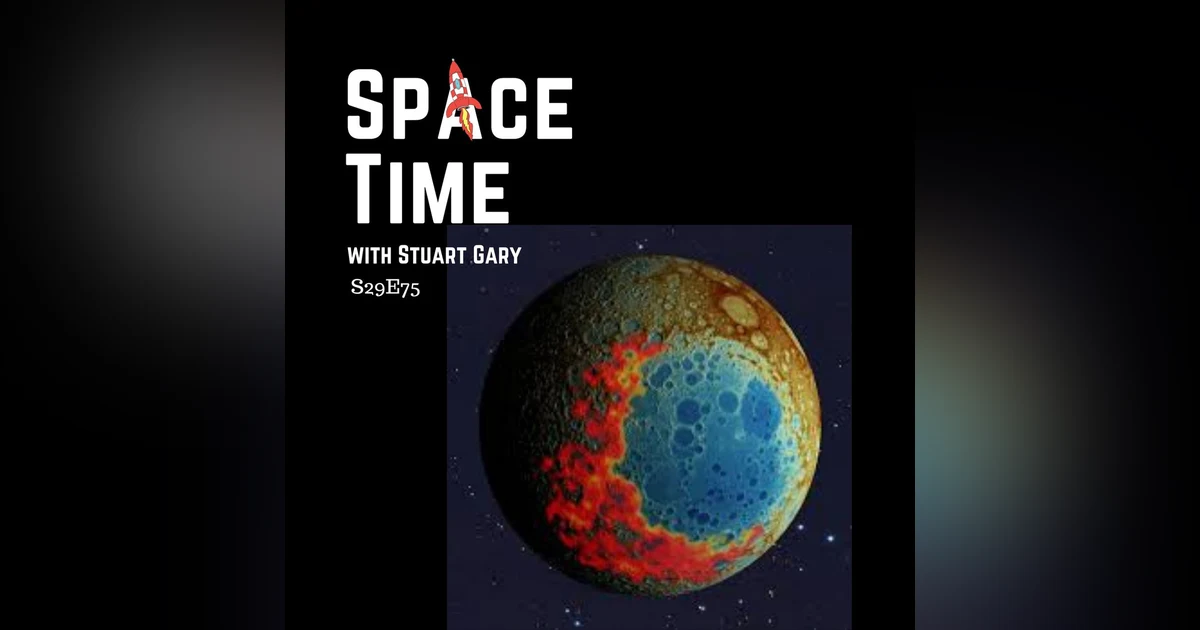
 SpaceTime Series 29 Episode 75 The Moon’s oldest and largest impact crater A new study suggests the Moon’s oldest and largest impact crater – the two and a half thousand kilometre wide South Pole-Aitken basin -- could have excavated material so deep it included parts of the lunar mantle. New clues to how the red planet Mars evolved Scientists have discovered the mineral garnet in a Martian meteorite which may reveal how the red planet evolved billions of years ago. Mission to boost Swift space telescope’s orbit NASA is about to launch a new mission designed to extend the life of a half billion dollar spacecraft by boosting it into a higher orbit. The Science Report New report shows ocean temperatures reached a new record high in 2025. The brain changes within a month of a first psychedelic experience from magic mushrooms. Discovery that humans were using fire between 1.07 and 1.79 million years ago. Claims artificial intelligence becomes more moral the larger and more complex it gets. Alex on Tech: Lithium Titanate batteries.
Become a supporter of this podcast: https://www.spreaker.com/podcast/spacetime-with-stuart-gary--2458531/support.
Become a supporter of this podcast: https://www.spreaker.com/podcast/spacetime-with-stuart-gary--2458531/support.
The Astronomy, Space, Technology & Science News Podcast.
WEBVTT
0
00:00:00.000 --> 00:00:02.360
Stuart Gary: This is space Time Series 29, Episode
1
00:00:02.360 --> 00:00:04.892
75 for broadcast on 24
2
00:00:05.028 --> 00:00:07.800
June 2026. Coming up on
3
00:00:07.800 --> 00:00:10.800
Space, the moon's oldest and largest
4
00:00:10.800 --> 00:00:13.680
impact crater. Uh, new clues about how the
5
00:00:13.680 --> 00:00:16.640
red planet Mars evolved and NASA's new
6
00:00:16.640 --> 00:00:19.120
mission to boost the Swift spacecraft back
7
00:00:19.120 --> 00:00:21.960
into a higher orbit. All that and more
8
00:00:21.960 --> 00:00:24.000
coming up on, uh, Space Time.
9
00:00:25.360 --> 00:00:28.160
Stuart Gary: Welcome to Space Time with Stuart
10
00:00:28.160 --> 00:00:28.560
Gar.
11
00:00:44.700 --> 00:00:46.980
Stuart Gary: A new study suggests that the moon's oldest
12
00:00:46.980 --> 00:00:49.100
and largest impact crater, the two and a half
13
00:00:49.100 --> 00:00:51.260
thousand kilometre wide south pole Aiken
14
00:00:51.260 --> 00:00:53.580
Basin, could have excavated material so deep
15
00:00:53.580 --> 00:00:56.500
it included parts of the lunar mantle. The
16
00:00:56.500 --> 00:00:58.700
findings, reported in the journal Science
17
00:00:58.700 --> 00:01:01.260
Advances and Geophysical Research Planets,
18
00:01:01.340 --> 00:01:03.420
provides fresh insights into the early
19
00:01:03.420 --> 00:01:05.360
evolution evolution of our solar system and
20
00:01:05.360 --> 00:01:07.520
what the Artemis astronauts will encounter
21
00:01:07.520 --> 00:01:09.640
when they land at the lunar south pole in
22
00:01:09.640 --> 00:01:12.320
2028. One of the
23
00:01:12.320 --> 00:01:14.160
study's authors, William Bottke from the
24
00:01:14.160 --> 00:01:16.200
Southwest Research Institute in Boulder,
25
00:01:16.200 --> 00:01:18.880
Colorado, says the collision struck the lunar
26
00:01:18.880 --> 00:01:20.880
surface with so much force that it may have
27
00:01:20.880 --> 00:01:23.360
excavated material from deep inside the moon,
28
00:01:23.360 --> 00:01:26.200
including portions of the lunar mantle. Using
29
00:01:26.200 --> 00:01:29.120
advanced models and simulations, Bottke and
30
00:01:29.120 --> 00:01:31.200
colleagues recreated the crater forming
31
00:01:31.200 --> 00:01:33.600
impact and identified new evidence about the
32
00:01:33.600 --> 00:01:36.460
direction and composition of that struck the
33
00:01:36.460 --> 00:01:39.380
moon. Their work shows the best fit was an
34
00:01:39.380 --> 00:01:41.340
impactor approaching from the north and
35
00:01:41.340 --> 00:01:43.460
travelling south, hitting at a low angle and
36
00:01:43.460 --> 00:01:45.980
producing the elongated tapered shape of the
37
00:01:45.980 --> 00:01:48.460
basin. The modelling suggests the
38
00:01:48.460 --> 00:01:51.180
impactor wasn't a simple uniform body, but a
39
00:01:51.180 --> 00:01:53.460
differentiated object with an eyeing course
40
00:01:53.460 --> 00:01:55.500
surrounded by rock. In other words, it could
41
00:01:55.500 --> 00:01:57.500
have been a small protoplanet or a large
42
00:01:57.500 --> 00:02:00.340
differentiated asteroid. As the
43
00:02:00.340 --> 00:02:02.260
impactor slammed into the moon at a low
44
00:02:02.260 --> 00:02:05.260
angle, it excavated a deep asymmetric cavity
45
00:02:05.260 --> 00:02:08.200
and melted the rock in the central basin. The
46
00:02:08.200 --> 00:02:10.680
collision lofted large amounts of material
47
00:02:10.680 --> 00:02:13.160
from both the lunar crust and mantle, which
48
00:02:13.160 --> 00:02:15.400
later settled back onto the basin floor.
49
00:02:16.440 --> 00:02:18.880
The authors also analysed how this ejector
50
00:02:18.880 --> 00:02:20.400
would have been distributed beneath and
51
00:02:20.400 --> 00:02:22.840
around the basin. They compared high
52
00:02:22.840 --> 00:02:25.040
resolution gravity data uh with models that
53
00:02:25.040 --> 00:02:27.320
included both crustal and mantle material,
54
00:02:27.560 --> 00:02:29.800
determining that the basin likely contained
55
00:02:29.800 --> 00:02:31.960
substantial amounts of mantle derived rock
56
00:02:31.960 --> 00:02:34.120
within its interior and mixed into the
57
00:02:34.120 --> 00:02:36.950
ejector blanket surrounding the crater. A few
58
00:02:36.950 --> 00:02:39.070
subsequent impacts within the basin appear to
59
00:02:39.070 --> 00:02:41.190
have later excavated these underlying matter
60
00:02:41.190 --> 00:02:43.150
deposits, bringing some of this material to
61
00:02:43.150 --> 00:02:45.390
the surface where it is lying there, ready to
62
00:02:45.390 --> 00:02:47.910
be sampled by robotic rovers or people on
63
00:02:47.910 --> 00:02:50.790
future missions. Earlier theories
64
00:02:50.790 --> 00:02:52.990
had suggested that the deepest ejector might
65
00:02:52.990 --> 00:02:55.430
be confined to parts of the basin far uh from
66
00:02:55.430 --> 00:02:57.670
the proposed south pole exploration zones.
67
00:02:58.310 --> 00:03:00.550
However, these new simulations and gravity
68
00:03:00.550 --> 00:03:02.910
modelling indicates that key deposits of
69
00:03:02.910 --> 00:03:05.190
mantle bearing ejecta may well blanket
70
00:03:05.190 --> 00:03:07.490
portions of the lunar south pole right where
71
00:03:07.490 --> 00:03:10.250
the astronauts will land. The research is
72
00:03:10.250 --> 00:03:11.970
fascinating because it's telling mission
73
00:03:11.970 --> 00:03:14.250
managers exactly where to look for samples
74
00:03:14.250 --> 00:03:16.170
which could answer some of our biggest
75
00:03:16.170 --> 00:03:18.450
questions about the Moon's origin and
76
00:03:18.450 --> 00:03:21.010
evolution, and consequently, about the
77
00:03:21.010 --> 00:03:23.050
evolution of the inner solar system.
78
00:03:24.090 --> 00:03:26.810
This is space time. Still to
79
00:03:26.810 --> 00:03:29.450
come, new clues about how the Red Planet Mars
80
00:03:29.450 --> 00:03:31.970
evolved, and NASA's new mission to boost the
81
00:03:31.970 --> 00:03:34.810
Swift Space Telescope up into a higher orbit.
82
00:03:35.190 --> 00:03:37.750
All that and more still to come on, uh, space
83
00:03:37.750 --> 00:03:38.150
time.
84
00:03:53.910 --> 00:03:56.030
Scientists have discovered the mineral garnet
85
00:03:56.030 --> 00:03:58.350
in the Martian meteorite. And these findings
86
00:03:58.350 --> 00:04:00.430
may help reveal how the Red Planet evolved
87
00:04:00.430 --> 00:04:03.420
billions of years ago. You see, garnet is
88
00:04:03.420 --> 00:04:05.500
a completely new type of rock from the Red
89
00:04:05.500 --> 00:04:07.740
Planet, and it offers a rare glimpse into the
90
00:04:07.740 --> 00:04:10.580
ancient Martian past. The findings,
91
00:04:10.660 --> 00:04:12.540
reported in the journal Geochemical
92
00:04:12.540 --> 00:04:14.580
Perspectives Letters, could help researchers
93
00:04:14.580 --> 00:04:17.140
piece together the planet's 4.5 billion year
94
00:04:17.140 --> 00:04:20.140
geological history. It offers a new time
95
00:04:20.140 --> 00:04:22.060
capsule, reserving clues about the
96
00:04:22.060 --> 00:04:24.260
temperatures, pressures, and processes that
97
00:04:24.260 --> 00:04:26.340
shaped the Red Planet billions of years ago.
98
00:04:27.710 --> 00:04:30.550
Garnet is a dark red gem. It was
99
00:04:30.550 --> 00:04:33.110
popular in ancient Egypt, with the Romans and
100
00:04:33.110 --> 00:04:35.310
with the Victorian elite. It's also the
101
00:04:35.310 --> 00:04:37.750
January birthstone, and it's a
102
00:04:37.750 --> 00:04:40.190
cornerstone mineral in geology, providing a
103
00:04:40.190 --> 00:04:42.390
powerful record of the tectonic forces, ore
104
00:04:42.390 --> 00:04:44.510
forming processes, and fluid rock
105
00:04:44.510 --> 00:04:46.950
interactions that shape the Earth's crust and
106
00:04:46.950 --> 00:04:49.590
mantle. One of the study's authors, James
107
00:04:49.590 --> 00:04:51.510
Darling from the University of Portsmouth,
108
00:04:51.510 --> 00:04:54.030
says the findings add striking new dimensions
109
00:04:54.030 --> 00:04:56.350
to science's understanding of the geology of
110
00:04:56.350 --> 00:04:58.870
Mars, and they open up a new window into its
111
00:04:58.870 --> 00:05:01.530
evolution. Evolution. Garnet bearing rock
112
00:05:01.530 --> 00:05:03.570
could provide clues about how Mars has
113
00:05:03.570 --> 00:05:05.410
changed throughout its history and provide
114
00:05:05.410 --> 00:05:07.650
new insights into the ancient environments
115
00:05:07.650 --> 00:05:09.530
that could have formed the garnet and related
116
00:05:09.610 --> 00:05:12.570
minerals. The garnet was discovered
117
00:05:12.570 --> 00:05:14.730
during an analysis of a fragment of a Martian
118
00:05:14.730 --> 00:05:15.730
meteorite known as
119
00:05:15.730 --> 00:05:18.090
NWA8171.
120
00:05:18.730 --> 00:05:20.650
The authors originally thought the sample was
121
00:05:20.650 --> 00:05:23.330
simply common pyroxene, But a more detailed
122
00:05:23.330 --> 00:05:25.570
examination using electron microscopy and
123
00:05:25.570 --> 00:05:28.250
microanalysis discovered it to be garnet, a
124
00:05:28.250 --> 00:05:30.450
mineral that had not been identified en masse
125
00:05:30.450 --> 00:05:33.230
before. Garnet is a classic
126
00:05:33.230 --> 00:05:35.230
example of a mineral often found in
127
00:05:35.230 --> 00:05:38.150
metamorphic rocks on Earth. The process of
128
00:05:38.150 --> 00:05:40.430
metamorphism transforms igneous or
129
00:05:40.430 --> 00:05:42.590
sedimentary rocks into a new form through
130
00:05:42.590 --> 00:05:45.310
exposure to extreme heat, high pressure, or
131
00:05:45.310 --> 00:05:48.190
hot fluids. On Mars, the heat and
132
00:05:48.190 --> 00:05:49.910
pressure needed to produce scarlet through
133
00:05:49.910 --> 00:05:51.870
metamorphism could have come from the impact
134
00:05:51.870 --> 00:05:54.110
of a meteor hitting the surface, or from
135
00:05:54.110 --> 00:05:56.750
magma rising up into the crust, or from both.
136
00:05:57.480 --> 00:05:59.250
Uh, however, the authors admit they can't
137
00:05:59.250 --> 00:06:01.370
rule out that the garnet bearing rock may
138
00:06:01.370 --> 00:06:03.130
well have been delivered to Mars and
139
00:06:03.130 --> 00:06:05.010
incorporated into its surface through a
140
00:06:05.010 --> 00:06:07.770
meteor impact. So the authors now need to
141
00:06:07.770 --> 00:06:09.890
study the garnet's, uh, isotopic signatures
142
00:06:09.890 --> 00:06:12.010
in order to verify whether it was originally
143
00:06:12.010 --> 00:06:14.370
produced on Mars or whether it came to Mars
144
00:06:14.370 --> 00:06:17.170
and consequently came to Earth from another
145
00:06:17.170 --> 00:06:20.050
body. Measuring oxygen isotopes
146
00:06:20.050 --> 00:06:22.130
from the Garnet bearing rock itself would
147
00:06:22.130 --> 00:06:24.710
help to confirm its origins. And
148
00:06:24.710 --> 00:06:27.190
needless to say, we'll keep you informed.
149
00:06:27.830 --> 00:06:30.790
This is space time. Still to come.
150
00:06:31.030 --> 00:06:33.270
NASA's new mission to try and save the Swift
151
00:06:33.270 --> 00:06:35.430
space Telescope by boosting it into a higher
152
00:06:35.430 --> 00:06:37.510
orbit. And later in the science report,
153
00:06:37.910 --> 00:06:40.710
discovery that humans were already using fire
154
00:06:40.790 --> 00:06:43.030
between 1.07 and
155
00:06:43.030 --> 00:06:45.430
1.79 million years ago.
156
00:06:45.910 --> 00:06:48.630
All that and more still to come on uh, space
157
00:06:48.630 --> 00:06:49.030
time.
158
00:06:54.110 --> 00:06:54.430
Stuart Gary: Foreign.
159
00:07:04.350 --> 00:07:06.590
Stuart Gary: NASA's about to launch a new mission designed
160
00:07:06.590 --> 00:07:08.670
to extend the life of a half billion dollar
161
00:07:08.670 --> 00:07:10.790
spacecraft by boosting it into a higher
162
00:07:10.790 --> 00:07:13.710
orbit. Catalyst Space will use its Link
163
00:07:13.710 --> 00:07:16.030
rescue craft to boost the orbit of NASA's
164
00:07:16.030 --> 00:07:18.030
Swift gamma ray Space Telescope.
165
00:07:18.990 --> 00:07:21.870
Swift was launched back in 2004 to study
166
00:07:21.870 --> 00:07:24.030
changes in the high energy universe. Things
167
00:07:24.030 --> 00:07:26.410
like gamma ray bursts, which are the powerful
168
00:07:26.410 --> 00:07:29.170
explosions in the cosmos see when a
169
00:07:29.170 --> 00:07:31.450
rapid sudden event takes place in the sky.
170
00:07:31.450 --> 00:07:33.530
Swift acts as an early warning system,
171
00:07:33.530 --> 00:07:35.530
providing crucial information that allows
172
00:07:35.530 --> 00:07:37.810
other observatories to follow up and learn
173
00:07:37.810 --> 00:07:40.050
more about the event and consequently how the
174
00:07:40.050 --> 00:07:42.970
universe works. But after 22
175
00:07:42.970 --> 00:07:45.770
years, Swift's 600 kilometre high orbit has
176
00:07:45.770 --> 00:07:48.170
begun to decay rapidly because of increased
177
00:07:48.170 --> 00:07:50.970
solar activity. NASA initially expected
178
00:07:50.970 --> 00:07:53.370
it to stay in orbit until the early2030s,
179
00:07:53.900 --> 00:07:56.020
but the latest peak in the Sun's 11 year
180
00:07:56.020 --> 00:07:58.460
solar cycle was far stronger than expected.
181
00:07:59.500 --> 00:08:02.060
Increased solar activity heats and swells
182
00:08:02.060 --> 00:08:04.620
Earth's atmosphere and that creates extra
183
00:08:04.620 --> 00:08:07.100
atmospheric drag on orbiting spacecraft.
184
00:08:07.580 --> 00:08:09.540
And that atmospheric drag will cause
185
00:08:09.540 --> 00:08:11.740
spacecraft orbits to decay, ultimately
186
00:08:11.740 --> 00:08:13.540
burning up in the atmosphere unless they're
187
00:08:13.540 --> 00:08:16.380
boosted back up into higher orbits. For
188
00:08:16.380 --> 00:08:18.900
Swift, that wasn't possible and mission
189
00:08:18.900 --> 00:08:21.700
managers realised the telescope was doomed in
190
00:08:21.700 --> 00:08:24.660
a matter of months. It's now just 370
191
00:08:24.660 --> 00:08:26.900
kilometres in altitude and will soon suffer
192
00:08:26.900 --> 00:08:28.700
enough orbital decay to re enter the
193
00:08:28.700 --> 00:08:30.420
atmosphere and begin burning up.
194
00:08:31.460 --> 00:08:33.700
But rather than allowing the mission to end,
195
00:08:33.700 --> 00:08:36.340
NASA decided to take this opportunity to test
196
00:08:36.340 --> 00:08:38.580
a new spacecraft specifically designed to
197
00:08:38.580 --> 00:08:41.180
attach to Swift and boost it back up to its
198
00:08:41.180 --> 00:08:44.180
original orbit. In September 2025,
199
00:08:44.260 --> 00:08:46.980
NASA awarded a contract to Catalyst Space to
200
00:08:46.980 --> 00:08:49.140
mount a robotic servicing mission to Swift.
201
00:08:49.140 --> 00:08:52.120
In less than a year, the mission will use a
202
00:08:52.120 --> 00:08:54.560
400 kilogramme refrigerator sized robotic
203
00:08:54.560 --> 00:08:56.920
rescue craft called LINK to rendezvous with
204
00:08:56.920 --> 00:08:58.960
Swift and boost it back up into a higher
205
00:08:58.960 --> 00:09:01.880
altitude. Link will be Launched
206
00:09:01.880 --> 00:09:04.880
aboard a Northrop Grumman Pegasus XL rocket,
207
00:09:05.200 --> 00:09:07.240
the Pegasus will be taken up to an altitude
208
00:09:07.240 --> 00:09:10.160
of about 45,000ft, attached to the underbelly
209
00:09:10.160 --> 00:09:12.760
of the converted Lockheed L1011 airliner
210
00:09:12.760 --> 00:09:15.080
Stargazer, which will take off from a Runway
211
00:09:15.080 --> 00:09:17.610
in the Marshall Islands. Once the
212
00:09:17.610 --> 00:09:19.370
airliner reaches the correct altitude,
213
00:09:19.370 --> 00:09:21.650
Pegasus will be released, ignite its own
214
00:09:21.650 --> 00:09:24.370
engine and climb into space. Once in
215
00:09:24.370 --> 00:09:26.650
orbit, Pegasus will deploy the Link rescue
216
00:09:26.650 --> 00:09:28.330
craft, which will then attempt to rendezvous
217
00:09:28.330 --> 00:09:30.530
with Swift, taking images of the spacecraft
218
00:09:30.530 --> 00:09:32.649
from different angles so mission managers can
219
00:09:32.649 --> 00:09:34.650
inspect the ageing probe for damage from
220
00:09:34.650 --> 00:09:37.050
debris and micrometeorites and work out how
221
00:09:37.050 --> 00:09:39.530
they're going to capture it. Link will then
222
00:09:39.530 --> 00:09:42.290
attach to Swift using its three robotic arms,
223
00:09:42.370 --> 00:09:44.450
and gradually, over more than six weeks,
224
00:09:44.530 --> 00:09:46.730
it'll use its thrusters to slowly boost the
225
00:09:46.730 --> 00:09:49.350
observatory back up into its 600 kilometres
226
00:09:49.350 --> 00:09:52.310
high orbit. It's a mission that might not
227
00:09:52.310 --> 00:09:54.550
only save the spacecraft, but demonstrate the
228
00:09:54.550 --> 00:09:56.590
possibility of extending the lives of other
229
00:09:56.590 --> 00:09:58.830
spacecraft through boosting, refuelling or
230
00:09:58.830 --> 00:10:01.790
repair work while in orbit. This report
231
00:10:01.950 --> 00:10:03.230
from NASA tv.
232
00:10:03.710 --> 00:10:06.150
Stuart Gary: NASA is working with an American startup to
233
00:10:06.150 --> 00:10:08.590
attempt something no one has ever achieved
234
00:10:09.470 --> 00:10:12.350
boost a spacecraft before it re enters the
235
00:10:12.350 --> 00:10:12.990
atmosphere.
236
00:10:13.150 --> 00:10:14.910
Stuart Gary: This is just a really different kind of
237
00:10:14.910 --> 00:10:16.990
mission. We can't wait long.
238
00:10:17.800 --> 00:10:20.560
Its orbit has been lowering. If we
239
00:10:20.560 --> 00:10:23.360
do nothing, Swift will re enter the
240
00:10:23.360 --> 00:10:26.200
atmosphere and so there's nothing to lose.
241
00:10:27.640 --> 00:10:30.320
Just a few months ago, this spacecraft was a
242
00:10:30.320 --> 00:10:31.640
conceptual drawing.
243
00:10:32.200 --> 00:10:34.920
Stuart Gary: Catalyst's robotic spacecraft will approach
244
00:10:34.920 --> 00:10:37.880
the observatory, carefully capture it
245
00:10:37.880 --> 00:10:40.840
and propel it to nearly its original orbit.
246
00:10:42.120 --> 00:10:44.540
Stuart Gary: Six months ago, this was a PowerPoint. In
247
00:10:44.540 --> 00:10:47.380
under a year, we're going from identification
248
00:10:47.380 --> 00:10:49.980
of a problem, proposal, contract
249
00:10:50.060 --> 00:10:51.100
award to launch.
250
00:10:51.900 --> 00:10:54.420
Stuart Gary: Saving Swift isn't about just preserving one
251
00:10:54.420 --> 00:10:56.660
mission. It's about moving forward in a
252
00:10:56.660 --> 00:10:59.460
future where we can give spacecraft a second
253
00:10:59.460 --> 00:10:59.820
life.
254
00:10:59.900 --> 00:11:02.140
Stuart Gary: And in that report from NASA tv, we heard
255
00:11:02.140 --> 00:11:04.460
from NASA Swift scientists Brad Senko and
256
00:11:04.460 --> 00:11:07.220
Regina Caputo, Catalyst CEO Gunhee
257
00:11:07.220 --> 00:11:09.820
Lee and Catalyst Link lead scientist Kerryn
258
00:11:09.820 --> 00:11:12.440
Wilson. This space, time.
259
00:11:28.440 --> 00:11:28.930
And time.
260
00:11:28.930 --> 00:11:30.440
Um, now for another brief look at some of the
261
00:11:30.440 --> 00:11:32.360
other storeys making news in science this
262
00:11:32.360 --> 00:11:35.200
week with the Science report. The World
263
00:11:35.200 --> 00:11:37.320
Meteorological Organisation has released its
264
00:11:37.320 --> 00:11:39.560
latest State of the Climate in Asia report,
265
00:11:39.640 --> 00:11:42.080
showing that ocean surface temperatures have
266
00:11:42.080 --> 00:11:45.060
now reached a new record. The study found
267
00:11:45.060 --> 00:11:47.420
the seas of Asia had warmed faster than the
268
00:11:47.420 --> 00:11:49.300
global average, with a mean surface
269
00:11:49.300 --> 00:11:51.740
temperature of around 0.96 degrees
270
00:11:51.740 --> 00:11:54.460
Celsius above the 1991-2020
271
00:11:54.460 --> 00:11:56.940
average, with China, Korea and Japan all
272
00:11:56.940 --> 00:11:58.980
recording their hottest summers on record.
273
00:11:59.780 --> 00:12:02.460
Pakistan, Sri Lanka and Vietnam experienced
274
00:12:02.460 --> 00:12:05.060
devastating floods and monsoons and tropical
275
00:12:05.060 --> 00:12:07.540
cyclone related rainfall, with over 1200
276
00:12:07.540 --> 00:12:10.020
deaths from flooding in Pakistan and Vietnam
277
00:12:10.020 --> 00:12:12.800
alone. A new
278
00:12:12.800 --> 00:12:15.160
study has found that people tend to undergo
279
00:12:15.160 --> 00:12:17.480
changes in their brains within a month after
280
00:12:17.480 --> 00:12:19.920
their first psychedelic experience from magic
281
00:12:19.920 --> 00:12:22.520
mushrooms. The findings, reported in the
282
00:12:22.520 --> 00:12:24.840
journal Nature Communications, involved 28
283
00:12:24.840 --> 00:12:26.799
healthy people who had never taken magic
284
00:12:26.799 --> 00:12:28.760
mushrooms before and scanned their brains
285
00:12:28.760 --> 00:12:30.800
within an hour of a single high dose of
286
00:12:30.800 --> 00:12:33.160
Psilocyphon and again a month later.
287
00:12:33.640 --> 00:12:36.200
The authors found that after a month, modest
288
00:12:36.200 --> 00:12:38.320
brain changes were visible, relating to
289
00:12:38.320 --> 00:12:40.840
cognitive flexibility, psychological insight
290
00:12:40.840 --> 00:12:41.880
and well being.
291
00:12:43.800 --> 00:12:45.640
Archaeologists have uncovered evidence that
292
00:12:45.640 --> 00:12:48.280
early humans were already using fire in South
293
00:12:48.280 --> 00:12:50.120
Africa's wonder work caves between
294
00:12:50.200 --> 00:12:52.840
1.07 and 1.79
295
00:12:52.840 --> 00:12:55.720
million years ago. The previous discovery
296
00:12:55.720 --> 00:12:57.880
of early fire in the Kalahari Desert cave
297
00:12:57.880 --> 00:12:59.680
system had been dated to around a million
298
00:12:59.680 --> 00:13:02.440
years ago. The new findings, reported in the
299
00:13:02.440 --> 00:13:04.800
journal plos one, extend the chronology of
300
00:13:04.800 --> 00:13:07.240
one of the earliest known records of fire use
301
00:13:07.240 --> 00:13:10.230
associated with hominids. Scientists from
302
00:13:10.230 --> 00:13:12.470
the Hebrew University of Jerusalem found
303
00:13:12.470 --> 00:13:15.070
signs of repeated fire use deep inside the
304
00:13:15.070 --> 00:13:17.030
cave, far beyond the reach of natural
305
00:13:17.030 --> 00:13:19.710
wildfires, suggesting that early humans were
306
00:13:19.710 --> 00:13:21.590
bringing naturally occurring fire into the
307
00:13:21.590 --> 00:13:23.790
cave and then maintaining it there long
308
00:13:23.790 --> 00:13:25.630
before they learned how to create it for
309
00:13:25.630 --> 00:13:28.270
themselves. To reach their conclusions, the
310
00:13:28.270 --> 00:13:30.390
authors used a new method based on light
311
00:13:30.390 --> 00:13:32.390
emitting properties of burnt bones.
312
00:13:33.350 --> 00:13:35.750
When illuminated at specific wavelengths of
313
00:13:35.750 --> 00:13:37.510
light, bones that have been exposed to
314
00:13:37.510 --> 00:13:40.330
intense heat emit a distinctive glow and that
315
00:13:40.330 --> 00:13:41.730
can be recorded by instruments.
316
00:13:43.490 --> 00:13:45.850
Well, we may well be heading for a Skynet
317
00:13:45.850 --> 00:13:48.250
future thanks to artificial intelligence, but
318
00:13:48.250 --> 00:13:49.770
it looks like there's a glimmer of hope on
319
00:13:49.770 --> 00:13:52.650
the horizon. A new study claims AI
320
00:13:52.650 --> 00:13:54.650
becomes more aligned with human moral
321
00:13:54.650 --> 00:13:56.810
reasoning, the larger and more complex it
322
00:13:56.810 --> 00:13:59.610
gets. The findings reported in the Journal of
323
00:13:59.610 --> 00:14:02.450
the Royal Society Open Science assessed 75
324
00:14:02.450 --> 00:14:04.770
large language models, including ChatGPT,
325
00:14:05.090 --> 00:14:07.330
Claude, and Deep SEQ, to see if they'd agree
326
00:14:07.330 --> 00:14:09.370
with human preferences when presented with
327
00:14:09.370 --> 00:14:12.170
life or death dilemmas. They found that the
328
00:14:12.170 --> 00:14:14.250
number of parameters a model was made up of
329
00:14:14.250 --> 00:14:16.450
affected how likely it was to agree with
330
00:14:16.450 --> 00:14:19.370
humans. The authors say the more complex the
331
00:14:19.370 --> 00:14:21.450
models were, more closely they aligned with
332
00:14:21.450 --> 00:14:24.250
human morality. But the improvements were
333
00:14:24.250 --> 00:14:26.530
gradual as the complexity increased,
334
00:14:28.370 --> 00:14:30.850
the dangers of lithium ion batteries may soon
335
00:14:30.850 --> 00:14:32.850
be a thing of the past as the next big
336
00:14:32.850 --> 00:14:34.610
development in battery technology called
337
00:14:34.610 --> 00:14:37.330
lithium titanate begins to make an inroad
338
00:14:37.330 --> 00:14:40.110
into the consumer market. With the details,
339
00:14:40.110 --> 00:14:41.830
we're joined by technology editor Alex
340
00:14:41.830 --> 00:14:44.350
Zaharov Roy from TechAdvice Life.
341
00:14:44.430 --> 00:14:45.990
Alex Zaharov-Reutt: Now, these batteries actually have been in
342
00:14:45.990 --> 00:14:47.830
use by NASA and the military for some
343
00:14:47.830 --> 00:14:49.990
decades, but they weren't commercial, uh, or
344
00:14:49.990 --> 00:14:52.030
commercially available because the technology
345
00:14:52.190 --> 00:14:54.670
just hadn't advanced to a degree that you
346
00:14:54.670 --> 00:14:56.670
could replicate as easily as lithium ion.
347
00:14:56.670 --> 00:14:58.390
Now, lithium M ion has a problem in that if
348
00:14:58.390 --> 00:15:00.030
you put a nail through the battery in the
349
00:15:00.030 --> 00:15:01.790
back of your phone, it'll have a runaway
350
00:15:01.790 --> 00:15:03.630
thermal reaction where you'll have this
351
00:15:03.630 --> 00:15:05.590
outgassing of very toxic gases. And we hear
352
00:15:05.590 --> 00:15:07.590
about people with scooters that they charge
353
00:15:07.590 --> 00:15:09.230
them inside their houses, they leave them on
354
00:15:09.230 --> 00:15:11.250
the charger all night. They might maybe have
355
00:15:11.250 --> 00:15:13.170
third party batteries or the batteries
356
00:15:13.170 --> 00:15:14.410
themselves have been damaged, because on
357
00:15:14.410 --> 00:15:16.010
scooters, you know, you're banging on kerbs
358
00:15:16.010 --> 00:15:17.850
and it's just a rough sort of environment for
359
00:15:17.850 --> 00:15:20.170
the battery and they go off. And if people
360
00:15:20.170 --> 00:15:22.290
have died, their houses have been burnt down.
361
00:15:22.290 --> 00:15:24.890
And so people are wary of modern
362
00:15:24.890 --> 00:15:26.930
mobile batteries, especially if it's very
363
00:15:26.930 --> 00:15:28.570
cold, they don't charge. I mean, we heard
364
00:15:28.570 --> 00:15:30.770
about cars that don't charge in the very cold
365
00:15:30.770 --> 00:15:32.650
American winters. And lithium titanite has a
366
00:15:32.650 --> 00:15:35.090
few serious advantages. One, it operates in
367
00:15:35.090 --> 00:15:37.690
those minus 20, minus 30 degrees Celsius
368
00:15:37.690 --> 00:15:40.170
temperatures, which are very bad for lithium
369
00:15:40.170 --> 00:15:41.630
ion batteries. And they operate at, at high
370
00:15:41.630 --> 00:15:43.910
temperatures as well. They recharge to full
371
00:15:43.910 --> 00:15:46.390
in approximately 20 minutes. If you damage
372
00:15:46.390 --> 00:15:48.870
them with a nail or if they get broken in an
373
00:15:48.870 --> 00:15:50.430
aeroplane, uh, seat, they will not have the
374
00:15:50.430 --> 00:15:52.750
runaway thermal reaction. And then on top of
375
00:15:52.750 --> 00:15:54.990
all of that, a normal mobile phone Battery
376
00:15:54.990 --> 00:15:57.349
lasts about 1500 cycles before it starts
377
00:15:57.349 --> 00:15:59.030
getting to about 80% of its life and, you
378
00:15:59.030 --> 00:16:00.870
know, discharges very quickly. We've all
379
00:16:00.870 --> 00:16:02.990
experienced a phone that is not holding
380
00:16:02.990 --> 00:16:04.710
anywhere near the charge you got when it was
381
00:16:04.710 --> 00:16:06.190
new. And of course you could buy a new or
382
00:16:06.190 --> 00:16:07.870
third party battery. But imagine if you could
383
00:16:07.870 --> 00:16:09.990
have a battery that lasted 10 or even 20
384
00:16:09.990 --> 00:16:11.390
years before you needed to replace it.
385
00:16:11.390 --> 00:16:13.650
Lithium titanate batteries have a red charge
386
00:16:13.650 --> 00:16:16.330
cycle not of 1500, but of 20,000 cycles or
387
00:16:16.330 --> 00:16:18.730
more. There are some robot prototypes from 30
388
00:16:18.730 --> 00:16:20.610
years ago that are still working to this day
389
00:16:20.610 --> 00:16:22.330
because they had lithium titanate batteries.
390
00:16:22.330 --> 00:16:23.970
So Toshiba is one of the companies that is
391
00:16:23.970 --> 00:16:25.730
commercialising this, going to be using it in
392
00:16:25.730 --> 00:16:27.650
power tools that use rechargeable batteries.
393
00:16:27.650 --> 00:16:29.409
We'll see these things in cars and in
394
00:16:29.409 --> 00:16:31.170
scooters and the company behind it have an
395
00:16:31.170 --> 00:16:33.090
operating system that can interface with any
396
00:16:33.090 --> 00:16:35.330
sort of battery and produce the correct sort
397
00:16:35.330 --> 00:16:37.290
of voltage for any sort of application. So
398
00:16:37.290 --> 00:16:39.170
it's kind of this universal translator
399
00:16:39.170 --> 00:16:40.730
between different sorts of batteries and
400
00:16:40.730 --> 00:16:42.210
different sorts of electronics. In the past,
401
00:16:42.210 --> 00:16:43.730
you had to match them very carefully and
402
00:16:43.730 --> 00:16:45.090
closely together. But with this operating
403
00:16:45.090 --> 00:16:47.150
system system merged with this lithium, uh,
404
00:16:47.430 --> 00:16:48.950
titanate batteries, it's going to be the
405
00:16:48.950 --> 00:16:50.950
revolution we've been waiting for in battery
406
00:16:50.950 --> 00:16:52.590
technology, but it'll still take a few years
407
00:16:52.590 --> 00:16:54.790
before it's everywhere. But it's a great
408
00:16:54.790 --> 00:16:57.110
example of that famous saying from William
409
00:16:57.110 --> 00:16:58.630
Gibson, the guy who wrote Neuromancer. He
410
00:16:58.630 --> 00:17:01.269
said the future has already been invented, it
411
00:17:01.269 --> 00:17:03.470
just hasn't been widely distributed yet.
412
00:17:03.470 --> 00:17:06.070
Well, lithium titanates, time is on the very
413
00:17:06.070 --> 00:17:07.950
cusp of being widely distributed and the
414
00:17:07.950 --> 00:17:10.390
battery problems of the past 10 years are
415
00:17:10.390 --> 00:17:12.870
going to fade away into non existent. They'll
416
00:17:12.870 --> 00:17:14.270
be, uh, distant memories.
417
00:17:14.270 --> 00:17:15.990
Stuart Gary: That's Alex Sahar of Reutt from
418
00:17:15.990 --> 00:17:18.690
TechAdvice.com Life and
419
00:17:18.690 --> 00:17:20.010
this is Space Time.
420
00:17:35.530 --> 00:17:38.330
And that's the show for now. Space Time
421
00:17:38.330 --> 00:17:40.410
is available every Monday, Wednesday and
422
00:17:40.410 --> 00:17:43.160
Friday through bytes.com, soundcloud,
423
00:17:43.550 --> 00:17:45.710
YouTube, your favourite podcast download
424
00:17:45.710 --> 00:17:46.910
provider, and from
425
00:17:46.910 --> 00:17:48.990
spacetimewithstuartgarry.com
426
00:17:49.550 --> 00:17:51.870
Space is also broadcast through the National
427
00:17:51.870 --> 00:17:54.630
Science foundation on Science Zone Radio and
428
00:17:54.630 --> 00:17:57.390
on both iHeartradio and TuneIn radio.
429
00:17:57.710 --> 00:17:59.750
And you can help to support our show by
430
00:17:59.750 --> 00:18:02.110
visiting the Space Store for a range of
431
00:18:02.110 --> 00:18:04.670
promotional merchandising goodies, or by
432
00:18:04.670 --> 00:18:07.110
becoming a Space patron, which gives you
433
00:18:07.110 --> 00:18:09.110
access to triple episode commercial free
434
00:18:09.110 --> 00:18:11.170
versions of the show, as well as lots of
435
00:18:11.170 --> 00:18:13.530
bonus audio content which doesn't go to air,
436
00:18:13.610 --> 00:18:16.010
access to our exclusive Facebook group, and
437
00:18:16.010 --> 00:18:18.170
other rewards. Just go to
438
00:18:18.170 --> 00:18:20.610
spacetimewithstuartgarry.com for full
439
00:18:20.610 --> 00:18:21.290
details.
440
00:18:21.930 --> 00:18:23.850
Stuart Gary: You've been listening to Space Time with
441
00:18:23.850 --> 00:18:26.690
Stuart Gary. This has been another quality
442
00:18:26.690 --> 00:18:29.050
podcast production from bytes.com.
0
00:00:00.000 --> 00:00:02.360
Stuart Gary: This is space Time Series 29, Episode
1
00:00:02.360 --> 00:00:04.892
75 for broadcast on 24
2
00:00:05.028 --> 00:00:07.800
June 2026. Coming up on
3
00:00:07.800 --> 00:00:10.800
Space, the moon's oldest and largest
4
00:00:10.800 --> 00:00:13.680
impact crater. Uh, new clues about how the
5
00:00:13.680 --> 00:00:16.640
red planet Mars evolved and NASA's new
6
00:00:16.640 --> 00:00:19.120
mission to boost the Swift spacecraft back
7
00:00:19.120 --> 00:00:21.960
into a higher orbit. All that and more
8
00:00:21.960 --> 00:00:24.000
coming up on, uh, Space Time.
9
00:00:25.360 --> 00:00:28.160
Stuart Gary: Welcome to Space Time with Stuart
10
00:00:28.160 --> 00:00:28.560
Gar.
11
00:00:44.700 --> 00:00:46.980
Stuart Gary: A new study suggests that the moon's oldest
12
00:00:46.980 --> 00:00:49.100
and largest impact crater, the two and a half
13
00:00:49.100 --> 00:00:51.260
thousand kilometre wide south pole Aiken
14
00:00:51.260 --> 00:00:53.580
Basin, could have excavated material so deep
15
00:00:53.580 --> 00:00:56.500
it included parts of the lunar mantle. The
16
00:00:56.500 --> 00:00:58.700
findings, reported in the journal Science
17
00:00:58.700 --> 00:01:01.260
Advances and Geophysical Research Planets,
18
00:01:01.340 --> 00:01:03.420
provides fresh insights into the early
19
00:01:03.420 --> 00:01:05.360
evolution evolution of our solar system and
20
00:01:05.360 --> 00:01:07.520
what the Artemis astronauts will encounter
21
00:01:07.520 --> 00:01:09.640
when they land at the lunar south pole in
22
00:01:09.640 --> 00:01:12.320
2028. One of the
23
00:01:12.320 --> 00:01:14.160
study's authors, William Bottke from the
24
00:01:14.160 --> 00:01:16.200
Southwest Research Institute in Boulder,
25
00:01:16.200 --> 00:01:18.880
Colorado, says the collision struck the lunar
26
00:01:18.880 --> 00:01:20.880
surface with so much force that it may have
27
00:01:20.880 --> 00:01:23.360
excavated material from deep inside the moon,
28
00:01:23.360 --> 00:01:26.200
including portions of the lunar mantle. Using
29
00:01:26.200 --> 00:01:29.120
advanced models and simulations, Bottke and
30
00:01:29.120 --> 00:01:31.200
colleagues recreated the crater forming
31
00:01:31.200 --> 00:01:33.600
impact and identified new evidence about the
32
00:01:33.600 --> 00:01:36.460
direction and composition of that struck the
33
00:01:36.460 --> 00:01:39.380
moon. Their work shows the best fit was an
34
00:01:39.380 --> 00:01:41.340
impactor approaching from the north and
35
00:01:41.340 --> 00:01:43.460
travelling south, hitting at a low angle and
36
00:01:43.460 --> 00:01:45.980
producing the elongated tapered shape of the
37
00:01:45.980 --> 00:01:48.460
basin. The modelling suggests the
38
00:01:48.460 --> 00:01:51.180
impactor wasn't a simple uniform body, but a
39
00:01:51.180 --> 00:01:53.460
differentiated object with an eyeing course
40
00:01:53.460 --> 00:01:55.500
surrounded by rock. In other words, it could
41
00:01:55.500 --> 00:01:57.500
have been a small protoplanet or a large
42
00:01:57.500 --> 00:02:00.340
differentiated asteroid. As the
43
00:02:00.340 --> 00:02:02.260
impactor slammed into the moon at a low
44
00:02:02.260 --> 00:02:05.260
angle, it excavated a deep asymmetric cavity
45
00:02:05.260 --> 00:02:08.200
and melted the rock in the central basin. The
46
00:02:08.200 --> 00:02:10.680
collision lofted large amounts of material
47
00:02:10.680 --> 00:02:13.160
from both the lunar crust and mantle, which
48
00:02:13.160 --> 00:02:15.400
later settled back onto the basin floor.
49
00:02:16.440 --> 00:02:18.880
The authors also analysed how this ejector
50
00:02:18.880 --> 00:02:20.400
would have been distributed beneath and
51
00:02:20.400 --> 00:02:22.840
around the basin. They compared high
52
00:02:22.840 --> 00:02:25.040
resolution gravity data uh with models that
53
00:02:25.040 --> 00:02:27.320
included both crustal and mantle material,
54
00:02:27.560 --> 00:02:29.800
determining that the basin likely contained
55
00:02:29.800 --> 00:02:31.960
substantial amounts of mantle derived rock
56
00:02:31.960 --> 00:02:34.120
within its interior and mixed into the
57
00:02:34.120 --> 00:02:36.950
ejector blanket surrounding the crater. A few
58
00:02:36.950 --> 00:02:39.070
subsequent impacts within the basin appear to
59
00:02:39.070 --> 00:02:41.190
have later excavated these underlying matter
60
00:02:41.190 --> 00:02:43.150
deposits, bringing some of this material to
61
00:02:43.150 --> 00:02:45.390
the surface where it is lying there, ready to
62
00:02:45.390 --> 00:02:47.910
be sampled by robotic rovers or people on
63
00:02:47.910 --> 00:02:50.790
future missions. Earlier theories
64
00:02:50.790 --> 00:02:52.990
had suggested that the deepest ejector might
65
00:02:52.990 --> 00:02:55.430
be confined to parts of the basin far uh from
66
00:02:55.430 --> 00:02:57.670
the proposed south pole exploration zones.
67
00:02:58.310 --> 00:03:00.550
However, these new simulations and gravity
68
00:03:00.550 --> 00:03:02.910
modelling indicates that key deposits of
69
00:03:02.910 --> 00:03:05.190
mantle bearing ejecta may well blanket
70
00:03:05.190 --> 00:03:07.490
portions of the lunar south pole right where
71
00:03:07.490 --> 00:03:10.250
the astronauts will land. The research is
72
00:03:10.250 --> 00:03:11.970
fascinating because it's telling mission
73
00:03:11.970 --> 00:03:14.250
managers exactly where to look for samples
74
00:03:14.250 --> 00:03:16.170
which could answer some of our biggest
75
00:03:16.170 --> 00:03:18.450
questions about the Moon's origin and
76
00:03:18.450 --> 00:03:21.010
evolution, and consequently, about the
77
00:03:21.010 --> 00:03:23.050
evolution of the inner solar system.
78
00:03:24.090 --> 00:03:26.810
This is space time. Still to
79
00:03:26.810 --> 00:03:29.450
come, new clues about how the Red Planet Mars
80
00:03:29.450 --> 00:03:31.970
evolved, and NASA's new mission to boost the
81
00:03:31.970 --> 00:03:34.810
Swift Space Telescope up into a higher orbit.
82
00:03:35.190 --> 00:03:37.750
All that and more still to come on, uh, space
83
00:03:37.750 --> 00:03:38.150
time.
84
00:03:53.910 --> 00:03:56.030
Scientists have discovered the mineral garnet
85
00:03:56.030 --> 00:03:58.350
in the Martian meteorite. And these findings
86
00:03:58.350 --> 00:04:00.430
may help reveal how the Red Planet evolved
87
00:04:00.430 --> 00:04:03.420
billions of years ago. You see, garnet is
88
00:04:03.420 --> 00:04:05.500
a completely new type of rock from the Red
89
00:04:05.500 --> 00:04:07.740
Planet, and it offers a rare glimpse into the
90
00:04:07.740 --> 00:04:10.580
ancient Martian past. The findings,
91
00:04:10.660 --> 00:04:12.540
reported in the journal Geochemical
92
00:04:12.540 --> 00:04:14.580
Perspectives Letters, could help researchers
93
00:04:14.580 --> 00:04:17.140
piece together the planet's 4.5 billion year
94
00:04:17.140 --> 00:04:20.140
geological history. It offers a new time
95
00:04:20.140 --> 00:04:22.060
capsule, reserving clues about the
96
00:04:22.060 --> 00:04:24.260
temperatures, pressures, and processes that
97
00:04:24.260 --> 00:04:26.340
shaped the Red Planet billions of years ago.
98
00:04:27.710 --> 00:04:30.550
Garnet is a dark red gem. It was
99
00:04:30.550 --> 00:04:33.110
popular in ancient Egypt, with the Romans and
100
00:04:33.110 --> 00:04:35.310
with the Victorian elite. It's also the
101
00:04:35.310 --> 00:04:37.750
January birthstone, and it's a
102
00:04:37.750 --> 00:04:40.190
cornerstone mineral in geology, providing a
103
00:04:40.190 --> 00:04:42.390
powerful record of the tectonic forces, ore
104
00:04:42.390 --> 00:04:44.510
forming processes, and fluid rock
105
00:04:44.510 --> 00:04:46.950
interactions that shape the Earth's crust and
106
00:04:46.950 --> 00:04:49.590
mantle. One of the study's authors, James
107
00:04:49.590 --> 00:04:51.510
Darling from the University of Portsmouth,
108
00:04:51.510 --> 00:04:54.030
says the findings add striking new dimensions
109
00:04:54.030 --> 00:04:56.350
to science's understanding of the geology of
110
00:04:56.350 --> 00:04:58.870
Mars, and they open up a new window into its
111
00:04:58.870 --> 00:05:01.530
evolution. Evolution. Garnet bearing rock
112
00:05:01.530 --> 00:05:03.570
could provide clues about how Mars has
113
00:05:03.570 --> 00:05:05.410
changed throughout its history and provide
114
00:05:05.410 --> 00:05:07.650
new insights into the ancient environments
115
00:05:07.650 --> 00:05:09.530
that could have formed the garnet and related
116
00:05:09.610 --> 00:05:12.570
minerals. The garnet was discovered
117
00:05:12.570 --> 00:05:14.730
during an analysis of a fragment of a Martian
118
00:05:14.730 --> 00:05:15.730
meteorite known as
119
00:05:15.730 --> 00:05:18.090
NWA8171.
120
00:05:18.730 --> 00:05:20.650
The authors originally thought the sample was
121
00:05:20.650 --> 00:05:23.330
simply common pyroxene, But a more detailed
122
00:05:23.330 --> 00:05:25.570
examination using electron microscopy and
123
00:05:25.570 --> 00:05:28.250
microanalysis discovered it to be garnet, a
124
00:05:28.250 --> 00:05:30.450
mineral that had not been identified en masse
125
00:05:30.450 --> 00:05:33.230
before. Garnet is a classic
126
00:05:33.230 --> 00:05:35.230
example of a mineral often found in
127
00:05:35.230 --> 00:05:38.150
metamorphic rocks on Earth. The process of
128
00:05:38.150 --> 00:05:40.430
metamorphism transforms igneous or
129
00:05:40.430 --> 00:05:42.590
sedimentary rocks into a new form through
130
00:05:42.590 --> 00:05:45.310
exposure to extreme heat, high pressure, or
131
00:05:45.310 --> 00:05:48.190
hot fluids. On Mars, the heat and
132
00:05:48.190 --> 00:05:49.910
pressure needed to produce scarlet through
133
00:05:49.910 --> 00:05:51.870
metamorphism could have come from the impact
134
00:05:51.870 --> 00:05:54.110
of a meteor hitting the surface, or from
135
00:05:54.110 --> 00:05:56.750
magma rising up into the crust, or from both.
136
00:05:57.480 --> 00:05:59.250
Uh, however, the authors admit they can't
137
00:05:59.250 --> 00:06:01.370
rule out that the garnet bearing rock may
138
00:06:01.370 --> 00:06:03.130
well have been delivered to Mars and
139
00:06:03.130 --> 00:06:05.010
incorporated into its surface through a
140
00:06:05.010 --> 00:06:07.770
meteor impact. So the authors now need to
141
00:06:07.770 --> 00:06:09.890
study the garnet's, uh, isotopic signatures
142
00:06:09.890 --> 00:06:12.010
in order to verify whether it was originally
143
00:06:12.010 --> 00:06:14.370
produced on Mars or whether it came to Mars
144
00:06:14.370 --> 00:06:17.170
and consequently came to Earth from another
145
00:06:17.170 --> 00:06:20.050
body. Measuring oxygen isotopes
146
00:06:20.050 --> 00:06:22.130
from the Garnet bearing rock itself would
147
00:06:22.130 --> 00:06:24.710
help to confirm its origins. And
148
00:06:24.710 --> 00:06:27.190
needless to say, we'll keep you informed.
149
00:06:27.830 --> 00:06:30.790
This is space time. Still to come.
150
00:06:31.030 --> 00:06:33.270
NASA's new mission to try and save the Swift
151
00:06:33.270 --> 00:06:35.430
space Telescope by boosting it into a higher
152
00:06:35.430 --> 00:06:37.510
orbit. And later in the science report,
153
00:06:37.910 --> 00:06:40.710
discovery that humans were already using fire
154
00:06:40.790 --> 00:06:43.030
between 1.07 and
155
00:06:43.030 --> 00:06:45.430
1.79 million years ago.
156
00:06:45.910 --> 00:06:48.630
All that and more still to come on uh, space
157
00:06:48.630 --> 00:06:49.030
time.
158
00:06:54.110 --> 00:06:54.430
Stuart Gary: Foreign.
159
00:07:04.350 --> 00:07:06.590
Stuart Gary: NASA's about to launch a new mission designed
160
00:07:06.590 --> 00:07:08.670
to extend the life of a half billion dollar
161
00:07:08.670 --> 00:07:10.790
spacecraft by boosting it into a higher
162
00:07:10.790 --> 00:07:13.710
orbit. Catalyst Space will use its Link
163
00:07:13.710 --> 00:07:16.030
rescue craft to boost the orbit of NASA's
164
00:07:16.030 --> 00:07:18.030
Swift gamma ray Space Telescope.
165
00:07:18.990 --> 00:07:21.870
Swift was launched back in 2004 to study
166
00:07:21.870 --> 00:07:24.030
changes in the high energy universe. Things
167
00:07:24.030 --> 00:07:26.410
like gamma ray bursts, which are the powerful
168
00:07:26.410 --> 00:07:29.170
explosions in the cosmos see when a
169
00:07:29.170 --> 00:07:31.450
rapid sudden event takes place in the sky.
170
00:07:31.450 --> 00:07:33.530
Swift acts as an early warning system,
171
00:07:33.530 --> 00:07:35.530
providing crucial information that allows
172
00:07:35.530 --> 00:07:37.810
other observatories to follow up and learn
173
00:07:37.810 --> 00:07:40.050
more about the event and consequently how the
174
00:07:40.050 --> 00:07:42.970
universe works. But after 22
175
00:07:42.970 --> 00:07:45.770
years, Swift's 600 kilometre high orbit has
176
00:07:45.770 --> 00:07:48.170
begun to decay rapidly because of increased
177
00:07:48.170 --> 00:07:50.970
solar activity. NASA initially expected
178
00:07:50.970 --> 00:07:53.370
it to stay in orbit until the early2030s,
179
00:07:53.900 --> 00:07:56.020
but the latest peak in the Sun's 11 year
180
00:07:56.020 --> 00:07:58.460
solar cycle was far stronger than expected.
181
00:07:59.500 --> 00:08:02.060
Increased solar activity heats and swells
182
00:08:02.060 --> 00:08:04.620
Earth's atmosphere and that creates extra
183
00:08:04.620 --> 00:08:07.100
atmospheric drag on orbiting spacecraft.
184
00:08:07.580 --> 00:08:09.540
And that atmospheric drag will cause
185
00:08:09.540 --> 00:08:11.740
spacecraft orbits to decay, ultimately
186
00:08:11.740 --> 00:08:13.540
burning up in the atmosphere unless they're
187
00:08:13.540 --> 00:08:16.380
boosted back up into higher orbits. For
188
00:08:16.380 --> 00:08:18.900
Swift, that wasn't possible and mission
189
00:08:18.900 --> 00:08:21.700
managers realised the telescope was doomed in
190
00:08:21.700 --> 00:08:24.660
a matter of months. It's now just 370
191
00:08:24.660 --> 00:08:26.900
kilometres in altitude and will soon suffer
192
00:08:26.900 --> 00:08:28.700
enough orbital decay to re enter the
193
00:08:28.700 --> 00:08:30.420
atmosphere and begin burning up.
194
00:08:31.460 --> 00:08:33.700
But rather than allowing the mission to end,
195
00:08:33.700 --> 00:08:36.340
NASA decided to take this opportunity to test
196
00:08:36.340 --> 00:08:38.580
a new spacecraft specifically designed to
197
00:08:38.580 --> 00:08:41.180
attach to Swift and boost it back up to its
198
00:08:41.180 --> 00:08:44.180
original orbit. In September 2025,
199
00:08:44.260 --> 00:08:46.980
NASA awarded a contract to Catalyst Space to
200
00:08:46.980 --> 00:08:49.140
mount a robotic servicing mission to Swift.
201
00:08:49.140 --> 00:08:52.120
In less than a year, the mission will use a
202
00:08:52.120 --> 00:08:54.560
400 kilogramme refrigerator sized robotic
203
00:08:54.560 --> 00:08:56.920
rescue craft called LINK to rendezvous with
204
00:08:56.920 --> 00:08:58.960
Swift and boost it back up into a higher
205
00:08:58.960 --> 00:09:01.880
altitude. Link will be Launched
206
00:09:01.880 --> 00:09:04.880
aboard a Northrop Grumman Pegasus XL rocket,
207
00:09:05.200 --> 00:09:07.240
the Pegasus will be taken up to an altitude
208
00:09:07.240 --> 00:09:10.160
of about 45,000ft, attached to the underbelly
209
00:09:10.160 --> 00:09:12.760
of the converted Lockheed L1011 airliner
210
00:09:12.760 --> 00:09:15.080
Stargazer, which will take off from a Runway
211
00:09:15.080 --> 00:09:17.610
in the Marshall Islands. Once the
212
00:09:17.610 --> 00:09:19.370
airliner reaches the correct altitude,
213
00:09:19.370 --> 00:09:21.650
Pegasus will be released, ignite its own
214
00:09:21.650 --> 00:09:24.370
engine and climb into space. Once in
215
00:09:24.370 --> 00:09:26.650
orbit, Pegasus will deploy the Link rescue
216
00:09:26.650 --> 00:09:28.330
craft, which will then attempt to rendezvous
217
00:09:28.330 --> 00:09:30.530
with Swift, taking images of the spacecraft
218
00:09:30.530 --> 00:09:32.649
from different angles so mission managers can
219
00:09:32.649 --> 00:09:34.650
inspect the ageing probe for damage from
220
00:09:34.650 --> 00:09:37.050
debris and micrometeorites and work out how
221
00:09:37.050 --> 00:09:39.530
they're going to capture it. Link will then
222
00:09:39.530 --> 00:09:42.290
attach to Swift using its three robotic arms,
223
00:09:42.370 --> 00:09:44.450
and gradually, over more than six weeks,
224
00:09:44.530 --> 00:09:46.730
it'll use its thrusters to slowly boost the
225
00:09:46.730 --> 00:09:49.350
observatory back up into its 600 kilometres
226
00:09:49.350 --> 00:09:52.310
high orbit. It's a mission that might not
227
00:09:52.310 --> 00:09:54.550
only save the spacecraft, but demonstrate the
228
00:09:54.550 --> 00:09:56.590
possibility of extending the lives of other
229
00:09:56.590 --> 00:09:58.830
spacecraft through boosting, refuelling or
230
00:09:58.830 --> 00:10:01.790
repair work while in orbit. This report
231
00:10:01.950 --> 00:10:03.230
from NASA tv.
232
00:10:03.710 --> 00:10:06.150
Stuart Gary: NASA is working with an American startup to
233
00:10:06.150 --> 00:10:08.590
attempt something no one has ever achieved
234
00:10:09.470 --> 00:10:12.350
boost a spacecraft before it re enters the
235
00:10:12.350 --> 00:10:12.990
atmosphere.
236
00:10:13.150 --> 00:10:14.910
Stuart Gary: This is just a really different kind of
237
00:10:14.910 --> 00:10:16.990
mission. We can't wait long.
238
00:10:17.800 --> 00:10:20.560
Its orbit has been lowering. If we
239
00:10:20.560 --> 00:10:23.360
do nothing, Swift will re enter the
240
00:10:23.360 --> 00:10:26.200
atmosphere and so there's nothing to lose.
241
00:10:27.640 --> 00:10:30.320
Just a few months ago, this spacecraft was a
242
00:10:30.320 --> 00:10:31.640
conceptual drawing.
243
00:10:32.200 --> 00:10:34.920
Stuart Gary: Catalyst's robotic spacecraft will approach
244
00:10:34.920 --> 00:10:37.880
the observatory, carefully capture it
245
00:10:37.880 --> 00:10:40.840
and propel it to nearly its original orbit.
246
00:10:42.120 --> 00:10:44.540
Stuart Gary: Six months ago, this was a PowerPoint. In
247
00:10:44.540 --> 00:10:47.380
under a year, we're going from identification
248
00:10:47.380 --> 00:10:49.980
of a problem, proposal, contract
249
00:10:50.060 --> 00:10:51.100
award to launch.
250
00:10:51.900 --> 00:10:54.420
Stuart Gary: Saving Swift isn't about just preserving one
251
00:10:54.420 --> 00:10:56.660
mission. It's about moving forward in a
252
00:10:56.660 --> 00:10:59.460
future where we can give spacecraft a second
253
00:10:59.460 --> 00:10:59.820
life.
254
00:10:59.900 --> 00:11:02.140
Stuart Gary: And in that report from NASA tv, we heard
255
00:11:02.140 --> 00:11:04.460
from NASA Swift scientists Brad Senko and
256
00:11:04.460 --> 00:11:07.220
Regina Caputo, Catalyst CEO Gunhee
257
00:11:07.220 --> 00:11:09.820
Lee and Catalyst Link lead scientist Kerryn
258
00:11:09.820 --> 00:11:12.440
Wilson. This space, time.
259
00:11:28.440 --> 00:11:28.930
And time.
260
00:11:28.930 --> 00:11:30.440
Um, now for another brief look at some of the
261
00:11:30.440 --> 00:11:32.360
other storeys making news in science this
262
00:11:32.360 --> 00:11:35.200
week with the Science report. The World
263
00:11:35.200 --> 00:11:37.320
Meteorological Organisation has released its
264
00:11:37.320 --> 00:11:39.560
latest State of the Climate in Asia report,
265
00:11:39.640 --> 00:11:42.080
showing that ocean surface temperatures have
266
00:11:42.080 --> 00:11:45.060
now reached a new record. The study found
267
00:11:45.060 --> 00:11:47.420
the seas of Asia had warmed faster than the
268
00:11:47.420 --> 00:11:49.300
global average, with a mean surface
269
00:11:49.300 --> 00:11:51.740
temperature of around 0.96 degrees
270
00:11:51.740 --> 00:11:54.460
Celsius above the 1991-2020
271
00:11:54.460 --> 00:11:56.940
average, with China, Korea and Japan all
272
00:11:56.940 --> 00:11:58.980
recording their hottest summers on record.
273
00:11:59.780 --> 00:12:02.460
Pakistan, Sri Lanka and Vietnam experienced
274
00:12:02.460 --> 00:12:05.060
devastating floods and monsoons and tropical
275
00:12:05.060 --> 00:12:07.540
cyclone related rainfall, with over 1200
276
00:12:07.540 --> 00:12:10.020
deaths from flooding in Pakistan and Vietnam
277
00:12:10.020 --> 00:12:12.800
alone. A new
278
00:12:12.800 --> 00:12:15.160
study has found that people tend to undergo
279
00:12:15.160 --> 00:12:17.480
changes in their brains within a month after
280
00:12:17.480 --> 00:12:19.920
their first psychedelic experience from magic
281
00:12:19.920 --> 00:12:22.520
mushrooms. The findings, reported in the
282
00:12:22.520 --> 00:12:24.840
journal Nature Communications, involved 28
283
00:12:24.840 --> 00:12:26.799
healthy people who had never taken magic
284
00:12:26.799 --> 00:12:28.760
mushrooms before and scanned their brains
285
00:12:28.760 --> 00:12:30.800
within an hour of a single high dose of
286
00:12:30.800 --> 00:12:33.160
Psilocyphon and again a month later.
287
00:12:33.640 --> 00:12:36.200
The authors found that after a month, modest
288
00:12:36.200 --> 00:12:38.320
brain changes were visible, relating to
289
00:12:38.320 --> 00:12:40.840
cognitive flexibility, psychological insight
290
00:12:40.840 --> 00:12:41.880
and well being.
291
00:12:43.800 --> 00:12:45.640
Archaeologists have uncovered evidence that
292
00:12:45.640 --> 00:12:48.280
early humans were already using fire in South
293
00:12:48.280 --> 00:12:50.120
Africa's wonder work caves between
294
00:12:50.200 --> 00:12:52.840
1.07 and 1.79
295
00:12:52.840 --> 00:12:55.720
million years ago. The previous discovery
296
00:12:55.720 --> 00:12:57.880
of early fire in the Kalahari Desert cave
297
00:12:57.880 --> 00:12:59.680
system had been dated to around a million
298
00:12:59.680 --> 00:13:02.440
years ago. The new findings, reported in the
299
00:13:02.440 --> 00:13:04.800
journal plos one, extend the chronology of
300
00:13:04.800 --> 00:13:07.240
one of the earliest known records of fire use
301
00:13:07.240 --> 00:13:10.230
associated with hominids. Scientists from
302
00:13:10.230 --> 00:13:12.470
the Hebrew University of Jerusalem found
303
00:13:12.470 --> 00:13:15.070
signs of repeated fire use deep inside the
304
00:13:15.070 --> 00:13:17.030
cave, far beyond the reach of natural
305
00:13:17.030 --> 00:13:19.710
wildfires, suggesting that early humans were
306
00:13:19.710 --> 00:13:21.590
bringing naturally occurring fire into the
307
00:13:21.590 --> 00:13:23.790
cave and then maintaining it there long
308
00:13:23.790 --> 00:13:25.630
before they learned how to create it for
309
00:13:25.630 --> 00:13:28.270
themselves. To reach their conclusions, the
310
00:13:28.270 --> 00:13:30.390
authors used a new method based on light
311
00:13:30.390 --> 00:13:32.390
emitting properties of burnt bones.
312
00:13:33.350 --> 00:13:35.750
When illuminated at specific wavelengths of
313
00:13:35.750 --> 00:13:37.510
light, bones that have been exposed to
314
00:13:37.510 --> 00:13:40.330
intense heat emit a distinctive glow and that
315
00:13:40.330 --> 00:13:41.730
can be recorded by instruments.
316
00:13:43.490 --> 00:13:45.850
Well, we may well be heading for a Skynet
317
00:13:45.850 --> 00:13:48.250
future thanks to artificial intelligence, but
318
00:13:48.250 --> 00:13:49.770
it looks like there's a glimmer of hope on
319
00:13:49.770 --> 00:13:52.650
the horizon. A new study claims AI
320
00:13:52.650 --> 00:13:54.650
becomes more aligned with human moral
321
00:13:54.650 --> 00:13:56.810
reasoning, the larger and more complex it
322
00:13:56.810 --> 00:13:59.610
gets. The findings reported in the Journal of
323
00:13:59.610 --> 00:14:02.450
the Royal Society Open Science assessed 75
324
00:14:02.450 --> 00:14:04.770
large language models, including ChatGPT,
325
00:14:05.090 --> 00:14:07.330
Claude, and Deep SEQ, to see if they'd agree
326
00:14:07.330 --> 00:14:09.370
with human preferences when presented with
327
00:14:09.370 --> 00:14:12.170
life or death dilemmas. They found that the
328
00:14:12.170 --> 00:14:14.250
number of parameters a model was made up of
329
00:14:14.250 --> 00:14:16.450
affected how likely it was to agree with
330
00:14:16.450 --> 00:14:19.370
humans. The authors say the more complex the
331
00:14:19.370 --> 00:14:21.450
models were, more closely they aligned with
332
00:14:21.450 --> 00:14:24.250
human morality. But the improvements were
333
00:14:24.250 --> 00:14:26.530
gradual as the complexity increased,
334
00:14:28.370 --> 00:14:30.850
the dangers of lithium ion batteries may soon
335
00:14:30.850 --> 00:14:32.850
be a thing of the past as the next big
336
00:14:32.850 --> 00:14:34.610
development in battery technology called
337
00:14:34.610 --> 00:14:37.330
lithium titanate begins to make an inroad
338
00:14:37.330 --> 00:14:40.110
into the consumer market. With the details,
339
00:14:40.110 --> 00:14:41.830
we're joined by technology editor Alex
340
00:14:41.830 --> 00:14:44.350
Zaharov Roy from TechAdvice Life.
341
00:14:44.430 --> 00:14:45.990
Alex Zaharov-Reutt: Now, these batteries actually have been in
342
00:14:45.990 --> 00:14:47.830
use by NASA and the military for some
343
00:14:47.830 --> 00:14:49.990
decades, but they weren't commercial, uh, or
344
00:14:49.990 --> 00:14:52.030
commercially available because the technology
345
00:14:52.190 --> 00:14:54.670
just hadn't advanced to a degree that you
346
00:14:54.670 --> 00:14:56.670
could replicate as easily as lithium ion.
347
00:14:56.670 --> 00:14:58.390
Now, lithium M ion has a problem in that if
348
00:14:58.390 --> 00:15:00.030
you put a nail through the battery in the
349
00:15:00.030 --> 00:15:01.790
back of your phone, it'll have a runaway
350
00:15:01.790 --> 00:15:03.630
thermal reaction where you'll have this
351
00:15:03.630 --> 00:15:05.590
outgassing of very toxic gases. And we hear
352
00:15:05.590 --> 00:15:07.590
about people with scooters that they charge
353
00:15:07.590 --> 00:15:09.230
them inside their houses, they leave them on
354
00:15:09.230 --> 00:15:11.250
the charger all night. They might maybe have
355
00:15:11.250 --> 00:15:13.170
third party batteries or the batteries
356
00:15:13.170 --> 00:15:14.410
themselves have been damaged, because on
357
00:15:14.410 --> 00:15:16.010
scooters, you know, you're banging on kerbs
358
00:15:16.010 --> 00:15:17.850
and it's just a rough sort of environment for
359
00:15:17.850 --> 00:15:20.170
the battery and they go off. And if people
360
00:15:20.170 --> 00:15:22.290
have died, their houses have been burnt down.
361
00:15:22.290 --> 00:15:24.890
And so people are wary of modern
362
00:15:24.890 --> 00:15:26.930
mobile batteries, especially if it's very
363
00:15:26.930 --> 00:15:28.570
cold, they don't charge. I mean, we heard
364
00:15:28.570 --> 00:15:30.770
about cars that don't charge in the very cold
365
00:15:30.770 --> 00:15:32.650
American winters. And lithium titanite has a
366
00:15:32.650 --> 00:15:35.090
few serious advantages. One, it operates in
367
00:15:35.090 --> 00:15:37.690
those minus 20, minus 30 degrees Celsius
368
00:15:37.690 --> 00:15:40.170
temperatures, which are very bad for lithium
369
00:15:40.170 --> 00:15:41.630
ion batteries. And they operate at, at high
370
00:15:41.630 --> 00:15:43.910
temperatures as well. They recharge to full
371
00:15:43.910 --> 00:15:46.390
in approximately 20 minutes. If you damage
372
00:15:46.390 --> 00:15:48.870
them with a nail or if they get broken in an
373
00:15:48.870 --> 00:15:50.430
aeroplane, uh, seat, they will not have the
374
00:15:50.430 --> 00:15:52.750
runaway thermal reaction. And then on top of
375
00:15:52.750 --> 00:15:54.990
all of that, a normal mobile phone Battery
376
00:15:54.990 --> 00:15:57.349
lasts about 1500 cycles before it starts
377
00:15:57.349 --> 00:15:59.030
getting to about 80% of its life and, you
378
00:15:59.030 --> 00:16:00.870
know, discharges very quickly. We've all
379
00:16:00.870 --> 00:16:02.990
experienced a phone that is not holding
380
00:16:02.990 --> 00:16:04.710
anywhere near the charge you got when it was
381
00:16:04.710 --> 00:16:06.190
new. And of course you could buy a new or
382
00:16:06.190 --> 00:16:07.870
third party battery. But imagine if you could
383
00:16:07.870 --> 00:16:09.990
have a battery that lasted 10 or even 20
384
00:16:09.990 --> 00:16:11.390
years before you needed to replace it.
385
00:16:11.390 --> 00:16:13.650
Lithium titanate batteries have a red charge
386
00:16:13.650 --> 00:16:16.330
cycle not of 1500, but of 20,000 cycles or
387
00:16:16.330 --> 00:16:18.730
more. There are some robot prototypes from 30
388
00:16:18.730 --> 00:16:20.610
years ago that are still working to this day
389
00:16:20.610 --> 00:16:22.330
because they had lithium titanate batteries.
390
00:16:22.330 --> 00:16:23.970
So Toshiba is one of the companies that is
391
00:16:23.970 --> 00:16:25.730
commercialising this, going to be using it in
392
00:16:25.730 --> 00:16:27.650
power tools that use rechargeable batteries.
393
00:16:27.650 --> 00:16:29.409
We'll see these things in cars and in
394
00:16:29.409 --> 00:16:31.170
scooters and the company behind it have an
395
00:16:31.170 --> 00:16:33.090
operating system that can interface with any
396
00:16:33.090 --> 00:16:35.330
sort of battery and produce the correct sort
397
00:16:35.330 --> 00:16:37.290
of voltage for any sort of application. So
398
00:16:37.290 --> 00:16:39.170
it's kind of this universal translator
399
00:16:39.170 --> 00:16:40.730
between different sorts of batteries and
400
00:16:40.730 --> 00:16:42.210
different sorts of electronics. In the past,
401
00:16:42.210 --> 00:16:43.730
you had to match them very carefully and
402
00:16:43.730 --> 00:16:45.090
closely together. But with this operating
403
00:16:45.090 --> 00:16:47.150
system system merged with this lithium, uh,
404
00:16:47.430 --> 00:16:48.950
titanate batteries, it's going to be the
405
00:16:48.950 --> 00:16:50.950
revolution we've been waiting for in battery
406
00:16:50.950 --> 00:16:52.590
technology, but it'll still take a few years
407
00:16:52.590 --> 00:16:54.790
before it's everywhere. But it's a great
408
00:16:54.790 --> 00:16:57.110
example of that famous saying from William
409
00:16:57.110 --> 00:16:58.630
Gibson, the guy who wrote Neuromancer. He
410
00:16:58.630 --> 00:17:01.269
said the future has already been invented, it
411
00:17:01.269 --> 00:17:03.470
just hasn't been widely distributed yet.
412
00:17:03.470 --> 00:17:06.070
Well, lithium titanates, time is on the very
413
00:17:06.070 --> 00:17:07.950
cusp of being widely distributed and the
414
00:17:07.950 --> 00:17:10.390
battery problems of the past 10 years are
415
00:17:10.390 --> 00:17:12.870
going to fade away into non existent. They'll
416
00:17:12.870 --> 00:17:14.270
be, uh, distant memories.
417
00:17:14.270 --> 00:17:15.990
Stuart Gary: That's Alex Sahar of Reutt from
418
00:17:15.990 --> 00:17:18.690
TechAdvice.com Life and
419
00:17:18.690 --> 00:17:20.010
this is Space Time.
420
00:17:35.530 --> 00:17:38.330
And that's the show for now. Space Time
421
00:17:38.330 --> 00:17:40.410
is available every Monday, Wednesday and
422
00:17:40.410 --> 00:17:43.160
Friday through bytes.com, soundcloud,
423
00:17:43.550 --> 00:17:45.710
YouTube, your favourite podcast download
424
00:17:45.710 --> 00:17:46.910
provider, and from
425
00:17:46.910 --> 00:17:48.990
spacetimewithstuartgarry.com
426
00:17:49.550 --> 00:17:51.870
Space is also broadcast through the National
427
00:17:51.870 --> 00:17:54.630
Science foundation on Science Zone Radio and
428
00:17:54.630 --> 00:17:57.390
on both iHeartradio and TuneIn radio.
429
00:17:57.710 --> 00:17:59.750
And you can help to support our show by
430
00:17:59.750 --> 00:18:02.110
visiting the Space Store for a range of
431
00:18:02.110 --> 00:18:04.670
promotional merchandising goodies, or by
432
00:18:04.670 --> 00:18:07.110
becoming a Space patron, which gives you
433
00:18:07.110 --> 00:18:09.110
access to triple episode commercial free
434
00:18:09.110 --> 00:18:11.170
versions of the show, as well as lots of
435
00:18:11.170 --> 00:18:13.530
bonus audio content which doesn't go to air,
436
00:18:13.610 --> 00:18:16.010
access to our exclusive Facebook group, and
437
00:18:16.010 --> 00:18:18.170
other rewards. Just go to
438
00:18:18.170 --> 00:18:20.610
spacetimewithstuartgarry.com for full
439
00:18:20.610 --> 00:18:21.290
details.
440
00:18:21.930 --> 00:18:23.850
Stuart Gary: You've been listening to Space Time with
441
00:18:23.850 --> 00:18:26.690
Stuart Gary. This has been another quality
442
00:18:26.690 --> 00:18:29.050
podcast production from bytes.com.


