Sept. 7, 2026
Dark Matter Signals and Lunar Origins: Exploring the Universe's Mysteries


 Spotify Spotify
  Apple Podcasts Apple Podcasts
  Youtube Music Youtube Music
  iHeartRadio iHeartRadio
  Spreaker Spreaker
  PocketCasts PocketCasts
  Amazon Music Amazon Music
  YouTube YouTube
  Castbox Castbox
  Deezer Deezer
  TuneIn TuneIn
  Rumble Rumble
  Overcast Overcast
  Podcast Addict Podcast Addict
  Podchaser Podchaser
  JioSaavn JioSaavn
  Castro Castro
  RSS Feed RSS Feed
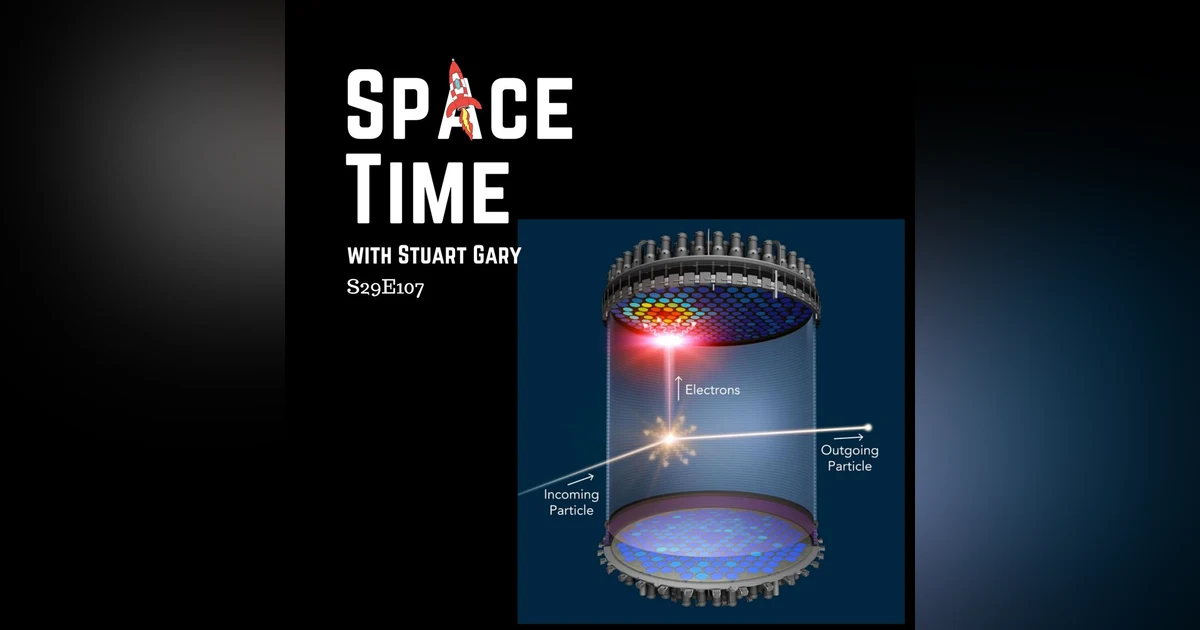
 SpaceTime Series 29 Episode 107 Have scientists glimpsed a hint of dark matter A new analysis from the LUX-ZEPLIN experiment has recorded a particle interaction that scientists are having great difficulty explaining. A new scenario describing the birth of the Moon A new study claims the Earth’s Moon could have formed within just five hours of the giant planetary collision that formed the binary system. Starship's first orbital test flight slated for September 15 SpaceX looks set to undertake its next Starship test flight next week – and this one will be a full orbital flight. The Science Report There’s more confirmation today that people who use cannabis are more likely to develop psychosis. An Australian developed nuclear reactor designed to fit on the back of a truck has been ignored by the Albanese labor government. A new study has found memory loss begins much earlier than previously thought. The red waterfall in eastern Antarctica is likely a sign the region was once inundated with seawater. Skeptics guide to scams and how to deal with them. Our Guests This Week Dr Benjamin Pope from Macquarie University Chelsea Gohd NASA Public Engagement Specialist Astrophysicist Jason Rhodes NASA JPL Astrophysicist DIda Markovic NASA JPL Astrophysicist Eric Huff NASA JPL Our regular guests: Alex Zaharov-Reutt from techadvice.life Tim Mendham from Australian Skeptics 🌏 Get Our Exclusive NordVPN deal here ➼ www.bitesz.com/nordvpn . The discounts and bonuses are incredible! And it’s risk-free with Nord’s 30-day money-back guarantee! ✌ If you’d like to support the podcast and gain access to bonus content by becoming a SpaceTime crew member, you can do just that through The Big Bang editions on Patreon and Apple Podcasts. Details on the Support page on our website
Become a supporter of this podcast: https://www.spreaker.com/podcast/spacetime-with-stuart-gary--2458531/support.
Become a supporter of this podcast: https://www.spreaker.com/podcast/spacetime-with-stuart-gary--2458531/support.
The Astronomy, Space, Technology & Science News Podcast.
WEBVTT
1
00:00:00.180 --> 00:00:04.259
This is Space Time, Series 29, Episode 107, full broadcast
2
00:00:04.320 --> 00:00:08.830
on the 7th of September, 2026. Coming up on Space Time...
3
00:00:09.230 --> 00:00:13.250
Have scientists finally glimpsed a hint of dark matter? A
4
00:00:13.289 --> 00:00:17.429
new scenario describing how the Earth's moon was born? And
5
00:00:17.530 --> 00:00:21.949
Starship's first orbital test flight slated for next week. All
6
00:00:21.989 --> 00:00:24.489
that and more coming up on Space Time.
7
00:00:25.910 --> 00:00:27.929
Welcome to Space Time.
8
00:00:27.809 --> 00:00:47.310
With Stuart Garry. A new analysis by the Lux Zeppelin
9
00:00:47.350 --> 00:00:51.320
experiment has recorded a particle interaction with scientists having a
10
00:00:51.380 --> 00:00:55.520
great deal of difficulty trying to explain. This single event
11
00:00:55.820 --> 00:01:00.039
doesn't meet any known background signals for normal matter. Now,
12
00:01:00.119 --> 00:01:03.340
this result doesn't yet meet the statistical threshold required to
13
00:01:03.420 --> 00:01:06.439
claim the discovery, but it's the most compelling hint yet
14
00:01:06.620 --> 00:01:11.469
of that mysterious invisible substance known as dark matter ever reported. Now,
15
00:01:11.569 --> 00:01:14.780
if this anomalous event is caused by dark matter, the WIMP,
16
00:01:14.840 --> 00:01:17.879
that is Weakly Interactive Massive Particle, that caused it would
17
00:01:17.920 --> 00:01:21.579
most likely have a mass of at least 200 gigaelectron volts.
18
00:01:21.920 --> 00:01:24.909
That's more than 200 times the mass of a proton.
19
00:01:25.569 --> 00:01:28.969
It would also suggest a specific type of interaction between
20
00:01:29.069 --> 00:01:32.969
WIMPs and ordinary matter beyond the simplest model. The findings
21
00:01:33.010 --> 00:01:36.890
have been reported on the pre-press physics website archive.org and
22
00:01:36.950 --> 00:01:41.090
in the journal Physical Review Letters. For the better part
23
00:01:41.129 --> 00:01:44.489
of a century, people have been trying to understand dark matter.
24
00:01:45.170 --> 00:01:48.569
It's important because it makes up roughly 85% of all
25
00:01:48.609 --> 00:01:52.530
the mass in the universe. But it's never been directly detected.
26
00:01:53.230 --> 00:01:56.370
We only know it exists because of its gravitational interaction
27
00:01:56.390 --> 00:02:00.409
with regular matter. And determining exactly what it is remains
28
00:02:00.450 --> 00:02:04.519
one of the biggest questions in science. The Lux Zeppelin,
29
00:02:04.599 --> 00:02:09.039
or LZ, experiment is an international collaboration of 250 scientists
30
00:02:09.080 --> 00:02:13.719
and engineers from 39 institutions. The detector is managed by
31
00:02:13.759 --> 00:02:17.189
the U.S. Department of Energy's Lawrence Berkeley National Laboratory and
32
00:02:17.330 --> 00:02:21.009
operates almost 1.6 kilometers below the ground at the Stanford
33
00:02:21.110 --> 00:02:26.449
Underground Research Facility, situated inside an operational mine in South Dakota.
34
00:02:27.169 --> 00:02:31.169
The experiment uses 10 tons of ultra-pure liquid xenon to
35
00:02:31.310 --> 00:02:34.370
search for dark matter, and it's optimized to look for WIMPs.
36
00:02:35.129 --> 00:02:37.810
The team are intrigued to see this event in the data,
37
00:02:37.969 --> 00:02:40.550
in the very region where they expect dark matter to
38
00:02:40.610 --> 00:02:44.569
show up, and the competing backgrounds are very low. They're
39
00:02:44.590 --> 00:02:47.289
not claiming to have seen dark matter, at least not yet.
40
00:02:48.030 --> 00:02:50.810
But they have seen something really interesting, and they want
41
00:02:50.849 --> 00:02:53.400
to share that with the rest of the scientific community
42
00:02:53.580 --> 00:02:57.560
in order to get their input. The LZ collaboration studies
43
00:02:57.620 --> 00:03:02.580
experimental data in batches. In this new result, researchers analyzed
44
00:03:02.580 --> 00:03:05.939
220 live days of data collected between March 2023 and
45
00:03:06.939 --> 00:03:11.620
April 2024. The collaboration had previously searched this dataset, looking
46
00:03:11.650 --> 00:03:14.930
for faint signals from the simplest kinds of WIMP interactions.
47
00:03:15.169 --> 00:03:18.030
And the new analysis searched for a broader range of
48
00:03:18.110 --> 00:03:21.650
possible WIMP interactions, ones that could deposit more energy in
49
00:03:21.669 --> 00:03:25.759
the detector. You see, ELSI is especially sensitive to such signals,
50
00:03:25.919 --> 00:03:30.180
while also minimizing false positives. This was a detailed study
51
00:03:30.360 --> 00:03:33.659
in a region that hadn't been explored within this dataset before.
52
00:03:34.259 --> 00:03:37.090
The authors spent months of additional efforts to try and
53
00:03:37.150 --> 00:03:41.849
understand all the possible causes of background events. The study's
54
00:03:41.889 --> 00:03:45.069
lead author, Sam Erickson from the University of Bristol, says
55
00:03:45.110 --> 00:03:48.210
the team understands the detector and the background so well
56
00:03:48.349 --> 00:03:52.050
that even a single outstanding event like this one is important.
57
00:03:52.849 --> 00:03:56.400
The authors expect dark matter events to be extremely rare,
58
00:03:56.560 --> 00:03:59.400
so only a handful could mark the first detection of
59
00:03:59.460 --> 00:04:02.740
WIMP dark matter. But the LZ results have not reached
60
00:04:02.780 --> 00:04:07.240
the 5 sigma significance. That's the statistical threshold considered a
61
00:04:07.280 --> 00:04:11.819
discovery in physics. The new analysis, however, is 2.6 sigma,
62
00:04:12.039 --> 00:04:16.060
meaning there's approximately a 0.5% chance that the event could
63
00:04:16.100 --> 00:04:20.620
be explained by known backgrounds. With additional data, researchers will
64
00:04:20.639 --> 00:04:23.120
be able to test whether the finding continues to grow
65
00:04:23.160 --> 00:04:28.029
in significance or fade away. LZ searches for dark matter
66
00:04:28.129 --> 00:04:31.350
by looking for signature flashes of light from energy deposited
67
00:04:31.449 --> 00:04:35.449
in the detector. The collaboration leverages multiple methods to prevent
68
00:04:35.629 --> 00:04:39.339
or account for particle interactions caused by normal matter. This
69
00:04:39.399 --> 00:04:41.920
includes more than a kilometer of rock that shields the
70
00:04:41.939 --> 00:04:45.220
detector from cosmic rays from space, a water tank and
71
00:04:45.379 --> 00:04:48.759
outer detectors that protect the central detector from background neutrons,
72
00:04:49.019 --> 00:04:53.379
and a suite of computational tools that disentangle particle interactions
73
00:04:53.560 --> 00:04:58.300
and reject dark matter mimics. The simple fact is, dark
74
00:04:58.360 --> 00:05:01.680
matter and dark energy are two of the biggest questions
75
00:05:01.740 --> 00:05:05.879
remaining in science's understanding of the standard model of particle physics,
76
00:05:06.180 --> 00:05:09.560
the cornerstone which explains the universe as we know it.
77
00:05:10.379 --> 00:05:12.079
This report from NASA TV.
78
00:05:12.769 --> 00:05:15.970
The dark universe, as some call it, represents some of
79
00:05:15.990 --> 00:05:18.290
the biggest unknowns in the cosmos.
80
00:05:18.889 --> 00:05:21.189
But what are these mysteries?
81
00:05:21.649 --> 00:05:25.949
What don't we know? Enter dark matter and dark energy.
82
00:05:26.670 --> 00:05:29.930
Despite the similarities in name, the two are actually not
83
00:05:29.970 --> 00:05:31.509
the same at all.
84
00:05:31.990 --> 00:05:36.410
They're both called dark because we can't see them. What
85
00:05:36.550 --> 00:05:37.430
is dark matter?
86
00:05:37.970 --> 00:05:39.069
What is dark energy?
87
00:05:40.220 --> 00:05:43.279
Dark matter is mass we see out there in the universe,
88
00:05:43.660 --> 00:05:45.759
but we can't see it because it gives off or
89
00:05:45.800 --> 00:05:49.310
absorbs light. We can only see its effect through the
90
00:05:49.350 --> 00:05:53.430
gravity it has on other matter, like stars and galaxies.
91
00:05:54.310 --> 00:05:56.509
The way that we know dark matter is there is
92
00:05:56.569 --> 00:06:01.329
a result of many different indirect kinds of evidence. The
93
00:06:01.370 --> 00:06:03.509
motion of things in the universe is mainly affected by
94
00:06:03.569 --> 00:06:06.790
the gravity of the things around them. And what we
95
00:06:06.870 --> 00:06:11.449
see is that when galaxies or stars are orbiting something massive,
96
00:06:12.009 --> 00:06:14.449
they're all moving far too fast for their speeds to
97
00:06:14.500 --> 00:06:16.920
be explained just by the mass of the things that
98
00:06:16.939 --> 00:06:18.399
we can see in the optical.
99
00:06:19.319 --> 00:06:22.720
In the 70s, an astronomer called Vera Rubin was doing
100
00:06:22.759 --> 00:06:28.740
her PhD observing how stars rotate inside of galaxies. she
101
00:06:29.500 --> 00:06:33.759
found that stars are going around galaxies way too fast.
102
00:06:34.139 --> 00:06:36.500
And so she said, oh, there must be some other
103
00:06:36.610 --> 00:06:39.269
matter there, actually quite a lot of mass there that
104
00:06:39.290 --> 00:06:42.110
I'm not seeing, making it possible for the stars to
105
00:06:42.170 --> 00:06:44.629
rotate so quickly in galaxies and not fly off.
106
00:06:45.670 --> 00:06:48.769
We study dark matter through a number of techniques, but
107
00:06:48.910 --> 00:06:52.410
for me, the most exciting technique is called gravitational lensing.
108
00:06:52.850 --> 00:06:55.540
It's when the light from a distant galaxy changes comes
109
00:06:55.620 --> 00:06:59.069
towards us and it passes by the dark matter of
110
00:06:59.110 --> 00:07:01.769
a galaxy or cluster of galaxies and the path of
111
00:07:01.810 --> 00:07:04.490
that light is bent and therefore the image we see
112
00:07:04.529 --> 00:07:07.949
of that distant galaxy is distorted and we can tell
113
00:07:07.970 --> 00:07:10.899
through those distortions how much dark matter is out there.
114
00:07:15.180 --> 00:07:18.920
Dark energy is sort of an umbrella term for a
115
00:07:19.000 --> 00:07:21.759
lot of different theories or ideas that are all trying
116
00:07:21.779 --> 00:07:26.180
to explain the same one fact. That the universe is expanding,
117
00:07:27.040 --> 00:07:29.800
but not only is it expanding, but that expansion is
118
00:07:29.920 --> 00:07:30.610
speeding up.
119
00:07:31.259 --> 00:07:35.089
We have really good measurements of the expansion of the
120
00:07:35.170 --> 00:07:39.050
universe over cosmic time. In a universe with just mass
121
00:07:39.170 --> 00:07:42.490
and gravity, that expansion should slow down due to gravity,
122
00:07:42.810 --> 00:07:45.040
but instead we see it speeding up. And so that's
123
00:07:45.079 --> 00:07:47.100
how we know that there's dark energy out there.
124
00:07:48.170 --> 00:07:50.490
In the 90s and maybe also the 80s of the
125
00:07:50.509 --> 00:07:55.439
previous century, people started to hypothesize that there may be
126
00:07:55.480 --> 00:07:58.060
something else than matter in the universe. And then in
127
00:07:58.139 --> 00:08:01.620
the late 90s, there were two teams of astronomers who
128
00:08:01.639 --> 00:08:07.600
were observing distant supernova explosions who discovered that the universe
129
00:08:07.819 --> 00:08:09.819
is expanding in an accelerated fashion.
130
00:08:10.939 --> 00:08:13.790
There's a number of techniques that we use to study
131
00:08:13.810 --> 00:08:17.250
dark energy. We want to measure two things about the universe.
132
00:08:17.660 --> 00:08:21.100
We want to measure first how the universe has expanded
133
00:08:21.480 --> 00:08:23.939
in the past. And we do that by looking at
134
00:08:24.259 --> 00:08:28.110
either exploding stars or we look at the positions and
135
00:08:28.189 --> 00:08:32.389
motions of galaxies. Another way we study dark energy is
136
00:08:32.470 --> 00:08:36.679
by looking at galaxies and clusters of galaxies. Their evolution
137
00:08:37.080 --> 00:08:41.360
is governed by an interplay between attractive gravity pulling things
138
00:08:41.399 --> 00:08:44.700
together and repulsive dark energy pushing things apart.
139
00:08:44.720 --> 00:08:49.139
We're even more uncertain about the nature of dark energy
140
00:08:49.610 --> 00:08:51.730
than we are about dark matter. And that means that
141
00:08:51.769 --> 00:08:53.350
in order to study it, we have to make a
142
00:08:53.409 --> 00:08:56.450
map of the universe on the largest scales. And this
143
00:08:56.509 --> 00:08:59.409
is something we're only now just beginning to do very accurately.
144
00:09:02.149 --> 00:09:06.610
We're basically making enormous three-dimensional maps of how galaxies are
145
00:09:06.629 --> 00:09:09.029
distributed in the universe, of how we think matter is
146
00:09:09.049 --> 00:09:12.590
distributed in the universe. We launched the Euclid Space Telescope,
147
00:09:12.809 --> 00:09:15.360
the Nancy Grace Roman Space Telescope, and then we also
148
00:09:15.389 --> 00:09:18.259
have SPHERICS. And all three of them will be making
149
00:09:18.580 --> 00:09:21.059
these three-dimensional maps of the universe that will enable us
150
00:09:21.120 --> 00:09:23.860
to study dark matter on the one hand and dark
151
00:09:23.919 --> 00:09:24.659
energy on the other.
152
00:09:25.259 --> 00:09:27.919
They're going to gather data that's going to allow us
153
00:09:27.980 --> 00:09:30.899
to much better constrain the properties of dark matter and
154
00:09:30.940 --> 00:09:34.419
dark energy. But in doing so, we take surveys of
155
00:09:34.539 --> 00:09:37.889
big areas of the sky. We're going to have data
156
00:09:37.950 --> 00:09:40.990
sets that will be useful for decades to come for
157
00:09:41.090 --> 00:09:45.350
questions about the evolution of galaxies, the formation of stars,
158
00:09:45.690 --> 00:09:48.210
and other questions that we haven't even thought of yet.
159
00:09:48.830 --> 00:09:50.659
If you want to know what's going to happen to
160
00:09:50.679 --> 00:09:52.740
the whole universe in the distant future, or you want
161
00:09:52.779 --> 00:09:55.909
to start answering questions about you know, how things came
162
00:09:55.950 --> 00:10:00.269
to be. Dark matter and dark energy are the majority
163
00:10:00.320 --> 00:10:02.740
of what the universe is made up of today. And
164
00:10:02.759 --> 00:10:06.240
you can't really start to approach these most basic questions
165
00:10:06.279 --> 00:10:09.899
about reality unless you have some clue about what most
166
00:10:09.940 --> 00:10:11.039
of the universe is made up of.
167
00:10:12.250 --> 00:10:14.350
And in that report from NASA TV, we heard from
168
00:10:14.370 --> 00:10:19.149
NASA's Chelsea Good and astrophysicist Jason Rhodes, Dela Markovic and
169
00:10:19.250 --> 00:10:25.200
Eric Huff from JPL. This is Space Time. Still to come,
170
00:10:25.639 --> 00:10:28.340
a new scenario to describe the birth of the Earth's
171
00:10:28.399 --> 00:10:32.899
moon and Starship's first orbital test flight slated for next week.
172
00:10:33.200 --> 00:10:35.950
All that and more still to come on Space Time.
173
00:10:47.559 --> 00:10:50.230
A new study claims the Earth's moon could have formed
174
00:10:50.250 --> 00:10:53.450
within just five hours of the giant planetary collision which
175
00:10:53.570 --> 00:10:57.330
formed the Earth-moon binary system. The findings reported in the
176
00:10:57.409 --> 00:11:01.029
Astrophysical Journal letters are based on a re-evaluation of the
177
00:11:01.090 --> 00:11:06.100
temperatures of the materials involved in that Earth-shattering impact. Astronomers
178
00:11:06.200 --> 00:11:09.899
generally agree that a Mars-sized planet, which they've named Theia,
179
00:11:10.039 --> 00:11:13.769
crashed into the early Proto-Earth around 4.5 billion years ago.
180
00:11:13.789 --> 00:11:18.470
That impact melted both worlds into a giant magma ocean,
181
00:11:18.750 --> 00:11:22.730
and that ocean gradually differentiated as it cooled, eventually forming
182
00:11:22.769 --> 00:11:26.129
the Earth as we know it today. And ejected debris
183
00:11:26.169 --> 00:11:29.559
flung into orbit by that collision ultimately coalesced to form
184
00:11:29.600 --> 00:11:33.919
the moons. But new computer simulations are factored in something
185
00:11:33.960 --> 00:11:37.830
that wasn't included in the original calculations, namely the material
186
00:11:37.889 --> 00:11:41.970
strength of the two colliding planets. And these new impact
187
00:11:42.009 --> 00:11:46.730
simulations could change how scientists understand the moon's formation and
188
00:11:46.789 --> 00:11:50.129
help constrain the timing of the event. One of the
189
00:11:50.149 --> 00:11:53.710
study's authors, Aideen Denton from the Southwest Research Institute in
190
00:11:53.769 --> 00:11:57.279
San Antonio, Texas, says the new calculations showed that the
191
00:11:57.360 --> 00:12:02.250
pre-existing geology of the Mars-sized proto-moon matters. She says that
192
00:12:02.330 --> 00:12:05.289
when you simulate the Earth and Moon as colliding bodies
193
00:12:05.330 --> 00:12:08.509
with geologic properties, it changes how the Moon forms out
194
00:12:08.529 --> 00:12:12.740
of that impact. Earlier studies of the giant impact scenario
195
00:12:12.799 --> 00:12:16.139
have ignored material strength, which was thought to be insignificant
196
00:12:16.159 --> 00:12:19.909
for such a high-energy event. But Denton and colleagues revisited
197
00:12:19.950 --> 00:12:24.659
this hypothesis, incorporating temperature-dependent geologic strength for the first time.
198
00:12:24.960 --> 00:12:28.879
Something that's really important when you're studying collisions between smaller bodies,
199
00:12:29.059 --> 00:12:33.000
like asteroids, or say the formation of the Pluto-Sharon binary system.
200
00:12:33.580 --> 00:12:35.889
But she admits she wasn't sure whether or not it
201
00:12:35.919 --> 00:12:39.070
would matter for the moon. But when Denton and colleagues
202
00:12:39.129 --> 00:12:41.990
did the simulations, they found that it actually matters a lot.
203
00:12:42.730 --> 00:12:45.789
You see, hotter bodies are weaker than cooler ones, and
204
00:12:45.809 --> 00:12:48.669
the authors found that moon formation is sensitive to the
205
00:12:48.750 --> 00:12:52.519
temperature of the colliding bodies. It turns out some scenarios
206
00:12:52.559 --> 00:12:55.360
can produce a fully intact moon within hours of the impact,
207
00:12:55.480 --> 00:12:58.779
while others produce a protolunar disk around the Earth that
208
00:12:58.919 --> 00:13:03.710
ultimately forms the moon over time. Because protoplanets generally start
209
00:13:03.750 --> 00:13:07.190
off hot and cool with age, this establishes an important
210
00:13:07.230 --> 00:13:10.049
new connection between the timing of the giant impact and
211
00:13:10.090 --> 00:13:13.639
the nature of the moon's initial state and assembly. Denton
212
00:13:13.679 --> 00:13:15.799
says depending on how hot the Earth and the Moon
213
00:13:15.840 --> 00:13:18.679
are prior to the collision, the impact can destroy Theia
214
00:13:18.840 --> 00:13:21.879
and produce a massive disk of debris that eventually forms
215
00:13:21.940 --> 00:13:24.840
the Moon. But when she used the same parameters as
216
00:13:24.879 --> 00:13:28.289
original impact modelling, down to the equal temperature structures inside
217
00:13:28.330 --> 00:13:31.870
both bodies, the intact Moon emerged within just five hours.
218
00:13:32.740 --> 00:13:35.919
While intact moon outcomes have been seen in prior simulations,
219
00:13:36.059 --> 00:13:38.720
the new findings were the first to show that material
220
00:13:38.799 --> 00:13:42.000
strength and temperature play a crucial role as to whether
221
00:13:42.059 --> 00:13:45.149
the moon forms intact or whether it's secreted from material
222
00:13:45.289 --> 00:13:50.429
processed in a protolunar disk. These surprising new results imply
223
00:13:50.470 --> 00:13:53.769
a potential connection between the physical properties of the moon today,
224
00:13:53.789 --> 00:13:57.330
including perhaps its volatile content and the thermal state of
225
00:13:57.370 --> 00:13:59.820
the Earth and Theia at the time of the giant impact.
226
00:14:00.539 --> 00:14:03.820
As with prior models, explaining the close compositional makeup of
227
00:14:03.840 --> 00:14:07.440
the Earth and Moon remains an open scientific question. A
228
00:14:07.500 --> 00:14:10.659
possible explanation is that Thea and the proto-Earth form from
229
00:14:10.700 --> 00:14:14.480
a common region in the protoplanetary disk, while Mars, which
230
00:14:14.539 --> 00:14:18.159
is compositionally distinct from the Earth and Moon, formed further away.
231
00:14:19.279 --> 00:14:24.370
This is space-time. Still to come, Starship's first orbital test flight,
232
00:14:24.450 --> 00:14:27.909
slated for September 15th, and later in the science report,
233
00:14:28.149 --> 00:14:31.440
an Australian-developed nuclear reactor designed to fit on the back
234
00:14:31.460 --> 00:14:34.679
of a truck has been ignored by the Albanese Labor
235
00:14:34.720 --> 00:14:38.519
government in Canberra, but praised by Washington. All that and
236
00:14:38.559 --> 00:14:58.230
more still to come on Space Time. SpaceX looks set
237
00:14:58.269 --> 00:15:02.220
to undertake its next Starship test flight on September the 15th,
238
00:15:02.509 --> 00:15:06.320
and this one is likely to be a full orbital flight. See,
239
00:15:06.399 --> 00:15:10.639
until now, all Starship test flights have remained suborbital. That's
240
00:15:10.679 --> 00:15:13.539
simply so that the spacecraft remains in full daylight for
241
00:15:13.559 --> 00:15:16.570
the entire duration of the mission, thereby providing scientists and
242
00:15:16.590 --> 00:15:20.330
engineers with the best possible visual data of the vehicle's performance.
1
00:00:00.180 --> 00:00:04.259
2
00:00:04.320 --> 00:00:08.830
3
00:00:09.230 --> 00:00:13.250
4
00:00:13.289 --> 00:00:17.429
5
00:00:17.530 --> 00:00:21.949
6
00:00:21.989 --> 00:00:24.489
7
00:00:25.910 --> 00:00:27.929
8
00:00:27.809 --> 00:00:47.310
9
00:00:47.350 --> 00:00:51.320
10
00:00:51.380 --> 00:00:55.520
11
00:00:55.820 --> 00:01:00.039
12
00:01:00.119 --> 00:01:03.340
13
00:01:03.420 --> 00:01:06.439
14
00:01:06.620 --> 00:01:11.469
15
00:01:11.569 --> 00:01:14.780
16
00:01:14.840 --> 00:01:17.879
17
00:01:17.920 --> 00:01:21.579
18
00:01:21.920 --> 00:01:24.909
19
00:01:25.569 --> 00:01:28.969
20
00:01:29.069 --> 00:01:32.969
21
00:01:33.010 --> 00:01:36.890
22
00:01:36.950 --> 00:01:41.090
23
00:01:41.129 --> 00:01:44.489
24
00:01:45.170 --> 00:01:48.569
25
00:01:48.609 --> 00:01:52.530
26
00:01:53.230 --> 00:01:56.370
27
00:01:56.390 --> 00:02:00.409
28
00:02:00.450 --> 00:02:04.519
29
00:02:04.599 --> 00:02:09.039
30
00:02:09.080 --> 00:02:13.719
31
00:02:13.759 --> 00:02:17.189
32
00:02:17.330 --> 00:02:21.009
33
00:02:21.110 --> 00:02:26.449
34
00:02:27.169 --> 00:02:31.169
35
00:02:31.310 --> 00:02:34.370
36
00:02:35.129 --> 00:02:37.810
37
00:02:37.969 --> 00:02:40.550
38
00:02:40.610 --> 00:02:44.569
39
00:02:44.590 --> 00:02:47.289
40
00:02:48.030 --> 00:02:50.810
41
00:02:50.849 --> 00:02:53.400
42
00:02:53.580 --> 00:02:57.560
43
00:02:57.620 --> 00:03:02.580
44
00:03:02.580 --> 00:03:05.939
45
00:03:06.939 --> 00:03:11.620
46
00:03:11.650 --> 00:03:14.930
47
00:03:15.169 --> 00:03:18.030
48
00:03:18.110 --> 00:03:21.650
49
00:03:21.669 --> 00:03:25.759
50
00:03:25.919 --> 00:03:30.180
51
00:03:30.360 --> 00:03:33.659
52
00:03:34.259 --> 00:03:37.090
53
00:03:37.150 --> 00:03:41.849
54
00:03:41.889 --> 00:03:45.069
55
00:03:45.110 --> 00:03:48.210
56
00:03:48.349 --> 00:03:52.050
57
00:03:52.849 --> 00:03:56.400
58
00:03:56.560 --> 00:03:59.400
59
00:03:59.460 --> 00:04:02.740
60
00:04:02.780 --> 00:04:07.240
61
00:04:07.280 --> 00:04:11.819
62
00:04:12.039 --> 00:04:16.060
63
00:04:16.100 --> 00:04:20.620
64
00:04:20.639 --> 00:04:23.120
65
00:04:23.160 --> 00:04:28.029
66
00:04:28.129 --> 00:04:31.350
67
00:04:31.449 --> 00:04:35.449
68
00:04:35.629 --> 00:04:39.339
69
00:04:39.399 --> 00:04:41.920
70
00:04:41.939 --> 00:04:45.220
71
00:04:45.379 --> 00:04:48.759
72
00:04:49.019 --> 00:04:53.379
73
00:04:53.560 --> 00:04:58.300
74
00:04:58.360 --> 00:05:01.680
75
00:05:01.740 --> 00:05:05.879
76
00:05:06.180 --> 00:05:09.560
77
00:05:10.379 --> 00:05:12.079
78
00:05:12.769 --> 00:05:15.970
79
00:05:15.990 --> 00:05:18.290
80
00:05:18.889 --> 00:05:21.189
81
00:05:21.649 --> 00:05:25.949
82
00:05:26.670 --> 00:05:29.930
83
00:05:29.970 --> 00:05:31.509
84
00:05:31.990 --> 00:05:36.410
85
00:05:36.550 --> 00:05:37.430
86
00:05:37.970 --> 00:05:39.069
87
00:05:40.220 --> 00:05:43.279
88
00:05:43.660 --> 00:05:45.759
89
00:05:45.800 --> 00:05:49.310
90
00:05:49.350 --> 00:05:53.430
91
00:05:54.310 --> 00:05:56.509
92
00:05:56.569 --> 00:06:01.329
93
00:06:01.370 --> 00:06:03.509
94
00:06:03.569 --> 00:06:06.790
95
00:06:06.870 --> 00:06:11.449
96
00:06:12.009 --> 00:06:14.449
97
00:06:14.500 --> 00:06:16.920
98
00:06:16.939 --> 00:06:18.399
99
00:06:19.319 --> 00:06:22.720
100
00:06:22.759 --> 00:06:28.740
101
00:06:29.500 --> 00:06:33.759
102
00:06:34.139 --> 00:06:36.500
103
00:06:36.610 --> 00:06:39.269
104
00:06:39.290 --> 00:06:42.110
105
00:06:42.170 --> 00:06:44.629
106
00:06:45.670 --> 00:06:48.769
107
00:06:48.910 --> 00:06:52.410
108
00:06:52.850 --> 00:06:55.540
109
00:06:55.620 --> 00:06:59.069
110
00:06:59.110 --> 00:07:01.769
111
00:07:01.810 --> 00:07:04.490
112
00:07:04.529 --> 00:07:07.949
113
00:07:07.970 --> 00:07:10.899
114
00:07:15.180 --> 00:07:18.920
115
00:07:19.000 --> 00:07:21.759
116
00:07:21.779 --> 00:07:26.180
117
00:07:27.040 --> 00:07:29.800
118
00:07:29.920 --> 00:07:30.610
119
00:07:31.259 --> 00:07:35.089
120
00:07:35.170 --> 00:07:39.050
121
00:07:39.170 --> 00:07:42.490
122
00:07:42.810 --> 00:07:45.040
123
00:07:45.079 --> 00:07:47.100
124
00:07:48.170 --> 00:07:50.490
125
00:07:50.509 --> 00:07:55.439
126
00:07:55.480 --> 00:07:58.060
127
00:07:58.139 --> 00:08:01.620
128
00:08:01.639 --> 00:08:07.600
129
00:08:07.819 --> 00:08:09.819
130
00:08:10.939 --> 00:08:13.790
131
00:08:13.810 --> 00:08:17.250
132
00:08:17.660 --> 00:08:21.100
133
00:08:21.480 --> 00:08:23.939
134
00:08:24.259 --> 00:08:28.110
135
00:08:28.189 --> 00:08:32.389
136
00:08:32.470 --> 00:08:36.679
137
00:08:37.080 --> 00:08:41.360
138
00:08:41.399 --> 00:08:44.700
139
00:08:44.720 --> 00:08:49.139
140
00:08:49.610 --> 00:08:51.730
141
00:08:51.769 --> 00:08:53.350
142
00:08:53.409 --> 00:08:56.450
143
00:08:56.509 --> 00:08:59.409
144
00:09:02.149 --> 00:09:06.610
145
00:09:06.629 --> 00:09:09.029
146
00:09:09.049 --> 00:09:12.590
147
00:09:12.809 --> 00:09:15.360
148
00:09:15.389 --> 00:09:18.259
149
00:09:18.580 --> 00:09:21.059
150
00:09:21.120 --> 00:09:23.860
151
00:09:23.919 --> 00:09:24.659
152
00:09:25.259 --> 00:09:27.919
153
00:09:27.980 --> 00:09:30.899
154
00:09:30.940 --> 00:09:34.419
155
00:09:34.539 --> 00:09:37.889
156
00:09:37.950 --> 00:09:40.990
157
00:09:41.090 --> 00:09:45.350
158
00:09:45.690 --> 00:09:48.210
159
00:09:48.830 --> 00:09:50.659
160
00:09:50.679 --> 00:09:52.740
161
00:09:52.779 --> 00:09:55.909
162
00:09:55.950 --> 00:10:00.269
163
00:10:00.320 --> 00:10:02.740
164
00:10:02.759 --> 00:10:06.240
165
00:10:06.279 --> 00:10:09.899
166
00:10:09.940 --> 00:10:11.039
167
00:10:12.250 --> 00:10:14.350
168
00:10:14.370 --> 00:10:19.149
169
00:10:19.250 --> 00:10:25.200
170
00:10:25.639 --> 00:10:28.340
171
00:10:28.399 --> 00:10:32.899
172
00:10:33.200 --> 00:10:35.950
173
00:10:47.559 --> 00:10:50.230
174
00:10:50.250 --> 00:10:53.450
175
00:10:53.570 --> 00:10:57.330
176
00:10:57.409 --> 00:11:01.029
177
00:11:01.090 --> 00:11:06.100
178
00:11:06.200 --> 00:11:09.899
179
00:11:10.039 --> 00:11:13.769
180
00:11:13.789 --> 00:11:18.470
181
00:11:18.750 --> 00:11:22.730
182
00:11:22.769 --> 00:11:26.129
183
00:11:26.169 --> 00:11:29.559
184
00:11:29.600 --> 00:11:33.919
185
00:11:33.960 --> 00:11:37.830
186
00:11:37.889 --> 00:11:41.970
187
00:11:42.009 --> 00:11:46.730
188
00:11:46.789 --> 00:11:50.129
189
00:11:50.149 --> 00:11:53.710
190
00:11:53.769 --> 00:11:57.279
191
00:11:57.360 --> 00:12:02.250
192
00:12:02.330 --> 00:12:05.289
193
00:12:05.330 --> 00:12:08.509
194
00:12:08.529 --> 00:12:12.740
195
00:12:12.799 --> 00:12:16.139
196
00:12:16.159 --> 00:12:19.909
197
00:12:19.950 --> 00:12:24.659
198
00:12:24.960 --> 00:12:28.879
199
00:12:29.059 --> 00:12:33.000
200
00:12:33.580 --> 00:12:35.889
201
00:12:35.919 --> 00:12:39.070
202
00:12:39.129 --> 00:12:41.990
203
00:12:42.730 --> 00:12:45.789
204
00:12:45.809 --> 00:12:48.669
205
00:12:48.750 --> 00:12:52.519
206
00:12:52.559 --> 00:12:55.360
207
00:12:55.480 --> 00:12:58.779
208
00:12:58.919 --> 00:13:03.710
209
00:13:03.750 --> 00:13:07.190
210
00:13:07.230 --> 00:13:10.049
211
00:13:10.090 --> 00:13:13.639
212
00:13:13.679 --> 00:13:15.799
213
00:13:15.840 --> 00:13:18.679
214
00:13:18.840 --> 00:13:21.879
215
00:13:21.940 --> 00:13:24.840
216
00:13:24.879 --> 00:13:28.289
217
00:13:28.330 --> 00:13:31.870
218
00:13:32.740 --> 00:13:35.919
219
00:13:36.059 --> 00:13:38.720
220
00:13:38.799 --> 00:13:42.000
221
00:13:42.059 --> 00:13:45.149
222
00:13:45.289 --> 00:13:50.429
223
00:13:50.470 --> 00:13:53.769
224
00:13:53.789 --> 00:13:57.330
225
00:13:57.370 --> 00:13:59.820
226
00:14:00.539 --> 00:14:03.820
227
00:14:03.840 --> 00:14:07.440
228
00:14:07.500 --> 00:14:10.659
229
00:14:10.700 --> 00:14:14.480
230
00:14:14.539 --> 00:14:18.159
231
00:14:19.279 --> 00:14:24.370
232
00:14:24.450 --> 00:14:27.909
233
00:14:28.149 --> 00:14:31.440
234
00:14:31.460 --> 00:14:34.679
235
00:14:34.720 --> 00:14:38.519
236
00:14:38.559 --> 00:14:58.230
237
00:14:58.269 --> 00:15:02.220
238
00:15:02.509 --> 00:15:06.320
239
00:15:06.399 --> 00:15:10.639
240
00:15:10.679 --> 00:15:13.539
241
00:15:13.559 --> 00:15:16.570
242
00:15:16.590 --> 00:15:20.330