Aug. 20, 2026
Cosmic Ingredients: Planet Formation, Axion Searches, and NASA's Swift Mission


 Spotify Spotify
  Apple Podcasts Apple Podcasts
  Youtube Music Youtube Music
  iHeartRadio iHeartRadio
  Spreaker Spreaker
  PocketCasts PocketCasts
  Amazon Music Amazon Music
  YouTube YouTube
  Castbox Castbox
  Deezer Deezer
  TuneIn TuneIn
  Rumble Rumble
  Overcast Overcast
  Podcast Addict Podcast Addict
  Podchaser Podchaser
  JioSaavn JioSaavn
  Castro Castro
  RSS Feed RSS Feed
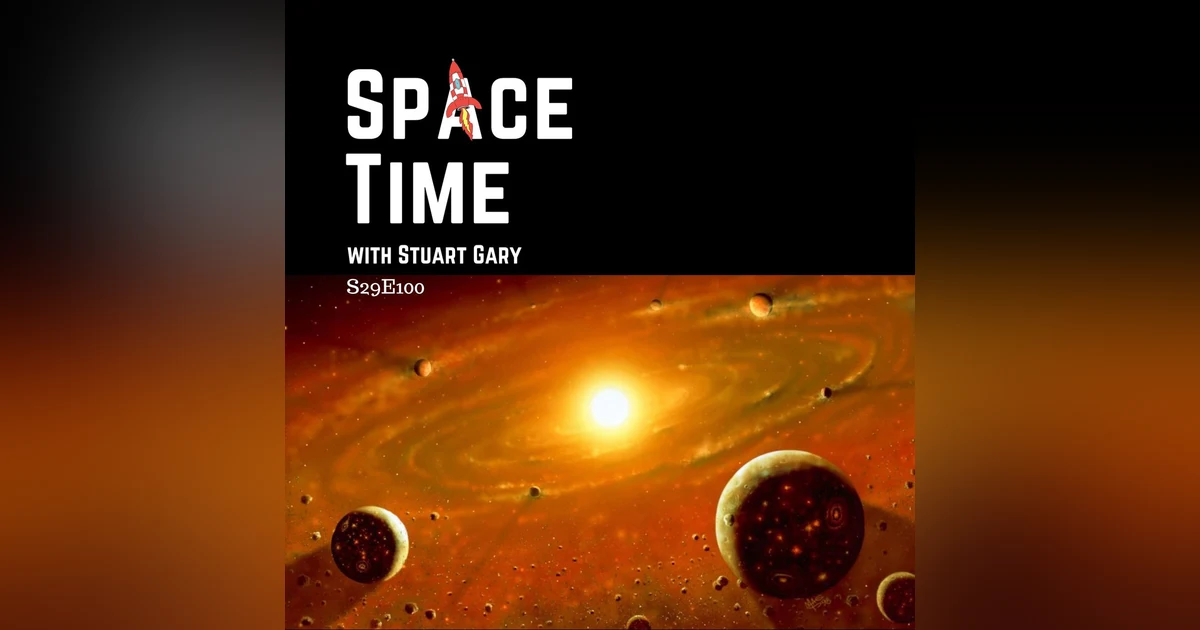
 SpaceTime Series 29 Episode 100 The ingredients for planets formed far earlier than thought A new study suggests that the basic ingredients needed to form planets - and possibly life - may have existed just a hundred million years after the big bang -- far earlier in the history of the Universe than previously thought. Hunting for the hypothetical axion For years scientists have been hunting for a hypothetical elementary particle called the AXION which could lead to new physics unlocking some of the greatest mysteries of the universe. Now the German Research Foundation has given a green light to the construction of a new six million Euro experiment called the BabyIAXO – a first step in the search for the elusive and as yet undetected particle. NASA’s Swift rescue mission back on track Katalyst Space has successfully uploaded a new flight software update designed to return its Link spacecraft into a more stable configuration. Link is on a rescue mission to save NASA’s Swift gamma ray space telescope from crashing back to Earth. The Science Report A new potential cure for baldness. Study shows people are most ticklish on the neck, armpits, belly, and the soles of their feet. Scientists have discovered a fossil of the earliest known siphuncle-bearing cephalopod. Study shows moving a pet cat from an outdoor lifestyle to living indoors is easier than you think. Skeptics guide to chasing the Moon. Our regular guests: Alex Zaharov-Reutt from techadvice.life Tim Mendham from Australian Skeptics And Senior science writer and Sky and Telescope magazine contributor Jonathan Nally 🌏 Get Our Exclusive NordVPN deal here ➼ www.bitesz.com/nordvpn . The discounts and bonuses are incredible! And it’s risk-free with Nord’s 30-day money-back guarantee! ✌ If you’d like to support the podcast and gain access to bonus content by becoming a SpaceTime crew member, you can do just that through The Big Bang editions on Patreon, Spotify and Apple Podcasts. Details on the Support page on our website https://www.bitesz.com/show/spacetime/support/ For more SpaceTime and show links: https://linktr.ee/biteszHQ If you love this podcast, please get someone else to listen too. Thank you…
The Astronomy, Space, Technology & Science News Podcast.
WEBVTT
1
00:00:00.120 --> 00:00:03.040
This is Spacetime Series twenty nine, episode one hundred, for
2
00:00:03.160 --> 00:00:05.879
broadcast in the twenty first of August twenty twenty six.
3
00:00:06.559 --> 00:00:09.640
Coming up on Space Time, a new study says the
4
00:00:09.800 --> 00:00:13.119
ingredients for planets may have formed much earlier than previously thought.
5
00:00:13.839 --> 00:00:17.359
Hunting for the hypothetical axion which could explain a lot
6
00:00:17.399 --> 00:00:20.879
of the missing physics in science, and good news with
7
00:00:21.000 --> 00:00:24.480
NASA Swift Rescue mission back on track. All that and
8
00:00:24.640 --> 00:00:27.719
more Coming up on Spacetime.
9
00:00:28.359 --> 00:00:41.399
Welcome to Space Time with Stuart Gary.
10
00:00:47.600 --> 00:00:50.799
A new study suggest that the basic ingredients needed to
11
00:00:50.799 --> 00:00:53.920
form planets and possibly life may have existed just a
12
00:00:53.920 --> 00:00:57.039
few hundred million years after the Big Bang, far earlier
13
00:00:57.039 --> 00:01:00.479
in the history of the universe than previously thought. Scientists
14
00:01:00.479 --> 00:01:04.760
had previously assumed that planet formation was a slow, long process,
15
00:01:04.799 --> 00:01:08.599
only really getting going several billion years into the universe's history.
16
00:01:09.680 --> 00:01:13.120
The very first stars in the universe and earnest population
17
00:01:13.239 --> 00:01:16.599
three stars, were enormous, hundreds of times the mass of
18
00:01:16.599 --> 00:01:20.200
our Sun. They were unique formed out of the pure
19
00:01:20.280 --> 00:01:23.760
primordial hydrogen and helium created in the Big Bang thirteen
20
00:01:23.799 --> 00:01:26.840
point eight billion years ago. They were the hottest, the
21
00:01:26.840 --> 00:01:31.000
most luminous stars that ever existed, nothing like them exist today,
22
00:01:31.799 --> 00:01:34.400
and being so massive and hot, they burned through their
23
00:01:34.480 --> 00:01:37.840
nuclear feel supplies at an intense rate, only living for
24
00:01:37.959 --> 00:01:40.640
very short periods of time, perhaps just one hundred million
25
00:01:40.719 --> 00:01:43.920
years or even less. That compares to the expected twelve
26
00:01:44.000 --> 00:01:47.079
billion year lifespan of a star like our Sun. And
27
00:01:47.200 --> 00:01:50.879
when these first generation stars died, they ended their lives
28
00:01:50.920 --> 00:01:55.200
in powerful supernova explosions. Both during their lives and as
29
00:01:55.239 --> 00:01:58.640
they died, they produced all the other elements in the universe,
30
00:01:58.840 --> 00:02:02.280
elements which simply didn't exists beforehand, including all those needed
31
00:02:02.280 --> 00:02:06.640
to build planets and ultimately life, such as carbon, oxygen,
32
00:02:06.680 --> 00:02:11.520
and iron. The new findings, reported in the journal Astrophysical Letters,
33
00:02:11.680 --> 00:02:15.159
shows that the precursors of terrestrial planets could form around
34
00:02:15.199 --> 00:02:17.680
low mass, long lived stars in the debris of the
35
00:02:17.719 --> 00:02:21.319
first cosmic explosions one hundred million years after the Big Bang.
36
00:02:21.960 --> 00:02:24.759
One of the studies authors, Daniel Whalen from the University
37
00:02:24.840 --> 00:02:28.560
of Portsmouth, says a specific type of population three super
38
00:02:28.560 --> 00:02:31.280
and ova, called a parent's stability super and ova, is
39
00:02:31.319 --> 00:02:33.800
so powerful it can blast out more than one hundred
40
00:02:33.919 --> 00:02:36.520
times the mass of the Sun's worth of heavy elements
41
00:02:36.560 --> 00:02:40.120
in a single explosion, and this material would then seed
42
00:02:40.240 --> 00:02:43.879
and enriched nearby clouds of gas, resulting in surprisingly high
43
00:02:43.879 --> 00:02:48.000
concentrations of heavy elements, and those in rich clouds could
44
00:02:48.000 --> 00:02:51.680
then collapse under gravity that forms swirling protoplanetary disks of
45
00:02:51.759 --> 00:02:55.439
material around young, nascent stars, much like the disc from
46
00:02:55.439 --> 00:02:58.879
which our own Solar system formed. Wellen says his team's
47
00:02:58.879 --> 00:03:01.960
computer simulations of the early Universe looked at just such
48
00:03:02.000 --> 00:03:05.520
a protoplanetary disk around a young star with about seventy
49
00:03:05.520 --> 00:03:08.879
percent the mass of the Sun, and within that disk
50
00:03:09.159 --> 00:03:12.719
enough solid material had accumulated to create several Earth mass
51
00:03:12.759 --> 00:03:15.520
planets at roughly the same distance from the star as
52
00:03:15.520 --> 00:03:18.719
the Earth is from the Sun. Most surprisingly, the disc
53
00:03:18.800 --> 00:03:22.199
also contained substantial amounts of water, only a few times
54
00:03:22.319 --> 00:03:24.919
less than what was available when our own Solar system
55
00:03:25.039 --> 00:03:28.240
was formed. Now, what this means is that any planets
56
00:03:28.280 --> 00:03:31.039
forming there could potentially have received water in a way
57
00:03:31.120 --> 00:03:33.120
similar to the Earth, which is thought to have gained
58
00:03:33.159 --> 00:03:36.080
much of its water from material left hebit during planet
59
00:03:36.080 --> 00:03:39.879
building processes. The new findings suggest that the conditions for
60
00:03:39.919 --> 00:03:44.039
planetary formation may therefore have existed much earlier than previously thought,
61
00:03:44.639 --> 00:03:48.439
and if that is the case, it raises an intriguing question.
62
00:03:49.039 --> 00:03:52.120
Could potentially habitable worlds have appeared far earlier in the
63
00:03:52.240 --> 00:03:57.319
universe's history as well. This is space time still to
64
00:03:57.400 --> 00:04:01.120
come hunting for the hypothetical Axion, and good news with
65
00:04:01.240 --> 00:04:04.560
NASAs Swift rescue mission back on track. All that and
66
00:04:04.639 --> 00:04:14.080
more still to come on space time. For years, scientists
67
00:04:14.080 --> 00:04:17.680
have been hunting for a hypothetical elementary particle called the Axion,
68
00:04:17.800 --> 00:04:20.319
which could lead to new physics unlocking some of the
69
00:04:20.319 --> 00:04:24.519
greatest mysteries of the universe. Now, the German Research Foundation
70
00:04:24.600 --> 00:04:26.920
has given the green light for the construction of a
71
00:04:26.959 --> 00:04:30.360
new six million euro experiment to be called Baby Axo,
72
00:04:30.759 --> 00:04:33.480
a first step in the search for the elusive and
73
00:04:33.600 --> 00:04:38.079
as yet undetected particle. The Axion was first theorized back
74
00:04:38.120 --> 00:04:42.079
in nineteen seventy eight by physicist Frank Wilzick and Stephen Weinberg.
75
00:04:42.759 --> 00:04:46.800
Its discovery would revolutionize the standard model of particle physics,
76
00:04:46.839 --> 00:04:50.800
the foundation stone of sciences understanding of the universe. If
77
00:04:50.800 --> 00:04:53.839
it exists, the axion could will be the long sought
78
00:04:53.879 --> 00:04:58.079
after candidate for cold dark matter, that mysterious invisible substance
79
00:04:58.160 --> 00:05:00.519
that makes up eighty five percent of all the mass
80
00:05:00.560 --> 00:05:03.879
in the universe, and it could also explain the strong
81
00:05:04.040 --> 00:05:07.839
charged parity problem in quantum chromodynamics why the neutrone has
82
00:05:07.920 --> 00:05:13.199
virtually no electric dipole moment balancing chart symmetry. The Babixo
83
00:05:13.279 --> 00:05:17.199
experiment will use a ten meter long cryogenically cooled superconducting
84
00:05:17.240 --> 00:05:19.959
magnet operating at around minus two hundred and seventy degrees
85
00:05:20.040 --> 00:05:23.480
celsius on a moving platform tracking the Sun across the
86
00:05:23.519 --> 00:05:26.879
sky for twelve hours a day. The magnet needs to
87
00:05:26.879 --> 00:05:29.439
be operated at around minus two hundred and seventy degrees
88
00:05:29.480 --> 00:05:34.399
celsius to achieve the necessary magnetic strengths. The project, coordinated
89
00:05:34.399 --> 00:05:37.079
at Mattia Start from the University of Bond, says the
90
00:05:37.079 --> 00:05:41.360
Babixo project will be the largest dipole magnet ever constructed
91
00:05:41.360 --> 00:05:44.879
in particle physics. He describes it as the beating heart
92
00:05:44.879 --> 00:05:48.759
of the experiment. What makes Babixo possible at the first place.
93
00:05:49.399 --> 00:05:51.879
The experiment itself will be built at a Dizzy research
94
00:05:51.920 --> 00:05:56.560
center in Hamburg. Now, as the name suggests, Babixo represents
95
00:05:56.560 --> 00:05:59.560
an intermediate stage on the journey to an even bigger,
96
00:05:59.600 --> 00:06:03.600
fully your own magnetic system. The International Axion Observatory or
97
00:06:03.639 --> 00:06:05.959
i AXO, which will be twice as big. Using a
98
00:06:06.040 --> 00:06:09.519
twenty meter along magnet, this telescope will study of the
99
00:06:09.560 --> 00:06:13.600
Sun at unprecedented levels of sensitivity, some ten thousand times
100
00:06:13.600 --> 00:06:17.759
more efficiently than the most powerful helioscopes used today. IAXO
101
00:06:17.839 --> 00:06:20.839
will have eight measuring stations, each kitted at with various
102
00:06:20.879 --> 00:06:24.639
telescopes and detectors. E lit siders look for axions with
103
00:06:24.759 --> 00:06:27.800
varying ranges of properties, and it will allow scientists to
104
00:06:27.839 --> 00:06:32.040
develop the technologies and instruments that IAXIO will need. Of course,
105
00:06:32.120 --> 00:06:34.839
it'll be just the latest in an ongoing hunt for
106
00:06:34.959 --> 00:06:39.040
the elusive particle. Among the many experiments already searching for
107
00:06:39.079 --> 00:06:41.959
the axion is the Lawrence Livermore National Laboratory in the
108
00:06:42.040 --> 00:06:42.800
United States.
109
00:06:43.000 --> 00:06:45.439
Dark matter is a mystery that we've had in physics
110
00:06:45.480 --> 00:06:47.759
since the nineteen thirties. If you look at the way
111
00:06:47.800 --> 00:06:52.240
galaxies move and the way stars move around them, there's
112
00:06:52.240 --> 00:06:54.800
got to be a lot of unseen matter holding the
113
00:06:54.839 --> 00:06:58.000
galaxies together. Nothing in the periodic table or in the
114
00:06:58.000 --> 00:07:06.800
standard model could possibly make up. We know what dark
115
00:07:06.800 --> 00:07:10.639
matter isn't We know it is not nuclei or gas
116
00:07:10.639 --> 00:07:15.040
and galaxies. We know it's not deviations from gravity, and
117
00:07:15.079 --> 00:07:17.399
we know it's not other particles in the Standard Model
118
00:07:17.439 --> 00:07:19.759
like the neutrino, so it's got to be something new.
119
00:07:19.959 --> 00:07:22.240
And the particle that we're looking for is called an axion.
120
00:07:22.720 --> 00:07:26.279
Axions are extremely light particles that were first postulated to
121
00:07:26.319 --> 00:07:29.879
solve another problem in the Standard Model. These axions are
122
00:07:29.920 --> 00:07:32.600
extremely light. You can think of more like radio waves,
123
00:07:32.839 --> 00:07:35.279
and they'd be about ten to the fourteen percuba scentinator.
124
00:07:36.000 --> 00:07:38.079
So we're taking data right now. We don't know where
125
00:07:38.079 --> 00:07:42.519
the axion's mass is, so we're tuning the experiment of
126
00:07:42.560 --> 00:07:45.759
our frequencies. We could find it tomorrow or may take
127
00:07:45.800 --> 00:07:48.720
a decade to look for, but the experiment is continually
128
00:07:48.720 --> 00:07:51.480
being upgraded so we can scan faster and faster to
129
00:07:51.600 --> 00:07:55.519
hopefully detect it very soon. So the experiment started here
130
00:07:55.519 --> 00:07:56.879
at Lawrence. A little bit more if we have a
131
00:07:56.920 --> 00:08:01.199
collaboration between you see California, Berkeley, University of Floor, University
132
00:08:01.199 --> 00:08:04.839
of Washington, and since then the collaboration has grown to
133
00:08:04.879 --> 00:08:07.920
a number of national laboratories in the universities both domestic
134
00:08:07.959 --> 00:08:11.199
and internationally. The equipment we're using is the Axion Dark
135
00:08:11.240 --> 00:08:14.959
Matter Experiment, So we have an eight Tesla magnet. It's
136
00:08:15.160 --> 00:08:17.759
located at the University of Washington, who was actually started
137
00:08:17.759 --> 00:08:19.839
here in the lab many years ago. We have a
138
00:08:19.839 --> 00:08:23.439
microwave cavity, and that resonant cavity stimulates the conversion of
139
00:08:23.480 --> 00:08:27.800
these axions to detectable microwaves. We're looking for tiny amounts
140
00:08:27.800 --> 00:08:29.920
of power, like ten of the mice twenty four wants
141
00:08:30.279 --> 00:08:33.600
so tens to hundreds of photons every second, so we
142
00:08:33.679 --> 00:08:35.799
need to use quantum electronics to be able to boost
143
00:08:35.799 --> 00:08:39.000
that into a detectable range. And then at that point
144
00:08:39.039 --> 00:08:41.759
it's basically an AM radio if you're turning the dial
145
00:08:41.879 --> 00:08:45.879
looking for small tones, small excess of power above the
146
00:08:45.919 --> 00:08:50.000
background noise. The dark matter experiment really uses cutting edge
147
00:08:50.080 --> 00:08:53.279
quantum electronics. These quantum amplifiers that have been built at
148
00:08:53.360 --> 00:08:57.240
UC Berkeley for US are also used to read out cubits,
149
00:08:57.440 --> 00:08:59.720
and those cubits can be used for quantum computing. This
150
00:08:59.759 --> 00:09:01.840
is a energy physics experiment that uses a lot of
151
00:09:01.879 --> 00:09:04.519
the same technologies that will be used for quantum computing
152
00:09:04.519 --> 00:09:07.600
in the future. Well, finding dark matter has been one
153
00:09:07.639 --> 00:09:10.320
of the major problems in physics for almost one hundred
154
00:09:10.399 --> 00:09:12.559
years now, so this would be a major victory in
155
00:09:12.600 --> 00:09:15.879
physics and the standard model. In addition, the Axion itself
156
00:09:16.440 --> 00:09:19.879
would have a lot of information encoded into its frequency structure.
157
00:09:20.240 --> 00:09:23.519
You'd see information as the Earth moves around the Sun,
158
00:09:23.600 --> 00:09:25.960
as the Sun goes through the galaxy, you could see
159
00:09:25.960 --> 00:09:30.000
that frequency shifting around. And so the Axion dark matter
160
00:09:30.000 --> 00:09:34.559
experiment would become basically a dark matter telescope. And as possible,
161
00:09:34.639 --> 00:09:36.919
this is a new particle that we is unlike anything
162
00:09:36.919 --> 00:09:38.960
we know of, so there could be other potential practical
163
00:09:39.000 --> 00:09:41.120
applications in the far future.
164
00:09:42.679 --> 00:09:46.960
That's physicist Gene Payola Karasi from the Laurence Slivermore National Laboratory.
165
00:09:47.679 --> 00:09:51.399
And this space time still to calm. Good news with
166
00:09:51.559 --> 00:09:54.639
NASA's Swift risky emission back on track and later in
167
00:09:54.679 --> 00:09:58.639
the science report a potential cure for boldness. All that
168
00:09:58.720 --> 00:10:16.879
and more still to calm on space time. Catalyst Space
169
00:10:16.919 --> 00:10:20.960
have successfully uploaded new flight software updates designed to return
170
00:10:20.960 --> 00:10:25.120
its Link spacecraft into a more stable configuration. Link is
171
00:10:25.159 --> 00:10:27.879
on a rescue mission to try and save NASA's Swift
172
00:10:27.879 --> 00:10:32.799
Gamma ray space telescope. SWIFT provides scientists studying the most
173
00:10:32.840 --> 00:10:36.360
powerful explosions in the universe with an early warning system.
174
00:10:36.799 --> 00:10:40.720
These explosions called gamma ray bursts only last a few seconds,
175
00:10:40.840 --> 00:10:43.720
and Swift gives astronomers a much needed heads up, giving
176
00:10:43.720 --> 00:10:46.480
them the time they need to turn their telescopes towards
177
00:10:46.480 --> 00:10:50.000
the blast. The problem is Swift was launched without any
178
00:10:50.039 --> 00:10:53.440
means of boosting its orbit should that orbit decay, and
179
00:10:53.559 --> 00:10:56.519
the recent solo maximum climax of the Sun's eleven yes
180
00:10:56.600 --> 00:11:00.480
solar cycle has proven to be far stronger than anticipated.
181
00:11:00.679 --> 00:11:04.039
The increase in solar storm activity has sent powerful flares
182
00:11:04.080 --> 00:11:07.720
and chronal mass ejections hurtling towards the Earth, and as
183
00:11:07.720 --> 00:11:11.600
they hit the atmosphere, it causes it to expand and contract,
184
00:11:11.799 --> 00:11:15.799
sort of wabbling like jello. And that's placed extra atmospheric
185
00:11:15.879 --> 00:11:19.440
drag on the Swift space telescope, causing its orbit two decay.
186
00:11:20.159 --> 00:11:22.519
Without help, Swift will re enter the atmosphere in the
187
00:11:22.519 --> 00:11:25.039
next few months, spurning up as it plummets back to
188
00:11:25.080 --> 00:11:29.200
the surface, and that's where the Link spacecraft comes in.
189
00:11:29.480 --> 00:11:33.600
It's designed to rendezvous with Swift, maneuver around the orbiting observatory,
190
00:11:33.679 --> 00:11:36.960
and grab onto it with its three robotic arms. It'll
191
00:11:37.000 --> 00:11:39.960
then fire its thrusters, boosting Swift back up to its
192
00:11:39.960 --> 00:11:43.080
original six hundred kilometre high orbit. At least that was
193
00:11:43.120 --> 00:11:47.159
the plan. However, after its launch aboard of pegas's rocket,
194
00:11:47.240 --> 00:11:51.080
Link experienced an unexpected electrical power system anominally during its
195
00:11:51.200 --> 00:11:55.840
orbital commissioning. This caused an uncommanded electrical bus reset and
196
00:11:55.879 --> 00:11:59.720
that disabled two of the spacecraft's three orientation controlling reaction
197
00:11:59.759 --> 00:12:03.639
with it also degraded its cold gas thrusters, which are
198
00:12:03.720 --> 00:12:07.080
used for fine guidance control. The end result was that
199
00:12:07.159 --> 00:12:10.559
it sent the Link spacecraft into an uncontrolled multi access
200
00:12:10.639 --> 00:12:14.600
tumbling spin, rotating at around nine degrees per second, causing
201
00:12:14.600 --> 00:12:18.840
communication dropouts. The Catalyst team have used a series of
202
00:12:18.879 --> 00:12:21.720
engine burns from one of the links skinnled electric propulsion
203
00:12:21.759 --> 00:12:24.519
thrusters to slow that spin rate down to a more
204
00:12:24.559 --> 00:12:27.679
manageable one point four to seven degrees per second, and
205
00:12:27.720 --> 00:12:30.960
then you uploaded flight software patch has further rectified some
206
00:12:31.000 --> 00:12:34.399
of the other issues affecting the spacecraft. Now this is
207
00:12:34.440 --> 00:12:38.159
all prepared Link to continu its approach towards the Swift spacecraft,
208
00:12:38.200 --> 00:12:40.879
performing a series of burns and maneuvers to align the
209
00:12:40.919 --> 00:12:43.559
links all but with that of Swift, before attempting to
210
00:12:43.559 --> 00:12:46.080
capture and raise the telescope back up to its higher
211
00:12:46.159 --> 00:12:51.000
orbital altitude. Mission managers and how carefully evaluating remaining subsystem
212
00:12:51.000 --> 00:12:55.200
performance options before attempting any complex rendezvous operations with Swift
213
00:12:55.919 --> 00:12:58.720
full goes to plan. Link will make its first rendezvous
214
00:12:58.720 --> 00:13:01.720
attempt with the orbiting observer sometime in the next week.
215
00:13:02.279 --> 00:13:02.440
Now.
216
00:13:02.440 --> 00:13:05.600
If the capture succeeds, Link will spend several months using
217
00:13:05.679 --> 00:13:08.600
its thrusters the boost Swift back up to its higher orbit.
218
00:13:09.200 --> 00:13:11.960
Mind you, the reboost needs to begin before Swift falls
219
00:13:12.000 --> 00:13:14.759
below the three hundred kilometer mark, and at the current
220
00:13:14.840 --> 00:13:17.759
rat of descent that's only a few months away. Below
221
00:13:17.840 --> 00:13:21.240
that threshold, atmospheric drag will become too intense for Link
222
00:13:21.320 --> 00:13:25.120
to safely rescue Swift. Needless to say, we'll keep you
223
00:13:25.200 --> 00:13:45.120
informed this space time and time that to take another
224
00:13:45.120 --> 00:13:47.000
brief look at some of the other stories making us
225
00:13:47.039 --> 00:13:50.480
in science this week with a science report. Two new
226
00:13:50.559 --> 00:13:53.080
trials have shown that a drug called at patasydonid was
227
00:13:53.159 --> 00:13:55.919
able to restore scalp hair growth better than a perceiver
228
00:13:56.279 --> 00:14:00.320
people with alpecia arata, a chronic immune disease that causes heads.
229
00:14:01.039 --> 00:14:03.440
The study reported in the Journal of the American Medical
230
00:14:03.480 --> 00:14:06.639
Association found that people taking the drug were able to
231
00:14:06.679 --> 00:14:09.679
achieve at least eighty percent coverage of their scalp with
232
00:14:09.840 --> 00:14:12.559
hair in about forty five to fifty percent of cases,
233
00:14:12.639 --> 00:14:14.399
compared to just one and a half to three point
234
00:14:14.440 --> 00:14:18.039
four percent for those on the placebo. The study didn't
235
00:14:18.080 --> 00:14:20.480
find any new safety concerns with the drug, which is
236
00:14:20.519 --> 00:14:25.200
already being used for several other inflammatory conditions. Well, it
237
00:14:25.200 --> 00:14:28.759
turns out that regardless of your cultural background, people generally
238
00:14:28.799 --> 00:14:32.519
speaking are most ticklish on their neck, their armpits, their belly,
239
00:14:32.600 --> 00:14:35.840
and on the soles of their feet. The findings reported
240
00:14:35.840 --> 00:14:38.159
in the General Nature based on a study of five
241
00:14:38.240 --> 00:14:42.600
hundred people with Chinese, Dutch, and Greek backgrounds. Two thirds
242
00:14:42.759 --> 00:14:46.480
enjoyed tickling others, and most associated it with playfulness and
1
00:00:00.120 --> 00:00:03.040
2
00:00:03.160 --> 00:00:05.879
3
00:00:06.559 --> 00:00:09.640
4
00:00:09.800 --> 00:00:13.119
5
00:00:13.839 --> 00:00:17.359
6
00:00:17.399 --> 00:00:20.879
7
00:00:21.000 --> 00:00:24.480
8
00:00:24.640 --> 00:00:27.719
9
00:00:28.359 --> 00:00:41.399
10
00:00:47.600 --> 00:00:50.799
11
00:00:50.799 --> 00:00:53.920
12
00:00:53.920 --> 00:00:57.039
13
00:00:57.039 --> 00:01:00.479
14
00:01:00.479 --> 00:01:04.760
15
00:01:04.799 --> 00:01:08.599
16
00:01:09.680 --> 00:01:13.120
17
00:01:13.239 --> 00:01:16.599
18
00:01:16.599 --> 00:01:20.200
19
00:01:20.280 --> 00:01:23.760
20
00:01:23.799 --> 00:01:26.840
21
00:01:26.840 --> 00:01:31.000
22
00:01:31.799 --> 00:01:34.400
23
00:01:34.480 --> 00:01:37.840
24
00:01:37.959 --> 00:01:40.640
25
00:01:40.719 --> 00:01:43.920
26
00:01:44.000 --> 00:01:47.079
27
00:01:47.200 --> 00:01:50.879
28
00:01:50.920 --> 00:01:55.200
29
00:01:55.239 --> 00:01:58.640
30
00:01:58.840 --> 00:02:02.280
31
00:02:02.280 --> 00:02:06.640
32
00:02:06.680 --> 00:02:11.520
33
00:02:11.680 --> 00:02:15.159
34
00:02:15.199 --> 00:02:17.680
35
00:02:17.719 --> 00:02:21.319
36
00:02:21.960 --> 00:02:24.759
37
00:02:24.840 --> 00:02:28.560
38
00:02:28.560 --> 00:02:31.280
39
00:02:31.319 --> 00:02:33.800
40
00:02:33.919 --> 00:02:36.520
41
00:02:36.560 --> 00:02:40.120
42
00:02:40.240 --> 00:02:43.879
43
00:02:43.879 --> 00:02:48.000
44
00:02:48.000 --> 00:02:51.680
45
00:02:51.759 --> 00:02:55.439
46
00:02:55.439 --> 00:02:58.879
47
00:02:58.879 --> 00:03:01.960
48
00:03:02.000 --> 00:03:05.520
49
00:03:05.520 --> 00:03:08.879
50
00:03:09.159 --> 00:03:12.719
51
00:03:12.759 --> 00:03:15.520
52
00:03:15.520 --> 00:03:18.719
53
00:03:18.800 --> 00:03:22.199
54
00:03:22.319 --> 00:03:24.919
55
00:03:25.039 --> 00:03:28.240
56
00:03:28.280 --> 00:03:31.039
57
00:03:31.120 --> 00:03:33.120
58
00:03:33.159 --> 00:03:36.080
59
00:03:36.080 --> 00:03:39.879
60
00:03:39.919 --> 00:03:44.039
61
00:03:44.639 --> 00:03:48.439
62
00:03:49.039 --> 00:03:52.120
63
00:03:52.240 --> 00:03:57.319
64
00:03:57.400 --> 00:04:01.120
65
00:04:01.240 --> 00:04:04.560
66
00:04:04.639 --> 00:04:14.080
67
00:04:14.080 --> 00:04:17.680
68
00:04:17.800 --> 00:04:20.319
69
00:04:20.319 --> 00:04:24.519
70
00:04:24.600 --> 00:04:26.920
71
00:04:26.959 --> 00:04:30.360
72
00:04:30.759 --> 00:04:33.480
73
00:04:33.600 --> 00:04:38.079
74
00:04:38.120 --> 00:04:42.079
75
00:04:42.759 --> 00:04:46.800
76
00:04:46.839 --> 00:04:50.800
77
00:04:50.800 --> 00:04:53.839
78
00:04:53.879 --> 00:04:58.079
79
00:04:58.160 --> 00:05:00.519
80
00:05:00.560 --> 00:05:03.879
81
00:05:04.040 --> 00:05:07.839
82
00:05:07.920 --> 00:05:13.199
83
00:05:13.279 --> 00:05:17.199
84
00:05:17.240 --> 00:05:19.959
85
00:05:20.040 --> 00:05:23.480
86
00:05:23.519 --> 00:05:26.879
87
00:05:26.879 --> 00:05:29.439
88
00:05:29.480 --> 00:05:34.399
89
00:05:34.399 --> 00:05:37.079
90
00:05:37.079 --> 00:05:41.360
91
00:05:41.360 --> 00:05:44.879
92
00:05:44.879 --> 00:05:48.759
93
00:05:49.399 --> 00:05:51.879
94
00:05:51.920 --> 00:05:56.560
95
00:05:56.560 --> 00:05:59.560
96
00:05:59.600 --> 00:06:03.600
97
00:06:03.639 --> 00:06:05.959
98
00:06:06.040 --> 00:06:09.519
99
00:06:09.560 --> 00:06:13.600
100
00:06:13.600 --> 00:06:17.759
101
00:06:17.839 --> 00:06:20.839
102
00:06:20.879 --> 00:06:24.639
103
00:06:24.759 --> 00:06:27.800
104
00:06:27.839 --> 00:06:32.040
105
00:06:32.120 --> 00:06:34.839
106
00:06:34.959 --> 00:06:39.040
107
00:06:39.079 --> 00:06:41.959
108
00:06:42.040 --> 00:06:42.800
109
00:06:43.000 --> 00:06:45.439
110
00:06:45.480 --> 00:06:47.759
111
00:06:47.800 --> 00:06:52.240
112
00:06:52.240 --> 00:06:54.800
113
00:06:54.839 --> 00:06:58.000
114
00:06:58.000 --> 00:07:06.800
115
00:07:06.800 --> 00:07:10.639
116
00:07:10.639 --> 00:07:15.040
117
00:07:15.079 --> 00:07:17.399
118
00:07:17.439 --> 00:07:19.759
119
00:07:19.959 --> 00:07:22.240
120
00:07:22.720 --> 00:07:26.279
121
00:07:26.319 --> 00:07:29.879
122
00:07:29.920 --> 00:07:32.600
123
00:07:32.839 --> 00:07:35.279
124
00:07:36.000 --> 00:07:38.079
125
00:07:38.079 --> 00:07:42.519
126
00:07:42.560 --> 00:07:45.759
127
00:07:45.800 --> 00:07:48.720
128
00:07:48.720 --> 00:07:51.480
129
00:07:51.600 --> 00:07:55.519
130
00:07:55.519 --> 00:07:56.879
131
00:07:56.920 --> 00:08:01.199
132
00:08:01.199 --> 00:08:04.839
133
00:08:04.879 --> 00:08:07.920
134
00:08:07.959 --> 00:08:11.199
135
00:08:11.240 --> 00:08:14.959
136
00:08:15.160 --> 00:08:17.759
137
00:08:17.759 --> 00:08:19.839
138
00:08:19.839 --> 00:08:23.439
139
00:08:23.480 --> 00:08:27.800
140
00:08:27.800 --> 00:08:29.920
141
00:08:30.279 --> 00:08:33.600
142
00:08:33.679 --> 00:08:35.799
143
00:08:35.799 --> 00:08:39.000
144
00:08:39.039 --> 00:08:41.759
145
00:08:41.879 --> 00:08:45.879
146
00:08:45.919 --> 00:08:50.000
147
00:08:50.080 --> 00:08:53.279
148
00:08:53.360 --> 00:08:57.240
149
00:08:57.440 --> 00:08:59.720
150
00:08:59.759 --> 00:09:01.840
151
00:09:01.879 --> 00:09:04.519
152
00:09:04.519 --> 00:09:07.600
153
00:09:07.639 --> 00:09:10.320
154
00:09:10.399 --> 00:09:12.559
155
00:09:12.600 --> 00:09:15.879
156
00:09:16.440 --> 00:09:19.879
157
00:09:20.240 --> 00:09:23.519
158
00:09:23.600 --> 00:09:25.960
159
00:09:25.960 --> 00:09:30.000
160
00:09:30.000 --> 00:09:34.559
161
00:09:34.639 --> 00:09:36.919
162
00:09:36.919 --> 00:09:38.960
163
00:09:39.000 --> 00:09:41.120
164
00:09:42.679 --> 00:09:46.960
165
00:09:47.679 --> 00:09:51.399
166
00:09:51.559 --> 00:09:54.639
167
00:09:54.679 --> 00:09:58.639
168
00:09:58.720 --> 00:10:16.879
169
00:10:16.919 --> 00:10:20.960
170
00:10:20.960 --> 00:10:25.120
171
00:10:25.159 --> 00:10:27.879
172
00:10:27.879 --> 00:10:32.799
173
00:10:32.840 --> 00:10:36.360
174
00:10:36.799 --> 00:10:40.720
175
00:10:40.840 --> 00:10:43.720
176
00:10:43.720 --> 00:10:46.480
177
00:10:46.480 --> 00:10:50.000
178
00:10:50.039 --> 00:10:53.440
179
00:10:53.559 --> 00:10:56.519
180
00:10:56.600 --> 00:11:00.480
181
00:11:00.679 --> 00:11:04.039
182
00:11:04.080 --> 00:11:07.720
183
00:11:07.720 --> 00:11:11.600
184
00:11:11.799 --> 00:11:15.799
185
00:11:15.879 --> 00:11:19.440
186
00:11:20.159 --> 00:11:22.519
187
00:11:22.519 --> 00:11:25.039
188
00:11:25.080 --> 00:11:29.200
189
00:11:29.480 --> 00:11:33.600
190
00:11:33.679 --> 00:11:36.960
191
00:11:37.000 --> 00:11:39.960
192
00:11:39.960 --> 00:11:43.080
193
00:11:43.120 --> 00:11:47.159
194
00:11:47.240 --> 00:11:51.080
195
00:11:51.200 --> 00:11:55.840
196
00:11:55.879 --> 00:11:59.720
197
00:11:59.759 --> 00:12:03.639
198
00:12:03.720 --> 00:12:07.080
199
00:12:07.159 --> 00:12:10.559
200
00:12:10.639 --> 00:12:14.600
201
00:12:14.600 --> 00:12:18.840
202
00:12:18.879 --> 00:12:21.720
203
00:12:21.759 --> 00:12:24.519
204
00:12:24.559 --> 00:12:27.679
205
00:12:27.720 --> 00:12:30.960
206
00:12:31.000 --> 00:12:34.399
207
00:12:34.440 --> 00:12:38.159
208
00:12:38.200 --> 00:12:40.879
209
00:12:40.919 --> 00:12:43.559
210
00:12:43.559 --> 00:12:46.080
211
00:12:46.159 --> 00:12:51.000
212
00:12:51.000 --> 00:12:55.200
213
00:12:55.919 --> 00:12:58.720
214
00:12:58.720 --> 00:13:01.720
215
00:13:02.279 --> 00:13:02.440
216
00:13:02.440 --> 00:13:05.600
217
00:13:05.679 --> 00:13:08.600
218
00:13:09.200 --> 00:13:11.960
219
00:13:12.000 --> 00:13:14.759
220
00:13:14.840 --> 00:13:17.759
221
00:13:17.840 --> 00:13:21.240
222
00:13:21.320 --> 00:13:25.120
223
00:13:25.200 --> 00:13:45.120
224
00:13:45.120 --> 00:13:47.000
225
00:13:47.039 --> 00:13:50.480
226
00:13:50.559 --> 00:13:53.080
227
00:13:53.159 --> 00:13:55.919
228
00:13:56.279 --> 00:14:00.320
229
00:14:01.039 --> 00:14:03.440
230
00:14:03.480 --> 00:14:06.639
231
00:14:06.679 --> 00:14:09.679
232
00:14:09.840 --> 00:14:12.559
233
00:14:12.639 --> 00:14:14.399
234
00:14:14.440 --> 00:14:18.039
235
00:14:18.080 --> 00:14:20.480
236
00:14:20.519 --> 00:14:25.200
237
00:14:25.200 --> 00:14:28.759
238
00:14:28.799 --> 00:14:32.519
239
00:14:32.600 --> 00:14:35.840
240
00:14:35.840 --> 00:14:38.159
241
00:14:38.240 --> 00:14:42.600
242
00:14:42.759 --> 00:14:46.480