April 19, 2026
Cosmic Fossils: Black Holes Before the Big Bang and Ancient Martian Oceans


 Spotify Spotify
  Apple Podcasts Apple Podcasts
  Youtube Music Youtube Music
  iHeartRadio iHeartRadio
  Spreaker Spreaker
  PocketCasts PocketCasts
  Amazon Music Amazon Music
  YouTube YouTube
  Castbox Castbox
  Deezer Deezer
  TuneIn TuneIn
  Rumble Rumble
  Overcast Overcast
  Podcast Addict Podcast Addict
  Podchaser Podchaser
  JioSaavn JioSaavn
  Castro Castro
  RSS Feed RSS Feed
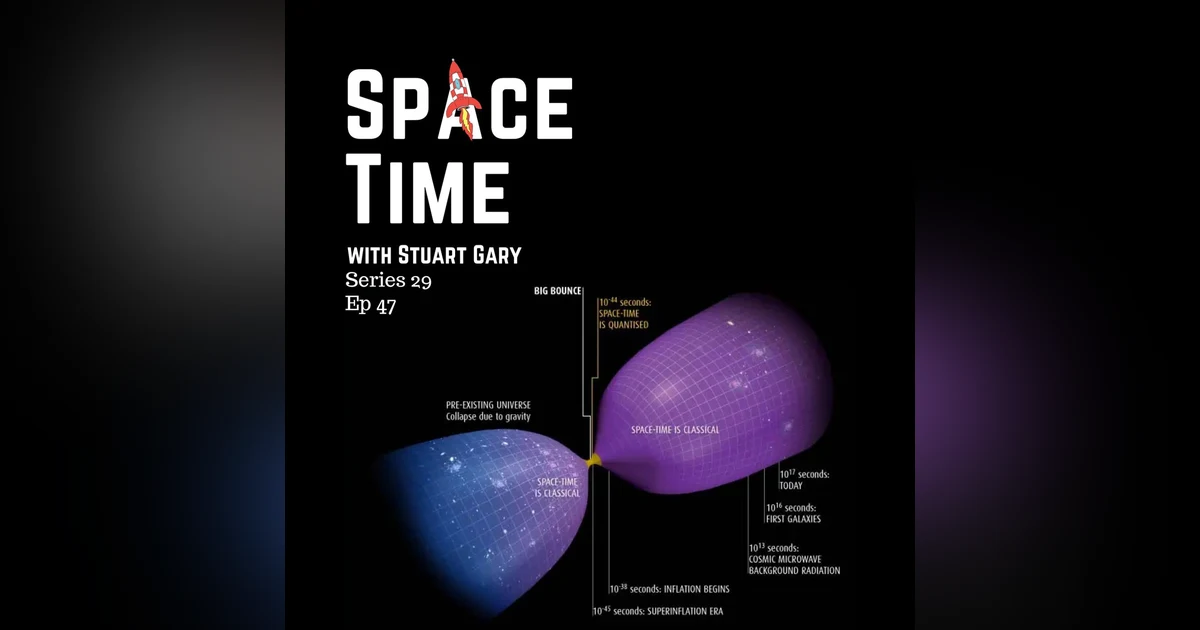
 SpaceTime Series 29 Episode 47 *Are black holes from before the Big Bang shaping the Universe A new study suggests that ancient black holes from before the big bang may be shaping the universe. The idea is that the cosmos goes through eternal never ending cycles of expanding out from a big bang and then eventually collapsing in a big crunch which triggers another big band and so on. *The bathtub ring hinting at an ancient Martian ocean Scientists have identified geological features on Mars that appear to point to a vast sea shore or coast line stretching around the red planet’s northern hemisphere. *A just award for studying the stars The bi-annual Berenice and Arthur Page Medal winners for excellence in amateur astronomy for 2026 have been presented to Chris Stockdale, Jonathan Bradshaw and Renato Langersek at the Annual National Australian Convention of Amateur Astronomers in Tamworth. *The Science Report Study shows heart risk patterns of obesity differ between men and women. Ancient rock art shows Tasmanian Tigers roamed the main land as recently as 1000 years ago. Claims Australia’s most famous dinosaur – Muttaburrasaurus – might have been a picky eater. Skeptics guide to Russia’s UFO study.
Our Guests This Week: Astronomical Society of Australia Page Medal winner Jonathan Bradshaw Purdue University engineer Carolin Frueh And our regular guests: Alex Zaharov-Reutt from techadvice.life Tim Mendham from Australian Skeptics 🌏 Get Our Exclusive NordVPN deal here ➼ www.bitesz.com/nordvpn . The discounts and bonuses are incredible! And it’s risk-free with Nord’s 30-day money-back guarantee! ✌ If you’d like to support the podcast and gain access to bonus content by becoming a SpaceTime crew member, you can do just that through premium versions on Patreon, Spotify and Apple Podcasts. Details on the Support page on our website https://www.bitesz.com/show/spacetime/support/ For more SpaceTime and show links: https://linktr.ee/biteszHQ If you love this podcast, please get someone else to listen to. Thank you… For more podcasts visit our HQ at https://bitesz.com
Our Guests This Week: Astronomical Society of Australia Page Medal winner Jonathan Bradshaw Purdue University engineer Carolin Frueh And our regular guests: Alex Zaharov-Reutt from techadvice.life Tim Mendham from Australian Skeptics 🌏 Get Our Exclusive NordVPN deal here ➼ www.bitesz.com/nordvpn . The discounts and bonuses are incredible! And it’s risk-free with Nord’s 30-day money-back guarantee! ✌ If you’d like to support the podcast and gain access to bonus content by becoming a SpaceTime crew member, you can do just that through premium versions on Patreon, Spotify and Apple Podcasts. Details on the Support page on our website https://www.bitesz.com/show/spacetime/support/ For more SpaceTime and show links: https://linktr.ee/biteszHQ If you love this podcast, please get someone else to listen to. Thank you… For more podcasts visit our HQ at https://bitesz.com
The Astronomy, Space, Technology & Science News Podcast.
WEBVTT
1
00:00:00.120 --> 00:00:03.600
This is Spacetime Series twenty nine, episode forty seven, for
2
00:00:03.759 --> 00:00:07.280
broadcast on the twentieth of April twenty twenty six. Coming
3
00:00:07.360 --> 00:00:10.919
up on Space Time are black holes from before the
4
00:00:10.960 --> 00:00:15.560
Big Bang shaping our universe, the Bathtub Ring hinting at
5
00:00:15.560 --> 00:00:20.160
an ancient Martian ocean, and a just Award for studying
6
00:00:20.160 --> 00:00:24.960
the stars. All that and more coming up on space Time.
7
00:00:26.039 --> 00:00:39.000
Welcome to Space Time with Stuart Gary.
8
00:00:45.240 --> 00:00:48.799
A new study suggests that ancient black holes from before
9
00:00:48.840 --> 00:00:52.920
the Big Bang may be shaping our universe. The idea
10
00:00:53.280 --> 00:00:56.840
is that the cosmos goes through eternal, never ending cycles
11
00:00:56.920 --> 00:00:59.799
of expanding up from the Big Bang and then eventually
12
00:01:00.000 --> 00:01:03.560
collapsing again into a big crunch, which then triggers another
13
00:01:03.600 --> 00:01:06.319
Big Bang, followed by another big crunch, and so on.
14
00:01:07.040 --> 00:01:10.519
The key to supporting this hypothesis would be black holes
15
00:01:10.560 --> 00:01:13.560
that form before the Big Bang, which could still exist
16
00:01:13.640 --> 00:01:18.560
today as cosmic fossils. The study behind the hypothesis, reported
17
00:01:18.599 --> 00:01:21.599
in the journal Physical Review D, suggest that these relic
18
00:01:21.680 --> 00:01:26.719
black holes could potentially help explain that mysterious invisible substance
19
00:01:26.760 --> 00:01:30.079
known as dark matter, which shapes galaxies and the large
20
00:01:30.120 --> 00:01:34.480
scale structure of our universe. The Studies. Lead author Enrico
21
00:01:34.560 --> 00:01:38.359
Goes Tangagar from Portsmouth University says the universe may not
22
00:01:38.439 --> 00:01:41.159
have a beginning with a single explosive event, which we
23
00:01:41.239 --> 00:01:44.719
these days called the Big Bang, but instead may align
24
00:01:44.799 --> 00:01:47.400
with more of a cosmic bounce model, in which the
25
00:01:47.480 --> 00:01:51.319
universe emerged from an earlier contraction and left behind relic
26
00:01:51.359 --> 00:01:55.079
black holes that have survived that contraction and expansion right
27
00:01:55.159 --> 00:01:59.400
through to the present day as cosmic fossils. Now. If correct,
28
00:01:59.599 --> 00:02:04.560
these amordial objects could help explain long standing mysteries in cosmology,
29
00:02:04.719 --> 00:02:07.640
including the nature of dark matter and the process which
30
00:02:07.680 --> 00:02:11.680
ceeded the formation of galaxies. Iss Tangage says that for
31
00:02:11.759 --> 00:02:14.960
almost a century now, cosmologists have traced the history of
32
00:02:15.000 --> 00:02:17.960
the universe back to a single dramatic event, which we
33
00:02:18.039 --> 00:02:21.719
call the Big Bang. In this standard model of cosmology,
34
00:02:21.919 --> 00:02:25.439
space and time emerge from an extremely hot, dense state
35
00:02:25.599 --> 00:02:28.639
around thirteen point eight billion years ago, followed by billions
36
00:02:28.680 --> 00:02:33.360
of years of cosmic expansion and galaxy formation. He points out,
37
00:02:33.400 --> 00:02:37.039
this model has been remarkably successful. It explains the cosmic
38
00:02:37.080 --> 00:02:40.759
microwave background radiation, the faint heat left over from the
39
00:02:40.759 --> 00:02:43.960
early universe, now down to two point seven degrees above
40
00:02:44.000 --> 00:02:48.240
absolute zero, and it also predicts how galaxies are distributed
41
00:02:48.280 --> 00:02:52.080
across the vast cosmic web. But some of the deepest
42
00:02:52.199 --> 00:02:56.639
mysteries in physics remain unresolved. For example, we still don't
43
00:02:56.680 --> 00:02:59.520
know what triggered the Big Bang in the first place, or,
44
00:02:59.560 --> 00:03:02.520
for that matter, what happened before it. If anything, why
45
00:03:02.560 --> 00:03:06.080
the universe began in such a special state, what caused
46
00:03:06.080 --> 00:03:09.599
the brief sudden burst of rapid expansion known as cosmic inflation,
47
00:03:09.879 --> 00:03:12.080
needed to explain why the universe looks the way it
48
00:03:12.120 --> 00:03:16.680
does today, and what this invisible mysterious substance dark matter
49
00:03:16.879 --> 00:03:20.879
really is, a substance which outweighs ordinary matter by about
50
00:03:20.919 --> 00:03:25.199
five to one, and so this new hypothesis explores the
51
00:03:25.240 --> 00:03:29.479
possibility that could connect several of these puzzles. The universe
52
00:03:29.560 --> 00:03:32.319
may not have begun with a single Big Bang, but
53
00:03:32.520 --> 00:03:36.840
instead emerged from a cosmic bounce mimicking inflation, with some
54
00:03:36.919 --> 00:03:39.919
of the oldest objects in the universe potentially serving as
55
00:03:40.000 --> 00:03:44.400
relics for what happened before. It means some black holes
56
00:03:44.520 --> 00:03:47.960
may well have formed during the earlier cosmic phase before
57
00:03:48.000 --> 00:03:51.319
the Big Bang and survived the bounce, leaving behind relic
58
00:03:51.360 --> 00:03:54.879
objects that may still influence the structure of galaxies billions
59
00:03:54.919 --> 00:03:58.360
of years later. Others could have formed shortly after the
60
00:03:58.400 --> 00:04:02.039
bounce from amplified density fluctuations were Matter in the early
61
00:04:02.159 --> 00:04:06.759
universe was unevenly distributed in stronger, more pronounced clumps than usual,
62
00:04:07.439 --> 00:04:10.719
and these enhanced clumps of matter would collapse more easily
63
00:04:10.800 --> 00:04:13.840
under their own gravity, making it more likely for large
64
00:04:13.840 --> 00:04:17.680
cosmic structures and black holes to form early on. In
65
00:04:17.759 --> 00:04:21.600
Albert Einstein's theory of general relativity, the Big Bang corresponds
66
00:04:21.639 --> 00:04:24.759
with what's known as the singularity, a point where density
67
00:04:24.800 --> 00:04:28.639
becomes infinite, volume becomes zero, and the laws of physics
68
00:04:28.680 --> 00:04:32.240
as we understand them break down, and of course, that
69
00:04:32.360 --> 00:04:35.720
also describes the singularity at the center of a black hole.
70
00:04:36.399 --> 00:04:39.399
Many physicists interpret this as a sign that our current
71
00:04:39.439 --> 00:04:43.240
description of the earliest moments of the universe is incomplete.
72
00:04:43.279 --> 00:04:45.759
A bounce, we call it the Big Bang, provides a
73
00:04:45.759 --> 00:04:49.160
way for the universe to transition from contraction to expansion
74
00:04:49.360 --> 00:04:53.439
without requiring new exotic physics, and the authors suggest this
75
00:04:53.600 --> 00:04:57.519
bounce could have arisen naturally through quantum physics. They say,
76
00:04:57.639 --> 00:05:01.639
at extreme densities, quantum effects yet a powerful pressure which
77
00:05:01.680 --> 00:05:05.399
prevents matter from being compressed indefinitely, a phenomenon that already
78
00:05:05.399 --> 00:05:09.120
stabilizes dense objects such as white dwarfs and neutron stars
79
00:05:09.160 --> 00:05:13.680
and reproduces the inflationary expansion phase in the new model,
80
00:05:13.839 --> 00:05:17.560
a similar effect could be occurring on cosmic scales. As
81
00:05:17.600 --> 00:05:21.680
the universe contracts. This quantum pressure could halt the collapse
82
00:05:21.920 --> 00:05:25.680
and trigger a rebound into expansion. And this bounce could
83
00:05:25.720 --> 00:05:29.560
explain two of the biggest mistress in cosmology. First, it
84
00:05:29.600 --> 00:05:32.519
may account for why the universe expanded so rapidly and
85
00:05:32.600 --> 00:05:35.800
evenly in all directions, and secondly, it could shed light
86
00:05:35.879 --> 00:05:38.839
on why the universe appears to be expanding at an
87
00:05:38.879 --> 00:05:42.160
ever accelerating rate, an effect currently attributed to a poor
88
00:05:42.240 --> 00:05:46.720
understanding of a mysterious force we call duck energy. One
89
00:05:46.800 --> 00:05:50.759
striking implication is that some structures formed during the collapse
90
00:05:50.759 --> 00:05:54.920
phase may have survived the bounce. The author's calculation suggests
91
00:05:54.959 --> 00:05:58.519
that compact objects larger than roughly ninety meters in size
92
00:05:58.560 --> 00:06:02.120
could pass through the transition and reappear in the expanding
93
00:06:02.240 --> 00:06:06.240
universe as fossils from before. Possible relics include things like
94
00:06:06.279 --> 00:06:11.879
gravitational waves, density, fluctuations and ancient black holes. These relic
95
00:06:11.920 --> 00:06:14.920
black holes could have explained dark matter, and if large
96
00:06:15.000 --> 00:06:17.560
numbers formed during the bounce, they might even make up
97
00:06:17.560 --> 00:06:20.759
a significant fraction, possibly even all of the dark matter
98
00:06:20.759 --> 00:06:24.560
in the universe today, and it doesn't end there. This
99
00:06:24.680 --> 00:06:27.560
idea may also have explained recent discoveries by the James
100
00:06:27.560 --> 00:06:31.639
Webspace Telescope, which has captured images of unexpectedly massive objects
101
00:06:31.680 --> 00:06:35.120
in the early universe nicknamed little red dots. The leading
102
00:06:35.199 --> 00:06:38.759
hypothesis to explain these little red dots are rapidly growing
103
00:06:38.800 --> 00:06:41.959
black holes in the early universe which are burning through
104
00:06:42.000 --> 00:06:46.439
the surrounding gas gas. Tangaga says, if massive black holes
105
00:06:46.480 --> 00:06:50.160
already existed immediately after the bounce, the early universe wouldn't
106
00:06:50.199 --> 00:06:53.399
need to start from scratch when't building the first galaxies.
107
00:06:54.519 --> 00:06:57.240
The theory also makes predictions that can be tested with
108
00:06:57.279 --> 00:07:00.560
future observations, and that's an important part of it science.
109
00:07:01.279 --> 00:07:05.319
Astronomers could search for really gravitational waves from previous cosmic
110
00:07:05.399 --> 00:07:09.399
faces or subtle patterns in the cosmic microwave background radiation,
111
00:07:09.680 --> 00:07:13.079
preserving a trace of the universe before the Big Bang.
112
00:07:13.839 --> 00:07:17.480
It's a fascinating insight and one which I'm sure will
113
00:07:17.480 --> 00:07:22.600
spark lots of debate. This is space time still to come,
114
00:07:22.920 --> 00:07:26.120
the bathtub bring hinting at an ancient Martian ocean, and
115
00:07:26.279 --> 00:07:29.600
a just reward for studying the stars. All that and
116
00:07:29.680 --> 00:07:49.360
more still to come on space time. Scientists have identified
117
00:07:49.360 --> 00:07:52.439
geological features on Mars that appear to point to a
118
00:07:52.600 --> 00:07:57.120
vast seashore or coastline stretching around the red planet's northern hemisphere.
119
00:07:57.680 --> 00:08:00.839
The findings were reported in the journal Nature, support the
120
00:08:00.879 --> 00:08:04.120
idea of an ancient Martian ocean which once covered a
121
00:08:04.160 --> 00:08:07.680
third of the planet's northern hemisphere. Low Lands, one of
122
00:08:07.680 --> 00:08:10.920
the studies author's, Michael lamp from cow Tech, says that
123
00:08:11.040 --> 00:08:14.160
as a key ingredient for life, water and other bodies
124
00:08:14.199 --> 00:08:18.079
in our Solar system is a major area of research now.
125
00:08:18.120 --> 00:08:21.079
While it's widely accepted that Mars once had some liquid
126
00:08:21.120 --> 00:08:24.079
water on its surface, it's still uncly whether that water
127
00:08:24.439 --> 00:08:27.000
was limited to leaks and streams, or if there was
128
00:08:27.040 --> 00:08:31.040
sufficient to form a long lasting ocean. Past Mars missions
129
00:08:31.040 --> 00:08:34.679
have discovered geological features that look like beaches and shorelines,
130
00:08:35.000 --> 00:08:38.200
but they're subtle and are found at varying elevations across
131
00:08:38.240 --> 00:08:41.639
the planet. Now, if they're true signatures of a stable,
132
00:08:41.720 --> 00:08:45.200
long lasting ocean. These shorelines will need to albeit roughly
133
00:08:45.240 --> 00:08:48.240
the same elevation, in the same way that sea levels
134
00:08:48.240 --> 00:08:51.879
here on Earth are consistent across the planet. Lamb says,
135
00:08:52.000 --> 00:08:54.559
if Mars did have an ocean, must have dried up
136
00:08:54.600 --> 00:08:57.919
long ago, possibly several billion years ago, more than half
137
00:08:57.919 --> 00:09:00.759
the age of the planet itself. He points out there's
138
00:09:00.799 --> 00:09:04.279
hardly anything on Earth that old. Anything on Mars from
139
00:09:04.279 --> 00:09:07.440
that time would have been eroded by billions of years
140
00:09:07.480 --> 00:09:12.679
of wind blowing, volcanoes erupting in other disturbances, removing subtle features.
141
00:09:13.480 --> 00:09:17.240
So Lambing colleagues needed to find a better topographical feature
142
00:09:17.240 --> 00:09:20.480
than shorelines, a feature that could be evidence of an ocean.
143
00:09:21.120 --> 00:09:24.159
They started by first looking to the Earth to determine
144
00:09:24.200 --> 00:09:28.039
which geological features are indicative of an ocean. Here, they
145
00:09:28.120 --> 00:09:31.360
use computer simulations to dry up the Earth's oceans and
146
00:09:31.440 --> 00:09:35.360
see what topographical features remained. The model showed the most
147
00:09:35.360 --> 00:09:38.360
distinct feature of the oceans is a flat band of
148
00:09:38.480 --> 00:09:41.720
lad up to several hundred kilometers wide, wrapping around the
149
00:09:41.759 --> 00:09:45.039
contours where land meets ocean, like a ring that remains
150
00:09:45.080 --> 00:09:49.440
around a drained bathtub. This band is called the continental shelf.
151
00:09:50.120 --> 00:09:52.960
Those sea levels on Earth and thus the location of
152
00:09:53.000 --> 00:09:56.759
the seashells, have fluctuated over many years. The continental shelf
153
00:09:56.919 --> 00:10:00.919
is a large landform that's relatively stable over to iological time.
154
00:10:01.679 --> 00:10:04.600
The authors then looked at topographical data for Mars taken
155
00:10:04.600 --> 00:10:08.320
by orbiters and found an analogous band that is suggestive
156
00:10:08.399 --> 00:10:11.320
of an ocean in the northern Martian hemisphere, covering about
157
00:10:11.360 --> 00:10:14.679
a third of the planet's surface. Lamb points out that
158
00:10:14.720 --> 00:10:17.919
a landform like this takes time to form, and notably
159
00:10:18.000 --> 00:10:21.440
it's not found around lakes. That indicates the ocean must
160
00:10:21.440 --> 00:10:25.360
have existed stably for possibly millions of years. Lamb and
161
00:10:25.399 --> 00:10:29.000
colleagues also saw evidence that river deltas, the triangular plains
162
00:10:29.000 --> 00:10:31.919
of sediment created where rivers spill into the oceans, lined
163
00:10:32.000 --> 00:10:35.720
up with the bathtub ring itself. So this shelf is
164
00:10:35.759 --> 00:10:39.039
a new observation that ties together evidence of what the
165
00:10:39.080 --> 00:10:42.159
coastal zone would have looked like, and the thing is,
166
00:10:42.320 --> 00:10:45.600
no one's really looked for it before. Consequently, this study
167
00:10:45.679 --> 00:10:49.639
suggests new targets for future missions, and the interesting point
168
00:10:49.720 --> 00:10:53.360
is this, if there ever was life on Mars, sedimentary
169
00:10:53.399 --> 00:10:57.759
deposits on the Martian coastlines may well have preserved signatures
170
00:10:57.799 --> 00:11:00.440
in the same way that coastal sediments here on Earth
171
00:11:00.559 --> 00:11:04.720
contain a real historic record of fossils from the early continents.
172
00:11:05.240 --> 00:11:08.679
It's a fascinating target and one which run Dadley be
173
00:11:08.799 --> 00:11:13.320
studied in great detail. This is space time still to
174
00:11:13.360 --> 00:11:16.559
come a just reward for studying the stars, and later
175
00:11:16.600 --> 00:11:20.240
in the Science report ancient rock art showing that Tasmanian
176
00:11:20.360 --> 00:11:24.519
tigers thylocenes may have roam the Australian mainland as recently
177
00:11:24.559 --> 00:11:27.480
as one thousand years ago. All that and more still
178
00:11:27.480 --> 00:11:47.879
to come on space time. Today, citizens, scientists astronomers play
179
00:11:47.919 --> 00:11:50.879
a crucial role in our study of the heavens. As
180
00:11:50.879 --> 00:11:53.720
well as making their own discoveries, which they've always done,
181
00:11:53.799 --> 00:11:57.600
they provide additional supplementary observations which help the universities and
182
00:11:57.639 --> 00:12:00.840
astronomical agencies fill in the gaps in their own research.
183
00:12:01.519 --> 00:12:05.000
In recognition of this important work, every two years, the
184
00:12:05.039 --> 00:12:08.480
Astronomical Society of Australia awards a medal to those who
185
00:12:08.480 --> 00:12:12.000
have worked hard to help advance sciences understanding of the cosmos.
186
00:12:12.679 --> 00:12:15.559
The bi annual Berenice and Arthur Page Medal winners for
187
00:12:15.600 --> 00:12:18.600
excellence in Amateur Astronomy for twenty twenty six have been
188
00:12:18.639 --> 00:12:23.039
presented to Chris Stockdale, Jonathan Bradshaw and Renato Langerzek at
189
00:12:23.080 --> 00:12:27.360
the annual National Australian Convention of Amateur Astronomers held in Tamworth.
190
00:12:28.120 --> 00:12:32.519
Stockdale co discovered an ultra hot neptune for super Jupiters
191
00:12:32.559 --> 00:12:37.240
and several potential earthlike planets orbiting distant stars Oliver using
192
00:12:37.240 --> 00:12:41.759
a telescope housed in his backyard, Doman Hazelwood in Victorious, Gippsland.
193
00:12:42.320 --> 00:12:46.000
He's co authored over a hundred planetary discovery papers in
194
00:12:46.080 --> 00:12:50.399
science journals including Nature. Bradshaw and Langazec, together with past
195
00:12:50.480 --> 00:12:53.960
Page Medal winner John Broughton, discovered a debris ring around
196
00:12:54.000 --> 00:12:57.440
the arter Krper Belt dwarf planet Quahor, and the fascinating
197
00:12:57.480 --> 00:13:00.840
thing is this ring wasn't detected close to the dwarf planet,
198
00:13:00.960 --> 00:13:03.320
but some four thousand killer it is above the surface
199
00:13:03.360 --> 00:13:05.960
of the frozen world, far beyond the roch limit, the
200
00:13:06.000 --> 00:13:08.759
point where a celestial bodies gravity should tear an orbiting
201
00:13:08.799 --> 00:13:11.960
body apart or prevent the breed from cold lissen together
202
00:13:12.039 --> 00:13:16.080
to former Moon. They work using their own backyard telescopes
203
00:13:16.080 --> 00:13:18.440
on the Gold Coast and the Brisbane suburb of Sanford
204
00:13:18.600 --> 00:13:21.960
was also reported in the journal Nature. Bradshaw says that
205
00:13:22.000 --> 00:13:25.399
discovery was made thanks on occultation as the Pluto sized
206
00:13:25.440 --> 00:13:28.679
dwarf planet passed in front of a distant background star.
207
00:13:28.960 --> 00:13:33.159
What we did is we are all keen ocultation observers,
208
00:13:33.200 --> 00:13:38.320
and ocultations are simply when a dark body object such
209
00:13:38.320 --> 00:13:41.320
as an asteroid, goes in front of an innocent star
210
00:13:41.440 --> 00:13:43.399
out there and it blocks it out for a short
211
00:13:43.440 --> 00:13:46.320
period of time, actually cast a shadow on the Earth.
212
00:13:46.360 --> 00:13:49.639
The shadows pretty much the size of the object inquires
213
00:13:49.679 --> 00:13:53.080
about a thousand longters across, and we were looking to
214
00:13:53.159 --> 00:13:57.120
see if we could detect the position of Quaha. But
215
00:13:57.279 --> 00:14:00.519
in our particular case, it was predicted to vex miss
216
00:14:00.600 --> 00:14:02.799
us altogether. It was going to hit The shadow was
217
00:14:02.799 --> 00:14:04.799
going to go across New Zealand, and it was going
218
00:14:04.879 --> 00:14:09.000
to go across southeastern Australia, but not Queensland where we were.
219
00:14:09.159 --> 00:14:11.759
So we went hunting. We went hunting for a moon,
220
00:14:12.039 --> 00:14:14.120
which was a one in a billion chance, but we
221
00:14:14.159 --> 00:14:16.399
thought we'd give it a go anyway because it's already
222
00:14:16.440 --> 00:14:18.960
got one known moon. So we were calling nice and
223
00:14:19.000 --> 00:14:22.159
early and we didn't discover a moon. We discovered a ring,
224
00:14:22.840 --> 00:14:25.080
and the ring was in the wrong place. And that's
225
00:14:25.120 --> 00:14:28.679
what made it so particularly interesting. It's actually defying the
226
00:14:28.679 --> 00:14:30.799
theoretical physics where a ring sould be.
227
00:14:31.120 --> 00:14:34.600
This ring was discovered four thousand killing. It is above
228
00:14:34.639 --> 00:14:37.720
this twolf planet. Well would normally assume that's will beyond
229
00:14:37.720 --> 00:14:39.799
the Roch limits. That's too far away.
230
00:14:39.919 --> 00:14:44.399
Oh, absolutely so. I mean when Edward Roche first proposed
231
00:14:44.399 --> 00:14:47.519
a limit, he had a sample of one thing in
232
00:14:47.559 --> 00:14:50.840
the universe at the time, which was Saturn, and they
233
00:14:50.960 --> 00:14:53.519
did the physics. The clever fell up did the physics
234
00:14:53.559 --> 00:14:57.600
and worked out that pretty much anything outside further away
235
00:14:57.679 --> 00:14:59.919
than the current limit of Saturn's ring that we can
236
00:15:00.120 --> 00:15:04.639
see any matter that was coalescing there would form a moon,
237
00:15:04.919 --> 00:15:08.240
and anything inside that limit would be torn apart by
238
00:15:08.279 --> 00:15:11.039
the gravitational forces of the main body and would be
239
00:15:11.080 --> 00:15:13.480
a ring. And that was just fine because they went
240
00:15:13.559 --> 00:15:18.000
and discovered other rings. So there was some rings around Uranus,
241
00:15:18.200 --> 00:15:22.879
and ring fragments around Neptune and then Shariquo. So all
242
00:15:22.919 --> 00:15:26.720
in all, up until our discovery, there were five ring
1
00:00:00.120 --> 00:00:03.600
2
00:00:03.759 --> 00:00:07.280
3
00:00:07.360 --> 00:00:10.919
4
00:00:10.960 --> 00:00:15.560
5
00:00:15.560 --> 00:00:20.160
6
00:00:20.160 --> 00:00:24.960
7
00:00:26.039 --> 00:00:39.000
8
00:00:45.240 --> 00:00:48.799
9
00:00:48.840 --> 00:00:52.920
10
00:00:53.280 --> 00:00:56.840
11
00:00:56.920 --> 00:00:59.799
12
00:01:00.000 --> 00:01:03.560
13
00:01:03.600 --> 00:01:06.319
14
00:01:07.040 --> 00:01:10.519
15
00:01:10.560 --> 00:01:13.560
16
00:01:13.640 --> 00:01:18.560
17
00:01:18.599 --> 00:01:21.599
18
00:01:21.680 --> 00:01:26.719
19
00:01:26.760 --> 00:01:30.079
20
00:01:30.120 --> 00:01:34.480
21
00:01:34.560 --> 00:01:38.359
22
00:01:38.439 --> 00:01:41.159
23
00:01:41.239 --> 00:01:44.719
24
00:01:44.799 --> 00:01:47.400
25
00:01:47.480 --> 00:01:51.319
26
00:01:51.359 --> 00:01:55.079
27
00:01:55.159 --> 00:01:59.400
28
00:01:59.599 --> 00:02:04.560
29
00:02:04.719 --> 00:02:07.640
30
00:02:07.680 --> 00:02:11.680
31
00:02:11.759 --> 00:02:14.960
32
00:02:15.000 --> 00:02:17.960
33
00:02:18.039 --> 00:02:21.719
34
00:02:21.919 --> 00:02:25.439
35
00:02:25.599 --> 00:02:28.639
36
00:02:28.680 --> 00:02:33.360
37
00:02:33.400 --> 00:02:37.039
38
00:02:37.080 --> 00:02:40.759
39
00:02:40.759 --> 00:02:43.960
40
00:02:44.000 --> 00:02:48.240
41
00:02:48.280 --> 00:02:52.080
42
00:02:52.199 --> 00:02:56.639
43
00:02:56.680 --> 00:02:59.520
44
00:02:59.560 --> 00:03:02.520
45
00:03:02.560 --> 00:03:06.080
46
00:03:06.080 --> 00:03:09.599
47
00:03:09.879 --> 00:03:12.080
48
00:03:12.120 --> 00:03:16.680
49
00:03:16.879 --> 00:03:20.879
50
00:03:20.919 --> 00:03:25.199
51
00:03:25.240 --> 00:03:29.479
52
00:03:29.560 --> 00:03:32.319
53
00:03:32.520 --> 00:03:36.840
54
00:03:36.919 --> 00:03:39.919
55
00:03:40.000 --> 00:03:44.400
56
00:03:44.520 --> 00:03:47.960
57
00:03:48.000 --> 00:03:51.319
58
00:03:51.360 --> 00:03:54.879
59
00:03:54.919 --> 00:03:58.360
60
00:03:58.400 --> 00:04:02.039
61
00:04:02.159 --> 00:04:06.759
62
00:04:07.439 --> 00:04:10.719
63
00:04:10.800 --> 00:04:13.840
64
00:04:13.840 --> 00:04:17.680
65
00:04:17.759 --> 00:04:21.600
66
00:04:21.639 --> 00:04:24.759
67
00:04:24.800 --> 00:04:28.639
68
00:04:28.680 --> 00:04:32.240
69
00:04:32.360 --> 00:04:35.720
70
00:04:36.399 --> 00:04:39.399
71
00:04:39.439 --> 00:04:43.240
72
00:04:43.279 --> 00:04:45.759
73
00:04:45.759 --> 00:04:49.160
74
00:04:49.360 --> 00:04:53.439
75
00:04:53.600 --> 00:04:57.519
76
00:04:57.639 --> 00:05:01.639
77
00:05:01.680 --> 00:05:05.399
78
00:05:05.399 --> 00:05:09.120
79
00:05:09.160 --> 00:05:13.680
80
00:05:13.839 --> 00:05:17.560
81
00:05:17.600 --> 00:05:21.680
82
00:05:21.920 --> 00:05:25.680
83
00:05:25.720 --> 00:05:29.560
84
00:05:29.600 --> 00:05:32.519
85
00:05:32.600 --> 00:05:35.800
86
00:05:35.879 --> 00:05:38.839
87
00:05:38.879 --> 00:05:42.160
88
00:05:42.240 --> 00:05:46.720
89
00:05:46.800 --> 00:05:50.759
90
00:05:50.759 --> 00:05:54.920
91
00:05:54.959 --> 00:05:58.519
92
00:05:58.560 --> 00:06:02.120
93
00:06:02.240 --> 00:06:06.240
94
00:06:06.279 --> 00:06:11.879
95
00:06:11.920 --> 00:06:14.920
96
00:06:15.000 --> 00:06:17.560
97
00:06:17.560 --> 00:06:20.759
98
00:06:20.759 --> 00:06:24.560
99
00:06:24.680 --> 00:06:27.560
100
00:06:27.560 --> 00:06:31.639
101
00:06:31.680 --> 00:06:35.120
102
00:06:35.199 --> 00:06:38.759
103
00:06:38.800 --> 00:06:41.959
104
00:06:42.000 --> 00:06:46.439
105
00:06:46.480 --> 00:06:50.160
106
00:06:50.199 --> 00:06:53.399
107
00:06:54.519 --> 00:06:57.240
108
00:06:57.279 --> 00:07:00.560
109
00:07:01.279 --> 00:07:05.319
110
00:07:05.399 --> 00:07:09.399
111
00:07:09.680 --> 00:07:13.079
112
00:07:13.839 --> 00:07:17.480
113
00:07:17.480 --> 00:07:22.600
114
00:07:22.920 --> 00:07:26.120
115
00:07:26.279 --> 00:07:29.600
116
00:07:29.680 --> 00:07:49.360
117
00:07:49.360 --> 00:07:52.439
118
00:07:52.600 --> 00:07:57.120
119
00:07:57.680 --> 00:08:00.839
120
00:08:00.879 --> 00:08:04.120
121
00:08:04.160 --> 00:08:07.680
122
00:08:07.680 --> 00:08:10.920
123
00:08:11.040 --> 00:08:14.160
124
00:08:14.199 --> 00:08:18.079
125
00:08:18.120 --> 00:08:21.079
126
00:08:21.120 --> 00:08:24.079
127
00:08:24.439 --> 00:08:27.000
128
00:08:27.040 --> 00:08:31.040
129
00:08:31.040 --> 00:08:34.679
130
00:08:35.000 --> 00:08:38.200
131
00:08:38.240 --> 00:08:41.639
132
00:08:41.720 --> 00:08:45.200
133
00:08:45.240 --> 00:08:48.240
134
00:08:48.240 --> 00:08:51.879
135
00:08:52.000 --> 00:08:54.559
136
00:08:54.600 --> 00:08:57.919
137
00:08:57.919 --> 00:09:00.759
138
00:09:00.799 --> 00:09:04.279
139
00:09:04.279 --> 00:09:07.440
140
00:09:07.480 --> 00:09:12.679
141
00:09:13.480 --> 00:09:17.240
142
00:09:17.240 --> 00:09:20.480
143
00:09:21.120 --> 00:09:24.159
144
00:09:24.200 --> 00:09:28.039
145
00:09:28.120 --> 00:09:31.360
146
00:09:31.440 --> 00:09:35.360
147
00:09:35.360 --> 00:09:38.360
148
00:09:38.480 --> 00:09:41.720
149
00:09:41.759 --> 00:09:45.039
150
00:09:45.080 --> 00:09:49.440
151
00:09:50.120 --> 00:09:52.960
152
00:09:53.000 --> 00:09:56.759
153
00:09:56.919 --> 00:10:00.919
154
00:10:01.679 --> 00:10:04.600
155
00:10:04.600 --> 00:10:08.320
156
00:10:08.399 --> 00:10:11.320
157
00:10:11.360 --> 00:10:14.679
158
00:10:14.720 --> 00:10:17.919
159
00:10:18.000 --> 00:10:21.440
160
00:10:21.440 --> 00:10:25.360
161
00:10:25.399 --> 00:10:29.000
162
00:10:29.000 --> 00:10:31.919
163
00:10:32.000 --> 00:10:35.720
164
00:10:35.759 --> 00:10:39.039
165
00:10:39.080 --> 00:10:42.159
166
00:10:42.320 --> 00:10:45.600
167
00:10:45.679 --> 00:10:49.639
168
00:10:49.720 --> 00:10:53.360
169
00:10:53.399 --> 00:10:57.759
170
00:10:57.799 --> 00:11:00.440
171
00:11:00.559 --> 00:11:04.720
172
00:11:05.240 --> 00:11:08.679
173
00:11:08.799 --> 00:11:13.320
174
00:11:13.360 --> 00:11:16.559
175
00:11:16.600 --> 00:11:20.240
176
00:11:20.360 --> 00:11:24.519
177
00:11:24.559 --> 00:11:27.480
178
00:11:27.480 --> 00:11:47.879
179
00:11:47.919 --> 00:11:50.879
180
00:11:50.879 --> 00:11:53.720
181
00:11:53.799 --> 00:11:57.600
182
00:11:57.639 --> 00:12:00.840
183
00:12:01.519 --> 00:12:05.000
184
00:12:05.039 --> 00:12:08.480
185
00:12:08.480 --> 00:12:12.000
186
00:12:12.679 --> 00:12:15.559
187
00:12:15.600 --> 00:12:18.600
188
00:12:18.639 --> 00:12:23.039
189
00:12:23.080 --> 00:12:27.360
190
00:12:28.120 --> 00:12:32.519
191
00:12:32.559 --> 00:12:37.240
192
00:12:37.240 --> 00:12:41.759
193
00:12:42.320 --> 00:12:46.000
194
00:12:46.080 --> 00:12:50.399
195
00:12:50.480 --> 00:12:53.960
196
00:12:54.000 --> 00:12:57.440
197
00:12:57.480 --> 00:13:00.840
198
00:13:00.960 --> 00:13:03.320
199
00:13:03.360 --> 00:13:05.960
200
00:13:06.000 --> 00:13:08.759
201
00:13:08.799 --> 00:13:11.960
202
00:13:12.039 --> 00:13:16.080
203
00:13:16.080 --> 00:13:18.440
204
00:13:18.600 --> 00:13:21.960
205
00:13:22.000 --> 00:13:25.399
206
00:13:25.440 --> 00:13:28.679
207
00:13:28.960 --> 00:13:33.159
208
00:13:33.200 --> 00:13:38.320
209
00:13:38.320 --> 00:13:41.320
210
00:13:41.440 --> 00:13:43.399
211
00:13:43.440 --> 00:13:46.320
212
00:13:46.360 --> 00:13:49.639
213
00:13:49.679 --> 00:13:53.080
214
00:13:53.159 --> 00:13:57.120
215
00:13:57.279 --> 00:14:00.519
216
00:14:00.600 --> 00:14:02.799
217
00:14:02.799 --> 00:14:04.799
218
00:14:04.879 --> 00:14:09.000
219
00:14:09.159 --> 00:14:11.759
220
00:14:12.039 --> 00:14:14.120
221
00:14:14.159 --> 00:14:16.399
222
00:14:16.440 --> 00:14:18.960
223
00:14:19.000 --> 00:14:22.159
224
00:14:22.840 --> 00:14:25.080
225
00:14:25.120 --> 00:14:28.679
226
00:14:28.679 --> 00:14:30.799
227
00:14:31.120 --> 00:14:34.600
228
00:14:34.639 --> 00:14:37.720
229
00:14:37.720 --> 00:14:39.799
230
00:14:39.919 --> 00:14:44.399
231
00:14:44.399 --> 00:14:47.519
232
00:14:47.559 --> 00:14:50.840
233
00:14:50.960 --> 00:14:53.519
234
00:14:53.559 --> 00:14:57.600
235
00:14:57.679 --> 00:14:59.919
236
00:15:00.120 --> 00:15:04.639
237
00:15:04.919 --> 00:15:08.240
238
00:15:08.279 --> 00:15:11.039
239
00:15:11.080 --> 00:15:13.480
240
00:15:13.559 --> 00:15:18.000
241
00:15:18.200 --> 00:15:22.879
242
00:15:22.919 --> 00:15:26.720