June 18, 2026
Ancient Quasar Discovered: Flickering Light from the Dawn of Time, Mars' Life-Hunting Mission
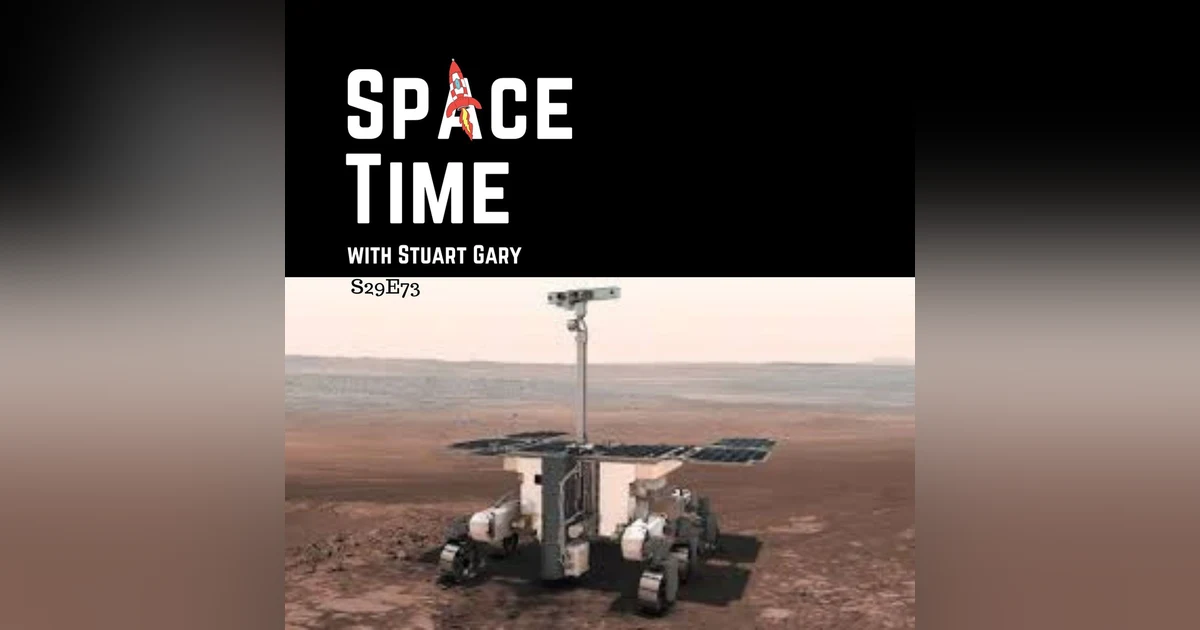
Sponsor Link: This episode of SpaceTime is brought to you by Incogni, your first stop in reclaiming your online privacy.To check out our special offer for SpaceTime listeners, visit https://www.incogni.com/stuartgary SpaceTime Series 29 Episode 73...


 Spotify Spotify
  Apple Podcasts Apple Podcasts
  Youtube Music Youtube Music
  iHeartRadio iHeartRadio
  Spreaker Spreaker
  PocketCasts PocketCasts
  Amazon Music Amazon Music
  YouTube YouTube
  Castbox Castbox
  Deezer Deezer
  TuneIn TuneIn
  Rumble Rumble
  Overcast Overcast
  Podcast Addict Podcast Addict
  Podchaser Podchaser
  JioSaavn JioSaavn
  Castro Castro
  RSS Feed RSS Feed
 Sponsor Link:
This episode of SpaceTime is brought to you by Incogni, your first stop in reclaiming your online privacy.To check out our special offer for SpaceTime listeners, visit www.incogni.com/stuartgary
SpaceTime Series 29 Episode 73 The earliest known flickering quasar Astronomers have discovered the earliest known flickering quasar dating back to a time when the universe was just 850 million years old. ExoMars to target vast clay beds in search for life on Mars The European Space Agency has selected a vast clay bed called Oxia Planum as the best place on the red planet to search for signs of life. Understanding neutron star mergers Scientists have used deep learning neural networks to better understand the violent events associated with the merger of neutron stars. The Science Report New GLP-3 drugs significantly improve blood sugar levels and lead to substantial weight loss. Ocean waves generated in the Southern Ocean tracked all the way to the shores of Alaska. Are dogs left or right handed? Skeptics guide to fish oil supplements. Our Guests This Week: Kovi Rose from the University of Sydney And our regular guests: Alex Zaharov-Reutt from techadvice.life Tim Mendham from Australian Skeptics 🌏 Get Our Exclusive NordVPN deal here ➼ www.bitesz.com/nordvpn . The discounts and bonuses are incredible! And it’s risk-free with Nord’s 30-day money-back guarantee! ✌ If you’d like to support the podcast and gain access to bonus content by becoming a SpaceTime crew member, you can do just that through The Big Bang editions on Patreon, Spotify and Apple Podcasts. Details on the Support page on our website https://www.bitesz.com/show/spacetime/support/ For more SpaceTime and show links: https://linktr.ee/biteszHQ
This episode of SpaceTime is brought to you by Incogni, your first stop in reclaiming your online privacy.To check out our special offer for SpaceTime listeners, visit www.incogni.com/stuartgary
SpaceTime Series 29 Episode 73 The earliest known flickering quasar Astronomers have discovered the earliest known flickering quasar dating back to a time when the universe was just 850 million years old. ExoMars to target vast clay beds in search for life on Mars The European Space Agency has selected a vast clay bed called Oxia Planum as the best place on the red planet to search for signs of life. Understanding neutron star mergers Scientists have used deep learning neural networks to better understand the violent events associated with the merger of neutron stars. The Science Report New GLP-3 drugs significantly improve blood sugar levels and lead to substantial weight loss. Ocean waves generated in the Southern Ocean tracked all the way to the shores of Alaska. Are dogs left or right handed? Skeptics guide to fish oil supplements. Our Guests This Week: Kovi Rose from the University of Sydney And our regular guests: Alex Zaharov-Reutt from techadvice.life Tim Mendham from Australian Skeptics 🌏 Get Our Exclusive NordVPN deal here ➼ www.bitesz.com/nordvpn . The discounts and bonuses are incredible! And it’s risk-free with Nord’s 30-day money-back guarantee! ✌ If you’d like to support the podcast and gain access to bonus content by becoming a SpaceTime crew member, you can do just that through The Big Bang editions on Patreon, Spotify and Apple Podcasts. Details on the Support page on our website https://www.bitesz.com/show/spacetime/support/ For more SpaceTime and show links: https://linktr.ee/biteszHQ
The Astronomy, Space, Technology & Science News Podcast.
WEBVTT
1
00:00:00.240 --> 00:00:03.439
This is Spacetime Series twenty nine, episode seventy three, for
2
00:00:03.640 --> 00:00:07.360
broadcast on the nineteenth of June twenty twenty six. Coming
3
00:00:07.440 --> 00:00:12.160
up on Space Time, the earliest known flickering quasa, Europe's
4
00:00:12.199 --> 00:00:15.119
Exo Mars to target a vast clay bed and it
5
00:00:15.240 --> 00:00:19.120
searched for life on the Red planet, and understanding neutron
6
00:00:19.199 --> 00:00:23.719
star mergers. All that and more coming up on space Time.
7
00:00:24.879 --> 00:00:28.000
Welcome to Space Time with Stuart Gary.
8
00:00:44.119 --> 00:00:47.880
Astronomers have discovered the earliest known flickering quasa, dating back
9
00:00:47.920 --> 00:00:50.159
to a time when the universe was just eight hundred
10
00:00:50.200 --> 00:00:53.479
and fifty million years old. Their findings were reported in
11
00:00:53.520 --> 00:00:56.759
the journal Nature. Astronomy Show this voracious super massive black
12
00:00:56.759 --> 00:01:01.159
hole was already surprisingly mature up. The massive black hole
13
00:01:01.359 --> 00:01:04.079
lies at the heart of every galaxy, including our own
14
00:01:04.079 --> 00:01:07.959
Milky Way. As a black hole feeds, it pulls material
15
00:01:08.040 --> 00:01:11.280
into an accretion disk, a whirlpool of high temperature gas
16
00:01:11.280 --> 00:01:14.840
and dust. As this material piles up and falls under
17
00:01:14.840 --> 00:01:18.519
the black hole, it lights up, radiating huge amounts of energy,
18
00:01:18.760 --> 00:01:21.519
and the most energetic super massive black holes are known
19
00:01:21.519 --> 00:01:24.400
as quasars. They can be some of the most active
20
00:01:24.439 --> 00:01:27.560
and luminous objects in the universe clearly visible from across
21
00:01:27.560 --> 00:01:30.959
the other side of the cosmos. The pattern of light
22
00:01:31.040 --> 00:01:34.040
coming from a quasa can give astronomers clues about how
23
00:01:34.159 --> 00:01:35.879
super massive black holes shape the.
24
00:01:35.879 --> 00:01:37.200
Galaxies around them.
25
00:01:37.560 --> 00:01:41.799
Now, astronomers have detected a quaser flickering in the early universe.
26
00:01:42.480 --> 00:01:43.319
One of the sturdies.
27
00:01:43.319 --> 00:01:47.120
Authors Gene Leung from the Kavali Institute for Astrophysics and
28
00:01:47.159 --> 00:01:50.159
Space Research, says, although there have been lots of quasars
29
00:01:50.159 --> 00:01:52.599
fan of the cosmic dawn, this is the first time
30
00:01:52.640 --> 00:01:56.680
astronomers have actually seen one flickering, and that's important because
31
00:01:56.719 --> 00:02:01.000
the quasars flicker a loudly on colleagues to determine that. Surprisingly,
32
00:02:01.120 --> 00:02:04.280
this ancient quasars whirlpool of gas and dust resembled a
33
00:02:04.280 --> 00:02:07.239
flat pancake, similar in shape to that of more modern
34
00:02:07.280 --> 00:02:11.560
day quasars. The findings add to a long standing mystery
35
00:02:11.560 --> 00:02:14.919
in cosmology, why does super massive black holes exist so
36
00:02:15.080 --> 00:02:19.159
early in the universe's history. Physicists have always assumed that
37
00:02:19.240 --> 00:02:22.960
a flat accretion disc reflects a relatively mature black hole,
38
00:02:23.159 --> 00:02:26.319
one that's already calm and stable. On the other hand,
39
00:02:26.400 --> 00:02:28.680
black holes that are just starting to form, like those
40
00:02:28.719 --> 00:02:31.319
often seen in the early universe should be more unsettled
41
00:02:31.360 --> 00:02:33.919
systems with accretion discs that appear to be more fluffy
42
00:02:33.960 --> 00:02:34.560
and chaotic.
43
00:02:35.159 --> 00:02:35.919
So the flat.
44
00:02:35.759 --> 00:02:39.120
Accretion disc around this very early quasa heightens the mystery
45
00:02:39.120 --> 00:02:41.680
of how super massive black holes can grow and mature
46
00:02:41.719 --> 00:02:45.719
in relatively short amounts of cosmic time. It suggests that
47
00:02:45.800 --> 00:02:49.120
all the messy, very rapid growth phases that astronomers expect
48
00:02:49.120 --> 00:02:51.240
all black holes to go through at some point must
49
00:02:51.319 --> 00:02:54.759
happen very early on in their evolution, long before they're
50
00:02:54.759 --> 00:02:58.639
seen as bright luminous quasars. A super massive black hole
51
00:02:58.800 --> 00:03:01.199
can be billions of times more massive than the Sun.
52
00:03:02.400 --> 00:03:06.280
These gravitational giants are the central engines of most galaxies,
53
00:03:06.360 --> 00:03:10.280
helping to regulate the galaxy staff formation and growth. Without
54
00:03:10.319 --> 00:03:13.120
super massive black holes, no galaxy would look the way
55
00:03:13.120 --> 00:03:16.000
it does today now. It was long assumed that it
56
00:03:16.039 --> 00:03:18.319
should take more than a billion years for the first
57
00:03:18.319 --> 00:03:22.039
galaxies to settle the mature, so scientists didn't expect to
58
00:03:22.080 --> 00:03:25.360
see supermassive black holes in the very early universe, but
59
00:03:25.479 --> 00:03:29.719
observations since the early two thousands have shown otherwise. In fact,
60
00:03:29.840 --> 00:03:33.039
scientists have now spotted well over two hundred supermassive black
61
00:03:33.080 --> 00:03:37.080
holes in the universe's first billion years of existence. These
62
00:03:37.080 --> 00:03:40.840
objects were detected because of their extremely active quasars, giving
63
00:03:40.840 --> 00:03:43.319
off enormous blasts of radiation that could be seen on
64
00:03:43.360 --> 00:03:48.039
Earth some thirteen billion light years away. These earliest quasars
65
00:03:48.080 --> 00:03:51.639
were observed as pinpricks of light, singing the existence of
66
00:03:51.680 --> 00:03:56.000
a supermassive black hole in very ancient times. But from
67
00:03:56.039 --> 00:03:59.240
these bright and distant darts, scientists aren't able to tell
68
00:03:59.280 --> 00:04:02.560
much more about the black holes or their cosmic dawn environments.
69
00:04:03.240 --> 00:04:06.080
To do that, they need to catch a quasars flicker.
70
00:04:06.639 --> 00:04:09.199
Owen says people have known the quasars in the nearby
71
00:04:09.360 --> 00:04:13.000
universe can flicker. The flickering comes from fluctuations in the
72
00:04:13.039 --> 00:04:15.319
way the gas is being fed into the black hole,
73
00:04:16.040 --> 00:04:19.319
and how aquasar flickers tells astronomers about the structure of
74
00:04:19.319 --> 00:04:21.519
the black hole accretion disk and the rate at which
75
00:04:21.519 --> 00:04:25.240
it's consuming material. But the further back in space and
76
00:04:25.319 --> 00:04:28.560
time the object is, the more distorted its light appears.
77
00:04:29.360 --> 00:04:32.000
This effect is due to the expansion of the universe,
78
00:04:32.199 --> 00:04:36.439
which effectively stretches or red shifts light to redder, longer wavelengths,
79
00:04:37.040 --> 00:04:41.079
and the same stretching also occurs in time. Any flicker
80
00:04:41.120 --> 00:04:44.040
that naturally occurs over several weeks, for instance, would appear
81
00:04:44.040 --> 00:04:47.240
stretched out flickering only every few months when seen from
82
00:04:47.279 --> 00:04:50.680
billions of light years away. So despite a flickering quaser
83
00:04:50.759 --> 00:04:53.439
from the cosmic dawn, the authors needed to observe the
84
00:04:53.439 --> 00:04:57.839
distant universe at redder wavelengths and specifically within the infrared
85
00:04:57.879 --> 00:05:02.279
spectrum and over long time scale of many years. The
86
00:05:02.319 --> 00:05:05.279
winning colleagues ultimately found a flicker in a quasa in
87
00:05:05.399 --> 00:05:08.560
data collected by NASA's Near Earth Object Wide Filled Infrared
88
00:05:08.560 --> 00:05:13.120
Survey Explorer NEOWISE mission, a space based infrared telescope that
89
00:05:13.240 --> 00:05:16.360
scanned the entire sky over a total of fourteen years.
90
00:05:17.079 --> 00:05:20.319
Based on the reprocessed data, the author's unearthed a signal
91
00:05:20.360 --> 00:05:22.920
from eight hundred and fifty million years after the Big Bang,
92
00:05:22.959 --> 00:05:26.480
which they've now confirmed as the earliest known flickering quasar.
93
00:05:27.240 --> 00:05:30.720
The wind says the observed quasar flickering randomly over a
94
00:05:30.759 --> 00:05:33.920
fourteen year period, much like a candle flame flickers without
95
00:05:33.959 --> 00:05:37.279
a fixed pattern. They estimate the quasers as bright as
96
00:05:37.319 --> 00:05:40.720
twelve trillion suns and it's flickering by about twenty percent
97
00:05:41.399 --> 00:05:44.240
that means it's fluctuating up and down by a brightness
98
00:05:44.240 --> 00:05:45.920
of about two trillion suns.
99
00:05:46.560 --> 00:05:48.279
The authors also attract.
100
00:05:47.839 --> 00:05:51.720
How the quasar's light flickered over several different wavelengths. The
101
00:05:51.759 --> 00:05:54.759
wavelength of light reflects a certain temperature of material that's
102
00:05:54.759 --> 00:05:57.720
being emitted in the light. The closer the material is
103
00:05:57.759 --> 00:06:00.839
to the black hole, the harder it is, so astronomers
104
00:06:00.879 --> 00:06:03.199
can use the wavelengths of light to map the shape
105
00:06:03.240 --> 00:06:05.600
and structure of the material within the accretion disc as
106
00:06:05.680 --> 00:06:09.040
goes around the black hole. The authors analyze the quasars
107
00:06:09.079 --> 00:06:11.680
flicker that determine the shape of the accretion discs surrounding
108
00:06:11.720 --> 00:06:14.439
the central super massive black hole, finding it to be
109
00:06:14.480 --> 00:06:18.360
surprisingly thin and flat, structuring that astronomers mostly only see
110
00:06:18.360 --> 00:06:20.879
around nee By Alder black holes, ones that have had
111
00:06:20.920 --> 00:06:23.639
a lot of time to settle down and mature. So
112
00:06:23.800 --> 00:06:27.079
this provides direct evidence that the same feeding process and
113
00:06:27.160 --> 00:06:30.439
structures observed in the nearby universe were already in place
114
00:06:30.480 --> 00:06:35.000
at very early times, despite very different cosmic environments. It
115
00:06:35.079 --> 00:06:37.680
means that something must have happened even earlier in the
116
00:06:37.759 --> 00:06:41.519
universe's history that led to these systems looking so mature.
117
00:06:42.480 --> 00:06:46.519
This is space time still to come. The European Space
118
00:06:46.560 --> 00:06:50.000
Agency selects a vast clay bed known as the Oxyoplanum
119
00:06:50.040 --> 00:06:52.079
as the best place on the Red planet to search
120
00:06:52.120 --> 00:06:55.199
for signs of life, and scientists have used deep learning
121
00:06:55.199 --> 00:06:59.079
neural networks to better understand the violent events associated with
122
00:06:59.120 --> 00:07:00.879
the merger of tron stars.
123
00:07:01.279 --> 00:07:04.319
All that and more still to calm on space time.
124
00:07:20.079 --> 00:07:23.480
The European Space Agency has selected a vast clay bed
125
00:07:23.600 --> 00:07:26.480
called Oxyoplanum as the best place on the Red planet
126
00:07:26.560 --> 00:07:29.759
to go searching for signs of life. A new study
127
00:07:29.839 --> 00:07:32.879
reported in the journal Icarus has determined this area, which
128
00:07:32.959 --> 00:07:35.079
is thought to have once been covered by a vast ocean,
129
00:07:35.199 --> 00:07:39.120
have massive clay deposits that extend far beyond previous estimates.
130
00:07:39.720 --> 00:07:43.079
Clay minerals require liquid water to form, and they hold
131
00:07:43.160 --> 00:07:45.560
clues from a time when the Red planet was a warmer,
132
00:07:45.600 --> 00:07:49.480
wetter world, far more hospitable to the formation of life.
133
00:07:50.000 --> 00:07:52.560
The new findings point to the presence of large amounts
134
00:07:52.560 --> 00:07:55.720
of water shaping in the region, possibly across the entire planet.
135
00:07:56.680 --> 00:08:00.279
The six worled Exo Mars rover will investigate weather these
136
00:08:00.279 --> 00:08:03.399
clay rich sediments have traces of past life in them,
137
00:08:03.720 --> 00:08:06.319
and it will also learn more about the water environment
138
00:08:06.480 --> 00:08:10.399
in which these clays were formed. As Oxyoplanum lies in
139
00:08:10.439 --> 00:08:13.240
an open basin, it's possible that the clay deposits there
140
00:08:13.360 --> 00:08:16.199
were shaped by an extensive body of water reaching several
141
00:08:16.279 --> 00:08:20.040
kilometers in depth some four billion years ago. Mind you,
142
00:08:20.079 --> 00:08:22.600
another scenario could simply be that large amounts of water
143
00:08:22.680 --> 00:08:27.199
flooded vast planes from ancient groundwater reserves. The study found
144
00:08:27.240 --> 00:08:29.879
that the clay deposits at the proposed landing site stretch
145
00:08:29.959 --> 00:08:32.519
for as much as three hundred kilometers in any direction.
146
00:08:33.320 --> 00:08:36.960
EXO Mars project scientist George Vargo says the missional target
147
00:08:37.000 --> 00:08:39.879
the oldest deposits in the sequence, and that makes the
148
00:08:39.919 --> 00:08:43.440
potential implications for geology in early climate on Mars very
149
00:08:43.559 --> 00:08:47.480
relevant for the mission search for life see. Understanding the
150
00:08:47.559 --> 00:08:50.120
nature and origin of these clay minerals will be essential
151
00:08:50.159 --> 00:08:55.600
for reconstructing the planet's climate and assessing habitability. Oxyoplanum's clays
152
00:08:55.720 --> 00:08:58.919
formed first about four billion years ago, predating those of
153
00:08:59.000 --> 00:09:03.759
other locations the claypan. To reach their conclusions, the authors
154
00:09:03.840 --> 00:09:06.840
use the Omega instrument on the European Space Agency's Mars
155
00:09:06.879 --> 00:09:10.879
Express orbitter and the CHRISM instrument on NASA's Mars Reconnaissance orbiter.
156
00:09:11.440 --> 00:09:14.399
This allowed them to examine the mineralogy and reconstruct the
157
00:09:14.480 --> 00:09:19.039
rock layering between oxyoplane and animal distant location called Marworth Valleys.
158
00:09:19.799 --> 00:09:23.480
Their analysis revealed that both sites have similar mineral layers.
159
00:09:24.159 --> 00:09:27.080
At the boundary between the two main clay bearing units,
160
00:09:27.240 --> 00:09:30.200
the authors identified a paleo surface, a remnant of an
161
00:09:30.200 --> 00:09:33.519
ancient exposed surface that was heavily cratered and latter covered
162
00:09:33.519 --> 00:09:37.480
by younger deposits. This paleo surface marks the pause in
163
00:09:37.559 --> 00:09:41.159
sedimentation followed by a shift in water chemistry and mineralogy
164
00:09:41.200 --> 00:09:45.960
across birth science. These results aligned with studies suggesting intimittly
165
00:09:46.000 --> 00:09:50.399
wet climate in the early Martian environment. Guided by this finding,
166
00:09:50.519 --> 00:09:53.039
the rover will try and confirm the orbiter's results from
167
00:09:53.039 --> 00:09:56.440
the surface. The Exo Mars rover has a unique squid
168
00:09:56.480 --> 00:10:01.159
of instruments for carrying out its mission. These include camera spectrometers,
169
00:10:01.200 --> 00:10:05.240
a ground penetrating radar, and an analytical laboratory designed to
170
00:10:05.279 --> 00:10:09.919
investigate the landscape's theological context and examined samples collected by
171
00:10:09.960 --> 00:10:12.720
a drill able to reach some two meters below the
172
00:10:12.759 --> 00:10:17.440
Martians surface. And that's important because any evidence of past
173
00:10:17.559 --> 00:10:20.679
or present life on Mars on on neither surface would
174
00:10:20.679 --> 00:10:25.120
have been irradiated away and destroyed long ago, but deep
175
00:10:25.240 --> 00:10:29.200
down below a protective layer of regulars, that evidence may
176
00:10:29.240 --> 00:10:32.639
still survive. In fact, it may be our best chance
177
00:10:32.720 --> 00:10:35.720
yet of finding out if life ever existed on the
178
00:10:35.759 --> 00:10:36.480
Red planet.
179
00:10:37.360 --> 00:10:39.320
This report from East.
180
00:10:39.279 --> 00:10:43.720
TV has life ever existed on Mars? And could life
181
00:10:43.799 --> 00:10:47.799
have survived and evolved for billions of years? In their
182
00:10:47.919 --> 00:10:51.440
insatiable quest to find life in other parts of a universe,
183
00:10:51.879 --> 00:10:54.919
humans have often looked at the Red planet. After all,
184
00:10:55.399 --> 00:10:58.720
Mars is a rocket planet like Earth, orbiting the Sun
185
00:10:58.879 --> 00:11:01.919
and at a distance where water could have been present
186
00:11:02.039 --> 00:11:06.120
in the past. We are unlikely to find Martians on Mars,
187
00:11:06.480 --> 00:11:10.120
but tiny traces of ancient rivers, lakes, or even oceans
188
00:11:10.399 --> 00:11:13.320
could give us fresh clues about whether some sort of
189
00:11:13.399 --> 00:11:17.720
life could have developed. Finding this fresh clues is exactly
190
00:11:17.759 --> 00:11:21.200
what the Exomos mission is all about. It aims at
191
00:11:21.240 --> 00:11:24.320
sunning a rover to the red planet to explore and
192
00:11:24.480 --> 00:11:29.279
retrieve samples from its soil. After many years of testing
193
00:11:29.399 --> 00:11:32.639
and fine tuning, the rover was due to be launch
194
00:11:32.679 --> 00:11:37.080
into space in twenty twenty two, but events on Earth
195
00:11:37.399 --> 00:11:38.919
thwarted these plants.
196
00:11:39.120 --> 00:11:43.639
The war in Ukraine had a massive impact on our worker.
197
00:11:43.919 --> 00:11:48.039
Pietro is the EXOMAS rover manager for EISA. He's come
198
00:11:48.159 --> 00:11:51.320
to obviously some tests in Terin where the rover and
199
00:11:51.399 --> 00:11:53.120
its Earth twin are housed.
200
00:11:54.039 --> 00:11:56.679
We were ready to go to the launch campaign for
201
00:11:56.840 --> 00:11:59.159
EXOMAS and we had all of a sudden to stop
202
00:11:59.360 --> 00:12:01.039
and to recon our plans.
203
00:12:01.240 --> 00:12:03.440
So I suppose it's been quite tough for the teams
204
00:12:03.480 --> 00:12:03.879
as well.
205
00:12:04.519 --> 00:12:07.080
Yes, for the team has been very, very difficult to
206
00:12:07.759 --> 00:12:11.399
digest this decision because they've been working very hard in
207
00:12:11.440 --> 00:12:14.840
the last years and it was it was indeed difficult
208
00:12:14.840 --> 00:12:17.519
also from a human perspective, but of course they understand
209
00:12:17.559 --> 00:12:21.559
that the political implications. So they managed to let's say,
210
00:12:21.600 --> 00:12:25.120
a reset and to start working on a new enterprise,
211
00:12:25.159 --> 00:12:27.519
which is the EXO Master and frankly mission.
212
00:12:27.600 --> 00:12:29.840
So what our new plants really.
213
00:12:29.559 --> 00:12:33.879
For The new plans are to build a new lender,
214
00:12:34.399 --> 00:12:37.519
this time an European lender. The previous one was built
215
00:12:37.919 --> 00:12:41.759
also with the help of European industry, but was mainly
216
00:12:42.240 --> 00:12:46.279
Russian made. This time we will be building it completely
217
00:12:46.320 --> 00:12:50.120
in Europe, with some contribution from NASA. That we might
218
00:12:50.200 --> 00:12:52.480
need for the propassion system.
219
00:12:52.480 --> 00:12:55.159
So we'll have a new European lenser. We'll have a
220
00:12:55.240 --> 00:13:00.240
refurbished rover. What's the timeline? When are we and we
221
00:13:00.279 --> 00:13:02.279
hope that the rover will be launched.
222
00:13:02.600 --> 00:13:05.720
We are now targeting a new launch opportunity in October
223
00:13:05.759 --> 00:13:09.240
twenty twenty eight. Cannot be earlier because we need time
224
00:13:09.279 --> 00:13:13.200
to build, to redesign, and build and requalify the lender.
225
00:13:13.519 --> 00:13:15.559
So there is a certain time that is needed for that.
226
00:13:16.919 --> 00:13:17.440
We don't go.
227
00:13:17.559 --> 00:13:20.080
We don't want to go beyond this date because then
228
00:13:20.200 --> 00:13:23.919
the environmental conditions on Mars are not favorable for the
229
00:13:24.159 --> 00:13:25.159
mission that we want.
230
00:13:25.039 --> 00:13:25.679
To do with the rover.
231
00:13:26.519 --> 00:13:30.600
Despite these turbulent times, preparatory activities for a trip to
232
00:13:30.720 --> 00:13:34.399
Mars never really stopped and tests are picking up again.
233
00:13:34.559 --> 00:13:37.720
In this building here that the home of Amalia, the
234
00:13:37.840 --> 00:13:41.159
Earth to win of a real rover. Amalia lives by
235
00:13:41.240 --> 00:13:44.759
the Mars Yards, a large hangar filled with one hundred
236
00:13:44.799 --> 00:13:48.480
and forty tons of soil that simulates the conditions the
237
00:13:48.600 --> 00:13:52.720
rover will encounter on Mars. Amalia is a replica of
238
00:13:52.799 --> 00:13:57.120
a real rover. It enables engineers to rehearse various scenario
239
00:13:57.440 --> 00:14:01.840
that the real rover might encounter in harsh Martian environment,
240
00:14:02.600 --> 00:14:06.600
helping them to make key decisions. Last year we came
241
00:14:06.639 --> 00:14:10.200
to this very same spot to film some peculiar moves
242
00:14:10.240 --> 00:14:14.600
called wheel walking, a unique locomotion system enabling the rover
1
00:00:00.240 --> 00:00:03.439
2
00:00:03.640 --> 00:00:07.360
3
00:00:07.440 --> 00:00:12.160
4
00:00:12.199 --> 00:00:15.119
5
00:00:15.240 --> 00:00:19.120
6
00:00:19.199 --> 00:00:23.719
7
00:00:24.879 --> 00:00:28.000
8
00:00:44.119 --> 00:00:47.880
9
00:00:47.920 --> 00:00:50.159
10
00:00:50.200 --> 00:00:53.479
11
00:00:53.520 --> 00:00:56.759
12
00:00:56.759 --> 00:01:01.159
13
00:01:01.359 --> 00:01:04.079
14
00:01:04.079 --> 00:01:07.959
15
00:01:08.040 --> 00:01:11.280
16
00:01:11.280 --> 00:01:14.840
17
00:01:14.840 --> 00:01:18.519
18
00:01:18.760 --> 00:01:21.519
19
00:01:21.519 --> 00:01:24.400
20
00:01:24.439 --> 00:01:27.560
21
00:01:27.560 --> 00:01:30.959
22
00:01:31.040 --> 00:01:34.040
23
00:01:34.159 --> 00:01:35.879
24
00:01:35.879 --> 00:01:37.200
25
00:01:37.560 --> 00:01:41.799
26
00:01:42.480 --> 00:01:43.319
27
00:01:43.319 --> 00:01:47.120
28
00:01:47.159 --> 00:01:50.159
29
00:01:50.159 --> 00:01:52.599
30
00:01:52.640 --> 00:01:56.680
31
00:01:56.719 --> 00:02:01.000
32
00:02:01.120 --> 00:02:04.280
33
00:02:04.280 --> 00:02:07.239
34
00:02:07.280 --> 00:02:11.560
35
00:02:11.560 --> 00:02:14.919
36
00:02:15.080 --> 00:02:19.159
37
00:02:19.240 --> 00:02:22.960
38
00:02:23.159 --> 00:02:26.319
39
00:02:26.400 --> 00:02:28.680
40
00:02:28.719 --> 00:02:31.319
41
00:02:31.360 --> 00:02:33.919
42
00:02:33.960 --> 00:02:34.560
43
00:02:35.159 --> 00:02:35.919
44
00:02:35.759 --> 00:02:39.120
45
00:02:39.120 --> 00:02:41.680
46
00:02:41.719 --> 00:02:45.719
47
00:02:45.800 --> 00:02:49.120
48
00:02:49.120 --> 00:02:51.240
49
00:02:51.319 --> 00:02:54.759
50
00:02:54.759 --> 00:02:58.639
51
00:02:58.800 --> 00:03:01.199
52
00:03:02.400 --> 00:03:06.280
53
00:03:06.360 --> 00:03:10.280
54
00:03:10.319 --> 00:03:13.120
55
00:03:13.120 --> 00:03:16.000
56
00:03:16.039 --> 00:03:18.319
57
00:03:18.319 --> 00:03:22.039
58
00:03:22.080 --> 00:03:25.360
59
00:03:25.479 --> 00:03:29.719
60
00:03:29.840 --> 00:03:33.039
61
00:03:33.080 --> 00:03:37.080
62
00:03:37.080 --> 00:03:40.840
63
00:03:40.840 --> 00:03:43.319
64
00:03:43.360 --> 00:03:48.039
65
00:03:48.080 --> 00:03:51.639
66
00:03:51.680 --> 00:03:56.000
67
00:03:56.039 --> 00:03:59.240
68
00:03:59.280 --> 00:04:02.560
69
00:04:03.240 --> 00:04:06.080
70
00:04:06.639 --> 00:04:09.199
71
00:04:09.360 --> 00:04:13.000
72
00:04:13.039 --> 00:04:15.319
73
00:04:16.040 --> 00:04:19.319
74
00:04:19.319 --> 00:04:21.519
75
00:04:21.519 --> 00:04:25.240
76
00:04:25.319 --> 00:04:28.560
77
00:04:29.360 --> 00:04:32.000
78
00:04:32.199 --> 00:04:36.439
79
00:04:37.040 --> 00:04:41.079
80
00:04:41.120 --> 00:04:44.040
81
00:04:44.040 --> 00:04:47.240
82
00:04:47.279 --> 00:04:50.680
83
00:04:50.759 --> 00:04:53.439
84
00:04:53.439 --> 00:04:57.839
85
00:04:57.879 --> 00:05:02.279
86
00:05:02.319 --> 00:05:05.279
87
00:05:05.399 --> 00:05:08.560
88
00:05:08.560 --> 00:05:13.120
89
00:05:13.240 --> 00:05:16.360
90
00:05:17.079 --> 00:05:20.319
91
00:05:20.360 --> 00:05:22.920
92
00:05:22.959 --> 00:05:26.480
93
00:05:27.240 --> 00:05:30.720
94
00:05:30.759 --> 00:05:33.920
95
00:05:33.959 --> 00:05:37.279
96
00:05:37.319 --> 00:05:40.720
97
00:05:41.399 --> 00:05:44.240
98
00:05:44.240 --> 00:05:45.920
99
00:05:46.560 --> 00:05:48.279
100
00:05:47.839 --> 00:05:51.720
101
00:05:51.759 --> 00:05:54.759
102
00:05:54.759 --> 00:05:57.720
103
00:05:57.759 --> 00:06:00.839
104
00:06:00.879 --> 00:06:03.199
105
00:06:03.240 --> 00:06:05.600
106
00:06:05.680 --> 00:06:09.040
107
00:06:09.079 --> 00:06:11.680
108
00:06:11.720 --> 00:06:14.439
109
00:06:14.480 --> 00:06:18.360
110
00:06:18.360 --> 00:06:20.879
111
00:06:20.920 --> 00:06:23.639
112
00:06:23.800 --> 00:06:27.079
113
00:06:27.160 --> 00:06:30.439
114
00:06:30.480 --> 00:06:35.000
115
00:06:35.079 --> 00:06:37.680
116
00:06:37.759 --> 00:06:41.519
117
00:06:42.480 --> 00:06:46.519
118
00:06:46.560 --> 00:06:50.000
119
00:06:50.040 --> 00:06:52.079
120
00:06:52.120 --> 00:06:55.199
121
00:06:55.199 --> 00:06:59.079
122
00:06:59.120 --> 00:07:00.879
123
00:07:01.279 --> 00:07:04.319
124
00:07:20.079 --> 00:07:23.480
125
00:07:23.600 --> 00:07:26.480
126
00:07:26.560 --> 00:07:29.759
127
00:07:29.839 --> 00:07:32.879
128
00:07:32.959 --> 00:07:35.079
129
00:07:35.199 --> 00:07:39.120
130
00:07:39.720 --> 00:07:43.079
131
00:07:43.160 --> 00:07:45.560
132
00:07:45.600 --> 00:07:49.480
133
00:07:50.000 --> 00:07:52.560
134
00:07:52.560 --> 00:07:55.720
135
00:07:56.680 --> 00:08:00.279
136
00:08:00.279 --> 00:08:03.399
137
00:08:03.720 --> 00:08:06.319
138
00:08:06.480 --> 00:08:10.399
139
00:08:10.439 --> 00:08:13.240
140
00:08:13.360 --> 00:08:16.199
141
00:08:16.279 --> 00:08:20.040
142
00:08:20.079 --> 00:08:22.600
143
00:08:22.680 --> 00:08:27.199
144
00:08:27.240 --> 00:08:29.879
145
00:08:29.959 --> 00:08:32.519
146
00:08:33.320 --> 00:08:36.960
147
00:08:37.000 --> 00:08:39.879
148
00:08:39.919 --> 00:08:43.440
149
00:08:43.559 --> 00:08:47.480
150
00:08:47.559 --> 00:08:50.120
151
00:08:50.159 --> 00:08:55.600
152
00:08:55.720 --> 00:08:58.919
153
00:08:59.000 --> 00:09:03.759
154
00:09:03.840 --> 00:09:06.840
155
00:09:06.879 --> 00:09:10.879
156
00:09:11.440 --> 00:09:14.399
157
00:09:14.480 --> 00:09:19.039
158
00:09:19.799 --> 00:09:23.480
159
00:09:24.159 --> 00:09:27.080
160
00:09:27.240 --> 00:09:30.200
161
00:09:30.200 --> 00:09:33.519
162
00:09:33.519 --> 00:09:37.480
163
00:09:37.559 --> 00:09:41.159
164
00:09:41.200 --> 00:09:45.960
165
00:09:46.000 --> 00:09:50.399
166
00:09:50.519 --> 00:09:53.039
167
00:09:53.039 --> 00:09:56.440
168
00:09:56.480 --> 00:10:01.159
169
00:10:01.200 --> 00:10:05.240
170
00:10:05.279 --> 00:10:09.919
171
00:10:09.960 --> 00:10:12.720
172
00:10:12.759 --> 00:10:17.440
173
00:10:17.559 --> 00:10:20.679
174
00:10:20.679 --> 00:10:25.120
175
00:10:25.240 --> 00:10:29.200
176
00:10:29.240 --> 00:10:32.639
177
00:10:32.720 --> 00:10:35.720
178
00:10:35.759 --> 00:10:36.480
179
00:10:37.360 --> 00:10:39.320
180
00:10:39.279 --> 00:10:43.720
181
00:10:43.799 --> 00:10:47.799
182
00:10:47.919 --> 00:10:51.440
183
00:10:51.879 --> 00:10:54.919
184
00:10:55.399 --> 00:10:58.720
185
00:10:58.879 --> 00:11:01.919
186
00:11:02.039 --> 00:11:06.120
187
00:11:06.480 --> 00:11:10.120
188
00:11:10.399 --> 00:11:13.320
189
00:11:13.399 --> 00:11:17.720
190
00:11:17.759 --> 00:11:21.200
191
00:11:21.240 --> 00:11:24.320
192
00:11:24.480 --> 00:11:29.279
193
00:11:29.399 --> 00:11:32.639
194
00:11:32.679 --> 00:11:37.080
195
00:11:37.399 --> 00:11:38.919
196
00:11:39.120 --> 00:11:43.639
197
00:11:43.919 --> 00:11:48.039
198
00:11:48.159 --> 00:11:51.320
199
00:11:51.399 --> 00:11:53.120
200
00:11:54.039 --> 00:11:56.679
201
00:11:56.840 --> 00:11:59.159
202
00:11:59.360 --> 00:12:01.039
203
00:12:01.240 --> 00:12:03.440
204
00:12:03.480 --> 00:12:03.879
205
00:12:04.519 --> 00:12:07.080
206
00:12:07.759 --> 00:12:11.399
207
00:12:11.440 --> 00:12:14.840
208
00:12:14.840 --> 00:12:17.519
209
00:12:17.559 --> 00:12:21.559
210
00:12:21.600 --> 00:12:25.120
211
00:12:25.159 --> 00:12:27.519
212
00:12:27.600 --> 00:12:29.840
213
00:12:29.559 --> 00:12:33.879
214
00:12:34.399 --> 00:12:37.519
215
00:12:37.919 --> 00:12:41.759
216
00:12:42.240 --> 00:12:46.279
217
00:12:46.320 --> 00:12:50.120
218
00:12:50.200 --> 00:12:52.480
219
00:12:52.480 --> 00:12:55.159
220
00:12:55.240 --> 00:13:00.240
221
00:13:00.279 --> 00:13:02.279
222
00:13:02.600 --> 00:13:05.720
223
00:13:05.759 --> 00:13:09.240
224
00:13:09.279 --> 00:13:13.200
225
00:13:13.519 --> 00:13:15.559
226
00:13:16.919 --> 00:13:17.440
227
00:13:17.559 --> 00:13:20.080
228
00:13:20.200 --> 00:13:23.919
229
00:13:24.159 --> 00:13:25.159
230
00:13:25.039 --> 00:13:25.679
231
00:13:26.519 --> 00:13:30.600
232
00:13:30.720 --> 00:13:34.399
233
00:13:34.559 --> 00:13:37.720
234
00:13:37.840 --> 00:13:41.159
235
00:13:41.240 --> 00:13:44.759
236
00:13:44.799 --> 00:13:48.480
237
00:13:48.600 --> 00:13:52.720
238
00:13:52.799 --> 00:13:57.120
239
00:13:57.440 --> 00:14:01.840
240
00:14:02.600 --> 00:14:06.600
241
00:14:06.639 --> 00:14:10.200
242
00:14:10.240 --> 00:14:14.600